EP0475443B1 - Verfahren zur chemischen Synthese von Oligonukleotiden - Google Patents
Verfahren zur chemischen Synthese von Oligonukleotiden Download PDFInfo
- Publication number
- EP0475443B1 EP0475443B1 EP91115583A EP91115583A EP0475443B1 EP 0475443 B1 EP0475443 B1 EP 0475443B1 EP 91115583 A EP91115583 A EP 91115583A EP 91115583 A EP91115583 A EP 91115583A EP 0475443 B1 EP0475443 B1 EP 0475443B1
- Authority
- EP
- European Patent Office
- Prior art keywords
- formula
- compound
- group
- oder
- independently
- Prior art date
- Legal status (The legal status is an assumption and is not a legal conclusion. Google has not performed a legal analysis and makes no representation as to the accuracy of the status listed.)
- Expired - Lifetime
Links
- 108091034117 Oligonucleotide Proteins 0.000 title claims abstract description 21
- JLCPHMBAVCMARE-UHFFFAOYSA-N [3-[[3-[[3-[[3-[[3-[[3-[[3-[[3-[[3-[[3-[[3-[[5-(2-amino-6-oxo-1H-purin-9-yl)-3-[[3-[[3-[[3-[[3-[[3-[[5-(2-amino-6-oxo-1H-purin-9-yl)-3-[[5-(2-amino-6-oxo-1H-purin-9-yl)-3-hydroxyoxolan-2-yl]methoxy-hydroxyphosphoryl]oxyoxolan-2-yl]methoxy-hydroxyphosphoryl]oxy-5-(5-methyl-2,4-dioxopyrimidin-1-yl)oxolan-2-yl]methoxy-hydroxyphosphoryl]oxy-5-(6-aminopurin-9-yl)oxolan-2-yl]methoxy-hydroxyphosphoryl]oxy-5-(6-aminopurin-9-yl)oxolan-2-yl]methoxy-hydroxyphosphoryl]oxy-5-(6-aminopurin-9-yl)oxolan-2-yl]methoxy-hydroxyphosphoryl]oxy-5-(6-aminopurin-9-yl)oxolan-2-yl]methoxy-hydroxyphosphoryl]oxyoxolan-2-yl]methoxy-hydroxyphosphoryl]oxy-5-(5-methyl-2,4-dioxopyrimidin-1-yl)oxolan-2-yl]methoxy-hydroxyphosphoryl]oxy-5-(4-amino-2-oxopyrimidin-1-yl)oxolan-2-yl]methoxy-hydroxyphosphoryl]oxy-5-(5-methyl-2,4-dioxopyrimidin-1-yl)oxolan-2-yl]methoxy-hydroxyphosphoryl]oxy-5-(5-methyl-2,4-dioxopyrimidin-1-yl)oxolan-2-yl]methoxy-hydroxyphosphoryl]oxy-5-(6-aminopurin-9-yl)oxolan-2-yl]methoxy-hydroxyphosphoryl]oxy-5-(6-aminopurin-9-yl)oxolan-2-yl]methoxy-hydroxyphosphoryl]oxy-5-(4-amino-2-oxopyrimidin-1-yl)oxolan-2-yl]methoxy-hydroxyphosphoryl]oxy-5-(4-amino-2-oxopyrimidin-1-yl)oxolan-2-yl]methoxy-hydroxyphosphoryl]oxy-5-(4-amino-2-oxopyrimidin-1-yl)oxolan-2-yl]methoxy-hydroxyphosphoryl]oxy-5-(6-aminopurin-9-yl)oxolan-2-yl]methoxy-hydroxyphosphoryl]oxy-5-(4-amino-2-oxopyrimidin-1-yl)oxolan-2-yl]methyl [5-(6-aminopurin-9-yl)-2-(hydroxymethyl)oxolan-3-yl] hydrogen phosphate Polymers Cc1cn(C2CC(OP(O)(=O)OCC3OC(CC3OP(O)(=O)OCC3OC(CC3O)n3cnc4c3nc(N)[nH]c4=O)n3cnc4c3nc(N)[nH]c4=O)C(COP(O)(=O)OC3CC(OC3COP(O)(=O)OC3CC(OC3COP(O)(=O)OC3CC(OC3COP(O)(=O)OC3CC(OC3COP(O)(=O)OC3CC(OC3COP(O)(=O)OC3CC(OC3COP(O)(=O)OC3CC(OC3COP(O)(=O)OC3CC(OC3COP(O)(=O)OC3CC(OC3COP(O)(=O)OC3CC(OC3COP(O)(=O)OC3CC(OC3COP(O)(=O)OC3CC(OC3COP(O)(=O)OC3CC(OC3COP(O)(=O)OC3CC(OC3COP(O)(=O)OC3CC(OC3COP(O)(=O)OC3CC(OC3COP(O)(=O)OC3CC(OC3CO)n3cnc4c(N)ncnc34)n3ccc(N)nc3=O)n3cnc4c(N)ncnc34)n3ccc(N)nc3=O)n3ccc(N)nc3=O)n3ccc(N)nc3=O)n3cnc4c(N)ncnc34)n3cnc4c(N)ncnc34)n3cc(C)c(=O)[nH]c3=O)n3cc(C)c(=O)[nH]c3=O)n3ccc(N)nc3=O)n3cc(C)c(=O)[nH]c3=O)n3cnc4c3nc(N)[nH]c4=O)n3cnc4c(N)ncnc34)n3cnc4c(N)ncnc34)n3cnc4c(N)ncnc34)n3cnc4c(N)ncnc34)O2)c(=O)[nH]c1=O JLCPHMBAVCMARE-UHFFFAOYSA-N 0.000 title claims abstract description 12
- 238000003786 synthesis reaction Methods 0.000 title abstract description 24
- 238000000034 method Methods 0.000 claims abstract description 26
- 150000001875 compounds Chemical class 0.000 claims description 78
- -1 chlorocarbonyl Chemical group 0.000 claims description 30
- 238000006243 chemical reaction Methods 0.000 claims description 26
- 239000000460 chlorine Substances 0.000 claims description 23
- 238000002360 preparation method Methods 0.000 claims description 15
- ZAMOUSCENKQFHK-UHFFFAOYSA-N Chlorine atom Chemical compound [Cl] ZAMOUSCENKQFHK-UHFFFAOYSA-N 0.000 claims description 13
- UFHFLCQGNIYNRP-UHFFFAOYSA-N Hydrogen Chemical compound [H][H] UFHFLCQGNIYNRP-UHFFFAOYSA-N 0.000 claims description 12
- 125000001797 benzyl group Chemical group [H]C1=C([H])C([H])=C(C([H])=C1[H])C([H])([H])* 0.000 claims description 10
- 229910052801 chlorine Inorganic materials 0.000 claims description 10
- 229910052739 hydrogen Inorganic materials 0.000 claims description 9
- 239000001257 hydrogen Substances 0.000 claims description 9
- 125000004178 (C1-C4) alkyl group Chemical group 0.000 claims description 8
- 125000001997 phenyl group Chemical group [H]C1=C([H])C([H])=C(*)C([H])=C1[H] 0.000 claims description 8
- 125000004209 (C1-C8) alkyl group Chemical group 0.000 claims description 7
- WKBOTKDWSSQWDR-UHFFFAOYSA-N Bromine atom Chemical compound [Br] WKBOTKDWSSQWDR-UHFFFAOYSA-N 0.000 claims description 7
- 229910052736 halogen Inorganic materials 0.000 claims description 7
- 150000002367 halogens Chemical class 0.000 claims description 7
- 125000001449 isopropyl group Chemical group [H]C([H])([H])C([H])(*)C([H])([H])[H] 0.000 claims description 7
- GDTBXPJZTBHREO-UHFFFAOYSA-N bromine Substances BrBr GDTBXPJZTBHREO-UHFFFAOYSA-N 0.000 claims description 6
- 229910052794 bromium Inorganic materials 0.000 claims description 6
- 150000003254 radicals Chemical class 0.000 claims description 6
- 125000001424 substituent group Chemical group 0.000 claims description 6
- 125000001376 1,2,4-triazolyl group Chemical group N1N=C(N=C1)* 0.000 claims description 5
- 229910052757 nitrogen Inorganic materials 0.000 claims description 5
- 229920006395 saturated elastomer Polymers 0.000 claims description 5
- 125000003118 aryl group Chemical group 0.000 claims description 4
- 230000007062 hydrolysis Effects 0.000 claims description 4
- 238000006460 hydrolysis reaction Methods 0.000 claims description 4
- 125000004206 2,2,2-trifluoroethyl group Chemical group [H]C([H])(*)C(F)(F)F 0.000 claims description 3
- 125000003178 carboxy group Chemical group [H]OC(*)=O 0.000 claims description 3
- 150000001768 cations Chemical class 0.000 claims description 3
- 125000005842 heteroatom Chemical group 0.000 claims description 3
- 125000000623 heterocyclic group Chemical group 0.000 claims description 3
- 125000004433 nitrogen atom Chemical group N* 0.000 claims description 3
- 125000001495 ethyl group Chemical group [H]C([H])([H])C([H])([H])* 0.000 claims description 2
- 125000004435 hydrogen atom Chemical group [H]* 0.000 claims 1
- 125000006239 protecting group Chemical group 0.000 abstract description 30
- 239000002773 nucleotide Substances 0.000 abstract description 7
- 125000003729 nucleotide group Chemical group 0.000 abstract description 7
- 230000008030 elimination Effects 0.000 abstract description 3
- 238000003379 elimination reaction Methods 0.000 abstract description 3
- 125000001295 dansyl group Chemical group [H]C1=C([H])C(N(C([H])([H])[H])C([H])([H])[H])=C2C([H])=C([H])C([H])=C(C2=C1[H])S(*)(=O)=O 0.000 abstract description 2
- 238000001514 detection method Methods 0.000 abstract description 2
- 238000007086 side reaction Methods 0.000 abstract 1
- WEVYAHXRMPXWCK-UHFFFAOYSA-N Acetonitrile Chemical compound CC#N WEVYAHXRMPXWCK-UHFFFAOYSA-N 0.000 description 56
- WYURNTSHIVDZCO-UHFFFAOYSA-N Tetrahydrofuran Chemical compound C1CCOC1 WYURNTSHIVDZCO-UHFFFAOYSA-N 0.000 description 36
- YMWUJEATGCHHMB-UHFFFAOYSA-N Dichloromethane Chemical compound ClCCl YMWUJEATGCHHMB-UHFFFAOYSA-N 0.000 description 34
- JUJWROOIHBZHMG-UHFFFAOYSA-N Pyridine Chemical compound C1=CC=NC=C1 JUJWROOIHBZHMG-UHFFFAOYSA-N 0.000 description 31
- OKKJLVBELUTLKV-UHFFFAOYSA-N Methanol Chemical compound OC OKKJLVBELUTLKV-UHFFFAOYSA-N 0.000 description 27
- 239000000203 mixture Substances 0.000 description 18
- 239000002777 nucleoside Substances 0.000 description 18
- YLQBMQCUIZJEEH-UHFFFAOYSA-N tetrahydrofuran Natural products C=1C=COC=1 YLQBMQCUIZJEEH-UHFFFAOYSA-N 0.000 description 18
- 230000015572 biosynthetic process Effects 0.000 description 16
- 150000003833 nucleoside derivatives Chemical class 0.000 description 16
- HEDRZPFGACZZDS-UHFFFAOYSA-N Chloroform Chemical compound ClC(Cl)Cl HEDRZPFGACZZDS-UHFFFAOYSA-N 0.000 description 14
- 0 CC1=C2N=C*C2[U](C)C(*)=*1 Chemical compound CC1=C2N=C*C2[U](C)C(*)=*1 0.000 description 13
- ZMANZCXQSJIPKH-UHFFFAOYSA-N Triethylamine Chemical compound CCN(CC)CC ZMANZCXQSJIPKH-UHFFFAOYSA-N 0.000 description 13
- 230000003647 oxidation Effects 0.000 description 13
- 238000007254 oxidation reaction Methods 0.000 description 13
- 239000000047 product Substances 0.000 description 13
- UMJSCPRVCHMLSP-UHFFFAOYSA-N pyridine Natural products COC1=CC=CN=C1 UMJSCPRVCHMLSP-UHFFFAOYSA-N 0.000 description 13
- XLYOFNOQVPJJNP-UHFFFAOYSA-N water Substances O XLYOFNOQVPJJNP-UHFFFAOYSA-N 0.000 description 13
- 238000003776 cleavage reaction Methods 0.000 description 12
- 230000007017 scission Effects 0.000 description 12
- 102000039446 nucleic acids Human genes 0.000 description 10
- 108020004707 nucleic acids Proteins 0.000 description 10
- 150000007523 nucleic acids Chemical class 0.000 description 10
- YXFVVABEGXRONW-UHFFFAOYSA-N Toluene Chemical compound CC1=CC=CC=C1 YXFVVABEGXRONW-UHFFFAOYSA-N 0.000 description 9
- HMFHBZSHGGEWLO-SOOFDHNKSA-N D-ribofuranose Chemical compound OC[C@H]1OC(O)[C@H](O)[C@@H]1O HMFHBZSHGGEWLO-SOOFDHNKSA-N 0.000 description 8
- JGFZNNIVVJXRND-UHFFFAOYSA-N N,N-Diisopropylethylamine (DIPEA) Chemical compound CCN(C(C)C)C(C)C JGFZNNIVVJXRND-UHFFFAOYSA-N 0.000 description 8
- PYMYPHUHKUWMLA-LMVFSUKVSA-N Ribose Natural products OC[C@@H](O)[C@@H](O)[C@@H](O)C=O PYMYPHUHKUWMLA-LMVFSUKVSA-N 0.000 description 8
- HMFHBZSHGGEWLO-UHFFFAOYSA-N alpha-D-Furanose-Ribose Natural products OCC1OC(O)C(O)C1O HMFHBZSHGGEWLO-UHFFFAOYSA-N 0.000 description 8
- 238000002515 oligonucleotide synthesis Methods 0.000 description 8
- HFRFFTOBSWLORF-UHFFFAOYSA-N 2-[5-(dimethylamino)naphthalen-1-yl]sulfonylethyl carbonochloridate;hydrochloride Chemical compound Cl.C1=CC=C2C(N(C)C)=CC=CC2=C1S(=O)(=O)CCOC(Cl)=O HFRFFTOBSWLORF-UHFFFAOYSA-N 0.000 description 7
- ASJSAQIRZKANQN-CRCLSJGQSA-N 2-deoxy-D-ribose Chemical group OC[C@@H](O)[C@@H](O)CC=O ASJSAQIRZKANQN-CRCLSJGQSA-N 0.000 description 7
- WFDIJRYMOXRFFG-UHFFFAOYSA-N Acetic anhydride Chemical compound CC(=O)OC(C)=O WFDIJRYMOXRFFG-UHFFFAOYSA-N 0.000 description 7
- 108020004414 DNA Proteins 0.000 description 7
- 102000053602 DNA Human genes 0.000 description 7
- IQFYYKKMVGJFEH-XLPZGREQSA-N Thymidine Chemical compound O=C1NC(=O)C(C)=CN1[C@@H]1O[C@H](CO)[C@@H](O)C1 IQFYYKKMVGJFEH-XLPZGREQSA-N 0.000 description 7
- 125000000217 alkyl group Chemical group 0.000 description 7
- 229910052740 iodine Inorganic materials 0.000 description 7
- 239000000243 solution Substances 0.000 description 7
- 150000003536 tetrazoles Chemical class 0.000 description 7
- RYHBNJHYFVUHQT-UHFFFAOYSA-N 1,4-Dioxane Chemical compound C1COCCO1 RYHBNJHYFVUHQT-UHFFFAOYSA-N 0.000 description 6
- CRBMHTNKUVJJFH-UHFFFAOYSA-N 2-[5-(dimethylamino)naphthalen-1-yl]sulfonylethanol Chemical compound C1=CC=C2C(N(C)C)=CC=CC2=C1S(=O)(=O)CCO CRBMHTNKUVJJFH-UHFFFAOYSA-N 0.000 description 6
- 230000006819 RNA synthesis Effects 0.000 description 6
- NINIDFKCEFEMDL-UHFFFAOYSA-N Sulfur Chemical compound [S] NINIDFKCEFEMDL-UHFFFAOYSA-N 0.000 description 6
- 125000003236 benzoyl group Chemical group [H]C1=C([H])C([H])=C(C([H])=C1[H])C(*)=O 0.000 description 6
- 239000003153 chemical reaction reagent Substances 0.000 description 6
- 125000002887 hydroxy group Chemical group [H]O* 0.000 description 6
- RAXXELZNTBOGNW-UHFFFAOYSA-N imidazole Natural products C1=CNC=N1 RAXXELZNTBOGNW-UHFFFAOYSA-N 0.000 description 6
- PNDPGZBMCMUPRI-UHFFFAOYSA-N iodine Chemical compound II PNDPGZBMCMUPRI-UHFFFAOYSA-N 0.000 description 6
- 238000004809 thin layer chromatography Methods 0.000 description 6
- JVSFQJZRHXAUGT-UHFFFAOYSA-N 2,2-dimethylpropanoyl chloride Chemical compound CC(C)(C)C(Cl)=O JVSFQJZRHXAUGT-UHFFFAOYSA-N 0.000 description 5
- NYHBQMYGNKIUIF-UUOKFMHZSA-N Guanosine Chemical compound C1=NC=2C(=O)NC(N)=NC=2N1[C@@H]1O[C@H](CO)[C@@H](O)[C@H]1O NYHBQMYGNKIUIF-UUOKFMHZSA-N 0.000 description 5
- 238000005481 NMR spectroscopy Methods 0.000 description 5
- 238000000921 elemental analysis Methods 0.000 description 5
- 150000007530 organic bases Chemical class 0.000 description 5
- 238000005731 phosphitylation reaction Methods 0.000 description 5
- 239000002342 ribonucleoside Substances 0.000 description 5
- 229920002477 rna polymer Polymers 0.000 description 5
- 238000003756 stirring Methods 0.000 description 5
- OISVCGZHLKNMSJ-UHFFFAOYSA-N 2,6-dimethylpyridine Chemical compound CC1=CC=CC(C)=N1 OISVCGZHLKNMSJ-UHFFFAOYSA-N 0.000 description 4
- ZCYVEMRRCGMTRW-UHFFFAOYSA-N 7553-56-2 Chemical compound [I] ZCYVEMRRCGMTRW-UHFFFAOYSA-N 0.000 description 4
- NBIIXXVUZAFLBC-UHFFFAOYSA-N Phosphoric acid Chemical compound OP(O)(O)=O NBIIXXVUZAFLBC-UHFFFAOYSA-N 0.000 description 4
- VYPSYNLAJGMNEJ-UHFFFAOYSA-N Silicium dioxide Chemical compound O=[Si]=O VYPSYNLAJGMNEJ-UHFFFAOYSA-N 0.000 description 4
- 238000001816 cooling Methods 0.000 description 4
- HCUYBXPSSCRKRF-UHFFFAOYSA-N diphosgene Chemical compound ClC(=O)OC(Cl)(Cl)Cl HCUYBXPSSCRKRF-UHFFFAOYSA-N 0.000 description 4
- 238000003818 flash chromatography Methods 0.000 description 4
- UYTPUPDQBNUYGX-UHFFFAOYSA-N guanine Chemical compound O=C1NC(N)=NC2=C1N=CN2 UYTPUPDQBNUYGX-UHFFFAOYSA-N 0.000 description 4
- 239000011630 iodine Substances 0.000 description 4
- 125000002924 primary amino group Chemical group [H]N([H])* 0.000 description 4
- 239000000741 silica gel Substances 0.000 description 4
- 229910002027 silica gel Inorganic materials 0.000 description 4
- MCTWTZJPVLRJOU-UHFFFAOYSA-N 1-methyl-1H-imidazole Chemical compound CN1C=CN=C1 MCTWTZJPVLRJOU-UHFFFAOYSA-N 0.000 description 3
- DWRXFEITVBNRMK-UHFFFAOYSA-N Beta-D-1-Arabinofuranosylthymine Natural products O=C1NC(=O)C(C)=CN1C1C(O)C(O)C(CO)O1 DWRXFEITVBNRMK-UHFFFAOYSA-N 0.000 description 3
- XEKOWRVHYACXOJ-UHFFFAOYSA-N Ethyl acetate Chemical compound CCOC(C)=O XEKOWRVHYACXOJ-UHFFFAOYSA-N 0.000 description 3
- SJRJJKPEHAURKC-UHFFFAOYSA-N N-Methylmorpholine Chemical compound CN1CCOCC1 SJRJJKPEHAURKC-UHFFFAOYSA-N 0.000 description 3
- CWRVKFFCRWGWCS-UHFFFAOYSA-N Pentrazole Chemical compound C1CCCCC2=NN=NN21 CWRVKFFCRWGWCS-UHFFFAOYSA-N 0.000 description 3
- 239000002253 acid Substances 0.000 description 3
- 150000001412 amines Chemical class 0.000 description 3
- 238000004458 analytical method Methods 0.000 description 3
- 239000008346 aqueous phase Substances 0.000 description 3
- IQFYYKKMVGJFEH-UHFFFAOYSA-N beta-L-thymidine Natural products O=C1NC(=O)C(C)=CN1C1OC(CO)C(O)C1 IQFYYKKMVGJFEH-UHFFFAOYSA-N 0.000 description 3
- 229910052799 carbon Inorganic materials 0.000 description 3
- 238000009833 condensation Methods 0.000 description 3
- 230000005494 condensation Effects 0.000 description 3
- 125000000753 cycloalkyl group Chemical group 0.000 description 3
- 239000006260 foam Substances 0.000 description 3
- 239000012074 organic phase Substances 0.000 description 3
- PTMHPRAIXMAOOB-UHFFFAOYSA-L phosphoramidate Chemical compound NP([O-])([O-])=O PTMHPRAIXMAOOB-UHFFFAOYSA-L 0.000 description 3
- PTMHPRAIXMAOOB-UHFFFAOYSA-N phosphoramidic acid Chemical compound NP(O)(O)=O PTMHPRAIXMAOOB-UHFFFAOYSA-N 0.000 description 3
- 238000006068 polycondensation reaction Methods 0.000 description 3
- 239000007787 solid Substances 0.000 description 3
- 238000010532 solid phase synthesis reaction Methods 0.000 description 3
- 239000000126 substance Substances 0.000 description 3
- 239000011593 sulfur Substances 0.000 description 3
- 229910052717 sulfur Inorganic materials 0.000 description 3
- RYYWUUFWQRZTIU-UHFFFAOYSA-K thiophosphate Chemical compound [O-]P([O-])([O-])=S RYYWUUFWQRZTIU-UHFFFAOYSA-K 0.000 description 3
- 229940104230 thymidine Drugs 0.000 description 3
- RIOQSEWOXXDEQQ-UHFFFAOYSA-N triphenylphosphine Chemical compound C1=CC=CC=C1P(C=1C=CC=CC=1)C1=CC=CC=C1 RIOQSEWOXXDEQQ-UHFFFAOYSA-N 0.000 description 3
- 238000000870 ultraviolet spectroscopy Methods 0.000 description 3
- ZSUSGBQRHRZDAP-UHFFFAOYSA-N 2,2-diethylbutan-1-amine Chemical group CCC(CC)(CC)CN ZSUSGBQRHRZDAP-UHFFFAOYSA-N 0.000 description 2
- ZFFMLCVRJBZUDZ-UHFFFAOYSA-N 2,3-dimethylbutane Chemical group CC(C)C(C)C ZFFMLCVRJBZUDZ-UHFFFAOYSA-N 0.000 description 2
- MIUOBAHGBPSRKY-UHFFFAOYSA-N 5-(4-nitrophenyl)-2h-tetrazole Chemical compound C1=CC([N+](=O)[O-])=CC=C1C1=NNN=N1 MIUOBAHGBPSRKY-UHFFFAOYSA-N 0.000 description 2
- 108091027075 5S-rRNA precursor Proteins 0.000 description 2
- 239000002126 C01EB10 - Adenosine Substances 0.000 description 2
- 230000006820 DNA synthesis Effects 0.000 description 2
- LYCAIKOWRPUZTN-UHFFFAOYSA-N Ethylene glycol Chemical compound OCCO LYCAIKOWRPUZTN-UHFFFAOYSA-N 0.000 description 2
- 229910019142 PO4 Inorganic materials 0.000 description 2
- ISAKRJDGNUQOIC-UHFFFAOYSA-N Uracil Chemical compound O=C1C=CNC(=O)N1 ISAKRJDGNUQOIC-UHFFFAOYSA-N 0.000 description 2
- DRTQHJPVMGBUCF-XVFCMESISA-N Uridine Chemical compound O[C@@H]1[C@H](O)[C@@H](CO)O[C@H]1N1C(=O)NC(=O)C=C1 DRTQHJPVMGBUCF-XVFCMESISA-N 0.000 description 2
- 238000005903 acid hydrolysis reaction Methods 0.000 description 2
- 230000002378 acidificating effect Effects 0.000 description 2
- 229960005305 adenosine Drugs 0.000 description 2
- 125000003282 alkyl amino group Chemical group 0.000 description 2
- 238000013459 approach Methods 0.000 description 2
- 239000000010 aprotic solvent Substances 0.000 description 2
- CODNYICXDISAEA-UHFFFAOYSA-N bromine monochloride Chemical compound BrCl CODNYICXDISAEA-UHFFFAOYSA-N 0.000 description 2
- OPTASPLRGRRNAP-UHFFFAOYSA-N cytosine Chemical compound NC=1C=CNC(=O)N=1 OPTASPLRGRRNAP-UHFFFAOYSA-N 0.000 description 2
- HPYNZHMRTTWQTB-UHFFFAOYSA-N dimethylpyridine Natural products CC1=CC=CN=C1C HPYNZHMRTTWQTB-UHFFFAOYSA-N 0.000 description 2
- KEZRSBWWGXTOAE-NPFHREDASA-N ethyl (2S,3R,4R,5R)-2-(6-benzamidopurin-9-yl)-5-[[5-(dimethylamino)naphthalen-1-yl]sulfonyloxymethyl]-4-hydroxy-3-(4-methoxyoxan-2-yl)oxyoxolane-2-carboxylate Chemical compound COC1CC(OCC1)O[C@H]1[C@@](O[C@@H]([C@H]1O)COS(=O)(=O)C1=CC=CC=2C(N(C)C)=CC=CC1=2)(N1C=NC=2C(NC(C3=CC=CC=C3)=O)=NC=NC1=2)C(=O)OCC KEZRSBWWGXTOAE-NPFHREDASA-N 0.000 description 2
- 230000005284 excitation Effects 0.000 description 2
- 238000001506 fluorescence spectroscopy Methods 0.000 description 2
- 125000003709 fluoroalkyl group Chemical group 0.000 description 2
- 238000006317 isomerization reaction Methods 0.000 description 2
- 238000011068 loading method Methods 0.000 description 2
- 238000004519 manufacturing process Methods 0.000 description 2
- 239000000463 material Substances 0.000 description 2
- 238000002844 melting Methods 0.000 description 2
- 230000008018 melting Effects 0.000 description 2
- PSHKMPUSSFXUIA-UHFFFAOYSA-N n,n-dimethylpyridin-2-amine Chemical compound CN(C)C1=CC=CC=N1 PSHKMPUSSFXUIA-UHFFFAOYSA-N 0.000 description 2
- 239000003960 organic solvent Substances 0.000 description 2
- NBIIXXVUZAFLBC-UHFFFAOYSA-K phosphate Chemical compound [O-]P([O-])([O-])=O NBIIXXVUZAFLBC-UHFFFAOYSA-K 0.000 description 2
- 239000010452 phosphate Substances 0.000 description 2
- 150000008300 phosphoramidites Chemical class 0.000 description 2
- 108091033319 polynucleotide Proteins 0.000 description 2
- 239000002336 ribonucleotide Substances 0.000 description 2
- 125000002652 ribonucleotide group Chemical group 0.000 description 2
- 125000000548 ribosyl group Chemical group C1([C@H](O)[C@H](O)[C@H](O1)CO)* 0.000 description 2
- 239000007790 solid phase Substances 0.000 description 2
- 239000007858 starting material Substances 0.000 description 2
- HVLLSGMXQDNUAL-UHFFFAOYSA-N triphenyl phosphite Chemical compound C=1C=CC=CC=1OP(OC=1C=CC=CC=1)OC1=CC=CC=C1 HVLLSGMXQDNUAL-UHFFFAOYSA-N 0.000 description 2
- YFWYBODXCVNXNZ-UHFFFAOYSA-N tris(1h-1,2,4-triazol-5-yl) phosphite Chemical compound N1=CNN=C1OP(OC1=NNC=N1)OC=1N=CNN=1 YFWYBODXCVNXNZ-UHFFFAOYSA-N 0.000 description 2
- 125000002221 trityl group Chemical group [H]C1=C([H])C([H])=C([H])C([H])=C1C([*])(C1=C(C(=C(C(=C1[H])[H])[H])[H])[H])C1=C([H])C([H])=C([H])C([H])=C1[H] 0.000 description 2
- ZDTFMPXQUSBYRL-UUOKFMHZSA-N 2-Aminoadenosine Chemical compound C12=NC(N)=NC(N)=C2N=CN1[C@@H]1O[C@H](CO)[C@@H](O)[C@H]1O ZDTFMPXQUSBYRL-UUOKFMHZSA-N 0.000 description 1
- NGNBDVOYPDDBFK-UHFFFAOYSA-N 2-[2,4-di(pentan-2-yl)phenoxy]acetyl chloride Chemical compound CCCC(C)C1=CC=C(OCC(Cl)=O)C(C(C)CCC)=C1 NGNBDVOYPDDBFK-UHFFFAOYSA-N 0.000 description 1
- AZLZVGFVPVUNJW-BEMYMWQDSA-N 2-[5-(dimethylamino)naphthalen-1-yl]sulfonylethyl (2R,3R,4R,5R)-5-(6-benzamidopurin-9-yl)-2-[2-[5-(dimethylamino)naphthalen-1-yl]sulfonylethoxycarbonyloxymethyl]-3-hydroxy-4-(4-methoxyoxan-2-yl)oxyoxolane-3-carboxylate Chemical compound COC1CC(OCC1)O[C@H]1[C@@H](O[C@@H]([C@]1(O)C(=O)OCCS(=O)(=O)C1=CC=CC=2C(N(C)C)=CC=CC1=2)COC(=O)OCCS(=O)(=O)C1=CC=CC=2C(N(C)C)=CC=CC1=2)N1C=NC=2C(NC(C3=CC=CC=C3)=O)=NC=NC1=2 AZLZVGFVPVUNJW-BEMYMWQDSA-N 0.000 description 1
- GOJUJUVQIVIZAV-UHFFFAOYSA-N 2-amino-4,6-dichloropyrimidine-5-carbaldehyde Chemical group NC1=NC(Cl)=C(C=O)C(Cl)=N1 GOJUJUVQIVIZAV-UHFFFAOYSA-N 0.000 description 1
- HDZZVAMISRMYHH-UHFFFAOYSA-N 9beta-Ribofuranosyl-7-deazaadenin Natural products C1=CC=2C(N)=NC=NC=2N1C1OC(CO)C(O)C1O HDZZVAMISRMYHH-UHFFFAOYSA-N 0.000 description 1
- 229930024421 Adenine Natural products 0.000 description 1
- GFFGJBXGBJISGV-UHFFFAOYSA-N Adenine Chemical compound NC1=NC=NC2=C1N=CN2 GFFGJBXGBJISGV-UHFFFAOYSA-N 0.000 description 1
- KGKSNKQESMKSMD-FNORWQNLSA-N CC(C)=C/C=C(\C)/[N+]([O-])=O Chemical compound CC(C)=C/C=C(\C)/[N+]([O-])=O KGKSNKQESMKSMD-FNORWQNLSA-N 0.000 description 1
- BMADLDGHUBLVMQ-UHFFFAOYSA-N CC1c2cccc(C)c2CCC1 Chemical compound CC1c2cccc(C)c2CCC1 BMADLDGHUBLVMQ-UHFFFAOYSA-N 0.000 description 1
- HNUALPPJLMYHDK-UHFFFAOYSA-N C[CH]C Chemical compound C[CH]C HNUALPPJLMYHDK-UHFFFAOYSA-N 0.000 description 1
- JSZMMRDQFNTFRM-UHFFFAOYSA-N C[IH]C1C2C=CCCC2CCC1 Chemical compound C[IH]C1C2C=CCCC2CCC1 JSZMMRDQFNTFRM-UHFFFAOYSA-N 0.000 description 1
- ZPTVNYMJQHSSEA-UHFFFAOYSA-N Cc(cc1)ccc1[N+]([O-])=O Chemical compound Cc(cc1)ccc1[N+]([O-])=O ZPTVNYMJQHSSEA-UHFFFAOYSA-N 0.000 description 1
- VEXZGXHMUGYJMC-UHFFFAOYSA-M Chloride anion Chemical compound [Cl-] VEXZGXHMUGYJMC-UHFFFAOYSA-M 0.000 description 1
- VEXZGXHMUGYJMC-UHFFFAOYSA-N Hydrochloric acid Chemical compound Cl VEXZGXHMUGYJMC-UHFFFAOYSA-N 0.000 description 1
- 229930010555 Inosine Natural products 0.000 description 1
- UGQMRVRMYYASKQ-KQYNXXCUSA-N Inosine Chemical compound O[C@@H]1[C@H](O)[C@@H](CO)O[C@H]1N1C2=NC=NC(O)=C2N=C1 UGQMRVRMYYASKQ-KQYNXXCUSA-N 0.000 description 1
- UBORTCNDUKBEOP-UHFFFAOYSA-N L-xanthosine Natural products OC1C(O)C(CO)OC1N1C(NC(=O)NC2=O)=C2N=C1 UBORTCNDUKBEOP-UHFFFAOYSA-N 0.000 description 1
- WPPONCHFOIIFIJ-UHFFFAOYSA-N N1N=NN=[C-]1 Chemical compound N1N=NN=[C-]1 WPPONCHFOIIFIJ-UHFFFAOYSA-N 0.000 description 1
- SALQMMXSINGXMI-UHFFFAOYSA-N Nc(cc1)ccc1N=O Chemical compound Nc(cc1)ccc1N=O SALQMMXSINGXMI-UHFFFAOYSA-N 0.000 description 1
- VZQXUWKZDSEQRR-UHFFFAOYSA-N Nucleosid Natural products C12=NC(SC)=NC(NCC=C(C)C)=C2N=CN1C1OC(CO)C(O)C1O VZQXUWKZDSEQRR-UHFFFAOYSA-N 0.000 description 1
- UUHIDVDGJAZRCJ-UHFFFAOYSA-N OC1(CCOCC1)O Chemical compound OC1(CCOCC1)O UUHIDVDGJAZRCJ-UHFFFAOYSA-N 0.000 description 1
- YGYAWVDWMABLBF-UHFFFAOYSA-N Phosgene Chemical compound ClC(Cl)=O YGYAWVDWMABLBF-UHFFFAOYSA-N 0.000 description 1
- 108091028664 Ribonucleotide Proteins 0.000 description 1
- FAPWRFPIFSIZLT-UHFFFAOYSA-M Sodium chloride Chemical compound [Na+].[Cl-] FAPWRFPIFSIZLT-UHFFFAOYSA-M 0.000 description 1
- UBORTCNDUKBEOP-HAVMAKPUSA-N Xanthosine Natural products O[C@@H]1[C@H](O)[C@H](CO)O[C@H]1N1C(NC(=O)NC2=O)=C2N=C1 UBORTCNDUKBEOP-HAVMAKPUSA-N 0.000 description 1
- UIGWPIMIGACWHI-GBEVOTEGSA-N [(2r,3r,4r,5r)-5-(6-benzamidopurin-9-yl)-3-hydroxy-4-(4-methoxyoxan-2-yl)oxyoxolan-2-yl]methyl 2-[5-(dimethylamino)naphthalen-1-yl]sulfonylethyl carbonate Chemical compound C1C(OC)CCOC1O[C@H]1[C@H](N2C3=NC=NC(NC(=O)C=4C=CC=CC=4)=C3N=C2)O[C@H](COC(=O)OCCS(=O)(=O)C=2C3=CC=CC(=C3C=CC=2)N(C)C)[C@H]1O UIGWPIMIGACWHI-GBEVOTEGSA-N 0.000 description 1
- 150000007513 acids Chemical class 0.000 description 1
- 230000004913 activation Effects 0.000 description 1
- MIBQYWIOHFTKHD-UHFFFAOYSA-N adamantane-1-carbonyl chloride Chemical compound C1C(C2)CC3CC2CC1(C(=O)Cl)C3 MIBQYWIOHFTKHD-UHFFFAOYSA-N 0.000 description 1
- 229960000643 adenine Drugs 0.000 description 1
- XAGFODPZIPBFFR-UHFFFAOYSA-N aluminium Chemical compound [Al] XAGFODPZIPBFFR-UHFFFAOYSA-N 0.000 description 1
- 229910052782 aluminium Inorganic materials 0.000 description 1
- 229910000147 aluminium phosphate Inorganic materials 0.000 description 1
- 125000003277 amino group Chemical group 0.000 description 1
- DRTQHJPVMGBUCF-PSQAKQOGSA-N beta-L-uridine Natural products O[C@H]1[C@@H](O)[C@H](CO)O[C@@H]1N1C(=O)NC(=O)C=C1 DRTQHJPVMGBUCF-PSQAKQOGSA-N 0.000 description 1
- 238000009835 boiling Methods 0.000 description 1
- 239000006227 byproduct Substances 0.000 description 1
- 238000010276 construction Methods 0.000 description 1
- 229940104302 cytosine Drugs 0.000 description 1
- 230000027832 depurination Effects 0.000 description 1
- 125000004663 dialkyl amino group Chemical group 0.000 description 1
- IRXSLJNXXZKURP-UHFFFAOYSA-N fluorenylmethyloxycarbonyl chloride Chemical compound C1=CC=C2C(COC(=O)Cl)C3=CC=CC=C3C2=C1 IRXSLJNXXZKURP-UHFFFAOYSA-N 0.000 description 1
- 239000011888 foil Substances 0.000 description 1
- 239000011521 glass Substances 0.000 description 1
- 150000004820 halides Chemical class 0.000 description 1
- AFQIYTIJXGTIEY-UHFFFAOYSA-N hydrogen carbonate;triethylazanium Chemical compound OC(O)=O.CCN(CC)CC AFQIYTIJXGTIEY-UHFFFAOYSA-N 0.000 description 1
- 125000004356 hydroxy functional group Chemical group O* 0.000 description 1
- WGCNASOHLSPBMP-UHFFFAOYSA-N hydroxyacetaldehyde Natural products OCC=O WGCNASOHLSPBMP-UHFFFAOYSA-N 0.000 description 1
- 229960003786 inosine Drugs 0.000 description 1
- CUWKAABEQRZLLJ-QYGOOQNTSA-N n-[9-[(2r,3r,4r,5r)-4-hydroxy-5-(hydroxymethyl)-3-(4-methoxyoxan-2-yl)oxyoxolan-2-yl]purin-6-yl]benzamide Chemical compound C1C(OC)CCOC1O[C@H]1[C@H](N2C3=NC=NC(NC(=O)C=4C=CC=CC=4)=C3N=C2)O[C@H](CO)[C@H]1O CUWKAABEQRZLLJ-QYGOOQNTSA-N 0.000 description 1
- 125000000449 nitro group Chemical group [O-][N+](*)=O 0.000 description 1
- 239000012299 nitrogen atmosphere Substances 0.000 description 1
- 238000001208 nuclear magnetic resonance pulse sequence Methods 0.000 description 1
- 125000003835 nucleoside group Chemical group 0.000 description 1
- 229940124276 oligodeoxyribonucleotide Drugs 0.000 description 1
- 239000012071 phase Substances 0.000 description 1
- 150000003003 phosphines Chemical class 0.000 description 1
- 238000005954 phosphonylation reaction Methods 0.000 description 1
- 238000006366 phosphorylation reaction Methods 0.000 description 1
- 239000002798 polar solvent Substances 0.000 description 1
- 102000040430 polynucleotide Human genes 0.000 description 1
- 239000002157 polynucleotide Substances 0.000 description 1
- 239000011541 reaction mixture Substances 0.000 description 1
- 238000012552 review Methods 0.000 description 1
- 238000011896 sensitive detection Methods 0.000 description 1
- 210000002966 serum Anatomy 0.000 description 1
- 235000002639 sodium chloride Nutrition 0.000 description 1
- 239000011780 sodium chloride Substances 0.000 description 1
- 239000011877 solvent mixture Substances 0.000 description 1
- 239000000758 substrate Substances 0.000 description 1
- 125000006253 t-butylcarbonyl group Chemical group [H]C([H])([H])C(C(*)=O)(C([H])([H])[H])C([H])([H])[H] 0.000 description 1
- 230000014616 translation Effects 0.000 description 1
- 125000005270 trialkylamine group Chemical group 0.000 description 1
- UVRNDTOXBNEQBA-UHFFFAOYSA-N trichloromethyl carbonochloridate Chemical compound ClC(=O)OC(Cl)(Cl)Cl.ClC(=O)OC(Cl)(Cl)Cl UVRNDTOXBNEQBA-UHFFFAOYSA-N 0.000 description 1
- BDZBKCUKTQZUTL-UHFFFAOYSA-N triethyl phosphite Chemical compound CCOP(OCC)OCC BDZBKCUKTQZUTL-UHFFFAOYSA-N 0.000 description 1
- HDZZVAMISRMYHH-KCGFPETGSA-N tubercidin Chemical compound C1=CC=2C(N)=NC=NC=2N1[C@@H]1O[C@H](CO)[C@@H](O)[C@H]1O HDZZVAMISRMYHH-KCGFPETGSA-N 0.000 description 1
- 229940035893 uracil Drugs 0.000 description 1
- DRTQHJPVMGBUCF-UHFFFAOYSA-N uracil arabinoside Natural products OC1C(O)C(CO)OC1N1C(=O)NC(=O)C=C1 DRTQHJPVMGBUCF-UHFFFAOYSA-N 0.000 description 1
- 229940045145 uridine Drugs 0.000 description 1
- 238000005406 washing Methods 0.000 description 1
- UBORTCNDUKBEOP-UUOKFMHZSA-N xanthosine Chemical compound O[C@@H]1[C@H](O)[C@@H](CO)O[C@H]1N1C(NC(=O)NC2=O)=C2N=C1 UBORTCNDUKBEOP-UUOKFMHZSA-N 0.000 description 1
Classifications
-
- C—CHEMISTRY; METALLURGY
- C07—ORGANIC CHEMISTRY
- C07C—ACYCLIC OR CARBOCYCLIC COMPOUNDS
- C07C309/00—Sulfonic acids; Halides, esters, or anhydrides thereof
- C07C309/01—Sulfonic acids
- C07C309/28—Sulfonic acids having sulfo groups bound to carbon atoms of six-membered aromatic rings of a carbon skeleton
- C07C309/33—Sulfonic acids having sulfo groups bound to carbon atoms of six-membered aromatic rings of a carbon skeleton of six-membered aromatic rings being part of condensed ring systems
- C07C309/34—Sulfonic acids having sulfo groups bound to carbon atoms of six-membered aromatic rings of a carbon skeleton of six-membered aromatic rings being part of condensed ring systems formed by two rings
- C07C309/35—Naphthalene sulfonic acids
-
- C—CHEMISTRY; METALLURGY
- C07—ORGANIC CHEMISTRY
- C07H—SUGARS; DERIVATIVES THEREOF; NUCLEOSIDES; NUCLEOTIDES; NUCLEIC ACIDS
- C07H21/00—Compounds containing two or more mononucleotide units having separate phosphate or polyphosphate groups linked by saccharide radicals of nucleoside groups, e.g. nucleic acids
-
- C—CHEMISTRY; METALLURGY
- C07—ORGANIC CHEMISTRY
- C07C—ACYCLIC OR CARBOCYCLIC COMPOUNDS
- C07C315/00—Preparation of sulfones; Preparation of sulfoxides
- C07C315/04—Preparation of sulfones; Preparation of sulfoxides by reactions not involving the formation of sulfone or sulfoxide groups
-
- C—CHEMISTRY; METALLURGY
- C07—ORGANIC CHEMISTRY
- C07C—ACYCLIC OR CARBOCYCLIC COMPOUNDS
- C07C317/00—Sulfones; Sulfoxides
- C07C317/26—Sulfones; Sulfoxides having sulfone or sulfoxide groups and nitrogen atoms, not being part of nitro or nitroso groups, bound to the same carbon skeleton
- C07C317/32—Sulfones; Sulfoxides having sulfone or sulfoxide groups and nitrogen atoms, not being part of nitro or nitroso groups, bound to the same carbon skeleton with sulfone or sulfoxide groups bound to carbon atoms of six-membered aromatic rings of the carbon skeleton
- C07C317/34—Sulfones; Sulfoxides having sulfone or sulfoxide groups and nitrogen atoms, not being part of nitro or nitroso groups, bound to the same carbon skeleton with sulfone or sulfoxide groups bound to carbon atoms of six-membered aromatic rings of the carbon skeleton having sulfone or sulfoxide groups and amino groups bound to carbon atoms of six-membered aromatic rings being part of the same non-condensed ring or of a condensed ring system containing that ring
- C07C317/36—Sulfones; Sulfoxides having sulfone or sulfoxide groups and nitrogen atoms, not being part of nitro or nitroso groups, bound to the same carbon skeleton with sulfone or sulfoxide groups bound to carbon atoms of six-membered aromatic rings of the carbon skeleton having sulfone or sulfoxide groups and amino groups bound to carbon atoms of six-membered aromatic rings being part of the same non-condensed ring or of a condensed ring system containing that ring with the nitrogen atoms of the amino groups bound to hydrogen atoms or to carbon atoms
-
- C—CHEMISTRY; METALLURGY
- C07—ORGANIC CHEMISTRY
- C07H—SUGARS; DERIVATIVES THEREOF; NUCLEOSIDES; NUCLEOTIDES; NUCLEIC ACIDS
- C07H19/00—Compounds containing a hetero ring sharing one ring hetero atom with a saccharide radical; Nucleosides; Mononucleotides; Anhydro-derivatives thereof
- C07H19/02—Compounds containing a hetero ring sharing one ring hetero atom with a saccharide radical; Nucleosides; Mononucleotides; Anhydro-derivatives thereof sharing nitrogen
- C07H19/04—Heterocyclic radicals containing only nitrogen atoms as ring hetero atom
- C07H19/06—Pyrimidine radicals
- C07H19/10—Pyrimidine radicals with the saccharide radical esterified by phosphoric or polyphosphoric acids
-
- C—CHEMISTRY; METALLURGY
- C07—ORGANIC CHEMISTRY
- C07H—SUGARS; DERIVATIVES THEREOF; NUCLEOSIDES; NUCLEOTIDES; NUCLEIC ACIDS
- C07H19/00—Compounds containing a hetero ring sharing one ring hetero atom with a saccharide radical; Nucleosides; Mononucleotides; Anhydro-derivatives thereof
- C07H19/02—Compounds containing a hetero ring sharing one ring hetero atom with a saccharide radical; Nucleosides; Mononucleotides; Anhydro-derivatives thereof sharing nitrogen
- C07H19/04—Heterocyclic radicals containing only nitrogen atoms as ring hetero atom
- C07H19/16—Purine radicals
-
- C—CHEMISTRY; METALLURGY
- C07—ORGANIC CHEMISTRY
- C07H—SUGARS; DERIVATIVES THEREOF; NUCLEOSIDES; NUCLEOTIDES; NUCLEIC ACIDS
- C07H19/00—Compounds containing a hetero ring sharing one ring hetero atom with a saccharide radical; Nucleosides; Mononucleotides; Anhydro-derivatives thereof
- C07H19/02—Compounds containing a hetero ring sharing one ring hetero atom with a saccharide radical; Nucleosides; Mononucleotides; Anhydro-derivatives thereof sharing nitrogen
- C07H19/04—Heterocyclic radicals containing only nitrogen atoms as ring hetero atom
- C07H19/16—Purine radicals
- C07H19/20—Purine radicals with the saccharide radical esterified by phosphoric or polyphosphoric acids
-
- Y—GENERAL TAGGING OF NEW TECHNOLOGICAL DEVELOPMENTS; GENERAL TAGGING OF CROSS-SECTIONAL TECHNOLOGIES SPANNING OVER SEVERAL SECTIONS OF THE IPC; TECHNICAL SUBJECTS COVERED BY FORMER USPC CROSS-REFERENCE ART COLLECTIONS [XRACs] AND DIGESTS
- Y02—TECHNOLOGIES OR APPLICATIONS FOR MITIGATION OR ADAPTATION AGAINST CLIMATE CHANGE
- Y02P—CLIMATE CHANGE MITIGATION TECHNOLOGIES IN THE PRODUCTION OR PROCESSING OF GOODS
- Y02P20/00—Technologies relating to chemical industry
- Y02P20/50—Improvements relating to the production of bulk chemicals
- Y02P20/55—Design of synthesis routes, e.g. reducing the use of auxiliary or protecting groups
Definitions
- DNA deoxyribonucleic acid
- RNA ribonucleic acid
- a fundamental problem in the chemical synthesis of DNA or RNA is finding suitable protective groups for the amino and hydroxy groups of the nucleoside bases and the sugar residues. These protecting groups must, on the one hand, under the conditions of the polycondensation reaction, i.e. during the formation of the phosphodiester bond, they must be stable and, on the other hand, they must be sufficiently labile that they can be removed again at the end of the reaction without breaking the phosphodiester bond (HG Khorana; Pure Appl. Chem. 17 (1968) 349).
- RNA The chemical synthesis of RNA is particularly problematic because the ribose sugar residue bears two hydroxyl groups, both of which must be protected.
- the protective group of the 5'-hydroxy group must be selective before each polycondensation step, i.e. can be split off again without splitting off the 2'-hydroxy protective group.
- the protective group of the 2'-hydroxy group may only be split off at the end of RNA synthesis, under conditions which do not lead to cleavage or isomerization of the phosphodiester bonds (CB Reese, Nucleic Acids and Molecular Biology, Vol 3 (F. Eckstein & DMJ Lilley eds.) Springer-Verlag, Weinheim).
- One way of selectively removing the 5'-hydroxy protective group without removing the 2'-hydroxy protective group can be achieved by combining a base-labile 5'-hydroxy protective group with an acid-labile 2'-hydroxy protective group (Chr. Lehmann et al (1989) Nucleic Acids Res. 17, 2379-2390, No. 7).
- the use of a base-labile 5'-hydroxy protecting group is also advantageous in the synthesis of DNA, since under the mild, non-acidic hydrolysis conditions the phosphodi- or triester bonds already formed in the synthesis are generally not cleaved.
- dansylethoxycarbonyl group (Dans-EOC) can be used as a base-labile 5'-hydroxy protective group in chemical oligonucleotide synthesis.
- 2-dansylethylchloroformate hydrochloride was reacted with a nuleoside, in which, depending on the nucleoside, the amino or hydroxy functions of the nucleoside base are protected by suitable groups.
- suitable protective groups for the 6-amino group of adenine are, for example, the t-butylcarbonyl, benzoyl, 4- (t-butyl) benzoyl or para-nitrophenylethyloxycarbonyl group, in particular the benzoyl or para-nitrophenylethyloxycarbonyl group.
- the 2-amino group of guanine for example, the isobutyryl, 4- (t-butyl) phenylacetyl or para-nitrophenylethyloxycarbonyl group, in particular the isobutyryl or the para-nitrophenylethyloxycarbonyl group, are suitable.
- the 6-hydroxy group of guanine and the 4-hydroxy group of uracil generally either remain unprotected or they are protected by a para-nitrophenylethyl group.
- the 4-amino group is protected, for example, by a benzoyl, 4- (t-butyl) benzoyl or para-nitrophenylethyloxycarbonyl group, in particular the benzoyl or the para-nitrophenylethyloxycarbonyl group.
- Thymidine generally remains unprotected.
- the 3-N group is protected, for example, by a Boc or anisoyl group.
- modified nucleoside bases can also be used, the amino or hydroxyl groups of which can be protected in an analogous manner by the protective groups mentioned above.
- nucleosides with modified bases are inosine, 8-aza-7-deazaadenosine, tubercidin, nebularin, xanthosine, 2-aminoadenosine or pyridopyrimidine nucleosides.
- the nucleosi de are commercially available and the introduction of the individual protective groups can, for example, according to C. Lehmann et al.
- the 2'-hydroxy group of the ribose residue When using ribonucleotides, the 2'-hydroxy group of the ribose residue must also be protected in addition to the hydroxy and amino groups of the nucleotide bases. As previously mentioned, it is important for RNA synthesis to selectively select the 5'-hydroxy protecting group by choosing an appropriate combination of 5'-hydroxy and 2'-hydroxy protecting groups, i.e. without being able to remove the 2'-hydroxy protective group.
- the dansylethoxycarbonyl group as a 5'-hydroxy protecting group can now be split off selectively under non-acidic conditions.
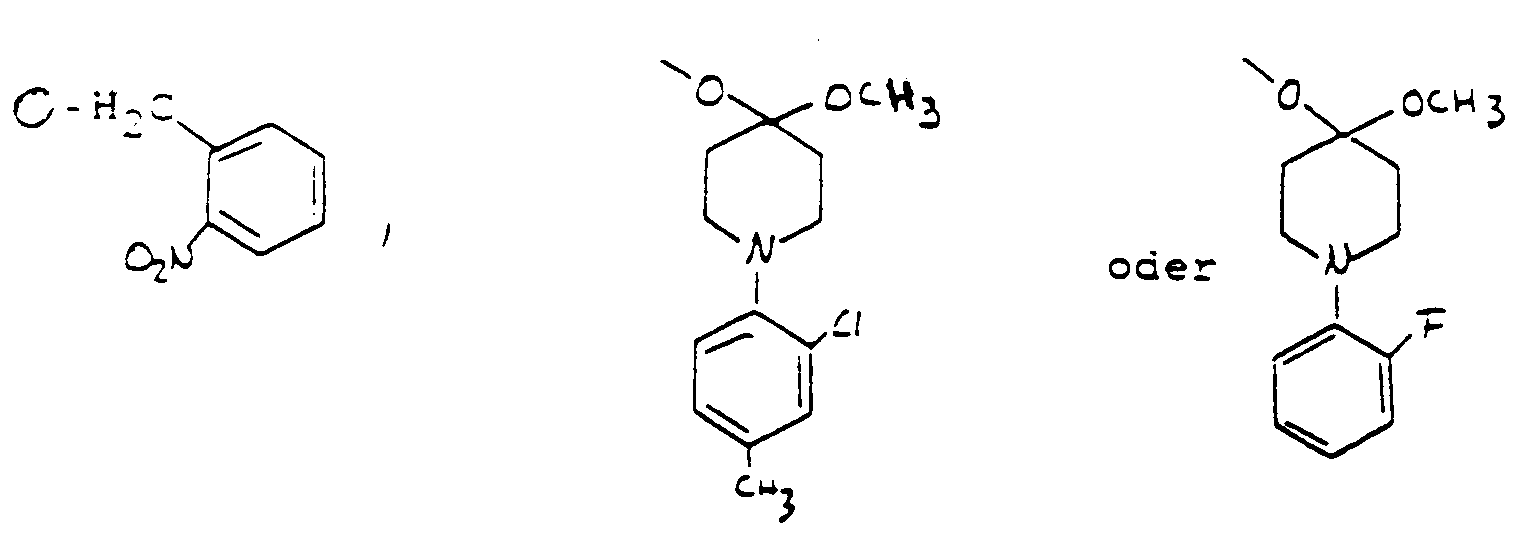
- acid-labile 2'-hydroxy protecting groups are 4-methoxytetrahydropyran-4-yl-, tetrahydropyranyl-, t-butyl-dimethylsilyl-, 2-nitrobenzyl-, 1- (2-chloro-4-methylphenyl) -4-methoxypiperidin-4 -yl-, or the 1- (2-fluorophenyl) -4-methoxypiperidin-4-yl group can be used.
- an aprotic polar solvent in particular acetonitrile or pyridine
- DBU 1,5-diazabicyc! O- [5.4.0] -undec -5-en
- 2-Dansylethylchloroformate hydrochloride as the starting compound of the 5'-hydroxy protecting group of the ribose or deoxyribose residue was obtained by reacting 2-dansylethanol with a chlorocarbonyl donor, such as trichloromethylchloroformate (diphosgene) and / or phosgene, preferably trichloromethylchloroformate in the presence of a polar , aprotic solvent.
- a chlorocarbonyl donor such as trichloromethylchloroformate (diphosgene) and / or phosgene, preferably trichloromethylchloroformate in the presence of a polar , aprotic solvent.
- a chlorocarbonyl donor such as trichloromethylchloroformate (diphosgene) and / or phosgene, preferably trichloromethylchloroformate
- the reaction was carried out in the presence of
- the molar ratio of 2-dansylethanol to the chlorocarbonyl donor was 0.5-1 to 1-2, preferably 1 to 1-2, especially 1 to 1.5-2.
- the reaction temperature was in a range from -20 ° C to the boiling point of the reaction mixture, preferably from -5 ° C to + 20 ° C, in particular from 0 ° C to 5 ° C.
- the 2-dansylethylchloroformate hydrochloride is obtained as a pure product and its composition confirmed by the elemental analysis. This is so surprising because A. Takadate et al. (A. Takadate et al. (1983) Yakugaku Zasshi 103, 982-966) by reacting 2-dansylethanol with trichloromethyl chloroformate to obtain a product whose melting point is about 20 ° C. lower than the product synthesized in the process mentioned.
- 2-Dansylethanol can, for example, according to S. Goya et al. (S. Goya et al (1981) Yakugaku Zasshi 101, 1164).
- the reaction of 2-dansylethylchloroformate hydrochloride with the protected nucleoside can, for example, analogously to the reaction with 9-fluorenylmethoxycarbonyl chloride according to C. Lehmann et al. be carried out in the presence of a base.
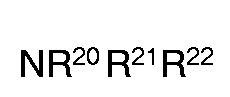
- Suitable bases are organic bases, in particular pyridine or a mixture consisting of tetrahydrofuran, dioxane, methylene chloride, chloroform and / or acetonitrile and a compound of the formula wherein R 20 , R 21 and R 22 are identical or independently different hydrogen or a C1-C4-alkyl, preferably a trimethyl, triethyl or diisopropyl group.
- a product mixture consisting of the dansylethyloxycarbonyl ribonucleoside and the bis-dansylethyloxycarbonyl ribonucleoside is formed as a by-product.
- This product mixture can be used directly in the subsequent phosphorylation reaction.
- the mixture can preferably also be purified, for example, by means of flash chromatography.
- the separated bis-dansylethyloxycarbonyl ribonucleoside can then be cleaved, for example with DBU, into the dansyl-free ribonucleoside, which in turn can be used as the starting compound for the dansylation reaction.
- oligoribonucleotides which, for example as tri- or tetraadenylate, inhibit protein biosynthesis (Kerr, 1.M. & Brown, RE (1978) Proc. Natl. Acad. Sci. USA. 75, 256- 260), a nucleoside with a free 2'-hydroxy group protected in accordance with the above description can be reacted in an analogous manner with 2-dansylethylchloroformate hydrochloride.
- a compound of the formula (VII) with Z chlorine, R 6 and R 7 each is an isopropyl radical and R 8 is preferably a group of the formula as the phosphitylation reagent used.
- the reaction was generally carried out in an organic solvent such as tetrahydrofuran or methylene chloride, preferably methylene chloride, in the presence of 1 to 8, preferably 1 to 6, in particular 1 to 4 molar equivalents of an organic base such as pyridine or a mixture of tetrahydrofuran (THF), dioxane, Methylene chloride, chloroform and / or acetonitrile and a C1-C4 trialkylamine, preferably a trimethyl, triethyl or diisopropylethyl amine, in particular diisopropylethyl amine.
- organic solvent such as tetrahydrofuran or methylene chloride, preferably methylene chloride
- Z is a radical of the formula -NR 9 R 10
- the molar ratio of dansylated nucleoside to phosphitylation reagent was 1 to 1-4, preferably 1 to 2-4, in particular 1 to 2.5-3.5.
- the compounds of the formula (Va) or (Vb) obtained in this way can then be used for oligonucleotide synthesis.
- the sugar residues of the nucleotides for the DNA synthesis are deoxyribose, for the RNA synthesis ribose, but mixtures of deoxyribose and ribose for the synthesis of an oligonucleotide consisting of regularly or irregularly arranged deoxyribose and ribose sugar residues can also be.
- the oligonucleotide can be constructed regularly or irregularly from mononucleotides of the formulas (Va) and (Vb).
- the oligo- or polynucleotide synthesis can be carried out in an analogous manner using the phosphoramidite method, as described, for example, by Chr. Lehmann et al. (1989).
- oligonucleotide synthesis can take place on the solid phase, for example on nucleoside-functionalized glass (KP Stengele & W. Pfleiderer (1989) Nucleic Acids Res. Symp. Ser. 21, 101, KP Stengele & W. Pfleiderer (1990) Tetrahedron Lett 31, 2549 or Chr. Lehmann et al. (1989) Nucleic Acids Res. 17, 2379-2390, No. 7).
- solid phase synthesis is the preferred method.
- the compounds of the formula (Va) or (Vb) and (Vlla) or (Vllb) were preferably reacted at -20 to +100 ° C, in particular at room temperature in the presence of, for example, tetrazole or para-nitrophenyl-tetrazole as weak acids.
- the oxidation took place at a temperature of -80 to 100 ° C, preferably at -20 to + 60 ° C, in the presence of iodine, sulfur or iodine in the presence of an amine (A. Jäger et al. Biochemistry 27, 7237 (1988) ).
- the oxidation was preferably carried out at room temperature. If, on the other hand, a mixture of elemental sulfur, toluene and an organic base was used, the oxidation was preferably carried out at 60 ° C.
- the synthesized oligonucleotides generally consisted of 2 to about 200, preferably 2 to 100, in particular 2 to 20 mononucleotides.
- the dansylated nucleoside with the still free 2'- or 3'-hydroxy group on the sugar residue can also be converted to the H-phosphonate of the formula (VIIIa) or (VIIIb) in which dansEOC, R 1 and B have the abovementioned meaning and K ( + ) is a cation, in particular [NH- (C 2 H 5 ) 3 ] (+) (R. Strömberg, Chem. Commun. 1987, 1; BC Froehler, PG Ng, MD Matteucci, Nucleic Acids Res. 14 (1986) 5399; M. Tahalu et al., Chem. Lett. 1988, 1675).
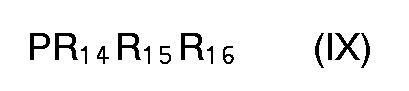
- a compound of the formula (IIla) or (IIIb) is combined with a compound of the formula (IX) or (X) wherein R 14 , R 15 , R 16 are the same or independently different hydrogen or a C 1 -C 8 alkyl, C 1 -C 8 fluoroalkyl or aryl group and R 17 , R 18 , R 19 are the same or different independently Chlorine, bromine or a C 1 -C 8 alkylamino or a 1,2,4-triazolyl group, implemented.
- the dansylated nucleoside was preferably reacted with bis (2,2,2-trifluoroethyl) H-phosphonate, bis (1,1,1,3,3,3-hexafluoro-2-propyl) 4-phosphonate, triethyl phosphite, triphenyl phosphite or with PCl 3 , tri (dialkylamino) phosphines or tris (1,2,4-triazolyl) phosphite, preferably tris (1,2,4-triazolyl) phosphite, particularly preferably with PCl 3 after activation with imidazole / triethylamine with subsequent hydrolysis for H-phosphonate.
- the reaction was carried out in an organic solvent such as tetrahydrofuran or methylene chloride, preferably methylene chloride, in the presence of 1-50 molar equivalents, preferably 10-50, in particular 30-50 molar equivalents, of an organic base such as C1-C4-trialkylamine or NC i -C 4 -alkylmorpholine , preferably N-methylmorpholine, carried out.
- an organic base such as C1-C4-trialkylamine or NC i -C 4 -alkylmorpholine , preferably N-methylmorpholine, carried out.
- the molar ratio of dansylated nucleoside to the phosphonylation reagent was 1 to 1-10, preferably 1 to 2-8, in particular 1 to 5.
- the compounds of the formula (VIIIa) or (VIIIb) obtained in this way can then be used for oligonucleotide synthesis.
- the sugar residues of the nucleotides for the DNA synthesis are deoxyribose, for the RNA synthesis ribose, but it can also be mixtures of deoxyribose and ribose for the synthesis of an oligonucleotide consisting of regularly or irregularly arranged deoxyribose and ribose sugar residues.
- the oligonucleotide can be built up regularly or irregularly from mononucleotides of the formulas (VIIIa) and (VIIIb).
- Oligonucleotide synthesis can be carried out according to the H-phosphonate method, as for example in B.C. Froehler et al. (Froehler, B.C. (1986) Nucleic Acids Res. 14, 5399-5407, No. 13), wherein the acidic cleavage of the 5'-hydroxy protective group is replaced by the basic cleavage of the dansylethoxycarbonyl group.
- the synthesis can be carried out either in solution, for example analogously to C.B. Reese (1989), or on the solid phase, for example analogously to B.C. Froehler (1986). In general, solid phase synthesis is preferred.
- the compounds of the formula (Villa) or (Vlllb) and (Vlla) and (Vllb) were preferably reacted at from -20 ° C. to + 100 ° C., in particular at room temperature, in the presence of, for example, pivaloyl chloride as the acid.
- the oxidation was carried out, for example, with iodine in a solvent mixture consisting generally of pyridine, N-methylimidazole, water, THF at room temperature.
- the synthesized oligonucleotides using the H-phosphonate method described generally consisted of 2 to about 200, preferably 2 to 110, in particular 2 to 40 mononucleotides.
- Another advantage of using the 5'-hydroxy-dansyl protecting group in RNA synthesis is that the 2'-hydroxy groups of the ribose residue can remain protected at the end of the synthesis.
- the oligoribonucleotides modified in this way are generally protected against hydrolysis by RNases, but also against possible isomerization reactions, and can therefore be stored stably over long periods.
- the 2'-hydroxy protecting group is then only split off shortly before the RNA is used.
- the eluates from the 4th step were collected and the condensation yields were determined using the 5-dimethylamino-naphthyl-1-vinylsulfone formed by means of fluorescence spectroscopy (excitation: 368 nm; emission: 526 nm).
- the ice bath is then removed and the mixture is stirred at room temperature for a further 15 minutes.
- the reaction solution is then shaken out with 10 ml of 1 M triethylammonium bicarbonate.
- the phases are separated, the aqueous phase is extracted with 10 ml of CH 2 Cl 2, the combined organic phases are dried over Na 2 SO 4 , filtered off and rotated to a yellow, fluorescent foam. It is purified on a short silica gel column (flash chromatography) with a CH 2 CI 2 / MeOH gradient.
- the eluates from the 6th step are collected and the condensation yields are determined using the 5-dimethylamino-naphthyl-1-vinylsulfone formed by means of fluorescence spectroscopy (excitation: 368 nm; emission: 526 nm).
- the average gradual yield is approximately 98%.
Landscapes
- Chemical & Material Sciences (AREA)
- Organic Chemistry (AREA)
- Health & Medical Sciences (AREA)
- Life Sciences & Earth Sciences (AREA)
- Biochemistry (AREA)
- Molecular Biology (AREA)
- Genetics & Genomics (AREA)
- General Health & Medical Sciences (AREA)
- Biotechnology (AREA)
- Engineering & Computer Science (AREA)
- Chemical Kinetics & Catalysis (AREA)
- Saccharide Compounds (AREA)
- Organic Low-Molecular-Weight Compounds And Preparation Thereof (AREA)
- Pharmaceuticals Containing Other Organic And Inorganic Compounds (AREA)
- Pyrane Compounds (AREA)
- Measuring Or Testing Involving Enzymes Or Micro-Organisms (AREA)
Description
- Die chemische Polykondensation von Mononukleotiden ist eine wichtige Methode zur Herstellung von Desoxyribonukleinsäure (DNA) oder Ribonukleinsäure (RNA).
- Ein grundlegendes Problem bei der chemischen Synthese von DNS oder RNS ist das Auffinden geeigneter Schutzgruppen der Amino- und Hydroxy-Gruppen der Nukleosid-Basen und der Zuckerreste. Diese Schutzgruppen müssen einerseits unter den Bedingungen der Polykondensationreaktion, d.h. während der Bildung der Phosphodiester-Bindung, stabil sein und andererseits müssen sie genügend labil sein, um am Ende der Reaktion, ohne die Phosphodiester-Bindung zu spalten, wieder entfernt werden zu können (H.G. Khorana; Pure Appl. Chem. 17 (1968) 349).
- Besonders problematisch ist die chemische Synthese von RNA, da der Ribose-Zuckerrest zwei Hydroxy-Gruppen trägt, die beide geschützt werden müssen. Die Schutzgruppe der 5'-Hydroxy-Gruppe muß dabei vor jedem Polykondensationsschritt selektiv, d.h. ohne Abspaltung der 2'-Hydroxy-Schutzgruppe wieder abgespalten werden. Die Schutzgruppe der 2'-Hydroxy-Gruppe hingegen darf erst am Ende der RNA-Synthese abgespalten werden, und zwar unter Bedingungen, die zu keiner Spaltung oder Isomerierung der Phosphodiesterbindungen führen (C.B. Reese, Nucleic Acids and Molecular Biology, Vol 3 (F. Eckstein & D.M.J. Lilley eds.) Springer-Verlag, Weinheim).
- Eine Möglichkeit der selektiven Abspaltung der 5'-Hydroxy-Schutzgruppe ohne Abspaltung der 2'-Hydroxy-Schutzgruppe ist durch die Kombination einer basenlabilen 5'-Hydroxy-Schutzgruppe mit einer säurelabilen 2'-Hydroxy-Schutzgruppe zu erreichen (Chr. Lehmann et al. (1989) Nucleic Acids Res. 17, 2379-2390, No. 7). Die Verwendung einer basenlabilen 5'-Hydroxy-Schutzgruppe ist auch bei der Synthese von DNA von Vorteil, da unter den milden nicht sauren Hydrolysebedingungen die in der Synthese bereits gebildeten Phosphodi- bzw. triesterbindungen im allgemeinen nicht gespalten werden. Zudem wird unter den milden nicht-sauren Hydrolysebedingungen eine Depurinierung der Nukleotide, wie sie bei E. Sonveaux (E. Sonveaux (1986), Bioorganic Chemistry 14, 286) beschrieben ist, umgangen. Eine weitere Anforderung an die 5'-Hydroxy-Schutzgruppe bei der DNA-, wie auch bei der RNA-Synthese, ist eine leichte und hochempfindliche Nachweisbarkeit der Schutzgruppe. Auf diese Weise kann der Umsetzungsgrad der einzelnen Reaktionsschritte besonders gut verfolgt und eine möglichst vollständige Umsetzung erreicht werden. Dadurch ist es möglich, besonders lange Oligonukleotide mit hoher Ausbeute herzustellen. Dies erlaubt auch die Ausführung kleiner Synthese-Ansätze im nanomolaren bis picomolaren Bereich.
- Es wurde nun überraschenderweise gefunden, daß die Dansylethoxycarbonylgruppe (Dans-EOC) als basenlabile 5'-Hydroxy-Schutzgruppe in der chemischen Oligonukleotidsynthese eingesetzt werden kann.
- Gegenstand der Erfindung ist somit
- 1. ein Verfahren zur Herstellung der Verbindung der Formel (I),


- 2. eine Verbindung der Formel (Illa) oder (IIIb)

- R1 Wasserstoff oder unabhängig voneinander


- B bedeutet


- B bedeutet


- R4

- B bedeutet


- R1 Wasserstoff oder unabhängig voneinander
- 3. ein Verfahren zur Herstellung einer Verbindung der Formel (Illa) oder (IIIb) durch Umsetzung der Verbindung der Formel (I) mit einer entsprechenden Verbindung der Formel (IVa) oder (IVb)

- NR20 R21 R22
worin R20, R21 und R22 gleich oder unabhängig verschieden Wasserstoff oder die C1-C4-Alkyl-, vorzugsweise eine Trimethyl-, Triethyl- oder Diisopropyl-Gruppe bedeuten. - 4. eine Verbindung der Formel (Va) oder (Vb)

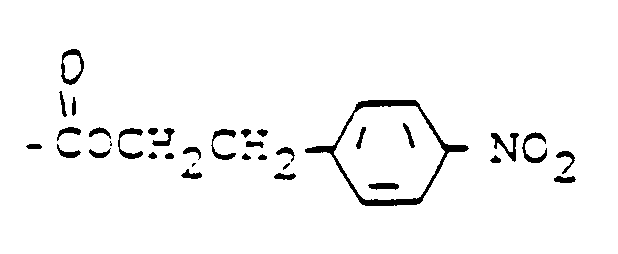
- DansEOC, R1 und B die obengenannte Bedeutung haben und R6, R7 gleich oder unabhängig verschieden eine C1-C8-Alkyl-, vorzugsweise eine Isopropyl- oder Cs-C12-Cycloalkyl-Gruppe, vorzugsweise bis C8, Benzyl oder Phenyl oder zusammen mit dem Stickstoffatom, an das sie gebunden sind, einen gesättigten oder ungesättigten heterocyclischen Ring, der gegebenenfalls weitere Heteroatome und Substituenten enthalten kann und R8 eine Gruppe der Formel

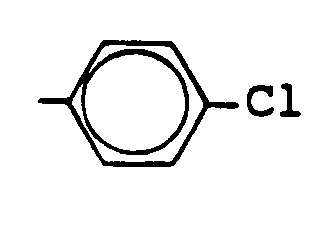
oder eine Benzylgruppe, welche nicht substituiert oder einfach oder mehrfach ringsubstituiert, vorzugsweise nicht substituiert ist, wobei der oder die Substituenten unabhängig voneinander ein Halogen, eine C1-C4-Alkyl-,Nitro-, Methoxy- oder Carboxylgruppe ist.
- DansEOC, R1 und B die obengenannte Bedeutung haben und R6, R7 gleich oder unabhängig verschieden eine C1-C8-Alkyl-, vorzugsweise eine Isopropyl- oder Cs-C12-Cycloalkyl-Gruppe, vorzugsweise bis C8, Benzyl oder Phenyl oder zusammen mit dem Stickstoffatom, an das sie gebunden sind, einen gesättigten oder ungesättigten heterocyclischen Ring, der gegebenenfalls weitere Heteroatome und Substituenten enthalten kann und R8 eine Gruppe der Formel
- 5. ein Verfahren zur Herstellung einer Verbindung der Formel (Va) oder (Vb) durch Umsetzung der Verbindung der Formel (Illa) oder (IIIb) mit einer Verbindung der Formel (VI)

- 6. ein Verfahren zur Herstellung von Oligonukleotiden aus Verbindungen der Formel (Va) und/oder (Vb), dadurch gekennzeichnet, daß man eine Verbindung der Formel (Va) oder (Vb)
- 1. mit einer Verbindung der Formel (Vlla) oder (Vllb)

- 2. die erhaltenen Verbindungen oxidiert
- 3. die Dansylethoxycarbonyl-Gruppe abspaltet,
- 4. die erhaltene Verbindung mit einer Verbindung der Formel (Va) oder (Vb) umsetzt und
- 5. die Reaktionsschritte 2-4 bis zur gewünschten Kettenlänge wiederholt.
- 1. mit einer Verbindung der Formel (Vlla) oder (Vllb)
- 7. eine Verbindung der Formel (Vllla) oder (Vlllb)
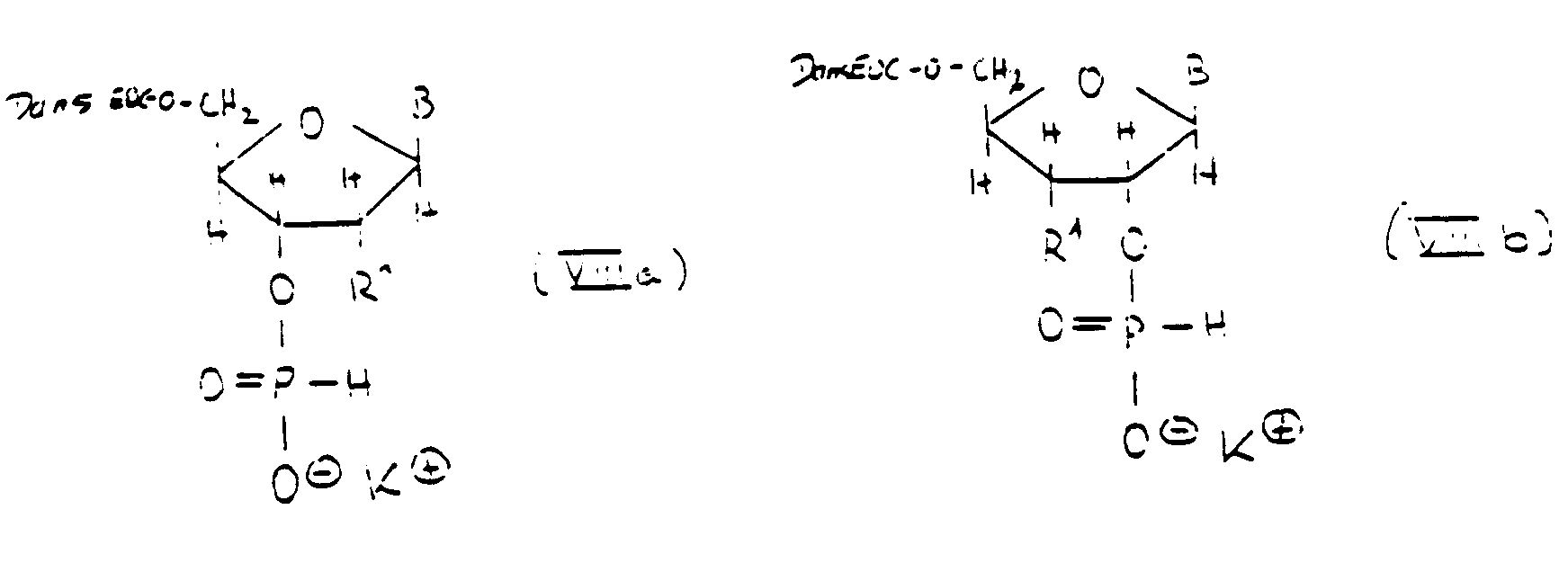
- 8. ein Verfahren zur Herstellung einer Verbindung der Formel (Vllla) oder (Vlllb) durch Umsetzung einer Verbindung der Formel (Illa) oder (Illb) mit einer Verbindung der Formel (IX)
- 9. ein Verfahren zur Herstellung einer Verbindung der Formel (Vllla) oder (Vlllb) durch Umsetzung einer Verbindung der Formel (Illa) oder (IIIb) mit einer Verbindung der Formel (X)

- 10. ein Verfahren zur Herstellung von Oligonukleotiden aus Verbindungen der Formel (Vllla) und/oder (Vlllb), dadurch gekennzeichnet, daß man eine Verbindung der Formel (Vllla) oder (Vlllb)
- 1. mit einer Verbindung der Formel (Vlla) oder (Vllb) umsetzt,
- 2. die Dansylethoxycarbonyl-Gruppe abspaltet,
- 3. die erhaltene Verbindung mit einer Verbindung der Formel (Vllla) oder (Vlllb) umsetzt,
- 4. die Reaktionsschritte 2 und 3 bis zur gewünschten Kettenlänge wiederholt und
- 5. das erhaltene Oligonukleotid oxidiert.
- Zur Einführung der Dansylethoxycarbonylgruppe in das Nukleosid wurde 2-Dansylethylchloroformiat-Hydrochlorid mit einem Nuleosid umgesetzt, bei dem je nach Nukleosid die Amino- bzw. Hydroxy-Funktionen der Nukleosidbase durch geeignete Gruppen geschützt sind. Als Schutzgruppen eignen sich beispielsweise für die 6-Aminogruppe von Adenin die t-Butylcarbonyl, Benzoyl-, 4-(t-Butyl)-benzoyl- oder para-Nitrophenylethyloxycarbonyl-Gruppe, insbesondere die Benzoyl- oder die para-Nitrophenylethyloxycarbonyl-Gruppe.
- Für die 2-Aminogruppe von Guanin eignen sich beispielsweise die Isobutyryl-, 4-(t-Butyl)-phenylacetyl-oder para-Nitrophenylethyloxycarbonyl-Gruppe, insbesondere die Isobutyryl- oder die para-Nitrophenylethyloxycarbonyl-Gruppe. Die 6-Hydroxy-Gruppe von Guanin bzw. die 4-Hydroxy-Gruppe von Uracil bleiben im allgemeinen entweder ungeschützt oder sie werden durch eine para-Nitrophenylethyl-Gruppe geschützt. Bei Cytosin wird die 4-Amino-Gruppe beispielsweise durch eine Benzoyl-, 4-(t-Butyl)-benzoyl- oder para-Nitrophenylethyloxycarbonyl-Gruppe, insbesondere die Benzoyl- oder die para-Nitrophenylethyloxycarbonyl-Gruppe geschützt. Thymidin bleibt im allgemeinen ungeschützt. Bei Uridin wird die 3-N-Gruppe beispielsweise durch eine Boc- oder Anisoyl-Gruppe geschützt.
- Anstelle der natürlichen Nukleosid-Basen können auch modifizierte Nukleosid-Basen verwendet werden, deren Amino- bzw. Hydroxy-Gruppen in analoger Weise durch die oben erwähnten Schutzgruppen geschützt werden können. Beispiele für Nucleoside mit modifizierten Basen sind Inosin-, 8-Aza-7-deazaadeno- sin-, Tubercidin-, Nebularin-, Xanthosin-, 2-Aminoadenosin- oder Pyridopyrimidin-Nucleoside. Die Nukleoside sind käuflich und die Einführung der einzelnen Schutzgruppen kann beispielsweise nach C. Lehmann et al. (1989), C.B. Reese (1989) ["The Chemical Synthesis of Oligo and Polyribonucleotides" in Nucleic Acids and Molecular Biology 3, F. Eckstein & D.M.J. Lilley (eds.), Springer Verlag Berlin, Heidelberg], E. Sonveaux (1986), Bioorganic Chemistry 14, 274-325 oder E. Uhlmann & A. Peyman (1990), Chemical Reviews 90, 543-584, No. 4 erfolgen.
- Bei der Verwendung von Ribonukleotiden muß zusätzlich zu der Hydroxy- und Aminogruppe der Nukleotidbasen auch die 2'-Hydroxygruppe des Riboserestes geschützt werden. Wie bereits erwähnt, ist es für die RNS-Synthese wichtig, durch die Wahl einer geeigneten Kombination von 5'-Hydroxy- und 2'-Hydroxyschutzgruppe die 5'-Hydroxyschutzgruppe selektiv, d.h. ohne Abspaltung der 2'-Hydroxyschutzgruppe, entfernen zu können.
- In Anwesenheit von säurelabilen 2'-Hydroxyschutzgruppen, kann nun die Dansylethoxycarbonylgruppe als 5'-Hydroxyschutzgruppe selektiv unter nicht-sauren Bedingungen abgespalten werden. Als säurelabile 2'-Hydroxyschutzgruppen können beispielsweise die 4-Methoxytetrahydropyran-4-yl-, Tetrahydropyranyl-, t-Butyl-dimethylsilyl-, 2-Nitrobenzyl-, 1-(2-Chloro-4-methylphenyl)-4-methoxypiperidin-4-yl-, oder die 1-(2-Fluorophenyl)-4-methoxypiperidin-4-yl-Gruppe verwendet werden. Die Abspaltung der Dansylethoxycarbonylgruppe wird vorzugsweise in einem aprotischen polaren Lösemittel, insbesondere Acetonitril oder Pyridin mit Hilfe von 1 bis 3, vorzugsweise 1,5 bis 2,5 Moläquivalente DBU (= 1,5-Diazabicyc!o-[5.4.0]-undec-5-en) durchgeführt. Alternativ können andere Basen wie TMG (= N1N1N2N2-Tetramethylguanidin) oder C1-C4-Trialkylamine, wie beispielsweise Triethylamin zur Abspaltung eingesetzt werden.
- 2-Dansylethylchloroformiat-Hydrochlorid als Ausgangsverbindung der 5'-Hydroxy-Schutzgruppe des Ribose- bzw. Desoxyriboserestes wurde durch Umsetzung von 2-Dansylethanol mit einem Chlorcarbonyl- Donor, wie beispielsweise Trichlormethylchloroformiat (Diphosgen) und/oder Phosgen, vorzugsweise Trichlormethylchloroformiat in Gegenwart eines polaren, aprotischen Lösemittels hergestellt. In einer bevorzugten Ausführungsform wurde die Reaktion in Gegenwart eines einzigen polaren, aprotischen Lösemittels, insbesondere in Gegenwart von Acetonitril, durchgeführt. Das Molverhältnis von 2-Dansylethanol zu dem ChlorcarbonylDonor war 0,5-1 zu 1-2, vorzugsweise 1 zu 1-2, insbesondere 1 zu 1,5-2. Die Reaktionstemperatur lag in einem Bereich von -20 °C bis zum Siedepunkt der Reaktionsmischung, vorzugsweise von -5 ° C bis + 20 ° C, insbesondere von 0 ° C bis 5 ° C.
- Nach dem erfindungsgemäßen Verfahren fällt das 2-Dansylethylchloroformiat-Hydrochlorid als ein reines und durch die Elementaranalyse in seiner Zusammensetzung bestätigtes Produkt an. Dies ist deshalb so überraschend, weil A. Takadate et al. (A. Takadate et al. (1983) Yakugaku Zasshi 103, 982-966) durch Umsetzung von 2-Dansylethanol mit Trichlormethylchloroformiat ein Produkt erhielten, dessen Schmelzpunkt um ca. 20 °C niedriger ist als das in dem genannten Verfahren synthetisierte Produkt. 2-Dansylethanol kann beispielsweise nach S. Goya et al. (S. Goya et al (1981) Yakugaku Zasshi 101, 1164) hergestellt werden.
- Die Umsetzung von 2-Dansylethylchloroformiat-Hydrochlorid mit dem geschützten Nukleosid kann beispielsweise analog der Umsetzung mit 9-Fluorenylmethoxycarbonylchlorid nach C. Lehmann et al. in Gegenwart einer Base durchgeführt werden. Als Base eignen sich organische Basen, insbesondere Pyridin oder einer Mischung bestehend aus Tetrahydrofuran, Dioxan, Methylenchlorid, Chloroform und/oder Acetonitril und einer Verbindung der Formel
- Zum Aufbau 2',5'-verknüpfter Oligoribonucleotide, welche zum Beispiel als Tri- oder Tetraadenylat die Proteinbiosynthese inhibieren (Kerr, 1.M. & Brown, R.E. (1978) Proc. Natl. Acad. Sci. USA. 75, 256-260), kann man ein entsprechend der obigen Beschreibung geschütztes Nukleosid mit einer freien 2'-Hydroxy- gruppe in analoger Weise mit 2-Dansylethylchloroformiat-Hydrochlorid umsetzen.
- Das dansylierte Nukleosid mit der noch freien 2'- oder 3'-Hydroxygruppe am Zuckerrest wird im allgemeinen phosphityliert. Als Phosphitylierungsreagenz kann beispielsweise eine Verbindung der Formel (VI)

- R6, R7 gleich oder unabhängig verschieden C1-C8-Alkyl-, vorzugsweise eine Isopropyl- oder C5-C12-Cycloalkyl-Gruppe, vorzugsweise bis Cs, eine Benzyl oder eine Phenyl-Gruppe oder zusammen mit dem Stickstoffatom, an das sie gebunden sind, einen gesättigten oder ungesättigten heterocyclischen Ring, der gegebenenfalls weitere Heteroatome und Substituenten enthalten kann
- R8 eine Gruppe der Formel

oder eine Benzylgruppe, welche nicht substituiert oder einfach oder mehrfach ringsubstituiert, vorzugsweise nicht substituiert ist, wobei der oder die Substituenten unabhängig voneinander beispielsweise ein Halogen, eine C1-C4-Alkyl-, Nitro-, Methoxy- oder Carboxylgruppe ist, - Z Chlor, Brom oder ein Rest der Formel -NR9R10, wobei Rg, R10 gleich oder unabhängig verschieden eine C1-C8-Alkyl-, vorzugsweise eine Isopropyl- oder C5-C12-Cycloalkyl-Gruppe, vorzugsweise bis Cs, eine Benzyl- oder eine Phenyl-Gruppe bedeuten.
- R8 eine Gruppe der Formel
- Vorzugsweise wurde als Phosphitylierungsreagenz eine Verbindung der Formel (VII) mit Z = Chlor, R6 und R7 je ein Isopropylrest und R8 gleich eine Gruppe der Formel

- Die Reaktion wurde im allgemeinen in einem organischen Lösemittel wie Tetrahydrofuran oder Methylenchlorid, vorzugsweise Methylenchlorid, in Anwesenheit von 1 bis 8, vorzugsweise 1 bis 6, insbesondere 1 bis 4 Moläquivalente einer organischen Base wie Pyridin oder eine Mischung von Tetrahydrofuran (THF), Dioxan, Methylenchlorid, Chloroform und/oder Acetonitril und einem C1-C4-Trialkylamin, vorzugsweise einem Trimethyl-, Triethyl- oder Diisopropylethyl-Amin, insbesondere Diisopropylethyl-Amin durchgeführt. Ist Z ein Rest der Formel -NR9R10, so wurde die Reaktion vorzugsweise in Anwesenheit einer Verbindung der Formel [HNR11R12R13](+)X(-), wobei R11, R12, R13 gleich oder unabhängig verschieden eine C1-C4-Alkyl-Gruppe und X(-) = Halogenid, insbesondere ein Chlorid, oder ein Tetrazolid bedeuten, oder Tetrazol, vorzugweise in Gegenwart von Tetrazol, durchgeführt. Das Molverhältnis von dansyliertem Nukleosid zu Phosphitylierungsreagenz betrug 1 zu 1 - 4 vorzugsweise 1 zu 2 - 4, insbesondere 1 zu 2,5 - 3,5.
- Die so gewonnenen Verbindungen der Formel (Va) oder (Vb) können anschließend für die Oligonukleotidsynthese eingesetzt werden. Hierbei sind die Zuckerreste der Nukleotide für die DNA-Synthese Desoxyribose, für die RNA-Synthese Ribose, aber es können auch Gemische aus Desoxyribose und Ribose für die Synthese eines Oligonukleotids bestehend aus regelmäßig oder unregelmäßig angeordneten Desoxyribose-und Ribosezuckerresten sein. Ferner kann das Oligonukleotid regelmäßig oder unregelmäßig aus Mononukleotiden der Formel (Va) und (Vb) aufgebaut sein. Die Oligo- bzw. Polynukleotidsynthese kann auf analoger Weise nach der Phosphoramidit-Methode, wie beispielsweise bei Chr. Lehmann et al. (1989) beschrieben, durchgeführt werden.
- Grundsätzlich gibt es zwei Möglichkeiten, Oligonukleotide zu synthetisieren . Zum einen kann die Synthese in Lösung erfolgen, beispielsweise nach der von C.B. Reese beschriebenen Methode (C.B. Reese (1989) "The Chemical Synthesis of Oligo- and Poly-ribonucleotides" in Nucleic Acids and Molecular Biology (F. Eckstein & D.M.J. Lilley, eds.) 3, 164-181).
- Zum anderen kann die Oligonukleotid-Synthese an der Festphase, beispielsweise an Nukleosidfunktionalisierten Glass, erfolgen (K.P. Stengele & W. Pfleiderer (1989) Nucleic Acids Res. Symp. Ser. 21, 101, K.P. Stengele & W. Pfleiderer (1990) Tetrahedron Lett. 31, 2549 oder Chr. Lehmann et al. (1989) Nucleic Acids Res. 17, 2379-2390, No. 7). Im allgemeinen ist die Festphasensynthese die bevorzugte Methode.
- Hierbei wurde vorzugsweise die folgende Reaktionsfolge gewählt:
- 1. Umsetzung einer Verbindung der Formel (Va) oder (Vb) mit dem Nukleosid der Formel (Vlla) oder (Vllb)

- 2. Abfangen nicht-umgesetzter Verbindungen der Formel (Vlla) oder (Vllb), beispielsweise mit Acetanhydrid.
- 3. Oxidation zum Phosphat, Phosphoramidat oder zum Thiophosphat, beispielsweise mit Jod, Schwefel oder Jod/Amin.
- 4. Abspaltung der Dansylethoxycarbonyl-Gruppe beispielsweise mit DBU in Acetonitril.
- 5. Umsetzung der erhaltenen Träger-gebundenen Verbindung mit einer Verbindung der Formel (Va) oder (Vb).
- 6. Wiederholung der Reaktionsschritte 2 bis 6 zur gewünschten Kettenlänge des Oligonukleotids.
- Die Verbindungen der Formel (Va) oder (Vb) und (Vlla) oder (Vllb) wurden vorzugsweise bei -20 bis +100°C, insbesondere bei Raumtemperatur in Anwesenheit von beispielsweise Tetrazol oder para-Nitrophenyl-tetrazol als schwache Säuren umgesetzt. Die Oxidation erfolgte bei einer Temperatur von -80 bis 100 ° C, vorzugsweise bei -20 bis +60°C, in Anwesenheit von Jod, Schwefel oder Jod in Gegenwart eines Amins (A. Jäger et al. Biochemistry 27, 7237 (1988)). Wurde ein Gemisch aus Jod, Wasser und einer organischen Base wie Lutidin oder Pyridin verwendet, so erfolgte die Oxidation vorzugsweise bei Raumtemperatur. Wurde hingegen ein Gemisch aus elementarem Schwefel, Toluol und einer organischen Base verwendet, so erfolgte die Oxidation vorzugsweise bei 60 ° C.
- Die synthetisierten Oligonukleotide bestanden im allgemeinen aus 2 bis ca. 200, vorzugsweise 2 bis 100, insbesondere 2 bis 20 Mononukleotiden.
- Alternativ zur Phosphitylierung kann das dansylierte Nukleosid mit der noch freien 2'- oder 3'-Hydroxygruppe am Zuckerrest auch zum H-Phosphonat der Formel (Vllla) oder (Vlllb) umgesetzt werden

- Dabei wird im allgemeinen eine Verbindung der Formel (Illa) oder (Illb) mit einer Verbindung der Formel (IX) oder (X)


- Vorzugsweise wurde das dansylierte Nukleosid mit Bis(2,2,2-Trifluoroethyl)H-phosphonat, Bis-(1,1,1,3,3,3-hexafluoro-2-propyl)4-phosphonat, Triethylphosphit, Triphenylphosphit umgesetzt oder mit PCl3, Tri(dialkylamino)phosphinen oder Tris(1,2,4-Triazolyl) phosphit, vorzugsweise Tris(1,2,4-Triazolyl)phosphit, besonders bevorzugt mit PCl3 nach Aktivierung mit Imidazol/ Triethylamin mit anschließender Hydrolyse zum H-Phosphonat.
- Die Reaktion wurde in einem organischen Lösemittel wie Tetrahydrofuran oder Methylenchlorid, vorzugsweise Methylenchlorid, in Anwesenheit von 1-50 Moläquivalenten, vorzugsweise 10-50, insbesondere 30-50 Moläquivalente einer organischen Base wie C1-C4-Trialkylamin oder N-Ci-C4-Alkylmorpholin, vorzugweise N-Methylmorpholin, durchgeführt. Das Molverhältnis von dansyliertem Nukleosid zum Phosphonilierungsreagenz betrug 1 zu 1 - 10, vorzugsweise 1 zu 2 - 8, insbesondere 1 zu 5.
- Die so gewonnenen Verbindungen der Formel (Vllla) oder (Vlllb) können anschließend für die Oligonukleotidsynthese eingesetzt werden. Hierbei sind die Zuckerreste der Nukleotide für die DNA-Synthese Desoxyribose, für die RNA-Synthese Ribose, aber es können auch Gemische aus Desoxyribose und Ribose für die Synthese eines Oligonukleotids bestehend aus regelmäßig oder unregelmäßig angeordneten Desoxyribose- und Ribosezuckerresten sein. Ferner kann das Oligonukleotid regelmäßig oder unregelmäßig aus Mononukleotiden der Formel (Vllla) und (Vlllb) aufgebaut sein.
- Die Oligonukleotidsynthese kann nach der H-Phosphonat-Methode, wie beispielsweise bei B.C. Froehler et al. (Froehler, B.C. (1986) Nucleic Acids Res. 14, 5399-5407, No. 13) beschrieben, durchgeführt werden, wobei die saure Abspaltung der 5'-Hydroxy-Schutzgruppe durch die basische Abspaltung der Dansylethoxycarbonylgruppe ersetzt wird.
- Grundsätzlich kann die Synthese entweder in Lösung, beispielsweise analog nach C.B. Reese (1989), oder an der Festphase, beispielsweise analog nach B.C. Froehler (1986) erfolgen. Im allgemeinen ist die Festphasensynthese bevorzugt.
- Hierbei wurde vorzugsweise die folgende Reaktionsfolge gewählt:
- 1. Umsetzung einer Verbindung der Formel (Vllla) oder (Vlllb) mit dem Nukleosid-gebundenen polymeren Träger der Formel (Vlla) oder (Vllb) in Anwesenheit eines Säurechlorids, beispielsweise Pivaloylchlorid oder Adamantoylchlorid
- 2. Abspaltung der Dansylethoxycarbonylgruppe, beispielsweise mit DBU
- 3. Umsetzung der erhaltenen Verbindung mit einer Verbindung der Formel (Vllla) oder (Vlllb)
- 4. Wiederholung der Schritte 2 und 3 bis zur gewünschten Kettenlänge des Oligonukleotids
- 5. Oxidation, zum Phosphat, Phosphoramidat oder zum Thiophosphat, beispielsweise mit Jod oder Schwefel oder Amin/CC14/Triphenylphosphin (Jäger et al. s.o.).
- Die Verbindungen der Formel (Villa) oder (Vlllb) und (Vlla) und (Vllb) wurden vorzugsweise bei einer Temperatur von -20 °C bis +100°C, insbesondere bei Raumtemperatur in Anwesenheit von beispielsweise Pivaloylchlorid als Säure umgesetzt. Die Oxidation erfolgte beispielsweise mit Jod in einem Lösemittelgemisch bestehend im allgemeinen aus Pyridin, N-Methylimidazol, Wasser, THF bei Raumtemperatur.
- Die synthetisierte Oligonukleotide nach der beschriebenen H-Phosphonatmethode bestanden im allgemeinen aus 2 bis ca. 200, vorzugsweise 2 bis 110, insbesondere 2 bis 40 Mononukleotiden.
- Die Vorteile der Oligonukleotidsynthese aus dansylierten Mononukleotiden nach der Phosphoramidit-oder nach der H-Phosphonat-Methode sind
- a) leichte Nachweisbarkeit der Dansylgruppe wegen ihrer starken Fluoreszenz bei 550 nm,
- b) Poly- bzw. Oligonukleotidsynthese bis in den Picomol-Bereich,
- c) Entfernen der 5'-Hydroxy-Dansylschutzgruppe ohne Abspaltung anderer Hydroxy-Schutzgruppen an der Nukleotid-Base oder am Zuckerrest
- d) Synthese von Oligoribonukleotiden und Oligodesoxyribonukleotiden, insbesondere von Oligoribonukleotiden,
- e) Festphasensynthese von Oligonukleotiden in hohen Ausbeuten und in großer Kettenlänge.
- Ein weiterer Vorteil der Verwendung der 5'-Hydroxy-Dansylschutzgruppe bei der RNA-Synthese ist, daß am Ende der Synthese die 2'-Hydroxygruppen des Riboserestes geschützt bleiben können. Die so modifizierten Oligoribonukleotide sind dadurch im allgemeinen vor Hydrolyse durch RNasen, aber auch vor möglichen Isomerierungsreaktionen geschützt und können daher über lange Zeiten stabil gelagert werden. Die 2'-Hydroxyschutzgruppe wird im allgemeinen dann erst kurz vor Gebrauch der RNA abgespalten.
- Die Abspaltung vom Träger, sowie die Spaltung der Amino- und Hydroxy-Schutzgruppen an den synthetisierten Oligonukleotiden erfolgte nach allgemein bekannten Methoden z.B. wie bei M. Gait (Hrsg.): Oligonucleotide Synthesis, a practical approach; IRL Press; Oxford 1984 beschrieben.
- Die folgenden Beispiele sollen die Erfindung näher erläutern. Als Abkürzungen wurden verwendet:
- Bz für Benzoyl
- Mthp für Methoxytetrahydropyranyl
- DansEOC für Dansylethoxycarbonyl und
- EE für Essigsäureethylester
- Unter Eiskühlung und Rühren pipettiert man 0,8 ml (1,32 g = 6,64 mmol) Trichlormethylchloroformiat in 10 ml absolutes CH3CN. Danach tropft man unter Eiskühlung und Rühren durch eine Serumkappe mit einer Spritze 1 g (3,58 mmol) 2-Dansylethanol in 5 ml absolutem CH3CN gelöst zu. Man rührt im Eisbad 5 h weiter. Der ausgefallene farblose Feststoff wird abgesaugt, mit absolutem Tetrahydrofuran gewaschen und im Hochvakuum getrocknet. Man erhält 1,135 g (3,00 mmol = 84 %) eines farblosen Feststoffes vom Schmelzpunkt 154-55°.
- Die Elementaranalyse ergibt:

- 2,43 g (5 mmol) 2'-O-Mthp-N6-Bz-Adenosin werden 2 x mit je 30 ml absolutem Pyridin koevaporiert, dann in 40 ml absolutem Pyridin gelöst. Unter Eiskühlung und Rühren werden dann 2,46 g (6,5 mmol = 1,3 eq) 2-Dansylethylchloroformiat-Hydrochlorid in fester Form zugegeben. Man rührt 1 h im Eisbad, wobei nach ca. 0,5 h das Hydrochlorid gelöst ist. Danach stoppt man mit 0,5 ml (8,8 mmol) Glykol ab, rotiert ein, verdünnt mit 200 ml CH2CI2, wäscht mit 200 ml gesättigter NaHC03-Lsg., extrahiert die wäßrige Phase 2 x mit je 100 ml CH2C12, trocknet die vereinigten organischen Phasen mit Na2S04, filtriert ab und rotiert ein. Man koevaporiert 2 x mit je 100 ml Toluol und 2 x mit je 100 ml CH2CI2. Man reinigt über eine Si02-Säule (100 g, 23 x 3,5 cm). Man eluiert mit 0,5 1 CH2C12, 1 I CH2CI2/MeOH 100:1 und 1,5 I CH2CI2/MeOH 100:2 mit Flash-Chromatographie. Die einzelnen Produktfraktionen werden einrotiert und im Hochvakuum getrocknet. Man erhält 2,86 g (3,62 mmol = 72 %) 5'- und 0,47 g (0,43 mmol = 9 %) 3',5'-di-substituiertes Produkt jeweils als gelbe, stark fluoreszierende Schäume. Für die Elementar-Analyse werden 100 mg des disubstituierten Produktes nochmals über 1 Si02-Platte (40 x 20 cm) mit CH2CI2/MeOH 100:2 gereinigt.
-
- a) Dünnschichtchromatographie
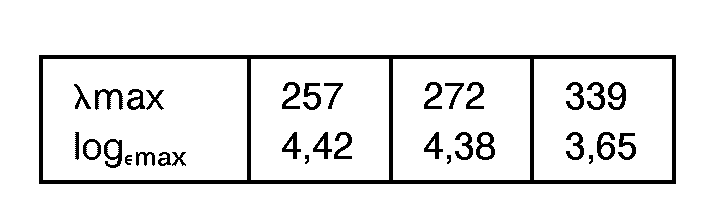
Die Dünnschichtchromatographie wurde auf Schleicher und Schüll Kieselgel F 1500/LS 254 in CH2CI2/MeOH (95:5) durchgeführt und ein Rf-Wert von 0,48 berechnet. - b) UV-Spektroskopie in Methanol:
- c) Elementaranalyse
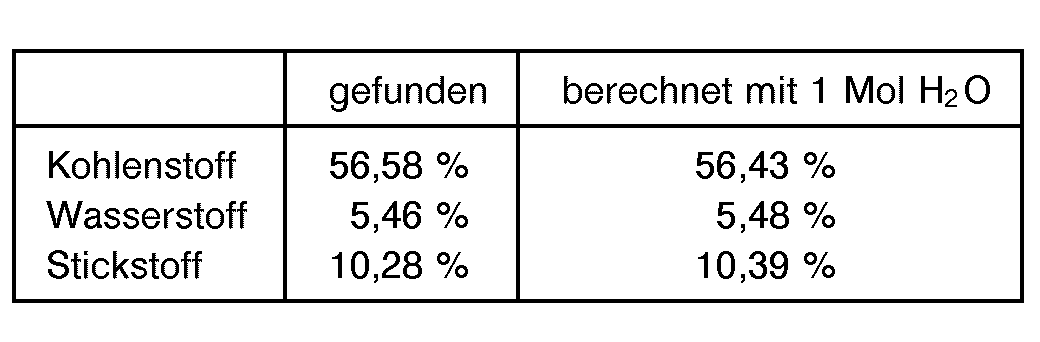
- d) NMR-Spektroskopie
in CDCl3 bei 250 MHz- 9,03 s breit (1) NH, 8,81 s (1) H-8, 8,61 d (2) Dansyl-H-2, 8,35-8,30 m (2) Dansyl-H-4, Dansyl-H-8, 8,23 s (1) H-2, 8,03 d (2) 2H von o-Bz, 7,65-7,50 m (5) 3H von Bz, Dansyl-H-3, Dansyl-H-7, 7,20 d (1) Dansyl-H-6, 6,20 d (1) H-1', 5,13 t (1) H-2', 4,52-4,32 m (6) CH2OCO, H-3', H-4', H-5', H-5", 3,72 t (2) S02CH2, 3,77-3,43 m (4) CH20CH2 (Mthp), um 2,90 s breit (1) 3'-OH, 2,89 s (6) NMe2, 2,87 s (3) OCH3, 1,95-1,55 m (4) CH2CCH2 (Mthp)
-
- a) Dünnschichtchromatographie
Die Dünnschichtchromatographie wurde auf Kieselgel F 1500/LS 254 (Schleicher & Schüll) in CH2Cl2/MeOH (100:2) durchgeführt und ein Rf-Wert von 0,35 berechnet. - b) UV-Spektroskopie in Methanol:

- c) Elementaranalyse

- d) NMR-Spektroskopie
in CDCl3 bei 250 MHz- 9,05 s breit (1) NH, 8,83 s (1) H-8, 8,69-8,60 2d (2) 2 x Dansyl-H-2, 8,35-8,29 m (4) 2 x Dansyl-H-4, 2 x Dansyl-H-8, 8,22 s (1) H-2, 8,03 d (2) 2H von o-Bz, 7,68-7,50 m (7) 3H von Bz, 2 x Dansyl-H-3, 2 x Dansyl-H-7, 7,24-7,18 2 zu t überlagerte d (2) 2 x Dansyl-H-6, 6,13 d (1) H-1', 5,32 t (1) H-2', 5,13-5,11 m (1) H-3', 4,60-4,22 m (7) 2 x CH2OCO, H-4', H-5', H-5", 3,77-3,26 m (8) 2 x SO2CH2, CH20CH2 (Mthp), 2,89 s (6) NMe2, 2,88 s (6) MMe2, 2,63 s (3) OCH3, 1,78-1,20 m (4) CH2CCH2 (Mthp)
- 1 g (1,264 mmol) 2'-O-Mthp-5'-O-DansEOC-N6-Bz-Adenosin werden in 6 ml absolutem CH2CI2 gelöst, dann werden 0,86 ml (0,65 g = 5,03 mmol = 4 eq) Hünigs Base und 0,84 g (2,528 mmol = 2 eq) Phosphorigsäurechlorid 2-(4-nitrophenyl)-ethylester-N,N-diisopropylamid zugegeben. Unter einer Stickstoffatmosphäre, abgedunkelt mit einer Alufolie, wird der Ansatz bei Raumtemperatur gerührt. Nach 1 1/4 h werden nochmals 0,42 g (1,264 mmol = 1 eq) Phosphitylierungreagenz zugegeben. Nach insgesamt 2,5 h Rühren bei Raumtemperatur wird mit 75 ml CH2CI2 verdünnt, mit 75 ml gesättigter NaHC03-Lsg. gewaschen, die wäßrige Phase 4 x mit je 50 ml CH2CI2 rückextrahiert, die vereinigten organischen Phasen über Na2S04 getrocknet, abfiltriert und einrotiert. Man reinigt über eine Si02-Säule (30 g, 12 x 3 cm) mit Flash-Chromatographie: Man eluiert mit 250 ml CH2Cl2, 100 ml CH2C12/EE 100:1, 100 ml CH2C12/EE 100:2, 100 ml CH2Cl2/EE 100:3, 100 ml CH2Cl2/EE 100:5, 100 ml CH2Cl2/EE 100:7, 100 ml CH2Cl2/EE 9:1, 350 ml CH2Cl2/EE 4:1 (Reagenz), 100 ml CH2Cl2/EE 2:1 (Produkt), 100 ml CH2Cl2/EE 1:1 (Produkt), 100 ml CH2Cl2/EE 1:2 (Produkt) und 100 ml EE (Produkt).
- Die Produktfraktionen werden einrotiert und im Hochvakuum getrocknet.
- Man erhält 0,955 g (0,878 mmol = 70 %) eines gelben, fluoreszierenden Schaumes.
-
- a) Dünnschichtchromatographie
Die Dünnschichtchromatographie wurde auf Schleicher & Schüll F 1500/LS 254 Kieselgel in Toluol/EE (1:6) durchgeführt und ein Rf-Wert von 0,50 berechnet. - b) UV-Spektroskopie in Methanol

- c) Elementaranalyse

- d) NMR-Spektroskopie
- 1. 31 P-NMR in CDCl3 bei 161,70 MHz
- 151,34 ppm s (31 %)
- 149,47 ppm s (69 %)
- 2. 1H-NMR in CDCl3 bei 250 MHz
- 9,07 s breit (1) NH, 8,83 u. 8,82 2s (1) H-8, 8,61 d (1) Dansyl-H-2, 8,35-8,29 m (2) Dansyl-H-4, Dansyl-H-8, 8,24 u. 8,22 2s (1) H-2, 8,18 -8,13 2d (2) 2H o zu Phenyl-N02, 8,03 d (2) 2H von o-Bz, 7,64-7,49 m (5) 3H von Bz, Dansyl-H-3, Dansyl-H-7, 7,45-7,38 2d (2) 2H m zu Phenyl-N02, 7,19 d (1) Dansyl-H-6, 6,23 u. 6,15 2d (1) H-1', 5,20 u. 5,11 2t (1) H-2', 4,48 t (2) CH2OCO, 4,44-4,18 m (4) H-3', H-4', H-5', H-5", 4,10-3,88 m (2) CH20P, 3,84-3,25 m (6) 2 x CH
- (i-Pr). CH20CH2 (Mthp), 3,71 t (2) S02CH2, 3,06 t (2) CH2-Phenyl-N02, 2,88 s (6) NMe2, 2,66 u. 2,61 2s (3) OCH3, 2,00-1,45 m (4) CH2CCH2 (Mthp), 1,26-1,12 überlagerte d (12) 2 x C(CH3)2 (i-Pr)
- Automatische Oligoribonukleotid-Synthese mit 2'-O-(4-Methoxy-tetrahydropyranyl)-5'-O-dansylethox- ycarbonylphosphitamidit. Herstellung des Decanucleotids (rAp)gT.
- Die Synthesen wurden mit einem 380 B DNA-Synthesizer (Applied Biosystems) durchgeführt.
- Verwendete Säule: ABI-Standardsäule
- Verwendetes Trägermaterial: LCAMA-CPG-Träger, der mit dem Nucleosid über 3'-Hydroxygruppe verbunden ist.
- (Literatur: K.P. Stengele, W. Pfleiderer Nucleic Acids Res. Symp. Ser. 21, 101 (1989); K.P. Stengele, W. Pfleiderer Tetrahedron Lett. 31, 2549 (1990)).
- Beladung mit Thymidin, das über die 3'-Hydroxy-Gruppe an den Träger gebunden ist; 19 µmol/g Ansatzgröße: ca. 0,6 µmol (Bestimmung durch Tritylabspaltung).
-
- 1. Kondensation mit 0,5 M Tetrazol und 0,1 M 2'-O-(4-Methoxy-tetrahydropyranyl)-5'-O-dansylethoxycarbonyl-N6-benzoyl-adenosin-3'-O-phosphitamid in absolutem Acetonitril gemäß folgender Pulsfolge:

- 2. Capping von nicht-umgesetzten Nukleotid mit Acetanhydrid/Lutidin/THF (1:1:3) und 6,5 % Dimethyl aminopyridin (DMAP) in THF

- 3. Oxidation mit 12-Lösung (1.269 g 12/20 ml H20/10 ml Pyridin/100 ml THF)

- 4. Dansylethoxycarbonyl-Abspaltung mit 0,1 M DBU in Acetonitril in 2 x 30 sec. und 8 x 10 sec. gepulsten Flüssen mit dazwischengeschalteten 1 sec. "reverse flushes".
- Die Eluate aus dem 4. Schritt wurden gesammelt und die Kondensationsausbeuten anhand des gebildeten 5-Dimethylamino-naphtyl-1-vinylsulfons mittels Fluoreszenzspektroskopie (Anregung: 368 nm; Emission: 526 nm) bestimmt.
- Die durchschnittliche stufenweise Ausbeute betrug ca. 98 %.
- Zwischen den einzelnen Schritten 1-4 erfolgten die üblichen Waschschritte mit Acetonitril sowie die "block- bzw. reverse flushes".
- 10,75 Äquivalente Imidazol werden in 5 ml absolutem Methylenchlorid gelöst, dann mit Eis/Kochsalz gekühlt und anschließend die gekühlte Lösung mit 3,5 Äquivalenten PCl3 und 11.25 Äquivalenten Triethylamin versetzt. Man rührt 15 Minuten unter Kühlung und gibt dann 0,25 mmol (1 Äquivalent) 2'-O-(4-Methoxytetrahydropyranyl)-5'-O-dansyl-ethoxycarbonyl-N6-benzoyladenosin oder 0,25 mmol 2'-O-(4-Methoxytetrahydropyranyl)-5'-O-dansylethoxycarbonyl-N6-para-nitrophenylethyloxycarbonyladenosin (1 x mit Acetonitril koevaporiert) in 5 ml absolutem Methylenchlorid innerhalb von 10 min tropfenweise unter Rühren zu.
- Danach wird das Eisbad entfernt und weitere 15 Minuten bei Raumtemperatur gerührt. Anschließend wird die Reaktionslösung mit 10 ml 1 M Triethylammonium-bikarbonat ausgeschüttelt. Man trennt die Phasen, extrahiert die wäßrige Phase mit 10 ml CH2CI2 trocknet die vereinigten organischen Phasen über Na2S04, filtriert ab und rotiert zu einem gelben, fluoreszierenden Schaum ein. Man reinigt über eine kurze Kieselgel-Säule (Flash-Chromatographi) mit einem CH2CI2/MeOH-Gradienten.
- Die Synthesen wurden mit einem 380 B DNA-Synthesizer (Applied Biosystems) durchgeführt.
- Verwendete Säule: ABI-Standardsäule
- Verwendetes Trägermaterial: LCAMA-CPG-Träger (Literatur: K.P. Stengele, W. Pfleiderer Nucleic Acids Res. Symp. Ser. 21, 101 (1989); K.P. Stengele, W. Pfleiderer Tetrahedron Lett. 31, 2549 (1990)).
- Beladung mit Thymidin, das über die 3'-Hydroxy-Gruppe an den Träger gebunden ist, 19 µmol/g
- Ansatzgröße: ca. 0,6 µmol (Bestimmung durch Tritylabspaltung).
-
- 1. Waschen mit absolutem Pyridin/Acetonitril (1:1)
- 2. Umsetzung mit 2'-O-(4-Methoxytetrahydropyranyl)-5'-O-dansylethoxycarbonyl-H-phosphonat (10 mM) und Pivaloylchlorid (50 mM) in absolutem Pyridin/Acetonitril (1:1)
- 3. Waschen mit absolutem Acetonitril (45 Sekunden)
- 4. Dansylethoxycarbonyl-Abspaltung mit 0,1 M DBU in Acetonitril (2 Minuten)
- 5. Wiederholung der Schritte 1 bis 4 bis gewünschte Kettenlänge erreicht.
- 6. Dansylethoxycarbonyl-Abspaltung mit 0,1 M DBU in Acetonitril (2 Minuten) und Sammeln der Eluate
- 7. Oxidation mit J2 (0,1 M) in Pyridin/N-Methylimidazol/Wasser/THF (5/1/5/90) (2,5 Minuten) oder mit J2 -(0,1 M) in Triethylamin/Wasser/THF (5/5/90) (2,5 Minuten)
- Die Eluate aus dem 6. Schritt werden gesammelt und die Kondensationsausbeuten anhand des gebildeten 5-Dimethylamino-naphthyl-1-vinylsulfons mittels Fluoreszenzspektroskopie (Anregung: 368 nm; Emission: 526 nm) bestimmt.
- Die durchschnittliche stufenweise Ausbeute beträgt ca. 98 %.
Die Oxidation zum Thiophosphat oder Phosphoramidat wurde auch wie in Uhlmann & Peyman (1990) beschrieben durchgeführt.
Claims (10)


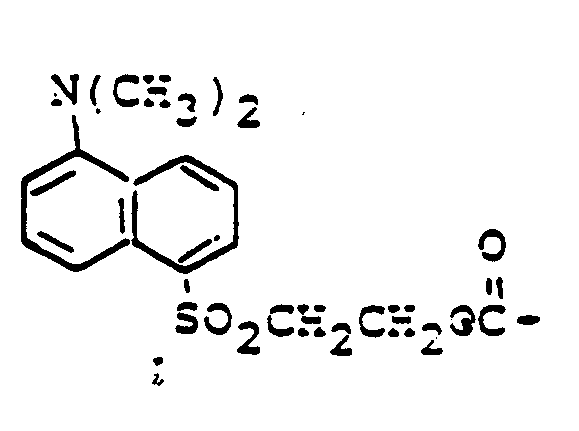

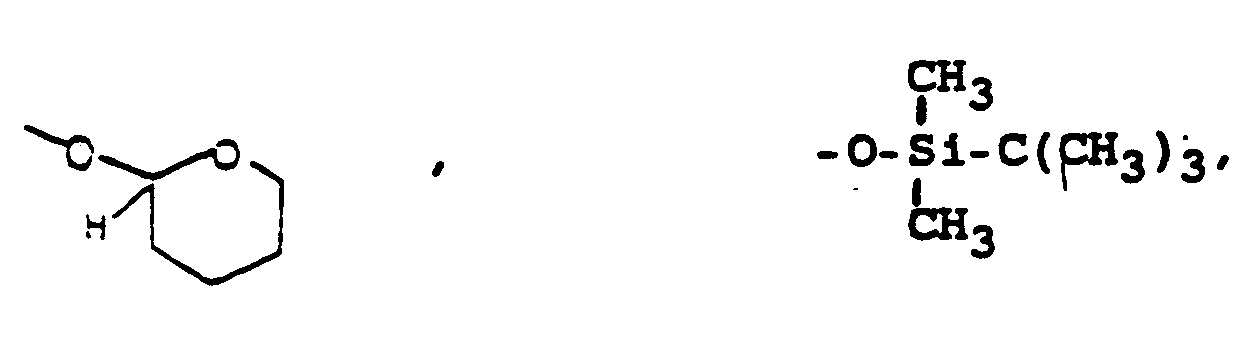


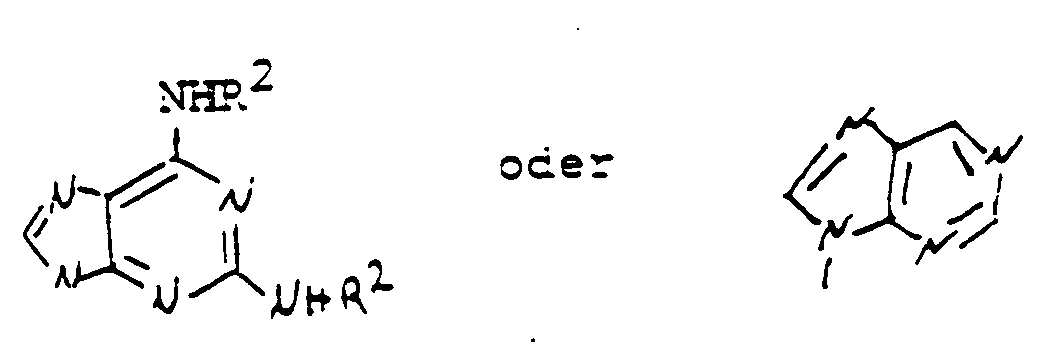
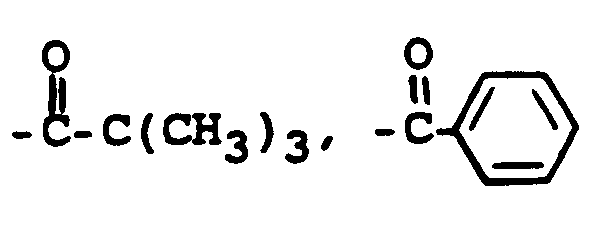
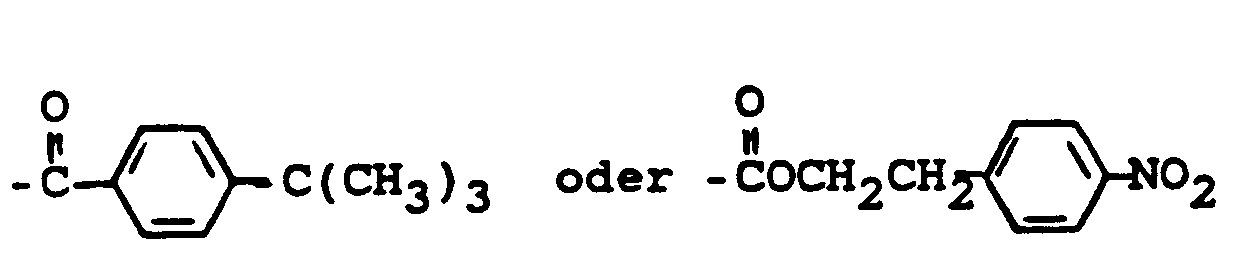
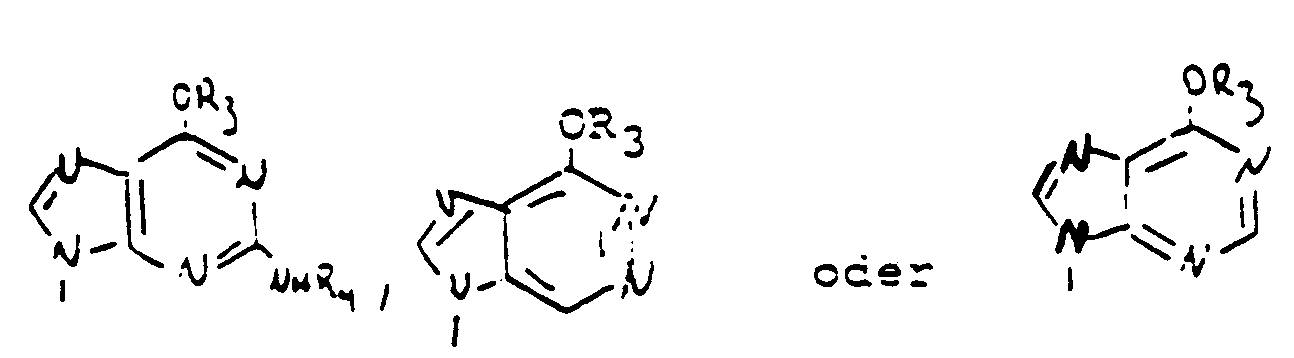


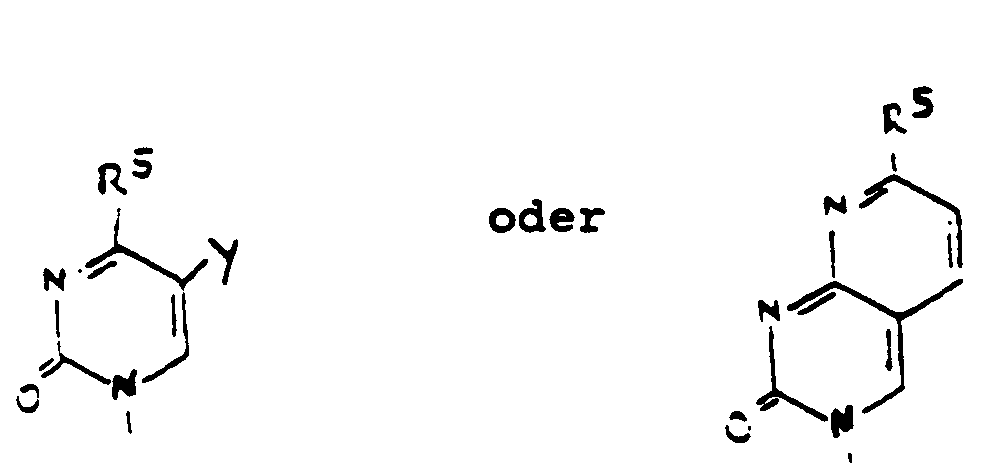
mit R5 jeweils unabhängig voneinander -OH,




oder eine Benzylgruppe, welche nicht substituiert oder einfach oder mehrfach ringsubstituiert, vorzugsweise nicht substituiert ist, wobei der oder die Substituenten unabhängig voneinander ein Halogen, eine C1-C4-Alkyl-, Nitro-, Methoxy- oder Carboxylgruppe ist, durch Umsetzung der Verbindung der Formel (Illa) oder (IIIb) mit einer Verbindung der Formel (VI)


Applications Claiming Priority (4)
| Application Number | Priority Date | Filing Date | Title |
|---|---|---|---|
| DE4029244A DE4029244A1 (de) | 1990-09-14 | 1990-09-14 | Verfahren zur chemischen synthese von oligonukleotiden |
| DE4029244 | 1990-09-14 | ||
| DE4111363 | 1991-04-09 | ||
| DE4111363 | 1991-04-09 |
Publications (3)
| Publication Number | Publication Date |
|---|---|
| EP0475443A2 EP0475443A2 (de) | 1992-03-18 |
| EP0475443A3 EP0475443A3 (en) | 1992-07-08 |
| EP0475443B1 true EP0475443B1 (de) | 1994-10-19 |
Family
ID=25896883
Family Applications (1)
| Application Number | Title | Priority Date | Filing Date |
|---|---|---|---|
| EP91115583A Expired - Lifetime EP0475443B1 (de) | 1990-09-14 | 1991-09-13 | Verfahren zur chemischen Synthese von Oligonukleotiden |
Country Status (17)
| Country | Link |
|---|---|
| US (2) | US5631362A (de) |
| EP (1) | EP0475443B1 (de) |
| JP (2) | JP3539978B2 (de) |
| KR (1) | KR100228606B1 (de) |
| AT (1) | ATE113031T1 (de) |
| AU (1) | AU641882B2 (de) |
| CA (1) | CA2051217C (de) |
| DE (1) | DE59103277D1 (de) |
| DK (1) | DK0475443T3 (de) |
| ES (1) | ES2065595T3 (de) |
| FI (1) | FI102072B1 (de) |
| HU (1) | HUT63432A (de) |
| IE (1) | IE65094B1 (de) |
| IL (1) | IL99465A (de) |
| NO (1) | NO178333C (de) |
| NZ (1) | NZ239766A (de) |
| PT (1) | PT98963B (de) |
Families Citing this family (4)
| Publication number | Priority date | Publication date | Assignee | Title |
|---|---|---|---|---|
| US6048975A (en) * | 1991-09-12 | 2000-04-11 | Hoechst Aktiengesellschaft | Process for the chemical synthesis of oligonucleotides |
| DE19842164B4 (de) * | 1998-09-15 | 2004-06-03 | Deutsches Krebsforschungszentrum Stiftung des öffentlichen Rechts | Verfahren zur Qualitätskontrolle beim Aufbau von Oligomerrastern |
| CN102887841A (zh) * | 2012-11-02 | 2013-01-23 | 天津希恩思生化科技有限公司 | 化合物丹磺酰氯的制备方法 |
| IL288838B1 (en) | 2019-06-11 | 2025-08-01 | Hoffmann La Roche | Process for the preparation of oligonucleotides using modified oxidation protocol |
Family Cites Families (5)
| Publication number | Priority date | Publication date | Assignee | Title |
|---|---|---|---|---|
| BE757863A (fr) * | 1969-10-24 | 1971-04-22 | Hoechst Ag | Colorants anthraquinoniques solubles dans l'eau et leur preparation |
| EP0267996A1 (de) * | 1986-11-20 | 1988-05-25 | Tamir Biotechnology Ltd. | Nukleotid-Derivate |
| US4960700A (en) * | 1986-12-24 | 1990-10-02 | Genentech, Inc. | Compositions and methods for the synthesis and assay of a mammalian enkephalinase |
| US4997928A (en) * | 1988-09-15 | 1991-03-05 | E. I. Du Pont De Nemours And Company | Fluorescent reagents for the preparation of 5'-tagged oligonucleotides |
| WO1991004983A1 (en) * | 1989-10-05 | 1991-04-18 | University Patents, Inc. | Nucleoside and polynucleotide thiophosphoramidite and phosphorodithioate compounds and processes |
-
1991
- 1991-09-12 HU HU912936A patent/HUT63432A/hu unknown
- 1991-09-12 CA CA002051217A patent/CA2051217C/en not_active Expired - Fee Related
- 1991-09-12 IL IL9946591A patent/IL99465A/en not_active IP Right Cessation
- 1991-09-12 NZ NZ239766A patent/NZ239766A/en not_active IP Right Cessation
- 1991-09-12 FI FI914293A patent/FI102072B1/fi active IP Right Grant
- 1991-09-13 IE IE325091A patent/IE65094B1/en not_active IP Right Cessation
- 1991-09-13 PT PT98963A patent/PT98963B/pt not_active IP Right Cessation
- 1991-09-13 JP JP26329091A patent/JP3539978B2/ja not_active Expired - Lifetime
- 1991-09-13 ES ES91115583T patent/ES2065595T3/es not_active Expired - Lifetime
- 1991-09-13 AT AT91115583T patent/ATE113031T1/de not_active IP Right Cessation
- 1991-09-13 AU AU83865/91A patent/AU641882B2/en not_active Ceased
- 1991-09-13 NO NO913626A patent/NO178333C/no unknown
- 1991-09-13 EP EP91115583A patent/EP0475443B1/de not_active Expired - Lifetime
- 1991-09-13 KR KR1019910015958A patent/KR100228606B1/ko not_active Expired - Fee Related
- 1991-09-13 DE DE59103277T patent/DE59103277D1/de not_active Expired - Lifetime
- 1991-09-13 DK DK91115583.6T patent/DK0475443T3/da active
-
1995
- 1995-05-09 US US08/437,566 patent/US5631362A/en not_active Expired - Lifetime
- 1995-06-07 US US08/487,229 patent/US5945524A/en not_active Expired - Lifetime
-
2003
- 2003-02-27 JP JP2003051774A patent/JP3983691B2/ja not_active Expired - Lifetime
Also Published As
| Publication number | Publication date |
|---|---|
| JP3539978B2 (ja) | 2004-07-07 |
| JP3983691B2 (ja) | 2007-09-26 |
| FI914293A0 (fi) | 1991-09-12 |
| NO178333C (no) | 1996-03-06 |
| IE913250A1 (en) | 1992-02-25 |
| HUT63432A (en) | 1993-08-30 |
| IL99465A0 (en) | 1992-08-18 |
| JPH05320122A (ja) | 1993-12-03 |
| DK0475443T3 (da) | 1995-04-03 |
| AU641882B2 (en) | 1993-09-30 |
| AU8386591A (en) | 1992-03-19 |
| NO913626L (no) | 1992-03-16 |
| ES2065595T3 (es) | 1995-02-16 |
| PT98963A (pt) | 1992-08-31 |
| HU912936D0 (en) | 1992-01-28 |
| CA2051217C (en) | 2003-12-09 |
| KR100228606B1 (ko) | 1999-11-01 |
| NO913626D0 (no) | 1991-09-13 |
| NO178333B (no) | 1995-11-27 |
| EP0475443A2 (de) | 1992-03-18 |
| NZ239766A (en) | 1994-05-26 |
| IL99465A (en) | 2001-04-30 |
| JP2003292499A (ja) | 2003-10-15 |
| FI102072B (fi) | 1998-10-15 |
| US5631362A (en) | 1997-05-20 |
| FI102072B1 (fi) | 1998-10-15 |
| FI914293L (fi) | 1992-03-15 |
| IE65094B1 (en) | 1995-10-04 |
| ATE113031T1 (de) | 1994-11-15 |
| CA2051217A1 (en) | 1992-03-15 |
| EP0475443A3 (en) | 1992-07-08 |
| KR920006305A (ko) | 1992-04-27 |
| US5945524A (en) | 1999-08-31 |
| DE59103277D1 (de) | 1994-11-24 |
| PT98963B (pt) | 1999-02-26 |
Similar Documents
| Publication | Publication Date | Title |
|---|---|---|
| DE3689715T2 (de) | Verfahren und Reagenzien für die In-vitro-Synthese von Oligonukleotiden. | |
| DE60202681T2 (de) | Verfahren zur herstellung des lna phosphoramidite | |
| DE3751947T2 (de) | Nucleosidderivate und ihre Verwendung in der Oligonucleotid-Synthese | |
| JP2552048B2 (ja) | ヌクレオチド鎖合成用試薬 | |
| EP0399330B1 (de) | Modifiziertes Phosphoramidit-Verfahren zur Herstellung von modifizierten Nukleinsäuren | |
| DE69924930T2 (de) | Synthese von Oligonukleotiden | |
| DE69632456T2 (de) | Nukleinsäuresynthese unter verwendung von mittels licht abspaltbaren schutzgruppen | |
| DE3887273T2 (de) | 2',3'-Dideoxy-2'-fluornucleoside. | |
| US5071974A (en) | Compositions and methods for the synthesis of oligonucleotides having 5'-phosphorylated termini | |
| EP0818460B1 (de) | Festphasensynthese von Oligonucleotiden | |
| DE4343126A1 (de) | Festphasensynthese von Oligoribonucleotiden | |
| DE60103145T2 (de) | Verfahren zur herstellung von phoshphorothioate triestere | |
| DE69401136T2 (de) | Modifizierte Oligodeoxyribonukleotide, ihre Herstellung und ihre therapeutische Verwendung | |
| DE60109047T2 (de) | Synthone zur herstellung von oligonukleotiden | |
| AU2001235766A1 (en) | Process for the preparation of phosphorothioate triesters | |
| EP1212338A2 (de) | Nucleosid-derivate mit photolabilen schutzgruppen | |
| EP0475443A2 (de) | Verfahren zur chemischen Synthese von Oligonukleotiden | |
| US4426517A (en) | Process for de-cyanoethylating blocked nucleotides | |
| EP0064796A2 (de) | Phosphorylierungsmittel und Verfahren zur Phosphorylierung organischer Hydroxylverbindungen | |
| DE4029244A1 (de) | Verfahren zur chemischen synthese von oligonukleotiden | |
| US6048975A (en) | Process for the chemical synthesis of oligonucleotides | |
| DE69128628T2 (de) | Oligo(alpha-arabinofuranosyl nukleotide) und entsprechende alpha-arabinofuranosyl vorläufer | |
| JPH0613545B2 (ja) | ヌクレオシドホスホロチオイットおよびその合成法 | |
| EP0075392A1 (de) | Verfahren zur De-cyanoethylierung von blockierten Nucleotiden | |
| DE202005021489U1 (de) | Zusammmensetzung für die Synthese von phosphitylierten Verbindungen |
Legal Events
| Date | Code | Title | Description |
|---|---|---|---|
| PUAI | Public reference made under article 153(3) epc to a published international application that has entered the european phase |
Free format text: ORIGINAL CODE: 0009012 |
|
| AK | Designated contracting states |
Kind code of ref document: A2 Designated state(s): AT BE CH DE DK ES FR GB GR IT LI LU NL SE |
|
| PUAL | Search report despatched |
Free format text: ORIGINAL CODE: 0009013 |
|
| AK | Designated contracting states |
Kind code of ref document: A3 Designated state(s): AT BE CH DE DK ES FR GB GR IT LI LU NL SE |
|
| 17P | Request for examination filed |
Effective date: 19920912 |
|
| 17Q | First examination report despatched |
Effective date: 19940209 |
|
| GRAA | (expected) grant |
Free format text: ORIGINAL CODE: 0009210 |
|
| AK | Designated contracting states |
Kind code of ref document: B1 Designated state(s): AT BE CH DE DK ES FR GB GR IT LI LU NL SE |
|
| REF | Corresponds to: |
Ref document number: 113031 Country of ref document: AT Date of ref document: 19941115 Kind code of ref document: T |
|
| REF | Corresponds to: |
Ref document number: 59103277 Country of ref document: DE Date of ref document: 19941124 |
|
| ET | Fr: translation filed | ||
| ITF | It: translation for a ep patent filed | ||
| EAL | Se: european patent in force in sweden |
Ref document number: 91115583.6 |
|
| REG | Reference to a national code |
Ref country code: GR Ref legal event code: FG4A Free format text: 3014183 |
|
| GBT | Gb: translation of ep patent filed (gb section 77(6)(a)/1977) |
Effective date: 19950106 |
|
| REG | Reference to a national code |
Ref country code: ES Ref legal event code: FG2A Ref document number: 2065595 Country of ref document: ES Kind code of ref document: T3 |
|
| REG | Reference to a national code |
Ref country code: DK Ref legal event code: T3 |
|
| PLBE | No opposition filed within time limit |
Free format text: ORIGINAL CODE: 0009261 |
|
| STAA | Information on the status of an ep patent application or granted ep patent |
Free format text: STATUS: NO OPPOSITION FILED WITHIN TIME LIMIT |
|
| 26N | No opposition filed | ||
| REG | Reference to a national code |
Ref country code: ES Ref legal event code: PC2A |
|
| REG | Reference to a national code |
Ref country code: CH Ref legal event code: PUE Owner name: HOECHST AKTIENGESELLSCHAFT TRANSFER- AVENTIS PHARM |
|
| REG | Reference to a national code |
Ref country code: GB Ref legal event code: IF02 |
|
| NLS | Nl: assignments of ep-patents |
Owner name: AVENTIS PHARMA DEUTSCHLAND GMBH |
|
| REG | Reference to a national code |
Ref country code: FR Ref legal event code: TP |
|
| REG | Reference to a national code |
Ref country code: GB Ref legal event code: 732E |
|
| PGFP | Annual fee paid to national office [announced via postgrant information from national office to epo] |
Ref country code: ES Payment date: 20051020 Year of fee payment: 15 |
|
| REG | Reference to a national code |
Ref country code: CH Ref legal event code: PFA Owner name: SANOFI-AVENTIS DEUTSCHLAND GMBH Free format text: AVENTIS PHARMA DEUTSCHLAND GMBH#BRUENINGSTRASSE 50#65926 FRANKFURT AM MAIN (DE) -TRANSFER TO- SANOFI-AVENTIS DEUTSCHLAND GMBH##65926 FRANKFURT AM MAIN (DE) |
|
| NLT1 | Nl: modifications of names registered in virtue of documents presented to the patent office pursuant to art. 16 a, paragraph 1 |
Owner name: SANOFI-AVENTIS DEUTSCHLAND GMBH |
|
| PGFP | Annual fee paid to national office [announced via postgrant information from national office to epo] |
Ref country code: AT Payment date: 20060721 Year of fee payment: 16 Ref country code: NL Payment date: 20060721 Year of fee payment: 16 |
|
| PGFP | Annual fee paid to national office [announced via postgrant information from national office to epo] |
Ref country code: CH Payment date: 20060726 Year of fee payment: 16 |
|
| PGFP | Annual fee paid to national office [announced via postgrant information from national office to epo] |
Ref country code: BE Payment date: 20060807 Year of fee payment: 16 |
|
| PGFP | Annual fee paid to national office [announced via postgrant information from national office to epo] |
Ref country code: GR Payment date: 20060914 Year of fee payment: 16 |
|
| PGFP | Annual fee paid to national office [announced via postgrant information from national office to epo] |
Ref country code: LU Payment date: 20060921 Year of fee payment: 16 |
|
| PGFP | Annual fee paid to national office [announced via postgrant information from national office to epo] |
Ref country code: IT Payment date: 20060930 Year of fee payment: 16 |
|
| REG | Reference to a national code |
Ref country code: FR Ref legal event code: CD Ref country code: FR Ref legal event code: CA |
|
| BERE | Be: lapsed |
Owner name: *SANOFI-AVENTIS DEUTSCHLAND G.M.B.H. Effective date: 20070930 |
|
| PG25 | Lapsed in a contracting state [announced via postgrant information from national office to epo] |
Ref country code: SE Free format text: LAPSE BECAUSE OF NON-PAYMENT OF DUE FEES Effective date: 20070914 |
|
| PGFP | Annual fee paid to national office [announced via postgrant information from national office to epo] |
Ref country code: DK Payment date: 20060727 Year of fee payment: 16 |
|
| REG | Reference to a national code |
Ref country code: DK Ref legal event code: EBP |
|
| REG | Reference to a national code |
Ref country code: CH Ref legal event code: PL |
|
| EUG | Se: european patent has lapsed | ||
| PG25 | Lapsed in a contracting state [announced via postgrant information from national office to epo] |
Ref country code: NL Free format text: LAPSE BECAUSE OF NON-PAYMENT OF DUE FEES Effective date: 20080401 |
|
| NLV4 | Nl: lapsed or anulled due to non-payment of the annual fee |
Effective date: 20080401 |
|
| PG25 | Lapsed in a contracting state [announced via postgrant information from national office to epo] |
Ref country code: AT Free format text: LAPSE BECAUSE OF NON-PAYMENT OF DUE FEES Effective date: 20070913 |
|
| PGFP | Annual fee paid to national office [announced via postgrant information from national office to epo] |
Ref country code: SE Payment date: 20060726 Year of fee payment: 16 |
|
| PG25 | Lapsed in a contracting state [announced via postgrant information from national office to epo] |
Ref country code: CH Free format text: LAPSE BECAUSE OF NON-PAYMENT OF DUE FEES Effective date: 20070930 Ref country code: LI Free format text: LAPSE BECAUSE OF NON-PAYMENT OF DUE FEES Effective date: 20070930 |
|
| PG25 | Lapsed in a contracting state [announced via postgrant information from national office to epo] |
Ref country code: BE Free format text: LAPSE BECAUSE OF NON-PAYMENT OF DUE FEES Effective date: 20070930 |
|
| PG25 | Lapsed in a contracting state [announced via postgrant information from national office to epo] |
Ref country code: DK Free format text: LAPSE BECAUSE OF NON-PAYMENT OF DUE FEES Effective date: 20071001 |
|
| REG | Reference to a national code |
Ref country code: ES Ref legal event code: FD2A Effective date: 20070914 |
|
| PG25 | Lapsed in a contracting state [announced via postgrant information from national office to epo] |
Ref country code: ES Free format text: LAPSE BECAUSE OF NON-PAYMENT OF DUE FEES Effective date: 20070914 |
|
| PG25 | Lapsed in a contracting state [announced via postgrant information from national office to epo] |
Ref country code: GR Free format text: LAPSE BECAUSE OF NON-PAYMENT OF DUE FEES Effective date: 20080402 |
|
| PG25 | Lapsed in a contracting state [announced via postgrant information from national office to epo] |
Ref country code: LU Free format text: LAPSE BECAUSE OF NON-PAYMENT OF DUE FEES Effective date: 20070913 Ref country code: IT Free format text: LAPSE BECAUSE OF NON-PAYMENT OF DUE FEES Effective date: 20070913 |
|
| PGFP | Annual fee paid to national office [announced via postgrant information from national office to epo] |
Ref country code: FR Payment date: 20100921 Year of fee payment: 20 |
|
| PGFP | Annual fee paid to national office [announced via postgrant information from national office to epo] |
Ref country code: GB Payment date: 20100908 Year of fee payment: 20 |
|
| PGFP | Annual fee paid to national office [announced via postgrant information from national office to epo] |
Ref country code: DE Payment date: 20100930 Year of fee payment: 20 |
|
| REG | Reference to a national code |
Ref country code: DE Ref legal event code: R071 Ref document number: 59103277 Country of ref document: DE |
|
| REG | Reference to a national code |
Ref country code: DE Ref legal event code: R071 Ref document number: 59103277 Country of ref document: DE |
|
| REG | Reference to a national code |
Ref country code: GB Ref legal event code: PE20 Expiry date: 20110912 |
|
| PG25 | Lapsed in a contracting state [announced via postgrant information from national office to epo] |
Ref country code: GB Free format text: LAPSE BECAUSE OF EXPIRATION OF PROTECTION Effective date: 20110912 |
|
| PG25 | Lapsed in a contracting state [announced via postgrant information from national office to epo] |
Ref country code: DE Free format text: LAPSE BECAUSE OF EXPIRATION OF PROTECTION Effective date: 20110914 |