EP0477796B1 - Method and apparatus for calculating thermal sensitivity - Google Patents
Method and apparatus for calculating thermal sensitivity Download PDFInfo
- Publication number
- EP0477796B1 EP0477796B1 EP91116042A EP91116042A EP0477796B1 EP 0477796 B1 EP0477796 B1 EP 0477796B1 EP 91116042 A EP91116042 A EP 91116042A EP 91116042 A EP91116042 A EP 91116042A EP 0477796 B1 EP0477796 B1 EP 0477796B1
- Authority
- EP
- European Patent Office
- Prior art keywords
- temperature
- teq
- calculating
- tcr
- set temperature
- Prior art date
- Legal status (The legal status is an assumption and is not a legal conclusion. Google has not performed a legal analysis and makes no representation as to the accuracy of the status listed.)
- Expired - Lifetime
Links
Images




Classifications
-
- G—PHYSICS
- G01—MEASURING; TESTING
- G01W—METEOROLOGY
- G01W1/00—Meteorology
- G01W1/17—Catathermometers for measuring "cooling value" related either to weather conditions or to comfort of other human environment
Definitions
- the present invention relates to a method and an apparatus for calculating thermal sensitivity, e.g., an equivalent temperature (Teq), felt by a human body, and a method and an apparatus for calculating a PMV (Predicted Mean Vote) value as predicted mean thermal Sensitivity representing the degree of comfort in an indoor environment.
- thermal sensitivity e.g., an equivalent temperature (Teq)
- PMV Predicted Mean Vote
- the equivalent temperature Teq is used as an evaluation index of a thermal environment felt by a human body, i.e., thermal sensitivity.
- an equivalent temperature Teq* substantially equal to the equivalent temperature Teq of the human body is obtained by measuring a radiant temperature Tr, an air temperature Ta, and an air velocity Vair by using different sensors, and performing predetermined arithmetic processing of the measured values.
- This method requires complicated arithmetic processing, and the processing time is undesirably prolonged.
- the equivalent temperature Teq* can be calculated by measuring the amount of power to be supplied to the heater and performing predetermined arithmetic processing of the measured value.
- the present applicant has proposed a method of obtaining a predicted mean sensitivity PMV*, as a value coinciding with the predicted mean sensitivity PMV with high accuracy, by using the above-mentioned equivalent temperature Teq* and simple formulae.
- the difference between the equivalent temperature Teq and the equivalent temperature Teq* affects arithmetic processing of the predicted mean thermal sensitivity PMV*. If the air velocity Vair is high, the predicted mean thermal sensitivity PMV* cannot be accurately obtained.
- EP-A-0 495 117 reflecting a state of the art according to Article 54 (3) EPC, describes a method and apparatus for calculating thermal sensitivity in which thermal energy is supplied to a heater so as to keep a temperature of a sensor provided for the heater at a predetermined set temperature.
- the thermal sensitivity is calculated on the basis of an air temperature, a clothing thermal resistance, the predetermined set temperature and the thermal energy.
- This document further describes a simplified formula for predicted mean thermal sensitivity so that complicated arithmetic operations are not required.
- the present invention has been made to solve the above-mentioned problems, and has its object, of to provide a method and apparatus for calculating thermal sensitivity, in which a set temperature ⁇ (th) is calculated on the basis of an air temperature Ta and a clothing thermal resistance Icl, thermal energy information H ⁇ (th) is supplied to heating means capable of adjusting a sensor temperature Tcr so as to set the set temperature ⁇ (th) to be equal to the sensor temperature Tcr, and an equivalent temperature Teq* is calculated on the basis of the air temperature Ta, the set temperature ⁇ (th) , the thermal energy information H ⁇ (th) , and coefficients b1 to b4, according to the following equation (a), when the sensor temperature Tcr is lower than the set temperature ⁇ (th) , whereas the equivalent temperature Teq* is calculated on the basis of the air temperature Ta, the set temperature ⁇ (th) , a difference ⁇ Tcr between the sensor temperature Tcr and the set temperature ⁇ (th) , an air velocity Vair,
- the sensor temperature Tcr is controlled to be equal to the set temperature ⁇ (th) which is not constant and changes depending on environmental conditions.
- the equivalent temperature Teq* is calculated on the basis of the air temperature Ta, the set temperature ⁇ (th) , the difference ⁇ Tcr, the air velocity Vair, the coefficients c1 to c6, and the coefficient n , and when the sensor temperature Tcr is lower than the set temperature ⁇ (th) , i.e., the module main body is set in a cooled state in which the thermal energy information H ⁇ (th) is required, the equivalent temperature Teq* is calculated on the basis of the air temperature Ta, the set temperature ⁇ (th) , the thermal energy information H ⁇ (th) , and the coefficients b1 to b4.
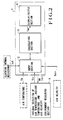
- Fig. 2 shows a thermal sensitivity calculating apparatus according to an embodiment of the present invention, which is associated with the first, second, fifth, and sixth aspects of the present invention.
- This thermal sensitivity calculating apparatus 1 comprises an input section 2, a calculating section 3, and a display/output section 4.
- the input section 2 receives not only a clothing thermal resistance Icl as a set value but also an air temperature Ta and a sensor temperature Tcr from an environment measuring section 5 as detection values. These set and detection values are then supplied from the input section 2 to the calculating section 3.
- the calculating section 3 then obtains a set temperature value ⁇ (th) , heater power H ⁇ (th) as thermal energy, and an equivalent temperature Teq*.
- the set temperature value ⁇ (th) is calculated by the following equation (2) on the basis of the air temperature Ta and the clothing thermal resistance Icl by using a set temperature calculating section 3-1. Note that values a1 and a2 in equation (2) will be described later.
- ⁇ (th) a1 + a2 x Ta
- a heater controlling/calculating section 3-2 measures the heater power H ⁇ (th) (W) while performing PID control or fuzzy control to set the set temperature ⁇ (th) to be qual to the sensor temperature Tcr.
- the obtained heater power H ⁇ (th) (W) is supplied to the environment measuring section 5 through the input section 2.
- the environment measuring section 5 comprises a spherical module main body 5-11, a heater 5-12 arranged in the module main body 5-11, and a temperature sensor 5-13 arranged on the module main body 5-11.
- the module main body 5-11 consists of a metal having high thermal conductivity, such as copper or aluminum.
- the outer surface of the module main body 5-11 is formed to have high emissivity so as to be sensitive to a radiant temperature Tr.
- the module main body 5-11 of the environment measuring section 5 may have a hemispherical shape, a cylindrical shape, or an elliptical shape, as shown in Figs. 3(B), 3(C), and 3(D).
- the above-mentioned heater power H ⁇ (th) is supplied to the heater 5-12 of the environment measuring section 5.
- the module main body 5-11 is then heated by the heater 5-12 and is controlled such that the sensor temperature Tcr detected by the temperature sensor 5-13 becomes equal to the set temperature ⁇ (th) .
- an equivalent temperature Teq* is calculated by the following equation (3) on the basis of the air temperature Ta, the clothing thermal resistance Icl, the set temperature ⁇ (th) , and the heater power H ⁇ (th) . Note that b1, b2, b3, and b4 in equation (2) will be described later.
- Teq* b1 + b2 x ⁇ (th) + b3 x Ta - b4 x H ⁇ (th)
- the heater power H ⁇ (th) is zero and the module main body 5-11 is in a heated state in which the sensor temperature Tcr is higher than the set temperature ⁇ (th) .
- Teq* c1 + c2 x ⁇ (th) + c3 x Ta + c4 x (1 + c5 x Vair n ) x ⁇ Tcr
- the equivalent temperatures Teq* obtained by the equivalent temperature calculation sections 3-3 and 3-3' are supplied to the display/output section 4 to be displayed.
- the set temperature ⁇ (th) is obtained on the basis of the clothing thermal resistance Icl and the air temperature Ta, and the heater power H ⁇ (th) to be supplied to the heater 5-12 is controlled such that the sensor temperature Tcr coincides with the set temperature ⁇ (th) . If the sensor temperature Tcr is lower than the set temperature ⁇ (th) , the equivalent temperature Teq* is calculated on the basis of the air temperature Ta, the clothing thermal resistance Icl, the set temperature ⁇ (th) , and the heater power H ⁇ (th) .
- the equivalent temperature Teq * is calculated on the basis of the air temperature Ta, the set temperature ⁇ (th) , the difference ⁇ Tcr between the sensor temperature Tcr and the set temperature ⁇ (th) , the air velocity Vair, the coefficients c1 to c5, and the coefficient n . Therefore, even if the air velocity Vair is high, or the sensor temperature Tcr is higher than the set temperature ⁇ (th) , the equivalent temperature Teq* coincides with the equivalent temperature Teq felt by a human body with high accuracy. This allows accurate measurement of an equivalent temperature.
- the environment measuring section 5 Since the environment measuring section 5 is small, its air velocity sensitivity inevitably becomes higher than that of a human body. That is, because of the surface effect of the environment measuring section 5, its air velocity sensitivity portion becomes larger than that of a human body to be Since this inequality sign remains throughout the arithmetic processing, the obtained equivalent temperature is much lower than the equivalent temperature Teq felt by a human body at a place where the air velocity Vair is high. Therefore, an accurate equivalent temperature cannot be obtained.
- the equivalent temperature Teq* is obtained on the basis of the air temperature Ta, the set temperature ⁇ (th) , the difference ⁇ Tcr between the sensor temperature Tcr and the set temperature ⁇ (th) , the air velocity Vair, and the clothing thermal resistance Icl, according to the following equation: then, the equivalent temperature Teq can be properly measured even if the sensor temperature Tcr is higher than the set temperature ⁇ (th) .
- the air velocity Vair is obtained by using an air velocity sensor.
- the air velocity Vair is set to be an arbitrary value, e.g., 0.2 m/s in consideration of the fact that the indoor air velocity mostly ranges from 0.1 to 0.3 m/s, a large error is not produced in the equivalent temperature Teq. That is, the air velocity sensor need not always be used. This ensures the simplification of the apparatus and prevents an increase in cost. Assume that the air velocity Vair is increased.
- the equivalent temperature Teq can be obtained by the scheme in a cooled state.
- Fig. 4 shows a predicted mean thermal sensitivity calculating apparatus according to another embodiment of the present invention, which is associated with the third, fourth, seventh, and eighth aspects of the present invention.
- This predicted mean thermal sensitivity calculating apparatus 6 comprises an input section 7, a calculating section 8, and a display/output section 9.
- the input section 7 receives an activity amount M et of a human body and a clothing thermal resistance Icl as set values, in addition to an air temperature Ta, a humidity RH, and an equivalent temperature Teq* as detection values.
- the equivalent temperature Teq * is supplied as an output from the calculating section 3 of the thermal sensitivity calculating apparatus 1 shown in Fig. 2.
- These set and detection values are supplied from the input section 7 to the calculating section 8.
- P(Ta) is based on the Antoine equation (saturated water vapor pressure). However, other equations may be used.
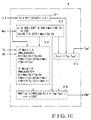
- Fig. 1(c) shows the process of arithmetic operations performed by the calculating section 8. More specifically, in an Fcl calculating section 8-1, a thermal resistance effect Fcl is calculated by using the clothing thermal resistance Icl. In an ⁇ T sk calculating section 8-2, the value ⁇ and the skin temperature T sk are calculated by using the activity amount M et . In a PMVLOAD calculating section 8-3, PMVLOAD is calculated by using the skin temperature T sk , the activity amount M et , the air temperature Ta, the relative humidity RH, and the absolute water vapor pressure P(Ta).
- Fcl x (T sk - Teq*) is calculated by using the thermal resistance effect Fcl, the skin temperature T sk , and the equivalent temperature Teq*.
- LOAD* is obtained by subtracting Fcl x (T sk - Teq*) obtained by the calculating section 8-4 from PMVLOAD obtained by the calculating section 8-3, and the predicted mean thermal sensitivity PMV* is calculated by multiplying the value LOAD * by the value a obtained by the calculating section 8-2.
- Equation (18) is obtained by the present invention by trial and error to simplify the conventional PMV equation (equation (1)). Owing to the synergistic effect based on the fact that the equivalent temperature Teq* can be accurately obtained, the PMV* value obtained by this equation coincides with the PMV value obtained by the conventional PMV equation with considerably high accuracy.
- R + C 3.96 x 10 ⁇ 8 ⁇ fcl ⁇ Tcl + 273)4 - (Tr + 273)4 ⁇ + fcl ⁇ hc ⁇ (Tcl - Ta)
- R* + C* indicates Fcl x (T sk - T eq *) .
- the sensor temperature Tcr is controlled to be equal to the set temperature ⁇ (th) which is not constant and changes depending on environmental conditions.
- the equivalent temperature Teq* is calculated on the basis of the air temperature Ta, the set temperature ⁇ (th) , the difference ⁇ Tcr, the air velocity Vair, the coefficients c1 to c5, and the coefficient n .
- the equivalent temperature Teq * is calculated on the basis of the air temperature Ta, the set temperature ⁇ (th) , the thermal energy H ⁇ (th) , and the coefficients b1 to b4. Therefore, even if the air velocity Vair is high, or the sensor temperature Tcr is higher than the set temperature ⁇ (th) , the calculated equivalent temperature Teq* coincides with the equivalent temperature Teq felt by a human body with high accuracy, thus allowing accurate measurement of the equivalent temperature Teq.
- the predicted mean thermal sensitivity PMV* can be accurately obtained.
Landscapes
- Environmental & Geological Engineering (AREA)
- Engineering & Computer Science (AREA)
- Life Sciences & Earth Sciences (AREA)
- Atmospheric Sciences (AREA)
- Biodiversity & Conservation Biology (AREA)
- Ecology (AREA)
- Environmental Sciences (AREA)
- Air Conditioning Control Device (AREA)
- Investigating Or Analyzing Materials Using Thermal Means (AREA)
- Radiation Pyrometers (AREA)
Applications Claiming Priority (2)
| Application Number | Priority Date | Filing Date | Title |
|---|---|---|---|
| JP25672390 | 1990-09-25 | ||
| JP256723/90 | 1990-09-25 |
Publications (3)
| Publication Number | Publication Date |
|---|---|
| EP0477796A2 EP0477796A2 (en) | 1992-04-01 |
| EP0477796A3 EP0477796A3 (en) | 1992-08-12 |
| EP0477796B1 true EP0477796B1 (en) | 1995-08-16 |
Family
ID=17296556
Family Applications (1)
| Application Number | Title | Priority Date | Filing Date |
|---|---|---|---|
| EP91116042A Expired - Lifetime EP0477796B1 (en) | 1990-09-25 | 1991-09-20 | Method and apparatus for calculating thermal sensitivity |
Country Status (5)
| Country | Link |
|---|---|
| US (1) | US5333953A (da) |
| EP (1) | EP0477796B1 (da) |
| JP (1) | JP2581625B2 (da) |
| DE (1) | DE69112162T2 (da) |
| DK (1) | DK0477796T3 (da) |
Families Citing this family (14)
| Publication number | Priority date | Publication date | Assignee | Title |
|---|---|---|---|---|
| US5436852A (en) * | 1990-09-21 | 1995-07-25 | Yamatake-Honeywell Co., Ltd. | Method and apparatus for calculating predicted mean thermal sensitivity |
| IT1261538B (it) * | 1993-04-01 | 1996-05-23 | Fiat Auto Spa | Procedimento per il controllo delle condizioni termiche in un ambientee relativo sistema. |
| KR0133482B1 (ko) * | 1994-03-09 | 1998-05-15 | 구자홍 | 공조 시스템의 피엠브이(pmv) 산출 방법 |
| JP3203126B2 (ja) * | 1994-04-19 | 2001-08-27 | 三洋電機株式会社 | 空気調和機の制御装置 |
| US6145751A (en) * | 1999-01-12 | 2000-11-14 | Siemens Building Technologies, Inc. | Method and apparatus for determining a thermal setpoint in a HVAC system |
| US6702456B2 (en) * | 2002-04-04 | 2004-03-09 | China Textile Institute | Method and apparatus for evaluating the phase changing function of fabric |
| PL1989490T3 (pl) * | 2006-02-10 | 2012-05-31 | Danfoss As | Sposób i system do kontrolowania klimatu w budynku |
| JP4926635B2 (ja) * | 2006-09-29 | 2012-05-09 | トヨタ自動車株式会社 | 接触温熱感計測用センサ装置および接触温熱感計測装置 |
| US8005655B2 (en) * | 2008-02-26 | 2011-08-23 | Kimberly-Clark Worldwide, Inc. | Thermal comfort model having multiple fabric layers |
| US8577650B2 (en) * | 2008-02-26 | 2013-11-05 | Kimberly-Clark Worldwide, Inc. | User interface for modeling thermal comfort |
| JP2013057476A (ja) * | 2011-09-09 | 2013-03-28 | Toshiba Corp | Pmv推定装置およびそのプログラム |
| CN110081564B (zh) * | 2014-02-17 | 2021-09-14 | 松下电器产业株式会社 | 热图像传感器系统以及冷热感推断方法 |
| IT201800020629A1 (it) * | 2018-12-21 | 2020-06-21 | Thinxs S R L | Dispositivo per la misura della temperatura percepita |
| CN113088359A (zh) * | 2021-03-30 | 2021-07-09 | 重庆大学 | 一种工艺参数驱动的三甘醇脱水装置三甘醇损耗量在线预测方法 |
Citations (2)
| Publication number | Priority date | Publication date | Assignee | Title |
|---|---|---|---|---|
| EP0476691A2 (en) * | 1990-09-21 | 1992-03-25 | Yamatake-Honeywell Co. Ltd. | Method and apparatus for calculating thermal sensitivity |
| EP0495117A1 (en) * | 1990-07-30 | 1992-07-22 | Yamatake-Honeywell Co. Ltd. | Method of computing equivalent temperature and instrument for environment measurement |
Family Cites Families (13)
| Publication number | Priority date | Publication date | Assignee | Title |
|---|---|---|---|---|
| US4058254A (en) * | 1968-01-26 | 1977-11-15 | Danfoss A/S | Temperature-monitoring and control system |
| DD105516A1 (da) * | 1973-05-23 | 1974-04-20 | ||
| US4125012A (en) * | 1975-06-25 | 1978-11-14 | Madsen Thomas L | Apparatus for measuring thermal discomfort originating from asymmetry in the thermal field or variations with time of the thermal influence on the skin |
| CA1035596A (en) * | 1975-09-23 | 1978-08-01 | Lloyd E. Machattie | Still shade temperature measurement |
| JPS54139251A (en) * | 1978-04-21 | 1979-10-29 | Hitachi Ltd | Method of controlling temperature and humidity |
| US4504157A (en) * | 1982-09-30 | 1985-03-12 | Austin Crabtree | Chill temperature meter |
| US4747699A (en) * | 1985-02-06 | 1988-05-31 | Daikin Industries, Ltd. | Thermal-environment sensor with means to simulate emissivity of human body |
| US4727500A (en) * | 1985-05-01 | 1988-02-23 | Sherwood Medical Company | Electronic thermometer with fixed response time |
| US4702617A (en) * | 1986-03-10 | 1987-10-27 | Crabtree Austin A | Chill temperature meter with selectable response |
| JPS6365318A (ja) * | 1986-09-05 | 1988-03-23 | Daikin Ind Ltd | 温熱検知素子 |
| US4799176A (en) * | 1986-12-29 | 1989-01-17 | Harper-Wyman Company | Electronic digital thermostat |
| US4863279A (en) * | 1988-02-22 | 1989-09-05 | Morris L. Markel | Operative temperature sensing system |
| DE8908474U1 (de) * | 1989-07-12 | 1989-09-21 | Katz, Philipp, Prof. Dr., 6300 Gießen | Vorrichtung zur Messung der Behaglichkeit |
-
1991
- 1991-09-06 JP JP3254305A patent/JP2581625B2/ja not_active Expired - Lifetime
- 1991-09-20 DE DE69112162T patent/DE69112162T2/de not_active Expired - Fee Related
- 1991-09-20 EP EP91116042A patent/EP0477796B1/en not_active Expired - Lifetime
- 1991-09-20 DK DK91116042.2T patent/DK0477796T3/da active
-
1993
- 1993-07-19 US US08/095,894 patent/US5333953A/en not_active Expired - Fee Related
Patent Citations (2)
| Publication number | Priority date | Publication date | Assignee | Title |
|---|---|---|---|---|
| EP0495117A1 (en) * | 1990-07-30 | 1992-07-22 | Yamatake-Honeywell Co. Ltd. | Method of computing equivalent temperature and instrument for environment measurement |
| EP0476691A2 (en) * | 1990-09-21 | 1992-03-25 | Yamatake-Honeywell Co. Ltd. | Method and apparatus for calculating thermal sensitivity |
Also Published As
| Publication number | Publication date |
|---|---|
| EP0477796A3 (en) | 1992-08-12 |
| JPH0518592A (ja) | 1993-01-26 |
| DE69112162T2 (de) | 1996-05-09 |
| EP0477796A2 (en) | 1992-04-01 |
| DE69112162D1 (de) | 1995-09-21 |
| DK0477796T3 (da) | 1996-01-02 |
| US5333953A (en) | 1994-08-02 |
| JP2581625B2 (ja) | 1997-02-12 |
Similar Documents
| Publication | Publication Date | Title |
|---|---|---|
| EP0477796B1 (en) | Method and apparatus for calculating thermal sensitivity | |
| Atthajariyakul et al. | Neural computing thermal comfort index for HVAC systems | |
| JP2575268B2 (ja) | Hvacシステムの適応制御のための装置および方法 | |
| US5436852A (en) | Method and apparatus for calculating predicted mean thermal sensitivity | |
| EP0740256A2 (en) | Building management set value decision support apparatus, set value learning apparatus, set value determining apparatus, and neural network operation apparatus | |
| US20070240437A1 (en) | Air conditioning controller | |
| Madsen et al. | New Methods for Evaluation of Thermal Environment in Automotive Vehicles | |
| Foda et al. | A thermal manikin with human thermoregulatory control: implementation and validation | |
| EP3502582A1 (en) | Method for controlling a hvac-apparatus, control unit and use of a control unit | |
| EP0476692B1 (en) | Method and apparatus for calculating predicted mean thermal sensitivity | |
| Fujita et al. | Numerical simulation method to predict the thermal environment inside a car cabin | |
| EP0476691B1 (en) | Method and apparatus for calculating thermal sensitivity | |
| EP0495118A1 (en) | Method and device for computing estimated mean temperature sensation | |
| KR101137662B1 (ko) | 공조 시스템의 pmv제어방법 | |
| EP4334692B1 (en) | Thermal comfort measuring system | |
| JP2001082782A (ja) | 空調制御装置 | |
| EP0495117A1 (en) | Method of computing equivalent temperature and instrument for environment measurement | |
| Schott et al. | Quantitative aerial survey of building heat loss | |
| JPH0532117A (ja) | 空調制御装置 | |
| JPH0979642A (ja) | 空気調和装置 | |
| Kon | Thermal comfort sensor | |
| Idris et al. | Study of Comfort Temperature for Gym Activities at UTHM Gymnasium | |
| Thapa et al. | From Static Scales to Dynamic Perception: Evidence from free-positioning of thermal anchors in NV warm & humid classrooms in India | |
| Bánhidi et al. | Compensation of asymmetric radiant heat loss to cold walls by different heating systems—Analysis with thermal manikin | |
| JP2628112B2 (ja) | 温熱感覚演算装置 |
Legal Events
| Date | Code | Title | Description |
|---|---|---|---|
| PUAI | Public reference made under article 153(3) epc to a published international application that has entered the european phase |
Free format text: ORIGINAL CODE: 0009012 |
|
| AK | Designated contracting states |
Kind code of ref document: A2 Designated state(s): DE DK FR GB |
|
| PUAL | Search report despatched |
Free format text: ORIGINAL CODE: 0009013 |
|
| AK | Designated contracting states |
Kind code of ref document: A3 Designated state(s): DE DK FR GB |
|
| 17P | Request for examination filed |
Effective date: 19930212 |
|
| 17Q | First examination report despatched |
Effective date: 19940218 |
|
| GRAA | (expected) grant |
Free format text: ORIGINAL CODE: 0009210 |
|
| AK | Designated contracting states |
Kind code of ref document: B1 Designated state(s): DE DK FR GB |
|
| REF | Corresponds to: |
Ref document number: 69112162 Country of ref document: DE Date of ref document: 19950921 |
|
| ET | Fr: translation filed | ||
| REG | Reference to a national code |
Ref country code: DK Ref legal event code: T3 |
|
| PLBE | No opposition filed within time limit |
Free format text: ORIGINAL CODE: 0009261 |
|
| STAA | Information on the status of an ep patent application or granted ep patent |
Free format text: STATUS: NO OPPOSITION FILED WITHIN TIME LIMIT |
|
| 26N | No opposition filed | ||
| REG | Reference to a national code |
Ref country code: FR Ref legal event code: CD |
|
| REG | Reference to a national code |
Ref country code: GB Ref legal event code: IF02 |
|
| PGFP | Annual fee paid to national office [announced via postgrant information from national office to epo] |
Ref country code: FR Payment date: 20040908 Year of fee payment: 14 |
|
| PGFP | Annual fee paid to national office [announced via postgrant information from national office to epo] |
Ref country code: GB Payment date: 20040915 Year of fee payment: 14 |
|
| PGFP | Annual fee paid to national office [announced via postgrant information from national office to epo] |
Ref country code: DK Payment date: 20040916 Year of fee payment: 14 Ref country code: DE Payment date: 20040916 Year of fee payment: 14 |
|
| PG25 | Lapsed in a contracting state [announced via postgrant information from national office to epo] |
Ref country code: GB Free format text: LAPSE BECAUSE OF NON-PAYMENT OF DUE FEES Effective date: 20050920 |
|
| PG25 | Lapsed in a contracting state [announced via postgrant information from national office to epo] |
Ref country code: DK Free format text: LAPSE BECAUSE OF NON-PAYMENT OF DUE FEES Effective date: 20050930 |
|
| PG25 | Lapsed in a contracting state [announced via postgrant information from national office to epo] |
Ref country code: DE Free format text: LAPSE BECAUSE OF NON-PAYMENT OF DUE FEES Effective date: 20060401 |
|
| REG | Reference to a national code |
Ref country code: DK Ref legal event code: EBP |
|
| GBPC | Gb: european patent ceased through non-payment of renewal fee |
Effective date: 20050920 |
|
| PG25 | Lapsed in a contracting state [announced via postgrant information from national office to epo] |
Ref country code: FR Free format text: LAPSE BECAUSE OF NON-PAYMENT OF DUE FEES Effective date: 20060531 |
|
| REG | Reference to a national code |
Ref country code: FR Ref legal event code: ST Effective date: 20060531 |