EP0478131B1 - Gestion de mémoire dans un réseau de traitement de données - Google Patents
Gestion de mémoire dans un réseau de traitement de données Download PDFInfo
- Publication number
- EP0478131B1 EP0478131B1 EP91307398A EP91307398A EP0478131B1 EP 0478131 B1 EP0478131 B1 EP 0478131B1 EP 91307398 A EP91307398 A EP 91307398A EP 91307398 A EP91307398 A EP 91307398A EP 0478131 B1 EP0478131 B1 EP 0478131B1
- Authority
- EP
- European Patent Office
- Prior art keywords
- workstation
- network
- nonvolatile memory
- capacity
- unused
- Prior art date
- Legal status (The legal status is an assumption and is not a legal conclusion. Google has not performed a legal analysis and makes no representation as to the accuracy of the status listed.)
- Expired - Lifetime
Links
Images

Classifications
-
- G—PHYSICS
- G06—COMPUTING OR CALCULATING; COUNTING
- G06F—ELECTRIC DIGITAL DATA PROCESSING
- G06F11/00—Error detection; Error correction; Monitoring
- G06F11/30—Monitoring
- G06F11/34—Recording or statistical evaluation of computer activity, e.g. of down time, of input/output operation ; Recording or statistical evaluation of user activity, e.g. usability assessment
- G06F11/3466—Performance evaluation by tracing or monitoring
- G06F11/3485—Performance evaluation by tracing or monitoring for I/O devices
Definitions
- the present invention relates generally to memory management and more particularly, to a system and method for managing nonvolatile data storage devices individually resident within workstations such as personal computers which are themselves the elements of a network.
- a representative workstation includes a processor with volatile memory, and a nonvolatile data storage device, such as a hard (fixed) disk or functionally equivalent optical disk or tape drive apparatus.
- the workstation represents a terminal which interfaces to the network using the protocol of the network.
- the protocol may be provided directly by a networking card in the workstation or the consequence of a terminal emulation program executing on the workstation.
- Management systems for storage devices have been disclosed in the prior art. For instance, in EP-A-061,585 a management facility is disclosed for balancing the activity of a plurality of data storage devices accessible by a number of host devices. A central record is maintained containing an identification of all the storage devices together with an indication of the free space on the respective storage devices. For each allocation of free space to a host, the control record is scanned to find the storage device having the largest free space, that storage device being the device allocated to the host. Whilst this helps to balance the load applied to a set of shared data storage devices, it does not provide any solution to the capacity problem in relation to nonvolatile memory resident at the individual workstation.
- Capacity related hard disk failures i.e., operational interrupts and associated error messages, occur when the data being conveyed to nonvolatile storage exceeds the disk capacity. Consequently, the operational interrupt and associated error message to the workstation user occurs at a time and under a condition when such workstation user is least capable of easily correcting the situation.
- Such failures of the hard disk are particularly disruptive when the error messages require the workstation user to respond by selectively deleting data from the hard disk before completing the operation so interrupted. The less experienced the workstation user, the more disruptive is the event and complex the corrective action.
- a system for managing memory capacity in a data processing network having multiple workstations with resident nonvolatile memory devices, the system being located remotely to the multiple workstations and comprising means for selectively querying a workstation on the network to determine the respective unused nonvolatile memory, means for comparing the determined unused nonvolatile memory to a respective minimum capacity threshold value for that workstation, the threshold value being definable externally to the workstation, and means for generating an event response in the network if the selected workstation unused nonvolatile memory is below the threshold value.
- We further provide a method for remotely managing memory capacity in a data processing network having multiple workstations with resident nonvolatile memory devices comprising the steps of: selectively querying a workstation on the network to determine the respective unused nonvolatile memory; comparing the determined unused nonvolatile memory to a respective minimum capacity threshold value for that workstation, the threshold value being definable externally to the workstation; and generating an event response in the network if the selected workstation unused nonvolatile memory is below the threshold value.
- workstation resident hard disk capacity memory in a network of workstations is managed by periodically enabling a workstation resident disk capacity monitor program, operating such program to determine for selected workstations the unused disk capacity, comparing such determined unused capacity to a threshold defined previously for each workstation, generating an error message when the capacity limit is violated, and logging the message at the workstation and within the network.
- the workstation disk capacity queries are automated in a timed sequence.
- Reallocation or sharing of disk space is selectively performed within the preferred network to temporarily correct deficiencies in the disk capacity of a workstation and thereby preclude incipient disk failure.
- Temporary disk reallocation within the network can be initiated by the log of a disk error message within the network or upon a workstation request following the detection of such incipient disk capacity problem.
- Fig. 1 is a schematic depicting a multiplicity of workstations connected in a network.
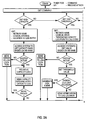
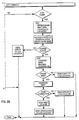
- Fig. 2 is a flow diagram depicting operations provided by the invention.
- Fig. 1 is a schematic depicting a multiplicity of workstations connected in a network.
- Fig. 2 is a flow diagram depicting operations provided by the invention.
- Fig. 1 schematically depicts the architecture of a network within which the invention is preferably practiced.
- the protocols of the depicted networks include, without limiting, ethernet, token-ring, SDLC, and that of the PC NETWORKTM product and this illustrates the diversity of environments within which the present memory (hard disk) capacity management invention can be practiced.
- a host computer such as the IBM Corporation System/370TM mainframe, is connected by way of a token ring, X.25, or SDLC communications link to gateway workstation 2 and therethrough into the three basic network types selectively using SDLC Switched, X.25, the ethernet, the token-ring and PC NETWORK technologies.
- the hardware at each workstation preferably includes, as depicted in association with gateway workstation 2, a display 3, a keyboard 4, a mouse 6 and a system unit 7.
- the system unit 7 houses a processor, one or more communication boards, a volatile memory array, and hard disk nonvolatile memory.
- the nonvolatile memory can include various forms of disk drives, e.g., floppy, hard and optical, and fully encompasses other nonvolatile storage media such as tape drives or nonvolatile semiconductor devices.
- Gateway workstation 2 is preferably a Personal System/2 R (PS/2 R ) computer running with an Operating System/2TM Extended Edition (OS/2 R EE) operating system.
- the remaining workstations also preferably use Personal System/2 computers, with the OS/2 EE operating system.
- the remaining workstations also preferably use Personal System/2 computers, with the OS/2 EE operating system.
- the communication links and associated communications circuits by which the various workstations depicted in Fig. 1 interact utilise protocol standards commonly known within the industry.
- protocol standards commonly known within the industry.
- switched SDLC, token-ring, ethernet, APPC (advanced program to program communications) and IBM 3270 terminal are protocols substantially defined by government or industry standards.
- the protocol of the PC NETWORK product is established by International Business Machines Corp.
- the individual workstations have communications circuitry and software, typically board type components, which generate the appropriate electrical signals for the depicted ethernet, token-ring, SDLC switched, or X.25 communication links.
- the operating system software incorporates as modules thereof driver code suitable to implement the communication functions.
- the aforementioned OS/2 EE code incorporates SDLC drivers, X.25 drivers, APPC drivers, and 3270 terminal emulation drivers.
- Workstations using the somewhat more restrictive DOS (disk operating system) operating systems can still include code for APPC/PC, 3270 WSP (workstation program) for token-ring, PC 3270 terminal emulation for token-ring, or PC/3270 drivers for token-ring or PC NETWORK product drivers.
- DOS disk operating system
- WSP workstation program
- PC 3270 terminal emulation for token-ring
- PC/3270 drivers for token-ring or PC NETWORK product drivers.
- the aforementioned OS/2 EE operating system does provide a workstation user with the ability to determine disk capacity for the immediately associated workstation. This is accomplished by calling up and running the utility program identified as CHKDSK. The size of the disk being queried as well as the remaining capacity thereof are provided as an output to the workstation user. However, the queries are limited to the OS/2 EE operating system resident workstation.
- the present invention contemplates network wide management of disk capacity, and defines in such a context features which are transparent to the diverse forms of networks described with reference to Fig. 1. Furthermore, the system and method for managing disk capacity as defined herein is not constrained to reside solely on host computer 1, or on gateway workstation 2, or on any one of the other individual workstations linked within the network. This flexibility derives from the invention concept that the management function should be operable from any location remote to the individual workstation, should reduce the number of aborted operations caused by disk capacity deficiencies, and should lower the associated user level of skill requirements.
- a first important feature of the invention involves the ability to access a workstation from a remote location within the network, undertaken to obtain measures of the unused disk capacity by individual logical drive or for all drives resident at the queries workstation.
- the results of such query are displayed, conveyed to a file or printed, upon the discretion of the manager.
- the query operation is invoked by a command line or via an application programming interface (API).
- API application programming interface
- the timing of the query can be automated to occur at specified timed intervals, employing a timer function such as is presently available in aforementioned OS/2 EE operating system.
- a second aspect of the invention relates to the establishment of disk capacity thresholds.
- This feature provides the user with the ability to remotely establish a minimum remaining disk capacity.
- the threshold is established through a command line, via a remote network function, or by using an API operation. Given that it is an externally defined threshold, it is subject to revision by the entity defining the operating parameters within the network.
- a further aspect of the invention relates to the generation of an event, hereinafter identified as an error message, within the network upon the identification of a workstation with remaining nonvolatile disk capacity below the established threshold.
- the invention contemplates the generation of an error message suitable for log at the local, network, or host level within the network.
- the error message log can be displayed directly to the screen of the resident terminal user, written to a file, printed, or used to enable an NMVT (network management vector transport) of the type routinely conveyed to the host.
- NMVT network management vector transport
- such error message includes information for determining the amount of unused disk capacity remaining, the workstation type, and workstation location.
- a further contemplated enhancement of the invention involves an error message responsive dynamic reallocation of available disk capacity within the network. This additional feature would ensure that unexpected and above capacity demands by one or more workstations within the network would not result in aborted operations during the interim between the generation of an error message and the conclusion of corrective action by the network manager.
- Fig. 2 defines by flow diagram a preferred practice of the invention in the context of the system depicted in Fig. 1.
- Disk capacity queries are started by a time ticker, an API, a command line entry, or an inbound attach operation. If the GET command associated with the start involves the determination of disk capacity, the workstation netbios location data, the disk drive characteristics, and the error message log location must be defined to enable accessing. When the workstation subject to accessing is inactive, an error message is logged. For an active workstation, a command is conveyed from the host to the workstation to first retrieve capacity data and thereafter log such data to the prescribed log destination. When multiple disk drives are involved, the query and logging processes are repeated for each of the drives in succession. Thereafter, the get disk capacity operation is concluded.
- the start command for invoking the set disk threshold operation undertakes to determine the netbios data, the disk drive of the workstation subject to threshold comparison, the threshold value, and the location for logging the associated error message data.
- the identified disk is then queries, if the system is active, to determine the capacity actually remaining. When the workstation or network subject to query are found to be inactive, an error message is logged and threshold determination is terminated. If the threshold in an active system is lower than the remaining disk capacity, verification of adequate capacity is logged. On the other hand, when the threshold is determined to be greater than the remaining capacity, an error message is generated.
- the start operation is enabled to query a workstation and selectively log the derived error message data within the network.
- the system receives the netbios location of the workstation, the NMVT data for the host, and the location for logging different error messages.
- the workstation prescribed by the netbios name is accessed to determine whether it is active. If inactive, an error message is logged.
- the location, name and other workstation identification data are derived for generating the host NMVT message.
- the workstation information is sent directly to a log. If the NMVT protocol is selected, the host is queried to confirm that it is active and, if active, notified of the workstation location having the disk event error message. An local error message is logged if the host is inactive or not connected.
- Pseudocode from which source code can be derived, particularises how each of the operations defined in Fig. 2 can be accomplished within the network of Fig. 1.
- Such code defines the determination of disk capacity, the establishment of a minimum capacity threshold, and the logging of disk event error messages.
- the input command is provided by a time ticker, such as aforementioned OS/2 EE, an API, a command line entry, or an inbound attach associated with another command.
- the command so read determines whether the system will undertake the "get disk capacity", "set disk threshold” or log a "disk event".
- the full breadth of the invention includes systems and methods for reallocating nonvolatile memory such as disk capacity within the network in response to the logging of a disk event (error message), for a workstation having sub-threshold capacity.
- the reallocation of disk capacity can be localised to the network of the workstation, such as within the token-ring or PC NETWORK illustrated in Fig. 1 or, if desired, can be allocated at the gateway 2 or host 1 levels.
- the invention thus provides a network system, and a program for using such system, to eliminate nonvolatile memory capacity errors which heretofore routinely caused premature termination of programs executing on workstations.
- the invention provides a system and a method for ascertaining the unused nonvolatile memory capacity of individual workstations within the network, for establishing minimum unused memory capacity thresholds for such workstations, and for selectivelly logging deficiency information attributable to sub-threshold remaining memory capacity.
- the operations can be invoked by command line entry, by enabling API, or AT automated time intervals.
- the reporting of the error messages, disk events can be performed locally or remotely, and conveyed to a file, a printer or even a display screen.
- the invention also contemplates the selective temporary reallocation of nonvolatile memory within the network upon the logging of a sub-threshold capacity in a workstation.
- the user of a workstation is no longer obliged to learn how to terminate a running program and to selectively delete hard disk files in event a nonvolatile memory capacity deficiency is encountered.
- the invention is fully applicable to workstations having resident nonvolatile memory without regard to particular form, including floppy, hard/fixed and optical disks, tape storage media as well as semiconductor nonvolatile memory.
Landscapes
- Engineering & Computer Science (AREA)
- General Engineering & Computer Science (AREA)
- Theoretical Computer Science (AREA)
- Computer Hardware Design (AREA)
- Quality & Reliability (AREA)
- Physics & Mathematics (AREA)
- General Physics & Mathematics (AREA)
- Information Retrieval, Db Structures And Fs Structures Therefor (AREA)
- Debugging And Monitoring (AREA)
- Computer And Data Communications (AREA)
Claims (10)
- Un système pour la gestion de la capacité mémoire dans un réseau de traitement de données ayant une pluralité de postes de travail avec des dispositifs à mémoire, non volatile, résidente, le système étant placé à distance de la pluralité de postes de travail et comprenant des moyens pour demander sélectivement, à un poste de travail sur le réseau, de déterminer la mémoire non volatile, non utilisée, respective, des moyens pour comparer la mémoire non volatile, non utilisée, déterminée, à une valeur de seuil de capacité minimale respective pour ce poste de travail, la valeur de seuil pouvant être définie de façon externe au poste de travail, et des moyens pour générer une réponse d'événement dans le réseau si la mémoire non volatile, non utilisée, du poste de travail sélectionné est à un niveau inférieur au niveau de seuil.
- Un système selon la revendication 1, dans lequel le moyen de génération identifie le poste de travail sélectionné.
- Un système selon la revendication 1 ou la revendication 2, dans lequel le moyen prévu pour faire une demande sélective procède à une interrogation des postes de travail respectifs pour obtenir la capacité de disque, non utilisée, résidente du poste de travail.
- Un procédé pour gérer à distance la capacité mémoire dans un réseau de traitement de données ayant une pluralité de postes de travail avec des dispositifs à mémoire non volatile, résidente, comprenant les étapes consistant à :demander sélectivement à un poste de travail se trouvant sur le réseau de déterminer la mémoire non volatile, non utilisée, respective;comparer la mémoire non volatile, non utilisée, déterminée à une valeur de seuil de capacité minimale respective pour ce poste de travail, la valeur de seuil étant susceptible d'être définie de façon externe au poste de travail; etgénérer une réponse d'événement dans le réseau si la mémoire, non volatile, non utilisée, du poste de travail sélectionné est d'une valeur inférieure à la valeur de seuil.
- Un procédé selon la revendication 4, dans lequel la réponse d'événement générée assure l'identification du poste de travail sélectionné dans le réseau.
- Un procédé selon la revendication 5, dans lequel la réponse d'événement générée est transmise du poste de travail sélectionné à une session de réseau.
- Un procédé selon la revendication 6, dans lequel la demande effectue une extraction et un enregistrement de l'information de capacité de disque, non utilisée, résidente, du poste de travail, à partir du poste de travail sélectionné.
- Un procédé selon la revendication 6, dans lequel la réponse d'événement générée provoque une allocation de mémoire non volatile, résidente, du poste de travail dans le réseau, au niveau du poste de travail sélectionné.
- Un procédé selon l'une quelconque des revendications 4 à 8, dans lequel la demande sélective est validée périodiquement.
- Un procédé selon la revendication 9, dans lequel la sélection est contrôlée par un poste de travail autre que par celui sujet à la demande, ou par un ordinateur hôte.
Applications Claiming Priority (2)
| Application Number | Priority Date | Filing Date | Title |
|---|---|---|---|
| US07/573,745 US5151990A (en) | 1990-08-28 | 1990-08-28 | Nonvolatile memory management in a data processing network |
| US573745 | 1990-08-28 |
Publications (3)
| Publication Number | Publication Date |
|---|---|
| EP0478131A2 EP0478131A2 (fr) | 1992-04-01 |
| EP0478131A3 EP0478131A3 (fr) | 1992-12-30 |
| EP0478131B1 true EP0478131B1 (fr) | 1996-06-19 |
Family
ID=24293230
Family Applications (1)
| Application Number | Title | Priority Date | Filing Date |
|---|---|---|---|
| EP91307398A Expired - Lifetime EP0478131B1 (fr) | 1990-08-28 | 1991-08-12 | Gestion de mémoire dans un réseau de traitement de données |
Country Status (6)
| Country | Link |
|---|---|
| US (1) | US5151990A (fr) |
| EP (1) | EP0478131B1 (fr) |
| JP (1) | JP3189124B2 (fr) |
| BR (1) | BR9103525A (fr) |
| CA (1) | CA2045226C (fr) |
| DE (1) | DE69120362T2 (fr) |
Families Citing this family (15)
| Publication number | Priority date | Publication date | Assignee | Title |
|---|---|---|---|---|
| JPH03194774A (ja) * | 1989-12-25 | 1991-08-26 | Hitachi Ltd | 外部記憶装置の不良ブロック交替処理方式 |
| JPH03274859A (ja) * | 1990-03-23 | 1991-12-05 | Canon Inc | データ通信装置 |
| US5673394A (en) * | 1990-10-31 | 1997-09-30 | Microsoft Corporation | Method of sharing memory between an operating system and an application program |
| US5345584A (en) * | 1991-03-11 | 1994-09-06 | Laclead Enterprises | System for managing data storage based on vector-summed size-frequency vectors for data sets, devices, and residual storage on devices |
| US5479656A (en) * | 1992-05-13 | 1995-12-26 | Rawlings, Iii; Joseph H. | Method and system for maximizing data files stored in a random access memory of a computer file system and optimization therefor |
| US6938254B1 (en) * | 1997-05-06 | 2005-08-30 | Microsoft Corporation | Controlling memory usage in systems having limited physical memory |
| US6289424B1 (en) | 1997-09-19 | 2001-09-11 | Silicon Graphics, Inc. | Method, system and computer program product for managing memory in a non-uniform memory access system |
| US6249802B1 (en) * | 1997-09-19 | 2001-06-19 | Silicon Graphics, Inc. | Method, system, and computer program product for allocating physical memory in a distributed shared memory network |
| GB2354090B (en) * | 1999-09-08 | 2004-03-17 | Sony Uk Ltd | Distributed service provider |
| US6895485B1 (en) * | 2000-12-07 | 2005-05-17 | Lsi Logic Corporation | Configuring and monitoring data volumes in a consolidated storage array using one storage array to configure the other storage arrays |
| US20030220948A1 (en) * | 2002-01-22 | 2003-11-27 | Columbia Data Products, Inc. | Managing snapshot/backup collections in finite data storage |
| US7237075B2 (en) * | 2002-01-22 | 2007-06-26 | Columbia Data Products, Inc. | Persistent snapshot methods |
| US20050027926A1 (en) * | 2003-07-29 | 2005-02-03 | Inventec Multimedia & Telecom Corporation | Data storage method |
| JP4709857B2 (ja) * | 2006-01-11 | 2011-06-29 | 富士通株式会社 | 情報処理装置 |
| US9606856B2 (en) | 2014-12-03 | 2017-03-28 | International Business Machines Corporation | Event logging and error recovery |
Family Cites Families (9)
| Publication number | Priority date | Publication date | Assignee | Title |
|---|---|---|---|---|
| US4240143A (en) * | 1978-12-22 | 1980-12-16 | Burroughs Corporation | Hierarchical multi-processor network for memory sharing |
| JPS55112662A (en) * | 1979-02-21 | 1980-08-30 | Hitachi Ltd | Input and output unit |
| US4528624A (en) * | 1981-03-25 | 1985-07-09 | International Business Machines Corporation | Method and apparatus for allocating memory space based upon free space in diverse memory devices |
| US4792896A (en) * | 1983-12-07 | 1988-12-20 | 516277 Ontario Limited | Storage controller emulator providing transparent resource sharing in a computer system |
| JPS626367A (ja) * | 1985-07-03 | 1987-01-13 | Matsushita Electric Ind Co Ltd | ネツトワ−ク制御装置 |
| JPS6337437A (ja) * | 1986-08-01 | 1988-02-18 | Mitsubishi Electric Corp | 磁気デイスク装置のポリユ−ム管理方式 |
| US4887204A (en) * | 1987-02-13 | 1989-12-12 | International Business Machines Corporation | System and method for accessing remote files in a distributed networking environment |
| JPH0787461B2 (ja) * | 1987-06-19 | 1995-09-20 | 株式会社東芝 | ロ−カルエリアネツトワ−クシステム |
| DE68924755D1 (de) * | 1988-10-31 | 1995-12-14 | Ibm | Mehrfachverarbeitungssystem und Verfahren für gemeinsame Speichernutzung. |
-
1990
- 1990-08-28 US US07/573,745 patent/US5151990A/en not_active Expired - Lifetime
-
1991
- 1991-05-31 JP JP15621691A patent/JP3189124B2/ja not_active Expired - Fee Related
- 1991-06-21 CA CA002045226A patent/CA2045226C/fr not_active Expired - Fee Related
- 1991-08-12 DE DE69120362T patent/DE69120362T2/de not_active Expired - Fee Related
- 1991-08-12 EP EP91307398A patent/EP0478131B1/fr not_active Expired - Lifetime
- 1991-08-16 BR BR919103525A patent/BR9103525A/pt unknown
Also Published As
| Publication number | Publication date |
|---|---|
| US5151990A (en) | 1992-09-29 |
| DE69120362D1 (de) | 1996-07-25 |
| CA2045226A1 (fr) | 1992-03-01 |
| DE69120362T2 (de) | 1997-01-23 |
| CA2045226C (fr) | 1996-01-30 |
| EP0478131A2 (fr) | 1992-04-01 |
| JPH04241647A (ja) | 1992-08-28 |
| JP3189124B2 (ja) | 2001-07-16 |
| EP0478131A3 (fr) | 1992-12-30 |
| BR9103525A (pt) | 1992-05-12 |
Similar Documents
| Publication | Publication Date | Title |
|---|---|---|
| EP0478131B1 (fr) | Gestion de mémoire dans un réseau de traitement de données | |
| US5600791A (en) | Distributed device status in a clustered system environment | |
| US5835765A (en) | Computer operation management system for a computer operating system capable of simultaneously executing plural application programs | |
| EP0754321B1 (fr) | Procede et appareil de surveillance et de commande des programmes dans un reseau | |
| US5539877A (en) | Problem determination method for local area network systems | |
| EP0280020B1 (fr) | Accès de l'opérateur à des applications de surveillance | |
| US6868442B1 (en) | Methods and apparatus for processing administrative requests of a distributed network application executing in a clustered computing environment | |
| US6658465B1 (en) | Method and apparatus for monitoring and controlling programs in a network | |
| US6691146B1 (en) | Logical partition manager and method | |
| EP0880744B1 (fr) | Systeme et procede de detection et de reprise sur incident | |
| US7100163B2 (en) | Hypervisor virtualization of OS console and operator panel | |
| US5987497A (en) | System and method for managing the configuration of distributed objects | |
| US4731750A (en) | Workstation resource sharing | |
| US20030115570A1 (en) | Development environment for building software applications that mimics the target environment | |
| US20080275976A1 (en) | Information gathering tool for systems administration | |
| JP2002342178A (ja) | バス・エラーに優先順位を付ける方法、コンピュータ・プログラムおよびデータ処理システム | |
| KR20040098520A (ko) | 입/출력 패브릭 내의 하드웨어 에러로부터의 자율 복구 | |
| US20090037613A1 (en) | Change notification in USB devices | |
| US6438684B1 (en) | Push button shutdown and reset of embedded systems | |
| KR20050054438A (ko) | 복수의 대기 자원의 사용량 관리 방법, 장치 및 프로그램제품 | |
| US6072806A (en) | Message-based communication system | |
| EP0398649B1 (fr) | Traitement à distance d'interruption | |
| US6021436A (en) | Automatic method for polling a plurality of heterogeneous computer systems | |
| US7707581B2 (en) | Method and system for managing server load to execute transactions of an application program on multiple servers | |
| US7913251B2 (en) | Hypervisor virtualization of OS console and operator panel |
Legal Events
| Date | Code | Title | Description |
|---|---|---|---|
| PUAI | Public reference made under article 153(3) epc to a published international application that has entered the european phase |
Free format text: ORIGINAL CODE: 0009012 |
|
| AK | Designated contracting states |
Kind code of ref document: A2 Designated state(s): DE FR GB IT |
|
| 17P | Request for examination filed |
Effective date: 19920619 |
|
| PUAL | Search report despatched |
Free format text: ORIGINAL CODE: 0009013 |
|
| AK | Designated contracting states |
Kind code of ref document: A3 Designated state(s): DE FR GB IT |
|
| 17Q | First examination report despatched |
Effective date: 19940803 |
|
| GRAA | (expected) grant |
Free format text: ORIGINAL CODE: 0009210 |
|
| AK | Designated contracting states |
Kind code of ref document: B1 Designated state(s): DE FR GB IT |
|
| PG25 | Lapsed in a contracting state [announced via postgrant information from national office to epo] |
Ref country code: IT Free format text: LAPSE BECAUSE OF FAILURE TO SUBMIT A TRANSLATION OF THE DESCRIPTION OR TO PAY THE FEE WITHIN THE PRE;WARNING: LAPSES OF ITALIAN PATENTS WITH EFFECTIVE DATE BEFORE 2007 MAY HAVE OCCURRED AT ANY TIME BEFORE 2007. THE CORRECT EFFECTIVE DATE MAY BE DIFFERENT FROM THE ONE RECORDED.SCRIBED TIME-LIMIT Effective date: 19960619 |
|
| PGFP | Annual fee paid to national office [announced via postgrant information from national office to epo] |
Ref country code: GB Payment date: 19960724 Year of fee payment: 6 |
|
| REF | Corresponds to: |
Ref document number: 69120362 Country of ref document: DE Date of ref document: 19960725 |
|
| PGFP | Annual fee paid to national office [announced via postgrant information from national office to epo] |
Ref country code: FR Payment date: 19960806 Year of fee payment: 6 |
|
| ET | Fr: translation filed | ||
| ET | Fr: translation filed | ||
| PLBE | No opposition filed within time limit |
Free format text: ORIGINAL CODE: 0009261 |
|
| STAA | Information on the status of an ep patent application or granted ep patent |
Free format text: STATUS: NO OPPOSITION FILED WITHIN TIME LIMIT |
|
| 26N | No opposition filed | ||
| PG25 | Lapsed in a contracting state [announced via postgrant information from national office to epo] |
Ref country code: GB Free format text: LAPSE BECAUSE OF NON-PAYMENT OF DUE FEES Effective date: 19970812 |
|
| PGFP | Annual fee paid to national office [announced via postgrant information from national office to epo] |
Ref country code: DE Payment date: 19970826 Year of fee payment: 7 |
|
| GBPC | Gb: european patent ceased through non-payment of renewal fee |
Effective date: 19970812 |
|
| PG25 | Lapsed in a contracting state [announced via postgrant information from national office to epo] |
Ref country code: FR Free format text: LAPSE BECAUSE OF NON-PAYMENT OF DUE FEES Effective date: 19980430 |
|
| REG | Reference to a national code |
Ref country code: FR Ref legal event code: ST |
|
| PG25 | Lapsed in a contracting state [announced via postgrant information from national office to epo] |
Ref country code: DE Free format text: LAPSE BECAUSE OF NON-PAYMENT OF DUE FEES Effective date: 19990601 |