EP0482071B1 - Antivirale mittel - Google Patents
Antivirale mittel Download PDFInfo
- Publication number
- EP0482071B1 EP0482071B1 EP90911124A EP90911124A EP0482071B1 EP 0482071 B1 EP0482071 B1 EP 0482071B1 EP 90911124 A EP90911124 A EP 90911124A EP 90911124 A EP90911124 A EP 90911124A EP 0482071 B1 EP0482071 B1 EP 0482071B1
- Authority
- EP
- European Patent Office
- Prior art keywords
- butyl
- use according
- compound
- tert
- viral
- Prior art date
- Legal status (The legal status is an assumption and is not a legal conclusion. Google has not performed a legal analysis and makes no representation as to the accuracy of the status listed.)
- Expired - Lifetime
Links
- 0 *C(CCCC1*)C1O Chemical compound *C(CCCC1*)C1O 0.000 description 2
Images


Classifications
-
- A—HUMAN NECESSITIES
- A01—AGRICULTURE; FORESTRY; ANIMAL HUSBANDRY; HUNTING; TRAPPING; FISHING
- A01N—PRESERVATION OF BODIES OF HUMANS OR ANIMALS OR PLANTS OR PARTS THEREOF; BIOCIDES, e.g. AS DISINFECTANTS, AS PESTICIDES OR AS HERBICIDES; PEST REPELLANTS OR ATTRACTANTS; PLANT GROWTH REGULATORS
- A01N61/00—Biocides, pest repellants or attractants, or plant growth regulators containing substances of unknown or undetermined composition, e.g. substances characterised only by the mode of action
-
- A—HUMAN NECESSITIES
- A01—AGRICULTURE; FORESTRY; ANIMAL HUSBANDRY; HUNTING; TRAPPING; FISHING
- A01N—PRESERVATION OF BODIES OF HUMANS OR ANIMALS OR PLANTS OR PARTS THEREOF; BIOCIDES, e.g. AS DISINFECTANTS, AS PESTICIDES OR AS HERBICIDES; PEST REPELLANTS OR ATTRACTANTS; PLANT GROWTH REGULATORS
- A01N31/00—Biocides, pest repellants or attractants, or plant growth regulators containing organic oxygen or sulfur compounds
- A01N31/08—Oxygen or sulfur directly attached to an aromatic ring system
-
- A—HUMAN NECESSITIES
- A01—AGRICULTURE; FORESTRY; ANIMAL HUSBANDRY; HUNTING; TRAPPING; FISHING
- A01N—PRESERVATION OF BODIES OF HUMANS OR ANIMALS OR PLANTS OR PARTS THEREOF; BIOCIDES, e.g. AS DISINFECTANTS, AS PESTICIDES OR AS HERBICIDES; PEST REPELLANTS OR ATTRACTANTS; PLANT GROWTH REGULATORS
- A01N31/00—Biocides, pest repellants or attractants, or plant growth regulators containing organic oxygen or sulfur compounds
- A01N31/08—Oxygen or sulfur directly attached to an aromatic ring system
- A01N31/16—Oxygen or sulfur directly attached to an aromatic ring system with two or more oxygen or sulfur atoms directly attached to the same aromatic ring system
-
- A—HUMAN NECESSITIES
- A01—AGRICULTURE; FORESTRY; ANIMAL HUSBANDRY; HUNTING; TRAPPING; FISHING
- A01N—PRESERVATION OF BODIES OF HUMANS OR ANIMALS OR PLANTS OR PARTS THEREOF; BIOCIDES, e.g. AS DISINFECTANTS, AS PESTICIDES OR AS HERBICIDES; PEST REPELLANTS OR ATTRACTANTS; PLANT GROWTH REGULATORS
- A01N35/00—Biocides, pest repellants or attractants, or plant growth regulators containing organic compounds containing a carbon atom having two bonds to hetero atoms with at the most one bond to halogen, e.g. aldehyde radical
- A01N35/02—Biocides, pest repellants or attractants, or plant growth regulators containing organic compounds containing a carbon atom having two bonds to hetero atoms with at the most one bond to halogen, e.g. aldehyde radical containing aliphatically bound aldehyde or keto groups, or thio analogues thereof; Derivatives thereof, e.g. acetals
-
- A—HUMAN NECESSITIES
- A01—AGRICULTURE; FORESTRY; ANIMAL HUSBANDRY; HUNTING; TRAPPING; FISHING
- A01N—PRESERVATION OF BODIES OF HUMANS OR ANIMALS OR PLANTS OR PARTS THEREOF; BIOCIDES, e.g. AS DISINFECTANTS, AS PESTICIDES OR AS HERBICIDES; PEST REPELLANTS OR ATTRACTANTS; PLANT GROWTH REGULATORS
- A01N39/00—Biocides, pest repellants or attractants, or plant growth regulators containing aryloxy- or arylthio-aliphatic or cycloaliphatic compounds, containing the group or, e.g. phenoxyethylamine, phenylthio-acetonitrile, phenoxyacetone
-
- A—HUMAN NECESSITIES
- A01—AGRICULTURE; FORESTRY; ANIMAL HUSBANDRY; HUNTING; TRAPPING; FISHING
- A01N—PRESERVATION OF BODIES OF HUMANS OR ANIMALS OR PLANTS OR PARTS THEREOF; BIOCIDES, e.g. AS DISINFECTANTS, AS PESTICIDES OR AS HERBICIDES; PEST REPELLANTS OR ATTRACTANTS; PLANT GROWTH REGULATORS
- A01N41/00—Biocides, pest repellants or attractants, or plant growth regulators containing organic compounds containing a sulfur atom bound to a hetero atom
- A01N41/12—Biocides, pest repellants or attractants, or plant growth regulators containing organic compounds containing a sulfur atom bound to a hetero atom not containing sulfur-to-oxygen bonds, e.g. polysulfides
-
- A—HUMAN NECESSITIES
- A01—AGRICULTURE; FORESTRY; ANIMAL HUSBANDRY; HUNTING; TRAPPING; FISHING
- A01N—PRESERVATION OF BODIES OF HUMANS OR ANIMALS OR PLANTS OR PARTS THEREOF; BIOCIDES, e.g. AS DISINFECTANTS, AS PESTICIDES OR AS HERBICIDES; PEST REPELLANTS OR ATTRACTANTS; PLANT GROWTH REGULATORS
- A01N43/00—Biocides, pest repellants or attractants, or plant growth regulators containing heterocyclic compounds
- A01N43/02—Biocides, pest repellants or attractants, or plant growth regulators containing heterocyclic compounds having rings with one or more oxygen or sulfur atoms as the only ring hetero atoms
- A01N43/04—Biocides, pest repellants or attractants, or plant growth regulators containing heterocyclic compounds having rings with one or more oxygen or sulfur atoms as the only ring hetero atoms with one hetero atom
- A01N43/14—Biocides, pest repellants or attractants, or plant growth regulators containing heterocyclic compounds having rings with one or more oxygen or sulfur atoms as the only ring hetero atoms with one hetero atom six-membered rings
- A01N43/16—Biocides, pest repellants or attractants, or plant growth regulators containing heterocyclic compounds having rings with one or more oxygen or sulfur atoms as the only ring hetero atoms with one hetero atom six-membered rings with oxygen as the ring hetero atom
-
- A—HUMAN NECESSITIES
- A61—MEDICAL OR VETERINARY SCIENCE; HYGIENE
- A61K—PREPARATIONS FOR MEDICAL, DENTAL OR TOILETRY PURPOSES
- A61K31/00—Medicinal preparations containing organic active ingredients
- A61K31/045—Hydroxy compounds, e.g. alcohols; Salts thereof, e.g. alcoholates
- A61K31/05—Phenols
-
- A—HUMAN NECESSITIES
- A61—MEDICAL OR VETERINARY SCIENCE; HYGIENE
- A61K—PREPARATIONS FOR MEDICAL, DENTAL OR TOILETRY PURPOSES
- A61K31/00—Medicinal preparations containing organic active ingredients
- A61K31/075—Ethers or acetals
- A61K31/085—Ethers or acetals having an ether linkage to aromatic ring nuclear carbon
-
- A—HUMAN NECESSITIES
- A61—MEDICAL OR VETERINARY SCIENCE; HYGIENE
- A61K—PREPARATIONS FOR MEDICAL, DENTAL OR TOILETRY PURPOSES
- A61K31/00—Medicinal preparations containing organic active ingredients
- A61K31/095—Sulfur, selenium, or tellurium compounds, e.g. thiols
- A61K31/10—Sulfides; Sulfoxides; Sulfones
-
- A—HUMAN NECESSITIES
- A61—MEDICAL OR VETERINARY SCIENCE; HYGIENE
- A61P—SPECIFIC THERAPEUTIC ACTIVITY OF CHEMICAL COMPOUNDS OR MEDICINAL PREPARATIONS
- A61P31/00—Antiinfectives, i.e. antibiotics, antiseptics, chemotherapeutics
- A61P31/12—Antivirals
Definitions
- CMV cytomegalovirus disease
- dengue fever encephalitis
- hoof-and-mouth disease herpes infections
- influenza keratoconjunctivitis
- measles measles
- mumps Newcastle disease
- poliomyelitis rabies
- rubella scrapie
- shingles smallpox
- tick fever West Nile Fever
- yellow fever to name but a few.
- An especially serious problem at the present time is the rapid escalation in reported cases of AIDS (Acquired Immune Deficiency Syndrome), whose causative agent is strongly suspected to be HIV (Human Immunodeficiency Virus).
- HIV human immunodeficiency
- CD4 + helper cells T4 helper or CD4 + helper cells
- HIV Reimund E., Medical (HIV) Hypotheses 23 : 39 (1987); Aloia, et al., PNAS 85 : 900 (1988).
- Pseudorabies Virus (PRV) Pirtle E.C., et al., Am. J. Vet. Res. 47 : 1892 (1986).
- Herpes Simplex Virus HSV-1 Keith, A.D., et al., Proc.
- viruses and retroviruses including, for example, cytomegalovirus (CMV), herpes simplex virus, herpes zoster virus, Epstein-Barr virus (EBV), Newcastle Disease virus, Semliki Forest virus, influenza viruses, pseudorabies virus, and human immunodeficiency virus (HIV), are of the lipid membrane variety.
- CMV cytomegalovirus
- EBV Epstein-Barr virus
- Newcastle Disease virus Semliki Forest virus
- influenza viruses pseudorabies virus
- HMV human immunodeficiency virus
- the present invention also relates to methods for inhibiting viral and retroviral infections via use of known compounds with unexpected efficacy in combating viral and retroviral infections.
- the present invention also suggests the use of novel compounds to inhibit these infections, as well as methods for their use in living organisms.
- one type of substance that could conceivably affect the infectivity of a viral or retroviral agent should have some or all of the following characteristics: a) solubility in lipid membranes, with preferential solubility in the lipid membranes of viruses as opposed to the cells of the body of the host; b) ability to extract cholesterol from viral membranes; c) antioxidant ability to prevent lipid peroxidation; d) easy absorbability into the body; e) the ability to penetrate the blood-brain barrier; and f) a very high therapeutic-to-toxicity index.
- This invention relates to novel compositions and methods for using same for inhibiting viral and retroviral infections.
- the use of sterically hindered phenolic antioxidants is suggested.
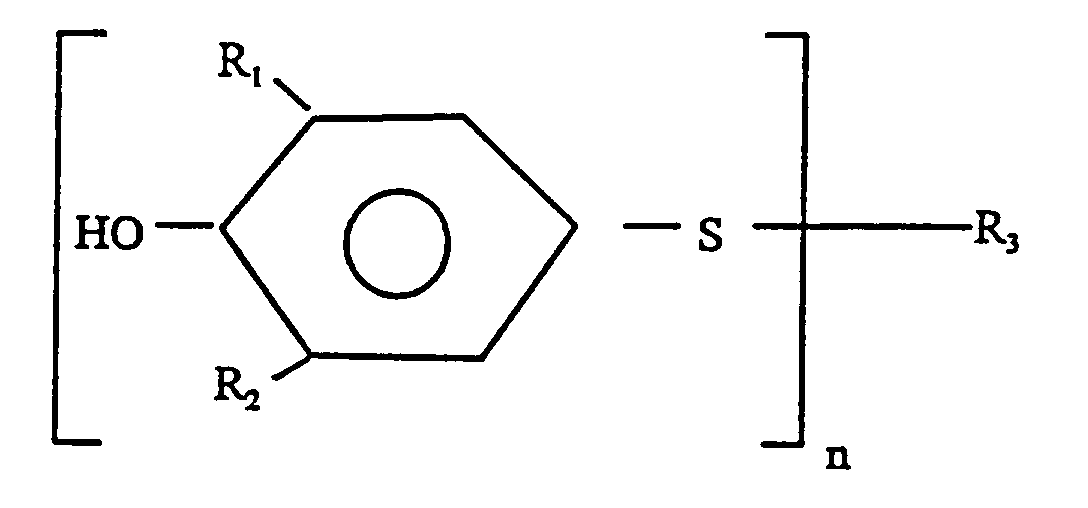
- the invention is directed to methods for using novel pharmaceutical compositions to inhibit viral and retroviral infections in vivo wherein the compositions comprise an effective amount of a bis(dialkylphenol) mercaptal or a bis(dialkylphenol) mercaptole compound.
- R 1 is hydrogen or lower alkyl of from one to six carbon atoms
- R 2 is lower alkyl of from one to six carbon atoms
- n is 2,3 or 4
- R 3 is mixed alkyl/aryl containing a total of 5 to 25 carbon atoms, alkyl or aryl; in the manufacture of a medicament for the treatment of a viral or retroviral infection in an animal.
- the invention provides for the use of a compound of the formula: wherein R 1 is hydrogen or lower alkyl of from one to six carbon atoms, R 2 is lower alkyl of from one to six carbon atoms, n is 2,3 or 4 and R 3 is mixed alkyl/aryl containing a total of 5 to 25 carbon atoms, alkyl or aryl; for inhibiting or alleviating a viral or retroviral infection in a plant.
- the medicaments manufactured according to the first aspect may be employed in a method for inhibiting viral and retroviral infections in living organisms comprising administering to a living organism an effective amount of the medicament.
- Compounds employed in the first and second aspects of the present invention may be sterically hindered.
- the compounds disclosed herein are incorporated in a pharmaceutically acceptable carrier or excipient.
- Preferred methods of administering the compounds of the present invention include parenteral, oral, intraperitoneal, transdermal and topical administration, as well as administration via inhalation.
- a further object of this invention is to provide a novel method for treating viral and retroviral infections in living organisms.
- Another object of the present invention is to provide a novel method for inhibiting viral and retroviral replication in living organisms.
- Yet another object of the invention is to provide novel uses for compositions which have the ability to inhibit viral and retroviral replication in living organisms, and which have low toxicity at dosage levels consistent with their indicated activity.
- a further object of this invention is to suggest methods for the alleviation of viral and retroviral infections in a variety of organisms, including plants,. animals, and more particularly, in mammals, including humans.
- the present invention also discloses methods for treating viral and retroviral infections or for inhibiting viral and retroviral replication in living organisms comprising administering to living organisms an effective antiviral amount of the aforementioned compounds.
- R 1 and R 2 represent tertiary butyl.
- Examples of compounds that may be utilized according to the disclosed embodiments include bis(3,5-di- tert -butyl-4-hydroxyphenyl) acetone mercaptole; bis(3,5-di- tert -butyl-4-hydroxyphenyl) butanone mercaptole; bis(3- tert -butyl-4-hydroxy-5-isopropylphenyl) acetone mercaptole; bis(3- tert -butyl-4-hydroxy-5-methylphenyl) acetone mercaptole; 1,12-di(3,5-di- tert -butyl-4-hydroxyphenylthio)dodecane; ⁇ , ⁇ '-di(3,5-di- tert -butyl-4-hydroxyphenylthio)- p -xylene; 1,4-di(3,5-di- tert -butyl-4-hydroxyphenlythio)butane; ace
- Examples include bis(3,5-di- t -butyl-4-methoxyphenyl) mercaptole; 1,10-di(3,5-di- t -butyl-4-hydroxyphenylthio)decane; 1,14-di(3,5-di- t -butyl-4-hydroxyphenylthio)tetradecane; 2-octanone bis(3,5-di- t -butyl-4-hydroxyphenyl)mercaptole; acetoacetic acid bis(3,5-di- t -butyl-4-hydroxyphenyl) mercaptole;
- the compounds disclosed herein are incorporated in a pharmaceutically acceptable carrier or excipient
- Preferred methods of administering the compounds of the present invention include parenteral, oral, intraperitoneal, transdermal, topical, and liposomal administration, as well as administration via inhalation.
- compositions comprise effective antiviral amounts of a compound according to the above formula; examples of appropriate compounds have been noted above.
- the compound is incorporated in a pharmaceutically acceptable carrier or excipient.
- the composition may be administered parenterally, orally, intraperitoneally, topically, transdermally, via inhalation, or liposomally.
- the composition may be used for the manufacture of a medicament for the inhibition of viral or retroviral replication or infection in a living organism; in various embodiments, the medicament may be for administration parenterally, orally, intraperitoneally, topically, transdermally, via inhalation, or liposomally.
- compositions may be administered to living organisms for inhibiting viral and retroviral replication and/or infections in those organisms. This comprises administering a composition comprising an effective antiviral amount of an antioxidant compound as set out above incorporated in a pharmaceutically acceptable carrier or excipient to a living organism.
- the compounds are preferably dissolved or dispersed in a liquid medium (e.g., in an oil, or in an aqueous solvent with the aid of a detergent or other dispersant) at a concentration in the range of about 0.001% to 1%, and applied by spraying or sprinkling.
- a liquid medium e.g., in an oil, or in an aqueous solvent with the aid of a detergent or other dispersant
- the dosage units of the compositions would preferably fall within the range of about 1 mg per kg of body weight, to about 100 mg/kg, with a range of about 2 mg/kg to about 80 mg/kg being even more preferred.
- the present invention also discloses the use of the disclosed compounds or compositions for the manufacture of a medicament for the treatment of viral or retroviral infections in a living organism.
- the present invention suggests the use of the disclosed compounds or compositions for the manufacture of a medicament for the inhibition of viral or retroviral replication in a living organism.
- Figure 1 diagrams the chemical structure and labels used for some of the compounds of the present invention.
- Figure 2 diagrams the chemical structure and labels used for some of the compounds of the present invention.
- Figure 3 illustrates the results of tests measuring the effect of the compounds of the present invention on syncytial cell formation.
- Figure 4 illustrates the results of tests measuring the effect of the compounds of the present invention on p24 antigen levels.
- R 1 is hydrogen or lower alkyl of from one to six carbon atoms
- R 2 is lower alkyl of from one to six carbon atoms
- n is 2,3 or 4
- R 3 is mixed alkyl/aryl containing a total of 5 to 25 carbon atoms, alkyl or aryl.
- a particularly preferred group of compounds for use in the practice of the invention comprises non-ionic compounds corresponding to the above formula. These compounds can be prepared as disclosed infra . For the sake of convenience, compounds having the above-described chemical structures will be referred to hereinafter as “BHT derivatives”, or they may also collectively be referred to herein as "antioxidants”.
- the above-referenced compounds can be administered topically, orally or parenterally by subcutaneous, intramuscular, intravenous or intraperitoneal injection or by implantation or the like, oral administration being preferred.
- the antioxidant compounds, including BHT derivatives are preferably administered as pharmaceutical compositions in dosage unit form. Such compositions can be prepared by known techniques, for example, tableting or encapsulation.
- the dosage units of the antioxidants, including BHT derivatives preferably contain from about 100, 200, or 500 milligrams (mg) to about one or five grams of the active ingredient.
- Dosage units adapted for oral administration, such as liquids, tablets, capsules, lozenges, and the like, may contain up to about five grams of active ingredient, albeit they preferably contain from about 100 to about 500 mg of the active ingredient, for ease of administration.
- the compounds can also be administered as compositions adapted to be fed as part or all of the organism's diet.
- the compounds are preferably dissolved or dispersed in a liquid medium (e.g., in an oil, or in an aqueous solvent with the aid of a detergent or other dispersant) at a concentration in the range of about 0.001% to 1%, and applied by spraying or sprinkling.
- a liquid medium e.g., in an oil, or in an aqueous solvent with the aid of a detergent or other dispersant
- the dosage units of the compositions would preferably fall within the range of about 1 mg per kg of body weight, to about 100 mg/kg, with a range of about 2 mg/kg to about 80 mg/kg being even more preferred.
- the active compound is incorporated in a pharmaceutical carrier.
- pharmaceutical carrier refers to pharmaceutical excipients and includes nutritive compositions such as solid or liquid foodstuff.
- pharmaceutical excipient refers to known pharmaceutical excipients which are substantially non-toxic and non-sensitizing at dosages consistent with their desired activity, e.g., with cholesterol reducing activity, in the case of probucol.
- a preferred pharmaceutical carrier is, for example, a surface-active dispersing agent or a liposomal carrier.
- Suitable solid pharmaceutical carriers which can be employed for formulating the compositions of the invention include starch, lactose, glucose, sucrose, gelatin, microcrystalline cellulose, powdered licorice, powdered tragacanth, malt, rice flour, silica gel, magnesium stearate, magnesium carbonate, hydroxypropyl methyl cellulose, chalk and the like, and compatible mixtures thereof.
- the active ingredient can be triturated with a solid pharmaceutical carrier or mixtures thereof, or otherwise mechanically milled to obtain a uniform mixture.
- the mixtures can be compressed into tablets or filled into capsules by known procedures, or they can be employed as powders or the like.
- the solid compositions generally contain from about 0.02 to about 90 percent by weight, inclusive, of the active ingredient, although neat dosages are also contemplated.
- liquid pharmaceutical carriers which can be utilized are ethyl alcohol, propylene glycol, polyethylene glycols, peanut oil, corn oil, water, saline solution, liposomes, glycerides, glycerine and water mixtures, glucose syrup, syrup of acacia, mucilage of tragacanth and the like, and compatible mixtures thereof.
- the compounds of the present invention may be administered in various efficacious amounts.
- the preferred dosage range of active ingredient for adult humans is from about 0.25 grams (gm) to about 5 gm per day, with a range of 0.5 gm to 2 gm per day being somewhat more preferable.
- the active ingredient may be administered topically, transdermally, orally, parenterally (e.g., subcutaneously, intravenously or intramuscularly), intraperitoneally, or via inhalation.
- the membrane fluidity or other properties of viral and retroviral agents may also be disturbed via administration of a substituted compound, or a composition or dosage unit form, being an S,S'-di-substituted mercaptal of an aldehyde or an S,S'-di-substituted mercaptole of a ketone containing from two to twenty carbon atoms, inclusive, wherein the substituents are 3-tertiary-alkyl-4-hydroxy-5-lower alkyl phenyl groups in which the tertiary alkyl groups are tertiary butyl groups and the lower alkyl groups are methyl, ethyl, propyl or butyl.
- a particularly preferred group of compounds for use in the practice of the invention comprises the bis(3- tert -butyl-4-hydroxy-5-lower alkylphenyl) ketone mercaptoles corresponding to the above formula.
- Another preferred group comprises the bis(3,5-di- tert -butyl-4-hydroxyphenyl) ketone mercaptole compounds of the above formula, the compound bis(3,5-di- tert -butyl-4-hydroxyphenyl) acetone mercaptole being particularly preferred for use in the composition and method of the invention.
- These compounds can be prepared as disclosed in U.S. Patent No. 3,862,332.
- substituted ketone mercaptole compounds having the above-described chemical structures. It is to be understood that these compounds may also function as antioxidants.
- the above-referenced compounds can be administered topically, orally or parenterally by subcutaneous, intramuscular, intravenous or intraperitoneal injection or by implantation or the like, oral administration being preferred.
- the antioxidant compounds, including substituted ketone mercaptole compounds are preferably administered as pharmaceutical compositions in dosage unit form. Such compositions can be prepared by known techniques, for example, tableting or encapsulation.
- the dosage units of the antioxidants, including the substituted mercaptole compounds preferably contain from about 100 to about 200 to about 500 milligrams (mg) to about one to about five grams of the active ingredient.
- Dosage units adapted for oral administration, such as tablets, capsules, lozenges, and the like, may contain up to about five grams of active ingredient, albeit they preferably contain from about 100 to about 500 mg of the active ingredient, for ease of administration.
- the compounds can also be administered as compositions adapted to be fed as part or all of the organism's diet.
- the active compound is incorporated in a pharmaceutical carrier.
- pharmaceutical carrier refers to pharmaceutical excipients and includes nutritive compositions such as solid or liquid foodstuff.
- pharmaceutical excipient refers to known pharmaceutical excipients which are substantially non-toxic and non-sensitizing at dosages consistent with their desired activity, e.g., with cholesterol reducing activity, in the case of probucol.
- a preferred pharmaceutical carrier is, for example, a surface-active dispersing agent.
- Suitable solid pharmaceutical carriers which can be employed for formulating the compositions of the invention include starch, lactose, glucose, sucrose, gelatin, microcrystalline cellulose, powdered licorice, powdered tragacanth, malt, rice flour, silica gel, magnesium stearate, magnesium carbonate, hydroxypropyl methyl cellulose, chalk and the like, and compatible mixtures thereof.
- the active ingredient can be triturated with a solid pharmaceutical carrier or mixtures thereof, or otherwise mechanically milled to obtain a uniform mixture.
- the mixtures can be compressed into tablets or filled into capsules by known procedures, or they can be employed as powders or the like.
- the solid compositions generally contain from about 0.02 to about 90 percent by weight, inclusive, of the active ingredient, although neat dosages are also contemplated.
- liquid pharmaceutical carriers which can be utilized are ethyl alcohol, propylene glycol, polyethylene glycols, peanut oil, corn oil, water, saline solution, liposomes, glycerides, glycerine and water mixtures, glucose syrup, syrup of acacia, mucilage of tragacanth and the like, and compatible mixtures thereof.
- the compounds of the present invention may be administered in various efficacious amounts.
- the preferred dosage range of active ingredient is from about 0.25 grams (gm) to about 5 gm per day, with a range of 0.5 gm to 2 gm per day being somewhat more preferable.
- the active ingredient may be administered topically, transdermally, orally, parenterally (e.g., subcutaneously, intravenously or intramuscularly), intraperitoneally, or via inhalation.
- Compound I had the appearance of white crystals from isopropyl alcohol, with a melting point between 74-75°C.
- Compound II appeared as white crystals from isopropyl alcohol, with a melting point between 159-161°C.
- Compound III appeared as white crystals from isopropyl alcohol, with a melting point between 143-145°C.
- ketone mercaptoles were prepared by standard methods of synthesis in which a thiophenol is condensed with a ketone under acid catalysis in an organic solvent (see, e.g., March, J., Advanced Organic Chemistry , 3d ed., J. Wiley & Sons, 1985, pp. 793-795).
- 2,6-di-t-butyl-4-mercaptophenol was reacted with acetone (for IV), dimethyl gamma-ketopimelate (for VI), N-methyl-4-piperidone (for IX), or methyl pyruvate (for X, methyl ester) and the products were purified by recrystallization from organic solvents.
- Compound IV appeared as white crystals from ethanol, melting point 125-126°C.
- Compound VI appeared as white crystals from isopropyl alcohol, melting point 152-154°C.
- Compound IX appeared as white crystals from isopropyl alcohol, melting point 254-256°C.
- Compound X, methyl ester appeared as white crystals from isopropyl alcohol with a melting point of 111-113°C.
- the free acid was prepared from the methyl ester by saponification with sodium hydroxide, followed by acidification with HCl.
- White crystals were obtained and purified by crystallization from hexane, said crystals having a melting point of 151-153°C.
- the following compounds were tested for their ability to inhibit HIV-1 virus infection in vitro .
- the compounds tested were: 1) 1,12-di(3,5-di- tert -butyl-4-hydroxyphenylthio)dodecane; 2) ⁇ , ⁇ '-di(3,5-di- tert -butyl-4-hydroxyphenylthio)- p -xylene; 3) 1,4-di(3,5-di- tert -butyl-4-hydroxyphenlythio)butane; 4) acetone bis(3,5-di- tert -butyl-4-hydroxyphenyl) mercaptole ("probucol”); 6) dimethyl gamma-ketopimelate bis(3,5-di- tert -butyl-4-hydroxyphenyl) mercaptole; 8) 2,6-di- tert -butyl-4-methylphenol) (BHT); 9) N-methyl-4-piperidone
- the stock solutions of the compounds consisted of DMSO (dimethyl sulfoxide) containing from 1% to 3% w/v of the compound. These stock solutions were diluted into the aqueous test media as needed to achieve the desired final concentration. An additional control in each test set contained DMSO only. The concentrations tested were as follows:
- Molt-3 grown HIV-1 was diluted into 1 ml each of the media to provide 200 TCID 50 units.
- Polybrene (10 ⁇ g/ml) was included in each tube.
- the cells were pelleted and resuspended in the virus-containing media, then incubated for 60 minutes at 37° with occasional shaking. The cells were then pelleted and resuspended in 5 ml of each medium. Each cell pellet was washed twice in complete growth medium, then transferred to labeled 6-well trays.
- Column 1 lists the identification number of each substance. The molecular structure of each substance appears in Figure 1.
- Column 2 lists the approximate concentration of each compound that produces a 50% reduction of syncytial cells, relative to syncytial cell formation in an infected control that lacks the compound. The reported concentration is an average of the results obtained after 2, 3 and 4 days of incubation. Syncytial cell formation is an indicator of the cytopathic effect of HIV-1 infection in the host cell, and the results show that all of the compounds are effective at concentrations of 3 ⁇ g/mL or less.
- Compounds I through VIII are non-ionic and constitute a series with generally decreasing polarity (increasing lipophilicity).
- the phenolic -OH group common to all the structures, is weakly polar.
- Carboxylate ester groups (as in VI) are less polar, and the remaining structural components (alkyl, aryl, thioether) are least polar or non-polar.
- Compounds I through V comprise the clearest examples of progressive increments of alkyl and/or aryl groups (increasing lipophilicity) and the attendant decreases in toxicity.
- Compound VIII is BHT, which has significant antiviral properties.
- Compound IV is probucol, whose antiviral properties are also illustrated herein.
- the present study establishes for the first time a correlation between structure and activity in this new class of antiviral agents, and a rational basis for the design of related compounds with improved "therapeutic window", ie., higher ratios of effectiveness to toxicity.
- analogs I and II have therapeutic windows that are at least ten times better than that of probucol (IV) and at least thirty times better than that of BHT (VIII).
- An improved therapeutic window for an antiviral agent is of paramount importance for the successful treatment of viral infections, since efficacy can then be improved without increasing toxicity and other adverse side effects. It is further believed that these greatly improved antiviral analogs of BHT also exhibit improved utility in some of the therapeutic applications discussed herein, e.g., in the treatment of AIDS, CMV, Herpes, and SFV infections.
- Probucol was administered to 6 adult male documented HIV-positive (HIV+) patients, ranging in age from 31 - 44 years at the time of diagnosis, in dosages consistent with those prescribed for treatment of hypercholesterolemia. All patients receiving probucol took 1 gram per day (with the exception of Patient F, who received 4.5 g/day) in divided doses for individually-varying lengths of time, as indicated below. Each patient was examined regularly and clinical observations were made and recorded by the same treating physician each time, except where indicated otherwise. Samples of each patient's blood were collected periodically and were tested for levels of T helper cells (CD4 + or T4) and T suppressor cells (CD8 + or T8). The CD4 + :CD8 + ratio ("R") was also calculated each time. Blood samples taken prior to the initiation of probucol treatment were analyzed and compared with the samples taken during the treatment phase. The same parameters were tested in all samples. The results of this testing are set out below:
- the following compounds were tested for their ability to inhibit HIV-1 virus infection in vitro .
- the compounds tested were: 1) probucol (2.5%); and, for comparison, 2) 2,6 dicyclopentyl phenol (5%); 2,6 dicyclohexyl p-cresol (5%); 3) 4,4'-thiobis(6- tert -butyl- o -cresol) ("Ethanox® 322", 5%); 4) 4,4'-methylenebis(2,6-di- tert -butylphenol) ("Ethanox® 702", 1.25%); 5) 2,6-di- tert -butyl- ⁇ -dimethylamino- p -cresol ("Ethanox® 703", 5%); 6) 1,3,5-trimethyl-2,4,6-tris(3,5-di- tert -butyl-4-hydroxybenzyl) benzene ("Ethanox® 330", 1.25%); and 7) 4,4'-
- the compounds were diluted at 300, 200, 100, 30, 10, 3, and 1 microgram per milliliter (1 ⁇ g/ml) in Complete RPMI 1640 media (Gibco Laboratories, Grand Island, NY).
- the compound dilutions were pre-incubated with an HIV-1 (10 ⁇ 3.6 titer) diluted at 1:100 and 1:1000 for one hour and then plated onto a CEM-SS infectivity assay.
- HIV-1 10 ⁇ 3.6 titer
- CEM-SS infectivity assay See Nara, et al., Aids Res. and Human Retroviruses 3 : 283-302 (1987), Mary Ann Liebert, publ., or Nara and Fischinger, Nature 332 : 469-470 (1988)).
- the dilutions were also pre-incubated onto the cells for one hour, then inoculated with 1:100 and 1:1000 dilutions of the HIV-1(10 ⁇ 3.6 titer) that contained no compound. Inoculum was aspirated off the wells after one hour and the cells were maintained for five days with compound and media, then read for plaques.
- probucol displayed the most significant effects upon HIV-1 plaque formation. It was specifically observed that probucol significantly inhibited plaque formation at concentrations of about 200 ⁇ g/ml under both test conditions -- i.e., when pre-incubated with the HIV and when pre-incubated with the cells, without significant toxicity to the cells. Probucol also appeared to inhibit plaque formation at concentrations of about 100 ⁇ g/ml, albeit the inhibition was not as marked as at twice the concentration. Again, there was no significant toxicity to the cells. The effects of the Ethanox® compounds tested were, in most cases, not always as marked as were those of probucol. Nevertheless, these phenolic antioxidants, and in particular, Ethanox® 728, demonstrated efficacy as antiviral and antiretroviral agents.
- TEST SET A Drug Concentration of Drug ⁇ g/ml 300 100 30 10 3 1 1293-27-2 T T T 4 5 6 1293-27-3 T T T >7 >7 7 (comparison) 1293-27-4 T 7 7 7 6 7 Acyclovir -- ⁇ 2 -- 7.0 -- 7.0 (comparison) [Test Set A is part of Test Set 3 (see Figs. 3 and 4).
- HS68 cells were preincubated with CMV for one hour at 37°C at the indicated virus dilution, and then exposed to drugs at concentrations ranging from 300 ⁇ g/ml to 1 ⁇ g/ml.
- the drugs were dispensed from 3% stock solutions in DMSO, and the final concentration of DMSO in each test well was ajusted to 1%.
- the wells were scored for cytopathic effects on the indicated days.
- HS68 cells were preincubated with HSV-1 for one hour at 37°C at the indicated virus dilution, and then exposed to drugs at concentrations ranging from 300 ⁇ g/ml to 1 ⁇ g/ml.
- the drugs were dispensed from 3% stock solutions in DMSO, and the final concentration of DMSO in each test well was adjusted to 1%.
- the wells were scored for cytopathic effects on the indicated days.
Landscapes
- Life Sciences & Earth Sciences (AREA)
- Health & Medical Sciences (AREA)
- General Health & Medical Sciences (AREA)
- Environmental Sciences (AREA)
- Zoology (AREA)
- Wood Science & Technology (AREA)
- Dentistry (AREA)
- Engineering & Computer Science (AREA)
- Plant Pathology (AREA)
- Agronomy & Crop Science (AREA)
- Pest Control & Pesticides (AREA)
- Animal Behavior & Ethology (AREA)
- Veterinary Medicine (AREA)
- Public Health (AREA)
- Pharmacology & Pharmacy (AREA)
- Medicinal Chemistry (AREA)
- Chemical & Material Sciences (AREA)
- Epidemiology (AREA)
- Virology (AREA)
- Communicable Diseases (AREA)
- Oncology (AREA)
- Chemical Kinetics & Catalysis (AREA)
- General Chemical & Material Sciences (AREA)
- Nuclear Medicine, Radiotherapy & Molecular Imaging (AREA)
- Organic Chemistry (AREA)
- Acyclic And Carbocyclic Compounds In Medicinal Compositions (AREA)
- Pharmaceuticals Containing Other Organic And Inorganic Compounds (AREA)
Claims (27)
- Verwendung einer Verbindung der Formel:worin R1 Wasserstoff oder Niederalkyl mit 1-6 Kohlenstoffatomen ist, R2 Niederalkyl mit 1-6 Kohlenstoffatomen ist, n = 2, 3 oder 4 ist und R3 gemischtes Alkyl/Aryl mit insgesamt 5-25 Kohlenstoffatomen, Alkyl oder Aryl ist;
zur Herstellung eines Medikaments zur Behandlung einer viralen oder retroviralen Infektion eines Tiers. - Verwendung nach Anspruch 1, worin das Tier ein Säugetier ist.
- Verwendung nach Anspruch 2, worin das Säugetier ein Mensch ist.
- Verwendung nach einem der Ansprüche 1 bis 3, worin das Medikament zur parenteralen Verabreichung dient.
- Verwendung nach einem der Ansprüche 1 bis 3, worin das Medikament zur oralen Verabreichung dient.
- Verwendung nach einem der vorangegangenen Ansprüche, worin das Medikament zur Behandlung von HIV-, Cytomegalovirus- oder Herpes simplex-Virus-Infektionen dient.
- Verwendung einer Verbindung der Formel:worin R1 Wasserstoff oder Niederalkyl mit 1-6 Kohlenstoffatomen ist, R2 Niederalklyl mit 1-6 Kohlenstoffatomen ist, n = 2, 3 oder 4 ist und R3 gemischtes Alkyl/Aryl mit insgesamt 5-25 Kohlenstoffatomen, Alkyl oder Aryl ist;

zur Hemmung oder Linderung einer viralen oder retroviralen Infektion einer Pflanze. - Verwendung nach einem der vorangegangenen Ansprüche, worin die Verbindung zur liposomalen Verabreichung vorgesehen ist.
- Verwendung nach einem der vorangegangenen Ansprüche, worin die Verbindung zur topischen oder transdermalen Verabreichung vorgesehen ist.
- Verwendung nach einem der vorangegangenen Ansprüche, worin die Verbindung ein S,S'-disubstituiertes Mercaptal eines Aldehyds oder ein S,S'-disubstituiertes Mercaptol eines Ketons ist, wobei der Aldehyd oder das Keton 2 bis 20 (Grenzen eingeschlossen) Kohlenstoffatome enthält, worin die Substituenten 3-t-Butyl-4-hydroxy-5-Niederalkylphenylgruppen sind, worin die Niederalkylgruppen aus Methyl, Ethyl, Propyl und Butyl ausgewählt sind.
- Verwendung nach einem der vorangegangenen Ansprüche, worin n = 2 ist.
- Verwendung nach einem der vorangegangenen Ansprüche, worin R1 und R2 t-Butyl sind.
- Verwendung nach Anspruch 12, worin die Verbindung 1,12-Di-(3,5-di-t-butyl-4-hydroxyphenylthio)dodecan ist.
- Verwendung nach Anspruch 12, worin die Verbindung α,α'-Di-(3,5-di-t-butyl-4-hydroxyphenylthio)-p-xylol ist.
- Verwendung nach Anspruch 12, worin die Verbindung 1,4-Di-(3,5-di-t-butyl-4-hydroxyphenylthio)butan ist.
- Verwendung nach Anspruch 12, worin die Verbindung Aceton-bis-(3,5-di-t-butyl-4-hydroxyphenyl)mercaptol ("Probucol") ist.
- Verwendung nach Anspruch 12, worin die Verbindung Bis-(3,5-di-t-butyl-4-methoxyphenyl)mercaptol ist.
- Verwendung von Dimethyl-γ-ketopimelat-bis-(3,5-di-t-butyl-4-hydroxyphenyl)mercaptol zur Herstellung eines Medikaments zur Behandlung einer viralen oder retroviralen Infektion eines Tiers.
- Verwendung von Dimethyl-γ-ketopimelat-bis-(3,5-di-t-butyl-4-hydroxyphenyl)mercaptol zur Hemmung oder Linderung einer viralen oder retroviralen Infektion einer Pflanze.
- Verwendung von Brenztraubensäure-bis-(3,5-di-t-butyl-4-hydroxyphenyl)mercaptol zur Herstellung eines Medikaments zur Behandlung einer viralen oder retroviralen Infektion eines Tiers.
- Verwendung von Brenztraubensäure-bis-(3,5-di-t-butyl-4-hydroxyphenyl)mercaptol zur Hemmung oder Linderung einer viralen oder retroviralen Infektion einer Pflanze.
- Verwendung nach einem der vorangegangenen Ansprüche zur Behandlung, Hemmung oder Linderung einer retroviralen Infektion.
- 1,12-Di-(3,5-di-t-butyl-4-hydroxyphenylthio)dodecan zur Verwendung zur Behandlung einer viralen oder retroviralen Infektion eines Tiers.
- α,α-Di-(3,5-di-t-butyl-4-hydroxyphenylthio)-p-xylol zur Verwendung zur Behandlung einer viralen oder retroviralen Infektion eines Tiers.
- 1,4-Di-(3,5-di-t-butyl-4-hydroxyphenylthio)butan zur Verwendung zur Behandlung einer viralen oder retroviralen Infektion eines Tiers.
- Brenztraubensäure-bis(3,5-di-t-butyl-4-hydroxyphenyl)mercaptol zur Verwendung zur Behandlung einer viralen oder retroviralen Infektion eines Tiers.
- Dimethyl-γ-ketopimelat-bis-(3,5-di-t-butyl-4-hydroxyphenyl)mercaptol zur Verwendung zur Behandlung einer viralen oder retroviralen Infektion eines Tiers.
Applications Claiming Priority (7)
| Application Number | Priority Date | Filing Date | Title |
|---|---|---|---|
| US550528 | 1983-11-09 | ||
| US07/381,132 US4985465A (en) | 1989-07-14 | 1989-07-14 | Method for inhibiting viral and retroviral infections |
| US381132 | 1989-07-14 | ||
| US45273789A | 1989-12-19 | 1989-12-19 | |
| US55052890A | 1990-07-10 | 1990-07-10 | |
| PCT/US1990/003915 WO1991001124A1 (en) | 1989-07-14 | 1990-07-12 | New antiviral agents |
| US452737 | 1995-05-30 |
Publications (3)
| Publication Number | Publication Date |
|---|---|
| EP0482071A1 EP0482071A1 (de) | 1992-04-29 |
| EP0482071A4 EP0482071A4 (en) | 1993-03-17 |
| EP0482071B1 true EP0482071B1 (de) | 1998-01-07 |
Family
ID=27409523
Family Applications (1)
| Application Number | Title | Priority Date | Filing Date |
|---|---|---|---|
| EP90911124A Expired - Lifetime EP0482071B1 (de) | 1989-07-14 | 1990-07-12 | Antivirale mittel |
Country Status (8)
| Country | Link |
|---|---|
| US (2) | US5874478A (de) |
| EP (1) | EP0482071B1 (de) |
| JP (1) | JPH05501860A (de) |
| AT (1) | ATE161717T1 (de) |
| AU (1) | AU5965890A (de) |
| DE (1) | DE69031913T2 (de) |
| DK (1) | DK0482071T3 (de) |
| WO (1) | WO1991001124A1 (de) |
Cited By (2)
| Publication number | Priority date | Publication date | Assignee | Title |
|---|---|---|---|---|
| US7067148B2 (en) | 2001-02-15 | 2006-06-27 | King Pharmaceutical Research & Development, Inc. | Stabilized pharmaceutical and thyroid hormone compositions and method of preparation |
| US7101569B2 (en) | 2001-08-14 | 2006-09-05 | Franz G Andrew | Methods of administering levothyroxine pharmaceutical compositions |
Families Citing this family (17)
| Publication number | Priority date | Publication date | Assignee | Title |
|---|---|---|---|---|
| NZ240313A (en) * | 1990-10-22 | 1994-04-27 | Res Corp Technologies Inc | Anti-retrovirus compositions containing aryl and heteroaryl derivatives |
| DE4109627A1 (de) * | 1991-03-23 | 1992-09-24 | Boehringer Mannheim Gmbh | Neue phenolether, verfahren zu ihrer herstellung und arzneimittel, die diese verbindungen enthalten |
| FR2721826B1 (fr) * | 1994-06-30 | 1996-09-20 | Fileco Sa | Utilisation de composes 2, 6-di-t-butylphenols substitues en position 4 dans le traitement et la prevention du sida |
| EP0990439A4 (de) * | 1997-05-22 | 2004-01-28 | Kyowa Hakko Kogyo Kk | Bisarylverbindungen und diese enthaltende antikrebs-arzneimittel |
| AU1182300A (en) * | 1998-11-17 | 2000-06-05 | Fuji Photo Film Co., Ltd. | Bisaryl compounds and cancer remedies containing the same |
| AU1182400A (en) * | 1998-11-17 | 2000-06-05 | Fuji Photo Film Co., Ltd. | Heteroarylthio compounds and cancer remedies containing the same |
| AU2001258675A1 (en) * | 2001-05-17 | 2001-11-26 | Latwest Pharmaceuticals (Proprietary) Limited | Treating infections |
| AU2002320059A1 (en) * | 2001-06-06 | 2002-12-16 | V.I. Technologies, Inc | Method of assessing levels of infectious virus in a biological sample |
| WO2003099788A1 (en) * | 2002-05-28 | 2003-12-04 | Nippon Chemiphar Co., Ltd. | Piperidine derivatives |
| WO2005030721A1 (ja) * | 2003-09-30 | 2005-04-07 | Nippon Chemiphar Co., Ltd. | ピペリジン誘導体 |
| AU2006251655B2 (en) * | 2005-05-20 | 2012-10-11 | Jack Arbiser | Proteasome inhibitors and uses thereof |
| US8287923B2 (en) * | 2005-06-10 | 2012-10-16 | Medical College Of Georgia Research Institute, Inc. | Compositions and methods for treating immune disorders |
| US9446017B2 (en) * | 2005-08-11 | 2016-09-20 | Augusta University Research Institute, Inc. | Compositions and methods for treating herpes simplex virus |
| WO2008130718A1 (en) | 2007-04-23 | 2008-10-30 | Atherogenics, Inc. | Sulfonamide containing compounds for treatment of inflammatory disorders |
| WO2012135669A1 (en) * | 2011-04-01 | 2012-10-04 | Weingarten M David | Nitrogen ring containing compounds for treatment of inflammatory disorders |
| FR3058640B1 (fr) * | 2016-11-14 | 2020-06-19 | Robert Vachy | Composes pour leur utilisation dans le traitement de la grippe |
| CA3145096A1 (en) * | 2018-06-27 | 2020-01-02 | Cornell University | Substituted alkylphenols as hcn1 antagonists |
Family Cites Families (23)
| Publication number | Priority date | Publication date | Assignee | Title |
|---|---|---|---|---|
| DE219385C (de) * | ||||
| US3129262A (en) * | 1962-10-08 | 1964-04-14 | Consolidation Coal Co | Reduction of organic thiocyanates |
| US4115590A (en) * | 1964-02-26 | 1978-09-19 | Ethyl Corporation | Binuclear phenols for reducing plasma lipid levels |
| US3489804A (en) * | 1967-02-23 | 1970-01-13 | Uniroyal Inc | Sulfur containing bis-phenolic compounds |
| US3574853A (en) * | 1967-05-11 | 1971-04-13 | Dow Chemical Co | Composition and method of reducing serum cholesterol with thiobiscresols |
| US3862332A (en) * | 1967-05-11 | 1975-01-21 | Dow Chemical Co | Method of lowering serum cholesterol |
| GB1199871A (en) * | 1967-05-11 | 1970-07-22 | Consolidation Coal Co | Improvements in or relating to Sulfur-Containing Bisphenols |
| US3576883A (en) * | 1969-06-30 | 1971-04-27 | Consolidation Coal Co | Alkylidenedithiobisphenols |
| US3692907A (en) * | 1970-10-27 | 1972-09-19 | Richardson Merrell Inc | Treating viral infections with bis-basic ethers and thioethers of fluorenone and fluorene and pharmaceutical compositons of the same |
| US3956359A (en) * | 1973-05-29 | 1976-05-11 | Continental Oil Company | Alkylidenedithiobisphenols |
| DE2417671A1 (de) * | 1974-04-11 | 1975-10-30 | Hoechst Ag | Derivate von bis(4-hydroxy-3,5-dialkylphenyl-thio)alkan-mono- und dicarbonsaeuren |
| US4350707A (en) * | 1976-02-05 | 1982-09-21 | Research Corporation | Inactivation of lipid containing viruses with butylated hydroxytoluene |
| US4084006A (en) * | 1976-06-18 | 1978-04-11 | Leach Byron E | Method of using dialkylphenols an antiviral agents |
| US4086006A (en) * | 1976-09-30 | 1978-04-25 | Xerox Corporation | Purging system for a development apparatus |
| US4192896A (en) * | 1979-03-23 | 1980-03-11 | Leach Byron E | Method of using dialkylphenols in the treatment of mycoplasma diseases |
| AU542420B2 (en) * | 1980-02-07 | 1985-02-21 | Richardson-Merrell Inc. | Anti-rhinovirus agents |
| EP0087161A3 (de) * | 1982-02-24 | 1984-04-04 | Key Pharmaceuticals, Inc. | Isopropylmyristat und 4-Alkyl-2,6-(bis-tert.butyl)-phenol als Arzneimittel |
| DD219385A1 (de) * | 1983-11-21 | 1985-03-06 | Jenapharm Veb | Epidermal vertraegliche mittel zur virusdesinfektion |
| US4560799A (en) * | 1984-02-03 | 1985-12-24 | Ciba-Geigy Corporation | Tri- and Tetra-(substituted hydroxyphenylthio) alkane and cycloalkane stabilizers and stabilized compositions |
| US4719237A (en) * | 1986-01-28 | 1988-01-12 | Merrell Dow Pharmaceuticals Inc. | Cardiac antiarrythmic method employing probucol |
| FR2613621B1 (fr) * | 1987-04-10 | 1990-06-29 | Roussel Uclaf | Butyl hydroxyanisoles pour utilisation dans le traitement prophylactique des maladies a retro-virus comme agents modificateurs de l'infectivite des retro-virus et produits anti-infectants |
| US4835190A (en) * | 1987-06-05 | 1989-05-30 | G. D. Searle & Co. | Phenolic thioethers as inhbitors of 5-lipoxygenase |
| US4847305A (en) * | 1987-06-05 | 1989-07-11 | G. D. Searle & Co. | Phenolic thioethers as inhibitors of 5-lipoxygenase |
-
1990
- 1990-07-12 DK DK90911124T patent/DK0482071T3/da active
- 1990-07-12 EP EP90911124A patent/EP0482071B1/de not_active Expired - Lifetime
- 1990-07-12 DE DE69031913T patent/DE69031913T2/de not_active Expired - Fee Related
- 1990-07-12 AU AU59658/90A patent/AU5965890A/en not_active Abandoned
- 1990-07-12 AT AT90911124T patent/ATE161717T1/de not_active IP Right Cessation
- 1990-07-12 JP JP2510184A patent/JPH05501860A/ja active Pending
- 1990-07-12 WO PCT/US1990/003915 patent/WO1991001124A1/en not_active Ceased
-
1993
- 1993-09-30 US US08/130,168 patent/US5874478A/en not_active Expired - Fee Related
-
1997
- 1997-02-28 US US08/808,554 patent/US5981603A/en not_active Expired - Fee Related
Cited By (2)
| Publication number | Priority date | Publication date | Assignee | Title |
|---|---|---|---|---|
| US7067148B2 (en) | 2001-02-15 | 2006-06-27 | King Pharmaceutical Research & Development, Inc. | Stabilized pharmaceutical and thyroid hormone compositions and method of preparation |
| US7101569B2 (en) | 2001-08-14 | 2006-09-05 | Franz G Andrew | Methods of administering levothyroxine pharmaceutical compositions |
Also Published As
| Publication number | Publication date |
|---|---|
| US5981603A (en) | 1999-11-09 |
| ATE161717T1 (de) | 1998-01-15 |
| DE69031913T2 (de) | 1998-07-09 |
| EP0482071A1 (de) | 1992-04-29 |
| WO1991001124A1 (en) | 1991-02-07 |
| JPH05501860A (ja) | 1993-04-08 |
| AU5965890A (en) | 1991-02-22 |
| EP0482071A4 (en) | 1993-03-17 |
| US5874478A (en) | 1999-02-23 |
| DK0482071T3 (da) | 1998-09-07 |
| DE69031913D1 (de) | 1998-02-12 |
Similar Documents
| Publication | Publication Date | Title |
|---|---|---|
| US5981603A (en) | Antiviral agents | |
| US5114957A (en) | Tocopherol-based antiviral agents and method of using same | |
| Monzote et al. | Activity of the essential oil from Chenopodium ambrosioides grown in Cuba against Leishmania amazonensis | |
| US4985465A (en) | Method for inhibiting viral and retroviral infections | |
| JP2945360B2 (ja) | 抗腫瘍性、抗ウイルス性、抗レトロウイルス性および殺虫性スペルミン誘導体 | |
| US5578631A (en) | Methods of combating Pneumocystis carinii pneumonia and compounds useful therefor | |
| US4767788A (en) | Glutaric acid virucidal processes and compositions | |
| US4321257A (en) | Potentiated medicaments | |
| NZ236463A (en) | Pharmaceutical compositions comprising a compound having two linked heterocyclic ring systems containing 9 to 32 ring members and 3 to 8 heteroatoms | |
| US4197318A (en) | Potentiated antimicrobial medicaments | |
| US5554655A (en) | Method of treating HIV infection | |
| WO1997007790A1 (en) | Pharmaceutical compositions for the treatment of infectious diseases | |
| US5026726A (en) | Gossylic iminolactones and gossylic lactones and their anti-viral activities | |
| UA57079C2 (uk) | Фармацевтична композиція тизоксаніду і нітазоксаніду (варіанти) | |
| Fatma et al. | 2, 2′-Dicarbomethoxyamino-5, 5′-dibenzimidazolyl ketone—a new antifilarial agent | |
| CA2195036A1 (en) | Bacteriocidal, antibacterial and bacteriostatic composition | |
| US4696921A (en) | Antimalarial pharmaceutical compositions | |
| Eaton et al. | Further observations of the effect of acridines on the growth of viruses | |
| DE4014672A1 (de) | Verwendung von adamantan-derivaten zur zytoprotektion von nicht-infizierten und virus-infizierten lymphozyten als auch anderen zelltypen | |
| US4386105A (en) | Use of alpha, alpha-dialkyl adamantylethylamines to treat measles | |
| WO1993015607A1 (en) | Ion pairs of hypericin compounds having antiviral activity | |
| SE451070B (sv) | Anvendning av ett karbostyrilderivat for framstellning av ett lekemedel for behandling av glaukom | |
| EP1085864B1 (de) | Verfahren zur prophylaxe von hiv und hpv | |
| US20040157920A1 (en) | Method of adenovirus, HIV and HPV prophylaxis | |
| US20030125297A1 (en) | Method of hiv and hpv prophylaxis |
Legal Events
| Date | Code | Title | Description |
|---|---|---|---|
| PUAI | Public reference made under article 153(3) epc to a published international application that has entered the european phase |
Free format text: ORIGINAL CODE: 0009012 |
|
| 17P | Request for examination filed |
Effective date: 19920204 |
|
| AK | Designated contracting states |
Kind code of ref document: A1 Designated state(s): AT BE CH DE DK ES FR GB IT LI LU NL SE |
|
| A4 | Supplementary search report drawn up and despatched |
Effective date: 19930122 |
|
| AK | Designated contracting states |
Kind code of ref document: A4 Designated state(s): AT BE CH DE DK ES FR GB IT LI LU NL SE |
|
| 17Q | First examination report despatched |
Effective date: 19940916 |
|
| RAP3 | Party data changed (applicant data changed or rights of an application transferred) |
Owner name: BIODOR U.S. HOLDING CORPORATION Owner name: HENDLER, SHELDON SAUL |
|
| RAP1 | Party data changed (applicant data changed or rights of an application transferred) |
Owner name: VYREX CORPORATION Owner name: BIODOR U.S. HOLDING CORPORATION |
|
| GRAG | Despatch of communication of intention to grant |
Free format text: ORIGINAL CODE: EPIDOS AGRA |
|
| GRAH | Despatch of communication of intention to grant a patent |
Free format text: ORIGINAL CODE: EPIDOS IGRA |
|
| GRAH | Despatch of communication of intention to grant a patent |
Free format text: ORIGINAL CODE: EPIDOS IGRA |
|
| GRAA | (expected) grant |
Free format text: ORIGINAL CODE: 0009210 |
|
| AK | Designated contracting states |
Kind code of ref document: B1 Designated state(s): AT BE CH DE DK ES FR GB IT LI LU NL SE |
|
| PG25 | Lapsed in a contracting state [announced via postgrant information from national office to epo] |
Ref country code: IT Free format text: LAPSE BECAUSE OF FAILURE TO SUBMIT A TRANSLATION OF THE DESCRIPTION OR TO PAY THE FEE WITHIN THE PRESCRIBED TIME-LIMIT;WARNING: LAPSES OF ITALIAN PATENTS WITH EFFECTIVE DATE BEFORE 2007 MAY HAVE OCCURRED AT ANY TIME BEFORE 2007. THE CORRECT EFFECTIVE DATE MAY BE DIFFERENT FROM THE ONE RECORDED. Effective date: 19980107 Ref country code: ES Free format text: THE PATENT HAS BEEN ANNULLED BY A DECISION OF A NATIONAL AUTHORITY Effective date: 19980107 Ref country code: AT Free format text: LAPSE BECAUSE OF FAILURE TO SUBMIT A TRANSLATION OF THE DESCRIPTION OR TO PAY THE FEE WITHIN THE PRESCRIBED TIME-LIMIT Effective date: 19980107 Ref country code: BE Free format text: LAPSE BECAUSE OF FAILURE TO SUBMIT A TRANSLATION OF THE DESCRIPTION OR TO PAY THE FEE WITHIN THE PRESCRIBED TIME-LIMIT Effective date: 19980107 |
|
| REF | Corresponds to: |
Ref document number: 161717 Country of ref document: AT Date of ref document: 19980115 Kind code of ref document: T |
|
| REG | Reference to a national code |
Ref country code: CH Ref legal event code: EP |
|
| REF | Corresponds to: |
Ref document number: 69031913 Country of ref document: DE Date of ref document: 19980212 |
|
| PG25 | Lapsed in a contracting state [announced via postgrant information from national office to epo] |
Ref country code: SE Free format text: LAPSE BECAUSE OF FAILURE TO SUBMIT A TRANSLATION OF THE DESCRIPTION OR TO PAY THE FEE WITHIN THE PRESCRIBED TIME-LIMIT Effective date: 19980407 |
|
| ET | Fr: translation filed | ||
| PG25 | Lapsed in a contracting state [announced via postgrant information from national office to epo] |
Ref country code: LU Free format text: LAPSE BECAUSE OF NON-PAYMENT OF DUE FEES Effective date: 19980712 |
|
| REG | Reference to a national code |
Ref country code: DK Ref legal event code: T3 |
|
| PLBE | No opposition filed within time limit |
Free format text: ORIGINAL CODE: 0009261 |
|
| STAA | Information on the status of an ep patent application or granted ep patent |
Free format text: STATUS: NO OPPOSITION FILED WITHIN TIME LIMIT |
|
| 26N | No opposition filed | ||
| PGFP | Annual fee paid to national office [announced via postgrant information from national office to epo] |
Ref country code: NL Payment date: 20001120 Year of fee payment: 11 Ref country code: DK Payment date: 20001120 Year of fee payment: 11 |
|
| PG25 | Lapsed in a contracting state [announced via postgrant information from national office to epo] |
Ref country code: DK Free format text: LAPSE BECAUSE OF NON-PAYMENT OF DUE FEES Effective date: 20010712 |
|
| REG | Reference to a national code |
Ref country code: GB Ref legal event code: IF02 |
|
| PG25 | Lapsed in a contracting state [announced via postgrant information from national office to epo] |
Ref country code: NL Free format text: LAPSE BECAUSE OF NON-PAYMENT OF DUE FEES Effective date: 20020201 |
|
| REG | Reference to a national code |
Ref country code: DK Ref legal event code: EBP |
|
| NLV4 | Nl: lapsed or anulled due to non-payment of the annual fee |
Effective date: 20020201 |
|
| PGFP | Annual fee paid to national office [announced via postgrant information from national office to epo] |
Ref country code: GB Payment date: 20040707 Year of fee payment: 15 |
|
| PGFP | Annual fee paid to national office [announced via postgrant information from national office to epo] |
Ref country code: FR Payment date: 20040720 Year of fee payment: 15 |
|
| PGFP | Annual fee paid to national office [announced via postgrant information from national office to epo] |
Ref country code: CH Payment date: 20040722 Year of fee payment: 15 |
|
| PGFP | Annual fee paid to national office [announced via postgrant information from national office to epo] |
Ref country code: DE Payment date: 20040831 Year of fee payment: 15 |
|
| PG25 | Lapsed in a contracting state [announced via postgrant information from national office to epo] |
Ref country code: GB Free format text: LAPSE BECAUSE OF NON-PAYMENT OF DUE FEES Effective date: 20050712 |
|
| PG25 | Lapsed in a contracting state [announced via postgrant information from national office to epo] |
Ref country code: LI Free format text: LAPSE BECAUSE OF NON-PAYMENT OF DUE FEES Effective date: 20050731 Ref country code: CH Free format text: LAPSE BECAUSE OF NON-PAYMENT OF DUE FEES Effective date: 20050731 |
|
| PG25 | Lapsed in a contracting state [announced via postgrant information from national office to epo] |
Ref country code: DE Free format text: LAPSE BECAUSE OF NON-PAYMENT OF DUE FEES Effective date: 20060201 |
|
| REG | Reference to a national code |
Ref country code: CH Ref legal event code: PL |
|
| GBPC | Gb: european patent ceased through non-payment of renewal fee |
Effective date: 20050712 |
|
| PG25 | Lapsed in a contracting state [announced via postgrant information from national office to epo] |
Ref country code: FR Free format text: LAPSE BECAUSE OF NON-PAYMENT OF DUE FEES Effective date: 20060331 |
|
| REG | Reference to a national code |
Ref country code: FR Ref legal event code: ST Effective date: 20060331 |