EP0482526A2 - Méthode d'optimisation pour planifier d'une manière adaptive les relevés de détecteur et pour évaluer l'alarme retardée dans des systèmes de diagnostic fonctionnant en temps réel - Google Patents
Méthode d'optimisation pour planifier d'une manière adaptive les relevés de détecteur et pour évaluer l'alarme retardée dans des systèmes de diagnostic fonctionnant en temps réel Download PDFInfo
- Publication number
- EP0482526A2 EP0482526A2 EP91117826A EP91117826A EP0482526A2 EP 0482526 A2 EP0482526 A2 EP 0482526A2 EP 91117826 A EP91117826 A EP 91117826A EP 91117826 A EP91117826 A EP 91117826A EP 0482526 A2 EP0482526 A2 EP 0482526A2
- Authority
- EP
- European Patent Office
- Prior art keywords
- alarms
- node
- signals
- propagation
- alarm
- Prior art date
- Legal status (The legal status is an assumption and is not a legal conclusion. Google has not performed a legal analysis and makes no representation as to the accuracy of the status listed.)
- Withdrawn
Links
Images



Classifications
-
- G—PHYSICS
- G05—CONTROLLING; REGULATING
- G05B—CONTROL OR REGULATING SYSTEMS IN GENERAL; FUNCTIONAL ELEMENTS OF SUCH SYSTEMS; MONITORING OR TESTING ARRANGEMENTS FOR SUCH SYSTEMS OR ELEMENTS
- G05B23/00—Testing or monitoring of control systems or parts thereof
- G05B23/02—Electric testing or monitoring
- G05B23/0205—Electric testing or monitoring by means of a monitoring system capable of detecting and responding to faults
- G05B23/0259—Electric testing or monitoring by means of a monitoring system capable of detecting and responding to faults characterized by the response to fault detection
- G05B23/0297—Reconfiguration of monitoring system, e.g. use of virtual sensors; change monitoring method as a response to monitoring results
-
- G—PHYSICS
- G05—CONTROLLING; REGULATING
- G05B—CONTROL OR REGULATING SYSTEMS IN GENERAL; FUNCTIONAL ELEMENTS OF SUCH SYSTEMS; MONITORING OR TESTING ARRANGEMENTS FOR SUCH SYSTEMS OR ELEMENTS
- G05B23/00—Testing or monitoring of control systems or parts thereof
- G05B23/02—Electric testing or monitoring
- G05B23/0205—Electric testing or monitoring by means of a monitoring system capable of detecting and responding to faults
- G05B23/0218—Electric testing or monitoring by means of a monitoring system capable of detecting and responding to faults characterised by the fault detection method dealing with either existing or incipient faults
- G05B23/0243—Electric testing or monitoring by means of a monitoring system capable of detecting and responding to faults characterised by the fault detection method dealing with either existing or incipient faults model based detection method, e.g. first-principles knowledge model
- G05B23/0245—Electric testing or monitoring by means of a monitoring system capable of detecting and responding to faults characterised by the fault detection method dealing with either existing or incipient faults model based detection method, e.g. first-principles knowledge model based on a qualitative model, e.g. rule based; if-then decisions
- G05B23/0248—Causal models, e.g. fault tree; digraphs; qualitative physics
-
- G—PHYSICS
- G08—SIGNALLING
- G08B—SIGNALLING SYSTEMS, e.g. PERSONAL CALLING SYSTEMS; ORDER TELEGRAPHS; ALARM SYSTEMS
- G08B29/00—Checking or monitoring of signalling or alarm systems; Prevention or correction of operating errors, e.g. preventing unauthorised operation
- G08B29/12—Checking intermittently signalling or alarm systems
- G08B29/14—Checking intermittently signalling or alarm systems checking the detection circuits
-
- G—PHYSICS
- G05—CONTROLLING; REGULATING
- G05B—CONTROL OR REGULATING SYSTEMS IN GENERAL; FUNCTIONAL ELEMENTS OF SUCH SYSTEMS; MONITORING OR TESTING ARRANGEMENTS FOR SUCH SYSTEMS OR ELEMENTS
- G05B2219/00—Program-control systems
- G05B2219/20—Pc systems
- G05B2219/24—Pc safety
- G05B2219/24063—Select signals as function of priority, importance for diagnostic
-
- G—PHYSICS
- G05—CONTROLLING; REGULATING
- G05B—CONTROL OR REGULATING SYSTEMS IN GENERAL; FUNCTIONAL ELEMENTS OF SUCH SYSTEMS; MONITORING OR TESTING ARRANGEMENTS FOR SUCH SYSTEMS OR ELEMENTS
- G05B2219/00—Program-control systems
- G05B2219/20—Pc systems
- G05B2219/24—Pc safety
- G05B2219/24064—Sample rate variable as function of importance of alarm signals
-
- G—PHYSICS
- G05—CONTROLLING; REGULATING
- G05B—CONTROL OR REGULATING SYSTEMS IN GENERAL; FUNCTIONAL ELEMENTS OF SUCH SYSTEMS; MONITORING OR TESTING ARRANGEMENTS FOR SUCH SYSTEMS OR ELEMENTS
- G05B2219/00—Program-control systems
- G05B2219/20—Pc systems
- G05B2219/24—Pc safety
- G05B2219/24065—Real time diagnostics
-
- G—PHYSICS
- G05—CONTROLLING; REGULATING
- G05B—CONTROL OR REGULATING SYSTEMS IN GENERAL; FUNCTIONAL ELEMENTS OF SUCH SYSTEMS; MONITORING OR TESTING ARRANGEMENTS FOR SUCH SYSTEMS OR ELEMENTS
- G05B2219/00—Program-control systems
- G05B2219/20—Pc systems
- G05B2219/24—Pc safety
- G05B2219/24085—Analyze, trace fault signals according to tree, table
-
- Y—GENERAL TAGGING OF NEW TECHNOLOGICAL DEVELOPMENTS; GENERAL TAGGING OF CROSS-SECTIONAL TECHNOLOGIES SPANNING OVER SEVERAL SECTIONS OF THE IPC; TECHNICAL SUBJECTS COVERED BY FORMER USPC CROSS-REFERENCE ART COLLECTIONS [XRACs] AND DIGESTS
- Y10—TECHNICAL SUBJECTS COVERED BY FORMER USPC
- Y10S—TECHNICAL SUBJECTS COVERED BY FORMER USPC CROSS-REFERENCE ART COLLECTIONS [XRACs] AND DIGESTS
- Y10S706/00—Data processing: artificial intelligence
- Y10S706/902—Application using ai with detail of the ai system
- Y10S706/911—Nonmedical diagnostics
Definitions
- the present invention relates in general to diagnostic systems, and more particularly to an optimization method for scheduling an evaluation sequence of off-line alarm sources in a real-time diagnostic system.
- a computerized fault diagnostic system In complex industrial processes, a computerized fault diagnostic system is frequently used to monitor alarms and detect possible sources of failure in the industrial process.
- Real-time fault diagnostic systems observe the operation of processes, detect the appearance and propagation of faults, and continuously update the list of possible fault causes to support on-line decision making for deciding whether to intervene in the process being monitored.
- the ultimate purpose of the diagnostic system is to minimize the cost of the operation of industrial processes by finding all possible sources of detected process anomalies as early as possible, and by predicting the prospective impact of the faults on the operation of related process components. These techniques are particularly applicable in chemical and power engineering processes because of the extreme expense of down-time and the impact suffered as a result of a degradation of product quality.
- a diagnostic system is frequently used to monitor extremely complex industrial operations, such as in a chemical or power plant.
- a typical complex industrial operation can have thousands of components performing hundreds of operations at any given time. Many of these operations are interdependent, and constantly interact with each other. The failure of any one component can potentially affect the performance of other operations that do not directly use the failed component. Therefore, a single component fault can effectively propagate to many other operations, and set off many different fault indicating alarms.
- Alarms which can be the output of low-level sensors or fault detection algorithms, are sent to the diagnostic system continuously. It is the job of the diagnostic system to receive the incoming alarms and provide a diagnosis of the facility according to the latest alarm combination.
- Off-line alarm sources either particular sensors or fault detection algorithms, are usually prohibitively expensive to operate continuously. Off-line alarm sources thus often include sensors that are not currently connected to the diagnostic computer and fault detection algorithms that are not currently operating. Therefore, only a subset of the possible failure modes indicated by the on-line alarms can be tested at any one time. Off-line alarm sources are read only when a specific request is made to do so by the processing system.
- Symptom-based diagnostic methods collect failure symptoms and try to match them with a particular symptom pattern which is characteristic of a possible failure cause.
- the symptom-failure cause association may be found using pattern recognition methods, deterministic reasoning, or probabilistic reasoning.
- the main disadvantages of the symptom-based diagnostic methods are that the association is highly dependent upon operational conditions, and that a reliable diagnosis requires the presence of well-developed symptoms, a condition which is not tolerable in most industrial applications. These disadvantages occur in symptom-based diagnostic systems in part because the number of possible symptoms that are caused by various failure nodes can be prohibitively large.
- Model-based methods provide much better performance than symptom-based methods, but can only be used when detailed information is available about the structure of the system being monitored.
- a model of the industrial process is generated prior to operation of the system, and is used during the diagnostic process to locate the possible failure sources.
- Different types of models including quantitative models, qualitative models, and graph models, can be used in the diagnostics.
- the application of graph models in large scale systems has been most promising, mainly because of the predictable computation load of the applied graph algorithms.
- the optimization method of the present invention is used in a real-time diagnostic system that monitors alarm sources and detects possible sources of failure in an industrial process.
- the user first creates a failure propagation graph of the industrial process to be monitored.
- the diagnostic system uses the failure propagation graph to determine likely causes of failure when it encounters a alarm or combinations of alarms at various components in the industrial process.
- the failure propagation graph is a directed graph consisting of fault nodes and propagation paths.
- Fault nodes can be components of the industrial process having on-line alarm sources, components having off-line alarm sources, or components not having any alarm source.
- the propagation paths describe how faults propagate through the system, and each path is characterized by the upper and lower limits of the propagation time, and by the probability of propagation.
- the diagnostic system When the diagnostic system detects one or more alarms, it will determine which components are likely sources of failure. It may refine its analysis by requesting that certain other, currently off-line alarm sources be turned on and then re-evaluating the likely causes of failure based on the status of the new set of alarm sources.
- the diagnostic system determines, by examining the failure propagation graph, all possible sources that could have failed and caused the alarm.
- the active alarm sources are placed in a primary alarm list. Any active alarms that have active alarm ancestors in the failure propagation graph are considered secondary alarms and are dropped from the list of primary alarms. All ancestors of the primary alarms form the failure source candidates.
- Each path from the possible failure source to the alarm source is analyzed using the minimum and maximum propagation times and the probability of propagation to remove unlikely failure sources from consideration.
- the diagnostic system then performs a series of computations to determine whether any off-line alarm sources should be turned on to provide additional information.
- the diagnostic system examines all paths from each alarm source to possible failure source. The level of criticality of each off-line alarm is increased every time it is encountered on a path.
- the off-line alarm sources are scheduled for evaluation according to their levels of criticality. As the off-line alarm sources are turned on, they are added to the on-line alarm sources and the evaluation process is repeated, with the analysis of likely causes of failure being continually refined.
- the apparatus of the present invention is a real-time fault diagnostic system that responds to incoming on-line and (initially) off-line alarm information and identifies possible failure source candidates.
- the diagnostic system is based on a hierarchical failure propagation graph that represents graphically, fault nodes and fault propagation paths between plant components and plant operations.
- a real-time diagnostic system 80 operates based on a failure propagation graph and uses a directed graph 100 (Figure 2) to represent fault nodes (a node at which a fault can be detected) and fault propagation paths which connect the fault nodes.
- Each fault propagation path is characterized by the upper and lower limit of the propagation time, and by the probability of propagation. These are factors determined by the diagnostic system designers and characterize the process being modeled.
- the propagation paths describe the possible ways that faults can propagate through the system.
- Fault nodes in the directed graph are classified as one of three types: fault nodes with on-line alarm sources, either direct sensors or fault detection algorithms; fault nodes with off-line sources; and fault nodes without alarm sources.
- Off-line alarm sources are usually those that are too costly to run continuously, but that can be turned on when requested.
- an industrial process system 10 to be monitored and controlled, has off-line alarm sources 20 and on-line alarm sources 30.
- the on-line alarm sources 30 send signals to a data acquisition system 40, while no output, indicated at 50, is received from the off-line alarm sources.
- the signals from the on-line alarm sources 30 are then analyzed by the real-time diagnostic system 80 to determine whether they should be classified as normal (inactive) alarms or abnormal (active) alarms, diagrammatically illustrated as blocks 60 and 70 respectively although the actual classification does not take place until after diagnosis by system 80.
- the real-time diagnostic system 80 processes the alarm signals in order to predict likely sources of failure.
- the real-time diagnostic system requests over lines 82 that certain of the off-line alarm sources 50 be turned on to refine the analysis of likely sources of failure as described in more detail below.
- off-line alarm sources 50 As off-line alarm sources 50 are turned on, they become on-line alarm sources and their associated signals are sent to the real-time diagnostic system through data acquisition system 40.
- the real-time diagnostic system repeats its analysis of the signals sent from all of the now on-line alarm sources, using the newly available signals to further refine its analysis of the likely sources of failure.
- each node 110, 120, 130, 140, 150, 160 represents the process control system to be controlled and each component 170, 180, 190 of the system represents a possible component which might fail.
- the signals from each node having an on-line alarm (130, 150) are sent continuously to the real-time diagnostic system.
- the real-time diagnostic system detects a fault at an on-line alarm, the system determines which component is the likely cause of failure.
- the fault diagnostic system detected an alarm at nodes 130 and 150, it would first trace backwards through the graph to determine all nodes from which the fault could have originated, which in this case would be components 170, 180 and 190. The system then determines, as described in more detail below, if it could further refine its analysis by turning on a node presently having an off-line alarm, for example a node which could eliminate some components from consideration as failure-origination components.
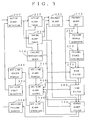
- FIG. 3 shows a block diagram of the real-time diagnostic system of the present invention.
- the system examines the signals from on-line alarm sources and determines whether they have a normal status, called “normal alarms", or whether the signals are abnormal, or "active” alarms. Active alarms are stored in an active alarm table 210, and normal alarms are stored in a normal alarm table 220. As the diagnostic system receives information from each alarm, it updates the corresponding active alarm table and normal alarm table.
- the system uses a series of filters to iteratively examine the tables, which contain the current status of the alarms, to determine probable sources of failure.
- a primary alarm filter 230 initially processes the data stored in both the active alarm table 210 and the normal alarm table 220.
- the primary alarm filter 230 tests possible fault propagation paths between the active alarms listed in active alarm table 210, and possible failure sources in the failure propagation graph (corresponding to the failure propagation graph 100 of Figure 2).
- Active alarms that have active alarm ancestors in the failure propagation graph are designated secondary alarms, that is, alarms have been activated because the fault has propagated and not because the fault has originated at this location. While all alarms are initially designated to be primary alarms, the alarms that are later determined to be secondary alarms are dropped from the list of primary alarms as stored in the primary alarm set 240.
- failure source candidates All possible ancestors of the primary alarms, that is nodes or components from which a primary alarm can be reached according to the failure node graph, form the failure source candidates, are determined by failure source generator 250, and are stored at 260.
- the failure source candidates are tested with a sequence of filters 270, 280, 290 designed to eliminate failure points that are not consistent with the given time and probability constraints.
- the filters operate by determining whether paths having specific attributes exist between each selected failure source candidate and the primary alarms. If the appropriate path does not exist, the failure source candidate is discarded.
- the path filter 270 is responsive to the primary alarm set, the description of the failure propagation path 100, and the failure source candidates, and checks whether each element of the primary alarm set is reachable, through any allowable paths (based upon propagation time and probability of occurrence), from a selected failure source candidate. If a particular failure source candidate is not on at least one of all possible paths leading to all elements of the primary alarm set, that particular failure source candidate can be eliminated from the consideration as a failure source.
- the time filter 280 takes the remaining candidates, and in response also to graph 100 and the primary alarm set, checks whether the primary alarm set configuration is consistent with the minimum propagation times along the paths of the graph. If the minimum propagation time along a particular path from a failure source candidate to an element of a primary alarm set exceeds the time in which the failure actually occurred, that path can be eliminated.
- the normal alarm filter 190 checks the remaining candidates, in response to the normal alarm set and graph 100, to determine whether the primary alarm set configuration is consistent with the maximum propagation time along the remaining allowable paths of the graph. If the maximum propagation time along a particular path from a failure source candidate to an element of a primary alarm set is less than the time in which the failure actually occurred, that path can be eliminated.
- the failure source candidates that pass all of these filters become the verified failure sources as indicated at 300.
- the diagnostic system To determine which, if any, off-line alarm sources should be turned on to provide additional information and thereby limit further the number of verified failure sources, the diagnostic system performs a series of computations as follows.
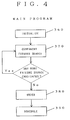
- the main control flow of the program determines which off-line alarm sources would be most optimum to be turned on.
- the system obtains the failure propagation graph 100, the list of FAILURE SOURCE CANDIDATES, the TOTAL FAILURE NODES and the FAILURE MODE ALARM ASSOCIATION array from the main diagnostic system.
- the FAILURE SOURCE CANDIDATES LIST contains all nodes that are verified failure source candidates 300.
- the TOTAL FAILURE NODES is the number of nodes in the graph, not including the FAILURE SOURCE CANDIDATES.
- the FAILURE MODE ALARM ASSOCIATION array contains one element for each of the nodes counted in the list of TOTAL FAILURE NODES. This array is used to determine the status of each node. Four values are possible, one for a node having NO ALARM, one for a node having an ON-LINE ALARM, one for an OFFLINE ALARM NOT REQUESTED, and one for an OFFLINE ALARM REQUESTED.
- the system then creates two arrays, each having one element for each of the nodes included in TOTAL FAILURE NODES.
- One array the CRITICALITY FAILURE NODE array is used to increase a criticality parameter, the criticality associated with each node being determined by the system.
- the second array, the NODEMARK array is used to mark each node as it is encountered, thereby preventing nodes from being examined more than is necessary.
- the "COMPONENT FORWARD SEARCH" procedure 370 starts, at 400, at the current component in the Failure source candidates List and traces forward node by node through the failure propagation graph.
- a node is tested at 410, and when a node that has not been previously marked is reached, as determined by looking at the NODEMARK array at that node, the node is marked at 420, and examined at 430 to determine whether it is a node having an OFF-LINE ALARM NOT REQUESTED status.
- the criticality level is increased at 440 if the node has an OFF-LINE ALARM NOT REQUESTED status.
- the procedure then continues tracing forward through the graph in this way until all possible paths and associated nodes have been examined.
- the system checks at 450 for any more nodes to be examined, and either continues to the next node at 460 or terminates this search at 470 by clearing the NODEMARK array.
- the NODEMARKS are cleared at 470 and control is returned at 480 to the main procedure.
- the procedure then continues for each next Failure Source Candidate.
- the level of criticality of a node is increased every time an off-line alarm source is encountered.
- the "ORDER" procedure 380 is called to order the nodes according to their respective levels of criticality.
- the "SCHEDULE” procedure 390 is then called and schedules those nodes, having high levels of criticality, and to be turned on-line. The status of any nodes that are so scheduled are changed to "OFF-LINE ALARM REQUESTED".
- the system displays, in the illustrated embodiment, to the operator the demand for such off-line alarm readings.
- the off-line alarm scheduler 330 sends the scheduled requests from software scheduler 390 to the off-line alarm sources, as indicated by a "request" indicated at a sensor 340.
- the results from the requested alarm are received by off-line alarm detection 350, which sends the data to the active alarm detection element 200.
- the results of the sensor readings or the fault detection algorithms are used to update the active and normal alarm sets as described above. The diagnosis can thus be refined by applying the filters again, this time to the modified and enlarged alarm configuration. As off-line alarm sources continue to be turned on, the process continues to loop, and its analysis is refined to reduce the possible failure source candidates accordingly.
Landscapes
- Physics & Mathematics (AREA)
- General Physics & Mathematics (AREA)
- Engineering & Computer Science (AREA)
- Automation & Control Theory (AREA)
- Computer Security & Cryptography (AREA)
- Testing And Monitoring For Control Systems (AREA)
- Management, Administration, Business Operations System, And Electronic Commerce (AREA)
Applications Claiming Priority (2)
| Application Number | Priority Date | Filing Date | Title |
|---|---|---|---|
| US602945 | 1984-04-23 | ||
| US07/602,945 US5237518A (en) | 1990-10-27 | 1990-10-27 | Optimization method for adaptive sensor reading scheduling and delayed alarm evaluation in real-time diagnostic systems |
Publications (2)
| Publication Number | Publication Date |
|---|---|
| EP0482526A2 true EP0482526A2 (fr) | 1992-04-29 |
| EP0482526A3 EP0482526A3 (en) | 1993-01-20 |
Family
ID=24413408
Family Applications (1)
| Application Number | Title | Priority Date | Filing Date |
|---|---|---|---|
| EP19910117826 Withdrawn EP0482526A3 (en) | 1990-10-27 | 1991-10-18 | Optimization method for adaptive sensor reading scheduling and delayed alarm evaluation in real-time diagnostic systems |
Country Status (3)
| Country | Link |
|---|---|
| US (1) | US5237518A (fr) |
| EP (1) | EP0482526A3 (fr) |
| JP (1) | JP2875073B2 (fr) |
Cited By (8)
| Publication number | Priority date | Publication date | Assignee | Title |
|---|---|---|---|---|
| FR2697355A1 (fr) * | 1991-09-12 | 1994-04-29 | Cloos Int Inc | Appareil, système et procédé de surveillance d'un processus industriel continu. |
| FR2760103A1 (fr) * | 1997-02-25 | 1998-08-28 | Sextant Avionique | Architecture modulaire de pilotage d'un aerodyne presentant un faible cout tout en etant apte a assurer un niveau eleve de securite de fonctionnement |
| WO2008076586A1 (fr) | 2006-12-15 | 2008-06-26 | Ge Fanuc Intelligent Platforms, Inc. | Méthode et appareil de suivi d'un système de santé |
| WO2009043852A1 (fr) * | 2007-10-04 | 2009-04-09 | Robert Bosch Gmbh | Procédé de description d'un comportement d'une installation technique |
| EP1032841A4 (fr) * | 1997-10-22 | 2010-09-01 | Intellinet Inc | Systemes et procedes pour etablissement de profil adaptatif, detection de defaillances et fourniture d'alarmes dans un environnement evolutif mesurable par au moins deux mesures d'etat differentes |
| WO2013104419A1 (fr) * | 2012-01-11 | 2013-07-18 | Siemens Aktiengesellschaft | Aide à la prévention d'incidents dans une installation industrielle au moyen d'un modèle de défaillance |
| EP3048613A1 (fr) * | 2015-01-20 | 2016-07-27 | ABB Technology AG | Procédé pour analyser des propagations de perturbation dans une installation |
| EP3246777A1 (fr) * | 2016-05-19 | 2017-11-22 | ETM professional control GmbH | Systeme de commande et de surveillance de processus techniques et installations |
Families Citing this family (105)
| Publication number | Priority date | Publication date | Assignee | Title |
|---|---|---|---|---|
| FR2700403B1 (fr) * | 1993-01-12 | 1995-04-07 | Sextant Avionique | Procédé de structuration d'informations utilisées dans un processus industriel et son application à l'assistance au pilotage d'un aérodyne. |
| US6009246A (en) * | 1997-01-13 | 1999-12-28 | International Business Machines Corporation | Method and system for evaluating intrusive repair for plurality of devices |
| US6415276B1 (en) | 1998-08-14 | 2002-07-02 | University Of New Mexico | Bayesian belief networks for industrial processes |
| PT1261897E (pt) * | 2000-02-25 | 2005-02-28 | Siemens Ag | Processo para operar e dispositivo para monitorar uma instalacao tecnica |
| US6829734B1 (en) | 2000-04-04 | 2004-12-07 | International Business Machines Corporation | Method for discovering problem resolutions in a free form computer helpdesk data set |
| US7494459B2 (en) * | 2003-06-26 | 2009-02-24 | Biophan Technologies, Inc. | Sensor-equipped and algorithm-controlled direct mechanical ventricular assist device |
| US8301751B2 (en) * | 2005-06-30 | 2012-10-30 | International Business Machines Corporation | Generation of a master schedule for a resource from a plurality of user created schedules for the resource |
| US20100152523A1 (en) * | 2005-11-28 | 2010-06-17 | Myocardiocare, Inc. | Method and Apparatus for Minimally Invasive Direct Mechanical Ventricular Actuation |
| US8600556B2 (en) * | 2009-06-22 | 2013-12-03 | Johnson Controls Technology Company | Smart building manager |
| WO2018032061A1 (fr) * | 2016-08-19 | 2018-02-22 | The University Of Queensland | Procédé et ensemble d'assistance d'opérateur d'alarme améliorés |
| US10446014B1 (en) * | 2018-06-27 | 2019-10-15 | Bently Nevada, Llc | Alarm notification delay |
| US11449370B2 (en) | 2018-12-11 | 2022-09-20 | DotWalk, Inc. | System and method for determining a process flow of a software application and for automatically generating application testing code |
| US11025508B1 (en) | 2020-04-08 | 2021-06-01 | Servicenow, Inc. | Automatic determination of code customizations |
| US11296922B2 (en) | 2020-04-10 | 2022-04-05 | Servicenow, Inc. | Context-aware automated root cause analysis in managed networks |
| US10999152B1 (en) | 2020-04-20 | 2021-05-04 | Servicenow, Inc. | Discovery pattern visualizer |
| US11301435B2 (en) | 2020-04-22 | 2022-04-12 | Servicenow, Inc. | Self-healing infrastructure for a dual-database system |
| US11392768B2 (en) | 2020-05-07 | 2022-07-19 | Servicenow, Inc. | Hybrid language detection model |
| US11263195B2 (en) | 2020-05-11 | 2022-03-01 | Servicenow, Inc. | Text-based search of tree-structured tables |
| US11470107B2 (en) | 2020-06-10 | 2022-10-11 | Servicenow, Inc. | Matching configuration items with machine learning |
| US11277359B2 (en) | 2020-06-11 | 2022-03-15 | Servicenow, Inc. | Integration of a messaging platform with a remote network management application |
| US11451573B2 (en) | 2020-06-16 | 2022-09-20 | Servicenow, Inc. | Merging duplicate items identified by a vulnerability analysis |
| US11379089B2 (en) | 2020-07-02 | 2022-07-05 | Servicenow, Inc. | Adaptable user interface layout for applications |
| US11277321B2 (en) | 2020-07-06 | 2022-03-15 | Servicenow, Inc. | Escalation tracking and analytics system |
| US11301503B2 (en) | 2020-07-10 | 2022-04-12 | Servicenow, Inc. | Autonomous content orchestration |
| US11449535B2 (en) | 2020-07-13 | 2022-09-20 | Servicenow, Inc. | Generating conversational interfaces based on metadata |
| US11632300B2 (en) | 2020-07-16 | 2023-04-18 | Servicenow, Inc. | Synchronization of a shared service configuration across computational instances |
| US11343079B2 (en) | 2020-07-21 | 2022-05-24 | Servicenow, Inc. | Secure application deployment |
| US11748115B2 (en) | 2020-07-21 | 2023-09-05 | Servicenow, Inc. | Application and related object schematic viewer for software application change tracking and management |
| US11272007B2 (en) | 2020-07-21 | 2022-03-08 | Servicenow, Inc. | Unified agent framework including push-based discovery and real-time diagnostics features |
| US11582106B2 (en) | 2020-07-22 | 2023-02-14 | Servicenow, Inc. | Automatic discovery of cloud-based infrastructure and resources |
| US11095506B1 (en) | 2020-07-22 | 2021-08-17 | Servicenow, Inc. | Discovery of resources associated with cloud operating system |
| US11275580B2 (en) | 2020-08-12 | 2022-03-15 | Servicenow, Inc. | Representing source code as implicit configuration items |
| US11372920B2 (en) | 2020-08-31 | 2022-06-28 | Servicenow, Inc. | Generating relational charts with accessibility for visually-impaired users |
| US11245591B1 (en) | 2020-09-17 | 2022-02-08 | Servicenow, Inc. | Implementation of a mock server for discovery applications |
| US11625141B2 (en) | 2020-09-22 | 2023-04-11 | Servicenow, Inc. | User interface generation with machine learning |
| US11150784B1 (en) | 2020-09-22 | 2021-10-19 | Servicenow, Inc. | User interface elements for controlling menu displays |
| US11632303B2 (en) | 2020-10-07 | 2023-04-18 | Servicenow, Inc | Enhanced service mapping based on natural language processing |
| US11734025B2 (en) | 2020-10-14 | 2023-08-22 | Servicenow, Inc. | Configurable action generation for a remote network management platform |
| US11342081B2 (en) | 2020-10-21 | 2022-05-24 | Servicenow, Inc. | Privacy-enhanced contact tracing using mobile applications and portable devices |
| US11258847B1 (en) | 2020-11-02 | 2022-02-22 | Servicenow, Inc. | Assignments of incoming requests to servers in computing clusters and other environments |
| US11363115B2 (en) | 2020-11-05 | 2022-06-14 | Servicenow, Inc. | Integrated operational communications between computational instances of a remote network management platform |
| US11868593B2 (en) | 2020-11-05 | 2024-01-09 | Servicenow, Inc. | Software architecture and user interface for process visualization |
| US11281442B1 (en) | 2020-11-18 | 2022-03-22 | Servicenow, Inc. | Discovery and distribution of software applications between multiple operational environments |
| US11693831B2 (en) | 2020-11-23 | 2023-07-04 | Servicenow, Inc. | Security for data at rest in a remote network management platform |
| US11216271B1 (en) | 2020-12-10 | 2022-01-04 | Servicenow, Inc. | Incremental update for offline data access |
| US11269618B1 (en) | 2020-12-10 | 2022-03-08 | Servicenow, Inc. | Client device support for incremental offline updates |
| US11630717B2 (en) | 2021-01-06 | 2023-04-18 | Servicenow, Inc. | Machine-learning based similarity engine |
| US11301365B1 (en) | 2021-01-13 | 2022-04-12 | Servicenow, Inc. | Software test coverage through real-time tracing of user activity |
| US11418586B2 (en) | 2021-01-19 | 2022-08-16 | Servicenow, Inc. | Load balancing of discovery agents across proxy servers |
| US11921878B2 (en) | 2021-01-21 | 2024-03-05 | Servicenow, Inc. | Database security through obfuscation |
| US11301271B1 (en) | 2021-01-21 | 2022-04-12 | Servicenow, Inc. | Configurable replacements for empty states in user interfaces |
| US11513885B2 (en) | 2021-02-16 | 2022-11-29 | Servicenow, Inc. | Autonomous error correction in a multi-application platform |
| US11277369B1 (en) | 2021-03-02 | 2022-03-15 | Servicenow, Inc. | Message queue architecture and interface for a multi-application platform |
| US11831729B2 (en) | 2021-03-19 | 2023-11-28 | Servicenow, Inc. | Determining application security and correctness using machine learning based clustering and similarity |
| US12254063B2 (en) | 2021-03-22 | 2025-03-18 | Servicenow, Inc. | Cross-modality curiosity for sparse-reward tasks |
| US11640369B2 (en) | 2021-05-05 | 2023-05-02 | Servicenow, Inc. | Cross-platform communication for facilitation of data sharing |
| US11635752B2 (en) | 2021-05-07 | 2023-04-25 | Servicenow, Inc. | Detection and correction of robotic process automation failures |
| US11635953B2 (en) | 2021-05-07 | 2023-04-25 | Servicenow, Inc. | Proactive notifications for robotic process automation |
| US12585929B2 (en) | 2021-05-28 | 2026-03-24 | Servicenow, Inc. | Layered gradient accumulation and modular pipeline parallelism for improved training of machine learning models |
| US11277475B1 (en) | 2021-06-01 | 2022-03-15 | Servicenow, Inc. | Automatic discovery of storage cluster |
| US11762668B2 (en) | 2021-07-06 | 2023-09-19 | Servicenow, Inc. | Centralized configuration data management and control |
| US11418571B1 (en) | 2021-07-29 | 2022-08-16 | Servicenow, Inc. | Server-side workflow improvement based on client-side data mining |
| US11516307B1 (en) | 2021-08-09 | 2022-11-29 | Servicenow, Inc. | Support for multi-type users in a single-type computing system |
| US12254352B2 (en) | 2021-10-28 | 2025-03-18 | Servicenow, Inc. | Reduced memory utilization for data analytics procedures |
| US11960353B2 (en) | 2021-11-08 | 2024-04-16 | Servicenow, Inc. | Root cause analysis based on process optimization data |
| US11734381B2 (en) | 2021-12-07 | 2023-08-22 | Servicenow, Inc. | Efficient downloading of related documents |
| US12099567B2 (en) | 2021-12-20 | 2024-09-24 | Servicenow, Inc. | Viewports and sub-pages for web-based user interfaces |
| US12437250B2 (en) | 2021-12-21 | 2025-10-07 | Servicenow, Inc. | Multi-dimensional process mining and analysis |
| US12001502B2 (en) | 2022-01-11 | 2024-06-04 | Servicenow, Inc. | Common fragment caching for web documents |
| US11829233B2 (en) | 2022-01-14 | 2023-11-28 | Servicenow, Inc. | Failure prediction in a computing system based on machine learning applied to alert data |
| US12261904B2 (en) | 2022-01-20 | 2025-03-25 | Servicenow, Inc. | Nested request-response protocol network communications |
| US12481416B2 (en) | 2022-02-01 | 2025-11-25 | Servicenow, Inc. | Progressive refresh of user interface screens |
| US11582317B1 (en) | 2022-02-07 | 2023-02-14 | Servicenow, Inc. | Payload recording and comparison techniques for discovery |
| US11734150B1 (en) | 2022-06-10 | 2023-08-22 | Servicenow, Inc. | Activity tracing through event correlation across multiple software applications |
| US11989538B2 (en) | 2022-06-21 | 2024-05-21 | Servicenow, Inc. | Orchestration for robotic process automation |
| US12231508B2 (en) | 2022-07-12 | 2025-02-18 | Servicenow, Inc. | Rapid error detection through command validation |
| US12056473B2 (en) | 2022-08-01 | 2024-08-06 | Servicenow, Inc. | Low-code / no-code layer for interactive application development |
| US12095634B2 (en) | 2022-08-12 | 2024-09-17 | Servicenow, Inc. | Hybrid request routing system |
| US12500820B2 (en) | 2022-09-20 | 2025-12-16 | Servicenow, Inc. | Smart detection for determination of database accuracy |
| US12039328B2 (en) | 2022-09-30 | 2024-07-16 | Servicenow, Inc. | Configuration items for supporting automations and efficacies thereof |
| US12141048B2 (en) | 2022-10-12 | 2024-11-12 | Servicenow, Inc. | Machine learning model for determining software defect criticality |
| US12147487B2 (en) | 2022-12-07 | 2024-11-19 | Servicenow, Inc. | Computationally efficient traversal of virtual tables |
| US12072775B2 (en) | 2022-12-07 | 2024-08-27 | Servicenow, Inc. | Centralized configuration and change tracking for a computing platform |
| US12487906B2 (en) | 2022-12-22 | 2025-12-02 | Servicenow, Inc. | Discovery and predictive simulation of software-based processes |
| US12536044B2 (en) | 2023-01-10 | 2026-01-27 | Servicenow, Inc. | Efficient cloud-based discovery of computing resources |
| US12192245B2 (en) | 2023-01-23 | 2025-01-07 | Servicenow, Inc. | Control of cloud infrastructure configuration |
| US12299419B2 (en) | 2023-01-26 | 2025-05-13 | Servicenow, Inc. | Unified framework for configuration and deployment of platform intelligence |
| US12499311B2 (en) | 2023-03-03 | 2025-12-16 | Servicenow, Inc. | Language model preprocessing with weighted n-grams |
| US12131168B1 (en) | 2023-04-18 | 2024-10-29 | Servicenow, Inc. | Outcome-oriented automation platform |
| US12222834B2 (en) | 2023-05-24 | 2025-02-11 | Servicenow, Inc. | Discovery troubleshooting based on machine learning |
| US12294581B2 (en) | 2023-06-14 | 2025-05-06 | Servicenow, Inc. | Identifying security vulnerabilities based on access control lists |
| CN116974262A (zh) * | 2023-06-16 | 2023-10-31 | 东南大学 | 一种基于FastRB的高维复杂工业过程故障诊断方法 |
| US12437158B2 (en) | 2023-07-18 | 2025-10-07 | Servicenow, Inc. | Method for filtering and semi-automatically labeling training data |
| US12425195B2 (en) | 2023-07-24 | 2025-09-23 | Service Now, Inc. | Client-side sharing of cryptographic keys |
| US12248361B2 (en) | 2023-07-31 | 2025-03-11 | Servicenow, Inc. | Parallelized exception handling for large datasets |
| US12499119B2 (en) | 2023-08-07 | 2025-12-16 | Servicenow, Inc. | Template-based generation of synthetic data sets |
| US12518041B2 (en) | 2023-08-18 | 2026-01-06 | Servicenow, Inc. | Configurable security policy architecture |
| US12474900B2 (en) | 2023-09-08 | 2025-11-18 | Servicenow, Inc. | Interface element configuration and management for application platforms |
| US12554380B2 (en) | 2023-09-18 | 2026-02-17 | Servicenow, Inc. | Component selector for user interfaces with dynamic identifiers |
| US12362995B2 (en) | 2023-11-06 | 2025-07-15 | Servicenow, Inc. | Reconciliation of partial configuration items |
| US12613990B2 (en) | 2023-11-10 | 2026-04-28 | Servicenow, Inc. | Automated file information population exhibiting reduced storage and bandwidth and increased security |
| US12254014B1 (en) | 2024-02-23 | 2025-03-18 | Servicenow, Inc. | Document creation with guided generative artificial intelligence |
| US12438790B1 (en) | 2024-03-26 | 2025-10-07 | Servicenow, Inc. | Network anomaly detection using clustering |
| US12587432B2 (en) | 2024-05-16 | 2026-03-24 | Servicenow, Inc. | Visual map for network alerts |
| US12563115B2 (en) | 2024-06-20 | 2026-02-24 | Servicenow, Inc. | Database offload with node-to-node communication |
Family Cites Families (15)
| Publication number | Priority date | Publication date | Assignee | Title |
|---|---|---|---|---|
| US4060716A (en) * | 1975-05-19 | 1977-11-29 | Rockwell International Corporation | Method and apparatus for automatic abnormal events monitor in operating plants |
| GB1515525A (en) * | 1975-07-25 | 1978-06-28 | Atomic Energy Authority Uk | Data handling systems |
| DE2547996A1 (de) * | 1975-10-27 | 1977-04-28 | Walt Disney Prod | Ueberwachungssystem zum ablesen diskreter punkte |
| US4688183A (en) * | 1984-12-24 | 1987-08-18 | United Technologies Corporation | Fire and security system with multi detector-occupancy-temperature-smoke (MDOTS) sensors |
| US4754409A (en) * | 1985-06-26 | 1988-06-28 | International Business Machines Corporation | Method for dynamically collecting current data from specified external processes and procedures for use in an expert system |
| US4841456A (en) * | 1986-09-09 | 1989-06-20 | The Boeing Company | Test system and method using artificial intelligence control |
| US4749985A (en) * | 1987-04-13 | 1988-06-07 | United States Of America As Represented By The United States Department Of Energy | Functional relationship-based alarm processing |
| US4812819A (en) * | 1987-04-13 | 1989-03-14 | The United States Of America As Represented By The United States Department Of Energy | Functional relationship-based alarm processing system |
| US4974181A (en) * | 1988-04-15 | 1990-11-27 | The United States Of America As Represented By The Adminstrator, Of The National Aeronautics And Space Administration | Adaptive data acquisition multiplexing system and method |
| GB2220280B (en) * | 1988-07-04 | 1992-10-21 | Rolls Royce & Ass | A control system for industrial plant |
| US4985857A (en) * | 1988-08-19 | 1991-01-15 | General Motors Corporation | Method and apparatus for diagnosing machines |
| US5099436A (en) * | 1988-11-03 | 1992-03-24 | Allied-Signal Inc. | Methods and apparatus for performing system fault diagnosis |
| US4970725A (en) * | 1989-03-14 | 1990-11-13 | Westinghouse Electric Corp. | Automated system testability assessment method |
| US5043987A (en) * | 1989-11-07 | 1991-08-27 | Array Analysis, Inc. | Method for calculating adaptive inference test figure of merit |
| US5130936A (en) * | 1990-09-14 | 1992-07-14 | Arinc Research Corporation | Method and apparatus for diagnostic testing including a neural network for determining testing sufficiency |
-
1990
- 1990-10-27 US US07/602,945 patent/US5237518A/en not_active Expired - Lifetime
-
1991
- 1991-10-04 JP JP25741991A patent/JP2875073B2/ja not_active Expired - Lifetime
- 1991-10-18 EP EP19910117826 patent/EP0482526A3/en not_active Withdrawn
Cited By (10)
| Publication number | Priority date | Publication date | Assignee | Title |
|---|---|---|---|---|
| FR2697355A1 (fr) * | 1991-09-12 | 1994-04-29 | Cloos Int Inc | Appareil, système et procédé de surveillance d'un processus industriel continu. |
| FR2760103A1 (fr) * | 1997-02-25 | 1998-08-28 | Sextant Avionique | Architecture modulaire de pilotage d'un aerodyne presentant un faible cout tout en etant apte a assurer un niveau eleve de securite de fonctionnement |
| WO1998038553A1 (fr) * | 1997-02-25 | 1998-09-03 | Sextant Avionique | Architecture modulaire de pilotage d'un aerodyne presentant un faible cout tout en etant apte a assurer un niveau eleve de securite de fonctionnement |
| US6600963B1 (en) * | 1997-02-25 | 2003-07-29 | Sextant Avionique | Low cost modular architecture for piloting an aerodyne operating with high level of security |
| EP1032841A4 (fr) * | 1997-10-22 | 2010-09-01 | Intellinet Inc | Systemes et procedes pour etablissement de profil adaptatif, detection de defaillances et fourniture d'alarmes dans un environnement evolutif mesurable par au moins deux mesures d'etat differentes |
| WO2008076586A1 (fr) | 2006-12-15 | 2008-06-26 | Ge Fanuc Intelligent Platforms, Inc. | Méthode et appareil de suivi d'un système de santé |
| WO2009043852A1 (fr) * | 2007-10-04 | 2009-04-09 | Robert Bosch Gmbh | Procédé de description d'un comportement d'une installation technique |
| WO2013104419A1 (fr) * | 2012-01-11 | 2013-07-18 | Siemens Aktiengesellschaft | Aide à la prévention d'incidents dans une installation industrielle au moyen d'un modèle de défaillance |
| EP3048613A1 (fr) * | 2015-01-20 | 2016-07-27 | ABB Technology AG | Procédé pour analyser des propagations de perturbation dans une installation |
| EP3246777A1 (fr) * | 2016-05-19 | 2017-11-22 | ETM professional control GmbH | Systeme de commande et de surveillance de processus techniques et installations |
Also Published As
| Publication number | Publication date |
|---|---|
| EP0482526A3 (en) | 1993-01-20 |
| JP2875073B2 (ja) | 1999-03-24 |
| US5237518A (en) | 1993-08-17 |
| JPH06236207A (ja) | 1994-08-23 |
Similar Documents
| Publication | Publication Date | Title |
|---|---|---|
| US5237518A (en) | Optimization method for adaptive sensor reading scheduling and delayed alarm evaluation in real-time diagnostic systems | |
| US5214577A (en) | Automatic test generation for model-based real-time fault diagnostic systems | |
| Bowles | The new SAE FMECA standard | |
| US5919267A (en) | Neural network fault diagnostics systems and related method | |
| EP1111550B1 (fr) | Méthode et système pour surveiller le fonctionnement d'une machine isolée | |
| US6543007B1 (en) | Process and system for configuring repair codes for diagnostics of machine malfunctions | |
| KR950012221B1 (ko) | 고장수리 시스템 및 그 수리방법 | |
| CN101470426B (zh) | 一种故障检测的方法和系统 | |
| US8255100B2 (en) | Data-driven anomaly detection to anticipate flight deck effects | |
| US6970804B2 (en) | Automated self-learning diagnostic system | |
| US7062358B2 (en) | System apparatus and method for diagnosing a flow system | |
| JPH02105947A (ja) | コンピユータ周辺サブシステム及びその例外事象自動検出分析方法 | |
| JP7582794B2 (ja) | 航空機センサをモデリングするためのデータ主導方式機械学習 | |
| US5150367A (en) | Composite range constraint propagation control | |
| Lunze et al. | Diagnosis of discrete–event system described by timed automata | |
| CN116542656B (zh) | 一种云边结合的矿用设备智能运维系统及方法 | |
| JPH08129691A (ja) | エキスパートシステムを利用した故障診断装置 | |
| KR100576819B1 (ko) | 반도체 공정설비의 공정데이터 관리 시스템 | |
| Rengaswamy et al. | An integrated framework for process monitoring, diagnosis, and control using knowledge-based systems and neural networks | |
| JP2637774B2 (ja) | オペレーションエキスパートシステム | |
| Wohl | System Complexity, Diagnostic Behaviour, and Repair Time: A Predictive Theory | |
| JPH0654372A (ja) | 異常診断装置 | |
| Chu | Generic expert system shell for diagnostic reasoning | |
| CN112528512A (zh) | 一种雷达装备通用的实时状态评估方法及系统 | |
| Shi et al. | Process Navigator for Automotive Body Assembly Process |
Legal Events
| Date | Code | Title | Description |
|---|---|---|---|
| PUAI | Public reference made under article 153(3) epc to a published international application that has entered the european phase |
Free format text: ORIGINAL CODE: 0009012 |
|
| AK | Designated contracting states |
Kind code of ref document: A2 Designated state(s): AT BE CH DE DK ES FR GB GR IT LI LU NL SE |
|
| PUAL | Search report despatched |
Free format text: ORIGINAL CODE: 0009013 |
|
| AK | Designated contracting states |
Kind code of ref document: A3 Designated state(s): AT BE CH DE DK ES FR GB GR IT LI LU NL SE |
|
| 17P | Request for examination filed |
Effective date: 19930715 |
|
| 17Q | First examination report despatched |
Effective date: 19950113 |
|
| STAA | Information on the status of an ep patent application or granted ep patent |
Free format text: STATUS: THE APPLICATION HAS BEEN WITHDRAWN |
|
| 18W | Application withdrawn |
Withdrawal date: 19950710 |