EP0484805A1 - Alliage à mémoire de forme ayant une température de transformation élevée - Google Patents
Alliage à mémoire de forme ayant une température de transformation élevée Download PDFInfo
- Publication number
- EP0484805A1 EP0484805A1 EP91118459A EP91118459A EP0484805A1 EP 0484805 A1 EP0484805 A1 EP 0484805A1 EP 91118459 A EP91118459 A EP 91118459A EP 91118459 A EP91118459 A EP 91118459A EP 0484805 A1 EP0484805 A1 EP 0484805A1
- Authority
- EP
- European Patent Office
- Prior art keywords
- alloy
- titanium
- article
- hafnium
- amount
- Prior art date
- Legal status (The legal status is an assumption and is not a legal conclusion. Google has not performed a legal analysis and makes no representation as to the accuracy of the status listed.)
- Withdrawn
Links
- 229910001285 shape-memory alloy Inorganic materials 0.000 title claims abstract description 16
- 230000009466 transformation Effects 0.000 title abstract description 37
- 229910045601 alloy Inorganic materials 0.000 claims abstract description 107
- 239000000956 alloy Substances 0.000 claims abstract description 107
- 229910052735 hafnium Inorganic materials 0.000 claims abstract description 49
- VBJZVLUMGGDVMO-UHFFFAOYSA-N hafnium atom Chemical compound [Hf] VBJZVLUMGGDVMO-UHFFFAOYSA-N 0.000 claims abstract description 33
- 239000010936 titanium Substances 0.000 claims abstract description 33
- 229910052719 titanium Inorganic materials 0.000 claims abstract description 30
- RTAQQCXQSZGOHL-UHFFFAOYSA-N Titanium Chemical compound [Ti] RTAQQCXQSZGOHL-UHFFFAOYSA-N 0.000 claims abstract description 25
- 229910052726 zirconium Inorganic materials 0.000 claims abstract description 25
- QCWXUUIWCKQGHC-UHFFFAOYSA-N Zirconium Chemical compound [Zr] QCWXUUIWCKQGHC-UHFFFAOYSA-N 0.000 claims abstract description 18
- 239000000203 mixture Substances 0.000 claims abstract description 18
- 229910052751 metal Inorganic materials 0.000 claims abstract description 7
- 239000002184 metal Substances 0.000 claims abstract description 7
- 229910052796 boron Inorganic materials 0.000 claims abstract description 5
- PXHVJJICTQNCMI-UHFFFAOYSA-N Nickel Chemical group [Ni] PXHVJJICTQNCMI-UHFFFAOYSA-N 0.000 claims description 50
- 229910052759 nickel Inorganic materials 0.000 claims description 22
- 229910001000 nickel titanium Inorganic materials 0.000 claims description 21
- 238000000034 method Methods 0.000 claims description 15
- KDLHZDBZIXYQEI-UHFFFAOYSA-N Palladium Chemical compound [Pd] KDLHZDBZIXYQEI-UHFFFAOYSA-N 0.000 claims description 12
- HZEWFHLRYVTOIW-UHFFFAOYSA-N [Ti].[Ni] Chemical compound [Ti].[Ni] HZEWFHLRYVTOIW-UHFFFAOYSA-N 0.000 claims description 11
- XEEYBQQBJWHFJM-UHFFFAOYSA-N Iron Chemical compound [Fe] XEEYBQQBJWHFJM-UHFFFAOYSA-N 0.000 claims description 10
- 238000005482 strain hardening Methods 0.000 claims description 10
- BASFCYQUMIYNBI-UHFFFAOYSA-N platinum Chemical compound [Pt] BASFCYQUMIYNBI-UHFFFAOYSA-N 0.000 claims description 9
- 238000010438 heat treatment Methods 0.000 claims description 7
- RYGMFSIKBFXOCR-UHFFFAOYSA-N Copper Chemical compound [Cu] RYGMFSIKBFXOCR-UHFFFAOYSA-N 0.000 claims description 6
- 229910052802 copper Inorganic materials 0.000 claims description 6
- 239000010949 copper Substances 0.000 claims description 6
- 229910052763 palladium Inorganic materials 0.000 claims description 6
- 229910052782 aluminium Inorganic materials 0.000 claims description 5
- XAGFODPZIPBFFR-UHFFFAOYSA-N aluminium Chemical compound [Al] XAGFODPZIPBFFR-UHFFFAOYSA-N 0.000 claims description 5
- 229910052742 iron Inorganic materials 0.000 claims description 5
- 229910052697 platinum Inorganic materials 0.000 claims description 5
- 230000007704 transition Effects 0.000 claims description 5
- 229910052720 vanadium Inorganic materials 0.000 claims description 5
- LEONUFNNVUYDNQ-UHFFFAOYSA-N vanadium atom Chemical compound [V] LEONUFNNVUYDNQ-UHFFFAOYSA-N 0.000 claims description 5
- 229910017052 cobalt Inorganic materials 0.000 claims description 4
- 239000010941 cobalt Substances 0.000 claims description 4
- GUTLYIVDDKVIGB-UHFFFAOYSA-N cobalt atom Chemical compound [Co] GUTLYIVDDKVIGB-UHFFFAOYSA-N 0.000 claims description 4
- PCHJSUWPFVWCPO-UHFFFAOYSA-N gold Chemical compound [Au] PCHJSUWPFVWCPO-UHFFFAOYSA-N 0.000 claims description 4
- 229910052737 gold Inorganic materials 0.000 claims description 4
- 239000010931 gold Substances 0.000 claims description 4
- 230000008569 process Effects 0.000 claims description 4
- ATJFFYVFTNAWJD-UHFFFAOYSA-N Tin Chemical compound [Sn] ATJFFYVFTNAWJD-UHFFFAOYSA-N 0.000 claims description 3
- WPBNNNQJVZRUHP-UHFFFAOYSA-L manganese(2+);methyl n-[[2-(methoxycarbonylcarbamothioylamino)phenyl]carbamothioyl]carbamate;n-[2-(sulfidocarbothioylamino)ethyl]carbamodithioate Chemical compound [Mn+2].[S-]C(=S)NCCNC([S-])=S.COC(=O)NC(=S)NC1=CC=CC=C1NC(=S)NC(=O)OC WPBNNNQJVZRUHP-UHFFFAOYSA-L 0.000 claims description 3
- 239000011135 tin Substances 0.000 claims description 3
- 229910052718 tin Inorganic materials 0.000 claims description 3
- 238000001953 recrystallisation Methods 0.000 claims description 2
- VSTCOQVDTHKMFV-UHFFFAOYSA-N [Ti].[Hf] Chemical compound [Ti].[Hf] VSTCOQVDTHKMFV-UHFFFAOYSA-N 0.000 claims 1
- 229910000734 martensite Inorganic materials 0.000 description 14
- 230000009467 reduction Effects 0.000 description 12
- KHYBPSFKEHXSLX-UHFFFAOYSA-N iminotitanium Chemical compound [Ti]=N KHYBPSFKEHXSLX-UHFFFAOYSA-N 0.000 description 11
- 230000000694 effects Effects 0.000 description 8
- 229910001566 austenite Inorganic materials 0.000 description 7
- 238000000137 annealing Methods 0.000 description 5
- 238000002844 melting Methods 0.000 description 5
- 230000008018 melting Effects 0.000 description 5
- 238000007792 addition Methods 0.000 description 4
- 230000003446 memory effect Effects 0.000 description 4
- 229910001029 Hf alloy Inorganic materials 0.000 description 3
- 229910002056 binary alloy Inorganic materials 0.000 description 3
- 238000000113 differential scanning calorimetry Methods 0.000 description 3
- 238000001938 differential scanning calorimetry curve Methods 0.000 description 3
- 230000002441 reversible effect Effects 0.000 description 3
- 229910002058 ternary alloy Inorganic materials 0.000 description 3
- 229910004337 Ti-Ni Inorganic materials 0.000 description 2
- 229910011209 Ti—Ni Inorganic materials 0.000 description 2
- 230000008859 change Effects 0.000 description 2
- 229910052804 chromium Inorganic materials 0.000 description 2
- 239000011651 chromium Substances 0.000 description 2
- 238000004519 manufacturing process Methods 0.000 description 2
- 150000002739 metals Chemical class 0.000 description 2
- 238000012986 modification Methods 0.000 description 2
- 230000004048 modification Effects 0.000 description 2
- 229910052758 niobium Inorganic materials 0.000 description 2
- 239000010955 niobium Substances 0.000 description 2
- GUCVJGMIXFAOAE-UHFFFAOYSA-N niobium atom Chemical compound [Nb] GUCVJGMIXFAOAE-UHFFFAOYSA-N 0.000 description 2
- 239000000843 powder Substances 0.000 description 2
- 238000003672 processing method Methods 0.000 description 2
- 239000002994 raw material Substances 0.000 description 2
- 238000012360 testing method Methods 0.000 description 2
- 229910001020 Au alloy Inorganic materials 0.000 description 1
- ZOXJGFHDIHLPTG-UHFFFAOYSA-N Boron Chemical compound [B] ZOXJGFHDIHLPTG-UHFFFAOYSA-N 0.000 description 1
- VYZAMTAEIAYCRO-UHFFFAOYSA-N Chromium Chemical compound [Cr] VYZAMTAEIAYCRO-UHFFFAOYSA-N 0.000 description 1
- 229910000846 In alloy Inorganic materials 0.000 description 1
- 229910000796 S alloy Inorganic materials 0.000 description 1
- 238000002441 X-ray diffraction Methods 0.000 description 1
- 229910001093 Zr alloy Inorganic materials 0.000 description 1
- PMRMTSSYYVAROU-UHFFFAOYSA-N [Ti].[Ni].[Au] Chemical compound [Ti].[Ni].[Au] PMRMTSSYYVAROU-UHFFFAOYSA-N 0.000 description 1
- 239000000654 additive Substances 0.000 description 1
- 238000004378 air conditioning Methods 0.000 description 1
- 238000005275 alloying Methods 0.000 description 1
- 238000010314 arc-melting process Methods 0.000 description 1
- 230000006399 behavior Effects 0.000 description 1
- 238000004364 calculation method Methods 0.000 description 1
- 239000007795 chemical reaction product Substances 0.000 description 1
- 238000007796 conventional method Methods 0.000 description 1
- 238000010894 electron beam technology Methods 0.000 description 1
- 238000004836 empirical method Methods 0.000 description 1
- 239000003353 gold alloy Substances 0.000 description 1
- 239000012535 impurity Substances 0.000 description 1
- 238000007373 indentation Methods 0.000 description 1
- 230000006698 induction Effects 0.000 description 1
- 230000003993 interaction Effects 0.000 description 1
- 229910000683 memory titanium Inorganic materials 0.000 description 1
- 238000010587 phase diagram Methods 0.000 description 1
- 238000012545 processing Methods 0.000 description 1
- 239000000047 product Substances 0.000 description 1
- 238000003303 reheating Methods 0.000 description 1
- 238000005096 rolling process Methods 0.000 description 1
- VSZWPYCFIRKVQL-UHFFFAOYSA-N selanylidenegallium;selenium Chemical compound [Se].[Se]=[Ga].[Se]=[Ga] VSZWPYCFIRKVQL-UHFFFAOYSA-N 0.000 description 1
- 239000007858 starting material Substances 0.000 description 1
- 238000006467 substitution reaction Methods 0.000 description 1
- 229910052715 tantalum Inorganic materials 0.000 description 1
- GUVRBAGPIYLISA-UHFFFAOYSA-N tantalum atom Chemical compound [Ta] GUVRBAGPIYLISA-UHFFFAOYSA-N 0.000 description 1
- 238000002076 thermal analysis method Methods 0.000 description 1
- 238000000844 transformation Methods 0.000 description 1
- 238000011282 treatment Methods 0.000 description 1
Images




Classifications
-
- C—CHEMISTRY; METALLURGY
- C22—METALLURGY; FERROUS OR NON-FERROUS ALLOYS; TREATMENT OF ALLOYS OR NON-FERROUS METALS
- C22F—CHANGING THE PHYSICAL STRUCTURE OF NON-FERROUS METALS AND NON-FERROUS ALLOYS
- C22F1/00—Changing the physical structure of non-ferrous metals or alloys by heat treatment or by hot or cold working
- C22F1/006—Resulting in heat recoverable alloys with a memory effect
Definitions
- This invention relates to shape memory alloys (SMA), more particularly, to nickel-titanium based shape memory alloys.
- An article made of an alloy having a shape memory can be deformed at a low temperature from its original configuration. Upon application of heat, the article reverts back to its original configuration. Thus, the article "remembers" its original shape.
- the alloy undergoes a reversible transformation from an austenitic state to a martensitic state with a change in temperature.
- This transformation is often referred to as a thermal elastic martensitic transformation.
- the reversible transformation of the Ni-Ti alloy between the austenite to the martensite phases occurs over two different temperature ranges which are characteristic of the specific alloy. As the alloy cools, it reaches a temperature (M s ) at which the martensite phase starts to form and finishes the transformation at a still lower temperature (M f ).
- the alloy Upon reheating, it reaches a temperature (A s ) at which austenite begins to reform and then a temperature (A f ) at which the change back to austenite is complete.
- a s a temperature at which austenite begins to reform
- a f a temperature at which the change back to austenite is complete.
- the alloy In the martensitic state, the alloy can be easily deformed. When sufficient heat is applied to the deformed alloy, it reverts back to the austenitic state, and returns to its original configuration.
- Titanium and nickel-titanium base alloys capable of possessing shape memory are widely known. See, for example, Buehler U.S. Patent No. 3,174,851 issued March 23, 1965, and Donkersloot et al., U.S. Patent No. 3,832,243, issued August 27, 1974. Commercially viable alloys based on nickel and titanium having shape memory properties have been demonstrated to be useful in a wide variety of applications in mechanical devices.
- Nickel-titanium base alloys have been modified to obtain different properties. For example, it is known that higher transitions can be obtained by substituting gold, platinum, and/or palladium for nickel. See, Lindquist, "Structure and Transformation Behavior of Martensitic Ti-(Ni,Pd) and Ti-(Ni,Pt) Alloys" , Thesis, University of Illinois, 1978 and Wu, Interstitial Ordering and Martensitic Transformation of Titanium-Nickel-Gold Alloys , University of Illinois at Urbana-Champaign, 1986. Additions of these elements, however, make the ternary alloys quite expensive. Tuominen et al., U.S. Patent No.
- 4,144,057 discloses a shape memory alloy consisting essentially of a mixture of 23-55 wt.% nickel, from 40-46.5 wt.% titanium and 0.5-30 wt.% copper, with the balance being from 0.1 to 5 wt.% of aluminum, zirconium, cobalt, chromium and iron.
- the article discloses that when titanium is replaced by zirconium and hafnium, the martensitic transformation in Ni-Ti is conserved, but with significant lowering of the M S temperature.
- the composition of the disclosed alloy is Ni50.5Ti46Hf3.5.
- the powder is consolidated to an essentially fully dense shape, and then, localized areas of the consolidated shape are progressively melted and solidified to produce a product of improved ductility.
- Nickel-titanium alloys containing at least 45 wt.% nickel and at least 30 wt.% titanium are preferred. None of these known processing methods provide Ni-Ti alloys usable in high temperature applications.
- the present invention addresses the problems and disadvantages of the prior art and provides a high transformation temperature shape memory alloy which has good strength characteristics and is more economical to use than the commercially available high temperature SMA.
- hafnium or hafnium and zirconium are substituted for titanium.
- a nickel-rich alloy of the invention preferably contains hafnium or hafnium and zirconium in an amount of at least 4 at. %, provided that the amount of hafnium is at least 1 at. % of the alloy.
- hafnium or hafnium and zirconium are substituted for titanium in an amount of at least 0.1 at. %, preferably at least 0.5 at. %.
- hafnium to a nickel-titanium base alloy increases the transformation temperatures and strength, while maintaining reasonable formability characteristics of the alloy, allowing the fabrication of useful articles.
- a f of such an alloy is at least about 110°C, preferably 160°C, and particularly 110-500°C; the corresponding M s is at least 80°C and particularly 80-400°C.
- Articles formed from the alloy according to the invention useful in high temperature applications are also provided, together with a method for forming the alloy of the invention.
- Alloys of the invention can be represented by the general formula: M A Ti (100-A-B) X B wherein M is a metal other than zirconium and hafnium, particularly one or more elements selected from elements such as nickel, copper, gold, platinum, iron, manganese, vanadium, aluminum, palladium, tin and cobalt.
- A is 30 to 51 at. %
- B is 0.1 to 50 at. %
- X is Hf or a combination of Hf and Zr, provided that the amount of Zr does not exceed 25 at. % in the alloy, the amount of Hf is at least 0.1 at. %, and the sum of A + B is 80 or less.
- B is preferably at least 4, preferably 4 to 49 at. %, and the alloy contains at least 1 at. % Hf.
- Ni-Ti is the most widely used titanium-based binary, but other metals can be used in place of nickel in titanium-based alloys according to the invention, such as those described above.
- a high temperature titanium-based shape memory alloy of the invention may consist essentially of about 30 to 51 at.% of one or more metals, preferably one or more elements selected from the group consisting of nickel, copper, gold, platinum, iron, manganese, vanadium, aluminum, palladium, tin and cobalt, about 0.1 to 50 at.% of a second element selected from hafnium or a combination of hafnium and zirconium, provided that the amount of zirconium does not exceed about 25 at.
- Hf or Hf-Zr are 0.1 to 40 at.%, 0.1 to 25 at.%, 0.5 to 25 at.%, or even 5 to 25 at.%.
- a low range of 0.5 to 8 at.% Hf or Hf-Zr, for example, can provide sufficient shape memory effects for some applications, without limiting ductility.
- the amount of hafnium contained in Ni-Ti alloys of the invention is preferably from about 3.5 to 50 at.%, with subranges of 3.5 to 40 at.%, 8 to 25 at.%, and 4 to 20 at.%. It has been found that 1 at. % Hf actually lowers the transformation temperature range of the resulting Ni-Ti-Hf alloy to less than that of the Ni-Ti base alloy. On the other hand, amounts of about 20 to 50 at.% Hf tend to embrittle the alloy.
- preferred alloys of the invention are formed by substituting hafnium (Hf) for titanium (Ti) in Ti-Ni binary alloys wherein Ni is depleted to less than 50 at. %.
- a preferred base binary alloy is Ni49Ti51, the binary having the highest known transformation temperature.
- the amount of titanium contained in these alloys of the invention varies depending on the amount of hafnium used.
- the amount of hafnium in these alloys is preferably from about 0.1 to 49 at.%, more preferably about 0.1 to 25 at.%, and especially about 0.1 to 20 at.%.
- the alloy compositions of the invention are preferably formed using substantially (99.7%) pure hafnium as a starting material.
- zirconium and hafnium occur together in nature and are two of the most difficult elements to separate.
- Even purified hafnium may contain up to 5 weight percent zirconium (Zr), and generally contains about 2 to 3 weight percent zirconium.
- Hafnium may also be purposely added to an Ni-Ti-Zr alloy to obtain the advantages of the present invention.
- the Zr content is too high, the total amount of Hf and Zr which is added to the Ni-Ti binary base alloy to obtain the desired high transformation temperature range tends to reduce the ductility of the alloy.
- Substituting Zr alone yields alloys having considerably lower transformation temperatures than with those with essentially pure Hf substitutions, as illustrated in Figure 7.
- the amount of Zr needed to obtain a comparable transformation temperature tends to highly embrittle the alloy, whereas the smaller amount of Hf needed to obtain the same temperature tends not to produce such an undesirable effect.
- the alloys of the invention are prepared according to conventional procedures, such as vacuum arc melting, vacuum induction melting, plasma melting, electron beam melting or the like.
- the as-cast end product is then subjected to various hot and/or cold working, annealing, and heat treatment to impart shape memory effect (SME) to the alloy.
- SME shape memory effect
- Exemplary of some of these procedures is the method for producing a shape memory alloy member disclosed in U.S. Patent No. 4,881,981, issued November 21, 1989.
- Such elements may take the form of wires, flat springs, coil springs, and other useful engineering configurations, such as damper valve actuators.
- articles such as leaf springs or the like can be formed by cold working the alloy to a reduction in area of between about 5 and 30%, followed by heat treatment to impart memory to the desired shape.
- Articles according to the invention preferably have as-cast, fully-annealed transition temperatures wherein A f is at least about 110°C, and M s is at least about 80°C.
- a preferred process for forming shape memory effect wire according to the invention is as follows.
- An Ni-Ti-Hf ingot, wherein Hf contains up to 5 wt.% Zr as an unavoidable impurity, is first formed.
- the ingot is hot worked at a temperature typically at least 800°C for a number (e.g., 5 or more) of passes each at a small area reduction, e.g., 5-15%.
- the surface of the alloy is then cleaned, and a short annealing step is then carried out, for example, at a temperature of at least 800°C for at least 10 minutes.
- a series of cold working reduction steps then follows, with a stress-relieving annealing step after one or more of the cold working steps.
- Each cold working step effects a further area reduction ranging from about 3-30%.
- the last cold working step is followed by a longer, inter-annealing step, for example, at a temperature of at least 600°C for one hour.
- a succession of cold working steps then follows, preferably at successively increasing reductions ranging again from 3-30%.
- the alloy is formed into the desired shape, e.g., held by a fixture, and heated to a temperature sufficient to obtain a permanent, reversible shape memory effect whenever the part is reheated above the A f temperature.
- Ternary alloys with varying compositions of nickel (Ni), titanium (Ti) and hafnium (Hf) were prepared using high purity Ni and Ti rods, and substantially pure Hf rod or wire (99.7%, 3.1 wt.% of which is zirconium).
- the various compositions of the alloys prepared are provided in Table I, along with their as-cast transformation temperatures.
- the raw materials were then placed in a furnace equipped with a mechanical vacuum pump and a power supply.
- the alloys were prepared using an arc melting process. The sample was then melted and flipped for a total of six times to assure a homogeneous button-shaped alloy.
- the DSC plot for one of the alloys of the invention, Ni49Ti41Hf10, is shown in Figure 1.
- a martensite peak (M P ) temperature of 120°C and an austenite peak (A P ) temperature of 175°C were obtained for this alloy composition.
- DSC plots similar to that shown in Figure 1 were obtained for each of the alloy compositions listed in Table I. For the illustrated alloy, a fully annealed state is reached at about 900-950°C.
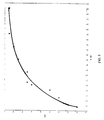
- Figure 2 shows the effect of hafnium content on the Ni-Ti-Hf alloys of the invention having 49 atomic percent Ni.
- the transformation temperatures of the alloys of the invention having Hf contents greater than about 1.5 at.% were found to substantially increase with increasing hafnium content. At about 10-11 at.% Hf, there is a drastic rise in transformation temperatures.
- Ni-Ti-Hf alloys having 10 atomic percent Hf with varying contents of nickel and titanium were prepared in the same manner as the alloy compositions of Example 1.
- the compositions and as-cast transformation temperatures of these alloys are shown in Table II and plotted in Figure 4.
- a 20 gram ingot of Ni49Ti41Hf10 alloy was prepared according to the procedure of Example 1. This ingot was about 31mm long, 8mm wide and 7mm high. A portion of the ingot having a 3mm x 3mm cross-section was hot worked above the recrystallization temperature at about 900°C for six passes with approximately a 10% reduction in area per pass using a two-high rolling mill with round-corner-square grooves. The sample was fully reheated between each reduction. The sample was then cold worked a number of times, to approximately 15% reduction in area, with inter-anneals at a temperature of 700°C for approximately 5 minutes. Thereafter the alloy was cold worked, first to approximately 13% reduction in area, and then to approximately a 25% reduction in area.
- Inter-annealing of the alloy then was carried out by heating it to 650°C for approximately one hour.
- the alloy was then cold worked to a 15% area reduction, then a second time to a 23% area reduction.
- the resulting cold worked samples were then placed into fixtures and individually subjected to memory imparting heat treatments at temperatures between about 550° and 700°C for 1 hour.
- the DSC plots are shown in Figure 5. As can be seen, the transformation temperatures begin to level out at memory imparting heat treatment temperatures above 600°C.
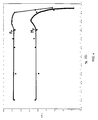
- Example 4 Two sections of wire prepared as in Example 4 were heat treated at 575°C. These sections were then tension tested in the martensitic phase and above the austenitic finish temperature. The stress-strain results of these tests are shown in Figure 6 for austenite (A) and martensite (M) phases at 208°C and 75°C, respectively.
Landscapes
- Chemical & Material Sciences (AREA)
- Physics & Mathematics (AREA)
- Thermal Sciences (AREA)
- Crystallography & Structural Chemistry (AREA)
- Engineering & Computer Science (AREA)
- Materials Engineering (AREA)
- Mechanical Engineering (AREA)
- Metallurgy (AREA)
- Organic Chemistry (AREA)
- Heat Treatment Of Steel (AREA)
- Materials For Medical Uses (AREA)
- Heat Treatment Of Nonferrous Metals Or Alloys (AREA)
Applications Claiming Priority (2)
| Application Number | Priority Date | Filing Date | Title |
|---|---|---|---|
| US07/609,377 US5114504A (en) | 1990-11-05 | 1990-11-05 | High transformation temperature shape memory alloy |
| US609377 | 1990-11-05 |
Publications (1)
| Publication Number | Publication Date |
|---|---|
| EP0484805A1 true EP0484805A1 (fr) | 1992-05-13 |
Family
ID=24440546
Family Applications (1)
| Application Number | Title | Priority Date | Filing Date |
|---|---|---|---|
| EP91118459A Withdrawn EP0484805A1 (fr) | 1990-11-05 | 1991-10-30 | Alliage à mémoire de forme ayant une température de transformation élevée |
Country Status (4)
| Country | Link |
|---|---|
| US (1) | US5114504A (fr) |
| EP (1) | EP0484805A1 (fr) |
| JP (1) | JPH0543969A (fr) |
| CA (1) | CA2054480A1 (fr) |
Cited By (12)
| Publication number | Priority date | Publication date | Assignee | Title |
|---|---|---|---|---|
| EP0709482A1 (fr) * | 1994-10-28 | 1996-05-01 | Kazuhiro Otsuka | Procédé de fabrication d'alliages à mémoire de forme ayant une température de transformation élevée |
| EP0866484A3 (fr) * | 1996-12-03 | 1999-03-10 | ABB Research Ltd. | Disjoncteur à basse tension avec élément sensible en matériau à mémoire de forme |
| EP0873734A3 (fr) * | 1997-04-25 | 1999-09-01 | Nitinol Development Corporation | Stent en alliage à mémoire de forme |
| DE10108654C2 (de) * | 2000-02-22 | 2003-04-17 | Japan Steel Works Ltd | Verfahren zum Herstellen von Wasserstoffspeicherlegierungen |
| EP1629134A4 (fr) * | 2003-03-25 | 2007-12-12 | Questek Innovations Llc | Alliages a memoire de forme renforces par nanodispersion et coherents |
| WO2008018109A1 (fr) * | 2006-08-11 | 2008-02-14 | Consiglio Nazionale Delle Ricerche | ALLIAGES DE MÉTAUX PRÉCIEUX À BASE D'UN SYSTÈME NiTiAu, AVEC DES TRANSFORMATIONS DE PHASES À L'ÉTAT SOLIDE ET LEURS PROCÉDÉS DE PRODUCTION ET DE TRANSFORMATION |
| US7918011B2 (en) | 2000-12-27 | 2011-04-05 | Abbott Cardiovascular Systems, Inc. | Method for providing radiopaque nitinol alloys for medical devices |
| EP1997922A4 (fr) * | 2006-03-20 | 2011-04-20 | Univ Tsukuba | Alliage a memoire de forme haute temperature, actionneur et moteur associes |
| US7938843B2 (en) | 2000-11-02 | 2011-05-10 | Abbott Cardiovascular Systems Inc. | Devices configured from heat shaped, strain hardened nickel-titanium |
| US7942892B2 (en) | 2003-05-01 | 2011-05-17 | Abbott Cardiovascular Systems Inc. | Radiopaque nitinol embolic protection frame |
| US7976648B1 (en) | 2000-11-02 | 2011-07-12 | Abbott Cardiovascular Systems Inc. | Heat treatment for cold worked nitinol to impart a shape setting capability without eventually developing stress-induced martensite |
| CN113512668A (zh) * | 2021-04-23 | 2021-10-19 | 广东省科学院材料与加工研究所 | 一种含硼形状记忆合金及其制备方法 |
Families Citing this family (62)
| Publication number | Priority date | Publication date | Assignee | Title |
|---|---|---|---|---|
| US6682608B2 (en) * | 1990-12-18 | 2004-01-27 | Advanced Cardiovascular Systems, Inc. | Superelastic guiding member |
| US5419788A (en) * | 1993-12-10 | 1995-05-30 | Johnson Service Company | Extended life SMA actuator |
| US5545210A (en) * | 1994-09-22 | 1996-08-13 | Advanced Coronary Technology, Inc. | Method of implanting a permanent shape memory alloy stent |
| US6059810A (en) * | 1995-05-10 | 2000-05-09 | Scimed Life Systems, Inc. | Endovascular stent and method |
| US6106642A (en) | 1998-02-19 | 2000-08-22 | Boston Scientific Limited | Process for the improved ductility of nitinol |
| US6096175A (en) * | 1998-07-17 | 2000-08-01 | Micro Therapeutics, Inc. | Thin film stent |
| US7034660B2 (en) * | 1999-02-26 | 2006-04-25 | Sri International | Sensor devices for structural health monitoring |
| US6617963B1 (en) | 1999-02-26 | 2003-09-09 | Sri International | Event-recording devices with identification codes |
| US6806808B1 (en) | 1999-02-26 | 2004-10-19 | Sri International | Wireless event-recording device with identification codes |
| US6620192B1 (en) * | 1999-03-16 | 2003-09-16 | Advanced Cardiovascular Systems, Inc. | Multilayer stent |
| US6358380B1 (en) | 1999-09-22 | 2002-03-19 | Delphi Technologies, Inc. | Production of binary shape-memory alloy films by sputtering using a hot pressed target |
| US6592724B1 (en) | 1999-09-22 | 2003-07-15 | Delphi Technologies, Inc. | Method for producing NiTiHf alloy films by sputtering |
| US6596132B1 (en) | 1999-09-22 | 2003-07-22 | Delphi Technologies, Inc. | Production of ternary shape-memory alloy films by sputtering using a hot pressed target |
| AU3441001A (en) * | 1999-12-01 | 2001-06-12 | Advanced Cardiovascular Systems Inc. | Nitinol alloy design and composition for vascular stents |
| US6303008B1 (en) | 2000-09-21 | 2001-10-16 | Delphi Technologies, Inc. | Rotating film carrier and aperture for precision deposition of sputtered alloy films |
| US6464844B1 (en) | 2000-09-21 | 2002-10-15 | Delphi Technologies, Inc. | Sputtering alloy films using a sintered metal composite target |
| US6402906B1 (en) | 2000-10-19 | 2002-06-11 | Delphi Technologies, Inc. | Sputtering alloy films using a crescent-shaped aperture |
| US6454913B1 (en) | 2001-07-12 | 2002-09-24 | Delphi Technologies, Inc. | Process for deposition of sputtered shape memory alloy films |
| US6669795B2 (en) * | 2002-01-17 | 2003-12-30 | Tini Alloy Company | Methods of fabricating high transition temperature SMA, and SMA materials made by the methods |
| US7586828B1 (en) | 2003-10-23 | 2009-09-08 | Tini Alloy Company | Magnetic data storage system |
| US7422403B1 (en) | 2003-10-23 | 2008-09-09 | Tini Alloy Company | Non-explosive releasable coupling device |
| US20060037672A1 (en) * | 2003-10-24 | 2006-02-23 | Love David B | High-purity titanium-nickel alloys with shape memory |
| JP2005140674A (ja) * | 2003-11-07 | 2005-06-02 | Seiko Epson Corp | 時計用ばね、ぜんまい、ひげぜんまい、及び時計 |
| US7632361B2 (en) * | 2004-05-06 | 2009-12-15 | Tini Alloy Company | Single crystal shape memory alloy devices and methods |
| US20060118210A1 (en) * | 2004-10-04 | 2006-06-08 | Johnson A D | Portable energy storage devices and methods |
| US8230096B2 (en) | 2005-01-14 | 2012-07-24 | Citrix Systems, Inc. | Methods and systems for generating playback instructions for playback of a recorded computer session |
| US8200828B2 (en) | 2005-01-14 | 2012-06-12 | Citrix Systems, Inc. | Systems and methods for single stack shadowing |
| US8935316B2 (en) | 2005-01-14 | 2015-01-13 | Citrix Systems, Inc. | Methods and systems for in-session playback on a local machine of remotely-stored and real time presentation layer protocol data |
| US7763342B2 (en) * | 2005-03-31 | 2010-07-27 | Tini Alloy Company | Tear-resistant thin film methods of fabrication |
| US7441888B1 (en) | 2005-05-09 | 2008-10-28 | Tini Alloy Company | Eyeglass frame |
| US7540899B1 (en) | 2005-05-25 | 2009-06-02 | Tini Alloy Company | Shape memory alloy thin film, method of fabrication, and articles of manufacture |
| US20070131317A1 (en) * | 2005-12-12 | 2007-06-14 | Accellent | Nickel-titanium alloy with a non-alloyed dispersion and methods of making same |
| US7501032B1 (en) | 2006-02-28 | 2009-03-10 | The United States Of America As Represented By The Administration Of Nasa | High work output NI-TI-PT high temperature shape memory alloys and associated processing methods |
| US7749341B2 (en) * | 2006-03-06 | 2010-07-06 | The United States Of America As Represented By The Administrator Of National Aeronautics And Space Administration | Precipitation hardenable high temperature shape memory alloy |
| JP2008031545A (ja) * | 2006-07-31 | 2008-02-14 | Shuichi Miyazaki | ピストンリング |
| US20080075557A1 (en) * | 2006-09-22 | 2008-03-27 | Johnson A David | Constant load bolt |
| US20080213062A1 (en) * | 2006-09-22 | 2008-09-04 | Tini Alloy Company | Constant load fastener |
| JP5077943B2 (ja) * | 2006-11-22 | 2012-11-21 | 独立行政法人物質・材料研究機構 | PtTi高温形状記憶合金 |
| US8349099B1 (en) | 2006-12-01 | 2013-01-08 | Ormco Corporation | Method of alloying reactive components |
| WO2008092028A1 (fr) * | 2007-01-25 | 2008-07-31 | Tini Alloy Company | Actionneur de vanne d'extincteur en alliage à mémoire de forme fragile |
| US8584767B2 (en) * | 2007-01-25 | 2013-11-19 | Tini Alloy Company | Sprinkler valve with active actuation |
| WO2009018289A2 (fr) | 2007-07-30 | 2009-02-05 | Tini Alloy Company | Procédé et dispositifs pour empêcher une resténose dans des endoprothèses cardiovasculaires |
| US8556969B2 (en) | 2007-11-30 | 2013-10-15 | Ormco Corporation | Biocompatible copper-based single-crystal shape memory alloys |
| US7842143B2 (en) * | 2007-12-03 | 2010-11-30 | Tini Alloy Company | Hyperelastic shape setting devices and fabrication methods |
| US8382917B2 (en) * | 2007-12-03 | 2013-02-26 | Ormco Corporation | Hyperelastic shape setting devices and fabrication methods |
| EP3296413A1 (fr) * | 2007-12-21 | 2018-03-21 | Cook Medical Technologies LLC | Alliage radio-opaque et dispositif médical fabriqué à partir dudit alliage |
| US20140137991A1 (en) | 2011-07-15 | 2014-05-22 | Ihi Corporation | High-temperature shape memory alloy and method for producing the same |
| US10124197B2 (en) | 2012-08-31 | 2018-11-13 | TiNi Allot Company | Fire sprinkler valve actuator |
| US11040230B2 (en) | 2012-08-31 | 2021-06-22 | Tini Alloy Company | Fire sprinkler valve actuator |
| US9339401B2 (en) * | 2013-03-08 | 2016-05-17 | Abbott Laboratories | Medical device utilizing a nickel-titanium ternary alloy having high elastic modulus |
| US9119904B2 (en) | 2013-03-08 | 2015-09-01 | Abbott Laboratories | Guide wire utilizing a nickel—titanium alloy having high elastic modulus in the martensitic phase |
| US9982330B2 (en) | 2013-11-27 | 2018-05-29 | University Of Florida Research Foundation, Inc. | Nickel titanium alloys, methods of manufacture thereof and article comprising the same |
| US20170135784A1 (en) * | 2014-07-24 | 2017-05-18 | Nv Bekaert Sa | High fatigue resistant wire |
| IT201700073563A1 (it) | 2017-06-30 | 2018-12-30 | Getters Spa | Insiemi attuatori comprendenti fili in lega a memoria di forma e rivestimenti con particelle di materiali a cambiamento di fase |
| IT201800007349A1 (it) | 2018-07-19 | 2020-01-19 | Apparecchio multistadio per vuoto con separazione degli stadi controllata da un attuatore in lega a memoria di forma | |
| IT201900004715A1 (it) | 2019-03-29 | 2020-09-29 | Getters Spa | Attuatore lineare comprendente una molla a spirale in lega a memoria di forma funzionante a bassa potenza elettrica |
| RU2705487C1 (ru) * | 2019-05-29 | 2019-11-07 | Общество с ограниченной ответственностью "МЕТСИНТЕЗ" | СПОСОБ ПОЛУЧЕНИЯ ЗАГОТОВОК СПЛАВОВ TiHfNi |
| US12168975B2 (en) * | 2020-08-25 | 2024-12-17 | Smarter Alloys Inc. | Shape memory actuator and method of making same |
| US12678276B2 (en) | 2021-09-10 | 2026-07-14 | California LASIK & Eye, Inc. | Exchangeable optics and therapeutics using magnetic tacks |
| CN115247236B (zh) | 2022-06-24 | 2023-05-02 | 华南理工大学 | 一种具有双程记忆效应NiTiHf高温形状记忆合金及其4D打印方法与应用 |
| US12235082B1 (en) * | 2023-09-01 | 2025-02-25 | United States Of America As Represented By The Secretary Of The Air Force | Deployable origami structure |
| WO2026140707A1 (fr) * | 2024-12-25 | 2026-07-02 | 田中貴金属工業株式会社 | Alliage de pt médical et élément médical constitué dudit alliage de pt médical |
Citations (3)
| Publication number | Priority date | Publication date | Assignee | Title |
|---|---|---|---|---|
| US3660082A (en) * | 1968-12-27 | 1972-05-02 | Furukawa Electric Co Ltd | Corrosion and wear resistant nickel alloy |
| JPS58157934A (ja) * | 1982-03-13 | 1983-09-20 | Hitachi Metals Ltd | 形状記憶合金 |
| EP0143580A1 (fr) * | 1983-11-15 | 1985-06-05 | RAYCHEM CORPORATION (a Delaware corporation) | Alliages à mémoire de forme |
Family Cites Families (20)
| Publication number | Priority date | Publication date | Assignee | Title |
|---|---|---|---|---|
| US3174851A (en) * | 1961-12-01 | 1965-03-23 | William J Buehler | Nickel-base alloys |
| NL7002632A (fr) * | 1970-02-25 | 1971-08-27 | ||
| US4019899A (en) * | 1970-06-11 | 1977-04-26 | The Furukawa Electric Co., Ltd. | Erosion-resistant materials |
| CH606456A5 (fr) * | 1976-08-26 | 1978-10-31 | Bbc Brown Boveri & Cie | |
| US4310354A (en) * | 1980-01-10 | 1982-01-12 | Special Metals Corporation | Process for producing a shape memory effect alloy having a desired transition temperature |
| US4304613A (en) * | 1980-05-12 | 1981-12-08 | The United States Of America As Represented By The Secretary Of The Navy | TiNi Base alloy shape memory enhancement through thermal and mechanical processing |
| US4337090A (en) * | 1980-09-05 | 1982-06-29 | Raychem Corporation | Heat recoverable nickel/titanium alloy with improved stability and machinability |
| EP0062365B1 (fr) * | 1981-03-23 | 1984-12-27 | BBC Aktiengesellschaft Brown, Boveri & Cie. | Procédé de fabrication d'un élément de construction en un alliage à base de titane, ainsi que l'élément et son application |
| US4565589A (en) * | 1982-03-05 | 1986-01-21 | Raychem Corporation | Nickel/titanium/copper shape memory alloy |
| US4505767A (en) * | 1983-10-14 | 1985-03-19 | Raychem Corporation | Nickel/titanium/vanadium shape memory alloy |
| US4740253A (en) * | 1985-10-07 | 1988-04-26 | Raychem Corporation | Method for preassembling a composite coupling |
| CA1279210C (fr) * | 1985-12-23 | 1991-01-22 | Mitsubishi Kinzoku Kabushiki Kaisha | Compose d'alliage intermetallique resistant a l'usure et se pretant mieux a l'usinage |
| JPS62211334A (ja) * | 1986-03-12 | 1987-09-17 | Sumitomo Electric Ind Ltd | 機能合金およびその製造方法 |
| JPH0665742B2 (ja) * | 1987-01-08 | 1994-08-24 | 株式会社ト−キン | 形状記憶TiNiV合金の製造方法 |
| US4865663A (en) * | 1987-03-20 | 1989-09-12 | Armada Corporation | High temperature shape memory alloys |
| US4950340A (en) * | 1987-08-10 | 1990-08-21 | Mitsubishi Kinzoku Kabushiki Kaisha | Intermetallic compound type alloy having improved toughness machinability and wear resistance |
| US4808225A (en) * | 1988-01-21 | 1989-02-28 | Special Metals Corporation | Method for producing an alloy product of improved ductility from metal powder |
| US4881981A (en) * | 1988-04-20 | 1989-11-21 | Johnson Service Company | Method for producing a shape memory alloy member having specific physical and mechanical properties |
| JPH0237353A (ja) * | 1988-07-27 | 1990-02-07 | Oki Electric Ind Co Ltd | レジストの現像方法及びその装置 |
| JPH03219037A (ja) * | 1989-10-03 | 1991-09-26 | Taiji Nishizawa | Ni基形状記憶合金およびその製造方法 |
-
1990
- 1990-11-05 US US07/609,377 patent/US5114504A/en not_active Expired - Lifetime
-
1991
- 1991-10-28 CA CA002054480A patent/CA2054480A1/fr not_active Abandoned
- 1991-10-30 EP EP91118459A patent/EP0484805A1/fr not_active Withdrawn
- 1991-11-05 JP JP3317573A patent/JPH0543969A/ja active Pending
Patent Citations (3)
| Publication number | Priority date | Publication date | Assignee | Title |
|---|---|---|---|---|
| US3660082A (en) * | 1968-12-27 | 1972-05-02 | Furukawa Electric Co Ltd | Corrosion and wear resistant nickel alloy |
| JPS58157934A (ja) * | 1982-03-13 | 1983-09-20 | Hitachi Metals Ltd | 形状記憶合金 |
| EP0143580A1 (fr) * | 1983-11-15 | 1985-06-05 | RAYCHEM CORPORATION (a Delaware corporation) | Alliages à mémoire de forme |
Non-Patent Citations (3)
| Title |
|---|
| CHEMICAL ABSTRACTS, vol. 104, no. 18, 5 May 1986, Columbus, Ohio, US; abstract no. 153836, FIZ. MET. METALLOVED, VOL. 61, NO. 1, 1986, A.G. KHUNDZHUA ET AL: 'STRUCTURE OF THE X-PHASE FORMED DURING AGING OF ALLOYS BASED ON TITANIUM NICKELIDE' * |
| CHEMICAL ABSTRACTS, vol. 104, no. 26, 30 June 1986, Columbus, Ohio, US; abstract no. 228723, METALLOFIZIKA, VOL. 8, NO. 2, 1986, A.G. KHUNDZHUA ET AL: 'MARTENSITIC TRANSFORMATION IN ALLOYED TITANIUM NICKELIDE' * |
| PATENT ABSTRACTS OF JAPAN vol. 7, no. 281 (C-200)15 December 1983 & JP-A-58 157 934 ( HITACHI KINZOKU K.K. ) 20 September 1983 * |
Cited By (13)
| Publication number | Priority date | Publication date | Assignee | Title |
|---|---|---|---|---|
| EP0709482A1 (fr) * | 1994-10-28 | 1996-05-01 | Kazuhiro Otsuka | Procédé de fabrication d'alliages à mémoire de forme ayant une température de transformation élevée |
| EP0866484A3 (fr) * | 1996-12-03 | 1999-03-10 | ABB Research Ltd. | Disjoncteur à basse tension avec élément sensible en matériau à mémoire de forme |
| EP0873734A3 (fr) * | 1997-04-25 | 1999-09-01 | Nitinol Development Corporation | Stent en alliage à mémoire de forme |
| US6312455B2 (en) | 1997-04-25 | 2001-11-06 | Nitinol Devices & Components | Stent |
| DE10108654C2 (de) * | 2000-02-22 | 2003-04-17 | Japan Steel Works Ltd | Verfahren zum Herstellen von Wasserstoffspeicherlegierungen |
| US7938843B2 (en) | 2000-11-02 | 2011-05-10 | Abbott Cardiovascular Systems Inc. | Devices configured from heat shaped, strain hardened nickel-titanium |
| US7976648B1 (en) | 2000-11-02 | 2011-07-12 | Abbott Cardiovascular Systems Inc. | Heat treatment for cold worked nitinol to impart a shape setting capability without eventually developing stress-induced martensite |
| US7918011B2 (en) | 2000-12-27 | 2011-04-05 | Abbott Cardiovascular Systems, Inc. | Method for providing radiopaque nitinol alloys for medical devices |
| EP1629134A4 (fr) * | 2003-03-25 | 2007-12-12 | Questek Innovations Llc | Alliages a memoire de forme renforces par nanodispersion et coherents |
| US7942892B2 (en) | 2003-05-01 | 2011-05-17 | Abbott Cardiovascular Systems Inc. | Radiopaque nitinol embolic protection frame |
| EP1997922A4 (fr) * | 2006-03-20 | 2011-04-20 | Univ Tsukuba | Alliage a memoire de forme haute temperature, actionneur et moteur associes |
| WO2008018109A1 (fr) * | 2006-08-11 | 2008-02-14 | Consiglio Nazionale Delle Ricerche | ALLIAGES DE MÉTAUX PRÉCIEUX À BASE D'UN SYSTÈME NiTiAu, AVEC DES TRANSFORMATIONS DE PHASES À L'ÉTAT SOLIDE ET LEURS PROCÉDÉS DE PRODUCTION ET DE TRANSFORMATION |
| CN113512668A (zh) * | 2021-04-23 | 2021-10-19 | 广东省科学院材料与加工研究所 | 一种含硼形状记忆合金及其制备方法 |
Also Published As
| Publication number | Publication date |
|---|---|
| JPH0543969A (ja) | 1993-02-23 |
| US5114504A (en) | 1992-05-19 |
| CA2054480A1 (fr) | 1992-05-06 |
Similar Documents
| Publication | Publication Date | Title |
|---|---|---|
| US5114504A (en) | High transformation temperature shape memory alloy | |
| EP0254891B1 (fr) | Procédé pour améliorer les propriétés mécaniques statiques et dynamiques d'alliages de titane alpha+bêta | |
| Maeshima et al. | Shape memory properties of biomedical Ti-Mo-Ag and Ti-Mo-Sn alloys | |
| EP1761654B1 (fr) | Alliages de titane beta metastable et procedes de traitement de ces alliages par vieillissement direct | |
| EP1352978B1 (fr) | Procede de fabrication d'un ALLIAGE DE TITANE A CAPACITE DE DEFORMATION ELASTIQUE ELEVEE | |
| US5226985A (en) | Method to produce gamma titanium aluminide articles having improved properties | |
| US5332545A (en) | Method of making low cost Ti-6A1-4V ballistic alloy | |
| JP3319195B2 (ja) | α+β型チタン合金の高靱化方法 | |
| US4229216A (en) | Titanium base alloy | |
| EP3775307B1 (fr) | Alliage de titane à haute température | |
| US5084109A (en) | Ordered iron aluminide alloys having an improved room-temperature ductility and method thereof | |
| Maeshima et al. | Shape memory and mechanical properties of biomedical Ti-Sc-Mo alloys | |
| JP2013539822A (ja) | 高強度および延性アルファ/ベータチタン合金 | |
| WO2003052155A1 (fr) | Procede de traitement d'alliages de beta titane | |
| KR20090069647A (ko) | 강도 및 연성이 우수한 저탄성 티타늄 합금 및 그 제조방법 | |
| US5417781A (en) | Method to produce gamma titanium aluminide articles having improved properties | |
| EP3844314B1 (fr) | Alliages de titane résistant au fluage | |
| WO2004003242A1 (fr) | Compositions au beta titane et leurs procedes de fabrication | |
| EP1736560B1 (fr) | Alliage titane type alpha+beta de haute résistance | |
| US20040241037A1 (en) | Beta titanium compositions and methods of manufacture thereof | |
| US20040168751A1 (en) | Beta titanium compositions and methods of manufacture thereof | |
| JP3316084B2 (ja) | 重金属合金及びその製造方法 | |
| JP3374553B2 (ja) | Ti−Al系金属間化合物基合金の製造方法 | |
| KR20060126896A (ko) | 형상 기억 특징을 갖는 고-순도 Ti-Ni합금 | |
| JP2009270163A (ja) | チタン合金 |
Legal Events
| Date | Code | Title | Description |
|---|---|---|---|
| PUAI | Public reference made under article 153(3) epc to a published international application that has entered the european phase |
Free format text: ORIGINAL CODE: 0009012 |
|
| AK | Designated contracting states |
Kind code of ref document: A1 Designated state(s): AT BE CH DE DK ES FR GB GR IT LI LU NL SE |
|
| STAA | Information on the status of an ep patent application or granted ep patent |
Free format text: STATUS: THE APPLICATION IS DEEMED TO BE WITHDRAWN |
|
| 18D | Application deemed to be withdrawn |
Effective date: 19921114 |