EP0488696A1 - Feuille pour le transfert thermique - Google Patents
Feuille pour le transfert thermique Download PDFInfo
- Publication number
- EP0488696A1 EP0488696A1 EP19910310968 EP91310968A EP0488696A1 EP 0488696 A1 EP0488696 A1 EP 0488696A1 EP 19910310968 EP19910310968 EP 19910310968 EP 91310968 A EP91310968 A EP 91310968A EP 0488696 A1 EP0488696 A1 EP 0488696A1
- Authority
- EP
- European Patent Office
- Prior art keywords
- thermal transfer
- transfer sheet
- ink layer
- heat
- sheet according
- Prior art date
- Legal status (The legal status is an assumption and is not a legal conclusion. Google has not performed a legal analysis and makes no representation as to the accuracy of the status listed.)
- Granted
Links
- 238000012546 transfer Methods 0.000 title claims abstract description 301
- 239000010410 layer Substances 0.000 claims abstract description 287
- 239000000758 substrate Substances 0.000 claims abstract description 133
- 239000012790 adhesive layer Substances 0.000 claims abstract description 90
- 229920005989 resin Polymers 0.000 claims abstract description 86
- 239000011347 resin Substances 0.000 claims abstract description 86
- 239000000049 pigment Substances 0.000 claims abstract description 28
- 239000011230 binding agent Substances 0.000 claims abstract description 27
- 239000007788 liquid Substances 0.000 claims abstract description 23
- 239000003431 cross linking reagent Substances 0.000 claims abstract description 11
- 239000000203 mixture Substances 0.000 claims description 128
- 238000000576 coating method Methods 0.000 claims description 110
- 239000000853 adhesive Substances 0.000 claims description 108
- 239000011248 coating agent Substances 0.000 claims description 105
- 230000001070 adhesive effect Effects 0.000 claims description 104
- 239000000463 material Substances 0.000 claims description 74
- 238000007639 printing Methods 0.000 claims description 53
- -1 polypropylene Polymers 0.000 claims description 47
- 239000002245 particle Substances 0.000 claims description 40
- 238000001035 drying Methods 0.000 claims description 32
- 239000004744 fabric Substances 0.000 claims description 30
- 229920005992 thermoplastic resin Polymers 0.000 claims description 20
- 238000002834 transmittance Methods 0.000 claims description 16
- 239000004743 Polypropylene Substances 0.000 claims description 15
- 229920001155 polypropylene Polymers 0.000 claims description 15
- 230000009477 glass transition Effects 0.000 claims description 12
- 238000000926 separation method Methods 0.000 claims description 11
- 239000004745 nonwoven fabric Substances 0.000 claims description 10
- 229920002433 Vinyl chloride-vinyl acetate copolymer Polymers 0.000 claims description 7
- 239000006185 dispersion Substances 0.000 claims description 7
- 239000002759 woven fabric Substances 0.000 claims description 7
- NIXOWILDQLNWCW-UHFFFAOYSA-N acrylic acid group Chemical group C(C=C)(=O)O NIXOWILDQLNWCW-UHFFFAOYSA-N 0.000 claims description 6
- 239000003960 organic solvent Substances 0.000 claims description 3
- 229920001225 polyester resin Polymers 0.000 claims description 3
- 239000004645 polyester resin Substances 0.000 claims description 3
- 239000001023 inorganic pigment Substances 0.000 claims 1
- 238000004804 winding Methods 0.000 abstract description 67
- 238000000034 method Methods 0.000 abstract description 24
- 230000015572 biosynthetic process Effects 0.000 abstract description 5
- 230000008569 process Effects 0.000 abstract description 5
- 238000002474 experimental method Methods 0.000 description 192
- 239000010408 film Substances 0.000 description 123
- 239000000123 paper Substances 0.000 description 109
- 230000000052 comparative effect Effects 0.000 description 41
- 239000000839 emulsion Substances 0.000 description 38
- 239000007787 solid Substances 0.000 description 35
- 239000001993 wax Substances 0.000 description 35
- 239000000047 product Substances 0.000 description 29
- 238000007756 gravure coating Methods 0.000 description 25
- 229920000139 polyethylene terephthalate Polymers 0.000 description 22
- 239000005020 polyethylene terephthalate Substances 0.000 description 20
- 239000003086 colorant Substances 0.000 description 18
- 229920000728 polyester Polymers 0.000 description 16
- 239000004840 adhesive resin Substances 0.000 description 13
- 229920006223 adhesive resin Polymers 0.000 description 13
- 239000002609 medium Substances 0.000 description 11
- 238000007789 sealing Methods 0.000 description 11
- 238000010186 staining Methods 0.000 description 11
- 239000002985 plastic film Substances 0.000 description 10
- KFZMGEQAYNKOFK-UHFFFAOYSA-N Isopropanol Chemical compound CC(C)O KFZMGEQAYNKOFK-UHFFFAOYSA-N 0.000 description 9
- 239000000975 dye Substances 0.000 description 9
- 239000004698 Polyethylene Substances 0.000 description 8
- 238000005520 cutting process Methods 0.000 description 8
- 229920000573 polyethylene Polymers 0.000 description 8
- 238000004898 kneading Methods 0.000 description 7
- 239000006224 matting agent Substances 0.000 description 7
- VTYYLEPIZMXCLO-UHFFFAOYSA-L Calcium carbonate Chemical compound [Ca+2].[O-]C([O-])=O VTYYLEPIZMXCLO-UHFFFAOYSA-L 0.000 description 6
- TZCXTZWJZNENPQ-UHFFFAOYSA-L barium sulfate Chemical compound [Ba+2].[O-]S([O-])(=O)=O TZCXTZWJZNENPQ-UHFFFAOYSA-L 0.000 description 6
- 229920001577 copolymer Polymers 0.000 description 6
- 230000007547 defect Effects 0.000 description 6
- 238000011161 development Methods 0.000 description 6
- 230000000694 effects Effects 0.000 description 6
- 241000894007 species Species 0.000 description 6
- 238000007651 thermal printing Methods 0.000 description 6
- 239000011521 glass Substances 0.000 description 5
- 238000005259 measurement Methods 0.000 description 5
- 229920006255 plastic film Polymers 0.000 description 5
- 229920001200 poly(ethylene-vinyl acetate) Polymers 0.000 description 5
- 239000000843 powder Substances 0.000 description 5
- 239000011800 void material Substances 0.000 description 5
- 229920000178 Acrylic resin Polymers 0.000 description 4
- 239000004925 Acrylic resin Substances 0.000 description 4
- SOGAXMICEFXMKE-UHFFFAOYSA-N Butylmethacrylate Chemical compound CCCCOC(=O)C(C)=C SOGAXMICEFXMKE-UHFFFAOYSA-N 0.000 description 4
- OKTJSMMVPCPJKN-UHFFFAOYSA-N Carbon Chemical class [C] OKTJSMMVPCPJKN-UHFFFAOYSA-N 0.000 description 4
- 229920000298 Cellophane Polymers 0.000 description 4
- 239000004793 Polystyrene Substances 0.000 description 4
- 239000004372 Polyvinyl alcohol Substances 0.000 description 4
- VYPSYNLAJGMNEJ-UHFFFAOYSA-N Silicium dioxide Chemical compound O=[Si]=O VYPSYNLAJGMNEJ-UHFFFAOYSA-N 0.000 description 4
- 239000004203 carnauba wax Substances 0.000 description 4
- 235000013869 carnauba wax Nutrition 0.000 description 4
- 238000011109 contamination Methods 0.000 description 4
- 239000012188 paraffin wax Substances 0.000 description 4
- 229920002223 polystyrene Polymers 0.000 description 4
- 229920002451 polyvinyl alcohol Polymers 0.000 description 4
- 230000001105 regulatory effect Effects 0.000 description 4
- 238000003860 storage Methods 0.000 description 4
- ZWEHNKRNPOVVGH-UHFFFAOYSA-N 2-Butanone Chemical compound CCC(C)=O ZWEHNKRNPOVVGH-UHFFFAOYSA-N 0.000 description 3
- 229920002799 BoPET Polymers 0.000 description 3
- 229920002284 Cellulose triacetate Polymers 0.000 description 3
- XEKOWRVHYACXOJ-UHFFFAOYSA-N Ethyl acetate Chemical compound CCOC(C)=O XEKOWRVHYACXOJ-UHFFFAOYSA-N 0.000 description 3
- 239000004677 Nylon Substances 0.000 description 3
- YXFVVABEGXRONW-UHFFFAOYSA-N Toluene Chemical compound CC1=CC=CC=C1 YXFVVABEGXRONW-UHFFFAOYSA-N 0.000 description 3
- XTXRWKRVRITETP-UHFFFAOYSA-N Vinyl acetate Chemical compound CC(=O)OC=C XTXRWKRVRITETP-UHFFFAOYSA-N 0.000 description 3
- NNLVGZFZQQXQNW-ADJNRHBOSA-N [(2r,3r,4s,5r,6s)-4,5-diacetyloxy-3-[(2s,3r,4s,5r,6r)-3,4,5-triacetyloxy-6-(acetyloxymethyl)oxan-2-yl]oxy-6-[(2r,3r,4s,5r,6s)-4,5,6-triacetyloxy-2-(acetyloxymethyl)oxan-3-yl]oxyoxan-2-yl]methyl acetate Chemical compound O([C@@H]1O[C@@H]([C@H]([C@H](OC(C)=O)[C@H]1OC(C)=O)O[C@H]1[C@@H]([C@@H](OC(C)=O)[C@H](OC(C)=O)[C@@H](COC(C)=O)O1)OC(C)=O)COC(=O)C)[C@@H]1[C@@H](COC(C)=O)O[C@@H](OC(C)=O)[C@H](OC(C)=O)[C@H]1OC(C)=O NNLVGZFZQQXQNW-ADJNRHBOSA-N 0.000 description 3
- 239000012736 aqueous medium Substances 0.000 description 3
- 229910000019 calcium carbonate Inorganic materials 0.000 description 3
- 239000003990 capacitor Substances 0.000 description 3
- 229920002301 cellulose acetate Polymers 0.000 description 3
- 238000013461 design Methods 0.000 description 3
- 229920001971 elastomer Polymers 0.000 description 3
- 230000001804 emulsifying effect Effects 0.000 description 3
- 239000005038 ethylene vinyl acetate Substances 0.000 description 3
- 239000012634 fragment Substances 0.000 description 3
- 238000007757 hot melt coating Methods 0.000 description 3
- 238000002156 mixing Methods 0.000 description 3
- 229920001778 nylon Polymers 0.000 description 3
- 239000004417 polycarbonate Substances 0.000 description 3
- 229920000515 polycarbonate Polymers 0.000 description 3
- 229920006267 polyester film Polymers 0.000 description 3
- 239000004800 polyvinyl chloride Substances 0.000 description 3
- 229920000915 polyvinyl chloride Polymers 0.000 description 3
- 239000005060 rubber Substances 0.000 description 3
- 239000000243 solution Substances 0.000 description 3
- 239000000126 substance Substances 0.000 description 3
- 239000002344 surface layer Substances 0.000 description 3
- 239000000454 talc Substances 0.000 description 3
- 229910052623 talc Inorganic materials 0.000 description 3
- 239000002023 wood Substances 0.000 description 3
- LIZLYZVAYZQVPG-UHFFFAOYSA-N (3-bromo-2-fluorophenyl)methanol Chemical compound OCC1=CC=CC(Br)=C1F LIZLYZVAYZQVPG-UHFFFAOYSA-N 0.000 description 2
- 229920000742 Cotton Polymers 0.000 description 2
- LFQSCWFLJHTTHZ-UHFFFAOYSA-N Ethanol Chemical compound CCO LFQSCWFLJHTTHZ-UHFFFAOYSA-N 0.000 description 2
- YCKRFDGAMUMZLT-UHFFFAOYSA-N Fluorine atom Chemical compound [F] YCKRFDGAMUMZLT-UHFFFAOYSA-N 0.000 description 2
- VZCYOOQTPOCHFL-OWOJBTEDSA-N Fumaric acid Chemical compound OC(=O)\C=C\C(O)=O VZCYOOQTPOCHFL-OWOJBTEDSA-N 0.000 description 2
- XEEYBQQBJWHFJM-UHFFFAOYSA-N Iron Chemical compound [Fe] XEEYBQQBJWHFJM-UHFFFAOYSA-N 0.000 description 2
- CERQOIWHTDAKMF-UHFFFAOYSA-N Methacrylic acid Chemical compound CC(=C)C(O)=O CERQOIWHTDAKMF-UHFFFAOYSA-N 0.000 description 2
- 239000004642 Polyimide Substances 0.000 description 2
- 229920001328 Polyvinylidene chloride Polymers 0.000 description 2
- 229920002125 Sokalan® Polymers 0.000 description 2
- BZHJMEDXRYGGRV-UHFFFAOYSA-N Vinyl chloride Chemical compound ClC=C BZHJMEDXRYGGRV-UHFFFAOYSA-N 0.000 description 2
- XLOMVQKBTHCTTD-UHFFFAOYSA-N Zinc monoxide Chemical compound [Zn]=O XLOMVQKBTHCTTD-UHFFFAOYSA-N 0.000 description 2
- 230000009471 action Effects 0.000 description 2
- 239000000654 additive Substances 0.000 description 2
- 239000002216 antistatic agent Substances 0.000 description 2
- 239000007864 aqueous solution Substances 0.000 description 2
- YXVFYQXJAXKLAK-UHFFFAOYSA-N biphenyl-4-ol Chemical compound C1=CC(O)=CC=C1C1=CC=CC=C1 YXVFYQXJAXKLAK-UHFFFAOYSA-N 0.000 description 2
- 229910052799 carbon Inorganic materials 0.000 description 2
- 229920002678 cellulose Polymers 0.000 description 2
- 239000001913 cellulose Substances 0.000 description 2
- 239000003795 chemical substances by application Substances 0.000 description 2
- 239000004927 clay Substances 0.000 description 2
- 239000011247 coating layer Substances 0.000 description 2
- 235000014113 dietary fatty acids Nutrition 0.000 description 2
- 229920006226 ethylene-acrylic acid Polymers 0.000 description 2
- 239000000194 fatty acid Substances 0.000 description 2
- 229930195729 fatty acid Natural products 0.000 description 2
- 239000011737 fluorine Substances 0.000 description 2
- 229910052731 fluorine Inorganic materials 0.000 description 2
- 239000011888 foil Substances 0.000 description 2
- 239000012943 hotmelt Substances 0.000 description 2
- 230000001771 impaired effect Effects 0.000 description 2
- 230000006872 improvement Effects 0.000 description 2
- 239000011256 inorganic filler Substances 0.000 description 2
- 229910003475 inorganic filler Inorganic materials 0.000 description 2
- 229920000554 ionomer Polymers 0.000 description 2
- 150000002500 ions Chemical class 0.000 description 2
- 238000004519 manufacturing process Methods 0.000 description 2
- 229910052751 metal Inorganic materials 0.000 description 2
- 239000002184 metal Substances 0.000 description 2
- ISWSIDIOOBJBQZ-UHFFFAOYSA-N phenol group Chemical group C1(=CC=CC=C1)O ISWSIDIOOBJBQZ-UHFFFAOYSA-N 0.000 description 2
- 239000004584 polyacrylic acid Substances 0.000 description 2
- 229920001083 polybutene Polymers 0.000 description 2
- 229920001721 polyimide Polymers 0.000 description 2
- 239000004814 polyurethane Substances 0.000 description 2
- 229920002635 polyurethane Polymers 0.000 description 2
- 239000011118 polyvinyl acetate Substances 0.000 description 2
- 229920002689 polyvinyl acetate Polymers 0.000 description 2
- 239000005033 polyvinylidene chloride Substances 0.000 description 2
- 239000001054 red pigment Substances 0.000 description 2
- 238000007788 roughening Methods 0.000 description 2
- 239000000377 silicon dioxide Substances 0.000 description 2
- VZCYOOQTPOCHFL-UHFFFAOYSA-N trans-butenedioic acid Natural products OC(=O)C=CC(O)=O VZCYOOQTPOCHFL-UHFFFAOYSA-N 0.000 description 2
- 239000001052 yellow pigment Substances 0.000 description 2
- NJVOHKFLBKQLIZ-UHFFFAOYSA-N (2-ethenylphenyl) prop-2-enoate Chemical compound C=CC(=O)OC1=CC=CC=C1C=C NJVOHKFLBKQLIZ-UHFFFAOYSA-N 0.000 description 1
- IXPNQXFRVYWDDI-UHFFFAOYSA-N 1-methyl-2,4-dioxo-1,3-diazinane-5-carboximidamide Chemical compound CN1CC(C(N)=N)C(=O)NC1=O IXPNQXFRVYWDDI-UHFFFAOYSA-N 0.000 description 1
- JAHNSTQSQJOJLO-UHFFFAOYSA-N 2-(3-fluorophenyl)-1h-imidazole Chemical compound FC1=CC=CC(C=2NC=CN=2)=C1 JAHNSTQSQJOJLO-UHFFFAOYSA-N 0.000 description 1
- XBQRPFBBTWXIFI-UHFFFAOYSA-N 2-chloro-4-[2-(3-chloro-4-hydroxyphenyl)propan-2-yl]phenol Chemical compound C=1C=C(O)C(Cl)=CC=1C(C)(C)C1=CC=C(O)C(Cl)=C1 XBQRPFBBTWXIFI-UHFFFAOYSA-N 0.000 description 1
- ZDRSNHRWLQQICP-UHFFFAOYSA-N 2-tert-butyl-4-[2-(3-tert-butyl-4-hydroxyphenyl)propan-2-yl]phenol Chemical compound C1=C(O)C(C(C)(C)C)=CC(C(C)(C)C=2C=C(C(O)=CC=2)C(C)(C)C)=C1 ZDRSNHRWLQQICP-UHFFFAOYSA-N 0.000 description 1
- 239000005995 Aluminium silicate Substances 0.000 description 1
- 229910052582 BN Inorganic materials 0.000 description 1
- PZNSFCLAULLKQX-UHFFFAOYSA-N Boron nitride Chemical compound N#B PZNSFCLAULLKQX-UHFFFAOYSA-N 0.000 description 1
- DKPFZGUDAPQIHT-UHFFFAOYSA-N Butyl acetate Natural products CCCCOC(C)=O DKPFZGUDAPQIHT-UHFFFAOYSA-N 0.000 description 1
- 241000283153 Cetacea Species 0.000 description 1
- YZCKVEUIGOORGS-OUBTZVSYSA-N Deuterium Chemical compound [2H] YZCKVEUIGOORGS-OUBTZVSYSA-N 0.000 description 1
- 239000004606 Fillers/Extenders Substances 0.000 description 1
- 241000238631 Hexapoda Species 0.000 description 1
- 239000005058 Isophorone diisocyanate Substances 0.000 description 1
- 239000004166 Lanolin Substances 0.000 description 1
- 229920000877 Melamine resin Polymers 0.000 description 1
- 239000004640 Melamine resin Substances 0.000 description 1
- CERQOIWHTDAKMF-UHFFFAOYSA-M Methacrylate Chemical compound CC(=C)C([O-])=O CERQOIWHTDAKMF-UHFFFAOYSA-M 0.000 description 1
- VVQNEPGJFQJSBK-UHFFFAOYSA-N Methyl methacrylate Chemical compound COC(=O)C(C)=C VVQNEPGJFQJSBK-UHFFFAOYSA-N 0.000 description 1
- 241000047703 Nonion Species 0.000 description 1
- CTQNGGLPUBDAKN-UHFFFAOYSA-N O-Xylene Chemical compound CC1=CC=CC=C1C CTQNGGLPUBDAKN-UHFFFAOYSA-N 0.000 description 1
- 241001085205 Prenanthella exigua Species 0.000 description 1
- OFOBLEOULBTSOW-UHFFFAOYSA-N Propanedioic acid Natural products OC(=O)CC(O)=O OFOBLEOULBTSOW-UHFFFAOYSA-N 0.000 description 1
- BQCADISMDOOEFD-UHFFFAOYSA-N Silver Chemical compound [Ag] BQCADISMDOOEFD-UHFFFAOYSA-N 0.000 description 1
- 229920002472 Starch Polymers 0.000 description 1
- 239000004809 Teflon Substances 0.000 description 1
- 229920006362 Teflon® Polymers 0.000 description 1
- GWEVSGVZZGPLCZ-UHFFFAOYSA-N Titan oxide Chemical compound O=[Ti]=O GWEVSGVZZGPLCZ-UHFFFAOYSA-N 0.000 description 1
- ZJCCRDAZUWHFQH-UHFFFAOYSA-N Trimethylolpropane Chemical compound CCC(CO)(CO)CO ZJCCRDAZUWHFQH-UHFFFAOYSA-N 0.000 description 1
- 229920001807 Urea-formaldehyde Polymers 0.000 description 1
- 238000009825 accumulation Methods 0.000 description 1
- 239000002253 acid Substances 0.000 description 1
- 235000012211 aluminium silicate Nutrition 0.000 description 1
- 229920003180 amino resin Polymers 0.000 description 1
- 150000001450 anions Chemical class 0.000 description 1
- 235000013871 bee wax Nutrition 0.000 description 1
- 239000012166 beeswax Substances 0.000 description 1
- IISBACLAFKSPIT-UHFFFAOYSA-N bisphenol A Chemical compound C=1C=C(O)C=CC=1C(C)(C)C1=CC=C(O)C=C1 IISBACLAFKSPIT-UHFFFAOYSA-N 0.000 description 1
- 239000001055 blue pigment Substances 0.000 description 1
- QHIWVLPBUQWDMQ-UHFFFAOYSA-N butyl prop-2-enoate;methyl 2-methylprop-2-enoate;prop-2-enoic acid Chemical compound OC(=O)C=C.COC(=O)C(C)=C.CCCCOC(=O)C=C QHIWVLPBUQWDMQ-UHFFFAOYSA-N 0.000 description 1
- 239000004204 candelilla wax Substances 0.000 description 1
- 235000013868 candelilla wax Nutrition 0.000 description 1
- 229940073532 candelilla wax Drugs 0.000 description 1
- 239000006229 carbon black Substances 0.000 description 1
- 239000005018 casein Substances 0.000 description 1
- BECPQYXYKAMYBN-UHFFFAOYSA-N casein, tech. Chemical compound NCCCCC(C(O)=O)N=C(O)C(CC(O)=O)N=C(O)C(CCC(O)=N)N=C(O)C(CC(C)C)N=C(O)C(CCC(O)=O)N=C(O)C(CC(O)=O)N=C(O)C(CCC(O)=O)N=C(O)C(C(C)O)N=C(O)C(CCC(O)=N)N=C(O)C(CCC(O)=N)N=C(O)C(CCC(O)=N)N=C(O)C(CCC(O)=O)N=C(O)C(CCC(O)=O)N=C(O)C(COP(O)(O)=O)N=C(O)C(CCC(O)=N)N=C(O)C(N)CC1=CC=CC=C1 BECPQYXYKAMYBN-UHFFFAOYSA-N 0.000 description 1
- 235000021240 caseins Nutrition 0.000 description 1
- 150000001768 cations Chemical class 0.000 description 1
- 230000008859 change Effects 0.000 description 1
- 229910052570 clay Inorganic materials 0.000 description 1
- 229910052805 deuterium Inorganic materials 0.000 description 1
- 125000000664 diazo group Chemical group [N-]=[N+]=[*] 0.000 description 1
- 238000004049 embossing Methods 0.000 description 1
- 239000003822 epoxy resin Substances 0.000 description 1
- 150000002148 esters Chemical class 0.000 description 1
- 230000003203 everyday effect Effects 0.000 description 1
- 150000004665 fatty acids Chemical class 0.000 description 1
- 239000010419 fine particle Substances 0.000 description 1
- 239000007850 fluorescent dye Substances 0.000 description 1
- 239000001530 fumaric acid Substances 0.000 description 1
- PCHJSUWPFVWCPO-UHFFFAOYSA-N gold Chemical compound [Au] PCHJSUWPFVWCPO-UHFFFAOYSA-N 0.000 description 1
- 229910052737 gold Inorganic materials 0.000 description 1
- 239000010931 gold Substances 0.000 description 1
- 239000010439 graphite Substances 0.000 description 1
- 229910002804 graphite Inorganic materials 0.000 description 1
- LNEPOXFFQSENCJ-UHFFFAOYSA-N haloperidol Chemical compound C1CC(O)(C=2C=CC(Cl)=CC=2)CCN1CCCC(=O)C1=CC=C(F)C=C1 LNEPOXFFQSENCJ-UHFFFAOYSA-N 0.000 description 1
- IUJAMGNYPWYUPM-UHFFFAOYSA-N hentriacontane Chemical compound CCCCCCCCCCCCCCCCCCCCCCCCCCCCCCC IUJAMGNYPWYUPM-UHFFFAOYSA-N 0.000 description 1
- FUZZWVXGSFPDMH-UHFFFAOYSA-N hexanoic acid Chemical compound CCCCCC(O)=O FUZZWVXGSFPDMH-UHFFFAOYSA-N 0.000 description 1
- 230000002209 hydrophobic effect Effects 0.000 description 1
- 229910052742 iron Inorganic materials 0.000 description 1
- ZFSLODLOARCGLH-UHFFFAOYSA-N isocyanuric acid Chemical compound OC1=NC(O)=NC(O)=N1 ZFSLODLOARCGLH-UHFFFAOYSA-N 0.000 description 1
- NIMLQBUJDJZYEJ-UHFFFAOYSA-N isophorone diisocyanate Chemical compound CC1(C)CC(N=C=O)CC(C)(CN=C=O)C1 NIMLQBUJDJZYEJ-UHFFFAOYSA-N 0.000 description 1
- 239000012182 japan wax Substances 0.000 description 1
- NLYAJNPCOHFWQQ-UHFFFAOYSA-N kaolin Chemical compound O.O.O=[Al]O[Si](=O)O[Si](=O)O[Al]=O NLYAJNPCOHFWQQ-UHFFFAOYSA-N 0.000 description 1
- 235000019388 lanolin Nutrition 0.000 description 1
- 229940039717 lanolin Drugs 0.000 description 1
- 239000002932 luster Substances 0.000 description 1
- VZCYOOQTPOCHFL-UPHRSURJSA-N maleic acid Chemical compound OC(=O)\C=C/C(O)=O VZCYOOQTPOCHFL-UPHRSURJSA-N 0.000 description 1
- 239000011976 maleic acid Substances 0.000 description 1
- 235000012054 meals Nutrition 0.000 description 1
- 238000002844 melting Methods 0.000 description 1
- 230000008018 melting Effects 0.000 description 1
- LVHBHZANLOWSRM-UHFFFAOYSA-N methylenebutanedioic acid Natural products OC(=O)CC(=C)C(O)=O LVHBHZANLOWSRM-UHFFFAOYSA-N 0.000 description 1
- 239000004200 microcrystalline wax Substances 0.000 description 1
- 235000019808 microcrystalline wax Nutrition 0.000 description 1
- 239000002480 mineral oil Substances 0.000 description 1
- 235000010446 mineral oil Nutrition 0.000 description 1
- CWQXQMHSOZUFJS-UHFFFAOYSA-N molybdenum disulfide Chemical compound S=[Mo]=S CWQXQMHSOZUFJS-UHFFFAOYSA-N 0.000 description 1
- 229910052982 molybdenum disulfide Inorganic materials 0.000 description 1
- 239000000178 monomer Substances 0.000 description 1
- 230000007935 neutral effect Effects 0.000 description 1
- 239000003921 oil Substances 0.000 description 1
- 235000019809 paraffin wax Nutrition 0.000 description 1
- 239000011088 parchment paper Substances 0.000 description 1
- 239000012466 permeate Substances 0.000 description 1
- 235000019271 petrolatum Nutrition 0.000 description 1
- 229920003023 plastic Polymers 0.000 description 1
- 239000004033 plastic Substances 0.000 description 1
- 229920003229 poly(methyl methacrylate) Polymers 0.000 description 1
- 229920000647 polyepoxide Polymers 0.000 description 1
- 239000005056 polyisocyanate Substances 0.000 description 1
- 229920001228 polyisocyanate Polymers 0.000 description 1
- 229920001296 polysiloxane Polymers 0.000 description 1
- 229920005749 polyurethane resin Polymers 0.000 description 1
- 235000019422 polyvinyl alcohol Nutrition 0.000 description 1
- 229920000036 polyvinylpyrrolidone Polymers 0.000 description 1
- 239000001267 polyvinylpyrrolidone Substances 0.000 description 1
- 235000013855 polyvinylpyrrolidone Nutrition 0.000 description 1
- 239000002994 raw material Substances 0.000 description 1
- 238000005488 sandblasting Methods 0.000 description 1
- 238000007127 saponification reaction Methods 0.000 description 1
- 239000011257 shell material Substances 0.000 description 1
- 239000012176 shellac wax Substances 0.000 description 1
- 229920002050 silicone resin Polymers 0.000 description 1
- 229910052709 silver Inorganic materials 0.000 description 1
- 239000004332 silver Substances 0.000 description 1
- 239000002356 single layer Substances 0.000 description 1
- 239000000661 sodium alginate Substances 0.000 description 1
- 235000010413 sodium alginate Nutrition 0.000 description 1
- 229940005550 sodium alginate Drugs 0.000 description 1
- 239000011973 solid acid Substances 0.000 description 1
- 239000002904 solvent Substances 0.000 description 1
- 239000008107 starch Substances 0.000 description 1
- 235000019698 starch Nutrition 0.000 description 1
- 229920005792 styrene-acrylic resin Polymers 0.000 description 1
- 229920006027 ternary co-polymer Polymers 0.000 description 1
- 238000012360 testing method Methods 0.000 description 1
- 239000004753 textile Substances 0.000 description 1
- 239000010409 thin film Substances 0.000 description 1
- OGIDPMRJRNCKJF-UHFFFAOYSA-N titanium oxide Inorganic materials [Ti]=O OGIDPMRJRNCKJF-UHFFFAOYSA-N 0.000 description 1
- DVKJHBMWWAPEIU-UHFFFAOYSA-N toluene 2,4-diisocyanate Chemical compound CC1=CC=C(N=C=O)C=C1N=C=O DVKJHBMWWAPEIU-UHFFFAOYSA-N 0.000 description 1
- WFKWXMTUELFFGS-UHFFFAOYSA-N tungsten Chemical compound [W] WFKWXMTUELFFGS-UHFFFAOYSA-N 0.000 description 1
- 229910052721 tungsten Inorganic materials 0.000 description 1
- 239000010937 tungsten Substances 0.000 description 1
- 239000012463 white pigment Substances 0.000 description 1
- 230000037303 wrinkles Effects 0.000 description 1
- 239000008096 xylene Substances 0.000 description 1
- 239000011787 zinc oxide Substances 0.000 description 1
Images
Classifications
-
- B—PERFORMING OPERATIONS; TRANSPORTING
- B41—PRINTING; LINING MACHINES; TYPEWRITERS; STAMPS
- B41M—PRINTING, DUPLICATING, MARKING, OR COPYING PROCESSES; COLOUR PRINTING
- B41M5/00—Duplicating or marking methods; Sheet materials for use therein
- B41M5/26—Thermography ; Marking by high energetic means, e.g. laser otherwise than by burning, and characterised by the material used
- B41M5/382—Contact thermal transfer or sublimation processes
- B41M5/38207—Contact thermal transfer or sublimation processes characterised by aspects not provided for in groups B41M5/385 - B41M5/395
- B41M5/38214—Structural details, e.g. multilayer systems
-
- B—PERFORMING OPERATIONS; TRANSPORTING
- B41—PRINTING; LINING MACHINES; TYPEWRITERS; STAMPS
- B41M—PRINTING, DUPLICATING, MARKING, OR COPYING PROCESSES; COLOUR PRINTING
- B41M5/00—Duplicating or marking methods; Sheet materials for use therein
- B41M5/26—Thermography ; Marking by high energetic means, e.g. laser otherwise than by burning, and characterised by the material used
- B41M5/40—Thermography ; Marking by high energetic means, e.g. laser otherwise than by burning, and characterised by the material used characterised by the base backcoat, intermediate, or covering layers, e.g. for thermal transfer dye-donor or dye-receiver sheets; Heat, radiation filtering or absorbing means or layers; combined with other image registration layers or compositions; Special originals for reproduction by thermography
- B41M5/42—Intermediate, backcoat, or covering layers
-
- B—PERFORMING OPERATIONS; TRANSPORTING
- B41—PRINTING; LINING MACHINES; TYPEWRITERS; STAMPS
- B41M—PRINTING, DUPLICATING, MARKING, OR COPYING PROCESSES; COLOUR PRINTING
- B41M5/00—Duplicating or marking methods; Sheet materials for use therein
- B41M5/26—Thermography ; Marking by high energetic means, e.g. laser otherwise than by burning, and characterised by the material used
- B41M5/40—Thermography ; Marking by high energetic means, e.g. laser otherwise than by burning, and characterised by the material used characterised by the base backcoat, intermediate, or covering layers, e.g. for thermal transfer dye-donor or dye-receiver sheets; Heat, radiation filtering or absorbing means or layers; combined with other image registration layers or compositions; Special originals for reproduction by thermography
- B41M5/42—Intermediate, backcoat, or covering layers
- B41M5/423—Intermediate, backcoat, or covering layers characterised by non-macromolecular compounds, e.g. waxes
-
- B—PERFORMING OPERATIONS; TRANSPORTING
- B41—PRINTING; LINING MACHINES; TYPEWRITERS; STAMPS
- B41M—PRINTING, DUPLICATING, MARKING, OR COPYING PROCESSES; COLOUR PRINTING
- B41M5/00—Duplicating or marking methods; Sheet materials for use therein
- B41M5/26—Thermography ; Marking by high energetic means, e.g. laser otherwise than by burning, and characterised by the material used
- B41M5/40—Thermography ; Marking by high energetic means, e.g. laser otherwise than by burning, and characterised by the material used characterised by the base backcoat, intermediate, or covering layers, e.g. for thermal transfer dye-donor or dye-receiver sheets; Heat, radiation filtering or absorbing means or layers; combined with other image registration layers or compositions; Special originals for reproduction by thermography
- B41M5/42—Intermediate, backcoat, or covering layers
- B41M5/44—Intermediate, backcoat, or covering layers characterised by the macromolecular compounds
-
- Y—GENERAL TAGGING OF NEW TECHNOLOGICAL DEVELOPMENTS; GENERAL TAGGING OF CROSS-SECTIONAL TECHNOLOGIES SPANNING OVER SEVERAL SECTIONS OF THE IPC; TECHNICAL SUBJECTS COVERED BY FORMER USPC CROSS-REFERENCE ART COLLECTIONS [XRACs] AND DIGESTS
- Y10—TECHNICAL SUBJECTS COVERED BY FORMER USPC
- Y10S—TECHNICAL SUBJECTS COVERED BY FORMER USPC CROSS-REFERENCE ART COLLECTIONS [XRACs] AND DIGESTS
- Y10S428/00—Stock material or miscellaneous articles
- Y10S428/913—Material designed to be responsive to temperature, light, moisture
-
- Y—GENERAL TAGGING OF NEW TECHNOLOGICAL DEVELOPMENTS; GENERAL TAGGING OF CROSS-SECTIONAL TECHNOLOGIES SPANNING OVER SEVERAL SECTIONS OF THE IPC; TECHNICAL SUBJECTS COVERED BY FORMER USPC CROSS-REFERENCE ART COLLECTIONS [XRACs] AND DIGESTS
- Y10—TECHNICAL SUBJECTS COVERED BY FORMER USPC
- Y10S—TECHNICAL SUBJECTS COVERED BY FORMER USPC CROSS-REFERENCE ART COLLECTIONS [XRACs] AND DIGESTS
- Y10S428/00—Stock material or miscellaneous articles
- Y10S428/914—Transfer or decalcomania
-
- Y—GENERAL TAGGING OF NEW TECHNOLOGICAL DEVELOPMENTS; GENERAL TAGGING OF CROSS-SECTIONAL TECHNOLOGIES SPANNING OVER SEVERAL SECTIONS OF THE IPC; TECHNICAL SUBJECTS COVERED BY FORMER USPC CROSS-REFERENCE ART COLLECTIONS [XRACs] AND DIGESTS
- Y10—TECHNICAL SUBJECTS COVERED BY FORMER USPC
- Y10T—TECHNICAL SUBJECTS COVERED BY FORMER US CLASSIFICATION
- Y10T428/00—Stock material or miscellaneous articles
- Y10T428/24—Structurally defined web or sheet [e.g., overall dimension, etc.]
- Y10T428/24802—Discontinuous or differential coating, impregnation or bond [e.g., artwork, printing, retouched photograph, etc.]
- Y10T428/24893—Discontinuous or differential coating, impregnation or bond [e.g., artwork, printing, retouched photograph, etc.] including particulate material
- Y10T428/24901—Discontinuous or differential coating, impregnation or bond [e.g., artwork, printing, retouched photograph, etc.] including particulate material including coloring matter
-
- Y—GENERAL TAGGING OF NEW TECHNOLOGICAL DEVELOPMENTS; GENERAL TAGGING OF CROSS-SECTIONAL TECHNOLOGIES SPANNING OVER SEVERAL SECTIONS OF THE IPC; TECHNICAL SUBJECTS COVERED BY FORMER USPC CROSS-REFERENCE ART COLLECTIONS [XRACs] AND DIGESTS
- Y10—TECHNICAL SUBJECTS COVERED BY FORMER USPC
- Y10T—TECHNICAL SUBJECTS COVERED BY FORMER US CLASSIFICATION
- Y10T428/00—Stock material or miscellaneous articles
- Y10T428/24—Structurally defined web or sheet [e.g., overall dimension, etc.]
- Y10T428/24802—Discontinuous or differential coating, impregnation or bond [e.g., artwork, printing, retouched photograph, etc.]
- Y10T428/24934—Discontinuous or differential coating, impregnation or bond [e.g., artwork, printing, retouched photograph, etc.] including paper layer
-
- Y—GENERAL TAGGING OF NEW TECHNOLOGICAL DEVELOPMENTS; GENERAL TAGGING OF CROSS-SECTIONAL TECHNOLOGIES SPANNING OVER SEVERAL SECTIONS OF THE IPC; TECHNICAL SUBJECTS COVERED BY FORMER USPC CROSS-REFERENCE ART COLLECTIONS [XRACs] AND DIGESTS
- Y10—TECHNICAL SUBJECTS COVERED BY FORMER USPC
- Y10T—TECHNICAL SUBJECTS COVERED BY FORMER US CLASSIFICATION
- Y10T428/00—Stock material or miscellaneous articles
- Y10T428/249921—Web or sheet containing structurally defined element or component
- Y10T428/249953—Composite having voids in a component [e.g., porous, cellular, etc.]
-
- Y—GENERAL TAGGING OF NEW TECHNOLOGICAL DEVELOPMENTS; GENERAL TAGGING OF CROSS-SECTIONAL TECHNOLOGIES SPANNING OVER SEVERAL SECTIONS OF THE IPC; TECHNICAL SUBJECTS COVERED BY FORMER USPC CROSS-REFERENCE ART COLLECTIONS [XRACs] AND DIGESTS
- Y10—TECHNICAL SUBJECTS COVERED BY FORMER USPC
- Y10T—TECHNICAL SUBJECTS COVERED BY FORMER US CLASSIFICATION
- Y10T428/00—Stock material or miscellaneous articles
- Y10T428/28—Web or sheet containing structurally defined element or component and having an adhesive outermost layer
-
- Y—GENERAL TAGGING OF NEW TECHNOLOGICAL DEVELOPMENTS; GENERAL TAGGING OF CROSS-SECTIONAL TECHNOLOGIES SPANNING OVER SEVERAL SECTIONS OF THE IPC; TECHNICAL SUBJECTS COVERED BY FORMER USPC CROSS-REFERENCE ART COLLECTIONS [XRACs] AND DIGESTS
- Y10—TECHNICAL SUBJECTS COVERED BY FORMER USPC
- Y10T—TECHNICAL SUBJECTS COVERED BY FORMER US CLASSIFICATION
- Y10T428/00—Stock material or miscellaneous articles
- Y10T428/28—Web or sheet containing structurally defined element or component and having an adhesive outermost layer
- Y10T428/2848—Three or more layers
-
- Y—GENERAL TAGGING OF NEW TECHNOLOGICAL DEVELOPMENTS; GENERAL TAGGING OF CROSS-SECTIONAL TECHNOLOGIES SPANNING OVER SEVERAL SECTIONS OF THE IPC; TECHNICAL SUBJECTS COVERED BY FORMER USPC CROSS-REFERENCE ART COLLECTIONS [XRACs] AND DIGESTS
- Y10—TECHNICAL SUBJECTS COVERED BY FORMER USPC
- Y10T—TECHNICAL SUBJECTS COVERED BY FORMER US CLASSIFICATION
- Y10T428/00—Stock material or miscellaneous articles
- Y10T428/31—Surface property or characteristic of web, sheet or block
-
- Y—GENERAL TAGGING OF NEW TECHNOLOGICAL DEVELOPMENTS; GENERAL TAGGING OF CROSS-SECTIONAL TECHNOLOGIES SPANNING OVER SEVERAL SECTIONS OF THE IPC; TECHNICAL SUBJECTS COVERED BY FORMER USPC CROSS-REFERENCE ART COLLECTIONS [XRACs] AND DIGESTS
- Y10—TECHNICAL SUBJECTS COVERED BY FORMER USPC
- Y10T—TECHNICAL SUBJECTS COVERED BY FORMER US CLASSIFICATION
- Y10T428/00—Stock material or miscellaneous articles
- Y10T428/31504—Composite [nonstructural laminate]
- Y10T428/31855—Of addition polymer from unsaturated monomers
Definitions
- the present invention relates to a thermal transfer sheet, particularly to a thermal transfer sheet of a novel co-winding type wherein a thermal transfer sheet and a transfer receiving material have been temporarily bonded to each other.
- thermal transfer sheet comprising a substrate film and a heat-fusible ink layer disposed on one surface side thereof.
- Such a conventional thermal transfer sheet comprises a substrate film comprising a paper having a thickness of 10 to 20 ⁇ m such as a capacitor paper and a paraffin paper, or comprising a plastic film having a thickness of 3 to 20 ⁇ m such as a polyester film and a cellophane film.
- the above-mentioned thermal transfer sheet has been prepared by coating the substrate film with a heat-fusible ink comprising a wax and a colorant such as a dye or a pigment mixed therein, to form a heat-fusible ink layer on the substrate film.
- the thermal transfer sheet When printing is effected on a transfer receiving material by using such a conventional thermal transfer sheet, the thermal transfer sheet is supplied from a roll thereof, while a continuous or sheet-like transfer-receiving material is also supplied, so that the former and the latter are superposed on each other on a platen. Then, in such a state, heat is supplied to the thermal transfer sheet from the back side surface thereof by means of a thermal-head to melt the ink layer and transfer it to the transfer receiving material, whereby a desired image is formed.
- the thermal transfer sheet cannot be used in such a large size plotter since the above plotter does not include a conveying device for a transfer-receiving material.
- thermo transfer sheet and a transfer-receiving material are temporarily bonded to each other in advance and wound into a roll form so that the thermal transfer sheet may be adapted to a plotter, etc., or the device to be used in combination therewith may be simplified or miniaturized.
- an overhead projection (hereinbelow, sometimes referred to as "OHP") has widely been used in various meetings such as lecture meeting, class or school meeting and explanatory meeting.
- a transparent sheet (hereinafter, referred to as "OHP sheet”) to be used for the OHP comprises a sheet or film having a thickness of several tens of microns to several hundreds of microns and predominantly comprising a transparent resin such as polyester and polypropylene.
- a method such as hand writing, printing and thermal (or heat-sensitive) transfer method.
- the OHP sheet is considerably hydrophobic and therefore it is difficult to well bond the OHP sheet and the thermal transfer sheet to each other so that they are peelable.
- the OHP sheet is contaminated with small fragments of the ink layer of the thermal transfer sheet and the pigment dropped out of the ink layer, so that the entirety of the OHP sheet becomes dark or blackish.
- the resultant image formed from the above co-winding type thermal transfer sheet or the resultant OHP sheet carrying thereon such an image has a smooth surface and is lacking in a liquid absorbing property and therefore the heat-fusible ink does not sufficiently penetrate or permeate the OHP sheet, so that the thus formed ink image is liable to be easily peeled from the OHP sheet, i.e., the resultant wear resistance of the ink image is liable to pose a problem.
- Such a problem has been encountered not only in the OHP sheet or tracing paper but also in most of opaque or colored plastic sheets or films, metal foils, etc..
- thermal transfer sheet when an image having at least two colors is intended to be formed by use of a thermal transfer sheet, it is preferred that the thermal transfer sheet and a heat-sensitive color developing paper are temporarily bonded to each other in advance, and the resultant laminate is rolled into a roll form (i.e., a co-winding roll).
- An object of the present invention is to provide a co-winding type thermal transfer sheet which is capable of providing an original image which can be reproduced by use of a blueprint process so as to provide blueprint images having a high precision and a high contrast.
- Another object of the present invention is to provide a co-winding type thermal transfer sheet which comprises a sheet having no liquid absorbing property such as an OHP sheet temporarily bonded to a thermal transfer sheet in a good state, and is capable of providing images excellent in wear resistance (or resistance to rubbing) without contaminating the sheet having no liquid absorbing property.
- a further object of the present invention is to provide a co-winding type thermal transfer sheet which is excellent in both of an adhesion property and a peeling property, is capable of providing a printed image having a high resolution, and is capable of providing a printed image which has two or more colors and is free of ground staining (or background staining).
- a thermal transfer sheet comprising: a substrate film, one side surface of which is provided with a heat-fusible ink layer comprising a pigment and a particulate binder, and a tracing paper peelably bonded to the heat-fusible ink layer by the medium of an adhesive layer.
- a thermal transfer sheet comprising: a substrate sheet, one side surface of which is provided with a heat-fusible ink layer, and a paper impregnated with a resin which has a light beam transmittance of 40 to 65 % in the wavelength range of 500 to 600 nm, and is peelably bonded to the heat-fusible ink layer by the medium of an adhesive layer.
- a thermal transfer sheet comprising: a substrate film, one side surface of which is provided with a heat-fusible ink layer containing heat resistant particles, and a tracing paper peelably bonded to the heat-fusible ink layer by the medium of an adhesive layer.
- a thermal transfer sheet comprising: a substrate film, one side surface of which is provided with a heat-fusible ink layer, and a synthetic paper including minute voids and a high smoothness which is peelably bonded to the heat-fusible ink layer by the medium of an adhesive layer.
- a thermal transfer sheet comprising: a substrate film, one side surface of which is provided with a heat-fusible ink layer, and a transparent resin sheet peelably bonded to the heat-fusible ink layer by the medium of an adhesive layer comprising a cross-linking agent.
- a thermal transfer sheet comprising: a substrate film, one side surface of which is provided with a heat-fusible ink layer, and a sheet having no liquid absorbing property which is peelably bonded to the heat-fusible ink layer and has an adhesive layer on an image-forming side surface thereof.
- a co-winding type thermal transfer sheet which comprises a sheet having no liquid absorbing property and a thermal transfer sheet temporarily bonded to each other in a good state, is capable of preventing the contamination of the sheet having no liquid absorbing property, and is capable of providing images excellent in wear resistance.
- a thermal transfer sheet comprising: a substrate film, one side surface of which is provided with a heat-fusible ink layer and a fabric peelably bonded to the heat-fusible ink layer by the medium of an adhesive layer.
- well shaped large size characters may easily be produced by everyone as long as a large size thermal transfer printer is used for the purpose of printing.
- a thermal transfer sheet comprising: a substrate sheet, one side surface of which is provided with a heat-fusible ink layer, and a thermal color developing paper which is peelably bonded to the heat-fusible ink layer by the medium of an adhesive layer comprising adhesive particles
- the thermal transfer sheet and the heat sensitive (or thermal) color-developing paper are finely bonded to each other so that wrinkels (or creases) or deviation does not occur.
- the thermal transfer sheet and the color developing paper are easily separated from each other, the ink layer is precisely transferred to the thermal color-developing paper in a trasnfer region and is not transferred thereto at all in a non-transfer region and therefore the thermal color-developing paper is not contaminated.
- a thermal transfer sheet comprising: a substrate film, one side surface of which is provided with a heat-fusible ink layer, and a transfer-receiving material peelably bonded to the heat-fusible ink layer by the medium of an adhesive layer; wherein the transfer receiving material has a surface which is to be subjected to a printing operation and has been provided with a printed image in advance.
- the printed image or pattern is not discernible by the naked eye and the thus constituted thermal transfer sheet cannot be discriminated from a co-winding type thermal transfer sheet comprising white paper having no printed pattern, on the basis of the appearances thereof. Accordingly, in a case where an absolutely secret and important document or a printed matter which should not be forged or altered is prepared, when the above thermal transfer sheet comprising the transfer-receiving material provided with the printed pattern is used, it is easy to prevent the leakage of a secret, the forgeing or alternation, etc.
- a thermal transfer sheet comprising: a substrate sheet, one side surface of which is provided with a heat-fusible ink layer, and a transfer-receiving material which is peelably bonded to the heat-fusible ink layer by the medium of an adhesive layer; wherein the transfer-receiving material has been subjected to an antistatic treatment printing in advance.
- the pieces or fragments of the ink layer or a pigment which can be dropped from the ink layer is prevented from attaching to the transfer-receiving material, and therefore clear images free of such a contamination may be obtained.
- a thermal transfer sheet comprising: a substrate sheet, one side surface of which is provided with a heat-fusible ink layer substantially comprising a thermoplastic resin, and a transfer-receiving material which is peelably bonded to the heat-fusible ink layer by the medium of an adhesive layer.
- a thermal transfer sheet comprising: a substrate sheet, one side surface of which is provided with a heat-fusible ink layer, and a transfer-receiving material which is peelably bonded to the heat-fusible ink layer by the medium of an adhesive layer; wherein the heat-fusible ink layer comprises a pigment and a particulate binder.
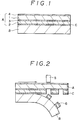
- FIG. 1 is a schematic sectional view showing a thermal transfer sheet according to an embodiment of the present invention.
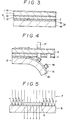
- FIG. 2 is a schematic sectional view showing the thermal transfer sheet according to the present invention in a printing state.
- FIG. 3 is a schematic sectional view showing a thermal transfer sheet according to another embodiment of the present invention.
- FIG. 4 is a schematic sectional view showing the thermal transfer sheet according to the present invention in a printing state.
- FIG. 5 is a schematic view for illustrating a state of OHP projection.
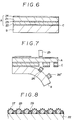
- FIG. 6 is a schematic sectional view showing a thermal transfer sheet according to a further embodiment of the present invention.
- FIG. 7 is a schematic sectional view showing the thermal transfer sheet according to the present invention in a printing state.
- FIG. 8 is a schematic view for illustrating the structure of an adhesive layer of the thermal transfer sheet shown in FIG. 6.
- FIG. 1 is a schematic sectional view showing a thermal transfer sheet according to a preferred embodiment of the present invention.
- a thermal transfer sheet according to the present invention comprises a thermal transfer sheet A and a transfer-receiving material B which is peelably bonded to the thermal transfer sheet A by an adhesive layer C.
- the above thermal transfer sheet A comprises a substrate film 1 and a heat-fusible ink layer 2 disposed thereon comprising a pigment and a binder in a particulate form. It is possible to dispose a wax layer 3 between the substrate film 1 and the ink layer 2, and/or to dispose a slip (or slipping) layer 4 on the back surface of the substrate film 1, as desired.
- the substrate film 1 to be used in the first embodiment of the present invention may be one selected from those used in the conventional thermal transfer sheet.
- the above-mentioned substrate film 1 is not restricted to such an example and can be any of other films.
- the substrate film 1 may include: plastic films or sheets such as those comprising polyester, polypropylene, cellophane, polycarbonate, cellulose acetate, polyethylene, polyvinyl chloride, polystyrene, nylon, polyimide, polyvinylidene chloride, polyvinyl alcohol, fluorine containing resin, chlorinated rubber, and ionomer resin; papers such as capacitor paper and paraffin paper; non woven fabric; etc.
- the substrate film 1 can also comprise a combination or laminate of two or more species selected from the above-mentioned films.
- the substrate film 1 may preferably have a thickness of e.g., 2 to 25 ⁇ m, while the thickness can appropriately be changed corresponding to the materials thereof so as to provide suitable strength and heat conductivity.
- the heat-fusible ink layer 2 to be disposed on the above substrate film 1 comprises a pigment and a particulate binder, and can also contain one selected from various additives, as desired.
- the pigment may preferably comprise carbon black.
- the pigment may comprise a chromatic pigment such as cyan pigment, magenta pigment and yellow pigment. It is generally preferred to use such a pigment in an amount of about 5 to 70 % in the ink layer.
- the binder may predominantly comprise a wax or may comprise a mixture of a wax and another component such as drying oil, resin, mineral oil, and derivatives of cellulose and rubber.
- the wax may include; microcrystalline wax, carnauba wax, paraffin wax, etc.
- specific examples of the wax may includes; various species thereof such as Fischer Tropsch wax, various low-molecular weight polyethylene, Japan wax, beeswax, whale wax, insect wax, lanolin, shellac wax, candelilla wax, petrolactam, partially modified wax, fatty acid ester, and fatty acid amide.
- an emulsion ink comprising a mixture of an emulsion obtained by emulsifying or dispersing the binder predominantly comprisng the above wax in an aqueous medium capable of containing an alcohol, etc.; and an aqueous dispersion containing a pigment. More specifically, it is preferred to use a method wherein such an emulsion ink is applied to the substrate film 1 and the resultant coating is dried at a temperature at which the emulsion particles may retain their particulate shape.
- the binder to be used for such a purpose may preferably comprise a thermoplastic resin in combination with the wax, and it is preferred to use the thermoplastic resin as an emulsion in an aqueous medium in the same manner as described above. It is preferred to use the thermoplastic resin in an amount of 10 to 100 wt.parts with respect to 100 wt.parts of the wax.
- the ink layer to be formed in such a manner may preferably have a thickness of about 0.5 to 20 ⁇ m.
- a transparent layer comprising a wax is formed on the surface of the substrate film 1 in advance so that a transferred image to be formed after the transfer operation may have a surface layer. It is also preferred that such a wax layer is formed from a wax emulsion as described above and is one wherein the emulsion particles retain their shapes. In general, such a wax layer may have a thickness of about 0.2 to 5 ⁇ m.
- the transfer-receiving material B may comprise a tracing paper such as parchement paper and plastic film.
- the trasnfer receiving material may be in the form of sheets such as A-size and B-size, but may preferably be in the form of a continuous sheet having a desired width.
- the adhesive layer C for temporarily bonding the thermal transfer sheet A and the transfer-receiving sheet B to each other can comprise any of adhesives known in the prior art, but may preferably comprise a wax and an adhesive resin having a low glass transition temperature.
- Such an adhessive layer may preferably have an adhesive strength (or adhesive force) in the range of 300 to 2000 g.
- an adhesive strength may be measured by cutting sample having a width of 25 mm and a length of 55 mm, and subjecting the sample to measurement by means of a surface friction meter (HEID0N-14, mfd. by Shinto Kagaku K.K.) at a pulling speed of 1800 mm/min.
- the adhesive strength between the thermal transfer sheet and the transfer-receiving material is too low, both of these are liable to be peeled from each other, and the thermal transfer sheet is liable to be wrinkled. If the adhesive strength is above the above range, the adhesive strength is sufficient but the ink layer is liable to be trasnferred to the transfer-receiving material even in the non-printing region so as to contaminate the trasnfer-receiving material.
- thermoplastic resin content in the ink layer is 9 wt.% or higher in terms of solid content in the ink layer, e.g., in the case of ethylene-vinyl acetate copolymer having a vinyl acetate content of 28 % even when the adhesive strength of the adhesive layer to the transfer-receiving layer is 1300 to 2000 g, there may be obtained a thermal transfer sheet capable of preventing the contamination of the transfer-receiving material.
- the above-mentioned adhesive resin may preferably have a glass transition temperature in the range of -90 to -60°C.
- Specific examples of such an adhesive resin may include a rubber-type adhesive resin, an acrylic-type adhesive resin, and a silicone type adhesive resin.
- adhesives may include a solvent-solution type, an aqueous-solution type, a hot-melt type, and an aqueous or oily emulsion type. Each of these types can be used in the present invention, but an adhesive particularly preferably used in the present invention is an acrylic aqueous emulsion type adhesive.
- the peelability of the transfer-receiving material is insufficient and uneven (or ununiform).
- an unexpected force is applied to the thermal transfer sheet prior to the thermal transfer operation, e.g., at the time of production, storage, or transportation thereof, the ink layer of the thermal transfer sheet is transferred to the transfer-receiving material to cause ground staining.
- the cutting of the ink layer is deteriorated at the time of thermal transfer operation, and the ink layer is transferred to the periphery of a region which has been provided with heat by means of a thermal-head, whereby the resolution of the transferred image is deteriorated.
- the adhesion may be regulated to a preferred range, the above problem of the ground staining is solved, the cutting of the adhesive layer C is improved, so that the resolution of the transferred image is remarkably improved.
- the adhesion may be regulated to a preferred range.
- the above-mentioned resin emulsion may preferably comprise, a thermoplastic resin such as ehtylene-vinyl acetate copolymer, ethylene-acrylic acid ester copolymer, polyethylene, polystyrene, polypropylene, polybutene, vinyl chloride resin, vinyl chloride vinyl acetate copolymer, and acrylic resin.
- a thermoplastic resin such as ehtylene-vinyl acetate copolymer, ethylene-acrylic acid ester copolymer, polyethylene, polystyrene, polypropylene, polybutene, vinyl chloride resin, vinyl chloride vinyl acetate copolymer, and acrylic resin.
- an acrylic emulsion is particularly preferred.
- Such a resin may preferably have a glass transition temperature higher than that of the above-mentioned adhesive resin (e.g. 60°C or higher), and can also be a heat cured resin in some cases.
- the weight ratio between the adhesive resin and the wax may preferably be (1 : 0.5) to (1 : 4). If the ratio is not within such a range, various problems as described above may undesirably be posed.
- the adhesive layer C comprising the above-mentioned components can be disposed on the surface of the transfer-receiving material B , but a certain adhesiveness remains on the resultant printed matter in such a case. Accordingly, the adhesive layer may preferably be disposed on the surface of the ink layer 2 of the thermal transfer sheet. In such a case, since the adhesive resin is used in the form of an aqueous-emulsion, the ink layer is not substantially impaired.
- the coating method or drying method for the emulsion is not particularly be restricted.
- the above adhesive layer may preferably have a thickness of 0.1 to 10 ⁇ m (i.e., 0.1 to 1.5 g/m2 in terms of coating amount of solid content).
- the thermal transfer sheet A and the transfer-receiving material B may preferably be bonded to each other by continuously bonding the transfer-receiving material to the surface of the thermal transfer sheet while forming an adhesive layer on the surface of the ink layer, and winding the resultant laminate into a roll form.
- a laminte is wound into a roll, it is possible to dispose the transfer-receiving material outside or to dispose the thermal transfer sheet outside. In addition, it is also possible to cut such a lamiante into a sheet form.
- a tracing-paper as the transfer-receiving material B comprises a paper impregnated with a resin which has a light beam transmittance of 40 to 65 % in a wavelength range of 500 to 600 nm.
- the transmittance may be measured by means of a measurement device (Shimazu Spectrophotometer UV-3100) equipped with an integrating sphere reflection attachment by receiving a scattered light by use of barium sulfate as a reference. In this measurement, the following measurement conditions may be used; speed: 700 nm/min. slit width in the measruement device: 5.0 nm light source: tungsten lamp or deuterium lamp.
- the tracing paper having such a characteristic is available under a tradename such as Vellum TB, Yupo TPG, Ohji OB Trace, SK Trace HC, and SK Trace DC, and may be used for such a purpose.
- the tracing paper may be in the form of a sheet of A-size or B-size, or in the form of a continuous sheet having an arbitrary width.
- the substrate film, the heat-fusible ink layer and the adhesive layer may be the same as those used in the first embodiment as described hereinabove, and therefore the detailed description thereof is omitted.
- the heat-fusible ink layer 2 shown in FIG. 1 contains heat resistant particles.
- the heat-fusible ink layer comprises a pigment, a binder and heat-resistant particles and can also contain one selected from various additives, as desired.
- the pigment and the binder may be the same as those used in the first embodiment as described above.
- the heat-resistant particles to be used in the present invention may comprise an inorganic filler such as talc, clay, calcium carbonate, and silica; a plastic or a pigment, etc.
- an inorganic filler such as talc, clay, calcium carbonate, and silica
- plastic or a pigment etc.
- Specific examples thereof may include; Hydrotalsite DHT-4A (mfd. by Kyowa Kagaku Kogyo), Talcmicroace L-1 (mfd. by Nihon Talc), Teflon Rubron L-2 (mfd. by Daikin Kogyo), Fluorinated Graphite SCP-10 (mfd. by Sanpo Kagaku Kogyo), Graphite AT40S (mfd.
- heat resistant particles such as precipitated barium sulfate, cross-linked urea resin powder, cross-linked melamine resin powder, cross-linked styrene-acrylic resin powder, cross-linked amino resin powder, silicone resin powder, wood meal, molybdenum disulfide, and boron nitride. It is preferred to use such heat resistant particles in an amount of about 3 to 20 wt.% in the ink layer. If the amount of the heat resistant particles contained in the ink layer is too small, the effect thereof on the improvement in the heat resistance of the ink layer becomes insufficient. On the other hand, such an amount is too large, the degree of blackness of the ink is lowered.
- the heat-fusible ink layer may be formed in the same manner as in the case of the first embodiment as described above.
- the substrate film, the adhesive layer and the transfer-receiving material may be the same as those used in the first embodiment as described hereinabove, and therefore the detailed description thereof is omitted.
- the tracing paper as the transfer-receiving material B comprises a synthetic paper having minute voids and a high smoothness.
- the synthetic paper to be used for such a purpose may include those having a void (or void volume) in the range of 1 to 40 %. Specific examples thereof may include: commercially available synthetic papers such as that sold under the trade names of Yupo (mfd. by Ohji Yuka Goseishi K. K.).
- the synthetic paper to be used for such a purpose may preferably have a smoothness of 50 to 200 sec., a rigidity of 10 to 100 g, a tear strength (or tear propagation strength) of 10 to 60 g, and/or a thickness of 50 to 200 ⁇ m.
- the synthetic paper to be used for such a purpose may also be one which comprises an intermediate layer predominantly comprising a resin such as polypropylene resin and being obtained by adding an inorganic filler to such a resin and subjecting the resultant raw material to biaxial orientation; and uniaxially oriented surface layers disposed on both surface sides thereof.
- the synthetic paper to be used in this embodiment may appropriately be selected from those having a void volume and a high smoothness in the ranges as described above. If the void volume and/or the smoothness are below the above range, the resultant printing performance may undesirably be insufficient. On the other hand, the void volume and/or the smoothness exceeding the range as described above, the transfer-property of the heat-fusible ink layer may undesirably be insufficient.
- the substrate film, the heat-fusible ink layer and the adheisve layer may be the same as those used in the thermal transfer sheet according to the first embodiment as described hereinabove, and therefore the detailed description thereof is omitted.
- the transfer-receiving material B comprises a sheet of a transparent resin
- the adhesive layer C comprises an adhesive containing a crosslinking agent
- the transfer-receiving material B to be used in the fifth embodiment may be any of various transparent resin sheets which have been used as an OHP sheet in the prior art. Specific examples thereof may include: plastic films or sheets such as those comprising polyester, polypropylene, cellophane, polycarbonate and cellulose acetate.
- the transparent resin sheet may preferably have a thickness in the range of several tens of microns to several hundreds of microns.
- the adhesive resin to be used in the fifth embodiment may preferably be used as a solution in an organic solvent such as toluene, xylene, methyl ethyl ketone, ethyl acetate and butyl acetate which contains a solid content of about 5 to 40 wt.%.
- an organic solvent such as toluene, xylene, methyl ethyl ketone, ethyl acetate and butyl acetate which contains a solid content of about 5 to 40 wt.%.
- an organic solvent such as toluene, xylene, methyl ethyl ketone, ethyl acetate and butyl acetate which contains a solid content of about 5 to 40 wt.%.
- an appropriate crosslinking agent in combination with the transparent resin sheet of such a crosslinking agent may be any of those known in the prior art, but preferred examples thereof may include polyisocyanates such as toluene diisocyanate, isocyanurate, and isophorone diisocyanate, trimethylolpropane adduct.
- the crosslinking agent may preferably be used in an amount of 5 to 10 wt.parts with respect to 100 wt.parts of the adhesive agent. If the amount of the crosslinking agent to be used for such a purpose is too small, the surface of the transparent resin sheet remains somewhat tacky. On the other hand, such an amount is too large, the adhesive property may undesirably be reduced.
- the above adhesive layer may preferably have a thickness of 0.1 to 10 ⁇ m (i.e., 0.1 to 5 g/m2 in terms of coating amount of solid content).
- the adhesive agent is prevented from being transferred to the transparent resin sheet, and therefore it is possible to prevent occurrence of tackiness in the surface of the transparent resin sheet separated from the thermal transfer sheet.
- the method of forming the adhesive layer C by use of the adhesive agent containing such a crosslinking agent, the range in which the adhesion strength between the adhesive layer C and the transparent resin sheet as the transfer-receiving material is to be regulated, etc., may be the same as those in the case of the first embodiment as described above.
- the substrate film and the heat-fusible ink layer may be the same as those used in the thermal transfer sheet according to the first embodiment as described hereinabove, and therefore the detailed description thereof is omitted.
- the transfer-receiving material B comprises a transparent resin sheet which has been subjected to an antistatic treatment.
- the transparent resin sheet to be used in the sixth embodiment may also be the same as that used in the above fifth embodiment.
- the antistatic treatment of the transparent resin sheet may be effected by use of a known antistatic agent such as those of anion type, nonion type and cation type.
- the antistatic agent may be kneaded in the sheet at the time of the formation of the resin sheet, or an antistatic coating material may be applied onto the surface of the sheet and then dried.
- the antistatic performance may preferably be that corresponding to a surface resistance (or surface resistivity) of about 107 to 1010 ⁇ cm. If the surface resistance exceeds such a range, the fragment or piece of the ink layer or the pigment may be adsorbed to the surface of the resin sheet under the action of an electrostatic force so that the surface of the resin sheet may be contaminated.
- the substrate film, the heat-fusible ink layer and the adhesive layer may be the same as those used in the thermal transfer sheet according to the first embodiment as described hereinabove.
- the adhesive layer to be used in the sixth embodiment may also be the same as that used in the above fifth embodiment.
- FIG. 3 is a schematic sectional view showing a thermal transfer sheet according to a seventh embodiment of the present invention.
- a thermal transfer sheet according to the present invention comprises a thermal transfer sheet A and a trasnfer-receiving material B which is peelably bonded to the thermal transfer sheet A by an adhesive layer C.
- the above thermal transfer sheet A comprises a substrate film 11 and a heat-fusible ink layer 12 disposed thereon comprising a pigment and a binder predominantly comprising a wax. It is possible to dispose a separation layer 13 comprising a wax between the substrate film 11 and the ink layer 12, and/or to dispose a slip (or slipping) layer 14 on the back surface of the substrate film 11, as desired.
- the substrate film 11, the heat-fusible ink layer 12, the separation layer 13 and the slip layer 14 to be used in the seventh embodiment may be the same as the substrate film 1, the heat-fusible ink layer 2, the separation layer 3 and the slip layer 4 used in the first embodiment as described above, and therefore the detailed description thereof is omitted.
- the adhesive layer C may also be the same as that used in the above first or fifth embodiment.
- the seventh embodiment is characterized in that the transfer-receiving material B comprises a substrate 16 having no liquid absorbing property and an adhesive layer 15 disposed thereon.
- the image to be formed on the adhesive layer is excellent in wear resistance, even when the transfer-receiving material has no liquid absorbing property.
- the substrate (or base material) 16 to be used for the transfer-receiving material B may comprise a transparent sheet or film to be used for an OHP sheet or a tracing paper.
- a transparent sheet or film to be used for an OHP sheet or a tracing paper may include: plastic films or sheets such as those comprising polyester, polypropylene, cellophane, polycarbonate, cellulose acetate, polyethylene, polyvinyl chloride, polystyrene, nylon, polyimide, polyvinylidene chloride, polyvinyl alcohol, fluorine containing resin, chlorinated rubber, and ionomer resin; papers such as capacitor paper, and paraffin paper, paper impregnated with a resin, parchment paper, and transparent synthetic paper; opaqued products prepared from these sheets or films, colored films or sheets; metal foils, etc.
- the substrate 16 can also comprise a combination or laminate of two or more species selected from the above-mentioned films.
- the transfer-receiving material can be in the form of a sheet having an A-size or B-size, but may preferably be in the form of a continuous sheet having an arbitrary width.
- the adhesive layer 15 to be formed on an image forming surface of the substrate 16 comprise an adhesive which shows a good adhesion property with respect to the substrate 16 and also shows a good adhesion property with respect to an ink which is capable of being well transferred.
- an adhesive may include vinyl acetate resins, vinyl chloride-vinyl acetate copolymers, ethylenevinyl acetate copolymers, styrene-acrylic acid copolymer, nylon and saponification product of these resins, ternary copolymers containing a small amount of a copolymerized monomer such as (meth)acrylic acid, maleic acid, fumaric acid, and itaconic acid; linear polyester resins, acrylic resins, epoxy resins, polyurethane resins, etc..
- the adhesive layer 15 may be formed by use of an ordinary coating method such as a solution coating, and emulsion coating, and may preferably have a thickness of about 0.05 to 1 ⁇ m.
- a transparent resin sheet having a roughened surface on one side thereof is used as a transfer-receiving material B.
- the transparent resin sheet to be used in the eighth embodiment may be one selected from various transparent resin sheets enumerated in the description of the above fifth embodiment, wherein the image forming surface thereof has been roughened.
- the method of roughening such a surface it is possible to use a method known in the prior art such as embossing and sand blasting.
- the degree of the roughening may preferably be about 20 to 80 in terms of haze, and may preferably be 300 sec or lower in terms of Bekk smoothness measured by means of an Ohken type smoothness tester.
- the substrate film, the heat-fusible ink layer and the adhesive layer may be the same as those used in the fifth embodiment as described hereinabove.
- the ink layer 6 and the sheet B transmit the light beam 7 supplied from the light source, and therefore a bright image (not shown) is formed on the dark background formed on the basis of the roughened portion.
- a black image which is darker than the background is projected.
- the ink layer is colored transparent red, yellow, blue, etc., a clear and bright image having such a color is projected.
- the ink layer is colorless and transparent, a bright white image is projected.
- a cloth (or fabric) is used as the transfer-receiving material B.
- the cloth or fabric to be used as the transfer-receiving material B may be any of conventional woven fabrics (or woven textiles) or non-woven fabrics to be used for curtains, outdoor displays flags, etc., such as cotton fabric, polyester fabric, cotton-polyester mixed fabric, and polypropylene non-woven fabric.
- the cloth or fabric to be used for such a purpose should not be restricted to such specific examples thereof.
- a woven fabric or non-woven fabric has fine meshes, it can be used as such.
- the sealing treatment may generally be effected easily, e.g., by use of an extender pigment such as talc, kaolin, silica, activated clay, calcium carbonate, and precipitated barium sulfate; a white pigment such as titanium oxide and zinc oxide; or a mixture thereof.
- an extender pigment such as talc, kaolin, silica, activated clay, calcium carbonate, and precipitated barium sulfate
- a white pigment such as titanium oxide and zinc oxide
- such a pigment may be added to an aqueous emulsion such as those containing an acrylic resin, a polyvinyl acetate, a polyvinyl chloride, a vinyl chloride-vinyl acetate copolymer, or an aqueous solution such as those containing a water-soluble cellulose derivative, polyacrylic acid, polyvinyl alcohol, polyvinyl pyrrolidone, starch, casein, and sodium alginate, in an amount of 10 to 50 wt.% to prepare a dispersion, and such a dispersion may be applied onto the above fabric by an ordinary coating method so as to provide a coating amount of 5 to 100 g/m2 based on solid content, and then the resultant coating may be dried.
- an aqueous emulsion such as those containing an acrylic resin, a polyvinyl acetate, a polyvinyl chloride, a vinyl chloride-vinyl acetate copolymer, or an aqueous solution such as
- the substrate film, the heat-fusible ink layer and the adhesive layer may be the same as those used in the thermal transfer sheet according to the first embodiment as described hereinabove.
- thermal transfer sheet comprising such a fabric as the transfer-receiving material B
- the printing operation is effected by use of a large size printer as a large size plotter
- FIG. 6 is a schematic sectional view showing a thermal transfer sheet according to the tenth embodiment of the present invention.
- a co-winding type thermal transfer sheet according to the present invention comprises a thermal trasnfer sheet A and a transfer-receiving material B which is peelably bonded to the thermal transfer sheet A by an adhesive layer C.
- the above thermal transfer sheet A comprises a substrate film 21 and a heat-fusible ink layer 22 disposed thereon. It is possible to dispose a separation layer 23 between the substrate film 21 and the ink layer 22, and/or to dispos a slip (or slipping) layer 24 on the back surface of the substrate film 21, as desired.
- the substrate film 21, the heat-fusible ink layer 22, the separation layer 23 and the slip layer 24 to be used in the tenth embodiment may be the same as the substrate film 1, the heat-fusible ink layer 2, the separation layer 3 and the slip layer 4 used in the first embodiment as described above, and therefore the detailed description thereof is omitted.
- a thermal (or heat sensitive) color developing paper is used as the transfer-receiving material B.
- the thermal color developing paper as the transfer-receiving material B to be used for such a purpose may be any of those known in the prior art.
- the thermal color-developing paper comprises a paper as a substrate and a color-developing layer disposed on a surface thereof comprising a colorless dye which is capable of developing a color under the action of an acid, and a solid acid as a color-developer (or a color-developing agent).
- the color-developing layer may comprise separate layers respectively comprising the dye and the color-developer, or may comprise a single layer comprising a mixture of these agents.
- the dye may include: Crystal Violet lactone, 3-diethylamino-6-methyl-7-anilinofluorane, 3-diethylamino-6-methyl-7-chlorofluorane, 3-indolino-3-p-dimethylaminophenyl-6-dimethyl aminophthalide, etc..
- the dye to be used in the present invention should not be restricted to the above specific examples thereof.
- representative examples of the color-developer may include: phenolic substances such as 4,4′-isopropylidene diphenyl, 4,4′-isopropylidene bis (2-chlorophenol), 4,4′-isopropylidene bis (2-tertiary butylphenol), 4-phenylphenol, and 4-hydroxy diphenoxide.
- phenolic substances such as 4,4′-isopropylidene diphenyl, 4,4′-isopropylidene bis (2-chlorophenol), 4,4′-isopropylidene bis (2-tertiary butylphenol), 4-phenylphenol, and 4-hydroxy diphenoxide.
- the color-developer to be used in the present invention should not be restricted to the above specific phenolic substances.
- the color-developing layer may be one which does not develop a color at a transfer temperature at which the ink of the above thermal transfer sheet is transferred, and is capable of developing a color at a temperature higher than such a transfer temperature, or may be one which develops a color at a temperature lower than such a transfer temperature.
- the thermal color-developing paper may be in the form of a sheet of A-size or B-size, but may preferably be in the form of a continuous sheet having an arbitrary width.
- the tenth embodiment of the present invention is mainly characterized by the structure of the adhesive layer C for temporarily bonding the above thermal transfer sheet A and the thermal color-developing paper B to each other.
- the adhesive layer temporarily bonding the above-mentioned thermal transfer sheet A to the thermal color-developing paper B comprises adhesive particles having a low glass-transition temperature, and wax particles and resin particles having a high glass-transition temperature.
- the adhesive layer may preferably have an adhesive strength (or adhesive force) of 300 to 1500 g. Such an adhesive strength may be measured by cutting sample having a width of 25 mm and a length of 55 mm, and subjecting the sample to measurement by means of a sliding friction meter (HEID0N-14, mfd. by Shinto Kagaku K.K.) at a pulling speed of 1800 mm/min.
- the adhesive strength between the thermal transfer sheet and the thermal color-developing paper is insufficient, both of these are liable to be peeled from each other, and the thermal transfer sheet is liable to be wrinkled. If the adhesive strength is above the above range, the adhesive strength is sufficient but the ink layer is liable to be transferred to the thermal color-developing paper even in the non-printing region so as to contaminate the thermal color-developing paper.
- the adhesive strength may particularly preferably be in the range of 400 to 800 g.
- thermoplastic resin content in the ink layer is 9 wt.% or higher in terms of solid content in the ink layer, e.g., in the case of an ethylene-vinyl acetate copolymer having a vinyl acetate content of 28 %
- the adhesion between the ink layer and the substrate film is enhanced corresponding to such a content. Accordingly, even when the adhesive strength of the adhesive layer to the thermal color-developing paper is 800 to 1500 g, there may be obtained a thermal transfer sheet capable of preventing the contamination of the thermal color-developing paper.
- the above-mentioned adhesive may preferably have a glass-transition temperature in the range of -90 to -60°C.
- Specific examples of such an adhesive may include a rubber-type adhesive, an acrylic-type adhesive, and a silicone-type adhesive.
- adhesives may include a solvent solution-type, an aqueous solution-type, a hot melt-type, and an aqueous or oily emulsion-type. Each of these types may be used in the present invention, but an adhesive particularly preferably used in the present invention is an acrylic aqueous emulsion-type adhesive.
- the adhesive may preferably have a particle size of about 1 to 30 ⁇ m, more preferably 3 to 20 ⁇ m.
- the adhesive 7 constituting the adhesive layer retains particulate form, as shown in FIG. 8.
- the adhesive When the above-mentioned adhesive is used alone, excellent adhesion may be provided, but the peelability of the thermal color-developing paper is insufficient and uneven (or non uniform).
- the ink layer of the thermal transfer sheet is transferred to the thermal color-developing paper to cause ground staining. Further, the cutting of the ink layer is deteriorated at the time of thermal transfer operation, and the ink laeyr is transferred to the periphery of a region which has been provided with heat by means of a thermal-head, whereby the resolution of the transferred image is deteriorated.
- the adhesion when an emulsion containing fine resin particles, e.g., resin particles 28 having a particle size of about 0.01 to 0.5 ⁇ m, is added to the above-mentioned emulsion adhesive, the adhesion may be regulated to a preferred range thereof, whereby the above-mentioned problem of ground staining is solved. Further, it has been found that when an emulsion 29 of a wax which is similar to that used in the formation of the ink layer is added to the emulsion adhesive, the cutting of the temporary adhesive layer C is improved, so that the resolution of the transferred image is remarkably improved.
- the above-mentioned resin emulsion may preferably comprise a thermoplastic resin such as ethylene-vinyl acetate copolymer, ethylene-acrylic acid ester copolymer, polyethylene, polystyrene, polypropylene, polybutene, vinyl chloride resin, vinyl chloride-vinyl acetate copolymer, and acrylic resin.
- a thermoplastic resin such as ethylene-vinyl acetate copolymer, ethylene-acrylic acid ester copolymer, polyethylene, polystyrene, polypropylene, polybutene, vinyl chloride resin, vinyl chloride-vinyl acetate copolymer, and acrylic resin.
- an acrylic emulsion is particularly preferred.
- Such resin particles may preferably have a glass transition temperature higher than that of the above-mentioned adhesive (e.g., 60°C or higher), and can also be heat cured resin particles in some cases.
- the wax emulsion may be obtained by emulsifying the above-mentioned wax by a known method, and the particles size may preferably be as small as possible.
- the wax emulsion usable in the present invention is not particularly restricted to such an emulsion.
- the weight ratio among the above adhesive agent, resin particle, and wax may preferably be (1 to 3):(0 to 2):(1 to 3). When the weight ratio is outside such a range, various problem as described above may undesirably be posed.
- the adhesive layer C comprises a mixture (such as SK Dyne RE-4, mfd. by Soken Kagaku K.K.) of, e.g., an acrylic emulsion type adhesive and a wax, a portion of the surface thereof may be bonded to a transfer-receiving material. Accordingly, in case where the transfer-receiving material comprises an OHP sheet, the surface thereof may undesirably have a white color.
- the above adhesive RE-4 has a good storage stability, it is preferred to use a two component type when the transfer receiving material comprises a sheet other than the OHP sheet.
- the adhesive layer C comprises an adhesive (such as SK Dyna T-700, mfd. by Soken Kagaku K.K.) comprising resin particles having an adhesive property
- the adhesive T-700 has a lower storage stability than that of the above adhesive RE-4, but they are bonded to a transfer-receiving material in the form of dots.
- the OHP sheet to used as the transfer-receiving material the surface thereof does not have a white color.
- the adhesive layer C comprising the above-mentioned components can be disposed on the surface of the thermal color developing paper B , but a certain adhesiveness remains on the resultant printed matter. Accordingly, the adhesive layer may preferably be disposed on the surface of the ink layer 22 of the thermal transfer sheet. In such a case, since the adhesive is used in the form of an aqueous emulsion, the ink layer is not substantially impaired.
- the coating method or drying method for the emulsion is not particularly be restricted. However, it is preferred to effect the drying at a low temperature so as to retain particulate form of the emulsion.
- the adhesive layer may preferably have a thickness of 0.1 to 20 ⁇ m, i.e., 0.1 to 5 g/m2 in terms of coating amount of solid content.
- the thermal transfer sheet A and the thermal color-developing paper B may preferably be bonded to each other by continuously bonding the thermal color developing paper to the surface of the thermal transfer sheet while forming an adhesive layer on the surface of the ink layer of the thermal transfer sheet and winding the resultant laminate into a roll form.
- a laminate is wound into a roll, it is possible to dispose the thermal color-developing paper outside or to dispose the thermal transfer sheet outside. In addition, it is also possible to cut such a lamiante into a sheet form.
- thermal transfer sheet according to the tenth embodiment as described above is loaded in, e.g., a facsimile printer, and conveyed as shown by an arrow in FIG. 7, printing operation is effected while changing the quantity of heat supplied from a thermal-head 25, and thereafter the thermal color-developing paper B is separated, desired images having two or more colors, i.e., color development images 26′ and 26 ⁇ are formed on the thermal color-developing paper B.
- thermoplastic resin binder as a binder constituting the heat-fusible ink layer.
- the binder of the heat-fusible ink layer predominantly comprises a thermoplastic resin binder in the above manner, it is possible to form an OHP image or a tracing paper image excellent in heat resistance and wear resistance.
- thermoplastic resin binder to be used for such a purpose may include polyester type resins, polyacrylic acid ester type resins, polyvinyl acetate type resins, vinyl chloride-vinyl acetate copolymers, ethylene-vinyl acetate copolymers, styrene acrylate type resins, polyurethane type resins, etc..
- a (meth)acrylic acid ester resin such as methyl methacrylate, butyl methacrylate, hydroethyl methacrylate, etc.
- the binder may singly comprise the above thermoplastic resin, but it is also possible to add an ordinary wax to such a binder to be used in an amount of 10 wt.% or below based on the total amount of the binder.
- the heat-fusible ink layer on the substrate film, by use of the heat-fusible ink comprising such a binder, it is possible to use a method wherein desired components such as a pigment and a binder predominantly comprising a thermoplastic resin are melt-kneaded and the resultant kneaded mixture is applied onto a substrate by a hot-melt coating method, etc., or to use a method using an emulsion ink comprising a mixture of an emulsion obtained by emulsifying or dispersing the binder predominantly comprising the above thermoplastic resin in an aqueous medium capable of containing an alcohol, etc.; and an aqueous dispersion containing a pigment. More specifically, it is possible to use a method wherein such an emulsion ink is applied to the substrate film and the resultant coating is dried.
- the thus formed ink layer may preferably have a thickness of about 0.5 to 20 ⁇ m.
- any of techniques known in the field of a thermal transfer sheet is also applicable to the thermal transfer sheet according to the present invention. More specifically, such a technique may include: one wherein a slip layer 4, 14 or 24 for preventing the sticking to a thermal-head and improving slip property is disposed on a back side surface of the thermal transfer sheet as shown in FIGS. 1, 3 and 6; one wherein a wax layer or mat layer 3, 13 or 23 which constitutes a surface layer after the transfer operation is disposed between the substrate film and the ink layer so that the resultant printed image may be matted; one wherein the ink layer is caused to have a hue other than black; etc..
- the colorant to be used in the heat-fusible ink layer it is possible to cause the colorant to be used in the heat-fusible ink layer to have a hue other than black and the three primary colors of yellow, magenta, and cyan.
- Such a colorant having a neutral tint may be one having a hue other than black, yellow, magenta and cyan and may be one having an arbitrary hue obtained by mixing at least two species of the above three primary colors, or may singly be one having an inherent hue other than the above three primary colors.
- representative examples of such a color may include red, green, purple (or violet), pink, etc.. It is possible to use a hue intermediate between these hues.
- a fluorescent color such as those based on a so-called fluorescent pigment or fluorescent dye; a metallic luster colorant such as gold colorant and silver colorant; and another colorant such as white colorant.
- colorants having a color other than the three primary colors may be prepared by mixing (or formulating) known colorants by a user, or may also be those which are easily available from the market. In general, it is preferred to use such a colorant in-an amount of about 5 to 70 wt.% in the ink layer.
- the transfer-receiving material may also be one having a printed letter, character or image on the printing surface thereof (i.e., a surface which is to be subjected to an printing operation) or the surface thereof reverse to the printing surface.
- the printed letter, character or image may arbitrarily be selected from those which are generally printed in the art, as long as it does not extremely lower the readablness (or discernibleness) of the letters, character, or image to be formed by use of a thermal transfer material according to the present invention.
- Such a printing image may include: various patterns or designs such as ground (or background) pattern, fine and thin numberless letters and symbols (which may also functions as a kind of the ground pattern), wood grain, and floral pattern or design; and other patterns or designs such as name of company, or corporation, advertising, symbolic mark, trade name, address, and name of division or section in change of a certain matter.
- ground or background
- fine and thin numberless letters and symbols which may also functions as a kind of the ground pattern
- wood grain and floral pattern or design
- other patterns or designs such as name of company, or corporation, advertising, symbolic mark, trade name, address, and name of division or section in change of a certain matter.
- the following ink composition No. 1 was applied in a coating amount of 4 g/m2 (solid content), and the resultant coating was dried at 60 to 70°C to form an ink layer.
- a temporary adhesive No.1 having the following composition was applied onto the above ink layer by a gravure coating method in a coating amount of 0.5 g/m2 (after drying), and thereafter a tracing paper having a basis weight of 50 g/m2 was bonded to the resultant product at a nip temperature of 50°C and a nip pressure of 5 Kg/cm2, whereby a co-winding type thermal transfer sheet according to the present invention was obtained.
- a substrate film which was the same as the substrate No. 1 used in Experiment Example A-1 was used.
- an aqueous isopropyl alcohol emulsion of carnauba wax (40 %) was applied in a coating amount of 0. 7 g/m2 (based on solid content), and the resultant coating was dried at 50 to 60°C to form a wax layer, whereby a substrate No. 2 was prepared.
- the following ink composition No. 2 was applied in a coating amount of 2. 0 g/m2 (solid content) and the resultant coating was dried at 60 to 70°C to form an ink layer.
- an aqueous isopropyl alcohol emulsion of carnauba wax (40 %) was applied in a coating amount of 0.5 g/m2 (based on solid content), and the resultant coating was dried at 50 to 60°C to form a wax layer, whereby a substrate No. 3 was prepared.
- the following ink composition No. 3 was applied in a coating amount of 2 g/m2 (solid content), and the resultant coating was dried at 60 to 70°C to form an ink layer.
- a 4.5 ⁇ m-thick polyethylene terephthalate film of which back surface had been provided with a slip layer was used as a substrate film.
- an ink composition No. 4 having the following composition was applied so as to provide a coating amount of 2 g/m2 (solid content), and then the resultant coating was dried at 60 to 70 °C, thereby to form an ink layer.
- a thermal transfer sheet of Comparative Example was prepared in the same manner as in Experiment Example A-1 except that the following ink composition was used to form an ink layer instead of that used in Experiment Example A-1, and the ink layer was formed by use of a hot melt process.
- the following ink composition was prepared by melt kneading the respective components at 120 °C for 4 hours by means of an attritor.
- the following ink composition No. 5 was applied in a coating amount of 4.0 g/m2 (solid content) to form an ink layer.
- a temporary adhesive No. 1 used in Experiment Example A was applied onto the above ink layer by a gravure coating method in a coating amount of 0.5 g/m2 (after drying), and thereafter a tracing paper (VELLUM TB, light transmittance in the wavelength range of 500 to 600 nm: 40 to 50 %) was bonded to the resultant product at a nip temperature of 50°C and a nip pressure of 5 Kg/cm2, whereby a co-winding type thermal transfer sheet according to the present invention was obtained.
- a substrate film which was the same as the substrate No.1 used in Experiment Example A-1 was used.
- following ink composition No. 6 was applied in a coating amount of 2.0 g/m2 (solid content) to form an ink layer.
- a temporary adhesive No. 1 used in Experiment Example A-1 was applied onto the above ink layer by a gravure coating method in a coating amount of 0.5 g/m2 (after drying), and thereafter a tracing paper (Ohji OB Trace, light transmittance in the wavelength range of 500 to 600 nm: 50 to 60 %) was bonded to the resultant product at a nip temperature of 50°C and a nip pressure of 5 Kg/cm2, whereby a co-winding type thermal transfer sheet according to the present invention.
- the following ink composition No. 7 was applied in a coating amount of 2.0 g/m2 (solid content) to form an ink layer.
- a temporary adhesive used in Experiment Example B-1 was applied onto the above ink layer by a gravure coating method in a coating amount of 0.5 g/m2 (after drying), and thereafter a tracing paper (SK Trace HC, light transmittance in the wavelength range of 500 to 600 nm: 60 to 65 %) was bonded to the resultant product at a nip tempertaure of 50°C and a nip pressure of 5 Kg/cm2, whereby a co-winding type thermal transfer sheet according to the present invention.
- SK Trace HC light transmittance in the wavelength range of 500 to 600 nm: 60 to 65 %
- a co-winding type thermal transfer sheet according to the present invention was prepared in the same manner as in Experiment Example B-1 except that Yupo (TPG 90, light transmittance in the wavelength range of 500 to 600 nm: 45 to 55 %) was used as the tracing paper instead of that used in Experiment Example B-1.
- a thermal transfer sheet of Comparative Example was prepared in the same manner as in Experiment Example B-1 except that Mitsubishi Tracing Paper (light transmittance in the wavelength range of 500 to 600 nm: 70 to 80 %) was used as the tracing paper instead of that used in Experiment Example B-1.
- a 4.5 ⁇ m-thick polyethylene terephthalate film of which back surface had been provided with a slip layer was used as a substrate film.
- a matting agent having the following composition was applied so as to provide a coating amount of 0.5 g/m2 and then the resultant coating was dried at 80 to 90°C thereby to form a mat layer.
- an ink composition having the following composition was applied by a hot-melt coating method so as to provide a coating amount of 4 g/m2 (solied content), and then the resultant coating was dried at 80 to 90°C, thereby to form an ink layer.
- a co-winding type thermal transfer sheet according to the present invention was prepared in the same manner as in Experiment Example C-1 except that an ink composition having the following composition was used instead of the ink composition used in Experiment Example C-1.
- a 4.5 ⁇ m-thick polyethylene terephthalate film of which back surface had been provided with a slip layer was used as a substrate film.
- a matting agent having the following composition was applied so as to provide a coating amount of 0.4 g/m2 and then the resultant coating was dried at 80 to 90°C thereby to form a mat layer.
- an ink composition haivng the following composition was applied by a hot meet coating method so as to provide a coating amount of 3.0 g/m2 (solid content), and then the resultant coating was dried at 80 to 90°C, thereby to form an ink layer.
- the smoothness used herein was one obtained by measuring the image receiving surface of the tracing paper by means of a Bekk smoothness meter (mfd. by Toyo Seiki Seisakusho). The thus obtained results were shown by using seconds.
- a co-winding type thermal transfer sheet according to the present invention was prepared in the same manner as in Experiment Example C-3 except that an ink composition having the following composition was used instead of the ink composition used in Experiment Example C-3.
- a thermal transfer sheet of Comparative Example was prepared in the same manner as in Experiment Example C-3 except that heat-resistant particles (calcium carbonate) were not added to the ink layer used in Experiment Example c-3.
- a 4.5 ⁇ m-thick polyethylene terephthalate film of which back surface had been provided with a slip layer was used as a substrate film.
- the matting agent used in Experiment Example C-1 was applied so as to provide a coating amount of 0.4 g/m2 (solid content) and then the ink composition No. 8 used in Experiment Example C was applied onto the resultant coating layer so as to provide a coating amount of 4.0 g/m2 (solid content) thereby to form an ink layer.
- a 6.0 ⁇ m-thick polyethylene terephthalate film of which back surface had been provided with a slip layer was used as a substrate film.
- a mat layer was formed in the same manner as in Experiment Example D-1, and an ink composition having the following composition was applied onto the resultant mat layer so as to provide a coating amount of 4.0 g/m2 (solid content), thereby to form an ink layer.
- a 6.0 ⁇ m-thick polyethylene terephthalate film of which back surface had been provided with a slip layer was used as a substrate film.
- a mat layer was formed in the same manner as in Experiment Example D-1, and an ink composition having the following composition was applied onto the resultant mat layer so as to provide a coating amount of 5.0 g/m2 (solid content), thereby to form an ink layer.
- the ink composition No. 5 used in Experiment Example B-1 was applied in a coating amount of 4.0 g/m2 (solid content) to form an ink layer, whereby a thermal transfer sheet was prepared.
- an adhesive having the following composition was applied onto a 100 ⁇ m thick polyester sheet by a gravure coating method in a coating amount of 0.5 g/m2 (after drying), and then the resultant coating was dried.
- the resultant polyester sheet was bonded to the ink layer of the above thermal transfer sheet at a nip temperature of 50°C and a nip pressure of 5 Kg/cm2, whereby a co-winding type thermal transfer sheet according to the present invention was obtained.
- the ink composition No. 6 used in Experiment Example B-2 was applied in a coating amount of 2 g/m2 (solid content) to form an ink layer, whereby a thermal transfer sheet was prepared.
- an adhesive having the following composition was applied onto a 120 ⁇ m thick polypropylene sheet by a gravure coating method in a coating amount of 0.5 g/m2 (after drying), and then the resultant coating was dried.
- the resultant polypropylene sheet was bonded to the ink layer of the above thermal transfer sheet at a nip temperature of 50°C and a nip pressure of 5 Kg/cm2, whereby a co-winding type thermal transfer sheet according to the present invention was obtained.
- the ink composition No. 7 used in Experiment Example B-3 was applied in a coating amount of 2.0 g/m2 (solid content) to form an ink layer, whereby a thermal transfer sheet was prepared.
- an adhesive having the following composition was applied onto a 150 ⁇ m thick cellulose triacetate sheet by a gravure coating method in a coating amount of 0.5 g/m2 (after drying), and then the resultant coating was dired.
- the resultant cellulose triacetate sheet was bonded to the ink layer of the above thermal transfer sheet at a nip temperature of 50°C and a nip pressure of 5 Kg/cm2, whereby a co-winding type thermal transfer sheet according to the present invention was obtained.
- a thermal transfer sheet of Comparative Example was prepared in the same manner as in Experiment Example E-1 except that an adhesive containing no crosslinking agent was used as the adhesive instead of that used in Experiment Example E-1.
- the ink composition No. 5 used in Experiment Example B-1 was applied in a coating amount of 4.0 g/m 2 (solid content) to form an ink layer.
- a temporary adhesive No. 1 used in Experiment Example A was applied onto the above ink layer by a gravure coating method in a coating amount of 0.5 g/m 2 (after drying), and thereafter a 100 ⁇ m thick polyester sheet having a surface resistivity of 4.5 X 10⁸ ⁇ cm was bonded to the resultant product at a nip temperature of 50°C and a nip pressure of 5 Kg/cm2, whereby a co-winding type thermal transfer sheet according to the present invention was obtained.
- a substrate film which was the same as that used in Experiment Example F-1 was used.
- the ink composition No. 6 used in Experiment Example B-2 was applied in a coating amount of 2.0 g/m2 to form an ink layer.
- a substrate film which was the same as the substrate No. 3 used in Experiment Example A-3 was used.
- the ink composition No. 3 used in Experiment Example A-3 was applied in a coating amount of 2.0 g/m2 and dried at 60 to 70°C to form an ink layer.
- a temporary adhesive layer was formed on the above ink layer in the same manner as in Experiment Example F-1, and thereafter a 150 ⁇ m thick cellulose triacetate sheet having a surface resistivity of 1 X 10⁹ ⁇ cm was similarly bonded to the resultant product, whereby a co-winding type thermal transfer sheet according to the present invention was obtained.
- An ink layer was formed by applying the ink composition No. 5 in the same manner is in Experiment Example F-1. Then, the temporary adhesive used in Experiment Example F-5 was applied onto the resultant ink layer by a gravure-coating method so as to provide a coating amount of 1 g/m2 (after drying).
- a 4.5 ⁇ m-thick polyethylene terephthalate film of which back surface had been provided with a slip layer was used as a substrate film.
- an agueous isopropyl alcohol emulsion of carnauba wax (40%) was applied so as to provide a coating amount of 5 g/m2 (solid content), and then the resultant coating was dried at 50 to 80 °C, thereby to form a separation layer.
- an ink composition having the following composition was applied by a hot-melt coating method so as to provide a coating amount of 4 g/m2 (solid content), and then the resultant coating was dried at 70 to 90°C, thereby to form an ink layer.
- a co-winding type thermal transfer sheet according to the present invention was prepared in the same manner as in Experiment Example G-1 except that a 75 ⁇ m-thick polyethylene terephtalate (PET) film (Lumirror T-60, mfd. by Toray K.K.) was used instead of the tracing paper used in Experiment Example G-1.
- PET polyethylene terephtalate
- a co-winding type thermal transfer sheet according to the present invention was prepared in the same manner as in Experiment Example G-2 except that a surface treated PET film which was the same as the PET film (Lumirror T-60) used in Experiment Example G-2 but was provided with a coating layer of a polyester type resin (0.3g/m2) on the surface to be provided with the adhesive layer, was used instead of the PET film (Lumirror T-60) used in Experiment Example G-2.
- a co-winding type thermal transfe sheet according to the present invention was prepared in the same manner as in Experiment Example G-2 except that an adhesive having the following composition was used insted of the adhesive used in Experiment Example G-2.
- a thermal transfer sheet of Comparative Example was prepared in the same manner as in Experiment Example G-1 except that an adhesive layer was not formed.
- a thermal transfer sheet of Comparative Example was prepared in the same manner as in Comparative Example C-1 in Comparative Example C
- the following ink composition was applied onto the surface of the substrate No. 1 used in Experiment Example A-1, in a coating amount of 4 g/m2 (solid content) and the resultant coating was dried at 60 to 70°C to form an ink layer.
- the resultant ink layer of the thus formed thermal transfer sheet had a linear transmittance of 45 %.
- a temporary adhesive No. 1 used in Experiment Example A-1 was applied onto the above ink layer by a gravure coating method in a coating amount of 0.5 g/m2 (after drying). Thereafter, a polyester sheet as an OHP sheet (trade name: My Pet, mfd. by Toray K.K., thickness: 25 ⁇ m, haze: 73) was bonded to the above product at a nip temperature of 50°C and a nip pressure of 5 Kg/cm2, whereby a co-winding type thermal transfer sheet according to the present invention was obtained.
- a co-winding type thermal transfer sheet according to the present invention was prepared in the same manner as in Experiment Example H 1 except for using a transparent yellow pigment instead of the red pigment used in Experiment Example H-1.
- the resultant ink layer of the thus formed thermal transfer sheet had a linear transmittance of 65 %.
- a co-winding type thermal transfer sheet according to the present invention was prepared in the same manner as in Experiment Example H-1 except for using a transparent blue pigment instead of the red pigment used in Experiment Example H-1.
- the resultant ink layer of the thus formed thermal transfer sheet had a linear transmittance of 60 %.
- a co-winding type thermal transfer sheet according to the present invention was prepared in the same manner as in Experiment Example H-1 except no pigment was used in the ink composition and a transparent polyester film (trade name: T-60, mfd. by Toray K.K., thickness: 75 ⁇ m) onto which a coating liquid having the following composition was applied by means of a bar coater in a coating amount of 3 g/m2 (after drying) was used as the OHP sheet.
- the resultant ink layer of the thus formed thermal transfer sheet had a linear transmittance of 88 %.
- the ink composition No. 1 used in Experiment Example A-1 was applied onto the surface of the substrate No. 1 used in Experiment Example A-1, in a coating amount of 4 g/m2 (solid content), and the resultant coating was dried at 60 to 70°C to form an ink layer.
- a temporary adhesive No. 1 used in Experiment Example A-1 was applied onto the above ink layer by a gravure coating method in a coating amount of 0.5 g/m2 (after drying). Thereafter, a polyester woven fabric was bonded to the above coated product in a coating amount of 0.5 g/m2 (after drying) at a nip temperature of 50°C and a nip pressure of 5 Kg/cm2, whereby a co-winding type thermal transfer sheet according to the present invention was obtained.
- the ink composition No. 2 used in Experiment Example A-2 was applied onto the surface of the substrate No. 2 used in Experiment Example A-2, in a coating amount of 2.0 g/m2 (solid content), and the resultant coating was dried at 60 to 70°C to form an ink layer.
- the ink composition No. 3 used in Experiment Example A-3 was applied onto the surface of the substrate No. 3 used in Experiment Example A-3, in a coating amount of 2.0 g/m2 (solid content), and then the resultant coating was dried at 60 to 70°C to form an ink layer.
- a sealing liquid having the following composition was applied onto the polyester woven fabric used in Experiment Example I-1 in a coating amount of 5 g/m2 and the resultant coating was dried so as to subject the woven fabric to a sealing treatment. Then, by use of the resultant treated fabric, a co-winding type thermal trasnfer sheet was prepared in the same manner as in Experiment Example I-1 and printing was effected by use of the thus prepared thermal transfer sheet in the same manner as in Experiment Example I-1. As a result, no defect or dropout was observed at all in the case of the transferred images provided by Experiment Example I-4, while such a defect or dropout was partially observed in a portion corresponding to a low printing pressure in the case of the transferred images provided by Experiment Example I-1.
- a sealing liquid having the following composition was applied onto the mixed fabric used in Experiment Example I-2 in a coating amount of 10 g/m2 and the resultant coating was dried so as to subject the mixed fabric to a sealing treatment. Then, by use of the resultant treated fabric, a co-winding type thermal transfer sheet was prepared in the same manner as in Experiment Example I-2 and printing waseffected by use of the thus prepared thermal transfer sheet in the same manner as in Experiment Example I-2. As a result, no defect or dropout was observed at all in the case of the transferred images provided by Experiment Example I-5, while such a defect or dropout was partially observed in a portion corresponding to a low printing pressure in the case of the transferred images provided by Experiment Example I-2.
- a sealing liquid having the following composition was applied onto the polypropylene non-woven fabric used in Experiment Example I-3 in a coating amount of 15 g/m2 and the resultant coating was dried so as to subject the polypropylene non-woven fabric to a sealing treatment. Then, by use of the resultant treated fabric, a co-winding type thermal transfer sheet was prepared in the same manner as in Experiment Example I-3 and printing was effected by use of the thus prepared thermal transfer sheet in the same manner as in Experiment Example I-3.
- a 4.5 ⁇ m-thick polyethylene terephthalate film of which back surface had been provided with a slip layer was used as a substrate film.
- a matting agent comprising a polyethylene type resin and carbon was applied so as to provide a coating amount of 0.4 g/m2 (solid content) and then the resultant coating was dried at 70 to 90°C thereby to form a mat layer.
- an ink composition having the following composition was applied so as to provide a coating amount of 5.0 g/m2 (solid content), thereby to form an ink layer.
- a temporary adhesive having the following compostion was applied by a gravure coating method so as to provide a coating amount (after drying) of 0.3 g/m2 to form an adhesive layer.
- a non-woven fabric (trade name: Taibek, mfd. by Du Point) was bonded at a nip temperature of 40°C under a nip pressure of 5 kg/m2, and the resultant laminate was formed into a roll, whereby a co-winding type thermal transfer sheet according to the present invention was obtained.
- a 6.0 ⁇ m-thick polyethylene terephthalate film of which back surface had been provided with a slip layer was used as a substrate film.
- An ink composition having the following composition was applied onto one side surface of the substrate film in a coating amount of 4 g/m2, thereby to form an ink layer.
- the ink composition was prepared by melt kneading the above component by means of an attritor at 120°C for 4 hours.
- a temporary adhesive having following composition was applied onto the above ink layer by a gravure coating method in a coating amount of 0.5 g/m2 (after drying). Then, a thermal color-developing paper (dye: crystal violet lactone, color developer: 4,4′-isopropylidene diphenyl) was bonded to the above coated product at a nip temperature of 50°C and a nip pressure of 5 Kg, whereby a co-winding type thermal transfer sheet according to the present invention was obtained.
- a thermal color-developing paper die: crystal violet lactone, color developer: 4,4′-isopropylidene diphenyl
- thermal transfer sheets according to the present invention were prepared in the same manner as in Experiment Example J-1 except that the composition of the temporary adhesive (wt.ratio) relating to the respective dispersions were changed as shown in the following Table 6.
- a co-winding type thermal transfer sheet according to the present invention was prepared in the same manner as in Experiment Example J-1 except that an ink composition having the following composition was used instead of the ink composition used in Experiment Example J-1; the composition of the temporary adhesive (wt.ratio) was changed as shown in the following Table 6; and a red color developing paper (dye: 3-diethylamino-5-methyl-7-chlorofluoran, color developer: 4,4′-isopropylidene diphenol) was used instead of the color developing paper used in Experiment Example J-1.
- the ink composition was prepared by melt kneading the above component by means of an attritor at 120°C for 4 hours.
- a thermal transfer sheet of Comparative Example was prepared in the same manner as in Experiment Example J-1 except that the adhesive particle dispersion used in Experiment Example J-1 was alone used as the temporary adhesive instead of that used in Experiment Example J-1.
- a thermal transfer sheet of Comparative Example was prepared in the same manner as in Experiment Example J-1 except that the temporary adhesive layer was formed by use of polyvinyl alcohol.
- a thermal transfer sheet of Comparative Example was prepared in the same manner as in Experiment Example J-1 except that the temporary adhesive layer was formed by use of polyurethane type adhesive. (Each of the thermal transfer sheet of Comparative Examples prepared above had a temporary adhesive layer having a thickness of 0.5 g/m2).
- the symbol ⁇ denotes a case wherein the thermal transfer sheet and the thermal color-developing paper were not easily peeled from each other even when left standing for a predetermined period of time; and were easily peeled from each other by use of a finger tip after the printing operation; and no ground staining was observed on the paper after the printing operation.
- the symbol ⁇ denotes a case wherein the thermal transfer sheet and the thermal color-developing paper were spontaneously peeled from each other when left standing for a predetermined period of time; or ground staining etc., occurred on the paper after the printing operation.
- the adhesion strength might preferably be in the range of 300 to 1500 g, particularly preferably in the range of 400 to 800 g.
- Such an adhesive strength was measured by cutting a sample having a width of 25 mm and a length of 55 mm, and subjecting the sample to measurement by means of sliding friction meter (HEIDON-14, mfd. by Shinto Kagaku K.K.) at a pulling speed of 1800 mm/min.
- sliding friction meter HEIDON-14, mfd. by Shinto Kagaku K.K.
- thermo transfer sheet of Experiment Examples J-5 prepared above printing was effected so that the thermal color-developing paper is caused to develop a color without transferring the ink layer, while a supply time of energy to a thermal head was 500 ⁇ sec., and then printing was effected so as to simultaneously effect the transfer of the ink layer and the color development of the thermal color-developing paper, while a supply time of energy to the thermal head was 1200 ⁇ sec., and the thermal transfer sheet was peeled after the completion of the printing operation.
- printed characters based on a developed blue color were formed at intervals of one line and printed character based on a black color (i.e., a color mixture of a black ink and a developed blue color) were formed at intervals of one line, and clear printed images free from ground staining were obtained.
- a black color i.e., a color mixture of a black ink and a developed blue color
- a 4.5 ⁇ m-thick polyethylene terephthalate film of which back surface had been provided with a slip layer was used as a substrate film.
- An ink composition having the following composition was applied onto one side surface of the substrate film in a coating amount of 5 g/m 2 , thereby to form an ink layer.
- the ink composition was prepared by melt kneading the above component at 120°C for 4 hours by means of an attritor.
- a temporary adhesive having following composition was applied onto the above ink layer by a gravure coating method in a coating amount of 0.5 g/m2 (after drying).
- a background pattern of a pale color was formed on a thermal-printing surface of plain paper, and in a non-thermal-printing region thereof, a thermal-printing form and the name of a company or corporation, an address thereof and the name of adivision and/or a section to be disposed below the thermal-printing form were printed by use of an ordinary printing process.
- the resultant plain paper was bonded to the above coated product at a nip temperature of 50°C and a nip pressure of 500 Kg, and the resultant laminate was cut into a letter size, whereby a thermal transfer sheet according to the present invention was obtained.
- a 4.5 ⁇ m-thick polyethylene terephthalate film of which back surface had been provided with a slip layer was used as a substrate film.
- An ink composition which was the same as that used in Experiment Example K-1 was applied onto one side surface of the substrate film in a coating amount of 5 g/m2, thereby to form an ink layer.
- a temporary adhesive which was the same as that used in Experiment Example K-1 was applied onto the above ink layer by a gravure coating method in a coating amount of 0.5 g/m2 (after drying). Then, plain paper which had been subjected to a printing operation in the same manner as in Experiment Example K-1 was bonded to the above coated product at a nip temperature of 50°C and a nip pressure of 500 Kg, and the resultant laminate was cut into an A-4 size, whereby a thermal transfer sheet according to the present invention was obtained.
- a 6.0 ⁇ m-thick polyethylene terephthalate film of which back surface had been provided with a slip layer was used as a substrate film.
- An ink composition having the following composition was applied onto one side surface of the substrate film in a coating amount of 4 g/m2, thereby to form an ink layer.
- the ink composition was prepared by melt kneading the above component by means of an attritor at 120°C for 4 hours.
- a temporary adhesive which was the same as that used in Experiment Example K-1 was applied onto the above ink layer by a gravure coating method in a coating amount of 0.5 g/m2 (after drying). Then, plain paper which had been subjected to a printing operation in the same manner as in Experiment Example K-1 was bonded to the above coated product at a nip temperature of 50°C and a nip pressure of 500 Kg, and the resultant laminate was cut into a B-5 size, whereby a thermal transfer sheet according to the present invent ion was obtained.
- a 4.5 ⁇ m-thick polyethylene terephthalate film of which back surface had been provided with a slip layer was used as a substrate film.
- a matting agent comprising a polyethylene type resin and carbon was applied so as to provide a coating amount of 0.4 g/m2 (solid content) and then the resultant coating was dried at 70 to 90°C thereby to form a mat layer.
- an ink composition having the following composition was applied so as to provide a coating amount of 5.2 g/m2 (solid content), thereby to form an ink leyer.
- the temporary adhesive used in Experiment Example K-1 was applied by a gravure coating method so as to provide a coating amount (after drying) of 0.3 g/m2 to form an adhesive layer.
- a plain paper wherein the printing surface had been provided with a wood grain-like background pattern by use of a grovure printing method was bonded at a nip temperature of 40°C under a nip pressure of 5 kg/m2 and the resultant laminate was formed into a roll, whereby a co-winding type thermal transfer sheet according to the present invention was obtained.
- a thermal transfer sheet of Comparative Example was prepared in the same manner as in Experiment Example K-1 except that a similar white plain paper without the printed pattern was used instead of the plain paper used in Experiment Example K-1.
- the thermal transfer sheets of Experiment Example K-1 to K-4 and Comparative Example K-1 prepared above had just the same appearances and therefore these could not be discriminated from each other when observed with the naked eyes.
- the adhesion strength between the ink layer of the above thermal transfer sheet and the paper was such that they were not easily separated from each other even after left standing for a predetermined period of time, were easily separated from each other after the printing operation by use of a finger tip, and the thus separated paper had no ground staining.
- images corresponding to the same information was printed by using each of the above thermal transfer sheets under the same thermal printing conditions, excellent images were formed in any of these cases.
- the thus obtained printed matters were clearly discriminated from each other on the basis of the presence of the printed pattern which had been formed on the thermal printing surface in advance.
Landscapes
- Physics & Mathematics (AREA)
- Optics & Photonics (AREA)
- Thermal Transfer Or Thermal Recording In General (AREA)
Priority Applications (1)
| Application Number | Priority Date | Filing Date | Title |
|---|---|---|---|
| EP19940115900 EP0637515B1 (fr) | 1990-11-29 | 1991-11-28 | Feuille en tissu pour transfert thermique |
Applications Claiming Priority (8)
| Application Number | Priority Date | Filing Date | Title |
|---|---|---|---|
| JP325468/90 | 1990-11-29 | ||
| JP32546890 | 1990-11-29 | ||
| JP39038/91 | 1991-02-12 | ||
| JP3903891 | 1991-02-12 | ||
| JP50111/91 | 1991-02-25 | ||
| JP3050111A JP3055811B2 (ja) | 1991-02-25 | 1991-02-25 | 熱転写シート及びその製造方法 |
| JP53698/91 | 1991-02-27 | ||
| JP3053698A JPH04272894A (ja) | 1991-02-27 | 1991-02-27 | 熱転写シート |
Related Child Applications (1)
| Application Number | Title | Priority Date | Filing Date |
|---|---|---|---|
| EP94115900.6 Division-Into | 1991-11-28 |
Publications (2)
| Publication Number | Publication Date |
|---|---|
| EP0488696A1 true EP0488696A1 (fr) | 1992-06-03 |
| EP0488696B1 EP0488696B1 (fr) | 1995-06-14 |
Family
ID=27460694
Family Applications (2)
| Application Number | Title | Priority Date | Filing Date |
|---|---|---|---|
| EP19940115900 Expired - Lifetime EP0637515B1 (fr) | 1990-11-29 | 1991-11-28 | Feuille en tissu pour transfert thermique |
| EP19910310968 Expired - Lifetime EP0488696B1 (fr) | 1990-11-29 | 1991-11-28 | Feuille pour le transfert thermique |
Family Applications Before (1)
| Application Number | Title | Priority Date | Filing Date |
|---|---|---|---|
| EP19940115900 Expired - Lifetime EP0637515B1 (fr) | 1990-11-29 | 1991-11-28 | Feuille en tissu pour transfert thermique |
Country Status (4)
| Country | Link |
|---|---|
| US (5) | US5427840A (fr) |
| EP (2) | EP0637515B1 (fr) |
| CA (1) | CA2056648C (fr) |
| DE (2) | DE69125192T2 (fr) |
Cited By (2)
| Publication number | Priority date | Publication date | Assignee | Title |
|---|---|---|---|---|
| EP0917962A1 (fr) * | 1997-11-20 | 1999-05-26 | Fujicopian Co., Ltd. | Milieu d'enregistrement par transfert thermique |
| US7641842B2 (en) | 2001-05-22 | 2010-01-05 | Michael J. Stevenson | Graphics transfers for use in rotational molding |
Families Citing this family (23)
| Publication number | Priority date | Publication date | Assignee | Title |
|---|---|---|---|---|
| US5587214A (en) * | 1994-05-13 | 1996-12-24 | Media Solutions, Inc. | Laminated thermal transfer printable labels |
| US6190757B1 (en) * | 1995-02-09 | 2001-02-20 | 3M Innovative Properties Company | Compositions and thermal mass transfer donor elements for use in producing signage articles |
| US5741572A (en) * | 1995-02-17 | 1998-04-21 | Lexmark International, Inc. | Heat fixing paper or sheet |
| WO1997028968A1 (fr) * | 1996-02-08 | 1997-08-14 | Sony Chemicals Corp. | Encre a transfert thermique et ruban encreur a transfert thermique |
| US6275336B1 (en) * | 1996-07-30 | 2001-08-14 | Shin-Etsu Chemical Co., Ltd. | Optical isolator |
| US5726283A (en) * | 1997-01-03 | 1998-03-10 | Far Eastern Textile, Ltd. | Conductive polyester sheet |
| EP0961695B1 (fr) * | 1997-02-17 | 2002-05-22 | Hunt Graphics Europe Limited | Film de transfert |
| JP2000158833A (ja) | 1998-11-26 | 2000-06-13 | Konica Corp | 光熱変換型ヒートモード記録材料 |
| US6309498B1 (en) | 2000-05-05 | 2001-10-30 | Alfred Doi | Self-contained thermal transfer label |
| US20040018322A1 (en) * | 2000-05-08 | 2004-01-29 | Alfred Doi | Self-contained thermal transfer label and method of preparation |
| US6610164B2 (en) | 2000-09-21 | 2003-08-26 | Masonite Corporation | Method of selectively coating a wood composite |
| GB0113117D0 (en) * | 2001-05-31 | 2001-07-18 | Ici Plc | Improvements in or relating to thermal transfer printing |
| US7694887B2 (en) | 2001-12-24 | 2010-04-13 | L-1 Secure Credentialing, Inc. | Optically variable personalized indicia for identification documents |
| JP4028271B2 (ja) * | 2002-03-20 | 2007-12-26 | 大日本印刷株式会社 | メタリック画像付き画像表示媒体及び熱転写シート |
| US7479470B2 (en) * | 2004-08-04 | 2009-01-20 | Ricoh Company, Ltd. | Thermal transfer receiver, method for producing the same, method for recording image, and recorded image |
| EP1915764A1 (fr) * | 2005-08-19 | 2008-04-30 | Avx Limited | Condensateurs transistorises a base de polymeres et leur procede de fabrication |
| US20080248318A1 (en) * | 2005-08-25 | 2008-10-09 | Boise White Paper, L.L.C. | Low-Opacity Release Paper, Release-Paper Backing and Methods |
| US7588812B1 (en) | 2005-09-22 | 2009-09-15 | Gotham Ink Corporation | Heat transfer labeling system |
| CH700412B1 (de) * | 2009-02-05 | 2018-02-28 | Sistag Ag | Plattenschieber, insbesondere zum Absperren einer Medien führenden Leitung. |
| CH701449A2 (de) * | 2009-07-02 | 2011-01-14 | Sistag Absperrtechnik | Plattenschieber, insbesondere zum Absperren einer Medien führenden Leitung. |
| JP6103396B2 (ja) * | 2015-01-27 | 2017-03-29 | カシオ計算機株式会社 | 熱転写プリントシート作成装置、熱転写プリントシート作成方法、及び熱転写プリントシート |
| WO2019087808A1 (fr) * | 2017-11-02 | 2019-05-09 | 富士フイルム株式会社 | Ensemble d'encres |
| CN111144530B (zh) * | 2020-01-17 | 2024-10-11 | 白复华 | 彩色防伪码布标的制备方法 |
Citations (1)
| Publication number | Priority date | Publication date | Assignee | Title |
|---|---|---|---|---|
| EP0419236A2 (fr) * | 1989-09-19 | 1991-03-27 | Dai Nippon Insatsu Kabushiki Kaisha | Feuille composite pour le transfert thermique |
Family Cites Families (7)
| Publication number | Priority date | Publication date | Assignee | Title |
|---|---|---|---|---|
| JPS56121791A (en) * | 1980-03-03 | 1981-09-24 | Tomoegawa Paper Co Ltd | Transfer recording body |
| JPS60222295A (ja) * | 1984-04-20 | 1985-11-06 | Victor Co Of Japan Ltd | 熱転写用記録媒体 |
| US4651177A (en) * | 1984-05-31 | 1987-03-17 | Mitsubishi Paper Mills, Ltd. | Thermal transfer recording material |
| US4738949A (en) * | 1986-12-29 | 1988-04-19 | Eastman Kodak Company | High-security identification card obtained by thermal dye transfer |
| JPS63307988A (ja) * | 1987-06-10 | 1988-12-15 | Mitsubishi Petrochem Co Ltd | 熱転写記録用受像シ−ト |
| JPH01198388A (ja) * | 1988-02-03 | 1989-08-09 | Mitsubishi Petrochem Co Ltd | 熱転写記録用受像シート |
| JPH0270493A (ja) * | 1988-06-28 | 1990-03-09 | Toyo Ink Mfg Co Ltd | 多階調熱転写記録方法および感熱転写材 |
-
1991
- 1991-11-27 US US07/799,391 patent/US5427840A/en not_active Expired - Fee Related
- 1991-11-28 DE DE69125192T patent/DE69125192T2/de not_active Expired - Fee Related
- 1991-11-28 DE DE69110422T patent/DE69110422T2/de not_active Expired - Fee Related
- 1991-11-28 EP EP19940115900 patent/EP0637515B1/fr not_active Expired - Lifetime
- 1991-11-28 EP EP19910310968 patent/EP0488696B1/fr not_active Expired - Lifetime
- 1991-11-29 CA CA 2056648 patent/CA2056648C/fr not_active Expired - Fee Related
-
1995
- 1995-03-30 US US08/413,268 patent/US5573833A/en not_active Expired - Lifetime
-
1996
- 1996-07-23 US US08/686,221 patent/US5948511A/en not_active Expired - Fee Related
-
1999
- 1999-05-18 US US09/313,455 patent/US6043191A/en not_active Expired - Fee Related
-
2000
- 2000-02-08 US US09/500,266 patent/US6203890B1/en not_active Expired - Fee Related
Patent Citations (1)
| Publication number | Priority date | Publication date | Assignee | Title |
|---|---|---|---|---|
| EP0419236A2 (fr) * | 1989-09-19 | 1991-03-27 | Dai Nippon Insatsu Kabushiki Kaisha | Feuille composite pour le transfert thermique |
Non-Patent Citations (4)
| Title |
|---|
| I.B.M. TECHNICAL DISCLOSURE BULLETIN vol. 26, no. 7A, December 1983, ARMONK,U.S.A. page 3449; A.AVIRAM: 'NEW THERMAL PAPER FOR PRINTING' * |
| PATENT ABSTRACTS OF JAPAN vol. 10, no. 81 (M-465)(2138) 29 March 1986 & JP-A-60 222 294 ( NIPPON VICTOR K.K. ) 6 November 1985 * |
| PATENT ABSTRACTS OF JAPAN vol. 10, no. 81 (M-465)(2138) 29 March 1986 & JP-A-60 222 295 ( NIPPON VICTOR K.K. ) 6 November 1985 * |
| PATENT ABSTRACTS OF JAPAN vol. 5, no. 206 (M-104)(878) 26 December 1981 & JP-A-56 121 791 ( NIPPON DENSHIN DENWA KOSHA ) 24 September 1981 * |
Cited By (2)
| Publication number | Priority date | Publication date | Assignee | Title |
|---|---|---|---|---|
| EP0917962A1 (fr) * | 1997-11-20 | 1999-05-26 | Fujicopian Co., Ltd. | Milieu d'enregistrement par transfert thermique |
| US7641842B2 (en) | 2001-05-22 | 2010-01-05 | Michael J. Stevenson | Graphics transfers for use in rotational molding |
Also Published As
| Publication number | Publication date |
|---|---|
| US6203890B1 (en) | 2001-03-20 |
| DE69110422T2 (de) | 1996-03-28 |
| DE69110422D1 (de) | 1995-07-20 |
| EP0488696B1 (fr) | 1995-06-14 |
| CA2056648A1 (fr) | 1992-05-30 |
| DE69125192T2 (de) | 1997-10-16 |
| US5948511A (en) | 1999-09-07 |
| EP0637515B1 (fr) | 1997-03-12 |
| CA2056648C (fr) | 1996-10-01 |
| US5427840A (en) | 1995-06-27 |
| DE69125192D1 (de) | 1997-04-17 |
| US5573833A (en) | 1996-11-12 |
| US6043191A (en) | 2000-03-28 |
| EP0637515A1 (fr) | 1995-02-08 |
Similar Documents
| Publication | Publication Date | Title |
|---|---|---|
| EP0488696B1 (fr) | Feuille pour le transfert thermique | |
| EP0668168A1 (fr) | Feuille pour transfert thermique | |
| EP0474355A2 (fr) | Couche réceptrice pour une feuille transfert, feuille pour le transfert thermique, méthode pour le transfert thermique et appareil pour cette méthode | |
| EP0194106A2 (fr) | Feuille pour transfert par la chaleur et procédé l'utilisant | |
| EP0141678B1 (fr) | Feuille pour l'impression par transfert thermique | |
| US5053382A (en) | Dye receiving sheet for preparation of a transparency | |
| EP0714787A2 (fr) | Feuille composite pour le transfert thermique | |
| JPS61273989A (ja) | 感熱転写シ−ト | |
| JP3776704B2 (ja) | 昇華転写用染料層インキ及び熱転写シート | |
| JPH09315018A (ja) | 一体型熱転写シートおよび熱転写用受像紙 | |
| JP3052249B2 (ja) | 熱転写フイルム及びカードの製造方法 | |
| JPH0999658A (ja) | 一体型熱転写シートおよび熱転写用受像紙 | |
| JPH1067182A (ja) | 熱転写シート | |
| JP2999515B2 (ja) | 熱転写カバーフイルム | |
| JPH05131767A (ja) | 熱転写シート | |
| JP3114977B2 (ja) | 熱転写シート | |
| EP0885749B1 (fr) | Matériau d'enregistrement par transfert thermique | |
| JP3367250B2 (ja) | 熱転写受容シート | |
| JP3009101B2 (ja) | カード | |
| JPH08183261A (ja) | 染料熱転写受容タック紙 | |
| JP3711641B2 (ja) | 熱転写用印画紙 | |
| JP3028015B2 (ja) | 熱転写受容シート | |
| JP2880270B2 (ja) | 熱転写シート | |
| JPH05246148A (ja) | 熱転写シート及び画像形成方法 | |
| JPH0624154A (ja) | 熱転写印刷用被転写体 |
Legal Events
| Date | Code | Title | Description |
|---|---|---|---|
| PUAI | Public reference made under article 153(3) epc to a published international application that has entered the european phase |
Free format text: ORIGINAL CODE: 0009012 |
|
| AK | Designated contracting states |
Kind code of ref document: A1 Designated state(s): DE FR GB |
|
| 17P | Request for examination filed |
Effective date: 19920619 |
|
| 17Q | First examination report despatched |
Effective date: 19920918 |
|
| GRAA | (expected) grant |
Free format text: ORIGINAL CODE: 0009210 |
|
| AK | Designated contracting states |
Kind code of ref document: B1 Designated state(s): DE FR GB |
|
| XX | Miscellaneous (additional remarks) |
Free format text: TEILANMELDUNG 94115900.6 EINGEREICHT AM 28/11/91. |
|
| REF | Corresponds to: |
Ref document number: 69110422 Country of ref document: DE Date of ref document: 19950720 |
|
| ET | Fr: translation filed | ||
| PLBE | No opposition filed within time limit |
Free format text: ORIGINAL CODE: 0009261 |
|
| STAA | Information on the status of an ep patent application or granted ep patent |
Free format text: STATUS: NO OPPOSITION FILED WITHIN TIME LIMIT |
|
| 26N | No opposition filed | ||
| REG | Reference to a national code |
Ref country code: GB Ref legal event code: IF02 |
|
| PGFP | Annual fee paid to national office [announced via postgrant information from national office to epo] |
Ref country code: FR Payment date: 20051024 Year of fee payment: 15 |
|
| PGFP | Annual fee paid to national office [announced via postgrant information from national office to epo] |
Ref country code: GB Payment date: 20051109 Year of fee payment: 15 |
|
| PGFP | Annual fee paid to national office [announced via postgrant information from national office to epo] |
Ref country code: DE Payment date: 20051202 Year of fee payment: 15 |
|
| PG25 | Lapsed in a contracting state [announced via postgrant information from national office to epo] |
Ref country code: DE Free format text: LAPSE BECAUSE OF NON-PAYMENT OF DUE FEES Effective date: 20070601 |
|
| GBPC | Gb: european patent ceased through non-payment of renewal fee |
Effective date: 20061128 |
|
| REG | Reference to a national code |
Ref country code: FR Ref legal event code: ST Effective date: 20070731 |
|
| PG25 | Lapsed in a contracting state [announced via postgrant information from national office to epo] |
Ref country code: GB Free format text: LAPSE BECAUSE OF NON-PAYMENT OF DUE FEES Effective date: 20061128 |
|
| PG25 | Lapsed in a contracting state [announced via postgrant information from national office to epo] |
Ref country code: FR Free format text: LAPSE BECAUSE OF NON-PAYMENT OF DUE FEES Effective date: 20061130 |