EP0488979B1 - Novel inhibitory peptides - Google Patents
Novel inhibitory peptides Download PDFInfo
- Publication number
- EP0488979B1 EP0488979B1 EP91870167A EP91870167A EP0488979B1 EP 0488979 B1 EP0488979 B1 EP 0488979B1 EP 91870167 A EP91870167 A EP 91870167A EP 91870167 A EP91870167 A EP 91870167A EP 0488979 B1 EP0488979 B1 EP 0488979B1
- Authority
- EP
- European Patent Office
- Prior art keywords
- collagen
- seq
- peptide
- adhesion
- sequence
- Prior art date
- Legal status (The legal status is an assumption and is not a legal conclusion. Google has not performed a legal analysis and makes no representation as to the accuracy of the status listed.)
- Expired - Lifetime
Links
Images



Classifications
-
- C—CHEMISTRY; METALLURGY
- C07—ORGANIC CHEMISTRY
- C07K—PEPTIDES
- C07K5/00—Peptides containing up to four amino acids in a fully defined sequence; Derivatives thereof
- C07K5/04—Peptides containing up to four amino acids in a fully defined sequence; Derivatives thereof containing only normal peptide links
- C07K5/10—Tetrapeptides
- C07K5/1021—Tetrapeptides with the first amino acid being acidic
-
- A—HUMAN NECESSITIES
- A61—MEDICAL OR VETERINARY SCIENCE; HYGIENE
- A61P—SPECIFIC THERAPEUTIC ACTIVITY OF CHEMICAL COMPOUNDS OR MEDICINAL PREPARATIONS
- A61P43/00—Drugs for specific purposes, not provided for in groups A61P1/00-A61P41/00
-
- C—CHEMISTRY; METALLURGY
- C07—ORGANIC CHEMISTRY
- C07K—PEPTIDES
- C07K14/00—Peptides having more than 20 amino acids; Gastrins; Somatostatins; Melanotropins; Derivatives thereof
- C07K14/435—Peptides having more than 20 amino acids; Gastrins; Somatostatins; Melanotropins; Derivatives thereof from animals; from humans
- C07K14/78—Connective tissue peptides, e.g. collagen, elastin, laminin, fibronectin, vitronectin or cold insoluble globulin [CIG]
-
- A—HUMAN NECESSITIES
- A61—MEDICAL OR VETERINARY SCIENCE; HYGIENE
- A61K—PREPARATIONS FOR MEDICAL, DENTAL OR TOILETRY PURPOSES
- A61K38/00—Medicinal preparations containing peptides
Definitions
- the present invention relates to novel inhibitory peptides and, more particularly, to short peptides which inhibit ⁇ 2 ⁇ 1 -mediated Mg ++ -dependent adhesion of platelets.
- the ⁇ 2 ⁇ 1 integrin is electrophoretically and immunochemically identical to the platelet membrane glycoprotein Ia-IIa complex, the very late activation antigen 2 (VLA-2) on T cells, and the class II extracellular matrix receptor (ECMRII) on fibroblastic cells (1-6).
- the heterodimeric receptor which is composed of 160 kDa and 130 kDa polypeptides was initially characterized as a mediator of Mg ++ -dependent cell adhesion to collagen (2,3,5,7-9).
- the ⁇ 2 ⁇ 1 integrin serves as a collagen-specific receptor
- the ⁇ 2 ⁇ 1 integrin may exhibit a broader specificity and function as both a collagen and laminin receptor (10-13).
- integrins including the platelet IIb-IIIa complex ( ⁇ IIb ⁇ 3 ), the vitronectin receptor ( ⁇ v ⁇ 3 ) and the fibronectin receptor ( ⁇ 5 ⁇ 1 ), recognize an arg-gly-asp (RGD) sequence within their adhesive protein ligands (14,15).
- the ⁇ 4 ⁇ 1 integrin serves as a fibronectin receptor on lymphoid cells, but recognizes a relatively short linear sequence of amino acids which does not contain the RGD sequence (16-18).
- RGD sequences are present in collagen molecules, two lines of evidence suggest that RGD does not serve as a recognition sequence on collagen for the ⁇ 2 ⁇ 1 integrin.
- Mg ++ -dependent platelet adhesion to collagen mediated by the ⁇ 2 ⁇ 1 integrin is not inhibited by peptides containing RGD sequences (7).
- novel synthetic peptides are provided which inhibit ⁇ 2 ⁇ 1 -mediated Mg ++ -dependent adhesion to platelets.
- These novel peptides are short peptides selected from the group consisting of GPAGKDGEAGAQG [SEQ ID NO:Z] and fragments thereof containing the minimal tetrapeptide sequence Asp Gly Glu Ala (DGEA) [SEQ ID NO: 3].
- DGEA Glu Ala
- the tetrapeptide sequence DGEA per se has been reported for example in European Patent 362,526 which discloses the heptapeptide sequence I-I-T-D-G-E-A as part of a leukocyte adhesion receptor LFA-1 alpha subunit molecule.
- novel peptides according to the invention effectively inhibited ⁇ 2 ⁇ 1 -mediated Mg ++ -dependent adhesion of platelets, which use the ⁇ 2 ⁇ 1 integrin as a collagen specific receptor, but had no effect on ⁇ 5 ⁇ 1 -mediated platelet adhesion to fibronectin or ⁇ 6 ⁇ 1 -mediated platelet adhesion to laminin.
- T47D breast adenocarcinoma cells which use ⁇ 2 ⁇ 1 as a collagen/laminin receptor, adhesion to both collagen and laminin was inhibited by DGEA-containing peptides.
- the one-letter amino acid sequence of 671 residues of the ⁇ 1(I) chain of type I rat collagen is available from the GenBank data bank under accession nos. AO2854 and AO2855. Its full reported sequence, minus the first 16 residues and converted to the three-letter abbreviations, is designated herein and in the accompanying Diskette as SEQ ID NO:1, and numbered from 1 to 655 in accordance with 37 CFR 1.821-825.
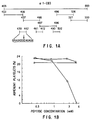
- FIG. 1 shows the identificationon of a synthetic peptide derived from the rat ⁇ 1(I)-CB3 collagen peptide which inhibits the Mg ++ -dependent adhesion of platelets to collagen.
- A) Top line represents the rat ⁇ 1(I) CB3 fragment.
- the second and third lines indicate the relative positions of synthetic peptides employed herein within the CB3 fragment and give the number of the amino acid residues corresponding to their positions in the ⁇ 1(I) collagen chain.
- the bottom line shows the single-letter code for the amino acid sequence of the peptide containing amino acids 4-30 to 442 of the rat ⁇ 1(I) collagen chain.
- the arrow indicates the point within the 430-442 peptide that corresponds to the junction between the 403-436 and 437-466 peptides.
- FIG. 2 is a graphical representation which shows the effects of KDGEA [SEQ ID NO:4] and structurally related peptides on the MG ++ -dependent adhesion of platelets to collagen.
- KDGEA [SEQ ID NO:4]
- DGEA DGEA
- ⁇ DGEA
- FIG. 3 is a bar chart which shows that the synthetic peptide KDGEA [SEQ ID NO:4] inhibits the Mg ++ -dependent adhesion of platelets to collagen but not to fibronectin or laminin.
- Adhesion assays were carried out in the presence of 2 mM Mg ++ (open bars), 2 mM Mg ++ and 4 mM KDGEA (striped bars) or 2 mM EDTA (solid bars). Data represent means of triplicate assays and the error bars indicate one standard deviation above the mean.
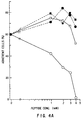
- FIG. 4 is a graphical representation which shows the divalent cation-dependent adhesion of T47D carcinoma cells to collagen and laminin.
- Adhesion to substrates composed of either collagen (A) or laminin (B) was inhibited in a concentration dependent manner by the peptide, KDGEA (O) [SEQ ID NO:4].
- the peptides KDGE ( ) [SEQ ID NO:7], KDGAA ( ⁇ ) [SEQ ID NO:6] and GGGGG ( ⁇ ) [SEQ ID NO:8] did not significantly reduce adhesion.
- Adhesion assays on collagen were conducted in the presence of 2 mM Mg ++ .
- Adhesion assays on laminin substrates were carried out in the presence of 2 mM Mg ++ . 1 mM Mn ++ and 1 mM Ca ++ . Control adhesion assays done in the presence of 2 mM EDTA resulted in less that 1% adhesion to collagen and less than 0.5% adhesion to laminin.
- novel inhibitory peptides of this invention can be prepared by known solution and solid phase peptide synthesis methods.
- the peptide chain can be prepared by a series of coupling reactions in which the constituent amino acids are added to the growing peptide chain in the desired sequence.
- N-protecting groups e.g., the carbobenzyloxy group or the t-butyloxycarbonyl group (BOC)
- various coupling reagents e.g., dicyclohexylcarbodiimide or carbonyldimidazole
- various active esters e.g., esters of N-hydroxyphthalimide or N-hydroxy-succinimide
- the various cleavage reagents e.g., trifluoroacetic acid (TFA), HCl in dioxane, boron tris-(trifluoracetate) and cyanogen bromide
- reaction in solution with isolation and purification of intermediates is well-know classical peptide methodology.
- the preferred peptide synthesis method follows conventional Merrifield solid-phase procedures. See Merrifield, J. Amer. Chem. Soc. 85 , 2149-54 (1963) and Science 150 , 178-85 (1965).
- This procedure though using many of the same chemical reactions and blocking groups of classical peptide synthesis, provides a growing peptide chain anchored by its carboxy terminus to a solid support, usually cross-linked polystyrene, styrenedivinylbenzene copolymer or, preferably, p-methylbenzhydrylamine polymer for synthesizing peptide amides.
- This method conveniently simplifies the number of procedural manipulations since removal of the excess reagents at each step is effected simply by washing the polymer.
- Adhesive Proteins - Type I collagen was purified from the skin of lathrytic rats as described by Bornstein and Piez (20). Human fibronectin was isolated from plasma by affinity chromatography on gelatin-Sepharose according to the method of Engvall and Ruoslahti (21). Laminin was obtained commercially from Bethesda Research Laboratories (Gaithersburg, M.D.) andbovine type I collagen was from Sigma Chemical (St. Louis, MO).
- Peptide Syntheses - Collagen peptides were made with an Applied Biosystems 430A peptide synthesizer on p-methylbenzhydrylamine resin using double coupling cycles to ensure complete coupling at each step. Coupling was effected with preformed symmetrical anhydrides of Boc-amino acids (Applied Biosystems) and peptides were cleaved form the solid support by a hydrogen flouride procedure. Briefly, cleavage was carried out in HF and p-cresol was used at a 9/1 ration (v/v) at 0°C for 60 min.
- Peptides of 13 residues or longer were purified by successive reverse-phase chromatography on a 45x300 mm Vydac C18 column, and on a 5 ⁇ m particle, 19x150 mm microBondpak C18 column, using a gradient of 5-35% acetonitrile in 0.5% trifluroacetic acid.
- a 0 to 10% acetonitrile linear gradient in 0.05% trifluroacetic acid was applied to these same columns.
- the structures and purity of the synthetic peptides were verified by fast atom bombardment/mass spectroscopy and amino acid analysis.
- Platelet Adhesion - Platelets were washed and labeled with 51 CrO 4 as described in detail by Haverstick et al (22). Platelet adhesion to substrates composed of 0.5% BSA or 20 ⁇ g/ml of either type I collagen, laminin or fibronectin in polystyrene dishes was determined as previously described in detail (7). Alternately, adhesion assays were carried out in 96 well microtiter dishes (Immulon II, Dynatech). In this case substrate coating- and adhesion assay volumes were adjusted to 100 ⁇ l and wash volumes were adjusted to 140 ⁇ l per well.
- Platelets were permitted to adhere for 60 min at a concentration of 1.3- to 1.8 x 10 8 platelets/ml, then washed five times in adhesion assay buffer before being lysed with two 100 ml aliquots of 2% SDS which were subsequently pooled and counted.
- T47D human ductal breast adenocarcinoma cells were obtained from the American Type Culture Collection, Rockville, MD (ATCC HTB 133) and grown in RPMI 1640 medium containing 10% fetal bovine serum and 0.2 IU insulin/ml.
- T47D cells were labeled over night with 50 ⁇ Ci/mk 51 CrO 4 , washed three times with Ca ++ - Mg ++ -free Hank's balanced salt solution (BSS) and removed from their flasks by brief treatment with 0.02% versene solution (Gibco) at 37°C.
- BSS Ca ++ - Mg ++ -free Hank's balanced salt solution
- BSS-BSA BSS containing 0.5% BSA
- Peptide Inhibition After labeling and washing, cells were resuspended at 2.6- to 3.6 x10 5 /ml for platelets or 2 x 10 5 /ml for T47D cells. Aliquots were added to equal volumes of buffer containing appropriate concentrations of the peptides and divalent cations and preincubated for 15 min before being added to the adhesive substrates. Adhesion was quantitated as described above.
- peptide 430 namely GPAGKDGEAGAQG [SEQ ID NO:2] was capable of inhibiting platelet adhesion to collagen in a concentration-dependent manner.
- Half-maximal inhibition was achieved at 2.8 mM; inhibition was virtually complete at 5.4 mM.
- concentrations are only slightly greater than concentrations of RGD peptides required to inhibit ⁇ 5 ⁇ 1 -mediated cell adhesion to fibronectin.
- peptide 461 nor 490 had any detectable inhibitory activity on platelet adhesion to collagen at comparable concentrations.
- the sequence of peptide 430 is shown in the bottom line of Figure 1A with an arrow indicating the junction between the longer peptides 403-436 and 437-466.
- Two striking features of this sequence are the relative lack of proline or hydroxyproline residues which contribute to the stability of the triple helical structure of collagen and the presence of the very hydrophilic sequence KDGE [SEQ ID NO:7] which was divided between the G and E residues in the 33-mer peptides.
- the lack of proline and hydroxyproline residues which constitute approximately 23 percent of the amino acids within type I collagen would tend to destabilize the triple helix. Puckering of the helix at this site would facilitate recognition of a linear sequence of amino acids by the ⁇ 2 ⁇ 1 integrin.
- the active sequence contained a mixture , of amino- and carboxy- side chains reminiscent of those present in the RGD sequence which is known to mediate the binding of some of the other integrin receptors to their substrates (13, 14).
- tetrapeptides with sequences of KDGE [SEQ ID NO:7] and DGEA [SEQ ID NO:3], as well as the pentapeptide KDGEA [SEQ ID NO:4] were synthesized. Both KDGEA and DGEA inhibited platelet adhesion to collagen at concentrations comparable to the parent peptide 430. DGEA was consistently slightly more effective than KDGEA ( Figure 2a). The peptide KDGE, which lacked the carboxy terminal alanine residue, on the other hand, was devoid of inhibitory activity and at higher concentrations tended to enhance platelet adhesion to collagen. These results indicate that while the alanine residue is needed for recognition by the ⁇ 2 ⁇ 1 integrin complex, the lysine residue is not.
- the peptide was tested for ability to inhibit platelet adhesion not only to collagen, but also to fibronectin, and laminin substrates. As shown in Figure 3, 4 mM KDGEA inhibited Mg ++ -dependent platelet adhesion to collagen by 80 percent.
- the human breast adenocarcinoma cell line T47D expresses high levels of the ⁇ 2 ⁇ 1 integrin as revealed by flow cytometric analysis. As judged by the ability of the P1H5 antibody to markedly inhibit the adhesion of T47D cells to both collagen and laminin substrates (Table 1), the ⁇ 2 ⁇ 1 integrin on T47D cells functions as a collagen/laminin receptor. The P1D6 monoclonal antibody directed against the ⁇ 5 ⁇ 1 integrin had no inhibitory effect on T47D adhesion to collagen or laminin (Table I).
- T47D cells were then used to examine the effects of KDGEA [SEQ ID NO:4] on cells which used ⁇ 2 ⁇ 1 as a collagen/laminin receptor.
- KDGEA inhibited adhesion of T47D cells to both collagen and laminin substrates in a concentration dependent manner.
- Half-maximal inhibition on both substrates was observed at 2- 2.5 mM KDGEA.
- the structurally related peptides KDGE [SEQ ID NO:7] and KDGAA [SEQ ID NO:6], as well as the control peptide pentaglycine showed no inhibitory activity at comparable concentrations. The specificity of the modest inhibition observed in the presence of high concentrations of these peptides could not be ascertained.
- the minimal DGEA [SEQ ID NO:3] recognition sequence derived from the ⁇ 1(I) - CB3 fragment and corresponding to residues 435-438 of the ⁇ 1(I) chain of rat collagen is conserved in the ⁇ 1(I) chains of other species, as well as in some, but not all, collagen chains of other types. Acceptable amino acid substitutions which might represent alternative recognition sequences in other collagenous and noncollagenous proteins remain to be elucidated.
- the DGEA [SEQ ID NO:3] sequence is also present at residues 54-57 of the ⁇ 1(I) chain and at a conserved position in other chains. This location would place the second DGEA sequence within the ⁇ (I) - CB4 fragment of type I collagen which did not support platelet adhesion in an earlier study (19).
- the larger CB3 fragment may have bound more efficiently to the plastic surfaces than the smaller CB4 fragment.
- the CB3 fragment was applied to the dishes as a pure peptide, whereas the CB4 peptide was in a fraction which also contained the CB5 and CB6 fragments which could compete for binding to the plastic surface.
- DGEA sequence at residues 54-57 is preceded by another aspartate residue in contrast to the DGEA sequence at residues 435-438 which is preceded by a lysine.
- flanking sequences in ligand recognition by the ⁇ 2 ⁇ 1 integrin is not known.
- the aforesaid data clearly indicate that DGEA-containing peptides can inhibit cell adhesion to laminin mediated by the ⁇ 2 ⁇ 1 integrin but not adhesion mediated by the ⁇ 6 ⁇ 1 integrin.
- the ligand recognition sites for these to laminin binding integrins are likely to differ.
- the DGEA sequence had not yet been identified within any laminin chains sequenced to date.
- the ⁇ 2 ⁇ 1 integrin may recognize an alternative structurally related sequence within laminin or may recognize a distinct unrelated sequence. The latter possibility is not without precedent.
- the platelet IIb-IIIa complex can bind both RGD peptides and an unrelated sequence from the carboxyterminus of the fibrinogen ⁇ chain (25,26).
- the peptides compete for binding to the integrin receptor and the ⁇ chain peptide also inhibits binding of adhesive proteins containing only the RGD recognition sequence to the receptor (27,28).
- Amino acids are shown herein either by standard one letter or three letter abbreviations as follows: Abbreviated Designation Amino Acid A Ala Alanine C Cys Cysteine D Asp Aspartic acid E Glu Glutamic acid F Phe Phenylalanine G Gly Glycine H His Histidine I Ile Isoleucine K Lys Lysine L Leu Leucine M Met Methionine N Asn Asparagine P Pro Proline Q Gln Glutamine R Arg Arginine S Ser Serine T Thr Threonine V Val Valine W Trp Tryptophan Y Tyr Tyrosine
Landscapes
- Chemical & Material Sciences (AREA)
- Health & Medical Sciences (AREA)
- Organic Chemistry (AREA)
- Life Sciences & Earth Sciences (AREA)
- General Health & Medical Sciences (AREA)
- Medicinal Chemistry (AREA)
- Proteomics, Peptides & Aminoacids (AREA)
- Biophysics (AREA)
- Biochemistry (AREA)
- Genetics & Genomics (AREA)
- Molecular Biology (AREA)
- Gastroenterology & Hepatology (AREA)
- Zoology (AREA)
- Toxicology (AREA)
- Bioinformatics & Cheminformatics (AREA)
- Engineering & Computer Science (AREA)
- Chemical Kinetics & Catalysis (AREA)
- General Chemical & Material Sciences (AREA)
- Nuclear Medicine, Radiotherapy & Molecular Imaging (AREA)
- Pharmacology & Pharmacy (AREA)
- Animal Behavior & Ethology (AREA)
- Public Health (AREA)
- Veterinary Medicine (AREA)
- Peptides Or Proteins (AREA)
- Medicines That Contain Protein Lipid Enzymes And Other Medicines (AREA)
Applications Claiming Priority (2)
| Application Number | Priority Date | Filing Date | Title |
|---|---|---|---|
| US07/616,622 US5120830A (en) | 1990-10-25 | 1990-10-25 | Inhibitory peptides against α-2, β-1 mediated mg++ dependent adhesion of platelets to collagen |
| US616622 | 1990-10-25 |
Publications (2)
| Publication Number | Publication Date |
|---|---|
| EP0488979A1 EP0488979A1 (en) | 1992-06-03 |
| EP0488979B1 true EP0488979B1 (en) | 1996-07-10 |
Family
ID=24470287
Family Applications (1)
| Application Number | Title | Priority Date | Filing Date |
|---|---|---|---|
| EP91870167A Expired - Lifetime EP0488979B1 (en) | 1990-10-25 | 1991-10-21 | Novel inhibitory peptides |
Country Status (9)
| Country | Link |
|---|---|
| US (1) | US5120830A (da) |
| EP (1) | EP0488979B1 (da) |
| JP (1) | JP3319771B2 (da) |
| AT (1) | ATE140234T1 (da) |
| CA (1) | CA2054111C (da) |
| DE (1) | DE69120776T2 (da) |
| DK (1) | DK0488979T3 (da) |
| ES (1) | ES2089177T3 (da) |
| GR (1) | GR3021064T3 (da) |
Families Citing this family (9)
| Publication number | Priority date | Publication date | Assignee | Title |
|---|---|---|---|---|
| US5594120A (en) * | 1994-02-18 | 1997-01-14 | Brigham And Women's Hospital, Inc. | Integrin alpha subunit |
| US5610281A (en) | 1994-05-03 | 1997-03-11 | Brigham & Women's Hospital, Inc. | Antibodies for modulating heterotypic E-cadherin interactions with human T lymphocytes |
| AU3002695A (en) * | 1994-07-08 | 1996-02-09 | King's College | Ige antagonists |
| US5932693A (en) * | 1996-12-10 | 1999-08-03 | Washington University | Antithrombotic peptides |
| US20030176663A1 (en) * | 1998-05-11 | 2003-09-18 | Eidgenossische Technische Hochscule | Specific binding molecules for scintigraphy |
| US6890896B1 (en) | 1999-11-18 | 2005-05-10 | Ceremedix, Inc. | Compositions and methods for counteracting effects of reactive oxygen species and free radicals |
| EP1259548A1 (en) * | 2000-02-24 | 2002-11-27 | Eidgenössische Technische Hochschule Zürich | Antibody specific for the ed-b domain of fibronectin, conjugates comprising said antibody, and their use for the detection and treatment of angiogenesis |
| US20020197700A1 (en) * | 2000-09-07 | 2002-12-26 | Schering Ag | Receptor of the EDb-fibronectin domains |
| US8253725B2 (en) * | 2007-12-28 | 2012-08-28 | St. Jude Medical, Atrial Fibrillation Division, Inc. | Method and system for generating surface models of geometric structures |
Family Cites Families (1)
| Publication number | Priority date | Publication date | Assignee | Title |
|---|---|---|---|---|
| ATE123810T1 (de) * | 1988-08-23 | 1995-06-15 | Dana Farber Cancer Inst Inc | Alpha-subeinheit des lfa-1-leukocyt-adhäsions- rezeptors. |
-
1990
- 1990-10-25 US US07/616,622 patent/US5120830A/en not_active Expired - Lifetime
-
1991
- 1991-10-21 EP EP91870167A patent/EP0488979B1/en not_active Expired - Lifetime
- 1991-10-21 ES ES91870167T patent/ES2089177T3/es not_active Expired - Lifetime
- 1991-10-21 DE DE69120776T patent/DE69120776T2/de not_active Expired - Fee Related
- 1991-10-21 DK DK91870167.3T patent/DK0488979T3/da active
- 1991-10-21 AT AT91870167T patent/ATE140234T1/de not_active IP Right Cessation
- 1991-10-24 JP JP34254491A patent/JP3319771B2/ja not_active Expired - Fee Related
- 1991-10-24 CA CA002054111A patent/CA2054111C/en not_active Expired - Fee Related
-
1996
- 1996-09-18 GR GR960402432T patent/GR3021064T3/el unknown
Also Published As
| Publication number | Publication date |
|---|---|
| US5120830A (en) | 1992-06-09 |
| GR3021064T3 (en) | 1996-12-31 |
| DK0488979T3 (da) | 1996-08-12 |
| DE69120776D1 (de) | 1996-08-14 |
| ATE140234T1 (de) | 1996-07-15 |
| ES2089177T3 (es) | 1996-10-01 |
| CA2054111A1 (en) | 1992-04-26 |
| CA2054111C (en) | 2002-04-30 |
| JPH0578389A (ja) | 1993-03-30 |
| DE69120776T2 (de) | 1997-01-16 |
| EP0488979A1 (en) | 1992-06-03 |
| JP3319771B2 (ja) | 2002-09-03 |
Similar Documents
| Publication | Publication Date | Title |
|---|---|---|
| Kloczewiak et al. | Platelet receptor recognition domain on the. gamma. chain of human fibrinogen and its synthetic peptide analogues | |
| US5169836A (en) | Inhibitors of platelet binding | |
| Plow et al. | Arginyl-glycyl-aspartic acid sequences and fibrinogen binding to platelets | |
| Holzmann et al. | Peyer's patch‐specific lymphocyte homing receptors consist of a VLA‐4‐like alpha chain associated with either of two integrin beta chains, one of which is novel. | |
| Kloczewiak et al. | Recognition site for the platelet receptor is present on the 15-residue carboxy-terminal fragment of the γ chain of human fibrinogen and is not involved in the fibrin polymerization reaction | |
| Kleinman et al. | Identification of a second active site in laminin for promotion of cell adhesion and migration and inhibition of in vivo melanoma lung colonization | |
| Staatz et al. | Identification of a tetrapeptide recognition sequence for the alpha 2 beta 1 integrin in collagen. | |
| Matsuyama et al. | Activation of CD4 cells by fibronectin and anti-CD3 antibody. A synergistic effect mediated by the VLA-5 fibronectin receptor complex. | |
| US5510332A (en) | Process to inhibit binding of the integrin α4 62 1 to VCAM-1 or fibronectin and linear peptides therefor | |
| US5061693A (en) | Fibrinogen receptor antagonists | |
| Letellier et al. | Mechanisms of formation of IgE-binding factors (soluble CD23)—I. Fcϵ R II bearing B cells generate IgE-binding factors of different molecular weights | |
| Davis III et al. | Bovine conglutinin is a collagen-like protein | |
| Tranqui et al. | Differential structural requirements for fibrinogen binding to platelets and to endothelial cells. | |
| WO1994015958A2 (en) | Peptide inhibitors of cell adhesion | |
| WO1994011395A9 (en) | Peptide inhibitors of fibronectin and related collagen-binding proteins | |
| WO1994011395A1 (en) | Peptide inhibitors of fibronectin and related collagen-binding proteins | |
| EP0410541A1 (en) | Fibrinogen receptor antagonists | |
| EP0410540A1 (en) | Fibrinogen receptor antagonists | |
| Takagi et al. | A collagen/gelatin-binding decapeptide derived from bovine propolypeptide of von Willebrand factor | |
| CA2021952A1 (en) | Fibrinogen receptor antagonists | |
| US5120830A (en) | Inhibitory peptides against α-2, β-1 mediated mg++ dependent adhesion of platelets to collagen | |
| US6469138B1 (en) | Thrombospondin receptor binding peptides | |
| Mohri et al. | How vitronectin binds to activated glycoprotein Ilb-IIIa complex and its function in platelet aggregation | |
| CA2009390A1 (en) | Viper venom polypeptides and variants | |
| Matsuka et al. | Cross-linking of fibronectin to C-terminal fragments of the fibrinogen α-chain by factor XIIIa |
Legal Events
| Date | Code | Title | Description |
|---|---|---|---|
| PUAI | Public reference made under article 153(3) epc to a published international application that has entered the european phase |
Free format text: ORIGINAL CODE: 0009012 |
|
| AK | Designated contracting states |
Kind code of ref document: A1 Designated state(s): AT BE CH DE DK ES FR GB GR IT LI LU NL SE |
|
| 17P | Request for examination filed |
Effective date: 19921029 |
|
| 17Q | First examination report despatched |
Effective date: 19940822 |
|
| GRAH | Despatch of communication of intention to grant a patent |
Free format text: ORIGINAL CODE: EPIDOS IGRA |
|
| GRAH | Despatch of communication of intention to grant a patent |
Free format text: ORIGINAL CODE: EPIDOS IGRA |
|
| GRAA | (expected) grant |
Free format text: ORIGINAL CODE: 0009210 |
|
| AK | Designated contracting states |
Kind code of ref document: B1 Designated state(s): AT BE CH DE DK ES FR GB GR IT LI LU NL SE |
|
| REF | Corresponds to: |
Ref document number: 140234 Country of ref document: AT Date of ref document: 19960715 Kind code of ref document: T |
|
| REG | Reference to a national code |
Ref country code: CH Ref legal event code: NV Representative=s name: A. BRAUN, BRAUN, HERITIER, ESCHMANN AG PATENTANWAE |
|
| REG | Reference to a national code |
Ref country code: DK Ref legal event code: T3 |
|
| REF | Corresponds to: |
Ref document number: 69120776 Country of ref document: DE Date of ref document: 19960814 |
|
| ET | Fr: translation filed | ||
| REG | Reference to a national code |
Ref country code: ES Ref legal event code: FG2A Ref document number: 2089177 Country of ref document: ES Kind code of ref document: T3 |
|
| ITF | It: translation for a ep patent filed | ||
| REG | Reference to a national code |
Ref country code: ES Ref legal event code: FG2A Ref document number: 2089177 Country of ref document: ES Kind code of ref document: T3 |
|
| REG | Reference to a national code |
Ref country code: GR Ref legal event code: FG4A Free format text: 3021064 |
|
| PLBE | No opposition filed within time limit |
Free format text: ORIGINAL CODE: 0009261 |
|
| STAA | Information on the status of an ep patent application or granted ep patent |
Free format text: STATUS: NO OPPOSITION FILED WITHIN TIME LIMIT |
|
| 26N | No opposition filed | ||
| REG | Reference to a national code |
Ref country code: GB Ref legal event code: IF02 |
|
| PGFP | Annual fee paid to national office [announced via postgrant information from national office to epo] |
Ref country code: AT Payment date: 20050914 Year of fee payment: 15 Ref country code: GB Payment date: 20050914 Year of fee payment: 15 |
|
| PGFP | Annual fee paid to national office [announced via postgrant information from national office to epo] |
Ref country code: NL Payment date: 20050916 Year of fee payment: 15 Ref country code: DK Payment date: 20050916 Year of fee payment: 15 |
|
| PGFP | Annual fee paid to national office [announced via postgrant information from national office to epo] |
Ref country code: LU Payment date: 20050926 Year of fee payment: 15 |
|
| PGFP | Annual fee paid to national office [announced via postgrant information from national office to epo] |
Ref country code: SE Payment date: 20051004 Year of fee payment: 15 |
|
| PGFP | Annual fee paid to national office [announced via postgrant information from national office to epo] |
Ref country code: FR Payment date: 20051006 Year of fee payment: 15 |
|
| PGFP | Annual fee paid to national office [announced via postgrant information from national office to epo] |
Ref country code: ES Payment date: 20051024 Year of fee payment: 15 Ref country code: GR Payment date: 20051024 Year of fee payment: 15 |
|
| PGFP | Annual fee paid to national office [announced via postgrant information from national office to epo] |
Ref country code: DE Payment date: 20051031 Year of fee payment: 15 |
|
| PGFP | Annual fee paid to national office [announced via postgrant information from national office to epo] |
Ref country code: BE Payment date: 20051104 Year of fee payment: 15 |
|
| PGFP | Annual fee paid to national office [announced via postgrant information from national office to epo] |
Ref country code: CH Payment date: 20051216 Year of fee payment: 15 |
|
| PG25 | Lapsed in a contracting state [announced via postgrant information from national office to epo] |
Ref country code: AT Free format text: LAPSE BECAUSE OF NON-PAYMENT OF DUE FEES Effective date: 20061021 |
|
| PG25 | Lapsed in a contracting state [announced via postgrant information from national office to epo] |
Ref country code: SE Free format text: LAPSE BECAUSE OF NON-PAYMENT OF DUE FEES Effective date: 20061022 |
|
| PG25 | Lapsed in a contracting state [announced via postgrant information from national office to epo] |
Ref country code: CH Free format text: LAPSE BECAUSE OF NON-PAYMENT OF DUE FEES Effective date: 20061031 Ref country code: LI Free format text: LAPSE BECAUSE OF NON-PAYMENT OF DUE FEES Effective date: 20061031 Ref country code: DK Free format text: LAPSE BECAUSE OF NON-PAYMENT OF DUE FEES Effective date: 20061031 |
|
| PGFP | Annual fee paid to national office [announced via postgrant information from national office to epo] |
Ref country code: IT Payment date: 20061031 Year of fee payment: 16 |
|
| PG25 | Lapsed in a contracting state [announced via postgrant information from national office to epo] |
Ref country code: NL Free format text: LAPSE BECAUSE OF NON-PAYMENT OF DUE FEES Effective date: 20070501 Ref country code: DE Free format text: LAPSE BECAUSE OF NON-PAYMENT OF DUE FEES Effective date: 20070501 |
|
| REG | Reference to a national code |
Ref country code: CH Ref legal event code: PL |
|
| EUG | Se: european patent has lapsed | ||
| GBPC | Gb: european patent ceased through non-payment of renewal fee |
Effective date: 20061021 |
|
| NLV4 | Nl: lapsed or anulled due to non-payment of the annual fee |
Effective date: 20070501 |
|
| REG | Reference to a national code |
Ref country code: FR Ref legal event code: ST Effective date: 20070629 |
|
| PG25 | Lapsed in a contracting state [announced via postgrant information from national office to epo] |
Ref country code: GB Free format text: LAPSE BECAUSE OF NON-PAYMENT OF DUE FEES Effective date: 20061021 |
|
| BERE | Be: lapsed |
Owner name: *WASHINGTON UNIVERSITY Effective date: 20061031 |
|
| REG | Reference to a national code |
Ref country code: ES Ref legal event code: FD2A Effective date: 20061023 |
|
| PG25 | Lapsed in a contracting state [announced via postgrant information from national office to epo] |
Ref country code: FR Free format text: LAPSE BECAUSE OF NON-PAYMENT OF DUE FEES Effective date: 20061031 Ref country code: ES Free format text: LAPSE BECAUSE OF NON-PAYMENT OF DUE FEES Effective date: 20061023 |
|
| PG25 | Lapsed in a contracting state [announced via postgrant information from national office to epo] |
Ref country code: LU Free format text: LAPSE BECAUSE OF NON-PAYMENT OF DUE FEES Effective date: 20061021 |
|
| PG25 | Lapsed in a contracting state [announced via postgrant information from national office to epo] |
Ref country code: GR Free format text: LAPSE BECAUSE OF NON-PAYMENT OF DUE FEES Effective date: 20070503 |
|
| PG25 | Lapsed in a contracting state [announced via postgrant information from national office to epo] |
Ref country code: BE Free format text: LAPSE BECAUSE OF FAILURE TO SUBMIT A TRANSLATION OF THE DESCRIPTION OR TO PAY THE FEE WITHIN THE PRESCRIBED TIME-LIMIT Effective date: 20061031 Ref country code: IT Free format text: LAPSE BECAUSE OF NON-PAYMENT OF DUE FEES Effective date: 20071021 |