EP0490667A2 - HIV-Proteaseinhibitoren - Google Patents
HIV-Proteaseinhibitoren Download PDFInfo
- Publication number
- EP0490667A2 EP0490667A2 EP19910311549 EP91311549A EP0490667A2 EP 0490667 A2 EP0490667 A2 EP 0490667A2 EP 19910311549 EP19910311549 EP 19910311549 EP 91311549 A EP91311549 A EP 91311549A EP 0490667 A2 EP0490667 A2 EP 0490667A2
- Authority
- EP
- European Patent Office
- Prior art keywords
- ahpba
- group
- boc
- title compound
- give
- Prior art date
- Legal status (The legal status is an assumption and is not a legal conclusion. Google has not performed a legal analysis and makes no representation as to the accuracy of the status listed.)
- Granted
Links
- 0 CC(*NC(*)C(C(N1CC*CCC1)=O)O)N* Chemical compound CC(*NC(*)C(C(N1CC*CCC1)=O)O)N* 0.000 description 1
Images



Classifications
-
- C—CHEMISTRY; METALLURGY
- C07—ORGANIC CHEMISTRY
- C07K—PEPTIDES
- C07K7/00—Peptides having 5 to 20 amino acids in a fully defined sequence; Derivatives thereof
- C07K7/02—Linear peptides containing at least one abnormal peptide link
-
- A—HUMAN NECESSITIES
- A61—MEDICAL OR VETERINARY SCIENCE; HYGIENE
- A61P—SPECIFIC THERAPEUTIC ACTIVITY OF CHEMICAL COMPOUNDS OR MEDICINAL PREPARATIONS
- A61P31/00—Antiinfectives, i.e. antibiotics, antiseptics, chemotherapeutics
- A61P31/12—Antivirals
-
- A—HUMAN NECESSITIES
- A61—MEDICAL OR VETERINARY SCIENCE; HYGIENE
- A61P—SPECIFIC THERAPEUTIC ACTIVITY OF CHEMICAL COMPOUNDS OR MEDICINAL PREPARATIONS
- A61P31/00—Antiinfectives, i.e. antibiotics, antiseptics, chemotherapeutics
- A61P31/12—Antivirals
- A61P31/14—Antivirals for RNA viruses
- A61P31/18—Antivirals for RNA viruses for HIV
-
- C—CHEMISTRY; METALLURGY
- C07—ORGANIC CHEMISTRY
- C07K—PEPTIDES
- C07K5/00—Peptides containing up to four amino acids in a fully defined sequence; Derivatives thereof
- C07K5/02—Peptides containing up to four amino acids in a fully defined sequence; Derivatives thereof containing at least one abnormal peptide link
- C07K5/0202—Peptides containing up to four amino acids in a fully defined sequence; Derivatives thereof containing at least one abnormal peptide link containing the structure -NH-X-X-C(=0)-, X being an optionally substituted carbon atom or a heteroatom, e.g. beta-amino acids
-
- Y—GENERAL TAGGING OF NEW TECHNOLOGICAL DEVELOPMENTS; GENERAL TAGGING OF CROSS-SECTIONAL TECHNOLOGIES SPANNING OVER SEVERAL SECTIONS OF THE IPC; TECHNICAL SUBJECTS COVERED BY FORMER USPC CROSS-REFERENCE ART COLLECTIONS [XRACs] AND DIGESTS
- Y02—TECHNOLOGIES OR APPLICATIONS FOR MITIGATION OR ADAPTATION AGAINST CLIMATE CHANGE
- Y02P—CLIMATE CHANGE MITIGATION TECHNOLOGIES IN THE PRODUCTION OR PROCESSING OF GOODS
- Y02P20/00—Technologies relating to chemical industry
- Y02P20/50—Improvements relating to the production of bulk chemicals
- Y02P20/55—Design of synthesis routes, e.g. reducing the use of auxiliary or protecting groups
Definitions
- This invention relates to peptide derivatives which inhibit human immunodeficiency virus (HIV) protease and pharmaceutically acceptable salts thereof.
- HIV human immunodeficiency virus
- AIDS acquired immunodeficiency syndrome
- HIV human immunodeficiency virus
- Some peptide derivatives have been proposed as the inhibitor, for example, EP 357332, EP 337714, EP 372537, EP 378497 and EP 373549.
- HIV protease inhibitors contain hydroxyamino acid isosteres, and in addition, a formation of hydrogen bond between the hydroxy group and Asp25 in the active site of HIV protease was proposed [cf. Proc. Natl. Acad. Sci., U.S.A., 87 , 8805 (1990)].
- a renin inhibitor having a ⁇ -amino- ⁇ -hydroxy-carboxylic residue shown by the following general formula (6) as an amino acid isostere in a peptide chain was proposed [e.g. Japanese Unexamined Patent Publication No. 101098 (1990)] and the preparation of said carboxylic acid was reported in relation to an anti-cancer agent [e.g. J. Med. Chem., 20 , 510 (1977), ibid ., 33 , 2707 (1990)].
- R8 represents a straight or branched lower alkyl group, a cycloalkyl-lower alkyl group, a lower alkoxycarbonyl-lower alkyl group or an amino-lower alkyl group.
- n 1 or 2
- A represents hydrogen atom or a peptide N-terminal protective group
- B1, B2, B5, and B6 represents independently singly bond or amino acid residue optionally the amino group of said amino acid be substituted with a hydrocarbon residue having 12 or less carbon atoms
- B7 represents a single bond or an amino acid residue represented by the following formula (4) with a proviso that XR2R3 represents the following general formula (4′) when B7 is a single bond
- X represents nitrogen atom or oxygen atom
- R2 and R3 each represents hydrogen atom or an optionally substituted hydrocarbon group having 12 or less carbon atoms which form cycles by forming bonds between said carbon atoms which may optionally be replaced with oxygen, nitrogen or sulfur atom with the proviso that no R3 is present when X represents oxygen atom
- R4 represents carbamoyl group, carboxy group, cyano group, an alkoxycarbonyl group, hydroxy group,
- the present invention provides novel HIV protease inhibitors.
- the present invention includes the following HIV protease inhibitors: Human immunodeficiency virus (HIV) protease inhibitors comprising a compound represented by the following general formula (1) or pharmaceutically acceptable salt thereof: where A represents hydrogen atom or a peptide N-terminal protective group, B1, B2, B3, B4, B5, and B6 represent independently single bond or amino acid residue in which the amino group optionally substituted with a hydrocarbon group having 12 or less of carbon atoms with a proviso that the presence of at least one of said B1 through B6 is necessary, R1 represents a lower alkyl group, an alicyclic hydrocarbon group, an aromatic hydrocarbon group or a heterocyclic group, each optionally substituted with amino group, mercapto group, hydroxy group, carboxy group, carbamoyl group, an alicyclic hydrocarbon group, an aromatic hydrocarbon group or a heterocyclic group, X represents nitrogen atom or oxygen atom, and R2 and R3 each represents hydrogen atom or a hydrocarbon group having 12 or less
- the present invention includes the following novel compounds and HIV protease inhibitors containing said compounds or pharmaceutically acceptable salts thereof: where n represents 1 or 2, A represents hydrogen atom or a peptide N-terminal protective group, B1, B2, B5, and B6 represents independently singly bond or amino acid residue optionally the amino group of said amino acid be substituted with a hydrocarbon residue having 12 or less carbon atoms, B7 represents a single bond or an amino acid residue represented by the following formula (4) with a proviso that XR2R3 represents the following general formula (4′) when B7 is a single bond, X represents nitrogen atom or oxygen atom, R2 and R3 each represents hydrogen atom or an optionally substituted hydrocarbon group having 12 or less carbon atoms which form cycles by forming bonds between said carbon atoms which may optionally be replaced with oxygen, nitrogen or sulfur atom with the proviso that no R3 is present when X represents oxygen atom, R4 represents carbamoyl group, carboxy group, cyano group, an alkoxy
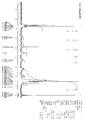
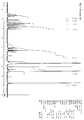
- Figures 1-6 show NMR spectra of the compounds of Examples 82, 86, 100, 106, 130 and 178, respectively.
- peptide derivatives having an amino acid isostere of ⁇ -amino- ⁇ -hydroxycarboxylic acid residue represented by the following general formula (8) exhibit inhibition of HIV protease
- R1 represents a lower alkyl group, an alicyclic hydrocarbon group, an aromatic hydrocarbon group or a heterocyclic group optionally substituted with amino group, mercapto group, hydroxy group, carboxy group, carbamoyl group, an alicyclic hydrocarbon group, an aromatic hydrocarbon group or a heterocyclic group.
- the inhibitory activity may be derived from a hydrogen bond formed between a hydroxy group of above mentioned ⁇ -amino- ⁇ -hydroxycarboxylic acid residue and Asp25 in the active site of HIV protease, and also from the other hydrogen bond formation by a carbonyl group in the active site. The inhibitory activity is presumed to be enforced by fixing the conformation of neighboring amino acid residue by said carbonyl group through the amide bond.
- One embodiment of the present invention relates to a human immunodeficiency virus (HIV) protease inhibitor peptide derivatives represented by the following general formula (9) or pharmaceutically acceptable salts thereof.
- HAV human immunodeficiency virus
- A represents hydrogen atom or a peptide N-terminal protective group.
- the N-terminal protective group includes such as acetyl group (Ac-), propionyl group, butyryl group, isobutyryl group, valeryl group, isovaleryl group, pivaloyl group, hexanoyl group, heptanoyl group, octanoyl group, benzyl group (Ph-CH2-), benzoyl group, phenylacetyl group (Ph-CH2-CO-), 3-phenylpropionyl group [Ph-(CH2)2-CO-], phenylpropenoyl group, pyridinecarbonyl group (Pyridine-CO-), quinoline-2-carbonyl group (Quinoline-CO-), phenoxyacetyl group (Ph-O-CH2-CO-), o -chlorophenoxyacetyl group ( o Cl-Ph-O-CH2-CO
- aryloxyacetyl groups such as m -chlorophenoxyacetyl group, m -phenylphenoxy-acetyl group, 1-naphthoxyacetyl group, (5-isoquinolyloxy)-acetyl group, m -(N-phenylamino)phenyloxy-acetyl group are particularly preferable for the marked elevation of HIV protease inhibitory activity.
- abbreviations used in the above parentheses are used as abbreviations in the specification.
- B1, B2, B3, B4, B5, and B6 represent amino acid residues and mean independently natural or un-natural amino acid residue and the corresponding amino acid include, for example, glycine (Gly), alanine (Ala), valine (Val), leucine (Leu), isoleucine (Ile), serine (Ser), threonine (Thr), cysteine (Cys), methionine (Met), asparagine (Asn), glutamine (Gln), phenylalanine (Phe), tyrosine (Tyr), tryptophan (Try), aspartic acid (Asp), glutamic acid (Glu), histidine (His), lysine (Lys), arginine (Arg), proline (Pro), ⁇ -acetylalanine (Aca), phenylglycine (Phg), ⁇ -allylglycine (Alg), ⁇ -propargylglycine (Prg), N-cyclo
- the amino group in these amino acids may be substituted with a hydrocarbon group having 12 or less carbon atoms.
- hydrocarbon groups include such as methyl, ethyl, benzyl and cyclohexylmethyl groups.
- B1, B2, B3, B4, B5 and B6 is sufficient for the definition of general formula, and presence of B3 and B4, especially B3, is preferable.
- the amino acid residues of B3 represented by the general formula (10) are preferable for the improvement of HIV protease inhibitory activity.
- n 1 or 2
- R4 represents carbamoyl group, carboxy group, cyano group, an alkoxycarbonyl group, hydroxy group, a lower alkoxy group, a lower alkylthio group, a lower alkylsulfonyl group, sulfonyl group and sulfamoyl group.
- corresponding amino acids include asparagine, glutamine, aspartic acid, glutamic acid, cyanoalanine, cyanomethylalanine, O-methylaspartic acid, O-methylglutamic acid, serine, O-methylserine, ⁇ -methylthioalanine, methionine, ⁇ -methanesulfonylalanine, ⁇ -(methanesulfonyl-methyl)alanine, ⁇ -sulfonylalanine, ⁇ -sulfonylmethyl-alanine, ⁇ -sulfamoylalanine and ⁇ -sulfamoylmethylalanine.
- asparagine, ⁇ -methylthioalanine and ⁇ -methane-sulfonylalanine are particularly preferable.
- amino acid residues having B4 represented by the general formula (11) are also preferable for the improvement of HIV protease inhibitory activity.
- R6 represents a bivalent hydrocarbon group forming a 5-7 membered ring and optionally substituted or fused with the other 5-7 membered ring, some or one of which carbon atoms in said rings may be replaced with hetero atom(s).
- the corresponding amino acid include, for example, proline, 4-hydroxypyrrolidine-2-carboxylic acid, 4-benzyloxypyrrolidine-2-carboxylic acid, 4-cyclohexyl-pyrrolidine-2-carboxylic acid, 4-phenylpyrrolidine-2-carboxylic acid, 3-phenylpyrrolidine-2-carboxylic acid, 4-benzylpyrrolidine-2-carboxylic acid, 4-methylthio-pyrrolidine-2-carboxylic acid, 4-phenylthiopyrrolidine-2-carboxylic acid, 4-fluoro-pyrrolidine-2-carboxylic acid, 4,4-bis (methylthio)-pyrrolidine-2-carboxylic acid, 3,3-dimethylpyrrolidine-2-carboxylic acid, 1,3-thiazolidine-4-carboxylic acid, 5,5-dimethyl-1,3-thiazolidine-4-carboxylic acid, indoline-2-carboxylic acid, octahydroindole-2
- proline 3,3-dimethyl-pyrrolidine-2-carboxylic acid, 1,3-thiazolidine-4-carboxylic acid and 5,5-dimethyl-1,3-thiazolidine-4-carboxylic acid are particularly preferable.
- the number of peptide bonds and number of amino acid unit in the molecule is preferably decreased for the better in vivo stability and membrane permeability, thus the absence of B1 and B2 is preferable, particularly the absence of B1, B2, B5 and B6 is more preferable.
- the group represented by R1 means a lower alkyl group, an alicyclic hydrocarbon group, an aromatic hydrocarbon group or a heterocyclic group.
- Said lower alkyl group includes, for example, methyl group, propyl group, isopropyl group, butyl group, isobutyl group, sec-butyl group, pentyl group, and hexyl group.
- Said alicyclic hydrocarbon group includes, for example, cyclopentyl group and cyclohexyl group.
- Said aromatic hydrocarbon group includes, for example, phenyl group, 4-hydroxyphenyl group and 4-methoxyphenyl group.
- Said heterocyclic group includes, for example, imidazolyl group and indolyl group.
- Said lower alkyl group, alicyclic hydrocarbon group, aromatic hydrocarbon group, and heterocyclic group may be substituted by amino group, mercapto group, hydroxy group, hydroxyphenyl group, alkoxyphenyl group, carboxy group, carbamoyl group, an alicyclic hydrocarbon group, an aromatic hydrocarbon group or a heterocyclic group.
- Said substituted lower alkyl group includes, for example, hydroxymethyl group, mercaptomethyl group, 1-hydroxyethyl group, 2-carbamoylethyl group, 2-carboxyethyl group, carbamoylmethyl group, carboxymethyl group, benzyl group, (4-hydroxyphenyl)methyl group, (4-methoxyphenyl)methyl group, cyclohexylmethyl group, naphthylmethyl group, imidazolylmethyl group, indolylmethyl group, 2-methylthioethyl group and 4-aminobutyl group.
- compounds having benzyl group as R1 is particularly preferable for the marked elevation of HIV protease inhibitory activity.
- X represents nitrogen or oxygen atom
- R2 and R3 represent independently hydrogen atom or a hydrocarbon group having 12 or less carbon atoms optionally replaced with oxygen, nitrogen or sulfur atom, and when X represents oxygen, no R3 exists.
- Said hydrocarbon group in R2 and R3 represents, for example, methyl group (-Me), isopropyl group (-iPr), isobutyl group (-iBu), sec-butyl group (-sBu), 2-pentyl group, 1-ethylpropyl group, tert-butyl group (-tBu), neopentyl group, tert-amyl group (tAmyl), 3-methyl-2-butyl group, 2,3-dimethyl-2-butyl group, cyclohexyl group (-C6H11), cyclo-hexylmethyl group (-CH2-C6H11), cyclopropyl group, cyclo-pentyl group, phenyl group (-Ph), benzyl group, naphtyl group and naphthylmethyl group.
- Said substituted hydrocarbon group includes, for example, 3-hydroxy-2-methyl-2-propyl group, 1,1-bis (hydroxy-methyl)ethyl group, 1-hydroxymethyl-2-methylpropyl group, 1-hydroxy-2-methylbutyl group, 2-hydroxy-1-phenylethyl group, 2-hydroxycyclohexyl group (-chex-ol), o -hydroxyphenyl group [-Ph( o -OH)], m-hydroxyphenyl group [-Ph( m -OH)] and p -hydroxyphenyl group [-Ph( p -OH)].
- R2 and R3 may be bridged to form a ring, and a part of carbon atoms in said rings may be replaced with oxygen, nitrogen or sulfur atom.
- These groups include, for example, 1,2,3,4-tetrahydroisoquinolin-2-yl group, decahydroquinolin-1-yl group, decahydroisoquinolin-2-yl group (-Diq), 1-indolyl group, octahydroindol-1-yl group, 2-isoindolyl group, octahydroisoindol-2-yl group, 1-pyrrolidinyl group, 1-piperidinyl group (-piperidine), 1-morpholinyl group, 1,3-thiazolidin-3-yl group, 5,5-dimethyl-1,3-thiazolidin-3-yl group, tetrahydro-1,4-thiazin-3-yl group and hexahydro-a
- the pharmaceutically acceptable salts of the peptide derivatives in the present invention and represented by the general formula (9) include, for example, inorganic acid addition salts such as hydrochloride, sulfate, and phosphate, organic acid addition salts such as acetate, oxalate, maleate, metal salts such as sodium, potassium and calcium salt, and organic amine salts such as triethylamine salt.
- Another embodiment of the present invention relates to novel peptide derivatives and salts thereof represented by the general formula (12).
- n 1 or 2
- A represents hydrogen atom or a peptide N-terminal protective group
- B1, B2, B5, and B6 represents independently singly bond or amino acid residue optionally the amino group of said amino acid be substituted with a hydrocarbon residue having 12 or less carbon atoms
- B7 represents a single bond or an amino acid residue represented by the following formula (13) with a proviso that XR2R3 represents the following general formula (13′) when B7 is a single bond
- X represents nitrogen atom or oxygen atom
- R2 and R3 each represents hydrogen atom or an optionally substituted hydrocarbon group having 12 or less carbon atoms which form cycles by forming bonds between said carbon atoms which may optionally be replaced with oxygen, nitrogen or sulfur atom with the proviso that no R3 is present when X represents oxygen atom
- R4 represents carbamoyl group, carboxy group, cyano group, an alkoxycarbonyl group, hydroxy group, a lower alkoxy group, a lower alky
- the ⁇ -amino- ⁇ -hydroxycarboxylic acid having the structure represented by the general formula (8) can be synthesized by conventional methods. For example, first the amino group of amino acid represented by the general formula (14) is protected by a known protecting group such as tert-butoxycarbonyl group.
- R1 has the same meanings with those in the general formula (9). And then, the carboxy group of the protected amino acid is esterified and hydroxymethyl group is introduced by reduction.
- Said hydroxymethyl group is converted into formyl group by the reaction with an oxidant such as dimethylsulfoxide, which is caused to react with sodium cyanide to make cyanohydrin compound.
- the resultant compound is hydrolyzed, for example, with hydrochloric acid to give the said ⁇ -amino- ⁇ -hydroxy-carboxylic acid.
- the groups of general formula (8) have two asymmetric carbon atoms and therefore, compounds having the residue represented by the general formula (8) are often obtained as a mixture of (2S,3S) and (2R,3S) compounds from the starting material of optically active compound represented by the general formula (14), for example S-type compound.
- those mixtures can be used but isomers obtained by a separation by conventional methods such as silica gel column chromatography are preferred.
- suitable protecting group may be introduced to amino group or carboxy group.
- a compound with general formula (8), such as (2RS,3S)-3-amino-2-hydroxy-4-phenyl-butanoic acid can be separated into (2R,3S) and (2S,3S) isomers by the protection of amino group with tert-butoxycarbonyl group and carboxy group with benzyl ester, followed by silica gel column chromatography.
- the peptide derivatives represented by the general formula (9) of the present invention inhibit cleavage of a peptide substrate, for example, Ac-Arg-Ala-Ser-Gln-Asn-Tyr-Pro-Val-Val-NH2 [Biochem. Biophys. Res. Comm., 159 , 420 (1989)] by chemically synthesized HIV protease, in which two cysteine residues in the reported sequence [Science, 230 , 949 (1985)] were replaced with alanine residues, or recombinant HIV protease [Biochemistry, 29 , 264 (1990)]. Therefore the peptide derivatives of the present invention can be used as an inhibitor of HIV protease and may be used for the therapy and prevention of AIDS.
- a peptide substrate for example, Ac-Arg-Ala-Ser-Gln-Asn-Tyr-Pro-Val-Val-NH2 [Biochem. Biophys. Res. Comm., 159 ,
- the peptide derivatives represented by the general formula (9) can be prepared from amino acid derivatives having the residue represented by general formula (8) by conventional methods in peptide chemistry.
- L-type amino acid residues are preferred for B1, B2, B3, B4, B5 and B6 in the general formula (9).
- the preferred configuration in the amino acid residue represented by the general formula (8) varies with the neighboring amino acid residue.
- the preferred configuration in the amino acid residue represented by the general formula (8) means (2R,3S) when B4 represents phenylalanine residue
- the preferred configuration means (2S,3S) when B4 represents an amino acid residue in the general formula (11). This may be caused by the changes in conformation of peptide chain due to the ring structure of amino acid residue in B4 in the general formula (11). Separation of isomers may be carried out after a peptide bond formation started from isomeric mixture of the amino acid derivatives having a residue represented by the general formula (8).
- the compounds represented by the general formula (9) and pharmaceutically acceptable salts thereof can be prepared as HIV protease inhibitors by conventional methods with conventional carriers and fillers.
- tablets, capsules and granules are orally administered and injection preparations are administered intravenously or intramuscularly.
- adhesive plasters, suppositories, sprays are used topically.
- the compounds of the invention can be administered by topical, intravenous, intraperitoneal, oral, and subcutaneous administration.
- the compounds of the invention may be administered to a domestic animal or to an animal such as a mammal (e.g. mouse, rat or human).
- the compounds of the present invention can be made into pharmaceutical compositions by combination with appropriate medical carriers or diluents.
- the compounds of the present invention can be dissolved in oils, propylene-glycol or other solvents commonly used to prepare injectable solutions.
- Suitable carriers include physiological saline, polyethylene glycol, ethanol, sesame oil, cremophor and isopropyl myristate.
- the compounds of the invention can be formulated as an ointment or cream.
- compounds should be present between 0.1 to 100%, preferably 1 to 90% based on the total weight of the composition.
- the compounds of the present invention in pharmaceutical dosage forms may be used in the form of their pharmaceutically acceptable salts, and also may be used alone or in appropriate association, as well as in combination with other pharmaceutically active compounds.
- the compounds of the present invention may be formulated into preparations for injections by dissolving, suspending, or emulsifying them in aqueous solvents such as normal saline, Dextrose 5%, or non-aqueous solvent, such as vegetable oil, synthetic aliphatic acid glycerides, esters of higher aliphatic acids or propylene glycol; and if desired, with conventional additives such as solubilizers, isotonic agents, suspending agents, emulsifying agents, stabilizers and preservatives.
- aqueous solvents such as normal saline, Dextrose 5%, or non-aqueous solvent, such as vegetable oil, synthetic aliphatic acid glycerides, esters of higher aliphatic acids or propylene glycol
- solubilizers isotonic agents
- suspending agents emulsifying agents, stabilizers and preservatives.
- the compounds of the invention may be combined with other compounds having the desired effect.
- the dosage may be suitably determined according to the symptoms, ages and sexes of the patients, and doses of 0.001-5 g per person in a day are generally used for adults in 1-5 divided portions.
- One of preferable administration is a method of absorbing through the nasal membrane by a nasal spray.
- a compound represented by the general formuIa (9) is dissolved in fluorocarbon or saline solution together with preservatives such as benzyl alcohol and absorption accelerating agent for the improved bioavailability and the resultant formulation can be administered by nasal aerosol or inhalation.
- the peptide derivatives of the present invention represented by the general formula (9) and pharmaceutically acceptable salts thereof are presumed to have no acute toxicity.
- the HIV protease inhibitors of the present invention markedly inhibit the HIV protease activity. In addition, they are stable against proteolytic enzymes due to their amino acid isostere. Therefore, the HIV protease inhibitors of the present invention are expected to be useful for the therapy of acquired immunodeficiency syndrome (AIDS) and prevention of HIV infection.
- AIDS acquired immunodeficiency syndrome
- the reaction mixture was condensed and the residue was dissolved in ethyl acetate and washed successively with 1N-HCI, 5% aqueous solution of sodium hydrogencarbonate and saturated aqueous sodium chloride solution. The washed solution was dried over anhydrous sodium sulfate. The dried solution was evaporated to dryness under reduced pressure, mixed with 8.65 ml (34.59 mmol) of 4N-HCl dioxane solution under ice cooling and stirred for 60 min. The reaction mixture was condensed and ether was added to the residue to give precipitates.
- Example 1-8 The compound obtained in Example 1-8 (Process 4) was stirred in 2-3 ml of 4N-HCl in dioxane at room temperature for 60 min, respectively.
- the reaction mixture was evaporated under reduced pressure, ether was added to the residue and the formed precipitates were collected by centrifugation.
- the resultant precipitates were dissolved in 1N-acetic acid, purified with a reversed-phase column chromatography and lyophilized to give powders of compounds of Example 9-15, respectively.
- Boc-(2S,3S)-AHPBA-O-benzyl obtained by the process 1 was dissolved, hydrogen gas was introduced in the presence of 0.10 g of 10% palladium on charcoal and stirred for 60 min. The reaction mixture was filtered, the resultant filtrate was evaporated and crystallized by the addition of hexane to give 0.78 g of Boc-(2S,3S)-AHPBA-OH. Boc-(2R,3S)-AHPBA-OH was obtained from Boc-(2R,3S)-AHPBA-O-benzyl by a similar method.
- the stirred mixture was washed with 5% aqueous citric acid solution, 5% aqueous sodium hydrogencarbonate solution, and saturated aqueous sodium chloride solution, successively, and dried over anhydrous sodium sulfate.
- the dried solution was evaporated under reduced pressure.
- the residue was subjected to a silica gel column chromatography (chloroform) to give oily Boc-(cHexm)Gly-OMe.
- the oily product was dissolved in methanol and 11.4 ml of 1N-NaOH aqueous solution was added and the resultant solution was stirred for 2 hr at room temperature.
- the obtained solution was neutralized with citric acid, evaporated and dissolved in ethyl acetate.
- Example 30 Deprotection of 100 mg of the compound obtained by Example 30 (Process 1) was performed similarly to that in Example 28 (Process 3) in the presence of 50 ⁇ l of anisol, and the obtained product was dissolved in 5 ml of DMF and neutralized with 36 ⁇ l of triethylamine under ice cooling. To the neutralized solution, Boc-(cHexm)Gly-OH obtained from 114 mg of the compound obtained by the process 1, 39 mg of HOBt and 59 mg of EDC hydrochloride were added and the obtained mixture was stirred for 14 hr. The reaction mixture was treated similarly to that in Example 28 (Process 2) to give 115 mg of the title compound.
- Example 28 Deprotection of 50 mg of the compound obtained by the process 2 was performed similarly to that in Example 28 (Process 3) , and the obtained product was dissolved in 5 ml of DMF and neutralized with 14 ⁇ l of triethylamine under ice cooling. To the neutralized solution, 31 mg of Boc-(2RS,3S)-AHPBA-OH, 46 mg of Bop reagent and 28 ⁇ l of triethylamine were added and the resultant mixture was stirred for 2 hr.
- Example 48 Deprotection of 62 mg of the compound obtained by Example 48 was performed similarly to that in Example 28 (Process 3), and the obtained product was dissolved in 5 ml of DMF and neutralized with 18 ⁇ l of triethylamine under ice cooling. To the neutralized solution, 98 mg of p - nitrophenyl ester of benzyloxycarbonyl-Asn-OH [benzyloxycarbonyl-Asn-ONp], 39 mg of HOBt and 28 ⁇ l of N-methylmorpholine were added and the resultant mixture was stirred for 14 hr.
- the ethyl acetate solution was washed with 5% citric acid aqueous solution, 5% sodium hydrogencarbonate aqueous solution and saturated sodium chloride aqueous solution, successively, and dried over anhydrous sodium sulfate. The dried solution was evaporated under reduced pressure to give 1.00 g of the title compound.
- Boc-(2S,3S)-AHPBA-OH was dissolved in 2.5 ml of ethanol in 2.5 ml of ethanol.
- 15 mg of 5% Rh/Al2O3 was added to the solution.
- the resultant mixture was stirred for 5 days at room temperature in the hydrogen atmosphere at 4.5 kg/cm2.
- the reaction mixture was filtered to separate the catalyst using celite and the filtrate was evaporated under reduced pressure to give the title compound (hereinafter abbreviated as Boc-(2S,3S)-ACHBA-OH).
- Example 70 H-(L)-Tic-Asn-(2S,3S)-AHPBA-Pro-Ile-Val-NH2
- Example 28 Deprotection of 100 mg of the compound obtained by the process 2 was performed similarly to that in Example 28 (Process 3), and the obtained product was dissolved in 5 ml of DMF and neutralized with 30 ⁇ l of triethylamine under ice cooling. To the neutralized solution, 169 mg of benzyloxycarbonyl-Asn-ONp, 66 mg of HOBt and 48 ⁇ l of N-methylmorpholine were added and the resultant solution was stirred for 14 hr. The reaction mixture was treated similarly to that in Example 55 ( Process 3) to give 58 mg of benzyloxycarbonyl-Asn-(2S,3S)-AHPBA-(DL)-Pip-NH-tBu.
- Example 80 Deprotection of 22 mg of the compound obtained by Example 80 was performed similarly to that in Example 28 (Process 3), and the obtained product was dissolved in 3 ml of DMF and neutralized with 5.4 ⁇ l of triethylamine under ice cooling. To the neutralized solution, 8 mg of 1-naphthoxyacetic acid, 17 mg of Bop reagent and 11 ⁇ l of triethylamine were added and the resultant mixture was stirred for 2 hr. The reaction mixture was treated similarly to that in Example 50 (Process 2) to give 23 mg of the crude title compound. In methanol, 8 mg of the obtained crystals were dissolved, fractionated by a reversed-phase HPLC and lyophilized to give 4 mg of the title compound. Analytical HPLC: 23.14 min (For the condition, see: Example 35.) FAB-MS: 646 (M+1)
- Example 55 Deprotection of 30 mg of the compound obtained by Example 55 (Process 2) was performed similarly to that in Example 28 (Process 3), and the obtained product was dissolved in 3 ml of DMF and neutralized with 9.3 ⁇ l of triethylamine under ice cooling. To the neutralized solution, 70 mg of Fmoc-Asn-O-pentafluorophenyl, 21 mg of HOBt and 15 ⁇ l of N-methylmorpholine were added and the resultant mixture was stirred for 14 hr. The reaction mixture was treated similarly to that in Example 50 (Process 2) to give 85 mg of the crude product.
- Example 80 Deprotection of 25 mg of the compound obtained by Example 80 (Process 2) was performed similarly to that in Example 28 (Process 3), and the obtained product was dissolved in 3 ml of DMF and neutralized with 6.0 ⁇ l of triethylamine under ice cooling. To the neutralized solution, 26 mg of bis(4-chlorophenyl)methyloxyacetic acid, 24 mg of Bop reagent, and 6 ⁇ l of N-methylmorpholine were added and the resultant mixture was stirred for 2 hr. The reaction mixture was treated similarly to that in Example 50 (Process2) and the formed precipitates were dissolved in methanol. The methanol solution was fractionated by a reversed-phase HPLC and lyophilized to give the title compound. Analytical HPLC: 29.97 min (For the condition, see: Example 35). FAB-MS: 755 (M+1)
- Example 28 Deprotection of 76 mg of the compound obtained by the process 1 was performed similarly to that in Example 28 (Process 3), and the obtained product was dissolved in 5 ml of DMF and neutralized with 28 ⁇ l of triethylamine under ice cooling. To the neutralized solution, 60 mg of Boc-(2S,3S)-AHPBA-OH, 89 mg of Bop reagent and 56 ⁇ l of triethylamine were added and the resultant mixture was stirred for 2 hr. The reaction mixture was treated similarly to that in Example 28 (Process3) to give 92 mg of the title compound.
- Example 28 Deprotection of 20 mg of the compound obtained by the process 1 was performed similarly to that in Example 28 (Process 3)in the presence of 10 ⁇ l of anisole and 26 ⁇ l of 1,2-ethanedithiol, and the obtained product was dissolved in 3 ml of DMF and neutralized with 7 ⁇ l of triethylamine under ice cooling. To the neutralized solution, 22 mg of Benzyloxycarbonyl-Asn-(2S,3S)-AHPBA-OH, 22 mg of Bop reagent and 11 ⁇ l of triethylamine were added and the resultant mixture was stirred for 2 hr.
- Example 97 Deprotection of 7 mg of the compound obtained by Example 97 was performed similarly to that in Example 28 (Process 3), and the obtained product was dissolved in 2 ml of DMF and neutralized with 1.6 ⁇ l of triethylamine under ice cooling. To the neutralized solution, 2.4 mg of 1-naphthoxyacetic acid, 5.2 mg of Bop reagent and 3.2 ⁇ l of triethylamine were added and the resultant mixture was stirred for 2 hr.
- Example 82 Deprotection of 28 mg of the compound obtained by Example 82 (Process 2) was performed similarly to that in Example 28 (Process 3), and the obtained product was dissolved in 3 ml of DMF and neutralized with 8 ⁇ l of triethylamine under ice cooling. To the neutralized solution, 40 mg of Boc-Asn-ONp, 8 mg of HOBt and 12 ⁇ l of N-methylmorpholine were added and the resultant mixture was stirred for 14 hr. The reaction mixture was treated similarly to that in Example 93 (Process 3) to give 28 mg of the title compound.
- Example 28 Deprotection of 28 mg of the compound obtained by the process 1 was performed similarly to that in Example 28 (Process 3), and the obtained product was dissolved in 5 ml of DMF and neutralized with 6.5 of triethylamine under ice cooling. To the neutralized solution, 9.5 mg of 1-naphthoxyacetic acid, 21 mg of Bop reagent and 13 ⁇ l of triethylamine were added and the resultant mixture was stirred for 2 hr. The reaction mixture was treated similarly to that in Example 46 and ether was added to give the crude above mentioned compound.
- Example 102-103 Benzyloxycarbonyl-Asn-(2S,3S)-AHPBA-(DL)Tic-NH-tBu
- Example 104 Benzyloxycarbonyl-Asn-(2S,3S)-AHPBA-Dtc-NH-tBu
- Example 28 Deprotection of 53 mg of the compound obtained by the process 2 was performed similarly to that in Example 28 (Process 3), and the obtained product was dissolved in 5 ml of DMF and neutralized with 15 ⁇ l of triethylamine under ice cooling. To the neutralized solution, 83 mg of benzyloxycarbonyl-Asn-ONp, 17 mg of HOBt and 24 ⁇ l of N-methylmorpholine were added and the resultant mixture was stirred for 14 hr. The reaction mixture was treated similarly to that in Example 46 and crystallized by the addition of ether to give 27 mg of the crude title compound.
- Example 106 1-Naphthoxyacetyl-Asn-(2S,3S)-AHPBA-Dtc-NH-tBu
- Example 104 Deprotection of 2.81 g of the compound obtained by Example 104 (Process 2) was performed similarly to that in Example 28 (Process 3), and the obtained product was dissolved in 50 ml of DMF and neutralized with 0.79 ml of triethylamine under ice cooling. To the neutralized solution, 3.02 g of Boc-Asn-ONp, 1.31 g of HOBt and 0.94 ml of N-methylmorpholine were added and the resultant mixture was stirred for 14 hr. The reaction mixture was evaporated under reduced pressure and the residue was mixed with 5% sodium hydrogencarbonate aqueous solution to give precipitates. The precipitates were filtered, washed and dried.
- Example 106 Deprotection of 40 mg of the compound obtained by Example 106 (Process 1) was performed similarly to that in Example 28 (Process 3), and the obtained product was dissolved in 5 ml of DMF and neutralized with 9 ⁇ l of triethylamine under ice cooling. To the neutralized solution, 32 mg of 1-naphthylmethyl 4-nitrophenyl carbonate, 15 mg of HOBt and 14 ⁇ l of N-methylmorpholine were added and the resultant mixture was stirred for 14 hr. The reaction mixture was evaporated under reduced pressure and the resultant residue was mixed with 5% aqueous sodium hydrogencarbonate solution to give precipitates. The precipitates were filtered, washed with water and dried.
- Example 106 Deprotection of 40 mg of the compound obtained by Example 106 (Process 1) was performed similarly to that in Example 28 (Process 3), and the obtained product was dissolved in 5 ml of DMF and neutralized with 9 ⁇ l of triethylamine under ice cooling. To the neutralized solution, 11 mg of transstyrylacetic acid, 29 mg of Bop reagent and 18 ⁇ l of triethylamine were added and the resultant mixture was stirred for 2 hr. The reaction mixture was treated similarly to that in Example 107 to give 5.6 mg of the title compound. Analytical HPLC: 24.49 min (For the condition, see: Example 35.) FAB-MS: 652 (M+1)
- Example 106 Deprotection of 40 mg of the compound obtained by Example 106 (Process 1) was performed similarly to that in Example 28 (Process 3), and the obtained product was dissolved in 5 ml of DMF and neutralized with 9 ⁇ l of triethylamine under ice cooling. To the neutralized solution, 11 mg of o -chlorophenoxyacetic acid, 29 mg of Bop reagent and 18 ⁇ l of triethylamine were added and the resultant mixture was stirred for 2 hr. The reaction mixture was treated similarly to that in Example 107 to give 10.5 mg of the title compound. Analytical HPLC: 24.49 min (For the condition, see: Example 35.) FAB-MS: 676 (M+1)
- Example 110 o-Phenylphenoxyacetyl-Asn-(2S,3S)-AHPBA-Dtc-NH-tBu
- Example 106 Deprotection of 40 mg of the compound obtained by Example 106 (Process 1) was performed similarly to that in Example 28 (Process 3), and the obtained product was dissolved in 5 ml of DMF and neutralized with 9 ⁇ l of triethylamine under ice cooling. To the neutralized solution, 34 mg of o -phenylphenoxyacetic acid DCHA salt, 29 mg of Bop reagent and 18 ⁇ l of triethylamine were added and the resultant mixture was stirred for 2 hr. The reaction mixture was treated similarly to that in Example 107 to give 9.4 mg of the title compound. Analytical HPLC: 28.38 min (For the condition, see: Example 35.) FAB-MS: 718 (M+1)
- Example 111 m-Phenylphenoxyacetyl-Asn-(2S,3S)-AHPBA-Dtc-NH-tBu
- Example 112 p-Phenylphenoxyacetyl-Asn-(2S,3S)-AHPBA-Dtc-NH-tBu
- the dried solution was evaporated under reduced pressure and subjected to a silica gel column chromatography (chloroform) to give 1.46 g of ethyl 5-isoquinolyl-oxyacetate:
- the ester was dissolved in 30 ml of ethanol, mixed with 6.5 ml of IN-NaOH aqueous solution and stirred for 12 hr.
- the reaction mixture was evaporated under reduced pressure, neutralized by the addition of IN-HCl and the precipitated crystals were filtered, washed with water and dried to give 0.68 g of the title compound.
- Example 106 Deprotection of 40 mg of the compound obtained by Example 106 (Process 1) was performed similarly to that in Example 28 (Process 3), and the obtained product was dissolved in 5 ml of DMF and neutralized with 9 ⁇ l of triethylamine under ice cooling. To the neutralized solution, 12 mg of 2-quinolinecarboxylic acid, 29 mg of Bop reagent and 18 ⁇ l of triethylamine were added and the resultant mixture was stirred for 2 hr. The reaction mixture was evaporated under reduced pressure and the resultant residue was re-dissolved in ethyl acetate.
- Example 28 Deprotection of 50 mg of the compound obtained by the process 1 was performed similarly to that in Example 28 (Process 3)in the presence of 25 ⁇ l of anisole, and the obtained product was dissolved in 5 ml of DMF and neutralized with 12 ⁇ l of triethylamine under ice cooling. To the neutralized solution, 17 mg of 1-naphthoxyacetic acid, 36 mg of Bop reagent and 23 ⁇ l of triethylamine were added and the resultant mixture was stirred for 2 hr. The reaction mixture was treated similarly to that in Example 93 (Process 3) to give 61 mg of the crude above mentioned compound.
- Example 120 8-Quinolyloxyacetyl-Mta-(2S,3S)-AHPBA-Dtc-NH-tBu
- Example 121 1-Naphthoxyacetyl Mta + (Me)-(2S,3S)-AHPBA-Dtc-NH-tBu.AcO ⁇
- Example 28 Deprotection of 24 mg of the compound obtained by the process 1 was performed similarly to that in Example 28 (Process 3) in the presence of 12 ⁇ l of anisole, and the obtained product was dissolved in 3 ml of DMF and neutralized with 5.9 ⁇ l of triethylamine under ice cooling. To the neutralized solution, 8.6 mg of 1-naphthoxyacetic acid, 18.8 mg of Bop reagent and 11.8 ⁇ l of triethylamine were added and the resultant mixture was stirred for 2 hr. The reaction mixture was treated similarly to that in Example 93 (Process 3) to give the crude compound mentioned above.
- Example 90 Deprotection of 20 mg of the compound obtained by Example 90 (Process 1) was performed similarly to that in Example 28 (Process 3), and the obtained product was dissolved in 3 ml of DMF and neutralized with 4.7 ⁇ l of triethylamine under ice cooling. To the neutralized solution, 8.4 mg of 1-naphthylaminoacetic acid, 15 mg of Bop reagent and 9.5 ⁇ l of triethylamine were added and the resultant mixture was stirred for 2 hr. The reaction mixture was evaporated under reduced pressure and the resultant residue was re-dissolved in ethyl acetate.
- Example 125 1-Naphthoxyacetyl-Msa-(2S,3S)-AHPBA-Thz-NH-C(CH3)2-CH2OH
- Example 125 Deprotection of 31 mg of the compound obtained by the process 3 was performed similarly to that in Example 125 (Process 2), and the obtained product was dissolved in 3 ml of DMF and neutralized with 7 ⁇ l of triethylamine under ice cooling. To the neutralized solution, 9.7 mg of 1-naphthoxyacetic acid, 21.1 mg of Bop reagent and 13.3 ⁇ l of triethylamine were added and the resultant mixture was stirred for 2 hr. The reaction mixture was treated similarly to that in Example 122 to give 10.6 mg of the title compound. Analytical HPLC: 22.88 min (For the condition, see: that in example 35.) FAB-:MS: 715 (M+1)
- Example 126 1-Naphthoxyacetyl-Msa-(2S,3S)-AHPBA-Pro-NH-C(CH3)(CH2OH)2
- Example 28 Deprotection of 65 mg of the compound obtained by the process 3 was performed similarly to that in Example 28 (Process 3), and the obtained product was dissolved in 8 ml of DMF and neutralized with 15 ⁇ l of triethylamine under ice cooling. To the neutralized solution, 23 mg of 1-naphthoxyacetic acid, 49 mg of Bop reagent and 30 ⁇ l of triethylamine were added and the resultant mixture was stirred for 2 hr. The reaction mixture was evaporated under reduced pressure and the resultant residue was mixed with 5% sodium hydrogencarbonate aqueous solution to give precipitates. The formed precipitates were collected, washed with water and dried in vacuo to give 63 mg of the crude product.
- Example 129 m-Phenylphenoxyacetyl-Mta-(2S,3S)-AHPBA-Dtc-NH-tBu
- Example 90 Deprotection of 23 mg of the compound obtained by Example 90 (Process 1) was performed similarly to that in Example 28 (Process 3), and the obtained product was dissolved in 3 ml of DMF and neutralized with 5.4 ⁇ l of triethylamine under ice cooling. To the neutralized solution, 8 mg of 2-naphthoxyacetic acid, 17 mg of Bop reagent and 11 ⁇ l of triethylamine were added and the resultant mixture was stirred for 2 hr. The reaction mixture was treated similarly to that in Example 30 (Process 4) and treated with hexane to give 22 mg of the crude compound mentioned above.
- Example 135 1-Naphthoxyacetyl-Msa-(2S,3S)-AHPBA-Thz-NH-CH(CH(CH3)2)-CH2OH
- N-methylmorpholine hydrochloride was filtered off and washed twice with 2.5 ml each of DME. The filtrate and washings were combined and 284 mg of sodium borohydride in 2.5 ml of water was added in one portion.
- Example 30 Deprotection of 22 mg of the compound obtained by the process 4 was performed similarly to that in Example 30 (Process 2), and the obtained product was dissolved in 3 ml of DMF and neutralized with 4.6 ⁇ l of triethylamine under ice cooling. To the neutralized solution, 7 mg of 1-naphthoxyacetic acid, 15 mg of Bop reagent and 9.3 ⁇ l of triethylamine were added and the resultant mixture was stirred for 2 hr. The reaction mixture was evaporated under reduced pressure and dissolved in ethyl acetate.
- Example 28 Deprotection of 23 mg of the compound obtained by the process 1 was performed similarly to that in Example 28 (Process 3), and the obntained product was dissolved in 3 ml of DMF and neutralized with 4.9 ⁇ l of triethylamine under ice cooling. To the neutralized solution, 9 mg of 1-naphthoxyacetic acid, 19 mg of Bop reagent, 11.8 ⁇ l of triethylamine and 7 mg of HOBt were added and the resultant mixture was stirred for 2 hr. The reaction mixture was evaporated under reduced pressure and the resultant residue was redissolved in ethyl acetate.
- Example 80 Deprotection of 19 mg of the compound obtained by Example 80 (Process 2) was performed similarly to that in Example 28 (Process 3), and the obntained product was dissolved in 3 ml of DMF and neutralized with 4.7 ⁇ l of triethylamine under ice cooling. To the neutralized solution, 6 mg of 1-isoquinolinecarboxylic acid, 15 mg of Bop reagent and 9.4 ⁇ l of triethylamine were added and the resultant mixture was stirred for 2 hr. The reaction mixture was evaporated under reduced pressure and the resultant residue was re-dissolved in ethyl acetate.
- Example 141 1-Naphthalenesulfonyl-Asn-(2S,3S)-AHPBA-Pro-NH-tBu
- Example 100 Deprotection of 146 mg of the compound obtained by Example 100 (Process 1) was performed similarly to that in Example 28 (Process 3), and the obntained product was dissolved in 3 ml of DMF and neutralized with 33 ⁇ l of triethylamine under ice cooling. To the neutralized solution, 47 mg of 2-biphenylcarboxylic acid, 105 mg of Bop reagent, and 65.9 ⁇ l of triethylamine were added and the resultant mixture was stirred for 2 hr. The reaction mixture was treated similarly to that in Example 132 (Process 1) to give 102 mg of the crude compound.
- Example 125 Deprotection of 110 mg of the compound obtained by the process 4 was performed similarly to that in Example 125 (Process 2), and the obntained product was dissolved in DMF and neutralized with 20 ⁇ l of triethylamine under ice cooling. To the neutralized solution, 30 mg of 1 - naphthoxyacetic acid and 60 mg of Bop reagent were added and the resultant mixture was stirred overnight at room temperature. The reaction mixture was treated similarly to that in Example 122 to give 8 mg of the title compound.
- Example 125 Deprotection of 20 mg of the compound obtained by the process 4 was performed similarly to that in Example 125 (Process 2), and the obntained product was dissolved in DMF and neutralized with 3 ⁇ l of triethylamine under ice cooling. To the neutralized solution, 4 mg of 1-naphthoxyacetic acid and 11 mg of Bop reagent were added and the resultant mixture was stirred overnight at room temperature. The reaction mixture was treated similarly to that in Example 122 to give 1 mg of the title compound. Analytical HPLC: 27.47 min (For the condition, see: Example 35.) FAB-MS: 735 (M+1)
- Example 125 Deprotection of 20 mg of the compound obtained by the process 3 was performed similarly to that in Example 125 (Process 2), and the obntained product was dissolved in DMF and neutralized with 4.2 ⁇ l of triethylamine under ice cooling. To the neutralized solution, 6 mg of 1-naphthoxyacetic acid and 18 mg of Bop reagent were added and the resultant mixture was stirred overnight at room temperature. The reaction mixture was treated similarly to that in Example 122 to give 6 mg of the title compound. Analytical HPLC: 25.83 min (For the condition, see: Example 35.) FAB-MS: 717 (M+1)
- Example 150 1-Naphthoxyacetyl-Msa-(2S,3S)-AHPBA-Hyp-NH-tBu
- Example 125 Deprotection of 20 mg of the compound obtained by the process 3 was performed similarly to that in Example 125 (Process 2), and the obntained product was dissolved in DMF and neutralized with 4 ⁇ l of triethylamine under ice cooling. To the neutralized solution, 6 mg of 1-naphthoxyacetic acid and 18 mg of Bop reagent were added and the resultant mixture was stirred overnight at room temperature. The reaction mixture was treated similarly to that in Example 122 to give 1 mg of the title compound. Analytical HPLC: 26.27 min (For the condition, see: Example 35.) FAB-MS: 697 (M+1)
- Example 152 1-Naphthoxyacetyl-Msa-(2S,3S)-AHPBA-Hyp(Et)-NH-tBu
- Example 150 In a THF solution containing 1.0 g of the protected amino acid obtained by the Example 150 (Process 1), 160 mg of sodium hydride (60% in oil) was added under ice cooling and the resultant mixture was stirred for 1 hr at room temperature. Further, 1 ml of ethyl bromide was added and stirred for 3 hr at room temperature the obtained reaction mixture was treated similarly to that in Example 151 (Process 1) to give 0.8 g of the title compound.
- TLC: Rf 0.78 (chloroform : methanol 9:1)
- Example 125 Deprotection of 30 mg of the compound obtained by the process 2 was performed similarly to that in Example 125 (Process 2), and the obtained product was dissolved in DMF and neutralized with 7 ⁇ l of triethylamine under ice cooling. To the neutralized solution, 10 mg of 1-naphthoxyacetic acid and 26 mg of Bop reagent were added and the resultant mixture was stirred overnight at room temperature. The reaction mixture was treated similarly to that in Example 122 to give 1 mg of the title compound. Analytical HPLC: 33.23 min (For the condition, see: Example 35.) FAB-MS: 695 (M+1)
- Example 125 Deprotection of 20 mg of the compound obtained by the process 2 was performed similarly to that in Example 125 (Process 2), and the obtained product was dissolved in DMF and neutralized with 4 ⁇ l of triethylamine under ice cooling. To the neutralized solution, 6 mg of 1-naphthoxyacetic acid and 18 mg of Bop reagent were added under ice cooling and the resultant mixture was stirred overnight at room temperature. The reaction mixture was treated similarly to that in Example 122 to give 0.3 mg of the title compound. Analytical HPLC: 28.96 min (For the condition, see: Example 35.) FAB-MS: 727 (M+1)
- Example 156 1-Naphthoxyacetyl-Msa-(2S,3S)-AHPBA-Thz-NH-CH(C6H5)CH2OH
- Example 125 Deprotection of 10 mg of the compound obtained by the process 4 was performed similarly to that in Example 125 (Process 2), and the obtained product was dissolved in DMF and neutralized with 1.5 ⁇ l of triethylamine under ice cooling. To the neutralized solution, 3 mg of 1-naphthoxyacetic acid and 12 mg of Bop reagent were added and the resultant mixture was stirred overnight at room temperature. The reaction mixture was treated similarly to that in Example 122 to give 0.3 mg of the title compound. Analytical HPLC: 26.03 min (For the condition, see: Example 35.) FAB-MS: 763 (M+1)
- Example 125 Deprotection of 30 mg of the compound obtained by the process 4 was performed similarly to that in Example 125 (Process 2), and the obtained product was dissolved in DMF and neutralized with 6 ⁇ l of triethylamine under ice cooling. To the neutralized solution, 9 mg of 1-naphthoxy-acetic acid and 23 mg of Bop reagent were added and the resultant mixture was stirred overnight at room temperature. The reaction mixture was treated similarly to that in Example 122 to give 2 mg of the title compound. Analytical HPLC: 23.79 min (For the condition, see: Example 35.) FAB-MS: 776 (M+1)
- Example 125 Deprotection of 10 mg of the compound obtained by the process 3 was performed similarly to that in Example 125 (Process 2), and the obtained product was dissolved in DMF and neutralized with 2 ⁇ l of triethylamine under ice cooling. To the neutralized solution, 3 mg of 1-naphthoxy-acetic acid and 12 mg of Bop reagent were added and the resultant mixture was stirred overnight at room temperature. The reaction mixture was treated similarly to that in Example 122 to give 2 mg of the title compound. Analytical HPLC: 25.58 min (For the condition, see: Example 35). FAB-MS: 741 (M+1)
- Example 125 Deprotection of 20 mg of the compound obtained by the process 3 was performed similarly to that in Example 125 (Process 2), and the obtained product was dissolved in DMF and neutralized with 3 ⁇ l of triethylamine under ice cooling. To the neutralized solution, 4 mg of 1-naphthoxy-acetic acid and 10 mg of Bop reagent were added and the resultant mixture was stirred overnight at room temperature.
- Example 125 Deprotection of 10 mg of the compound obtained by the process 1 was performed similarly to that in Example 125 (Process 2), and the obtained product was dissolved in DMF and neutralized with 3 ⁇ l of triethylamine under ice cooling. To the neutralized solution, 3 mg of 1-naphthoxyacetic acid and 12 mg of Bop reagent were added and the resultant mixture was stirred overnight at room temperature. The reaction mixture was treated similarly to that in Example 122 to give 0.4 mg of the title compound. Analytical HPLC: 26.12 min (For the condition, see: Example 35). FAB-MS: 683 (M+1)
- Example 125 Deprotection of 10 mg of the compound obtained by the process 1 was performed similarly to that in Example 125 (Process 2), and the obtained product was dissolved in DMF and neutralized with 37 ⁇ l of triethylamine under ice cooling. To the neutralized solution, 3 mg of 1-naphthoxy-acetic acid and 12 mg of Bop reagent were added and the resultant mixture was stirred overnight at room temperature. The reaction mixture was treated similarly to that in Example 122 to give 3 mg of the title-compound. Analytical HPLC: 31.15 min (For the condition, see: Example 35). FAB-MS: 663 (M+1)
- Example 82 Deprotection of 100 mg of the compound obtained by Example 82 (Process 2) was performed similarly to that in Example 125 (Process 2), and the obtained product was dissolved in DMF and 29 ⁇ l of triethylamine, 50 mg of Boc-Ile-OH and 106 mg of Bop reagent were added under ice cooling and the resultant mixture was stirred overnight at room temperature. The reaction mixture was treated similarly to that in Example 93 (Process 3) to give 6.5 mg of the title compound.
- TLC: Rf 0.90 (chloroform : methanol 9:1)
- Example 125 Deprotection of 6.5 mg of the compound obtained by the process 1 was performed similarly to that in Example 125 (Process 2), and the obtained product was dissolved in DMF and neutralized with 30 ⁇ l of triethylamine under ice cooling. To the neutralized solution, 3 mg of 1-naphthoxy-acetic acid and 12 mg of Bop reagent were added and the resultant mixture was stirred overnight at room temperature. The reaction mixture was treated similarly to that in Example 122 to give 0.7 mg of the title compound. Analytical HPLC: 30.54 min (For the condition, see: Example 35). FAB-MS: 667 (M+1)
- Example 125 Deprotection of 27.1 mg of the compound obtained by the process 2 was performed similarly to that in Example 125 (Process 2), and the obtained product has dissolved in DMF and neutralized with 50 ⁇ l of triethylamine under ice cooling. To the neutralized solution, 18 mg of 1-naphthoxy-acetic acid and 30 mg of Bop reagent were added and the resultant mixture was stirred overnight at room temperature. The reaction mixture was treated similarly to that in Example 122 to give 3 mg of the title compound. Analytical HPLC: 29.20 min (For the condition, see: Example 35). FAB-MS: 665 (M+1)
- Example 166 m-Isopropyloxyphenoxyacetyl-Msa-(2S,3S)-AHPBA-Dtc-NH-tBu
- Example 105 Deprotection of 105 mg of the compound obtained by Example 105 (Process 1) was performed similarly to that in Example 28 (Process 3), and the obtained product was dissolved in 3 ml of DMF and neutralized with 24 ⁇ l of triethylamine under ice cooling. To the neutralized solution, 38 mg of m -(iPro)-Ph-O-CH2-CO2H, 80 mg of Bop reagent and 48 ⁇ l of triethylamine were added and the resultant mixture was stirred for 2 hr. The reaction mixture was treated similarly to that in Example 98 to give 5.1 mg of the title compound. Analytical HPLC: 29.51 min (For the condition, see: Example 35). FAB-MS: 735 (M+1)
- Example 167 m-(Piper-CO-)Ph-O-CH2-CO-Msa-(2S,3S)-AHPBA-Thz-NH-tBu
- Example 168 m-(Morph-CO)-Ph-O-CH2-CO-Msa-(2S,3S)-AHPBA-Thz-NH-tBu
- Example 106 Deprotection of 32 mg of the compound obtained by Example 106 (Process 1) was performed similarly to that in Example 28 (Process 3), and the obtained product was dissolved in 3 ml of DMF and neutralized with 7.3 ⁇ l of triethylamine under ice cooling. To the neutralized solution, 11 mg of m -isopropyloxyphenoxyacetic acid obtained in Example 166 (Process 3), 24 mg of Bop reagent and 14.6 ⁇ l of triethylamine were added and the resultant mixture was stirred for 2 hr. The reaction mixture was treated similarly to that in Example 132 (Process 2) to give 7.8 mg of the title compound. Analytical HPLC: 26.68 min (For the condition, see: Example 35). FAB-MS: 700 (M+1)
- Example 170 1-Naphthoxyacetyl-Alg-(2S,3S)-AHPBA-Thz-NH-tBu
- Example 30 Deprotection of 76 mg of the compound obtained by the process 1 was performed similarly to that in Example 30 (Process 2), and the obtained product was dissolved in 3 ml of DMF and neutralized with 18.8 ⁇ l of triethylamine under ice cooling. To the neutralized solution, 30 mg of 1-naphthoxyacetic acid, 66 mg of Bop reagent and 39.4 ⁇ l of triethylamine were added and the resultant mixture was stirred for 2 hr. The reaction mixture was treated similarly to that in Example 132 (Process 1) to give 39 mg of a crude product.
- Example 172 1-Naphthoxyacetyl-Msa-(2S,3S)-AHPBA-Thz-Gly-NH2
- Example 125 Deprotection of 20 mg of the compound obtained by the process 3 was performed similarly to that in Example 125 (Process 2), and the obtained product was dissolved in DMF and neutralized with 6 ⁇ l of triethylamine under ice cooling. To the neutralized solution, 9 mg of 1-naphthoxy-acetic acid and 21 mg of Bop reagent were added and the mixture was stirred overnight at room temperature. The reaction mixture was treated similarly to that in Example 122 to give 3 mg of the title compound. Analytical HPLC: 20.06 min (For the condition, see: Example 35). FAB-MS: 700 (M+1)
- Example 125 Deprotection of 30 mg of the compound obtained by the process 3 was performed similarly to that in Example 125 (Process 2), and the obtained product was dissolved in DMF and neutralized with 6.6 ⁇ l of triethylamine under ice cooling. To the neutralized solution, 9.5 mg of 1-naphthoxyacetic acid and 23 mg of Bop reagent were added and the mixture was stirred overnight at room temperature. The reaction mixture was treated similarly to that in Example 122 to give 2 mg of the title compound. Analytical HPLC: 20.58 min (For the condition, see: Example 35). FAB-MS: 728 (M+1)
- Example 125 Deprotection of 30 mg of the compound obtained by the process 3 was performed similarly to that in Example 125 (Process 2), and the obtained product was dissolved in DMF and neutralized with 6.6 ⁇ l of triethylamine under ice cooling. To the neutralized solution, 10 mg of 1-naphthoxy-acetic acid and 25 mg of Bop reagent were added and the mixture was stirred overnight at room temperature. The reaction mixture was treated similarly to that in Example 122 to give 5 mg of the title compound. Analytical HPLC: 21.27 min (For the condition, see: Example 35). FAB-MS: 728 (M+1)
- Example 175 1-Naphthoxyacetyl-Msa-(2S,3S)-AHPBA-Thz-BANB-NH2
- Example 125 Deprotection of 30 mg of the compound obtained by the process 3 was performed similarly to that in Example 125 (Process 2), and the obtained product was dissolved in DMF and neutralized with 6.6 ⁇ l of triethylamine under ice cooling. To the neutralized solution, 10 mg of 1-naphthoxy-acetic acid and 25 mg of Bop reagent were added and the mixture was stirred overnight at room temperature. The reaction mixture was treated similarly to that in Example 122 to give 3 mg of the title compound. Analytical HPLC: 20.74 min (For the condition, see: Example 35). FAB-MS: 728 (M+1)
- Example 125 Deprotection of 60 mg of the compound obtained by the process 2 was performed similarly to that in Example 125 (Process 2), and the obtained product was dissolved in dichloromethane. To the solution, 19 ⁇ l of triethylamine and 52 mg of benzyloxycarbonyl-Asn-ONp were added under ice cooling and the mixture was stirred overnight at room temperature. The reaction mixture was treated similarly to that in Example 122 to give 2 mg of the title compound. Analytical HPLC: 20.14 min (For the condition, see: Example 35). FAB-MS: 596 (M+1)
- Example 125 Deprotection of 44 mg of the compound obtained by the process 2 was performed similarly to that in Example 125 (Process 2), and the obtained product was dissolved in DMF. To the solution, 14 ⁇ l of triethylamine and 78 mg of benzyloxycarbonyl-Asn-ONp were added under ice cooling and the mixture was stirred overnight at room temperature. The reaction mixture was treated similarly to that in Example 122 to give 1 mg of the title compound. Analytical HPLC: 21.90 min (For the condition, see:. Example 35). FAB-MS: 586 (M+1)
- Example 125 Deprotection of 40 mg of the compound obtained by the process 1 was performed similarly to that in Example 125 (Process 2), and the obtained product was dissolved in DMF. The solution was neutralized with 10 ⁇ l of triethylamine under ice cooling. To the neutralized solution, 14 mg of 1-naphthoxyacetic acid and 37 mg of Bop reagent were added and the mixture was stirred overnight at room temperature. The reaction mixture was treated similarly to that in Example 122 to give 2 mg of the title compound. Analytical HPLC: 30.54 min (For the condition, see: Example 35). FAB-MS: 649 (M+1)
- Example 125 Deprotection of 80 mg of the compound obtained by the process 2 was performed similarly to that in Example 125 (Process 2), and the obtained product was dissolved in DMF. The solution was neutralized with 19.6 ⁇ l of triethylamine under ice cooling. To the neutralized solution, 28 mg of 1-naphthoxyacetic acid and 74 mg of Bop reagent were added and the mixture was stirred overnight at room temperature. The reaction mixture was treated similarly to that in Example 122 to give 1 mg of the title compound. Analytical HPLC: 29.74 min (For the condition, see: Example 35). FAB-MS: 645 (M+1)
- Example 125 Deprotection of 40 mg of the compound obtained by the process 2 was performed similarly to that in Example 125 (Process 2), and the obtained product was dissolved in DMF. The solution was neutralized with 9.7 ⁇ l of triethylamine under ice cooling. To the neutralized solution, 14 mg of 1-naphthoxyacetic acid and 37 mg of Bop reagent were added and the mixture was stirred overnight at room temperature. The reaction mixture was treated similarly to that in Example 122 to give 1 mg of the title compound. Analytical HPLC: 25.79 min (For the condition, see: Example 35). FAB-MS: 663 (M+1)
- Example 125 Deprotection of 65 mg of the compound obtained by the process 2 was performed similarly to that in Example 125 (Process 2), and the obtained product was dissolved in DMF. To the solution was added with 19 ⁇ l of triethylamine, 80 mg of benzyloxycarbonyl-Asn-ONp, 32 mg of HOBt and 23 ⁇ l of N-methylmorpholine under ice cooling, and the mixture was stirred overnight at room temperature. The reaction mixture was treated similarly to that in Example 132 (Process 2) to give a crude title compound. The crude solid was dissolved in methanol and subjected to a reversed-phase HPLC (water-acetonitrile system), fractionated, purified and lyophilized to give 10.3 mg of the title compound. Analytical HPLC: 23.06 min (For the condition, see: Example 35). FAB-MS: 624 (M+1)
- Example 122 Deprotection of 78 mg of the compound obtained by the process 1 was performed similarly to that in Example 125 (Process 2), and the obtained product was dissolved in DMF. The solution was neutralized with 15.4 ⁇ l of triethylamine under ice cooling. To the neutralized solution, 23 mg of 1-naphthoxyacetic acid and 54 mg of Bop reagent were added and the mixture was stirred overnight at room temperature. The reaction mixture was treated similarly to that in Example 122 to give 3 mg of the title compound. Analytical HPLC: 29.27 min (For the condition, see: Example 35). FAB-MS: 709 (M+1)
- Example 125 Deprotection of 100 mg of the compound obtained by the process 2 was performed similarly to that in Example 125 (Process 2), and the obtained product was dissolved in DMF. To the solution were added 26.6 ⁇ l of triethylamine and 77 mg of benzyloxycarbonyl-Asn-ONp under ice cooling and the mixture was stirred overnight at room temperature. The reaction mixture was treated similarly to that in Example 122 to give 2 mg of the title compound. Analytical HPLC: 25.62 min (For the condition, see: Example 35). FAB-MS: 672 (M+1)
- Example 125 Deprotection of 30 mg of the compound obtained by the process 2 was performed similarly to that in Example 125 (Process 2), and the obtained product was dissolved in DMF. To the solution were added 8.4 ⁇ l of triethylamine and 23 mg of benzyloxycarbonyl-Asn-ONp under ice cooling and the mixture was treated similarly to that in Example 122 to give 2 mg of the title compound.
- Example 125 Deprotection of 40 mg of the compound obtained by the process 2 was performed similarly to that in Example 125 (Process 2), and the obtained product was dissolved in DMF. To the solution were added 11.2 ⁇ l of triethylamine and 32 mg of benzyloxycarbonyl-Asn-ONp under ice cooling and the mixture was stirred overnight at room temperature. The reaction mixture was treated similarly to that in Example 122 to give 3 mg of the title compound. Analytical HPLC: 30.16 min (For the condition, see: Example 35). FAB-MS: 678 (M+1)
- Example 125 Deprotection of 20 mg of the compound obtained by the process 2 was performed similarly to that in Example 125 (Process 2), and the obtained product was dissolved in DMF. To the solution were added 5.6 ⁇ l of triethylamine and 16 mg of benzyloxycarbonyl-Asn-ONp under ice cooling and the mixture was stirred overnight at room temperature. The reaction mixture was treated similarly to that in Example 122 to give 2 mg of the title compound. Analytical HPLC: 29.94 min (For the condition, see: Example 35). FAB-MS: 678 (M+1)
- Example 189 Inhibitory assay using chemicallysynthesized HIV protease
- the HIV protease was chemically synthesized by replacement of two cysteine residues in the natural sequence [Science, 230 , 949 (1985)] with alanine residues.
- the reaction mixture contained 100 mM MES buffer (pH 5.5), 40 mM of substrate (Ac-Arg-Ala-Ser-Gln-Asn-Tyr-Pro-Val-Val-NH2 trifluoro-acetate), inhibitors at varying concentrations dissolved in DMSO and 9.2 ⁇ g of the HIV protease in a total volume of 15 ⁇ l. Incubation was carried out at 37 °C for 60 min. The reaction was started by the addition of the enzyme and terminated by 15 ⁇ l of acetonitrile.
- the residual enzymic activity in the presence of 5 ⁇ M (final concentration) of the inhibitor obtained in Example 32 was 4.0%.
- the inhibitor showed 60 nM of IC50 and 10 nM of Ki.
- Example 190 Inhibitory activity assay usingrecombinant HIV protease
- the inhibitory assay using recombinant HIV protease with the natural amino acid sequence expressed by Escherichia coli [Biochemistry, 29 , 264 (1990)] was performed by a similar condition to that in Example 189, except for the amount of the enzyme used (2.0 ⁇ g).
- the residual enzymic activity in the presence of 5 ⁇ M (final concentration) of the inhibitor obtained in Example 32 was 11.0%.
- Example 101 The title compound, which may be prepared from the protected peptide obtained in Example 101 (Process 1) and the carboxylic acid obtained in Example 115 (Process 1) by a similar method to that in Example 123 (Process 2), is expected to show high inhibitory activity against the HIV protease [cf. Example 101 in Table 4 and Example 115 in Table 4].
- Example 162 The title compound, which may be prepared from the protected peptide obtained in Example 162 (Process 1) and the carboxylic acid obtained in Example 115 (Process 1) by a similar method to that in Example 123 (Process 2), is expected to show high inhibitory activity against the HIV protease [cf. Example 130 in Table 5 and Example 162 in Table 6].
Landscapes
- Health & Medical Sciences (AREA)
- Chemical & Material Sciences (AREA)
- Life Sciences & Earth Sciences (AREA)
- Organic Chemistry (AREA)
- General Health & Medical Sciences (AREA)
- Medicinal Chemistry (AREA)
- Molecular Biology (AREA)
- Virology (AREA)
- Biochemistry (AREA)
- Genetics & Genomics (AREA)
- General Chemical & Material Sciences (AREA)
- Oncology (AREA)
- Nuclear Medicine, Radiotherapy & Molecular Imaging (AREA)
- Proteomics, Peptides & Aminoacids (AREA)
- Pharmacology & Pharmacy (AREA)
- Animal Behavior & Ethology (AREA)
- Chemical Kinetics & Catalysis (AREA)
- Public Health (AREA)
- Veterinary Medicine (AREA)
- Communicable Diseases (AREA)
- Biophysics (AREA)
- AIDS & HIV (AREA)
- Tropical Medicine & Parasitology (AREA)
- Crystallography & Structural Chemistry (AREA)
- Medicines That Contain Protein Lipid Enzymes And Other Medicines (AREA)
- Pyrrole Compounds (AREA)
- Peptides Or Proteins (AREA)
- Pharmaceuticals Containing Other Organic And Inorganic Compounds (AREA)
- Indole Compounds (AREA)
- Acyclic And Carbocyclic Compounds In Medicinal Compositions (AREA)
- Organic Low-Molecular-Weight Compounds And Preparation Thereof (AREA)
- Thiazole And Isothizaole Compounds (AREA)
- Other In-Based Heterocyclic Compounds (AREA)
- Quinoline Compounds (AREA)
Applications Claiming Priority (15)
| Application Number | Priority Date | Filing Date | Title |
|---|---|---|---|
| JP40967390 | 1990-12-11 | ||
| JP409673/90 | 1990-12-11 | ||
| JP40967390 | 1990-12-11 | ||
| JP25755/91 | 1991-01-25 | ||
| JP2575591 | 1991-01-25 | ||
| JP2575591 | 1991-01-25 | ||
| JP8997691 | 1991-03-28 | ||
| JP8997691 | 1991-03-28 | ||
| JP89976/91 | 1991-03-28 | ||
| JP16917491 | 1991-06-14 | ||
| JP169174/91 | 1991-06-14 | ||
| JP16917491 | 1991-06-14 | ||
| JP30404391 | 1991-10-23 | ||
| JP30404391 | 1991-10-23 | ||
| JP304043/91 | 1991-10-23 |
Publications (3)
| Publication Number | Publication Date |
|---|---|
| EP0490667A2 true EP0490667A2 (de) | 1992-06-17 |
| EP0490667A3 EP0490667A3 (en) | 1993-05-05 |
| EP0490667B1 EP0490667B1 (de) | 1999-06-09 |
Family
ID=27520768
Family Applications (1)
| Application Number | Title | Priority Date | Filing Date |
|---|---|---|---|
| EP91311549A Expired - Lifetime EP0490667B1 (de) | 1990-12-11 | 1991-12-11 | HIV-Proteaseinhibitoren |
Country Status (10)
| Country | Link |
|---|---|
| EP (1) | EP0490667B1 (de) |
| JP (1) | JP2700511B2 (de) |
| AT (1) | ATE181080T1 (de) |
| AU (1) | AU653972B2 (de) |
| CA (1) | CA2056911C (de) |
| DE (1) | DE69131317T2 (de) |
| DK (1) | DK0490667T3 (de) |
| ES (1) | ES2134764T3 (de) |
| FI (1) | FI108113B (de) |
| GR (1) | GR3031004T3 (de) |
Cited By (31)
| Publication number | Priority date | Publication date | Assignee | Title |
|---|---|---|---|---|
| EP0587311A1 (de) * | 1992-08-07 | 1994-03-16 | Sankyo Company Limited | HIV-Protease hemmende Peptide, deren Herstellung und therapeutische Verwendung |
| WO1993018055A3 (en) * | 1992-03-06 | 1994-03-17 | Us Health | Peptides stimulating cytotoxic lymphocytes respone to hiv-1 gp160 |
| US5484926A (en) * | 1993-10-07 | 1996-01-16 | Agouron Pharmaceuticals, Inc. | HIV protease inhibitors |
| EP0706794A1 (de) * | 1994-10-14 | 1996-04-17 | Japan Energy Corporation | AIDS-hemmende Arzneizubereitung und Verfahren |
| US5527829A (en) * | 1994-05-23 | 1996-06-18 | Agouron Pharmaceuticals, Inc. | HIV protease inhibitors |
| US5559158A (en) * | 1993-10-01 | 1996-09-24 | Abbott Laboratories | Pharmaceutical composition |
| US5559256A (en) * | 1992-07-20 | 1996-09-24 | E. R. Squibb & Sons, Inc. | Aminediol protease inhibitors |
| US5644028A (en) * | 1992-05-13 | 1997-07-01 | Japan Energy Corporation | Process for producing peptide derivatives and salts therefor |
| US5705647A (en) * | 1996-09-05 | 1998-01-06 | Agouron Pharmaceuticals, Inc. | Intermediates for making HIV-protease inhibitors |
| US5725878A (en) * | 1993-09-13 | 1998-03-10 | Abbott Laboratories | Pharmaceutical composition comprising HIV protease inhibiting compounds |
| EP0847992A1 (de) * | 1996-09-30 | 1998-06-17 | Mitsui Chemicals, Inc. | Benzamid-Derivate, verwendbar als Zelldifferenzierungsinduktion |
| US5846993A (en) * | 1992-12-22 | 1998-12-08 | Agouron Pharmaceuticals, Inc. | HIV protease inhibitors |
| US5932550A (en) * | 1995-06-30 | 1999-08-03 | Japan Energy Corporation | Dipeptide compound or pharmaceutically acceptable salt thereof and medical use thereof |
| US5962725A (en) * | 1996-09-05 | 1999-10-05 | Agouron Pharmaceuticals, Inc. | Intermediate compounds useful for making HIV protease inhibitors such as nelfinavir |
| US6001851A (en) * | 1997-03-13 | 1999-12-14 | Agouron Pharmaceuticals, Inc. | HIV protease inhibitors |
| US6008228A (en) * | 1995-06-06 | 1999-12-28 | Hoffman-La Roche Inc. | Pharmaceutical compositions containing proteinase inhibitors |
| US6084107A (en) * | 1997-09-05 | 2000-07-04 | Agouron Pharmaceuticals, Inc. | Intermediates for making HIV-protease inhibitors |
| US6117999A (en) * | 1996-09-05 | 2000-09-12 | Agouron Phramaceuticals, Inc. | Methods of making HIV-protease inhibitors and intermediates for making HIV-protease inhibitors |
| US6222043B1 (en) | 1995-06-30 | 2001-04-24 | Japan Energy Corporation | Methods of preparing novel dipeptide compounds or pharmaceutically acceptable salts thereof |
| US6232333B1 (en) | 1996-11-21 | 2001-05-15 | Abbott Laboratories | Pharmaceutical composition |
| US6284767B1 (en) | 1995-12-13 | 2001-09-04 | Abbott Laboratories | Retroviral protease inhibiting compounds |
| US6291432B1 (en) | 1996-12-27 | 2001-09-18 | Japan Energy Corporation | Tripeptide compounds and anti-AIDS medicine |
| US6518434B2 (en) | 2000-02-07 | 2003-02-11 | Astrazeneca Ab | Coupling process |
| WO2002100844A3 (en) * | 2001-06-11 | 2003-03-06 | Agouron Pharma | Hiv protease inhibitors, compositions containing the same, their pharmaceutical uses and materials for their synthesis |
| US6794392B1 (en) | 1996-09-30 | 2004-09-21 | Schering Aktiengesellschaft | Cell differentiation inducer |
| US7087418B2 (en) | 2001-12-19 | 2006-08-08 | Bristol-Myers Squibb Company | Pichia pastoris formate dehydrogenase and uses therefor |
| US7094909B2 (en) | 2001-06-11 | 2006-08-22 | Agouron Pharmaceuticals, Inc. | HIV protease inhibitors, compositions containing the same, their pharmaceutical uses and materials for their synthesis |
| US7169932B2 (en) | 2001-06-11 | 2007-01-30 | Pfizer Inc. | HIV protease inhibitors, compositions containing the same, their pharmaceutical uses, material for their synthesis |
| EP1917958A2 (de) | 2000-01-19 | 2008-05-07 | Abbott Laboratories | Verbesserte pharmazeutische Formulierungen von HIV Protease Hemmern |
| US7718161B2 (en) | 2004-06-09 | 2010-05-18 | Ucb Pharma Gmbh | Method for treating a motoneuron disorder |
| US8183413B2 (en) | 2006-01-20 | 2012-05-22 | Kaneka Corporation | Process for production of β-amino-α-hydroxy carboxamide derivative |
Families Citing this family (7)
| Publication number | Priority date | Publication date | Assignee | Title |
|---|---|---|---|---|
| JP2500034B2 (ja) * | 1991-02-08 | 1996-05-29 | 三共株式会社 | β−アミノ−α−ヒドロキシカルボン酸誘導体 |
| MXPA93002392A (es) | 1992-03-11 | 2005-02-04 | Narhex Ltd | Derivados amino de hidrocarburos-oxo e hidroxi-substituidos. |
| JPH07504654A (ja) * | 1992-03-11 | 1995-05-25 | ナルヘックス リミテッド | オキソ及びヒドロキシ置換炭化水素のアミン誘導体 |
| US6071895A (en) * | 1992-03-11 | 2000-06-06 | Narhex Limited | Polar-substituted hydrocarbons |
| US5888992A (en) * | 1992-03-11 | 1999-03-30 | Narhex Limited | Polar substituted hydrocarbons |
| IL110898A0 (en) * | 1993-09-10 | 1994-11-28 | Narhex Australia Pty Ltd | Polar-substituted hydrocarbons |
| WO1996018627A1 (en) * | 1994-12-14 | 1996-06-20 | Sankyo Company, Limited | Ahpba-containing tripeptide derivative |
Family Cites Families (3)
| Publication number | Priority date | Publication date | Assignee | Title |
|---|---|---|---|---|
| US4656269A (en) * | 1986-04-15 | 1987-04-07 | Kissei Pharmaceutical Co., Ltd. | Histidine derivatives |
| EP0248562B1 (de) * | 1986-06-05 | 1995-10-25 | Zeneca Inc. | Difluoro-Peptid-Verbindungen |
| JPS6322081A (ja) * | 1986-07-11 | 1988-01-29 | Kissei Pharmaceut Co Ltd | 新規なアミノ酸誘導体 |
-
1991
- 1991-12-04 CA CA002056911A patent/CA2056911C/en not_active Expired - Fee Related
- 1991-12-05 JP JP3348705A patent/JP2700511B2/ja not_active Expired - Fee Related
- 1991-12-06 AU AU88900/91A patent/AU653972B2/en not_active Ceased
- 1991-12-11 DE DE69131317T patent/DE69131317T2/de not_active Expired - Fee Related
- 1991-12-11 DK DK91311549T patent/DK0490667T3/da active
- 1991-12-11 AT AT91311549T patent/ATE181080T1/de not_active IP Right Cessation
- 1991-12-11 FI FI915819A patent/FI108113B/fi active
- 1991-12-11 EP EP91311549A patent/EP0490667B1/de not_active Expired - Lifetime
- 1991-12-11 ES ES91311549T patent/ES2134764T3/es not_active Expired - Lifetime
-
1999
- 1999-08-18 GR GR990402082T patent/GR3031004T3/el unknown
Non-Patent Citations (8)
Cited By (74)
| Publication number | Priority date | Publication date | Assignee | Title |
|---|---|---|---|---|
| US5976541A (en) * | 1988-01-26 | 1999-11-02 | The United States Of America As Represented By The Department Of Health And Human Services | Potent peptide for stimulation of cytotoxic T lymphocytes specific for the HIV-1 envelope |
| WO1993018055A3 (en) * | 1992-03-06 | 1994-03-17 | Us Health | Peptides stimulating cytotoxic lymphocytes respone to hiv-1 gp160 |
| US5644028A (en) * | 1992-05-13 | 1997-07-01 | Japan Energy Corporation | Process for producing peptide derivatives and salts therefor |
| US5776933A (en) * | 1992-07-20 | 1998-07-07 | E. R. Squibb & Sons, Inc. | Method of inhibiting protease |
| US5760036A (en) * | 1992-07-20 | 1998-06-02 | E. R. Squibb & Sons, Inc. | Aminediol protease inhibitors |
| US5559256A (en) * | 1992-07-20 | 1996-09-24 | E. R. Squibb & Sons, Inc. | Aminediol protease inhibitors |
| US5629406A (en) * | 1992-08-07 | 1997-05-13 | Sankyo Company, Limited | Inhibitors of HIV protease |
| EP0587311A1 (de) * | 1992-08-07 | 1994-03-16 | Sankyo Company Limited | HIV-Protease hemmende Peptide, deren Herstellung und therapeutische Verwendung |
| US5952343A (en) * | 1992-12-22 | 1999-09-14 | Agouron Pharmaceuticals, Inc. | HIV protease inhibitors |
| US5859002A (en) * | 1992-12-22 | 1999-01-12 | Agouron Pharmaceuticals, Inc. | HIV protease inhibitors |
| US6271235B1 (en) | 1992-12-22 | 2001-08-07 | Agouron Pharmaceuticals, Inc. | HIV protease inhibitors |
| US5852043A (en) * | 1992-12-22 | 1998-12-22 | Agouron Pharmaceuticals, Inc. | HIV protease inhibitors |
| US5846993A (en) * | 1992-12-22 | 1998-12-08 | Agouron Pharmaceuticals, Inc. | HIV protease inhibitors |
| US5837710A (en) * | 1992-12-22 | 1998-11-17 | Agouron Pharmaceuticals, Inc. | HIV protease inhibitors |
| US5834467A (en) * | 1992-12-22 | 1998-11-10 | Agouron Pharmaceuticals, Inc. | HIV protease inhibitors |
| US5824688A (en) * | 1992-12-22 | 1998-10-20 | Agouron Pharmaceuticals, Inc. | HIV protease inhibitors |
| US5827858A (en) * | 1992-12-22 | 1998-10-27 | Agouron Pharmaceuticals, Inc. | HIV protease inhibitors |
| US5725878A (en) * | 1993-09-13 | 1998-03-10 | Abbott Laboratories | Pharmaceutical composition comprising HIV protease inhibiting compounds |
| US5948436A (en) * | 1993-09-13 | 1999-09-07 | Abbott Laboratories | Pharmaceutical composition |
| US5876749A (en) * | 1993-09-13 | 1999-03-02 | Abbott Laboratories | Pharmaceutical composition |
| US5610193A (en) * | 1993-10-01 | 1997-03-11 | Abbott Laboratories | Pharmaceutical composition |
| US5559158A (en) * | 1993-10-01 | 1996-09-24 | Abbott Laboratories | Pharmaceutical composition |
| US6525215B2 (en) | 1993-10-07 | 2003-02-25 | Agouron Pharmaceuticals, Inc. | HIV protease inhibitors |
| RU2139280C1 (ru) * | 1993-10-07 | 1999-10-10 | Агурон Фармасетикалз, Инк. | Соединение, фармацевтическая композиция и способ ингибирования протеазы вич |
| US6162812A (en) * | 1993-10-07 | 2000-12-19 | Agouron Pharmaceuticals, Inc. | Pharmaceutical compositions containing HIV protease inhibitors and methods of their use |
| US5827891A (en) * | 1993-10-07 | 1998-10-27 | Agouron Pharmaceuticals, Inc. | HIV protease inhibtors |
| US5484926A (en) * | 1993-10-07 | 1996-01-16 | Agouron Pharmaceuticals, Inc. | HIV protease inhibitors |
| US5827859A (en) * | 1993-10-07 | 1998-10-27 | Agouron Pharmaceuticals, Inc. | HIV protease inhibitors |
| US6693199B2 (en) | 1993-10-07 | 2004-02-17 | Agouron Pharmaceuticals, Inc. | Method of making HIV protease inhibitors |
| US5527829A (en) * | 1994-05-23 | 1996-06-18 | Agouron Pharmaceuticals, Inc. | HIV protease inhibitors |
| EP0706794A1 (de) * | 1994-10-14 | 1996-04-17 | Japan Energy Corporation | AIDS-hemmende Arzneizubereitung und Verfahren |
| US6008228A (en) * | 1995-06-06 | 1999-12-28 | Hoffman-La Roche Inc. | Pharmaceutical compositions containing proteinase inhibitors |
| US5962640A (en) * | 1995-06-30 | 1999-10-05 | Japan Energy Corporation | Methods for preparing novel dipeptide compounds or pharmacuetically acceptable salts thereof |
| US5932550A (en) * | 1995-06-30 | 1999-08-03 | Japan Energy Corporation | Dipeptide compound or pharmaceutically acceptable salt thereof and medical use thereof |
| US6222043B1 (en) | 1995-06-30 | 2001-04-24 | Japan Energy Corporation | Methods of preparing novel dipeptide compounds or pharmaceutically acceptable salts thereof |
| US7279582B2 (en) | 1995-12-13 | 2007-10-09 | Abbott Laboratories | Retroviral protease inhibiting compounds |
| US6472529B2 (en) | 1995-12-13 | 2002-10-29 | Abbott Laboratories | Retroviral protease inhibiting compounds |
| US7968707B2 (en) | 1995-12-13 | 2011-06-28 | Abbott Laboratories | Retroviral protease inhibiting compounds |
| US6284767B1 (en) | 1995-12-13 | 2001-09-04 | Abbott Laboratories | Retroviral protease inhibiting compounds |
| US6117999A (en) * | 1996-09-05 | 2000-09-12 | Agouron Phramaceuticals, Inc. | Methods of making HIV-protease inhibitors and intermediates for making HIV-protease inhibitors |
| US5962725A (en) * | 1996-09-05 | 1999-10-05 | Agouron Pharmaceuticals, Inc. | Intermediate compounds useful for making HIV protease inhibitors such as nelfinavir |
| US5705647A (en) * | 1996-09-05 | 1998-01-06 | Agouron Pharmaceuticals, Inc. | Intermediates for making HIV-protease inhibitors |
| US6605721B2 (en) | 1996-09-05 | 2003-08-12 | Agouron Pharmaceuticals, Inc. | Intermediates for making HIV-protease inhibitors and methods for making HIV-protease inhibitors |
| US6303786B1 (en) | 1996-09-05 | 2001-10-16 | Agouron Pharmaceuticals, Inc. | Processes for making nelfinavir mesylate |
| US6316625B1 (en) | 1996-09-05 | 2001-11-13 | Agouron Pharmaceuticals, Inc. | Methods of making HIV-protease inhibitors and intermediates for making HIV-protease inhibitors |
| US6392067B1 (en) | 1996-09-05 | 2002-05-21 | Agouron Pharmaceuticals, Inc. | Methods of making HIV-protease inhibitors and intermediates for making HIV-protease inhibitors |
| US6407285B1 (en) | 1996-09-05 | 2002-06-18 | Agouron Pharmaceuticals, Inc. | Intermediates for making HIV-protease inhibitors and methods for making HIV-protease inhibitors |
| US6512135B2 (en) | 1996-09-05 | 2003-01-28 | Agouron Pharmaceuticals, Inc. | Intermediates for making HIV-protease inhibitors and methods for making HIV-protease inhibitors |
| US6465661B1 (en) | 1996-09-05 | 2002-10-15 | Agouron Pharmaceuticals, Inc. | Methods of making HIV-protease inhibitors and intermediates for making HIV-protease inhibitors |
| USRE39754E1 (en) | 1996-09-30 | 2007-07-31 | Schering Ag | Benzamide derivatives and pharmaceutical compositions containing same |
| US8026239B2 (en) | 1996-09-30 | 2011-09-27 | Bayer Schering Pharma Aktiengesellschaft | Cell differentiation inducer |
| US6174905B1 (en) | 1996-09-30 | 2001-01-16 | Mitsui Chemicals, Inc. | Cell differentiation inducer |
| US7687525B2 (en) | 1996-09-30 | 2010-03-30 | Bayer Schering Pharma Aktiengesellschaft | Cell differentiation inducer |
| USRE40703E1 (en) | 1996-09-30 | 2009-04-28 | Schering Aktiengesellschaft | Cell differentiation inducer, benzamide compounds |
| US6794392B1 (en) | 1996-09-30 | 2004-09-21 | Schering Aktiengesellschaft | Cell differentiation inducer |
| US7317028B2 (en) | 1996-09-30 | 2008-01-08 | Schering Aktiengesellschaft | Cell differentiation inducer |
| EP0847992A1 (de) * | 1996-09-30 | 1998-06-17 | Mitsui Chemicals, Inc. | Benzamid-Derivate, verwendbar als Zelldifferenzierungsinduktion |
| US6458818B1 (en) | 1996-11-21 | 2002-10-01 | Abbott Laboratories | Pharmaceutical composition |
| US6521651B1 (en) | 1996-11-21 | 2003-02-18 | Abbott Laboratories | Pharmaceutical composition |
| US6232333B1 (en) | 1996-11-21 | 2001-05-15 | Abbott Laboratories | Pharmaceutical composition |
| US6291432B1 (en) | 1996-12-27 | 2001-09-18 | Japan Energy Corporation | Tripeptide compounds and anti-AIDS medicine |
| US6001851A (en) * | 1997-03-13 | 1999-12-14 | Agouron Pharmaceuticals, Inc. | HIV protease inhibitors |
| US6084107A (en) * | 1997-09-05 | 2000-07-04 | Agouron Pharmaceuticals, Inc. | Intermediates for making HIV-protease inhibitors |
| EP2269591A2 (de) | 2000-01-19 | 2011-01-05 | Abbott Laboratories | Verbesserte pharmazeutische Zusammensetzungen |
| EP1917958A2 (de) | 2000-01-19 | 2008-05-07 | Abbott Laboratories | Verbesserte pharmazeutische Formulierungen von HIV Protease Hemmern |
| US6518434B2 (en) | 2000-02-07 | 2003-02-11 | Astrazeneca Ab | Coupling process |
| US6953858B2 (en) | 2001-06-11 | 2005-10-11 | Agouron Pharmaceuticals, Inc. | HIV protease inhibitors, compositions containing the same, their pharmaceutical uses and materials for their synthesis |
| US7094909B2 (en) | 2001-06-11 | 2006-08-22 | Agouron Pharmaceuticals, Inc. | HIV protease inhibitors, compositions containing the same, their pharmaceutical uses and materials for their synthesis |
| WO2002100844A3 (en) * | 2001-06-11 | 2003-03-06 | Agouron Pharma | Hiv protease inhibitors, compositions containing the same, their pharmaceutical uses and materials for their synthesis |
| US7169932B2 (en) | 2001-06-11 | 2007-01-30 | Pfizer Inc. | HIV protease inhibitors, compositions containing the same, their pharmaceutical uses, material for their synthesis |
| US7179918B2 (en) | 2001-06-11 | 2007-02-20 | Agouron Pharmaceuticals, Inc. | HIV protease inhibitors, compositions containing the same, their pharmaceutical uses and materials for their synthesis |
| US7087418B2 (en) | 2001-12-19 | 2006-08-08 | Bristol-Myers Squibb Company | Pichia pastoris formate dehydrogenase and uses therefor |
| US7718161B2 (en) | 2004-06-09 | 2010-05-18 | Ucb Pharma Gmbh | Method for treating a motoneuron disorder |
| US8183413B2 (en) | 2006-01-20 | 2012-05-22 | Kaneka Corporation | Process for production of β-amino-α-hydroxy carboxamide derivative |
Also Published As
| Publication number | Publication date |
|---|---|
| JPH05170722A (ja) | 1993-07-09 |
| ATE181080T1 (de) | 1999-06-15 |
| AU653972B2 (en) | 1994-10-20 |
| DE69131317T2 (de) | 2000-01-13 |
| AU8890091A (en) | 1992-06-18 |
| DE69131317D1 (de) | 1999-07-15 |
| DK0490667T3 (da) | 1999-12-13 |
| FI915819A0 (fi) | 1991-12-11 |
| CA2056911C (en) | 1998-09-22 |
| EP0490667B1 (de) | 1999-06-09 |
| EP0490667A3 (en) | 1993-05-05 |
| FI108113B (fi) | 2001-11-30 |
| CA2056911A1 (en) | 1992-06-12 |
| JP2700511B2 (ja) | 1998-01-21 |
| FI915819L (fi) | 1992-06-12 |
| GR3031004T3 (en) | 1999-12-31 |
| ES2134764T3 (es) | 1999-10-16 |
Similar Documents
| Publication | Publication Date | Title |
|---|---|---|
| EP0490667A2 (de) | HIV-Proteaseinhibitoren | |
| EP0007477B1 (de) | 1-(3-Mercapto-2-methylpropanoyl)prolyl Aminosäure-Derivate und deren Salze, Verfahren zu ihrer Herstellung und solche Verbindungen enthaltende pharmazeutische Zusammensetzungen | |
| US5114918A (en) | Endothelin antagonistic cyclic pentapeptides | |
| US5736520A (en) | Peptidase inhibitors | |
| US4619916A (en) | Tripeptide compounds containing pyroglutamic acid and tryptophan, process for their production and therapeutic applications | |
| US4692458A (en) | Anti-hypertensive agents | |
| EP0221019B1 (de) | Peptide | |
| EP0331921A1 (de) | Renin-Inhibitoren mit Alpha-Heteroatom-Aminosäuren | |
| EP0048159A2 (de) | Carboxyalkyl-Peptide und Thioäther und Äther von Peptiden als antihypertensive Mittel | |
| IE902815A1 (en) | Renin inhibitors, processes for their preparation and their¹use in medicaments | |
| WO1995033751A1 (en) | Bicycling lactam inhibitor of interleukin-1-beta converting enzyme | |
| WO1992022523A2 (en) | Peptide derivatives of collagenase inhibitor | |
| EP0529568A1 (de) | Neue oral wirksame Elastase-Inhibitoren | |
| EP0362002A1 (de) | HIV Protease-Hemmer | |
| RU2178419C2 (ru) | Ингибиторы протеазы серина | |
| EP0358660B1 (de) | Synthetische inhibitoren von säugetier-collagenase | |
| US6313094B1 (en) | β-amino-α-hydroxycarboxylic acid derivatives and HIV protease inhibitors | |
| EP0783521B1 (de) | D-2-alkyltryptophan enthaltende polypeptide mit wachstumhormon freisetzender aktivitaet | |
| CN1137134C (zh) | 多氟烷基色氨酸三肽凝血酶抑制剂 | |
| EP0158947B1 (de) | Derivat von p-Aminophenol mit mucrosekretolytischer flüssiger und antipyretischer Wirksamkeit, dessen Verfahren zur Herstellung und dessen pharmazeutische Zusammensetzungen | |
| HU185230B (en) | Process for producing pharmacologically active encephaline analogous peptides | |
| EP0723552A1 (de) | Oligopeptide hergeleitet von fragmenten des c-reaktiven proteins | |
| EP0036713B1 (de) | Inhibitoren für Angiotensin umwandelnde Enzyme | |
| IE49790B1 (en) | Derivatives of mercaptoacyl amino acids | |
| AU696292B2 (en) | Acylated enol derivatives as prodrugs of elastase inhibitors |
Legal Events
| Date | Code | Title | Description |
|---|---|---|---|
| PUAI | Public reference made under article 153(3) epc to a published international application that has entered the european phase |
Free format text: ORIGINAL CODE: 0009012 |
|
| AK | Designated contracting states |
Kind code of ref document: A2 Designated state(s): AT BE CH DE DK ES FR GB GR IT LI LU NL SE |
|
| RIN1 | Information on inventor provided before grant (corrected) |
Inventor name: KISO, YOSHIAKI Inventor name: SHINTANI, MAKOTO, C/O NIPPON MINING CO., LTD. Inventor name: NAGANO, YUUICHI, C/O NIPPON MINING CO., LTD. Inventor name: HATTORI, NAOKO, C/O NIPPON MINING CO., LTD. Inventor name: MIMOTO, TSUTOMU, C/O NIPPON MINING CO., LTD. |
|
| PUAL | Search report despatched |
Free format text: ORIGINAL CODE: 0009013 |
|
| AK | Designated contracting states |
Kind code of ref document: A3 Designated state(s): AT BE CH DE DK ES FR GB GR IT LI LU NL SE |
|
| 17P | Request for examination filed |
Effective date: 19931027 |
|
| RAP1 | Party data changed (applicant data changed or rights of an application transferred) |
Owner name: JAPAN ENERGY CORPORATION |
|
| 17Q | First examination report despatched |
Effective date: 19950814 |
|
| GRAG | Despatch of communication of intention to grant |
Free format text: ORIGINAL CODE: EPIDOS AGRA |
|
| GRAG | Despatch of communication of intention to grant |
Free format text: ORIGINAL CODE: EPIDOS AGRA |
|
| GRAG | Despatch of communication of intention to grant |
Free format text: ORIGINAL CODE: EPIDOS AGRA |
|
| GRAH | Despatch of communication of intention to grant a patent |
Free format text: ORIGINAL CODE: EPIDOS IGRA |
|
| GRAH | Despatch of communication of intention to grant a patent |
Free format text: ORIGINAL CODE: EPIDOS IGRA |
|
| GRAA | (expected) grant |
Free format text: ORIGINAL CODE: 0009210 |
|
| AK | Designated contracting states |
Kind code of ref document: B1 Designated state(s): AT BE CH DE DK ES FR GB GR IT LI LU NL SE |
|
| REF | Corresponds to: |
Ref document number: 181080 Country of ref document: AT Date of ref document: 19990615 Kind code of ref document: T |
|
| REG | Reference to a national code |
Ref country code: CH Ref legal event code: EP |
|
| REF | Corresponds to: |
Ref document number: 69131317 Country of ref document: DE Date of ref document: 19990715 |
|
| REG | Reference to a national code |
Ref country code: CH Ref legal event code: NV Representative=s name: E. BLUM & CO. PATENTANWAELTE |
|
| ET | Fr: translation filed | ||
| ITF | It: translation for a ep patent filed | ||
| REG | Reference to a national code |
Ref country code: ES Ref legal event code: FG2A Ref document number: 2134764 Country of ref document: ES Kind code of ref document: T3 |
|
| REG | Reference to a national code |
Ref country code: DK Ref legal event code: T3 |
|
| PLBE | No opposition filed within time limit |
Free format text: ORIGINAL CODE: 0009261 |
|
| STAA | Information on the status of an ep patent application or granted ep patent |
Free format text: STATUS: NO OPPOSITION FILED WITHIN TIME LIMIT |
|
| 26N | No opposition filed | ||
| REG | Reference to a national code |
Ref country code: GB Ref legal event code: IF02 |
|
| PGFP | Annual fee paid to national office [announced via postgrant information from national office to epo] |
Ref country code: SE Payment date: 20021204 Year of fee payment: 12 |
|
| PGFP | Annual fee paid to national office [announced via postgrant information from national office to epo] |
Ref country code: FR Payment date: 20021210 Year of fee payment: 12 |
|
| PGFP | Annual fee paid to national office [announced via postgrant information from national office to epo] |
Ref country code: GB Payment date: 20021211 Year of fee payment: 12 Ref country code: AT Payment date: 20021211 Year of fee payment: 12 |
|
| PGFP | Annual fee paid to national office [announced via postgrant information from national office to epo] |
Ref country code: DK Payment date: 20021212 Year of fee payment: 12 Ref country code: DE Payment date: 20021212 Year of fee payment: 12 |
|
| PGFP | Annual fee paid to national office [announced via postgrant information from national office to epo] |
Ref country code: LU Payment date: 20021216 Year of fee payment: 12 |
|
| PGFP | Annual fee paid to national office [announced via postgrant information from national office to epo] |
Ref country code: CH Payment date: 20021217 Year of fee payment: 12 |
|
| PGFP | Annual fee paid to national office [announced via postgrant information from national office to epo] |
Ref country code: GR Payment date: 20021220 Year of fee payment: 12 |
|
| PGFP | Annual fee paid to national office [announced via postgrant information from national office to epo] |
Ref country code: NL Payment date: 20021227 Year of fee payment: 12 |
|
| PGFP | Annual fee paid to national office [announced via postgrant information from national office to epo] |
Ref country code: ES Payment date: 20030121 Year of fee payment: 12 |
|
| PGFP | Annual fee paid to national office [announced via postgrant information from national office to epo] |
Ref country code: BE Payment date: 20030218 Year of fee payment: 12 |
|
| PG25 | Lapsed in a contracting state [announced via postgrant information from national office to epo] |
Ref country code: LU Free format text: LAPSE BECAUSE OF NON-PAYMENT OF DUE FEES Effective date: 20031211 Ref country code: GB Free format text: LAPSE BECAUSE OF NON-PAYMENT OF DUE FEES Effective date: 20031211 Ref country code: AT Free format text: LAPSE BECAUSE OF NON-PAYMENT OF DUE FEES Effective date: 20031211 |
|
| PG25 | Lapsed in a contracting state [announced via postgrant information from national office to epo] |
Ref country code: SE Free format text: LAPSE BECAUSE OF NON-PAYMENT OF DUE FEES Effective date: 20031212 Ref country code: ES Free format text: LAPSE BECAUSE OF NON-PAYMENT OF DUE FEES Effective date: 20031212 |
|
| PG25 | Lapsed in a contracting state [announced via postgrant information from national office to epo] |
Ref country code: LI Free format text: LAPSE BECAUSE OF NON-PAYMENT OF DUE FEES Effective date: 20031231 Ref country code: CH Free format text: LAPSE BECAUSE OF NON-PAYMENT OF DUE FEES Effective date: 20031231 Ref country code: BE Free format text: LAPSE BECAUSE OF NON-PAYMENT OF DUE FEES Effective date: 20031231 |
|
| PG25 | Lapsed in a contracting state [announced via postgrant information from national office to epo] |
Ref country code: DK Free format text: LAPSE BECAUSE OF NON-PAYMENT OF DUE FEES Effective date: 20040102 |
|
| BERE | Be: lapsed |
Owner name: *JAPAN ENERGY CORP. Effective date: 20031231 |
|
| PG25 | Lapsed in a contracting state [announced via postgrant information from national office to epo] |
Ref country code: NL Free format text: LAPSE BECAUSE OF NON-PAYMENT OF DUE FEES Effective date: 20040701 Ref country code: DE Free format text: LAPSE BECAUSE OF NON-PAYMENT OF DUE FEES Effective date: 20040701 |
|
| PG25 | Lapsed in a contracting state [announced via postgrant information from national office to epo] |
Ref country code: GR Free format text: LAPSE BECAUSE OF NON-PAYMENT OF DUE FEES Effective date: 20040705 |
|
| EUG | Se: european patent has lapsed | ||
| GBPC | Gb: european patent ceased through non-payment of renewal fee |
Effective date: 20031211 |
|
| REG | Reference to a national code |
Ref country code: DK Ref legal event code: EBP |
|
| REG | Reference to a national code |
Ref country code: CH Ref legal event code: PL |
|
| PG25 | Lapsed in a contracting state [announced via postgrant information from national office to epo] |
Ref country code: FR Free format text: LAPSE BECAUSE OF NON-PAYMENT OF DUE FEES Effective date: 20040831 |
|
| NLV4 | Nl: lapsed or anulled due to non-payment of the annual fee |
Effective date: 20040701 |
|
| REG | Reference to a national code |
Ref country code: FR Ref legal event code: ST |
|
| REG | Reference to a national code |
Ref country code: ES Ref legal event code: FD2A Effective date: 20031212 |
|
| PG25 | Lapsed in a contracting state [announced via postgrant information from national office to epo] |
Ref country code: IT Free format text: LAPSE BECAUSE OF NON-PAYMENT OF DUE FEES;WARNING: LAPSES OF ITALIAN PATENTS WITH EFFECTIVE DATE BEFORE 2007 MAY HAVE OCCURRED AT ANY TIME BEFORE 2007. THE CORRECT EFFECTIVE DATE MAY BE DIFFERENT FROM THE ONE RECORDED. Effective date: 20051211 |