EP0490972B2 - Expressionssysteme für rekombinante negativstrang-rna-viren und impfstoffe - Google Patents
Expressionssysteme für rekombinante negativstrang-rna-viren und impfstoffe Download PDFInfo
- Publication number
- EP0490972B2 EP0490972B2 EP90913914A EP90913914A EP0490972B2 EP 0490972 B2 EP0490972 B2 EP 0490972B2 EP 90913914 A EP90913914 A EP 90913914A EP 90913914 A EP90913914 A EP 90913914A EP 0490972 B2 EP0490972 B2 EP 0490972B2
- Authority
- EP
- European Patent Office
- Prior art keywords
- rna
- virus
- influenza
- sequence
- recombinant
- Prior art date
- Legal status (The legal status is an assumption and is not a legal conclusion. Google has not performed a legal analysis and makes no representation as to the accuracy of the status listed.)
- Expired - Lifetime
Links
Images










Classifications
-
- C—CHEMISTRY; METALLURGY
- C07—ORGANIC CHEMISTRY
- C07K—PEPTIDES
- C07K14/00—Peptides having more than 20 amino acids; Gastrins; Somatostatins; Melanotropins; Derivatives thereof
- C07K14/005—Peptides having more than 20 amino acids; Gastrins; Somatostatins; Melanotropins; Derivatives thereof from viruses
-
- C—CHEMISTRY; METALLURGY
- C12—BIOCHEMISTRY; BEER; SPIRITS; WINE; VINEGAR; MICROBIOLOGY; ENZYMOLOGY; MUTATION OR GENETIC ENGINEERING
- C12N—MICROORGANISMS OR ENZYMES; COMPOSITIONS THEREOF; PROPAGATING, PRESERVING, OR MAINTAINING MICROORGANISMS; MUTATION OR GENETIC ENGINEERING; CULTURE MEDIA
- C12N15/00—Mutation or genetic engineering; DNA or RNA concerning genetic engineering, vectors, e.g. plasmids, or their isolation, preparation or purification; Use of hosts therefor
- C12N15/09—Recombinant DNA-technology
- C12N15/10—Processes for the isolation, preparation or purification of DNA or RNA
-
- C—CHEMISTRY; METALLURGY
- C12—BIOCHEMISTRY; BEER; SPIRITS; WINE; VINEGAR; MICROBIOLOGY; ENZYMOLOGY; MUTATION OR GENETIC ENGINEERING
- C12N—MICROORGANISMS OR ENZYMES; COMPOSITIONS THEREOF; PROPAGATING, PRESERVING, OR MAINTAINING MICROORGANISMS; MUTATION OR GENETIC ENGINEERING; CULTURE MEDIA
- C12N15/00—Mutation or genetic engineering; DNA or RNA concerning genetic engineering, vectors, e.g. plasmids, or their isolation, preparation or purification; Use of hosts therefor
- C12N15/09—Recombinant DNA-technology
- C12N15/11—DNA or RNA fragments; Modified forms thereof; Non-coding nucleic acids having a biological activity
-
- C—CHEMISTRY; METALLURGY
- C12—BIOCHEMISTRY; BEER; SPIRITS; WINE; VINEGAR; MICROBIOLOGY; ENZYMOLOGY; MUTATION OR GENETIC ENGINEERING
- C12N—MICROORGANISMS OR ENZYMES; COMPOSITIONS THEREOF; PROPAGATING, PRESERVING, OR MAINTAINING MICROORGANISMS; MUTATION OR GENETIC ENGINEERING; CULTURE MEDIA
- C12N15/00—Mutation or genetic engineering; DNA or RNA concerning genetic engineering, vectors, e.g. plasmids, or their isolation, preparation or purification; Use of hosts therefor
- C12N15/09—Recombinant DNA-technology
- C12N15/63—Introduction of foreign genetic material using vectors; Vectors; Use of hosts therefor; Regulation of expression
- C12N15/79—Vectors or expression systems specially adapted for eukaryotic hosts
- C12N15/85—Vectors or expression systems specially adapted for eukaryotic hosts for animal cells
- C12N15/86—Viral vectors
-
- C—CHEMISTRY; METALLURGY
- C12—BIOCHEMISTRY; BEER; SPIRITS; WINE; VINEGAR; MICROBIOLOGY; ENZYMOLOGY; MUTATION OR GENETIC ENGINEERING
- C12N—MICROORGANISMS OR ENZYMES; COMPOSITIONS THEREOF; PROPAGATING, PRESERVING, OR MAINTAINING MICROORGANISMS; MUTATION OR GENETIC ENGINEERING; CULTURE MEDIA
- C12N9/00—Enzymes; Proenzymes; Compositions thereof; Processes for preparing, activating, inhibiting, separating or purifying enzymes
- C12N9/10—Transferases (2.)
- C12N9/12—Transferases (2.) transferring phosphorus containing groups, e.g. kinases (2.7)
- C12N9/1241—Nucleotidyltransferases (2.7.7)
- C12N9/127—RNA-directed RNA polymerase (2.7.7.48), i.e. RNA replicase
-
- C—CHEMISTRY; METALLURGY
- C12—BIOCHEMISTRY; BEER; SPIRITS; WINE; VINEGAR; MICROBIOLOGY; ENZYMOLOGY; MUTATION OR GENETIC ENGINEERING
- C12N—MICROORGANISMS OR ENZYMES; COMPOSITIONS THEREOF; PROPAGATING, PRESERVING, OR MAINTAINING MICROORGANISMS; MUTATION OR GENETIC ENGINEERING; CULTURE MEDIA
- C12N9/00—Enzymes; Proenzymes; Compositions thereof; Processes for preparing, activating, inhibiting, separating or purifying enzymes
- C12N9/14—Hydrolases (3)
- C12N9/24—Hydrolases (3) acting on glycosyl compounds (3.2)
- C12N9/2402—Hydrolases (3) acting on glycosyl compounds (3.2) hydrolysing O- and S- glycosyl compounds (3.2.1)
-
- C—CHEMISTRY; METALLURGY
- C12—BIOCHEMISTRY; BEER; SPIRITS; WINE; VINEGAR; MICROBIOLOGY; ENZYMOLOGY; MUTATION OR GENETIC ENGINEERING
- C12Y—ENZYMES
- C12Y302/00—Hydrolases acting on glycosyl compounds, i.e. glycosylases (3.2)
- C12Y302/01—Glycosidases, i.e. enzymes hydrolysing O- and S-glycosyl compounds (3.2.1)
- C12Y302/01018—Exo-alpha-sialidase (3.2.1.18), i.e. trans-sialidase
-
- A—HUMAN NECESSITIES
- A61—MEDICAL OR VETERINARY SCIENCE; HYGIENE
- A61K—PREPARATIONS FOR MEDICAL, DENTAL OR TOILETRY PURPOSES
- A61K39/00—Medicinal preparations containing antigens or antibodies
- A61K2039/51—Medicinal preparations containing antigens or antibodies comprising whole cells, viruses or DNA/RNA
- A61K2039/525—Virus
- A61K2039/5256—Virus expressing foreign proteins
-
- A—HUMAN NECESSITIES
- A61—MEDICAL OR VETERINARY SCIENCE; HYGIENE
- A61K—PREPARATIONS FOR MEDICAL, DENTAL OR TOILETRY PURPOSES
- A61K39/00—Medicinal preparations containing antigens or antibodies
-
- C—CHEMISTRY; METALLURGY
- C12—BIOCHEMISTRY; BEER; SPIRITS; WINE; VINEGAR; MICROBIOLOGY; ENZYMOLOGY; MUTATION OR GENETIC ENGINEERING
- C12N—MICROORGANISMS OR ENZYMES; COMPOSITIONS THEREOF; PROPAGATING, PRESERVING, OR MAINTAINING MICROORGANISMS; MUTATION OR GENETIC ENGINEERING; CULTURE MEDIA
- C12N2740/00—Reverse transcribing RNA viruses
- C12N2740/00011—Details
- C12N2740/10011—Retroviridae
- C12N2740/16011—Human Immunodeficiency Virus, HIV
- C12N2740/16111—Human Immunodeficiency Virus, HIV concerning HIV env
- C12N2740/16122—New viral proteins or individual genes, new structural or functional aspects of known viral proteins or genes
-
- C—CHEMISTRY; METALLURGY
- C12—BIOCHEMISTRY; BEER; SPIRITS; WINE; VINEGAR; MICROBIOLOGY; ENZYMOLOGY; MUTATION OR GENETIC ENGINEERING
- C12N—MICROORGANISMS OR ENZYMES; COMPOSITIONS THEREOF; PROPAGATING, PRESERVING, OR MAINTAINING MICROORGANISMS; MUTATION OR GENETIC ENGINEERING; CULTURE MEDIA
- C12N2740/00—Reverse transcribing RNA viruses
- C12N2740/00011—Details
- C12N2740/10011—Retroviridae
- C12N2740/16011—Human Immunodeficiency Virus, HIV
- C12N2740/16211—Human Immunodeficiency Virus, HIV concerning HIV gagpol
- C12N2740/16222—New viral proteins or individual genes, new structural or functional aspects of known viral proteins or genes
-
- C—CHEMISTRY; METALLURGY
- C12—BIOCHEMISTRY; BEER; SPIRITS; WINE; VINEGAR; MICROBIOLOGY; ENZYMOLOGY; MUTATION OR GENETIC ENGINEERING
- C12N—MICROORGANISMS OR ENZYMES; COMPOSITIONS THEREOF; PROPAGATING, PRESERVING, OR MAINTAINING MICROORGANISMS; MUTATION OR GENETIC ENGINEERING; CULTURE MEDIA
- C12N2760/00—MICROORGANISMS OR ENZYMES; COMPOSITIONS THEREOF; PROPAGATING, PRESERVING, OR MAINTAINING MICROORGANISMS; MUTATION OR GENETIC ENGINEERING; CULTURE MEDIA ssRNA viruses negative-sense
- C12N2760/00011—Details
- C12N2760/16011—Orthomyxoviridae
- C12N2760/16022—New viral proteins or individual genes, new structural or functional aspects of known viral proteins or genes
-
- C—CHEMISTRY; METALLURGY
- C12—BIOCHEMISTRY; BEER; SPIRITS; WINE; VINEGAR; MICROBIOLOGY; ENZYMOLOGY; MUTATION OR GENETIC ENGINEERING
- C12N—MICROORGANISMS OR ENZYMES; COMPOSITIONS THEREOF; PROPAGATING, PRESERVING, OR MAINTAINING MICROORGANISMS; MUTATION OR GENETIC ENGINEERING; CULTURE MEDIA
- C12N2760/00—MICROORGANISMS OR ENZYMES; COMPOSITIONS THEREOF; PROPAGATING, PRESERVING, OR MAINTAINING MICROORGANISMS; MUTATION OR GENETIC ENGINEERING; CULTURE MEDIA ssRNA viruses negative-sense
- C12N2760/00011—Details
- C12N2760/16011—Orthomyxoviridae
- C12N2760/16111—Influenzavirus A, i.e. influenza A virus
- C12N2760/16122—New viral proteins or individual genes, new structural or functional aspects of known viral proteins or genes
-
- C—CHEMISTRY; METALLURGY
- C12—BIOCHEMISTRY; BEER; SPIRITS; WINE; VINEGAR; MICROBIOLOGY; ENZYMOLOGY; MUTATION OR GENETIC ENGINEERING
- C12N—MICROORGANISMS OR ENZYMES; COMPOSITIONS THEREOF; PROPAGATING, PRESERVING, OR MAINTAINING MICROORGANISMS; MUTATION OR GENETIC ENGINEERING; CULTURE MEDIA
- C12N2760/00—MICROORGANISMS OR ENZYMES; COMPOSITIONS THEREOF; PROPAGATING, PRESERVING, OR MAINTAINING MICROORGANISMS; MUTATION OR GENETIC ENGINEERING; CULTURE MEDIA ssRNA viruses negative-sense
- C12N2760/00011—Details
- C12N2760/16011—Orthomyxoviridae
- C12N2760/16111—Influenzavirus A, i.e. influenza A virus
- C12N2760/16141—Use of virus, viral particle or viral elements as a vector
- C12N2760/16143—Use of virus, viral particle or viral elements as a vector viral genome or elements thereof as genetic vector
-
- C—CHEMISTRY; METALLURGY
- C12—BIOCHEMISTRY; BEER; SPIRITS; WINE; VINEGAR; MICROBIOLOGY; ENZYMOLOGY; MUTATION OR GENETIC ENGINEERING
- C12N—MICROORGANISMS OR ENZYMES; COMPOSITIONS THEREOF; PROPAGATING, PRESERVING, OR MAINTAINING MICROORGANISMS; MUTATION OR GENETIC ENGINEERING; CULTURE MEDIA
- C12N2840/00—Vectors comprising a special translation-regulating system
- C12N2840/20—Vectors comprising a special translation-regulating system translation of more than one cistron
- C12N2840/203—Vectors comprising a special translation-regulating system translation of more than one cistron having an IRES
-
- C—CHEMISTRY; METALLURGY
- C12—BIOCHEMISTRY; BEER; SPIRITS; WINE; VINEGAR; MICROBIOLOGY; ENZYMOLOGY; MUTATION OR GENETIC ENGINEERING
- C12N—MICROORGANISMS OR ENZYMES; COMPOSITIONS THEREOF; PROPAGATING, PRESERVING, OR MAINTAINING MICROORGANISMS; MUTATION OR GENETIC ENGINEERING; CULTURE MEDIA
- C12N2840/00—Vectors comprising a special translation-regulating system
- C12N2840/80—Vectors comprising a special translation-regulating system from vertebrates
- C12N2840/85—Vectors comprising a special translation-regulating system from vertebrates mammalian
Definitions
- the present invention relates to recombinant negative strand influenza virus RNA templates which may be used to express heterologous gene products in appropriate host cell systems and/or to construct recombinant influenza viruses that express, package, and/or present the heterologous gene product.
- the expression products and chimeric viruses may advantageously be used in vaccine formulations.
- the invention is demonstrated by the construction of recombinant influenza virus RNA templates containing a heterologous gene coding sequence in the negative-polarity. These recombinant templates, when combined with purified viral RNA-directed RNA polymerase, were infectious, replicated in appropriate host cells, and expressed the heterologous gene product at high levels. In addition, the heterologous gene was expressed and packaged by the resulting recombinant influenza viruses.
- a number of DNA viruses have been genetically engineered to direct the expression of heterologous proteins in host cell systems (e.g ., vaccinia virus, baculovirus, etc.). Recently, similar advances have been made with positive-strand RNA viruses (e.g ., poliovirus).
- the expression products of these constructs i.e ., the heterologous gene product or the chimeric virus which expresses the heterologous gene product, are thought to be potentially useful in vaccine formulations (either subunit or whole virus vaccines).
- viruses such as vaccinia for constructing recombinant or chimeric viruses for use in vaccines is the lack of variation in its major epitopes.
- influenza virus a negative-strand RNA virus
- RNA virus demonstrates a wide variability of its major epitopes. Indeed, thousands of variants of influenza have been identified; each strain evolving by antigenic drift.
- the negative-strand viruses such as influenza would be attractive candidates for constructing chimeric viruses for use in vaccines because its genetic variability allows for the construction of a vast repertoire of vaccine formulations which will stimulate immunity without risk of developing a tolerance.
- achieving this goal has been precluded by the fact that, to date, it has not been possible to construct recombinant or chimeric influenza negative-strand RNA particles that are infectious.
- Virus families containing enveloped single-stranded RNA of the negative-sense genome are classified into groups having non-segmented genomes (Paramyxoviridae, Rhabdoviridae) or those having segmented genomes (Orthomyxoviridae, Bunyaviridae and Arenaviridae).
- the Orthomyxoviridae family described in detail below, and used in the examples herein, contains only the viruses of influenza, types A. Band C.
- influenza virions consist of an internal ribonucleoprotein core (a helical nucleocapsid) containing the single-stranded RNA genome, and an outer lipoprotein envelope lined inside by a matrix protein (M).
- M matrix protein
- the segmented genome of influenza A consists of eight molecules (seven for influenza C) of linear, negative polarity, single-stranded RNAs which encode ten polypeptides, including: the RNA-directed RNA polymerase proteins (PB2.
- nucleoprotein which form the nucleocapsid
- matrix proteins M1, M2
- HA hemagglutinin
- NA neuraminidase
- NS1 and NS2 nonstructural proteins whose function is unknown
- Influenza virus adsorbs via HA to sialyloligosaccharides in cell membrane glycoproteins and glycolipids. Following endocytosis of the virion, a conformational change in the HA molecule occurs within the cellular endosome which facilitates membrane fusion, thus triggering uncoating.
- the nucleocapsid migrates to the nucleus where viral mRNA is transcribed as the essential initial event in infection. Viral mRNA is transcribed by a unique mechanism in which viral endonuclease cleaves the capped 5'-terminus from cellular heterologous mRNAs which then serve as primers for transcription of viral RNA templates by the viral transcriptase.
- Transcripts terminate at sites 15 to 22 bases from the ends of their templates, where ofigo(U) sequences act as signals for the template-independent addition of poly(A) tracts.
- the eight viral mRNA molecules so produced six are monocistronic messages that are translated directly into the proteins representing HA, NA, NP and the viral polymerase proteins, PB2, PB1 and PA.
- the other two transcripts undergo splicing, each yielding two mRNAs which are translated in different reading frames to produce M1, M2, NS1 and NS2.
- the eight viral mRNAs code for ten proteins: eight structural and two nonstructural.
- Table I A summary of the genes of the influenza virus and their protein products is shown in Table I below.
- virus genome replication is the second essential event in infection by negative-strand RNA viruses.
- virus genome replication in influenza is mediated by virus-specified proteins. It is hypothesized that most or all of the viral proteins that transcribe influenza virus mRNA segments also carry out their replication. All viral RNA segments have common 3' and 5' termini, presumably to enable the RNA-synthesizing apparatus to recognize each segment with equal efficiency.
- the mechanism that regulates the alternative uses (i.e ., transcription or replication) of the same complement of proteins (PB2, PB1, PA and NP) has not been clearly identified but appears to involve the abundance of free forms of one or more of the nucleocapsid proteins, in particular, the NP.
- the nucleus appears to be the site of virus RNA replication, just as it is the site for transcription.
- the first products of replicative RNA synthesis are complementary copies (i.e ., plus-polarity) of all influenza virus genome RNA segments (cRNA). These plus-stranded copies (anti-genomes) differ from the plus-strand mRNA transcripts in the structure of their termini. Unlike the mRNA transcripts, the anti-genomic cRNAs are not capped and methylated at the 5' termini, and are not truncated and polyadenylated at the 3' termini. The cRNAs are coterminal with their negative strand templates and contain all the genetic information in each genomic RNA segment in the complementary form. The cRNAs serve as templates for the synthesis of genomic negative-strand vRNAs.
- the influenza virus negative strand genomes (vRNAs) and antigenomes (cRNAs) are always encapsidated by nucleocapsid proteins; the only unencapsidated RNA species are virus mRNAs.
- nucleocapsid assembly appears to take place in the nucleus rather than in the cytoplasm.
- the virus matures by budding from the apical surface of the cell incorporating the M protein on the cytoplasmic side or inner surface of the budding envelope.
- the HA and NA become glycosylated and incorporated into the lipid envelope. In permissive cells, HA is eventually cleaved, but the two resulting chains remain united by disulfide bonds.
- DI Defective interfering
- RNA-directed RNA polymerases of animal viruses have been extensively studied with regard to many aspects of protein structure and reaction conditions.
- the elements of the template RNA which promote optimal expression by the polymerase could only be studied by inference using existing viral RNA sequences. This promoter analysis is of interest since it is unknown how a viral polymerase recognizes specific viral RNAs from among the many host-encoded RNAs found in an infected cell.
- Animal viruses containing plus-sense genome RNA can be replicated when plasmid-derived RNA is introduced into cells by transfection (for example, Racaniello et al., 1981, Science 214:916-919; Levis, et al., 1986, Cell 44: 137-145).
- the purified polymerase will replicate a genome RNA in in vitro reactions and when this preparation is transfected into cells it is infectious (Kaplan, et al., 1985, Proc. Natl. Acad. Sci. USA 82:8424-8428).
- RNA homopolymers which serve as transcription promoter for the poliovirus-encoded polymerase are unknown since even RNA homopolymers can be copied (Ward, et al., 1988, J. Virol. 62: 558-562).
- SP6 transcripts have also been used to produce model defective interfering (DI) RNAs for the Sindbis viral genome. When the RNA is introduced into infected cells, it is replicated and packaged.
- DI model defective interfering
- RNA sequences which were responsible for both recognition by the Sindbis viral polymerase and packaging of the genome into virus particles were shown to be within 162 nucleotides (nt) of the 5' terminus and 19 nt of the 3' terminus of the genome (Levis, et al., 1986, Cell 44: 137-145).
- BMV brome mosaic virus
- SP6 transcripts have been used to identify the promoter as a 134 nt tRNA-like 3' terminus (Dreher, and Hall, 1988, J. Mol. Biol. 201: 31-40).
- Polymerase recognition and synthesis were shown to be dependent on both sequence and secondary structural features (Dreher, et al., 1984, Nature 311: 171-175).
- RNA viruses have been refractory to study of the sequence requirements of the replicase.
- the purified polymerase of vesicular stomatitis virus is only active in transcription when virus-derived ribonucleoprotein complexes (RNPs) are included as template (De and Banerjee, 1985, Biochem. Biophys. Res. Commun. 126: 40-49; Emerson and Yu, 1975, J. Virol. 15: 1348-1356; Naito, and Ishihama, 1976, J. Biol. Chem. 251: 4307-4314).
- RNPs have been reconstituted from naked RNA of VSV DI particles using infected cell extracts as protein source.
- RNPs were then replicated when added back to infected cells (Mirakhur, and Peluso, 1988, Proc. Natl. Acad. Sci. USA 85: 7511-7515).
- influenza viruses it was recently reported that naked RNA purified from virus was used to reconstitute RNPs.
- the viral nucleocapsid and polymerase proteins were gel-purified and renatured on the viral RNA using thioredoxin (Szewczyk, et al., 1988, Proc. Natl. Acad. Sci. USA, 85: 7907-7911).
- these authors did not show that the activity of the preparation was specific for influenza viral RNA, nor did they analyze the signals which promote transcription.
- the polymerase catalyzes three distinct transcription activities. These include the synthesis of (a) subgenomic mRNA, which contains a 5' cap and a 3' poly-A tail; (b) a full length plus-strand or anti-genome (cRNA) copied from the genome RNA; and (c) genomic vRNA synthesized from the full length cRNA (reviewed in lshihama and Nagata, 1988, CRC Crit. Rev. Biochem. 23: 27-76; and Krug, Transcription and replication of influenza viruses. In: Genetics of influenza viruses, Ed., Palese, P. and Kingsbury, D.W. New York, Springer-Verlag, 1983, p. 70-98).
- Viral proteins PB2, PB1 and PA are thought to catalyze all influenza virus-specific RNA synthesis when in the presence of excess nucleocapsid protein (NP; see above reviews).
- NP nucleocapsid protein
- These polymerase functions have been studied using RNP cores derived from detergent-disrupted virus, and RNPs from the nuclear extracts of infected cells. Transcription from the RNPs derived from disrupted virus occurs when primed with either dinucleotide adenylyl-(3'-5')-guanosine (ApG) or capped mRNAs. The plus sense mRNA products have terminated synthesis 17-20 nucleotides upstream of the 5' terminus of the RNA template and have been processed by the addition of poly A tails.
- RNPs derived from nuclear extracts of infected cells also synthesize polyadenylated mRNA in the presence of capped RNA primers. However, if ApG is used under these conditions, both RNAs, polyadenylated and full length cRNA, can be obtained (Beaton and Krug, 1986, Proc. Natl. Acad. Sci. USA 83: 6282-6286; Takeuchi, et al., 1987, J. Biochem. 101: 837-845).
- RNA templates according to claim 1 are described which may be used with purified RNA-directed RNA polymerase complex to express heterologous gene products in appropriate host cells and/or to rescue the heterologous gene in virus particles.
- the RNA templates are prepared by transcription of appropriate DNA sequences with a DNA-directed RNA polymerase.
- the resulting RNA templates are of the negative-polarity and contain appropriate terminal sequences which enable the viral RNA-synthesizing apparatus to recognize the template.
- recombinant negative-sense influenza RNA templates may be mixed with purified viral polymerase proteins and nucleoprotein (i.e., the purified viral polymerase complex) to form infectious recombinant RNPs. These can be used to express heterologous gene products in host cells or to rescue the heterologous gene in virus particles by cotransfection of host cells with recombinant RNPs and virus.
- the recombinant RNA templates or recombinant RNPs may be used to transfect transformed cell lines that express the RNA dependent RNA-polymerase and allow for complementation. Additionally, a non-virus dependent replication system for influenza virus is also described.
- Vaccinia vectors expressing influenza virus polypeptides were used as the source of proteins which were able to replicate and transcribe synthetically derived RNPs.
- the minimum subset of influenza virus protein needed for specific replication and expression of the viral RNP was found to be the three polymerase proteins (PB2, PB1 and PA) and the nucleoprotein (NP). This suggests that the nonstructural proteins, NS1 and NS2, are not absolutely required for the replication and expression of viral RNP.
- the expression products and/or chimeric virions obtained may advantageously be utilized in vaccine formulations.
- the use of recombinant influenza for this purpose is especially attractive since influenza demonstrates tremendous strain variability allowing for the construction of a vast repertoire of vaccine formulations.
- the ability to select from thousands of influenza variants for constructing chimeric viruses obviates the problem of host resistance encountered when using other viruses such as vaccinia.
- influenza stimulates a vigorous secretory and cytotoxic T cell response, the presentation of foreign epitopes in the influenza virus background may also provide for the induction of secretory immunity and cell-mediated immunity.
- This invention relates to the construction and use of recombinant influenza viral RNA templates according to claim 1 which may be used with viral RNA-directed RNA polymerase to express heterologous gene products in appropriate host cells and/or to rescue the heterologous gene in influenza virus particles.
- the RNA templates may be prepared by transcription of appropriate DNA sequences using a DNA-directed RNA polymerase such as bacteriophage T7, T3 or the Sp6 polymerase.
- the DNA is constructed to encode the message-sense of the heterologous gene sequence flanked upstream of the ATG by the complement of the viral polymerase binding site/promoter of influenza. i.e ., the complement of the 3'-terminus of a genome segment of influenza.
- the heterologous coding sequence For rescue in virus particles, it may be preferred to flank the heterologous coding sequence with the complement of both the 3'-terminus and the 5'-terminus of a genome segment of influenza. After transcription with a DNA-directed RNA polymerase, the resulting RNA template will encode the negative polarity of the heterologous gene sequence and will contain the vRNA terminal sequences that enable the viral RNA-directed RNA polymerase to recognize the template.
- the recombinant negative sense RNA templates according to claim 1 may be mixed with purified viral polymerase complex comprising viral RNA-directed RNA polymerase proteins (the P proteins) and nucleoprotein (NP) which may be isolated from RNP cores prepared from whole virus to form "recombinant RNPs" (rRNPs). These rRNPs are infectious and may be used to express the heterologous gene product in appropriate host cells or to rescue the heterologous gene in virus particles by cotransfection of host cells with the rRNPs and virus.
- the recombinant RNA templates according to claim 1 may be used to transfect transformed cell lines that express the RNA-directed RNA polymerase proteins allowing for complementation.
- RNA transcripts of cloned DNA containing the coding region -- in negative sense orientation -- of the chloramphenicol acetyltransferase (CAT) gene, flanked by the 22 5' terminal and the 26 3' terminal nucleotides of the influenza A/PR/8/34 virus NS RNA were mixed with isolated influenza A virus polymerase proteins.
- This reconstituted ribonucleoprotein (RNP) complex was transfected into MDCK (or 293) cells, which were infected with influenza virus.
- CAT activity was negligible before and soon after virus infection, but was demonstrable by seven hours post virus infection.
- RNA corresponding to the neuraminidase (NA) gene of influenza A/WSN/33 virus (WSN) was transcribed in vitro from plasmid DNA and, following the addition of purified influenza virus polymerase complex, was transfected into MDBK cells. Superinfection with helper virus lacking the WSN NA gene resulted in the release of virus containing the WSN NA gene.
- WSN NA gene was transfected into MDBK cells.
- WSN NA gene was transfected into MDBK cells.
- superinfection with helper virus lacking the WSN NA gene resulted in the release of virus containing the WSN NA gene.
- HA gene may be modified to contain foreign sequences in its external domains.
- heterologous sequence are epitopes or antigens of pathogens
- these chimeric viruses may be used to induce a protective immune response against the disease agent from which these determinants are derived.
- genes coding for surface proteins may be altered. The latter genes have been shown to be associated with most of the important cellular immune responses in the influenza virus system (Townsend et al., 1985, Cell 42:475-482).
- a foreign determinant in the NP or the NS gene of an influenza virus may - following infection - induce an effective cellular immune response against this determinant.
- Such an approach may be particularly helpful in situations in which protective immunity heavily depends on the induction of cellular immune responses (e.g ., malaria, etc.).
- chimeric influenza viruses Another approach which would permit the expression of foreign proteins (or domains of such proteins) via chimeric influenza viruses concerns the introduction of complete heterologous genes into the virus. Influenza virus preparations with more than eight RNA segments have previously been described (Nayak, D. et al., in Genetics of Influenza Virus, P. Palese and D. W. Kingsbury, eds., Springer-Verlag, Vienna, pp. 255-279). Thus, chimeric influenza viruses with nine or more RNA segments may be viable, and correct packaging of such chimeric viruses may readily occur.
- the invention may be divided into the following stages solely for the purpose of description and (a) construction of recombinant RNA templates; (b) expression of heterologous gene products using the recombinant RNA templates; and (c) rescue of the heterologous gene in recombinant virus particles.
- influenza Any strain of influenza (e.g., A, B, C) may be utilized.
- One approach for constructing these hybrid molecules is to insert the heterologous coding sequence into a DNA complement of an influenza virus genomic segment so that the heterologous sequence is flanked by the viral sequences required for viral polymerase activity; i.e ., the viral polymerase binding site/promoter, hereinafter referred to as the viral polymerase binding site.
- the recombinant RNA templates may be prepared by ligating RNAs specifying the negative polarity of the heterologous gene and the influenza viral polymerase binding site using an RNA ligase. Sequence requirements for viral polymerase activity and constructs which may be used in accordance with the invention are described in the subsections below.
- influenza viral polymerase binding site sequences as well as functionally equivalent influenza sequences may be used in accordance with the invention.
- functionally equivalent influenza sequences containing substitions, insertions, deletions, additions or inversions which exhibit similar activity may be utilized.
- RNA synthesis by the viral polymerase described infra is a model for specific recognition and elongation by the influenza viral polymerase for the following reasons: (a) the polymerase has high activity when primed with ApG, a feature unique to influenza viral polymerase; (b) it has optimal activity at temperature and ionic conditions previously shown to be effective for the viral RNPs; (c) the polymerase is specific for influenza viral sequences on the model RNA templates; (d) the polymerase is active in the cap-endonuclease primed RNA synthesis which is the hallmark of the influenza viral polymerase; (e) recognition of cap donor RNA is specific to cap 1 structures; and (f) genomic RNA segments are specifically copied.
- RNA termini in RNPs were found to be sensitive to ribonuclease V1, which recognizes and cleaves double-stranded RNA, and the viral polymerase was found to be bound to both termini in the panhandle conformation (Honda, et al., 1988, J. Biochem. 104: 1021-1026).
- panhandle structure of the genomic RNA was shown to exist, and it was inferred to play a role in polymerase recognition.
- the template RNAs used in the examples described were originally prepared to reveal panhandle-specific protein binding, it was found that the terminal panhandle had no obvious role in the polymerase reactions studied herein.
- the viral polymerase was shown to synthesize RNA with optimal efficiency if the template had the "wild-type" negative sense 3' terminus. It was shown that RNAs of unrelated sequence were not copied, and that those with extra polylinker sequences on the 3' end were much less efficiently copied. A DNA of the correct sequence was similarly unsuitable as a template. The reaction was highly specific since the M-wt template was replicated only at very low levels. Even though our source of polymerase was intact virus, this finding was very surprising since it had never been suggested that the polymerase which recognizes the viral sense RNA would not efficiently copy the plus sense strand. Studies are underway to examine the specificity of the polymerase purified from infected cells at times post infection when the complementary RNA is copied into genomic templates.
- the present data support a model whereby the viral polymerase which copies vRNA is functionally different from that which synthesizes vRNA from cRNA by virtue of their promoter recognition. It is possible that by regulated modification of the polymerase in infected cells it then becomes capable of recognizing the 3' terminus of plus sense RNA. By analyzing promoter mutants we investigated the fine specificity of the reaction and found that the only single mutation which generated a significantly lower level of synthesis was that of V-A 3 RNA. Furthermore, combinations of two or more point changes in positions 3, 5, 8 and 10 greatly lowered synthesis levels.
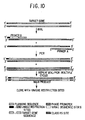
- the gene segments coding for the PB2, PB1, PA and NP proteins contain a single open reading frame with 24-45 untranslated nucleotides at their 5'-end, and 22-57 untranslated nucleotides at their 3'-end. Insertion of a foreign gene sequence into any of these segments could be accomplished by either a complete replacement of the viral coding region with the foreign gene or by a partial replacement. Complete replacement would probably best be accomplished through the use of PCR-directed mutagenesis. The principle of this mutagenesis method is illustrated in FIG. 10.
- PCR-primer A would contain, from 5' to 3', a unique restriction enzyme site, such as a class IIS restriction enzyme site (i.e ., a "shifter” enzyme; that recognizes a specific sequence but cleaves the DNA either upstream or downstream of that sequence); the entire 3' untranslated region of the influenza gene segment; and a stretch of nucleotides complementary to the carboxy-terminus coding portion of the foreign gene product.
- a unique restriction enzyme site such as a class IIS restriction enzyme site (i.e ., a "shifter” enzyme; that recognizes a specific sequence but cleaves the DNA either upstream or downstream of that sequence); the entire 3' untranslated region of the influenza gene segment; and a stretch of nucleotides complementary to the carboxy-terminus coding portion of the foreign gene product.
- PCR-primer B would contain from the 5' to 3' end: a unique restriction enzyme site; a truncated but active phage polymerase sequence; the complement of the entire 5' untranslated region of the influenza gene segment (with respect to the negative sense vRNA); and a stretch of nucleotides corresponding to the 5' coding portion of the foreign gene.
- the product may be excised and cloned using the unique restriction sites. Digestion with the class IIS enzyme and transcription with the purified phage polymerase would generate an RNA molecule containing the exact untranslated ends of the influenza viral gene segment with a foreign gene insertion.
- CAT chloramphenicol acetyltransferase
- the four influenza virus proteins, PB2, PB1, PA or NP are polymerase proteins which are directed to the nucleus of the infected cell through specific sequences present in the protein.
- this amino acid sequence has been found to be (single letter code) QLVWMACNSAAFEDLRVLS (Davey et al., 1985, Cell 40:667-675). Therefore, if it is desired to direct the foreign gene product to the nucleus (if by itself it would not ordinarily do so) the hybrid protein should be engineered to contain a domain which directs it there. This domain could be of influenza viral origin, but not necessarily so.
- Hybrid proteins can also be made from non-viral sources, as long as they contain the necessary sequences for replication by influenza virus (3' untranslated region, etc.).
- certain antigenic regions of the viral gene products may be substituted with foreign sequences.
- This epitope spans residues 147-161 of the NP protein and consists of the amino acids TYQRTRQLVRLTGMDP. Substituting a short foreign epitope in place of this NP squence may elicit a strong cellular immune response against the intact foreign antigen. Conversely, expression of a foreign gene product containing this 15 amino acid region may also help induce a strong cellular immune response against the foreign protein.
- the HA and NA proteins are the major surface glycoproteins of the virus. Consequently, these proteins are the major targets for the humoral immune response after infection. They have been the most widely-studied of all the influenza viral proteins as the three-dimensional structures of both these proteins have been solved.
- H3 hemagglutinin along with sequence information on large numbers of variants has allowed for the elucidation of the antigenic sites on the HA molecule (Webster et al., 1983, In Genetics Of Influenza Virus, P. Palese and D. W. Kingsbury, eds., Springer-Veriag, Vienna, pp. 127-160). These sites fall into four discrete non-overlapping regions on the surface of the HA. These regions are highly variable and have also been shown to be able to accept insertions and deletions.
- substitution of these sites within HA e.g ., site A; amino acids 122-147 of the A/HK/68 HA
- substitution of these sites within HA may provide for a vigorous humoral response against this foreign peptide.
- the foreign peptide sequence may be inserted within the antigenic site without deleting any viral sequences.
- Expression products of such constructs may be useful in vaccines against the foreign antigen, and may indeed circumvent a problem discussed earlier, that of propagation of the recombinant virus in the vaccinated host.
- An intact HA molecule with a substitution only in antigenic sites may allow for HA function and thus allow for the construction of a viable virus. Therefore, this virus can be grown without the need for additional helper functions.
- the virus should be attenuated in other ways to avoid any danger of accidental escape.
- the HA has an amino-terminal cleavable signal sequence necessary for transport to the cell surface, and a carboxy-terminal sequence necessary for membrane anchoring. In order to express an intact foreign protein on the cell surface it may be necessary to use these HA signals to create a hybrid protein. Alternatively, if only the transport signals are present and the membrane anchoring domain is absent, the protein may be excreted out of the cell,
- the NA protein In the case of the NA protein, the three-dimensional structure is known but the antigenic sites are spread out over the surface of the molecule and are overlapping. This indicates that if a sequence is inserted within the NA molecule and it is expressed on the outside surface of the NA it will be immunogenic. Additionally, as a surface glycoprotein, the NA exhibits two striking differences from the HA protein. Firstly, the NA does not contain a cleavable signal sequence; in fact, the amino-terminal signal sequence acts as a membrane anchoring domain. The consequence of this, and the second difference between the NA and HA, is that the NA is orientated with the amino-terminus in the membrane while the HA is orientated with the carboxy-terminus in the membrane. Therefore it may be advantageous in some cases to construct a hybrid NA protein, since the fusion protein will be orientated opposite of a HA-fusion hybrid.
- the unique property of the NS and M segments as compared to the other six gene segments of influenza virus is that these segments code for at least two protein products.
- one protein is coded for by an mRNA which is co-linear with genomic RNA while the other protein is coded for by a spliced message.
- the NS1 and NS2 proteins have an identical 10 amino acid amino terminus while M1 and M2 have an idential 14 amino acid amino terminus.
- recombinant influenza viruses in accordance with the appended claims may be constructed so as to replace one gene product within the segment while leaving the second product intact.
- replacement of the bulk of the NS2 or M2 coding region with a foreign gene product could result in the expression of an intact NS1 or M1 protein and a fusion protein instead of NS2 or M2.
- a foreign gene may be inserted within the NS gene segment without affecting either NS1 or NS2 expression.
- most NS genes contain a substantial overlap of NS1 and NS2 reading frames, certain natural NS genes do not.
- NS1 protein terminates at nucleotide position 409 of the NS gene segment while the splice acceptor site for the NS2 is at nucleotide position 52S. Therefore, a foreign gene could be placed between the termination codon of the NS1 coding region and the splice acceptor site of the NS2 coding region without affecting either protein. It may be necessary to include a splice acceptor site at the 5' end of the foreign gene sequence to ensure protein production (this would encode a hybrid protein containing the amino-terminus of NS1). In this way, the recombinant virus should not be defective and should be able to be propagated without need of helper functions.
- influenza virus genome consists of eight functional gene segments it is unknown how many actual segments a virus packages. It has been suggested that influenza can package more than eight segments, and possibly up to 12 (Lamb and Choppin, 1983, Ann. Rev. Biochem. 52:467-506). This would allow for easier propagation of recombinant virus in that "ninth" gene segment could be designed to express the foreign gene product. Although this "ninth” segment may be incorporated into some viruses, it would soon be lost during virus growth unless some selection is supplied. This can be accomplished by "uncoupling" the NS or M gene segment. The NS2 coding portion could be removed from the NS gene segment and placed on the gene segment coding for the foreign protein (along with appropriate splicing signals).
- a bicistronic mRNA could be constructed to permit internal initiation to "unsplice" these viral sequences; for example, using the sequences described by Pelletier et al., 1988, Mature 334:320-325.
- the resulting recombinant virus with the "uncoupled” NS or M gene would be able to propagate on its own and also would necessarily have to package the "ninth" gene segment, thus ensuring expression of the foreign gene.
- the recombinant templates prepared as described above can be used in a variety of ways to express the heterologous gene products in appropriate host cells or to create chimeric viruses according to the appended claims that express the heterologous gene products.
- the recombinant template can be combined with viral polymerase complex purified as described in Section 6, infra , to produce rRNPs which are infectious.
- the recombinant template according to claim 1 may be mixed with viral polymerase complex prepared using recombinant DNA methods (e.g . see Kingsbury et al., 1987, Virology 156:396-403).
- Such rRNPs when used to transfect appropriate host cells, may direct the expression of the heterologous gene product at high levels.
- Host cell systems which provide for high levels of expression include continuous cell lines that supply viral functions such as cell lines superinfected with influenza, cell lines engineered to complement influenza viral functions, etc.
- the recombinant templates or the rRNPs according to the appended claims may be used to transfect cell lines that express the viral polymerase proteins in order to achieve expression of the heterologous gene product.
- transformed cell lines that express all three polymerase proteins such as 3P-38 and 3P-133 (Krystal et al., 1986, Proc. Natl. Acad. Sci. U.S.A. 83:2709-2713) may be utilized as appropriate host cells.
- Host cells may be similarly engineered to provide other viral functions or additional functions such as NP.
- the viral polymerase proteins used to produce the rRNPs may be purified from dissociated RNP cores isolated from whole influenza virus.
- RNP cores may be prepared using standard methods (Plotch et al., 1981, Cell 23:847-858; Rochavansky, 1976, Virology 73:327-338).
- the pooled RNP cores may then be centrifuged on a second gradient of CsCl (1.5-3.0 M) and glycerol (30%-45%) as described by Honda et al., 1988, J. Biochem. 104:1021-1026.
- the active viral polymerase fractions may be isolated from top of the gradient, i.e .
- NP the fraction contained in the region of the gradient correlating with 1.5 to 2.0 M CsCl and corresponding to the fraction Hyundai ei al. identified as "NP".
- this fraction contains all the viral polymerase proteins required for the active complex.
- P proteins which may be recovered from the bottom of the gradient are not required, and indeed do not provide for the transcription of full length viral RNA.
- the viral polymerase in order for the viral polymerase to recognize the viral template RNAs in our in vitro reaction, they have to be encapsidated by the NP. Therefore, the addition of a capped mRNA primer would essentially compete with the template RNA for binding of NP. Since the dinucleotide ApG would not be expected to bind NP, the low concentration polymerase was able to use only the short templates with ApG. Supporting this hypothesis is the observation that the higher concentration polymerase preparation is inhibited through the addition of progressively higher amounts of either template RNA or any non-specific RNA. It should also be noted that the unusual specificity for the m7GpppXm cap 1 structure previously shown with viral RNPs was also found with the reconstituted RNPs.
- Plasmid-derived RNA identical to segment 8 of the A/WSN/33 virus was specifically copied by the polymerase (using the PCR method described in FIG. 10). In reactions using RNA extracted from virus, all eight segments were copied, although the HA gene was copied at a lower level. The background In these reactions was decreased in comparison to the 30 to 53 nt templates, probably since the contaminating RNAs in the polymerase preparation were predominantly defective RNAs of small size. Recombinant templates encoding foreign genes transcribed in this system may be used to rescue the engineered gene in a virus particle.
- reconstituted RNPs containing modified influenza virus RNAs or RNA coding for foreign proteins may be used to transfect cells which are also Infected with a "parent" influenza virus.
- the reconstituted RNP preparations may be mixed with the RNPs of wild type parent influenza virus and used for transfection directly.
- the novel influenza viruses may be isolated and their genomes be identified through hybridization analysis.
- rRNPs may be replicated in host cell systems that express the influenza viral polymerase proteins (e.g.
- helper virus need not be utilized since this function is provided by the viral polymerase proteins expressed.
- cells infected with rRNPs engineered for all eight influenza virus segments may result in the production of infectious chimeric virus which contain the desired genotype; thus eliminating the need for a selection system.
- a third approach to propagating the recombinant influenza virus in accordance with the appended claims may involve co-cultivation with wild-type virus. This could be done by simply taking recombinant virus and co-infecting cells with this and another wild-type virus (preferably a vaccine strain).
- the wild-type virus should complement for the defective virus gene product and allow growth of both the wild-type and recombinant virus. This would be an analagous situation to the propagation of defective-interfering particles of influenza virus (Nayak et al., 1983, In: Genetics of Influenza Viruses, P. Palese and D. W. Kingsbury, eds., Springer-Veriag, Vienna, pp. 255-279).
- influenza virus polymerase proteins may be expressed in any expression vector/host cell system, including but not limited to viral expression vectors (e.g. , vaccinia virus, adenovirus, baculovirus, etc.) or cell lines that express the polymerase proteins (e.g ., see Krystal et al., 1986, Proc. Natl. Acad. Sci. USA 83: 2709-2713).
- viral expression vectors e.g. , vaccinia virus, adenovirus, baculovirus, etc.
- cell lines that express the polymerase proteins
- influenza virus proteins may result in the production of infectious chimeric virus particles.
- This system would eliminate the need for a selection system, as all recombinant virus produced would be of the desired genotype.
- synthetic RNP's are replicated in cells through the action of influenza virus proteins expressed by recombinant vaccinia vectors. In this way we show that the only influenza virus proteins essential for transcription and replication of RNP are the three polymerase proteins and the nucleoprotein.
- RNA template which was recognized and transcribed by the influenza virus polymerase in vitro .
- This RNA template corresponds to the NS RNA of an influenza virus except that the viral coding sequences are replaced by those of a CAT gene.
- This recombinant negative strand viral RNA template was then mixed with purified influenza virus polymerase to reconstitute an RNP complex. The recombinant RNP complex was transfected into cells which were then infected with influenza virus, leading to expression of CAT activity.
- this system represents a biologically active recombinant RNP complex which is under tight control of the signals for transcription, replication and packaging of influenza virus RNAs.
- the CAT gene is of negative polarity in the recombinant viral RNA used for RNP transfection.
- the incoming RNA cannot be translated directly in the cell and must first be transcribed by the influenza virus polymerase to permit translation and expression of the CAT gene.
- neither transfected naked recombinant RNA alone in the presence of infecting helper virus, nor recombinant RNP complex in the absence of infecting helper virus is successful in inducing CAT activity.
- virus particles emerge which apparently contain the recombinant RNA, since these particles again induce CAT activity in freshly infected cells.
- Synthetic RNAs derived by transcription of plasmid RNA in vitro were used in RNP-transfection experiments to rescue infectious influenza virus.
- a system that required the presence of a WSN-like neuraminidase gene in the rescued virus.
- Viruses containing this gene can grow in MDBK cells in the absence of protease in the medium (Schulman et al., 1977, J. Virol. 24:170-176).
- the helper virus WSN-HK does not grow under these circumstances.
- alternative selection systems exist. For example, antibody screens or conditionally lethal mutants could be used to isolate rescued viruses containing RNAs derived from plasmid DNAs.
- viruses which were WSN virus-like were recovered.
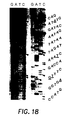
- the WSN NA gene was derived from plasmid DNAs or from purified WSN virion RNA (FIG. 17, lanes 2 and 5). In the latter case, using whole virion RNA for the RNP-transfection, we do not know whether other genes were also transfered to the rescued virus, since the helper virus shares the remaining seven genes with WSN virus.
- the rescued viruses had the expected RNA patterns (FIG. 17) and grew to titers in MDBK or MDCK cells which were indistinguishable from those of the wild type WSN virus.
- heterologous gene sequence may be constructed Into the chimeric influenza viruses according to the appended claims for use in vaccines.
- epitopes that induce a protective immune response to any of a variety of pathogens, or antigens that bind neutralizing antibodies may be expressed by or as part of the chimeric viruses.
- heterologous gene sequences that can be constructed into the chimeric viruses according to the appended claims for use in vaccines include but are not limited to epitopes of human immunodeficiency virus (HIV) such as gp120; hepatitis B virus surface antigen (HBsAg); the glycoproteins of herpes virus (e.g .
- immunoglobulin genes may be expressed.
- variable regions of anti-idiotypic immunoglobulins that mimic such epitopes may be constructed into the chimeric viruses according to the appended claims.
- Either a live recombinant viral vaccine or an inactiviated recombinant viral vaccine can be formulated.
- a live vaccine may be preferred because multiplication in the host leads to a prolonged stimulus of similar kind and magnitude to that occurring in natural infections, and therefore, confers substantial, long-lasting immunity.
- Production of such live recombinant virus vaccine formulations may be accomplished using conventional methods involving propagation of the virus in cell culture or in the allantois of the chick embryo followed by purification.
- the use of genetically engineered influenza virus (vectors) for vaccine purposes may require the presence of attenuation characteristics in these strains.
- Current live virus vaccine candidates for use in humans are either cold adapted, temperature sensitive, or passaged so that they derive several (six) genes from avian viruses, which results in attenuation.
- the introduction of appropriate mutations (e.g. , deletions) into the templates used for transfection may provide the novel viruses with attenuation characteristics. For example, specific missense mutations which are associated with temperature sensitivity or cold adaption can be made into deletion mutations. These mutations should be more stable than the point mutations associated with cold or temperature sensitive mutants and reversion frequencies should be extremely low.
- chimeric influenza viruses with "suicide" characteristics may be constructed. Such viruses would go through only one or a few rounds of replication in the host. For example, cleavage of the HA is necessary to allow for reinitiation of replication. Therefore, changes in the HA cleavage site may produce a virus that replicates in an appropriate cell system but not in the human host. When used as a vaccine, the recombinant virus would go through a single replication cycle and induce a sufficient level of immune response but it would not go further in the human host and cause disease. Recombinant viruses lacking one or more of the essential influenza virus genes would not be able to undergo successive rounds of replication.
- Such defective viruses can be produced by co-transfecting reconstituted RNPs lacking a specific gene(s) into cell lines which permanently express this gene(s). Viruses lacking an essential gene(s) will be replicated in these cell lines but when administered to the human host will not be able to complete a round of replication.
- Such preparations may transcribe and translate -- in this abortive cycle - a sufficient number of genes to induce an immune response.
- larger quantities of the strains could be administered, so that these preparations serve as inactivated (killed) virus vaccines.
- the heterologous gene product be expressed as a viral component, so that the gene product is associated with the virion.
- the advantage of such preparations is that they contain native proteins and do not undergo inactivation by treatment with formalin or other agents used in the manufacturing of killed virus vaccines.
- inactivated vaccine formulations may be prepared using conventional techniques to "kill" the chimeric influenza viruses according to the appended claims.
- Inactivated vaccines are "dead” in the sense that their infectivity has been destroyed. Ideally, the infectivity of the virus is destroyed without affecting its immunogenicity.
- the chimeric virus may be grown in cell culture or in the allantois of the chick embryo, purified by zonal ultracentrifugation, inactivated by formaldehyde or ⁇ -propiolactone, and pooled. The resulting vaccine is usually inoculated intramuscularly.
- Inactivated viruses may be formulated with a suitable adjuvant in order to enhance the immunological response.
- suitable adjuvants may include but are not limited to mineral gels, e.g ., aluminum hydroxide; surface active substances such as lysolecithin, pluronic polyols, polyanions; peptides; oil emulsions; and potentially useful human adjuvants such as BCG and Corynebacterium parvum.
- influenza virus vaccine formulations described above include but are not limited to oral, intradermal, intramuscular, intraperitoneal, intravenous, subcutaneous, and intranasal routes. It may be preferable to introduce the chimeric influenza virus vaccine formulation via the natural route of infection of the pathogen for which the vaccine is designed. Where a live chimeric virus vaccine preparation is used, it may be preferable to introduce the formulation via the natural route of infection for influenza virus.
- the ability of influenza virus to induce a vigorous secretory and cellular immune response can be used advantageously. For example, infection of the respiratory tract by chimeric influenza viruses may induce a strong secretory immune response, for example in the urogenital system, with concomitant protection against a particular disease causing agent.
- polymerase which is depleted of genomic RNA was prepared from the upper fractions of the CsCl-glycerol gradient centrifugation.
- This polymerase is able to copy short model templates which are derived from transcription of appropriate plasmid DNA with bacteriophage T7 RNA polymerase in a sequence-specific manner.
- the termini of this model RNA are identical to the 3' 15 and 5' 22 nucleotides conserved in segment 8 from all influenza A viral RNAs.
- site specific mutagenesis identified nucleotide positions responsible for the viral polymerase favoring synthesis from genomic sense templates over complementary sense RNA. Conditions were also found in which cap-endonuclease primed RNA synthesis could be observed using model RNAs.
- the reconstituted system permitted virus-specific synthesis from genomic length RNAs, derived either from plasmids or from RNA purified from virus through phenol extraction.
- RNP cores were prepared from whole influenza virus using standard methods (Plotch, et al., 1981, Cell 23: 847-858; Rochavansky, 1976. Virology 73: 327-338). Two to three milligrams of virus were disrupted by incubating in 1.5% Triton N-101, 10 mg/ml lysolecithin, 100 mM tris-HCl, pH 8.0, 100 mM KCl, 5 mM MgCl 2 , 5% glycerol and 1.5 mM dithiothreitol.
- the sample was fractionated by centrifugation on a 30-70% glycerol (w/v) step gradient in the presence of 50 mM tris-HCl, pH 7.8 and 150 mM NaCl.
- the core preparation was centrifuged at 45,000 rpm in an SW50.1 rotor for 4 hours at 4°C.
- Fractions enriched in RNP were identified by SDS-polyacrylamide gel electrophoresis of protein samples from each fraction and staining with silver.
- the core fractions were then subjected to a second gradient centrifugation as was described in Honda et al. 1988, J. Biochem. 104: 1021-1026.
- This second gradient had steps of 0.5 ml 3.0 M CsCl and 45% (w/v) glycerol, 1.75 ml 2.5 M CsCl and 40% glycerol, 1.25 ml 2.0 M CsCl and 35% glycerol, and 1.0 ml of 1.5 M CsCl and 30% glycerol. All steps were buffered with 50 mM tris-HCl, pH 7.6 and 100 mM NaCl. 0.5 ml of RNP cores were layered on top and the sample was centrifuged at 45.000 rpm in an SW50.1 rotor for 25 hours at 4°C.
- Polymerase fractions were again identified by SDS-polyacrylamide electrophoresis of the protein samples and silver staining. Active polymerase fractions were generally found in the region of the gradient correlating with 1.5 to 2.0 M CsCl. These fractions were pooled and then dialyzed against 50 mM tri-HCl, pH 7.6, 100 mM NaCl and 10 mM MgCl 2 and concentrated in centricon-10 tubes (Amicon) or fractions were dialyzed in bags against 50 mM tris-HCl, pH 7.6, 100 mM NaCl, 10 mM MgCl 2 , 2 mM dithiothreitol, and 50% glycerol.
- Insert DNA for the pV-wt plasmid was prepared using an Applied Biosystems DNA synthesizer. The "top” strand was The “bottom” strand was synthesized by primer-extension with 5'-CCTGCAGAAGAATGA-3' as primer.
- the 95 bp DNA was digested with Hin dIII and Pst I and purified by extraction with phenol/chloroform, ethanol precipitation, and passage over a NACS-prepack ion exchange column (Bethesda Research Laboratories). This DNA was ligated into pUC-19 which had been digested with Hin dIII and Pst I and then used to transform E .
- coli strain DH5- ⁇ which had been made competent using standard protocols. Bacteria were spread on agar plates containing X-gal and IPTG, and blue colonies were found to have the plasmid containing the predicted insert since the small insert conserved the lacZ reading frame and did not contain a termination codon.
- the pM-wt plasmid was prepared by a similar strategy except that both strands were chemically synthesized with the upper strand having the sequence
- the pV-d5' plasmid (FIG. 2) was prepared using the oligonucleotides The DNAs were annealed and ligated into the Hin dIII/ Pst I digested pUC-19 and white colonies were found to contain the correct plasmid because this insert resulted in a frameshift in the lacZ gene. The point mutants were isolated following digestion of pV-d5' with Bgl II and Pst I and ligation of the linearized plasmid with a single stranded oligonucleotide of mixed composition.
- Plasmid pHgaNS which was used to prepare an RNA identical to segment 8 of A/WSN/33, was prepared using the primers in a polymerase chain reaction off a cDNA clone. The product was then cloned into the Xba I/ Eco RI window of pUC19.
- Plasmid DNAs were digested with Mbo II or other appropriate endonucleases (see FIG. 2), and the linearized DNA was transcribed using the bacteriophage T7 RNA polymerase. Run-off RNA transcripts were treated with RNAse-free DNAse 1 and then the RNA was purified from the proteins and free nucleotides using Qiagen tip-5 ion exchange columns (Qiagen, Inc.). Following precipitation in ethanol, purified RNAs were resuspended in water and a sample was analyzed by electrophoresis and followed by silver staining of the polyacrylamide gel in order to quantitate the yield of RNA.
- nucleoprotein and 200 pg total of the three polymerase proteins were mixed with 10 ng of template RNA and the solution was made up to a final concentration of: 50 mM Hepes pH 7.9, 50 mM NaCl, 5 mM MgCl 2 , 1 mM dithiothreitol, 0.05% NP-40, 0.4 mM adenylyl-(3'-5')-guanosyl (ApG) dinucleotide (Pharmacia), 0.5 mM ATP, 0.5 mM GTP, 0.5 mM CTP and approximately 0.6 ⁇ M ⁇ - 32 P-UTP (40 ⁇ Ci at 3000 Ci/mmole, New England Nuclear).
- Reactions were assembled on ice and then transferred to a 30°C water bath for 90 minutes. Reactions were terminated by the addition of 0.18 ml ice-cold 0.3 M sodium acetate/10 mM EDTA and were then extracted with phenol/chloroform (1:1 volume ratio). Following the first extraction, 15 ⁇ g polyl-polyC RNA was added as carrier, and the sample was extracted again with phenol/chloroform. The samples were then extracted with ether and precipitated in ethanol. Following centrifugation, the RNA pellet was washed twice with 70% ethanol and then dried under vacuum.
- RNA was resuspended in a dye mix containing 78% formamide, 10 mM EDTA, 0.1% xylene cyanol and 0.05% bromophenol blue.
- a sample from this RNA was electrophoresed on an 8% polyacrylamide gel in the absence of urea, and the remainder was denatured by heating to 100°C for 1.5 minutes and an aliquot was loaded on an 8% polyacrylamide gel containing 7.7 M urea. Gels were fixed by a two step procedure, first in 10% acetic acid, and then in 25% methanol/8% acetic acid. Gels were dried onto filter paper and then exposed to x-ray film.
- RNA preparations were always analyzed on polyacrylamide gels and stained with silver in order that equal amounts of each template were used.
- gels were exposed to x-ray film in the absence of an intensifying screen in order to improve the linearity of the densitometer readings.
- Autoradiographs were analyzed using a FB910 scanning densitometer (Fisher Biotech) and peaks were evaluated using computer software from Fisher Biotech.
- reaction products were analyzed by 8% polyacrylamide gel electrophoresis (without urea) and the gel was not treated with fixative.
- the wet gel was exposed to an x-ray film and the appropriate gel pieces were located and excised.
- the gel piece was crushed in 0.3 ml containing 10 mM tris pH 7.5, 1 mM EDTA, 0.1% sodium dodecyl sulfate, and 1 ⁇ g tRNA as carrier.
- the RNA diffused into this solution for 3 hours and then the gel was pelleted and the supernatant was made 0.3M in sodium acetate.
- RNA pellet was resuspended in 5 ⁇ l formamide, denatured in boiling water for 1.5 minutes and then diluted by the addition of 0.1 ml 10 mM tris-HCI, pH 7.5, and 1 mM EDTA.
- Ribonuclease T1 50 units, Boehringer Mannheim Biochemicals was added and the samples were incubated for 60 minutes at 37°C.
- V-wt and M-wt RNAs synthesized with T7 RNA polymerase in the presence of ⁇ - 32 P-UTP were similarly digested with RNAse T1. Reaction products were extracted in phenol/chloroform and precipitated in ethanol and then were analyzed on 20% polyacrylamide gels containing 7.7 M urea.
- Nuclease S1 analysis of reaction products was done on transcribed RNA by first terminating the standard polymerase reaction through the addition of S1 buffer to a volume of 0.2 ml with 0.26 M NaCl, 0.05 M sodium acetate, pH 4.6, and 4.5 mM zinc sulfate. The sample was divided into two 0.1 ml volumes and 100 units of S1 nuclease (Sigma Chemical Company) were added to one tube. The samples were incubated for 60 minutes at 37°C. Following the incubation, EDTA (10 mM final concentration) and 15 ⁇ g polyl-polyC RNA was added and the sample was extracted with phenol/chloroform and precipitated in ethanol. The samples were then subjected to polyacrylamide gel electrophoresis.
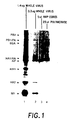
- RNP cores of influenza virus A/Puerto Rico/8/34 were prepared by disruption of virus in lysolecithin and Triton N-101 followed by glycerol gradient centrifugation (Rochavansky, 1976, Virology 73: 327-338). Fractions containing cores were then subjected to a second centrifugation in a CsCl-glycerol step gradient (Honda, et al., 1988, J. Biochem. 104: 1021-1026). Fractions containing the polymerase were identified by gel electrophoresis of samples followed by silver-staining. FIG. 1 shows the polymerase preparation after CsCI centrifugation.
- Bovine serum albumin (BSA) was added during dialysis to protect against protein loss. Densitometric scanning of lane 4 compared to known quantities of whole virus in lanes 1 and 2 allowed us to estimate that the proteins in lane 4 consist of 150 ng of NP and about 1 ng total of the three polymerase proteins. One fifth of the preparation used for this gel was used per reaction.
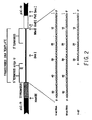
- the overall design of the plasmids used to prepare template RNAs in this study is depicted in Figure 2.
- the entire insert was prepared using oligonucleotides from a DNA synthesizer which were then cloned into the polylinker of pUC19.
- the insert contained a truncated promoter sequence recognized by the bacteriophage T7 RNA polymerase (Studier and Dunn, 1983, Cold Spring Harbor Symposia on Quantitative Biology, XLVII, 999-1007) so that the first nucleotides synthesized were the terminal 22 nucleotides (nt) of the conserved sequence from the 5' end of the genome RNA.
- the RNA which resulted from T7 RNA polymerase transcription ended with the terminal 3' nucleotides of the influenza viral sequence. Included in the sequence was the poly-U stretch adjacent to the 5' end of the conserved terminus which is thought to comprise at least part of the termination-polyadenylation signal (Robertson, et al., 1981, J. Virol. 38, 157-163). The total length of this model genomic RNA was 53 nt since a 16 nt spacer separated the terminal conserved sequences. The model RNA which contained both termini identical to those of vRNA was named V-wt.
- RNA M-wt encoded the exact complementary strand of V-wt so that the termini match those of complementary RNA (cRNA).
- V-wt and M-wt were constructed to serve as models for influenza virus-specific vRNA and cRNA, respectively.
- RNA products were purified by electrophoresis on an 8% gel, excised, eluted from the gel, and then digested by ribonuclease T1. Products were analyzed by electrophoresis and compared to the patterns generated by RNase T1 digestion of internally labeled M-wt and V-wt control probes.
- the full length RNA (lane 1) has the identical pattern as does the plus sense RNA, M-wt (lane 3), and it does not have the pattern of the V-wt RNA (lane 4).
- the observed patterns were essentially identical to that which is predicted from the sequence of the RNA and thus showed that the polymerase faithfully copied the V-wt template.
- RNA product a doublet with most templates, was also digested with RNase T1. Its pattern was similar to that of the full length RNA product (FIG. 3C, lane 2) except the 14 base oligonucleotide was not present. Instead, a faint 13 base oligonucleotide was seen, thus mapping the termination of the short RNA to position 44, a site where two uridines would be incorporated. Since the amount of smaller RNA product decreased at higher UTP concentrations and disappeared when CTP was used as label, these bands appeared to be an artifact of low UTP concentrations in the polymerase reaction.
- RNA samples containing about 30 ng of NP protein and about 200 pg total of the three P proteins would react optimally with 5 to 10 ng of RNA.
- cold competitor RNA polyl-polyC
- excess RNA nonspecifically inhibited transcription, possibly via non-specific binding of the NP protein (Kingsbury, et al., 1987, Virology 156: 396-403; Scholtissek and Becht, 1971, J. Gen. Virol. 10: 11-16).
- variations in the amount of template between 1 and 10 ng produced little change in the efficiency of RNA synthesis.
- the NP protein and RNA were present at about equal molar concentrations and these were each about a thousand-fold in excess of the moles of the complex (assuming it to be 1:1:1) formed by the three P proteins in the typical reaction.
- FIG. 4B lane 2
- Figure 4C shows a time-course experiment. The amount of RNA synthesis appeared to increase roughly linearly for the first 90 minutes, as was found for viral RNPs (Takeguchi, et al., 1987, J. Biochem. 101: 837-845).
- RNAs were tested for suitability as templates for the RNA polymerase of influenza virus.
- the pV-wt plasmid clone was digested with either Eco RI, Pst I or Sma I, and T7 polymerase was used to transcribe RNA. This resulted in RNAs identical to V-wt except for the addition of 5, 13 and 38 nt at the 3' end.
- Eco RI Eco RI
- Pst I or Sma I Eco RI
- Sma I Sma I
- the original construct used for these studies contained the sequences of both RNA termini of genomic RNAs which could base pair and thus form a panhandle. This was done since it was shown that the vRNA in virions and in RNPs in infected cells was in circular conformation via the 15 to 16 nt long panhandle (Honda, et al., 1988, J. Biochem. 104: 1021-1026; Hsu, et al., 1987, Proc. Natl. Acad. Sci. USA 84: 8140-8144). It was further shown that the viral polymerase was bound to the double stranded structure (Honda, et al., 1988, J. Biochem.
- the panhandle was an absolute requirement for recognition
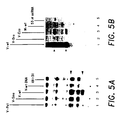
- the following templates were used: the plasmid pV-wt was digested with Dra I prior to transcription by the T7 polymerase (FIG. 2). This should result in an RNA molecule of 32 nt containing only virus-specific sequences from the 5' end of the RNA. When this RNA was used as template, no apparent product was produced (FIG. 5B, lane 2). Therefore the 3' terminus of virion RNA was required for this reaction. This finding was consistent with the fact that the initiation site at the 3' end of V-wt was not present in V-Dra.
- FIG. 7, lane 1 shows that the product of the viral RNA polymerase reaction with V-d5' contains multiple bands reflecting the input RNA.
- the products shown in FIG. 7, lane 1 were eluted from gels and subjected to RNase T1 analysis, the pattern expected of the transcription product of V-d5' was observed. Since the V-d5' RNA template was copied, the panhandle was not required for viral polymerase binding and synthesis.
- V-wt RNA might be a preferred template as compared to V-d5'.
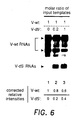
- the V-wt RNA was present at 5 ng in each reaction.
- the V-d5' was absent (FIG. 6, lane 1) or was present at a 1/5 molar ratio (FIG. 6, lane 2) or a 1/1 molar ratio (FIG. 6, lane 3).
- the relative intensities of the bands from each RNA were determined by densitometry of the autoradiograph.
- the influenza RNA polymerase performs three distinct activities during the course of an infection. Two activities involve the transcription of genome sense RNA and the third involves copying of the complementary sense RNA into vRNA. We therefore constructed an RNA template which contained the 5' and 3' termini of the complementary sense RNA of segment 8 (M-wt; FIG. 2).
- the M-wt RNA When the M-wt RNA was used as template, little synthesis was observed (FIG. 5B, lane 4). In two experiments used for quantitation, the average level of synthesis from M-wt RNA was 4% that of V-wt. In comparing the V-wt and M-wt RNA promoters, the M-wt has only three transition changes and one point insertion within the 3' 15 nucleotides. These include a G to A change at position 3, a U to C change at position 5, a C to U change at position 8 and an inserted U between the ninth and tenth nucleotides (see Table II, below).
- the method of purifying the viral polymerase was modified in order to decrease loss of protein during dialysis. Rather than using the Amicon centricon-10 dialysis system, the enzyme was dialyzed in standard membranes resulting in higher concentrations of all four viral core proteins. The pattern of the protein gel of this preparation was identical to that shown in FIG. 1, lane 4, except that there is no BSA-derived band. It was found that 5 ⁇ l of this preparation, containing 150 ng of NP and 5 ng total of the three polymerase proteins, reacted optimally with 10 to 40 ng of model RNA template.
- This high concentration polymerase preparation was now active in cap-endonuclease primed RNA synthesis (FIG. 8A, lane 4) and also in primer-independent replication of the template RNA (FIG. 8A, lane 2).
- globin mRNA was used as primer for transcription from the 30 nt V-d5' template, a triplet of bands of size about 42 to 44 nt was apparent as product (FIG. 8A, lane 4), consistent with cleavage of the cap structure at about 12 nt from the 5' end of the mRNA and use of this oligonucleotide to initiate synthesis from the 30 nt model template.
- RNA synthesis probably via nonspecific binding of NP in vitro as discussed above, the optimal amount of cap donor RNA added to each reaction was found to be 100 ng, which is much lower than is usually used with preformed RNP structures ( e.g . Bouloy, et al., 1980, Proc. Natl. Acad. Sci. USA 77:3952-3956).
- the most effective primer was ApG (FIG. 8A, lane 5 and lighter exposure in lane 6).
- the product migrates slower than that of the input template (FIG. 8A, lane 1) or the product in the absence of primer (FIG. 8A, lane 2) probably since the 5' terminus of the ApG product is unphosphorylated.
- the intensity of the ApG-primed product was about ten-fold higher than that of the cap-primed product, but at 0.4 mM, ApG was at a 60,000-fold molar excess of the concentration of the cap donors.
- the intensity of the-product band from cap-priming was about ten-fold lower than that from ApG priming
- the cap-primed reaction was about 6000-fold more efficient on a molar basis. This value is similar to the approximately 4000-fold excess efficiency observed previously for the viral polymerase (Bouloy, et al., 1980, Proc. Natl. Acad. Sci. USA 77: 3952-3956).
- cap donor RNAs containing a cap 0 structure are about ten-fold less active in priming the influenza viral polymerase (Bouloy, et al., 1980, Proc. Natl. Acad. Sci. USA 77: 3952-3956).
- This unusual cap specificity was shared by the reconstituted RNPs studied here as the specific product from the model RNA was greatly decreased in reactions containing BMV RNA as cap donor.
- a 30 nt product was observed in lanes 2-4, probably due to primerless replication of the model template.
- RNAs were of the opposite sense of the input template V-d5' was shown by nuclease S1 analysis (FIG. 8B).
- the ApG-primed (FIG. 8B, lanes 1 and 2) and the primerless (FIG. 8B, lanes 3 and 4) RNA products were essentially nuclease resistant.
- the product of the cap-primed reaction (FIG. 8B, lanes 5 and 6) was partially sensitive to nuclease as about 12 nt were digested from the product.
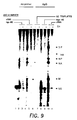
- RNA identical to the sequence of A/WSN/33 segment 8 was prepared by T7 RNA polymerase transcription of plasmid DNA, pHgaNS, which had been digested with restriction endonuclease Hga I. This RNA was copied in ApG-primed reactions containing 10 ⁇ l of the high concentration polymerase (FIG. 9, lane 8). That the RNA was in fact a copy of the template was demonstrated by its resistance to nuclease S1 (FIG. 9, lane 9). A similar product was observed in the absence of primer (FIG. 9, lanes 2 and 3). Confirmation that these product RNAs were full length copies of the template was done by RNase T1 analysis.
- RNA purified from phenol-extracted A/PR/8/34 virus was similarly copied in ApG primed reaction (FIG. 9, lanes 10 and 11) and in the absence of primer (FIG. 9, lanes 4 and 5).
- the product from replication of the HA gene was at greatly reduced levels.
- the 3' end of this RNA differs from that of segment 8 only at nucleotides 14 and 15, suggesting importance for these nucleotides in the promoter for RNA synthesis.
- the viral polymerase was also able to copy these full length RNAs when globin mRNA was used in cap-primed reaction.
- the expression of the chloramphenicol transferase gene (CAT) using rRNPs is described.
- the rRNPs were prepared using pIVACAT (originally referred to as pCATcNS), a recombinant plasmid containing the CAT gene.
- the pIVACAT plasmid is a pUC19 plasmid conaining in sequence: the T7-promoter; the 5'-(viral-sense) noncoding flanking sequence of the influenza A/PR8/34 RNA segment 8 (encodes the NS proteins); a BgI II cloning site; the complete coding sequence of the chloramphenicol transferase (CAT) gene in the reversed and complemented order; the 3'- (viral-sense) noncoding NS RNA sequence; and several restriction sites allowing run-off transcription of the template.
- the pIVACAT can be transcribed using T7 polymerase to create an RNA with influenza A viral-sense flanking sequences around a CAT gene in reversed orientation.
- RNA molecules described containing sequences corresponding to the untranslated 3' and 5' terminal sequences of the NS RNA of influenza virus A/PR/8/34 flanking the antisense-oriented open reading frame of the CAT gene This RNA was mixed with purified influenza virus polymerase complex and transfected into MDCK (or 293) cells. Following infection with influenza A/WSN/33 virus, CAT activity was measured in the RNP-transfected cells and amplification of the gene was indicated. In addition, the recombinant influenza virus gene was packaged into virus particles, since CAT activity was demonstrated in cells following infection with the recombinant virus preparation.
- flanking sequences of the NS RNA fused to the coding sequence of the CAT gene the following strategy was used. Two suitable internal restriction sites were selected, close to the start and stop codon of the CAT gene, that would allow the replacement of the sequences flanking the CAT gene in the pCM7 plasmid with the 3'- and 5'- NS RNA sequences. At the 5' and, a Sfa NI site was chosen, (which generates a cut 57 nt from the ATG) and at the 3'- end a Sca I site which generates a cut 28 nt from the end of the gene (stop codon included).
- oligonucleotides were made using an Applied Biosystems DNA synthesizer, to generate two double-stranded DNA fragments with correct overhangs for cloning.
- these oligonucleotides formed a piece of DNA containing a Xba I overhang followed by a Hga I site and a Pst I site, the 3'- (viral-sense) NS sequence immediately followed by the CAT sequence from start codon up to the Sfa NI overhang (underscored).
- a silent mutation was incorporated to generate an Acc I site closer to the start codon to permit future modifications.
- the two other oligonucleotides generated a piece of DNA as follows: a blunt-ended Sca I site, the CAT sequence from this site up to and including the stop codon (underlined) followed by a Bgl II site and a Xba I overhang.
- the Sfa NI/ Eco RI and the Eco RI /Sca I fragment from pCM7 were independently cut out and purified from acrylamide gels.
- the Sfa NI/ Eco RI fragment was subsequently ligated with the synthetic DNA fragment obtained by annealing oligonucleotides 1 and 2 into a pUC19 plasmid that was cut with Xba I and Eco RI.
- the Eco RI/ Sca I fragment was similarly cloned into an Xba I and Eco RI -digested pUC19 plasmid using oligonucleotides 3 and 4.
- the ligated DNA was transformed into competent DH5a bacteria, amplified, isolated and screened by means of restriction analysis using standard techniques.
- the recombinants with the Sfa NI containing insert were cut with Xba I and Eco RI and the plasmids with the Sca I insert were cut with Eco RI and Bgl II.
- the fragments were purified from acrylamide gel and cloned together into the pPHV vector which had been cut with Xba I and Bgl II. After transformation, white colonies were grown, analysed by endonuclease digestion and selected clones were sequenced.
- pCATcNS2 The final clone, pCATcNS2, was grown in large amounts and sequenced from the flanking pUC sequences up to 300 nt into the CAT gene, revealing no discrepancies with the intended sequence, with the exception of a G to A transition in the CAT: gene, which appeared silent.
- Influenza A/PR/8/34 and A/WSN/33 viruses were grown in embryonated eggs and MDCK cells, respectively (Ritchey et al. 1976, J. Virol. 18: 736-744; Sugiura et al., 1972, J. Virol. 10: 639-647). RNP-transfections were performed on human 293 cells (Graham et al., 1977, J. Gen. Virol. 36:59-72) and on Madin-Darby canine kidney (MDCK) cells (Sugiura et al., 1972, supra ).
- Plasmid pIVACAT1 derived from pUC19, contains the coding region of the chloramphenicol acetyltransferase (CAT) gene flanked by the noncoding sequences of the influenza A/PR/8/34 RNA segment 8. This construct is placed under the control of the T7 polymerase promoter in such a way that the RNA transcript IVACAT1 contains in 5' to 3' order: 22 nucleotides derived from the 5' terminus of the influenza virus NS RNA, an 8 nt linker sequence including a BglII restriction site, the CAT gene in negative polarity, and 26 nt derived from the 3' end of the influenza virus NS RNA (FIG. 11).
- CAT chloramphenicol acetyltransferase
- pIVACAT1 was constructed in the following way: In order to obtain the correct 5'- end in pIVACAT1, the Eco RI- Sca I fragment of the CAT gene derived from plasmid pCM7 (Pharmacia) was ligated to a DNA fragment formed by two synthetic oligonucleotides. The sequence of these oligonucleotides are: For the 3'- end of the insert in pIVACAT1 the Sfa N 1- Eco RI fragment of the CAT gene was ligated to a DNA fragment made up of the synthetic oligonucleotdies: Oligonucleotides were synthesized on an Applied Biosystems DNA synthesizer.
- Plasmid pIVACATI was digested with Hga I (FIG. II), to allow run-off transcription.
- the 5 nt overhang generated by this enzyme was filled in with Klenow enzyme (BRL) and the DNA was purified over a spin column (Boehringer).
- the T7 polymerase reaction was performed using standard procedures in the presence of Rnasin (Promega). Template DNA was removed from Rnase free Dnase I (Promega).
- the RNA was purified over Qiagen tip-5 columns (Qiagen, Inc.) and quantitated using 4% polyacrylamide gels which were silver stained.
- NS RNA was prepared from plasmid pHgaNS in the same way.
- RNA polymerase complex was purified from influenza A/PR/8/34 as described in Section 6, supra.
- In vitro transcriptions of cold IVACAT1 or HgaNS RNA template were carried out using the conditions which have been described in Section 6, supra. Radiolabeled transcripts were analysed on 4% acrylamide gels.
- 35 mm dishes containing approximately 10 6 cells were treated with 1 ml of a solution of 300 ⁇ g/ml DEAE-dextrin, 0.5% DMSO in PBS/gelatine (0.1 mg/ml gelatine) for 30 minutes at room temperature. After removal of this solution, 200 ⁇ g of ⁇ l PBS/gelatine containing 1 ⁇ g IVACAT1 RNA (1-2 ⁇ l), 20 ⁇ l of the purified polymerase preparation and 4 ⁇ l of Rnasin was added to the cells and incubated for 1 hour at 37°C. This was followed by the addition of gradient purified influenza A/WSN/33 virus (moi 2-10).
- MDCK cells were first infected and subsequently RNP-transfected. Harvesting of cells was done in NET buffer or in media, using a rubber policemen (MDCK cells), or by gentle suspension (293 cells). Cells were spun down and the pellets were resuspended in 100 ⁇ l of 0.25 M Tris buffer, pH 7.5. The samples were subsequently freeze-thawed three-times and the cell debris was pelleted. The supernatant was used for CAT assays.
- MDCK cells were infected with helper virus and RNP-transfected 2 hours later as described above. After 1 hour cells and media were collected and cells were spun down. 100 ⁇ l of the supernatant media, containing virus, was added to 35 mm dishes with MDCK cells. After 12 hours these cells and media were collected and assayed for CAT activity. Virus contained in this supernatant media was used for subsequent rounds of infection of MDCK cells in 35 mm dishes.
- CAT assays were done according to standard procedures, adapted from Gorman et al., 1982, Mol. Cell. Biol. 2: 1044-1051.
- the assays contained 10 ⁇ l of 14 C chloramphenicol (0.5 ⁇ Ci; 8.3 nM; NEN), 20 ⁇ l of 40 mM acetyl CoA (Boehringer) and 50 ⁇ l of cell extracts in 0.25 M Tris buffer (pH 7.5). Incubation times were 16-18 hours.
- rRNA templates were prepared from Hga I digested, end filled linearized pCATcNS using the bacteriophage T7 RNA polymerase as described in Section 6.
- the rRNA templates were combined with the viral RNA polymerase complex prepared as described in Section 6.1.1., and the resulting rRNPs were used to transfect MDCK and 293 cells lines which were superinfected with influenza A/WSN33.
- high levels of expression of CAT was obtained 6 hours post-infection.
- virus stocks obtained 24 hours post-infection synthesized high levels of CAT enzyme after subsequent passage in MDCK cells.
- the CAT-RNP was packaged into virus particles.
- plasmid pIVACAT1 (FIG. II) which directs the synthesis of an NS RNA-like transcript.
- This RNA shares the 22 5' terminal and the 26' 3' terminal nucleotides with the NS RNA of influenza A/PR/8/34 virus and contain -- instead of the coding sequences for the NS1 and NS2 proteins -- those for a full-length CAT protein.
- it also contains eight additional nucleotides including a Bgl II site between the stop codon of the CAT gene and the stretch of U's in the 5' noncoding region.
- the T7 promoter adjacent to the 5' noncoding sequences and the Hga I site downstream of the 3' end allow for the exact tailoring of the 5' and 3' ends.
- Run-off transcription using T7 polymerase generates a 716 nt long RNA: Fig. 12, lanes 2-4 show that this RNA is of discrete length and shorter than the 890 nt long marker NS RNA, which was synthesized by T7 transcription of pHgaNS (lane 1).
- FIG. 12 lane 5 shows that the in vitro transcription reaction generated an RNA of discrete length and similar size to the product of the T7 transcription reaction suggesting synthesis of a full length product.
- RNA/polymerase mixture was incubated in transcription buffer without nucleotides for 30 minutes at 30°C prior to RNP-transfection. In some experiments, this preincubation step was omitted.
- RNP-transfections were either preceeded or followed by infection with influenza A/WSN/33 virus, since the production of viral polymerase protein was expected to be necessary for efficient amplification of the gene.
- the cells used were either MDCK cells, which are readily susceptible to influenza A/WSN/33 virus infection, or human 293 cells, which support infection at a slower rate.
- FIG. 14A shows that at early times post infection only background levels of CAT activity were detected (lanes 5,7 and 9). However, significant levels of CAT activity appeared seven hours after virus infection (lane 11). A similar level of CAT activity was detected two hours later (lane 13). There were background levels of CAT activity in the mock transfected cells at any time point (lanes 6, 8, 10, 12 and 14), and in control cells not infected with A/WSN/33 virus (lanes 1-4).
- RNA and polymerase complex were not necessary for successful RNP-transfection. As can be seen in Fig. 14B, lanes 2 and 3, preincubation might actually cause a decrease in CAT activity, presumably due to RNA degradation during preincubation.
- infection by helper virus of RNP-transfected cells was omitted (FIG. 14B, lanes 4 and 5). Since these lanes show no CAT activity we conclude that the IVACAT1 RNA is amplified specifically by the protein machinery supplied by the helper virus.
- naked RNA was transfected into cells which were subsequently helper-infected or mock-infected. Again, no CAT activity was detected in these samples (FIG. 14B, lanes 6-9).
- virus-infected cells which were not transfected with recombinant CAT-RNP also did not exhibit endogneous acetylation activity (FIG. 14B, lane 10). It thus appears that addition of the purified polymerase to the recombinant RNA as well as infection of cells by helper virus is important for successful expression of the CAT enzyme.
- MDCK cells were used in the experiment because they yield higher titers of infectious virus than 293 cells. MDCK cells were infected with A/WSN/33 virus, RNP-transfected 2 hours later and allowed to incubate overnight. At 14 hours post infection, media was harvested and cells were pelleted. Virus supernatant was then used to infect new MDCK cell monolayers. The inoculum was removed after 1 hour and cells were harvested at 12 hours post infection and assayed for CAT activity. FIG.
- RNAs corresponding to the neuraminidase (NA) gene of influenza A/WSN/33 virus (WSN virus) were transcribed in vitro from appropriate plasmid DNAs and -- following the addition of purified influenza virus polymerase complex (as described in Section 6.1.1. supra ) -- were transfected into MDBK cells as described in Section 7, supra.
- this technology allows the engineering of infectious influenza viruses using cDNA clones and site-specific mutagenesis of their genomes.
- this technology may allow for the construction of infectious chimeric influenza viruses which can be used as efficient vectors for gene expression in tissue culture, animals or man.
- RNA which is identical to the true genomic NA gene of the WSN virus (Fig. 17, lane 3).
- This RNA was then incubated with purified polymerase (purified as described in Section 6.1.1) and used in a ribonucleoprotein (RNP) transfection experiment to allow the rescue of infectious virus using helper virus which did not contain the WSN virus NA.
- RNP ribonucleoprotein
- the choice of WSN-HK helper virus was based on the need for a strong selection system by which to isolate a rescued virus. Previously, it was shown that the WSN-HK virus can only form plaques in MDBK cells when protease is added to the medium.
- Influenza A/WSN/33 virus and A/WSN-HK virus were grown in Madin-Darby canine kidney (MDCK) cells and embryonated eggs, respectively (Sugiura et al., 1972, J. Virol. 10:639-647; Schulman et al., 1977, J. Virol. 24:170-176. Influenza A/PR/8/34 virus was also grown in embryonated eggs. Madin-Darby bovine kidney (MDBK) cells were used for the transfection experiments and for selection of rescued virus (Sugiura et al., 1972, J. Virol. 10:639-647).
- MDCK Madin-Darby canine kidney
- MDBK Madin-Darby bovine kidney
- pT3NAv, pT3NAv mut 1 and pT3NAv mut 2 plasmids were constructed by PCR-directed mutagenesis using a cloned copy of the WSN NA gene, which was obtained following standard procedures (Buonagurio et al., 1986, Science 232:980-982).
- pT3NAv the following primers were used: After 35 cycles in a thermal cycler (Coy Lab products, MI), the. PCR product was digested with Eco RI and Hin dIII and cloned into pUC19. Plasmid pT3NAv mut 1 was constructed in a similar fashion except that the sequence of the primer was altered (FIG. 16).
- Plasmid pT3NAv mut 2 was constructed by cassette mutagenesis through the digestion of pT3NAv with Pst I and Nco I and religation in the presence of the synthetic oligonucleotides Oligonucleotides were synthesized on an applied Biosystems DNA synthesizer. The final clones pT3NAv, pT3NAv mut 1 and pT3NAv mut 2 were grown up and the DNAs were partially sequenced starting from the flanking pUC19 sequences and reaching into the coding sequences of the NA gene. The mutations in pT3NAv mut 2 were also confirmed by sequencing.
- RNA polymerase complex was purified from influenza A/PR/8/34 virus as described in Section 6.1.1, supra, and was then used for RNP transfection in MDBK cells using the protocol described in Section 7, supra , except that WSN-HK virus was used as helper virus at an moi of 1.
- RNAs used for RNP transfection were obtained by phenol extraction of purified virus or by transcription (using T3 polymerase) of pT3NAv, pT3NAv mut 1 and pT3NAv mut 2. All plasmids were digested with Ksp 6321, end-filled by Klenow enzyme (BRL) and then transcribed in a runoff reaction as described in Section 7, supra.
- a plasmid, pT3NAv was constructed to contain the complete NA gene of influenza WSN virus downstream of a truncated T3 promoter (FIG. 16). Runoff transcription of the plasmid, cut at the Ksp 6321 site, yields an RNA which is identical in length to the true genomic NA gene of the WSN virus (FIG. 17, lane 3). This RNA was then incubated with purified polymerase and used in a ribonucleoprotein (RNP) transfection experiment to allow the rescue of infectious virus using helper virus.
- RNP ribonucleoprotein
- WSN-HN virus can only form plaques in MDBK cells when protease is added to the medium (Schulman et al., 1977, J. Virol. 24:170-176). This is in marked contrast to WSN virus (isogenic to WSN-HK helper virus except for the neuraminidase gene), which is the absence of protease readily replicates in MDBK cells and forms large, easily visible plaques (Sugiura et al., 1972, J. Virol. 10:639-647). MDBK cells were first infected with the WSN-HK helper virus and RNP-transfected one hour after virus infection.
- plaques in MDBK cells were then amplified and plaqued in MDBK cells in the absence of protease in the medium.
- the appearance of plaques in MDBK cells (Schulman et al., 197, J. Virol. 10:639-647) indicated the presence of virus which contained the WSN virus NA gene, since supernatant from control experiments of cells infected only with the WSN-HK virus did not produce plaques.
- 2.5 x 10 2 plaques were observed.
- FIG. 17 shows the RNA of the helper virus WSN-HK (lane 1) and the synthetic NA RNA (lane 3), which was transcribed by T3 polymerase from plasmid pT3NAv.
- the migration pattern of the RNAs of the rescued virus (lane 2) is identical to that of control WSN virus (lane 4).
- the NA RNAs in lanes 2 and 4 migrate at the same position as the NA RNA derived from cDNA (lane 3) and faster than the HK virus NA band in the helper WSN-HK virus (lane 1).
- RNA extracted from purified WSN virus was employed.
- this naked RNA is transfected together with the polymerase proteins into helper virus infected cells, rescue of WSN virus capable of replicating in MDBK cells is observed.
- RNA isolated from an amplified plaque in this experiment is analyzed in lane 5 of FIG. 17 and shows a pattern indistinguishable from that of the control of WSN virus in lane 4.
- RNA which can produce an influenza virus-like vRNA molecule coding for a reporter gene was used.
- This resultant RNA is an NS-like vRNA which contains the antisense of the coding region of the chloramphenicol acetyltransferase gene (CAT) in place of the antisense coding regions for the nonstructural proteins, NS1 and NS2 (Lutjyes et al., 1989, Cell, 59 : 1107-1113).
- This recombinant RNA (IVACAT-1) was incubated with purified influenza virus RNP proteins and used in an attempt to develop a non-influenza virus dependent replication system.
- Mouse fibroblast C127 cells were infected with mixtures of recombinant vaccinia viruses (Smith et al., 1987, Virology, 160 : 336-345) and transfected one hour later with the IVACAT-1 RNP. Mixtures of vectors expressing the three polymerases (PB2, PB1 and PA) and the nucleoprotein were used. Replication and transcription of the synthetic RNP was assayed by analyzing cells for CAT activity after overnight incubation. Figure 19 examines the CAT activity present in cells initially infected with many of the possible mixtures of the 4 recombinant vaccinia viruses.
- Figure 19 is a positive control in which the influenza A/WSN/33 virus was used in lieu of the recombinant vaccinia viruses.
- CAT activity is present in this sample as well as in cells infected with all four vaccinia vectors ( Figure. 19, lanes 8 and 10). Cells expressing any of the subsets of these four proteins did not produce detectable CAT protein ( Figure 19, lanes 5-7, 9, 11, unpublished).
- transfected RNA not incubated with the purified polymerase was also negative for CAT expression (Lutjyes, et al. 1989).
- the presence of the PB2, PB1, PA and NP proteins are all that is necessary and sufficient for RNP expression and replication in this system.
- the levels of CAT activity obtained in vaccinia vector-infected cells are reproducibly higher than in cells infected with influenza as helper virus.
- the most probable explanation for this is that in influenza virus-infected cells, the CAT-RNP competes with the endogenous viral RNP's for active polymerase whereas in the vaccinia driven system that CAT-RNP is the only viral-like molecule present.
- Figure 20A shows the results using MDBK, Hela, 293 and L cells. In each case, no CAT activity was observed when cells were infected with vectors that express only the 3 polymerase proteins but significant CAT activity was obtained if the additional vaccinia-vector inducing NP expression was also added.
- a cell line (designated 3PNP-4) was constructed which constitutively expresses low levels of the PB2, PB1 and PA proteins and high levels of the NP protein. These cells can complement the growth of ts mutants mapping either to the PB2 or NP gene segments (Krystal et al., 1986; Li et al., 1989). Since replication through recombinant vaccinia virus vectors is dependent only on these proteins, it was conceivable that this cell line may be able to amplify and express the synthetic CAT-RNP in the absence of any virus infection. However, when this experiment was attempted, no detectable CAT activity was obtained (data not shown).
- CAT Since the synthetic IVACAT-1 RNA is of negative polarity, CAT can only be synthesized via transcription off the RNP molecule. Theoretically, detectable levels of CAT can be produced either through transcription off the transfected input RNP (equivalent to primary transcription) or first through amplification of RNP and subsequent transcription (necessitating RNP replication) or a combination of both. However, previous work using influenza virus infection to drive the expression of the CAT protein showed that detectable expression occurred only if the input CAT-RNP was replicated (Lutjyes et al., 1989).
- this mutant RNA to examine whether the vaccinia vector-expressed influenza proteins induces CAT activity solely through primary transcription of input RNP or can allow for amplification through replication and subsequent transcription.
- C127 cells were infected with the recombinant vaccinia viruses and then transfected with either IVACAT-1 and IVACAT-2 generated RNPs.
- Figure 20C shows that low levels of CAT activity can be detected in cells transfected with IVACAT-2 RNP (lane 2). When quantitated, 0.5-1% of the chloramphenical is converted to an acetylated form, compared to 0.2-0.4% in mock transfected lanes (not shown).
- vaccinia virus protein may be complemented by a vaccinia virus protein, although upon inspection, no obvious similarities were found between either the NS1 or NS2 proteins and known vaccinia virus proteins.
- the contrasting properties of these two viruses also argues against a complimenting vaccinia virus protein, as vaccinia is a large double-, stranded DNA virus replicating exclusively in the cytoplasm while influenza virus is a negative sense RNA virus replicating exclusively in the nucleus.
- This recombinant vaccinia vector dependent scheme possesses a number of advantages over the use of influenza virus infection to drive the replication of synthetic RNA. For one, since the expression of the viral proteins is completely artificial it will allow for a precise dissection of the processes involved in replication. Replication first involves the synthesis of positive sense template from the negative sense genomic RNA. This positive sense cRNA is then copied in order to amplify genomic sense RNP, which is then used for protein expression and packaging (Krug et al., 1989). The system described herein demonstrate that only the influenza viral PB2, PB1, PA and NP proteins are required for the detection of expressed protein and for replication of RNP.
- Another advantage of this vaccinia vector driven replication scheme is that since the influenza polymerase proteins are expressed from cDNA integrated into the vaccinia virus, the mutagenesis of the polymerase proteins becomes a feasible and powerful method to further analyze structure-function relationships of the viral polymerase proteins. Also, we are currently attempting to rescue infectious influenza virus through the transfection of mixtures of reconstituted viral RNPs. This technique, if successful, should allow for the easy construction of defined recombinant viruses through the addition of defined RNPs, either naturally or synthetically derived.
- E. coli cell line containing the plasmid PIVACAT is being deposited with the Agricultural Research Culture Collection (NRRL), Peoria, IL; and has the following accession number Strain Plasmid Accession Number E. coli (DH5a) pIVACAT NRRL B-18540
Landscapes
- Health & Medical Sciences (AREA)
- Life Sciences & Earth Sciences (AREA)
- Chemical & Material Sciences (AREA)
- Genetics & Genomics (AREA)
- Engineering & Computer Science (AREA)
- Organic Chemistry (AREA)
- Bioinformatics & Cheminformatics (AREA)
- Wood Science & Technology (AREA)
- Zoology (AREA)
- General Engineering & Computer Science (AREA)
- Biomedical Technology (AREA)
- Biotechnology (AREA)
- Molecular Biology (AREA)
- General Health & Medical Sciences (AREA)
- Biochemistry (AREA)
- Microbiology (AREA)
- Biophysics (AREA)
- Medicinal Chemistry (AREA)
- Physics & Mathematics (AREA)
- Plant Pathology (AREA)
- Virology (AREA)
- Crystallography & Structural Chemistry (AREA)
- Gastroenterology & Hepatology (AREA)
- Proteomics, Peptides & Aminoacids (AREA)
- Micro-Organisms Or Cultivation Processes Thereof (AREA)
- Medicines Containing Antibodies Or Antigens For Use As Internal Diagnostic Agents (AREA)
- Processes Of Treating Macromolecular Substances (AREA)
- Compositions Of Macromolecular Compounds (AREA)
- Preparation Of Compounds By Using Micro-Organisms (AREA)
Claims (40)
- Rekombinantes RNA-Molekül, das einen Bindungsort umfasst,- der in der 3'-nichtkodierenden flankierenden Sequenz eines Influenza-Genom-vRNA-Segments enthalten ist, und- der spezifisch für eine RNA-abhängige RNA-Polymerase eines Influenzavirus ist, und- der funktionell an eine heterologe RNA-Sequenz gebunden ist, die das umgekehrte Komplement einer mRNA-Kodierungssequenz beinhaltet.
- Rekombinantes RNA-Molekül gemäß Anspruch 1, dadurch gekennzeichnet, dass der Polymerase-Bindungsort die terminalen 15 Nukleotide des 3'-Terminus' eines Influenza-Genom-Segments umfasst.
- Rekombinantes RNA-Molekül gemäß Anspruch 1, dadurch gekennzeichnet, dass die 3'-nichtkodierende virusorientierte flankierende Sequenz von Influenza die folgende Sequenz umfasst:
5'-CACCCUGCUUUUGCU-3'. - Rekombinantes RNA-Molekül gemäß Anspruch 1, dadurch gekennzeichnet, dass die 3'-nichtkodierende virusorientierte flankierende Sequenz von Influenza die folgende Sequenz umfasst:
5'-CACCCUGCUUCUGCU-3'. - Rekombinantes RNA-Molekül gemäß Anspruch 1, dadurch gekennzeichnet, dass die 3'-nichtkodierende virusorientierte flankierende Sequenz von Influenza die folgende Sequenz umfasst:
5'-CACCCUGUUUUUGCU-3'. - Rekombinantes RNA-Molekül gemäß Anspruch 1, dadurch gekennzeichnet, dass die 3'-nichtkodierende virusorientierte flankierende Sequenz von Influenza die folgende Sequenz umfasst:
5'-CACCCUUGCUUUUGCU-3'. - Rekombinantes RNA-Molekül, das eine heterologe RNA-Sequenz beinhaltet, die das umgekehrte Komplement einer mRNA-Kodierungssequenz umfasst, und die funktionell an eine 3'-nichtkodierende flankierende Sequenz einer den viralen Polymerase-Bindungsort umfassenden Influenza-vRNA sowie an eine 5'-nichtkodierende flankierende Sequenz einer Influenza-vRNA gebunden ist.
- Rekombinantes RNA-Molekül gemäß Anspruch 7, dadurch gekennzeichnet, dass die 5'-nichtkodierende flankierende Sequenz einer Influenza-vRNA die ersten 22 Nukleotide des 5'-Terminus eines Influenza-Genom-Segments umfasst.
- Rekombinantes RNA-Molekül gemäß Anspruch 7, dadurch gekennzeichnet, dass die 5'-nichtkodierende flankierende Sequenz einer Influenza-vRNA die folgende Sequenz umfasst:
5'-AGUAGAAACAAGGGUGUUUUUU-3'. - Rekombinantes RNP, das das rekombinante RNA-Molekül nach Anspruch 1, gemischt mit gereinigter influenzaviraler Polymerase umfasst.
- Rekombinantes RNP gemäß Anspruch 10, dadurch gekennzeichnet, dass die influenzavirale Polymerase ausgehend von durch Zentrifugieren auf einem CsCl-Gradienten fraktionierten RNPs gewonnen wird und dass die gereinigte influenzavirale Polymerase aus dem Bereich des Gradienten isoliert wird, der 1,5 bis 2,0 M CsCl entspricht.
- Chimärisches Virus, das ein Influenzavirus umfasst, das eine heterologe RNA-Sequenz enthält, die das umgekehrte Komplement einer mRNA-Kodierungssequenz umfasst, funktionell verbunden mit einem influenzaviralen Polymerase-Bindungsort.
- Chimärisches Virus gemäß Anspruch 12, dadurch gekennzeichnet, dass die heterologe RNA-Sequenz innerhalb von Segment 1 von Influenza enthalten ist.
- Chimärisches Virus gemäß Anspruch 12, dadurch gekennzeichnet, dass die heterologe RNA-Sequenz innerhalb von Segment 2 von Influenza enthalten ist.
- Chimärisches Virus gemäß Anspruch 12, dadurch gekennzeichnet, dass die heterologe RNA-Sequenz innerhalb von Segment 3 von Influenza enthalten ist.
- Chimärisches Virus gemäß Anspruch 12, dadurch gekennzeichnet, dass die heterologe RNA-Sequenz innerhalb von Segment 4 von Influenza enthalten ist.
- Chimärisches Virus gemäß Anspruch 12, dadurch gekennzeichnet, dass die heterologe RNA-Sequenz innerhalb von Segment 5 von Influenza enthalten ist.
- Chimärisches Virus gemäß Anspruch 12, dadurch gekennzeichnet, dass die heterologe RNA-Sequenz innerhalb von Segment 6 von Influenza enthalten ist.
- Chimärisches Virus gemäß Anspruch 12, dadurch gekennzeichnet, dass die heterologe RNA-Sequenz innerhalb von Segment 7 von Influenza enthalten ist.
- Chimärisches Virus gemäß Anspruch 12, dadurch gekennzeichnet, dass die heterologe RNA-Sequenz innerhalb von Segment 8 von Influenza enthalten ist.
- Chimärisches Virus, das Influenzavirus umfasst, das neben seinen acht genomischen Segmenten ein zusätzliches RNA-Segment enthält, das eine heterologe RNA-Sequenz beinhaltet, die das umgekehrte Komplement einer mRNA-Kodierungssequenz umfasst, funktionell gebunden an einen influenzaviralen Polymerase-Bindungsort.
- Rekombinantes RNA-Molekül gemäß Anspruch 1 oder 7, dadurch gekennzeichnet, dass die heterologe RNA-Sequenz das umgekehrte Komplement einer bicistronischen mRNA umfasst, die eine interne Sequenz aufweist, die interne Initiation vermittelt.
- Rekombinantes RNP gemäß Anspruch 10, dadurch gekennzeichnet, dass die heterologe RNA-Sequenz das umgekehrte Komplement einer bicistronischen mRNA umfasst, die eine interne Sequenz aufweist, die interne Initiation vermittelt.
- Chimärisches Virus gemäß Anspruch 12 oder 21, dadurch gekennzeichnet, dass die heterologe RNA-Sequenz das umgekehrte Komplement einer bicistronischen mRNA umfasst, die eine interne Sequenz aufweist, die interne Initiation vermittelt.
- Rekombinantes DNA-Molekül, das für das rekombinante RNA-Molekül nach Anspruch 1 kodiert, funktionell gebunden an ein Transkriptions-Steuerungselement, das eine DNA-abhängige RNA-Polymerase bindet.
- Rekombinantes DNA-Molekül, das für das rekombinante RNA-Molekül nach Anspruch 7 kodiert, funktionell gebunden an ein Transkriptions-Steuerungselement, das eine DNA-abhängige RNA-Polymerase bindet.
- Rekombinantes DNA-Molekül, das für das rekombinante RNA-Molekül nach Anspruch 22 kodiert, funktionell gebunden an ein Transkriptions-Steuerungselement, das eine DNA-abhängige RNA-Polymerase bindet.
- Verfahren zur Genexpression, umfassend das Kultivieren einer mit dem rekombinanten RNP nach Anspruch 10 transfizierten Wirtszelle, so dass das heterologe Gen in der Kultur exprimiert wird.
- Verfahren zur Genexpression, umfassend das Kultivieren einer mit dem rekombinanten RNP nach Anspruch 11 transfizierten Wirtszelle, so dass das heterologe Gen in der Kultur exprimiert wird.
- Verfahren zur Genexpression, umfassend das Kultivieren einer mit dem rekombinanten RNP nach Anspruch 23 transfizierten Wirtszelle, so dass das heterologe Gen in der Kultur exprimiert wird.
- Verfahren zur Herstellung eines chimärischen Influenzavirus, umfassend das Kultivieren einer mit dem rekombinanten RNP gemäß Anspruch 10 transfizierten und mit einem parentalen Stamm des Influenzavirus infizierten Wirtszelle sowie das Gewinnen des chimärischen Influenzavirus aus der Kultur.
- Verfahren zur Herstellung eines chimärischen Influenzavirus, umfassend das Kultivieren einer mit dem rekombinanten RNP gemäß Anspruch 23 transfizierten und mit einem parentalen Stamm von Influenza infizierten Wirtszelle sowie das Gewinnen des chimärischen Influenzavirus aus der Kultur.
- Rekombinantes DNA-Molekül, das funktionell an ein Transkriptions-Steuerungselement gebunden ist, welches eine DNA-abhängige RNA-Polymerase bindet, und das kodiert für ein rekombinantes RNA-Molekül, das einen Bindungsort für eine RNA-abhängige RNA-Polymerase eines Influenzavirus umfasst, funktionell gebunden an eine RNA-Sequenz, die das umgekehrte Komplement einer mRNA eines modifizierten Gens des Influenzavirus umfasst.
- Verfahren zur Herstellung eines rekombinanten Influenzavirus, umfassend:(a) Kultivieren einer Wirtszelle, die mit einem rekombinanten RNP transfiziert ist, das das rekombinante RNA-Molekül enthält, das durch das rekombinante DNA-Molekül nach Anspruch 33 kodiert wird, gemischt mit gereinigter RNA-abhängiger RNA-Polymerase eines Influenzavirus und infiziert mit einem parentalen Stamm eines Influenzavirus; und(b) Gewinnen des rekombinanten Influenzavirus aus der Kultur.
- Verfahren gemäß Anspruch 34, dadurch gekennzeichnet, dass das produzierte rekombinante Influenzavirus ein attenuiertes Influenzavirus ist.
- Chimärisches Influenzavirus, das eine heterologe RNA-Sequenz umfasst, die das umgekehrte Komplement einer mRNA-Kodierungssequenz beinhaltet, funktionell verknüpft mit einem Influenzavirus-Polymerase-Bindungsort.
- Chimärisches Influenzavirus gemäß Anspruch 36, dadurch gekennzeichnet, dass die mRNA-Kodierungssequenz eine Sequenz ist, die für ein Humanes Immundefizienz-(HIV-)-Epitop kodiert.
- Chimärisches Influenzavirus gemäß Anspruch 37, dadurch gekennzeichnet, dass die für ein Humanes Immundefizienz-(HIV-)-Epitop kodierende Sequenz eine gp-120-Epitop-kodierende Sequenz ist.
- Chimärisches Influenzavirus gemäß Anspruch 36, dadurch gekennzeichnet, dass die mRNA-Kodierungssequenz eine für ein Hepatitis-B-Virus-Oberflächenantigen-(HBsAg-)-Epitop kodierende Sequenz, eine für ein Herpes-Glycoprotein-Epitop kodierende Sequenz, eine für ein Poliovirus-VP1-Epitop kodierende Sequenz, eine für ein bakterielles Antigen determinierendes Epitop kodierende Sequenz oder eine für ein parasitäres Antigen determinierendes Epitop kodierende Sequenz ist.
- Chimäres Influenzavirus nach Anspruch 39, dadurch gekennzeichnet, dass die für das Herpes-Glycoprotein-Epitop kodierende Sequenz eine für ein Herpes-Glycoprotein-gD- oder -gE-Epitop kodierende Sequenz ist.
Applications Claiming Priority (7)
| Application Number | Priority Date | Filing Date | Title |
|---|---|---|---|
| US39972889A | 1989-08-28 | 1989-08-28 | |
| US399728 | 1989-08-28 | ||
| US44005389A | 1989-11-21 | 1989-11-21 | |
| US440053 | 1989-11-21 | ||
| US527237 | 1990-05-22 | ||
| US07/527,237 US5166057A (en) | 1989-08-28 | 1990-05-22 | Recombinant negative strand rna virus expression-systems |
| PCT/US1990/004889 WO1991003552A1 (en) | 1989-08-28 | 1990-08-27 | Recombinant negative strand rna virus expression systems and vaccines |
Publications (4)
| Publication Number | Publication Date |
|---|---|
| EP0490972A1 EP0490972A1 (de) | 1992-06-24 |
| EP0490972A4 EP0490972A4 (en) | 1993-03-31 |
| EP0490972B1 EP0490972B1 (de) | 1995-08-09 |
| EP0490972B2 true EP0490972B2 (de) | 2006-10-11 |
Family
ID=27410354
Family Applications (1)
| Application Number | Title | Priority Date | Filing Date |
|---|---|---|---|
| EP90913914A Expired - Lifetime EP0490972B2 (de) | 1989-08-28 | 1990-08-27 | Expressionssysteme für rekombinante negativstrang-rna-viren und impfstoffe |
Country Status (13)
| Country | Link |
|---|---|
| US (2) | US5166057A (de) |
| EP (1) | EP0490972B2 (de) |
| JP (1) | JP3293620B2 (de) |
| AT (1) | ATE126272T1 (de) |
| AU (1) | AU636916B2 (de) |
| CA (1) | CA2065245C (de) |
| DE (5) | DE122007000059I2 (de) |
| DK (1) | DK0490972T4 (de) |
| ES (1) | ES2075901T5 (de) |
| GR (1) | GR900100639A (de) |
| NL (4) | NL300341I1 (de) |
| PT (1) | PT95124B (de) |
| WO (1) | WO1991003552A1 (de) |
Families Citing this family (212)
| Publication number | Priority date | Publication date | Assignee | Title |
|---|---|---|---|---|
| US20060019350A1 (en) * | 1989-08-28 | 2006-01-26 | Peter Palese | Recombinant negative strand RNA virus expression system and vacccines |
| US5166057A (en) * | 1989-08-28 | 1992-11-24 | The Mount Sinai School Of Medicine Of The City University Of New York | Recombinant negative strand rna virus expression-systems |
| US5854037A (en) * | 1989-08-28 | 1998-12-29 | The Mount Sinai School Of Medicine Of The City University Of New York | Recombinant negative strand RNA virus expression systems and vaccines |
| US5840520A (en) * | 1989-08-28 | 1998-11-24 | Aviron | Recombinant negative strand RNA virus expression systems |
| US6887699B1 (en) | 1990-05-22 | 2005-05-03 | Medimmune Vaccines, Inc. | Recombinant negative strand RNA virus expression systems and vaccines |
| JPH06501843A (ja) * | 1990-08-14 | 1994-03-03 | アイシス・ファーマシューティカルス・インコーポレーテッド | アンチセンスオリゴヌクレオチドによるインフルエンザa型ウイルス,アン・アーバh2n2株の阻害 |
| US7374768B1 (en) * | 1990-09-25 | 2008-05-20 | Xenova Research Limited | Viral vaccines |
| US5837261A (en) * | 1990-09-25 | 1998-11-17 | Cantab Pharmaceuticals Research Limited | Viral vaccines |
| US5665362A (en) * | 1990-09-25 | 1997-09-09 | Cantab Pharmaceuticals Research Limited | Viral vaccines |
| EP0492920A1 (de) * | 1990-12-24 | 1992-07-01 | Merck & Co. Inc. | Chimärer Influenza-HIV Impfstoff |
| IL103928A0 (en) * | 1991-12-11 | 1993-04-04 | American Home Prod | Expression of specific immunogens using viral antigens |
| ZA932588B (en) * | 1992-04-14 | 1993-11-02 | Sinai School Medicine | Genetically engineered attenuated viruses |
| AU5743894A (en) * | 1992-12-07 | 1994-07-04 | Mariano E Busso | Method for detecting a virus |
| AU7104194A (en) * | 1993-06-11 | 1995-01-03 | Peter Palese | High yielding influenza viruses |
| US7344722B1 (en) * | 1993-06-29 | 2008-03-18 | The Regents Of The University Of Michigan | Cold-adapted influenza virus |
| WO1995028175A1 (en) * | 1994-04-19 | 1995-10-26 | Thomas Jefferson University | Viral ribonucleocapsid as an immunological enhancer |
| ATE245199T1 (de) * | 1994-05-20 | 2003-08-15 | Sinai School Medicine | Behandlung von influenzavirus-infektion unter verwendung von antiviralen acylierung/palmitylierung von hemagglutinin hemmen |
| DK0702085T4 (da) * | 1994-07-18 | 2010-04-06 | Conzelmann Karl Klaus Prof Dr | Rekombinant infektiøs ikke-segmenteret negativ-strenget RNA-virus |
| US5716821A (en) * | 1994-09-30 | 1998-02-10 | Uab Research Foundation | Prevention and treatment of respiratory tract disease |
| US20030054505A1 (en) * | 1997-09-26 | 2003-03-20 | Hong Jin | Recombinant rsv expression systems and vaccines |
| WO1996010633A1 (en) * | 1994-09-30 | 1996-04-11 | Aviron | Chimeric influenza virus and electroporation method |
| US7465574B2 (en) * | 1994-09-30 | 2008-12-16 | Medimmune, Llc | Recombinant RSV virus expression systems and vaccines |
| WO1996010400A1 (en) * | 1994-09-30 | 1996-04-11 | The Uab Research Foundation | Gene therapy vectors and vaccines based on non-segmented negatives stranded rna viruses |
| US5597697A (en) * | 1994-09-30 | 1997-01-28 | Diamond; Paul | Screening assay for inhibitors and activators of RNA and DNA-dependent nucleic acid polymerases |
| EP0704533A1 (de) * | 1994-09-30 | 1996-04-03 | Bayer Ag | Abgeschwächtes Impfvirus, Verfahren zur dessen Herstellung und Arzneimittel die es enthalten |
| US5756341A (en) * | 1994-11-10 | 1998-05-26 | Immuno Ag | Method for controlling the infectivity of viruses |
| US5698433A (en) * | 1994-11-10 | 1997-12-16 | Immuno Ag | Method for producing influenza virus and vaccine |
| US5753489A (en) * | 1994-11-10 | 1998-05-19 | Immuno Ag | Method for producing viruses and vaccines in serum-free culture |
| US6146873A (en) * | 1994-11-10 | 2000-11-14 | Baxter Aktiengesellschaft | Production of orthomyxoviruses in monkey kidney cells using protein-free media |
| DE19503082A1 (de) * | 1995-02-01 | 1996-08-08 | Univ Ludwigs Albert | Gegenstand und Verfahren zur bevorzugt transienten Expression und möglichen Translation spezifischer RNA im cytoplasmatischen Bereich höherer eukaryontischer Zellen |
| US7153510B1 (en) * | 1995-05-04 | 2006-12-26 | Yale University | Recombinant vesiculoviruses and their uses |
| EP0780475B2 (de) | 1995-08-09 | 2006-07-19 | SCHWEIZ. SERUM- & IMPFINSTITUT BERN | Verfahren zur Herstellung von infektiösen minussträngigen RNA-Viren |
| WO1997016538A1 (en) | 1995-10-31 | 1997-05-09 | Dnavec Research Inc. | (-)-strand rna virus vector having autonomously replicating activity |
| CA2236378C (en) * | 1995-11-01 | 2011-01-25 | Dnavec Research Inc. | Recombinant sendai virus |
| ES2109189B1 (es) * | 1996-03-14 | 1998-05-16 | Iberica Cyanamid | Vectores basados en genomas virales defectivos recombinantes y su empleo en la formulacion de vacunas. |
| AU2749297A (en) * | 1996-05-01 | 1997-11-19 | Government Of The United States Of America, As Represented By The Secretary Of The Department Of Health And Human Services, The | Generation of viral transfectants using recombinant DNA-derived nucleoc apsid proteins |
| US6022863A (en) * | 1996-05-21 | 2000-02-08 | Yale University | Regulation of gene expression |
| US5677124A (en) * | 1996-07-03 | 1997-10-14 | Ambion, Inc. | Ribonuclease resistant viral RNA standards |
| US5939262A (en) * | 1996-07-03 | 1999-08-17 | Ambion, Inc. | Ribonuclease resistant RNA preparation and utilization |
| EP2298900A1 (de) | 1996-09-17 | 2011-03-23 | Novartis Vaccines and Diagnostics, Inc. | Zusammensetzungen und Verfahren zur Behandlung intrazellulärer Erkrankungen |
| US6544523B1 (en) * | 1996-11-13 | 2003-04-08 | Chiron Corporation | Mutant forms of Fas ligand and uses thereof |
| US20030125280A1 (en) * | 1996-12-03 | 2003-07-03 | Medical University Of South Carolina | Tissue specific and target RNA-specific ribozymes as antimicrobial therapeutics against microbial pathogens |
| US6884414B1 (en) * | 1997-04-30 | 2005-04-26 | Mount Sinai School Of Medicine Of New York University | Recombinant influenza viruses expressing tumor-associated antigens as antitumor agents |
| CN1208340C (zh) | 1997-05-07 | 2005-06-29 | 克里夫兰临床基金会 | 3型人副流感病毒的感染性克隆 |
| DE69838584T2 (de) | 1997-08-04 | 2008-06-26 | Cell Genesys, Inc., Foster City | Enhancer des menschlichen glandulären kallikreingens, vektoren die ihn enthalten und methoden für seine verwendung |
| US6872518B2 (en) | 1997-09-22 | 2005-03-29 | University Of Rochester | Methods for selecting polynucleotides encoding T cell epitopes |
| US6830748B1 (en) | 1997-09-26 | 2004-12-14 | Medimmune Vaccines, Inc. | Recombinant RSV virus expression systems and vaccines |
| BR9813930A (pt) | 1997-11-06 | 2006-12-19 | Chiron Spa | antìgeno neisserial |
| ATE446368T1 (de) | 1998-01-14 | 2009-11-15 | Novartis Vaccines & Diagnostic | Antigene aus neisseria meningitidis |
| ES2169943T3 (es) | 1998-02-27 | 2002-07-16 | Pamgene Bv | Metodo para la amplificacion no especifica de acido nucleico. |
| AU757549B2 (en) * | 1998-03-27 | 2003-02-27 | Cytos Biotechnology Ag | Inducible alphaviral gene expression system |
| MX343752B (es) | 1998-05-01 | 2016-11-22 | Novartis Vaccines & Diagnostics Inc | Antigenos de neisseria meningitidis y composiciones que los contienen. |
| SK288544B6 (sk) | 1998-06-12 | 2018-03-05 | Mount Sinai School Of Medicine | Geneticky skonštruovaný oslabený chimérny vírus chrípky, vakcinačný prostriedok a farmaceutický prostriedok s jeho obsahom a ich použitie |
| DE69937999T2 (de) | 1998-06-12 | 2009-01-29 | Avir Green Hills Biotechnology Research Development Trade Ag | Interferon induzierende genetisch veränderte attenuierte viren |
| EP1088086A4 (de) * | 1998-06-24 | 2003-01-08 | Musc Found For Res Dev | Gewebe-spezifische sowie ziel-rna-spezifische ribozyme |
| JP2002521461A (ja) * | 1998-07-29 | 2002-07-16 | インビトロゲン・コーポレーション | Rnaウイルスを用いる組換えタンパク質の調節発現 |
| US6544785B1 (en) | 1998-09-14 | 2003-04-08 | Mount Sinai School Of Medicine Of New York University | Helper-free rescue of recombinant negative strand RNA viruses |
| US6146642A (en) * | 1998-09-14 | 2000-11-14 | Mount Sinai School Of Medicine, Of The City University Of New York | Recombinant new castle disease virus RNA expression systems and vaccines |
| US7326542B2 (en) * | 1998-12-02 | 2008-02-05 | Princeton University | Compositions and methods for regulating bacterial pathogenesis |
| US6720415B2 (en) * | 1998-12-02 | 2004-04-13 | Princeton University | Compositions and methods for regulating bacterial pathogenesis |
| EP1035209A1 (de) * | 1999-03-06 | 2000-09-13 | ARTEMIS Pharmaceuticals GmbH | Stabile rekombinante Influenzaviren, die frei von Helfervirus sind |
| US6911429B2 (en) * | 1999-04-01 | 2005-06-28 | Transition Therapeutics Inc. | Compositions and methods for treating cellular response to injury and other proliferating cell disorders regulated by hyaladherin and hyaluronans |
| US6864235B1 (en) | 1999-04-01 | 2005-03-08 | Eva A. Turley | Compositions and methods for treating cellular response to injury and other proliferating cell disorders regulated by hyaladherin and hyaluronans |
| US8715940B2 (en) | 1999-04-06 | 2014-05-06 | Wisconsin Alumni Research Foundation | Method of making recombinant influenza virus |
| US6271359B1 (en) | 1999-04-14 | 2001-08-07 | Musc Foundation For Research Development | Tissue-specific and pathogen-specific toxic agents and ribozymes |
| JP2002541822A (ja) * | 1999-04-14 | 2002-12-10 | エム ユー エス シー ファンデーション フォー リサーチ ディベロップメント | 組織特異的および病原体特異的毒性物質ならびにリボザイム |
| NZ571167A (en) | 1999-04-30 | 2010-05-28 | Novartis Vaccines & Diagnostic | Fragments from Neisseria protein ORF 953 and their use in medicaments and diagnostic reagents |
| GB9911683D0 (en) | 1999-05-19 | 1999-07-21 | Chiron Spa | Antigenic peptides |
| GB9916529D0 (en) | 1999-07-14 | 1999-09-15 | Chiron Spa | Antigenic peptides |
| ATE308612T1 (de) * | 1999-07-30 | 2005-11-15 | Isis Innovation | Als impfstoff verwendbares attenuiertes influenzavirus |
| PT2275551E (pt) | 1999-10-29 | 2015-06-29 | Novartis Vaccines & Diagnostic | Péptidos antigénicos de neisseria |
| WO2001042442A2 (en) | 1999-12-10 | 2001-06-14 | Cytos Biotechnology Ag | Activation of endogenous genes by genomic introduction of a replicon |
| ES2588917T3 (es) | 2000-01-17 | 2016-11-07 | Glaxosmithkline Biologicals Sa | Vacuna de VME suplementada contra meningococo |
| US6764685B1 (en) | 2000-03-21 | 2004-07-20 | Medimmune Vaccines, Inc. | Recombinant parainfluenza virus expression systems and vaccines |
| JP2003528605A (ja) * | 2000-03-28 | 2003-09-30 | ユニヴァーシティー オヴ ロチェスター | ライブラリーを作成する方法および目的のポリヌクレオチドを選択する方法 |
| US20030194696A1 (en) * | 2000-03-28 | 2003-10-16 | University Of Rochester | Methods of producing a library and methods of selecting polynucleotides of interest |
| AU2001257001A1 (en) * | 2000-04-10 | 2001-10-23 | Mount Sinai School Of Medicine Of New York University | Screening methods for identifying viral proteins with interferon antagonizing functions and potential antiviral agents |
| EP1702983A3 (de) | 2000-04-13 | 2007-01-10 | Medical University of South Carolina | Gewebespezifische und pathogenspezifische giftige Verbindungen, Ribozyme, DNAzyme und Antisenseolinukleotide sowie Anwendungen dafür |
| AU5921101A (en) * | 2000-04-28 | 2001-11-12 | St Jude Childrens Res Hospital | Dna transfection system for the generation of infectious influenza virus |
| WO2001086498A2 (en) * | 2000-05-12 | 2001-11-15 | Cyril John Higgins | Method of organized retrieval of world-wide web pages |
| EP1950297A2 (de) | 2000-05-31 | 2008-07-30 | Novartis Vaccines and Diagnostics, Inc. | Zusammensetzungen und Verfahren zur Behandlung neoplastischer Erkrankungen mithilfe von Chemotherapie und Strahlungssensibilisatoren |
| MXPA02012404A (es) * | 2000-06-23 | 2003-04-25 | American Cyanamid Co | Recuperacion del virus de moquillo canino del acido desoxirribonucleico complementario. |
| JP2004504330A (ja) * | 2000-07-13 | 2004-02-12 | インヴィトロジェン コーポレーション | 溶解マトリクスを用いてタンパク質およびペプチドの迅速な抽出および単離のための方法および組成物 |
| US20020165192A1 (en) * | 2000-09-19 | 2002-11-07 | Kerr William G. | Control of NK cell function and survival by modulation of ship activity |
| US7691821B2 (en) | 2001-09-19 | 2010-04-06 | University Of South Florida | Inhibition of SHIP to enhance stem cell harvest and transplantation |
| US7939087B2 (en) | 2000-10-27 | 2011-05-10 | Novartis Vaccines And Diagnostics, Inc. | Nucleic acids and proteins from Streptococcus groups A & B |
| US20040209263A1 (en) * | 2000-12-07 | 2004-10-21 | Clawson Gary A. | Selection of catalytic nucleic acids targeted to infectious agents |
| WO2002098457A2 (en) * | 2001-01-17 | 2002-12-12 | Thomas Jefferson University | Recombinant rhabdoviruses as live-viral vaccines for immunodeficiency viruses |
| US20040096451A1 (en) * | 2002-07-25 | 2004-05-20 | Young James F. | Methods of treating and preventing RSV, hMPV, and PIV using anti-RSV, anti-hMPV, and anti-PIV antibodies |
| US8715922B2 (en) * | 2001-01-19 | 2014-05-06 | ViroNovative | Virus causing respiratory tract illness in susceptible mammals |
| DK1351981T3 (da) | 2001-01-19 | 2012-11-26 | Vironovative Bv | Et virus, der forårsager luftvejssygdom hos modtagelige pattedyr |
| US20030232061A1 (en) * | 2001-10-18 | 2003-12-18 | Fouchier Ronaldus Adrianus Maria | Recombinant parainfluenza virus expression systems and vaccines comprising heterologous antigens derived from metapneumovirus |
| GB0107661D0 (en) | 2001-03-27 | 2001-05-16 | Chiron Spa | Staphylococcus aureus |
| GB0107658D0 (en) | 2001-03-27 | 2001-05-16 | Chiron Spa | Streptococcus pneumoniae |
| AU2002309133A1 (en) | 2001-04-17 | 2002-10-28 | Institut Pasteur | Recombinant segmented negative strand virus with a duplicated 3' noncoding flanking sequence, and therapeutic compositions containing the same |
| GB0123276D0 (en) | 2001-09-27 | 2001-11-21 | Imp College Innovations Ltd | Uses of agents that bind immune-system components |
| ES2386386T3 (es) | 2001-12-12 | 2012-08-20 | Novartis Vaccines And Diagnostics S.R.L. | Inmunización contra Chlamydia trachomatis |
| US7820435B2 (en) * | 2002-02-06 | 2010-10-26 | Expression Technologies Inc. | De novo synthesized plasmid, methods of making and use thereof |
| KR101011410B1 (ko) * | 2002-02-13 | 2011-01-28 | 위스콘신 얼럼나이 리서어치 화운데이션 | 인플루엔자 바이러스 벡터의 패키징을 위한 신호 |
| EP3009507B1 (de) * | 2002-02-13 | 2020-06-24 | Wisconsin Alumini Research Foundation | Signal zur verpackung von influenzavirusvektoren |
| EP1485488A4 (de) * | 2002-02-21 | 2005-03-02 | Sinai School Medicine | Rekombinante expressionssysteme für minusstrang-virus-rna und impfstoffe |
| TWI344991B (en) * | 2002-02-21 | 2011-07-11 | Medimmune Vaccines Inc | Metapneumovirus strains as vaccine formulations and as vectors for expression of heterologous antigenic sequences |
| CN1678345B (zh) | 2002-04-26 | 2013-09-11 | 米迪缪尼有限公司 | 制备流感病毒的多质粒系统 |
| US7465456B2 (en) * | 2002-04-26 | 2008-12-16 | Medimmune, Llc | Multi plasmid system for the production of influenza virus |
| AU2003274463B2 (en) | 2002-06-10 | 2009-10-29 | University Of Rochester | Gene differentially expressed in breast and bladder cancer and encoded polypeptides |
| JP2007531491A (ja) * | 2002-09-27 | 2007-11-08 | メディミューン・ヴァクシンズ・インコーポレーテッド | 呼吸器合胞体ウイルスにおける機能的突然変異 |
| US20070224124A1 (en) * | 2002-09-30 | 2007-09-27 | University Of South Florida | Novel SH2containing inositol 5'-phosphatase isoform that partners with the Grb2 adapter protein |
| CA2506318C (en) | 2002-11-15 | 2011-07-12 | Chiron Srl | Unexpected surface proteins in neisseria meningitidis |
| US7355008B2 (en) | 2003-01-09 | 2008-04-08 | Macrogenics, Inc. | Identification and engineering of antibodies with variant Fc regions and methods of using same |
| GB0308198D0 (en) | 2003-04-09 | 2003-05-14 | Chiron Srl | ADP-ribosylating bacterial toxin |
| CA2523657A1 (en) * | 2003-04-25 | 2005-03-31 | Medimmune Vaccines, Inc. | Recombinant parainfluenza virus expression systems and vaccines comprising heterologous antigens derived from metapneumovirus |
| CN101410519B (zh) * | 2003-04-25 | 2013-04-24 | 免疫医疗有限责任公司 | 间质肺病毒株及其在疫苗制剂中以及用作抗原性序列表达载体的用途和繁殖病毒的方法 |
| ES2593082T3 (es) * | 2003-05-28 | 2016-12-05 | Wisconsin Alumni Research Foundation | Virus de la gripe recombinantes a título elevado para vacunas y terapia génica |
| EP1633312A4 (de) | 2003-06-16 | 2012-09-26 | Medimmune Llc | Influenza-hämagglutinin- und neuraminidase-varianten |
| CA2530956A1 (en) * | 2003-07-03 | 2005-03-03 | Board Of Trustees Operating Michigan State University | Expression of a recombinant transgene |
| US20050054847A1 (en) * | 2003-08-01 | 2005-03-10 | Invitrogen Corporation | Compositions and methods for preparing short RNA molecules and other nucleic acids |
| US7807646B1 (en) * | 2003-11-20 | 2010-10-05 | University Of South Florida | SHIP-deficiency to increase megakaryocyte progenitor production |
| US7763592B1 (en) | 2003-11-20 | 2010-07-27 | University Of South Florida | SHIP-deficiency to increase megakaryocyte progenitor production |
| EP1697521B1 (de) * | 2003-12-23 | 2010-06-02 | MedImmune, LLC | Multiplasmid-system zur erzeugung des grippevirus |
| US20080254065A1 (en) | 2004-03-09 | 2008-10-16 | Chiron Corporation | Influenza Virus Vaccines |
| KR101222281B1 (ko) | 2004-03-29 | 2013-01-28 | 가르파마 컴퍼니 리미티드 | 신규 갈렉틴 9 개변체 단백질 및 그 용도 |
| WO2005116260A2 (en) * | 2004-05-25 | 2005-12-08 | Medimmune Vaccines, Inc. | Influenza hemagglutinin and neuraminidase variants |
| BRPI0511776B1 (pt) | 2004-06-01 | 2016-11-29 | Sinai School Medicine | vírus atenuado de influenza de suínos geneticamente engenheirado, formulação imunogênica, formulação farmacêutica, uso da formulação imunogênica, uso do vírus atenuado de influenza de suínos geneticamente engenheirado, uso da formulação farmacêutica e método para produzir uma vacina, uma formulação imunogênica ou uma formulação farmacêutica |
| KR20070100882A (ko) | 2004-11-11 | 2007-10-12 | 솔베이 파마슈티칼스 비. 브이 | 결손 인플루엔자 바이러스 입자 |
| CN101056976A (zh) * | 2004-11-11 | 2007-10-17 | 索尔瓦药物有限公司 | 有缺陷的流感病毒颗粒 |
| CN101103103A (zh) | 2004-11-19 | 2008-01-09 | 威斯康星旧生研究基金会 | 具有串联转录单位的重组流感病毒载体 |
| AU2011204881B2 (en) * | 2004-12-24 | 2012-04-19 | Abbott Biologicals B.V. | Rescue of influenza virus |
| NZ556061A (en) * | 2004-12-24 | 2009-06-26 | Solvay Biologicals Bv | Rescue of influenza virus |
| EP1855713B1 (de) * | 2005-02-15 | 2016-04-27 | Mount Sinai School of Medicine | Gentechnisch hergestellter pferde-influenza-virus und seine verwendungen |
| ES2527503T3 (es) | 2005-03-08 | 2015-01-26 | Medimmune, Llc | Virus influenza reordenantes |
| CN101548009A (zh) * | 2005-03-10 | 2009-09-30 | 米迪缪尼有限公司 | 偏肺病毒株及其在疫苗制备和作为抗原序列表达载体的应用以及增殖该病毒的方法 |
| JP4976376B2 (ja) * | 2005-04-08 | 2012-07-18 | メディミューン,エルエルシー | 哺乳動物メタニューモウイルスに対する抗体 |
| JP5838021B2 (ja) | 2005-04-15 | 2015-12-24 | マクロジェニクス,インコーポレーテッド | 共有結合型ダイアボディとその使用 |
| DK2573114T3 (en) | 2005-08-10 | 2016-07-04 | Macrogenics Inc | The identification and production of antibodies with variant Fc regions, and methods of using same |
| US9119810B2 (en) * | 2005-11-18 | 2015-09-01 | Rutgers, The State University Of New Jersey | Compositions and vaccines against influenza A and influenza B infections |
| JP5603012B2 (ja) | 2005-12-02 | 2014-10-08 | トヘ モウント シナイ スクール オフ メディシネ オフ ニューヨーク ウニベルシトイ | 非天然表面タンパク質を提示するキメラウイルス及びその使用 |
| JP2009532352A (ja) | 2006-03-31 | 2009-09-10 | ダブリュエーアールエフ−ウィスコンシン アラムナイ リサーチ ファウンデーション | ワクチンのための高力価組み換えインフルエンザ・ウィルス |
| CN101528941B (zh) | 2006-04-19 | 2014-03-12 | 米迪缪尼有限公司 | 在犬细胞中表达负义病毒rna的方法和组合物 |
| DK2054431T3 (da) | 2006-06-09 | 2012-01-02 | Novartis Ag | Konformere af bakterielle adhæsiner |
| US7507411B2 (en) * | 2006-06-23 | 2009-03-24 | University Of Saskatchewan | Attenuated influenza NS1 variants |
| WO2008133701A1 (en) * | 2006-07-21 | 2008-11-06 | Medimmune, Llc. | Methods and compositions for increasing replication capacity of an influenza virus |
| CA2659267C (en) * | 2006-08-09 | 2016-12-13 | Medimmune, Llc | Influenza hemagglutinin and neuraminidase variants |
| AU2007347716B2 (en) | 2006-09-15 | 2013-06-20 | Medimmune, Llc | MDCK cell lines supporting viral growth to high titers and bioreactor process using the same |
| EP2415783B1 (de) | 2006-10-16 | 2016-12-14 | Genelux Corporation | Modifizierte Impfstoffvirusstämme zur Verwendung in einem Diagnose- und Therapieverfahren |
| WO2008147496A2 (en) * | 2007-05-04 | 2008-12-04 | Warf - Wisconsin Alumni Research Foundation | Neuraminidase-deficient live influenza vaccines |
| US9474798B2 (en) | 2007-06-18 | 2016-10-25 | Wisconsin Alumni Research Foundation | Influenza M2 protein mutant viruses as live influenza attenuated vaccines |
| CA2690196A1 (en) | 2007-06-18 | 2008-12-24 | Medimmune, Llc | Influenza b viruses having alterations in the hemaglutinin polypeptide |
| EP2158221B1 (de) | 2007-06-21 | 2018-08-29 | MacroGenics, Inc. | Kovalente diabodies und deren verwendung |
| US20090186050A1 (en) * | 2007-11-16 | 2009-07-23 | Fouchier Ron A M | Live attenuated metapneumovirus strains and their use in vaccine formulations and chimeric metapneumovirus strains |
| US8591914B2 (en) | 2008-07-11 | 2013-11-26 | Medimmune, Llc | Influenza hemagglutinin and neuraminidase variants |
| KR20110074563A (ko) | 2008-09-24 | 2011-06-30 | 메디뮨 엘엘씨 | 바이러스의 정제 방법 |
| JP5734201B2 (ja) | 2008-12-19 | 2015-06-17 | マクロジェニクス,インコーポレーテッド | 共有結合型ダイアボディ及びその使用 |
| EP2393921B1 (de) | 2009-02-05 | 2015-07-15 | Icahn School of Medicine at Mount Sinai | Chimäres newcastle disease virus und seine verwendungen |
| SG2014010185A (en) * | 2009-02-12 | 2014-06-27 | Medimmune Llc | Influenza hemagglutinin and neuraminidase variants |
| CA2787099A1 (en) | 2009-03-30 | 2010-10-14 | Anice C. Lowen | Influenza virus hemagglutinin polypeptides containing stem domains, vaccines and uses thereof |
| US9217157B2 (en) | 2009-07-27 | 2015-12-22 | Icahn School Of Medicine At Mount Sinai | Recombinant influenza viruses and uses thereof |
| US8828406B2 (en) | 2009-07-30 | 2014-09-09 | Icahn School Of Medicine At Mount Sinai | Influenza viruses and uses thereof |
| MX2012004029A (es) | 2009-10-07 | 2012-05-08 | Macrogenics Inc | Polipeptidos que contienen la region fc que exhiben funcion efectora mejorada debido a alteraciones del grado de fucosilacion, y metodos para su uso. |
| JP2013507990A (ja) | 2009-10-26 | 2013-03-07 | ダブリュエーアールエフ−ウィスコンシン アラムナイ リサーチ ファウンデーション | ベロ細胞において増強された複製を有する高力価の組換えインフルエンザウイルス |
| US10130697B2 (en) | 2010-03-23 | 2018-11-20 | Wisconsin Alumni Research Foundation (Warf) | Vaccines comprising mutant attenuated influenza viruses |
| WO2011123495A1 (en) | 2010-03-30 | 2011-10-06 | Mount Sinai School Of Medicine | Influenza virus vaccines and uses thereof |
| WO2011156273A1 (en) * | 2010-06-06 | 2011-12-15 | Mount Sinai School Of Medicine | Recombinant rna viruses and uses thereof |
| ES2667100T3 (es) | 2010-08-02 | 2018-05-09 | Macrogenics, Inc. | Diacuerpos covalentes y sus usos |
| US9376495B2 (en) | 2011-05-21 | 2016-06-28 | Macrogenics, Inc. | Deimmunized serum-binding domains and their use in extending serum half-life |
| US20130189303A1 (en) | 2011-08-02 | 2013-07-25 | Yan Zhou | Recombinant swine influenza virus and uses thereof |
| ES2655051T3 (es) | 2011-08-26 | 2018-02-16 | Wisconsin Alumni Research Foundation | Virus de la gripe con segmento génico PB2 mutante como vacunas vivas atenuadas |
| EP2758075B1 (de) | 2011-09-20 | 2023-05-03 | Icahn School of Medicine at Mount Sinai | Influenzavirus-impfstoffe und verwendungen davon |
| US9017694B2 (en) | 2011-10-07 | 2015-04-28 | Medimmune, Llc | Swine influenza hemagglutinin variants |
| EP2934581B1 (de) | 2012-12-18 | 2022-09-14 | Icahn School of Medicine at Mount Sinai | Influenzavirus-impfstoffe und verwendungen davon |
| US9908930B2 (en) | 2013-03-14 | 2018-03-06 | Icahn School Of Medicine At Mount Sinai | Antibodies against influenza virus hemagglutinin and uses thereof |
| PE20151921A1 (es) | 2013-03-14 | 2015-12-26 | Icahn School Med Mount Sinai | Virus de la enfermedad de newcastle y usos de los mismos |
| US20160129017A1 (en) | 2013-07-01 | 2016-05-12 | The Research Foundation for the State University New York | Ship inhibition to combat obesity |
| JP2016524915A (ja) | 2013-07-15 | 2016-08-22 | ウィスコンシン アルムニ リサーチ ファンデイション | Mdck、ベロ細胞又は卵内で増強された複製を有する高力価の組換えインフルエンザウイルス |
| AU2015222685A1 (en) | 2014-02-27 | 2016-09-08 | Viralytics Limited | Combination method for treatment of cancer |
| WO2015195812A1 (en) | 2014-06-17 | 2015-12-23 | The Research Foundation For The State University Of New York | Ship inhibition to induce activation of natural killer cells |
| US10053671B2 (en) | 2014-06-20 | 2018-08-21 | Wisconsin Alumni Research Foundation (Warf) | Mutations that confer genetic stability to additional genes in influenza viruses |
| EP3218470B1 (de) * | 2014-11-13 | 2022-04-06 | Versitech Limited | Abgeschwächte lebendimpfstoffe für influenzaviren |
| JP2018504412A (ja) | 2015-01-23 | 2018-02-15 | アイカーン スクール オブ メディシン アット マウント サイナイ | インフルエンザウイルスワクチン接種レジメン |
| KR20170122786A (ko) | 2015-02-26 | 2017-11-06 | 베링거잉겔하임베트메디카게엠베하 | 2가 돼지 인플루엔자 바이러스 백신 |
| US10633422B2 (en) | 2015-06-01 | 2020-04-28 | Wisconsin Alumni Research Foundation (Warf) | Influenza virus replication by inhibiting microRNA lec7C binding to influenza viral cRNA and mRNA |
| WO2017007839A1 (en) | 2015-07-06 | 2017-01-12 | Wisconsin Alumni Research Foundation (Warf) | Improved influenza virus replication for vaccine development |
| US10973903B2 (en) | 2015-08-20 | 2021-04-13 | University Of Rochester | NS1 truncated virus for the development of canine influenza vaccines |
| WO2017031408A1 (en) | 2015-08-20 | 2017-02-23 | University Of Rochester | Single-cycle virus for the development of canine influenza vaccines |
| CA2995382A1 (en) | 2015-08-20 | 2017-02-23 | University Of Rochester | Live-attenuated vaccine having mutations in viral polymerase for the treatment and prevention of canine influenza virus |
| WO2017040203A1 (en) | 2015-08-28 | 2017-03-09 | Yoshihiro Kawaoka | Generation of infectious influenza viruses from virus-like particles |
| JP2019510481A (ja) | 2016-02-19 | 2019-04-18 | ウィスコンシン アルムニ リサーチ ファンデイション | ワクチン開発のための改善されたb型インフルエンザウイルス複製 |
| BR112018074910A2 (pt) | 2016-06-03 | 2019-03-12 | University Of Rochester | composição imunológica, e, método de indução de uma resposta imunológica contra o vírus da influenza equina em um sujeito |
| EP3471767A4 (de) | 2016-06-15 | 2020-01-15 | Icahn School of Medicine at Mount Sinai | Influenzavirus-hämagglutinin-proteine und verwendungen davon |
| WO2018187706A2 (en) | 2017-04-07 | 2018-10-11 | Icahn School Of Medicine At Mount Sinai | Anti-influenza b virus neuraminidase antibodies and uses thereof |
| JOP20190256A1 (ar) | 2017-05-12 | 2019-10-28 | Icahn School Med Mount Sinai | فيروسات داء نيوكاسل واستخداماتها |
| WO2019084310A1 (en) | 2017-10-25 | 2019-05-02 | Yoshihiro Kawaoka | HAS RECOMBINANT INFLUENZA VIRUSES STABILIZED FOR EGG REPLICATION |
| WO2019086463A1 (en) | 2017-10-30 | 2019-05-09 | Baxalta GmbH | Environmentally compatible detergents for inactivation of lipid-enveloped viruses |
| AR114410A1 (es) | 2018-02-27 | 2020-09-02 | Univ Rochester | Vacuna multivalente contra influenza viva atenuada para prevenir y controlar el virus influenza equino (vie) en caballos |
| WO2019246363A1 (en) | 2018-06-21 | 2019-12-26 | Icahn School Of Medicine At Mount Sinai | Mosaic influenza virus hemagglutinin polypeptides and uses thereof |
| US12343390B2 (en) | 2018-08-07 | 2025-07-01 | Wisconsin Alumni Research Foundation (Warf) | Recombinant biologically contained filovirus vaccine |
| EP3837277A4 (de) | 2018-08-17 | 2022-05-11 | Icahn School of Medicine at Mount Sinai | Rekombinante viren der newcastle-krankheit und deren verwendungen zur prävention einer rsv-krankheit oder infektion mit dem menschlichen metapneumovirus |
| US11389523B2 (en) | 2018-08-20 | 2022-07-19 | Wisconsin Alumni Research Foundation (Warf) | Vectors for eliciting immune responses to non-dominant epitopes in the hemagglutinin (HA) protein |
| CA3121528A1 (en) | 2018-12-12 | 2020-06-18 | Flagship Pioneering Innovations V, Inc. | Anellosomes and methods of use |
| US11166996B2 (en) | 2018-12-12 | 2021-11-09 | Flagship Pioneering Innovations V, Inc. | Anellovirus compositions and methods of use |
| EP3914295A2 (de) | 2019-01-23 | 2021-12-01 | Yoshihiro Kawaoka | Mutationen zur verleihung von genetischer stabilität gegenüber zusätzlichen genen bei grippeviren |
| WO2020163804A1 (en) | 2019-02-08 | 2020-08-13 | Wisconsin Alumni Research Foundation (Warf) | Humanized cell line |
| US12350328B2 (en) | 2019-02-27 | 2025-07-08 | University Of Rochester | Multivalent live-attenuated influenza vaccine for prevention and control of equine influenza virus (EIV) in horses |
| WO2020219719A1 (en) | 2019-04-24 | 2020-10-29 | Icahn School Of Medicine At Mount Sinai | Anti-influenza b virus neuraminidase antibodies and uses thereof |
| CN114929269A (zh) | 2019-05-01 | 2022-08-19 | 威斯康星校友研究基金会(Warf) | 用于疫苗开发的改进的流感病毒复制 |
| WO2021041624A2 (en) | 2019-08-27 | 2021-03-04 | Yoshihiro Kawaoka | Recombinant influenza viruses with stabilized ha for replication in eggs |
| CN115003328A (zh) | 2019-10-22 | 2022-09-02 | 西奈山伊坎医学院 | 重组神经氨酸酶及其用途 |
| JP2023511444A (ja) | 2020-01-24 | 2023-03-17 | ウィスコンシン アルムニ リサーチ ファンデイション | 安定化されたnaを有する組換えインフルエンザウイルス |
| WO2021195410A1 (en) | 2020-03-25 | 2021-09-30 | Wisconsin Alumni Research Foundation (Warf) | Recombinant multivalent influenza viruses |
| WO2021229270A1 (es) | 2020-05-13 | 2021-11-18 | Laboratorio Avi-Mex, S.A. De C.V. | Vacuna recombinante contra covid-19 en vector viral |
| WO2025019631A1 (en) | 2023-07-19 | 2025-01-23 | Icahn School Of Medicine At Mount Sinai | Immunogenic compositions containing inactivated influenza a virus and cpg oligonucleotide adjuvant and uses thereof |
| TW202529819A (zh) | 2023-10-13 | 2025-08-01 | 美商旗艦先鋒創新公司 | 組織特異性指環載體(anellovector)遞送 |
| WO2025160409A1 (en) | 2024-01-26 | 2025-07-31 | Flagship Pioneering Innovations V, Inc. | Viral vectors for modulating vegf function |
Citations (3)
| Publication number | Priority date | Publication date | Assignee | Title |
|---|---|---|---|---|
| EP0702085A1 (de) † | 1994-07-18 | 1996-03-20 | Akzo Nobel N.V. | Rekombinantes infektiöses nicht-in-Segmente-geteiltes, negativ-Strange-RNS-Virus |
| WO1997012032A1 (en) † | 1995-09-27 | 1997-04-03 | The Government Of The United States Of America, As Represented By The Department Of Health And Human Services | Production of infectious respiratory syncytial virus from cloned nucleotide sequences |
| EP0780475A1 (de) † | 1995-08-09 | 1997-06-25 | SCHWEIZ. SERUM- & IMPFINSTITUT BERN | Dem Genom von minussträngigen RNA-Viren entsprechende CDNA und Verfahren zur Herstellung von infektiösen minussträngigen RNA-Viren |
Family Cites Families (2)
| Publication number | Priority date | Publication date | Assignee | Title |
|---|---|---|---|---|
| US4786600A (en) * | 1984-05-25 | 1988-11-22 | The Trustees Of Columbia University In The City Of New York | Autocatalytic replication of recombinant RNA |
| US5166057A (en) * | 1989-08-28 | 1992-11-24 | The Mount Sinai School Of Medicine Of The City University Of New York | Recombinant negative strand rna virus expression-systems |
-
1990
- 1990-05-22 US US07/527,237 patent/US5166057A/en not_active Expired - Lifetime
- 1990-08-27 DE DE122007000059C patent/DE122007000059I2/de active Active
- 1990-08-27 DE DE122008000060C patent/DE122008000060I2/de active Active
- 1990-08-27 DE DE1990621575 patent/DE69021575T4/de not_active Expired - Lifetime
- 1990-08-27 ES ES90913914T patent/ES2075901T5/es not_active Expired - Lifetime
- 1990-08-27 JP JP51301190A patent/JP3293620B2/ja not_active Expired - Lifetime
- 1990-08-27 WO PCT/US1990/004889 patent/WO1991003552A1/en not_active Ceased
- 1990-08-27 EP EP90913914A patent/EP0490972B2/de not_active Expired - Lifetime
- 1990-08-27 DK DK90913914T patent/DK0490972T4/da active
- 1990-08-27 DE DE122007000069C patent/DE122007000069I2/de active Active
- 1990-08-27 GR GR900100639A patent/GR900100639A/el unknown
- 1990-08-27 CA CA002065245A patent/CA2065245C/en not_active Expired - Lifetime
- 1990-08-27 DE DE122008000059C patent/DE122008000059I2/de active Active
- 1990-08-27 AT AT90913914T patent/ATE126272T1/de active
- 1990-08-27 AU AU64118/90A patent/AU636916B2/en not_active Expired
- 1990-08-28 PT PT95124A patent/PT95124B/pt not_active IP Right Cessation
-
1994
- 1994-03-10 US US08/209,178 patent/US5578473A/en not_active Expired - Lifetime
-
2007
- 2007-08-31 NL NL300341C patent/NL300341I1/nl unknown
- 2007-10-31 NL NL300300C patent/NL300300I1/nl unknown
-
2008
- 2008-11-13 NL NL300366C patent/NL300366I1/nl unknown
- 2008-11-13 NL NL300367C patent/NL300367I1/nl unknown
Patent Citations (3)
| Publication number | Priority date | Publication date | Assignee | Title |
|---|---|---|---|---|
| EP0702085A1 (de) † | 1994-07-18 | 1996-03-20 | Akzo Nobel N.V. | Rekombinantes infektiöses nicht-in-Segmente-geteiltes, negativ-Strange-RNS-Virus |
| EP0780475A1 (de) † | 1995-08-09 | 1997-06-25 | SCHWEIZ. SERUM- & IMPFINSTITUT BERN | Dem Genom von minussträngigen RNA-Viren entsprechende CDNA und Verfahren zur Herstellung von infektiösen minussträngigen RNA-Viren |
| WO1997012032A1 (en) † | 1995-09-27 | 1997-04-03 | The Government Of The United States Of America, As Represented By The Department Of Health And Human Services | Production of infectious respiratory syncytial virus from cloned nucleotide sequences |
Non-Patent Citations (23)
| Title |
|---|
| Ackermann and Berthiaume, "Atlas of virus diagrams", CRC Press, Boca Raton, 3-5, 7-8, 50-62, Year 1995 † |
| Boyer et al., 1994, Virology 198:415-426 † |
| Calain and Roux, J. Virol, 67 (1993), 4822-4830 † |
| Castrucci et al., 1995, J. Virol. 69:2725-2726 † |
| Collins et al., 1995, Proc. Natl. Acad. Sci. USA 92:11563-11567 † |
| Conzelmann, 1996, J. Gen. Virol. 77:381-389 † |
| De & Banerjee, 1994, Ind. J. Biochem. & Biophys. 31:367-376 † |
| Elliot et al., 1990, J. Gen. Virology 71:1413-1426 † |
| Elliott & Bridgen, 1997, Tenth International Conference on Negative-Strand Viruses, Dublin, Ireland. Abstract No. 96 † |
| Enami & Palese, 1991, J. Virol. 65(5) : 2711-2713 † |
| Fields et al., Virology, 3rd ed. 1996, 1313-1351 † |
| Huang et al., 1990, J. Virol. 64 (11): 5669-5673 † |
| Kato et al., 1996, Genes to Cells 1: 569-570 † |
| Lawson et al., "Recombinant vesicular stomatitis viruses from DNA",Proc. Natl. Acad. Sci. USA 92, 4477-4481, Year 1995 † |
| Luytjes et al., "Amplification, expression, and Packaging of a foreign gene by influenza virus", Cell 59, 1107-1113, Decamber 1989 † |
| Park et al., 1991, Proc. Natl. Acad. Sci. USA 88:5537-5541 † |
| Peabody and Berg, "Termination-reinitiation occurs in the translation of mammalian cell mRNAs", Mol. Cell. Biol. 6, 2695-2703, Year 1986 † |
| Peabody et al., "Effect of upstream reading frames on translation efficiency in simian virus 40 recombinants", Mol. Cell. Biol. 6, 2704-2711, Year 1986 † |
| Pelletier et al., "Internal initiation of translation of eukaryotic MRNA directed by a sequence derived from poliovirus RNA", Nature 334, 320-325, Year 1988 † |
| Radecke et al., 1995, EMBO J. 14:5773-5784 † |
| Schnell et al., "Infectious rabies virus from cloned CDNA", EMBO J. 13, 4195-4203, Year 1994 † |
| Subbarao et al., 1995, J. Virol. 69:5969-5977 † |
| Whelan et al., "Efficient recovery of infectious stomatitis virus entirely from cDNA clones", Proc. Natl. Acad. Sci. USA 92, 8388-8392, Year 1995 † |
Also Published As
Similar Documents
| Publication | Publication Date | Title |
|---|---|---|
| EP0490972B1 (de) | Expressionssysteme für rekombinante negativstrang-rna-viren und impfstoffe | |
| US5820871A (en) | Recombinant negative strand RNA virus expression systems and vaccines | |
| US6887699B1 (en) | Recombinant negative strand RNA virus expression systems and vaccines | |
| US6001634A (en) | Recombinant negative strand RNA viruses | |
| US5840520A (en) | Recombinant negative strand RNA virus expression systems | |
| US5786199A (en) | Recombinant negative strand RNA virus expression systems and vaccines | |
| US6649372B1 (en) | Helper-free rescue of recombinant negative strand RNA virus | |
| US6146642A (en) | Recombinant new castle disease virus RNA expression systems and vaccines | |
| Garcia-Sastre et al. | Use of a mammalian internal ribosomal entry site element for expression of a foreign protein by a transfectant influenza virus | |
| US6974686B2 (en) | Recombinant tryptophan mutants of influenza | |
| US5690937A (en) | Temperature sensitive clustered changed-to-alanine mutants of influenza virus PB2 gene | |
| US6843996B1 (en) | Immunogenic composition comprising an influenza virus with a temperature sensitive PB2 mutation | |
| US20060019350A1 (en) | Recombinant negative strand RNA virus expression system and vacccines | |
| WO1996010633A1 (en) | Chimeric influenza virus and electroporation method | |
| US6723559B2 (en) | Recombinant segmented negative strand virus containing bicistronic vrna segment with a duplication of its 3′ noncoding flanking sequence, and vaccines and therapeutic compositions containing the same | |
| RU2132877C1 (ru) | Фрагмент рекомбинантной рнк (варианты), рибонуклеопротеиновый комплекс (варианты), плазмида |
Legal Events
| Date | Code | Title | Description |
|---|---|---|---|
| PUAI | Public reference made under article 153(3) epc to a published international application that has entered the european phase |
Free format text: ORIGINAL CODE: 0009012 |
|
| 17P | Request for examination filed |
Effective date: 19920304 |
|
| AK | Designated contracting states |
Kind code of ref document: A1 Designated state(s): AT BE CH DE DK ES FR GB IT LI LU NL SE |
|
| RIN1 | Information on inventor provided before grant (corrected) |
Inventor name: PARVIN, JEFFREY, D. Inventor name: PALESE, PETER Inventor name: KRYSTAL, MARK |
|
| A4 | Supplementary search report drawn up and despatched |
Effective date: 19930209 |
|
| AK | Designated contracting states |
Kind code of ref document: A4 Designated state(s): AT BE CH DE DK ES FR GB IT LI LU NL SE |
|
| 17Q | First examination report despatched |
Effective date: 19940328 |
|
| RAP1 | Party data changed (applicant data changed or rights of an application transferred) |
Owner name: AVIRON, INC. |
|
| GRAA | (expected) grant |
Free format text: ORIGINAL CODE: 0009210 |
|
| PGFP | Annual fee paid to national office [announced via postgrant information from national office to epo] |
Ref country code: LU Payment date: 19950801 Year of fee payment: 6 |
|
| AK | Designated contracting states |
Kind code of ref document: B1 Designated state(s): AT BE CH DE DK ES FR GB IT LI LU NL SE |
|
| REF | Corresponds to: |
Ref document number: 126272 Country of ref document: AT Date of ref document: 19950815 Kind code of ref document: T |
|
| ET | Fr: translation filed | ||
| ITF | It: translation for a ep patent filed | ||
| REF | Corresponds to: |
Ref document number: 69021575 Country of ref document: DE Date of ref document: 19950914 |
|
| REG | Reference to a national code |
Ref country code: ES Ref legal event code: FG2A Ref document number: 2075901 Country of ref document: ES Kind code of ref document: T3 |
|
| REG | Reference to a national code |
Ref country code: DK Ref legal event code: T3 |
|
| REG | Reference to a national code |
Ref country code: AT Ref legal event code: UEP Ref document number: 126272 Country of ref document: AT Kind code of ref document: T |
|
| PLBQ | Unpublished change to opponent data |
Free format text: ORIGINAL CODE: EPIDOS OPPO |
|
| PLBI | Opposition filed |
Free format text: ORIGINAL CODE: 0009260 |
|
| PLBF | Reply of patent proprietor to notice(s) of opposition |
Free format text: ORIGINAL CODE: EPIDOS OBSO |
|
| 26 | Opposition filed |
Opponent name: AMERICAN CYANAMID COMPANY Effective date: 19960509 |
|
| REG | Reference to a national code |
Ref country code: DE Ref legal event code: 8363 Ref document number: 69021575 Country of ref document: DE Kind code of ref document: A |
|
| PG25 | Lapsed in a contracting state [announced via postgrant information from national office to epo] |
Ref country code: LU Free format text: LAPSE BECAUSE OF NON-PAYMENT OF DUE FEES Effective date: 19960827 |
|
| NLR1 | Nl: opposition has been filed with the epo |
Opponent name: AMERICAN CYANAMID COMPANY |
|
| PLBF | Reply of patent proprietor to notice(s) of opposition |
Free format text: ORIGINAL CODE: EPIDOS OBSO |
|
| PLBF | Reply of patent proprietor to notice(s) of opposition |
Free format text: ORIGINAL CODE: EPIDOS OBSO |
|
| PLBF | Reply of patent proprietor to notice(s) of opposition |
Free format text: ORIGINAL CODE: EPIDOS OBSO |
|
| PLBF | Reply of patent proprietor to notice(s) of opposition |
Free format text: ORIGINAL CODE: EPIDOS OBSO |
|
| PLAW | Interlocutory decision in opposition |
Free format text: ORIGINAL CODE: EPIDOS IDOP |
|
| APAC | Appeal dossier modified |
Free format text: ORIGINAL CODE: EPIDOS NOAPO |
|
| APAE | Appeal reference modified |
Free format text: ORIGINAL CODE: EPIDOS REFNO |
|
| APAC | Appeal dossier modified |
Free format text: ORIGINAL CODE: EPIDOS NOAPO |
|
| REG | Reference to a national code |
Ref country code: GB Ref legal event code: IF02 |
|
| REG | Reference to a national code |
Ref country code: SE Ref legal event code: RPEO |
|
| PLAB | Opposition data, opponent's data or that of the opponent's representative modified |
Free format text: ORIGINAL CODE: 0009299OPPO |
|
| APAH | Appeal reference modified |
Free format text: ORIGINAL CODE: EPIDOSCREFNO |
|
| RAP2 | Party data changed (patent owner data changed or rights of a patent transferred) |
Owner name: MEDIMMUNE VACCINES, INC. |
|
| NLT2 | Nl: modifications (of names), taken from the european patent patent bulletin |
Owner name: MEDIMMUNE VACCINES, INC. Effective date: 20051130 |
|
| APBU | Appeal procedure closed |
Free format text: ORIGINAL CODE: EPIDOSNNOA9O |
|
| PUAH | Patent maintained in amended form |
Free format text: ORIGINAL CODE: 0009272 |
|
| STAA | Information on the status of an ep patent application or granted ep patent |
Free format text: STATUS: PATENT MAINTAINED AS AMENDED |
|
| 27A | Patent maintained in amended form |
Effective date: 20061011 |
|
| AK | Designated contracting states |
Kind code of ref document: B2 Designated state(s): AT BE CH DE DK ES FR GB IT LI LU NL SE |
|
| REG | Reference to a national code |
Ref country code: CH Ref legal event code: AEN Free format text: MAINTIEN DU BREVET DONT L'ETENDUE A ETE MODIFIEE |
|
| NLR2 | Nl: decision of opposition |
Effective date: 20061011 |
|
| REG | Reference to a national code |
Ref country code: DE Ref legal event code: 8366 Ref document number: 69021575 Country of ref document: DE |
|
| REG | Reference to a national code |
Ref country code: DK Ref legal event code: T4 |
|
| REG | Reference to a national code |
Ref country code: DE Ref legal event code: 8328 Ref document number: 69021575 Country of ref document: DE Representative=s name: JONES, DAY UND KOLLEGEN, 80538 MUENCHEN |
|
| REG | Reference to a national code |
Ref country code: CH Ref legal event code: PK Free format text: BERICHTIGUNG INHABER |
|
| NLR3 | Nl: receipt of modified translations in the netherlands language after an opposition procedure | ||
| NLT1 | Nl: modifications of names registered in virtue of documents presented to the patent office pursuant to art. 16 a, paragraph 1 |
Owner name: MEDIMMUNE VACCINES, INC. |
|
| REG | Reference to a national code |
Ref country code: DE Ref legal event code: 8327 Ref document number: 69021575 Country of ref document: DE Owner name: MEDIMMUNE VACCINES, INC., GAITHERSBURG, MD., US |
|
| REG | Reference to a national code |
Ref country code: ES Ref legal event code: DC2A Date of ref document: 20061207 Kind code of ref document: T5 |
|
| ET3 | Fr: translation filed ** decision concerning opposition | ||
| REG | Reference to a national code |
Ref country code: DE Ref legal event code: V448 Ref document number: 69021575 Country of ref document: DE Free format text: PRODUCT NAME: DARONRIX; REGISTRATION NO/DATE: EU/1/06/381/001 - EU/1/06/381/008; 20070321 Spc suppl protection certif: 12 2007 000 059 Filing date: 20070920 |
|
| REG | Reference to a national code |
Ref country code: IT Ref legal event code: SPCF Ref document number: 502007901482828 Country of ref document: IT Spc suppl protection certif: 132007901558157 Ref country code: FR Ref legal event code: CP Free format text: PRODUCT NAME: A/VIET NAM/1194/2004 (H5N1) WHOLE VIRUS INACTIVATED ANTIGEN; REGISTRATION NO/DATE: EU/1/06/381/001-008 20070321 Spc suppl protection certif: 07C0045 Filing date: 20070921 |
|
| REG | Reference to a national code |
Ref country code: DE Ref legal event code: R065 Ref document number: 69021575 Country of ref document: DE Free format text: PRODUCT NAME: DARONRIX - PANDEMISCHER GRIPPE-IMPFSTOFF (GANZVIRUS, INAKTIVIERT, ADJUVANTIERT); AUTHORISATION NO/DATE: EU/1/06/381 20070321 Spc suppl protection certif: 122007000059 |
|
| REG | Reference to a national code |
Ref country code: SE Ref legal event code: SPCF Free format text: 0790043-4, 20070321 Spc suppl protection certif: 0790043-4 Filing date: 20070321 Ref country code: SE Ref legal event code: SPCF Free format text: PRODUCT NAME: A/VIETNAM/1194/2004 (H5N1) (HELT VIRUS INAKTIVERAT ANTIGEN); NAT REG. NO/DATE: EG EU/1/06/381/001 20070321; FIRST REG.: EG EU/1/06/381/001 20070321 Spc suppl protection certif: 07900434.L Ref country code: SE Ref legal event code: SPCF Free format text: PRODUCT NAME: A/VIETNAM/1194/2004 (H5N1) (HELT VIRUS INAKTIVERAT ANTIGEN); REGISTRATION NO/DATE: EU/1/06/381/001 / 20071016 Spc suppl protection certif: 0790043 |
|
| REG | Reference to a national code |
Ref country code: GB Ref legal event code: CTFF Free format text: SPC/GB07/048: 20070920 Spc suppl protection certif: SPC/GB07/048 Filing date: 20070920 |
|
| REG | Reference to a national code |
Ref country code: DE Ref legal event code: V448 Ref document number: 69021575 Country of ref document: DE Free format text: PRODUCT NAME: "FOCETRIA" VAKZIN UMFASSEND AEUSSERE MEMBRANE EINES INFLUENZAVIRUS SOWIE SEINE DERIVATE; REGISTRATION NO/DATE: EU/1/07/385/001 - EU/1/07/385/004; 20070502 Spc suppl protection certif: 12 2007 000 069 Filing date: 20071026 Ref country code: FR Ref legal event code: CR Free format text: PRODUCT NAME: DARONRIX; REGISTRATION NO/DATE IN FRANCE: EU/1/06/381/001 DU 20070321; REGISTRATION NO/DATE AT EEC: EU/1/06/381/001-008 DU 20070321 Spc suppl protection certif: 07C0045 Filing date: 20070921 Ref country code: FR Ref legal event code: CP Free format text: PRODUCT NAME: NEURAMINIDASE) DE VIRUS DE LA GRIPPE DE LA SOUCHE INFLUENZA A/VIET NAM/1194/2004 (H5N1) LADITE SOUCHE ETANT MODIFIABLE EN CAS DE PANDEMIE SELON LES RECOMMENDATIONS DE L'OMS; REGISTRATION NO/DATE: EU/1/07/385/001-004 20070502 Spc suppl protection certif: 07C0054 Filing date: 20071026 Ref country code: FR Ref legal event code: CP Free format text: PRODUCT NAME: NEURAMINIDASE DE VIRUS DE LA GRIPPE DE LA SOUCHE INFLUENZA A/VIET NAM/1194/2004 (H5N1) LADITE SOUCHE ETANT MODIFIABLE EN CAS DE PANDEMIE SELON LES RECOMMENDATIONS DE L'OMS; REGISTRATION NO/DATE: EU/1/07/385/001-004 20070502 Spc suppl protection certif: 07C0054 Filing date: 20071026 |
|
| REG | Reference to a national code |
Ref country code: IT Ref legal event code: SPCF Ref document number: 502007901482828 Country of ref document: IT Spc suppl protection certif: 132007901570199 |
|
| REG | Reference to a national code |
Ref country code: DK Ref legal event code: CTFF Spc suppl protection certif: CA 2007 00043 Filing date: 20070921 Expiry date: 20150827 |
|
| REG | Reference to a national code |
Ref country code: AT Ref legal event code: ESZA Free format text: PRODUCT NAME: INAKTIVIERTES INFLUENZA A GANZVIRUS ANTIGEN Spc suppl protection certif: SZ 45/2007 Filing date: 20070921 |
|
| REG | Reference to a national code |
Ref country code: SE Ref legal event code: SPCF Free format text: 0790050-9, 20070502 Spc suppl protection certif: 0790050-9 Filing date: 20070502 Ref country code: SE Ref legal event code: SPCF Free format text: PRODUCT NAME: A/VIETNAM/1194/2004 (H5N1) (VIRUS YTINAKTIVERAD ANTIGEN); NAT REG. NO/DATE: EG EU/1/07/385/001 20070502; FIRST REG.: EG EU/1/07/385/001 20070502 Spc suppl protection certif: 07900509.L |
|
| REG | Reference to a national code |
Ref country code: DK Ref legal event code: CTFF Spc suppl protection certif: CA 2007 00051 Filing date: 20071102 Expiry date: 20150827 |
|
| REG | Reference to a national code |
Ref country code: DE Ref legal event code: R065 Ref document number: 69021575 Country of ref document: DE Free format text: PRODUCT NAME: FOCETRIA - PANDEMISCHER GRIPPE-IMPFSTOFF (OBERFLAECHENANTIGEN, INAKTIVIERT, ADJUVANTIERT); AUTHORISATION NO/DATE: EU/1/07/385 20070502 Spc suppl protection certif: 122007000069 |
|
| REG | Reference to a national code |
Ref country code: GB Ref legal event code: CTFF Free format text: SPC/GB07/059: 20071031 Spc suppl protection certif: SPC/GB07/059 Filing date: 20071031 |
|
| REG | Reference to a national code |
Ref country code: FR Ref legal event code: CR Free format text: PRODUCT NAME: FOCETRIA; REGISTRATION NO/DATE IN FRANCE: EU/1/07/385/001 DU 20070502; REGISTRATION NO/DATE AT EEC: EU/1/07/385/001-004 DU 20070502 Spc suppl protection certif: 07C0054 Filing date: 20071026 |
|
| REG | Reference to a national code |
Ref country code: AT Ref legal event code: ESZA Free format text: PRODUCT NAME: INFLUENZAVIRUS-A H?MAGGLUTININ UND NEURAMINIDASE Spc suppl protection certif: SZ 50/2007 Filing date: 20071025 |
|
| REG | Reference to a national code |
Ref country code: FR Ref legal event code: CP |
|
| REG | Reference to a national code |
Ref country code: NL Ref legal event code: AC1 Spc suppl protection certif: 300300 Filing date: 20071031 |
|
| NLXE | Nl: other communications concerning ep-patents (part 3 heading xe) |
Free format text: A REQUEST FOR RESTORATION TO THE PRIOR STATE (ARTICLE 23 OF THE PATENTS ACT 1995) HAS BEEN FILED ON 20071123 |
|
| REG | Reference to a national code |
Ref country code: FR Ref legal event code: CP |
|
| REG | Reference to a national code |
Ref country code: FR Ref legal event code: CY Free format text: PRODUCT NAME: ANTIGENE DU VIRUS ENTIER INACTIVE A/VIETNAM/ 1994/2004 (H5N1); REGISTRATION NO/DATE IN FRANCE: EU/1/06/381/001 DU 20070321; REGISTRATION NO/DATE AT EEC: EU/1/03/381/001-008 DU 20070321 Spc suppl protection certif: 07C0045 Filing date: 20070921 Extension date: 20150826 |
|
| REG | Reference to a national code |
Ref country code: NL Ref legal event code: AC1 Spc suppl protection certif: 300341 Filing date: 20070831 |
|
| REG | Reference to a national code |
Ref country code: IT Ref legal event code: SPCF Ref document number: 501995900461249 Country of ref document: IT Free format text: AUTHORISATION NUMBER(S) AND DATE(S): EU/1/08/453/001, 20080514 Spc suppl protection certif: 132008901677810 Ref country code: IT Ref legal event code: SPCF Ref document number: 501995900461249 Country of ref document: IT Free format text: AUTHORISATION NUMBER(S) AND DATE(S): EU/1/08/452/001, 20080520 Spc suppl protection certif: 132008901677813 Ref country code: DE Ref legal event code: V448 Ref document number: 69021575 Country of ref document: DE Free format text: PRODUCT NAME: PRAEPANDEMISCHER INFLUENZA-IMPFSTOFF (H5N1)(SPALTVIRUS, INAKTIVERT, ADJUVANTIERT)A/VIETNAM/1194/2004 NIBRG-14; REGISTRATION NO/DATE: EU/1/08/453/001, 20080514 Spc suppl protection certif: 12 2008 000 060 Filing date: 20081113 Ref country code: DE Ref legal event code: V448 Ref document number: 69021575 Country of ref document: DE Free format text: PRODUCT NAME: WIRKSTOFF DES ARZNEIMITTELS PANDEMRIX IN ALLEN DEM SCHUTZ DES GRUNDPATENTS UNTERLIEGENDEN FORMEN; REGISTRATION NO/DATE: EU/1/08/452/001, 20080520 Spc suppl protection certif: 12 2008 000 059 Filing date: 20081113 Ref country code: DE Ref legal event code: V448 Ref document number: 69021575 Country of ref document: DE Free format text: PRODUCT NAME: PANDEMRIX-PANDEMISCHER INFLUENZA-IMPFSTOFF (H5N1) (SPALTVIRUS, INAKTIVIERT, ADJUVANTIERT) A/VIETNAM/1194/2004 NIBRG; REGISTRATION NO/DATE: EU/1/08/452/001, 20080520 Spc suppl protection certif: 12 2008 000 059 Filing date: 20081113 Ref country code: FR Ref legal event code: CP Free format text: PRODUCT NAME: VACCIN GRIPPAL PREPANDEMIQUE H5N1 VIRION FRAGMENTE, INACTIVE AVEC ADJUVANT A/VIETNAM/1194/2004 NIBRG-14; REGISTRATION NO/DATE: C(2008) 1964 20080514 Spc suppl protection certif: 08C0044 Filing date: 20081113 Ref country code: FR Ref legal event code: CP Free format text: PRODUCT NAME: VACCIN GRIPPAL PREPANDEMIQUE H5N1 VIRION FRAGMENTE, INACTIVE AVEC ADJUVANT A/VIETNAM/1194/2004 NIBRG-14; REGISTRATION NO/DATE: C(2008) 1964 20080514 Spc suppl protection certif: 08C0044 Filing date: 20081113 Ref country code: FR Ref legal event code: CP Free format text: PRODUCT NAME: VACCIN A VIRION FRAGMENTE DE LA SOUCHE INFLUENZA A/VIETNAM/1194/2004 (H5N1) (VIRUS PROTOTYPE), LADITE SOUCHE ETANT MODIFIABLE EN CAS DE PANDEMIE SELON LES RECOMMANDATIONS DE L'OMS; NAT. REGISTRATION NO/DATE: C(2008)2156 20080520; FIRST REGISTRATION: C(2008) 2156 20080520 Spc suppl protection certif: 08C0045 Filing date: 20081113 |
|
| REG | Reference to a national code |
Ref country code: DE Ref legal event code: R065 Ref document number: 69021575 Country of ref document: DE Free format text: PRODUCT NAME: PRAEPANDEMISCHER INFLUENZA-IMPFSTOFF (H5N1)(SPALTVIRUS, INAKTIVERT, ADJUVANTIERT)A/VIETNAM/1194/2004 NIBRG-14; AUTHORISATION NO/DATE: EU/1/08/453 20080514 Spc suppl protection certif: 122008000060 |
|
| REG | Reference to a national code |
Ref country code: DK Ref legal event code: CTFF Spc suppl protection certif: CA 2008 00045 Filing date: 20081113 Expiry date: 20150827 Ref country code: DK Ref legal event code: CTFF Spc suppl protection certif: CA 2008 00044 Filing date: 20081113 Expiry date: 20150827 |
|
| REG | Reference to a national code |
Ref country code: SE Ref legal event code: SPCF Free format text: 0890041-7, 20080514 Spc suppl protection certif: 0890041-7 Filing date: 20080514 Ref country code: SE Ref legal event code: SPCF Free format text: 0890042-5, 20080520 Spc suppl protection certif: 0890042-5 Filing date: 20080520 Ref country code: SE Ref legal event code: SPCF Free format text: PRODUCT NAME: PREPANDEMISKT INFLUENSAVACCIN (H5N1) (SPLIT VIRION, INAKTIVERAT,; NAT REG. NO/DATE: EG EU/1/08/453/001 20080514; FIRST REG.: EG EU/1/08/453/001 20080514 Spc suppl protection certif: 08900417.L Ref country code: SE Ref legal event code: SPCF Free format text: PRODUCT NAME: AKTIVA INGREDIENSEN I LAEKEMEDLET PANDEMRIX I VILKEN FORM SOM HELST; NAT REG. NO/DATE: EG EU/1/08/452/001 20080520; FIRST REG.: EG EU/1/08/452/001 20080520 Spc suppl protection certif: 08900425.L |
|
| REG | Reference to a national code |
Ref country code: DE Ref legal event code: R065 Ref document number: 69021575 Country of ref document: DE Free format text: PRODUCT NAME: WIRKSTOFF DES ARZNEIMITTELS PANDEMRIX IN ALLEN DEM SCHUTZ DES GRUNDPATENTS UNTERLIEGENDEN FORMEN; AUTHORISATION NO/DATE: EU/1/08/452 20080520 Spc suppl protection certif: 122008000059 |
|
| REG | Reference to a national code |
Ref country code: GB Ref legal event code: CTFF Spc suppl protection certif: SPC/GB08/055 Filing date: 20081113 Ref country code: GB Ref legal event code: 732E Ref country code: GB Ref legal event code: CTFF Spc suppl protection certif: SPC/GB08/054 Filing date: 20081113 |
|
| REG | Reference to a national code |
Ref country code: FR Ref legal event code: CR Free format text: PRODUCT NAME: PRINCIPE ACTIF DU MEDICAMENT PANDEMRIX SOUS TOUTES LES FORMES; REGISTRATION NO/DATE IN FRANCE: C(2008)2156 DU 20080520; REGISTRATION NO/DATE AT EEC: C(2008)2156 DU 20080520 Spc suppl protection certif: 08C0045 Filing date: 20081113 Ref country code: FR Ref legal event code: CR Free format text: PRODUCT NAME: VACCIN GRIPPAL PREPANDEMIQUE (5N1) (VIRION FRAGMENTE, INACTIVE, AVEC ADJUVANT) A/VIETNAM/ 1194/2004 NIBRG-14; REGISTRATION NO/DATE IN FRANCE: C(2008)1964 DU 20080514; REGISTRATION NO/DATE AT EEC: C(2008)1964 DU 20080514 Spc suppl protection certif: 08C0044 Filing date: 20081113 |
|
| REG | Reference to a national code |
Ref country code: NL Ref legal event code: AC1 Spc suppl protection certif: 300366 Filing date: 20081113 Ref country code: NL Ref legal event code: AC1 Spc suppl protection certif: 300367 Filing date: 20081113 |
|
| REG | Reference to a national code |
Ref country code: IT Ref legal event code: SPCG Ref document number: 501995900461249 Country of ref document: IT Free format text: AUTHORISATION NUMBER(S) AND DATE(S): EU/1/08/453/001, 20080514 Spc suppl protection certif: 132008901677810 Extension date: 20150827 Ref country code: IT Ref legal event code: SPCG Ref document number: 501995900461249 Country of ref document: IT Free format text: AUTHORISATION NUMBER(S) AND DATE(S): EU/1/08/452/001, 20080520 Spc suppl protection certif: 132008901677813 Extension date: 20150827 |
|
| REG | Reference to a national code |
Ref country code: DE Ref legal event code: R078 Ref document number: 69021575 Country of ref document: DE Free format text: PRODUCT NAME: FOCETRIA - PANDEMISCHER GRIPPE-IMPFSTOFF (OBERFLAECHENANTIGEN, INAKTIVIERT, ADJUVANTIERT); AUTHORISATION NO/DATE: EU/1/07/385 20070502 Spc suppl protection certif: 122007000069 Ref country code: DE Ref legal event code: R078 Ref document number: 69021575 Country of ref document: DE Free format text: PRODUCT NAME: DARONRIX - PANDEMISCHER GRIPPE-IMPFSTOFF (GANZVIRUS, INAKTIVIERT, ADJUVANTIERT); AUTHORISATION NO/DATE: EU/1/06/381 20070321 Spc suppl protection certif: 122007000059 |
|
| REG | Reference to a national code |
Ref country code: FR Ref legal event code: CP |
|
| REG | Reference to a national code |
Ref country code: FR Ref legal event code: D7 Spc suppl protection certif: 2007C0045 |
|
| REG | Reference to a national code |
Ref country code: IT Ref legal event code: SPCG Ref document number: 502007901482828 Country of ref document: IT Spc suppl protection certif: 132007901558157 Extension date: 20150827 Ref country code: IT Ref legal event code: SPCG Ref document number: 502007901482828 Country of ref document: IT Spc suppl protection certif: 132007901570199 Extension date: 20150827 |
|
| REG | Reference to a national code |
Ref country code: DE Ref legal event code: R067 Ref document number: 69021575 Country of ref document: DE Free format text: PRODUCT NAME: DARONRIX - PANDEMISCHER GRIPPE-IMPFSTOFF (GANZVIRUS, INAKTIVIERT, ADJUVANTIERT); AUTHORISATION NO/DATE: EU/1/06/381 20070321 Spc suppl protection certif: 122007000059 |
|
| REG | Reference to a national code |
Ref country code: DE Ref legal event code: V484 Ref document number: 69021575 Country of ref document: DE Free format text: PRODUCT NAME: DARONRIX; REGISTRATION NO/DATE: EU/1/06/381/001 - EU/1/06/381/008; 20070321 Spc suppl protection certif: 12 2007 000 059 Filing date: 20070920 |
|
| REG | Reference to a national code |
Ref country code: DE Ref legal event code: R067 Ref document number: 69021575 Country of ref document: DE Free format text: PRODUCT NAME: WIRKSTOFF DES ARZNEIMITTELS PANDEMRIX IN ALLEN DEM SCHUTZ DES GRUNDPATENTS UNTERLIEGENDEN FORMEN; AUTHORISATION NO/DATE: EU/1/08/452 20080520 Spc suppl protection certif: 122008000059 |
|
| REG | Reference to a national code |
Ref country code: DE Ref legal event code: V484 Ref document number: 69021575 Country of ref document: DE Free format text: PRODUCT NAME: PANDEMRIX-PANDEMISCHER INFLUENZA-IMPFSTOFF (H5N1) (SPALTVIRUS, INAKTIVIERT, ADJUVANTIERT) A/VIETNAM/1194/2004 NIBRG; REGISTRATION NO/DATE: EU/1/08/452/001, 20080520 Spc suppl protection certif: 12 2008 000 059 Filing date: 20081113 |
|
| REG | Reference to a national code |
Ref country code: DE Ref legal event code: R067 Ref document number: 69021575 Country of ref document: DE Free format text: PRODUCT NAME: FOCETRIA - PANDEMISCHER GRIPPE-IMPFSTOFF (OBERFLAECHENANTIGEN, INAKTIVIERT, ADJUVANTIERT); AUTHORISATION NO/DATE: EU/1/07/385 20070502 Spc suppl protection certif: 122007000069 |
|
| REG | Reference to a national code |
Ref country code: DE Ref legal event code: R067 Ref document number: 69021575 Country of ref document: DE Free format text: PRODUCT NAME: PRAEPANDEMISCHER INFLUENZA-IMPFSTOFF (H5N1)(SPALTVIRUS, INAKTIVERT, ADJUVANTIERT)A/VIETNAM/1194/2004 NIBRG-14; AUTHORISATION NO/DATE: EU/1/08/453 20080514 Spc suppl protection certif: 122008000060 |
|
| REG | Reference to a national code |
Ref country code: DE Ref legal event code: V484 Ref document number: 69021575 Country of ref document: DE Free format text: PRODUCT NAME: PRAEPANDEMISCHER INFLUENZA-IMPFSTOFF (H5N1)(SPALTVIRUS, INAKTIVERT, ADJUVANTIERT)A/VIETNAM/1194/2004 NIBRG-14; REGISTRATION NO/DATE: EU/1/08/453/001, 20080514 Spc suppl protection certif: 12 2008 000 060 Filing date: 20081113 |
|
| REG | Reference to a national code |
Ref country code: AT Ref legal event code: EEIH Ref document number: 126272 Country of ref document: AT Kind code of ref document: T Ref country code: AT Ref legal event code: ESZA Free format text: PRODUCT NAME: INFLUENZA A SPALTVIRUS Spc suppl protection certif: SZ 40/2008 Filing date: 20081113 Ref country code: AT Ref legal event code: ESZA Free format text: PRODUCT NAME: INAKTIVIERTER INFLUENZA-SPALTVIRUS A/VIETNAM/1194/2004 NIBRG-14 (H5N1) Spc suppl protection certif: SZ 43/2008 Filing date: 20081113 Ref country code: DE Ref legal event code: R069 Ref document number: 69021575 Country of ref document: DE Free format text: PRODUCT NAME: DARONRIX - PANDEMISCHER GRIPPE-IMPFSTOFF (GANZVIRUS, INAKTIVIERT, ADJUVANTIERT); AUTHORISATION NO/DATE: EU/1/06/381 20070321 Spc suppl protection certif: 122007000059 |
|
| REG | Reference to a national code |
Ref country code: DE Ref legal event code: V457 Ref document number: 69021575 Country of ref document: DE Free format text: PRODUCT NAME: DARONRIX; REGISTRATION NO/DATE: EU/1/06/381/001 - EU/1/06/381/008; 20070321 Spc suppl protection certif: 12 2007 000 059 Filing date: 20070920 |
|
| REG | Reference to a national code |
Ref country code: DE Ref legal event code: V484 Ref document number: 69021575 Country of ref document: DE Free format text: PRODUCT NAME: "FOCETRIA" VAKZIN UMFASSEND AEUSSERE MEMBRANE EINES INFLUENZAVIRUS SOWIE SEINE DERIVATE; REGISTRATION NO/DATE: EU/1/07/385/001 - EU/1/07/385/004; 20070502 Spc suppl protection certif: 12 2007 000 069 Filing date: 20071026 |
|
| REG | Reference to a national code |
Ref country code: DE Ref legal event code: V457 Ref document number: 69021575 Country of ref document: DE Free format text: PRODUCT NAME: PANDEMRIX-PANDEMISCHER INFLUENZA-IMPFSTOFF (H5N1) (SPALTVIRUS, INAKTIVIERT, ADJUVANTIERT) A/VIETNAM/1194/2004 NIBRG; REGISTRATION NO/DATE: EU/1/08/452/001, 20080520 Spc suppl protection certif: 12 2008 000 059 Filing date: 20081113 |
|
| REG | Reference to a national code |
Ref country code: DE Ref legal event code: R069 Ref document number: 69021575 Country of ref document: DE Free format text: PRODUCT NAME: WIRKSTOFF DES ARZNEIMITTELS PANDEMRIX IN ALLEN DEM SCHUTZ DES GRUNDPATENTS UNTERLIEGENDEN FORMEN; AUTHORISATION NO/DATE: EU/1/08/452 20080520 Spc suppl protection certif: 122008000059 |
|
| REG | Reference to a national code |
Ref country code: DE Ref legal event code: V457 Ref document number: 69021575 Country of ref document: DE Free format text: PRODUCT NAME: PRAEPANDEMISCHER INFLUENZA-IMPFSTOFF (H5N1)(SPALTVIRUS, INAKTIVERT, ADJUVANTIERT)A/VIETNAM/1194/2004 NIBRG-14; REGISTRATION NO/DATE: EU/1/08/453/001, 20080514 Spc suppl protection certif: 12 2008 000 060 Filing date: 20081113 |
|
| REG | Reference to a national code |
Ref country code: DE Ref legal event code: V457 Ref document number: 69021575 Country of ref document: DE Free format text: PRODUCT NAME: "FOCETRIA" VAKZIN UMFASSEND AEUSSERE MEMBRANE EINES INFLUENZAVIRUS SOWIE SEINE DERIVATE; REGISTRATION NO/DATE: EU/1/07/385/001 - EU/1/07/385/004; 20070502 Spc suppl protection certif: 12 2007 000 069 Filing date: 20071026 |
|
| REG | Reference to a national code |
Ref country code: DE Ref legal event code: R069 Ref document number: 69021575 Country of ref document: DE Free format text: PRODUCT NAME: FOCETRIA - PANDEMISCHER GRIPPE-IMPFSTOFF (OBERFLAECHENANTIGEN, INAKTIVIERT, ADJUVANTIERT); AUTHORISATION NO/DATE: EU/1/07/385 20070502 Spc suppl protection certif: 122007000069 |
|
| REG | Reference to a national code |
Ref country code: DE Ref legal event code: R069 Ref document number: 69021575 Country of ref document: DE Free format text: PRODUCT NAME: PRAEPANDEMISCHER INFLUENZA-IMPFSTOFF (H5N1)(SPALTVIRUS, INAKTIVERT, ADJUVANTIERT)A/VIETNAM/1194/2004 NIBRG-14; AUTHORISATION NO/DATE: EU/1/08/453 20080514 Spc suppl protection certif: 122008000060 |
|
| PGFP | Annual fee paid to national office [announced via postgrant information from national office to epo] |
Ref country code: ES Payment date: 20090826 Year of fee payment: 20 Ref country code: DK Payment date: 20090827 Year of fee payment: 20 Ref country code: FR Payment date: 20090817 Year of fee payment: 20 |
|
| NLS | Nl: assignments of ep-patents |
Owner name: MEDIMMUNE, INC. Effective date: 20090811 |
|
| NLT1 | Nl: modifications of names registered in virtue of documents presented to the patent office pursuant to art. 16 a, paragraph 1 |
Owner name: MEDIMMUNE, LLC |
|
| REG | Reference to a national code |
Ref country code: FR Ref legal event code: AV Ref country code: FR Ref legal event code: AV Spc suppl protection certif: 2007C0054 |
|
| REG | Reference to a national code |
Ref country code: FR Ref legal event code: CY Free format text: PRODUCT NAME: ANTIGENE DE SURFACE (HEMAGGLUTININE ET NEURAMINIDASE) DE VIRUS DE LA GRIPPE DE LA SOUCHE INFLUENZA A/VIETNAM/1194/2004 (H5N1) LADITE SOUCHE ETANT MODIFIABLE EN CAS DE PANDEMIE SELON LES RECOMMANDA... ; REGISTRATION NO/DATE IN FRANCE: EU/1/07/385/001 DU 20070502; REGISTRATION NO/DATE AT EEC: EU/1/07/385/001-004 DU 20070502 Spc suppl protection certif: 07C0054 Filing date: 20071026 Extension date: 20150826 |
|
| PGFP | Annual fee paid to national office [announced via postgrant information from national office to epo] |
Ref country code: GB Payment date: 20090825 Year of fee payment: 20 Ref country code: CH Payment date: 20090825 Year of fee payment: 20 Ref country code: AT Payment date: 20090803 Year of fee payment: 20 Ref country code: SE Payment date: 20090827 Year of fee payment: 20 Ref country code: NL Payment date: 20090824 Year of fee payment: 20 |
|
| REG | Reference to a national code |
Ref country code: FR Ref legal event code: TP Ref country code: FR Ref legal event code: CD Ref country code: FR Ref legal event code: TP Spc suppl protection certif: 2007C0045 Ref country code: FR Ref legal event code: CD Spc suppl protection certif: 2007C0045 Ref country code: FR Ref legal event code: TP Spc suppl protection certif: 2007C0054 Ref country code: FR Ref legal event code: CD Spc suppl protection certif: 2007C0054 |
|
| REG | Reference to a national code |
Ref country code: CH Ref legal event code: PUE Owner name: MEDIMMUNE, LLC Free format text: MEDIMMUNE VACCINES, INC.#ONE MEDIMMUNE WAY#GAITHERSBURG, MD 20878 (US) -TRANSFER TO- MEDIMMUNE, LLC#ONE MEDIMMUNE WAY#GAITHERSBURG, MD 20878 (US) |
|
| PGFP | Annual fee paid to national office [announced via postgrant information from national office to epo] |
Ref country code: DE Payment date: 20090827 Year of fee payment: 20 |
|
| REG | Reference to a national code |
Ref country code: SE Ref legal event code: SPCG Spc suppl protection certif: 07900509.L Ref country code: SE Ref legal event code: SPCG Spc suppl protection certif: 07900434.L Ref country code: SE Ref legal event code: SPCG Spc suppl protection certif: 08900417.L Ref country code: SE Ref legal event code: SPCG Spc suppl protection certif: 08900425.L |
|
| REG | Reference to a national code |
Ref country code: FR Ref legal event code: CY Free format text: PRODUCT NAME: VACCIN GRIPPAL (H5N1) (VIRION FRAGMENTE, INACTIVE, A/VIETNAM/1194/2004 NIBRG-14; REGISTRATION NO/DATE IN FRANCE: EU/1/08/453/001 DU 20080514; REGISTRATION NO/DATE AT EEC: EU/1/08/453/001 DU 20080514 Spc suppl protection certif: 08C0044 Filing date: 20081113 Extension date: 20150826 Ref country code: FR Ref legal event code: CY Free format text: PRODUCT NAME: VACCIN A VIRION FRAGMENTE DE LA SOUCHE INFLUENZA A/VIETMAN/1194/2004(H5N1) (VIRUS PROTOTYPE), LADITE SOUCHE ETANT MODIFIABLE EN CAS DE PANDEMIE SELON LES RECOMMANDATIONS DE L?OMS; REGISTRATION NO/DATE IN FRANCE: EU/1/09/452/001 DU 20080520; REGISTRATION NO/DATE AT EEC: EU/1/08/452/001 DU 20080520 Spc suppl protection certif: 08C0045 Filing date: 20081113 Extension date: 20150826 Ref country code: FR Ref legal event code: AV Spc suppl protection certif: 08C0044 Ref country code: FR Ref legal event code: AV Spc suppl protection certif: 08C0045 |
|
| PGFP | Annual fee paid to national office [announced via postgrant information from national office to epo] |
Ref country code: BE Payment date: 20090915 Year of fee payment: 20 |
|
| REG | Reference to a national code |
Ref country code: AT Ref legal event code: EEIH Ref document number: 126272 Country of ref document: AT Kind code of ref document: T |
|
| REG | Reference to a national code |
Ref country code: AT Ref legal event code: EEZF Spc suppl protection certif: SZ 43/2008 Filing date: 20081113 Extension date: 20150827 Effective date: 20100223 |
|
| PGFP | Annual fee paid to national office [announced via postgrant information from national office to epo] |
Ref country code: IT Payment date: 20090828 Year of fee payment: 20 |
|
| REG | Reference to a national code |
Ref country code: DE Ref legal event code: R078 Ref document number: 69021575 Country of ref document: DE Free format text: PRODUCT NAME: FOCETRIA - PANDEMISCHER GRIPPE-IMPFSTOFF (OBERFLAECHENANTIGEN, INAKTIVIERT, ADJUVANTIERT); AUTHORISATION NO/DATE: EU/1/07/385 20070502 Spc suppl protection certif: 122007000069 Ref country code: DE Ref legal event code: R078 Ref document number: 69021575 Country of ref document: DE Free format text: PRODUCT NAME: DARONRIX - PANDEMISCHER GRIPPE-IMPFSTOFF (GANZVIRUS, INAKTIVIERT, ADJUVANTIERT); AUTHORISATION NO/DATE: EU/1/06/381 20070321 Spc suppl protection certif: 122007000059 Ref country code: DE Ref legal event code: R078 Ref document number: 69021575 Country of ref document: DE Free format text: PRODUCT NAME: WIRKSTOFF DES ARZNEIMITTELS PANDEMRIX IN ALLEN DEM SCHUTZ DES GRUNDPATENTS UNTERLIEGENDEN FORMEN; AUTHORISATION NO/DATE: EU/1/08/452 20080520 Spc suppl protection certif: 122008000059 |
|
| REG | Reference to a national code |
Ref country code: DE Ref legal event code: R078 Ref document number: 69021575 Country of ref document: DE Free format text: PRODUCT NAME: PRAEPANDEMISCHER INFLUENZA-IMPFSTOFF (H5N1)(SPALTVIRUS, INAKTIVERT, ADJUVANTIERT)A/VIETNAM/1194/2004 NIBRG-14; AUTHORISATION NO/DATE: EU/1/08/453 20080514 Spc suppl protection certif: 122008000060 |
|
| REG | Reference to a national code |
Ref country code: AT Ref legal event code: EEZF Spc suppl protection certif: SZ 50/2007 Filing date: 20071025 Extension date: 20150827 Effective date: 20100526 Ref country code: AT Ref legal event code: EEZF Spc suppl protection certif: SZ 40/2008 Filing date: 20081113 Extension date: 20150827 Effective date: 20100526 |
|
| REG | Reference to a national code |
Ref country code: AT Ref legal event code: EEZF Spc suppl protection certif: SZ 45/2007 Filing date: 20070921 Extension date: 20150827 Effective date: 20100716 |
|
| BE20 | Be: patent expired |
Owner name: MEDIMMUNE LLC Effective date: 20100827 |
|
| REG | Reference to a national code |
Ref country code: CH Ref legal event code: PL |
|
| REG | Reference to a national code |
Ref country code: NL Ref legal event code: V4 Effective date: 20100827 |
|
| REG | Reference to a national code |
Ref country code: DK Ref legal event code: EUP |
|
| REG | Reference to a national code |
Ref country code: GB Ref legal event code: PE20 Expiry date: 20100826 |
|
| EUG | Se: european patent has lapsed | ||
| PG25 | Lapsed in a contracting state [announced via postgrant information from national office to epo] |
Ref country code: NL Free format text: LAPSE BECAUSE OF EXPIRATION OF PROTECTION Effective date: 20100827 |
|
| REG | Reference to a national code |
Ref country code: NL Ref legal event code: KC1 Free format text: PRODUCT NAME: INFLUENZAVIRUS-OPPERVLAKTEANTIGENEN (HAEMAGGLUTININE EN NEURAMINIDASE) VAN INFLUENZASTAM A/VIETNAM/1194/2004 (H5N1), DESGEWENST VAN EEN PANDEMISCHE INFLUENZASTAM IN EEN OFFICIEEL VERKLAARDE PANDEMISCHE SITUATIE; REGISTRATION NO/DATE: EU/1/07/385/001-004 20070502 Spc suppl protection certif: C300300 Filing date: 20071031 Extension date: 20150826 Ref country code: NL Ref legal event code: KC1 Free format text: PRODUCT NAME: GEINACTIVEERD HEEL VIRION INFLUENZAVIRUS VAN INFLUENZASTAM A/VIETNAM/1194/2004 (H5N1), DESGEWENST VAN EEN PANDEMISCHE INFLUENZASTAM IN EEN OFFICIEEL VERKLAARDE PANDEMISCHE SITUATIE; REGISTRATION NO/DATE: EU/1/06/381/001-008 20070321 Spc suppl protection certif: C300341 Filing date: 20070831 Extension date: 20150826 |
|
| REG | Reference to a national code |
Ref country code: AT Ref legal event code: EELA Ref document number: 126272 Country of ref document: AT Kind code of ref document: T |
|
| REG | Reference to a national code |
Ref country code: NL Ref legal event code: KC1 Free format text: PRODUCT NAME: GESPLITST EN GEINACTIVEERD INFLUENZAVIRUS VAN INFLUENZASTAM A/VIETNAM/1194/2004 (H5N1), DESGEWENST VAN EEN PANDEMISCHE INFLUENZASTAM IN EEN OFFICIEEL VERKLAARDE PANDEMISCHE SITUATIE; REGISTRATION NO/DATE: EU/1/08/452/001 20080520 Spc suppl protection certif: C300367 Filing date: 20081113 Extension date: 20150826 Ref country code: NL Ref legal event code: KC1 Free format text: PRODUCT NAME: GESPLITST EN GEINACTIVEERD; REGISTRATION NO/DATE: EU/1/08/453/001 20080514 Spc suppl protection certif: C300366 Filing date: 20081113 Extension date: 20150826 |
|
| PG25 | Lapsed in a contracting state [announced via postgrant information from national office to epo] |
Ref country code: GB Free format text: LAPSE BECAUSE OF EXPIRATION OF PROTECTION Effective date: 20100826 |
|
| REG | Reference to a national code |
Ref country code: GB Ref legal event code: CTFG Free format text: PRODUCT NAME: SPLIT INACTIVATED INFLUENZA VIRUS ANTIGENS OF A/INDONESIA/05/2005 (H5N1) LIKE STRAIN (PR8-IBCDC-RG2); REGISTERED: UK EU/1/08/453/001 20080514 Spc suppl protection certif: SPC/GB08/055 Filing date: 20081113 Extension date: 20150826 Effective date: 20110107 Ref country code: GB Ref legal event code: CTFG Free format text: PRODUCT NAME: PANDEMIC INFLUENZA VACCINE, SURFACE ANTIGEN, INACTIVATED, CONTAINING PREDOMINANTLY PURIFIED OUTER MEMBRANE PROTEINS, HAEMAGGLUTININ (HA) AND NEURAMINIDASE (NA) OF A PANDEMIC INFLUENZA VIRUS STRAIN RECOMMENDED BY THE WHO-EU FOR THE PANDEMIC, ORIGINALLY OF; REGISTERED: UK EU/1/07/385/001 20070502; UK EU/1/07/385/002 20070502; UK EU/1/07/385/003 20070502; UK EU/1/07/385/004 20070502 Spc suppl protection certif: SPC/GB07/059 Filing date: 20071031 Extension date: 20150826 Effective date: 20110110 Ref country code: GB Ref legal event code: CTFG Free format text: PRODUCT NAME: PANDEMIC SPLIT INACTIVATED INFLUENZA VACCINE, CONTAINING ANTIGEN OF A PANDEMIC INFLUENZA VIRUS STRAIN RECOMMENDED BY THE WHO/EU FOR THE PANDEMIC, CURRENTLY THE A/CALIFORNIA/7/2009 (H1N1)V LIKE STRAIN (X-179A); REGISTERED: UK EU/1/08/452/001 20080520 Spc suppl protection certif: SPC/GB08/054 Filing date: 20081113 Extension date: 20150826 Effective date: 20110107 Ref country code: GB Ref legal event code: CTFG Free format text: PRODUCT NAME: PANDEMIC INFLUENZA VACCINE, WHOLE VIRON INACTIVATED VIRUS OF A PANDEMIC INFLUENZA VIRUS STRAIN RECOMMENDED BY THE WHO-EU FOR THE PANDEMIC ORIGINALLY OF A/VIET NAM/1194/2004 (H5N1).; REGISTERED: UK EU/1/06/381/001 20070321; UK EU/1/06/381/002 20070321; UK EU/1/06/381/003 20070321; UK EU/1/06/381/004 20070321; UK EU/1/06/381/005 20070321; UK EU/1/06/381/006 20070321; UK EU/1/06/381/007 20070321; UK EU/1/06/381/008 20070321 Spc suppl protection certif: SPC/GB07/048 Filing date: 20070920 Extension date: 20150826 Effective date: 20110110 |
|
| REG | Reference to a national code |
Ref country code: BE Ref legal event code: CCRE Free format text: PRODUCT NAME: ANTIGENE DU VIRUS ENTIER INACTIVE A/VIETNAM/1194/2004 (H5N1); REGISTRATION NO/DATE: EU/1/06/381/001 20070323 Spc suppl protection certif: 2007C/052 Filing date: 20070921 Expiry date: 20100827 Extension date: 20150827 Effective date: 20150827 Ref country code: BE Ref legal event code: CCRE Ref document number: 490972 Country of ref document: BE Free format text: PRODUCT NAME: ANTIGENE DU VIRUS ENTIER INACTIVE A/VIETNAM/1194/2004 (H5N1); REGISTRATION NO/DATE: EU/1/06/381/001 20070323 Spc suppl protection certif: 2007C/052 Filing date: 20070921 Expiry date: 20100827 Extension date: 20150827 Effective date: 20100831 Ref country code: BE Ref legal event code: CCRE Ref document number: 490972 Country of ref document: BE Free format text: PRODUCT NAME: VACCIN GRIPPAL PREPANDEMIQUE (H5N1) (VIRION FRAGMENTE, INACTIVE, AVEC ADJUVANT); REGISTRATION NO/DATE: EU/1/08/453/001 20080516 Spc suppl protection certif: 2008C/039 Filing date: 20081113 Expiry date: 20100827 Extension date: 20150827 Effective date: 20100831 Ref country code: BE Ref legal event code: CCRE Ref document number: 490972 Country of ref document: BE Free format text: PRODUCT NAME: VACCIN GRIPPAL PANDEMIQUE (H5N1) (VIRION FRAGMENTE INACTIVE AVEC ADJUVANT) A/VIETNAM/1194/2004 NIBRG-1; REGISTRATION NO/DATE: EU/1/08/452/001 20080522 Spc suppl protection certif: 2008C/040 Filing date: 20081113 Expiry date: 20100827 Extension date: 20150827 Effective date: 20100831 |
|
| REG | Reference to a national code |
Ref country code: GB Ref legal event code: CTFE Free format text: PRODUCT NAME: PANDEMIC INFLUENZA VACCINE, WHOLE VIRON INACTIVATED VIRUS OF A PANDEMIC INFLUENZA VIRUS STRAIN RECOMMENDED BY THE WHO-EU FOR THE PANDEMIC ORIGINALLY OF A/VIET NAM/1194/2004 (H5N1).; REGISTERED: UK EU/1/06/381/001 20070321; UK EU/1/06/381/002 20070321; UK EU/1/06/381/003 20070321; UK EU/1/06/381/004 20070321; UK EU/1/06/381/005 20070321; UK EU/1/06/381/006 20070321; UK EU/1/06/381/007 20070321; UK EU/1/06/381/008 20070321 Spc suppl protection certif: SPC/GB07/048 Filing date: 20070920 Expiry date: 20110410 Extension date: 20150826 Ref country code: GB Ref legal event code: CTFE Free format text: PRODUCT NAME: SPLIT INACTIVATED INFLUENZA VIRUS ANTIGENS OF A/INDONESIA/05/2005 (H5N1) LIKE STRAIN (PR8-IBCDC-RG2); REGISTERED: UK EU/1/08/453/001 20080514 Spc suppl protection certif: SPC/GB08/055 Filing date: 20081113 Expiry date: 20110407 Extension date: 20150826 Ref country code: GB Ref legal event code: CTFE Free format text: PRODUCT NAME: PANDEMIC INFLUENZA VACCINE, SURFACE ANTIGEN, INACTIVATED, CONTAINING PREDOMINANTLY PURIFIED OUTER MEMBRANE PROTEINS, HAEMAGGLUTININ (HA) AND NEURAMINIDASE (NA) OF A PANDEMIC INFLUENZA VIRUS STRAIN RECOMMENDED BY THE WHO-EU FOR THE PANDEMIC, ORIGINALLY OF; REGISTERED: UK EU/1/07/385/001 20070502; UK EU/1/07/385/002 20070502; UK EU/1/07/385/003 20070502; UK EU/1/07/385/004 20070502 Spc suppl protection certif: SPC/GB07/059 Filing date: 20071031 Expiry date: 20110410 Extension date: 20150826 |
|
| REG | Reference to a national code |
Ref country code: GB Ref legal event code: CTFE Free format text: PRODUCT NAME: PANDEMIC SPLIT INACTIVATED INFLUENZA VACCINE, CONTAINING ANTIGEN OF A PANDEMIC INFLUENZA VIRUS STRAIN RECOMMENDED BY THE WHO/EU FOR THE PANDEMIC, CURRENTLY THE A/CALIFORNIA/7/2009 (H1N1)V LIKE STRAIN (X-179A); REGISTERED: UK EU/1/08/452/001 20080520 Spc suppl protection certif: SPC/GB08/054 Filing date: 20081113 Expiry date: 20110407 Extension date: 20150826 |
|
| REG | Reference to a national code |
Ref country code: DK Ref legal event code: CTFG Free format text: PRODUCT NAME: INAKTIVERET SPLIT INFLUENZAVIRUS INDEHOLDENDE ANTIGEN SVARENDE TIL, MEN IKKE IDENTISK MED, A/VIETNAM/1194/2004 (H5N1)-LIGNENDE STAMME (NIBRG-14), OG SOM OPFYLDER WHO'S ANBEFALINGER OG EU'S BESLUTNINGER I FORBINDELSE MED EN PANDEMI Spc suppl protection certif: CA 2008 00044 Filing date: 20081113 Ref country code: DK Ref legal event code: CTFG Free format text: PRODUCT NAME: INFLUENZAVIRUS OVERFLADEANTIGEN (HAEMAGGLUTININ OG NEURAMINIDASE) AF STAMMEN A/VIETNAM/1194/2004 (H5N1) ELLER AF EN INFLUENZASTAMME, SOM OPFYLDER WHO'S ANBEFALINGER OG EU'S BESTEMMELSER I FORBINDELSE MED EN PANDEMI Spc suppl protection certif: CA 2007 00051 Filing date: 20071102 Ref country code: DK Ref legal event code: CTFG Free format text: PRODUCT NAME: A/VIETNAM/1194/2004 (H5N1) HELE VIRION INAKTIVERET ANTIGEN ELLER HELE VIRION INAKTIVERET ANTIGEN AF EN INFLUENZA STAMME, SOM OPFYLDER WHO'S ANBEFALINGER OG EU'S BESLUTNINGER I FORBINDELSE MED EN PANDEMI Spc suppl protection certif: CA 2007 00043 Filing date: 20070921 Ref country code: DK Ref legal event code: CTFG Free format text: PRODUCT NAME: INAKTIVERET SPLIT INFLUENZAVIRUS INDEHOLDENDE ANTIGEN FRA EN A/VIETNAM/1194/2004 (H5N1)-LIGNENDE STAMME (NIBRG-14) Spc suppl protection certif: CA 2008 00045 Filing date: 20081113 |
|
| REG | Reference to a national code |
Ref country code: GB Ref legal event code: S27 Free format text: SPC/GB08/054: APPLICATION TO AMEND SUPPLEMENTARY PROTECTION CERTIFICATE UNDER SECTION 27 FILED ON 15 MARCH 2011, ALLOWED ON 17 FEBRUARY 2012. |
|
| REG | Reference to a national code |
Ref country code: GB Ref legal event code: S27 Free format text: SPC/GB08/054: APPLICATION TO AMEND SUPPLEMENTARY PROTECTION CERTIFICATE UNDER SECTION 27 FILED ON 29 JULY 2011; THE DETAILS OF THE AMENDMENTS PROPOSED, WHICH MAY NOW BE INSPECTED AT THE OFFICE, WILL BE ADVERTISED LATER (UNLESS THE APPLICATION IS ABANDONED); THE APPLICATION WILL THEN BE OPEN TO OPPOSITION. THE DATE INCLUDED IN THE ENTRY IS THE DATE OF FILING OF THE APPLICATION |
|
| REG | Reference to a national code |
Ref country code: GB Ref legal event code: S27 Free format text: SPC/GB08/054: APPLICATION FOR AMENDMENT UNDER SECTION 27 FILED 29 JULY 2011 ALLOWED ON 3 MAY 2012. |
|
| REG | Reference to a national code |
Ref country code: DE Ref legal event code: R078 Ref document number: 69021575 Country of ref document: DE Free format text: PRODUCT NAME: WIRKSTOFF DES ARZNEIMITTELS PANDEMRIX IN ALLEN DEM SCHUTZ DES GRUNDPATENTS UNTERLIEGENDEN FORMEN; AUTHORISATION NO/DATE: EU/1/08/452 20080520 Spc suppl protection certif: 122008000059 |
|
| REG | Reference to a national code |
Ref country code: DE Ref legal event code: R078 Ref document number: 69021575 Country of ref document: DE Free format text: PRODUCT NAME: DARONRIX - PANDEMISCHER GRIPPE-IMPFSTOFF (GANZVIRUS, INAKTIVIERT, ADJUVANTIERT); AUTHORISATION NO/DATE: EU/1/06/381 20070321 Spc suppl protection certif: 122007000059 |
|
| REG | Reference to a national code |
Ref country code: DE Ref legal event code: R078 Ref document number: 69021575 Country of ref document: DE Free format text: PRODUCT NAME: FOCETRIA - PANDEMISCHER GRIPPE-IMPFSTOFF (OBERFLAECHENANTIGEN, INAKTIVIERT, ADJUVANTIERT); AUTHORISATION NO/DATE: EU/1/07/385 20070502 Spc suppl protection certif: 122007000069 |
|
| REG | Reference to a national code |
Ref country code: AT Ref legal event code: SPCT Ref document number: 126272 Country of ref document: AT Kind code of ref document: T Owner name: MERCK SHARP & DOHME CORP., US Free format text: PRODUCT NAME: INFLUENZA A SPALTVIRUS; REGISTRATION NO/DATE: EU/1/08/452/001 20080520 Spc suppl protection certif: 40/2008 Filing date: 20081113 Expiry date: 20100827 Extension date: 20150827 Effective date: 20130508 |
|
| PG25 | Lapsed in a contracting state [announced via postgrant information from national office to epo] |
Ref country code: DE Free format text: LAPSE BECAUSE OF EXPIRATION OF PROTECTION Effective date: 20100827 |
|
| REG | Reference to a national code |
Ref country code: ES Ref legal event code: FD2A Effective date: 20130806 |
|
| PG25 | Lapsed in a contracting state [announced via postgrant information from national office to epo] |
Ref country code: ES Free format text: LAPSE BECAUSE OF EXPIRATION OF PROTECTION Effective date: 20100828 |
|
| REG | Reference to a national code |
Ref country code: DE Ref legal event code: R071 Ref document number: 69021575 Country of ref document: DE Free format text: PRODUCT NAME: FOCETRIA - PANDEMISCHER GRIPPE-IMPFSTOFF (OBERFLAECHENANTIGEN, INAKTIVIERT, ADJUVANTIERT); REGISTRATION NO/DATE: EU/1/07/385/001-004 20070502 Spc suppl protection certif: 122007000069 Filing date: 20071026 Expiry date: 20100828 Extension date: 20150827 Ref country code: DE Ref legal event code: R071 Ref document number: 69021575 Country of ref document: DE Free format text: PRODUCT NAME: PRAEPANDEMISCHER INFLUENZA-IMPFSTOFF (H5N1)(SPALTVIRUS, INAKTIVERT, ADJUVANTIERT)A/VIETNAM/1194/2004 NIBRG-14; REGISTRATION NO/DATE: EU/1/08/453/001 20080514 Spc suppl protection certif: 122008000060 Filing date: 20081113 Expiry date: 20100828 Extension date: 20150827 Ref country code: DE Ref legal event code: R071 Ref document number: 69021575 Country of ref document: DE Free format text: PRODUCT NAME: WIRKSTOFF DES ARZNEIMITTELS PANDEMRIX IN ALLEN DEM SCHUTZ DES GRUNDPATENTS UNTERLIEGENDEN FORMEN; REGISTRATION NO/DATE: EU/1/08/452/001 20080520 Spc suppl protection certif: 122008000059 Filing date: 20081113 Expiry date: 20100828 Extension date: 20150827 Ref country code: DE Ref legal event code: R071 Ref document number: 69021575 Country of ref document: DE Free format text: PRODUCT NAME: DARONRIX - PANDEMISCHER GRIPPE-IMPFSTOFF (GANZVIRUS, INAKTIVIERT, ADJUVANTIERT); REGISTRATION NO/DATE: EU/1/06/381/001-008 20070321 Spc suppl protection certif: 122007000059 Filing date: 20070920 Expiry date: 20100828 Extension date: 20150827 Ref country code: DE Ref legal event code: SP71 Ref document number: 69021575 Country of ref document: DE Free format text: PRODUCT NAME: FOCETRIA - PANDEMISCHER GRIPPE-IMPFSTOFF (OBERFLAECHENANTIGEN, INAKTIVIERT, ADJUVANTIERT); AUTHORISATION NO/DATE: EU/1/07/385 20070502 Spc suppl protection certif: 122007000069 Ref country code: DE Ref legal event code: SP71 Ref document number: 69021575 Country of ref document: DE Free format text: PRODUCT NAME: DARONRIX - PANDEMISCHER GRIPPE-IMPFSTOFF (GANZVIRUS, INAKTIVIERT, ADJUVANTIERT); AUTHORISATION NO/DATE: EU/1/06/381 20070321 Spc suppl protection certif: 122007000059 Ref country code: DE Ref legal event code: SP71 Ref document number: 69021575 Country of ref document: DE Free format text: PRODUCT NAME: PRAEPANDEMISCHER INFLUENZA-IMPFSTOFF (H5N1)(SPALTVIRUS, INAKTIVERT, ADJUVANTIERT)A/VIETNAM/1194/2004 NIBRG-14; AUTHORISATION NO/DATE: EU/1/08/453 20080514 Spc suppl protection certif: 122008000060 Ref country code: DE Ref legal event code: SP71 Ref document number: 69021575 Country of ref document: DE Free format text: PRODUCT NAME: WIRKSTOFF DES ARZNEIMITTELS PANDEMRIX IN ALLEN DEM SCHUTZ DES GRUNDPATENTS UNTERLIEGENDEN FORMEN; AUTHORISATION NO/DATE: EU/1/08/452 20080520 Spc suppl protection certif: 122008000059 |
|
| REG | Reference to a national code |
Ref country code: NL Ref legal event code: SPCX Free format text: PRODUCT: INFLUENZAVIRUS-OPPERVLAKTEANTIGENEN (HAEMAGGLUTININE EN NEURAMINIDASE) VAN INFLUENZASTAM A/VIETNAM/1194/2004 (H5N1), DESGEWENST VAN EEN PANDEMISCHE INFLUENZASTAM IN EEN OFFICIEEL VERKLAARDE PANDEMISCHE SITUATIE; FIRST REG. NR., DATE: EU/1/07/385/001-004, 20070502 Spc suppl protection certif: 300300 Filing date: 20071031 Expiry date: 20100827 Extension date: 20150826 Effective date: 20150827 Ref country code: NL Ref legal event code: SPCX Free format text: PRODUCT: GEINACTIVEERD HEEL VIRION INFLUENZAVIRUS VAN INFLUENZASTAM A/VIETNAM/1194/2004 (H5N1), DESGEWENST VAN EEN PANDEMISCHE INFLUENZASTAM IN EEN OFFICIEEL VERKLAARDE PANDEMISCHE SITUATIE; FIRST REGISTRATION NUMBER, DATE: EU/1/06/381/001-008, 20070321 Spc suppl protection certif: 300341 Filing date: 20070831 Expiry date: 20100827 Extension date: 20150826 Effective date: 20150827 Ref country code: NL Ref legal event code: SPCX Free format text: PRODUCT: GESPLITST EN GEINACTIVEERD INFLUENZAVIRUS VAN A/INDONESIE/05/2005 (H5N1)-ACHTIGE INFLUENZASTAM (PR8-IBCDC-RG2); FIRST REGISTRATION, DATE: EU/1/08/453/001, 20080515 Spc suppl protection certif: 300366 Filing date: 20081116 Expiry date: 20100827 Extension date: 20150826 Effective date: 20150827 Ref country code: NL Ref legal event code: SPCX Free format text: PRODUCT: GESPLITST EN GEINACTIVEERD INFLUENZAVIRUS VAN INFLUENZASTAM A/VIETNAM/1194/2004 (H5N1), DESGEWENST VAN EEN PANDEMISCHE INFLUENZASTAM IN EEN OFFICIEEL VERKLAARDE PANDEMISCHE SITUATIE; FIRST REGISTRATION, DATE: EU/1/08/452/001, 20080520 Spc suppl protection certif: 300367 Filing date: 20081116 Expiry date: 20100827 Extension date: 20150826 Effective date: 20150827 |
|
| REG | Reference to a national code |
Ref country code: GB Ref legal event code: SPCE Free format text: PRODUCT NAME: PANDEMIC INFLUENZA VACCINE, SURFACE ANTIGEN, INACTIVATED, CONTAINING PREDOMINANTLY PURIFIED OUTER MEMBRANE PROTEINS, HAEMAGGLUTININ (HA) AND NEURAMINIDASE (NA) OF A PANDEMIC INFLUENZA VIRUS STRAIN RECOMMENDED BY THE WHO-EU FOR THE PANDEMIC, ORIGINALLY OF; REGISTERED: UK EU/1/07/385/001 20070502; UK EU/1/07/385/002 20070502; UK EU/1/07/385/003 20070502; UK EU/1/07/385/004 20070502 Spc suppl protection certif: SPC/GB07/059 Filing date: 20071031 Expiry date: 20110410 Extension date: 20150826 Ref country code: GB Ref legal event code: SPCE Free format text: PRODUCT NAME: PANDEMIC INFLUENZA VACCINE, WHOLE VIRON INACTIVATED VIRUS OF A PANDEMIC INFLUENZA VIRUS STRAIN RECOMMENDED BY THE WHO-EU FOR THE PANDEMIC ORIGINALLY OF A/VIET NAM/1194/2004 (H5N1).; REGISTERED: UK EU/1/06/381/001 20070321; UK EU/1/06/381/002 20070321; UK EU/1/06/381/003 20070321; UK EU/1/06/381/004 20070321; UK EU/1/06/381/005 20070321; UK EU/1/06/381/006 20070321; UK EU/1/06/381/007 20070321; UK EU/1/06/381/008 20070321 Spc suppl protection certif: SPC/GB07/048 Filing date: 20070920 Expiry date: 20110410 Extension date: 20150826 Ref country code: GB Ref legal event code: SPCE Free format text: PRODUCT NAME: PANDEMIC SPLIT INACTIVATED INFLUENZA VACCINE, CONTAINING ANTIGEN OF A PANDEMIC INFLUENZA VIRUS STRAIN RECOMMENDED BY THE WHO/EU FOR THE PANDEMIC, ORIGINALLY OF A/VIETNAM/1194/2004 (H5N1); REGISTERED: UK EU/1/08/452/001 20080520 Spc suppl protection certif: SPC/GB08/054 Filing date: 20081113 Expiry date: 20110407 Extension date: 20150826 Ref country code: GB Ref legal event code: SPCE Free format text: PRODUCT NAME: SPLIT INACTIVATED INFLUENZA VIRUS ANTIGENS OF A/INDONESIA/05/2005 (H5N1) LIKE STRAIN (PR8-IBCDC-RG2); REGISTERED: UK EU/1/08/453/001 20080514 Spc suppl protection certif: SPC/GB08/055 Filing date: 20081113 Expiry date: 20110407 Extension date: 20150826 |
|
| REG | Reference to a national code |
Ref country code: AT Ref legal event code: SPCX Ref document number: 126272 Country of ref document: AT Kind code of ref document: T Free format text: PRODUCT NAME: INAKTIVIERTER INFLUENZA-SPALTVIRUS A/VIETNAM/1194/2004 NIBRG-14 (H5N1); REGISTRATION NO/DATE: EU/1/08/453/001 20080514 Spc suppl protection certif: 43/2008 Filing date: 20081113 Expiry date: 20100827 Extension date: 20150827 Effective date: 20150827 Ref country code: AT Ref legal event code: SPCX Ref document number: 126272 Country of ref document: AT Kind code of ref document: T Free format text: PRODUCT NAME: INFLUENZA A SPALTVIRUS; REGISTRATION NO/DATE: EU/1/08/452/001 20080520 Spc suppl protection certif: 40/2008 Filing date: 20081113 Expiry date: 20100827 Extension date: 20150827 Effective date: 20150827 Ref country code: AT Ref legal event code: SPCX Ref document number: 126272 Country of ref document: AT Kind code of ref document: T Free format text: PRODUCT NAME: INFLUENZAVIRUS-A HAEMAGGLUTININ UND NEURAMINIDASE; REGISTRATION NO/DATE: EU/1/07/385/001 - EU/1/07/385/004 20070502 Spc suppl protection certif: 50/2007 Filing date: 20071025 Expiry date: 20100827 Extension date: 20150827 Effective date: 20150827 Ref country code: AT Ref legal event code: SPCX Ref document number: 126272 Country of ref document: AT Kind code of ref document: T Free format text: PRODUCT NAME: INAKTIVIERTES INFLUENZA A GANZVIRUS ANTIGEN; REGISTRATION NO/DATE: EU/1/06/381/001-008 20070321 Spc suppl protection certif: 45/2007 Filing date: 20070921 Expiry date: 20100827 Extension date: 20150827 Effective date: 20150827 |