EP0491494A2 - Allocation des ressources en voies d'appel dans un système de télécommunications "sans fil" - Google Patents
Allocation des ressources en voies d'appel dans un système de télécommunications "sans fil" Download PDFInfo
- Publication number
- EP0491494A2 EP0491494A2 EP91311235A EP91311235A EP0491494A2 EP 0491494 A2 EP0491494 A2 EP 0491494A2 EP 91311235 A EP91311235 A EP 91311235A EP 91311235 A EP91311235 A EP 91311235A EP 0491494 A2 EP0491494 A2 EP 0491494A2
- Authority
- EP
- European Patent Office
- Prior art keywords
- cell
- mobile station
- queue
- call request
- call
- Prior art date
- Legal status (The legal status is an assumption and is not a legal conclusion. Google has not performed a legal analysis and makes no representation as to the accuracy of the status listed.)
- Granted
Links
Images



Classifications
-
- H—ELECTRICITY
- H04—ELECTRIC COMMUNICATION TECHNIQUE
- H04W—WIRELESS COMMUNICATION NETWORKS
- H04W28/00—Network traffic management; Network resource management
- H04W28/02—Traffic management, e.g. flow control or congestion control
- H04W28/10—Flow control between communication endpoints
- H04W28/14—Flow control between communication endpoints using intermediate storage
-
- H—ELECTRICITY
- H04—ELECTRIC COMMUNICATION TECHNIQUE
- H04W—WIRELESS COMMUNICATION NETWORKS
- H04W76/00—Connection management
- H04W76/10—Connection setup
-
- H—ELECTRICITY
- H04—ELECTRIC COMMUNICATION TECHNIQUE
- H04W—WIRELESS COMMUNICATION NETWORKS
- H04W36/00—Hand-off or reselection arrangements
- H04W36/08—Reselecting an access point
-
- H—ELECTRICITY
- H04—ELECTRIC COMMUNICATION TECHNIQUE
- H04W—WIRELESS COMMUNICATION NETWORKS
- H04W72/00—Local resource management
- H04W72/20—Control channels or signalling for resource management
- H04W72/21—Control channels or signalling for resource management in the uplink direction of a wireless link, i.e. towards the network
-
- H—ELECTRICITY
- H04—ELECTRIC COMMUNICATION TECHNIQUE
- H04W—WIRELESS COMMUNICATION NETWORKS
- H04W72/00—Local resource management
- H04W72/20—Control channels or signalling for resource management
- H04W72/23—Control channels or signalling for resource management in the downlink direction of a wireless link, i.e. towards a terminal
Definitions
- This invention relates to the field of wireless telecommunication systems, and, more specifically, to allocation of call path resources, e.g., radio channels or voice trunks, in such systems on a priority basis.
- call path resources e.g., radio channels or voice trunks
- the cellular system determines the best serving cell based on the mobile station's location within the system. If cellular telephone traffic is such that all of the radio channels in the best serving cell are fully allocated to other calls, then the cellular system attempts to serve the mobile station with a radio channel from the next best serving cell. If a call is established by the next best serving cell and the mobile station does not move into that cell, then the cellular system immediately begins to attempt to hand off the call to the best serving cell, and continues to do so at five or ten second intervals until a handoff is made or the call disconnects. Successive attempts to hand off calls cause system congestion in the originally congested cell, resulting in further degradation of service.
- the mobile station receives a "reorder" signal.
- a reorder signal In response to a reorder signal, most users press the "end” button and then immediately press the “send” button, and continue doing so until the call is completed. Since calls are served on a first-come, first-serve basis, the mobile station must be the first one to request a radio channel after it becomes available.
- Some mobile station manufacturers have incorporated a feature into mobile station sets that automatically performs the end-send functions until the call is completed. This "end-send syndrome" causes additional load on an already heavily loaded system because the cellular system must respond to requests for service and attempts to allocate resources.
- An additional difficulty in the area of wireless communication is that a mobile station is, by its nature, capable of moving around in the wireless communication system during call set up. If there is a significant delay between the time a call is placed and the time the call is completed, the mobile station may have moved, and the channel allocated for the call may no longer be for the best serving cell. Therefore, radio channel allocation in wireless communication systems is further complicated because the mobile stations can move between the time the call request is made and the time that a radio channel becomes available.
- a problem in the art is the degradation of service that results in known wireless telecommunication systems when call requests are made repetitively during unavailability of call path resources, e.g., radio channels or voice trunks, in an attempt to be the first requester after a call path resource becomes available.
- call path resources e.g., radio channels or voice trunks
- call path resources are allocated in an orderly manner by queuing call requests during, for example, radio channel unavailability, and assigning radio channels as they become available to queued call requests.
- a plurality of queues are provided for different locations and a call request is sequentially placed in different queues as the mobile station moves.
- the service area is divided into a plurality of cells, each having an associated cell site transmitter/receiver.
- the location of the mobile station within the area is tracked by periodically sending a signal to the mobile station from all cell site transmitters, determining the station's location based on the acknowledgement of that signal as received by the cell site receivers, and, when movement of a mobile station from a first cell to a second cell is detected, removing a call request from a first queue associated with the first cell and placing the request in a second queue associated with the second cell when radio channels are unavailable in the second cell.
- the system is usable for queuing both incoming and outgoing calls.
- a method in accordance with the invention is used in a wireless telecommunications system including a plurality of cells using radio channels for communication.
- the system responds to a call request from a mobile station in a first cell where radio channels are unavailable by placing the call request in a queue for the first cell.
- the system thereafter responds to movement of the mobile station from the first cell to a second cell where radio channels are also unavailable, by placing the call request in a queue for the second cell.
- the system periodically sends a signal to the mobile station, and the mobile station responds by sending an acknowledgement message to the wireless telecommunication system. Movement of the mobile station is determined by comparing the cell for which the mobile station is queued to the cell where the acknowledgement message was received. When a radio channel becomes available in the cell for which the call request is queued, the radio channel is allocated to the first entry in the queue for that cell.
- a mobile station may have an associated priority status, and the call request is then placed in the queue for the first cell so that the call request is served in priority order. For example, after the call request is received and there are no entries available in the queue for the first cell, the priority status for the requesting mobile station is determined. The priority status for the mobile station is then compared to the priority status of the mobile stations with call requests in the queue. The system replaces a call request of a mobile station with a lower priority status with the call request of the higher priority mobile station. Alternatively, there may be a plurality of queues associated with each cell, wherein each queue has an associated priority status. A call request is then placed in a queue according to the priority status and call requests are served first from the highest priority queue, then the next highest priority queue, etc.
- each of the radio channels in a cell may serve only a region of the cell. After the call request is placed in the queue for a cell and a radio channel becomes available for that cell, the system determines the region within the cell where the first mobile station in the queue for that cell is located. The service region of the available radio channel is then determined and compared to the region where the mobile station is located. If available radio channel serves the region where the mobile station is located, the radio channel is allocated to the mobile station and the call request is removed from the queue for the cell. If the regions are not the same, the queue for the cell is traversed until an entry is reached where the mobile station is located in the region of the cell served by the available radio channel.
- a method in accordance with the invention is used in a wireless telecommunications system comprising a plurality of cells that use a plurality of radio channels for communication with wireless stations, wherein the radio channels are subdivided within a cell to serve a region of the cells.
- the system determines a first location of the wireless station that comprises one end of a call request and then determines the best serving cell and the best serving region within the cell that serves the location of the wireless station.
- the system determines whether a radio channel is available that serves the location of the wireless station and, if a radio channel is not available, the call request is placed in a queue associated with the best serving cell.
- the radio channel is allocated to the wireless station, the call request is removed from the queue for the best serving cell, and the call is completed. If a radio channel is not available to serve the wireless station at the second location, the call request is moved to a queue for the second best serving cell.
- a method in accordance with the invention is used in a wireless communication system.
- an origination request is sent to a wireless communication system from a mobile station in response to entry of a directory number at the mobile station.
- the mobile station in response to a message from the wireless communication system, produces a signal indicating that the orientation request has been placed in a queue, and the mobile station sends an acknowledgement message to the wireless communication system.
- FIG. 1 shows a simplified block diagram of a wireless telecommunications system 100 illustrating the principles of this invention.
- Mobile station 110 makes a call to telephone 115, connected to public telephone network 120.
- Mobile station 110 is, in this example, a cellular car telephone; however, mobile station 110 may also be a hand-held cellular telephone or any other digital or analog wireless communication device (such as a wireless fax machine) that uses a wireless communications system.
- the user enters the directory number of telephone 115 into mobile station 110, and presses the "send" button.
- Mobile station 110 sends origination messages by radio transmission.
- the origination message is received by wireless communication system 100 at an antenna 125 associated with a cell site 3 within the wireless communication system 100.
- wireless communications system 100 comprises an AT&T Autoplex® System 1000. Each cell site includes an AT&T Autoplex Series 2 Intelligent Base Station 2000.
- Mobile telecommunications switching systems in general are described in Warty, et al., U.S. Patent 4,827,499, issued May 2, 1989, to AT&T, and Joel, Jr., U.S. Patent 3,663,762, issued May 16, 1972 to AT&T.
- Wireless communication system 100 comprises a plurality of cells connected to a wireless communication system 130 via data links 135 1-3 for exchanging messages and communication path trunks 140 1-3.
- Wireless communications system 130 is, in the preferred embodiment, a distributed processing cellular telecommunications switching system. All processing in this specific example is described as taking place at the WCS 130.
- the WCS 130 may be a distributed processing system, as described in Warty, et al., U.S. Patent 4,827,299, as cited above. Processing is not limited to the WCS or the modules of the WCS, and could be performed in any part of wireless communication system 100. For example, processing may take place at each of the cell sites, with all of the cell sites communicating via data links 135.
- WCS 130 determines the best serving cell for mobile station 110 by sending a location request to all cell sites.
- the best serving cell is cell site 3.
- WCS 130 attempts to allocate mobile call path resources, including a communication path trunk 140 and a radio channel 145 that connects the cell site 3 to mobile station 110.
- Radio channels 145 may be omnisectional within a cell area, that is, they radiate in all sections within a cell, or, as is common in urban areas, may be directional, serving only a portion or sector of a cell.
- the wireless call path resources allocated by this exemplary method are radio channels. Continuing with the particular example, assume that all of the radio channels 135 are unavailable in cell site 3. In the prior art, when a call path resource is unavailable, a reorder message is sent to mobile station 110.
- WCS 130 determines if mobile station 110 has a priority status. Each time a call is placed, a record associated with the mobile station is checked to determine the features that the mobile station may use. One of the features according to this invention is a priority status or a permission to use this feature. If mobile station 110 has a priority status, then WCS 130 determines if there is an available entry in a queue Q3 which queues priority mobile station call requests for cell site 3. If there is an available queue entry in queue Q3, then WCS 130 places mobile station 110 identification in queue Q3, and sends a forced release message to mobile station 110.
- WCS 130 While mobile station 110 is in the queue, WCS 130 periodically pages mobile station 110 by sending an alert signal message through all cells. Mobile station 110 is paged to alert the user that the call request is queued and to determine if mobile station 110 has moved into an adjacent cell or, alternatively, is not in service. Mobile station 110 may not be in service because, for example, it has moved out of the cellular service region or has been turned off. If mobile station 110 does not return an acknowledgement message within a predetermined time, WCS 130 assumes that mobile station 110 is not in service and WCS 130 removes the mobile station identification from queue Q3.
- WCS 130 determines which cell received the acknowledgement. If the acknowledgement message was received at the original cell, then WSC 130 does nothing.
- a radio channel becomes available for cell site 3.
- the first entry in queue Q3 is assigned to that radio channel. For example, if mobile station 110 is the first entry in queue Q3, mobile station 110 is assigned the available radio channel and the origination request is completed. However, if the radio channel is directional and not suitable for the location of mobile station 110 in cell site 3, then the first mobile station in queue Q3 within the coverage area for the radio channel is assigned to the available channel. If none of the queued mobile stations are within the coverage area of the directional radio channel, then the radio channel is free for general allocation.
- the page acknowledgement message is received through cell site 1.
- WCS 130 allocates a radio channel and sends a communication channel allocation message to mobile station 110.
- Mobile station 110 tunes to the frequency of the communication channel and sends a confirmation message back to the WCS 130.
- WCS 130 then removes mobile station 110 from queue Q3.
- WCS 130 determines if there are available call path resources in cell site 2.
- Cell site 2 for example, does not have available radio channels.
- WCS 130 removes mobile station 110 from queue Q3 and places it in a queue for call path resources for cell site 2, which is queue Q2.
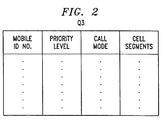
- FIG. 2 shows a data structure layout of a queue for call path resources as shown at Q1-Q3 in FIG. 1.
- the first field in the queue contains the mobile station's identification number.
- the second field contains a priority level associated with the mobile station. There may be only two priority levels, one indicating that the mobile station may use the priority feature and the other indicating that the mobile station may not use the priority feature. Alternatively, there may be a range of priority levels, wherein the lowest level may not use the priority feature and the higher levels may preempt lower level mobile stations.
- the highest level may be assigned to, for example, police, fire or national security mobile stations. In this case, when resources become available, a mobile station with the highest priority can be served.
- a mobile station may preempt a mobile station with a lower priority level.
- the third field indicates the call mode of the mobile station, that is, whether the mobile station is configured to use analog, digital or dual mode wireless facilities as known in the art.
- the next field lists the three best serving sectors for the mobile station, in rank order, if the radio channels that serve the cell are directional.
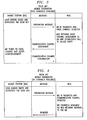
- FIG. 3 a message sequence diagram for a prior art mobile origination request is shown, when radio channels are available.
- the user enters a directory number into the mobile station and depresses the SEND key.
- An origination message is transmitted from the mobile station to cell site 3, and cell site 3 forwards the origination message to the WCS 130.
- WCS 130 performs a data base look up to determine if the mobile station 110 is a valid user of wireless telecommunications system 100. If mobile station 110 is a valid user of wireless telecommunications system 100, WCS 130 then allocates an available radio channel.
- WCS 130 returns a communication channel assignment message to mobile station 110, assigning a radio channel frequency, and establishes a call to telephone 115 connected through public telephone network 130, as known in the art.
- mobile station 110 tunes to the radio channel frequency and sends a communication channel confirmation message to WCS 130.
- FIG. 4 the prior art mobile origination message sequence diagram when no radio channels are available is shown.
- the user enters the digits of the directory number for telephone 115 into mobile station 110.
- the user then presses the SEND key which causes mobile station 110 to send an origination message to the cell site 3.
- Cell site 3 forwards the origination message to WCS 130.
- WCS 130 determines that mobile station 110 is a valid user of wireless telecommunications system 100, and attempts to allocate cellular resources. In this case, all radio channels for cell site 3 are allocated to other mobile stations.
- WCS 130 sends a reorder message to mobile station 110.
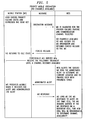
- FIG. 5 a message sequence diagram according to an exemplary method of this invention is shown.
- the user enters a feature code and then the digits of the directory number of telephone 115, and presses the SEND key.
- the feature code may be *XX, wherein X represents any number from zero to nine.
- This feature code is illustrative and could also be implemented as a special button on the mobile station or any other form of feature identifier.
- the system could queue every call for a priority mobile station automatically whenever the priority mobile station attempts to place a call when resources are blocked.
- mobile station 110 When the user presses the SEND key, mobile station 110 sends an origination request message to WCS 130.
- the origination request message includes the feature code, the directory number, and mobile station identification.
- WCS 130 verifies that mobile station 110 is a valid user of wireless telecommunications system 100 and a valid user of the priority feature.
- WCS 130 attempts to allocate call path resources to connect mobile station 110 to public telephone network 120.
- no radio channels are available to connect mobile station 110 to cell site 3. Therefore, WSC 130 queues mobile station 110 in a queue Q3 for the origination cell, cell 3. There is one queue per cell site, with 15 entries per queue in this exemplary method.
- the number of entries per queue is office dependent, that is, dependent upon the number of mobile stations with this priority queuing feature that generally originate calls in the service region.
- Mobile station 110 sent the origination request from cell site 3, and therefore WCS 130 sequentially examines the entries in the queue for call path resources for cell site 3, queue Q3, to determine if a queue entry is available. If a queue entry is available, WCS 130 then examines each queue entry to determine if mobile station 110 is already queued, (which would occur, for example, if mobile station 110 made a second origination request without dequeuing a first origination request). If mobile station 110 is not already queued, mobile station 110 is placed in the queue. If mobile station 110 is found in the queue, then the prior entry is removed and the new request is placed in the queue. This action is based on the assumption that the user of mobile station 110 decided to abandon the first call and place a new call. WCS 130 next sends a forced release message to mobile station 110. In response to the forced release message, mobile station 110 returns to the idle state.
- mobile station 110 is periodically paged to determine the location of mobile station 110 within the cellular telecommunications system 100 and to alert or remind the user of mobile station 110 that an origination request is pending.
- WCS 130 sends a message through all cell sites to mobile station 110 to give an abbreviated alert signal, for example, "ping-ring.”
- Mobile station 110 receives the abbreviated alert message, produces an audible ping-ring for the user and acknowledges the alert with a message response back to WCS 130.
- WCS 130 determines which cell site received the acknowledgement message. If the response came from the original cell, WCS 130 does nothing. If the mobile station 110 sent the acknowledgement message from a different cell, for example, cell site 1, WCS 130 determines whether call path resources are available for cell site 1. If call path resources are available in cell site 1, WCS 130 removes mobile station 110 from queue Q3 and completes the call. If one of the call path resources is not available in cell site 1, then mobile station 110 is removed from queue Q3 and placed in an entry in queue 1.
- FIG. 6 shows a flow chart of the WCS for the message sequence of FIG. 5.
- Processing begins in circle 600, wherein an origination request message is received.
- Processing proceeds to decision diamond 610.
- decision diamond 610 the identification of the mobile station is checked to determine if the mobile station is a valid user of the wireless communication system. If the mobile station is not a valid user of this wireless communication system, a reorder message is returned to the mobile station in action block 615.
- Processing proceeds to circle 620, where processing ends.
- decision diamond 625 a check is made to determine if the mobile station is allowed to use the priority feature. If the mobile station is not permitted to use the priority feature, then processing proceeds in action block 615, where a reorder message is sent to the mobile station. Processing proceeds to circle 620 when processing ends.
- processing proceeds to action block 630, where the best serving cell is determined. Processing proceeds to decision diamond 635 to determine if cellular call path resources are available to complete the call in the best serving cell. If resources are available in decision diamond 635, then in action block 640, the call is completed and processing continues to end circle 645.
- decision diamond 650 a test is made whether a queue entry is available in the queue for call path resources for the best serving cell. If a queue entry is not available, processing proceeds to connector A. If a queue entry is available, processing proceeds to decision diamond 655. In decision diamond 655, the mobile station is compared to the mobile stations that are already in the queue, to determine whether the mobile station has a previous queue entry. If the mobile station has a previous queue entry, then processing proceeds to action block 660 where the previous queue entry is removed.
- Processing proceeds to action block 665 where the mobile station is placed in the queue in first-in, first-out order. Processing proceeds to action block 670 where the mobile station is sent a forced release message.
- processing proceeds to action block 675 where a paging timer is set.
- action block 680 an abbreviated alert message is sent to the mobile station.
- decision diamond 685 determines whether the mobile station acknowledged the paging message. If the mobile station did not acknowledge the paging message in decision diamond 685, then processing proceeds to action block 690 where the mobile station is removed from the queue. Processing continues to end circle 693.
- decision diamond 695 WCS determines if call path resources are available in the new cell. If call path resources are available, then processing proceeds to connector B. If call path resources are not available in the new cell, then processing proceeds to action block 698, where the mobile system is removed from the first queue. Processing continues to decision diamond 650, where a test is made to determine if the queue for call path resources for the new cell has available entries. Processing then continues as described above. If it is determined that the response message came from the same cell in decision diamond 695, then processing loops back to action block 675, where the paging timer is again set.
- FIG. 7 describes the sequence of messages exchanged when call path resources become available in a cell, when call requests are queued.
- call path resources for example, radio channels
- WCS 130 determines the next entry in queue Q3. For example, if mobile station 110 is the next entry in queue Q3, WCS 130 removes mobile station 110 from queue Q3 and establishes a call to telephone 115.
- a radio channel assignment message is sent to mobile station 110, including the frequency of the radio channel assigned.
- Mobile station 110 tunes to the assigned radio frequency and sends an acknowledgement message to WCS 130.
- the flow chart of FIG. 8 describes the processing associated with the message sequence of FIG. 7. Processing enters at 800 and connector B. Processing proceeds to action block 810 where the first entry in the queue is paged, as above. Processing proceeds to decision diamond 815 wherein a test is made whether a response was received from the mobile station. If no response was received from the mobile station then processing continues to action block 820 where a next entry in the queue is examined, and processing loops to action block 810. If a response message were received in decision diamond 815, then processing proceeds to decision diamond 825 where the cell in which the response message was received is compared to the cell in which the resource is available. If the cells are not the same, then the mobile station is removed from the queue in action block 825 and processing loops to action block 820, as above. If the response were received in the cell for which the resources are available in decision diamond 825, then processing proceeds to decision diamond 830.
- a test is made if the location of the mobile station is properly aligned with the segment of coverage of the available channel. If the location of the mobile station is not appropriate for the channel available, then processing loops to action block 820, as above. If the channel serves the location of the mobile station, then processing proceeds to action block 835 where the mobile station is removed from the queue for the cell. Processing proceeds to action block 840 where the call is completed.
- Processing proceeds to action block 850 where the mobile station is sent a channel assignment message. Processing proceeds to decision diamond 816 where processing waits for a confirmation message from the mobile station. If the confirmation message is not received within a predetermined time then processing loops to action block 820, as above. If the confirmation message is received in decision diamond 860, then processing proceeds to the end circle 870.
- WCS 130 determines that the requesting mobile station is permitted to use the priority calling feature, WCS 130 also determines a priority level for the requesting mobile station.
- WCS 130 determines if there are no available routess in the queue. If WCS 130 then determines that there are no available routess in the queue, then the WCS 130 determines if there are any queued mobile stations with a lower priority level than the currently requesting mobile station. If WCS 130 determines that a previously queued mobile station has a lower priority, then the lower priority mobile station is removed from the queue and the higher priority requesting mobile station is placed into the queue. The mobile station removed from the queue is sent a reorder message.
- Processing enters through connector A. Processing proceeds to decision diamond 1010 where the first entry in the queue is checked to determine if the priority of the queue entry is less than the priority of the mobile station. If the priority of the queue entry is not less than the priority of the mobile station, then processing proceeds to decision diamond 1020.
- decision diamond 1020 a test is made to determine if the end of the queue has been reached. If the end of the queue has been reached, then the mobile station has a lower priority than all of the routes in the queue. Therefore, processing proceeds to action block 1030 where a reorder message is sent to the mobile station, and processing ends at circle 1040.
- processing proceeds to action block 1060 where the lower priority entry is removed from the queue. Processing proceeds to action block 1070 where the mobile station with higher priority is placed in the queue entry. Processing continues to action block 1080 where a reorder message is sent to the mobile station whose queue entry was removed. Processing ends at circle 1090.
- a non-priority user may enter the feature code and a directory number, which is sent to WCS 130 as an origination message.
- WCS 130 determines whether the mobile station is a permitted to use the priority feature. If WCS 130 determines that the mobile station is not permitted to use the priority feature, WCS 130 sends an intercept message to the requesting mobile station, even if call path resources are available. When the mobile station receives the intercept message, it produces an intercept tone and returns to the idle state.
- FIG. 12 a message sequence diagram for removal of a mobile station from the queue is shown.
- the user of mobile station 110 enters a dequeue digits sequence (for example, a feature code, *XX, without a directory number may be used) and depresses the SEND key.
- the mobile station sends an origination message to the WCS.
- the WCS receives the origination message and recognizes the dequeue request because the feature code is not followed by a directory number.
- WCS 130 removes the mobile station from the queue. The user notices that the periodic alert has stopped and the mobile station is idle.
- incoming calls to a mobile station from the public switch network may be queued when there are no call path resources available in the cell in which the mobile station is located. A check is made to determine if the mobile station is currently busy before the incoming call is placed in the queue. It is, therefore, intended that such variations be included within the scope of the appended claims.
Landscapes
- Engineering & Computer Science (AREA)
- Computer Networks & Wireless Communication (AREA)
- Signal Processing (AREA)
- Mobile Radio Communication Systems (AREA)
Applications Claiming Priority (2)
| Application Number | Priority Date | Filing Date | Title |
|---|---|---|---|
| US629522 | 1990-12-18 | ||
| US07/629,522 US5226071A (en) | 1990-12-18 | 1990-12-18 | Call path resource allocation in a wireless telecommunications system |
Publications (3)
| Publication Number | Publication Date |
|---|---|
| EP0491494A2 true EP0491494A2 (fr) | 1992-06-24 |
| EP0491494A3 EP0491494A3 (en) | 1993-03-03 |
| EP0491494B1 EP0491494B1 (fr) | 1997-05-28 |
Family
ID=24523358
Family Applications (1)
| Application Number | Title | Priority Date | Filing Date |
|---|---|---|---|
| EP91311235A Expired - Lifetime EP0491494B1 (fr) | 1990-12-18 | 1991-12-03 | Allocation des ressources en voies d'appel dans un système de télécommunications "sans fil" |
Country Status (6)
| Country | Link |
|---|---|
| US (1) | US5226071A (fr) |
| EP (1) | EP0491494B1 (fr) |
| JP (1) | JPH04275728A (fr) |
| CA (1) | CA2052271C (fr) |
| DE (1) | DE69126288T2 (fr) |
| ES (1) | ES2101727T3 (fr) |
Cited By (14)
| Publication number | Priority date | Publication date | Assignee | Title |
|---|---|---|---|---|
| WO1993017531A1 (fr) * | 1992-02-27 | 1993-09-02 | Telefonaktiebolaget Lm Ericsson | Priorite d'appel dans un systeme de radiotelephone mobile |
| WO1999004584A1 (fr) * | 1997-07-15 | 1999-01-28 | Ericsson Inc. | Procede permettant de rendre prioritaire la fin de l'etablissement d'un appel |
| EP0783234A3 (fr) * | 1996-01-03 | 1999-07-21 | AT&T Corp. | Gestion d'appel pour téléphones "sans fil" |
| EP0783237A3 (fr) * | 1996-01-03 | 1999-07-21 | AT&T Corp. | Gestion d'appel entrant pour téléphones 'sans fil' |
| CN1046076C (zh) * | 1993-04-02 | 1999-10-27 | 莫托罗拉有限公司 | 多信道随机接入通信系统 |
| CN1046386C (zh) * | 1992-07-03 | 1999-11-10 | 艾利森电话股份有限公司 | 在电信系统中用于记录业务量数据的方法 |
| NL1009320C2 (nl) * | 1998-06-05 | 1999-12-07 | Koninkl Kpn Nv | Methode voor het, onder gebruikmaking van een wachtlijst, beschikbaar stellen van een vrijkomend gesprekskanaal in een cellulair telecommunicatiesysteem. |
| GB2343593A (en) * | 1998-09-23 | 2000-05-10 | Samsung Electronics Co Ltd | Radio channel allocation storing call information when channel unavailable |
| US6097717A (en) * | 1995-03-31 | 2000-08-01 | Telefonaktiebolaget Lm Ericsson | Method and arrangement in a radio communication system |
| CN1065402C (zh) * | 1993-05-28 | 2001-05-02 | Adc长途电讯有限公司 | 一种蜂窝系统和传输蜂窝电话给小区的方法 |
| WO2001045328A1 (fr) * | 1999-12-17 | 2001-06-21 | Nokia Corporation | Procede de detection de trafic sans collision |
| WO2001076305A1 (fr) * | 2000-04-05 | 2001-10-11 | Telefonaktiebolaget L M Ericsson (Publ) | Procede et appareil permettant d'etablir une communication dans des cellules congestionnees |
| CN1083223C (zh) * | 1994-06-20 | 2002-04-17 | 株式会社东芝 | 移动通信系统 |
| EP1085772A3 (fr) * | 1999-09-18 | 2003-04-09 | Philips Corporate Intellectual Property GmbH | Réseau sans fil mémorisant les demandes de réservation |
Families Citing this family (48)
| Publication number | Priority date | Publication date | Assignee | Title |
|---|---|---|---|---|
| US5450474A (en) * | 1992-03-11 | 1995-09-12 | U.S. Philips Corporation | Network in which cordless phones are paged from a plurality of base stations that receive paging codes for the cordless phones via subscriber lines |
| KR100188984B1 (ko) * | 1993-12-02 | 1999-06-01 | 안쏘니 제이. 살리, 주니어 | 통신 시스템의 지역 엔터티들간 통신 방법 및 장치 |
| US5457735A (en) * | 1994-02-01 | 1995-10-10 | Motorola, Inc. | Method and apparatus for queuing radio telephone service requests |
| US5615249A (en) * | 1994-11-30 | 1997-03-25 | Lucent Technologies Inc. | Service prioritization in a cellular telephone system |
| US5579372A (en) * | 1994-12-12 | 1996-11-26 | Telefonaktiebolaget Lm Ericsson | Flow control method for short message service - busy subscriber |
| US5633911A (en) * | 1995-01-23 | 1997-05-27 | Motorola, Inc. | Method and apparatus for reserving a telephone line in a telepoint communication system |
| US5574977A (en) * | 1995-04-17 | 1996-11-12 | Telefonaktiebolaget Lm Ericsson | System and method for providing priority access and channel assignment in a cellular telecommunication system |
| US6456610B1 (en) | 1995-11-07 | 2002-09-24 | Lucent Technologies Inc. | TDM/TDMA wireless telecommunication system with electronic scanning antenna |
| US6067457A (en) * | 1996-04-30 | 2000-05-23 | Motorola, Inc. | Method for dynamically assigning priority to a call |
| US5949017A (en) * | 1996-06-18 | 1999-09-07 | Abb Power T&D Company Inc. | Electrical transformers containing electrical insulation fluids comprising high oleic acid oil compositions |
| US5890075A (en) * | 1996-10-21 | 1999-03-30 | Lucent Technologies Inc. | Method for remotely updating data stored in a mobile terminal by a wireless telecommunications system |
| US6501771B2 (en) | 1997-02-11 | 2002-12-31 | At&T Wireless Services, Inc. | Delay compensation |
| US5933421A (en) * | 1997-02-06 | 1999-08-03 | At&T Wireless Services Inc. | Method for frequency division duplex communications |
| US6408016B1 (en) * | 1997-02-24 | 2002-06-18 | At&T Wireless Services, Inc. | Adaptive weight update method and system for a discrete multitone spread spectrum communications system |
| US6584144B2 (en) | 1997-02-24 | 2003-06-24 | At&T Wireless Services, Inc. | Vertical adaptive antenna array for a discrete multitone spread spectrum communications system |
| US6359923B1 (en) * | 1997-12-18 | 2002-03-19 | At&T Wireless Services, Inc. | Highly bandwidth efficient communications |
| FR2762166B1 (fr) * | 1997-04-10 | 1999-06-11 | Alsthom Cge Alcatel | Procede et dispositif pour l'allocation de ressource radio par preemption dans un systeme cellulaire de radiocommunication avec des mobiles |
| US6396867B1 (en) | 1997-04-25 | 2002-05-28 | Qualcomm Incorporated | Method and apparatus for forward link power control |
| US6072784A (en) * | 1997-07-25 | 2000-06-06 | At&T Corp. | CDMA mobile station wireless transmission power management with adaptive scheduling priorities based on battery power level |
| US6108316A (en) * | 1997-07-25 | 2000-08-22 | At & T Corp | Adaptive scheduling priorities based on battery power level in wireless access protocols |
| US6069882A (en) | 1997-07-30 | 2000-05-30 | Bellsouth Intellectual Property Corporation | System and method for providing data services using idle cell resources |
| US7349333B2 (en) | 1997-07-30 | 2008-03-25 | At&T Delaware Intellectual Property, Inc. | Associated systems and methods for providing data services using idle cell resources |
| US7050445B1 (en) * | 1997-07-30 | 2006-05-23 | Bellsouth Intellectual Property Corporation | System and method for dynamic allocation of capacity on wireless networks |
| US7046643B1 (en) | 1997-07-30 | 2006-05-16 | Bellsouth Intellectual Property Corporation | Method for dynamic multi-level pricing for wireless communications according to quality of service |
| US6411816B1 (en) * | 1997-11-25 | 2002-06-25 | Motorola, Inc. | Method of registration in a communication system |
| US6119017A (en) * | 1997-11-25 | 2000-09-12 | Motorola, Inc. | Method of registration in a communication system |
| JP2938846B1 (ja) * | 1998-03-13 | 1999-08-25 | 三菱電機株式会社 | アクセスネットワークシステム |
| US6173168B1 (en) * | 1998-04-22 | 2001-01-09 | Telefonaktiebolaget Lm Ericsson | Optimized cell recovery in a mobile radio communications network |
| US6721278B1 (en) * | 1998-04-30 | 2004-04-13 | Telefonaktiebolaget Lm Ericsson (Publ) | Dynamic allocation of packet data channels |
| WO2000010296A2 (fr) * | 1998-08-12 | 2000-02-24 | Sc-Wireless, Inc. | Procede et appareil des gestion des ressources de reseaux de telecommunications |
| AU2004201452C1 (en) * | 1998-08-20 | 2005-04-14 | Qualcomm Incorporated | System and method for priority access channel assignment in a cellular telephone system |
| RU2248680C2 (ru) * | 1998-08-20 | 2005-03-20 | Квэлкомм Инкорпорейтед | Система и способ предоставления приоритетного доступа к каналу в системе сотовой телефонной связи |
| IL142400A0 (en) * | 1998-09-18 | 2002-03-10 | Harris Corp | Distributed trunking mechanism for vhf networking |
| US6996088B1 (en) * | 1998-09-18 | 2006-02-07 | Harris Corporation | Distributed trunking mechanism for VHF networking |
| US6223046B1 (en) * | 1998-12-15 | 2001-04-24 | Telefonaktiebolaget Lm Ericsson (Publ) | System and method for coordinating notification requests for terminal availability |
| US6691172B1 (en) * | 1998-12-15 | 2004-02-10 | Honeywell International, Inc. | Communication system for defining a variable group of processors for receiving a transmitted communication |
| JP3901403B2 (ja) * | 1999-08-25 | 2007-04-04 | 富士通株式会社 | 移動体通信システム |
| EP1407427A1 (fr) * | 2001-07-10 | 2004-04-14 | Koninklijke Philips Electronics N.V. | Procede et systeme de planification electronique d'itineraires et de gestion de files d'attente virtuelles |
| EP1421710B1 (fr) * | 2001-08-16 | 2017-11-15 | QUALCOMM Incorporated | Procédés, dispositif de communication mobile et station de base dans un un système de communication ayant des ressources de communication partagées |
| JP4168633B2 (ja) * | 2002-01-17 | 2008-10-22 | 日本電気株式会社 | 無線基地局におけるパケットスケジューリング方法、パケット転送装置およびパケットスケジューリングプログラム |
| JP4010184B2 (ja) * | 2002-05-23 | 2007-11-21 | 日本電気株式会社 | 移動通信システム |
| US7006831B2 (en) * | 2002-09-27 | 2006-02-28 | Bellsouth Intellectual Property Corporation | Apparatus and method for providing dynamic communications network traffic control |
| KR100540662B1 (ko) * | 2004-01-07 | 2006-01-12 | 삼성전자주식회사 | 무선 송수신 시스템의 자동 채널 설정 방법 및 그 장치 |
| US7565161B2 (en) * | 2005-12-23 | 2009-07-21 | Alcatel-Lucent Usa Inc. | Method and system for wireless priority call processing |
| US20070242649A1 (en) * | 2006-04-17 | 2007-10-18 | Cisco Technology, Inc. | Integrating camp-on telephony feature with WLAN resource management and admission control |
| US20080095578A1 (en) * | 2006-10-23 | 2008-04-24 | Wiggins Lift Co., Inc. | Boat lifting and stacking vehicle |
| US8254909B1 (en) | 2008-01-03 | 2012-08-28 | At&T Intellectual Property I, L.P. | Computational syndrome detector |
| US10638418B2 (en) * | 2016-11-04 | 2020-04-28 | Ford Global Technologies, Llc | Method and apparatus for data transfer connection management |
Family Cites Families (15)
| Publication number | Priority date | Publication date | Assignee | Title |
|---|---|---|---|---|
| US2922847A (en) * | 1958-11-06 | 1960-01-26 | American Telephone & Telegraph | Distributing system |
| US3297829A (en) * | 1963-10-23 | 1967-01-10 | Bell Telephone Labor Inc | Priority and nonpriority service regulating equipment |
| US3663762A (en) * | 1970-12-21 | 1972-05-16 | Bell Telephone Labor Inc | Mobile communication system |
| US3898390A (en) * | 1973-05-15 | 1975-08-05 | Martin Marietta Corp | Multiple zone communications system and method |
| USRE32789E (en) * | 1975-11-24 | 1988-11-22 | Motorola, Inc. | Transmission trunk multichannel dispatch system with priority queuing |
| US4048452A (en) * | 1976-05-28 | 1977-09-13 | Bell Telephone Laboratories, Incorporated | Automatic call distribution system |
| AU577742B2 (en) * | 1984-07-13 | 1988-09-29 | Motorola, Inc. | Cellular voice and data radiotelephone system |
| US4737978A (en) * | 1986-10-31 | 1988-04-12 | Motorola, Inc. | Networked cellular radiotelephone systems |
| JP2566948B2 (ja) * | 1987-04-03 | 1996-12-25 | 日本電気株式会社 | 広域コ−ドレス電話方式 |
| US4827499A (en) * | 1987-06-12 | 1989-05-02 | American Telephone And Telegraph Company At&T Bell Laboratories | Call control of a distributed processing communications switching system |
| JPH0624336B2 (ja) * | 1988-01-22 | 1994-03-30 | 日本電気株式会社 | 移動体電話交換システム |
| US5020095A (en) * | 1988-11-16 | 1991-05-28 | Dytel Corporation | Interactive call distribution processor |
| US4977589A (en) * | 1988-11-25 | 1990-12-11 | Motorola, Inc. | Signalling and control protocol for a communication system |
| JP2852062B2 (ja) * | 1989-04-03 | 1999-01-27 | 日本電気株式会社 | 移動通信における予約接続方法 |
| US4953204A (en) * | 1989-10-17 | 1990-08-28 | At&T Bell Laboratories | Multilocation queuing for telephone calls |
-
1990
- 1990-12-18 US US07/629,522 patent/US5226071A/en not_active Expired - Lifetime
-
1991
- 1991-09-25 CA CA002052271A patent/CA2052271C/fr not_active Expired - Fee Related
- 1991-12-03 DE DE69126288T patent/DE69126288T2/de not_active Expired - Fee Related
- 1991-12-03 ES ES91311235T patent/ES2101727T3/es not_active Expired - Lifetime
- 1991-12-03 EP EP91311235A patent/EP0491494B1/fr not_active Expired - Lifetime
- 1991-12-04 JP JP3347678A patent/JPH04275728A/ja active Pending
Cited By (24)
| Publication number | Priority date | Publication date | Assignee | Title |
|---|---|---|---|---|
| WO1993017531A1 (fr) * | 1992-02-27 | 1993-09-02 | Telefonaktiebolaget Lm Ericsson | Priorite d'appel dans un systeme de radiotelephone mobile |
| GB2270235A (en) * | 1992-02-27 | 1994-03-02 | Ericsson Telefon Ab L M | Call priority in a mobile radiotelephone system |
| GB2270235B (en) * | 1992-02-27 | 1996-05-29 | Ericsson Telefon Ab L M | Call priority in a mobile radiotelephone system |
| DE4390710B4 (de) * | 1992-02-27 | 2008-02-14 | Telefonaktiebolaget Lm Ericsson (Publ) | Rufpriorität in einem Mobilfunktelephonsystem |
| CN1046386C (zh) * | 1992-07-03 | 1999-11-10 | 艾利森电话股份有限公司 | 在电信系统中用于记录业务量数据的方法 |
| CN1046076C (zh) * | 1993-04-02 | 1999-10-27 | 莫托罗拉有限公司 | 多信道随机接入通信系统 |
| CN1065402C (zh) * | 1993-05-28 | 2001-05-02 | Adc长途电讯有限公司 | 一种蜂窝系统和传输蜂窝电话给小区的方法 |
| CN1083223C (zh) * | 1994-06-20 | 2002-04-17 | 株式会社东芝 | 移动通信系统 |
| US6097717A (en) * | 1995-03-31 | 2000-08-01 | Telefonaktiebolaget Lm Ericsson | Method and arrangement in a radio communication system |
| USRE40896E1 (en) | 1995-03-31 | 2009-09-01 | Telefonaktiebolaget L M Ericsson (Publ) | Method and arrangement in a radio communication system |
| EP0783234A3 (fr) * | 1996-01-03 | 1999-07-21 | AT&T Corp. | Gestion d'appel pour téléphones "sans fil" |
| EP0783237A3 (fr) * | 1996-01-03 | 1999-07-21 | AT&T Corp. | Gestion d'appel entrant pour téléphones 'sans fil' |
| US6014556A (en) * | 1997-07-15 | 2000-01-11 | Ericsson Inc. | Method for priority in terminating call setup |
| WO1999004584A1 (fr) * | 1997-07-15 | 1999-01-28 | Ericsson Inc. | Procede permettant de rendre prioritaire la fin de l'etablissement d'un appel |
| WO1999065258A1 (fr) * | 1998-06-05 | 1999-12-16 | Koninklijke Kpn N.V. | Procede visant a rendre disponible, a l'aide d'une file d'attente, une voie telephonique liberee dans un systeme cellulaire de telecommunications |
| NL1009320C2 (nl) * | 1998-06-05 | 1999-12-07 | Koninkl Kpn Nv | Methode voor het, onder gebruikmaking van een wachtlijst, beschikbaar stellen van een vrijkomend gesprekskanaal in een cellulair telecommunicatiesysteem. |
| GB2343593A (en) * | 1998-09-23 | 2000-05-10 | Samsung Electronics Co Ltd | Radio channel allocation storing call information when channel unavailable |
| EP1085772A3 (fr) * | 1999-09-18 | 2003-04-09 | Philips Corporate Intellectual Property GmbH | Réseau sans fil mémorisant les demandes de réservation |
| WO2001045328A1 (fr) * | 1999-12-17 | 2001-06-21 | Nokia Corporation | Procede de detection de trafic sans collision |
| USRE44904E1 (en) | 1999-12-17 | 2014-05-20 | Calton Research L.L.C. | Method for contention free traffic detection |
| US7027465B2 (en) | 1999-12-17 | 2006-04-11 | Nokia Corporation | Method for contention free traffic detection |
| US7555014B2 (en) | 1999-12-17 | 2009-06-30 | Nokia Corporation | Method for contention free traffic detection |
| WO2001076305A1 (fr) * | 2000-04-05 | 2001-10-11 | Telefonaktiebolaget L M Ericsson (Publ) | Procede et appareil permettant d'etablir une communication dans des cellules congestionnees |
| US6631270B1 (en) | 2000-04-05 | 2003-10-07 | Telefonaktiebolaget Lm Ericsson (Publ) | Method and apparatus for call completion in congested cells |
Also Published As
| Publication number | Publication date |
|---|---|
| JPH04275728A (ja) | 1992-10-01 |
| DE69126288T2 (de) | 1997-09-04 |
| DE69126288D1 (de) | 1997-07-03 |
| EP0491494B1 (fr) | 1997-05-28 |
| US5226071A (en) | 1993-07-06 |
| EP0491494A3 (en) | 1993-03-03 |
| CA2052271C (fr) | 1996-01-09 |
| ES2101727T3 (es) | 1997-07-16 |
| CA2052271A1 (fr) | 1992-06-19 |
Similar Documents
| Publication | Publication Date | Title |
|---|---|---|
| US5226071A (en) | Call path resource allocation in a wireless telecommunications system | |
| US6377560B1 (en) | Group call capability in a wireless network | |
| KR100319124B1 (ko) | 무선통신망에서의 우선호 제어 시스템 및 방법 | |
| US5371780A (en) | Communications resource assignment in a wireless telecommunications system | |
| JP2628950B2 (ja) | 携帯電話システムにおける位置登録方法 | |
| AU705830B2 (en) | Mobile station user group operation | |
| US5313653A (en) | Method for a communication unit to maintain a data base of system services | |
| RU2001107253A (ru) | Система и способ предоставления приоритетного доступа к каналу в системе сотовой телефонной связи | |
| PL174809B1 (pl) | Sposób wyznaczania kanału sterowania jako tymczasowego kanału akustycznego/danych w układach łączności radiowej | |
| WO1998026625A2 (fr) | Systeme et procede d'information d'un reseau de radiotelecommunications sur les capacites de fonctionnement d'un terminal mobile situe dans le reseau | |
| WO1987003438A1 (fr) | Procede et appareil de coordination de systemes de communications independants | |
| KR20010072817A (ko) | 셀룰라 전화 시스템에서 우선순위 액세스 채널할당을 위한시스템 및 방법 | |
| EP0615393A1 (fr) | Procédé pour transmettre des paquets de données dans un système cellulaire de transmission de phonie | |
| CN1050257C (zh) | 在无线系统中寻找信令信道的方法 | |
| JPH06284466A (ja) | 移動無線電話通信装置 | |
| EP0395092B1 (fr) | Système de téléphonie mobile | |
| EP0545533A2 (fr) | Allocation des ressources de transmission dans un système de télécommunication sans fil | |
| KR100300348B1 (ko) | 셀룰러시스템에서호설정방법 | |
| AU675876B2 (en) | A method and system for providing supplementary services to a mobile station | |
| WO2009097901A1 (fr) | Procédé et équipement utilisateur pour un enregistrement de dispositif mobile | |
| GB2343593A (en) | Radio channel allocation storing call information when channel unavailable | |
| JPH0575530A (ja) | 移動体通信システムにおけるトラヒツク分散方式 | |
| JP2930040B2 (ja) | Phs緊急発信呼接続制御方式及び方法 | |
| US20100105352A1 (en) | Mobile communication system, management server device, base station device, and line reservation method | |
| KR100250666B1 (ko) | 개인이동통신시스템에서의페이징요구방법 |
Legal Events
| Date | Code | Title | Description |
|---|---|---|---|
| PUAI | Public reference made under article 153(3) epc to a published international application that has entered the european phase |
Free format text: ORIGINAL CODE: 0009012 |
|
| AK | Designated contracting states |
Kind code of ref document: A2 Designated state(s): DE ES FR GB IT NL SE |
|
| PUAL | Search report despatched |
Free format text: ORIGINAL CODE: 0009013 |
|
| AK | Designated contracting states |
Kind code of ref document: A3 Designated state(s): DE ES FR GB IT NL SE |
|
| 17P | Request for examination filed |
Effective date: 19930819 |
|
| RAP3 | Party data changed (applicant data changed or rights of an application transferred) |
Owner name: AT&T CORP. |
|
| 17Q | First examination report despatched |
Effective date: 19960119 |
|
| GRAG | Despatch of communication of intention to grant |
Free format text: ORIGINAL CODE: EPIDOS AGRA |
|
| GRAH | Despatch of communication of intention to grant a patent |
Free format text: ORIGINAL CODE: EPIDOS IGRA |
|
| GRAH | Despatch of communication of intention to grant a patent |
Free format text: ORIGINAL CODE: EPIDOS IGRA |
|
| GRAA | (expected) grant |
Free format text: ORIGINAL CODE: 0009210 |
|
| AK | Designated contracting states |
Kind code of ref document: B1 Designated state(s): DE ES FR GB IT NL SE |
|
| ITF | It: translation for a ep patent filed | ||
| ET | Fr: translation filed | ||
| REF | Corresponds to: |
Ref document number: 69126288 Country of ref document: DE Date of ref document: 19970703 |
|
| REG | Reference to a national code |
Ref country code: ES Ref legal event code: FG2A Ref document number: 2101727 Country of ref document: ES Kind code of ref document: T3 |
|
| PLBE | No opposition filed within time limit |
Free format text: ORIGINAL CODE: 0009261 |
|
| STAA | Information on the status of an ep patent application or granted ep patent |
Free format text: STATUS: NO OPPOSITION FILED WITHIN TIME LIMIT |
|
| 26N | No opposition filed | ||
| REG | Reference to a national code |
Ref country code: GB Ref legal event code: IF02 |
|
| PGFP | Annual fee paid to national office [announced via postgrant information from national office to epo] |
Ref country code: NL Payment date: 20071213 Year of fee payment: 17 |
|
| PGFP | Annual fee paid to national office [announced via postgrant information from national office to epo] |
Ref country code: IT Payment date: 20071222 Year of fee payment: 17 |
|
| PGFP | Annual fee paid to national office [announced via postgrant information from national office to epo] |
Ref country code: SE Payment date: 20071213 Year of fee payment: 17 |
|
| PGFP | Annual fee paid to national office [announced via postgrant information from national office to epo] |
Ref country code: GB Payment date: 20071218 Year of fee payment: 17 Ref country code: ES Payment date: 20071228 Year of fee payment: 17 |
|
| PGFP | Annual fee paid to national office [announced via postgrant information from national office to epo] |
Ref country code: DE Payment date: 20071221 Year of fee payment: 17 |
|
| PGFP | Annual fee paid to national office [announced via postgrant information from national office to epo] |
Ref country code: FR Payment date: 20071217 Year of fee payment: 17 |
|
| EUG | Se: european patent has lapsed | ||
| GBPC | Gb: european patent ceased through non-payment of renewal fee |
Effective date: 20081203 |
|
| NLV4 | Nl: lapsed or anulled due to non-payment of the annual fee |
Effective date: 20090701 |
|
| REG | Reference to a national code |
Ref country code: FR Ref legal event code: ST Effective date: 20090831 |
|
| PG25 | Lapsed in a contracting state [announced via postgrant information from national office to epo] |
Ref country code: DE Free format text: LAPSE BECAUSE OF NON-PAYMENT OF DUE FEES Effective date: 20090701 |
|
| PG25 | Lapsed in a contracting state [announced via postgrant information from national office to epo] |
Ref country code: GB Free format text: LAPSE BECAUSE OF NON-PAYMENT OF DUE FEES Effective date: 20081203 Ref country code: NL Free format text: LAPSE BECAUSE OF NON-PAYMENT OF DUE FEES Effective date: 20090701 |
|
| REG | Reference to a national code |
Ref country code: ES Ref legal event code: FD2A Effective date: 20081204 |
|
| PG25 | Lapsed in a contracting state [announced via postgrant information from national office to epo] |
Ref country code: FR Free format text: LAPSE BECAUSE OF NON-PAYMENT OF DUE FEES Effective date: 20081231 Ref country code: ES Free format text: LAPSE BECAUSE OF NON-PAYMENT OF DUE FEES Effective date: 20081204 |
|
| PG25 | Lapsed in a contracting state [announced via postgrant information from national office to epo] |
Ref country code: SE Free format text: LAPSE BECAUSE OF NON-PAYMENT OF DUE FEES Effective date: 20081204 |
|
| PG25 | Lapsed in a contracting state [announced via postgrant information from national office to epo] |
Ref country code: IT Free format text: LAPSE BECAUSE OF NON-PAYMENT OF DUE FEES Effective date: 20081203 |