EP0493682A2 - Verwendung von Xanthinen zur Herstellung eines Medikaments, das die Auswirkungen der Allotransplantatreaktion bei Menschen hemmt - Google Patents
Verwendung von Xanthinen zur Herstellung eines Medikaments, das die Auswirkungen der Allotransplantatreaktion bei Menschen hemmt Download PDFInfo
- Publication number
- EP0493682A2 EP0493682A2 EP91120426A EP91120426A EP0493682A2 EP 0493682 A2 EP0493682 A2 EP 0493682A2 EP 91120426 A EP91120426 A EP 91120426A EP 91120426 A EP91120426 A EP 91120426A EP 0493682 A2 EP0493682 A2 EP 0493682A2
- Authority
- EP
- European Patent Office
- Prior art keywords
- formula
- compound
- group
- reaction
- xanthines
- Prior art date
- Legal status (The legal status is an assumption and is not a legal conclusion. Google has not performed a legal analysis and makes no representation as to the accuracy of the status listed.)
- Withdrawn
Links
Images
Classifications
-
- A—HUMAN NECESSITIES
- A61—MEDICAL OR VETERINARY SCIENCE; HYGIENE
- A61K—PREPARATIONS FOR MEDICAL, DENTAL OR TOILETRY PURPOSES
- A61K31/00—Medicinal preparations containing organic active ingredients
- A61K31/33—Heterocyclic compounds
- A61K31/395—Heterocyclic compounds having nitrogen as a ring hetero atom, e.g. guanethidine or rifamycins
- A61K31/495—Heterocyclic compounds having nitrogen as a ring hetero atom, e.g. guanethidine or rifamycins having six-membered rings with two or more nitrogen atoms as the only ring heteroatoms, e.g. piperazine or tetrazines
- A61K31/505—Pyrimidines; Hydrogenated pyrimidines, e.g. trimethoprim
- A61K31/519—Pyrimidines; Hydrogenated pyrimidines, e.g. trimethoprim ortho- or peri-condensed with heterocyclic rings
- A61K31/52—Purines, e.g. adenine
-
- A—HUMAN NECESSITIES
- A61—MEDICAL OR VETERINARY SCIENCE; HYGIENE
- A61K—PREPARATIONS FOR MEDICAL, DENTAL OR TOILETRY PURPOSES
- A61K38/00—Medicinal preparations containing peptides
- A61K38/16—Peptides having more than 20 amino acids; Gastrins; Somatostatins; Melanotropins; Derivatives thereof
- A61K38/17—Peptides having more than 20 amino acids; Gastrins; Somatostatins; Melanotropins; Derivatives thereof from animals; from humans
- A61K38/19—Cytokines; Lymphokines; Interferons
- A61K38/193—Colony stimulating factors [CSF]
-
- A—HUMAN NECESSITIES
- A61—MEDICAL OR VETERINARY SCIENCE; HYGIENE
- A61P—SPECIFIC THERAPEUTIC ACTIVITY OF CHEMICAL COMPOUNDS OR MEDICINAL PREPARATIONS
- A61P37/00—Drugs for immunological or allergic disorders
- A61P37/02—Immunomodulators
- A61P37/06—Immunosuppressants, e.g. drugs for graft rejection
Definitions
- This invention relates to the use of xanthines to inhibit allograft reaction in humans. In one embodiment, this invention relates to the use of xanthines to inhibit the effects associated with graft versus host reaction (GVHR) in humans. In another embodiment, this invention relates to a method of using certain xanthines to inhibit the manifestations of GVHR in humans following transplantation therapy.
- GVHR graft versus host reaction
- Transplantation or grafting involves the transfer of living cells, tissues, or organs from one part of the body to another or from one individual to another.
- the fate of a graft is determined by the genetic relationship between the donor and host.
- Each species has a group of histocompatibility genes coding for histocompatibility antigens that determine compatibility or incompatibility of tissue transplants.
- the antigens make up the major histocompatibility complex (MHC), which appears to be of overwhelming importance in determining the fate of transplants.
- MHC major histocompatibility complex
- grafts exchanged between animals that do not differ in histocompatibility genes are accepted, whereas those transplanted between individuals differing in histocompatibility genes are rejected.
- rejection will occur if the recipient of a graft is missing a histocompatibility gene present in the donor of the graft.
- the rejection is brought about by allograft reaction, which is a specific immune response against histocompatibility (transplantation) antigens.
- the allograft reaction is a great source of frustration to the transplant surgeon; the reaction can negate the benefits of even the most skillful work.
- the allograft reaction involves an attack by lymphocytes of a host against the graft as if the graft was a foreign invader. This response by the host can result in transplant failure.
- the allograft reaction is a one-way process: The host reacts against the graft ("host versus graft reaction” or "HVGR"). Often, however, the graft contains lymphocytes, and in this instance an immunological response of the graft against the host can occur. In some cases this "graft versus host reaction” or "GVHR” remains unnoticed because the HVGR prevails and all the transplanted cells are rejected before they can harm the host. When the host is unable to mount the HVGR reaction, the consequences of GVHR become clearly visible.
- GVHR is a complex process, which is not fully understood.
- the general reaction sequence probably involves the inoculation of donor lymphocytes into an immuno-incompetent host.
- the donor lymphocytes undergo blast transformation and eventually small lymphocytes are formed. These small lymphocytes have a killer capacity capable of carrying out the destruction of host tissue. Alter the cells are disseminated and proliferate throughout the organs and tissues of the host, GVHR results.
- the most prominent features of this response are inflammation at the site of donor cell proliferation, increased phagocytic activity, and increased proliferation of the reticuloendothelial and lymphoid cells in the spleen and liver.
- the clinical reaction is marked by enlargement of a variety of hematopoietic and lymphopoietic tissues, skin rashes, bowel disturbances, and other allergic-type manifestations.
- the donor derived cytotoxic cells begin to attack the lymphoid tissue of the host thereby destroying large populations of cells.
- the allograft reaction is immunologically mediated.
- immunosuppressive therapy Methotrexate, cyclophosphamide, and cyclosporine have been found to be useful in marrow transplantation, but acute GVHR remains a serious problem. In fact, about one-third of the patients who develop moderate to severe GVHR will die with this complication.
- MHC disparities are the most potent stimulators of GVHR, there are other histocompatibility loci capable of eliciting this reaction. It is for this reason that GVHR remains a major impediment to bone marrow transplantation. Some centers have restricted bone marrow transplantation to situations in which an identical sibling is available. Given the highly complex nature of the histocompatibility system, it seems unlikely that one will be able to obtain complete matching among unrelated individuals on a routine basis. Therefore, bone marrow transplantation among some unrelated individuals must be postponed until better means for specific immunotherapy are available. In the case of liver transplantation, waiting for a good match of the MHC is currently not practical because of the precarious medical condition of most liver transplant recipients prior to surgery.
- This invention aids in fulfilling these needs in the art by providing a method of inhibiting allograft reaction, such as host versus graft reaction (HVGR) and graft versus host reaction (GVHR), in humans. More particularly, this invention provides a method of inhibiting the allograft reaction in a human by administering to the human at least one 7-(oxoalkyl) 1,3-dialkyl xanthine, other than denbufylline, of the formula: in which
- A is a hydrocarbon radical with up to 4 carbon atoms which can be substituted by a methyl group.
- the xanthine of formula (I) is employed in an amount that is effective in inhibiting allograft reaction. In a preferred embodiment of the invention, the xanthine of formula (I) is administered in an amount that is effective in inhibiting the effects of GVHR in a human.
- This invention also provides a method of inhibiting allograft reaction in a human comprising administering to the human a compound of the formula: wherein at least one of R 1 and R 3 is either
- the xanthine of formula (II) is employed in an amount that is effective in inhibiting allograft reaction.
- the xanthine of formula (II) is administered in an amount that is effective in inhibiting the effects of GVHR in a human.
- the well known pharmaceutical pentoxifylline is an example of a compound within the general formula (II).
- Pentoxifylline (“PTX”) is commercially available under the trademark Trental@ in the form of tablets for oral administration. Although this compound has been used for time as a pharmaceutical to improve the flow properties of blood (clinical trials in 1971), it it has not been reported effective as an inhibitor of allograft reaction, such as GVHR.
- xanthines are employed according to this invention to inhibit the effects associated with responses of T lymphocytes in human subjects.
- the nature of the biological processes involved in this invention will initially be described. This will be followed by a detailed description of the xanthines and methods for preparing the xanthines. The results obtained by in vivo and in vitro testing will follow.
- xanthines are employed according to this invention to modulate the immune responses to allografts where untreated rejection would otherwise lead to graft loss.
- Acute graft rejection is predominantly a cell-mediated immune response, and the xanthines when employed according to the invention suppress activation or functioning of several types of effector cells (other than effector inflammatory cells). That is, the xanthines suppress activation of lymphocytes, namely T lymphocytes and B lymphocytes, of the host and the donor.
- lymphocyte activation by the xanthines is achieved to a sufficient extent to allow acquired tolerance to an allograft to be established in the graft recipient, with or without other immunosuppressive therapy. This results in stable and prolonged engraftment.
- the xanthines suppress activation of one or more lymphocytes selected from the group consisting of T helper cells, T cytotoxic cells, T suppressor cells, natural killer cells, killer cells responsible for antibody dependent cell-mediated cytotoxicity, T delayed hypersensitivity cells, B lymphocytes, and subsets of each of these cell types. Suppression of lymphocyte activation by the xanthines can be demonstrated even in the absence of leukocyte-derived cytokines, such as tumor necrosis factor (TNF).
- T helper cells T cytotoxic cells, T suppressor cells, natural killer cells, killer cells responsible for antibody dependent cell-mediated cytotoxicity, T delayed hypersensitivity cells, B lymphocytes, and subsets of each of these cell types.
- TNF tumor necrosis factor
- Allograft reaction can be manifested as host versus graft reaction (HVGR) or as graft versus host reaction (GVHR) in human subjects.
- HVGR can lead to graft failure or rejection due to host resistance or persistent host immunity.
- Host cells may impair the engraftment of donor-derived tissue or the proliferation and differentiation of donor-derived cells.
- GVHR can occur when three conditions are fulfilled.
- MHC histocompatibility complex
- HLA typing can be used to minimize the occurrence of histocompatibility antigens capable of inducing GVHR, but in most cases compatibility for the entire HLA system cannot be realized and transplantation must be carried out with some degree of mismatch.
- GVHR increases in severity with the incompatibility between donor and recipient.
- GVHR requires that the graft contains immunologically competent lymphocytes.
- the graft lymphocytes typically originate from lymph node cells, peripheral blood leukocytes, spleen cells, bone marrow cells, and thymocytes. T lymphocytes apparently initiate GVHR, although other cells may be present and become involved. Immature T lymphocytes are generally unable to initiate GVHR.
- GVHR requires that the recipient host is immunologically incompetent or immunosuppressed or deficient to the extent that the host is unable to reject the graft. While GVHR typically occurs in immunologically incompetent or suppressed recipient hosts, it will be understood that GVHR can also occur in immunologically competent recipients in which the effects of GVHR are not overshadowed by a more powerful HVGR.
- allograft reaction can be associated with bone marrow grafts, kidney transplantation, heart transplantation, skin grafting, cornea transplantation, as well as the transplantation of other organs and tissue, such as liver, lung, spleen, pancreas, intestine, tendon, bone, cartilage, blood vessels, and larynx.
- GVHR frequently accompanies the transfer of immunologically competent cells from one individual to another, such as the transplantation of lymphoid tissues, such as suspensions prepared by homogenization of a donor organ or cells, for example bone marrow, lymph nodes, spleen, thymus, or liver, and inoculated into the recipient host.
- lymphoid tissues such as suspensions prepared by homogenization of a donor organ or cells, for example bone marrow, lymph nodes, spleen, thymus, or liver, and inoculated into the recipient host.
- This invention is useful for inhibiting the effects of GVHR and HVGR accompanying all types of transplantation therapy.
- this invention is useful for treating HVGR and GVHR accompanying grafts placed in the same anatomical position normally occupied by the transplanted tissue (orthotopic) or those placed in an unnatural position (heterotropic).
- the HVGR and GVHR can accompany grafts taken from and placed on the same individual (autografts), grafts transplanted between genetically identical individuals (isografts), grafts transplanted between genetically different individuals of the same species (allografts), and grafts transplanted between individuals of two different species (xenografts).
- the xanthines are administered to a clinical marrow transplant recipient.
- Use of the xanthines according to the invention enables the inhibition of the effects of GVHR and GVHD accompanying marrow transplantation.
- use of this invention is preferred for patients in which it is desired to establish normal marrow function with transplanted cells, such as patients with severe combined immunodeficiency disease or aplastic anemia, and patients receiving chemotherapy and radiation as aggressive treatment for leukemia and other malignancies.
- the transplanted marrow cells can be from a matched donor or preserved cells from the patient from whom the cells were previously removed and stored.
- Untreated marrow cells can be employed, or the marrow cells can be treated, such as by lymphocyte purging to deplete the marrow of cells associated with the occurrence of GVHD.
- Methods to remove T cells include treatment with antithymocyte globulin, anti-T-cell monoclonal antibodies, complement-mediated lysis, lectin agglutinin sedimentation, sheep erythrocyte rosetting, counterflow centrifugal elutriation, immunobeads linked with anti-T-cell monoclonal antibodies, or magnetic beads linked to anti-T-cell monoclonal antibodies.
- T-cell depletion of the marrow inoculum prevents acute GVHD, there may be an increased incidence of graft rejection or leukemic relapses, or a decrease in graft-versus- leukemia effect. It has been found that T-cell depletion of marrow inoculum is not required when the xanthines are employed according to the invention.
- GVHR has also been observed in patients other than those undergoing transplantation therapy. For example, severely immunodepressed patients may inadvertently become engrafted by foreign lymphoid cells during routine blood transfusion. It will be understood that this invention is useful for inhibiting allograft reaction and the effects of GVHR and GVHD occurring in non-transplant patients.
- GVHR is manifested as GVHD in the human, which can be diagnosed by clinical indications and chemical techniques. Among the clinically observed effects of GVHD are fever, malaise, hyperthermia, and pain in the area of a transplant, hypertension, weight loss, and impairment of spleen function. In the case of bone marrow transplantation, GVHD is indicated by skin rash and blistering, severe nausea, vomiting, diarrhea, gastrointestinal bleeding, or impairment of liver function. Allograft rejection following liver transplantation is characterized by bile duct destruction and hepatocellular necrosis.
- GVHR and GVHD can also be determined by biochemical techniques, such as measurement of enzyme levels and waste or degradation products of biological processes in the patient.
- biochemical techniques such as measurement of enzyme levels and waste or degradation products of biological processes in the patient.
- GVHD can be ascertained by the measurement of plasma creatinine levels in kidney transplantation, or the levels of alkaline phosphatase, transaminase, and bilirubin in the case of liver transplants.
- a xanthine or a mixture of the xanthines can be administered to a human subject in need of therapy in an amount sufficient to inhibit one or more of the foregoing effects of allograft reaction.
- one or more of the clinical indications or biochemical changes manifesting GVHR or GVHD can be reduced in incidence or severity, or alleviated, prevented, or controlled by administration of the xanthines according to this invention.
- mixtures of xanthines can be employed, no advantage has been observed in the use of mixtures.
- the xanthines When the xanthines are employed in conjunction with transplant therapy in a patient, the xanthines can be administered before, during, or after transplantation.
- the xanthines are generally orally or intravenously administered to the patient.
- the xanthines are intravenously administered to the patient immediately following transplantation, and then orally administered to a transplant recipient as post-transplant immunosuppressive therapy.
- GVHR Inhibition of GVHR according to this invention can be demonstrated in vitro. More particularly, cocultivation of leukocytes from unrelated individuals leads to blast transformation and proliferation similar to that observed upon addition of mitogens to T-cells. The basis of this reaction appears to be the activation of T-cells from one individual by cell surface markers of another.
- Co-culturing of blood leukocytes from two individuals is referred to as “mixed leukocyte culture” or "MLC” and the reaction as “mixed leukocyte reaction” or “MLR”.
- MLC mixed leukocyte culture
- MLR mixed leukocyte reaction
- Co-culturing of cells obtained from lymphoid organs is designated “mixed lymphocyte culture” or “mixed lymphocyte reaction”. Since even in the mixed leukocyte reaction, the participating cells are peripheral blood T lymphocytes, there is generally substantially no difference between the two types of culture. Thus, these expressions are used interchangeably herein.
- MLR is utilized in this invention as the in vitro analog of allograft reaction in the human. More particularly, MLC can be employed in this invention as an in vitro assay for determining the preferred xanthines and the amount thereof to employ in a particular clinical setting. A xanthine that gives a strong response in inhibiting human MLR is preferred for use in inhibiting GVHR and GVHD according to this invention.
- MLR can be carried out using conventional techniques.
- Cultured cells for the MLR can be derived from peripheral blood, spleen, lymph nodes, or thymus. Cell number can vary by several orders of magnitude.
- the stimulating cells can be inactivated by irradiation or treatment with an antibiotic to disrupt DNA replication.
- the culture medium can be supplemented, if necessary, by serum proteins of autologous, syngeneic, allogeneic, or xenogeneic origin. Cultivation can be carried out over a period of several days.
- the degree of stimulation of responder cells by stimulating cells can be determined from the uptake rate of 3 H-thymidine or radiolabeled amino acids or by counting blasts and dividing cells. If a radiolabel is employed, it can be added to the culture several hours before harvesting.
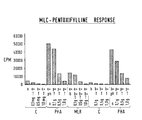
- the effect of the xanthines on GVHR according to the invention was determined in MLR. More particularly, six independent dose-response experiments using five different donors were performed using both response to PHA and the MLR. Cells were exposed to pentoxifylline or diluent for six days. 3 H thymidine was added for three hours and the cells were harvested and counted using a scintillation counter. The data was normalized by setting the control CPM at 100% and the test substance (pentoxifylline) CPM was determined as the mean of the ratio of CPM to the control counts. The results are shown in the Figure. Pentoxifylline suppressed both the MLR and the response to PHA. At 1 mM, pentoxifylline suppressed the PHA response to 53 ⁇ 9% of the control and the MLR to 42 ⁇ 6% of control. The viability of cells was 100% using trypan blue dye-exclusion.
- immunosuppressive agents can be employed with the xanthines according to this invention to lower immune response of the host and to at least retard the allograft reaction. That is, the xanthines can be employed according to the invention, either before, after, or simultaneously with the use of chemical immunosuppressive agents, such as alkylating agents, antimetabolites, corticosteroids, or antibiotics; physical immunosuppressive agents, such as ionizing radiation; immune reagents, such as antilymphocytic serum or antilymphocytic globulins; or by the administration of antigens or polyclonal or monoclonal antibodies for specific suppression.
- chemical immunosuppressive agents such as alkylating agents, antimetabolites, corticosteroids, or antibiotics
- physical immunosuppressive agents such as ionizing radiation
- immune reagents such as antilymphocytic serum or antilymphocytic globulins
- the xanthines can be administered before, during, or after the administration of immunosuppressive agents, such as cyclophosphamide, methotrexate, cyclosporin A, prednisone, methylprednisone, antithymocyte globulin, monoclonal antibodies reactive with human lymphocyte subpopulations, or combinations of these therapies.
- immunosuppressive agents such as cyclophosphamide, methotrexate, cyclosporin A, prednisone, methylprednisone, antithymocyte globulin, monoclonal antibodies reactive with human lymphocyte subpopulations, or combinations of these therapies.
- immunosuppressants are employed according to the regimens usually used for immunosuppression in marrow transplantation to inhibit GVHD.
- the xanthines can be employed according to the invention in conjunction with well known immunosuppressive therapies used for this type of transplantation.
- the xanthines can be employed in the post-operative management of renal transplant by administering the xanthines before, during, or after administration of corticosteroids, such as predhisone and methyl prednisone; cyclosporin A; azathioprine; antilymphocytic serum or globulin; monoclonal antibodies reactive with human lymphocyte subpopulations; or combinations of these therapies.
- corticosteroids such as predhisone and methyl prednisone
- cyclosporin A such as predhisone and methyl prednisone
- azathioprine such as antilymphocytic serum or globulin
- monoclonal antibodies reactive with human lymphocyte subpopulations or combinations of these therapies.
- these immunosuppressants are employed according to the regimens usually used for immunosuppression in renal transplant recipients.
- the practice of this invention can be accompanied by the administration of hematopoietic growth factors to the allograft recipient to enhance engraftment or to reduce the incidence, severity, or duration of clinical manifestations of allograft reaction.
- therapy of bone marrow transplant recipients with the xanthines is accompanied by the administration of granulocytemacrophage colony stimulating factor (GM-CSF).
- GM-CSF granulocytemacrophage colony stimulating factor
- the invention can also be employed in conjunction with the conventional pre-transplant treatments utilized to reduce the risk of allograft rejection.
- the preparative regimen should eradicate all disease in the recipient, immunosuppress the patient adequately to permit sustained engraftment in the allogeneic setting, and be minimally toxic.
- Patients typically receive pretransplant drug therapy to suppress the host immune system with or without whole body or limited field radiation in a single dose or fractionated over several days.
- xanthines can be treated with xanthines according to this invention to reduce the manifestations of GVHD.
- Thin invention can be employed to treat allograft reaction, such as HVGR or GVHR, in a human subject, or the invention can be employed as a prophylactic for HVGR or GVHR.
- This invention makes it possible to improve a patient's condition and sense of well being by inhibiting acute GVHD and may reduce the incidence of chronic GVHD. An increase in patient survival is contemplated.
- Effective amounts of the xanthines can be administered to a subject by any one of various methods, for example, orally as capsules or tablets, or parenterally, such as by intravenous or intramuscular injection, in the form of sterile solutions.
- the xanthines while effective themselves, can be formulated and administered in the form of their pharmaceutically acceptable addition salts for purposes of stability, convenience of crystallization, increased solubility, and the like.
- Preferred pharmaceutically acceptable addition salts include salts of mineral acids, for example, hydrochloric acid, sulfuric acid, nitric acid, and the like; salts of monobasic carboxylic acids, such as, for example, acetic acid, propionic acid, and the like; salts of dibasic carboxylic acids, such as, maleic acid, fumaric acid, oxalic acid, and the like; and salts of tribasic carboxylic acids, such as, carboxysuccinic acid, citric acid, and the like.
- mineral acids for example, hydrochloric acid, sulfuric acid, nitric acid, and the like
- salts of monobasic carboxylic acids such as, for example, acetic acid, propionic acid, and the like
- salts of dibasic carboxylic acids such as, maleic acid, fumaric acid, oxalic acid, and the like
- salts of tribasic carboxylic acids such as, carboxysuccinic acid, citric acid, and the
- the xanthines can be administered orally, for example, with an inert diluent or with an edible carrier. They can be enclosed in gelatin capsules or compressed into tablets.
- the compounds can be incorporated with excipients and used in the form of tablets, troches, capsules, elixirs, suspensions, syrups, wafers, chewing gums, and the like. These preparations should contain at least 0.5% of active compound, but the amount can be varied depending upon the particular form and can conveniently be between 4.0% to about 70% of the weight of the unit. The amount of xanthine in such compositions is such that a suitable dosage will be obtained.
- Preferred compositions and preparations according to the present invention are prepared so that an oral dosage unit form contains between about 1.0 mgs and about 400 mgs of active compound.
- Tablets, pills, capsules, troches, and the like can contain the following ingredients: a binder, such as microcrystalline cellulose, gum tragacanth or gelatin; an excipient, such as starch or lactose; a disintegrating agent, such as alginic acid, Primolgel, corn starch, and the like; a lubricant, such as magnesium sterate or Sterotes; a glidant, such as colloidal silicon dioxide; a sweetening agent, such as sucrose or saccharin; or flavoring agent, such as peppermint, methyl salicylate, or orange flavoring.
- a binder such as microcrystalline cellulose, gum tragacanth or gelatin
- an excipient such as starch or lactose
- a disintegrating agent such as alginic acid, Primolgel, corn starch, and the like
- a lubricant such as magnesium sterate or Sterotes
- a glidant such as colloidal silicon dioxide
- dosage unit forms can contain other materials that modify the physical form of the dosage unit, for example, as coatings.
- tablets or pills can be coated with sugar, shellac, or other enteric coating agents.
- a syrup can contain, in addition to the active compounds, sucrose as a sweetener, and preservatives, dyes, colorings, and flavors. Materials used in preparing these compositions should be pharmaceutically pure and non-toxic in the amounts used.
- the xanthines can be incorporated into a solution or suspension. These preparations should contain at least 0.1% of the aforesaid compound, but may be varied between 0.5% and about 50% of the weight thereof. The amount of active compound in such compositions is such that a suitable dosage will be obtained. Preferred compositions and preparations according to the present invention are prepared so that a parenteral dosage unit contains between 0.5 mg to 100 mgs of the active compound.
- Solutions or suspensions of the xanthines can also include the following components: a sterile diluent, such as water for injection, saline solution, fixed oils, polyethylene glycols, glycerine, propylene glycol or other synthetic solvents; antibacterial agents, such as benzyl alcohol or methyl parabens; antioxidants, such as ascorbic acid or sodium bisulfite; chelating agents, such as ethylenediaminetetraacetic acid; buffers, such as acetates, citrates, or phosphates; and agents for the adjustment of tonicity, such as sodium chloride or dextrose.
- a sterile diluent such as water for injection, saline solution, fixed oils, polyethylene glycols, glycerine, propylene glycol or other synthetic solvents
- antibacterial agents such as benzyl alcohol or methyl parabens
- antioxidants such as ascorbic acid or sodium bisulfite
- chelating agents such as
- xanthines of formula (I) or formula (II) are administered to a subject requiring such treatment as an effective oral, parenteral, or intravenous dose of from 0.1 to 25 mg/kg of body weight per day.
- a particularly preferred regimen for use in bone marrow transplant therapy comprises the intravenous administration of PTX in aqueous saline solution (100 mg/5 ml) at 1/2 mg/kg/hour continuously for 20 days, followed by 2,000 mg/day oral dosage to day 100 post-transplant. It is to be understood, however, that for any particular subject, specific dosage regimens should be adjusted to the individual need and the professional judgment of the person administering or supervising the administration of the xanthines. It is to be further understood that the dosages set forth herein are exemplary only and that they do not, to any extent, limit the scope or practice of the invention.
- the substituents R 1 and R 2 in formula (I) are the same or different and are independently selected from the group consisting of straight-chain or branched alkyl radicals with 2 to 6 carbon atoms, cyclohexyl, alkoxyalkyl, and hydroxyalkyl radicals.
- the substituent A represents a hydrocarbon radical with up to 4 carbon atoms, which can be substituted by a methyl group.
- the xanthines of formula (I) can be substituted by alkyl groups or by alkoxy or hydroxyalkyl groups.
- Suitable alkyl groups include branched and straight chain groups, such as ethyl, propyl, isopropyl, butyl, sec-butyl, tert-butyl, amyl, hexyl, and the like.
- Alkoxy substituted alkyl groups include branched and straight chain groups containing from 2 to 6 carbon atoms in the combined alkoxy and alkyl groups, including methoxymethyl, amyloxymethyl, methoxyethyl, butoxyethyl, propoxypropyl, and the like.
- Hydroxyalkyl groups are those containing from 1 to 6 carbon atoms, such as hydroxymethyl, hydroxyethyl, hydroxypropyl, hydroxyhexyl, and the like.
- the hydrocarbon groups represented by A in formula (I) are divalent saturated aliphatic hydrocarbon groups, i.e., methylene, ethylene, trimethylene and tetramethylene, which can be substituted on the carbon adjacent the carbonyl group with methyl.
- Such methyl-substituted groups include ethylidine, 1,2-propylene, and 1,3-butylene groups.
- a compound within formula (I) that has been found to be not effective for inhibiting the effects of GVHR is denbufylline.
- This compound which is also referred to herein in abbreviated form as "DBOPX”, has the following formula:
- the compounds of formula (I) employed in this invention can be synthesized using known techniques.
- the compounds can be prepared at elevated temperature, optionally in the presence of a solvent, by reacting correspondingly substituted 1,3-dialkyl xanthines of the formula in which R 1 and R 2 are as defined above, with a, ⁇ -unsaturated methyl ketones corresponding to the formula
- the substituent R in formula (IV) represents hydrogen or a methyl group.
- the reaction can be conducted in an alkaline medium.
- An alternative method of preparation involves reacting alkali metal salts of 1,3-dialkyl xanthine derivatives of general formula II, in which R 1 and R 2 are as defined above, with oxoalkyl halides corresponding to the formula in which A is as defined above, and Hal represents a halogen atom, preferably chlorine or bromine.
- reaction are preferably carried out at temperatures in the range from 40 ° to 80 ° C, optionally under elevated or reduced pressure, but usually at atmospheric pressure.
- the individual starting compounds can be employed either in stoichiometric quantities or in excess.
- the alkali salts in the alternative method of preparation can either be prepared beforehand or in the reaction itself.
- Suitable solvents for use in the reactions are water-miscible compounds, preferably lower alcohols, such as methanol, propanol, isopropanol, and various butanols; also acetone; pyridine; triethylamine; polyhydric alcohols, such as ethylene glycol and ethylene glycol monomethyl or monethyl ether.
- lower alcohols such as methanol, propanol, isopropanol, and various butanols
- acetone pyridine
- triethylamine polyhydric alcohols, such as ethylene glycol and ethylene glycol monomethyl or monethyl ether.
- Inhibition of allograft reaction, and in particular GVHR can also be achieved by administering to a human patient a xanthine of the formula: wherein at least one of R 1 and R 3 is either
- the method of this invention can be practiced with compounds that change in vivo into one of the aforementioned xanthines of formula (II), as well as compounds that produce metabolites in vivo similar to the metabolites formed from the aforementioned xanthines of formula (II).
- pentoxifylline is almost completely metabolized.
- the following seven metabolites have been identified in human urine, which is the predominant pathway for excretion of metabolites:
- Metabolites I and V are the major metabolites. Metabolite V, the main urinary Metabolite, accounts for about 50-60 percent of the administered dose. Only traces of pentoxifylline and Metabolite I are found in urine. The dihydroxy derivatives of pentoxifylline (Metabolites II and III) represent approximately 12 percent and Metabolite IV about 8 percent of the excretion products.
- the compounds of formula (II) can be prepared according to the disclosure of U.S. Patent 3,737,433 and Belgium Patent 831,051 (where R 1 /R 3 are oxoallyl).
- R 1 /R 3 are oxoallyl.
- R 1 /R 3 is a tertiary alcohol reference may be had to International Application PCT/EP86/00401, filed July 8, 1966, claiming German priority of July 8, 1985.
- This application addresses, as its invention, a variety of embodiments of synthesis routes for the xanthines of formula (II) embraced in the current invention.
- the tertiary alcohols of formula (VIII), for example, can be obtained by organometallic synthesis by reacting the sterically unhindered haloketones of the formula in a so-called synthetic reaction with reductive alkylation of the carbonyl group, with alkylmetal compounds R 4- M, especially of magnesium, zinc, or lithium, for example in the form of alkylmagnesium halides R 4- MgHal (Grignard compounds) or of the alkyllithium compounds R 4- Li, under the usual conditions (for example, see Houben-Weyl, Vol. VI/1 a, Part 2 (1980), pp. 928-40, especially pp. 1021 ff. and 1104-1112).
- a reaction of the haloketones with the formula with methylmagnesium halides or methyllithium likewise leads to the target.
- hydroxyketones corresponding to the formulas (XVII) and (XVIII) can also be converted smoothly into diols with the alkylmetal compounds in the usual way, either directly or with temporary masking of the hydroxy group, for example by acetal formation with 5,6-dihydro-4H-pyran (for example, see Houben-Weyl, Vol. VI/1 a, Part 2 (1980), pp. 1113-1124), from which compounds of formula (VIII) are formed by selective esterification of the terminal primary hydroxyl groups with sulfonyl or phosphoric halides or anhydrides, advantageously in the presence of basic media.
- ketones R4-CO-CH3 with the extent of by-product formation from the alkanolates formed as intermediates because of their tendency toward ring closure with the elimination of metal salt being minimized by appropriate temperature control, or of using w-halo-1-alkanols as starting materials, which are metallated in the usual way, preferably in the form of the tetrahydropyranyl-(2) ether or after alkanolate formation of the hydroxy group (MO-CH 2 ) n -Hal) with any desired alkylmetal compound (for example, see Houben-Weyl, Vol. XIII/2 a (1973), p.
- ⁇ -hydroxy-carboxylic acid esters can be converted into diols with methylmetal compounds with or without protection of the hydroxy group, for example in the form of tetrahydropyranyl-(2) or methoxymethyl ester, or optionally in the form of the lactones as cyclic esters (for example, see Houben-Weyl, Vol. VI/1 a, Part 2 (1980), pp. 1174-1179), from which active alkylating agents of formula (VIII) can in turn be obtained by selective esterification of the primary hydroxyl group with sulfonic or phosphoric halides or anhydrides.
- Suitable compounds of formula (VIII) that can be prepared by the methods described above are thus the [( ⁇ -1)-hydroxy-( ⁇ -1)-methyl]butyl, -pentyl, -hexyl, and -heptyl, the [( ⁇ -2)-hydroxy-( ⁇ -2)-methyl]pentyl, -hexyl, -heptyl, and -octyl, and the [(m-3)-hydroxy-(m-3)-methyl]hexyl, -heptyl, -octyl, and -nonyl chlorides, bromides, iodides, sulfonates, and phosphates.
- the alkoxymethyl and alkoxyalkoxymethyl derivatives occupy a special position as their halides can indeed be used successfully as reactants, but toxicological problems can arise, at least in large-scale use.
- the use of the corresponding sulfonates is preferred in this special case, which are readily available, for example, by reacting mixed anhydrides of aliphatic carboxylic acids and aliphatic or aromatic sulfonic acids (M.H. Karger et al., J. Org. Chem.
- R 7 represents an aliphatic group such as methyl, ethyl, or trifluoromethyl, or an aromatic group, for example, phenyl, 4-tolyl, or 4-bromophenyl, but preferably methyl or 4-tolyl
- R 8 represents an alkyl or alkoxyalkyl group falling under the definition of R 5 or R15.
- the reaction can be carried out either in the substance or in an anhydrous aprotic solvent inert to the reactants at temperatures between -20 ° and + 40 ° C, preferably between 0 ° and 20 ° C.
- reaction of the mono- or disubstituted xanthine derivatives, (IX), (XVI), (VII), (VIII) or (Xa) or (XIII) is ordinarily done in a distributing agent or solvent inert to the reactants.
- dipolar, aprotic solvents for example formamide, dimethylformamide, dimethyl-acetamide, N-methylpyrrolidone, tetramethylurea, hexamethyl-phosphoric triamide, dimethylsulfoxide, acetone, or butanone; however, alcohols such as methanol, ethylene glycol, and their mono- or dialkyl ethers with the alkyl group having 1 to 4 carbon atoms but both together having a maximum of 5 carbon atoms, ethanol, propanol, isopropanol, and the various butanols; hydrocarbons such as benzene, toluene, or xylenes; halogenated hydrocarbons, such as dichloromethane or chloroform; pyridine, and mixtures of the solvents mentioned or their mixtures with water can also be used.
- alcohols such as methanol, ethylene glycol, and their mono- or dialkyl ethers with the alkyl group having 1 to 4 carbon atoms
- alkylation reactions are suitably carried out in the presence of a basic condensing agent.
- materials suitable for this are alkali metal or alkaline earth hydroxides, carbonates, hydrides, alcoholates, and organic bases, such as trialkylamines (for example, triethyl-or tributylamine), quaternary ammonium or phosphonium hydroxides and crosslinked resins with fixed, optionally substituted ammonium or phosphonium groups.
- the xanthine derivatives can also be used in the alkylation reaction directly in the form of their separately prepared salts, such as the alkali metal, alkaline earth, or optionally substituted ammonium or phosphonium salts.
- the mono- and disubstituted xanthine derivatives can also be alkylated either in the presence of the aforementioned inorganic condensing agents or in the form of their alkali metal or alkaline earth salts with the assistance of so-called phase transfer catalysts, for example tertiary amines, quaternary ammonium or phosphonium salts, or crown ethers, preferably in a 2-phase system under the conditions of phase transfer catalysis.
- phase transfer catalysts for example tertiary amines, quaternary ammonium or phosphonium salts, or crown ethers, preferably in a 2-phase system under the conditions of phase transfer catalysis.
- phase transfer catalysts that are generally commercially available are tetra (C 1 -C 4 )alkyl-and metyltrimethylammonium and -phosphonium salts, methyl- , myristyl-, phenyl-, and benzyltri (C1-C4)alkyl- and cetyltrimethylammonium as well as (C 1 -C 12 )alkyl- and benzyltriphenylphosphonium salts, with the compounds that have the larger and more symmetrically structured cation generally proving to be the more effective.
- the introduction of the groups la, R 5 , and R 15 by the procedures described above is generally carried out at a reaction temperature between 0°C and the boiling point of the particular reaction medium used, preferably between 20 and 130°, optionally at elevated or reduced pressure, for which the reaction time can amount to less than 1 hour or up to several hours.
- the reaction of the 3-alkylxanthines (VIII) to produce the compounds pursuant to the invention of formula (X) requires the introduction of two tertiary hydroxyalkyl groups. Either identical or different substituents can be linked to the xanthine skeleton in succession, or two identical hydroxyalkyl groups can be linked without isolation of intermediates in a single-pot reaction.
- a lower alcohol is ordinarily used here as the reaction medium (optionally with the addition of formic acid or ammonia), or an aprotic solvent such as dimethylformamide or particularly glacial acetic acid; however, their mixtures with water can also be used.
- aprotic solvent such as dimethylformamide or particularly glacial acetic acid; however, their mixtures with water can also be used.
- Especially suitable hydrogenation catalysts are palladium black and palladium on activated charcoal or barium sulfate, while other precious metals such as platinum, rhodium, and ruthenium frequently give rise to side reactions because of competitive ring hydrogenation and are therefore only conditionally usable.
- the hydrogenolysis is preferably carried out at temperatures between 20 ° C and 100°C and at atmospheric pressure, or preferably slight excess pressure up to approximately 10 bar, with reaction times of a few minutes to several hours generally being needed.
- the 1,3,7-trisubstituted xanthines of formula (XV) that have an alkoxymethyl or alkoxyalkoxymethyl group in the position of R 15 represent O,N-acetals. Consequently, their substituents in the 7-position can be split off under the usual conditions of acid hydrolysis (cf. Houben-Weyl, Vol. VI/I b (1984), pp. 741-745), with the 7H compounds of formula (XVI) likewise being formed.
- preferred groups that can be eliminated hydrolytically are the methoxy, ethoxy, and propoxymethyl groups as well as the methoxyethoxy-and ethoxyethoxymethyl groups.
- the reaction is advantageously carried out with heating in dilute mineral acids such as hydrochloric or sulfuric acid, optionally with the addition of glacial acetic acid, dioxane, tetrahydrofuran, or a lower alcohol as a solution promoter.
- dilute mineral acids such as hydrochloric or sulfuric acid
- glacial acetic acid such as dioxane, tetrahydrofuran, or a lower alcohol
- perchloric acid or organic acids such as trifloroacetic, formic, and acetic acid, in combination with catalytic amounts of mineral acids.
- the alkoxyalkoxymethyl compounds in particular can also be cleaved by using Lewis acids, such as zinc bromide and titanium tetrachloride in anhydrous medium, preferably in dicholoromethane or chloroform, with the 7-bromomethyl or 7-bromozinc derivatives formed as intermediates hydrolyzing spontaneously during the aqueous workup.
- Lewis acids such as zinc bromide and titanium tetrachloride in anhydrous medium, preferably in dicholoromethane or chloroform
- the reaction temperature must be chosen so that no significant dehydration of the tertiary hydroxyalkyl group in the 1-position occurs; it should therefore be below 100°C as a rule.
- the most frequently used reagents might be mentioned, for example, lithium alanate, lithium borohydride, and especially sodium borohydride, that is easier to handle because of its lower reactivity and above all permits working in alcoholic, alcoholic aqueous, and pure aqueous solutions or suspensions.
- the otherwise customary inert solvents such as ethers (for example, diethyl ether, tetrahydrofuran, 1,2-dimethoxyethane), hydrocarbons and pyridine
- nitriles such as acetonitrile
- the hydrogenation which is suitably carried out at temperatures between 0°C and the boiling point of the particular solvent, but preferably at room temperature, generally occurs rapidly and is complete within several minutes to a few hours.
- the tertiary hydroxyalkylxanthines of formula (II) can also be prepared by reacting substituted xanthines of formula (XIX) e) contains two identical or different groups of the formula or or only one substituent of the formula (XX) or (XXI), and hydrogen or the group R 5 or R 15 in the positions of R 9 and R 10 , with (C 1 -C 3 )alkyl- or methylmetal compounds with reductive "alkylation" of the carbonyl groups to obtain the xanthines pursuant to the invention of formulas (IX) to (XVI), or
- the 3-alkylated mono- or dioxoalkyl- (XIXa), -( ⁇ -haloalkyl) (XIXb), -( ⁇ -alkoxycarbonylalkyl)- (XIXc), and -alkenylxanthines (XlXd) needed for this as starting materials are either known or can be prepared readily, for example, from the 3-alkyl-xanthines (VII) and the sulfonyloxy- or haloketones (XVII) and (XVIII), ⁇ -haloalkylsulfonates, or 1, ⁇ -dihaloalkanes (cf., for example: V.B.
- the strong nucleophilic organometallic compounds are very sensitive to hydrolysis and oxidation. Their safe handling therefore requires working in anhydrous medium, optionally under an inert gas atmosphere.
- the usual solvents or distributing agents are primarily those that are suitable also for the preparation of the alkylmetal compounds.
- ethers with one or more ether oxygen atoms for example diethyl, dipropyl, dibutyl, or diisoamyl ether, 1,2-dimethoxyethane, tetrahydrofuran, dioxane, tetrahydropyran, furan, and anisole, and aliphatic or aromatic hydrocarbons, such as petroleum ether, cyclohexane, benzene, toluene, xylenes, diethylbenzenes, and tetrahydronaphthalene; however, tertiary amines, such as triethylamine, or dipolar aprotic solvents, such as hexamethylphosphoric triamide, as well as mixtures of the solvents mentioned can also be used successfully.
- ethers with one or more ether oxygen atoms for example diethyl, dipropyl, dibutyl, or diisoamyl ether, 1,2-dimethoxyethane,
- the reaction of the carbonyl compounds (XlXa) and (XlXc) with the Grignard compounds with the formula R 4- MgHal can also beneficially be carried out by placing the organometallic compound in an ether and adding the ketone or the ester dropwise as a solution in dischloromethane or 1,2-dicholoroethane.
- An addition of magnesium bromide is frequently recommended, which is able to increase the nucleophilicity of the organometallic compound because of its participation in the complex cyclic transition state.
- the ketone or ester and the organometallic compound are generally combined at temperatures between -20 ° C and 100 ° C, preferably between 0 ° C and 60 ° , or at room temperature without external cooling, with the alkylmetal compound ordinarily being used in slight excess.
- the reaction is then ordinarily completed by brief heating under reflux, for which times of several minutes to a few hours are generally adequate.
- the alkanolate formed is preferably decomposed with aqueous ammonium chloride solution or dilute acetic acid.
- Metallic magnesium and lithium are primarily suitable for the metallation of the ⁇ -haloalkylxanthines (XIXb).
- XIXb ⁇ -haloalkylxanthines
- the replacement of the halogen atom with lithium which is also possible using organolithium reagents, generally 1-butyl-, 2-butyl-, t-butyl-, or phenyllithium, plays a subordinate role.
- the Grignard compounds advantageously preparing them in the ethers, hydrocarbons, tertiary amines, or aprotic solvents listed as particularly suitable for the reaction of the xanthines (XlXa) and (XlXc) with alkylmetal compounds, at temperatures between 25 ° and 125°C, preferably below 100 ° C. If the metallation reaction is carried out in hydrocarbons, then the addition of an ether, such as tetrahydrofuran, or a tertiary amine, such as triethylamine, in stoichiometric amount frequently proves useful.
- an ether such as tetrahydrofuran
- a tertiary amine such as triethylamine
- catalysts such as butanol, aluminum chloride, silicon tetrachloride, tetrachloromethane, and aluminum or magnesium alcoholates
- the chlorides ordinarily react more slowly than the corresponding bromides and iodides, but as a rule they provide better yields of organometallic compound.
- the addition of some magnesium bromide, some grains of iodine, or several drops of bromine, tetrachloromethane, or methyl iodide with slight heating is frequently recommended.
- the Grignard compounds obtained are normally not isolated, but are reacted immediately with the ketones of formula (XXIII) under the reaction conditions described for the reductive alkylation of the xanthines (XlXa) and (XIXc).
- esters can form as intermediates in the acid-catalyzed hydration, particularly when using the high acid concentrations, it is recommended to treat the reaction batch with a large amount of water with brief heating after the action of the acid for the purpose of ester hydrolysis, or to process the mixture in the alkaline range.
- the tertiary hydroxyalklyxanthines of formula (II) can have one or two asymmetric carbon atoms and can thus be present in stereoisomeric forms. This invention therefore concerns both the pure stereoisomeric compounds and their mixtures.
- Prophylaxis and treatment of acute GVHD Prophylaxis of aGVHD consisted of either cyclosporine (CSP) plus methylprednisolone (MP) or cyclosporine plus short methotrexate (MTX) [13,14].
- CSP cyclosporine
- MP methylprednisolone
- MTX short methotrexate
- Acute GVHD was diagnosed and graded according to previously published criteria [15] and was treated, in both groups, with methylprednisolone (2 mg/kg/day for three weeks).
- GanciclovirTM followed by an additional four weeks of five times weekly maintenance therapy (5 mg/kg/day).
- 10 patients received recombinant human GM-CSF (rhGM-CSF) at a dose of 250 ⁇ g/M 2 /day i.v. over 2 hours, days 0-21 (Immunex, Seattle).
- Renal insufficiency was defined as a doubl ing of the baseline (day 0) serum creatinine (Scr); renal failure was defined as a Scr ⁇ 3.0 mg/dL with a blood urea nitrogen (BUN) ⁇ 80 mg/dL.
- BUN blood urea nitrogen
- the diagnosis of hepatic VOD required the presence of hyperbilirubinemia ( ⁇ 3.0 mg/dL), weight gain 2.5% of baseline weight and right upper quadrant pain, with or without the presence of hepatomegaly [18].
- Severity of mucositis was scored in accordance with previous published criteria [14]. In this analysis grade II severity was considered a toxicity.
- the number of days of continuous morphine sulfate (MS0 4 ) administration was used as an objective parameter for severity of mucositis.
- PTX Toxicity No patient experienced significant adverse side effects at any of the dose levels administered. Mild gastrointestinal symptoms occurred in 2 patients, both relieved by administration of oral antacids. Survival. With a mean follow-up of 160 days (range 100-320) there were no regimen related deaths. One patient died of relapse on day 132.
- GVHD GVHD.
- One patient (12.5%) in Group I developed grade II GVHD involving predominantly skin, while 3 patients (30%) in Group II, all of who received PTX at the lowest dose level, experienced grade II GVHD; all episodes- resolved with steroid treatment. No patient developed severe (i.e. grade III) GVHD.
- Engraftment and marrow function The outcome of patients who were treated with the two different GVHD prophylactic regimens are shown in Table II. All patients completely engrafted and no episodes of graft rejection were seen. Whether or not they received GM-CSF, patients who did not receive MTX (Group I) as part of their GVHD prophylaxis had accelerated neutrophil recovery when compared to patients receiving MTX (Group II).
- PTX appeared to reduce morbidity and mortality in patients undergoing allogeneic BMT. If, in fact, PTX does ameliorate transplant-related toxicities without an increase in relapse rates, then the use of PTX alone or in combination with cytokines like GM-CSF may permit the delivery of higher, more effective doses of chemoradiotherapy resulting in lower relapse rates and improved overall event free survival.
- Recurrent disease and regimen related toxicity accounts for 25-75% of treatment failures in patients undergoing bone marrow transplantation ("BMT").
- BMT bone marrow transplantation
- PTX prophylactic oral PTX
- xanthines are valuable therapeutic agents for both prophylaxis and treatment of allograft reaction, such as HVGR and GVHD. Survival following engraftment is primarily related to the severity of acute GVHD.
- This invention makes it possible to inhibit GVHR, and a related reduction in GVHD is anticipated.
- the prognosis of transplant patients should improve.
- the method of this invention is a new procedure affecting the prognosis of cell, tissue, and organ transplantation, the requirements for donor and recipient histocompatibility may change and thus also the criteria for donor selection.
Landscapes
- Health & Medical Sciences (AREA)
- Life Sciences & Earth Sciences (AREA)
- Public Health (AREA)
- Animal Behavior & Ethology (AREA)
- Veterinary Medicine (AREA)
- Chemical & Material Sciences (AREA)
- General Health & Medical Sciences (AREA)
- Immunology (AREA)
- Medicinal Chemistry (AREA)
- Pharmacology & Pharmacy (AREA)
- Engineering & Computer Science (AREA)
- Epidemiology (AREA)
- Bioinformatics & Cheminformatics (AREA)
- Transplantation (AREA)
- Chemical Kinetics & Catalysis (AREA)
- General Chemical & Material Sciences (AREA)
- Organic Chemistry (AREA)
- Zoology (AREA)
- Gastroenterology & Hepatology (AREA)
- Proteomics, Peptides & Aminoacids (AREA)
- Nuclear Medicine, Radiotherapy & Molecular Imaging (AREA)
- Pharmaceuticals Containing Other Organic And Inorganic Compounds (AREA)
- Medicines That Contain Protein Lipid Enzymes And Other Medicines (AREA)
Applications Claiming Priority (2)
| Application Number | Priority Date | Filing Date | Title |
|---|---|---|---|
| US62047990A | 1990-11-30 | 1990-11-30 | |
| US620479 | 1990-11-30 |
Publications (2)
| Publication Number | Publication Date |
|---|---|
| EP0493682A2 true EP0493682A2 (de) | 1992-07-08 |
| EP0493682A3 EP0493682A3 (en) | 1992-11-19 |
Family
ID=24486117
Family Applications (1)
| Application Number | Title | Priority Date | Filing Date |
|---|---|---|---|
| EP19910120426 Withdrawn EP0493682A3 (en) | 1990-11-30 | 1991-11-28 | Use of xanthines for the preparation of a medicament effective for inhibiting the effects of allograft reaction in humans |
Country Status (10)
| Country | Link |
|---|---|
| EP (1) | EP0493682A3 (de) |
| JP (1) | JPH0525048A (de) |
| KR (1) | KR920009398A (de) |
| AU (1) | AU8824791A (de) |
| CA (1) | CA2056800A1 (de) |
| HU (1) | HUT59603A (de) |
| IE (1) | IE914162A1 (de) |
| IL (1) | IL100194A0 (de) |
| PT (1) | PT99650A (de) |
| ZA (1) | ZA919435B (de) |
Cited By (12)
| Publication number | Priority date | Publication date | Assignee | Title |
|---|---|---|---|---|
| WO1996005838A3 (de) * | 1994-08-25 | 1996-04-11 | Hoechst Ag | Kombinationspräparat zur anwendung bei immunologischen erkrankungen |
| WO1996005854A3 (en) * | 1994-08-25 | 1996-04-11 | Hoechst Ag | Combination preparation, containing cyclosporin a or fk506 or rapamycin and a xanthine derivative |
| US6323201B1 (en) | 1994-12-29 | 2001-11-27 | The Regents Of The University Of California | Compounds for inhibition of ceramide-mediated signal transduction |
| EP1214938A3 (de) * | 1991-05-24 | 2003-08-06 | Fred Hutchinson Cancer Research Center | Modulation der zellulären Reaktion auf externe Stimuli |
| US6930101B1 (en) | 1999-05-17 | 2005-08-16 | The Regents Of The University Of California | Thiazolopyrimidines useful as TNFα inhibitors |
| WO2011028835A1 (en) | 2009-09-02 | 2011-03-10 | Concert Pharmaceuticals, Inc. | Substituted xanthine derivatives |
| WO2012031138A2 (en) | 2010-09-01 | 2012-03-08 | Concert Pharmaceuticals, Inc. | Polymorphs of (s)-1-(4,4,6,6,6-pentadeutero-5-hydroxyhexyl)-3-7-dimethyl-1h-purine-2,6(3h,7h)dione |
| WO2013013052A1 (en) | 2011-07-19 | 2013-01-24 | Concert Pharmaceuticals, Inc. | Substituted xanthine derivatives |
| WO2013155465A1 (en) | 2012-04-13 | 2013-10-17 | Concert Pharmaceuticals, Inc. | Substituted xanthine derivatives |
| WO2013159006A1 (en) | 2012-04-20 | 2013-10-24 | Concert Pharmaceuticals, Inc. | Polymorphs of (s)-1-(4,4,6,6,6-pentadeutero-5-hydroxyhexyl)-3,7-dimethyl-1h-purine-2,6(3h,7h)-dione |
| EP2963040A1 (de) | 2009-09-02 | 2016-01-06 | Concert Pharmaceuticals Inc. | Substituierte xanthinderivate |
| EP3199203A1 (de) | 2008-02-29 | 2017-08-02 | Concert Pharmaceuticals Inc. | Substituierte xanthinderivate |
Families Citing this family (1)
| Publication number | Priority date | Publication date | Assignee | Title |
|---|---|---|---|---|
| KR20030007244A (ko) * | 2002-10-04 | 2003-01-23 | 주식회사 코티티정보통신 | 온/오프 후크 스위치가 장착된 핸드셋을 가진 전화기 |
Family Cites Families (4)
| Publication number | Priority date | Publication date | Assignee | Title |
|---|---|---|---|---|
| EP0063827B1 (de) * | 1980-05-02 | 1985-08-14 | Societe Des Produits Nestle S.A. | 1-Isopropyl- und 1-Isobutyl-3,7-dimethylxanthin als Arzneimittel |
| IL106854A (en) * | 1986-12-31 | 1996-05-14 | Hoechst Roussel Pharma | Pantoxifilin metabolites and pharmaceutical preparations containing them to prevent an immune reaction and to reduce undesirable conditions in this regard |
| US4965271A (en) * | 1986-12-31 | 1990-10-23 | Hoechst Roussel Pharmaceuticals, Inc. | Method of inhibiting the activity of leukocyte derived cytokines |
| DE3817955A1 (de) * | 1988-05-27 | 1989-11-30 | Hoechst Ag | Tnf-inhibitor enthaltendes arzneimittel |
-
1991
- 1991-11-28 IL IL100194A patent/IL100194A0/xx unknown
- 1991-11-28 EP EP19910120426 patent/EP0493682A3/en not_active Withdrawn
- 1991-11-29 JP JP3316209A patent/JPH0525048A/ja active Pending
- 1991-11-29 IE IE416291A patent/IE914162A1/en not_active Application Discontinuation
- 1991-11-29 CA CA002056800A patent/CA2056800A1/en not_active Abandoned
- 1991-11-29 ZA ZA919435A patent/ZA919435B/xx unknown
- 1991-11-29 KR KR1019910021767A patent/KR920009398A/ko not_active Withdrawn
- 1991-11-29 HU HU913722A patent/HUT59603A/hu unknown
- 1991-11-29 AU AU88247/91A patent/AU8824791A/en not_active Abandoned
- 1991-11-29 PT PT99650A patent/PT99650A/pt not_active Application Discontinuation
Cited By (18)
| Publication number | Priority date | Publication date | Assignee | Title |
|---|---|---|---|---|
| EP1214938A3 (de) * | 1991-05-24 | 2003-08-06 | Fred Hutchinson Cancer Research Center | Modulation der zellulären Reaktion auf externe Stimuli |
| WO1996005854A3 (en) * | 1994-08-25 | 1996-04-11 | Hoechst Ag | Combination preparation, containing cyclosporin a or fk506 or rapamycin and a xanthine derivative |
| US5990103A (en) * | 1994-08-25 | 1999-11-23 | Hoechst Aktiengesllschaft | Combination preparation for use in immunological diseases |
| US6046328A (en) * | 1994-08-25 | 2000-04-04 | Aventis Pharma Deutschland Gmbh | Combination preparation, containing cyclosporin A or FK506 or rapamycin and a xanthine derivative |
| WO1996005838A3 (de) * | 1994-08-25 | 1996-04-11 | Hoechst Ag | Kombinationspräparat zur anwendung bei immunologischen erkrankungen |
| US6337325B1 (en) | 1994-08-25 | 2002-01-08 | Hoechst Aktiengesellschaft | Combined preparation for the therapy of immune diseases |
| US6432968B1 (en) | 1994-08-25 | 2002-08-13 | Aventis Pharma Deutschland Gmbh | Combination preparation, containing cyclosporin a or FK506 or rapamycin and a xanthine derivative |
| CN1096859C (zh) * | 1994-08-25 | 2002-12-25 | 赫彻斯特股份公司 | 黄嘌呤衍生物 |
| US6323201B1 (en) | 1994-12-29 | 2001-11-27 | The Regents Of The University Of California | Compounds for inhibition of ceramide-mediated signal transduction |
| US6930101B1 (en) | 1999-05-17 | 2005-08-16 | The Regents Of The University Of California | Thiazolopyrimidines useful as TNFα inhibitors |
| US7098216B2 (en) | 1999-05-17 | 2006-08-29 | The Regents Of The University Of California | Thiazolopyrimidines useful as TNFα inhibitors |
| EP3199203A1 (de) | 2008-02-29 | 2017-08-02 | Concert Pharmaceuticals Inc. | Substituierte xanthinderivate |
| WO2011028835A1 (en) | 2009-09-02 | 2011-03-10 | Concert Pharmaceuticals, Inc. | Substituted xanthine derivatives |
| EP2963040A1 (de) | 2009-09-02 | 2016-01-06 | Concert Pharmaceuticals Inc. | Substituierte xanthinderivate |
| WO2012031138A2 (en) | 2010-09-01 | 2012-03-08 | Concert Pharmaceuticals, Inc. | Polymorphs of (s)-1-(4,4,6,6,6-pentadeutero-5-hydroxyhexyl)-3-7-dimethyl-1h-purine-2,6(3h,7h)dione |
| WO2013013052A1 (en) | 2011-07-19 | 2013-01-24 | Concert Pharmaceuticals, Inc. | Substituted xanthine derivatives |
| WO2013155465A1 (en) | 2012-04-13 | 2013-10-17 | Concert Pharmaceuticals, Inc. | Substituted xanthine derivatives |
| WO2013159006A1 (en) | 2012-04-20 | 2013-10-24 | Concert Pharmaceuticals, Inc. | Polymorphs of (s)-1-(4,4,6,6,6-pentadeutero-5-hydroxyhexyl)-3,7-dimethyl-1h-purine-2,6(3h,7h)-dione |
Also Published As
| Publication number | Publication date |
|---|---|
| IL100194A0 (en) | 1992-08-18 |
| ZA919435B (en) | 1992-08-26 |
| KR920009398A (ko) | 1992-06-25 |
| PT99650A (pt) | 1992-11-30 |
| JPH0525048A (ja) | 1993-02-02 |
| HUT59603A (en) | 1992-06-29 |
| EP0493682A3 (en) | 1992-11-19 |
| IE914162A1 (en) | 1992-06-03 |
| HU913722D0 (en) | 1992-02-28 |
| AU8824791A (en) | 1992-06-04 |
| CA2056800A1 (en) | 1992-05-31 |
Similar Documents
| Publication | Publication Date | Title |
|---|---|---|
| EP0493682A2 (de) | Verwendung von Xanthinen zur Herstellung eines Medikaments, das die Auswirkungen der Allotransplantatreaktion bei Menschen hemmt | |
| US5604209A (en) | Synergistic antiviral compositions | |
| JP2753395B2 (ja) | 鏡像異性体ヒドロキシル化キサンチン化合物 | |
| US5843452A (en) | Immunotherapy composition and method | |
| EP0490181A1 (de) | Verwendung von Xanthinen zur Herstellung eines Medikaments mit immunsuppressiver Wirkung | |
| EP1144412A1 (de) | Immunsuppressive wirkungen von pteridinderivaten | |
| ES2227522T3 (es) | Compuestos aminoalquilo sustituidos. | |
| CA2085002A1 (en) | Treatment of organ transplantation rejection | |
| US6420374B1 (en) | Use of xanthines as immunosuppressants and to inhibit allograft reactions | |
| US5631258A (en) | Method of effecting immunosuppression by administering carbocyclic adenosine analogs | |
| US5321043A (en) | Method of combatting transplant rejection | |
| EP0484785B1 (de) | Verwendung von Xanthinen zur Herstellung von Arzneimitteln zur Hemmung der Vermehrung menschlicher Retroviren | |
| US5605903A (en) | Carbocyclic nucleoside analogs useful as immunosuppressants | |
| CN102406646A (zh) | 芳基脲衍生物用于制备治疗移植排斥药物的用途 | |
| CA2190750A1 (en) | Arteriosclerosis depressant | |
| US5521185A (en) | Methods for inhibiting graft rejection and IL-1 production | |
| EP3355891B1 (de) | Pacritinib zur verwendung bei der behandlung von transplantatabstossung | |
| EP0475413B1 (de) | Carbocyklische Nukleosidanaloge als Immunsuppressoren | |
| CA2279214A1 (en) | Antiviral agents | |
| Chao | Pharmacologic Prevention of Acute Graft‐versus‐Host Disease | |
| EP2214659B1 (de) | Verwendung von 4-oxobutansäure-derivaten bei der behandlung von mit immunologischen leiden verbundenen erkrankungen | |
| US20230381174A1 (en) | Thionoester-derivative of rabeximod for the treatment of inflammatory and autoimmune disorders | |
| Li et al. | IMMUNOMODULATORY EFFECT OF INGREDIENT FROM CHINESE HERBAL MEDICINE ISODON SERRA, NODOSIN, ON RECIPIENT AFTER ORTHOTOPIC LIVER TRANSPLANTATION IN RAT.: Poster Board#-Session: P35-II: Abstract# 233 | |
| WO2005027958A1 (en) | Thymosin-beta-sulphoxide as an immunosuppressive active agent | |
| US20040044016A1 (en) | Antiviral agents |
Legal Events
| Date | Code | Title | Description |
|---|---|---|---|
| PUAI | Public reference made under article 153(3) epc to a published international application that has entered the european phase |
Free format text: ORIGINAL CODE: 0009012 |
|
| AK | Designated contracting states |
Kind code of ref document: A2 Designated state(s): AT BE CH DE DK ES FR GB GR IT LI LU NL SE |
|
| PUAL | Search report despatched |
Free format text: ORIGINAL CODE: 0009013 |
|
| AK | Designated contracting states |
Kind code of ref document: A3 Designated state(s): AT BE CH DE DK ES FR GB GR IT LI LU NL SE |
|
| 17P | Request for examination filed |
Effective date: 19930517 |
|
| 17Q | First examination report despatched |
Effective date: 19941108 |
|
| STAA | Information on the status of an ep patent application or granted ep patent |
Free format text: STATUS: THE APPLICATION IS DEEMED TO BE WITHDRAWN |
|
| 18D | Application deemed to be withdrawn |
Effective date: 19950519 |