EP0495376A2 - Ergänzung von Oberflächenrezeptoren - Google Patents
Ergänzung von Oberflächenrezeptoren Download PDFInfo
- Publication number
- EP0495376A2 EP0495376A2 EP92100186A EP92100186A EP0495376A2 EP 0495376 A2 EP0495376 A2 EP 0495376A2 EP 92100186 A EP92100186 A EP 92100186A EP 92100186 A EP92100186 A EP 92100186A EP 0495376 A2 EP0495376 A2 EP 0495376A2
- Authority
- EP
- European Patent Office
- Prior art keywords
- antibodies
- substance
- cells
- binding
- receptors
- Prior art date
- Legal status (The legal status is an assumption and is not a legal conclusion. Google has not performed a legal analysis and makes no representation as to the accuracy of the status listed.)
- Granted
Links
Images
Classifications
-
- G—PHYSICS
- G01—MEASURING; TESTING
- G01N—INVESTIGATING OR ANALYSING MATERIALS BY DETERMINING THEIR CHEMICAL OR PHYSICAL PROPERTIES
- G01N33/00—Investigating or analysing materials by specific methods not covered by groups G01N1/00 - G01N31/00
- G01N33/48—Biological material, e.g. blood, urine; Haemocytometers
- G01N33/50—Chemical analysis of biological material, e.g. blood, urine; Testing involving biospecific ligand binding methods; Immunological testing
- G01N33/68—Chemical analysis of biological material, e.g. blood, urine; Testing involving biospecific ligand binding methods; Immunological testing involving proteins, peptides or amino acids
- G01N33/6863—Cytokines, i.e. immune system proteins modifying a biological response such as cell growth proliferation or differentiation, e.g. TNF, CNF, GM-CSF, lymphotoxin, MIF or their receptors
-
- A—HUMAN NECESSITIES
- A61—MEDICAL OR VETERINARY SCIENCE; HYGIENE
- A61K—PREPARATIONS FOR MEDICAL, DENTAL OR TOILETRY PURPOSES
- A61K47/00—Medicinal preparations characterised by the non-active ingredients used, e.g. carriers or inert additives; Targeting or modifying agents chemically bound to the active ingredient
- A61K47/50—Medicinal preparations characterised by the non-active ingredients used, e.g. carriers or inert additives; Targeting or modifying agents chemically bound to the active ingredient the non-active ingredient being chemically bound to the active ingredient, e.g. polymer-drug conjugates
- A61K47/51—Medicinal preparations characterised by the non-active ingredients used, e.g. carriers or inert additives; Targeting or modifying agents chemically bound to the active ingredient the non-active ingredient being chemically bound to the active ingredient, e.g. polymer-drug conjugates the non-active ingredient being a modifying agent
- A61K47/68—Medicinal preparations characterised by the non-active ingredients used, e.g. carriers or inert additives; Targeting or modifying agents chemically bound to the active ingredient the non-active ingredient being chemically bound to the active ingredient, e.g. polymer-drug conjugates the non-active ingredient being a modifying agent the modifying agent being an antibody, an immunoglobulin or a fragment thereof, e.g. an Fc-fragment
-
- A—HUMAN NECESSITIES
- A61—MEDICAL OR VETERINARY SCIENCE; HYGIENE
- A61K—PREPARATIONS FOR MEDICAL, DENTAL OR TOILETRY PURPOSES
- A61K47/00—Medicinal preparations characterised by the non-active ingredients used, e.g. carriers or inert additives; Targeting or modifying agents chemically bound to the active ingredient
- A61K47/50—Medicinal preparations characterised by the non-active ingredients used, e.g. carriers or inert additives; Targeting or modifying agents chemically bound to the active ingredient the non-active ingredient being chemically bound to the active ingredient, e.g. polymer-drug conjugates
- A61K47/51—Medicinal preparations characterised by the non-active ingredients used, e.g. carriers or inert additives; Targeting or modifying agents chemically bound to the active ingredient the non-active ingredient being chemically bound to the active ingredient, e.g. polymer-drug conjugates the non-active ingredient being a modifying agent
- A61K47/68—Medicinal preparations characterised by the non-active ingredients used, e.g. carriers or inert additives; Targeting or modifying agents chemically bound to the active ingredient the non-active ingredient being chemically bound to the active ingredient, e.g. polymer-drug conjugates the non-active ingredient being a modifying agent the modifying agent being an antibody, an immunoglobulin or a fragment thereof, e.g. an Fc-fragment
- A61K47/6835—Medicinal preparations characterised by the non-active ingredients used, e.g. carriers or inert additives; Targeting or modifying agents chemically bound to the active ingredient the non-active ingredient being chemically bound to the active ingredient, e.g. polymer-drug conjugates the non-active ingredient being a modifying agent the modifying agent being an antibody, an immunoglobulin or a fragment thereof, e.g. an Fc-fragment the modifying agent being an antibody or an immunoglobulin bearing at least one antigen-binding site
- A61K47/6845—Medicinal preparations characterised by the non-active ingredients used, e.g. carriers or inert additives; Targeting or modifying agents chemically bound to the active ingredient the non-active ingredient being chemically bound to the active ingredient, e.g. polymer-drug conjugates the non-active ingredient being a modifying agent the modifying agent being an antibody, an immunoglobulin or a fragment thereof, e.g. an Fc-fragment the modifying agent being an antibody or an immunoglobulin bearing at least one antigen-binding site the antibody targeting a cytokine, e.g. growth factors, VEGF, TNF, a lymphokine or an interferon
-
- G—PHYSICS
- G01—MEASURING; TESTING
- G01N—INVESTIGATING OR ANALYSING MATERIALS BY DETERMINING THEIR CHEMICAL OR PHYSICAL PROPERTIES
- G01N33/00—Investigating or analysing materials by specific methods not covered by groups G01N1/00 - G01N31/00
- G01N33/48—Biological material, e.g. blood, urine; Haemocytometers
- G01N33/50—Chemical analysis of biological material, e.g. blood, urine; Testing involving biospecific ligand binding methods; Immunological testing
- G01N33/53—Immunoassay; Biospecific binding assay; Materials therefor
- G01N33/543—Immunoassay; Biospecific binding assay; Materials therefor with an insoluble carrier for immobilising immunochemicals
- G01N33/554—Immunoassay; Biospecific binding assay; Materials therefor with an insoluble carrier for immobilising immunochemicals the carrier being a biological cell or cell fragment, e.g. bacteria, yeast cells
-
- G—PHYSICS
- G01—MEASURING; TESTING
- G01N—INVESTIGATING OR ANALYSING MATERIALS BY DETERMINING THEIR CHEMICAL OR PHYSICAL PROPERTIES
- G01N33/00—Investigating or analysing materials by specific methods not covered by groups G01N1/00 - G01N31/00
- G01N33/48—Biological material, e.g. blood, urine; Haemocytometers
- G01N33/50—Chemical analysis of biological material, e.g. blood, urine; Testing involving biospecific ligand binding methods; Immunological testing
- G01N33/53—Immunoassay; Biospecific binding assay; Materials therefor
- G01N33/566—Immunoassay; Biospecific binding assay; Materials therefor using specific carrier or receptor proteins as ligand binding reagents where possible specific carrier or receptor proteins are classified with their target compounds
-
- G—PHYSICS
- G01—MEASURING; TESTING
- G01N—INVESTIGATING OR ANALYSING MATERIALS BY DETERMINING THEIR CHEMICAL OR PHYSICAL PROPERTIES
- G01N33/00—Investigating or analysing materials by specific methods not covered by groups G01N1/00 - G01N31/00
- G01N33/48—Biological material, e.g. blood, urine; Haemocytometers
- G01N33/50—Chemical analysis of biological material, e.g. blood, urine; Testing involving biospecific ligand binding methods; Immunological testing
- G01N33/68—Chemical analysis of biological material, e.g. blood, urine; Testing involving biospecific ligand binding methods; Immunological testing involving proteins, peptides or amino acids
- G01N33/6854—Immunoglobulins
- G01N33/6857—Antibody fragments
Definitions
- This disclosure is concerned generally with the binding of biologically active compounds to the surfaces of cells and specifically with a method of using cell receptors for the Fc domains of antibodies to control such binding.
- TNF tumor necrosis factor
- cytokines e.g., IL1, IL2, and IL6
- hormones e.g., insulin, somatotropin, and adrenocorticotropic hormone, also known as ACTH
- growth factors e.g., nerve growth factor, epidermal growth factor and fibroblast growth factor.
- the function of all cells is governed by receptor interactions with these and other biologically active substances. These substances may act at a site distant from their site of origin (e.g., insulin made in the pancreas effects carbohydrate metabolism in the liver), or these substances may act locally, sometimes effecting the same cell which produces them (e.g., T cells both produce and respond to IL2) (See, for example, Alberts et al, pp 682-694, 1046-1047). Clearly, in the micro-environment of the cell surface, fluctuations in the amount of biologically active substances regulate cell function. In the case of potent cytokines and inflammatory mediators, high levels of these substances may have disastrous consequences; e.g., septic shock (Beutler and Cerami, Ann. Rev. Immunol. 7:625-55, 1989). In these cases it would be highly desirable to control the level of these substances in the micro-environment of the cell surface.
- Our method of controlling the amount of binding of a substance to cell surfaces having a limited number of substance receptors and at least some receptors for the Fc domain of an antibody comprises the steps of
- the antibodies bound to the cell surfaces at their Fc domains are conjugated with other antibodies, at least some of which bind to the substance.
- the antibodies between the cell surface and substance may be of conventional form or constructed chimeric type.
- the conjugated antibodies comprise antibodies covalently bonded (e.g., by disulfide bonds) to other antibodies, at least some of which have sites that will combine with the substance.
- the cells e.g., monocytes, macrophages, granulocytes, B cells, T cells and platelets
- the cells must have surface receptors for both the substance and the Fc domain of the antibodies.
- Our method of controlling substance binding provides a way to not only increase (or decrease) the net substance binding in the micro-environment of the cell surface, but it also permits control of the amount of that substance by controlling the amount of antibodies used. Thus it is possible that our method may have both diagnostic, therapeutic, and other applications.
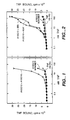
- conjugated anti-TNF antibodies can be used to greatly increase the amount of TNF that can be bound to cells in a fluid environment including macrophage cells.
- the figures show two graphs ( Figure 1 and Figure 2) illustrating how the amount of TNF binding to cells can be increased using the method of this disclosure.
- the expression substance or biologically active substance refers to a compound having a biological effect in a living cell environment.
- examples of such substances are the various cytokines such as TNF, IL1, IL2, and IL6; hormones such as insulin, somatotropin, and ACTH; and growth factors such as nerve growth factor, epidermal growth factor and fibroblast growth factor.
- the cells include any cell that has receptors for both the substance and at least some receptors for the Fc domain of an antibody (e.g., macrophages, monocytes, granulocytes, B cells, T cells, platelets and the like).
- an antibody e.g., macrophages, monocytes, granulocytes, B cells, T cells, platelets and the like.
- control or controlling refers to using the techniques disclosed herein to maintain, increase or decrease the amount of a biologically active substance in the environment of a living cell.
- Antibody conjugates refers to antibodies which have been coupled to one another using covalent chemical bonds.
- the conjugates may comprise identical antibodies (homoconjugates) or non-identical antibodies, at least one of which has available Fab domains for binding substance (heteroconjugates).
- U937 cells living cells known as U937 cells were incubated with saturating concentrations of either monomeric anti-TNF or various conjugates containing this antibody. Then radiolabelled TNF was added to assess the effect of antibody incubation on TNF binding. More details on the methods we used are described below.
- the human histiocytic lymphoma cell line U937 (ATCC CRL 1593) was grown in DME (Mediatech) supplemented with 10% fetal bovine serum (Hyclone) and 1 mM sodium pyruvate (Mediatech).
- the anti-TNF antibody is a murine monoclonal anti-human TNFa called A10G10 obtained from a deposited cell line having an ATCC accession number HB 9736.
- the A10G10 antibodies were covalently coupled to either themselves, the 8B9 antibodies, or IglV using the heterobifunctional cross-linker N-succinimidyl-3-(2-pyridyldithio)-propionate (SPDP, Pierce). Following the general procedure of Cumber et al (Methods in Enzymology 112: 207-224, 1985), each member of the pair was first derivatized with SPDP. Then the SPDP-modified A10G10 was reduced and coupled to the second SPDP-modified protein by thiol-disulfide exchange.
- SPDP N-succinimidyl-3-(2-pyridyldithio)-propionate
- conjugates were purified by gel filtration on Sephacryl@ S-300 gel filtration media (Pharmacia, LKB).
- This product is a hydrophilic cross-linked copolymer of allyl dextran and N,N'- methylene bisacrylamide.
- TNF Binding Assay To measure the increase in TNF binding to U937 cells caused by the conjugates, U937 cells were harvested from culture and washed with DME containing 1.0% bovine serum albumin (DME/BSA). Then 1 x 10 6 U937 cells in 50 ⁇ l of DME/BSA were added to each well of a 96-well break-apart microtiter plate (Corning) which had been previously blocked with DME/BSA. To saturate antibody binding sites, 50 ⁇ l of 40 ⁇ g/ml antibody or conjugate was added to each well, making the final antibody concentration 20 ⁇ g/ml.
- DME/BSA bovine serum albumin
- Fc receptors The increase in TNF binding observed in the presence of antibody conjugates is due to the binding of anti-TNF antibody to the cell surface via Fc receptors, which in turn increase the possible number of TNF binding sites on the cell.
- U937 cells like other human monocytes and macrophages, express Fc receptors (Looney, et al Immunology 136:1641-1647, 1986). These receptors have a relatively low affinity for monomeric IgG, but a high affinity for multimeric antibodies of human and mouse origin (See, for example, Mellman et al, J. Cell Sci. Suppl. 9:45-65, 1988).
- the anti-TNF antibody conjugates did not affect or increase TNF binding on cells which do not express Fc receptors. TNF bound via a conjugated antibody was degraded, consistent with the fate of antibody complexes bound to Fc receptors (Mellman et al, J. Cell Sci. Suppl. 9:45-65, 1988). While the binding of A10G10 monomers to the cells did not lead to a substantial increase in TNF binding, formation of an antigen-antibody complex before binding antibodies to the cell surface would also promote cell surface binding of antigen (Mellman et al, J. Cell Sci. Suppl. 9:45-65, 1988). Nevertheless, labelled A10G10 antibody did bind to the cells.
- A10G10 monomers and conjugates containing A10G10 competed for the same binding sites. Because an antibody of the same subclass, but different specificity also competed for A10G10 binding, the cell surface binding site is specific for the Fc domain of antibodies.
- TNF is no longer available to exert its potent pleiotropic effects on other cells (See, for example, Beutler et al, Ann. Rev. Immunol. 7:625-55, 1989 to show the effects of TNF on other cells.).
- any cells which expressed the appropriate Fc receptor will bind antibody or conjugated antibody, and if that antibody or conjugate contains some anti-substance antibody, the substance will be bound and prevented from reacting with its biological target regardless of origin.
- Monoclonal antibodies have been considered as potential therapeutics for the treatment of disease.
- antibodies against IL2 receptor may inhibit the immune response after tissue transplantation.
- Using the methods described here to conjugate a human antibody to a mouse monoclonal antibody may enhance the therapeutic effectiveness of mouse monoclonal antibodies by increasing the ability of mouse antibodies to bind to human Fc receptors. More effective binding of mouse monoclonals to human Fc receptors would lead to faster clearance of the monoclonal antibody and the substance it binds from tissues. Then mouse monoclonal antibodies would be effective without the need for human monoclonal antibody development or chimerization of mouse monoclonal antibodies with human determinants.
- an anti-hormone antibody or conjugate may be useful to control the excess amount of hormone produced by some tumors.
- An antibody against a drug or poison could be used to control overdoses, by quickly removing it from the circulation.
- An antibody against a cell surface determinant, for example CD4 or IL2 receptor could be used to purge bone marrow of immune reactive cells before transplantation by promoting phagocytosis by Fc receptor-bearing cells.
- an Fc domain is necessary to link the conjugate and substance to an Fc receptor
- the binding reaction which links the substance to an Fc domain need not be an antigen-antibody reaction.
- an antibody engineered with the HIV- binding domain of CD4 would be expected to bind HIV and lead the virus to degradation in macrophages rather than infection of T cells.
- Any receptor, whether natural or synthesized, could be coupled to the Fc domain of an antibody and used to remove an excess of ligand from the circulation or tissues of interest.
- an antibody coupled to recombinant ai-proteinase inhibitor when delivered as an aerosol, could be an effective therapeutic in emphysema by causing removal of elastase by alveolar macrophages.
- Antibody coupling of 0:1 -proteinase inhibitor and aerosol delivery may be particularly attractive because the recombinant non-glycosylated inhibitor is readily cleared from the circulation when administered.
Landscapes
- Health & Medical Sciences (AREA)
- Life Sciences & Earth Sciences (AREA)
- Immunology (AREA)
- Engineering & Computer Science (AREA)
- Chemical & Material Sciences (AREA)
- Molecular Biology (AREA)
- Biomedical Technology (AREA)
- Hematology (AREA)
- Urology & Nephrology (AREA)
- General Health & Medical Sciences (AREA)
- Medicinal Chemistry (AREA)
- Cell Biology (AREA)
- Microbiology (AREA)
- Pathology (AREA)
- Biotechnology (AREA)
- Physics & Mathematics (AREA)
- Analytical Chemistry (AREA)
- Biochemistry (AREA)
- Food Science & Technology (AREA)
- General Physics & Mathematics (AREA)
- Animal Behavior & Ethology (AREA)
- Bioinformatics & Cheminformatics (AREA)
- Pharmacology & Pharmacy (AREA)
- Epidemiology (AREA)
- Proteomics, Peptides & Aminoacids (AREA)
- Public Health (AREA)
- Veterinary Medicine (AREA)
- Mycology (AREA)
- Medicines Containing Antibodies Or Antigens For Use As Internal Diagnostic Agents (AREA)
- Peptides Or Proteins (AREA)
- Dental Preparations (AREA)
- Transition And Organic Metals Composition Catalysts For Addition Polymerization (AREA)
- Cereal-Derived Products (AREA)
- Medicines That Contain Protein Lipid Enzymes And Other Medicines (AREA)
- Preparation Of Compounds By Using Micro-Organisms (AREA)
- Micro-Organisms Or Cultivation Processes Thereof (AREA)
- Steroid Compounds (AREA)
- Medicines Containing Material From Animals Or Micro-Organisms (AREA)
Applications Claiming Priority (2)
| Application Number | Priority Date | Filing Date | Title |
|---|---|---|---|
| US64121191A | 1991-01-15 | 1991-01-15 | |
| US641211 | 1991-01-15 |
Publications (3)
| Publication Number | Publication Date |
|---|---|
| EP0495376A2 true EP0495376A2 (de) | 1992-07-22 |
| EP0495376A3 EP0495376A3 (en) | 1993-04-28 |
| EP0495376B1 EP0495376B1 (de) | 1997-05-28 |
Family
ID=24571410
Family Applications (1)
| Application Number | Title | Priority Date | Filing Date |
|---|---|---|---|
| EP92100186A Expired - Lifetime EP0495376B1 (de) | 1991-01-15 | 1992-01-08 | Ergänzung von Oberflächenrezeptoren |
Country Status (8)
| Country | Link |
|---|---|
| US (1) | US5658746A (de) |
| EP (1) | EP0495376B1 (de) |
| JP (1) | JP3199811B2 (de) |
| AT (1) | ATE153768T1 (de) |
| CA (1) | CA2059060C (de) |
| DE (1) | DE69219913T2 (de) |
| ES (1) | ES2103834T3 (de) |
| GR (1) | GR3024501T3 (de) |
Cited By (1)
| Publication number | Priority date | Publication date | Assignee | Title |
|---|---|---|---|---|
| WO1998015577A1 (en) * | 1996-10-07 | 1998-04-16 | The Austin Research Institute | METHODS OF ACTIVATING OR ENHANCING Fc RECEPTORS |
Families Citing this family (9)
| Publication number | Priority date | Publication date | Assignee | Title |
|---|---|---|---|---|
| CA2439852A1 (en) * | 2001-03-02 | 2002-09-12 | Christine Dingivan | Methods of preventing or treating inflammatory or autoimmune disorders by administering integrin alphav beta3 antagonists |
| WO2003086458A1 (en) | 2002-04-12 | 2003-10-23 | Medimmune, Inc. | Recombinant anti-interleukin-9 antibodies |
| AU2004229501B2 (en) | 2003-04-11 | 2011-08-18 | Medimmune, Llc | Recombinant IL-9 antibodies and uses thereof |
| US7351739B2 (en) * | 2004-04-30 | 2008-04-01 | Wellgen, Inc. | Bioactive compounds and methods of uses thereof |
| CA2585717A1 (en) | 2004-10-27 | 2006-05-04 | Medimmune Inc. | Modulation of antibody specificity by tailoring the affinity to cognate antigens |
| EP2043603A4 (de) | 2006-07-11 | 2010-10-27 | Arubor Corp | Prävention und therapie von rhinosinusitis mit proinflammatorischen zytokinhemmern |
| HUE048024T2 (hu) | 2006-08-10 | 2020-05-28 | Roy C Levitt | Anakinra bronchiolitis obliterans szindróma kezelésében való alkalmazásra |
| AU2008247382B2 (en) | 2007-05-07 | 2014-06-05 | Medimmune, Llc | Anti-ICOS antibodies and their use in treatment of oncology, transplantation and autoimmune disease |
| JP5933975B2 (ja) | 2008-11-12 | 2016-06-15 | メディミューン,エルエルシー | 抗体製剤 |
Family Cites Families (11)
| Publication number | Priority date | Publication date | Assignee | Title |
|---|---|---|---|---|
| US3882225A (en) * | 1968-12-09 | 1975-05-06 | Miles Lab | Direct agglutination immunological reagent |
| JPS58501544A (ja) * | 1981-09-08 | 1983-09-16 | ザ ロツクフエラ− ユニヴア−シテイ | エンドトキシン誘発メディエ−タ−(ショック検定)によるリポプロティンリパ−ゼの抑圧 |
| US4664911A (en) * | 1983-06-21 | 1987-05-12 | Board Of Regents, University Of Texas System | Immunotoxin conjugates employing toxin B chain moieties |
| US4551435A (en) * | 1983-08-24 | 1985-11-05 | Immunicon, Inc. | Selective removal of immunospecifically recognizable substances from solution |
| US4770995A (en) * | 1985-08-29 | 1988-09-13 | New York Blood Center, Inc | Detection of the sensitivity of cells to the effects of tumor necrosis factor and lymphotoxin |
| US5063151A (en) * | 1985-09-20 | 1991-11-05 | Biometallics, Inc. | Immunoassay method and kit |
| US4676980A (en) * | 1985-09-23 | 1987-06-30 | The United States Of America As Represented By The Secretary Of The Department Of Health And Human Services | Target specific cross-linked heteroantibodies |
| US4954617A (en) * | 1986-07-07 | 1990-09-04 | Trustees Of Dartmouth College | Monoclonal antibodies to FC receptors for immunoglobulin G on human mononuclear phagocytes |
| WO1989005351A2 (en) * | 1987-12-04 | 1989-06-15 | Schering Biotech Corporation | Human fc-gamma receptor |
| US5223395A (en) * | 1988-12-01 | 1993-06-29 | Centocor, Inc. | Immunometric assays for tumor necrosis factor-alpha and methods for preventing the loss of biological activity of tumor necrosis factor-alpha in biological samples |
| KR0162259B1 (ko) * | 1989-12-05 | 1998-12-01 | 아미 펙터 | 감염성 병변 및 염증성 병변을 검출 및 치료하기 위한 키메라 항체 |
-
1992
- 1992-01-08 EP EP92100186A patent/EP0495376B1/de not_active Expired - Lifetime
- 1992-01-08 AT AT92100186T patent/ATE153768T1/de not_active IP Right Cessation
- 1992-01-08 ES ES92100186T patent/ES2103834T3/es not_active Expired - Lifetime
- 1992-01-08 DE DE69219913T patent/DE69219913T2/de not_active Expired - Lifetime
- 1992-01-09 CA CA002059060A patent/CA2059060C/en not_active Expired - Lifetime
- 1992-01-10 JP JP02067492A patent/JP3199811B2/ja not_active Expired - Lifetime
-
1995
- 1995-11-03 US US08/552,432 patent/US5658746A/en not_active Expired - Lifetime
-
1997
- 1997-08-21 GR GR970402140T patent/GR3024501T3/el unknown
Cited By (1)
| Publication number | Priority date | Publication date | Assignee | Title |
|---|---|---|---|---|
| WO1998015577A1 (en) * | 1996-10-07 | 1998-04-16 | The Austin Research Institute | METHODS OF ACTIVATING OR ENHANCING Fc RECEPTORS |
Also Published As
| Publication number | Publication date |
|---|---|
| EP0495376B1 (de) | 1997-05-28 |
| DE69219913D1 (de) | 1997-07-03 |
| CA2059060C (en) | 2002-07-23 |
| GR3024501T3 (en) | 1997-11-28 |
| ATE153768T1 (de) | 1997-06-15 |
| US5658746A (en) | 1997-08-19 |
| JP3199811B2 (ja) | 2001-08-20 |
| CA2059060A1 (en) | 1992-07-16 |
| JPH05215752A (ja) | 1993-08-24 |
| ES2103834T3 (es) | 1997-10-01 |
| DE69219913T2 (de) | 1997-09-11 |
| EP0495376A3 (en) | 1993-04-28 |
Similar Documents
| Publication | Publication Date | Title |
|---|---|---|
| EP0602290B1 (de) | Antikörper-konjugiertes-Hepatitis B-Oberflächenantigen und dessen Verwendung | |
| US5843440A (en) | Cellular and serum protein anchors for modulating pharmacokinetics | |
| CA2172630C (en) | Cellular and serum protein anchors and conjugates | |
| JPS61500789A (ja) | モノクロ−ナル抗−ヒト乳癌抗体 | |
| US5601819A (en) | Bispecific antibodies for selective immune regulation and for selective immune cell binding | |
| US5420251A (en) | Anti-idiotype antibodies specific for the parotope of antibodies which bind to IgE-bearing B cells but not basophils | |
| IL89823A (en) | Antibody heteroconjugates and pharmaceutical compositions containing them | |
| EP0815872A2 (de) | Verbindungen für Zielrichtung | |
| JP2024534545A (ja) | インターロイキン2変異体およびその融合タンパク質 | |
| EP0547137A1 (de) | Homokonjugierte immunglobuline | |
| EP0495376B1 (de) | Ergänzung von Oberflächenrezeptoren | |
| EP0578774A1 (de) | Zellrezeptor spezifische monoklonale antikörper gegen stammzell-faktor-rezeptor | |
| US6136313A (en) | Processes and intermediates for synthetic antibody derivatives | |
| EP0203403A2 (de) | Zum Erkennen von Tumoren fähige klonierte T-Zelle und ein T-Zellen-Antigenrezeptor | |
| AU703091B2 (en) | Monoclonal antibodies against soluble TNF-alpha receptors p55 and p75 as well as against TNF-alpha and its analogues | |
| JPH03503840A (ja) | 異種連結抗体およびその治療的使用 | |
| CA2017528A1 (en) | Monoclonal antibody reactive to a unique antigen widely present on various human leukemia and lymphoma cells and methods of using same for diagnosis and treatment | |
| BE1000587A4 (fr) | Coordinats et procedes en vue d'augmenter la proliferation des lymphocytes b. | |
| JP2001512480A (ja) | 持続的薬物送達およびそれに有用な組成物 | |
| JP2812472B2 (ja) | ヒトIL―2受容体β鎖に対するモノクローナル抗体 | |
| Ichinose et al. | Phorbol myristate acetate modulates calcium ion-dependent superoxide anion generation induced by a monoclonal antibody raised against polymorphonuclear leukocytes | |
| CA2622018A1 (en) | Cellular and serum protein anchors and conjugates | |
| Koch et al. | Interaction of Monocyte Fc Receptors with Monovalent and Polyvalent Ligands | |
| JPH0665099A (ja) | エイズ関連医薬品組成物 | |
| JPH02163078A (ja) | Tリンパ球の増殖を抑制できるモノクロナール抗体 |
Legal Events
| Date | Code | Title | Description |
|---|---|---|---|
| PUAI | Public reference made under article 153(3) epc to a published international application that has entered the european phase |
Free format text: ORIGINAL CODE: 0009012 |
|
| AK | Designated contracting states |
Kind code of ref document: A2 Designated state(s): AT BE CH DE DK ES FR GB GR IT LI LU NL SE |
|
| RAP1 | Party data changed (applicant data changed or rights of an application transferred) |
Owner name: MILES INC. |
|
| PUAL | Search report despatched |
Free format text: ORIGINAL CODE: 0009013 |
|
| AK | Designated contracting states |
Kind code of ref document: A3 Designated state(s): AT BE CH DE DK ES FR GB GR IT LI LU NL SE |
|
| 17P | Request for examination filed |
Effective date: 19930803 |
|
| RAP1 | Party data changed (applicant data changed or rights of an application transferred) |
Owner name: BAYER CORPORATION |
|
| RAP1 | Party data changed (applicant data changed or rights of an application transferred) |
Owner name: BAYER CORPORATION |
|
| 17Q | First examination report despatched |
Effective date: 19950710 |
|
| GRAG | Despatch of communication of intention to grant |
Free format text: ORIGINAL CODE: EPIDOS AGRA |
|
| GRAH | Despatch of communication of intention to grant a patent |
Free format text: ORIGINAL CODE: EPIDOS IGRA |
|
| GRAH | Despatch of communication of intention to grant a patent |
Free format text: ORIGINAL CODE: EPIDOS IGRA |
|
| GRAA | (expected) grant |
Free format text: ORIGINAL CODE: 0009210 |
|
| AK | Designated contracting states |
Kind code of ref document: B1 Designated state(s): AT BE CH DE DK ES FR GB GR IT LI LU NL SE |
|
| REF | Corresponds to: |
Ref document number: 153768 Country of ref document: AT Date of ref document: 19970615 Kind code of ref document: T |
|
| REG | Reference to a national code |
Ref country code: CH Ref legal event code: NV Representative=s name: E. BLUM & CO. PATENTANWAELTE Ref country code: CH Ref legal event code: EP |
|
| REF | Corresponds to: |
Ref document number: 69219913 Country of ref document: DE Date of ref document: 19970703 |
|
| ET | Fr: translation filed | ||
| REG | Reference to a national code |
Ref country code: ES Ref legal event code: FG2A Ref document number: 2103834 Country of ref document: ES Kind code of ref document: T3 |
|
| REG | Reference to a national code |
Ref country code: GR Ref legal event code: FG4A Free format text: 3024501 |
|
| PLBE | No opposition filed within time limit |
Free format text: ORIGINAL CODE: 0009261 |
|
| STAA | Information on the status of an ep patent application or granted ep patent |
Free format text: STATUS: NO OPPOSITION FILED WITHIN TIME LIMIT |
|
| 26N | No opposition filed | ||
| REG | Reference to a national code |
Ref country code: GB Ref legal event code: IF02 |
|
| REG | Reference to a national code |
Ref country code: CH Ref legal event code: PFA Owner name: BAYER CORPORATION Free format text: BAYER CORPORATION#ONE MELLON CENTER 500 GRANT STREET#PITTSBURGH, PA 15219-2502 (US) -TRANSFER TO- BAYER CORPORATION#ONE MELLON CENTER 500 GRANT STREET#PITTSBURGH, PA 15219-2502 (US) |
|
| PGFP | Annual fee paid to national office [announced via postgrant information from national office to epo] |
Ref country code: DK Payment date: 20110127 Year of fee payment: 20 |
|
| PGFP | Annual fee paid to national office [announced via postgrant information from national office to epo] |
Ref country code: CH Payment date: 20110125 Year of fee payment: 20 Ref country code: AT Payment date: 20101221 Year of fee payment: 20 Ref country code: DE Payment date: 20110127 Year of fee payment: 20 Ref country code: SE Payment date: 20110127 Year of fee payment: 20 Ref country code: FR Payment date: 20110301 Year of fee payment: 20 Ref country code: LU Payment date: 20110201 Year of fee payment: 20 Ref country code: IT Payment date: 20110126 Year of fee payment: 20 Ref country code: NL Payment date: 20110128 Year of fee payment: 20 |
|
| PGFP | Annual fee paid to national office [announced via postgrant information from national office to epo] |
Ref country code: GR Payment date: 20110128 Year of fee payment: 20 Ref country code: BE Payment date: 20110124 Year of fee payment: 20 |
|
| PGFP | Annual fee paid to national office [announced via postgrant information from national office to epo] |
Ref country code: GB Payment date: 20110125 Year of fee payment: 20 Ref country code: ES Payment date: 20110126 Year of fee payment: 20 |
|
| REG | Reference to a national code |
Ref country code: DE Ref legal event code: R071 Ref document number: 69219913 Country of ref document: DE |
|
| REG | Reference to a national code |
Ref country code: DE Ref legal event code: R071 Ref document number: 69219913 Country of ref document: DE |
|
| REG | Reference to a national code |
Ref country code: CH Ref legal event code: PL |
|
| REG | Reference to a national code |
Ref country code: NL Ref legal event code: V4 Effective date: 20120108 |
|
| REG | Reference to a national code |
Ref country code: DK Ref legal event code: EUP |
|
| BE20 | Be: patent expired |
Owner name: *BAYER CORP. Effective date: 20120108 |
|
| REG | Reference to a national code |
Ref country code: GB Ref legal event code: PE20 Expiry date: 20120107 |
|
| REG | Reference to a national code |
Ref country code: SE Ref legal event code: EUG |
|
| REG | Reference to a national code |
Ref country code: GR Ref legal event code: MA Ref document number: 970402140 Country of ref document: GR Effective date: 20120109 |
|
| REG | Reference to a national code |
Ref country code: ES Ref legal event code: FD2A Effective date: 20120411 |
|
| REG | Reference to a national code |
Ref country code: AT Ref legal event code: MK07 Ref document number: 153768 Country of ref document: AT Kind code of ref document: T Effective date: 20120108 |
|
| PG25 | Lapsed in a contracting state [announced via postgrant information from national office to epo] |
Ref country code: DE Free format text: LAPSE BECAUSE OF EXPIRATION OF PROTECTION Effective date: 20120109 Ref country code: ES Free format text: LAPSE BECAUSE OF EXPIRATION OF PROTECTION Effective date: 20120109 |
|
| PG25 | Lapsed in a contracting state [announced via postgrant information from national office to epo] |
Ref country code: GB Free format text: LAPSE BECAUSE OF EXPIRATION OF PROTECTION Effective date: 20120107 |