EP0499366A2 - Système de vérification de la traduction d'un document - Google Patents
Système de vérification de la traduction d'un document Download PDFInfo
- Publication number
- EP0499366A2 EP0499366A2 EP92300597A EP92300597A EP0499366A2 EP 0499366 A2 EP0499366 A2 EP 0499366A2 EP 92300597 A EP92300597 A EP 92300597A EP 92300597 A EP92300597 A EP 92300597A EP 0499366 A2 EP0499366 A2 EP 0499366A2
- Authority
- EP
- European Patent Office
- Prior art keywords
- word
- words
- document
- list
- text document
- Prior art date
- Legal status (The legal status is an assumption and is not a legal conclusion. Google has not performed a legal analysis and makes no representation as to the accuracy of the status listed.)
- Withdrawn
Links
Images



Classifications
-
- G—PHYSICS
- G06—COMPUTING OR CALCULATING; COUNTING
- G06F—ELECTRIC DIGITAL DATA PROCESSING
- G06F40/00—Handling natural language data
- G06F40/20—Natural language analysis
- G06F40/237—Lexical tools
- G06F40/242—Dictionaries
-
- G—PHYSICS
- G06—COMPUTING OR CALCULATING; COUNTING
- G06F—ELECTRIC DIGITAL DATA PROCESSING
- G06F40/00—Handling natural language data
- G06F40/40—Processing or translation of natural language
- G06F40/42—Data-driven translation
- G06F40/44—Statistical methods, e.g. probability models
-
- G—PHYSICS
- G06—COMPUTING OR CALCULATING; COUNTING
- G06F—ELECTRIC DIGITAL DATA PROCESSING
- G06F40/00—Handling natural language data
- G06F40/40—Processing or translation of natural language
- G06F40/58—Use of machine translation, e.g. for multi-lingual retrieval, for server-side translation for client devices or for real-time translation
Definitions
- This invention relates to the analysis of textual documents, for example to testing the accuracy of a translation of a document.
- the basis of a dictionary showing the correspondence of words between two languages may be compiled from analysis of one or more documents written in both of the languages.
- a method of processing a first text document and a second text document each of the documents being divided into segments and stored in memory means of a text processing system, the segments being further divided into words, the method comprising carrying out the steps of:
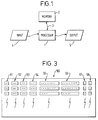
- a processor 1 which is in two-way communication with a random access memory 2 along a bus 3; an input unit 4 which may, for instance, be a keyboard; and an output unit 5 which is also connected to the processor 1 and may, for instance, be a CRT.
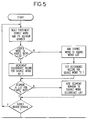
- the example of the method comprises storing two textual documents in the memory 2, one of which is a (possibly erroneous) translation of the other; comparing the distributions and forms of words within the documents; determining by a statistical process which words are likely to be correctly translated and compiling a list of those which seem to have been inconsistently translated. The list may then be assessed by a linguist who might correct any errors in the translation. Words which have been correctly translated may be paired with their translated equivalents and the pairs thus formed may be used as the basis of a bilingual dictionary. It should be noted that the method will not determine as having been incorrectly translated any words which are systematically mistranslated at every one of their occurrences.
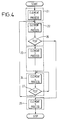
- a source document 60 and a target document 80 are held in the memory 2. If the example of the method is to be used to search for likely errors in a translation, one of the two documents should be a copy of the original text and the other a copy of the translated text.
- reference numerals between 60 and 69 refer to features related to the source document 60 and reference numerals between 80 and 89 refer to features related to the target document 80.
- the first stage of the example of the method is to tabulate the positions of words within each document.
- the two documents are divided into numbered segments 61a-n and 81a-n, each containing a number of words 62m-z and 82a-n, in such a way that each segment 61a-n may be paired with one corresponding segment 81a-n which, if the translation has been accurately performed, would have substantially the same meaning. Therefore, if the translation between the two documents has been accurately performed, it may often be the case that a word in a particular segment of one document will represent a translation of one of the words in the corresponding segment of the other document.
- Such symbols or combinations of symbols are treated as if they were alphabetic characters.
- a source word list 63, a source word occurrence set 65 and a source word frequency list 68 are compiled in relation to the source document 60.
- the source word list 63 is a list of words 64a-n, these words being all the unique word forms in the source document 60, with each distinct word being included once only.
- the source word occurrence set 65 is a set of source word occurrence lists 66a-n which are lists of segment numbers 67aa-nn, each source word occurrence list 66a-n corresponding to one of the words 64a-n and being a list of the numbers of the segments 61a-n in which that word 64a-n occurs.
- a segment number is included only once in a particular source word occurrence list 66a-n even if the word 64a-n to which it relates occurs more than once in the segment 61a-n having that number.
- the source word frequency list 68 is a list of records 69a-n, each record 69a-n corresponding to one of the words 64a-n and being a record of the number of times that that word 64a-n has been found to occur in the source document 60.
- the source word list 63, the source word occurrence set 65 and the source word frequency list 68 may be compiled by taking each word 62m-z in each segment 61a-n in turn, searching for it in the source word list 63; appending it to the source word list 63 if it is not found there; incrementing the record 69a-n corresponding to the word (or setting that record to 1 if the word had not previously been found) and appending the number of the segment 61a-n in which the word has been found to the source word occurrence list 66a-n corresponding to that word if the word had not previously been found in that segment.
- Table 3 shows portions of the source word list, the source word frequency list and the source word occurrence set which would be complied for the document in Table 1.
- SINS occurs twice in the segment numbered 4 its occurrence in that segment is recorded only once in the source word occurrence list corresponding to the word "SINS”.
- a target word list 83, a target word occurrence set 85 and a target word frequency list 88 are compiled in relation to the target document 80.
- the target word list 83 is a list of words 84a-n, these words being all the distinct words in the target document 80, with each distinct word being included once only.
- the target word occurrence set 85 is a sat of target word occurrence lists 86a-n which are lists of segment numbers 87aa-nn, each target word occurrence list 86a-n corresponding to one of the words 84a-n and being a list of the numbers of the segments 81a-n in which that word 84a-n occurs.
- a segment number is included only once in a particular target word occurrence list 86a-n even if the word 84a-n to which it relates occurs more than once in the segment 81a-n having that number.
- the target word frequency list is a list of records 89a-n, each record 89a-n corresponding to one of the words 84a-n and being a record of the number of times that that word 84a-n has been found to occur.
- the target word list 83, the target word occurrence set 85 and the target word frequency list 88 may be complied by taking each word 82m-z in each segment 81a-n in turn, searching for it in the target word list 83; appending it to the target word list 83 if it is not found there; incrementing the record 89a-n corresponding to the word (or setting that record to 1 if the word had not previously been found) and appending the number of the segment 81a-n in which the word has been found to the target word occurrence list 86a-n corresponding to that word if the word had not previously been found in that segment.
- Each word 64a-n is taken in turn and is paired, in turn, with each word 84a-n which occurs in a segment which is included in the target word occurrence list 67aa-nn corresponding to that word 64a-n.
- the following values are determined:
- p1(H)(x,y) calculated by using this equation will tend to increase if the distributions of the words x and y throughout the document are such that those words occur more frequently in the same segment as each other; or if the number of times that the words x and y occur in the same segment as each other is higher in comparison to the total number of times that they occur; but will tend to decrease if there is a greater difference between the total numbers of times that the words x and y occur in their respective documents.
- the value of p1(H)(x,y) calculated for a pair of words is taken to indicate the likelihood that those words match
- the most likely word in the target document to match a particular word in the source document is taken to be that word in the target document which yielded the greatest value of p1(H)(x,y) when paired with the word from the source document.
- the highest and the second-highest values of p1(H)(x,y) found for pairings including that word are stored, along with a record of the words in the target document which were included in the pairings for which those values were calculated.
- these words are designated and respectively and the highest and second-highest values of p1(H)(x,y) are designated p1(H)(x, ) and p1(H)(x, ) respectively.
- the word is assumed to be the most likely word remaining in the target word list to match the word x .
- the pairing for which the highest value of p1(H)(x,y) was calculated could be chosen. This would be a value of p1(H)(x, ) calculated for a pairing of a word x with its corresponding word . However, if the value of p1(H)(x, ) calculated for the pairing of the same word x with its corresponding word is close to that value of p1(H)(x, ) then it may be unclear whether the word x should be matched with the word or with the word (or perhaps with both).
- the most likely pair to be matched is that for which, for a particular word x , there is the greatest relative difference between p1(H)(x, ) and p1(H)(x, ) .
- r1(H)(x, ) is calculated by using the equation shown in Figure 11. The form of this equation results in r1(H)(x, ) being - in general - greater the more likely it is that a word x and its corresponding word match.
- the word the word with which the word x * was paired to give the highest value of p1(H)(x,y) , is assumed to match the word x * and is stored in a temporary match store 50. Because the word is assumed to match the word x * , the word need no-longer be included in processing directed to the finding of matches where its occurrence in the target document corresponds to an occurrence of word x * in the source document, i.e. where the lists of segment number 67aa-nn and 87aa-nn corresponding to the words x * and both contain a particular segment number.
- the words x * and which are in correspondence are deleted from the source word occurrence set 65 and from the target word occurrence set 85 and the source word list 63, the target word list 83, the source word frequency list 68 and the target word frequency list 88 are updated accordingly:
- Processing is then transferred to Element 3 in order that more words which match the word x * may be located.
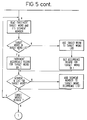
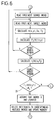
- each set of letters which could represent a stem in the word identified previously as the most likely match for x* and stored in the temporary match store 50 is taken in turn and the segment numbers 87a-n in the target word occurrence lists 86a-n of each remaining word 84a-n which contains that stem are collected in a temporary stem occurrence store 51.
- the following values are determined:
- the value of p2(H)(x * ,q) calculated by using this equation will tend to increase if the distribution of the words x * and the words 84a-n which contain the stem q throughout the document is such that those words occur more frequently in the same segment as each other; if the number of times that the words x * and the words 84a-n which contain the stem q occur in the same segment as each other is higher in comparison to the total number of times that they occur or if the stem q is longer; but will tend to reduce if there is a greater difference between the total numbers of times that the words x * and the words 84a-n which contain the stem q occur in their respective documents.
- the highest and the second-highest values of p2(H)(x * ,q) calculated for possible stems q are stored, along with a record of the stems q for which those values were calculated. These stems are designated q' and q'' respectively and the highest and the second-highest values of p2(H)(x * ,q) are designated p2(H)(x * ,q') and p2(H)(x * ,q'') respectively.
- the words containing the stem q' are assumed to be the most likely of the remaining words in the target word list with stems common to the word to match word x * .
- the words 84a-n containing the stem q' are assumed to match the word x * and therefore those words need no-longer be included in processing directed to the finding of matches where their occurrences in the target document correspond to an occurrence of the word x * in the source document, i.e. where the lists of segment numbers 67aa-nn and 87aa-nn corresponding to the word x * and the words 84a-n containing the stem q' respectively both contain a particular segment number.
- the words x * and the words 84a-n containing the stem q' which are in correspondence are deleted from the source word occurrence set 65 and then the target word occurrence set 85 and the source word list 63, the target word list 83, the source word frequency list 68 and the target word frequency list 88 are updated accordingly:
- the morpheme table 70 consists of: a prefix list 71 which is a list of prefixes 72a-n; a prefix frequency list 73 which is a list of the numbers of times that each prefix 72a-n has been found to occur 74a-n; a suffix list 75 which is a list of suffixes 76a-n; and a suffix frequency list 77 which is a list of the numbers of times that each suffix 76a-n has been found to occur 78a-n.
- each remaining word 84a-n from the target document is taken in turn and is paired with the word x * .
- the following values are determined:
- the value of p3(H)(x * ,y) calculated by using this equation will tend to increase if the distribution of the words x * and y throughout the document is such that those words occur more frequently in the same segment as each other; if the number of times that the words x * and y occur in the same segment as each other is higher in comparison to the total number of times that they occur; if the longest group of consecutive characters common to the word y and to the word is longer; or if the groups of characters before or after that group of consecutive characters have been found to occur more frequently; but will tend to reduce if there is a greater difference between the total numbers of times that the words x * and y occur in their respective documents.
- the highest and the second-highest values of p3(H)(x * ,y) found are stored, along with a record of the words in the target document which were included in the pairings for which those values were calculated. These words are designated and respectively and the highest and the second-highest values of p3(H)(x * ,y) are designated p1(H)(x * , ) and p3(H)(x * , ) respectively. Word is assumed to be the most likely of the remaining, words in the target document to match word x * .
- the word the word with which x * was paired to give the highest value of p3(H)(x * ,y) , is assumed to match the word x * and therefore the word need no-longer be included in processing directed to the finding of matches where its occurrence in the target document corresponds to an occurrence of the word x * in the source document, i.e. where the word x * and the word occur in segments having the same segment numbers in the source and target documents respectively.
- the corresponding words x * and are deleted from the and the source word occurrence set 65 and from the target word occurrence set 85 and the source word list 63, the target word list 83, the source word frequency list 68 and the target word frequency list 88 are updated accordingly:
- the morpheme table 70 is amended. If any characters occur before or after the stem in the word (which stem was located during the calculation of the value of L for the word ) then the morpheme table 70 is amended. If any characters occur before the stem in the word then they are assumed to represent a prefix and are denoted by y p . A search is made in the prefix list 71 for the prefix y p . If a prefix identical to y p is found there then the record of the number of times that that prefix has been found to occur is amended by incrementing by 1 the record 74a-n corresponding to the prefix y p .
- the prefix y p is added to the prefix list 71; the record of the number of times that that prefix has been found to occur (the record 74a-n corresponding to the prefix y p ) is set to 1; and a search is made in the prefix list 71 for prefixes which consist of the first characters of prefix y p .
- the words listed in column 92 of the results table 90 in which each such prefix occurred are taken in turn and if a statistically significant number of them begins with the characters of prefix y p then it is assumed that the previous assessment of its prefix was incorrect; its prefix is assumed to be y p ; and therefore the parsing previously stored in column 92 of the results table 90 for each of those words is altered to give y p as the prefix; the corresponding flag in column 98 of the results table 90 is set to indicate that that pairing has been updated in the morpheme table 70 the record of the number of times that the prefix y p has been found to occur (the record 74a-n corresponding to the prefix y p ) is incremented by 1 and the record 74a-n corresponding to the previously assessed prefix is decremented by 1.
- suffix list 75 For the suffix y s . If a suffix identical to y s is found there then the record of the number of times that that suffix has been found to occur is amended by incrementing by 1 the record 74a-n corresponding to the suffix y s .
- suffix list 75 If a suffix identical to y3 is not found in the suffix list 75 then the prefix y s is added to the prefix list 75, the record of the number of times that that suffix has been found to occur (the record 78a-n corresponding to the suffix y s ) is set to 1; and a search is made in the suffix list 75 for suffixes which consist of the final characters of suffix y s .
- the words in which each such prefix occurred are taken in turn and if a statistically significant number of them ends with the characters of suffix y s then it is assumed that the previous assessment of its suffix was incorrect; its suffix is assumed to be y s ; and therefore the parsing previously stored in column 92 of the results table 90 for each of those words is altered to give y s as the suffix; the corresponding flag in column 98 of the results table 90 is set to indicate that the parsing has been updated and in the morpheme table 70 the record of the number of times that suffix y s has been found to occur (the record 74a-n corresponding to the suffix y s ) is incremented by 1 and the record 78a-n corresponding to the previously assessed suffix is decremented by 1.
- the results table 90 is also updated to take account of the newly located match by the addition of a row of data to that table, the row containing:
- Processing of Element 4 is then repeated in order that more words which match the word x * may be located.
- any words remaining in the source word list 63 or the target word list 83 may be tentatively assumed to have been erroneously translated. In order that they may be assessed by a linguist who might correct any errors in the translation of the documents, these words are transmitted for display to the output unit 5. For convenience, the words which, in the original document, surrounded the remaining words may also be transmitted for display since they would allow the linguist to judge more accurately the context of each remaining word.
- a list of the pairs of words which have been found to match may be transmitted for display to the output unit 5.
- the matched words may be assessed in order to locate "semantic domains". This may be done by performing the method using the set of matched target words as a source document and the set of matched source words as a target document. For example, in a source document written in English, the words “BIG” and “LARGE” may occur. These may be in a semantic domain with the words “GRAND” and "GROS” in a French target document. During the processing of the method it may be found that "BIG” is matched to some occurrences of "GRAND” and of "GROS” and that "LARGE” is matched to other occurrences of "GRAND” and of "GROS".
- the initial documents may be transposed and the method repeated: copies of the initial source document and the initial target document may be stored as the target document 80 and the source document 60 and the entire method as described above may then be performed for a second time. The results of the first and the second performances of the method may then be compared in order to judge their accuracy.
Landscapes
- Engineering & Computer Science (AREA)
- Theoretical Computer Science (AREA)
- Physics & Mathematics (AREA)
- Audiology, Speech & Language Pathology (AREA)
- Computational Linguistics (AREA)
- General Health & Medical Sciences (AREA)
- Health & Medical Sciences (AREA)
- General Engineering & Computer Science (AREA)
- General Physics & Mathematics (AREA)
- Artificial Intelligence (AREA)
- Probability & Statistics with Applications (AREA)
- Information Retrieval, Db Structures And Fs Structures Therefor (AREA)
- Machine Translation (AREA)
Applications Claiming Priority (2)
| Application Number | Priority Date | Filing Date | Title |
|---|---|---|---|
| GB9103080 | 1991-02-14 | ||
| GB919103080A GB9103080D0 (en) | 1991-02-14 | 1991-02-14 | Analysing textual documents |
Publications (2)
| Publication Number | Publication Date |
|---|---|
| EP0499366A2 true EP0499366A2 (fr) | 1992-08-19 |
| EP0499366A3 EP0499366A3 (en) | 1993-10-20 |
Family
ID=10689995
Family Applications (1)
| Application Number | Title | Priority Date | Filing Date |
|---|---|---|---|
| EP19920300597 Withdrawn EP0499366A3 (en) | 1991-02-14 | 1992-01-23 | System for checking the translation of a document |
Country Status (4)
| Country | Link |
|---|---|
| US (1) | US5323310A (fr) |
| EP (1) | EP0499366A3 (fr) |
| JP (1) | JPH0528183A (fr) |
| GB (1) | GB9103080D0 (fr) |
Cited By (2)
| Publication number | Priority date | Publication date | Assignee | Title |
|---|---|---|---|---|
| EP0597611A3 (en) * | 1992-10-30 | 1994-09-21 | Canon Europa Nv | Aligning texts. |
| WO1995000912A1 (fr) * | 1993-06-18 | 1995-01-05 | Canon Research Centre Europe Ltd. | Procedes et appareils de traitement d'une base de donnees bilingue |
Families Citing this family (20)
| Publication number | Priority date | Publication date | Assignee | Title |
|---|---|---|---|---|
| US5608622A (en) * | 1992-09-11 | 1997-03-04 | Lucent Technologies Inc. | System for analyzing translations |
| JP3408291B2 (ja) * | 1993-09-20 | 2003-05-19 | 株式会社東芝 | 辞書作成支援装置 |
| US6064959A (en) * | 1997-03-28 | 2000-05-16 | Dragon Systems, Inc. | Error correction in speech recognition |
| US6308149B1 (en) * | 1998-12-16 | 2001-10-23 | Xerox Corporation | Grouping words with equivalent substrings by automatic clustering based on suffix relationships |
| WO2000051032A1 (fr) * | 1999-02-26 | 2000-08-31 | Garfinkle Limited Partnership Ii | Systeme, procede, et produit programme informatise servant a la creation d'un e-mail autodestructif selectionnable par l'utilisateur |
| US6446036B1 (en) | 1999-04-20 | 2002-09-03 | Alis Technologies, Inc. | System and method for enhancing document translatability |
| US6338033B1 (en) * | 1999-04-20 | 2002-01-08 | Alis Technologies, Inc. | System and method for network-based teletranslation from one natural language to another |
| JP4310023B2 (ja) * | 1999-06-17 | 2009-08-05 | キヤノン株式会社 | 縮小画像作成方法及び装置、記憶媒体 |
| JP3855551B2 (ja) * | 1999-08-25 | 2006-12-13 | 株式会社日立製作所 | 検索方法及び検索システム |
| AUPQ539700A0 (en) * | 2000-02-02 | 2000-02-24 | Worldlingo.Com Pty Ltd | Translation ordering system |
| US6885985B2 (en) * | 2000-12-18 | 2005-04-26 | Xerox Corporation | Terminology translation for unaligned comparable corpora using category based translation probabilities |
| US7644057B2 (en) * | 2001-01-03 | 2010-01-05 | International Business Machines Corporation | System and method for electronic communication management |
| FR2833375B1 (fr) * | 2001-12-07 | 2004-06-04 | Amadeus | Procede, dispositif d'adaptation de fichiers numeriques |
| US8271495B1 (en) | 2003-12-17 | 2012-09-18 | Topix Llc | System and method for automating categorization and aggregation of content from network sites |
| US7814089B1 (en) | 2003-12-17 | 2010-10-12 | Topix Llc | System and method for presenting categorized content on a site using programmatic and manual selection of content items |
| US7930647B2 (en) * | 2005-12-11 | 2011-04-19 | Topix Llc | System and method for selecting pictures for presentation with text content |
| US8239762B2 (en) * | 2006-03-20 | 2012-08-07 | Educational Testing Service | Method and system for automatic generation of adapted content to facilitate reading skill development for language learners |
| US8852851B2 (en) | 2006-07-10 | 2014-10-07 | Micron Technology, Inc. | Pitch reduction technology using alternating spacer depositions during the formation of a semiconductor device and systems including same |
| US9405732B1 (en) | 2006-12-06 | 2016-08-02 | Topix Llc | System and method for displaying quotations |
| JP5105513B2 (ja) | 2007-07-20 | 2012-12-26 | インターナショナル・ビジネス・マシーンズ・コーポレーション | 処理対象として適切なテキストを選択する技術 |
Family Cites Families (29)
| Publication number | Priority date | Publication date | Assignee | Title |
|---|---|---|---|---|
| FR21956E (fr) * | 1919-11-20 | 1921-04-21 | Charles Guillemin | Poignée pour freins de cycles |
| JPS5853787B2 (ja) * | 1979-08-30 | 1983-12-01 | シャープ株式会社 | 電子辞典 |
| US4381551A (en) * | 1979-09-13 | 1983-04-26 | Sharp Kabushiki Kaisha | Electronic translator |
| JPS58101365A (ja) * | 1981-12-14 | 1983-06-16 | Hitachi Ltd | 機械翻訳システム |
| JPS58117039A (ja) * | 1981-12-30 | 1983-07-12 | Fujitsu Ltd | 仮名漢字変換方式 |
| JPS60163161A (ja) * | 1984-02-06 | 1985-08-26 | Hitachi Ltd | 辞書保守方式 |
| JPH0664585B2 (ja) * | 1984-12-25 | 1994-08-22 | 株式会社東芝 | 翻訳編集装置 |
| US4672539A (en) * | 1985-04-17 | 1987-06-09 | International Business Machines Corp. | File compressor |
| US4800522A (en) * | 1985-05-14 | 1989-01-24 | Sharp Kabushiki Kaisha | Bilingual translation system capable of memorizing learned words |
| JPS61272866A (ja) * | 1985-05-29 | 1986-12-03 | Nec Corp | 英文単語チエツク機能付ワ−ドプロセツサ |
| JPS6244874A (ja) * | 1985-08-22 | 1987-02-26 | Toshiba Corp | 機械翻訳装置 |
| JPH0638263B2 (ja) * | 1985-10-01 | 1994-05-18 | 株式会社リコー | 頁対応付け処理方式 |
| US4829580A (en) * | 1986-03-26 | 1989-05-09 | Telephone And Telegraph Company, At&T Bell Laboratories | Text analysis system with letter sequence recognition and speech stress assignment arrangement |
| JPH0743719B2 (ja) * | 1986-05-20 | 1995-05-15 | シャープ株式会社 | 機械翻訳装置 |
| JPH0682374B2 (ja) * | 1986-06-05 | 1994-10-19 | 株式会社リコー | 関係学習システム |
| JPH0656614B2 (ja) * | 1986-08-09 | 1994-07-27 | 富士通株式会社 | 生成文法自動生成装置 |
| JPS63153669A (ja) * | 1986-08-25 | 1988-06-27 | Nec Corp | 日本語文から中国語文への翻訳方式 |
| GB2199680A (en) * | 1986-11-28 | 1988-07-13 | Sharp Kk | Translating apparatus |
| US4864502A (en) * | 1987-10-07 | 1989-09-05 | Houghton Mifflin Company | Sentence analyzer |
| US4868750A (en) * | 1987-10-07 | 1989-09-19 | Houghton Mifflin Company | Collocational grammar system |
| US4852173A (en) * | 1987-10-29 | 1989-07-25 | International Business Machines Corporation | Design and construction of a binary-tree system for language modelling |
| JP2664915B2 (ja) * | 1988-01-12 | 1997-10-22 | 株式会社日立製作所 | 情報検索システム |
| JP2831647B2 (ja) * | 1988-03-31 | 1998-12-02 | 株式会社東芝 | 機械翻訳システム |
| US4849898A (en) * | 1988-05-18 | 1989-07-18 | Management Information Technologies, Inc. | Method and apparatus to identify the relation of meaning between words in text expressions |
| JPH0268662A (ja) * | 1988-09-02 | 1990-03-08 | Sharp Corp | 機械翻訳装置 |
| US5140522A (en) * | 1988-10-28 | 1992-08-18 | Kabushiki Kaisha Toshiba | Method and apparatus for machine translation utilizing previously translated documents |
| JP2983024B2 (ja) * | 1988-11-18 | 1999-11-29 | ブラザー工業株式会社 | 自然言語処理装置 |
| JPH02140868A (ja) * | 1988-11-22 | 1990-05-30 | Toshiba Corp | 機械翻訳システム |
| JPH03129469A (ja) * | 1989-10-14 | 1991-06-03 | Canon Inc | 自然言語処理装置 |
-
1991
- 1991-02-14 GB GB919103080A patent/GB9103080D0/en active Pending
-
1992
- 1992-01-23 EP EP19920300597 patent/EP0499366A3/en not_active Withdrawn
- 1992-01-31 US US07/830,027 patent/US5323310A/en not_active Expired - Fee Related
- 1992-02-14 JP JP4027626A patent/JPH0528183A/ja active Pending
Non-Patent Citations (1)
| Title |
|---|
| ANGEWANDTE INFORMATIK vol. 31, no. 4, April 1989, WIESBADEN DE pages 159 - 167 B. TEUFEL 'VISIR - ein Prototyp zum Vergleich von Texten' * |
Cited By (4)
| Publication number | Priority date | Publication date | Assignee | Title |
|---|---|---|---|---|
| EP0597611A3 (en) * | 1992-10-30 | 1994-09-21 | Canon Europa Nv | Aligning texts. |
| US5893134A (en) * | 1992-10-30 | 1999-04-06 | Canon Europa N.V. | Aligning source texts of different natural languages to produce or add to an aligned corpus |
| WO1995000912A1 (fr) * | 1993-06-18 | 1995-01-05 | Canon Research Centre Europe Ltd. | Procedes et appareils de traitement d'une base de donnees bilingue |
| US5867811A (en) * | 1993-06-18 | 1999-02-02 | Canon Research Centre Europe Ltd. | Method, an apparatus, a system, a storage device, and a computer readable medium using a bilingual database including aligned corpora |
Also Published As
| Publication number | Publication date |
|---|---|
| EP0499366A3 (en) | 1993-10-20 |
| GB9103080D0 (en) | 1991-04-03 |
| JPH0528183A (ja) | 1993-02-05 |
| US5323310A (en) | 1994-06-21 |
Similar Documents
| Publication | Publication Date | Title |
|---|---|---|
| EP0499366A2 (fr) | Système de vérification de la traduction d'un document | |
| Martins et al. | Spelling correction for search engine queries | |
| EP0415000A2 (fr) | Procédé et dispositif pour la détection et correction de fautes d'orthographe | |
| US5752051A (en) | Language-independent method of generating index terms | |
| US4868750A (en) | Collocational grammar system | |
| US5285386A (en) | Machine translation apparatus having means for translating polysemous words using dominated codes | |
| US5774834A (en) | System and method for correcting a string of characters by skipping to pseudo-syllable borders in a dictionary | |
| CA1300272C (fr) | Systeme d'annotation de lexemes de textes numerises | |
| US5680628A (en) | Method and apparatus for automated search and retrieval process | |
| US20030233235A1 (en) | System, method, program product, and networking use for recognizing words and their parts of speech in one or more natural languages | |
| EP0394633A2 (fr) | Méthode indépendante du langage de séparation des mots d'un texte utilisant un classement des caractères par catégories | |
| CA2351404A1 (fr) | Procede et dispositif servant a ameliorer l'identification de parties vocales | |
| EP0330170B1 (fr) | Appareil de traitement de langues européennes avec la capacité pour la correction d'orthographe | |
| Ganfure et al. | Design and implementation of morphology based spell checker | |
| Cha et al. | Generalized unknown morpheme guessing for hybrid POS tagging of Korean | |
| Kaur et al. | Spell checker for Punjabi language using deep neural network | |
| US5075851A (en) | System for translating a source language word with a prefix into a target language word with multiple forms | |
| AU659639B2 (en) | Analysing textual documents | |
| CA2068622A1 (fr) | Analyse de documents textuels | |
| Braun et al. | Automatic, semantics-based indexing of natural language texts for information retrieval systems | |
| JPS6118072A (ja) | 辞書デ−タの自動登録方式 | |
| NZ242711A (en) | Testing accuracy of language translated texts: computer algorithm | |
| JP3880087B2 (ja) | 形態素解析装置 | |
| KR100328963B1 (ko) | 띄어쓰기오류허용한국어형태소분석방법및그장치 | |
| EP1076305A1 (fr) | Un procédé phonétique pour retrouver et présenter des informations électroniques de grandes sources d'informations, un dispositif pour mettre en oeuvre ce procédé, un medium lisible par ordinateur, et un élément de programme d'ordinateur |
Legal Events
| Date | Code | Title | Description |
|---|---|---|---|
| PUAI | Public reference made under article 153(3) epc to a published international application that has entered the european phase |
Free format text: ORIGINAL CODE: 0009012 |
|
| AK | Designated contracting states |
Kind code of ref document: A2 Designated state(s): AT BE CH DE DK ES FR GB GR IT LI LU MC NL PT SE |
|
| PUAL | Search report despatched |
Free format text: ORIGINAL CODE: 0009013 |
|
| AK | Designated contracting states |
Kind code of ref document: A3 Designated state(s): AT BE CH DE DK ES FR GB GR IT LI LU MC NL PT SE |
|
| 17P | Request for examination filed |
Effective date: 19940414 |
|
| 17Q | First examination report despatched |
Effective date: 19970603 |
|
| GRAG | Despatch of communication of intention to grant |
Free format text: ORIGINAL CODE: EPIDOS AGRA |
|
| GRAG | Despatch of communication of intention to grant |
Free format text: ORIGINAL CODE: EPIDOS AGRA |
|
| GRAH | Despatch of communication of intention to grant a patent |
Free format text: ORIGINAL CODE: EPIDOS IGRA |
|
| 18D | Application deemed to be withdrawn |
Effective date: 19990202 |