EP0511144B1 - Verfahren und Vorrichtung zur Verbindung von lokalen Netzwerken mit Weitbereichsnetzwerken - Google Patents
Verfahren und Vorrichtung zur Verbindung von lokalen Netzwerken mit Weitbereichsnetzwerken Download PDFInfo
- Publication number
- EP0511144B1 EP0511144B1 EP92480051A EP92480051A EP0511144B1 EP 0511144 B1 EP0511144 B1 EP 0511144B1 EP 92480051 A EP92480051 A EP 92480051A EP 92480051 A EP92480051 A EP 92480051A EP 0511144 B1 EP0511144 B1 EP 0511144B1
- Authority
- EP
- European Patent Office
- Prior art keywords
- network
- node
- data processing
- local area
- processing network
- Prior art date
- Legal status (The legal status is an assumption and is not a legal conclusion. Google has not performed a legal analysis and makes no representation as to the accuracy of the status listed.)
- Expired - Lifetime
Links
Images


Classifications
-
- H—ELECTRICITY
- H04—ELECTRIC COMMUNICATION TECHNIQUE
- H04L—TRANSMISSION OF DIGITAL INFORMATION, e.g. TELEGRAPHIC COMMUNICATION
- H04L12/00—Data switching networks
- H04L12/28—Data switching networks characterised by path configuration, e.g. LAN [Local Area Networks] or WAN [Wide Area Networks]
- H04L12/46—Interconnection of networks
- H04L12/4604—LAN interconnection over a backbone network, e.g. Internet, Frame Relay
Definitions
- the present invention relates in general to computer network communications and in particular to a method and apparatus for interconnecting wide area computer data processing networks with local area computer networks. Still more particularly, the present invention relates to a method and apparatus for interconnecting a wide area computer data processing network with a local area computer network while minimizing the amount of routing information which must be maintained within the wide area computer data processing network.
- Computer system networks as for example described in US-A-4 901 312 continue to increase in popularity. That is, in large part, because such networks allow applications and users running on many different systems to communicate with each other, providing data and resource sharing. Networks may be limited to a desktop systems located in close physical proximity, or may include thousands of systems of all sizes connected in a worldwide network. In general, networks are flexible, so they may be adapted to suit the needs of their users.
- a peer to peer network One important type of computer network is referred to as a peer to peer network. With such a network topology each node of the network is considered to be equal with all other nodes. Each node may act as an intermediate node in a communications session, routing sessions between other network nodes. Such networks may also include terminal nodes, which are not required to transmit data between two separate, adjacent systems as part of a communications link between them. A communications session initiated by a node of the network is routed to the nearest node; which selects the routing to be used to the next node in a communications link.
- SNA System Network Architecture
- a network architecture defined by International Business Machines Corporation, and widely used throughout the world.
- network nodes In a typical network, local networks, or subarea networks are often connected to the remainder of the network through a single, fully featured, network node. Such network nodes must have full routing and functional capability within the network, but terminal nodes, such as workstations, which are connected to a network node need not have such a capability. Even if only a few low end workstations in a single physical location are connected to a wide area network, a system capable of supporting full network node functions must typically be placed locally to allow such network access.
- a full network node must be a relatively powerful system capable of supporting a wide variety of network functions.
- an SNA network node must be capable of acting as an intermediate node in a session between two nodes which may be connected through a large number of additional intermediate nodes.
- the network node maintains a route selection table for many of the logical units in the network, and has the capability to search for and determine the location of any node within the network given its logical unit identifier.
- a network node receiving such a request must locate the target logical unit, either in its route selection table, or by searching for it, and thereafter establish communication sessions with both the logical unit making the request and a companion session with another adjacent node.
- the other adjacent node may be the target logical unit, or it may be another intermediate node utilized to establish a link to the target logical unit.
- the network node routes incoming data to the appropriate outgoing communications link.
- Various services are provided by the network node. These may include, for example, adaptive pacing of data, renegotiation of bind values, and similar services.
- the numerous functions required of a network node are well documented, and well known to those skilled in the art.
- each network node within such a network must have the ability to provide route selection, directory search processing and intermediate routing functions for all nodes within the network.
- each network node must maintain a topology database which specifies all interconnected nodes within the network. This topology database is replicated among all network nodes within a data processing network while local address information, such as that found within endpoint nodes, is provided on an as-required basis.
- topology databases may grow to a significant amount of data. This in turn can result in significant network performance degradation due to several reasons.
- the link bandwidth consumed by topology database updates increases substantially as a result of larger databases.
- user data frames may experience longer and longer delays due to the high transmission priority of network topology database updates.
- route collections increases exponentially as the number of links and networks within a network increases. As a consequence, session set-up time will be substantially lengthened. Additionally, building a large spanning from which routes are chosen requires additional processor capacity. As a result, less processor capacity is available for user applications. Finally, slower reaction times due to failures and slower response times due to increased time to propagate topology database updates and searches through a large network will further degrade the performance of a data processing network.
- local area network is utilized to mean traditional local area networks as well as subregion networks, subarea networks, star networks and other such networks.
- networks in which a large number of such local area networks are interconnected by a wide area network at least one network node within each local area network must be connected to the wide area network. Due to the requirement that the entire network topology must be replicated within every network node within the network, each local area network connected to the wide area network requires three entries to be made in the network topology database which is replicated throughout the network.
- a specification of the network node and the two bidirectional links associated with that network node must be maintained for each local area network interconnected with a wide area network. Networking then flows through the local area network server into the local area network and intermediate session routing is typically done by the network node acting as the local area network server. In large networks, a local area network server performing the backbone intermediate session routing function is frequently undesirable.
- the method and apparatus of the present invention may be utilized to interconnect multiple local area networks to a data processing network including both multiple network nodes having routing and functional capability within the data processing network and multiple endpoint nodes having only local address capability, while minimizing the amount of routing information which must be maintained within the data processing network.
- a concentrator node is established for interconnection between each of the multiple local area networks and the data processing network.
- the concentrator node includes a network node interface having routing and functional capability for an associated local area network and an endpoint node interface having local address capability.
- the concentrator node When interconnected between a local area network and a selected network node within the data processing network, the concentrator node emulates a network node within the local area network while appearing as an endpoint node within the data processing network, permitting full connectivity between the local area network and the data processing network.
- the concentrator node maintains routing information for communication between the local area network and the data processing network in two segments. The first segment details the route between the local area network and the concentrator node while a second segment details the route between the concentrator node and a node within the data processing network.
- a pictorial representation of multiple local area networks interconnected with a data processing network utilizing the method and apparatus of the present invention is depicted which includes a plurality of network nodes 12.
- Each network node 12, in accordance with well known standards for so-called peer-to-peer networks includes a topology database which lists each interconnected network node within wide area data processing network 10.
- This topology database is replicated at each network node 12 within wide area data processing network 10, and it is an object of the present invention to minimize the amount of data which must be contained within that topological database by providing a method and apparatus whereby the topological data for network nodes utilized within attached local area networks may be maintained at the local area network and not within wide area data processing network 10.
- endpoint nodes 14 are interconnected within wide area data processing network 10 to various network nodes 12.
- endpoint nodes include only local address capability and communicate with an associated network node by specifying the link which connects that endpoint node to the associated network node.
- the interconnection of wide area data processing network 10 to other data processing networks is not a trivial task.
- Network nodes such as network nodes 12 within wide area data processing network 10
- This requirement is due to the fact that each network node within a wide area data processing network, such as wide area data processing network 10, must replicate the entire topology database for all network nodes and interconnections within that network.
- the interconnection of two data processing networks via two network nodes will require the entire topological database of one network to be replicated throughout each network node within the other data processing network.
- Local area network 16 has been linked to wide area data processing network 10 via link 38.
- Local area network 16 preferably comprises a ring network of endpoint nodes 18 which are interconnected utilizing any technique well known in the art. As is illustrated, each endpoint node 18 is interconnected with a concentrator node 20.
- Concentrator node 20 in accordance with an important aspect of the present invention, includes a network node interface 22 and an endpoint node interface 24.
- network node interface what is meant is an interface having routing and functional capability within local area network 16 such that concentrator node 20 will appear to those nodes within local area network 16 as a network node capable of routing information throughout local area network 16.
- endpoint node interface 24 is created having only local address capability.
- endpoint node interface 24 of concentrator node 20 within local area network 16 may be linked via link 38 to a network node 12 within wide area data processing network 10 in accordance with existing standards for interconnecting endpoint nodes with an existing peer-to-peer network.
- the routing and functional capability information contained within concentrator node 20 need not be replicated at each network node within wide area data processing network 10 and as a consequence, the topological database requirements for each network node within wide area data processing network 10 may be minimized.
- a second local area network 16 may also be coupled to wide area data processing network 10 utilizing a concentrator node 30 in accordance with the method of the present invention.
- local area network 26 includes a plurality of endpoint nodes 28 which are all coupled, in start network fashion, to network node interface 32 of concentrator node 30.
- an endpoint node interface 34 is included within concentrator node 30 and is utilized to couple local area network 26 to a network node 12 within wide area data processing network 10 via link 40.
- a third local area network 36 is partially depicted as interconnected to wide area data processing network 10 via link 42.
- the amount of topological data which must be maintained within a wide area data processing network may be minimized by excluding that topological data which pertains to local area networks which have been coupled to a wide area data processing network.
- the performance of the wide area data processing network will be enhanced due to the decreased amount of time it required for topology database updates and a concomitant decrease in link bandwidth consumed by such updates.
- the amount of processor time within wide area data processing network 10, which is required to establish links and to perform session set-up will be decreased due to the decreased amount of topology which must be considered.
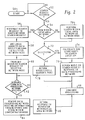
- Block 52 depicts a determination of whether or not a directory search request has been received at concentrator node 20 (see Figure 1). If not, the process merely iterates until such time as a directory search request has been received.
- block 54 depicts a determination of whether or not the directory search request was received from within the local area network. That is, local area network 16 of Figure 1. For purposes of this explanation it will be assumed that a search request received from within the local area network will be destined for the wide area data processing network.
- a search request for within the local area network will be processed in a manner well known in the art. After determining that a search request is destined for the wide area data processing network, the process then passes to block 56 which illustrates the reformatting of the search request to resemble an endpoint node search request, in a manner well known in the art.
- block 58 depicts the adding of local address data to the search request specifying at least the link between concentrator node 20 and a network node 12 within wide area data processing network 10. In the depicted embodiment of Figure 1, this link will be link 38.
- block 60 the modified search request is transmitted to a network node 12 within wide area data processing network 10.
- the process passes to block 62 which illustrates the determination of whether or not a response from the wide area data processing network has been received. If not, the process merely iterates until such time as a response to the directory search request has been received.
- Block 64 illustrates the removal of non-native network routing information specifying the route to the target system within wide area data processing network 10 and the storing of that routing information within the concentrator node. Thereafter, the process returns the response to the requestor within local area network 16, as illustrated in block 66 and the process then passes to block 68 and continues processing.
- Block 70 illustrates the performance of the search within the local area network, with concentrator node 20 acting as a network node within local area network 16.
- block 72 depicts a determination of whether or not the search was successful. If so, the process passes to block 74 which illustrates the calculation of the route to the target system within local area network 16 and the storing of that route information at concentrator node 20. Thereafter, the process passes to block 76 which depicts the returning of the modified search request responses to wide area data processing network 10.
- block 78 illustrates the returning of an unsuccessful search report and thereafter, the unsuccessful search report is returned to wide area data processing network 10 via link 38 to network node 12 and the process then passes to block 68 and continues processing.
- bind is a command utilized to initiate and terminate session level communications utilizing the aforementioned System Network Architecture (SNA).
- SNA System Network Architecture
- Block 92 depicts a determination of whether or not a bind request to initiate a session level connection level has been received. If not, the process merely iterates until such time as a bind request is received.
- Block 94 illustrates a determination of whether or not the bind request has been received from within local area network 16. As above, for purposes of this explanation, it will be assumed that a bind request received from within local area network 16 will be destined for wide area data processing network 10. A bind request for within local area network 16 will be processed locally in a manner well known in the art.
- Block 96 illustrates the removal of the local area network routing information, which determines the route from the requestor within the local area network to the concentrator node, and the storage of that routing information within concentrator node 20.
- Block 98 the process passes to block 98.
- Block 98 illustrates a determination of whether or not stored wide area data processing network routing information is available at the concentrator node for this request and response.
- this wide area data processing network routing information was removed from the response from the wide area data processing network and stored within the concentrator node, as depicted within block 64. However, this information may have been aged out of the concentrator node and may not be available.
- the process passes to block 100 which illustrates the substitution of the stored wide area data processing network routing information into the bind request. Thereafter, the process passes to block 102, which depicts the transmitting of the modified bind request to the wide area data processing network for routing within the wide area data processing network. The process then passes to block 104 which depicts the transmitting of the modified bind request to the wide area data processing network for transmittal to the target node within the wide area data processing network.
- Block 106 illustrates the transmitting of the bind request to the wide area data processing network node without routing information. Thereafter, as illustrated in block 108 the wide area data processing network node will calculate the necessary route information utilizing the topology database contained therein and the process will again pass to block 104, depicting the transmittal by that network node of the bind request to a target node within the wide area data processing network.
- Block 110 depicts the removal of the wide area data processing network routing information from the bind request and the storing of that wide area data processing network routing information within the concentrator node. Thereafter, the process passes to block 112.
- Block 112 illustrates a determination of whether or not stored local area network routing information is available for this particular request. Referring again to Figure 2, the routing information necessary to reach a target node within the local area network was calculated and stored, as depicted within block 74 of Figure 2. However, as discussed above, this information may no longer be available, and if not, the process passes to block 118, which depicts the calculation of local area network routing information by concentrator node 20, acting in its capacity as a network node within the local area network.
- Block 114 illustrates the substitution of the stored local area network routing information into the bind request and thereafter, or after calculating the local area network routing information necessary, as depicted in block 118, the process will pass to block 116.
- Block 116 depicts the transmitting of the bind request to a local area network target node.
- the Applicants in the present application have created a novel concentrator node which permits full scale interconnection between a local area network and a wide area network, but which minimizes the amount of topological information such as routing and functional capability information which must be maintained within the wide area data processing network.
- a border node having both a network node interface and an endpoint node interface, and by selectively emulating a network node within the local area network or the endpoint node at the interface to a wide area data processing network, the local area network may be interconnected to the wide area data processing network while minimizing the amount of routing information which must be stored within the wide area data processing network.
Landscapes
- Engineering & Computer Science (AREA)
- Computer Networks & Wireless Communication (AREA)
- Signal Processing (AREA)
- Data Exchanges In Wide-Area Networks (AREA)
- Computer And Data Communications (AREA)
- Small-Scale Networks (AREA)
Claims (10)
- Verfahren zum Verbinden mehrerer lokaler Netze (16, 26, 36) mit einem Datenverarbeitungsnetz (10), das sowohl eine Vielzahl von Netzknoten (12) mit Leitweg- und Funktionsmöglichkeit innerhalb des Datenverarbeitungsnetzes als auch eine Vielzahl von Endknoten (14) umfaßt, wobei jeder nur lokale Adreßmöglichkeiten aufweist, während die Anzahl der Leitweginformationen minimiert wird, die innerhalb des Datenverarbeitungsnetzes aufrechterhalten wird, wobei das Verfahren dadurch gekennzeichnet ist, daß es die folgenden Schritte umfaßt:(a) Aufbauen eines Konzentratorknotens (20, 30) innerhalb jeder Vielzahl lokaler Netze;(b) Aufbauen einer Netzknotenschnittstelle (22, 32) mit Leitweg- und Funktionsmöglichkeit für ein zugeordnetes lokales Netz innerhalb jedes Konzentratorknotens (20, 30);(c) Aufbauen einer Endknotenschnittstelle (23, 24) mit lokalen Adreßmöglichkeiten innerhalb jedes Konzentratorknotens (20, 30); und(d) Verbinden der Endknotenschnittstelle (24, 34) jedes Konzentratorknotens mit einem ausgewählten Netzknoten (12) innerhalb des Datenverarbeitungsnetzes (10), Kennzeichnen jedes Konzentratorknotens als einen Endknoten mit lokaler Adreßmöglichkeit innerhalb des Datenverarbeitungsnetzes (10), wobei Leitweginformationen für jedes lokale Netz (16, 26, 36) innerhalb des Datenverarbeitungsnetzes nicht aufrechterhalten werden.
- Verfahren gemäß Anspruch 1, das weiterhin den folgenden Schritt umfaßt:
(e) Übertragen von Verzeichnis-Suchanforderungen von innerhalb eines lokalen Netzes (16, 26, 36) über einen zugeordneten Konzentratorknoten (20, 30) an das Datenverarbeitungsnetz (10). - Verfahren gemäß Anspruch 2, das weiterhin den folgenden Schritt umfaßt:
(f) Hinzufügen lokaler Adreßinformationen zu jeder Verzeichnis-Suchanforderung an dem zugeordneten Konzentratorknoten (20, 30) vor dem Übertragen jeder Verzeichnis-Suchanforderung an das Datenverarbeitungsnetz (10), wobei das lokale Adreßnetz mindestens die Verbindung (38, 40) zwischen dem Konzentratorknoten (20, 30) und dem ausgewählten Netzknoten (12) innerhalb des Datenverarbeitungsnetzes kennzeichnet. - Verfahren gemäß Anspruch 3, das weiterhin den folgenden Schritt umfaßt:
(g) Entfernen von Leitweginformationen des Datenverarbeitungsnetzes von jeder Antwort auf eine Verzeichnis-Suchanforderung, die an dem Konzentratorknoten (20, 30) von dem ausgewähltem Netzknoten (12) innerhalb des Datenverarbeitungsnetzes (10) empfangen wird, und Speichern der Leitweginformationen des Datenverarbeitungsnetzes innerhalb des Konzentratorknotens vor Zurücksenden der Antwort auf die Verzeichnis-Suchanforderung an das lokale Netz (16, 26, 36). - Verfahren gemäß Anspruch 4, das weiterhin folgendes umfaßt:
(h) den Schritt des Übertragens einer Binde-Anforderung von dem lokalen Netz an das Datenverarbeitungsnetz über den Konzentratorknoten und den ausgewählten Netzknoten innerhalb des Datenverarbeitungsnetzes nach einer erfolgreichen Verzeichnis-Suchanforderung. - Verfahren gemäß Anspruch 5, das weiterhin den folgenden Schritt umfaßt:
(i) Entfernen von Leitweginformationen des lokalen Netzes von der Binde-Anforderung, die von dem lokalen Netz an dem Konzentratorknoten empfangen wird, und Speichern der Leitweginformationen des lokalen Netzes an dem Konzentratorknoten vor dem Übertragen der Binde-Anforderung an das Datenverarbeitungsnetz. - Verfahren gemäß Anspruch 6, das weiterhin den folgenden Schritt umfaßt:
(j) Ersetzen von Leitweginformationen des Datenverarbeitungsnetzes, die an dem Konzentratorknoten gespeichert sind, in der Binde-Anforderung an Stelle der entfernten Leitweginformationen des lokalen Netzes vor dem Übertragen der Binde-Anforderung von dem Konzentratorknoten an den ausgewählten Knoten innerhalb des Datenverarbeitungsnetzes. - Verfahren gemäß Anspruch 1, das weiterhin den folgenden Schritt umfaßt:
(k) Übertragen von Verzeichnis-Suchanforderungen von innerhalb des Datenverarbeitungsnetzes an das lokale Netz über den Konzentratorknoten. - Verfahren gemäß Anspruch 8, das weiterhin die folgenden Schritte umfaßt:(1) Berechnen von Leitweginformationen des lokalen Netzes von dem Konzentratorknoten in das lokale Netz als Antwort auf eine Verzeichnis-Suchanforderung, die von dem ausgewählten Netzknoten innerhalb des Datenverarbeitungsnetzes empfangen wird, und(m) Übertragen einer Antwort auf eine Verzeichnis-Suchanforderung von dem Konzentratorknoten an den ausgewählten Netzknoten innerhalb des Datenverarbeitungsnetzes nach dem Entfernen der berechneten Leitweginformationen des lokalen Netzes von der Antwort auf die Verzeichnis-Suchanforderung.
- Konzentratorknoten (20, 30) zum Verbinden eines lokalen Netzes (16, 26, 36) mit einem Datenverarbeitungsnetz (10), das sowohl eine Vielzahl von Netzknoten (12) mit Leitweg- und Funktionsmöglichkeit innerhalb des Datenverarbeitungsnetzes als auch eine Vielzahl von Endknoten (14) umfaßt, wobei jeder nur eine lokale Adreßmöglichkeit umfaßt, während die Anzahl der Leitweginformationen, die innerhalb des Datenverarbeitungsnetzes aufrechterhalten wird, minimiert wird, wobei der Konzentratorknoten (20, 30) dadurch gekennzeichnet ist, daß er folgendes umfaßt:eine Netzknotenschnittstelle (22, 32) innerhalb des Konzentratorknotens (20, 30) mit Leitweg- und Funktionsmöglichkeit innerhalb eines lokalen Netzes;eine Endknotenschnittstelle (24, 34) innerhalb des Konzentratorknotens (20, 30) mit lokalen Adreßmöglichkeiten; undMittel zum selektiven Verbinden (38, 40) der Endknotenschnittstelle (24, 34) innerhalb des Konzentratorknotens (20, 30) mit einem ausgewählten Netzknoten (12) innerhalb eines Datenverarbeitungsnetzes (10).
Applications Claiming Priority (2)
| Application Number | Priority Date | Filing Date | Title |
|---|---|---|---|
| US68725891A | 1991-04-18 | 1991-04-18 | |
| US687258 | 1991-04-18 |
Publications (2)
| Publication Number | Publication Date |
|---|---|
| EP0511144A1 EP0511144A1 (de) | 1992-10-28 |
| EP0511144B1 true EP0511144B1 (de) | 1996-05-08 |
Family
ID=24759711
Family Applications (1)
| Application Number | Title | Priority Date | Filing Date |
|---|---|---|---|
| EP92480051A Expired - Lifetime EP0511144B1 (de) | 1991-04-18 | 1992-03-27 | Verfahren und Vorrichtung zur Verbindung von lokalen Netzwerken mit Weitbereichsnetzwerken |
Country Status (4)
| Country | Link |
|---|---|
| US (1) | US6463064B1 (de) |
| EP (1) | EP0511144B1 (de) |
| JP (1) | JPH0810875B2 (de) |
| DE (1) | DE69210466T2 (de) |
Families Citing this family (13)
| Publication number | Priority date | Publication date | Assignee | Title |
|---|---|---|---|---|
| JPH084273B2 (ja) * | 1992-11-30 | 1996-01-17 | 日本電気株式会社 | 複合通信網 |
| US5699353A (en) * | 1993-11-24 | 1997-12-16 | Ericsson Ge Mobile Communications, Inc. | Extended trunked RF communications systems networking |
| DE19509965A1 (de) * | 1995-03-18 | 1996-09-19 | Sel Alcatel Ag | Verfahren zum Steuern eines Zugangsnetzes oder eines physikalischen Zugangsnetzes sowie Zugangsnetze und Vermittlungsstelle dafür |
| DE69933435T2 (de) * | 1998-02-17 | 2007-08-16 | Intergraph Hardware Technologies Co., Las Vegas | Apparat und verfahren zum übermitteln von dokumenten zwischen einem server-rechner und einem benutzer-rechner |
| US6581094B1 (en) * | 1999-11-02 | 2003-06-17 | Sun Microsystems, Inc. | Apparatus and method for identifying a digital device based on the device's uniform device descriptor file that specifies the attributes of the device in a XML document in a networked environment |
| US6678735B1 (en) * | 2000-01-26 | 2004-01-13 | Nortel Networks Limited | Method and apparatus for a sip client manager |
| US20030236919A1 (en) * | 2000-03-03 | 2003-12-25 | Johnson Scott C. | Network connected computing system |
| US20020107990A1 (en) * | 2000-03-03 | 2002-08-08 | Surgient Networks, Inc. | Network connected computing system including network switch |
| AUPQ883200A0 (en) * | 2000-07-18 | 2000-08-10 | Telefonaktiebolaget Lm Ericsson (Publ) | Telecommunication system and method of communicating protocol information |
| SE518479C2 (sv) * | 2000-10-13 | 2002-10-15 | Ericsson Telefon Ab L M | Kommunikationssystem som stödjer trådlös kommunikation av paketdata och förfarande och anordning relaterande därtill |
| US7231463B2 (en) * | 2002-01-04 | 2007-06-12 | Intel Corporation | Multi-level ring peer-to-peer network structure for peer and object discovery |
| US8364850B2 (en) * | 2006-07-20 | 2013-01-29 | Qualcomm Incorporated | Utility service in multi-processor environment |
| WO2020132803A1 (zh) * | 2018-12-24 | 2020-07-02 | 深圳市柔宇科技有限公司 | 组网方法及组网系统 |
Family Cites Families (15)
| Publication number | Priority date | Publication date | Assignee | Title |
|---|---|---|---|---|
| JPS6359138A (ja) * | 1986-08-29 | 1988-03-15 | Canon Inc | 通信装置 |
| ZA883232B (en) * | 1987-05-06 | 1989-07-26 | Dowd Research Pty Ltd O | Packet switches,switching methods,protocols and networks |
| DE3838945A1 (de) * | 1987-11-18 | 1989-06-08 | Hitachi Ltd | Netzwerksystem mit lokalen netzwerken und mit einer hierarchischen wegewahl |
| US5086426A (en) * | 1987-12-23 | 1992-02-04 | Hitachi, Ltd. | Communication network system having a plurality of different protocal LAN's |
| US4975906A (en) * | 1988-02-15 | 1990-12-04 | Hitachi, Ltd. | Network system |
| CA1294347C (en) * | 1988-05-05 | 1992-01-14 | Man Him Hui | Remote interconnection of local area networks |
| JPH0213040A (ja) * | 1988-06-30 | 1990-01-17 | Toshiba Corp | ネットワークシステムにおけるアドレス情報登録/検索方式 |
| JPH02182057A (ja) * | 1989-01-09 | 1990-07-16 | Canon Inc | ネツトワーク管理方式 |
| US4897841A (en) * | 1989-01-11 | 1990-01-30 | Hughes Lan Systems, Inc. | System and method for bridging local area networks using concurrent broadband channels |
| DE4020618C2 (de) | 1990-06-28 | 1993-10-14 | Siemens Ag | Verfahren zur Signalisierung von Fernsprech-Rückrufverbindungen |
| US5179555A (en) * | 1990-09-11 | 1993-01-12 | Microcom Systems, Inc. | High speed data compression and transmission for wide area network connections in LAN/bridging applications |
| JPH04288758A (ja) | 1991-03-18 | 1992-10-13 | Fujitsu Ltd | Isdnにおける呼び返し方式 |
| JPH05308668A (ja) | 1992-05-06 | 1993-11-19 | Nec Corp | 電子式ボタン電話装置 |
| JPH0670034A (ja) | 1992-08-21 | 1994-03-11 | Nec Corp | 構内交換機 |
| JPH06334744A (ja) | 1993-05-24 | 1994-12-02 | Sharp Corp | 構内交換機における呼び返し方法及び構内交換機 |
-
1992
- 1992-03-11 JP JP4052605A patent/JPH0810875B2/ja not_active Expired - Fee Related
- 1992-03-27 DE DE69210466T patent/DE69210466T2/de not_active Expired - Lifetime
- 1992-03-27 EP EP92480051A patent/EP0511144B1/de not_active Expired - Lifetime
-
1995
- 1995-08-10 US US08/512,598 patent/US6463064B1/en not_active Expired - Fee Related
Also Published As
| Publication number | Publication date |
|---|---|
| DE69210466D1 (de) | 1996-06-13 |
| JPH0810875B2 (ja) | 1996-01-31 |
| EP0511144A1 (de) | 1992-10-28 |
| DE69210466T2 (de) | 1996-11-21 |
| US6463064B1 (en) | 2002-10-08 |
| JPH05102970A (ja) | 1993-04-23 |
Similar Documents
| Publication | Publication Date | Title |
|---|---|---|
| EP0511142B1 (de) | Verfahren und Vorrichtung zur Verbindung von Datenverarbeitungsnetzwerken | |
| JP2505064B2 (ja) | 経路選択方法 | |
| Baratz et al. | SNA networks of small systems | |
| EP0511144B1 (de) | Verfahren und Vorrichtung zur Verbindung von lokalen Netzwerken mit Weitbereichsnetzwerken | |
| JP3149332B2 (ja) | データ通信ネットワークおよびそのノードの管理方法 | |
| US6041049A (en) | Method and apparatus for determining a routing table for each node in a distributed nodal system | |
| US6785277B1 (en) | System and method for internodal information routing within a communications network | |
| US7230914B2 (en) | Method and system for synchronizing a standby route distributor in a distributed routing platform | |
| JPH0244944A (ja) | 情報量削減方法 | |
| JPS62109451A (ja) | データ伝送ネットワークの通信パス確立・不可用性データ収集方法 | |
| JP3798661B2 (ja) | クラスタ化コンピュータ・システム内のグループのメンバによって受信されたマージ要求を処理する方法 | |
| JPH09153892A (ja) | ワームホール・ネットワークにおけるメッセージ送達方法およびシステム | |
| JPH0548647A (ja) | 電子メール文書分配方法及び装置 | |
| WO1996017457A1 (en) | Routing in data communications network | |
| JP2006506877A (ja) | ピアツーピア環境におけるネットワーク・トラフィック制御 | |
| US6765908B1 (en) | System and method for transferring packets in a “connectionless” network | |
| US5802313A (en) | Extended DLUR/APPN support for non-APPN SNA devices | |
| US5303238A (en) | Network communications intermediate interface | |
| US6097727A (en) | Methods, systems and computer program products for end-to-end route selection in compound wide/local area networks | |
| CA2320622A1 (en) | Method for connecting a first user-terminal to a second user-terminal, related devices and related software modules | |
| WO2001019038A1 (en) | System and method for internodal information routing within a communications network | |
| JPH0793639B2 (ja) | ネツトワ−ク・ノ−ドにおける処理及び記録要件を緩和するための方法及びシステム | |
| US6067573A (en) | Technique for reducing the flow of topology information in a computer network to only nodes that require the information | |
| CN114124780B (zh) | 路由发布方法、装置、电子设备及存储介质 | |
| KR100650003B1 (ko) | 데이터 통신 부하 분산 제어 프로그램 및 데이터 부하 분산제어 방법 |
Legal Events
| Date | Code | Title | Description |
|---|---|---|---|
| PUAI | Public reference made under article 153(3) epc to a published international application that has entered the european phase |
Free format text: ORIGINAL CODE: 0009012 |
|
| AK | Designated contracting states |
Kind code of ref document: A1 Designated state(s): DE FR GB |
|
| RIN1 | Information on inventor provided before grant (corrected) |
Inventor name: MCKINNON, JOSEPH L. Inventor name: HUYNH, LAP THIET Inventor name: BRYANT, DAVID BARRETT Inventor name: BROOCKMAN, ERIC CHARLES |
|
| 17P | Request for examination filed |
Effective date: 19930218 |
|
| 17Q | First examination report despatched |
Effective date: 19950627 |
|
| GRAH | Despatch of communication of intention to grant a patent |
Free format text: ORIGINAL CODE: EPIDOS IGRA |
|
| GRAA | (expected) grant |
Free format text: ORIGINAL CODE: 0009210 |
|
| AK | Designated contracting states |
Kind code of ref document: B1 Designated state(s): DE FR GB |
|
| REF | Corresponds to: |
Ref document number: 69210466 Country of ref document: DE Date of ref document: 19960613 |
|
| ET | Fr: translation filed | ||
| PLBE | No opposition filed within time limit |
Free format text: ORIGINAL CODE: 0009261 |
|
| 26N | No opposition filed | ||
| REG | Reference to a national code |
Ref country code: GB Ref legal event code: IF02 |
|
| PGFP | Annual fee paid to national office [announced via postgrant information from national office to epo] |
Ref country code: FR Payment date: 20040317 Year of fee payment: 13 |
|
| PG25 | Lapsed in a contracting state [announced via postgrant information from national office to epo] |
Ref country code: FR Free format text: LAPSE BECAUSE OF NON-PAYMENT OF DUE FEES Effective date: 20051130 |
|
| REG | Reference to a national code |
Ref country code: FR Ref legal event code: ST Effective date: 20051130 |
|
| REG | Reference to a national code |
Ref country code: GB Ref legal event code: 746 Effective date: 20080228 |
|
| PGFP | Annual fee paid to national office [announced via postgrant information from national office to epo] |
Ref country code: DE Payment date: 20100322 Year of fee payment: 19 |
|
| PGFP | Annual fee paid to national office [announced via postgrant information from national office to epo] |
Ref country code: GB Payment date: 20110325 Year of fee payment: 20 |
|
| PG25 | Lapsed in a contracting state [announced via postgrant information from national office to epo] |
Ref country code: DE Free format text: LAPSE BECAUSE OF NON-PAYMENT OF DUE FEES Effective date: 20111001 |
|
| REG | Reference to a national code |
Ref country code: DE Ref legal event code: R119 Ref document number: 69210466 Country of ref document: DE Effective date: 20111001 |
|
| REG | Reference to a national code |
Ref country code: GB Ref legal event code: PE20 Expiry date: 20120326 |
|
| PG25 | Lapsed in a contracting state [announced via postgrant information from national office to epo] |
Ref country code: GB Free format text: LAPSE BECAUSE OF EXPIRATION OF PROTECTION Effective date: 20120326 |