EP0517833B2 - Regenerierung und genetische transformation der zuckerrübe - Google Patents
Regenerierung und genetische transformation der zuckerrübe Download PDFInfo
- Publication number
- EP0517833B2 EP0517833B2 EP91906203A EP91906203A EP0517833B2 EP 0517833 B2 EP0517833 B2 EP 0517833B2 EP 91906203 A EP91906203 A EP 91906203A EP 91906203 A EP91906203 A EP 91906203A EP 0517833 B2 EP0517833 B2 EP 0517833B2
- Authority
- EP
- European Patent Office
- Prior art keywords
- nucleotides
- transgenic
- fragment
- plant
- bnyvv
- Prior art date
- Legal status (The legal status is an assumption and is not a legal conclusion. Google has not performed a legal analysis and makes no representation as to the accuracy of the status listed.)
- Expired - Lifetime
Links
Images



Classifications
-
- C—CHEMISTRY; METALLURGY
- C07—ORGANIC CHEMISTRY
- C07K—PEPTIDES
- C07K14/00—Peptides having more than 20 amino acids; Gastrins; Somatostatins; Melanotropins; Derivatives thereof
- C07K14/005—Peptides having more than 20 amino acids; Gastrins; Somatostatins; Melanotropins; Derivatives thereof from viruses
-
- C—CHEMISTRY; METALLURGY
- C12—BIOCHEMISTRY; BEER; SPIRITS; WINE; VINEGAR; MICROBIOLOGY; ENZYMOLOGY; MUTATION OR GENETIC ENGINEERING
- C12N—MICROORGANISMS OR ENZYMES; COMPOSITIONS THEREOF; PROPAGATING, PRESERVING, OR MAINTAINING MICROORGANISMS; MUTATION OR GENETIC ENGINEERING; CULTURE MEDIA
- C12N15/00—Mutation or genetic engineering; DNA or RNA concerning genetic engineering, vectors, e.g. plasmids, or their isolation, preparation or purification; Use of hosts therefor
- C12N15/09—Recombinant DNA-technology
- C12N15/63—Introduction of foreign genetic material using vectors; Vectors; Use of hosts therefor; Regulation of expression
- C12N15/79—Vectors or expression systems specially adapted for eukaryotic hosts
- C12N15/82—Vectors or expression systems specially adapted for eukaryotic hosts for plant cells, e.g. plant artificial chromosomes (PACs)
- C12N15/8241—Phenotypically and genetically modified plants via recombinant DNA technology
- C12N15/8261—Phenotypically and genetically modified plants via recombinant DNA technology with agronomic (input) traits, e.g. crop yield
- C12N15/8271—Phenotypically and genetically modified plants via recombinant DNA technology with agronomic (input) traits, e.g. crop yield for stress resistance, e.g. heavy metal resistance
- C12N15/8279—Phenotypically and genetically modified plants via recombinant DNA technology with agronomic (input) traits, e.g. crop yield for stress resistance, e.g. heavy metal resistance for biotic stress resistance, pathogen resistance, disease resistance
- C12N15/8283—Phenotypically and genetically modified plants via recombinant DNA technology with agronomic (input) traits, e.g. crop yield for stress resistance, e.g. heavy metal resistance for biotic stress resistance, pathogen resistance, disease resistance for virus resistance
-
- C—CHEMISTRY; METALLURGY
- C12—BIOCHEMISTRY; BEER; SPIRITS; WINE; VINEGAR; MICROBIOLOGY; ENZYMOLOGY; MUTATION OR GENETIC ENGINEERING
- C12N—MICROORGANISMS OR ENZYMES; COMPOSITIONS THEREOF; PROPAGATING, PRESERVING, OR MAINTAINING MICROORGANISMS; MUTATION OR GENETIC ENGINEERING; CULTURE MEDIA
- C12N2770/00—MICROORGANISMS OR ENZYMES; COMPOSITIONS THEREOF; PROPAGATING, PRESERVING, OR MAINTAINING MICROORGANISMS; MUTATION OR GENETIC ENGINEERING; CULTURE MEDIA ssRNA viruses positive-sense
- C12N2770/00011—Details
- C12N2770/00022—New viral proteins or individual genes, new structural or functional aspects of known viral proteins or genes
Definitions
- the invention relates to a method of genetic transformation of plant cells belonging to the species Beta vulgaris , optionally followed by a regeneration step of cells transformed into whole plants.
- the invention also relates to transformed cells, buds, plants and transgenic seeds that can be produced by this method.
- the invention also relates to transgenic plants belonging to the species Beta vulgaris , resistant to infection by the yellow and necrotic veins of sugar beet (BNYVV), expressing the capsid protein of BNYVV, or derived from this protein.
- Obtaining transgenic plants involves transferring the selected DNA fragment into the plant cell, selecting the stably transformed cells, and regenerating whole plants from the transformed selected cells.
- the first pathway is a physico-chemical pathway (electroporation, microinjection, polycations, particle gun).
- stably transformed cells were selected after electroporation of a gene encoding kanamycin resistance in protoplasts (Lindsey et al., 1989).
- the second DNA transfer pathway is a biological pathway using as a vector a soil bacterium: Agrobacterium tumefaciens or rhizogenes .
- the use of disarmed Agrobacterium strains involves the association of a selective system for the transformation of plant cells. Success in obtaining transformants is closely linked to the development of a good selective system.
- the most used selective gene in this field is that derived from the Escherichia coli Tn5 transposon (Rothstein et al, 1981) encoding neomycin phosphotransferase (NPT II) which confers resistance to kanamycin (An et al, 1985).
- the selection system comprises, on the one hand, the resistance conferring gene and, on the other hand, the selective agent. This involves determining the concentrations of selective agent for both killing the untransformed cells and allowing the transformed cells to grow.
- the only published work concerning the selection of beet cells after transformation of Agrobacterium pluricellular explants involves another selective system: hygromycin B / hygromycin B phosphotransferase (Harpster et al, 1988).
- the transformation with Agrobacterium first requires the choice of a type of cell or type of explant that will be the subject of the transformation.
- explants such as hypocotyls, leaf pieces (Krens et al., 1988) can be transformed with Agrobacterium .
- the frequency of transformation may vary according to the type of cell being transformed, this variability often being of an unpredictable nature.
- transgenic plant During the production of a transgenic plant, the transformation is followed by a regeneration process.
- the efficiency of obtaining the transgenic plants depends on the frequency of regeneration of plants from transformed cells on the one hand, and the frequency of transformation of the cells on the other hand.
- this organogenic material that is to say the friable calli
- Agrobacterium tumefaciens can be used, under specific conditions, for transformation with Agrobacterium tumefaciens .
- the yellow and necrotic vein virus of sugar beet is a multi-component virus consisting of helically symmetrical virus particles containing four types of single-stranded RNA of positive polarity (Putz, 1987).
- This virus is disseminated by a soil fungus, Polymixa betae , which parasitizes the superficial cells of chenopodiaceae rootlets, including sugar beet.
- This biennial chenopodiacea remains in a rosette state the first year giving a fleshy and sweet root, and rises to seed the second year after vernalization.
- the persistence of the disease in the soil is due to cysts formed by the fungus (Tamada, Baba, 1973).
- the virus grows mainly in the root part (pivot and secondary roots).
- the main symptom of the disease is a proliferation of the hairy root (hence the name rhizomania).
- the name of the virus actually comes from later symptoms visible in the vegetative part namely: necrosis and yellowing of the veins due to the fact that the virus develops mainly in the root vessels, thereby disrupting the metabolism of the whole plant ( Sallé et al., 1986).
- the inventors have envisaged making the transformed plant cells produce either antisense RNA or sense RNAs encoding normal, mutated or deleted viral proteins capable of inhibiting the development of the virus.
- the first step in the transformation is the induction of friable white calli from beet explants.
- the explants that can be used in this step can be, for example, leaf disks, petiole sections, etc.
- the explants are pieces of young leaves taken from a plant less than three months old.
- young leaves 3-5 cm long are taken from each plant and are subjected to a disinfection and rinsing step. Each leaf is then cut into small pieces of 0.25 cm 2 to 1.0 cm 2 .
- the leaves can be taken from the plant until about two months after the first samples. After this period, the regeneration ability of the leaves decreases.
- the leaf discs are then cultured on a plant cell culture medium containing from 0.1 to 5.0 mgl -1 cytokinin.
- the cytokinin is present at about 1.0 mgl -1 and may be, for example, 6-buzylaminopurine (BAP), zeatin, or kinetin. BAP is particularly preferred.
- the plant cell culture medium is advantageously the medium of Murashige and Skoog (1962), called MS medium.
- MS medium The explants are cultured at about 30 ° C. for 30 days in the dark, and then they are taken out in a culture chamber with a photoperiod. 18/24 H for example at about 25 ° C the day and 20 ° C at night.
- the next step of the transformation process is the production of a callus dispersion in a liquid culture medium. This dispersion will be used later for the transformation.
- This type is also known as "regenerating type".
- the dispersal calli may be examined before transformation in order to separate the two cell types, i.e., nodular and accustomed.
- a visual examination of the calluses makes it possible to locate the two types which are then removed from the middle with a pincer and redispersed.
- Carefully initiated cell suspensions from nodular friable white calli dispersions have proven to be the ideal material for maximizing the efficiency of transformation.
- Each of the two cell types may be subjected to transformation but it is preferable to transform the nodule type if regeneration of the plant is desired later.
- the dispersion of the calli is then brought into contact with the bacterium Agrobacterium tumefaciens .
- the transformation protocol is performed on the dispersions.
- a sample of the bacteria in fresh medium is added to the beet cell dispersion.
- the co-culture of plant cells and bacteria is done in the dark for about three days, in a culture chamber.
- the Agrobacterium tumefaciens used in the transformation contains a vector carrying a gene intended to be introduced into the beet cells.
- the strains used by the inventors contain binary vectors carrying the gene of interest.
- the three disarmed Agrobacterium tumefaciens strains used in the work described here are LBA 4404 (Hoekema et al., 1983, EHA 101 (Hood et al., 1986), C58'3 (Dale et al, 1989).
- a promoter allowing its expression in the plant cell and, where appropriate, in the regenerated transgenic plant
- the promoter may be chosen to allow the specific expression of the gene in a certain part of the plant, or at a certain stage of its development.
- a constitutive promoter can be used, giving rise to the ubiquitous expression of the introduced gene.
- genes coding for agronomic traits of interest for example resistance to herbicides, insects and viruses, or a gene inducing male sterility.
- Herbicide resistance can be conferred, for example by the type of gene described by De Block et al (1987) and by Bedbrook et al (1988).
- a gene capable of conferring resistance to insects is the B. thiuringiensis crystalline protein gene ( Perlak et al (1990) Vaeck et al (1987), Fischoff D, et al (1987))
- Male sterility can be induced by a gene encoding a ribonuclease, such as that described by Mariani et al (1990).
- Virus resistance may sometimes be induced by the gene encoding the capsid protein of the virus in question.
- resistance to BWYV virus can be conferred by the gene described by Gielen et al (1990).
- protection against BNYVV, responsible for rhizomania can also be induced by this same type of gene.
- this gene encoding this capsid protein can be introduced into beet cells, thereby conferring resistance to rhizomania.
- the vectors described in these examples can be used for the introduction of these genes.
- the vector also carries a gene coding for a protein allowing the selection of transformants, for example neomycin phosphotransferase (NPT II) which confers resistance to kanamycin.
- NPT II neomycin phosphotransferase
- a reporter gene can be introduced into the vector in order to confirm the transformed nature of the plant tissue.
- An example of such a reporter gene is the uid A gene of E. coli encoding the ⁇ -glucuronidase enzyme. Assaying the enzymatic activity of this protein is easily done with chromogenic or fluorescent substrates.
- a washing step with a bacteriostatic agent is performed to remove the bacteria.
- a bacteriostatic agent cefotaxime can be used. The washing may be carried out in two stages, for example a first time with MSB1 medium containing 600 mg / l- 1 cefotaxime, then a second time in MSB1 medium containing 300 mg / l -1 cefotaxime.
- the selection of the transformed cells is carried out thanks to the gene coding for the resistance to the selective agent.
- the washed cells are then cultured for a fortnight on a medium containing the selective agent, for example kanamycin and the bacteriostatic agent.
- the plant cells are then subcultured on fresh medium.
- the transformed calli obtained in this way have, as a main physical characteristic, that they can be dispersed in liquid by a relatively gentle agitation and that, as soon as they have a size of 3 to 5 mm. Surprisingly, these transformed calli retain the white, friable and regenerating nature they possessed before processing, and thus prove to be an appropriate material for the regeneration of transgenic plants. It should be noted that the transformation carried out on explants, and not on calli ( Harpster et al, 1988 ), gives rise to very compact transformed calli which are not friable and which are not regenerating.
- the transformed calli of the invention are subcultured on MSB1 medium with cefotaxime and possibly kanamycin.
- the regeneration of the transgenic plant can be initiated, starting with the regeneration of transgenic buds and / or embryos.
- the regeneration method of buds and / or transgenic embryos according to the invention is characterized by obtaining friable calli transformed according to the process described above, followed by transplanting the friable calli transformed on a culture medium, for example MS medium containing 0 to 3.0 mgl -1 cytokinin and optionally a bacteriostatic agent and a selective agent.
- a culture medium for example MS medium containing 0 to 3.0 mgl -1 cytokinin and optionally a bacteriostatic agent and a selective agent.
- cytokinin mention may be made of zeatin, kinetin and BAP, for example at a concentration of 1 mgl -1 .
- BAP is particularly preferred.
- transgenic buds and / or embryos From these transgenic buds and / or embryos, it is possible, according to the invention, to regenerate plants by transplanting the buds and / or embryos onto a culture medium such as MS medium containing a cytokinin at a low concentration, by for example between 0.05 and 0.15 mgl -1 , preferably 0.1 mgl -1 . BAP is preferred in this step.
- the regenerated structures then begin to develop leaves and are vegetatively propagated in pots or boxes.
- the most developed buds are then placed on a rooting medium such as MS medium containing naphthaleneacetic acid, for example 1 mgl -1 .
- the roots appear 2 to 6 weeks later.
- the plants can then be acclimatized in a greenhouse.
- the invention also relates to the production of seeds from transgenic plants by vernalization of these transgenic plants and harvesting seeds after flowering.
- the invention also relates to the transformed friable calli, the transformed buds and / or embryos, the transgenic plants and the transgenic seeds of these plants that can be produced according to the methods described above.
- the invention also relates to seeds of transgenic plants that comprise transgenic seeds.
- the present invention also relates to the genetic transformation and regeneration of sugar beet ( Beta vulgaris ssp saccharifera ) for the purpose of creating plants resistant to rhizomania.
- the inventors have transformed plant cells with sequences encoding the BNYVV capsid protein, or for variants thereof.
- the gene coding for the BNYW capsid protein has been located and sequenced (Bouzoubaa et al., 1986). However, it could not be expected that the expression of this protein in beet cells would inhibit the development of the virus. Since the virus is transmitted by the soil fungus Polymixa betae , the pathway of infectivity is not comparable to that of the viruses for which the capsid protein has been protective.
- the capsid protein of BNYVV is encoded by the 5 'end of RNA2, which means that the protein can be translated into the infected cell immediately after infection.
- the capsid protein is encoded by subgenomic RNA and is therefore produced later in the cycle of infection. For these reasons, the protective effect presented by the capsid protein for other plant viruses could not be predicted in BNYVV.
- the inventors have observed several unexpected phenomena: firstly, it has been observed that cells transformed by the same sequence coding for the 22 Kd capsid protein (nucleotides 145 to 708) and at least a part of the protein of 75 Kd which is composed of the 22 Kd protein fused with the 54 Kd protein (nucleotides 709 to 2218), gives rise to the expression of two proteins in the same cell, that is to say the 22 Kd protein and a chimeric protein composed of the 22 Kd protein supplemented with the portion of the 75 Kd protein encoded by the transforming sequence.
- This expression is the result of the "readthrough” phenomenon, the "stop" codon at the end of the 22 Kd protein being sometimes suppressed in the cell by suppressor tRNAs. It has been found that the level of expression of the chimeric protein "readthrough” is particularly high, and could play a role in the resistance conferred on the cell expressing both proteins at once.
- the inventors have observed that in transgenic plants the proteins expressed according to the invention are expressed specifically in the roots, despite the use of constitutive promoters.
- GUS marker gene
- this aspect of the invention relates to a transgenic plant belonging to the species Beta vulgaris and resistant to infection by the virus of the yellow and necrotic veins of the sugar beet (BNYVV), said plant being transformed by stably by a nucleic acid fragment, whose expression product is capable of conferring said resistance, said fragment being derived from the 5 'end of the genomic or subgenomic RNA2 of the BNYVV, or of the corresponding cDNA, this fragment coding for at least a portion of the proteins encoded by nucleotides 145 to 3285 of the wild-type RNA2 sequence, and being under the control of a promoter allowing expression of the fragment in the cells of the plant and being in the orientation sense or antisense.
- BNYVV sugar beet
- a fragment "derived from the 5 'end of the BNYVV RNA2" means the corresponding cDNA, or a variant capable of hybridizing therewith under non-stringent conditions, or whose expression product has at least 80% homology. It is important that the variants have the property of being able to inhibit BNYVV infection in expressing cells. By “inhibiting”, it is necessary to understand a significant reduction and delay in the onset of the symptoms of the infection and the multiplication of the virus. Under optimal conditions, the symptoms and the multiplication of the virus are completely eliminated.
- nucleotide acid fragment As an example of a preferred nucleotide acid fragment, there will be mentioned a fragment of the 5 'end of the genomic RNA2 of the corresponding BNYVV or cDNA, coding for at least a portion of the protein encoded by nucleotides 145 to 2218 of RNA2. or for a variant of this protein having a homology of at least 80% and comprising the insertion, the substitution or the deletion of amino acid (s) and which confers resistance to rhizomania to the cells expressing it .
- transgenic plant is that in which said fragment codes for the protein encoded by nucleotides 145 to 708 and, in addition, for a portion of the protein encoded by nucleotides 709 to 2218.
- BNYVV RNA2 Such a transgenic plant may comprise, according to the invention, a fragment which encodes the protein encoded by nucleotides 145 to 871 of the BNYVV RNA2, this fragment possibly being composed, for example, by nucleotides 91 to 871 of the RNA2 of BNYVV.
- the transforming fragment may also encode at least a portion of a variant of the protein encoded by nucleotides 145 to 2218, said variant being distinguished from the wild-type sequence by the presence of the Glu Asp Leu Pro sequence which replaces the His amino acids.
- ALa encoded by nucleotides 253 to 258 of the wild-type sequence.
- the portion of the variant may also correspond to that encoded by nucleotides 145 to 255 in the wild-type sequence, nucleotides 253 to 255 of the wild-type sequence being replaced by those encoding Glu.
- transgenic plant encodes at least a portion of a variant of the protein encoded by nucleotides 145 to 2218, said variant being distinguished from the wild-type sequence.
- said fragment encodes at least a portion of a variant of the protein encoded by nucleotides 145 to 2218, said variant being distinguished from the wild-type sequence.
- the Arg Ser Ser Gly sequence instead of the amino acids encoded by nucleotides 637 to 651 of the wild-type sequence, the Arg Ser Ser Gly sequence forming the carboxy-terminal of the protein.
- the transgenic plants express nucleic acid fragments consisting of nucleotides 91 to 871 of BNYVV RNA2 or the corresponding cDNA sequence, wherein nucleotides 253 to 258 are optionally replaced. by GAA GAT CTT CCT, or in which the GA AGA TCT TC sequence was inserted at position 638, immediately after C at position 637, or the BglII fragments of these sequences.
- the transforming fragment may consist of nucleotides 2078 to 2774 of the subgenomic BNYVV RNA2.
- the protein thus expressed corresponds to the NH 2 terminal of the 42kDa protein of BNYVV.
- sequence of consecutive bases coding for at least a portion of the 22 Kd capsid protein encoded by nucleotides 145 to 708 and, in addition, for a portion of the 75 Kd protein. (encoded by nucleotides 709 to 2218).
- An example of such a sequence is that composed of nucleotides 91 to 871 of the RNA2. This type of sequence including the stop codon of 22 Kd gives rise to the phenomenon of "readthrough" and the cell thus expresses two proteins at a time.
- the invention also relates to the proteins produced by the expression of these sequences, and in particular the 29 Kd protein resulting from the expression of nucleotides 91 to 871 of RNA2, which is expressed together with the capsid protein of 22. Kd.
- Promoters that can be used in rhizomania-resistant transgenic plants are all that allow the expression of the resistance conferring sequence in the plant.
- the 35S and Nos promoters which are respectively the promoter of the 35S large transcript of the cauliflower mosaic virus and the promoter of the nopaline synthase gene are particularly preferred.
- transcription signals for use with the promoter are terminators, for example Nos.
- Transgenic seeds of transgenic plants resistant to rhizomania are also part of this aspect of the invention.
- sequences used in the transformation of the plants of the invention can be used as a nucleic acid probe, in combination with means allowing detection of the hybridization, to detect the presence of the sequences in transformed cells. This can be useful for checking the transformed state of the cells.
- This aspect of the invention also relates to a method for producing transgenic plants belonging to the species Beta vulgaris and resistant to infection with BNYVV, said plant expressing, specifically in the roots, a protein capable of conferring said resistance, said process comprising the transformation, via Agrobacterium tumefaciens , of cells from Beta vulgaris with one of the fragments as described above, the transcription of said fragment being under the control of a constitutive promoter such as p35S or pNos, followed by the regeneration of a transgenic plant from the transformed cells.
- a constitutive promoter such as p35S or pNos
- Table 1 the 16 potential resistance genes to BNYVV with their theoretical products.
- Figures in parentheses refer to the position of the restriction sites according to the BNYVV sequence; ⁇ represents the added BglII linker. The size of the transcripts corresponds to the part of the complementary messenger of the BNYVV.
- Table 2 BNYVV infection of protoplasts from transformed and untransformed cells. 1 ⁇ 10 6 protoplasts were inoculated with 5 ⁇ g of BNYVV (F13 or S2) except for experiment 4 where the inoculum consisted of 30 ⁇ g of BNYVV the figures represent the percentage of fluorescent protoplasts detected 30 hours after inoculation.
- CP + and CP- are transformed cell lines expressing and not expressing the BNYVV capsid protein.
- Table 3 Different culture media used in the transformation and regeneration process according to the invention.
- the BNYVV virus is propagated on Chenopodium quinoa after manual inoculation, and the extraction is made from eight-day virosed leaves according to the technique of Putz (1977).
- the viral suspension thus obtained is adjusted to 100 mM NaCl and then subjected to two phenol extractions followed by two washes with ether of the aqueous phase.
- the viral RNAs are precipitated by the addition of two volumes of distilled ethanol and stored at -20 ° C. The number and size of the RNAs has been reported by Richards et al (1985).
- RNA 2 was an efficient messenger for the synthesis of the capsid protein.
- DNA complementary to a portion of RNA 2 was synthesized by the method of Van der Werf et al (1981) and cloned at the Pst 1 site of plasmid pBR322 (Bolivar et al, 1977).
- the resulting plasmid pBC2 contains a copy DNA corresponding to the 2938 bases of the 5 'end of the RNA 2 (Richards et al, 1985).
- the stop codon (UAG) is immediately followed by an open phase having a coding capacity corresponding to a polypeptide of 54 Kd. By deleting the UAG codon, an open reading phase capable of coding for a protein of 75 Kd can thus be obtained.
- transcription signals from the nopaline synthase gene of Agrobacterium tumefaciens T 37 have been used.
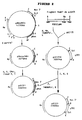
- plasmid pNopnéo ⁇ 18 constructed by Bevan (1983) whose structure is presented in figure 2 this contains the sequence of the cloning vector pUC9 (Vierra et al., 1982) with a 260 bp EcoRI-BamHI fragment and a 310 bp HindIII-XhoIII (BamHI-BglI) fragment.
- Another expression vector has been constructed within the scope of the invention. It has the same structure as pBIOS1, the same fragment containing the polyadenylation signal, but the promoter fragment has been changed. Indeed, the PstI-BamHI fragment containing the promoter of the nopaline synthase gene has been replaced by a 400 bp EcoRI-BamHI fragment containing the promoter of the 35S large transcript of cauliflower mosaic virus (Ca.MV). This fragment was obtained from the plasmid pUC35S which derived cloning of a BamHI-HphI fragment at the Sma I site of the cloning vector pUC13 (Messing, 1983).
- the source of the BamHI-HphI fragment was plasmid pJEA25 constructed by T. Michael which had removed a Dde I fragment extending from position 7069 to position 7569 of CaMV isolate BJ1 described by Franck et al (1980). After modifying the ends of this fragment with BamHI linkers, T. Michael cloned it at the BamHI site of plasmid pAT153 (Twigg et al, 1980). On the figure 2 the different steps of the construction of the pBIOS3 expression vector are schematized.
- the BamHI restriction site is present between the two DNA fragments containing the promoter for both the polyadenylation signal; this situation is ideal for the insertion of any foreign DNA that will be a substrate for transcription.
- the plasmid pBC2 was digested with the restriction enzymes BglI and DraI and then the outbound end of the BglI site was deleted by using bacteriophage T4 DNA polymerase. This fragment was purified by elution from an agarose gel after electrophoretic separation. BamHI linkers were added to the ends of this fragment, and after digestion with a large excess of the BamHI restriction enzyme; this 780 bp fragment was incubated with the pBIOS1 and pBIOS3 vectors opened at the BamHI site. After ligation, the mixture was used to transform E. coli HB101. After sorting on the ampicillin resistant clones, 4 plasmids were retained.
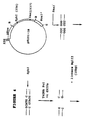
- the plasmids designated pBIO1-1B and pBIO3-1B which have the cDNA fragment containing the coding sequence of the capsid protein under the control of the Nos promoter for the first and for the other under the control of 35S ( figure 3 ).
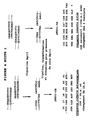
- Plasmids derived from pBIO1-1B, the plasmid pBIO1-2B and the plasmid pBIO1-5B were constructed. The different steps of the construction of these plasmids are presented in the figure 4 . Briefly for the construction of pBIO1-2B, plasmid pBIO1-1B was opened at the SphI site (position 256 of RNA2) the "sticky" ends were removed by the use of bacteriophage T4 DNA polymerase (4 bp deletion) ) and 10 bp BglII linkers were ligated to the blunt ends thus produced. After exhaustive digestion with BglII, the plasmid is religated. After transformation into E.
- plasmid pBIO1-2B was obtained; it no longer contains an SphI site and at this position we now find a BglII site.
- This manipulation allowed two things: first, obtaining a restriction site useful for other constructs (compatible ends with those produced by BamHI) and secondly, obtaining a modified coding sequence that encodes a protein capsid having two additional amino acids and two amino acids are changed.
- the plasmid pBI01-5B was obtained by the same type of manipulation but in this case it is the SmaI site of pBIO1-1B (position 637 of RNA2) which has been modified by BglII linkers.
- This plasmid encodes a shortened capsid protein of 19 amino acids and the last 4 of which are modified.
- EXAMPLE 8 INTRODUCTION OF A REPORTING GENE IN THE BINARY VECTOR pGA-3-1B
- This gene under the control of plant transcription signals expresses itself very well in plant cells and the enzyme is very stable.
- Several methods for assaying the enzymatic activity of this protein are available because there are different types of substrates; in particular substrates giving chromogenic products and substrates giving fluorescent products. Simple quantitative assays (intensity of fluorescence) and qualitative assays by histochemistry (appearance of a blue-indigo precipitate) can be carried out in a simple way and with little plant material.
- the inventors have constructed the binary vector pGA- ⁇ -3-1B. The gene structure of this plasmid is presented in figure 6 .
- the gene capable of inhibiting the multiplication of BNYVV is controlled by the gene conferring resistance to kanamycin and by the gene coding for ⁇ -glucuronidase.
- the inventors inserted at the EcoRI site of the binary vector pGA-3-1B, the plasmid pB1221 (Jefferson, 1987) opened at the EcoRI site.
- the resulting pGA- ⁇ -3-1B binary vector (of a size of 19 kb) was transferred into the disarmed Agrobacterium strains (LBA 4404, EHA 101, C58'3) by triparental conjugation according to the technique described by Ditta. et al (1980).
- the calli are removed (avoiding any organized structure) and cultured in 100 ml of liquid MSB1 medium, in 250 ml Erlenmeyer flasks closed with cellophane sheet held at the neck by two elastics.
- the Erlenmeyer flasks are stirred at about 200 RPM in the culture chamber.
- EXAMPLE 11 TRANSFORMATION OF CELLULAR SUSPENSIONS AND DISPERSIONS OF YOUNG CALS
- the transformation is done on cell suspensions after 3 weeks of culture, without transplanting.
- strains of Agrobacterium tumefaciens tested are LBA 4404, EHA 101, C58'3. Each of these strains contains binary vectors carrying the genes constructed (Examples 5 and 6) and more particularly the vector pGA- ⁇ -3-1B (Example 8).
- the bacterial strains are stored at -20oC in 15% glycerol. 50 ⁇ l of each strain are removed and cultured in 2 ml of LB + rifampicin + tetracycline medium. The cultures are shaken at 200 RPM at 30oC for 2 days. Each strain is subcultured in fresh medium and cultured under the conditions described above overnight.
- callus just appeared for 2 to 8 weeks on greenhouse leaves were taken. These calli were dispersed in liquid MSB1 medium in sterile plastic tubes, and the same transformation protocol as for cell suspensions was applied. Transformed calli were thus selected by this route.
- EXAMPLE 12 EXPRESSION OF GENES THAT CAN INHIBIT THE DEVELOPMENT OF BNYVV IN BEETLE CELLS (COMPARATIVE)
- the inventors transformed habituated beet cell suspensions with all the constructed genes presented in Examples 5 and 6. For each of these genes, several transformed cell suspensions were initiated and cultured in the presence of kanamycin 200 mg / l. From 10 g of transformed cells subjected to the action of cellulases and pectinases, either total RNA or total soluble proteins were isolated.
- RNAs were analyzed by Northern blot according to Maniatis et al (1982).
- the inventors used as a probe the 780 base pair BamHI fragment of the plasmid pRIO-3B.
- the 1330 base pair EcoRI fragment of plasmid pBIO-3-8B was used as a probe.
- the radioactive labeling of these 2 probes with ATP (P32) was done by the technique known as "Oligonucleotide Primed Synthesis" (Ausubel et al., 1987).
- RNAs which showed the functionality of the chimeric genes constructed. These messengers have a size corresponding to that indicated in Table 1 plus about 200 nucleotides. These additional nucleotides located at the 3 'end of the mRNA are due to the transcribed portion of the Nos terminator to the polyadenylation signal and the poly-A tail. It has also been observed that the Nos promoter has a transcription efficiency 30 to 50 times lower than the 35S promoter in beet cells. These results are comparable to those obtained for tobacco and tomato by Sanders et al (1987).
- ⁇ - Glucuronidase is present in the majority of transformed suspensions (88 Kd immunoreactive band). Ten suspensions of the 11 tested showed an immunoreactive band commigrating with the capsid protein of BNYVV as well as a band with a molecular weight of approximately 29 Kd. The expression of these two proteins is of the order of 0.005 to 0.1% of the total soluble proteins; this quantity attests to the good translation efficiency of the messenger produced. It should be noted that the amount of 29 Kd is particularly high in the majority of transformants and may be greater than that of the capsid protein. The readthrough rate in accustomed cell suspensions appears to be higher than that observed in beet roots for RNA2 (Ziegler et al., 1985) and on transgenic beets (Example 15).
- the composition of the enzymatic cocktail is as follows: 0.25%. 345 S; 0.25% T; 0.08% M 2 L dissolved in 0.7 M mannitol containing 0.08 mM NaH2PO4, 0.03 mM MES and 0.68 mM CaCl2.
- the osmotic pressure is adjusted to 760 mOsmol / Kg and pH 5.8. after 18 to 18H00 of gentle agitation (30 oscillations per minute) in the dark and at 24 ° C, the suspension is filtered through sieves of 100 and 50 microns respectively.
- the filtrate is added with an equal volume of an iso-osmotic solution of KCl at 470 mM and the protoplasts are sedimented at 50 g for 5 minutes.
- the pellet is taken up in isoosmotic sucrose at 570 mM and centrifuged at 50 g for 15 minutes.
- the protoplast ring is removed, subjected to a second centrifugation in sucrose, which, sedimented, is washed twice in mannitol at 760 mOsmoles / kg.
- Viability of protoplasts is quantified by fluorescein diacetate staining (Widholm, 1972). It is ensured that digestion is complete by the absence of calcofluor wall staining.
- the osmotic pressure is adjusted to 760 mOsmol / kg with mannitol and the pH at 5.8.
- the culture medium is sterilized by filtration.
- Protoplasts were isolated from transformed and untransformed cell suspensions. They were cultured in the above medium in the presence and absence of kanamycin at 200 mg / l in order to calculate the spreading efficiency. The results demonstrate that protoplasts isolated from untransformed cells do not survive on selective medium containing 200 mg / l kanamycin. This is in agreement with the absence of escape in the transformation experiments. No significant difference was found between the spreading efficiencies of protoplasts derived from transformed cells in the presence and absence of kanamycin. This confirms the absence of untransformed cells within the transformed lines.
- protoplasts from 4 types of cell lines ( ⁇ 7 and ⁇ 14 expressing 22 Kd and 29 Kd, WT, non-transformed and ⁇ D transformed by the binary vector pGA492) will be in culture in the absence of selection pressure.
- the frequency of infection was determined by immunofluorescence by an indirect technique described by Maule et al (1980).
- the infected protoplasts have a characteristic light green fluorescence dispersed in the cytoplasm; uninfected protoplasts are dull brown.
- the figure 8 presents the results of 4 experiments of beet protoplast infection by the polyethylene glycol technique. It has been found that after 24 hours of culture about 60% of the protoplasts are infected. This percentage does not change significantly for culture times greater than 24 hours. The infection was thus made almost synchronously.
- This figure also shows that inactivated virus by repeated freezing and thawing does not replicate in beet protoplasts. In all the experiments carried out, on average 50% of the protoplasts are infected.
- the inventors have succeeded in introducing BNYVV viral particles by using electrical pulses (electroporation technique).
- the inventors were inspired by the technique described by Watts et al (1987) and used a capacitance discharge electroporator (Guerche et al., 1987).
- the optimization of the technique was done by varying the pulse duration delivered by capacitors of different capacities and the resistivity of the electroporation medium.
- the inventors have seen that two pulses of 100 ms delivered at intervals of 15 seconds by capacitors with a capacity of 63 ⁇ F charged at 220 V to 1 ⁇ 10 6 protoplasts delivered in mannitol containing CaCl 2 at 5 mM.
- the presence of 5 ⁇ g of BNYVV allowed to have a level of 55% of infected protoplasts.
- the omission of CaCl2 results in a decrease in infectivity by a factor of 3, although protoplast viability is increased by a factor of 2. This is illustrated by the figure 9 .
- the inventors In order to determine whether the capsid protein (22 kD) of BNYVV and the derived protein (29kD) produced in beet cells could inhibit the multiplication of the virus, the inventors inoculated protoplasts from cells expressing or not expressing these proteins. by the virus. The experiments were performed using PEG techniques and electroporation. The infection was visualized by immunofluorescence of the cells 30 hours after culture. No immunofluorescence background was detected in the transformed cells expressing the capsid protein before inoculation. TABLE 2 BNYVV infection of protoplasts from transformed and untransformed cells.
- the transformed calli are transplanted every month on MSB1. After more or less long periods, varying from one week to several months, buds and / or embryos regenerate on some of these calluses.
- nodular-shaped truncated calluses have the greatest ability to regenerate. They allow the regeneration of several structures developing fairly well and quickly in plants, whereas the structures obtained on the transformed habitual calluses are very rare, long and very difficult to develop in plant.
- the regenerated structures are very heterogeneous morphologically. They are transplanted, after being cut at the base with a scalpel, on the medium MSB0.1 in Petri dishes.
- the revelation is by the addition of anti-rabbit antibodies conjugated to alkaline phosphatase, which uses chromogenic substrates.
- the figure 11 shows the type of results obtained.
- the transgenic beet extracts containing the gene encoding the capsid proteins show an immunoreactive band migrating at the same level as the capsid protein of the virus. This band is not present in the untransformed plant extracts.
- a 29 Kd band corresponding to the chimeric protein derived from the 22 Kd is detected by addition of 64 amino acids, due to "readthrough" (example 5).
- BNYVV is transmitted and developed in the roots, so it is advantageous that the proteins capable of inhibiting the virus are present in these organs.
- transgenic plants After 2 to 3 months of greenhouse acclimatization of transgenic plants, they were found to be phenotypically consistent with the parent plant. At this stage the plants have 10 to 15 very well developed leaves, and are still in a rosette state. To find out if the plants obtained are quite normal and especially fertile, and if the introduced gene is transmitted to the offspring, the plants have been vernalized to induce the rise to seed. Primary transformants are therefore placed between 2 and 7 ° C in the dark for 3 months, and then in fields during the long day. A month to a month and a half after the setting in field, the flowering stalk begins to rise.
- the glomeruli When the glomeruli are dry, they are harvested and cleaned. The seeds are ready to be sown.
- EXAMPLE 18 AUTOFECONDATIONS AND CROSSINGS OF TRANSGENIC PLANTS RESISTANT TO RHIZOMANIA
- Transgenic seeds were obtained both on self-fertilization of transformed plants and on crosses of these same plants with three other lines of sterile male beet (a sterile male genomic monogerm line, a sterile multigenic male genomic line, and a male sterile line). cytoplasmic).
Landscapes
- Life Sciences & Earth Sciences (AREA)
- Health & Medical Sciences (AREA)
- Genetics & Genomics (AREA)
- Chemical & Material Sciences (AREA)
- Organic Chemistry (AREA)
- Molecular Biology (AREA)
- Engineering & Computer Science (AREA)
- General Health & Medical Sciences (AREA)
- Zoology (AREA)
- Wood Science & Technology (AREA)
- Biotechnology (AREA)
- Bioinformatics & Cheminformatics (AREA)
- Biophysics (AREA)
- General Engineering & Computer Science (AREA)
- Virology (AREA)
- Biochemistry (AREA)
- Biomedical Technology (AREA)
- Physics & Mathematics (AREA)
- Cell Biology (AREA)
- Plant Pathology (AREA)
- Proteomics, Peptides & Aminoacids (AREA)
- Microbiology (AREA)
- Medicinal Chemistry (AREA)
- Gastroenterology & Hepatology (AREA)
- Breeding Of Plants And Reproduction By Means Of Culturing (AREA)
- Saccharide Compounds (AREA)
- Medicines Containing Plant Substances (AREA)
- Preparation Of Compounds By Using Micro-Organisms (AREA)
- Seeds, Soups, And Other Foods (AREA)
- Seasonings (AREA)
- Micro-Organisms Or Cultivation Processes Thereof (AREA)
Claims (40)
- Verfahren zur Transformation von Pflanzenzellen, die der Spezies Beta vulgaris angehören, dadurch gekennzeichnet, daß dieses umfaßt: das Zusammenbringen einer Dispersion von Weißen brüchigen Kalli in einem flüssigen Pflanzenzellenkulturmedium, enthaltend 0 bis etwa 3,0 mg•l-1 eines Cytokins, mit Agrobacterium tumefaciens enthaltend einen Vektor, der ein in die Pflanzenzellen einzubringendes Gen trägt, gefolgt von gemeinsamem Kultivieren der Pflanzenzellen und Bakterien, um transformierte brüchige Kalli zu ergeben.
- Verfahren nach Anspruch 1, dadurch gekennzeichnet, daß es die folgenden sukzessiven Schritte umfaßt:I) Induktion von weißen brüchigen Kalli aus Explantat;II) Dispersion der Kalli in einem flüssigen Pflanzenzellenkulturmedium, enthaltend 0 bis etwa 3,0 mg•l-1 eines Cytokinins;III) Zusammenbringen der Zelldispersion mit Agrobacterium tumefaciens, enthaltend einen Vektor, der ein in die Pflanzenzellen einzubringendes Gen trägt, gefolgt von gemeinsamem Kultivieren der Pflanzenzellen und Bakterien;IV) Waschen der Pflanzenzellen zur Abtrennung der Bakterien und Selektion der transformierten Zellen auf einem selektiven Medium;V) Kultivieren der transformierten selektionierten Zellen, um transformierte brüchige Kalli zu erhalten.
- Verfahren nach irgendeinem der Ansprüche 1 oder 2, dadurch gekennzeichnet, daß die weißen brüchigen Kalli aus jungen Blättern induziert werden, die beispielsweise eine Länge von 3 bis 5 cm aufweisen und einer wenigstens drei Monate alten Pflanze entnommen wurden.
- Verfahren nach irgendeinem der Ansprüche 1 bis 3, dadurch gekennzeichnet, daß die Dispersion der Kalli in einem Pflanzenzellenkulturmedium durchgeführt wird, das 6-Benzylaminopurin (BAP) enthält, insbesondere etwa 1 mg•l-1 BAP.
- Verfahren nach irgendeinem der vorstehenden Ansprüche, dadurch gekennzeichnet, daß es sich bei dem Pflanzenzellenkulturmedium um das Medium von Murashige und Skoog (1962) handelt, das MS-Medium genannt wird.
- Verfahren nach irgendeinem der vorstehenden Ansprüche, dadurch gekennzeichnet, daß das gemeinsame Kultivieren von Pflanzenzellen und Bakterien über drei Tage im Dunklen auf einem Pflanzenzellenkulturmedium wie etwa dem MS-Medium durchgeführt wird, das gegebenenfalls mit einem Cytokinin versetzt ist, beispielsweise etwa 1 mg•l-1 BAP.
- Verfahren nach irgendeinem der vorstehenden Ansprüche, dadurch gekennzeichnet, daß die Abtrennung der Bakterien durch Waschen der Pflanzenzellen mit einem Pflanzenzellenkulturmedium vorgenommen wird, das ein Bakteriostatikum enthält, welches das Wachstum von Agrobacterium hemmt, zum Beispiel Cefotaxim.
- Verfahren nach irgendeinem der vorstehenden Ansprüche, dadurch gekennzeichnet, daß die Selektion der transformierten Zellen auf einem Kanamycin enthaltenden Medium durchgeführt wird.
- Verfahren nach irgendeinem der vorstehenden Ansprüche, dadurch gekennzeichnet, daß die Kultivierung der transformierten selektionierten Zellen auf einem festen Kulturmedium durchgeführt wird, etwa festem MS-Medium, das versetzt ist mit einem Cytokinin, einem Bakteriostatikum und einem selektiven Agens.
- Verfahren nach irgendeinem der Ansprüche 1 bis 9, dadurch gekennzeichnet, daß das in die Pflanzenzellen einzubringende Gen ausgewählt ist aus einem Gen, das landwirtschaftlich oder industriell interessante Eigenschaften verleiht, zum Beispiel ein Gen für die Resistenz gegenüber Virusinfektionen, etwa ein Gen, das für das Kapsidprotein des Virus BWYV oder des Virus BNYVV codiert, ein Gen, das Resistenz gegenüber Herbiziden oder Insektiziden verleiht, oder ein Gen, dessen Expression männliche Sterilität verleiht.
- Verfahren zur Regeneration von der Spezies Beta vulgaris angehörenden transgenen Sprossen und/oder Embryonen aus Explantaten, dadurch gekennzeichnet, daß es die folgenden sukzessiven Schritte umfaßt:I) Gewinnung von transformierten brüchigen Kalli nach irgendeinem der Ansprüche 1 bis 10;II) Umsetzen der transformierten Kalli auf ein Medium, enthaltend 0 bis etwa 3 mg•l-1 eines Cytokinins und gegebenenfalls ein Bakteriostatikum und ein selektives Agens, bis zum Auftreten von transgenen Sprossen und/oder Embryonen.
- Verfahren nach Anspruch 11, dadurch gekennzeichnet, daß es sich bei dem Kulturmedium um das MS-Medium handelt, versetzt mit etwa 1 mg•l-1 BAP und gegebenenfalls etwa 300 mg•l-1 Cefotaxim und 200 mg•l-1 Kanamycin.
- Verfahren zur Regeneration von transgenen Pflanzen, die der Spezies Beta vulgaris angehören, dadurch gekennzeichnet, daß es die folgenden sukzessiven Schritte umfaßt:I) Regeneration von transgenen Sprossen und/oder Embryonen gemäß dem Verfahren nach Anspruch 11,II) Umsetzen der transgenen Sprossen und/oder Embryonen auf ein Kulturmedium wie etwa das MS-Medium, das mit etwa 0,1 mg•l-1 eines Cytokinins, beispielsweise BAP, versetzt ist;III) Rückführung der regenerierten Strukturen in die vegetative Vermehrung, gefolgt von Einwurzelung auf einem Kulturmedium wie etwa dem MS-Medium, das Naphthalinessigsäure enthält, beispielsweise etwa 1 mg•l-1.
- Verfahren zur Herstellung von Samen transgener Pflanzen, die der Spezies Beta vulgaris angehören, dadurch gekennzeichnet, daß es die folgenden sukzessiven Schritte umfaßt:I) Regeneration von transgenen Pflanzen gemäß dem Verfahren nach Anspruch 13;II) Vernalisation der transgenen Pflanzen und Gewinnung der Samen nach der Blüte.
- Transformierte brüchige Kalli, die der Spezies Beta vulgaris angehören und nach irgendeinem der Ansprüche 1 bis 10 hergestellt werden können.
- Transgene Sprossen und/oder Embryonen, die der Spezies Beta vulgaris angehören und nach einem der Ansprüche 11 und 12 hergestellt werden können.
- Transgene Pflanzen, die der Spezies Beta vulgaris angehören und nach dem Verfahren von Anspruch 13 hergestellt werden können.
- Transgene Samen von transgenen Pflanzen, die der Spezies Beta vulgaris angehören und nach dem Verfahren von Anspruch 14 hergestellt werden können.
- Transgene Pflanze, die der Spezies Beta vulgaris angehört und gegenüber Infektion durch den Virus der gelben nekrotischen Adern der Zuckerrübe (BNYVV) resistent ist, wobei die Pflanze in stabiler Weise durch ein Nucleinsäure-Fragment transformiert ist, dessen Expressionsprodukt imstande ist, diese Resistenz zu verleihen, wobei dieses Fragment abgeleitet ist vom 5'-Ende genomischer oder subgenomischer RNA2 des BNYVV oder von der entsprechenden cDNA, wobei dieses Fragment für wenigstens einen Teil der Proteine codiert, die durch die Nucleotide 145 bis 3285 der RNA2-Wildtypsequenz codiert werden, und unter der Kontrolle eines Promotors steht, der die Expression des Fragments in den Pflanzenzellen ermöglicht, und die Orientierung Sinn oder Antisense aufweist.
- Transgene Pflanze nach Anspruch 19, wobei das Fragment für wenigstens einen Teil des Proteins codiert, das durch die Nucleotide 145 bis 2218 der RNA2 codiert wird, oder für eine Variante dieses Proteins, das eine Homologie von wenigstens 80% aufweist und Insertion, Substitution oder Deletion von Aminosäure(n) umfaßt.
- Transgene Pflanze nach Anspruch 20, wobei das Fragment für das Protein codiert, das durch die Nucleotide 145 bis 708 codiert wird, und außerdem für einen Teil des Proteins, das durch die Nucleotide 709 bis 2218 der RNA2 des BNYVV codiert wird.
- Transgene Pflanze nach Anspruch 21, wobei das Fragment für das Protein codiert, das durch die Nucleotide 145 bis 871 der RNA2 des BNYVV codiert wird.
- Transgene Pflanze nach Anspruch 22, wobei das Fragment aus den Nucleotiden 91 bis 871 der RNA2 des BNYVV zusammengesetzt ist.
- Transgene Pflanze nach Anspruch 20, wobei das Fragment für wenigstens einen Teil einer Variante des Proteins codiert, das durch die Nucleotide 145 bis 2218 codiert wird, wobei sich die Variante von der Wildtypsequenz durch das Vorhandensein der Sequenz Glu-Asp-Leu-Pro unterscheidet, die die Aminosäuren His-Ala ersetzt, die durch die Nucleotide 253 bis 258 der Wildtypsequenz codiert werden.
- Transgene Pflanze nach Anspruch 24, wobei das Fragment für einen Teil der Variante codiert und zusammengesetzt ist aus den Nucleotiden 91 bis 871 der Wildtypsequenz, wobei die Nucleotide 253 bis 258 der Wildtypsequenz durch jene ersetzt sind, die für Glu-Asp-Leu-Pro codieren.
- Transgene Pflanze nach Anspruch 24, wobei das Fragment für einen Teil der Variante codiert, wobei dieser Teil jenem entspricht, der durch die Nucleotide 145 bis 255 in der Wildtypsequenz codiert wird, und wobei die Nucleotide 253 bis 255 der Wildtypsequenz durch jene ersetzt sind, die für Glu codieren.
- Transgene Pflanze nach Anspruch 24, wobei das Fragment für einen Teil der Variante codiert, wobei dieser Teil jenem entspricht, der durch die Nucleotide 256 bis 871 in der Wildtypsequenz codiert wird, und wobei die Nucleotide 256 bis 258 der Wildtypsequenz durch jene ersetzt sind, die für Asp-Leu-Pro codieren.
- Transgene Pflanze nach Anspruch 20, wobei das Fragment für wenigstens einen Teil einer Variante des Proteins codiert, das durch die Nucleotide 145 bis 2218 codiert wird, wobei sich die Variante von der Wildtypsequenz durch das Vorhandensein der Sequenz Arg-Ser-Ser-Gly anstelle der Aminosäuren unterscheidet, die durch die Nucleotide 637 bis 651 der Wildtypsequenz codiert werden, und wobei die Sequenz Arg-Ser-Ser-Gly das Carboxyl-terminale Ende des Proteins bildet.
- Transgene Pflanze nach Anspruch 28, wobei das Fragment für einen Teil der Variante codiert und zusammengesetzt ist aus den Nucleotiden 91 bis 871 der Wildtypsequenz, wobei die Nucleotide 637 bis 654 der Wildtypsequenz durch jene ersetzt sind, die für Arg-Ser-Ser-Gly-Stop codieren.
- Transgene Pflanze nach Anspruch 29, wobei das Fragment für einen Teil der Variante codiert, wobei dieser Teil jenem entspricht, der durch die Nucleotide 144 bis 640 der Wildtypsequenz codiert wird.
- Transgene Pflanze nach Anspruch 29, wobei das Fragment für einen Teil der Variante codiert und zusammengesetzt ist aus den Nucleotiden 641 bis 871 der Wildtypsequenz, wobei die Nucleotide 641 und 642 der Wildtypsequenz durch GA und die Nucleotide 643 bis 654 durch jene ersetzt sind, die für Ser-Ser-Gly-Stop codieren.
- Transgene Pflanze nach Anspruch 19, enthaltend ein Fragment des 5'-Endes der subgenomischen RNA2 des BNYVV oder der entsprechenden cDNA, wobei das Fragment für wenigstens einen Teil des Proteins codiert, das durch die Nucleotide 2133 bis 3285 der RNA2 codiert wird, oder für eine Variante dieses Proteins, das eine Homologie von wenigstens 80% aufweist und Insertion, Substitution oder Deletion von Aminosäure(n) umfaßt.
- Transgene Pflanze nach Anspruch 32, wobei das Fragment für das Protein codiert, das durch die Nucleotide 2133 bis 2774 der RNA2 des BNYVV codiert wird.
- Transgene Pflanze nach Anspruch 33, wobei das Fragment aus den Nucleotiden 2078 bis 2774 der RNA2 des BNYVV zusammengesetzt ist.
- Transgene Pflanze nach irgendeinem der Ansprüche 19 bis 34, dadurch gekennzeichnet, daß diese das Resistenz verleihende und durch das Fragment codierte Protein ausschließlich in den Wurzeln exprimiert.
- Transgene Pflanze nach Anspruch 35, dadurch gekennzeichnet, daß der die Expression des Proteins kontrollierende Promotor ein konstitutiver Promotor ist, beispielsweise pNOS oder p35S.
- Transgene Pflanze nach Anspruch 35, die sich gemäß dem Verfahren nach Anspruch 13 erhalten läßt.
- Transgene Samen von transgenen Pflanzen nach irgendeinem der Ansprüche 19 bis 37.
- Samen von transgenen Pflanzen nach irgendeinem der Ansprüche 17 oder 19 bis 37, die transgene Samen nach Anspruch 38 enthalten.
- Verfahren zur Herstellung transgener Pflanzen, die der Spezies Beta vulgaris angehören und gegen BNYVV-Infektion resistent sind, wobei die Pflanze speziell in den Wurzeln ein Protein exprimiert, das diese Resistenz zu verleihen vermag, wobei das verfahren umfaßt: die Transformation, nach irgendeinem der Ansprüche 1 bis 10, von Zellen, die aus Beta vulgaris stammen, mit einem der in irgendeinem der Ansprüche 19 bis 34 beschriebenen Nucleinsäure-Fragmente durch den Vermittler Agrobacterium tumefaciens, wobei die Transkription des Fragments der Kontrolle eines konstitutiven Promotors wie etwa p35S oder pNOS unterliegt, gefolgt von der Regeneration einer transgenen Pflanze aus den transformierten Zellen.
Applications Claiming Priority (5)
| Application Number | Priority Date | Filing Date | Title |
|---|---|---|---|
| FR9002686A FR2658987A1 (fr) | 1990-03-02 | 1990-03-02 | Transformation genetique et regeneration de la betterave sucriere. |
| FR9002686 | 1990-03-02 | ||
| FR9002687A FR2658988A1 (fr) | 1990-03-02 | 1990-03-02 | Betterave resistante a la rhizomanie. |
| FR9002687 | 1990-03-02 | ||
| PCT/FR1991/000170 WO1991013159A2 (fr) | 1990-03-02 | 1991-03-01 | Transformation genetique et regeneration de la betterave sucriere |
Publications (3)
| Publication Number | Publication Date |
|---|---|
| EP0517833A1 EP0517833A1 (de) | 1992-12-16 |
| EP0517833B1 EP0517833B1 (de) | 1995-11-02 |
| EP0517833B2 true EP0517833B2 (de) | 2008-07-16 |
Family
ID=26227898
Family Applications (1)
| Application Number | Title | Priority Date | Filing Date |
|---|---|---|---|
| EP91906203A Expired - Lifetime EP0517833B2 (de) | 1990-03-02 | 1991-03-01 | Regenerierung und genetische transformation der zuckerrübe |
Country Status (6)
| Country | Link |
|---|---|
| EP (1) | EP0517833B2 (de) |
| AT (1) | ATE129745T1 (de) |
| DE (1) | DE69114275T2 (de) |
| DK (1) | DK0517833T4 (de) |
| ES (1) | ES2079647T5 (de) |
| WO (1) | WO1991013159A2 (de) |
Families Citing this family (18)
| Publication number | Priority date | Publication date | Assignee | Title |
|---|---|---|---|---|
| EP0608716B2 (de) * | 1993-01-15 | 2003-08-06 | Syngenta Participations AG | Verbesserungen in der somatischen Embryogenese |
| GB9311332D0 (en) * | 1993-06-02 | 1993-07-21 | Sandoz Ltd | Improvements in or relating to organic compounds |
| GB9321183D0 (en) * | 1993-10-14 | 1993-12-01 | Zeneca Ltd | A method of plant transformation |
| ATE254180T1 (de) * | 1996-08-19 | 2003-11-15 | Ses Europe Nv Sa | Methode zur hervorrufung von virusresistenz in einer pflanze |
| CA2301707A1 (en) * | 1997-08-25 | 1999-03-04 | Nunhems Zaden B.V. | Improved agrobacterium-mediated transformation of plants |
| EP0976831A1 (de) * | 1998-07-10 | 2000-02-02 | Ses Europe N.V./S.A. | Verfahren zur genetischen Veränderung einer Wildtyp-spezifischen, viralen Sequenz |
| US7663024B2 (en) | 1998-07-10 | 2010-02-16 | Sesvanderhave, N.V. | P15 hairpin constructs and use |
| DE19840964C1 (de) | 1998-09-08 | 1999-11-04 | Suedzucker Ag | Genetisch modifizierte Zuckerrübe |
| EP1029923A1 (de) * | 1999-01-27 | 2000-08-23 | D.J. Van Der Have B.V. | Verfahren zur Vermittlung von BNYVV-Resistenz gegenüber Zuckerrüben |
| KR20010112952A (ko) * | 1999-05-10 | 2001-12-22 | 릴리 엠 씨즐러 스피허, 아네뜨 워너 | 바이러스 유전자 발현의 조절 |
| EP1092778A1 (de) * | 1999-10-13 | 2001-04-18 | Ses Europe N.V./S.A. | Agrobacterium vermittelte Transformationverfahren für Beta vulgaris |
| US6555375B1 (en) | 2000-06-14 | 2003-04-29 | American Cyanamid Company | Methods for somatic embryo formation and plant regeneration of Beta vulgaris |
| JP2004506427A (ja) | 2000-08-11 | 2004-03-04 | シンジェンタ パーティシペーションズ アクチェンゲゼルシャフト | 植物の安定した形質転換の方法 |
| US12570965B2 (en) | 2005-03-02 | 2026-03-10 | Instituto Nacional De Technologia Agropecuaria | Herbicide-resistant rice plants, polynucleotides encoding herbicide-resistant acetohydroxyacid synthase large subunit proteins, and methods of use |
| UA108733C2 (uk) | 2006-12-12 | 2015-06-10 | Толерантна до гербіциду рослина соняшника | |
| US10017827B2 (en) | 2007-04-04 | 2018-07-10 | Nidera S.A. | Herbicide-resistant sunflower plants with multiple herbicide resistant alleles of AHASL1 and methods of use |
| EP2537936A1 (de) | 2011-06-23 | 2012-12-26 | SESVanderHave N.V. | P0-Gen-Stilllegungskonstrukte und Verwendung |
| US20220007607A1 (en) * | 2018-11-05 | 2022-01-13 | University Of Tennessee Research Foundation | High throughput protoplast isolation and transformation of plant cells from a novel leaf-based cell culture-derived system |
Family Cites Families (3)
| Publication number | Priority date | Publication date | Assignee | Title |
|---|---|---|---|---|
| US6608241B1 (en) * | 1985-10-29 | 2003-08-19 | Monsanto Technology Llc | Protection of plants against viral infection |
| NZ219472A (en) * | 1986-03-28 | 1990-08-28 | Calgene Inc | Regulation of phenotype in plant cells using dsdna constructs |
| IL83348A (en) * | 1986-08-26 | 1995-12-08 | Du Pont | Nucleic acid fragment encoding herbicide resistant plant acetolactate synthase |
-
1991
- 1991-03-01 DK DK91906203T patent/DK0517833T4/da active
- 1991-03-01 WO PCT/FR1991/000170 patent/WO1991013159A2/fr not_active Ceased
- 1991-03-01 AT AT91906203T patent/ATE129745T1/de not_active IP Right Cessation
- 1991-03-01 DE DE69114275T patent/DE69114275T2/de not_active Expired - Lifetime
- 1991-03-01 EP EP91906203A patent/EP0517833B2/de not_active Expired - Lifetime
- 1991-03-01 ES ES91906203T patent/ES2079647T5/es not_active Expired - Lifetime
Also Published As
| Publication number | Publication date |
|---|---|
| DE69114275T2 (de) | 1996-06-13 |
| WO1991013159A2 (fr) | 1991-09-05 |
| ATE129745T1 (de) | 1995-11-15 |
| ES2079647T3 (es) | 1996-01-16 |
| DK0517833T4 (da) | 2008-11-17 |
| EP0517833A1 (de) | 1992-12-16 |
| WO1991013159A3 (fr) | 1991-10-17 |
| ES2079647T5 (es) | 2009-01-16 |
| DE69114275D1 (de) | 1995-12-07 |
| EP0517833B1 (de) | 1995-11-02 |
| DK0517833T3 (da) | 1995-12-04 |
Similar Documents
| Publication | Publication Date | Title |
|---|---|---|
| EP0517833B2 (de) | Regenerierung und genetische transformation der zuckerrübe | |
| JP2759135B2 (ja) | 除草剤抵抗性植物のアセトラクテートシンターゼを暗号化する核酸断片 | |
| AU608204B2 (en) | Protection of plants against viral infection | |
| KR100228326B1 (ko) | 토스포바이러스 rna를 암호화 하는 dna 서열을 포함하는 재조합 dna 구조체, 이 구조체로 형질전환된 식물 및 그 식물의 제조방법 | |
| JPH0246238A (ja) | 植物有害生物の防除方法 | |
| CN103826440A (zh) | 马铃薯的马铃薯y病毒组抗性 | |
| EP0412912B1 (de) | Transgene Pflanzen der Art cucumis melo | |
| CN106244599B (zh) | 一种三七病程相关蛋白1家族基因PnPR1-2及应用 | |
| IL77362A (en) | Hygromycin B resistance given by VIHPA gene as a selectable marker in plants | |
| FR2758045A1 (fr) | Procede pour conferer une resistance aux insectes a une plante monocotyledone utilisant une sequence de codage de peroxydase | |
| EP0536364A1 (de) | Rekombinante dns kodierend für ein protein mit beta-1,3-glucanaseaktivität aus soja | |
| CA2512644A1 (fr) | Gene de resistance a aphis gossypii | |
| FR2775000A1 (fr) | Promoteur inductible dans les plantes, sequence incorporant ce promoteur et produit obtenu | |
| EP0998575A1 (de) | Für drosomycin kodierendes chimäres gen, dieses gen enhaltender vektor und herstellung von krankheitsresistenten transgenen pflanzen | |
| FR2703054A1 (fr) | Promoteur végétal inductible au stress et cellules végétales contenant une unité d'expression d'une protéine d'intérêt comprenant ledit promoteur. | |
| JPWO2003080838A1 (ja) | 新規ネコブセンチュウ抵抗性遺伝子とその利用 | |
| US20040068764A1 (en) | Method of enhancing virus-resistance in plants and producing virus-immune plants | |
| KR100255474B1 (ko) | 형질전환된 벼 고엽고 바이러스 저항성 벼 및 그 제조방법 | |
| FR2658988A1 (fr) | Betterave resistante a la rhizomanie. | |
| CA2254115A1 (fr) | Plantes transgeniques exprimant la glycoproteine g de la rage, et glycoproteines ainsi obtenues | |
| WO2003060135A2 (fr) | Utilisation du promoteur du wdv pour une expression specifique du phloeme | |
| EP2732039A1 (de) | Verfahren zur verbesserung der resistenz von pflanzen gegenüber viren | |
| WO1994016087A1 (fr) | Plantes transgeniques resistantes aux virus vegeteaux et procede d'obtention | |
| FR2658987A1 (fr) | Transformation genetique et regeneration de la betterave sucriere. | |
| ES2257883T3 (es) | Procedimiento de obtencion de plantas transgenicas que expresan una proteina con actividad productora de peroxido de hidrogeno por transformacion mediante agrobacterium rhizogenes. |
Legal Events
| Date | Code | Title | Description |
|---|---|---|---|
| PUAI | Public reference made under article 153(3) epc to a published international application that has entered the european phase |
Free format text: ORIGINAL CODE: 0009012 |
|
| 17P | Request for examination filed |
Effective date: 19920827 |
|
| AK | Designated contracting states |
Kind code of ref document: A1 Designated state(s): AT BE CH DE DK ES FR GB GR IT LI LU NL SE |
|
| 17Q | First examination report despatched |
Effective date: 19931021 |
|
| GRAA | (expected) grant |
Free format text: ORIGINAL CODE: 0009210 |
|
| AK | Designated contracting states |
Kind code of ref document: B1 Designated state(s): AT BE CH DE DK ES FR GB GR IT LI LU NL SE |
|
| PG25 | Lapsed in a contracting state [announced via postgrant information from national office to epo] |
Ref country code: GR Free format text: LAPSE BECAUSE OF FAILURE TO SUBMIT A TRANSLATION OF THE DESCRIPTION OR TO PAY THE FEE WITHIN THE PRESCRIBED TIME-LIMIT Effective date: 19951102 |
|
| REF | Corresponds to: |
Ref document number: 129745 Country of ref document: AT Date of ref document: 19951115 Kind code of ref document: T |
|
| REG | Reference to a national code |
Ref country code: DK Ref legal event code: T3 |
|
| REF | Corresponds to: |
Ref document number: 69114275 Country of ref document: DE Date of ref document: 19951207 |
|
| REG | Reference to a national code |
Ref country code: ES Ref legal event code: FG2A Ref document number: 2079647 Country of ref document: ES Kind code of ref document: T3 |
|
| ITF | It: translation for a ep patent filed | ||
| REG | Reference to a national code |
Ref country code: CH Ref legal event code: NV Representative=s name: SCHAAD, BALASS & PARTNER AG |
|
| GBT | Gb: translation of ep patent filed (gb section 77(6)(a)/1977) |
Effective date: 19960217 |
|
| PLBI | Opposition filed |
Free format text: ORIGINAL CODE: 0009260 |
|
| PLBQ | Unpublished change to opponent data |
Free format text: ORIGINAL CODE: EPIDOS OPPO |
|
| PLBF | Reply of patent proprietor to notice(s) of opposition |
Free format text: ORIGINAL CODE: EPIDOS OBSO |
|
| 26 | Opposition filed |
Opponent name: SANDOZ LTD. Effective date: 19960712 |
|
| NLR1 | Nl: opposition has been filed with the epo |
Opponent name: SANDOZ LTD. |
|
| PLBF | Reply of patent proprietor to notice(s) of opposition |
Free format text: ORIGINAL CODE: EPIDOS OBSO |
|
| PLBF | Reply of patent proprietor to notice(s) of opposition |
Free format text: ORIGINAL CODE: EPIDOS OBSO |
|
| PLBQ | Unpublished change to opponent data |
Free format text: ORIGINAL CODE: EPIDOS OPPO |
|
| PLAB | Opposition data, opponent's data or that of the opponent's representative modified |
Free format text: ORIGINAL CODE: 0009299OPPO |
|
| PLBF | Reply of patent proprietor to notice(s) of opposition |
Free format text: ORIGINAL CODE: EPIDOS OBSO |
|
| R26 | Opposition filed (corrected) |
Opponent name: NOVARTIS AG Effective date: 19960712 |
|
| PLBF | Reply of patent proprietor to notice(s) of opposition |
Free format text: ORIGINAL CODE: EPIDOS OBSO |
|
| NLR1 | Nl: opposition has been filed with the epo |
Opponent name: NOVARTIS AG |
|
| PLBQ | Unpublished change to opponent data |
Free format text: ORIGINAL CODE: EPIDOS OPPO |
|
| PLAB | Opposition data, opponent's data or that of the opponent's representative modified |
Free format text: ORIGINAL CODE: 0009299OPPO |
|
| TPAD | Observations filed by third parties |
Free format text: ORIGINAL CODE: EPIDOS TIPA |
|
| R26 | Opposition filed (corrected) |
Opponent name: NOVARTIS AG Effective date: 19960712 |
|
| NLR1 | Nl: opposition has been filed with the epo |
Opponent name: NOVARTIS AG |
|
| RAP2 | Party data changed (patent owner data changed or rights of a patent transferred) |
Owner name: GROUPE LIMAGRAIN HOLDING |
|
| NLS | Nl: assignments of ep-patents |
Owner name: GROUPE LIMAGRAIN HOLDING |
|
| REG | Reference to a national code |
Ref country code: GB Ref legal event code: 732E |
|
| NLT2 | Nl: modifications (of names), taken from the european patent patent bulletin |
Owner name: GROUPE LIMAGRAIN HOLDING |
|
| REG | Reference to a national code |
Ref country code: FR Ref legal event code: TP |
|
| RAP2 | Party data changed (patent owner data changed or rights of a patent transferred) |
Owner name: PLANT GENETIC SYSTEMS N.V. |
|
| NLS | Nl: assignments of ep-patents |
Owner name: PLANT GENETIC SYSTEMS N.V. |
|
| REG | Reference to a national code |
Ref country code: FR Ref legal event code: TP |
|
| REG | Reference to a national code |
Ref country code: GB Ref legal event code: 732E |
|
| NLT2 | Nl: modifications (of names), taken from the european patent patent bulletin |
Owner name: PLANT GENETIC SYSTEMS N.V. |
|
| REG | Reference to a national code |
Ref country code: CH Ref legal event code: PUE Owner name: GROUPE LIMAGRAIN HOLDING TRANSFER- PLANT GENETIC S |
|
| PLBQ | Unpublished change to opponent data |
Free format text: ORIGINAL CODE: EPIDOS OPPO |
|
| PLAB | Opposition data, opponent's data or that of the opponent's representative modified |
Free format text: ORIGINAL CODE: 0009299OPPO |
|
| RAP2 | Party data changed (patent owner data changed or rights of a patent transferred) |
Owner name: AVENTIS CROPSCIENCE |
|
| R26 | Opposition filed (corrected) |
Opponent name: NOVARTIS AG Effective date: 19960712 |
|
| NLR1 | Nl: opposition has been filed with the epo |
Opponent name: NOVARTIS AG |
|
| NLT2 | Nl: modifications (of names), taken from the european patent patent bulletin |
Owner name: AVENTIS CROPSCIENCE |
|
| PLAB | Opposition data, opponent's data or that of the opponent's representative modified |
Free format text: ORIGINAL CODE: 0009299OPPO |
|
| REG | Reference to a national code |
Ref country code: GB Ref legal event code: IF02 |
|
| R26 | Opposition filed (corrected) |
Opponent name: SYNGENTA PARTICIPATIONS AG Effective date: 19960712 |
|
| NLR1 | Nl: opposition has been filed with the epo |
Opponent name: SYNGENTA PARTICIPATIONS AG |
|
| RAP2 | Party data changed (patent owner data changed or rights of a patent transferred) |
Owner name: BAYER BIOSCIENCE N.V. |
|
| NLT2 | Nl: modifications (of names), taken from the european patent patent bulletin |
Owner name: BAYER BIOSCIENCE N.V. |
|
| PLCK | Communication despatched that opposition was rejected |
Free format text: ORIGINAL CODE: EPIDOSNREJ1 |
|
| PLCK | Communication despatched that opposition was rejected |
Free format text: ORIGINAL CODE: EPIDOSNREJ1 |
|
| APBP | Date of receipt of notice of appeal recorded |
Free format text: ORIGINAL CODE: EPIDOSNNOA2O |
|
| APAY | Date of receipt of notice of appeal deleted |
Free format text: ORIGINAL CODE: EPIDOSDNOA2O |
|
| APBP | Date of receipt of notice of appeal recorded |
Free format text: ORIGINAL CODE: EPIDOSNNOA2O |
|
| APBQ | Date of receipt of statement of grounds of appeal recorded |
Free format text: ORIGINAL CODE: EPIDOSNNOA3O |
|
| RAP2 | Party data changed (patent owner data changed or rights of a patent transferred) |
Owner name: BAYER BIOSCIENCE N.V. |
|
| NLT2 | Nl: modifications (of names), taken from the european patent patent bulletin |
Owner name: BAYER BIOSCIENCE N.V. |
|
| APAA | Appeal reference recorded |
Free format text: ORIGINAL CODE: EPIDOS REFN |
|
| APAH | Appeal reference modified |
Free format text: ORIGINAL CODE: EPIDOSCREFNO |
|
| APBU | Appeal procedure closed |
Free format text: ORIGINAL CODE: EPIDOSNNOA9O |
|
| PLAY | Examination report in opposition despatched + time limit |
Free format text: ORIGINAL CODE: EPIDOSNORE2 |
|
| PLAH | Information related to despatch of examination report in opposition + time limit modified |
Free format text: ORIGINAL CODE: EPIDOSCORE2 |
|
| PLAY | Examination report in opposition despatched + time limit |
Free format text: ORIGINAL CODE: EPIDOSNORE2 |
|
| PLBC | Reply to examination report in opposition received |
Free format text: ORIGINAL CODE: EPIDOSNORE3 |
|
| PUAH | Patent maintained in amended form |
Free format text: ORIGINAL CODE: 0009272 |
|
| STAA | Information on the status of an ep patent application or granted ep patent |
Free format text: STATUS: PATENT MAINTAINED AS AMENDED |
|
| 27A | Patent maintained in amended form |
Effective date: 20080716 |
|
| AK | Designated contracting states |
Kind code of ref document: B2 Designated state(s): AT BE CH DE DK ES FR GB GR IT LI LU NL SE |
|
| REG | Reference to a national code |
Ref country code: CH Ref legal event code: AEN Free format text: BREVET MAINTENU DANS UNE FORME MODIFIEE |
|
| NLR2 | Nl: decision of opposition |
Effective date: 20080716 |
|
| REG | Reference to a national code |
Ref country code: CH Ref legal event code: PUE Owner name: BAYER BIOSCIENCE N.V. Free format text: PLANT GENETIC SYSTEMS N.V.#JOZEF PLATEAUSTRAAT 22#9000 GENT (BE) -TRANSFER TO- BAYER BIOSCIENCE N.V.#TECHNOLOGIEPARK 38#9052 GENT (BE) Ref country code: CH Ref legal event code: NV Representative=s name: PATENTANWAELTE SCHAAD, BALASS, MENZL & PARTNER AG |
|
| NLT1 | Nl: modifications of names registered in virtue of documents presented to the patent office pursuant to art. 16 a, paragraph 1 |
Owner name: AVENTIS CROPSCIENCE N.V. Owner name: BAYER BIOSCIENCE N.V. Owner name: BAYER CROPSCIENCE N.V. |
|
| REG | Reference to a national code |
Ref country code: SE Ref legal event code: RPEO |
|
| REG | Reference to a national code |
Ref country code: DK Ref legal event code: T4 |
|
| NLR3 | Nl: receipt of modified translations in the netherlands language after an opposition procedure | ||
| REG | Reference to a national code |
Ref country code: ES Ref legal event code: DC2A Date of ref document: 20081013 Kind code of ref document: T5 |
|
| PGFP | Annual fee paid to national office [announced via postgrant information from national office to epo] |
Ref country code: SE Payment date: 20091218 Year of fee payment: 20 |
|
| PGFP | Annual fee paid to national office [announced via postgrant information from national office to epo] |
Ref country code: CH Payment date: 20100323 Year of fee payment: 20 Ref country code: LU Payment date: 20100312 Year of fee payment: 20 Ref country code: DK Payment date: 20100312 Year of fee payment: 20 |
|
| PGFP | Annual fee paid to national office [announced via postgrant information from national office to epo] |
Ref country code: IT Payment date: 20100313 Year of fee payment: 20 Ref country code: FR Payment date: 20100324 Year of fee payment: 20 |
|
| PGFP | Annual fee paid to national office [announced via postgrant information from national office to epo] |
Ref country code: GB Payment date: 20100224 Year of fee payment: 20 Ref country code: AT Payment date: 20100312 Year of fee payment: 20 |
|
| PGFP | Annual fee paid to national office [announced via postgrant information from national office to epo] |
Ref country code: ES Payment date: 20100408 Year of fee payment: 20 |
|
| PGFP | Annual fee paid to national office [announced via postgrant information from national office to epo] |
Ref country code: NL Payment date: 20100304 Year of fee payment: 20 Ref country code: DE Payment date: 20100312 Year of fee payment: 20 Ref country code: BE Payment date: 20100322 Year of fee payment: 20 |
|
| REG | Reference to a national code |
Ref country code: DE Ref legal event code: R071 Ref document number: 69114275 Country of ref document: DE |
|
| REG | Reference to a national code |
Ref country code: NL Ref legal event code: V4 Effective date: 20110301 |
|
| REG | Reference to a national code |
Ref country code: ES Ref legal event code: FD2A Effective date: 20110302 |
|
| REG | Reference to a national code |
Ref country code: CH Ref legal event code: PL |
|
| REG | Reference to a national code |
Ref country code: DK Ref legal event code: EUP |
|
| REG | Reference to a national code |
Ref country code: GB Ref legal event code: PE20 Expiry date: 20110228 |
|
| BE20 | Be: patent expired |
Owner name: BAYER CROPSCIENCE N.V. Effective date: 20110301 |
|
| REG | Reference to a national code |
Ref country code: SE Ref legal event code: EUG |
|
| PG25 | Lapsed in a contracting state [announced via postgrant information from national office to epo] |
Ref country code: NL Free format text: LAPSE BECAUSE OF EXPIRATION OF PROTECTION Effective date: 20110301 |
|
| PG25 | Lapsed in a contracting state [announced via postgrant information from national office to epo] |
Ref country code: GB Free format text: LAPSE BECAUSE OF EXPIRATION OF PROTECTION Effective date: 20110228 Ref country code: ES Free format text: LAPSE BECAUSE OF EXPIRATION OF PROTECTION Effective date: 20110302 |
|
| PG25 | Lapsed in a contracting state [announced via postgrant information from national office to epo] |
Ref country code: DE Free format text: LAPSE BECAUSE OF EXPIRATION OF PROTECTION Effective date: 20110301 |