EP0518706A2 - Vermehrung von tierischen oder menschlichen malignen Krebszellen und Verfahren zu ihrer Herstellung - Google Patents
Vermehrung von tierischen oder menschlichen malignen Krebszellen und Verfahren zu ihrer Herstellung Download PDFInfo
- Publication number
- EP0518706A2 EP0518706A2 EP92305464A EP92305464A EP0518706A2 EP 0518706 A2 EP0518706 A2 EP 0518706A2 EP 92305464 A EP92305464 A EP 92305464A EP 92305464 A EP92305464 A EP 92305464A EP 0518706 A2 EP0518706 A2 EP 0518706A2
- Authority
- EP
- European Patent Office
- Prior art keywords
- lactic acid
- acetonitrile
- solution
- process according
- heating
- Prior art date
- Legal status (The legal status is an assumption and is not a legal conclusion. Google has not performed a legal analysis and makes no representation as to the accuracy of the status listed.)
- Withdrawn
Links
Images



Classifications
-
- A—HUMAN NECESSITIES
- A61—MEDICAL OR VETERINARY SCIENCE; HYGIENE
- A61K—PREPARATIONS FOR MEDICAL, DENTAL OR TOILETRY PURPOSES
- A61K31/00—Medicinal preparations containing organic active ingredients
- A61K31/74—Synthetic polymeric materials
- A61K31/745—Polymers of hydrocarbons
-
- A—HUMAN NECESSITIES
- A61—MEDICAL OR VETERINARY SCIENCE; HYGIENE
- A61K—PREPARATIONS FOR MEDICAL, DENTAL OR TOILETRY PURPOSES
- A61K31/00—Medicinal preparations containing organic active ingredients
- A61K31/74—Synthetic polymeric materials
- A61K31/765—Polymers containing oxygen
-
- A—HUMAN NECESSITIES
- A61—MEDICAL OR VETERINARY SCIENCE; HYGIENE
- A61P—SPECIFIC THERAPEUTIC ACTIVITY OF CHEMICAL COMPOUNDS OR MEDICINAL PREPARATIONS
- A61P35/00—Antineoplastic agents
Definitions
- the present invention relates to processes for producing an inhibiting agent against the proliferation of malignant tumour cells of animals, including human beings; and also to the agent so produced.
- the present invention represents a new approach to this problem.
- an inhibiting agent against the proliferation of malignant tumour cells of animals including human beings comprising a mixture of an L-lactic acid straight-chain condensate having a degree of condensation of 5 to 23 and an L-lactic acid cyclic condensate having a degree of condensation of 2 to 15.
- the present invention provides, in a second and alternative aspect thereof a process for producing an inhibiting agent against the proliferation of malignant tumour cells of animals including human beings, comprising the steps of: heating lactic acid under normal pressures or reduced pressure in an atmosphere of an inert gas, preferably nitrogen; dissolving the thus obtained lactic acid condensates in methanol; filtering the obtained mixture; drying the filtrate under reduced pressure; dissolving the residue in acetonitrile; and passing the resulting solution through a reverse ODS column which has previously been equilibrated by using an acidic acetonitrile solution, thereby collecting a fraction eluted with an acetonitrile solution having a concentration higher than said acetonitrile.
- a process for producing an inhibiting agent against the proliferation of malignant tumour cells of animals including human beings comprising the steps of: heating lactic acid under normal pressures or reduced pressure in an atmosphere of an inert gas, preferably nitrogen gas; dissolving the thus obtained lactic acid condensates directly in acetonitrile; and passing the resulting solution through a reverse ODS column which has previously been equilibrated by using an acidic acetonitrile solution, thereby collecting a fraction eluted with an acetonitrile solution having a concentration higher than said acetonitrile.
- the present L-lactic acid condensate refers to a condensate mainly made up of an L-lactic acid oligomer, a little modified low-molecular-weight L-lactic acid condensate, and an L-lactic acid cyclic condensate.
- the temperature at which the heating step is carried out under normal pressures is preferably 140°C or over and the temperature at which the heating step is carried out under reduced pressure is preferably 120°C or over.
- Stepwise elution is carried out with the concentration of acetonitrile increased successively and is accomplished by eluting with an aqueous acetonitrile acidic solution having a concentration of 70 % or more after elution with an aqueous acetonitrile acidic solution having a concentration of 30 to 50 %.
- the elution by means of the reverse phase system ODS or DS column is desirably carried out using an aqueous acetonitrile solution acidified with hydrochloric acid to have a pH of 2 to 3.
- the distillation of the unreacted L-lactic acid monomer and low-boiling products may be carried out by heating the reaction mixture at a low temperature under normal pressures to distill off the water present in the monomer and the water produced by the condensation reaction, then carrying out the heating and reduction of the pressure in two steps or three steps to bring the pressure to 200 mmHg or below and the temperature to 150 to 170 °C, and finally heating the reaction mixture at 180 to 200 °C and 10 mmHg or below for 1 to 2 hours.
- L-lactic acid ( ⁇ -hydroxypropionic acid) is a liquid at room temperature and is generally present in a state wherein two molecules are held together by a hydrogen bond and the solution contains 10 to 20 % of lactic anhydride (a condensate of two molecules).
- the L-lactic acid oligomer should be one that has a molecular weight of 1,700 or below and can be dissolved or at least can be dispersed into propylene glycol.
- the lactic oligomer can be obtained, for example, by heating and stirring L-lactic acid at 185 °C under normal pressures for 3 hours while introducing nitrogen gas or also by heating L-lactic acid at a constant temperature of 160 °C with the pressure in the reaction system reduced to 500, 300, 100, and then 50 mmHg stepwise at an interval of 1 to 2 hours.
- the L-lactic acid oligomer can be obtained by distilling off the coexisting water slowly over about 3 hours under normal pressures at a low temperature, for example, at an oil bath temperature of 145 °C until the content of the L-lactic acid monomer reaches 10 and a few %, then reducing the pressure to 150 mmHg over 0.5 to 1 hour, keeping that pressure for 1.5 to 3 hours, then keeping the reaction mixture for 3 hours at 150 to 160 °C under 10 mmHg or below, and finally continuing the reaction for 1 to 2 hours at 180 to 200 °C.
- the lactic acid low condensate obtained in the last mentioned manner is an oligomer almost free from the monomer and having consecutive degrees of condensation of 3, 4, 5...19, 20....
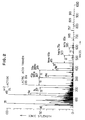
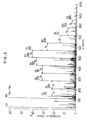
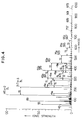
- L stands for lactides of cyclic condensates
- So stands for straight-chain condensates
- S stands for sodium salts of straight-chain condensates
- the above reaction product solidifies at room temperature and becomes difficult to be redissolved, desirably while the reaction product is still fluid, it is dissolved and dispersed into a certain amount of methanol, or to the reaction product is added ethanol in an amount of 1/5 of the charged amount to form a uniform solution and thereafter methanol is added to the solution to dissolve and disperse the reaction product, or the solidified reaction product is broken by a breaker with a cooler and is stirred in a certain amount of methanol at 50 to 60 °C to be dissolved and dispersed therein, then the dispersion is equilibrated at a temperature of 25 °C, then is filtered and is dried under reduced pressure to obtain an acetonitrile solution, and the solution is fractionated by means of a reverse phase ODS column.
- the reaction liquid is made up of straight-chain condensates and cyclic condensates (lactides), the degree of condensation reaches about 23, it is now impossible to separate them from each other, and although they cannot be identified as a single substance, it appears that they contribute to the inhibition effect in concert though their inhibition effects differ more or less from each other.
- the affinities are very strong and a certain type of reversible equilibrium is established in the closed system.
- condensates having a molecular weight of about 1,700 or below which are concerned herein straight-chain condensates are very soluble in methanol and cyclic condensates are very soluble in acetonitrile.
- reaction liquid When the reaction liquid is neutralized and is eluted with a 25 % aqueous acetonitrile solution by means of a reverse phase system ODS column, low-molecular-weight sodium salts are obtained, but cyclic condensates (lactides) cannot be separated unless the eluant contains a large amount of an acetonitrile component.
- L-lactic acid ( ⁇ -hydroxypropinonic acid) low condensates are high in cohesion and if the eluant is made acidic to break the hydrogen bonding, they can be separated well by ODS column chromatography.
- the active part (ODS-80) fractionated by an ODS column contains cyclic condensates together with straight-chain condensates and their degrees of condensation n are continuous to reach high values (a practical degree of condensation n ⁇ 23), and when the active part is administered, the inhibiting effect begins to appear after the passage of several days after the administration, and it exhibits its effect for so long a period as even if the administration is suspended after ten administrations, the propagation of the tumor is not observed. Therefore, in the case of ODS-80, such administration is considered sufficient that for initial five days the administration is effected once a day and thereafter the administration is effected every 4 or 5 days, but this cannot be confirmed in the case of a mouse because the cycle of metabolism is different.
- condensates of ⁇ -hydroxy acids in particular condensates of lactic acid
- condensates of lactic acid are readily decomposed in the organism and are discharged out of the body and in the flesh always there is lactic acid resulted from fatigue.
- the decomposition rate of condensates of lactic acid is not so high as to cause lactic acid acidosis, so that an effective amount thereof can be administered successively without pharmacological toxicity, and it is not required to take any side effect into consideration. Further, any species specificity for tumors is not observed.
- the present inhibiting agent against malignant tumor cells of animals including human beings caused no particular abnormality in the organism in the toxicity experiments wherein it was used in living organism systems.
- the proliferation stopped after several days from the start of the administration and even though the administration was suspended thereafter, it was observed that the tumor significantly reduced, and further in the clinical Examples it was observed that the physical strength of a patient recovered and the tumor reduced.
- the present inhibiting agent is a substance which has a stable prolonged effect in living organisms and is suitable as a carcinostatic agent which is effective and can be used without anxiety.
- the present process for producing an inhibiting agent against malignant tumor cells of animals including human beings comprises a chemical process without using any ecosystem and, in comparison with the conventional process, the present process is extremely simplified, the time required can be shortened, and the material cost can be saved.
Landscapes
- Health & Medical Sciences (AREA)
- Veterinary Medicine (AREA)
- Chemical & Material Sciences (AREA)
- Medicinal Chemistry (AREA)
- Pharmacology & Pharmacy (AREA)
- Life Sciences & Earth Sciences (AREA)
- Animal Behavior & Ethology (AREA)
- General Health & Medical Sciences (AREA)
- Public Health (AREA)
- Epidemiology (AREA)
- Chemical Kinetics & Catalysis (AREA)
- General Chemical & Material Sciences (AREA)
- Nuclear Medicine, Radiotherapy & Molecular Imaging (AREA)
- Organic Chemistry (AREA)
- Pharmaceuticals Containing Other Organic And Inorganic Compounds (AREA)
- Organic Low-Molecular-Weight Compounds And Preparation Thereof (AREA)
- Polyesters Or Polycarbonates (AREA)
- Compositions Of Macromolecular Compounds (AREA)
- Medicines Containing Plant Substances (AREA)
Applications Claiming Priority (2)
| Application Number | Priority Date | Filing Date | Title |
|---|---|---|---|
| JP16752091A JP3418199B2 (ja) | 1991-06-13 | 1991-06-13 | 動物の悪性腫瘍抑制剤の製造方法 |
| JP167520/91 | 1991-06-13 |
Publications (2)
| Publication Number | Publication Date |
|---|---|
| EP0518706A2 true EP0518706A2 (de) | 1992-12-16 |
| EP0518706A3 EP0518706A3 (en) | 1993-07-28 |
Family
ID=15851218
Family Applications (1)
| Application Number | Title | Priority Date | Filing Date |
|---|---|---|---|
| EP19920305464 Withdrawn EP0518706A3 (en) | 1991-06-13 | 1992-06-15 | An inbihiting agent against proliferation of malignant tumour cells of animals (including human beings)and methods for its manufacture |
Country Status (6)
| Country | Link |
|---|---|
| EP (1) | EP0518706A3 (de) |
| JP (1) | JP3418199B2 (de) |
| KR (1) | KR930000121A (de) |
| AU (1) | AU1718292A (de) |
| CA (1) | CA2071094A1 (de) |
| MX (1) | MX9202862A (de) |
Cited By (3)
| Publication number | Priority date | Publication date | Assignee | Title |
|---|---|---|---|---|
| EP1103263A3 (de) * | 1999-11-15 | 2002-08-14 | Youichiro Nagasu | Poly-L-Lactate als Antikrebsmittel |
| WO2003039560A1 (en) * | 2001-11-06 | 2003-05-15 | Amato Pharmaceutical Products, Ltd. | Antitumor agent containing lactic acid oligomer mixture |
| EP1213021A4 (de) * | 1999-08-09 | 2004-02-11 | Amato Pharm Prod Ltd | Heilmittel gegen diabetes |
Family Cites Families (1)
| Publication number | Priority date | Publication date | Assignee | Title |
|---|---|---|---|---|
| DE3026447A1 (de) * | 1980-07-12 | 1982-02-04 | Bayer Ag, 5090 Leverkusen | Antitumoral wirkende mittel |
-
1991
- 1991-06-13 JP JP16752091A patent/JP3418199B2/ja not_active Expired - Fee Related
-
1992
- 1992-05-27 AU AU17182/92A patent/AU1718292A/en not_active Abandoned
- 1992-06-12 CA CA002071094A patent/CA2071094A1/en not_active Abandoned
- 1992-06-12 MX MX9202862A patent/MX9202862A/es unknown
- 1992-06-13 KR KR1019920010289A patent/KR930000121A/ko not_active Withdrawn
- 1992-06-15 EP EP19920305464 patent/EP0518706A3/en not_active Withdrawn
Cited By (3)
| Publication number | Priority date | Publication date | Assignee | Title |
|---|---|---|---|---|
| EP1213021A4 (de) * | 1999-08-09 | 2004-02-11 | Amato Pharm Prod Ltd | Heilmittel gegen diabetes |
| EP1103263A3 (de) * | 1999-11-15 | 2002-08-14 | Youichiro Nagasu | Poly-L-Lactate als Antikrebsmittel |
| WO2003039560A1 (en) * | 2001-11-06 | 2003-05-15 | Amato Pharmaceutical Products, Ltd. | Antitumor agent containing lactic acid oligomer mixture |
Also Published As
| Publication number | Publication date |
|---|---|
| CA2071094A1 (en) | 1992-12-14 |
| MX9202862A (es) | 1993-08-01 |
| JPH04368332A (ja) | 1992-12-21 |
| EP0518706A3 (en) | 1993-07-28 |
| AU1718292A (en) | 1992-12-24 |
| KR930000121A (ko) | 1993-01-15 |
| JP3418199B2 (ja) | 2003-06-16 |
Similar Documents
| Publication | Publication Date | Title |
|---|---|---|
| CA1280369C (en) | Pharmaceutical with anti-tumor effect | |
| Pirola et al. | Effects of ethyl alcohol on sphincteric resistance at the choledocho-duodenal junction in man | |
| JP3425968B2 (ja) | 人を含む動物の悪性腫瘍細胞増殖抑制剤 | |
| DE2357757A1 (de) | Substituierte acylanilide | |
| KR100442096B1 (ko) | 이중 디카르복실산 디아미노플라틴 착체의 항종양 유도체, 그의 제조방법, 그것을 함유하는 약학조성물 및 그 유도체의 적용 | |
| EP1061932A1 (de) | Pharmazeutische zusammensetzung enthaltend geweihextrakte von cervus nippon mit wachstumsstimulierender aktivität auf hematopoietische stammzellen und megakaryozyten | |
| JPH06336427A (ja) | 人を含む動物の悪性腫瘍細胞増殖抑制剤 | |
| EP1103263A2 (de) | Poly-L-Lactate als Antikrebsmittel | |
| JPH10130153A (ja) | 大腸癌、食道癌及び乳癌より選ばれた癌に用いる 抗悪性腫瘍剤 | |
| JP2000239171A (ja) | 経口qol改善剤 | |
| JPH07233061A (ja) | 人を含む動物の悪性腫瘍細胞増殖抑制作用を有する経口投与剤の製造方法 | |
| JP2000072680A (ja) | 免疫機能調節剤 | |
| CA2071094A1 (en) | Inhibiting agent against the proliferation of malignant tumor cells of animals including human beings and its manufacture | |
| EP0227844B1 (de) | Antivirus-heilmittel | |
| WO1998024795A1 (en) | Novel triterpene glycoside compound, process for preparation thereof and anti-cancer composition containing the same | |
| JP2001510439A (ja) | ポリエステル環状化合物、その複合体およびその結合体 | |
| Cunningham et al. | The pharmacokinetics of high dose cyclophosphamide and high dose etoposide | |
| CN1025029C (zh) | 喜树硷精氨酸盐制剂的制备方法 | |
| JP3188325B2 (ja) | ポリエンマクロライド物質、その製造法、及びこれを用いた抗菌剤と抗腫瘍剤 | |
| CN118812478B (zh) | 一种蒲公英黄酮衍生物及其制备方法与应用 | |
| Zaharko et al. | Plasma kinetics and effects of 5, 6-dihydro-5-azacytidine in mice and L1210 tumor | |
| EP0357092B1 (de) | Herstellung von Diacetoxybenzylidendiacetaten | |
| CN1081364A (zh) | 包括人在内动物的恶性肿瘤细胞增殖抑制剂的制备方法 | |
| US20050176824A1 (en) | Novel substance having antitumor/anti-inflammatory activity | |
| CN112574071A (zh) | 一种双胍基连接脂肪碳链的两亲性二甲双胍衍生物及其制药用途 |
Legal Events
| Date | Code | Title | Description |
|---|---|---|---|
| PUAI | Public reference made under article 153(3) epc to a published international application that has entered the european phase |
Free format text: ORIGINAL CODE: 0009012 |
|
| AK | Designated contracting states |
Kind code of ref document: A2 Designated state(s): AT BE CH DE DK FR GB IT LI NL SE |
|
| PUAL | Search report despatched |
Free format text: ORIGINAL CODE: 0009013 |
|
| AK | Designated contracting states |
Kind code of ref document: A3 Designated state(s): AT BE CH DE DK FR GB IT LI NL SE |
|
| 17P | Request for examination filed |
Effective date: 19931014 |
|
| STAA | Information on the status of an ep patent application or granted ep patent |
Free format text: STATUS: THE APPLICATION HAS BEEN WITHDRAWN |
|
| 18W | Application withdrawn |
Withdrawal date: 19940725 |