EP0520700A1 - Tocopherolgemisch zur Verwendung als Antioxidans für Minzöl in Kaugummi - Google Patents
Tocopherolgemisch zur Verwendung als Antioxidans für Minzöl in Kaugummi Download PDFInfo
- Publication number
- EP0520700A1 EP0520700A1 EP92305648A EP92305648A EP0520700A1 EP 0520700 A1 EP0520700 A1 EP 0520700A1 EP 92305648 A EP92305648 A EP 92305648A EP 92305648 A EP92305648 A EP 92305648A EP 0520700 A1 EP0520700 A1 EP 0520700A1
- Authority
- EP
- European Patent Office
- Prior art keywords
- tocopherol
- weight
- oil
- mint
- chewing gum
- Prior art date
- Legal status (The legal status is an assumption and is not a legal conclusion. Google has not performed a legal analysis and makes no representation as to the accuracy of the status listed.)
- Granted
Links
Images


Classifications
-
- A—HUMAN NECESSITIES
- A23—FOODS OR FOODSTUFFS; TREATMENT THEREOF, NOT COVERED BY OTHER CLASSES
- A23G—COCOA; COCOA PRODUCTS, e.g. CHOCOLATE; SUBSTITUTES FOR COCOA OR COCOA PRODUCTS; CONFECTIONERY; CHEWING GUM; ICE-CREAM; PREPARATION THEREOF
- A23G4/00—Chewing gum
- A23G4/06—Chewing gum characterised by the composition containing organic or inorganic compounds
-
- A—HUMAN NECESSITIES
- A23—FOODS OR FOODSTUFFS; TREATMENT THEREOF, NOT COVERED BY OTHER CLASSES
- A23G—COCOA; COCOA PRODUCTS, e.g. CHOCOLATE; SUBSTITUTES FOR COCOA OR COCOA PRODUCTS; CONFECTIONERY; CHEWING GUM; ICE-CREAM; PREPARATION THEREOF
- A23G4/00—Chewing gum
- A23G4/06—Chewing gum characterised by the composition containing organic or inorganic compounds
- A23G4/12—Chewing gum characterised by the composition containing organic or inorganic compounds containing microorganisms or enzymes; containing paramedical or dietetical agents, e.g. vitamins
- A23G4/126—Chewing gum characterised by the composition containing organic or inorganic compounds containing microorganisms or enzymes; containing paramedical or dietetical agents, e.g. vitamins containing vitamins, antibiotics
-
- A—HUMAN NECESSITIES
- A23—FOODS OR FOODSTUFFS; TREATMENT THEREOF, NOT COVERED BY OTHER CLASSES
- A23L—FOODS, FOODSTUFFS OR NON-ALCOHOLIC BEVERAGES, NOT OTHERWISE PROVIDED FOR; PREPARATION OR TREATMENT THEREOF
- A23L27/00—Spices; Flavouring agents or condiments; Artificial sweetening agents; Table salts; Dietetic salt substitutes; Preparation or treatment thereof
- A23L27/70—Fixation, conservation, or encapsulation of flavouring agents
Definitions
- the present invention relates to mint oil and mint flavored chewing gum compositions containing a specific blend of tocopherol homologs which provides improved antioxidant effects.
- chewing gum compositions include a number of ingredients, some of which are subject to deterioration through oxidation during storage.
- Mint oils are important ingredients of chewing gum which require stabilization, both before and after the mint oils are incorporated into the chewing gum.
- the term "mint oil” as used herein includes, but is not limited to, peppermint oil, spearmint oil, corn mint oil and Scotch spearmint oil. The use of peppermint oil in chewing gum, enhanced with a minor amount of spearmint oil, is discussed in U.S. Patent 4,948,595 issued to Patel et al.
- BHA Butylated Hydroxyanisole
- BHT Butylated Hydroxytoluene
- TBHQ tertiary butyl hydroquinone
- Tocopherols are naturally occurring compounds which are known to have antioxidant properties.
- the most common tocopherol, alpha-tocopherol, is also known as vitamin E.
- the other common homologs are beta, gamma and delta tocopherols. All of these tocopherol homologs are FDA approved additives which have been shown to be safe in animal testing.
- Natural tocopherols are usually derived from vegetable oils, especially soybean oil. Tocopherols can also be found in many spices, fruits, nuts, seeds and other plant sources.
- tocopherols have been found to be generally less effective than BHA and BHT in preventing oxidation of mint oil and mint flavored chewing gum. Tocopherols also have upper usage level limits, above which oxidation of the mint oil will start to increase again. Tocopherols have been used successfully as chewing gum stabilizers when added in combination with certain synthetic stabilizers.
- U.S. Patent 4,489,099 issued to Shaheen et al. discloses the use of vitamin E tocopherol in combination with dilauryl thiodipropionate (DLTDP).
- DLTDP dilauryl thiodipropionate
- tocopherol homologs exhibit surprising and unexpected improvement in antioxidant properties when used in mint oil and mint flavored chewing gum compositions.
- the homologue mixtures useful in the invention are more effective at preventing oxidation of mint oil than any of the constituent homologs used alone.
- the tocopherol mixtures useful in the present invention will contain at least three tocopherol homologs, alpha, gamma and delta, in specific ratios. Beta tocopherol and possibly other homologs may also be present in small quantities.
- the preferred ranges are 7-15% alpha tocopherol, 45-70% gamma tocopherol and 20-35% delta tocopherol.
- the most preferred ranges are 9-13% alpha tocopherol, 55-63% gamma tocopherol and 27-32% delta tocopherol.
- the tocopherol mixtures used in the present invention may be naturally occurring products, mixtures of naturally occurring products, modifications of natural products, mixtures of component tocopherols or natural products with added component tocopherols.
- the tocopherol mixture will be present in a diluent, most commonly a vegetable oil.
- a diluent most commonly a vegetable oil.
- the amount of the diluent is not important from an antioxidant standpoint. However, active levels of about 70% (reflecting about 70% by weight tocopherol and about 30% by weight diluent) are preferred for viscosity and handling reasons.
- mint oil compositions for use in chewing gum, especially peppermint oil compositions, which are shelf stable and which do not contain controversial synthetic antioxidants.
- FIGURE 1 shows oxidation as a function of time for peppermint oil samples which have been stabilized with Tenox GT-2, with substantially pure alpha, beta and delta tocopherols, and for an unstabilized peppermint oil sample.
- Tenox GT-2 is a commercially available tocopherol blend containing 10.2% alpha tocopherol, 61.6% gamma tocopherol, and 28.2% delta tocopherol (based on total tocopherols) in a soybean oil diluent (70% tocopherol mixture, 30% soybean oil).
- the experimental conditions are provided in Examples 1, 2, 3, 4, and 9 hereinafter.
- FIGURE 2 shows oxidation as a function of time for peppermint oil samples which have been stabilized with Tenox GT-2 and with various vitamin E mixtures, and for an unstabilized sample.
- FIGURE 2 reflects the test results of Examples 1, 5, 6, 7 and 9 hereinafter.
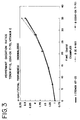
- FIGURE 3 shows oxidation as a function of time for peppermint oil samples which have been stabilized with Tenox GT-2, Covi-Ox T-70 and vitamin E.
- Covi-Ox T-70 is a commercially available tocopherol mixture containing 12% alpha tocopherol, 2% beta tocopherol, 30% delta tocopherol and 56% gamma tocopherol diluted with 30% vegetable oil.
- FIGURE 3 reflects the experimental results from Examples 1, 5 and 8.
- Oxidation causes undesirable alterations of flavor of mint oil and chewing gum compositions containing mint oil. It has always been a major objective of chewing gum manufacturers to maintain the quality of the flavor and prolong the shelf life of chewing gum, including mint-flavored chewing gum. therefore, the oxidation of mint oil, and its adverse impact on flavor, is a central concern of chewing gum manufacturers.
- Mint oils, and most particularly peppermint oil contain several key components which readily oxidize.
- Table 1 is a list of peppermint oil components and percentages, and half lives in peppermint oil, in days, at 85°F and 100 psi oxygen.
- mint oils also contain many of the oxidizable components that are present in peppermint oil.
- spearmint oil and Scotch spearmint oil contain alpha-pinene, limonene, 3-octanol and beta pinene along with other components.
- Corn mint oil contains alpha-pinene, myrcene, limonene, gamma-terpinene, 3-octanol, menthofuran, beta-caryophyllene, germacrene D, and beta-pinene along with other components. Therefore, an antioxidant which stabilizes peppermint oil will generally be useful for stabilizing other mint oils as well.
- Tocopherols are natural substances found in vegetable and other plant seeds such as soybeans, sun-flower seeds, and various fruits and nuts. The fact that tocopherols are naturally derived makes them more attractive to chewing gum manufacturers and consumers, than synthetic antioxidants. From an antioxidant standpoint, tocopherols are of interest because they contain phenolic-type groups similar to those found in BHA, BHT and TBHQ:
- the present invention relates to the use of tocopherol mixtures which effect improved antioxidant activity in mint oil and chewing gum which contains mint oil.
- the preferred amounts of tocopherol mixture may vary depending on the specific mint oil and/or the specific chewing gum composition. Generally, the preferred amounts of tocopherol are higher when the mint oil is to be used in chewing gum. This is because some of the antioxidant may migrate from the mint oil into the gum base.
- Table 2 summarizes both the preferred composition of the tocopherol mixture of the invention, and the preferred amounts which are to be used in mint oil and mint-flavored chewing gum.
- Column B in Table 2 reflects the amount of tocopherol which is necessary to stabilize unused mint oil, such as for storage of the mint oil.
- Column C indicates that the antioxidant level may have to be increased before or when the mint oil is mixed with the other chewing gum components.
- the amount of mint oil typically used in mint flavored chewing gum varies from about .5-3% based on the weight of the chewing gum product, and is most typically about 1%.
- the amount of tocopherol required to stabilize the mint oil in the chewing gum will vary depending on the amount and type of mint oil and other chewing gum components. Therefore, the antioxidant amounts in column C can only be stated generally, and should be optimized individually for individual chewing gums.
- the tocopherol mixture be preblended with the mint oil.
- the tocopherol mixture may alternatively be mixed into the chewing gum along with the mint oil. In either case, the tocopherol should be thoroughly blended with the product to produce a homogeneous mixture.
- a chewing gum composition in general, includes a water soluble bulk portion, a water insoluble chewing gum base portion and typically water insoluble flavoring agents.
- the water soluble portion dissipates with a portion of the flavoring agents over a period of time during chewing.
- the gum base portion is retained in the mouth throughout the chewing process.
- the insoluble gum base generally includes elastomers, resins, fats, oils, waxes, softeners and inorganic fillers.
- the elastomers may include polyisobutylene, isobutylene-isoprene copolymer, styrene butadiene rubber and natural latexes such as chicle.
- the resins may include polyvinyl acetate and terpene resins. Low molecular weight polyvinyl acetate is a preferred resin.
- Fats and oils may include animal fats such as lard and tallow, vegetable oils such as soybean and cottonseed oils, hydrogenated and partially hydrogenated vegetable oils, and cocoa butter.
- waxes include petroleum waxes such as paraffin and microcrystalline wax, natural waxes such as beeswax, candellia, carnauba and polyethylene wax.
- the waxes Preferably, have a melting point between 95°F and 240°F.
- the gum base typically also includes a filler component such as calcium carbonate, magnesium carbonate, talc, dicalcium phosphate and the like; elastomers, including glycerol monostearate and glycerol triacetate; and optional ingredients such as antioxidants, colors and emulsifiers.
- the gum base constitutes between 5-95% by weight of the chewing gum composition, more typically 10-50% by weight of the chewing gum, and most commonly 25-35% by weight of the chewing gum.
- the water soluble portion of the chewing gum may include softeners, bulk sweeteners, high intensity sweeteners and combinations thereof.
- Softeners are added to the chewing gum in order to optimize the chew-ability and mouth feel of the gum.
- the softeners which are also known as plasticizers or plasticizing agents, generally constitute between about .5-15% by weight of the chewing gum.
- the softeners may include glycerin, lecithin, and combinations thereof.
- the softeners may also include aqueous sweetener solutions such as those containing sorbitol, hydrogenated starch hydrolysates, corn syrup and combinations thereof.
- Bulk sweeteners constitute between 20-80% by weight of the chewing gum and may include both sugar and sugarless sweeteners and components.
- Sugar sweeteners may include saccharide containing components including but not limited to sucrose, dextrose, maltose, dextrin, dried invert sugar, fructose, levulose, galactose, corn syrup solids, and the like, alone or in combination.
- Sugarless sweeteners include components with sweetening characteristics but are devoid of the commonly known sugars.
- Sugarless sweeteners include but are not limited to sugar alcohols such as sorbitol, mannitol, xylitol, hydrogenated starch hydrolysates, maltitol, and the like, alone or in combination.
- High intensity sweeteners may also be present. These may include but are not limited to sucralose, aspartame, salts of acesulfame, alitame, saccharin and its salts, cyclamic acid and its salts, dihydrochalcones, thaumatin, monellin, and the like, alone or in combination.
- Combinations of sugar and/or sugarless sweeteners may be used in chewing gum.
- the sweetener may also function in the chewing gum in whole or in part as a water soluble bulking agent. Additionally, the softener may also provide additional sweetness such as with aqueous sugar or alditol solutions.
- One or more flavoring agents are generally present in the chewing gum in an amount within the range of about .1-10% by weight of the chewing gum, preferably between about .5-3% by weight of the chewing gum.
- the flavoring agents may include essential oils, synthetic flavors or mixtures thereof including but not limited to oils derived from plants and fruits such as citrus oils, fruit essences, peppermint oil, spearmint oil, other mint oils, clove oil, oil of wintergreen, anise and the like.
- Artificial flavoring agents and components may also be used. Natural and artificial flavoring agents may be combined in any sensorally acceptable fashion.
- Optional ingredients such as colors, emulsifiers and pharmaceutical agents may also be included in chewing gum.
- Chewing gum is generally manufactured by sequentially adding the various chewing gum ingredients to any commercially available mixer known in the art. After the ingredients have been thoroughly mixed, the gum mass is discharged from the mixer and shaped into the desired form such as by rolling into sheets and cutting into sticks, extruding into chunks, or casting into pellets. Generally, the ingredients are mixed by first melting the gum base and adding it to the running mixer. The gum base may alternatively be melted in the mixer. Color and emulsifiers can be added at this time.
- a softener such as glycerin can be added next along with syrup and part of the bulk portion. Further parts of the bulk portion may then be added to the mixer. The flavoring agent is typically added with the final part of the bulk portion. The entire mixing process typically takes from five to fifteen minutes, although longer mixing times are sometimes required. Those skilled in the art will recognize that variations of this mixing procedure, or other mixing procedures, may be followed.
- Tenox GT-2 The lot of Kodak Tenox GT-2 used contained 10.3% alpha tocopherol, 61.4% gamma tocopherol and 28.3% delta tocopherol, based on total tocopherol weight, and contained 68.4% total active tocopherol and 31.6% diluent. Tenox GT-2 is useful in the present invention. Eight other samples were prepared for comparison with Example 1, as discussed below. In each of Examples 2-8, a different tocopherol or tocopherol mixture was substituted for Tenox GT-2. The amount of tocopherol added to the 250 grams of peppermint oil corresponded, in each case, to an active tocopherol level of approximately .07% in the peppermint oil. Example 9, a control sample, did not contain tocopherol.
- T-3251 was added to 250 grams of peppermint oil in a one pint glass jar. T-3251 contains virtually 100% alpha tocopherol and no diluent. The glass jar containing the sample was placed in a Parr bomb reactor. The reactor was placed under the same pressure and temperature conditions as used for Example 1.
- T-2028 was added to 250 grams of peppermint oil in a one pint glass jar. T-2028 contains 83.3% delta tocopherol and 16.7% other tocopherols, mostly gamma tocopherol, with no diluent.
- the glass jar containing the sample was placed in a Parr bomb reactor. The reactor was placed under the same pressure and temperature conditions as used for Example 1.
- Kodak 1187962 0.175 grams was added to 250 grams of peppermint oil in a one pint glass jar.
- Kodak 1187962 contains 99.6% gamma tocopherol and .4% other tocopherols, with no diluent.
- the glass jar containing the sample was placed in a Parr bomb reactor. The reactor was placed under the same pressure and temperature conditions as used for Example 1.
- Vitamin E 4-50 from Kodak was added to 250 grams of peppermint oil in a one pint glass jar.
- Vitamin E 4-50 contains 52.9% alpha tocopherol, 11.8% delta tocopherol and 35.3% gamma tocopherol in a vegetable oil diluent, the mixture containing 50.7% total active tocopherol and 49.3% diluent.
- the glass jar containing the sample was placed in a Parr bomb reactor. The reactor was placed under the same pressure and temperature conditions as used for Example 1.
- Vitamin E 4-80 0.260 grams of Vitamin E 4-80 from Kodak was added to 250 grams of peppermint oil in a one pint glass jar. Vitamin E 4-80 contains 83.0% alpha tocopherol, 0.8% delta tocopherol and 16.2% gamma tocopherol in a vegetable oil diluent, the mixture containing 71.7% total active tocopherol and 28.3% diluent.
- the glass jar containing the sample was placed in a Parr bomb reactor. The reactor was placed under the same pressure and temperature conditions as used for Example 1.
- Vitamin E 5-40 from Kodak was added to 250 grams of peppermint oil in a one pint glass jar.
- Vitamin E 5-40 contains 99.1% alpha tocopherol and 0.9% gamma tocopherol in a vegetable oil diluent, the mixture containing 43.6% total active tocopherol and 56.4% diluent.
- the glass jar containing the sample was placed in a Parr bomb reactor. The reactor was placed under the same pressure and temperature conditions as used for Example 1.
- Covi-ox T-70 0.25 grams of Covi-ox T-70 from Henkel was added to 250 grams of peppermint oil in a one pint glass jar.
- Covi-ox T-70 is useful in the present invention and, according to the manufacturer, contains 12% alpha tocopherol, 2% beta tocopherol, 30% delta tocopherol and 56% gamma tocopherol in a vegetable oil diluent, the mixture containing 70% total active tocopherol and 30% diluent.
- the glass jar containing the sample was placed in a Parr bomb reactor. The reactor was placed under the same pressure and temperature conditions as used for Example 1.
- Example 2 250 grams of peppermint oil was placed in a one pint glass jar for use as a Parr bomb control. No tocopherol was added. The glass jar containing the sample was placed in a Parr bomb reactor. The reactor was placed under the same pressure and temperature conditions as used for Example 1. A second control sample was placed in a one gallon amber glass jug with a polyethylene lined cap and stored in a refrigerator to serve as a reference standard to normalize results.
- the Parr bomb reactors of Examples 1-9 were maintained at 100 psi oxygen and stored in the 85°F oven for 50 days. Samples were removed for analysis at 0, 7, 14, 21, 28, 35, 42 and 49 days. The samples were analyzed using Gas Chromatography for para-cymene, alpha-terpinene and gamma-terpinene. The terpinenes are oxidizable components which are depleted over time. Para-cymene is the oxidation product of the two terpinenes which increases in concentration as oxidation proceeds.
- Oxidation ratio (after x days) paracymene (Tx)/total terpinenes (Tx) paracymene (To)/total terpinenes (To)
- Tx represents concentrations after x days, in the Parr bomb samples
- To represents concentrations in the refrigerated reference standard, measured at the same times as the Parr bomb samples.
- Figure 1 compares the Tenox GT-2 samples useful in the invention (Example 1) with the three constituent tocopherol homologs (Examples 2-4), and with the unprotected Parr bomb control (Example 9).
- the Parr bomb control oxidized very quickly and all of the tocopherol samples (Examples 1-4) showed significant antioxidant effect.
- the tocopherol mixture useful in the invention (Example 1) exhibited significantly greater antioxidant activity than each of the constituent homologs (Examples 2-4), especially at longer time periods.
- Figure 1 clearly illustrates the existence of a surprising and beneficial synergistic relationship between the three homologs, when the homologs are mixed in concentrations according to the invention.
- FIG. 2 compares the Tenox GT-2 samples (Example 1) with three vitamin E products (Examples 5-7) which are tocopherol mixtures falling outside the ranges of the invention.
- the Tenox GT-2 useful in the invention showed significantly greater antioxidant activity than each of the vitamin E products.
- the vitamin E products performed no better, and as a group were worse, than the individual homologs of Examples 2-4 plotted in Figure 1.
- FIG. 3 compares the Tenox GT-2 sample (Example 1) with the Covi-ox T-70 sample (Example 8) which is also useful in the invention. Both of the foregoing were compared with the vitamin E 4-50 sample (Example 5), for time periods of up to thirty-five days.
- the Tenox GT-2 and Covi-ox T-70 exhibited substantially identical antioxidant performance, and both outperformed the vitamin E 4-50 sample. This graph illustrates that the surprising and beneficial effects obtained with the invention are reproducible.
Landscapes
- Chemical & Material Sciences (AREA)
- Life Sciences & Earth Sciences (AREA)
- Polymers & Plastics (AREA)
- Engineering & Computer Science (AREA)
- Food Science & Technology (AREA)
- Nutrition Science (AREA)
- Health & Medical Sciences (AREA)
- Inorganic Chemistry (AREA)
- Microbiology (AREA)
- Confectionery (AREA)
- Fats And Perfumes (AREA)
- Seasonings (AREA)
- Pharmaceuticals Containing Other Organic And Inorganic Compounds (AREA)
- Food Preservation Except Freezing, Refrigeration, And Drying (AREA)
Applications Claiming Priority (2)
| Application Number | Priority Date | Filing Date | Title |
|---|---|---|---|
| US07/722,692 US5139796A (en) | 1991-06-28 | 1991-06-28 | Tocopherol mixture for use as a mint oil antioxidant in chewing gum |
| US722692 | 1991-06-28 |
Publications (2)
| Publication Number | Publication Date |
|---|---|
| EP0520700A1 true EP0520700A1 (de) | 1992-12-30 |
| EP0520700B1 EP0520700B1 (de) | 1995-10-11 |
Family
ID=24902964
Family Applications (1)
| Application Number | Title | Priority Date | Filing Date |
|---|---|---|---|
| EP92305648A Expired - Lifetime EP0520700B1 (de) | 1991-06-28 | 1992-06-19 | Tocopherolgemisch zur Verwendung als Antioxidans für Minzöl in Kaugummi |
Country Status (12)
| Country | Link |
|---|---|
| US (2) | US5139796A (de) |
| EP (1) | EP0520700B1 (de) |
| JP (1) | JP2588668B2 (de) |
| CN (1) | CN1047920C (de) |
| AU (1) | AU642599B2 (de) |
| CA (1) | CA2072447C (de) |
| DE (1) | DE69205343T2 (de) |
| DK (1) | DK0520700T3 (de) |
| ES (1) | ES2077980T3 (de) |
| FI (1) | FI922973A7 (de) |
| MX (1) | MX9203450A (de) |
| PH (1) | PH30667A (de) |
Cited By (1)
| Publication number | Priority date | Publication date | Assignee | Title |
|---|---|---|---|---|
| EP1657294A1 (de) * | 2004-11-16 | 2006-05-17 | Symrise GmbH & Co. KG | Antiallergene Riechstoffzubereitungen |
Families Citing this family (23)
| Publication number | Priority date | Publication date | Assignee | Title |
|---|---|---|---|---|
| US5200213A (en) * | 1991-08-12 | 1993-04-06 | Wm. Wrigley Jr. Company | Gum base containing tocopherol |
| AU2514692A (en) * | 1992-08-14 | 1993-10-21 | Wm. Wrigley Jr. Company | Use of antioxidants from natural sources in chewing gum |
| US5330771A (en) * | 1992-10-29 | 1994-07-19 | Wm. Wrigley Jr. Company | Use of eugenol in chewing gum as an antioxidant |
| US5330772A (en) * | 1992-12-11 | 1994-07-19 | Wm. Wrigley Jr. Company | Use of gum guaiac as an antioxidant in chewing gum |
| US5949017A (en) * | 1996-06-18 | 1999-09-07 | Abb Power T&D Company Inc. | Electrical transformers containing electrical insulation fluids comprising high oleic acid oil compositions |
| US6048891A (en) | 1998-12-17 | 2000-04-11 | Loma Linda University Medical Center | Use of γ-tocopherol and its oxidative metabolite LLU-α in the treatment of natriuretic disease |
| US6426362B1 (en) * | 1999-10-08 | 2002-07-30 | Galileo Laboratories, Inc. | Formulations of tocopherols and methods of making and using them |
| US7034054B2 (en) * | 2000-12-15 | 2006-04-25 | Galileo Pharmaceuticals, Inc. | Methods for the prevention and treatment of cerebral ischemia using non-alpha tocopherols |
| WO2002047680A2 (en) * | 2000-12-15 | 2002-06-20 | Galileo Laboratories, Inc. | Use of tocopherol, metabolites or derivatives thereof or flavonoid metabolites or derivatives thereof in the manufacture of a medicament for the treatment of tissue ischemia |
| WO2003015494A2 (en) * | 2001-08-21 | 2003-02-27 | Galileo Pharmaceuticals, Inc. | Tocopherol enriched compositions and amelioration of inflammatory symptoms |
| US20030078186A1 (en) * | 2001-10-18 | 2003-04-24 | Christopher W. Denver | Method and composition for the prevention of the auto-oxidation of flavors and fragrances |
| AU2002352726A1 (en) * | 2001-11-15 | 2003-06-10 | Galileo Laboratories, Inc. | Formulations and methods for treatment or amelioration of inflammatory conditions |
| US20040152764A1 (en) * | 2001-12-14 | 2004-08-05 | Miller Guy M. | Compositions and methods for the prevention and treatment of cerebral ischemia |
| MY139332A (en) * | 2002-05-22 | 2009-09-30 | Hovid Berhad | Hair growth formulation |
| EP1718163A1 (de) * | 2004-02-23 | 2006-11-08 | The Texas A&M University System | Antioxidationsmittelzusammensetzungen und verfahren zu ihrer verwendung |
| US7780873B2 (en) * | 2004-02-23 | 2010-08-24 | Texas A&M University System | Bioactive complexes compositions and methods of use thereof |
| JP4750162B2 (ja) * | 2008-08-28 | 2011-08-17 | 三栄源エフ・エフ・アイ株式会社 | l−メントール含有乳化香料 |
| JP4460019B1 (ja) * | 2009-09-11 | 2010-05-12 | 株式会社 伊藤園 | メントール含有タブレット食品 |
| BR112014000182A2 (pt) * | 2011-07-05 | 2017-06-13 | Kraft Foods R & D Inc | mascaramento do amargor |
| US20190060300A1 (en) * | 2016-03-04 | 2019-02-28 | Sharon Anavi-Goffer | Self-Emulsifying Compositions of CB2 Receptor Modulators |
| JP2021181536A (ja) * | 2020-05-19 | 2021-11-25 | ライオン株式会社 | ミント系香料用の呈味改善剤、及びそれを含む香料組成物、並びにミント系香料を含有する香料組成物の呈味改善方法 |
| JP2022006720A (ja) * | 2020-06-24 | 2022-01-13 | 株式会社ロッテ | 香料配合組成物 |
| WO2022034846A1 (ja) * | 2020-08-11 | 2022-02-17 | ライオン株式会社 | 口腔用組成物 |
Citations (4)
| Publication number | Priority date | Publication date | Assignee | Title |
|---|---|---|---|---|
| BE549252A (de) * | ||||
| US4480108A (en) * | 1983-08-01 | 1984-10-30 | Eastman Kodak Company | Process for separation of tocopherol homologues |
| US4489099A (en) * | 1983-02-28 | 1984-12-18 | The Goodyear Tire & Rubber Company | Vitamin E/DLTDP stabilizer system for chewing gum SBR |
| GB2245812A (en) * | 1990-07-12 | 1992-01-15 | Shaklee Corp | Natural antioxidant compositions |
Family Cites Families (9)
| Publication number | Priority date | Publication date | Assignee | Title |
|---|---|---|---|---|
| JPS4914665A (de) * | 1972-06-05 | 1974-02-08 | ||
| US4001438A (en) * | 1974-10-15 | 1977-01-04 | International Flavors & Fragrances Inc | Flavor composition for use in orally utilizable compositions |
| US4025640A (en) * | 1975-08-26 | 1977-05-24 | American Hoechst Corporation | Oxothienobenzoxepin-acetic acids, precursors and derivatives thereof |
| US4504499A (en) * | 1983-04-25 | 1985-03-12 | Basf Wyandotte Corporation | Heat-stabilized, carotenoid-colored edible oils |
| US4977282A (en) * | 1984-04-17 | 1990-12-11 | Henkel Corporation | Production of d-alpha-tocopherol from natural plant sources |
| JPS6112629A (ja) * | 1984-06-28 | 1986-01-21 | Lion Corp | 口腔内組成物 |
| JPS6239684A (ja) * | 1985-08-12 | 1987-02-20 | House Food Ind Co Ltd | 酸化防止用組成物 |
| US4724151A (en) * | 1986-10-24 | 1988-02-09 | Warner-Lambert Company | Chewing gum compositions having prolonged breath-freshening |
| US4948595A (en) * | 1989-06-30 | 1990-08-14 | Wm. Wrigley Jr. Company | Spearmint enhanced peppermint flavored chewing gum with improved stability |
-
1991
- 1991-06-28 US US07/722,692 patent/US5139796A/en not_active Expired - Lifetime
-
1992
- 1992-04-14 US US07/868,545 patent/US5200214A/en not_active Expired - Lifetime
- 1992-06-19 ES ES92305648T patent/ES2077980T3/es not_active Expired - Lifetime
- 1992-06-19 DK DK92305648.5T patent/DK0520700T3/da active
- 1992-06-19 EP EP92305648A patent/EP0520700B1/de not_active Expired - Lifetime
- 1992-06-19 DE DE69205343T patent/DE69205343T2/de not_active Expired - Lifetime
- 1992-06-23 AU AU18469/92A patent/AU642599B2/en not_active Ceased
- 1992-06-25 PH PH44563A patent/PH30667A/en unknown
- 1992-06-26 MX MX9203450A patent/MX9203450A/es unknown
- 1992-06-26 CA CA002072447A patent/CA2072447C/en not_active Expired - Fee Related
- 1992-06-26 FI FI922973A patent/FI922973A7/fi not_active Application Discontinuation
- 1992-06-27 CN CN92108835A patent/CN1047920C/zh not_active Expired - Fee Related
- 1992-06-29 JP JP4170941A patent/JP2588668B2/ja not_active Expired - Fee Related
Patent Citations (4)
| Publication number | Priority date | Publication date | Assignee | Title |
|---|---|---|---|---|
| BE549252A (de) * | ||||
| US4489099A (en) * | 1983-02-28 | 1984-12-18 | The Goodyear Tire & Rubber Company | Vitamin E/DLTDP stabilizer system for chewing gum SBR |
| US4480108A (en) * | 1983-08-01 | 1984-10-30 | Eastman Kodak Company | Process for separation of tocopherol homologues |
| GB2245812A (en) * | 1990-07-12 | 1992-01-15 | Shaklee Corp | Natural antioxidant compositions |
Non-Patent Citations (2)
| Title |
|---|
| CHEMICAL ABSTRACTS, vol. 69, 12 August 1968, Columbus, Ohio, US; abstract no. 25087w, page 2333 ; * |
| CHEMICAL ABSTRACTS, vol. 91, 12 November 1979, Columbus, Ohio, US; abstract no. 162933n, page 339 ; * |
Cited By (2)
| Publication number | Priority date | Publication date | Assignee | Title |
|---|---|---|---|---|
| EP1657294A1 (de) * | 2004-11-16 | 2006-05-17 | Symrise GmbH & Co. KG | Antiallergene Riechstoffzubereitungen |
| WO2006053839A1 (de) * | 2004-11-16 | 2006-05-26 | Symrise Gmbh & Co. Kg | Antiallergene riechstoffzubereitungen |
Also Published As
| Publication number | Publication date |
|---|---|
| CA2072447C (en) | 1996-11-26 |
| FI922973L (fi) | 1992-12-29 |
| CN1070315A (zh) | 1993-03-31 |
| DE69205343D1 (de) | 1995-11-16 |
| US5139796A (en) | 1992-08-18 |
| DK0520700T3 (da) | 1995-11-27 |
| PH30667A (en) | 1997-09-16 |
| AU1846992A (en) | 1993-01-07 |
| JPH06184590A (ja) | 1994-07-05 |
| CA2072447A1 (en) | 1992-12-29 |
| DE69205343T2 (de) | 1996-05-09 |
| ES2077980T3 (es) | 1995-12-01 |
| FI922973A0 (fi) | 1992-06-26 |
| EP0520700B1 (de) | 1995-10-11 |
| MX9203450A (es) | 1993-12-01 |
| JP2588668B2 (ja) | 1997-03-05 |
| FI922973A7 (fi) | 1992-12-29 |
| CN1047920C (zh) | 2000-01-05 |
| AU642599B2 (en) | 1993-10-21 |
| US5200214A (en) | 1993-04-06 |
Similar Documents
| Publication | Publication Date | Title |
|---|---|---|
| EP0520700B1 (de) | Tocopherolgemisch zur Verwendung als Antioxidans für Minzöl in Kaugummi | |
| US5059429A (en) | Sucralose sweetened chewing gum | |
| US6159509A (en) | Method of making chewing gum products containing perillartine | |
| RU2143822C1 (ru) | Жевательная резинка с содержащим фруктовый сок наполнителем внутри | |
| US5158790A (en) | L-carvone enhanced fruit flavored chewing gum | |
| US5132121A (en) | Gum base containing tocopherol | |
| NZ234146A (en) | Peppermint flavoured chewing gum: enchanced with spearmint and methyl salicylate | |
| NZ230328A (en) | Synthetic chewing gum base with enhanced flavour resulting from addition of cocoa powder | |
| WO1995008273A1 (en) | Improved chewing gum compositions and methods for manufacturing same | |
| US5200213A (en) | Gum base containing tocopherol | |
| US5039530A (en) | Storage stable chewing gum containing alitame | |
| US5034231A (en) | Alitame stability using hydrogenated starch hydrolysate syrups | |
| US5330771A (en) | Use of eugenol in chewing gum as an antioxidant | |
| US5330772A (en) | Use of gum guaiac as an antioxidant in chewing gum | |
| CA2012581C (en) | Alitame stability using hydrogenated starch hydrolysate syrups | |
| WO1995007623A1 (en) | Chewing gum with stable natural blue color | |
| EP0418371B1 (de) | Lagerbeständiger kaugummi enthaltend alitam | |
| WO1993018661A1 (en) | Use of antioxidants from natural sources in chewing gum | |
| PH26771A (en) | Alitame stability using hydrogenated starch hydrolysate syrups |
Legal Events
| Date | Code | Title | Description |
|---|---|---|---|
| PUAI | Public reference made under article 153(3) epc to a published international application that has entered the european phase |
Free format text: ORIGINAL CODE: 0009012 |
|
| AK | Designated contracting states |
Kind code of ref document: A1 Designated state(s): DE DK ES FR GB IT NL |
|
| 17P | Request for examination filed |
Effective date: 19930129 |
|
| 17Q | First examination report despatched |
Effective date: 19930817 |
|
| GRAA | (expected) grant |
Free format text: ORIGINAL CODE: 0009210 |
|
| AK | Designated contracting states |
Kind code of ref document: B1 Designated state(s): DE DK ES FR GB IT NL |
|
| PG25 | Lapsed in a contracting state [announced via postgrant information from national office to epo] |
Ref country code: NL Free format text: LAPSE BECAUSE OF FAILURE TO SUBMIT A TRANSLATION OF THE DESCRIPTION OR TO PAY THE FEE WITHIN THE PRESCRIBED TIME-LIMIT Effective date: 19951011 |
|
| REF | Corresponds to: |
Ref document number: 69205343 Country of ref document: DE Date of ref document: 19951116 |
|
| ET | Fr: translation filed | ||
| REG | Reference to a national code |
Ref country code: DK Ref legal event code: T3 |
|
| REG | Reference to a national code |
Ref country code: ES Ref legal event code: FG2A Ref document number: 2077980 Country of ref document: ES Kind code of ref document: T3 |
|
| ITF | It: translation for a ep patent filed | ||
| NLV1 | Nl: lapsed or annulled due to failure to fulfill the requirements of art. 29p and 29m of the patents act | ||
| PLBE | No opposition filed within time limit |
Free format text: ORIGINAL CODE: 0009261 |
|
| STAA | Information on the status of an ep patent application or granted ep patent |
Free format text: STATUS: NO OPPOSITION FILED WITHIN TIME LIMIT |
|
| 26N | No opposition filed | ||
| REG | Reference to a national code |
Ref country code: GB Ref legal event code: IF02 |
|
| PGFP | Annual fee paid to national office [announced via postgrant information from national office to epo] |
Ref country code: ES Payment date: 20070626 Year of fee payment: 16 |
|
| PGFP | Annual fee paid to national office [announced via postgrant information from national office to epo] |
Ref country code: IT Payment date: 20070628 Year of fee payment: 16 |
|
| REG | Reference to a national code |
Ref country code: ES Ref legal event code: FD2A Effective date: 20080620 |
|
| PG25 | Lapsed in a contracting state [announced via postgrant information from national office to epo] |
Ref country code: IT Free format text: LAPSE BECAUSE OF NON-PAYMENT OF DUE FEES Effective date: 20080619 |
|
| PG25 | Lapsed in a contracting state [announced via postgrant information from national office to epo] |
Ref country code: ES Free format text: LAPSE BECAUSE OF NON-PAYMENT OF DUE FEES Effective date: 20080620 |
|
| PGFP | Annual fee paid to national office [announced via postgrant information from national office to epo] |
Ref country code: FR Payment date: 20110629 Year of fee payment: 20 |
|
| PGFP | Annual fee paid to national office [announced via postgrant information from national office to epo] |
Ref country code: DK Payment date: 20110627 Year of fee payment: 20 Ref country code: GB Payment date: 20110628 Year of fee payment: 20 |
|
| PGFP | Annual fee paid to national office [announced via postgrant information from national office to epo] |
Ref country code: DE Payment date: 20110629 Year of fee payment: 20 |
|
| REG | Reference to a national code |
Ref country code: DE Ref legal event code: R071 Ref document number: 69205343 Country of ref document: DE |
|
| REG | Reference to a national code |
Ref country code: DE Ref legal event code: R071 Ref document number: 69205343 Country of ref document: DE |
|
| REG | Reference to a national code |
Ref country code: DK Ref legal event code: EUP |
|
| REG | Reference to a national code |
Ref country code: GB Ref legal event code: PE20 Expiry date: 20120618 |
|
| PG25 | Lapsed in a contracting state [announced via postgrant information from national office to epo] |
Ref country code: DE Free format text: LAPSE BECAUSE OF EXPIRATION OF PROTECTION Effective date: 20120620 |
|
| PG25 | Lapsed in a contracting state [announced via postgrant information from national office to epo] |
Ref country code: GB Free format text: LAPSE BECAUSE OF EXPIRATION OF PROTECTION Effective date: 20120618 |