EP0520901A1 - Verfahren zur Herstellung von Polyamidimidharzen und ihre Verwendung - Google Patents
Verfahren zur Herstellung von Polyamidimidharzen und ihre Verwendung Download PDFInfo
- Publication number
- EP0520901A1 EP0520901A1 EP92401804A EP92401804A EP0520901A1 EP 0520901 A1 EP0520901 A1 EP 0520901A1 EP 92401804 A EP92401804 A EP 92401804A EP 92401804 A EP92401804 A EP 92401804A EP 0520901 A1 EP0520901 A1 EP 0520901A1
- Authority
- EP
- European Patent Office
- Prior art keywords
- condensation
- extruder
- polyamide
- monomers
- solvent
- Prior art date
- Legal status (The legal status is an assumption and is not a legal conclusion. Google has not performed a legal analysis and makes no representation as to the accuracy of the status listed.)
- Granted
Links
Images

Classifications
-
- H—ELECTRICITY
- H01—ELECTRIC ELEMENTS
- H01B—CABLES; CONDUCTORS; INSULATORS; SELECTION OF MATERIALS FOR THEIR CONDUCTIVE, INSULATING OR DIELECTRIC PROPERTIES
- H01B3/00—Insulators or insulating bodies characterised by the insulating materials; Selection of materials for their insulating or dielectric properties
- H01B3/18—Insulators or insulating bodies characterised by the insulating materials; Selection of materials for their insulating or dielectric properties mainly consisting of organic substances
- H01B3/30—Insulators or insulating bodies characterised by the insulating materials; Selection of materials for their insulating or dielectric properties mainly consisting of organic substances plastics; resins; waxes
- H01B3/303—Macromolecular compounds obtained by reactions forming a linkage containing nitrogen with or without oxygen or carbon in the main chain of the macromolecule, not provided for in groups H01B3/38 or H01B3/302
- H01B3/306—Polyimides or polyesterimides
-
- C—CHEMISTRY; METALLURGY
- C08—ORGANIC MACROMOLECULAR COMPOUNDS; THEIR PREPARATION OR CHEMICAL WORKING-UP; COMPOSITIONS BASED THEREON
- C08G—MACROMOLECULAR COMPOUNDS OBTAINED OTHERWISE THAN BY REACTIONS ONLY INVOLVING UNSATURATED CARBON-TO-CARBON BONDS
- C08G73/00—Macromolecular compounds obtained by reactions forming a linkage containing nitrogen with or without oxygen or carbon in the main chain of the macromolecule, not provided for in groups C08G12/00 - C08G71/00
- C08G73/06—Polycondensates having nitrogen-containing heterocyclic rings in the main chain of the macromolecule
- C08G73/10—Polyimides; Polyester-imides; Polyamide-imides; Polyamide acids or similar polyimide precursors
- C08G73/14—Polyamide-imides
-
- C—CHEMISTRY; METALLURGY
- C09—DYES; PAINTS; POLISHES; NATURAL RESINS; ADHESIVES; COMPOSITIONS NOT OTHERWISE PROVIDED FOR; APPLICATIONS OF MATERIALS NOT OTHERWISE PROVIDED FOR
- C09D—COATING COMPOSITIONS, e.g. PAINTS, VARNISHES OR LACQUERS; FILLING PASTES; CHEMICAL PAINT OR INK REMOVERS; INKS; CORRECTING FLUIDS; WOODSTAINS; PASTES OR SOLIDS FOR COLOURING OR PRINTING; USE OF MATERIALS THEREFOR
- C09D179/00—Coating compositions based on macromolecular compounds obtained by reactions forming in the main chain of the macromolecule a linkage containing nitrogen, with or without oxygen, or carbon only, not provided for in groups C09D161/00 - C09D177/00
- C09D179/04—Polycondensates having nitrogen-containing heterocyclic rings in the main chain; Polyhydrazides; Polyamide acids or similar polyimide precursors
- C09D179/08—Polyimides; Polyester-imides; Polyamide-imides; Polyamide acids or similar polyimide precursors
Definitions
- the present invention relates to a process for the production of polyamide-imide resins by condensation of an aromatic diisocyanate with an aromatic polycarboxylic acid with at least three carboxyl functions, or a corresponding anhydride in the molten phase. It also extends to uses thereof, in particular to a process for manufacturing an enamel varnish based on such a resin.
- Polyamide-imide resins because of their good electrical thermal and mechanical characteristics and their good resistance to chemical agents, are used in various fields, in particular as electrical insulator for conductors, or as molding powder, for the production of laminates, glass-carbon-resin prepregs or surface coatings by electrostatic powdering or by fluidized bath.
- aromatic diisocyanates such as diphenylmethane diisocyanate 4-4 ′
- aromatic acid or anhydride with at least three carboxyl functions such as trimellitic or pyromellitic anhydrides
- polar aprotic solvents such as N-methyl-pyrrolidone, dimethylacetamide, dimethylsulfoxide, dimethylformamide, butyrolactone and hexamethylphosphorotriamide, etc.
- N-methyl-pyrrolidone has given the best results with regard to the properties of polyamide-imides, since it makes it possible to obtain a resin having a sufficient degree of condensation.
- condensation a linear extension of the chains and the formation of a three-dimensional network occur simultaneously.
- Even in the final manufacturing phase there is a rapid change in the viscosity of the reaction solution which is difficult to control and which can lead to gelation.
- Such manufacture is described in particular in documents FR-A-1422711 and 1501198.
- the object of the present invention is to provide a process for the production of polyamide-imide resins making it possible to completely avoid the drawbacks of synthesis in aprotic polar solvent medium, and in particular the danger of gelling.
- the process of the invention is characterized in that the condensation in the molten phase of the aromatic diisocyanate is carried out with the carboxylic acid containing at least three carboxyl functions, or with the corresponding anhydride, in the absence of catalyst.
- the process for manufacturing a varnish based on polyamide-imide resin according to the invention is characterized in that a polyamide-imide resin is manufactured by the process defined above, then dissolves the resin in a aprotic polar solvent with a weight content of N-methyl-pyrrolidone at most equal to 25%, optionally added with an aromatic diluent.
- reaction proportions are preferably the same as those of the known processes in the presence of a polar aprotic solvent, namely a ratio of the isocyanate functions to the other reactive functions of between 0.98 and 1.05, and preferably between 1 and 1 , 02.
- the synthesis can be carried out either batchwise or continuously in an extruder.
- MDI is heated to its melting temperature (40 ° to 50 °), then continuously adds the TMA while gradually raising the temperature.
- a low TMA flow rate is maintained up to 120 ° C, then increases from 120 ° C.
- a continuous formation of carbon dioxide is thus obtained, as well as its degassing, without the risk of abundant foam which can cause overflows.
- the temperature can be maintained at 120 ° C, or raised to 140 ° C or even higher.
- the reaction is stopped by cooling when the degree of desired condensation is reached.
- the polyamide-imide resin is then poured and can be packaged in the form of blocks or crushed scales, then stored.
- This co-solvent must partially disperse and dissolve the TMA; it allows easier degassing of the carbon dioxide formed thanks to a lower viscosity of the reaction mixture. It must not be a catalyst for the condensation reaction, nor react on TMA or MDI. It must have a boiling point at least equal to the final reaction temperature.
- the amount of co-solvent must be calculated so as to obtain a polyamide-imide resin with a content of 80 to 90M by weight in the co-solvent.
- the co-solvent and the TMA are mixed and the mixture is gradually heated to 120 ° C.
- the molten MDI (already liquid at 40 ° to 45 ° C.) is added continuously at this temperature.
- the flow rate is adjusted according to the release of carbon dioxide to avoid excessive foaming.
- the temperature can be maintained at 120 ° C or raised to 140 ° C or even higher, depending on the degree of condensation desired.
- the reaction is stopped by cooling.
- the polyamide-imide resin is then cast and can be packaged in the form of blocks, or crushed into scales, then stored.
- the reactive extrusion devices which are most suitable for the desired synthesis are of the twin screw type, their geometry being adapted to the desired effects.
- These double screws can be co-rotating and non-meshing, counter-rotating and non-meshing, or counter-rotating and meshing. It is also possible to associate zones of different geometries on the screws.
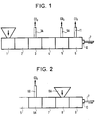
- FIG. 1 schematically represents an extruder for operating mode without the addition of compounds with blocked functionalities.
- Zone 1 is a zone for introducing the monomers, and for continuing their mixing, brought to a temperature of approximately 50 ° C.
- Zone 2 is a total melting and reaction zone, at 100 ° - 170 ° C.
- zone 3 where a degassing vent ensures the elimination of the carbon dioxide formed, which promotes condensation.
- zone 4 at 180 ° - 200 ° C
- zone 5 at 200 ° - 220 ° C
- zone 6 above 220 ° C, where condensation ends, with elimination of a residual quantity of carbon dioxide by a vent 11.
- This zone ends in a convergent 10, whence pulls out a rod 7 of polyamide-imide resin.
- the desired degree of condensation of the resin can be obtained by varying the speed of supply of the screws, their geometry and the temperature of the different zones.
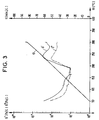
- zones allowing cooling of the resin and the addition of solvents, of solid compounds or in solution, with blocked functionalities, such as blocked di- and triisocyanates, at a temperature below the release temperature of these compounds, as represented in FIG. 2 of the drawing.
- zone 6A at the end of the condensation is provided with a vent for degassing carbon dioxide 6B. It is followed by a cooling zone 7.
- Zone 8 includes a hopper 8A for supplying compounds with blocked functionalities. It is followed by a kneading and homogenization zone 9, which ends in a converging 10 for discharging a resin rod.
- the polyamide-imide resins obtained by the process of the invention have an intrinsic viscosity in the NMP of between 0.2 and 0.6 dl / g approximately.
- the invention makes it possible to obtain polyamide-imide resins having a character, either thermoplastic or thermosetting, according to their conditions of preparation and implementation.
- a character either thermoplastic or thermosetting
- the risk of reaction between chains is considerably reduced.
- such a reaction with the formation of a three-dimensional network can take place during the processing of the resin. It is therefore possible, by playing on the degree of condensation, on the addition or not of compounds with blocked functionalities and on the conditions of use of the resin, products with thermoplastic or thermosetting characteristics.
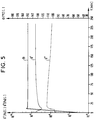
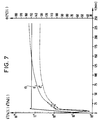
- Rheological analysis tests made it possible to determine the viscoelastic behavior of a polyamide-imide resin obtained according to Example 2, the polycondensation of which had been carried out in the presence of a co-solvent for partial solubilization of trimellitic anhydride.
- a first series of tests was carried out on the resin at 80% by weight of solid, in the presence of 20% of co-solvent, and a second series on the resin in solution at 50% in a mixture of 75% of dimethyl -formamide and 25% xylene and co-solvent.
- the powdered product is placed between two sheets of silicone paper, then pressed at 60 ° C for 1 minute. The thickness is calibrated with 0.5 mm shims. After cooling, the cake obtained is deposited between two glass fabrics, weighing 104 g / m2, then the assembly is pressed at 60 ° C for 1 minute under 2 bars. This operation allows the fibers of the fabric to be well impregnated and a homogeneous and manipulable product to be obtained.
- the product has a dip in level viscosity between 100 ° and 189 ° C.
- the condensation reaction then continues very quickly to give a maximum elastic modulus G ′ at 237 ° C. After 237 ° C, the product formed melts, but another reaction seems to start from 278 ° C.
- the viscous starting module G ⁇ is weaker. The minimum viscosity is reached around 100 ° C. The departure of volatile matter results in a rise in the modules to 215 ° - 220 ° C. The stabilization of the module values between 230 ° C and 250 ° C corresponds probably at the end of the reaction observed on the solid sample, the start of which was probably masked by the departure of the solvents. A second reaction appears to occur from 260 ° C.
- the polymer therefore manifests two reactivity thresholds around 190 ° - 200 ° C and 260 ° - 270 ° C.
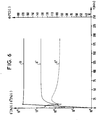
- the 80% solid tests were carried out at 150 ° C and 170 ° C, under the same conditions as the thermal gradient tests.
- the temperature 0 was brought from the ambient to 150 ° C or 170 ° C in 10 minutes, then maintained in stages of 180 minutes.
Landscapes
- Chemical & Material Sciences (AREA)
- Chemical Kinetics & Catalysis (AREA)
- Organic Chemistry (AREA)
- Spectroscopy & Molecular Physics (AREA)
- Physics & Mathematics (AREA)
- Life Sciences & Earth Sciences (AREA)
- Polymers & Plastics (AREA)
- Medicinal Chemistry (AREA)
- Health & Medical Sciences (AREA)
- Engineering & Computer Science (AREA)
- Materials Engineering (AREA)
- Wood Science & Technology (AREA)
- Macromolecular Compounds Obtained By Forming Nitrogen-Containing Linkages In General (AREA)
- Polyurethanes Or Polyureas (AREA)
- Polymers With Sulfur, Phosphorus Or Metals In The Main Chain (AREA)
- Paints Or Removers (AREA)
Applications Claiming Priority (2)
| Application Number | Priority Date | Filing Date | Title |
|---|---|---|---|
| FR9108076A FR2678276B1 (fr) | 1991-06-28 | 1991-06-28 | Procedes de fabrication de resines polyamide-imides et utilisations de celles-ci. |
| FR9108076 | 1991-06-28 |
Publications (2)
| Publication Number | Publication Date |
|---|---|
| EP0520901A1 true EP0520901A1 (de) | 1992-12-30 |
| EP0520901B1 EP0520901B1 (de) | 1996-11-20 |
Family
ID=9414470
Family Applications (1)
| Application Number | Title | Priority Date | Filing Date |
|---|---|---|---|
| EP92401804A Expired - Lifetime EP0520901B1 (de) | 1991-06-28 | 1992-06-25 | Verfahren zur Herstellung von Polyamidimidharzen und ihre Verwendung |
Country Status (6)
| Country | Link |
|---|---|
| EP (1) | EP0520901B1 (de) |
| JP (1) | JPH05194696A (de) |
| AT (1) | ATE145414T1 (de) |
| DE (1) | DE69215279T2 (de) |
| ES (1) | ES2093804T3 (de) |
| FR (1) | FR2678276B1 (de) |
Cited By (1)
| Publication number | Priority date | Publication date | Assignee | Title |
|---|---|---|---|---|
| US5743948A (en) * | 1994-07-21 | 1998-04-28 | Chemical Research Technology | Method for continuous production of varnish |
Citations (1)
| Publication number | Priority date | Publication date | Assignee | Title |
|---|---|---|---|---|
| US4738990A (en) * | 1987-08-31 | 1988-04-19 | The Dow Chemical Company | Fire resistant foam composed of predominantly amide and imide linkages |
-
1991
- 1991-06-28 FR FR9108076A patent/FR2678276B1/fr not_active Expired - Fee Related
-
1992
- 1992-06-25 DE DE69215279T patent/DE69215279T2/de not_active Expired - Fee Related
- 1992-06-25 AT AT92401804T patent/ATE145414T1/de not_active IP Right Cessation
- 1992-06-25 EP EP92401804A patent/EP0520901B1/de not_active Expired - Lifetime
- 1992-06-25 ES ES92401804T patent/ES2093804T3/es not_active Expired - Lifetime
- 1992-06-26 JP JP4169427A patent/JPH05194696A/ja active Pending
Patent Citations (1)
| Publication number | Priority date | Publication date | Assignee | Title |
|---|---|---|---|---|
| US4738990A (en) * | 1987-08-31 | 1988-04-19 | The Dow Chemical Company | Fire resistant foam composed of predominantly amide and imide linkages |
Cited By (1)
| Publication number | Priority date | Publication date | Assignee | Title |
|---|---|---|---|---|
| US5743948A (en) * | 1994-07-21 | 1998-04-28 | Chemical Research Technology | Method for continuous production of varnish |
Also Published As
| Publication number | Publication date |
|---|---|
| FR2678276A1 (fr) | 1992-12-31 |
| FR2678276B1 (fr) | 1993-12-17 |
| DE69215279D1 (de) | 1997-01-02 |
| EP0520901B1 (de) | 1996-11-20 |
| JPH05194696A (ja) | 1993-08-03 |
| ES2093804T3 (es) | 1997-01-01 |
| ATE145414T1 (de) | 1996-12-15 |
| DE69215279T2 (de) | 1997-03-20 |
Similar Documents
| Publication | Publication Date | Title |
|---|---|---|
| DE69524447T2 (de) | Polyamidsäure und verfahren zum umstellen von polyamidsäure zu polyimidbenzoxazolfilmen | |
| JP7045732B2 (ja) | ポリイミド粉体およびその製造方法 | |
| EP0036330B1 (de) | Verfahren zur kontinuierlichen Herstellung einer aromatischen Polyimidfolie | |
| KR100942467B1 (ko) | 폴리이미드 필름 및 그 제조방법 | |
| US5466732A (en) | Polyimide precursor solution, process for producing the solution and moldings and coatings obtained therefrom | |
| WO2010050491A1 (ja) | ポリイミド前駆体溶液組成物 | |
| DE60114131T2 (de) | Schmelzverarbeitbare thermoplastische statistische Copolyimide mit wiederherstellbarer Kristallinität und entsprechendem Verfahren | |
| US3961009A (en) | Process for the production of a shaped article of a heat resistant polymer | |
| CH398085A (fr) | Procédé pour augmenter la stabilité thermique de copolymères perfluorocarbonés | |
| EP0520901B1 (de) | Verfahren zur Herstellung von Polyamidimidharzen und ihre Verwendung | |
| US4954609A (en) | Intermediate molecular weight fluorine containing polymide and method for preparation | |
| JPH05271539A (ja) | ポリイミド前駆体の粉粒体、その混合物及びその製造方法 | |
| US4933132A (en) | Process of making a shaped article from intermediate molecular weight polyimides | |
| CN111087813A (zh) | 尺寸稳定的聚酰亚胺薄膜及其制备方法 | |
| CA2140629C (fr) | Solution de polyimide et leur procede d'obtention | |
| DE60129404T2 (de) | Statistische schmelzverarbeitbare thermoplastische Copolyimiden und Verfahren zu deren Herstellung | |
| US5233011A (en) | Process for preparing insulated wire | |
| CN109666141B (zh) | 聚酰胺酸原液及其制备方法及应用 | |
| KR102738711B1 (ko) | 폴리이미드 분말 및 이의 제조방법 | |
| JPH08143665A (ja) | 導電性複合体及び製造方法 | |
| EP0385302A1 (de) | Beschichtungen durch Polyimide mit mittleren Molekulargewicht | |
| EP0365311B1 (de) | Verfahren zur Herstellung eines isolierten Drahtes | |
| EP0445588A1 (de) | Verfahren zur Herstellung von Polyarylen-Sulfid-Polyimid-Copolymeren | |
| CA2077042A1 (en) | Granular material of polyimide precursor, mixture comprising the material and process for producing the material | |
| US3562380A (en) | Web-spinning fibers and films of benzimidazo-benzophenanthroline polymers |
Legal Events
| Date | Code | Title | Description |
|---|---|---|---|
| PUAI | Public reference made under article 153(3) epc to a published international application that has entered the european phase |
Free format text: ORIGINAL CODE: 0009012 |
|
| AK | Designated contracting states |
Kind code of ref document: A1 Designated state(s): AT CH DE ES FR GB IT LI NL SE |
|
| 17P | Request for examination filed |
Effective date: 19930408 |
|
| 17Q | First examination report despatched |
Effective date: 19950421 |
|
| 18R | Application refused |
Effective date: 19950928 |
|
| GRAH | Despatch of communication of intention to grant a patent |
Free format text: ORIGINAL CODE: EPIDOS IGRA |
|
| 18RA | Request filed for re-establishment of rights before grant | ||
| D18R | Application refused (deleted) | ||
| GRAH | Despatch of communication of intention to grant a patent |
Free format text: ORIGINAL CODE: EPIDOS IGRA |
|
| GRAA | (expected) grant |
Free format text: ORIGINAL CODE: 0009210 |
|
| AK | Designated contracting states |
Kind code of ref document: B1 Designated state(s): AT CH DE ES FR GB IT LI NL SE |
|
| REF | Corresponds to: |
Ref document number: 145414 Country of ref document: AT Date of ref document: 19961215 Kind code of ref document: T |
|
| ITF | It: translation for a ep patent filed | ||
| REG | Reference to a national code |
Ref country code: ES Ref legal event code: FG2A Ref document number: 2093804 Country of ref document: ES Kind code of ref document: T3 |
|
| REF | Corresponds to: |
Ref document number: 69215279 Country of ref document: DE Date of ref document: 19970102 |
|
| GBT | Gb: translation of ep patent filed (gb section 77(6)(a)/1977) |
Effective date: 19961204 |
|
| PLBE | No opposition filed within time limit |
Free format text: ORIGINAL CODE: 0009261 |
|
| STAA | Information on the status of an ep patent application or granted ep patent |
Free format text: STATUS: NO OPPOSITION FILED WITHIN TIME LIMIT |
|
| 26N | No opposition filed | ||
| REG | Reference to a national code |
Ref country code: CH Ref legal event code: PUE Owner name: GEC ALSTHOM SA TRANSFER- KLEBER MALAKOFF * IVA EMA Ref country code: CH Ref legal event code: PFA Free format text: KLEBER MALAKOFF TRANSFER- IVA EMAILLAGE |
|
| REG | Reference to a national code |
Ref country code: GB Ref legal event code: IF02 |
|
| NLS | Nl: assignments of ep-patents |
Owner name: ALCATEL CUIVRE;KLEBER MALAKOFF |
|
| NLT1 | Nl: modifications of names registered in virtue of documents presented to the patent office pursuant to art. 16 a, paragraph 1 |
Owner name: IVA EMAILLAGE |
|
| REG | Reference to a national code |
Ref country code: FR Ref legal event code: TP Ref country code: FR Ref legal event code: CD Ref country code: FR Ref legal event code: CA |
|
| REG | Reference to a national code |
Ref country code: ES Ref legal event code: PC2A |
|
| PGFP | Annual fee paid to national office [announced via postgrant information from national office to epo] |
Ref country code: FR Payment date: 20020610 Year of fee payment: 11 |
|
| PGFP | Annual fee paid to national office [announced via postgrant information from national office to epo] |
Ref country code: SE Payment date: 20020611 Year of fee payment: 11 |
|
| PGFP | Annual fee paid to national office [announced via postgrant information from national office to epo] |
Ref country code: AT Payment date: 20020612 Year of fee payment: 11 |
|
| PGFP | Annual fee paid to national office [announced via postgrant information from national office to epo] |
Ref country code: ES Payment date: 20020618 Year of fee payment: 11 |
|
| PGFP | Annual fee paid to national office [announced via postgrant information from national office to epo] |
Ref country code: GB Payment date: 20020619 Year of fee payment: 11 |
|
| PGFP | Annual fee paid to national office [announced via postgrant information from national office to epo] |
Ref country code: NL Payment date: 20020628 Year of fee payment: 11 |
|
| PGFP | Annual fee paid to national office [announced via postgrant information from national office to epo] |
Ref country code: DE Payment date: 20020702 Year of fee payment: 11 Ref country code: CH Payment date: 20020702 Year of fee payment: 11 |
|
| PG25 | Lapsed in a contracting state [announced via postgrant information from national office to epo] |
Ref country code: GB Free format text: LAPSE BECAUSE OF NON-PAYMENT OF DUE FEES Effective date: 20030625 Ref country code: AT Free format text: LAPSE BECAUSE OF NON-PAYMENT OF DUE FEES Effective date: 20030625 |
|
| PG25 | Lapsed in a contracting state [announced via postgrant information from national office to epo] |
Ref country code: SE Free format text: LAPSE BECAUSE OF NON-PAYMENT OF DUE FEES Effective date: 20030626 Ref country code: ES Free format text: LAPSE BECAUSE OF NON-PAYMENT OF DUE FEES Effective date: 20030626 |
|
| PG25 | Lapsed in a contracting state [announced via postgrant information from national office to epo] |
Ref country code: LI Free format text: LAPSE BECAUSE OF NON-PAYMENT OF DUE FEES Effective date: 20030630 Ref country code: CH Free format text: LAPSE BECAUSE OF NON-PAYMENT OF DUE FEES Effective date: 20030630 |
|
| REG | Reference to a national code |
Ref country code: GB Ref legal event code: 732E |
|
| PG25 | Lapsed in a contracting state [announced via postgrant information from national office to epo] |
Ref country code: NL Free format text: LAPSE BECAUSE OF NON-PAYMENT OF DUE FEES Effective date: 20040101 Ref country code: DE Free format text: LAPSE BECAUSE OF NON-PAYMENT OF DUE FEES Effective date: 20040101 |
|
| EUG | Se: european patent has lapsed | ||
| GBPC | Gb: european patent ceased through non-payment of renewal fee |
Effective date: 20030625 |
|
| REG | Reference to a national code |
Ref country code: CH Ref legal event code: PL |
|
| PG25 | Lapsed in a contracting state [announced via postgrant information from national office to epo] |
Ref country code: FR Free format text: LAPSE BECAUSE OF NON-PAYMENT OF DUE FEES Effective date: 20040227 |
|
| NLV4 | Nl: lapsed or anulled due to non-payment of the annual fee |
Effective date: 20040101 |
|
| REG | Reference to a national code |
Ref country code: FR Ref legal event code: ST |
|
| REG | Reference to a national code |
Ref country code: ES Ref legal event code: FD2A Effective date: 20030626 |
|
| PG25 | Lapsed in a contracting state [announced via postgrant information from national office to epo] |
Ref country code: IT Free format text: LAPSE BECAUSE OF NON-PAYMENT OF DUE FEES;WARNING: LAPSES OF ITALIAN PATENTS WITH EFFECTIVE DATE BEFORE 2007 MAY HAVE OCCURRED AT ANY TIME BEFORE 2007. THE CORRECT EFFECTIVE DATE MAY BE DIFFERENT FROM THE ONE RECORDED. Effective date: 20050625 |