EP0522837A2 - Zéolithe cristalline ECR-35 et une méthode pour sa production - Google Patents
Zéolithe cristalline ECR-35 et une méthode pour sa production Download PDFInfo
- Publication number
- EP0522837A2 EP0522837A2 EP92306260A EP92306260A EP0522837A2 EP 0522837 A2 EP0522837 A2 EP 0522837A2 EP 92306260 A EP92306260 A EP 92306260A EP 92306260 A EP92306260 A EP 92306260A EP 0522837 A2 EP0522837 A2 EP 0522837A2
- Authority
- EP
- European Patent Office
- Prior art keywords
- line
- composition
- intensity
- ecr
- gel
- Prior art date
- Legal status (The legal status is an assumption and is not a legal conclusion. Google has not performed a legal analysis and makes no representation as to the accuracy of the status listed.)
- Withdrawn
Links
Images



Classifications
-
- C—CHEMISTRY; METALLURGY
- C01—INORGANIC CHEMISTRY
- C01B—NON-METALLIC ELEMENTS; COMPOUNDS THEREOF; METALLOIDS OR COMPOUNDS THEREOF NOT COVERED BY SUBCLASS C01C
- C01B39/00—Compounds having molecular sieve and base-exchange properties, e.g. crystalline zeolites; Their preparation; After-treatment, e.g. ion-exchange or dealumination
- C01B39/02—Crystalline aluminosilicate zeolites; Isomorphous compounds thereof; Direct preparation thereof; Preparation thereof starting from a reaction mixture containing a crystalline zeolite of another type, or from preformed reactants; After-treatment thereof
- C01B39/20—Faujasite type, e.g. type X or Y
- C01B39/205—Faujasite type, e.g. type X or Y using at least one organic template directing agent; Hexagonal faujasite; Intergrowth products of cubic and hexagonal faujasite
-
- B—PERFORMING OPERATIONS; TRANSPORTING
- B01—PHYSICAL OR CHEMICAL PROCESSES OR APPARATUS IN GENERAL
- B01J—CHEMICAL OR PHYSICAL PROCESSES, e.g. CATALYSIS OR COLLOID CHEMISTRY; THEIR RELEVANT APPARATUS
- B01J29/00—Catalysts comprising molecular sieves
- B01J29/04—Catalysts comprising molecular sieves having base-exchange properties, e.g. crystalline zeolites
- B01J29/06—Crystalline aluminosilicate zeolites; Isomorphous compounds thereof
- B01J29/70—Crystalline aluminosilicate zeolites; Isomorphous compounds thereof of types characterised by their specific structure not provided for in groups B01J29/08 - B01J29/65
-
- B—PERFORMING OPERATIONS; TRANSPORTING
- B01—PHYSICAL OR CHEMICAL PROCESSES OR APPARATUS IN GENERAL
- B01J—CHEMICAL OR PHYSICAL PROCESSES, e.g. CATALYSIS OR COLLOID CHEMISTRY; THEIR RELEVANT APPARATUS
- B01J2229/00—Aspects of molecular sieve catalysts not covered by B01J29/00
- B01J2229/10—After treatment, characterised by the effect to be obtained
- B01J2229/26—After treatment, characterised by the effect to be obtained to stabilize the total catalyst structure
-
- B—PERFORMING OPERATIONS; TRANSPORTING
- B01—PHYSICAL OR CHEMICAL PROCESSES OR APPARATUS IN GENERAL
- B01J—CHEMICAL OR PHYSICAL PROCESSES, e.g. CATALYSIS OR COLLOID CHEMISTRY; THEIR RELEVANT APPARATUS
- B01J2229/00—Aspects of molecular sieve catalysts not covered by B01J29/00
- B01J2229/30—After treatment, characterised by the means used
- B01J2229/42—Addition of matrix or binder particles
-
- Y—GENERAL TAGGING OF NEW TECHNOLOGICAL DEVELOPMENTS; GENERAL TAGGING OF CROSS-SECTIONAL TECHNOLOGIES SPANNING OVER SEVERAL SECTIONS OF THE IPC; TECHNICAL SUBJECTS COVERED BY FORMER USPC CROSS-REFERENCE ART COLLECTIONS [XRACs] AND DIGESTS
- Y10—TECHNICAL SUBJECTS COVERED BY FORMER USPC
- Y10S—TECHNICAL SUBJECTS COVERED BY FORMER USPC CROSS-REFERENCE ART COLLECTIONS [XRACs] AND DIGESTS
- Y10S423/00—Chemistry of inorganic compounds
- Y10S423/21—Faujasite, e.g. X, Y, CZS-3, ECR-4, Z-14HS, VHP-R
Definitions
- the invention relates to large pore structure crystalline aluminosilicate polymorphs, also known as zeolites, containing tetraethylammonium or methyltriethylammonium organic ions.
- zeolites having a silica to alumina ratio of at least four are desirable due to their catalytic selectivity and thermal stability. These properties are especially important for zeolites used as catalyst or in absorption processes under high temperatures.
- Quaternary ammonium salts are used as templates or reaction modifiers to prepare synthetic zeolites that have a higher silica to alumina ratios than those found in naturally occurring zeolites.
- U.S. Patent No. 4,046,859 discloses a method for preparing a ferrierite structure zeolite (ZSM-21) that has a silica to alumina ratio greater than eight using a hydroxyethyl-trimethyl sodium aluminosilicate gel.
- Barrer, Zeolites, Vol. 1, p. 136 (1981) describes a method for obtaining zeolites using various ammonium organic bases as cations or reaction modifier salts to increase the silica to alumina ratio of the zeolite.
- TMA Tetramethylammonium
- TMA has a tendency to lodge in the small cavities of the zeolite's cage structure (sodalite or gemlinite cages), and is removed by burning the zeolite at high temperatures. This often leads to a disruption or total collapse of the zeolite cage structure.
- the the silica to alumina ratio in these structures is typically less than about 6.
- Minor changes in the size or electron charge distribution of the organic cations used can induce the formation of different zeolite structures.
- U. S. Patent 4,046,859 shows that if one of the methyl groups of the TMA is replaced with a hydroxyethyl group, a secondary ferrierite-like phase (ZSM-21) will form in addition to the primary phase.
- Barrer, Zeolites, Vol. 1 (1981) describes other examples of how minor changes in cation distribution can induce the formation of various zeolite structures.
- the two structures each contain the same connected sheets of linked sodalite cages, although stacked in different ways, each may randomly intergrow and produce different mixed structural composites known as intergrowths.
- Intergrowths are well known in zeolite mineralogy due to the increasing use of high resolution lattice imaging electron microscopy, such as that described by Millward et al. in Proc. Roy. Soc., A399, p. 57 (1985) and by Rao and Thomas in Accounts of Chem. Res,. Vol. 18, p. 113 (1985).
- zeolite T is described in U.S. Patent 2,850,952, and is intergrowth of erionite and offrette. (See, Bennett and Gard, Nature, Vol. 214, p. 1005 (1967) and U.S. Patent 3,308,069.) Zeolite beta, has recently been characterized by Treacy and Newsam, Nature, Vol. 332, p. 249 (1988)) as an intergrowth of two enantiomorphs.
- twin planes create a strain in the faujasite lattice which causes a rhombohedral distortion in the cubic lattice structure of the faujasite. See Treacy et al, Analytical Electron Microscopy, San Francisco Press, p. 161-5, (1987). A faujasite crystal with individual double twin planes has also been observed by thomas et al. reported in the Jour. Chem. Soc. Chem. Commun., (1981), p. 1221). Anotherfaujasite-like material, ZSM-3, made with lithium and sodium, is described in U.S. Patent 3,415,736.
- ZSM-3 was believed to be made of a random stacking of faujasite and ECR-30 which means that the structure is a random mixture of the cp and hp forms.
- An object of the invention is to provide a intergrowth zeolite structure comprising blocks or zones (nano- crystals) of alternating faujasite and Breck 6 or ECR-30 structural units within the same macro-crystal, wherein the zeolite intergrowth may be characterized as a nano-moziac crystal of intergrown faujasite and ECR-30.
- Another object of the invention is to provide zeolites having a basic faujasite sheet linked in a manner so as to form structures having large pores.
- Another object of the present invention is to provide a method for producing large pore zeolites having unique structures and a ratio of silica to alumina of at least 4, wherein the organic templates used to formulate the zeolite does not lodge in the small cavities of the zeolite structure, but reside within the super cage structures of the zeolite and may be removed without disrupting or degrading the cage structure.
- the invention is a synthetic large pore crystalline metalsilicate zeolite composition, designated as ECR-35, having the formula, expressed in term of mole ratio of oxides: where T is an organic cation selected from the group consisting of tetraethylammonium and methyltriethyl ammonium, and mixtures thereof and X is AI or Ga; wherein the composition consists of an X-ray diffraction pattern having the line intensities: and wherein the intensity of line (2) is greater than line (1) which is substantially greater than the intensity of line (3); and wherein the intensity of line (4) is substantially greater than the intensity of line (6) which is greater than the intensity of line (5).
- the invention is a method for making the crystalline metalsilicate zeolite, ECR-35, having the formula, expressed in term of mole ratio of oxides: where T is an organic cation selected from the group consisting of tetraethylammonium and methyltriethyl ammonium, and mixtures thereof and X is AI or Ga; wherein the composition consists of a material having an X-ray diffraction pattern having the relative line intensities shown above, and made by a process comprising the steps:
- a synthetic large pore crystalline metalsilicate zeolite composition ECR-35, is produced.
- the zeolite has the formula, expressed in term of mole ratio of oxides: where T is an organic cation selected from the group consisting of tetraethylammonium and methyltriethyl ammonium, and mixtures thereof and X is AI or Ga; wherein the composition consists of an X-ray diffraction pattern having the line intensities: and wherein the intensity of line (2) is greater than line (1) which is substantially greater than the intensity of line (3); and wherein the intensity of line (4) is substantially greater than the intensity of line (6) which is greater than the intensity of line (5).
- block intergrowths of ECR-35 are made by forming a gel containing a silica source, preferably selected from the group consisting of colloidal silica, particulate silica, fumed silica and aqueous colloidal silica solutions, with a soluble alumina or gallia solution selected from the group consisting of solutions of sodium aluminate, aluminum sulfate, aluminum chloride, aluminum nitrate, sodium galliumate, gallium sulfate, gallium chloride and gallium nitrate salts, and mixtures thereof and a seeding solution, preferably of the type described in U.S. Patents 3,808,326 and 4,178,352, tetraethylammonium and methyltriethylammonium hydroxides and sodium hydroxide.
- a silica source preferably selected from the group consisting of colloidal silica, particulate silica, fumed silica and aqueous colloidal silica solutions
- T is an organic cation selected from tetraethylammonium (TEA) and methyltriethylammonium (ME 3 ).
- the resulting gel will have a composition, expressed in terms of mole oxides of ratios, of (1.5-12) T 2 0: (0.6-3) Na 2 0: A1 2 0 31 (8-30) Si0 2 : (100-600) H 2 0, and more preferably will have the composition (1.8-11) T 2 0: (.6-2) Na 2 0: Al 2 O 3 : (9-26) Si0 2 : (130-450) H 2 0.
- the gel composition includes the component.
- the gel is then reacted at temperatures between about 90°C to about 140°C for a time sufficient to form crystals.
- the time required for crystallization will range from about 8 hours to about 30 days without significant impurity formation.
- the higher silica/alumina (gallia) ratio products usually requiring longer crystallization times.
- the crystallization time for the gel may be shortened to less than about three days at 100°C when the preferred gel composition: (8-11) T 2 0: (1-1.5) Na 2 0: AI 2 0 3 : (20-26) Si0 2 : (280-350) H 2 0 is used.
- the gel may be stirred, however, stirring does not seem to materially influence formation of the product.
- the zeolite crystals are recovered and the template is removed from the zeolite.
- the non-hydroxyl anion derived from the aluminum acid or gallium acid salt or template solution is inert to the reactants and therefore is not expressed in the formulations.
- the non-hydroxyl anion is assumed to be a sodium salt, e.g., Na 2 S0 4 , NaCI, etc.
- a low cost reactant source silica such as colloidal solutions, silica gel, fumed silica, and seeding, as described in U.S. Patents 3,808,326 and 4,178,352
- intergrowth materials such as ZSM-20, are made from expensive silica sources such as ethoxides or methoxides (TEOS or TMOS).
- the resulting ECR-35 products have the X-ray diffraction patterns shown in the coded matrix of Figure 3, rows C, D and E of columns 1 and 2.
- ECR-35 In order to identify the ECR-35 product, the diffraction pattern of the zeolite, as a whole, is necessary.
- ECR-35 is a complex group of block intergrown materials, therefore the relative intensities of two groups of three lines (triads) are used to particularly define the characteristics of the ECR-35 zeolite from structurally related zeolites, such as those listed in Table 1. These triads occur in the diffraction pattern between 15.0 ⁇ 0.2 A and 13.4 ⁇ 0.2 A; and between 8.7 ⁇ 0.2 A and 7.4 ⁇ 0.2 A.
- ECR-35 has a Si:AI ratio from about 2:1 to about 12:1. Because of its initially high Si/AI ratio, ECR-35 is particularly desirable as a starting material in the synthesis of zeolites having enhanced Si/AI ratios. However, the ratio can readily be increased by a variety of "secondary synthesis" chemical treatments which usually involve removing the AI or Ga from the zeolite framework thereby creating a metastable defect structure.
- Patent 4,093,560 using SiC1 4 vapor, as described in Beyer and Ba- lenyakja, Catalysis by Zeolites 5, p. 203, (1980), Elsevier Press.; SiC1 4 in non-aqueous solvents, as described in WO 88/01254; and CHF 3 , as described in U.S. Patent 4,275,046.
- the resulting products are often called'ultra stable' faujasites because of their enhanced thermal and hydrothermal stability.
- another technique for increasing the ratio of Si:AI ratio is using an aqueous solution of (NH 4 ) 2 SiF 6 , as described in U.S. Patent 4,503,023.
- the preferred composition for the present "as synthesized" zeolite structure expressed in molar oxide ratios, is 0.05-0.3 T20: 0.7-0.95 Na20: Al 2 O 3 : 4-12 Si0 2 : 0-25 H 2 O; however, in the most preferred composition the SiO 2 :Al 2 O 3 ratio is greater than about 6:1.
- ECR-35 is further differentiated from prior art zeolites in Table 1 by the relative intensities of the peaks in two triads; these are: and
- ECR-35 The order of relative intensities of the triad peaks is important in defining ECR-35.
- the overall range of triad intensities for ECR-35 is illustrated in Table 3. [0-barely detectable; W-weak; M-medium; S-strong; and VS-very strong (usually the strongest peak)]
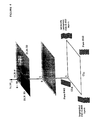
- the ordered stacking of the single connected layer of sodalite cages can yield up to three "pure" structural members. These are (1) faujasite (ABC ABC%), (2) ECR-30 (AB AB%) and (3) a 1:1 repeat mixture of faujasite and ECR-30 (ABC AB ABC AB). These mixed phases form the triangular three-phase diagram shown in Figure 1, where each pure form occupies a corner of the phase diagram. The interior regions of the triangular diagram represent various intergrowths.
- Figure 1 may alternatively be expressed as a probability function, alpha (a), where alpha represents the probability that a cp layer (layer 1) (faujasite) is repeated or followed by an hp layer (layer 2) (ECR-30). Note that layer 2 is a mirror image of layer 1. The stacking of only layer 1 or only layer 2 results in faujasite and the alternate stacking results in ECR-30 (Breck structure 6 (BSS)).
- the probability may also be expressed as a matrix of intergrowth products, shown in Figure 2.
- a theoretical X-ray diffraction pattern can be determined, using statistical techniques, such as, that described by M. M. J. Treacy et al., "Zeolites for the Nineties", Intl. Zeolite Assoc., Ed. J. C. Jansen et al, p. 285 (1989).
- end-member layered structures in Figure 2. These structures represent ordered nano-crystal mixtures of cp and hp type zeolites.
- One type of structure represents a pure cp layer stacking, structurally equivalent to faujasite.
- a second type represents a pure hp layer stacking, structurally equivalent to "ECR-30" (BSS).
- BSS pure hp layer stacking
- the two remaining structures represent two types of intergrowth 50-50 mixtures of cp and hp layers stackings. In one, the cp and hp stackings are grossly segregated but coherently connected blocks. In the other, the cp and hp stackings are coherently intergrown, such that cp and hp layers stack alternately.
- the four layering types represent idealized forms of intergrowth mixtures.
- the interior region of Figure 2 represents admixtures of certain ratios defined by the parameters a c and an; where a c represents the probability that a layer is attached with hp stacking when the previous layer had been attached with cp stacking, and a H represents the probability that a layer is attached with cp stacking, when the previous layer had been attached with hp stacking.
- a c of 0 and an a H of 1 represent a faujasite structure: an a c of 1 and an a H of 0 represent an "ECR-30" structure.
- an a c of 0 and an a H of 0 represent a material containing grossly segregated blocks of hp and cp stackings.
- an a c of 1 and an a H of 1 represent a material containing intimately intergrown hp and cp stackings.
- an a c of 0.5 and an a H of 0.5 represent a material where the hp and cp stackings occur as random sequences. The specific crystallization conditions and gel compositions will determine the formation of particular nano-crystal mixtures of cp and hp form zeolites.
- the diffraction patterns of Figure 3 represent Cu-Ka radiation and are based on a pure silica zeolite framework where no cations or water molecules are present.
- the various zeolite intergrowth structures in Figure 3 are coded in a matrix of elements such that 1 to 6 is the ordinate axis code and A to F is the abscissa code. Coding simplifies the identification of an intergrowth structure type.
- ECR-35 is based on the low values for ac and aH which is representative of crystals that mainly comprise blocks of one structure, at least several unit cells thick, stacked on another structure of similar thickness. Slivers of one structure within a block of another structure in the crystal, as observed in CSZ-1 or ZSM-20, are a minor volume fraction of the ECR-35 crystals. Therefore, infrequent structure reversals within a crystal are characteristic of ECR-35 - the opposite of the theoretical ABABC... structure of Figure 1, and the top right corner of Figures 2 and 3 where structure reversals occur almost after every unit cell. A silica to alumina ratio of 4 to 24 further restricts the range of structures that make up ECR-35.
- High silica, large pore faujasite materials have been found to be particularly useful in cracking, hydrocracking (U.S. Patent 4,036,739) and hydrocarbon reforming (U.S. Patent 4,832,824).
- the aluminosilicate zeolite compositions herein may also be used as an absorbent or in other catalyst applications, such as paraffin isomerization, aromatization and alkylation.
- the cations may be exchanged with cations from Groups II through VIII of the Periodic Table to remove any excess and undesirable sodium ions which may be present.
- the alkylammonium cations trapped in the super cages of the present structure may be removed by calcining the zeolite in an oxygen containing atmosphere which does not damage the cage structure of the zeolite.
- Such catalysts may be further modified or activated by impregnation with solutions of metal salts of Group I-VIII of the Periodic Table as illustrated in Kirk-Othmer Encyclopedia of Chemical Technology, Second Edition, Vol. 8 (1965).
- the gel composition 10(TEA) 2 0: 1.14 Na 2 0: A1 2 0 3 : 24 Si0 2 : 450 H 2 0 was prepared by mixing 208.5 g of colloidal silica (40 wt% Si0 2 ) with 23.3 g of a nucleation or seed solution described in U.S. Patents 3,808,326 and 4,178,352, having a composition and molar ratio of 13.3 Na 2 0: A1 2 0 3 : 12.5 Si0 2 : 267 H 2 0, and 439.6 g of a 40 wt% aqueous solution of tetraethylammonium hydroxide (TEAOH) in a laboratory blender.
- TEAOH tetraethylammonium hydroxide
- the n-hexane adsorption capacity for the product was 16.0 wt%.
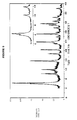
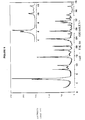
- the product was then shown to have the X-ray diffraction spectra shown in Figure 5, which is characteristic of the diffraction pattern shown in element D2 of Figure 3.
- Example 1 650 g of the gel made in Example 1 was placed in a 1 liter glass reactor, equipped with a stirrer and a cooling condenser and heated, with a rheostat controlled heating mantle. The gel was continuously stirred for 35 hours to form crystals in a slurry. The slurry was cooled, and the crystals were filtered and washed. The X-ray diffraction pattern for the crystal product was similar to that obtained for the product in Example 1. A chemical analysis of the product gave a Si0 2 :AI 2 0 3 ratio of 5.5:1. The n-hexane adsorption capacity was 13.3 wt%.
- the gel composition 10(TEA) 2 0: 1.14 Na 2 0: Al 2 O 3 : 24 Si0 2 : 320 H 2 O was prepared by adding 113.9 g of silica gel to 540.4 g of a 40 wt% aqueous solution of tetraethylammonium hydroxide (TEAOH) and 28.6 g of a nucleation or seed solution, described in U.S. Patents 3,808,326 and 4,178,352, having a composition and molar ratio of 13.3 Na 2 0: Al 2 O 3 : 12.5 Si0 2 : 267 H 2 0, in a laboratory blender.
- TEAOH tetraethylammonium hydroxide
- Example 3 650 g of the gel made in Example 3 was placed in a 1 liter glass reactor equipped with a stirrer and a cooling condenser. The gel was heated, with a rheostat controlled heating mantle, and continuously stirred for 35 hours. The gel was allowed to crystallize and a slurry product formed. The gel was cooled, and the crystals were filtered and washed. The X-ray diffraction pattern was similar to that obtained for the product in Example 1 and had a n-hexane adsorption capacity of 8.9 wt% after being calcined in air.
- the gel composition 10(TEA) 2 0: 1.14 Na 2 0: Al 2 O 3 : 24SiO 2 : 320H 2 0 was prepared by blending 60.8 g of fumed silica with 288.2 g of a 40 wt% aqueous solution of tetraethylammonium hydroxide (TEAOH). Next, 15.2 g of a nucleation or seed solution, described in U.S. Patents 3,808,326 and 4,178,352, having a composition and molar ratio of 13.3Na 2 0: Al 2 O 3 : 12.5Si0 2 : 267H 2 0 was added.
- TEAOH tetraethylammonium hydroxide
- Example 5 The procedure in Example 5 was followed except that the silica was replaced with silica gel having a -100 to +200 Tyler mesh size. The resulting gel was placed in a 500 ml Teflon container and heated in an air oven for 31 hours at 100°C to form crystals. The gel was cooled, and the crystals filtered, washed and dried.
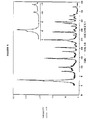
- the X-ray diffraction pattern for the product is shown in Figure 7 and is characteristic of the diffraction pattern shown in element C2 of Figure 3.
- a chemical analysis of the product gave a SiO 2 :AlO 3 ratio of 7.7, a Na:AI ratio of 0.97 and showed trace amounts of NaP impurity.
- the gel composition 10(TEA) 2 0: 1.14 Na 2 0: Al 2 O 3 : 24Si0 2 : 320H 2 0 was prepared by adding 81 g TEOS to 251.5 g of a 40 wt% aqueous solution of tetraethylammonium hydroxide (TEAOH) under vigorous mixing in a laboratory blenderfollowed by 30.3 g offumed silica (Cabosil M5). Next, 14.0 g of a nucleation or seed solution described in Example 1 was added.
- TEAOH tetraethylammonium hydroxide
- Part A half of the gel
- Part B half of the crystals filtered and washed
- Part B was further reacted for an additional 7 hours then cooled, and the crystals filtered and washed.
- Parts A and B were then each analyzed for X-ray diffraction and n-hexane adsorption.
- the X-ray diffraction pattern was characteristic of the diffraction pattern shown in quadrant E1 of Figure 3 and the n-hexane absorption capacity was 20.6 wt%.
- part B the X-ray diffraction pattern was characteristic of the diffraction pattern shown in element E1 of Figure 3 and the n-hexene adsorption capacity was 20.4 wt%.
- the gel composition 1.8TEA 2 0: 0.6Na 2 O: Al 2 O 3 : 9Si0 2 : 135H 2 0: 0.76 Na 2 S0 4 was prepared by dissolving 4.12 g of Al 2 O 3 ⁇ 3H 2 O in 3.23 g of NaOH and 10 ml of H 2 0 and heating the solution on a hot plate while stirring.
- a colloidal silica (40 wt% silica) was mixed with 4.71 g of a nucleation or seed solution described in Example 1.48.1 g of a 40 wt% aqueous solution of tetraethylammonium hydroxide (TEAOH), sodium aluminate solution, and 5.95 g of an aqueous aluminum sulfate (17H 2 0) solution (dissolved in 6 g of H 2 0) were added. Water was added until the total weight of the solution reached 135 g. A slurry formed and it was transferred to a laboratory blender, thoroughly mixed, placed in a 125 ml Teflon container and heated in an air oven for 14 days at 100°C.
- TEAOH tetraethylammonium hydroxide
- H 2 0 aqueous aluminum sulfate
- the gel composition 3.6 (Et 3 MeN) 2 )O: 1.2Na 2 0: Al 2 O 3 : 18SiO 2 : 250 H 2 0 was prepared by dissolving 20.0 g ofAl 2 O 3 ⁇ H 2 O in 15.9 g of NaOH and 30 ml of water and heating the solution on a hot plate while stirring. 176.7 g of silica gel was mixed with 19.4 g of a nucleation or seed solution described in Example 1, and the sodium aluminate solution made above. The entire solution was added to 11.5 g of an aqueous sulfate (17H 2 0) solution (dissolved in 12 ml of water). Water was added until the total weight of the solution reached 1000 g.
- the gel composition 1.8 (Et 3 MeN) 2 O : 0.6 Na 2 0: Al 2 O 3 : 9 Si0 2 140 H 2 0 was prepared by dissolving 53.3 g sodium aluminate in 322.1 g methyltriethylammonium hydroxide (40% aqueous solution) and 100 g H 2 0. The solution was vigorously blended with 355.5 g of a colloidal silica solution (40 wt.% silica) and 26.1 g seed solution described in Example 1. 30.4 g of Al 2 (SO 4 )3 ⁇ 17H 2 O solution in 40 g H 2 0 was added. Water was added until the final weight of gel reached 1 Kg.
- Example 10 20 g of the product obtained in Example 10 was exchanged at 60°C for one hour with a solution of 25 g NH 4 CI (dissolved in 200 g H 2 0). After the exchange, the product was filtered, washed and returned to a beaker. The above steps were then repeated. The product was then dried at 120°C, and calcined at 350°C for two hours. The above exchange step was repeated, followed by filtering, washing, drying and calcining. Chemical analysis showed that the Si/AI ratio was unchanged at 3.81, but that the Na/Al ratio was reduced to 0.04 and the n-Hexane adsorption at room temperature (44 torr) was 15 wt%.
Landscapes
- Chemical & Material Sciences (AREA)
- Organic Chemistry (AREA)
- Engineering & Computer Science (AREA)
- Materials Engineering (AREA)
- Chemical Kinetics & Catalysis (AREA)
- Life Sciences & Earth Sciences (AREA)
- General Life Sciences & Earth Sciences (AREA)
- Geology (AREA)
- Crystallography & Structural Chemistry (AREA)
- Inorganic Chemistry (AREA)
- Silicates, Zeolites, And Molecular Sieves (AREA)
- Catalysts (AREA)
Applications Claiming Priority (2)
| Application Number | Priority Date | Filing Date | Title |
|---|---|---|---|
| US727202 | 1991-07-09 | ||
| US07/727,202 US5116590A (en) | 1991-07-09 | 1991-07-09 | Crystalline zeolite ECR-35 and a method for producing same |
Publications (2)
| Publication Number | Publication Date |
|---|---|
| EP0522837A2 true EP0522837A2 (fr) | 1993-01-13 |
| EP0522837A3 EP0522837A3 (fr) | 1993-04-14 |
Family
ID=24921742
Family Applications (1)
| Application Number | Title | Priority Date | Filing Date |
|---|---|---|---|
| EP19920306260 Withdrawn EP0522837A3 (fr) | 1991-07-09 | 1992-07-08 | Zéolithe cristalline ECR-35 et une méthode pour sa production |
Country Status (3)
| Country | Link |
|---|---|
| US (1) | US5116590A (fr) |
| EP (1) | EP0522837A3 (fr) |
| CA (1) | CA2071615A1 (fr) |
Families Citing this family (17)
| Publication number | Priority date | Publication date | Assignee | Title |
|---|---|---|---|---|
| US5393511A (en) * | 1988-10-10 | 1995-02-28 | Societe Nationale Elf Aquitaine | Synthesis of zeolites of faujasite structure |
| FR2680774B1 (fr) * | 1991-08-28 | 1993-10-29 | Elf Aquitaine Ste Nale | Procede de synthese de zeolithes a charpente aluminosilicique appartenant a la famille structurale de la faujasite, produits obtenus et leur application en adsorption et catalyse. |
| FR2715648B1 (fr) * | 1994-01-31 | 1996-04-05 | Elf Aquitaine | Solides microporeux cristallisés consistant en aluminophosphates substitués par un métal et éventuellement par du silicium et appartenant au type structural Fau, leurs synthèses et applications. |
| US5567407A (en) * | 1994-05-12 | 1996-10-22 | Coe; Charles G. | Li-exchanged low silica EMT-containing metallosilicates |
| US5573745A (en) * | 1994-05-12 | 1996-11-12 | Air Products And Chemicals, Inc. | High micropore volume low silica EMT-containing metallosilicates |
| US6054113A (en) * | 1995-09-05 | 2000-04-25 | Exxon Research And Engineering Co. | Method for preparing high silica faujacitic zeolites |
| US5637287A (en) * | 1996-02-02 | 1997-06-10 | Exxon Research & Engineering Company | Synthesis process for faujasite family zeolites using mother liquor recycle |
| US5716593A (en) * | 1996-07-31 | 1998-02-10 | Chevron U.S.A. Inc. | Preparation of Y-type faujasite using an organic template |
| GB9809107D0 (en) * | 1998-04-30 | 1998-07-01 | British Nuclear Fuels Plc | Polymerisation |
| GB0121105D0 (en) * | 2001-08-31 | 2001-10-24 | Bp Oil Int | An improved process for the production of triptane |
| CN100344536C (zh) * | 2002-07-05 | 2007-10-24 | 中国石油天然气股份有限公司 | 一种模板剂浓度不均匀分布法合成β沸石的方法 |
| AU2004285450B2 (en) * | 2003-10-20 | 2010-01-14 | Gregory K. Frykman | Zeolite molecular sieves for the removal of toxins |
| WO2018160327A1 (fr) | 2017-02-28 | 2018-09-07 | Exxonmobil Chemical Patents Inc. | Compositions catalytiques et leur utilisation dans des procédés d'alkylation aromatique |
| WO2018183012A1 (fr) | 2017-03-29 | 2018-10-04 | Exxonmobil Chemical Patents Inc. | Procédés d'élimination d'impuretés d'un flux d'hydrocarbures et leur utilisation dans des processus d'alkylation aromatique |
| WO2018183009A1 (fr) | 2017-03-29 | 2018-10-04 | Exxonmobil Chemical Patents Inc. | Compositions de catalyseur et leur utilisation dans des processus d'alkylation aromatique |
| CN111825105B (zh) * | 2019-04-18 | 2022-08-19 | 中国科学院大连化学物理研究所 | 导向剂法制备具有fau结构的y分子筛 |
| FR3128457A1 (fr) | 2021-10-21 | 2023-04-28 | IFP Energies Nouvelles | Procédé de préparation de zéolithe FAU en présence d’un structurant hydroxyde de tétraéthylammonium TEAOH |
Family Cites Families (3)
| Publication number | Priority date | Publication date | Assignee | Title |
|---|---|---|---|---|
| US3415736A (en) * | 1965-09-20 | 1968-12-10 | Mobil Oil Corp | Lithium-containing crystalline aluminosilicate |
| US3972983A (en) * | 1974-11-25 | 1976-08-03 | Mobil Oil Corporation | Crystalline zeolite ZSM-20 and method of preparing same |
| CA1330336C (fr) * | 1987-11-06 | 1994-06-21 | David E. W. Vaughan | Composition et procede pour la preparation de l'ecr-30 |
-
1991
- 1991-07-09 US US07/727,202 patent/US5116590A/en not_active Expired - Fee Related
-
1992
- 1992-06-18 CA CA002071615A patent/CA2071615A1/fr not_active Abandoned
- 1992-07-08 EP EP19920306260 patent/EP0522837A3/fr not_active Withdrawn
Also Published As
| Publication number | Publication date |
|---|---|
| EP0522837A3 (fr) | 1993-04-14 |
| CA2071615A1 (fr) | 1993-01-10 |
| US5116590A (en) | 1992-05-26 |
Similar Documents
| Publication | Publication Date | Title |
|---|---|---|
| US5116590A (en) | Crystalline zeolite ECR-35 and a method for producing same | |
| US5098686A (en) | Synthesis of zeolites of faujasite structure | |
| US4714601A (en) | Process for preparing a high silica faujasite aluminosilicate, ECR-4 | |
| EA000242B1 (ru) | Цеолит ers-10 и способ его приготовления | |
| CN114261974B (zh) | 一种ssz-39分子筛及其制备方法 | |
| EP0259526B1 (fr) | Zéolite à haute teneur en silice (ECR-17), catalyseur contenant ce zéolite et procédé de conversion d'hydrocarbures utilisant ce catalyseur | |
| WO2005030909A1 (fr) | Aluminosilicates cristallins: uzm-13, uzm-17, uzm-19 et uzm-25 | |
| US4879103A (en) | Composition and process for preparing ECR-30 | |
| US20210188651A1 (en) | Method for synthesizing an afx-structure zeolite of very high purity in the presence of an organic nitrogen-containing structuring agent | |
| AU2002302660B2 (en) | Porous crystalline material (zeolite itq-21), the preparation method thereof and use of the same in the catalytic conversion of organic compounds | |
| US5393511A (en) | Synthesis of zeolites of faujasite structure | |
| US8372377B2 (en) | IM-18 crystalline solid and process for its preparation | |
| EP0858426B1 (fr) | Procede de preparation d'une matiere cristalline mesoporeuse | |
| US4965059A (en) | High silica faujasite aluminosilicate, ECR-4, and a process for making it | |
| US5192520A (en) | Synthesis of aluminosilicate zeolites of faujasite structure | |
| US20230357030A1 (en) | Synthesis of aluminum-containing cit-13 and cit-15 molecular sieves | |
| KR102546689B1 (ko) | Pst-2 제올라이트 및 그 제조방법 | |
| US11643332B2 (en) | Method for preparing a high-purity AFX structural zeolite with a nitrogen-containing organic structuring agent | |
| EP0315461B1 (fr) | Zéolites ECR-30 à haute teneur en silice et son procédé de préparation | |
| US8022003B2 (en) | Crystalline composition, preparation and use | |
| JP5118482B2 (ja) | Uzm−16:結晶性アルミノシリケートゼオライト質材料 | |
| EP0320114B1 (fr) | Zéolite de type faujasite et son procédé de préparation | |
| Xu | Progress in Zeolites Science: A China Perspective | |
| US5370858A (en) | Process for the synthesis of zeolites having an aluminosilicate framework belonging to the faujasite structural family, products obtained and their use in adsorption and catalysis | |
| US10407313B2 (en) | Synthesis of aluminosilicate zeolites having the offretite structure |
Legal Events
| Date | Code | Title | Description |
|---|---|---|---|
| PUAI | Public reference made under article 153(3) epc to a published international application that has entered the european phase |
Free format text: ORIGINAL CODE: 0009012 |
|
| AK | Designated contracting states |
Kind code of ref document: A2 Designated state(s): BE DE FR GB IT NL |
|
| PUAL | Search report despatched |
Free format text: ORIGINAL CODE: 0009013 |
|
| AK | Designated contracting states |
Kind code of ref document: A3 Designated state(s): BE DE FR GB IT NL |
|
| 17P | Request for examination filed |
Effective date: 19931013 |
|
| 17Q | First examination report despatched |
Effective date: 19950104 |
|
| STAA | Information on the status of an ep patent application or granted ep patent |
Free format text: STATUS: THE APPLICATION HAS BEEN WITHDRAWN |
|
| 18W | Application withdrawn |
Withdrawal date: 19950629 |