EP0530139A2 - Zusammensetzungen enthaltend mit Phosphonatgruppen substituierte N-Heterozyklen mit 6 Ringgliedern - Google Patents
Zusammensetzungen enthaltend mit Phosphonatgruppen substituierte N-Heterozyklen mit 6 Ringgliedern Download PDFInfo
- Publication number
- EP0530139A2 EP0530139A2 EP92810606A EP92810606A EP0530139A2 EP 0530139 A2 EP0530139 A2 EP 0530139A2 EP 92810606 A EP92810606 A EP 92810606A EP 92810606 A EP92810606 A EP 92810606A EP 0530139 A2 EP0530139 A2 EP 0530139A2
- Authority
- EP
- European Patent Office
- Prior art keywords
- alkyl
- methyl
- phenyl
- hydrogen
- ethyl
- Prior art date
- Legal status (The legal status is an assumption and is not a legal conclusion. Google has not performed a legal analysis and makes no representation as to the accuracy of the status listed.)
- Granted
Links
Classifications
-
- C—CHEMISTRY; METALLURGY
- C08—ORGANIC MACROMOLECULAR COMPOUNDS; THEIR PREPARATION OR CHEMICAL WORKING-UP; COMPOSITIONS BASED THEREON
- C08K—Use of inorganic or non-macromolecular organic substances as compounding ingredients
- C08K5/00—Use of organic ingredients
- C08K5/49—Phosphorus-containing compounds
- C08K5/51—Phosphorus bound to oxygen
- C08K5/53—Phosphorus bound to oxygen bound to oxygen and to carbon only
- C08K5/5317—Phosphonic compounds, e.g. R—P(:O)(OR')2
- C08K5/5333—Esters of phosphonic acids
- C08K5/5373—Esters of phosphonic acids containing heterocyclic rings not representing cyclic esters of phosphonic acids
Definitions
- the invention relates to compositions containing an organic material sensitive to thermal, oxidative and / or light-induced degradation and at least one dihydro-N-heterocyclic compound substituted with phosphonate groups, and the use of these compounds.
- Biocides and corrosion inhibitors which are the structural elements (JP-A-6 1221-193), (JP-A-6 1221-192; JP-A-6 1221-102), (US-A-3,766, 197, US-A 3,694,144, US-A 3,809,694, US-A 3,816,428, US-A 3,830,815) and
- R is hydrogen, (cyclo) alkyl, aryl, aralkyl or alkaryl, R 'is lower alkyl, and the free valences on the C atoms are saturated with hydrogen or organic radicals.
- two adjacent C atoms with free valences can together be part of an optionally substituted aromatic C six-membered ring.
- compounds with such groups can also advantageously be used as stabilizers for protecting organic material, in particular as processing stabilizers for polymers and as antioxidants for functional liquids.
- R o , R 6 and R 7 are C 1 -C 12 alkyl, these are branched or unbranched radicals. Examples include methyl, ethyl, propyl, isopropyl, n-butyl, isobutyl, t-butyl, pentyl, isopentyl, hexyl, heptyl, 3-heptyl, octyl, 2-ethylhexyl, nonyl, decyl, undecyl, dodecyl, 2-ethylbutyl , 1-methylpentyl, 1,3-dime thylbutyl, 1,1,3,3-tetramethylbutyl, 1-methylhexyl, isoheptyl, 1-methylheptyl, 1, 1,3-trimethylhexyl or 1-methylundecyl; alkyl radicals with 1-4 C atoms are preferred.
- R 5 and R 8 as C 1 -C 4 alkyl.
- R 5 as C 1 -C 18 alkyl can additionally mean, for example, tridecyl, tetradecyl, pentadecyl, hexadecyl, heptadecyl or octadecyl.
- R 8 is preferably methyl.
- R o , R 5 , R 6 and R 7 as C 5 -C 12 cycloalkyl can be, for example, cyclopentyl, cyclohexyl, cycloheptyl, cyclooctyl or cyclododecyl. Cyclopentyl and cyclohexyl are preferred, especially cyclohexyl.
- R o as C 2 -C 12 alkenyl can be branched or unbranched and can mean, for example, vinyl, allyl, 2-methallyl, hexenyl or undecenyl.
- R o and R 5 are preferably sterically less demanding groups, ie R o is in particular hydrogen and linear C 1 -C 4 -alkyl and R 5 is particularly linear C 1 -C 4 -alkyl.
- R o , R 5 , R 6 , and R 7 as phenyl-C 1 -C 4 -alkyl mean, for example, benzyl, phenethyl, 3-phenylpropyl, a-methylbenzyl or a, a-dimethylbenzyl. Benzyl is preferred.
- compositions are preferred in which in formula II R 1 and R 2 are independently hydrogen, methyl or ethyl,
- compositions in which in formula II R 1 and R 2 are hydrogen and R 3 and R 4 are independently hydrogen, methyl or ethyl or together mean further compositions in which in a group of the formula Is hydrogen
- the compounds of the formula I or II can in particular be used as stabilizers for natural, semisynthetic or synthetic polymers, in particular thermoplastic plastics and elastomers, and for lubricants and functional fluids, in particular metalworking and hydraulic fluids. Examples of such substances and mixtures can be found in the following list of suitable materials.
- Polymers of mono- and diolefins for example polypropylene, polyisobutylene, polybutene-1, poly methylpentene-1, polyisoprene or polybutadiene and polymers of cycloolefins such as cyclopentene or norbornene; also polyethylene (which may optionally be crosslinked), for example high density polyethylene (HDPE), low density polyethylene (LDPE), linear low density polyethylene (LLDPE).
- HDPE high density polyethylene
- LDPE low density polyethylene
- LLDPE linear low density polyethylene
- Copolymers of mono- and diolefins with one another or with other vinyl monomers such as e.g. Ethylene-propylene copolymers, linear low-density polyethylene (LLDPE) and blends thereof with low-density polyethylene (LDPE), propylene-butene-1 copolymers, propylene-isobutylene copolymers, ethylene-butene-1 copolymers, ethylene-hexene Copolymers, ethylene-methylpentene copolymers, ethylene-heptene copolymers, ethylene-octene copolymers, propylene-butadiene copolymers, isobutylene-isoprene copolymers, ethylene-alkyl acrylate copolymers, ethylene-alkyl methacrylate copolymers, ethylene-vinyl acetate copolymers or Ethylene-acrylic acid copolymers and their salts (ionomers),
- Hydrocarbon resins e.g. C 5 -C 9
- hydrogenated modifications thereof e.g. tackifier resins
- Polystyrene poly- (p-methylstyrene), poly- (a-methylstyrene).
- Copolymers of styrene or a-methylstyrene with dienes or acrylic derivatives e.g. Styrene-butadiene, styrene-acrylonitrile, styrene-alkyl methacrylate, styrene-butadiene-alkyl acrylate, styrene-maleic anhydride, styrene-acrylonitrile-methyl acrylate;
- Blends of high impact strength from styrene copolymers and another polymer e.g.
- styrene e.g. Styrene-butadiene-styrene, styrene-isoprene-styrene, styrene-ethylene / butylene-styrene or styrene-ethylene / propylene-styrene.
- Graft copolymers of styrene or a-methylstyrene e.g. Styrene on polybutadiene, styrene on polybutadiene-styrene or polybutadiene-acrylonitrile copolymers, styrene and acrylonitrile (or methacrylonitrile) on polybutadiene; Styrene, acrylonitrile and methyl methacrylate on polybutadiene; Styrene and maleic anhydride on polybutadiene; Styrene, acrylonitrile and maleic anhydride or maleimide on polybutadiene; Styrene and maleimide on polybutadiene, styrene and alkyl acrylates or alkyl methacrylates on polybutadiene, styrene and acrylonitrile on ethylene-propylene-diene terpolymers, styrene and acrylonitrile on
- Halogen-containing polymers such as e.g. Polychloroprene, chlorinated rubber, chlorinated or chlorosulfonated polyethylene, copolymers of ethylene and chlorinated ethylene, epichlorohydrin homo- and copolymers, in particular polymers of halogen-containing vinyl compounds, such as e.g. Polyvinyl chloride, polyvinylidene chloride, polyvinyl fluoride, polyvinylidene fluoride; and their copolymers, such as vinyl chloride-vinylidene chloride, vinyl chloride-vinyl acetate or vinylidene chloride-vinyl acetate.
- Polychloroprene chlorinated rubber, chlorinated or chlorosulfonated polyethylene
- copolymers of ethylene and chlorinated ethylene epichlorohydrin homo- and copolymers
- halogen-containing vinyl compounds such as e.g. Polyvinyl chloride, polyvinylidene chloride
- Polymers derived from ⁇ , ⁇ -unsaturated acids and their derivatives such as polyacrylates and polymethacrylates, polyacrylamides and polyacrylonitriles.
- Copolymers of the monomers mentioned under 8) with one another or with other unsaturated monomers such as e.g. Acrylonitrile-butadiene copolymers, acrylonitrile-alkyl acrylate copolymers, acrylonitrile-alkoxyalkyl acrylate copolymers, acrylonitrile-vinyl halide copolymers or acrylonitrile-alkyl methacrylate-butadiene terpolymers.
- Polymers derived from unsaturated alcohols and amines or their acyl derivatives or acetals such as polyvinyl alcohol, polyvinyl acetate, stearate, benzoate, maleate, polyvinyl butyral, polyallylphthalate, polyallylmelamine; and their copolymers with olefins mentioned in point 1.
- Homopolymers and copolymers of cyclic ethers such as polyalkylene glycols, polyethylene oxide, polypropylene oxide or their copolymers with bisglycidyl ethers.
- Polyacetals such as polyoxymethylene, and also such polyoxymethylenes, the comonomers, e.g. Ethylene oxide included; Polyacetals modified with thermoplastic polyurethanes, acrylates or MBS.
- Polyamides and copolyamides which are derived from diamines and dicarboxylic acids and / or from aminocarboxylic acids or the corresponding lactams, such as polyamide 4, polyamide 6, polyamide 6/6, 6/10, 6/9, 6/12, 4/6 , Polyamide 11, polyamide 12, aromatic polyamides starting from m-xylene, diamine and adipic acid; Polyamides made from hexamethylenediamine and iso- and / or terephthalic acid and optionally an elastomer as a modifier, e.g. Poly-2,4,4-trimethylhexamethylene terephthalamide, poly-m-phenylene-isophthalamide.
- polyesters which are derived from dicarboxylic acids and dialcohols and / or from hydroxycarboxylic acids or the corresponding lactones, such as polyethylene terephthalate, polybutylene terephthalate, poly-1,4-dimethylolcyclohexane terephthalate, polyhydroxybenzoates, and also block polyether esters which are derived from polyethers having hydroxyl end groups; furthermore polyesters modified with polycarbonates or MBS.
- Unsaturated polyester resins which are derived from copolyesters of saturated and unsaturated dicarboxylic acids with polyhydric alcohols, and also vinyl compounds as crosslinking agents, as well as their halogen-containing, flame-retardant modifications.
- Crosslinkable acrylic resins derived from substituted acrylic acid esters, e.g. of epoxy acrylates, urethane acrylates or polyester acrylates.
- Alkyd resins, polyester resins and acrylate resins which are crosslinked with melamine resins, urea resins, polyisocyanates or epoxy resins.
- Crosslinked epoxy resins derived from polyepoxides, e.g. of bis-glycidyl ethers or of cycloaliphatic diepoxides.
- Natural polymers such as cellulose, natural rubber, gelatin, and their polymer-homologously chemically modified derivatives, such as cellulose acetates, propionates and butyrates, or the cellulose ethers, such as methyl cellulose; as well as rosins and derivatives.
- Natural and synthetic organic substances which are pure monomeric compounds or mixtures thereof, for example mineral oils, animal or vegetable fats, oils and waxes, or oils, waxes and fats based on synthetic esters (for example phthalates, adipates, phosphates or trimellitates) , as well as mixtures of synthetic esters with mineral oils in any weight ratio, such as find use as spin finishes, and their aqueous emulsions.
- synthetic esters for example phthalates, adipates, phosphates or trimellitates
- Aqueous emulsions of natural or synthetic rubbers e.g. Natural rubber latex or latices of carboxylated styrene-butadiene copolymers.
- the compounds of formula 1 or II are advantageously contained in the compositions according to the invention in an amount of 0.01 to 10, for example 0.05 to 5, preferably 0.05 to 3, but in particular 0.1 to 2% by weight. It can be one or more of these compounds of formula 1 or 11, and the weight percentages relate to the total amount of these compounds.
- the basis for calculation is the total weight of the organic material without the compounds of formula I or 11.
- Incorporation into the materials can be carried out, for example, by mixing in or applying the compounds of the formula I or 11 and, if appropriate, further additives by the methods customary in industry. If they are polymers, in particular synthetic polymers, they can be incorporated before or during shaping, or by applying the dissolved or dispersed compounds to the polymer, optionally with subsequent evaporation of the solvent. In the case of elastomers, these can also be stabilized as latices. Another way of incorporating the compounds of the formula I or II into polymers is to add them before, during or immediately after the polymerization of the corresponding monomers or before crosslinking.
- the compounds of the formula I or II can be added as such, but also in encapsulated form (for example in waxes, oils or polymers).
- the compounds of the formula I or 11 can also act as regulators for the chain length of the polymers (chain terminators).
- the compounds of formula 1 or II or mixtures thereof can also be added to the plastics to be stabilized in the form of a masterbatch which contains these compounds, for example in a concentration of 2.5 to 25% by weight.
- Polymer compositions according to the invention can be used in various forms or processed into different products, e.g. as (to) films, fibers, tapes, molding compounds, profiles, or as binders for paints, adhesives or putties.
- the invention also relates to a method for stabilizing organic material, in particular thermoplastic polymers, elastomers or lubricants and functional liquids, especially lubricants, against oxidative, thermal and / or actinic degradation, characterized in that compounds of the formula are used as stabilizers or II adds or applies to this.
- the compounds of the formulas 1 and II are, for example, also suitable for imparting improved performance properties to lubricants and functional liquids. In particular, their surprisingly good activity as antioxidants should be pointed out. Therefore, the invention also includes compositions containing a lubricant or a functional liquid and at least one compound of the general formula or 11, as described above.
- Hydraulic fluids and metalworking fluids are examples of functional fluids.
- the lubricants in question are based, for example, on mineral or synthetic oils or mixtures thereof or on vegetable and animal oils, fats and waxes.
- the lubricants are familiar to the person skilled in the art and are found in the relevant specialist literature, for example in Dieter Klamann, "Lubricants and Related Products” (Verlag Chemie, Weinheim, 1982), in Schewe-Kobek, "The Lubricant Pocket Book” (Dr. Alfred Wilsonhig- Verlag, Heidelberg, 1974) and in “Ullmann's Encyclopedia of Technical Chemistry", Vol. 13, pages 85-94 (Verlag Chemie, Weinheim, 1977).
- the lubricants are in particular oils and fats, for example based on a mineral oil. Oils are preferred.
- the mineral oils are based in particular on hydrocarbon compounds.
- Examples of synthetic lubricants include lubricants based on the aliphatic or aromatic carboxyl esters, the polymeric esters, the polyalkylene oxides, the phosphoric acid esters, the poly-a-olefins or the silicones, a diester of a dibasic acid with a monohydric alcohol, e.g. Dioctyl sebacate or dinonyl adipate, a triester of trimethylolpropane with a monohydric acid or with a mixture of such acids, e.g.
- mineral oils e.g. Poly-a-olefins
- the vegetable lubricants are the oils, fats and waxes obtained, for example, from olives, palm trees, palm kernels, beets, rapeseed, linen, nuts, soybeans, cotton, castor oil, sunflowers, pumpkin seeds, coconut, corn or their modified forms, for example sulfurized or epoxidized Oils, such as epoxidized soybean oil, as well as mixtures of the substances.
- oils, fats and waxes which can be used as lubricants are tallow, fish oils, sperm oil, claw oil, tears and bacon oils, their modified forms and mixtures.
- Metalworking fluids such as rolling, drawing and cutting oils are mostly based on the mineral and synthetic oils described above and can also be used as oil-in-water or. Water-in-oil emulsions are present. The same applies to hydraulic fluids. Other functional necessities include Compressor oils and spin finishes in question.
- the compounds of the formula I or II, as described above, can be used, for example, in amounts of 0.01 to 10% by weight, advantageously in amounts of 0.03 to 5% by weight, preferably in an amount of 0.05 up to 3% by weight and very particularly preferably from 0.5 to 1.5% by weight, based on the composition, is present in the functional liquid or the lubricant.
- the compounds of formula I or 11 can be added to the functional liquid in a manner known per se.
- the compounds are readily soluble in oils, for example. It is also possible to produce a so-called masterbatch, which can be diluted with the appropriate functional liquid to use concentrations according to consumption. In such cases, concentrations above 10% by weight are also possible.
- compositions according to the invention in particular if they contain organic, preferably synthetic, polymers, can also comprise further customary additives.
- additives are:
- 2,6-di-tert-butyl-4-methoxyphenol 2,5-di-tert-butyl-hydroquinone, 2,5-di-tert-amyl-hydroquinone, 2,6-diphenyl-4-octadecyloxyphenol, 2, 6-di-tert-butyl-hydroquinone, 2,5-di-tert-butyl-4-hydroxyanisole, 3,5-di-tert-butyl-4-hydroxyanisole, 3,5-di-tert.- butyl-4-hydroxyphenyl stearate, bis (3,5-di-tert-butyl-4-hydroxyphenyl) adipate.
- mono- or polyvalent alcohols e.g. with methanol, ethanol, octadecanol, 1,6-hexanediol, 1,9-nonanediol, ethylene glycol, 1,2-propanediol, neopentyl glycol, thiodiethylene glycol, diethylene glycol, triethylene glycol, pentaerythritol, tris (hydroxyethyl) isocyanurate, N, N'- Bis (hydroxyethyl) oxalic acid diamide, 3-thiaundecanol, 3-thiapentadecanol, trimethylhexanediol, trimethylolpropane, 4-hydroxymethyl-1-phospha-2,6,7-trioxabicyclo [2.2.2] octane.
- mono- or polyvalent alcohols e.g. with methanol, ethanol, octadecanol, 1,6-hexaned
- mono- or polyhydric alcohols e.g. with methanol, ethanol, octadecanol, 1,6-hexanediol, 1,9-nonanediol, ethylene glycol, 1,2-propanediol, neopentyl glycol, thiodiethylene glycol, diethylene glycol, triethylene glycol, pentaerythritol, tris (hydroxy) ethyl isocyanurate, N, N ' -Bis (hydroxyethyl) oxalic acid diamide, 3-thiaundecanol, 3-thiapentadecanol, trimethylhexanediol, trimethylolpropane, 4-hydroxymethyl-1-phospha-2,6,7-trioxabicyclo- [2.2.2] octane.
- mono- or polyhydric alcohols e.g. with methanol, ethanol, octadecanol, 1,
- mono- or polyhydric alcohols such as with methanol, ethanol, octadecanol, 1,6-hexanediol, 1,9-nonanediol, ethylene glycol, 1,2-propanediol, neopentyl glycol, thiodiethylene glycol, diethylene glycol, triethylene glycol, pentaerythritol, tris (hydroxy) ethyl isocyanurate, N, N'-bis (hydroxyethyl) oxalic acid diamide, 3-thiaundecanol, 3-thiapentadecanol, trimethylhexanediol, trimethylolpropane, 4-hydroxymethyl-1-phospha-2,6, 7-trio-xabicyclo- [2.2.2] octane.
- mono- or polyhydric alcohols such as with methanol, ethanol, octadecanol, 1,6-hexanedi
- mono- or polyhydric alcohols e.g. with methanol, ethanol, octadecanol, 1,6-hexanediol, 1,9-nonanediol, ethylene glycol, 1,2-propanediol, neopentyl glycol, thiodiethylene glycol, diethylene glycol, triethylene glycol, pentaerythritol, tris (hydroxy) ethyl isocyanurate, N, N ' -Bis (hydroxyethyl) oxalic acid diamide, 3-thiaundecanol, 3-thiapentadecanol, trimethylhexanediol, trimethylolpropane, 4-hydroxymethyl-1-phospha-2,6,7-trio-xabicyclo- [2.2.2] octane.
- mono- or polyhydric alcohols e.g. with methanol, ethanol, octadecanol,
- Triphenylphosphite diphenylalkylphosphite, phenyldialkylphosphite, tris- (nonylphenyl) -phosphite, trilaurylphosphite, trioctadecylphosphite, distearyl-pentaerythritol-diphosphite, tris- (2,4-di-tert.butylphenyl) -phosphite, diisodhritol-diisodhritol-diphosphite -tert.butylphenyl) pentaerythritol diphosphite, bis (2,6-di-tert-butyl-4-methylphenyl) pentaerythritol diphosphite, bis-isodecyloxy-pentaerythritol diphosphite, bis- (2,4-di-
- esters of ⁇ -thio-dipropionic acid for example the lauryl, stearyl, myristyl or tridecyl ester, mercaptobenzimidazole, the zinc salt of 2-mercaptobenzimidazole, zinc dibutyl dithiocarbamate, dioctade cyl disulfide, pentaerythritol tetrakis (ß-dodecylmercapto) propionate.
- Copper salts in combination with iodides and / or phosphorus compounds and salts of divalent manganese such as. Copper salts in combination with iodides and / or phosphorus compounds and salts of divalent manganese.
- Calcium carbonate such as. Calcium carbonate, silicates, glass fibers, asbestos, talc, kaolin, mica, barium sulfate, metal oxides and hydroxides, carbon black, graphite.
- Plasticizers such as. Plasticizers, lubricants, emulsifiers, pigments, optical brighteners, flame retardants, antistatic agents, blowing agents.
- compositions according to the invention are based on lubricants and hydraulic fluids or metalworking fluids, they may also contain further additives which are added to improve certain performance properties, such as e.g. further antioxidants, metal deactivators, rust inhibitors, viscosity index improvers, pour point depressants, dispersants / surfactants and wear protection additives. Examples of this are, in addition to the phenolic antioxidants mentioned under point 1 of the list above:
- Aliphatic or aromatic phosphites esters of th iodipropionic acid or thiodiacetic acid, or salts of dithiocarbamide or dithiophosphoric acid.
- metal deactivators e.g. for copper
- metal deactivators e.g. for copper
- Triazoles benzotriazoles and their derivatives, tolutriazoles and their derivatives, 2-mercaptobenzothiazole, 2- Mercaptobenztriazol, 2,5-Dimercaptobenztriazol, 2,5-Dimercaptobenzthiadiazol, 5,5'-Methylenbisbenztriazol, 4,5,6,7-Tetrahydrobenztriazol, Salicyliden-propylenediamine, Salicylaminoguanidin and its salts.
- rust inhibitors are:
- viscosity index improvers examples are:
- Polyacrylates polymethacrylates, vinyl pyrrolidone / methacrylate copolymers, polyvinyl pyrrolidones, polybutenes, olefin copolymers, styrene / acrylate copolymers, polyethers.
- pour point depressants examples are:
- dispersants / surfactants examples are:
- wear protection additives are:
- Compounds containing sulfur and / or phosphorus and / or halogen such as sulphurized vegetable oils, zinc dialkyldithiophosphates, tritolyl phosphate, chlorinated paraffins, alkyl and aryl di- and tri-sulfides, triphenyl phosphorothionates, diethanolaminomethyltolyltriazole, di (2-ethylhexylolyl) aminol.
- the present invention also relates to the use of compounds of the formula 1 or 11 for stabilizing organic material which is sensitive to oxidative, thermal and / or actinic degradation, in particular natural or (semi) synthetic polymers or lubricants or functional liquids, especially thermoplastic Polymers or elastomers and of lubricants.
- the compounds work particularly well as antioxidants.
- compositions are also preferred in which the organic material is a synthetic polymer, in particular a thermoplastic or an elastomer, or a lubricant or a hydraulic fluid.
- the preparation of the compounds of the formula I or II is known per se (for example from US Pat. No. 3,816,428) and is carried out by reacting the N- "quaternized" [for example the N-protonated (Example 1), N-acylated ( Example 8) or N-alkoxycarbonylated (Example 9)] heterocycle with tri- or dialkyl phosphites.
- a prerequisite is the presence of unsubstituted ortho and / or para positions relative to the nitrogen in the formula 111 shown below. If the ortho and para positions are available, the para-phosphonate is preferably formed. Bulky substituents on nitrogen can completely prevent ortho substitution.
- the reaction can be carried out catalytically, for example in the presence of Nal. The reaction usually proceeds according to the following scheme:
- X ⁇ means the anion of a strong mineral or organic acid, e.g. Cl ⁇ or trifluoromethyl sulfonate.
- methylacridinium trifluoromethylsulfonate made from N-methylacridine and trifluoromethanesulfonic acid, and 7.5 g of sodium iodide are suspended in 100 ml of acetonitrile. 6.08 ml of trimethyl phosphite are added at 0 ° C., and the clear solution is stirred for a further 1 h at room temperature. The solvent is then stripped off and the residue is taken up in 100 ml of methylene chloride. The solution is washed with water, the organic phase is dried and the methylene chloride is stripped off.
- Example 10 Test for stabilization of a lubricating oil against oxidative degradation
- Example 11 Test for stabilization of polypropylene in multiple extrusion
Landscapes
- Chemical & Material Sciences (AREA)
- Health & Medical Sciences (AREA)
- Chemical Kinetics & Catalysis (AREA)
- Medicinal Chemistry (AREA)
- Polymers & Plastics (AREA)
- Organic Chemistry (AREA)
- Compositions Of Macromolecular Compounds (AREA)
- Anti-Oxidant Or Stabilizer Compositions (AREA)
Abstract

mindestens eine Verbindung der Formel l oder/und II
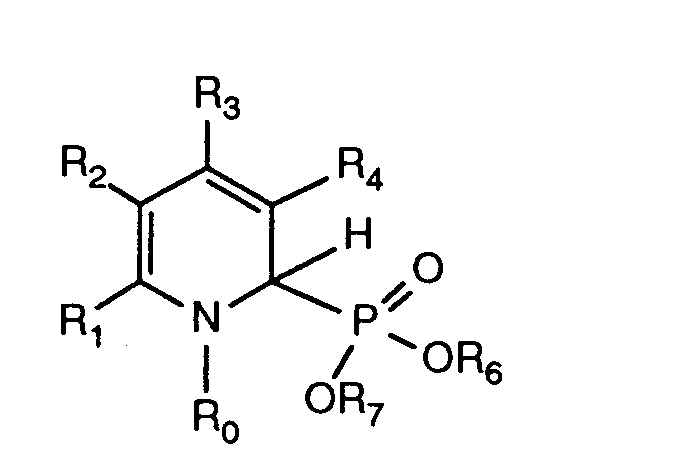
- (II), worin Ro Wasserstoff, C1-C12-Alkyl, C5-C12-Cycloalkyl, C2-C12-Alkenyl, Phenyl-C1-C4-Alkyl, -Co-R5 oder -CO-OR5 ist, R1 Wasserstoff, Methyl Ethyl oder zusammen mit R2
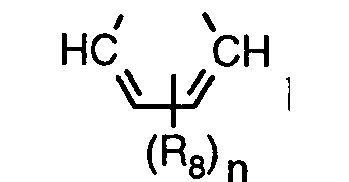
bedeutet, R2 Wasserstoff, Methyl, Ethyl oder zusammen mit R1
ist, R3 Wasserstoff, Methyl, Ethyl oder zusammen mit R4
bedeutet, R4 Wasserstoff, Methyl, Ethyl oder zusammen mit R3
Description
- Die Erfindung betrifft Zusammensetzungen, enthaltend ein gegen thermischen, oxidativen und/oder lichtinduzierten Abbau empfindliches organisches Material und mindestens eine mit Phosphonatgruppen substituierte Dihydro-N-heterozyklische Verbindung sowie die Verwendung dieser Verbindungen.
- Als Biozide und Korrosionshemmstoffe sind Verbindungen bekannt, welche die Strukturelemente

(JP-A-6 1221-193),
(JP-A-6 1221-192; JP-A- 6 1221-102),
(US-A-3,766, 197, US-A 3,694,144, US-A 3,809,694, US-A 3,816,428, US-A 3,830,815) und
- (z.B. US-A-3,816,428) enthalten. Dabei bedeuten RWasserstoff, (Cyclo)alkyl, Aryl, Aralkyl oderAlkaryl, R' Niederalkyl, und die freien Valenzen an den C-Atomen sind mit Wasserstoff oder organischen Resten gesättigt. Zusätzlich können je zwei nebeneinanderliegende C-Atome mit freien Valenzen zusammen Teil eines ggf. substituierten, aromatischen C-Sechsrings sein.
- Überraschenderweise wurde nun gefunden, daß Verbindungen mit solchen Gruppen auch vorteilhaft als Stabilisatoren zum Schutz von organischem Material, insbesondere als Verarbeitungsstabilisatoren für Polymere und als Antioxidantien für funktionelle Flüssigkeiten, eingesetzt werden können.
- Die Erfindung betrifft daher Zusammensetzungen, enthaltend
- A) ein gegen thermischen, oxidativen oder lichtinduzierten Abbau empfindliches organisches Material und
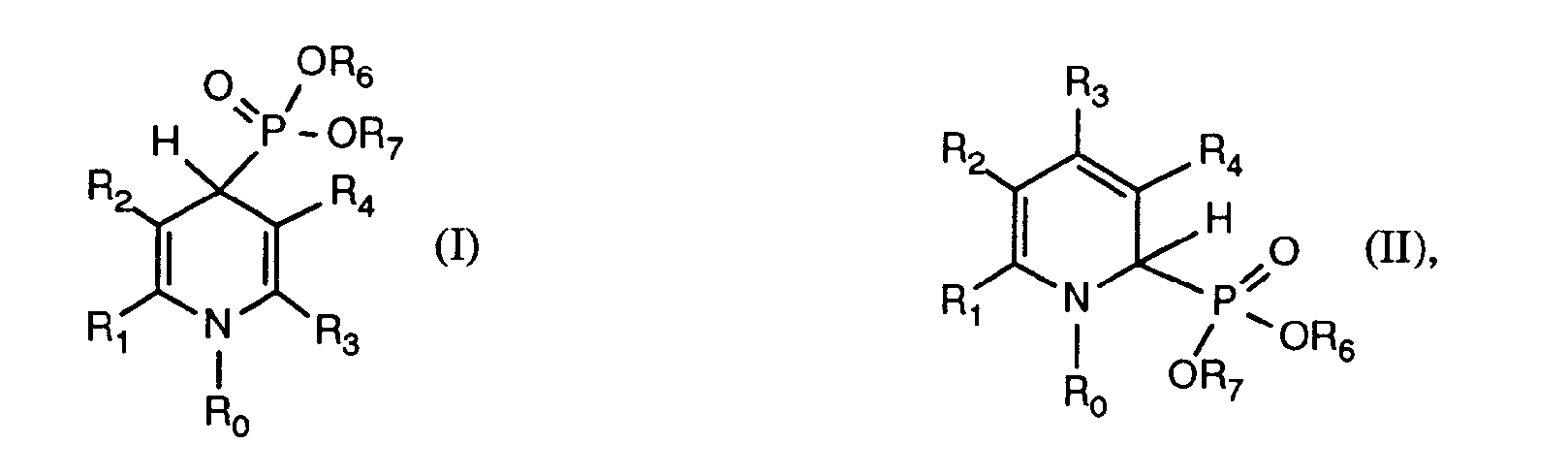
- B) mindestens eine Verbindung der Formel l oder/und II,

worin- Ro Wasserstoff, C1-C12-Alkyl, C5-C12-Cycloalkyl, C2-C12-Alkenyl, Phenyl-C1-C4-Alkyl, -CO-R5 oder -CO-OR5 ist,
- R1 Wasserstoff, Methyl, Ethyl oder zusammen mit R2

bedeutet, - R2 Wasserstoff, Methyl, Ethyl oder zusammen mit R1

ist, - R3 Wasserstoff, Methyl, Ethyl oder zusammen mit R4

bedeutet, - R4 Wasserstoff, Methyl, Ethyl oder zusammen mit R3

ist, - R5 C1-C18-Alkyl, C5-C12-Cycloalkyl, Phenyl-C1-C4-Alkyl oder Phenyl ist R6und R7unabhängig-voneinander Wasserstoff, C1-C12-Alkyl, C5-C12-Cycloalkyl, Phenyl oderPhe- nyl-C1-C4-Alkyl bedeuten,
- R8 C1-C4-Alkyl ist und
- n für 0, 1 oder 2 steht. In den Verbindungen der Formeln l und II ist Ro vorzugsweise von Wasserstoff verschieden.
- Stellen Ro, R6 und R7 C1-C12-Alkyl dar, so handelt es sich dabei um verzweigte oder unverzweigte Reste. Beispiele hierfür sind Methyl, Ethyl, Propyl, Isopropyl, n-Butyl, Isobutyl, t-Butyl, Pentyl, Isopentyl, Hexyl, Heptyl, 3-Heptyl, Octyl, 2-Ethylhexyl, Nonyl, Decyl, Undecyl, Dodecyl, 2-Ethylbutyl, 1-Methylpentyl, 1,3-Dimethylbutyl, 1,1,3,3-Tetramethylbutyl, 1-Methylhexyl, Isoheptyl, 1-Methylheptyl, 1, 1,3-Trimethylhexyl oder 1-Methylundecyl; bevorzugt sind Alkylreste mit 1-4 C-Atomen. Beispiele dafür sind obiger Liste zu entnehmen. Dies gilt auch für R5 und R8 als C1-C4-Alkyl. R5 als C1-C18-Alkyl kann zusätzlich noch z.B. Tridecyl, Tetradecyl, Pentadecyl, Hexadecyl, Heptadecyl oder Octadecyl bedeuten. R8 ist vorzugsweise Methyl.
- Ro, R5, R6 und R7 als C5-C12-Cycloalkyl können z.B. Cyclopentyl, Cyclohexyl, Cycloheptyl, Cyclooctyl oder Cyclododecyl sein. Cyclopentyl und Cyclohexyl sind bevorzugt, insbesondere Cyclohexyl.
- Ro als C2-C12-Alkenyl kann verzweigt oder unverzweigt sein und beispielsweise Vinyl, Allyl, 2-Methallyl, Hexenyl oder Undecenyl bedeuten.
- In Formel II bedeuten Ro und R5 vorzugsweise sterisch wenig anspruchsvolle Gruppen, d.h. Ro insbesondere Wasserstoff und lineares C1-C4-Alkyl und R5 besonders lineares C1-C4-Alkyl.
- Ro, R5, R6, und R7 als Phenyl-C1-C4-alkyl bedeuten z.B. Benzyl, Phenethyl, 3-Phenylpropyl, a-Methylbenzyl oder a,a-Dimethylbenzyl. Bevorzugt ist Benzyl.
- Bevorzugt sind Zusammensetzungen, worin in Formel II R1 und R2 unabhängig voneinander Wasserstoff, Methyl oder Ethyl sind,
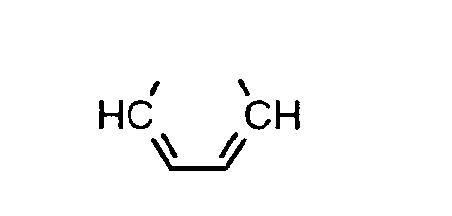
- ferner Zusammensetzungen, worin in Formel II R1 und R2 Wasserstoff sind und R3 und R4 unabhängig voneinander Wasserstoff, Methyl oder Ethyl sind oder zusammen
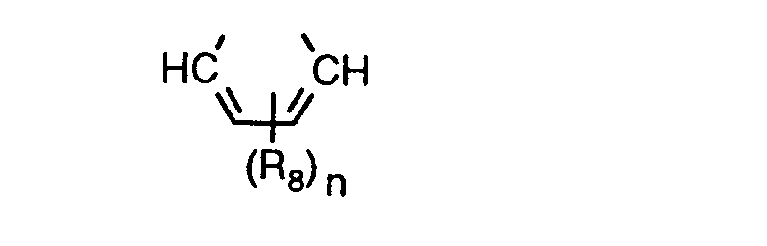
bedeuten, des weiteren Zusammensetzungen, worin in einer Gruppe der Formel
Wasserstoff ist, - fürderhin Zusammensetzungen, worin R6 und R7 C1-C6-Alkyl, Cyclohexyl, Phenyl oder Benzyl sind,
- insbesondere Zusammensetzungen, worin Ro C1-C4-Alkyl, -CO-R5 oder -CO-OR5 ist, R1, R2, R3 und R4 unabhängig voneinander Wasserstoff, Methyl oder Ethyl oder R1 und R2 beziehungsweise R3 und R4 jeweils zusammen

bedeuten, oder in Formel II R1 und R2 Wasserstoff, Methyl oder Ethyl und R3 und R4 Wasserstoff, Methyl oder Ethyl oder zusammen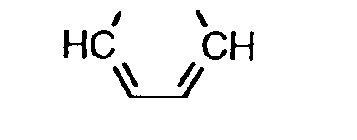
bedeuten, - R5 Cl-C5-Alkyl ist, und
- R6 und R7 unabhängig voneinanderC1-C4-Alkyl, bedeuten, sowie Zusammensetzungen, worin die Komponente B) mindestens eine Verbindung der Formel ist.
- Verbindungen der Formel l bzw. eignen sich hervorragend zum Stabilisieren von organischen Materialien gegen lichtinduzierten, thermischen oder/und oxidativen Abbau
- Die Verbindungen der Formel l bzw. II können insbesondere als Stabilisatoren für natürliche, halbsynthetische oder synthetische Polymere, besonders thermoplastische Kunststoffe und Elastomere, sowie für Schmierstoffe und funktionelle Flüssigkeiten, insbesondere Metallbearbeitungs- und Hydraulikflüssigkeiten, eingesetzt werden. Beispiele für solche Stoffe und Gemische sind der folgenden Aufzählung von geeigneten Materialien zu entnehmen.
- 1. Polymere von Mono- und Diolefinen, beispielsweise Polypropylen, Polyisobutylen, Polybuten-1, Polymethylpenten-1, Polyisopren oder Polybutadien sowie Polymerisate von Cycloolefinen wie z.B. von Cyclopenten oder Norbornen; ferner Polyethylen (das gegebenenfalls vernetzt sein kann), z.B. Polyethylen hoher Dichte (HDPE), Polyethylen niederer Dichte (LDPE), lineares Polyethylen niederer Dichte (LLDPE).
- 2. Mischungen der unter 1) genannten Polymeren, z.B. Mischungen von Polypropylen mit Polyisobutylen, Polypropylen mit Polyethylen (z.B. PP/HDPE, PP/LDPE) und Mischungen verschiedener Polyethylentypen (z.B. LDPE/HDPE).
- 3. Copolymere von Mono- und Diolefinen untereinander oder mit anderen Vinylmonomeren, wie z.B. Ethylen-Propylen-Copolymere, lineares Polyethylen niederer Dichte (LLDPE) und Mischungen desselben mit Polyethylen niederer Dichte (LDPE), Propyien-Buten-1-Copoiymere, Propylen-Isobutylen-Copolymere, Ethyien-Buten-1-Copoiymere, Ethylen-Hexen-Copolymere, Ethylen-Methylpenten-Copolymere, Ethylen-Hepten-Copolymere, Ethylen-Octen-Copolymere, Propylen-Butadien-Copolymere, Isobutylen-Isopren-Copolymere, Ethylen-Alkylacrylat-Copolymere, Ethylen-Alkylmethacrylat- Copolymere, Ethylen-Vinylacetat-Copolymere oder Ethylen-Acrylsäure-Copolymere und deren Salze (lonomere), sowie Terpolymere von Ethylen mit Propylen und einem Dien, wie Hexadien, Dicyclopentadien oder Ethylidennorbornen; ferner Mischungen solcher Copolymere untereinander und mit unter 1) genannten Polymeren, z.B. Polypropylen/Ethylen-Propylen-Copolymere, LDPE/Ethylen-Vinylacetat-Copolymere, LDPE/Ethylen-Acrylsäure-Copolymere, LLDPE/Ethylen-Vinylacetat-Copolymere und LLDPE/Ethylen-Acrylsäure-Copolymere. 3a. Statistische oder alternierende Copolymere von a-Olefinen mit Kohlenmonoxid.
- 3b. Kohlenwasserstoffharze (z.B. C5-C9) inklusive hydrierte Modifikationen davon (z.B. Klebrigmacherharze).
- 4. Polystyrol, Poly-(p-methylstyrol), Poly-(a-methylstyrol).
- 5. Copolymere von Styrol oder a-Methylstyrol mit Dienen oder Acrylderivaten, wie z.B. Styrol-Butadien, Styrol-Acrylnitril, Styrol-Alkylmethacrylat, Styrol-Butadien-Alkylacrylat, Styrol-Maleinsäureanhydrid, Styrol-Acrylnitril-Methylacrylat; Mischungen von hoher Schlagzähigkeit aus Styrol-Copolymeren und einem anderen Polymer, wie z.B. einem Polyacrylat, einem Dien-Polymeren oder einem Ethylen-Propylen-Dien-Terpolymeren; sowie Block-Copolymere des Styrols, wie z.B. Styrol-Butadien-Styrol, Styrol-Isopren-Styrol, Styrol-Ethylen/Butylen-Styrol oder Styrol-Ethylen/Propylen-Styrol.
- 6. Pfropfcopolymere von Styrol oder a-Methylstyrol, wie z.B. Styrol auf Polybutadien, Styrol auf Polybutadien-Styrol- oder Polybutadien-Acrylnitril-Copolymere, Styrol und Acrylnitril (bzw. Methacrylnitril) auf Polybutadien; Styrol, Acrylnitril und Methylmethacrylat auf Polybutadien; Styrol und Maleinsäureanhydrid auf Polybutadien; Styrol, Acrylnitril und Maleinsäureanhydrid oder Maleinsäureimid auf Polybutadien; Styrol und Maleinsäureimid auf Polybutadien, Styrol und Alkylacrylate bzw. Alkylmethacrylate auf Polybutadien, Styrol und Acrylnitril auf Ethylen-Propylen-Dien-Terpolymeren, Styrol und Acrylnitril auf Polyalkylacrylaten oder Polyalkylmethacrylaten, Styrol und Acrylnitril auf Acrylat-Butadien-Copolymeren, sowie deren Mischungen mit den unter 5) genannten Copolymeren, wie sie z.B. als sogenannte ABS-, MBS-, ASA- oder AES-Polymere bekannt sind.
- 7. Halogenhaltige Polymere, wie z.B. Polychloropren, Chlorkautschuk, chloriertes oder chlorsulfoniertes Polyethylen, Copolymere von Ethylen und chloriertem Ethylen, Epichlorhydrinhomo- und -copolymere, insbesondere Polymere aus halogenhaltigen Vinylverbindungen, wie z.B. Polyvinylchlorid, Polyvinylidenchlorid, Polyvinylfluorid, Polyvinylidenfluorid; sowie deren Copolymere, wie Vinylchlorid-Vinylidenchlorid, Vinylchlorid-Vinylacetat oder Vinylidenchlorid-Vinylacetat.
- 8. Polymere, die sich von a,ß-ungesättigten Säuren und deren Derivaten ableiten, wie Polyacrylate und Polymethacrylate, Polyacrylamide und Polyacrylnitrile.
- 9. Copolymere der unter 8) genannten Monomeren untereinander oder mit anderen ungesättigten Monomeren, wie z.B. Acrylnitril-Butadien-Copolymere, Acrylnitril-Alkylacrylat-Copolymere, Acrylnitril-Alkoxyalkylacrylat-Copolymere, Acrylnitril-Vinylhalogenid-Copolymere oderAcrylnitril-Alkylmethacrylat-Butadien-Terpolymere.
- 10. Polymere, die sich von ungesättigten Alkoholen und Aminen bzw. deren Acylderivaten oder Acetalen ableiten, wie Polyvinylalohol, Polyvinylacetat, -stearat, -benzoat, -maleat, Polyvinylbutyral, Polyallylphthalat, Polyallylmelamin; sowie deren Copolymere mit in Punkt 1 genannten Olefinen.
- 11. Homo- und Copolymere von cyclischen Ethern, wie Polyalkylenglykole, Polyethylenoxyd, Polypropylenoxyd oder deren Copolymere mit Bisglycidylethern.
- 12. Polyacetale, wie Polyoxymethylen, sowie solche Polyoxymethylene, die Comonomere, wie z.B. Ethylenoxid, enthalten; Polyacetale, die mit thermoplastischen Polyurethanen, Acrylaten oder MBS modifiziert sind.
- 13. Polyphenylenoxide und -sulfide und deren Mischungen mit Styrolpolymeren oder Polyamiden.
- 14. Polyurethane, die sich von Polyethern, Polyestern und Polybutadienen mit endständigen Hydroxylgruppen einerseits und aliphatischen oder aromatischen Polyisocyanaten andererseits ableiten, sowie deren Vorprodukte.
- 15. Polyamide und Copolyamide, die sich von Diaminen und Dicarbonsäuren und/oder von Aminocarbonsäuren oder den entsprechenden Lactamen ableiten, wie Polyamid 4, Polyamid 6, Polyamid 6/6, 6/10, 6/9, 6/12, 4/6, Polyamid 11, Polyamid 12, aromatische Polyamide ausgehend von m-Xylol, Diamin und Adipinsäure; Polyamide, hergestellt aus Hexamethylendiamin und Iso- und/oder Terephthalsäure und gegebenenfalls einem Elastomer als Modifikator, z.B. Poly-2,4,4-trimethylhexamethylenterephthalamid, Poly-m-phenylen-isophthalamid. Block-Copolymere der vorstehend genanntenPolyamide mit Polyolefinen, Olefin-Copolymeren, lonomeren oder chemisch gebundenen oder gepfropften Elastomeren; oder mit Polyethern, wie z.B. mit Polyethylenglykol, Polypropylenglykol oder Polytetramethylenglykol. Ferner mit EPDM oderABS modifizierte Polyamide oder Copolyamide; sowie während der Verarbeitung kondensierte Polyamide ("RIM-Polyamidsysteme").
- 16. Polyharnstoffe, Polyimide, Polyamid-imide und Polybenzimidazole.
- 17. Polyester, die sich von Dicarbonsäuren und Dialkoholen und/odervon Hydroxycarbonsäuren oder den entsprechenden Lactonen ableiten, wie Polyethylenterephthalat, Polybutylenterephthalat, Poly- 1,4-dimethylolcyclohexanterephthalat, Polyhydroxybenzoate, sowie Block-Polyether-ester, die sich von Polyethern mit Hydroxylendgruppen ableiten; ferner mit Polycarbonaten oder MBS modifizierte Polyester.
- 18. Polycarbonate und Polyestercarbonate.
- 19. Polysulfone, Polyethersulfone und Polyetherketone.
- 20. Vernetzte Polymere, die sich von Aldehyden einerseits und Phenolen, Harnstoff oder Melamin andererseits ableiten, wie Phenol-Formaldehyd-, Harnstoff-Formaldehyd- und Melamin-Formaldehydharze.
- 21. Trocknende und nicht-trocknende Alkydharze.
- 22. Ungesättigte Polyesterharze, die sich von Copolyestern gesättigter und ungesättigter Dicarbonsäuren mit mehrwertigen Alkoholen, sowie Vinylverbindungen als Vernetzungsmittel ableiten, wie auch deren halogenhaltige, schwerbrennbare Modifikationen.
- 23. Vernetzbare Acrylharze, die sich von substituierten Acrylsäureestern ableiten, wie z.B. von Epoxyacrylaten, Urethan-acrylaten oder Polyester-acrylaten.
- 24. Alkydharze, Polyesterharze und Acrylatharze, die mit Melaminharzen, Harnstoffharzen, Polyisocyanaten oder Epoxidharzen vernetzt sind.
- 25.Vernetzte Epoxidharze, die sich von Polyepoxiden ableiten, z.B. von Bis-glycidylethern oder von cycloaliphatischen Diepoxiden.
- 26. Natürliche Polymere, wie Cellulose, Naturkautschuk, Gelatine, sowie deren polymerhomolog chemisch abgewandelte Derivate, wie Celluloseacetate, -propionate und -butyrate, bzw. die Celluloseether, wie Methylcellulose; sowie Kolophoniumharze und Derivate.
- 27. Mischungen (Polyblends) der vorgenannten Polymeren, wie z.B. PP/EPDM, Polyamid/EPDM oder ABS, PVC/EVA, PVC/ABS, PVC/MBS, PC/ABS, PBTP/ABS, PC/ASA, PC/PBT, PVC/CPE, PVC/Acrylate, POM/thermoplastisches PUR, PC/thermoplastisches PUR, POM/Acrylat, POM/MBS, PPO/HIPS, PPO/PA 6.6 und Copolymere, PA/HDPE, PA/PP, PA/PPO.
- 28. Natürliche und synthetische organische Stoffe, die reine monomere Verbindungen oder Mischungen von solchen darstellen, beispielsweise Mineralöle, tierische oder pflanzliche Fette, Öle und Wachse, oder Öle, Wachse und Fette auf Basis synthetischer Ester (z.B. Phthalate, Adipate, Phosphate oder Trimellitate), sowie Abmischungen synthetischer Ester mit Mineralölen in beliebigen Gewichtsverhältnissen, wie sie z.B. als Spinnpräparationen Anwendung finden, sowie deren wäßrige Emulsionen.
- 29. Wäßrige Emulsionen natürlicher oder synthetischer Kautschuke, wie z.B. Naturkautschuk-Latex oder Latices von carboxylierten Styrol-Butadien-Copolymeren.
- In den erfindungsgemäßen Zusammensetzungen sind die Verbindungen der Formel 1 bzw II zweckmäßig zu 0.01 bis 10, beispielsweise zu 0.05 bis 5, vorzugsweise zu 0.05 bis 3, insbesondere jedoch zu 0.1 bis 2 Gew.-% enthalten. Es kann sich dabei um eine oder mehrere dieser Verbindungen der Formel 1 bzw. 11 handeln, und die Gewichtsprozentangaben beziehen sich auf die gesamte Menge dieser Verbindungen. Berechnungsgrundlage ist dabei das Gesamtgewicht des organischen Materials ohne die Verbindungen der Formel I bzw. 11.
- Die Einarbeitung in die Materialien kann beispielsweise durch Einmischen oder Aufbringen der Verbindungen der Formel l bzw. 11 und gegebenenfalls weiterer Additive nach den in der Technik üblichen Methoden erfolgen. Handelt es sich um Polymere, insbesondere synthetische Polymere, kann die Einarbeitung vor oder während der Formgebung, oder durch Aufbringen der gelösten oder dispergierten Verbindungen auf das Polymere, gegebenenfalls unter nachträglichem Verdunsten des Lösungsmittels erfolgen. Im Fall von Elastomeren können diese auch als Latices stabilisiert werden. Eine weitere Möglichkeit der Einarbeitung der Verbindungen der Formel l bzw. II in Polymere besteht in deren Zugabe vor, während oder unmittelbar nach der Polymerisation der entsprechenden Monomeren bzw. vor der Vernetzung. Die Verbindungen der Formel I bzw. II können dabei als solche, aber auch in encapsulierter Form (z.B in Wachsen, Ölen oder Polymeren) zugesetzt werden. Im Falle der Zugabe vor oder während der Polymerisation können die Verbindungen der Formel l bzw. 11 auch als Regulatoren für die Kettenlänge der Polymeren (Kettenabbrecher) wirken.
- Die Verbindungen der Formel 1 bzw. II oder Mischungen davon können auch in Form eines Masterbatches, der diese Verbindungen beispielsweise in einer Konzentration von 2,5 bis 25 Gew.-% enthält, den zu stabilisierenden Kunststoffen zugesetzt werden.
- Zweckmäßig kann die Einarbeitung der Verbindungen der Formel l bzw. II nach folgenden Methoden erfolgen:
- - als Emulsion oder Dispersion (z.B. zu Latices oder Emulsionspolymeren)
- - Als Trockenmischung während des Vermischens von Zusatzkomponenten oder Polymermischungen
- - durch direktes Zugeben in die Verarbeitungsapparatur (z.B. Extruder, Innenmischer usw.)
- - als Lösung oder Schmelze.
- Erfindungsgemäße Polymerzusammensetzungen können in verschiedener Form angewendet bzw. zu verschiedenen Produkten verarbeitet werden, z.B. als (zu) Folien, Fasern, Bändchen, Formmassen, Profilen, oder als Bindemittel für Lacke, Klebstoffe oder Kitte.
- Die Erfindung betrifft auch ein Verfahren zum Stabilisieren von organischem Material, insbesondere von thermoplastischen Polymeren, Elastomeren oder Schmierstoffen und funktionellen Flüssigkeiten, vor allem Schmierstoffen, gegen oxidativen, thermischen und/oder actinischen Abbau, dadurch gekennzeichnet, daß man diesem Material als Stabilisatoren Verbindungen der Formel bzw. II zusetzt bzw. auf dieses aufbringt.
- Die Verbindungen der Formeln 1 und II sind beispielsweise auch geeignet, um Schmierstoffen und funktionellen Müssigkeiten verbesserte Gebrauchseigenschaften zu verleihen Es ist dabei insbesondere auf ihre überraschend gute Wirkung als Antioxidantien hinzuweisen. Deshalb umfaßt die Erfindung auch Zusammensetzungen, enthaltend eine Schmierstoff oder eine funktionelle Flüssigkeit und wenigstens eine Verbindung der allgemeinen Formel bzw. 11, wie oben beschrieben.
- Als funktionelle Flüssigkeiten sind beispielsweise Hydraulikflüssigkeiten und Metallbearbeitungsflüssigkeiten zu nennen.
- Die in Frage kommenden Schmierstoffe basieren beispielsweise auf mineralischen oder synthetischen Ölen oder Mischungen davon oder auf pflanzlichen und tierischen Ölen, Fetten und Wachsen. Die Schmierstoffe sind dem Fachmann geläufig und in der einschlägigen Fachliteratur, wie beispielsweise in Dieter Klamann, "Schmierstoffe und verwandte Produkte" (Verlag Chemie, Weinheim, 1982), in Schewe-Kobek, "Das Schmiermittel-Taschenbuch" (Dr. Alfred Hüthig-Verlag, Heidelberg, 1974) und in "Ullmanns Enzyklopädie der technischen Chemie", Bd. 13, Seiten 85-94 (Verlag Chemie, Weinheim, 1977) beschrieben.
- Die Schmierstoffe sind insbesondere Öle und Fette, beispielsweise basierend auf einem Mineralöl. Bevorzugt sind Öle.
- Die Mineralöle basieren insbesondere auf Kohlenwasserstoffverbindungen.
- Beispiele von synthetischen Schmierstoffen umfassen Schmierstoffe auf der Basis der aliphatischen oder aromatischen Carboxylester, der polymeren Ester, der Polyalkylenoxide, der Phosphorsäureester, der Poly-a-olefine oder der Silicone, eines Diesters einer zweiwertigen Säure mit einem einwertigen Alkohol, wie z.B. Dioctylsebacat oder Dinonyladipat, eines Triesters von Trimethylolpropan mit einer einwertigen Säure oder mit einem Gemisch solcher Säuren, wie z.B. Trimethylolpropantripelargonat, Trimethylolpropan-tricaprylat oder Gemische davon, eines Tetraesters von Pentaerythrit mit einer einwertigen Säure oder mit einem Gemisch solcher Säuren, wie z.B. Pentaerythrit-tetracaprylat, oder eines komplexen Esters von einwertigen und zweiwertigen Säuren mit mehrwertigen Alkoholen, z.B. ein komplexer Ester von Trimethylolpropan mit Capryl- und Sebacinsäure oder von einem Gemisch davon. Besonders geeignet sind neben Mineralölen z.B. Poly-a-Olefine, Schmierstoffe auf Esterbasis, Phosphate, Glykole, Polyglykole und Polyalkylenglykole, sowie deren Mischungen mit Wasser.
- Als pflanzliche Schmierstoffe sind die Öle, Fette und Wachse, gewonnen beispielsweise aus Oliven, Palmen, Palmkernen, Rüben, Raps, Leinen, Nüssen, Soja, Baumwolle, Ricinus, Sonnenblumen, Kürbiskernen, Kokos, Mais oder deren modifizierte Formen, z.B geschwefelte oder epoxidierte Öle, wie epoxidiertes Sojaöl, sowie Mischungen der Substanzen zu nennen. Beispiele für tierische Öle, Fette und Wachse, die als Schmierstoffe angewendet werden können, sind Talge, Fischöle, Spermöl, Klauenöl, Trane und Specköle, deren modifizierte Formen und Mischungen.
- Metallbearbeitungsflüssigkeiten wie Walz-, Zieh- und Schneidöle basieren zumeist auf den oben beschriebenen Mineral- und synthetischen Ölen und können auch als ÖI-in-Wasser-bzw. Wasser-in-Öl-Emulsionen vorliegen. Das gleiche gilt für Hydraulikflüssigkeiten. Als weitere funktionelle Müssigkeiten kommen z.B. Kompressoröle und Spinnpräparationen in Frage.
- Die Verbindungen der Formel l bzw. II, wie oben beschrieben, können z.B. in Mengen von 0,01 bis 10 Gew.- %, zweckmäßig in Mengen von 0,03 bis 5 Gew.-%, vorzugsweise in einer Menge von 0,05 bis 3 Gew.-% und ganz besonders bevorzugt von 0,5 bis 1,5 Gew.-%, bezogen auf die Zusammensetzung, in der funktionellen Flüssigkeit oder dem Schmierstoff vorliegen.
- Die Verbindungen der Formel I bzw. 11 können der funktionellen Flüssigkeit auf an sich bekannte Weise beigemischt werden. Die Verbindungen sind beispielsweise in Ölen gut löslich. Es ist auch möglich, einen sogenannten Masterbatch herzustellen, der nach Maßgabe des Verbrauchs auf Einsatzkonzentrationen mit der entsprechenden funktionellen Flüssigkeit verdünnt werden kann. In solchen Fällen sind auch Konzentrationen über 10 Gew.% möglich.
- Zusätzlich zu den erfindungsgemäßen Verbindungen bzw. Mischungen können die erfindungsgemäßen Zusammensetzungen, insbesondere wenn sie organische, vorzugsweise synthetische, Polymere enthalten, noch weitere übliche Additive enthalten. Beispiele für solche Additive sind:
- z.B. 2,6-Di-tert.butyl-4-methylphenol, 2-Tert.butyl-4,6-dimethylphenol, 2,6-Di-tert.butyl-4-ethylphenol, 2,6-Di- tert.butyl-4-n-butylphenol, 2,6-Di-tert.butyl-4-i-butylphenol, 2,6-Di-cyclopentyl-4-methylphenol, 2-(a-Methylcyclohexyl)-4,6-dimethylphenol, 2,6-Di-octadecyl-4-methylphenol, 2,4,6-Tri-cyclohexylphenol, 2,6-Di-tert.butyl-4-methoxymethylphenol, 2,6-Di-nonyl-4-methylphenol, 2,4-Dimethyl-6-(1'-methyl-undec-1'-yl)-phenol, 2,4-Dimethyl-6-(1'-methyl-heptadec-1'-yl)-phenol, 2,4-Dimethyl-6-(1'-methyl-tridec-1'-yl)-phenol und Mischungen davon.
- z.B. 2,4-Di-octylthiomethyl-6-tert.-butylphenol, 2,4-Di-octylthiomethyl-6-methylphenol, 2,4-Di-octylthiomethyl-6-ethylphenol, 2,6-Di-dodecylthiomethyl-4-nonylphenol.
- z.B. 2,6-Di-tert.butyl-4-methoxyphenol, 2,5-Di-tert.butyl-hydrochinon, 2,5-Di-tert.amyl-hydrochinon, 2,6-Diphenyl-4-octadecyloxyphenol, 2,6-Di-tert.-butyl-hydrochinon, 2,5-Di-tert.-butyl-4-hydroxyanisol, 3,5-Di-tert.-butyl-4-hydroxyanisol, 3,5-Di-tert.-butyl-4-hydroxyphenyl-stearat, Bis-(3,5-di-tert.-butyl-4-hydroxyphenyl)adipat.
- z.B. 2,2'-Thio-bis-(6-tert.-butyl-4-methylphenol), 2,2'-Thio-bis-(4-octylphenol), 4,4'-Thio-bis-(6-tert.butyl-3-methylphenol), 4,4'-Thio-bis-(6-tert.butyl-2-methylphenol), 4,4'-Thio-bis-(3,6-di-sec.-amylphenol), 4,4'-Bis (2,6-dimethyl-4-hydroxyphenyl)-disulfid.
- z.B. 2,2'-Methylen-bis-(6-tert.butyl-4-methylphenol), 2,2'-Methylen-bis-(6-tert.butyl-4-ethylphenol), 2,2'-Methylen-bis-[4-methyl-6-(a-methyl-cyclohexyl)-phenol], 2,2'-Methylen-bis-(4-methyl-6-cyclohexylphenol), 2,2'-Methylen-bis-(6-nonyl-4-methylphenol), 2,2'-Methylen-bis-(4,6-di-tert.butylphenol), 2,2'-Ethyliden-bis-(4,6-di-tert.butylphenol), 2,2'-Ethyliden-bis-(6-tert.butyl-4-isobutylphenol), 2,2'-Methylen-bis-[6-(α-methylbenzyl)-4-nonylphenol], 2,2'-Methylen-bis-[6-(α,α-dimethylbenzyl)-4-nonylphenol], 4,4'-Methylen-bis-(2,6-di-tert.-butylphenol), 4,4'-Methylen-bis-(6-tert.butyl-2-methylphenol), 1,1-Bis-(5-tert.butyl-4-hydroxy-2-methylphenyl)-butan, 2,6-Bis-(3-tert.butyl-5-methyl-2-hydroxybenzyl)-4-methylphenol, 1,1,3-Tris-(5-tert.butyi-4-hydroxy-2-methylphenyl)-butan, 1,1-Bis-(5-tert.butyl-4-hydroxy-2-methyl-phenyl)-3-n-dodecylmercaptobutan, Ethylenglycol- bis-[3,3-bis-(3'-tert.-butyl-4'-hydroxyphenyl)-butyrat], Bis-(3-tert.butyl-4-hydroxy-5-methyl-phenyl)-dicyclopentadien, Bis-[2-(3'-tert.butyl-2'-hydroxy-5'-methyl-benzyl)-6-tert.butyl-4-methyl-phenyl]-terephthalat, 1,1-Bis-(3,5-dimethyl-2-hydroxyphenyl)-butan, 2,2-Bis-(3,5-di-tert.-butyl-4-hydroxyphenyl)-propan, 2,2-Bis-(5-tert.-butyl-4-hydroxy-2-methylphenyl)-4-n-dodecylmercapto-butan, 1,1,5,5-Tetra-(5-tert.-butyl-4-hydroxy-2-methylphenyl)-pentan.
- z.B. 3,5,3',5'-Tetra-tert.-butyl-4,4'-dihydroxydibenzylether, Octadecyl-4-hydroxy-3,5-dimethylbenzyl-mercap- toacetat, Tris-(3,5-di-tert.-butyl-4-hydroxybenzyl)-amin, Bis-(4-tert.-butyl-3-hydroxy-2,6-dimethylbenzyl)-dit- hioterephthalat, Bis-(3,5-di-tert.-butyl-4-hydroxybenzyl)-sulfid, Iso-octyl-3,5-di-tert.-butyl-4-hydroxybenzyl- mercaptoacetat.
- z.B. Dioctadecyl-2,2-bis-(3,5-di-tert.-butyl-2-hydroxybenzyl)-malonat, Di-octadecyl-2-(3-tert.-butyl-4-hydroxy-5-methylbenzyl)-malonat, Di-dodecylmercaptoethyl -2,2-bis-(3,5-di-tert.-butyl-4-hydroxybenzyl)-ma- lonat, Di-[4(1,1,3,3-tetramethylbutyl)-phenyl]-2,2-bis-(3,5-di-tert.-butyl-4-hydroxybenzyl)-malonat.
- z.B. 1,3,5-Tris-(3,5-di-tert.-butyl-4-hydroxybenzyl)-2,4,6-trimethylbenzol, 1,4-Bis-(3,5-di-tert.-butyl-4-hydroxybenzyl)-2,3,5,6-tetramethylbenzol, 2,4,6-Tris-(3,5-di-tert.-butyl-4-hydroxybenzyl)-phenol.
- z.B. 2,4-Bis-octylmercapto-6-(3,5-di-tert.-butyl-4-hydroxyanilino)-1,3,5-triazin, 2-Octylmercapto-4,6-bis-(3,5-di-tert.-butyl-4-hydroxyanilino)-1,3,5-triazin, 2-Octylmercapto-4,6-bis-(3,5-di-tert.-butyl-4-hydroxyphenoxy)-1,3,5-triazin, 2,4,6-Tris-(3,5-di-tert.-butyl-4-hydroxyphenoxy)-1,2,3-triazin, 1,3,5-Tris-(3,5-di-tert.-butyl-4-hydroxybenzyl)-isocyanurat, 1,3,5-Tris-(4-tert.-butyl-3-hydroxy-2,6-dimethylbenzyl)-isocyanurat, 2,4,6-Tris-(3,5-di-tert.-butyl-4-hydroxyphenylethyl)1,3,5-triazin, 1,3,5-Tris-(3,5-di-tert.butyl-4-hydroxyphenylpropionyl)-hexahydro-1,3,5-triazin, 1,3,5-Tris-(3,5-dicyclohexyl-4-hydroxybenzyl)-isocyanurat.
- z.B. Dimethyl-2,5-di-tert.-butyl-4-hydroxybenzylphosphonat, Diethyl-3,5-di-tert.-butyl-4-hydroxybenzyl- phosphonat, Dioctadecyl-3,5-di-tert.-butyl-4-hydroxybenzylphosphonat, Dioctadecyi-5-tert.-butyi-4-hydroxy-3-methylbenzylphosphonat, Ca-Salz des 3,5-Di-tert.-butyl-4-hydroxybenzyl-phosphonsäure-monoethylesters.
- z.B. 4-Hydroxy-laurinsäureanilid, 4-Hydroxystearinsäureanilid, N-(3,5-di-tert.butyi-4-hydroxyphenyi)-carba- minsäureoctylester.
- mit ein- oder mehrwertigen Akoholen, wie z.B. mit Methanol, Ethanol, Octadecanol, 1,6-Hexandiol, 1,9-Nonandiol, Ethylenglycol, 1,2-Propandiol, Neopentylglycol, Thiodiethylenglycol, Diethylenglycol, Triethylenglycol, Pentaerythrit, Tris-(hydroxyethyl)-isocyanurat, N,N'-Bis-(hydroxyethyl)-oxalsäurediamid, 3-Thiaundecanol, 3-Thiapentadecanol, Trimethylhexandiol, Trimethylolpropan, 4-Hydroxymethyl-1-phospha-2,6,7-trioxabicyclo-[2.2.2]-octan.
- mit ein- oder mehrwertigen Alkoholen, wie z.B. mit Methanol, Ethanol, Octadecanol, 1,6-Hexandiol, 1,9-Nonandiol, Ethylenglycol, 1,2-Propandiol, Neopentylglycol, Thiodiethylenglycol, Diethylenglycol, Triethylenglycol, Pentaerythrit, Tris-(hydroxy)ethyl-isocyanurat, N,N'-Bis-(hydroxyethyl)-oxalsäurediamid, 3-Thiaundecanol, 3-Thiapentadecanol, Trimethylhexandiol, Trimethylolpropan, 4-Hydroxymethyl- 1-phospha-2,6,7- trioxabicyclo-[2.2.2]-octan.
- mit ein- oder mehrwertigen Akoholen, wie z.B. mit Methanol, Ethanol, Octadecanol, 1,6-Hexandiol, 1,9-Nonandiol, Ethylenglycol, 1,2-Propandiol, Neopentylglycol, Thiodiethylenglycol, Diethylenglycol, Triethylenglycol, Pentaerythrit, Tris-(hydroxy)ethyl-isocyanurat, N,N'-Bis-(hydroxyethyl)-oxalsäurediamid, 3-Thiaundecanol, 3-Thiapentadecanol, Trimethylhexandiol, Trimethylolpropan, 4-Hydroxymethyl-1-phospha-2,6,7-trio- xabicyclo-[2.2.2]-octan.
- mit ein- oder mehrwertigen Alkoholen, wie z.B. mit Methanol, Ethanol, Octadecanol, 1,6-Hexandiol, 1,9-Nonandiol, Ethylenglycol, 1,2-Propandiol, Neopentylglycol, Thiodiethylenglycol, Diethylenglycol, Triethylenglycol, Pentaerythrit, Tris-(hydroxy)ethyl-isocyanurat, N,N'-Bis-(hydroxyethyl)-oxalsäurediamid, 3-Thiaundecanol, 3-Thiapentadecanol, Trimethylhexandiol, Trimethylolpropan, 4-Hydroxymethyl-1-phospha-2,6,7-trio- xabicyclo-[2.2.2]-octan.
- wie z.B. N,N'-Bis-(3,5-di-tert.butyl-4-hydroxyphenylpropionyl)-hexamethylendiamin, N,N'-Bis-(3,5-di-tert.butyl-4-hydroxyphenylpropionyl)-trimethylendiamin, N,N'-Bis-(3,5-di-tert.butyl-4-hydroxyphenylpropionyl)-hydrazin.
- wie z.B. 5'-Methyl-, 3',5'-Di-tert.butyl-, 5'-tert.Butyl-, 5'-(1,1,3,3-Tetramethylbutyl)-, 5-Chlor-3',5'-di-tert.butyl-, 5'-Chlor-3'-tert.butyl-5-methyl-, 3'-sec.Butyl-5'-tert.butyl, 4'-Octoxy-, 3',5'-Di-tert.Amyl-, 3',5'-Bis-(a,a-dimethylbenzyl)-, Mischung aus 5-Chlor-3'-tert.-butyl-5'-(2-octyloxycarbonylethyl)- und 5-Chlor-3'-tert.-butyl-5'-[2-(2-ethylhexyloxy)-carbonylethyl]-, 5-Chlor-3'-tert.-butyl-5'-(2-methoxycarbonylethyl)-, 3'-tert.-Butyl-5'-(2-methoxycarbonylethyl)-, 3'-tert.-Butyl-5-(2-octyloxycarbonylethyl)-, 3'-tert.-Butyl-5'-[2-(2-ethylhexyloxy)-carbo- nylethyl]-, 3'Dodecyl-5'-methyl- und 3'-tert.-Butyl-5'-(2-isooctyloxycarbonylethyl)-2'-hydroxyphenyl-2H-benztriazol(2), 2,2'-Methylen-bis[4-(1,1,3,3-tetramethylbutyl)-6-benztriazol-2-yl-phenol]; Umesterungsprodukt von 2-[3'-tert.-Butyl-5'-(2-methoxycarbonylethyl)-2'-hydroxy-phenyl]-2H-benztriazol mit Polyethylenglycol 300; [R-CH2CH2-COO(CH2)3]2 mit R=3'-tert.-Butyl-4'-hydroxy-5'-2H-benzotriazol-2-yl-phenyl.
- wie z.B. das 4-Hydroxy-, 4-Methoxy-, 4-Octoxy-, 4-Decyloxy-, 4-Dodecyloxy-, 4-Benzyloxy-, 4,2',4'-Trihydroxy-, 2'-Hydroxy-4,4'-dimethoxy-Derivat.
- wie z.B. 4-tert.Butyl-phenylsalicylat, Phenylsalicylat, Octylphenyl-salicylat, Dibenzoylresorcin, Bis-(4-tert.bu- tylbenzoyl)-resorcin, Benzoylresorcin, 3,5-Di-tert.butyl-4-hydroxybenzoesäure-2,4-di-tert.butylphenylester, 3,5-Di-tert.butyl-4-hydroxybenzoesäurehexadecylester, 3,5-Di-tert.butyl-4-hydroxybenzoesäure-octadecyle- ster, 3,5-Di-tert.-butyl-4-hydroxybenzoesäure-2-methyl-4,6-di-tert.-butylphenylester.
- wie z.B. a-Cyan-ß,ß-diphenylacrylsäure-ethylester bzw.-isooctylester, a-Carbomethoxy-zimtsäuremethylester, a-Cyano-ß-methyl-p-methoxy-zimtsäuremethylester bzw. -butylester, a-Carbomethoxy-p-methoxyzimtsäure-methylester, N-(ß-Carbomethoxy-ß-cyanovinyl)-2-methyl-indolin.
- wie z.B. Nickelkomplexe des 2,2'-Thio-bis- [4-(1,1,3,3-tetramethylbutyl)-phenols], wie der 1:1- oder der 1:2-Komplex, gegebenentalls mit zusätzlichen Liganden, wie n-Butylamin, Triethanolamin oder N-Cyclohexyl-diethanolamin, Nickeldibutyldithiocarbamat, Nickelsalze von 4-Hydroxy-3,5-di-tert.butylbenzyl-phosphonsäure- monoalkylestern, wie vom Methyl- oder Ethylester, Nickelkomplexe von Ketoximen, wie von 2-Hydroxy-4-methyl-phenyl-undecylketoxim, Nickelkomplexe des 1-Phenyl-4-lauroyl-5-hydroxy-pyrazols, gegebenenfalls mit zusätzlichen Liganden.
- wie z.B. Bis-(2,2,6,6-tetramethyl-piperidyl)-sebacat, Bis-(2,2,6,6-tetramethyl-piperidyl)-succinat, Bis-(1,2,2, 6,6-pentamethylpiperidyl)-sebacat, n-Butyl-3,5-di-tert.butyl-4-hydroxybenzyl-malonsäure-bis(1,2, 2,6,6-pentame- thylpiperidyl)-ester, Kondensationsprodukt aus 1-Hydroxyethyl-2,2,6,6-tetramethyl-4-hydroxypiperidin und Bernsteinsäure, Kondensationsprodukt aus N,N'-Bis-(2,2,6,6-Tetramethyl-4-piperidyl)-hexamethylendiamin und 4-tert.Octylamino-2,6-dichlor-1,3,5-s-triazin, Tris-(2,2,6,6-tetramethyl- 4-piperidyl)-nitrilotriacetat, Tetrakis-(2,2,6,6-tetramethyl-4-piperidyl)-1,2,3,4-butantetraoat, 1,1'-(1,2-Ethandiyl)-bis-(3,3,5,5-tetramethyl- piperazinon), 4-Benzoyl-2,2,6,6-tetramethylpiperidin, 4-Stearyloxy-2,2,6,6-tetramethylpiperidin, Bis-(1,2,2,6, 6-pentamethylpiperidyl)-2-n-butyl-2-(2-hydroxy-3,5-di-tert.-butylbenzyl)-malonat, 3-n-Octyl-7,7,9,9-tetramethyl-1,3,8-triazasprio[4.5]decan-2,4-dion, Bis-(1-octyloxy-2,2,6,6-tetramethylpiperidyl)-sebacat, Bis-(1-octyloxy-2,2,6,6-tetramethylpiperidyl)-succinat, Kondensationsprodukt aus N,N'-Bis-(2,2,6,6-tetramethyl-4-piperi- dyl)-hexamethylendiamin und 4-Morpholino-2,6-dichlor-1,3,5-triazin, Kondensationsprodukt aus 2-Chlor-4,6-di-(4-n-butylamino-2,2,6,6-tetramethylpiperidyl)-1,3,5-triazin und 1,2-Bis-(3-aminopropylamino)äthan, Kondensationsprodukt aus 2-Chlor-4,6-di-(4-n-butylamino-1,2,2,6,6-pentamethylpiperidyl)-1,3,5-triazin und 1,2-Bis-(3-aminopro- pylamino)-äthan, 8-Acetyl-3-dodecyl-7,7,9,9-tetramethyl- 1,3,8-triazaspiro-[4.5]decan-2,4-dion, 3-Dodecyl-1-(2,2,6,6-tetramethyl-4-piperidyl)pyrrolidin-2,5-dion, 3-Dodecyl-1-(1,2,2,6,6-pentamethyl-4-piperidyl)-pyrrolidin-2,5-dion.
- wie z. B. 4,4'-Di-octyloxy-oxanilid, 2,2'-Di-octyloxy-5,5'-di-tert.butyl-oxanilid, 2,2'-Di-dodecyloxy-5,5'di-tert.butyl-oxanilid, 2-Ethoxy-2'-ethyl-oxanilid, N,N'-Bis-(3-dimethylaminopropyl)-oxalamid, 2-Ethoxy-5-tert.butyl-2'-ethyloxanilid und dessen Gemisch mit 2-Ethoxy-2'-ethyl-5,4'-di-tert.butyl-oxanilid, Gemische von o- und p-Methoxy- sowie von o- und p-Ethoxy-di-substituierten Oxaniliden.
- wie z.B. 2,4,6-Tris(2-hydroxy-4-octyloxyphenyl)-1,3,5-triazin, 2-(2-Hydroxy-4-octyloxyphenyl)-4,6-bis-(2,4-dimethylphenyl)1,3,5-triazin, 2-(2,4-Dihydroxyphenyl)-4,6-bis(2,4-dimethylphenyl)- 1,3,5-triazin, 2,4-Bis-(2-hydroxy-4-propyloxyphenyl)-6- (2,4-dimethylphenyl)-1,3,5-triazin, 2-(2-Hydroxy-4-octyloxyphenyl)-4,6-bis(4-methylphenyl)- 1,3,5-triazin, 2-(2-Hydroxy-4-dodecyloxyphenyl)-4,6-bis(2,4-dimethylphenyl)-1,3,5-triazin, 2-[2-hydroxy-4-(2-hydroxy-3-butyloxy-propyloxy)phenyl]-4,6-bis(2,4-dimethylphenyl)- 1,3,5-triazin, 2-[2-hydroxy-4-(2-hydroxy-3-octyloxy-propyloxy)phenyl]-4,6-bis(2,4-dimethylphenyl)- 1,3,5-triazin.
- wie z.B. N,N'-Diphenyloxalsäurediamid, N-Salicylal-N'-salicyloylhydrazin, N,N'-Bis-(salicyloyl)-hydrazin, N,N'-Bis-(3,5-di-tert.butyl-4-hydroxyphenylpropionyl)-hydrazi n, 3-Salicyloylamino- 1,2,4-triazol, Bis-(benzyliden)-oxalsäuredihydrazid, Oxanilid, Isophthalsäure-dihydrazid, Sebacinsäure-bis-phenylhydrazid, N,N'-Diacetal- adipinsäure-dihydrazid, N,N'-Bis-salicyloyl-oxalsäure-dihydrazid, N,N'-Bis-salicyloyl-thiopropionsäure-dihydrazid.
- wie z.B. Triphenylphosphit, Diphenylalkylphosphite, Phenyldialkylphosphite, Tris-(nonylphenyl)-phosphit, Trilaurylphosphit, Trioctadecylphosphit, Distearyl-pentaerythritdiphosphit, Tris-(2,4-di-tert.butylphenyl)-phosphit, Diisodecylpentaerythrit-diphosphit, Bis-(2,4-di-tert.butylphenyl)-pentaerythritdiphosphit, Bis-(2,6-di- tert.-butyl-4-methylphenyl)-pentaerythritdiphosphit, Bis-isodecyloxy-pentaerythritdiphosphit, Bis-(2,4-di- tert.-butyl-6-methylphenyl)-pentaerythritdiphosphit, Bis-(2,4,6-tri-tert.-butylphenyl)-pentaerythritdiphsophit, Tristearyl-sorbit-triphosphit, Tetrakis-(2,4-di-tert.butylphenyl)-4,4'-biphenylen-diphosphonit, 6-lsooctyloxy-2,4,8,10-tetra-tert.-butyl-12H-dibenz[d,g]-1,3,2-dioxaphosphocin, 6-Fluor-2,4,8,10-tetra-tert.butyl-12-methyl- dibenz[d,g]-1,3,2-dioxaphosphocin.
- wie z.B. Ester der β-Thio-dipropionsäure, beispielsweise der Lauryl-, Stearyl-, Myristyl- oder Tridecylester, Mercaptobenzimidazol, das Zinksalz des 2-Mercaptobenzimidazols, Zink-dibutyl-dithiocarbamat, Dioctadecyldisulfid, Pentaerythrit-tetrakis-(ß-dodecylmercapto)-propionat.
- wie z.B. Kupfersalze in Kombination mit Jodiden und/oder Phosphorverbindungen und Salze des zweiwertigen Mangans.
- wie z.B. Melamin, Polyvinylpyrrolidon, Dicyandiamid, Triallylcyanurat, Harnstoff-Derivate, Hydrazin-Derivate, Amine, Polyamide, Polyurethane, Alkali- und Erdalkalisalze höherer Fettsäuren, beispielsweise Ca-Stearat, Zn-Stearat, Mg-Behenat, Mg-Stearat, Na-Ricinoleat, K-Palmitat, Antimonbrenzcatechinat oder Zinnbrenzcatechinat.
- wie z.B. 4-tert.Butylbenzoesäure, Adipinsäure, Diphenylessigsäure.
- wie z.B. Calciumcarbonat, Silikate, Glasfasern, Asbest, Talk, Kaolin, Glimmer, Bariumsulfat, Metalloxide und - hydroxide, Russ, Graphit.
- wie z.B. Weichmacher, Gleitmittel, Emulgatoren, Pigmente, Optische Aufheller, Flammschutzmittel, Antistatika, Treibmittel.
- Handelt es sich bei den erfindungsgemäßen Zusammensetzungen um solche auf Basis von Schmierstoffen und Hydraulikflüssigkeiten bzw. Metallbearbeitungsflüssigkeiten, können diese ebenfalls weitere Additive enthalten, die zugegeben werden, um gewisse Gebrauchseigenschaften zu verbessern, wie z.B. weitere Antioxidantien, Metalldesaktivatoren, Rostinhibitoren, Viskositäts-Index-Verbesserer, Stockpunkterniedriger, Dispergiermittel/Tenside und Verschleissschutzadditive. Beispiele hierfür sind neben den unter Punkt 1. der obigen Aufzählung genannten phenolischen Antioxidantien:
- N,N'-Di-isopropyl-p-phenylendiamin, N,N'-Di-sec-butyl-p-phenylendiamin, N,N'-Bis(1,4-dimethyl-pentyl)-p-phenylendiamin, N,N'-Bis(1-ethyl-3-methyl-pentyl)-p-phenylendiamin, N,N'-Bis(1-methyl-heptyl)-p-phenylendiamin, N,N'-Dicyclohexyl-p-phenylendiamin, N,N'-Diphenyl-p-phenylendiamin, N,N'-Di-(naphthyl-2)-p-phenylendiamin, N-Isopropyl-N'-phenyl-p-phenylendiamin, N-(1,3-Dimethyl-butyl)-N'-phenyl-p-phenylendiamin, N-(1-Methyl-heptyl)-N'-phenyl-p-phenylendiamin, N-Cyclohexyl-N'-phenyl-p-phenylendiamin, 4-(p-Toiuoi- sulfonamido)-diphenylamin, N,N'-Dimethyl-N,N'-di-sec-butyl-p-phenylendiamin, Diphenylamin, N-Allyldiphenylamin, 4-Isopropoxy-diphenylamin, N-Phenyl-1-naphthylamin, N-Phenyl-2-naphthylamin, octyliertes Diphenylamin, z.B. p,p'-Di-tert-octyldiphenylamin, 4-n-Butylaminophenol, 4-Butyrylamino-phenol, 4-Nonanoylaminophenol, 4-Dodecanoylamino-phenol, 4-Octadecanoylamino-phenol, Di-(4-methoxyphenyl)-amin, 2,6-Di-tert-butyl-4-dimethylamino-methyl-phenol, 2,4'-Diamino-diphenylmethan, 4,4'-Diamino-diphenylmethan, N,N, N',N'-Tetramethyl-4,4'-diamino-diphenylmethan, 1,2-Di-[(2-methyl-phenyl)-amino]-ethan, 1,2-Di-(phenylami- no)-propan, (o-Tolyl)-biguanid, Di-[4-(1',3'-dimethyl-butyl)-phenyl] amin, tert-octyliertes N-Phenyl-1-naphthylamin, Gemisch aus mono- und dialkylierten tert-Butyl/tert-Octyldiphenylaminen, 2,3-Dihydro-3,3-dimethyl-4H-1,4-benzothiazin, Phenothiazin, N-Allylphenothiazin.
- Aliphatische oder aromatische Phosphite, Ester der Th iodipropionsäure oder der Thiodiessigsäure, oder Salze der Dithiocarbamid- oder Dithiophosphorsäure.
- Triazole, Benztriazole und deren Derivate, Tolutriazole und deren Derivate, 2-Mercaptobenzthiazol, 2-Mercaptobenztriazol, 2,5-Dimercaptobenztriazol, 2,5-Dimercaptobenzthiadiazol, 5,5'-Methylenbisbenztriazol, 4,5,6,7-Tetrahydrobenztriazol, Salicyliden-propylendiamin, Salicylaminoguanidin und dessen Salze.
- a) Organische Säuren, ihre Ester, Metallsalze und Anhydride, z.B.:
- N-Oleoyl-sarcosin, Sorbitan-mono-oleat, Blei-naphthenat, Alkenylbernsteinsäure-anhydrid, z.B. Dodecenylbernsteinsäure-anhydrid, Alkenylbernsteinsäure-Teilester und -Teilamide, 4-Nonylphenoxy-essigsäure.
- b) Stickstoffhaltige Verbindungen, z.B.:
- i. Primäre, sekundäre oder tertiäre aliphatische oder cycloaliphatische Amine und Amin Salze von organischen und anorganischen Säuren, z.B. öllösliche Alkylammoniumcarboxylate.
- ii. Heterocyclische Verbindungen, z.B.: Substituierte Imidazoline und Oxazoline.
- c) Phosphorhaltige Verbindungen, z.B.:
- Aminsalze von Phosphorsäurepartialestern oder Phosphonsäurepartialestern, Zinkdialkyldithiophosphate. d) Schwefelhaltige Verbindungen, z.B.:
- Barium-dinonylnaphthalin-sulfonate, Calciumpetroleum-sulfonate.
- Polyacrylate, Polymethacrylate, Vinylpyrrolidon/Methacrylat-Copolymere, Polyvinylpyrrolidone, Polybutene, Olefin-Copolymere, Styrol/Acrylat-Copolymere, Polyether.
- Polymethacrylat, alkylierte Naphthalinderivate.
- Polybutenylbernsteinsäureamide oder -imide, Polybutenylphosphonsäurederivate, basische Magnesium-, Calcium-, und Bariumsulfonate und -phenolate.
- Schwefel und/oder Phosphor und/oder Halogen enthaltende Verbindungen, wie geschwefelte pflanzliche Öle, Zinkdialkyldithiophosphate, Tritolylphosphat, chlorierte Paraffine, Alkyl- und Aryldi- und tri-sulfide, Triphenylphosphorothionate, Diethanolaminomethyltolyltriazol, Di(2-ethylhexyl)aminomethyltolyltriazol.
- Die vorliegende Erfindung betrifft auch die Verwendung von Verbindungen der Formel 1 bzw. 11 zum Stabilisieren von gegen oxidativen, thermischen und/oder actinischen Abbau empfindlichem organischen Material, insbesondere von natürlichen oder (halb)synthetischen Polymeren oder von Schmierstoffen oderfunktionellen Flüssigkeiten, vor allem von thermoplastischen Polymeren oder Elastomeren und von Schmierstoffen. Die Verbindungen wirken beispielsweise besonders gut als Antioxidantien.
- Bevorzugte Verbindungen der Formel I bzw. 11 führen zu bevorzugten Zusammensetzungen. Bevorzugt sind ferner Zusammensetzungen, worin das organische Material ein synthetisches Polymer, insbesondere ein thermoplastischer Kunststoff oder ein Elastomer, oder ein Schmierstoff oder eine Hydraulikflüssigkeit ist.
- Die Herstellung der Verbindungen der Formel l bzw. II ist an sich bekannt (z. B. aus US-A 3,816,428) und erfolgt durch Umsetzung des N-"quaternierten" [z.B. des N-protonierten (Beispiel 1), N-acylierten (Beispiel 8) oder N-alkoxycarbonylierten (Beipiel 9)] Heterozyklus mit Tri- oder Dialkylphosphiten. Die Reaktion verläuft im Sinne einer Michaelis-Arbusov-Reaktion, wobei das "quaternierte" =N⊕<-Salz alkylierend wirkt. Voraussetzung ist das Vorhandensein von unsubstituierten ortho- und/oder para-Positionen relativ zum Stickstoff in der unten gezeigten Formel 111. Sind ortho- und para-Position verfügbar, entsteht bevorzugt das para-Phosphonat. Sperrige Substituenten am Stickstoff können die ortho-Substitution ganz verhindern. Die Reaktion kann katalytisch geführt werden, z.B. in Gegenwart von Nal. Die Reaktion verläuft gewöhnlich nach dem folgenden Schema:
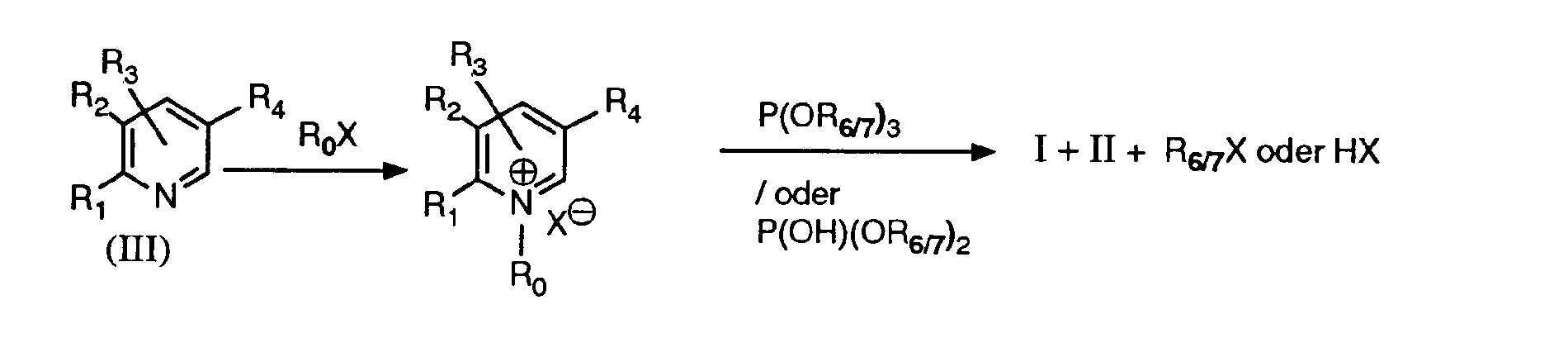
- X⊖ bedeutet dabei das Anion einer starken Mineral- oder organischen Säure, z.B. Cl⊖ oder Trifluormethylsulfonat.
- Die folgenden Beispiele erläutern die Erfindung weiter, ohne sie jedoch zu beschränken. Teile- und Prozentangaben beziehen sich - wie auch in der übrigen Beschreibung - sofern nicht anders angegeben, auf das Gewicht.
- In einem 1 I Kolben werden 250 ml Acetonitril und 39.55 g Pyridin vorgelegt. Nach Abkühlen im Kühlbad auf - 20°C werden unter Rühren 52.76 g Chlorameisensäureethylester so zugetropft, daß die Temperatur 0°C nicht übersteigt. Danach wird das halbkristalline Gemisch erneut auf-10°C abgekühlt, und man tropft 109.6 g Triisopropylphosphit wieder so zu, daß die Temperatur unter 0°C bleibt. Nach Entfernung des Kühlbades wird das Gemisch noch 3 h bei Raumtemperatur gerührt. Das Acetonitril wird am Rotationsverdampfer eingedampft und der Rückstand wird in 300 ml Methylenchlorid gelöst. Die Lösung wird mit 200 ml 1%iger Salzsäure und 100 ml Wasser gewaschen und die organische Phase über Magnesiumsulfat getrocknet. Nach Abziehen des Methylenchlorids werden durch Vakuumdestillation 136.8 g der Verbindung 1 mit einem Siedepunkt von 160-164°C/0.4 mbar erhalten
- Die Herstellung der Verbindungen 2-7 erfolgt analog Beispiel 1. Die Substitution bei Verbindung 7 folgt dem bei Isochinolinen üblichen Muster.
- 17.0 g Methylacridinium-trifluormethylsulfonat, hergestellt aus N-Methylacridin und Trifluormethansulfonsäure, und 7.5 g Natriumiodid werden in 100 ml Acetonitril suspendiert. Bei 0°C werden 6.08 ml Trimethylphosphit zugegeben, und die klare Lösung wird noch 1 h bei Raumtemperatur gerührt. Danach wird das Lösungsmittel abgezogen und der Rückstand in 100 ml Methylenchlorid aufgenommen. Die Lösung wird mit Wasser gewaschen, die organische Phase getrocknet und das Methylenchlorid abgezogen. Der Rückstand wird in Methylenchlorid-Ethylacetat (1:1) aufgenommen und über eine kurze Silikagelsäule chromatographiert. Nach Umkristallisieren aus Ethylacetat-Ether 1:1 erhält man 12 g der Verbindung 8 mit einem Schmelzpunkt von 105-107°C.
- 26.6 g Chinolin werden in 110 ml Acetonitril gelöst. Nach Abkühlen auf-20°C werden 15.7 g Acetylchlorid zugetropft, und es wird 90 min bei-20°C gerührt. Anschließend werden 43.8 g Trisopropylphosphit so zugetropft, daß die Temperaturunter 3°C bleibt. Nach 3 h Rühren bei Raumtemperaturwird das Lösungsmittel abgezogen und der Rückstand in 100 ml Toluol gelöst. Die Lösung wird nacheinander mit 0.5 N HCI, 0.5 N NaOH und Wasser gewaschen. Nach Trocknen über MgS04 und Abziehen des Lösungsmittels erhält man 63.1 g der Verbindung 9 in Form eines rötlichen , harzigen Öls. Die Massenspektroskopie ergibt ein Mutterion M+ mit einer Molmasse von 337.1.
-


- Einer Probe eines schwefel- und aromatenfreien, hydrierten Mineralöls, das 0.05% Korrosionsinhibitor Reocor 12@ (Ciba Geigy) und 0.04% Metalldesaktivator Reomet 39® (Ciba Geigy) enthält, wird die zu prüfende Verbindung in den in Tabelle 2 angegebenen Mengen zugemischt. Die Ölprobe wird dann dem IP 48/80-Oxidati- onstest (British Standard BS 4704: 9171) unterzogen. Es werden der Viskositätsanstieg (gemäß ASTM D 445) und die Säurezahl (gemäß ASTM D 664) bestimmt. Je geringer die erhaltenen Werte sind, desto besser ist die stabilisierende Wirkung des Additivs. Die Resultate sind in Tabelle 2 zusammengefaßt.

- 1.3 kg Polypropylenpulver (Schmelzindex 3.2 g/10 min., gemessen bei 230°C mit 2.16 kg) werden mit 0.05% Calziumstearat, 0.05% Irganox® 1010 und 0.05% der Verbindung aus Beispiel 1 bzw. 8 vermischt. Diese Mischung wird in einem Extruder mit einem Zylinderdurchmesser von 20 mm und einer Länge von 400 mm mit 100 U/min extrudiert, wobei die drei Heizzonen auf die folgenden Temperaturen eingestellt werden: 260°C, 270°C und 280°C. Das Extrudat wird zur Kühlung durch ein Wasserbad gezogen und anschließend granuliert. Nach zwei weiteren, in gleicherweise verlaufenden Extrusionen wird der Schmelzindex gemessen (bei 230°C mit 2.16 kg). Große Zunahme des Schmelzindex bedeutet starken Kettenabbau, also schlechte Stabilisierung. Die Ergebnisse sind in Tabelle 3 zusammengefaßt:
-

Claims (15)
worin

bedeutet,

ist,

bedeutet,

ist,

beudeuten.

n 0 ist.

bedeuten, oder in Formel II R1 und R2 Wasserstoff, Methyl oder Ethyl und R3 und R4 Wasserstoff Methyl oder Ethyl oder zusammen
Applications Claiming Priority (2)
| Application Number | Priority Date | Filing Date | Title |
|---|---|---|---|
| CH243091 | 1991-08-16 | ||
| CH2430/91 | 1991-08-16 |
Publications (3)
| Publication Number | Publication Date |
|---|---|
| EP0530139A2 true EP0530139A2 (de) | 1993-03-03 |
| EP0530139A3 EP0530139A3 (de) | 1993-05-05 |
| EP0530139B1 EP0530139B1 (de) | 1996-11-27 |
Family
ID=4233628
Family Applications (1)
| Application Number | Title | Priority Date | Filing Date |
|---|---|---|---|
| EP92810606A Expired - Lifetime EP0530139B1 (de) | 1991-08-16 | 1992-08-07 | Zusammensetzungen enthaltend mit Phosphonatgruppen substituierte N-Heterozyklen mit 6 Ringgliedern |
Country Status (8)
| Country | Link |
|---|---|
| US (1) | US5328623A (de) |
| EP (1) | EP0530139B1 (de) |
| JP (1) | JPH05209087A (de) |
| KR (1) | KR930004369A (de) |
| CA (1) | CA2076163A1 (de) |
| DE (1) | DE59207579D1 (de) |
| ES (1) | ES2098480T3 (de) |
| MX (1) | MX9204684A (de) |
Families Citing this family (2)
| Publication number | Priority date | Publication date | Assignee | Title |
|---|---|---|---|---|
| US20050250656A1 (en) * | 2004-05-04 | 2005-11-10 | Masahiro Ishikawa | Continuously variable transmission fluid |
| US10113131B2 (en) * | 2017-01-11 | 2018-10-30 | The Boeing Company | Phosphono paraffins |
Family Cites Families (18)
| Publication number | Priority date | Publication date | Assignee | Title |
|---|---|---|---|---|
| US3155659A (en) * | 1959-02-16 | 1964-11-03 | Stauffer Chemical Co | Phosphonic diamides and methods of making same |
| US3830815A (en) * | 1968-05-31 | 1974-08-20 | Petrolite Corp | Dialkyl-1,2-dihydroquinoline and 1,2-dihydroisoquinoline phosphonates |
| US3809694A (en) * | 1968-05-31 | 1974-05-07 | Petrolite Corp | Dihydrophenanthridine phosphonates |
| US3816428A (en) * | 1968-05-31 | 1974-06-11 | Petrolite Corp | Dihydroacridine phosphonates |
| US3775057A (en) * | 1969-02-24 | 1973-11-27 | Petrolite Corp | Use as corrosion inhibitors, nitrogen-heterocyclic phosphonates |
| US3786055A (en) * | 1969-02-24 | 1974-01-15 | Petrolite Corp | Quinoline nitrogen-heterocyclic phosphonates |
| US3673196A (en) * | 1969-02-24 | 1972-06-27 | Petrolite Corp | Phosphonates of full aromatic nitrogen heterocyclics |
| GB1325775A (en) * | 1970-06-10 | 1973-08-08 | Ciba Geigy Uk Ltd | Phosphorus-containing piperidine derivatives and their use as stabilisers for polymerica material |
| US3694144A (en) * | 1971-01-18 | 1972-09-26 | Petrolite Corp | Corrosion inhibitor of dihydro-aromatic nitrogen-heterocyclic phosphonates |
| US3770750A (en) * | 1971-02-19 | 1973-11-06 | Petrolite Corp | Quaternary full nitrogen-heterocyclic phosphonates |
| US3766197A (en) * | 1971-08-06 | 1973-10-16 | Petrolite Corp | Certain dihydropyridine phosphonates |
| US3888627A (en) * | 1971-08-19 | 1975-06-10 | Petrolite Corp | Use as corrosion inhibitors: quinoline and isoquinoline phosphonates |
| US3821232A (en) * | 1971-12-20 | 1974-06-28 | Petrolite Corp | 1,2-dihydro-pyridine-n-phosphonates and thiophosphonates |
| US3970636A (en) * | 1975-04-15 | 1976-07-20 | American Cyanamid Company | Tetramethylpiperidinylphosphine oxides as light stabilizers for polymers |
| US4250314A (en) * | 1979-04-30 | 1981-02-10 | Mobil Oil Corporation | Adducts of phosphorous triamides and α, β unsaturated carbonyl compounds |
| JPS61221192A (ja) * | 1985-03-27 | 1986-10-01 | Toyo Soda Mfg Co Ltd | ホスホナ−ト誘導体 |
| JPS63115890A (ja) * | 1986-10-31 | 1988-05-20 | Nippon Shinyaku Co Ltd | 2位置換1,4−ジヒドロピリジン誘導体 |
| DE4039792A1 (de) * | 1990-12-13 | 1992-06-17 | Bitterfeld Wolfen Chemie | Mittel mit alterungsschutzwirkung in elastwerkstoffen |
-
1992
- 1992-08-07 EP EP92810606A patent/EP0530139B1/de not_active Expired - Lifetime
- 1992-08-07 DE DE59207579T patent/DE59207579D1/de not_active Expired - Fee Related
- 1992-08-07 ES ES92810606T patent/ES2098480T3/es not_active Expired - Lifetime
- 1992-08-10 US US07/928,245 patent/US5328623A/en not_active Expired - Fee Related
- 1992-08-12 KR KR1019920014621A patent/KR930004369A/ko not_active Abandoned
- 1992-08-13 MX MX9204684A patent/MX9204684A/es unknown
- 1992-08-14 CA CA002076163A patent/CA2076163A1/en not_active Abandoned
- 1992-08-17 JP JP4240017A patent/JPH05209087A/ja active Pending
Also Published As
| Publication number | Publication date |
|---|---|
| US5328623A (en) | 1994-07-12 |
| EP0530139A3 (de) | 1993-05-05 |
| JPH05209087A (ja) | 1993-08-20 |
| EP0530139B1 (de) | 1996-11-27 |
| MX9204684A (es) | 1993-04-01 |
| KR930004369A (ko) | 1993-03-22 |
| DE59207579D1 (de) | 1997-01-09 |
| ES2098480T3 (es) | 1997-05-01 |
| CA2076163A1 (en) | 1993-02-17 |
Similar Documents
| Publication | Publication Date | Title |
|---|---|---|
| EP0565487B1 (de) | Flüssige Antioxidantien als Stabilisatoren | |
| EP0475904B1 (de) | Stoffgemische und Zusammensetzungen enthaltend Phenothiazine | |
| EP0644195B1 (de) | Flüssige Antioxidantien als Stabilisatoren | |
| DE69318422T2 (de) | Neue flüssige phenol-antioxydantien | |
| EP0659749B1 (de) | Mischungen kernalkylierter aromatischer Amine und Phenothiazine | |
| DE69927486T2 (de) | Verfahren zur herstellung von flüssigen polyfunktionellen zusätzen | |
| EP0081457B1 (de) | Phenole und ihre Verwendung als Stabilisatoren | |
| EP0466640B1 (de) | Alpha-Carbonylphenylacetonitrilderivate als Stabilisatoren für organische Materialien | |
| EP0366040B1 (de) | Phenolgruppenhaltige Verbindungen als Antioxidantien in organischen Materialien | |
| EP0579576B1 (de) | 2,4-Dialkyl-6-sec-alkylphenole | |
| EP0497735A1 (de) | Hydrochinolinverbindungen | |
| EP0705870B1 (de) | Stabilisatoren für organische Materialien | |
| EP0463994B1 (de) | Dioxaphosphorinanverbindungen als Stabilisatoren für organische Materialien | |
| EP0473549B1 (de) | Sulfoxide von Alkylthiomethylphenolen | |
| EP0252006B1 (de) | Neue substituierte Phenole und deren Verwendung als Stabilisatoren | |
| EP0530139B1 (de) | Zusammensetzungen enthaltend mit Phosphonatgruppen substituierte N-Heterozyklen mit 6 Ringgliedern | |
| EP0553059B1 (de) | Neue Cycloalkyliden-bisphenol-phosphite | |
| EP0134194B1 (de) | S-(4-Hydroxyphenyl)-thioester | |
| EP0514332B1 (de) | Bisphosphite | |
| EP0474589A1 (de) | Orthophenolacetamide | |
| EP0174277B1 (de) | Antioxidantien für organisches Material | |
| EP0441742B1 (de) | Sulfoxide von bis- und tristhiomethylierten Phenolen | |
| EP0655435B1 (de) | 4-Hydroxyphenylalkylcarbonsäure(di)arylaminoalkylester und ihre Verwndung als Stabilisatoren organischen Materials | |
| EP0545861B1 (de) | Diphenylessigsäurederivate als Stabilisatoren für organisches Material | |
| EP0452266B1 (de) | Isoindolinon-Verbindungen als Stabilisatoren für organische Materialien |
Legal Events
| Date | Code | Title | Description |
|---|---|---|---|
| PUAI | Public reference made under article 153(3) epc to a published international application that has entered the european phase |
Free format text: ORIGINAL CODE: 0009012 |
|
| AK | Designated contracting states |
Kind code of ref document: A2 Designated state(s): BE DE ES FR GB IT NL |
|
| PUAL | Search report despatched |
Free format text: ORIGINAL CODE: 0009013 |
|
| AK | Designated contracting states |
Kind code of ref document: A3 Designated state(s): BE DE ES FR GB IT NL |
|
| 17P | Request for examination filed |
Effective date: 19931007 |
|
| 17Q | First examination report despatched |
Effective date: 19950516 |
|
| GRAG | Despatch of communication of intention to grant |
Free format text: ORIGINAL CODE: EPIDOS AGRA |
|
| GRAH | Despatch of communication of intention to grant a patent |
Free format text: ORIGINAL CODE: EPIDOS IGRA |
|
| GRAH | Despatch of communication of intention to grant a patent |
Free format text: ORIGINAL CODE: EPIDOS IGRA |
|
| GRAA | (expected) grant |
Free format text: ORIGINAL CODE: 0009210 |
|
| AK | Designated contracting states |
Kind code of ref document: B1 Designated state(s): BE DE ES FR GB IT NL |
|
| ITF | It: translation for a ep patent filed | ||
| RAP2 | Party data changed (patent owner data changed or rights of a patent transferred) |
Owner name: CIBA SC HOLDING AG |
|
| REF | Corresponds to: |
Ref document number: 59207579 Country of ref document: DE Date of ref document: 19970109 |
|
| NLT2 | Nl: modifications (of names), taken from the european patent patent bulletin |
Owner name: CIBA SC HOLDING AG |
|
| ET | Fr: translation filed | ||
| RAP4 | Party data changed (patent owner data changed or rights of a patent transferred) |
Owner name: CIBA SPECIALTY CHEMICALS HOLDING INC. |
|
| REG | Reference to a national code |
Ref country code: ES Ref legal event code: FG2A Ref document number: 2098480 Country of ref document: ES Kind code of ref document: T3 |
|
| REG | Reference to a national code |
Ref country code: GB Ref legal event code: 732E |
|
| GBV | Gb: ep patent (uk) treated as always having been void in accordance with gb section 77(7)/1977 [no translation filed] |
Effective date: 19961127 |
|
| NLT1 | Nl: modifications of names registered in virtue of documents presented to the patent office pursuant to art. 16 a, paragraph 1 |
Owner name: CIBA SPECIALTY CHEMICALS HOLDING INC. |
|
| REG | Reference to a national code |
Ref country code: GB Ref legal event code: 710B |
|
| REG | Reference to a national code |
Ref country code: ES Ref legal event code: PC2A |
|
| REG | Reference to a national code |
Ref country code: GB Ref legal event code: 710B |
|
| GBT | Gb: translation of ep patent filed (gb section 77(6)(a)/1977) |
Effective date: 19970717 |
|
| PLBE | No opposition filed within time limit |
Free format text: ORIGINAL CODE: 0009261 |
|
| 26N | No opposition filed | ||
| BECN | Be: change of holder's name |
Effective date: 19971211 |
|
| PGFP | Annual fee paid to national office [announced via postgrant information from national office to epo] |
Ref country code: FR Payment date: 19990628 Year of fee payment: 8 |
|
| PGFP | Annual fee paid to national office [announced via postgrant information from national office to epo] |
Ref country code: NL Payment date: 19990630 Year of fee payment: 8 |
|
| PGFP | Annual fee paid to national office [announced via postgrant information from national office to epo] |
Ref country code: DE Payment date: 19990709 Year of fee payment: 8 |
|
| PGFP | Annual fee paid to national office [announced via postgrant information from national office to epo] |
Ref country code: GB Payment date: 19990720 Year of fee payment: 8 |
|
| PGFP | Annual fee paid to national office [announced via postgrant information from national office to epo] |
Ref country code: ES Payment date: 19990804 Year of fee payment: 8 |
|
| PGFP | Annual fee paid to national office [announced via postgrant information from national office to epo] |
Ref country code: BE Payment date: 19991013 Year of fee payment: 8 |
|
| PG25 | Lapsed in a contracting state [announced via postgrant information from national office to epo] |
Ref country code: GB Free format text: LAPSE BECAUSE OF NON-PAYMENT OF DUE FEES Effective date: 20000807 |
|
| PG25 | Lapsed in a contracting state [announced via postgrant information from national office to epo] |
Ref country code: ES Free format text: LAPSE BECAUSE OF NON-PAYMENT OF DUE FEES Effective date: 20000808 |
|
| PG25 | Lapsed in a contracting state [announced via postgrant information from national office to epo] |
Ref country code: BE Free format text: LAPSE BECAUSE OF NON-PAYMENT OF DUE FEES Effective date: 20000831 |
|
| BERE | Be: lapsed |
Owner name: CIBA SPECIALTY CHEMICALS HOLDING INC. Effective date: 20000831 |
|
| PG25 | Lapsed in a contracting state [announced via postgrant information from national office to epo] |
Ref country code: NL Free format text: LAPSE BECAUSE OF NON-PAYMENT OF DUE FEES Effective date: 20010301 |
|
| GBPC | Gb: european patent ceased through non-payment of renewal fee |
Effective date: 20000807 |
|
| PG25 | Lapsed in a contracting state [announced via postgrant information from national office to epo] |
Ref country code: FR Free format text: LAPSE BECAUSE OF NON-PAYMENT OF DUE FEES Effective date: 20010430 |
|
| NLV4 | Nl: lapsed or anulled due to non-payment of the annual fee |
Effective date: 20010301 |
|
| PG25 | Lapsed in a contracting state [announced via postgrant information from national office to epo] |
Ref country code: DE Free format text: LAPSE BECAUSE OF NON-PAYMENT OF DUE FEES Effective date: 20010501 |
|
| REG | Reference to a national code |
Ref country code: FR Ref legal event code: ST |
|
| REG | Reference to a national code |
Ref country code: ES Ref legal event code: FD2A Effective date: 20010911 |
|
| PG25 | Lapsed in a contracting state [announced via postgrant information from national office to epo] |
Ref country code: IT Free format text: LAPSE BECAUSE OF NON-PAYMENT OF DUE FEES Effective date: 20050807 |