EP0536363B1 - Nouveaux derives d'heparine et procede de preparation - Google Patents
Nouveaux derives d'heparine et procede de preparation Download PDFInfo
- Publication number
- EP0536363B1 EP0536363B1 EP92908867A EP92908867A EP0536363B1 EP 0536363 B1 EP0536363 B1 EP 0536363B1 EP 92908867 A EP92908867 A EP 92908867A EP 92908867 A EP92908867 A EP 92908867A EP 0536363 B1 EP0536363 B1 EP 0536363B1
- Authority
- EP
- European Patent Office
- Prior art keywords
- heparin
- standard
- molecular weight
- activity
- porcine
- Prior art date
- Legal status (The legal status is an assumption and is not a legal conclusion. Google has not performed a legal analysis and makes no representation as to the accuracy of the status listed.)
- Expired - Lifetime
Links
Images





Classifications
-
- C—CHEMISTRY; METALLURGY
- C08—ORGANIC MACROMOLECULAR COMPOUNDS; THEIR PREPARATION OR CHEMICAL WORKING-UP; COMPOSITIONS BASED THEREON
- C08B—POLYSACCHARIDES; DERIVATIVES THEREOF
- C08B37/00—Preparation of polysaccharides not provided for in groups C08B1/00 - C08B35/00; Derivatives thereof
- C08B37/006—Heteroglycans, i.e. polysaccharides having more than one sugar residue in the main chain in either alternating or less regular sequence; Gellans; Succinoglycans; Arabinogalactans; Tragacanth or gum tragacanth or traganth from Astragalus; Gum Karaya from Sterculia urens; Gum Ghatti from Anogeissus latifolia; Derivatives thereof
- C08B37/0063—Glycosaminoglycans or mucopolysaccharides, e.g. keratan sulfate; Derivatives thereof, e.g. fucoidan
- C08B37/0075—Heparin; Heparan sulfate; Derivatives thereof, e.g. heparosan; Purification or extraction methods thereof
-
- A—HUMAN NECESSITIES
- A61—MEDICAL OR VETERINARY SCIENCE; HYGIENE
- A61K—PREPARATIONS FOR MEDICAL, DENTAL OR TOILETRY PURPOSES
- A61K31/00—Medicinal preparations containing organic active ingredients
- A61K31/70—Carbohydrates; Sugars; Derivatives thereof
- A61K31/715—Polysaccharides, i.e. having more than five saccharide radicals attached to each other by glycosidic linkages; Derivatives thereof, e.g. ethers, esters
-
- A—HUMAN NECESSITIES
- A61—MEDICAL OR VETERINARY SCIENCE; HYGIENE
- A61P—SPECIFIC THERAPEUTIC ACTIVITY OF CHEMICAL COMPOUNDS OR MEDICINAL PREPARATIONS
- A61P9/00—Drugs for disorders of the cardiovascular system
- A61P9/10—Drugs for disorders of the cardiovascular system for treating ischaemic or atherosclerotic diseases, e.g. antianginal drugs, coronary vasodilators, drugs for myocardial infarction, retinopathy, cerebrovascula insufficiency, renal arteriosclerosis
-
- A—HUMAN NECESSITIES
- A61—MEDICAL OR VETERINARY SCIENCE; HYGIENE
- A61P—SPECIFIC THERAPEUTIC ACTIVITY OF CHEMICAL COMPOUNDS OR MEDICINAL PREPARATIONS
- A61P9/00—Drugs for disorders of the cardiovascular system
- A61P9/12—Antihypertensives
Definitions
- the present invention relates to novel heparin derivatives for treatment of ischemic heart disease and related vascular disorders and process for the preparation thereof.
- Heparin is sulfate-containing polysaccharide which on a large scale is isolated from intestinal mucus from swine or lung from cattle.
- the avarage molecular weight for standard bovine heparin is more than 9.000 and for standard porcine heparin more than 12.000.
- the clinical use of heparin has been associated with its anticoagulant and antithrombotic properties (Jorpes, E. 1946, Heparin in Treatment of Thrombosis, 2nd Ed. Oxford Medical Publications). Heparin has also been found to accelerate coronary collateral development in dogs (Fujita, M. Mikuniya, A. Takahashi, M. Gaddis, R. Hartley, J. McKnown, D. and Franklin, D.
- novel heparin derivatives are superior to the products claimed in EP 287 477 and will constitute useful drugs for treatment of ischemic heart disease such as angina and related vascular disorders, e.g. to prevent restenosis after percutaneous transluminal angioplasty (PTCA).
- ischemic heart disease such as angina and related vascular disorders
- PTCA percutaneous transluminal angioplasty
- ischemic heart disease Patients suffering from ischemic heart disease generally show a narrowing of the arteries in the heart. Progressive narrowing of the lumen of coronary arteries gives rise to the symptoms of angina and finally often to a myocardial infarction (MI). Excessive uncontrolled growth of smooth muscle cells (SMC) constitutes a major contribution to the progressive narrowing of the coronary vessel.
- SMC smooth muscle cells
- the final occlusion of a stenotic vessel which precipitates the myocardial infarction, is most frequently caused by formation of a thrombus.
- the thrombus formation might be triggered by activation of the coagulation and complement systems which by themselves become activated by the sclerotic surface of the stenotic artery.
- collaterals As a natural defense mechanism to the reduced blood flow and thus reduced oxygen supply to these parts of the heart which are supplied by the stenotic blood vessels new routes of blood supply slowly develop in some patients, whereas in other patients hardly at all.
- These new routes of blood supply to an oxygen deficient (ischemic) area of the heart are called collaterals and the process of formation of new blood vessels is called angiogenesis.
- the new routes can be small or large vessels. Here they are collectively referred to as collaterals. It has been shown that heparin has a stimulatory effect on coronary collateral development and the process of angiogenesis as well as an inhibitory effect on SMC proliferation and a preventive effect on thrombus formation.
- heparin in ischemic heart disease
- the present invention describes novel heparin derivatives which enhance coronary collateral formation, inhibit SMC proliferation and maintain a low level of anticoagulant activity in blood without being hazardous with respect to bleeding thus being suitable for treatment in ischemic heart disease e.g. angina pectoris and related vascular disorders.
- An example of related vascular disorders is treatment of patients having had a percutaneous transluminal coronary angioplasty (PTCA) procedure to prevent restenosis.
- PTCA percutaneous transluminal coronary angioplasty
- the invention further relates to a process for preparation of the claimed new bovine heparin derivatives comprising the treatment of standard bovine heparin by following steps:
- the purpose of the fractionation is to obtain a product of equal or higher molecular weight than standard heparin and also to obtained a more narrow molecular weight distribution than in the heparin or intermediate products.
- the invention also relates to a process for preparation of the claimed new porcine heparin derivatives comprising the treatment of standard porcine heparin by
- the invention thus relates to a process in which the novel heparin derivatives of the invention also are obtained when porcine heparin is used as starting material.
- porcine heparin a mild sulfation is carried out prior to the oxidation by periodate and subsequent depolymerization.
- This mild sulfation enhances the total sulfate content of the porcine heparin and also blocks some of the vicinal hydroxyl groups of non-sulfated glucuronic acid and of iduronic acids which are susceptible to the oxidation by periodate.
- This sulfation will thus also lead to a lesser degree of depolymerization of the porcine heparin than described in EP 287 477.
- One aspect of the invention is the molecular weight of the novel heparin derivatives of the invention.
- a low molecular weight heparin (heparin fragment) of molecular weight 4 800 did not show the same good effect as the standard heparin at the same dose.
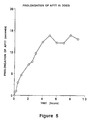
- Figure 6 shows the importance of the molecular weight of the novel heparin for the enhancement of coronary collateral development.
- a further aspect of the invention is that the anti-FXa activity of the novel heparins is reduced to less than 10 % of the activity of the standard heparin which is used as starting material for the preparation of the novel heparins of the invention. This is shown in Table 1.
- the anti-FXa activity commonly found in standard heparins of injectable grade is 120-190 IU/mg.
- the reduction in anti-FXa activity is caused by the oxidative treatment by periodate, alkali treatment and reduction. This treatment also influences the molecular weight of the final product.
- APTT Activated Partial Thromboplastin Time
- the levels of anticoagulant activity in vivo in dogs which was found in the novel heparin derivatives represent levels normally found when heparin is clinically used for thrombosis profylaxis in general surgery (this can be seen in Figures 3 and 4 ) .
- the novel heparin derivatives of the invention therefore also have an antithrombotic potential while still having less of the unwanted bleeding side effect characteristic for standard heparin.
- the antithrombic activity was demonstrated in vivo in rabbits. (Table 2)
- a further aspect of the novel heparins is the reduction in prolongation of the bleeding time (this can be seen from Table 1) which is very important because it allows the new products of the invention to be administered at higher and more effective doses than standard heparin without any risk of bleeding.
- reduced prolongation of bleeding time is here meant a reduction of at least 75 %.
- Another aspect of the invention is the high sulfate content of the novel heparins which is equal to or preferable above that of the heparins used for starting material. This high sulfate content of the novel heparins is obtained by
- chemically sulfation may optionally be used in order to enhance the sulfate content even further.
- Methods for chemical sulfation of the products of the invention should be mild enough not to cause depolymerization or degradation of the product being sulfated.
- the products could be sulfated by treating their tributylammonium salts dissolved in dry dimethylformide at low temperature with a complex of sulfur trioxide and an organic base such as pyridine or triethylamine and then isolating and purifying the sulfated product using any one of the methods employed for fractionation in the periodate procedure.
- he preparation may begin with a mild partial chemical sulfation followed by a periodate procedure, which is a process preferred for porcine heparin.
- the present invention thus relates to novel heparin derivatives for treatment of ischemic heart disease and related vascular disorders.
- These heparin derivatives can be administered at high doses for efficiently enhancing coronary collateral formation, inhibiting smooth muscle cell proliferation and they can also at the same time provide a sustained low level of anticoagulant activity in plasma which contributes to an antithrombotic effect without risk for hemorrhage.
- a once daily subcutaneous injection needs to be administered instead of 2-3 subcutaneous or intravenous injections daily as is generally the case for standard heparin for example in clinical antithrombotic therapy.
- the dose of the novel heparin derivatives could be in the range of 0,5-15 mg/kg /day by subcutaneous injection or from a depot preparation. Intravenous infusion or injection could also be used.
- Standard bovine lung heparin 100 g
- Mw 10.000
- sodium acetate buffer (2,5 l) (0,05 M sodium acetate, 0,2 M sodium chloride, pH 5,0)
- Sodium periodate 107 g, 0,50 mol
- Ethylene glycol 100 ml was added to destroy excess periodate and the mixture was left at room temperature for a few hours.
- the solution was desalted on a Sephadex G-15 column. The fraction containing the desalted product was freeze dried affording 81 g periodate oxidized heparin.
- the periodate oxidized heparin was dissolved in 0,02 M sodium hydroxide (4,25 l) and was left at room temperature for 40 minutes and then reduced by sodium borohydride (4,25 g) for 2,5 hours. Excess sodium borohydride was decomposed by acetic acid (28 ml). This solution was then fractionated by ion exchange chromatography on a DEAE-Sepharose column. A fraction which eluted between 0,7 M and 2 M sodium chloride was collected and desalted using a hollow fiber (Amicon H1P3-20, cutoff 3000). The heparin derivative was precipitated by addition of cold ethanol (2,5 times the weight of the retentate). The precipitate was collected and dried in vacuum yielding 31 g of heparin derivative 1.
- N was 2,1% and S was 13,5%.
- the molar ratio SO 3 /CO 2 was 2,82.
- gel permeation chromatography the molecular weight was 11000 Da.
- S was 13,0%
- the molar ratio SO 3 /CO 2 was 2,47
- the molecular weight by gel permeation chromatography was 10000 Da.
- the anti-FXa activity was 8 IU/mg, APTT 54 IU/mg and antithrombotic activity 4 IU/mg compared to 126 IU/mg, 151 IU/mg and 124 IU/mg, respectively, for the starting standard heparin.
- heparin/cofactor II dependant antithrombin activity was studied and found to be increased twofold compared to the starting standard heparin as well as compared to the intermediate periodate oxidized heparin and even more compared to the periodate oxidized, depolymerized and reduced heparin.
- Bovine lung heparin 100 g was oxidized as for Example 1, ethylene glycol was added and the solution was desalted using a hollow fiber (Amicon H1P3-20 cutoff 3000). Freeze drying afforded 78 g oxidized heparin.
- This material (4,0 g) was dissolved in 0,1 M sodium hydroxide (200 ml) and left at room temperature for 2 hours and then reduced by sodium borohydride (0,18 g) over 3 hours. Excess of borohydride was decomposed by acetic acid (5 ml). The pH of the solution was then adjusted to 6,3 by sodium hydroxide (2 M). The solution was desalted by ultrafiltration.
- Freeze-drying afforded 3,7 g of an periodate oxidized, depolymerized and reduced product. In order to fractionate this product it was subjected to gel permeation chromatography on a Sephadex G-75 column, 2,00 g was dissolved in 0,2 M sodium chloride and was then passed through the column (5x83 cm) at a rate of 0,65 ml/min. A high molecular weight fraction was collected and desalted by ultrafiltration. Freeze-drying afforded 0,34 g of a novel heparin derivative. By elemental analysis S was 14,3 % and anti-FXa was 7 IU/mg and APTT 55 IU/mg.
- Bovine lung heparin (2.0 g) was dissolved in sodium acetate buffer (50 ml) (0.05 M sodium acetate, 0.2 M sodium chloride, pH 4.0) and cooled to 4°C.
- sodium periodate (2.14 g, 10 mmol) dissolved in the sodium acetate buffer (50 ml) was added and the solution was left at 7°C for 3 days.
- Ethylene glycol (2 ml) was added to destroy excess periodate and the solution was left at room temperature for an hour, desalted by ultrafiltration (Amicon YM2). The retentate was neutralized to pH 6.5 and freeze-dried yielding 1.78 g periodate oxidized heparin.
- a cation exchange resin Amberlite IR-120 in hydrogen form
- the solution was kept at room temperature for 3 days and then poured into 3% sodium acetate dissolved in ethanol (150 ml). The mixture was centrifuged and the precipitate washed with ethanol (2x20 ml), dissolved in 2 M sodium chloride and ultrafiltrated (Amicon YM2, cutoff 1000). The retentate was washed with water and then passed through a cation-exchange resin (Amberlite IR-120, hydrogen form) and eluted with water. The eluate was neutralized with 0,1 M sodium hydroxide to pH 6,2 and freeze-dried yield 0,88 g. The elemental analysis showed a content of S of 15,7%.
- Porcine mucosa heparin(5.0 g) (11.3 % S) was dissolved in water (75 ml) and passed through a cation exchange resin (Dowex 50WX8 in hydrogen form) (2.5 x 24 cm) and eluted with water (150 ml).
- the eluate was neutralized with tri-n-butylamine-ethanol (1:9) (50 ml) to pH 5.5 and extracted with diethyl ether (2 x 150 ml).
- the aq. phase was freeze-dried to yield 7.56 g product.
- the tributylammonium salt (0.50 g) was dried in vacuum and dissolved in dry N,N-dimethylformamide (5 ml) and sulfur trioxide triethylamine complex (0.15 g) was added. The solution was kept at room temperature for 18 hours and then poured into 3 % sodium acetate in ethanol (45 ml). The mixture was centrifuged and the precipitate washed with ethanol (2 x 30 ml), dissolved in 2 M sodium chloride and ultrafiltrated (Amicon YM1, cutoff 1000). The retentate was washed with water and freeze-dried, yield 0.32 g.
- the sulfated heparin (0,20 g) was dissolved in sodium acetate buffer (5 ml) (0.05 M sodium acetate, 0.2 M sodium chloride, pH 5.0).
- sodium periodate (214 mg, 1 mmol) dissolved in the sodium acetate buffer (5 ml) was added and kept at +8° C for one day.
- Ethylene glycol (0.5 ml) was added and the mixture was left at room temperature for a few hours, then the solution was desalted by ultrafiltration.
- the periodate oxidized heparin was dissolved in 0.1 M sodium hydroxide and left at room temperature for 2 hours and then reduced by sodium borohydride (14 mg).
- Figure 1 shows the molecular weight distribution on gel permeation chromatography by HPLC (according to Sudhalter J et al, (1989) J. Biol Chem, 264, 6892-6897) after chemical treatment and fractionation of heparin produced from bovine lung according to the claimed process.
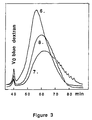
- Figure 3 shows the molecular weight distribution on gel permeation chromatography by HPLC (according to Sudhalter J et al, (1989) J. Biol. Chem, 264, 6892-6897) after chemical treatment and fractionation of heparin produced from porcine intestinal mucosa according to the claimed process for porcine heparin.
- heparin produced from porcine intestinal mucosa curve 6 in Figure 3
- sulfated periodate oxidized, depolymerized by sodium hydroxide and reduced by sodium borohydride a distribution according to curve 7 in Figure 3 was obtained.
- the anti-factor IIa potentiating activity of the new heparin derivatives was determined in a system in which it forms a complex with antithrombin.
- the antithrombin-heparin derivative mixture was incubated at 37°C with factor II for 1 minute.
- An amount of factor IIa is neutralized by the antithrombin-heparin derivative complex in proportion to the concentration of the heparin derivative.
- the remaining factor IIa-activity was measured using the chromogenic substrate S-2238 (H-D-Phe-Pip-Arg-pNA).
- the rate of pNA formed was compared to the rate of pNA formed using the 4th International standard for heparin.
- the novel heparin derivatives were administered at 10 mg/kg to two Beagle dogs. Solutions (0,2 ml/kg) in saline were made and injected subcutaneously in the neck of the dog. Blood samples of 5 ml were collected using Venoject® containing 0,5 ml of 0,13 M sodium citrate. Four blood samples were drawn during the first hour of the experiment followed by one sample every hour up to 9 hours. The blood samples were kept at room temperature for 10 minutes, centrifuged for the separation of the plasma, which was immediately taken for the APTT analysis. Remaining plasma was kept frozen at -20°C until analysis of anti-FXa activity. The anti-FXa was performed according to Bergkvist D., Hedner U., Sjödin E.
- the levels of anticoagulant activity seen in Figure 4 and Figure 5 represent levels normally found when heparin is clinically used for thrombosis profylaxis in general surgery.
- the novel heparin derivatives of the invention therefore also have an antithrombotic potential while still having less of the unwanted bleeding side effect characteristic for standard heparin.
- APTT Activated Partial Thromboplastin Time
- the plasma concentration curves for the anticoagulant activities are also advantageous over standard heparin in showing a consistent level of anticoagulant activity for a long time period (at least 9 hours). This means that in clinical practice only a once daily subcutaneous injection needs to be administered instead of 2-3 subcutaneous or intravenous injections daily as is generally the case for standard heparin for example in clinical antithrombotic therapy.
- a template bleeding time test according to Dejana E, Callioni A, Quintana A, Gaetano G, 1979 Thromb. Res 15 191-197 was performed in Sprague-Dawley rats weighing 200-250 g anaesthetized with Mebumal/Stesolid (Dumex A/S Copenhagen).
- the template device (Simplate, General Diagnostics, Durham, NC) was applied longitudinally to the dorsal part of the tail, taking care to avoid large veins. Blood from the wound was then carefully removed every 30 sec, with blotting paper. A minimum of six rats were used for each compound and dose. Bleeding times were measured from the moment the tail was incised until the first arrest of bleeding. The bleeding time was recorded with an accuracy of 30 sec.
- This reduction in bleeding time of the novel heparin derivatives is very important because it allows the new products of the invention to be administered at higher and more effective doses than standard heparin without any risk of bleeding.
- Heparin derivative 1 The in vivo antithrombotic effect of Heparin derivative 1 was tested in a Wessler rabbit thrombus model (Wessler et al., J Appl Physiol 14,1959, 943-946).
- the rabbits were premedicated with atropine and Hypnorm® and anaesthetized with pentobarbitone. Part of each jugular veins was freed from surrounding tissue and the tributaries ligated.
- the test compound was injected intravenously (time 0) at doses 1 and 3.5 mg/kg. Fifteen minutes after drug administration the rabbit's coagulation system was activated by means of an intravenous injection of glass activated human plasma.
- Heparin derivative 1 was evaluated at 2 doses with at least 6 rabbits in each dose group.
- the antithrombotic activity of the test compound is evaluated according to a scoring system defined as follows: Score Composition of vessel content 0 represents blood without any visible fibrin strands in the sealed vessel segment. 1 is equal to small, hardly visible fibrin strands. 2 is equal to several very small fibrin clots. 3 is equal to one or two bigger clots. 4 represents the formation of a big thrombus forming a cast of the isolated vessel.
- the antithrombotic activity of Heparin derivative 1 is described by an "antithrombogenic index" ranging from 0 (highly antithrombotic) to 1 (non antithrombotic). This index is obtained by dividing the sum of the thrombotic scores in each dose group with 4 x n which is the score that is obtained with a non antithrombotic reference compound (physiological NaCl).
- the antithrombotic activity of Heparinderivative 1, specific anti-FXa activity 8 IU/mg was tested at 3.5 and 1 mg/kg using at least 6 rabbits in each dose group. The results, expressed as antithrombotic score for each individual rabbit as well as antithrombotic index for groups of rabbits received the same dose are summarized in Table 2.
- novel heparins of the invention showed an antiproliferative effect on the growth of arterial smooth muscle cells from rats grown in cell culture. An inhibition of 50% of the cell proliferation was obtained by a concentration of 50 ⁇ g/ml in the cell culture medium. This is the same concentration which is needed when clinically used standard heparin was used.
- heparin derivative 1 a low molecular weight heparin (heparin fragment( of molecular weight of 4 800 and a control of no treatment on the enhancement of coronary collaterals is shown in Figure 6 . Only in the presence of heparin derivative 1, or heparin could the enhancement of coronary collateral development be shown as a statistically significant (p ⁇ 0,05) decrease in the number of occlusions needed.
- novel heparin derivative 1 of the invention was administered once daily by subcutaneous administration at a dose of 10 mg/kg bodyweight the same degree of enhancement of coronary collateral development was found as was seen by the standard heparin dose used by Fujita et al (1987) (see Figure 6)
- the prolongation of the Lee-White clotting time (clot time increase %) in the blood in dogs treated by subcutaneous injection with standard heparin (3,6 mg/kg) or heparin derivative 1 (10 mg/kg).
- the dose of heparin derivative 1 was three times larger (by weight) than for heparin but the prolongation of the clotting time was nevertheless smaller.
Landscapes
- Health & Medical Sciences (AREA)
- Life Sciences & Earth Sciences (AREA)
- Chemical & Material Sciences (AREA)
- Medicinal Chemistry (AREA)
- General Health & Medical Sciences (AREA)
- Engineering & Computer Science (AREA)
- Molecular Biology (AREA)
- Public Health (AREA)
- Chemical Kinetics & Catalysis (AREA)
- Veterinary Medicine (AREA)
- Animal Behavior & Ethology (AREA)
- Organic Chemistry (AREA)
- Pharmacology & Pharmacy (AREA)
- Bioinformatics & Cheminformatics (AREA)
- Heart & Thoracic Surgery (AREA)
- General Chemical & Material Sciences (AREA)
- Nuclear Medicine, Radiotherapy & Molecular Imaging (AREA)
- Cardiology (AREA)
- Polymers & Plastics (AREA)
- Materials Engineering (AREA)
- Biochemistry (AREA)
- Epidemiology (AREA)
- Urology & Nephrology (AREA)
- Vascular Medicine (AREA)
- Pharmaceuticals Containing Other Organic And Inorganic Compounds (AREA)
- Polysaccharides And Polysaccharide Derivatives (AREA)
Claims (6)
- Nouveaux dérivés d'héparine à partir d'héparine bovine ou porcine préparée par des moyens de procédé selon les revendications 2, 3 ou 4, caractérisés par le fait de :- avoir un poids moléculaire égal ou supérieur à l'héparine standard qui est de 9000 pour l'héparine bovine standard et de 12000 pour l'héparine porcine standard.- présenter une teneur en soufre égale ou supérieure à l'héparine de départ ou au moins 13 % en poids.- avoir une activité anticoagulante dans le test anti-FXa inférieure à 10 % de l'héparine standard à partir de laquelle elle a été fabriquée.- présenter un rapport entre l'activité APTT et l'activité anti-FXa de 3 - 35.- présenter une prolongation réduite d'au moins 75 % du temps de saignement par rapport à l'héparine standard à partir de laquelle elle a été réalisée comme cela est mesuré dans la queue du rat après administration intraveineuse.- présenter une augmentation de la vitesse de développement des collatéraux coronaires chez les chiens égale ou supérieure à l'héparine utilisée cliniquement.
- Procédé pour la préparation de nouveaux dérivés d'héparine bovine selon la revendication 1, comprenant le traitement de l'héparine bovine standard par :- oxydation par periodate à un pH de 4-5 à 0-10°C dans l'obscurité,- dépolymérisation partielle par alcalin,- réduction par borohydrure de sodium,- fractionnement du produit obtenu en utilisant la chromatographie par perméation de gel, l'ultrafiltration, la chromatographie par interaction hydrophobe, la chromatographie d'affinité, la chromatographie par échange ionique ou précipitation à partir d'une solution aqueuse par addition d'un solvant organique, de préférence l'éthanol,- recueillir le produit d'un poids moléculaire non inférieur à celui de l'héparine utilisée comme matériau de départ, c'est-à-dire 9000 pour l'héparine bovine standard.
- Procédé pour la préparation de nouveaux dérivés d'héparine porcine selon la revendication 1, comprenant le traitement de l'héparine porcine standard par :- sulfatation chimique ménageante,- oxydation par periodate à un pH de 4-5 à 0-10°C dans l'obscurité,- dépolymérisation partielle par alcalin,- réduction par borohydrure de sodium,- fractionnement du produit obtenu par chromatographie de perméation sur gel, ultrafiltration, chromatographie d'interaction hydrophobe, chromatographie d'affinité, chromatographie d'échange ionique ou précipitation à partir d'une solution aqueuse par addition d'un solvant organique, de préférence l'éthanol,- recueil du produit ayant un poids moléculaire non inférieur à celui de l'héparine utilisée comme matériau de départ, c'est-à-dire 12000 pour l'héparine porcine standard.
- Procédé selon la revendication 2 ou 3, qui comprend de plus une sulfatation chimique.
- Utilisation d'un produit selon la revendication 1, pour la fabrication d'un médicament destiné au traitement d'infections cardiaques ischémiques et troubles vasculaires associés.
- Utilisation d'un produit selon la revendication 1, pour la fabrication d'un médicament destiné à améliorer la vitesse de développement de la perfusion collatérale coronaire.
Applications Claiming Priority (3)
| Application Number | Priority Date | Filing Date | Title |
|---|---|---|---|
| SE9101155A SE9101155D0 (sv) | 1991-04-18 | 1991-04-18 | Novel heparin derivatives |
| SE9101155 | 1991-04-18 | ||
| PCT/SE1992/000243 WO1992018545A1 (fr) | 1991-04-18 | 1992-04-14 | Nouveaux derives d'heparine et procede de preparation |
Publications (2)
| Publication Number | Publication Date |
|---|---|
| EP0536363A1 EP0536363A1 (fr) | 1993-04-14 |
| EP0536363B1 true EP0536363B1 (fr) | 1997-06-18 |
Family
ID=20382487
Family Applications (1)
| Application Number | Title | Priority Date | Filing Date |
|---|---|---|---|
| EP92908867A Expired - Lifetime EP0536363B1 (fr) | 1991-04-18 | 1992-04-14 | Nouveaux derives d'heparine et procede de preparation |
Country Status (12)
| Country | Link |
|---|---|
| US (2) | US6150342A (fr) |
| EP (1) | EP0536363B1 (fr) |
| JP (1) | JP3278676B2 (fr) |
| AT (1) | ATE154614T1 (fr) |
| AU (1) | AU642626B2 (fr) |
| CA (1) | CA2084301C (fr) |
| DE (1) | DE69220442T2 (fr) |
| DK (1) | DK0536363T3 (fr) |
| ES (1) | ES2104909T3 (fr) |
| GR (1) | GR3024757T3 (fr) |
| SE (1) | SE9101155D0 (fr) |
| WO (1) | WO1992018545A1 (fr) |
Families Citing this family (20)
| Publication number | Priority date | Publication date | Assignee | Title |
|---|---|---|---|---|
| US5296471A (en) * | 1992-12-22 | 1994-03-22 | Glycomed Incorporated | Method for controlling o-desulfation of heparin and compositions produced thereby |
| US5696100A (en) * | 1992-12-22 | 1997-12-09 | Glycomed Incorporated | Method for controlling O-desulfation of heparin and compositions produced thereby |
| EP0758247A4 (fr) * | 1994-05-06 | 1997-08-20 | Glycomed Inc | Derives d'heparine o-desulfatee leurs procedes de production et leurs utilisations |
| WO1996024362A1 (fr) * | 1995-02-07 | 1996-08-15 | Shiseido Company, Ltd. | Agents anti-inflammatoires |
| US6001820A (en) * | 1995-03-31 | 1999-12-14 | Hamilton Civic Hospitals Research Development Inc. | Compositions and methods for inhibiting thrombogenesis |
| US5763427A (en) * | 1995-03-31 | 1998-06-09 | Hamilton Civic Hospitals Research Development Inc. | Compositions and methods for inhibiting thrombogenesis |
| US5744457A (en) * | 1995-03-31 | 1998-04-28 | Hamilton Civic Hospitals Research Development Inc. | Compositions and methods for inhibiting thrombogenesis |
| US5767269A (en) * | 1996-10-01 | 1998-06-16 | Hamilton Civic Hospitals Research Development Inc. | Processes for the preparation of low-affinity, low molecular weight heparins useful as antithrombotics |
| US6498246B1 (en) * | 1998-02-26 | 2002-12-24 | Seikagaku Corporation | Glycosaminoglycan derivatives and processes for preparing same |
| JP2003504428A (ja) * | 1999-06-30 | 2003-02-04 | ハミルトン シビック ホスピタルズ リサーチ ディベロップメント インコーポレイテッド | クロット関連凝固因子を阻害するヘパリン組成物 |
| US7608246B2 (en) * | 2005-09-02 | 2009-10-27 | The Brigham And Women's Hospital, Inc. | Apolipoprotein E as an adjuvant for lipid antigens |
| US8569262B2 (en) | 2007-11-02 | 2013-10-29 | Momenta Pharmaceuticals, Inc. | Polysaccharide compositions and methods of use for the treatment and prevention of disorders associated with progenitor cell mobilization |
| ES2567079T3 (es) | 2007-11-02 | 2016-04-19 | Momenta Pharmaceuticals, Inc. | Composiciones de polisacáridos que no son anticoagulantes |
| US8592393B2 (en) | 2007-11-02 | 2013-11-26 | Momenta Pharmaceuticals, Inc. | Polysaccharide compositions and methods of use for the treatment and prevention of disorders associated with progenitor cell mobilization |
| CN102985443B (zh) | 2010-04-16 | 2017-05-10 | 动量制药公司 | 组织靶向 |
| CA2795868A1 (fr) | 2010-06-17 | 2011-12-22 | Momenta Pharmaceuticals, Inc. | Procedes et compositions pour moduler la croissance capillaire |
| JP2016520613A (ja) | 2013-05-28 | 2016-07-14 | モメンタ ファーマシューティカルズ インコーポレイテッド | 薬学的組成物 |
| GB2515315A (en) | 2013-06-19 | 2014-12-24 | Dilafor Ab | New Processes |
| WO2022015794A1 (fr) | 2020-07-14 | 2022-01-20 | Optimvia, Llc | Procédés de synthèse de sulfate d'héparane non anticoagulant |
| WO2025106117A1 (fr) * | 2023-11-17 | 2025-05-22 | Glycos Biomedical Ltd. | Héparine de poids moléculaire moyen |
Family Cites Families (10)
| Publication number | Priority date | Publication date | Assignee | Title |
|---|---|---|---|---|
| CA1136620A (fr) * | 1979-01-08 | 1982-11-30 | Ulf P.F. Lindahl | Fragments d'heparine ayant une activite anticoagulante selective |
| IL61201A (en) * | 1979-10-05 | 1984-09-30 | Choay Sa | Oligosaccharides having no more than 8 saccharide moieties,their obtention from heparin and pharmaceutical compositions containing them |
| FR2538404B1 (fr) * | 1982-12-28 | 1985-08-23 | Anic Spa | |
| US4948881A (en) * | 1982-12-28 | 1990-08-14 | Sanofi | Process for the depolymerization and sulfation of polysaccharides |
| US4745098A (en) * | 1984-02-24 | 1988-05-17 | The Regents Of The University Of California | Compositions and method for improving wound healing |
| FR2584728B1 (fr) * | 1985-07-12 | 1987-11-20 | Choay Sa | Procede de sulfatation de glycosaminoglycanes et de leurs fragments |
| FR2614026B1 (fr) * | 1987-04-16 | 1992-04-17 | Sanofi Sa | Heparines de bas poids moleculaire, a structure reguliere, leur preparation et leurs applications biologiques |
| SE8702254D0 (sv) * | 1987-05-29 | 1987-05-29 | Kabivitrum Ab | Novel heparin derivatives |
| DE3744119A1 (de) * | 1987-12-24 | 1989-07-06 | Basf Ag | Verwendung von polysulfatierten heparinen |
| IT1237518B (it) * | 1989-11-24 | 1993-06-08 | Renato Conti | Eparine supersolfatate |
-
1991
- 1991-04-18 SE SE9101155A patent/SE9101155D0/xx unknown
-
1992
- 1992-04-14 WO PCT/SE1992/000243 patent/WO1992018545A1/fr not_active Ceased
- 1992-04-14 AT AT92908867T patent/ATE154614T1/de not_active IP Right Cessation
- 1992-04-14 ES ES92908867T patent/ES2104909T3/es not_active Expired - Lifetime
- 1992-04-14 DK DK92908867.2T patent/DK0536363T3/da active
- 1992-04-14 JP JP50809992A patent/JP3278676B2/ja not_active Expired - Fee Related
- 1992-04-14 AU AU16463/92A patent/AU642626B2/en not_active Ceased
- 1992-04-14 DE DE69220442T patent/DE69220442T2/de not_active Expired - Fee Related
- 1992-04-14 CA CA002084301A patent/CA2084301C/fr not_active Expired - Fee Related
- 1992-04-14 US US07/949,551 patent/US6150342A/en not_active Expired - Fee Related
- 1992-04-14 EP EP92908867A patent/EP0536363B1/fr not_active Expired - Lifetime
-
1995
- 1995-05-10 US US08/438,933 patent/US6326476B1/en not_active Expired - Fee Related
-
1997
- 1997-09-17 GR GR970402402T patent/GR3024757T3/el unknown
Also Published As
| Publication number | Publication date |
|---|---|
| US6150342A (en) | 2000-11-21 |
| AU642626B2 (en) | 1993-10-21 |
| CA2084301A1 (fr) | 1992-10-19 |
| SE9101155D0 (sv) | 1991-04-18 |
| WO1992018545A1 (fr) | 1992-10-29 |
| DE69220442D1 (de) | 1997-07-24 |
| ATE154614T1 (de) | 1997-07-15 |
| CA2084301C (fr) | 2005-10-25 |
| EP0536363A1 (fr) | 1993-04-14 |
| GR3024757T3 (en) | 1997-12-31 |
| JPH05508184A (ja) | 1993-11-18 |
| DE69220442T2 (de) | 1998-01-29 |
| JP3278676B2 (ja) | 2002-04-30 |
| AU1646392A (en) | 1992-11-17 |
| ES2104909T3 (es) | 1997-10-16 |
| US6326476B1 (en) | 2001-12-04 |
| DK0536363T3 (da) | 1998-01-26 |
Similar Documents
| Publication | Publication Date | Title |
|---|---|---|
| US6326476B1 (en) | Heparin derivatives and process for the preparation thereof | |
| US5696100A (en) | Method for controlling O-desulfation of heparin and compositions produced thereby | |
| EP0014184B1 (fr) | Fragments d'héparine ayant une activité anticoagulante sélective et procédé pour leur préparation | |
| FI104490B (fi) | Menetelmä terapeuttisesti käyttökelpoisten sulfatoitujen polysakkaridiseosten valmistamiseksi | |
| US4933326A (en) | Oligosaccharides obtained by heparin depolymerization having antiatherosclerotic activity | |
| US5280016A (en) | Non-anticoagulant heparin derivatives | |
| US4281108A (en) | Process for obtaining low molecular weight heparins endowed with elevated pharmacological properties, and product so obtained | |
| US5296471A (en) | Method for controlling o-desulfation of heparin and compositions produced thereby | |
| US5795875A (en) | Therapeutic methods of using O-desulfated heparin derivatives | |
| JP2018513217A (ja) | アンチトロンビン−ヘパリンの組成物および方法 | |
| AU782661B2 (en) | Heparin compositions that inhibit clot associated coagulation factors | |
| EP0986581A1 (fr) | Heparine de faible poids moleculaire modifiee inhibant les facteurs de coagulation associes au caillot | |
| EP0671414A1 (fr) | Antithrombotique | |
| EP1358215A2 (fr) | Glycosaminoglycanes derives de polysaccharide k5 presentant une forte activite antithrombotique et leur procede de preparation | |
| WO2005014656A1 (fr) | Derives de polysaccharides exercant une activite antithrombotique elevee dans le plasma | |
| WO1992002232A1 (fr) | Fragments d'heparine presentant une activite d'inhibition de complement | |
| EP0408770B1 (fr) | Nouveau polysaccharide sulfate, ses sels pharmaceutiquement acceptables, sa preparation, et medicament le contenant a titre d'ingredient actif | |
| US20010046974A1 (en) | Modified low molecular weight heparin that inhibits clot associated coagulation factors | |
| US20050032745A1 (en) | Modified low molecular weight heparin that inhibits clot associated coagulation factors | |
| JPH0128044B2 (fr) | ||
| JPH11166001A (ja) | 過硫酸化コンドロイチン硫酸、その製造方法及びそれを有効成分として含有する抗血液凝固剤 |
Legal Events
| Date | Code | Title | Description |
|---|---|---|---|
| PUAI | Public reference made under article 153(3) epc to a published international application that has entered the european phase |
Free format text: ORIGINAL CODE: 0009012 |
|
| 17P | Request for examination filed |
Effective date: 19921229 |
|
| AK | Designated contracting states |
Kind code of ref document: A1 Designated state(s): AT BE CH DE DK ES FR GB GR IT LI LU NL SE |
|
| RIN1 | Information on inventor provided before grant (corrected) |
Inventor name: WEBER, MICHAEL Inventor name: SVAHN, CARL-MAGNUS Inventor name: MATTSSON, CRISTER |
|
| RAP1 | Party data changed (applicant data changed or rights of an application transferred) |
Owner name: PHARMACIA AB (REG.NUMBER 556131-9608) |
|
| 17Q | First examination report despatched |
Effective date: 19950424 |
|
| GRAG | Despatch of communication of intention to grant |
Free format text: ORIGINAL CODE: EPIDOS AGRA |
|
| GRAH | Despatch of communication of intention to grant a patent |
Free format text: ORIGINAL CODE: EPIDOS IGRA |
|
| RAP1 | Party data changed (applicant data changed or rights of an application transferred) |
Owner name: PHARMACIA & UPJOHN AKTIEBOLAG |
|
| GRAH | Despatch of communication of intention to grant a patent |
Free format text: ORIGINAL CODE: EPIDOS IGRA |
|
| GRAA | (expected) grant |
Free format text: ORIGINAL CODE: 0009210 |
|
| AK | Designated contracting states |
Kind code of ref document: B1 Designated state(s): AT BE CH DE DK ES FR GB GR IT LI LU NL SE |
|
| REF | Corresponds to: |
Ref document number: 154614 Country of ref document: AT Date of ref document: 19970715 Kind code of ref document: T |
|
| REG | Reference to a national code |
Ref country code: CH Ref legal event code: EP |
|
| REF | Corresponds to: |
Ref document number: 69220442 Country of ref document: DE Date of ref document: 19970724 |
|
| REG | Reference to a national code |
Ref country code: CH Ref legal event code: NV Representative=s name: DIETLIN & CIE S.A. |
|
| ITF | It: translation for a ep patent filed | ||
| ET | Fr: translation filed | ||
| REG | Reference to a national code |
Ref country code: ES Ref legal event code: FG2A Ref document number: 2104909 Country of ref document: ES Kind code of ref document: T3 |
|
| REG | Reference to a national code |
Ref country code: GR Ref legal event code: FG4A Free format text: 3024757 |
|
| REG | Reference to a national code |
Ref country code: DK Ref legal event code: T3 |
|
| PLBE | No opposition filed within time limit |
Free format text: ORIGINAL CODE: 0009261 |
|
| 26N | No opposition filed | ||
| REG | Reference to a national code |
Ref country code: GB Ref legal event code: IF02 |
|
| REG | Reference to a national code |
Ref country code: FR Ref legal event code: CD |
|
| PGFP | Annual fee paid to national office [announced via postgrant information from national office to epo] |
Ref country code: DK Payment date: 20080319 Year of fee payment: 17 |
|
| PGFP | Annual fee paid to national office [announced via postgrant information from national office to epo] |
Ref country code: GB Payment date: 20080317 Year of fee payment: 17 |
|
| PGFP | Annual fee paid to national office [announced via postgrant information from national office to epo] |
Ref country code: LU Payment date: 20080508 Year of fee payment: 17 Ref country code: ES Payment date: 20080409 Year of fee payment: 17 Ref country code: DE Payment date: 20080430 Year of fee payment: 17 Ref country code: CH Payment date: 20080425 Year of fee payment: 17 |
|
| PGFP | Annual fee paid to national office [announced via postgrant information from national office to epo] |
Ref country code: AT Payment date: 20080318 Year of fee payment: 17 |
|
| PGFP | Annual fee paid to national office [announced via postgrant information from national office to epo] |
Ref country code: IT Payment date: 20080419 Year of fee payment: 17 Ref country code: BE Payment date: 20080507 Year of fee payment: 17 |
|
| PGFP | Annual fee paid to national office [announced via postgrant information from national office to epo] |
Ref country code: SE Payment date: 20080404 Year of fee payment: 17 Ref country code: NL Payment date: 20080325 Year of fee payment: 17 |
|
| PGFP | Annual fee paid to national office [announced via postgrant information from national office to epo] |
Ref country code: FR Payment date: 20080403 Year of fee payment: 17 |
|
| PGFP | Annual fee paid to national office [announced via postgrant information from national office to epo] |
Ref country code: GR Payment date: 20080411 Year of fee payment: 17 |
|
| BERE | Be: lapsed |
Owner name: *PHARMACIA & UPJOHN A.B. Effective date: 20090430 |
|
| REG | Reference to a national code |
Ref country code: CH Ref legal event code: PL |
|
| REG | Reference to a national code |
Ref country code: DK Ref legal event code: EBP |
|
| EUG | Se: european patent has lapsed | ||
| GBPC | Gb: european patent ceased through non-payment of renewal fee |
Effective date: 20090414 |
|
| NLV4 | Nl: lapsed or anulled due to non-payment of the annual fee |
Effective date: 20091101 |
|
| REG | Reference to a national code |
Ref country code: FR Ref legal event code: ST Effective date: 20091231 |
|
| PG25 | Lapsed in a contracting state [announced via postgrant information from national office to epo] |
Ref country code: LI Free format text: LAPSE BECAUSE OF NON-PAYMENT OF DUE FEES Effective date: 20090430 Ref country code: DE Free format text: LAPSE BECAUSE OF NON-PAYMENT OF DUE FEES Effective date: 20091103 Ref country code: CH Free format text: LAPSE BECAUSE OF NON-PAYMENT OF DUE FEES Effective date: 20090430 Ref country code: AT Free format text: LAPSE BECAUSE OF NON-PAYMENT OF DUE FEES Effective date: 20090414 |
|
| PG25 | Lapsed in a contracting state [announced via postgrant information from national office to epo] |
Ref country code: NL Free format text: LAPSE BECAUSE OF NON-PAYMENT OF DUE FEES Effective date: 20091101 |
|
| PG25 | Lapsed in a contracting state [announced via postgrant information from national office to epo] |
Ref country code: GB Free format text: LAPSE BECAUSE OF NON-PAYMENT OF DUE FEES Effective date: 20090414 Ref country code: FR Free format text: LAPSE BECAUSE OF NON-PAYMENT OF DUE FEES Effective date: 20091222 Ref country code: DK Free format text: LAPSE BECAUSE OF NON-PAYMENT OF DUE FEES Effective date: 20090430 |
|
| PG25 | Lapsed in a contracting state [announced via postgrant information from national office to epo] |
Ref country code: BE Free format text: LAPSE BECAUSE OF NON-PAYMENT OF DUE FEES Effective date: 20090430 |
|
| REG | Reference to a national code |
Ref country code: ES Ref legal event code: FD2A Effective date: 20090415 |
|
| PG25 | Lapsed in a contracting state [announced via postgrant information from national office to epo] |
Ref country code: GR Free format text: LAPSE BECAUSE OF NON-PAYMENT OF DUE FEES Effective date: 20091104 |
|
| PG25 | Lapsed in a contracting state [announced via postgrant information from national office to epo] |
Ref country code: ES Free format text: LAPSE BECAUSE OF NON-PAYMENT OF DUE FEES Effective date: 20090415 |
|
| PG25 | Lapsed in a contracting state [announced via postgrant information from national office to epo] |
Ref country code: IT Free format text: LAPSE BECAUSE OF NON-PAYMENT OF DUE FEES Effective date: 20090414 |
|
| PG25 | Lapsed in a contracting state [announced via postgrant information from national office to epo] |
Ref country code: LU Free format text: LAPSE BECAUSE OF NON-PAYMENT OF DUE FEES Effective date: 20090414 |
|
| PG25 | Lapsed in a contracting state [announced via postgrant information from national office to epo] |
Ref country code: SE Free format text: LAPSE BECAUSE OF NON-PAYMENT OF DUE FEES Effective date: 20090415 |