EP0536520B1 - Utilisation de l'interféron-Beta 2A humain pour la préparation des medicaments - Google Patents
Utilisation de l'interféron-Beta 2A humain pour la préparation des medicaments Download PDFInfo
- Publication number
- EP0536520B1 EP0536520B1 EP92114478A EP92114478A EP0536520B1 EP 0536520 B1 EP0536520 B1 EP 0536520B1 EP 92114478 A EP92114478 A EP 92114478A EP 92114478 A EP92114478 A EP 92114478A EP 0536520 B1 EP0536520 B1 EP 0536520B1
- Authority
- EP
- European Patent Office
- Prior art keywords
- ifn
- cells
- human
- gene
- cdna
- Prior art date
- Legal status (The legal status is an assumption and is not a legal conclusion. Google has not performed a legal analysis and makes no representation as to the accuracy of the status listed.)
- Expired - Lifetime
Links
Images




Classifications
-
- C—CHEMISTRY; METALLURGY
- C07—ORGANIC CHEMISTRY
- C07K—PEPTIDES
- C07K14/00—Peptides having more than 20 amino acids; Gastrins; Somatostatins; Melanotropins; Derivatives thereof
- C07K14/435—Peptides having more than 20 amino acids; Gastrins; Somatostatins; Melanotropins; Derivatives thereof from animals; from humans
- C07K14/52—Cytokines; Lymphokines; Interferons
- C07K14/555—Interferons [IFN]
- C07K14/565—IFN-beta
-
- A—HUMAN NECESSITIES
- A61—MEDICAL OR VETERINARY SCIENCE; HYGIENE
- A61K—PREPARATIONS FOR MEDICAL, DENTAL OR TOILETRY PURPOSES
- A61K38/00—Medicinal preparations containing peptides
- A61K38/16—Peptides having more than 20 amino acids; Gastrins; Somatostatins; Melanotropins; Derivatives thereof
- A61K38/17—Peptides having more than 20 amino acids; Gastrins; Somatostatins; Melanotropins; Derivatives thereof from animals; from humans
- A61K38/19—Cytokines; Lymphokines; Interferons
- A61K38/21—Interferons [IFN]
- A61K38/215—IFN-beta
-
- C—CHEMISTRY; METALLURGY
- C07—ORGANIC CHEMISTRY
- C07K—PEPTIDES
- C07K14/00—Peptides having more than 20 amino acids; Gastrins; Somatostatins; Melanotropins; Derivatives thereof
- C07K14/435—Peptides having more than 20 amino acids; Gastrins; Somatostatins; Melanotropins; Derivatives thereof from animals; from humans
- C07K14/52—Cytokines; Lymphokines; Interferons
- C07K14/54—Interleukins [IL]
- C07K14/5412—IL-6
-
- A—HUMAN NECESSITIES
- A61—MEDICAL OR VETERINARY SCIENCE; HYGIENE
- A61K—PREPARATIONS FOR MEDICAL, DENTAL OR TOILETRY PURPOSES
- A61K38/00—Medicinal preparations containing peptides
Definitions
- Interferon is an important antiviral and antitumor protein produced by the human body. Because of its species specificity, clinical use of interferon requires human interferon. Based on their neutralization by antibodies three types of interferon were defined which include interferon-alpha, produced mainly by leucocytes, interferon-beta, produced mainly by fibroblasts, and interferon-gamma, produced mainly by T-lymphocytes.
- the major species of interferon produced by human fibroblasts in response to ds RNA is the 20 Kd glycoprotein IFN- ⁇ 1 , encoded by a 0.9 kb RNA which is transcribed from an intron-less gene on chromosome 9.
- additional mRNAs which yield IFN activity when microinjected into frog oocytes have been observed in human fibroblasts induced by poly (rI)(rC) and by a sequential cycloheximide (CHX)-actinomycin D treatment.
- IFN- ⁇ 2 Since this activity was inhibited by anti-IFN- ⁇ 1 antibodies, it was designated IFN- ⁇ 2 .
- the protein product of IFN- ⁇ 2 RNA is immunologically distinct from IFN- ⁇ 1 , although the biological activities of the two proteins are cross-neutralized by the same antibodies.
- the IFN- ⁇ 2 1.3 kb RNA clearly originates from another gene than IFN- ⁇ 1 , since IFN- ⁇ 2 RNA is formed in mouse-human hybrids lacking chromosome 9 (U. Nir (1984) Ph.D. Thesis, Weizmann Institute of Science, Rehovot, Israel).
- interferon- ⁇ 2 is produced by isolating DNA containing the nucleotide sequence coding for interferon- ⁇ 2 in human cells after cultivating those cells which are able to produce interferon- ⁇ 2 when exposed to an inducer of interferon.
- mRNA from said induced cells is extracted and purified. Afterwards, the mRNA is transcribed into DNA and the DNA is cloned in a suitable vector.
- IFN- ⁇ 2 there is a second gene encoding IFN- ⁇ 2 , which, when isolated and transfected into hamster or mouse cells produces human-specific IFN activity after induction by ds RNA and cycloheximide.
- the IFN produced has the properties ascribed to IFN- ⁇ 2 but does not have identical amino acid sequences, the proteins produced by the two genes are denominated IFN- ⁇ 2A and IFN- ⁇ 2B respectively.
- IFN- ⁇ 2A and its use in pharmaceutical compositions is also disclosed in WO 88/00206 (not pre-published). Further, JP-A-60169424 discloses the administration of BCDF, which is another designation for IFN- ⁇ 2A , to patients suffering from immune incompetence.
- human interferon- ⁇ 2A is used for preparing a medicament useful in the field of inflammation and/or acute phase response.
- the IFN- ⁇ 2A is used for the preparation of a medicament inhibiting fibroblast proliferation or preventing sclerosis after infection.
- IFN- ⁇ 2 biologically active human interferon-beta 2
- IFN- ⁇ 2 is a glycoprotein secreted by human fibroblasts which are induced by double-stranded (ds) RNA or viruses to produce interferon.
- IFN- ⁇ 2 amounts to about 5% of the total IFN activity produced by fibroblasts.
- the amino acid sequence of IFN- ⁇ 2 which was determined by cDNA sequencing, indicates only about 20% overall homology with that of the other human IFNs produced by such human cells (IFN- ⁇ 1 and IFN- ⁇ s).
- a human cDNA or gene encoding IFN- ⁇ 2A may be cloned in accordance with the following description and fused to a strong viral transcriptional promoter.
- Hamster cells transformed by the fused cDNA or gene produce constitutively human-specific interferon activity which inhibits viral replication and cytopathic effect and induces the proteins typical of the biological response of human cells to interferons.
- a second gene encoding IFN- ⁇ 2 is also disclosed which, when isolated and transfected into hamster or mouse cells, produces human-specific IFN activity after induction by ds RNA and cycloheximide.
- the proteins produced by the two genes are denominated IFN- ⁇ 2A and IFN- ⁇ 2B respectively.
- interferon-beta 2 The existence of interferon-beta 2 was discovered in the course of attempts to isolate genetic material containing the nucleotide sequence coding for interferon in human fibroblast cells.
- fibroblast cells were induced for the production of inducible interferon mRNA with a suitable exogenous factor and then the mRNAs were extracted.
- the mRNAs from a non-induced culture of the same host cells were extracted.
- cDNA probes were synthesized from the mRNAs of both the induced culture and the non-induced control culture using the corresponding mRNAs as templates (induced cDNAs and non-induced cDNAs).
- Double-stranded cDNAs derived from the mRNA extracted from the induced culture were then synthesized and such cDNAs were inserted in appropriate vectors and transfected into suitable microorganisms.
- the microorganisms were cultivated under conditions suitable to cause selective development of microorganism colonies of the modified vectors (initial colonies). Duplicate colonies of the initial colonies were formed and the DNAs of both the initial and duplicate colonies were freed in situ .
- the DNAs of one of the two sets of duplicate colonies were hybridized with the cDNA probes synthesized from the mRNAs extracted from the induced culture and the other of the two sets of duplicate colonies were hybridized with the cDNA probes synthesized from the mRNAs extracted from the non-induced culture.
- Clones which selectively hybridized with the induced cDNA probes but not with the non-induced cDNA probes were selected and their DNAs recovered. These cloned DNAs were further tested to determine those DNAs capable of hybridizing with mRNA translatable in frog oocytes or reticulocyte-lysates into interferon, which DNAs are essentially those which code for interferon, or contain enough of the sequence coding for interferon to be used to obtain a complete interferon DNA.
- cDNA clones hybridizable to mRNA which translates to interferon-beta 2 were prepared in such a manner and an IFN- ⁇ 2 cDNA probe was prepared therefrom.
- IFN- ⁇ 2 clones A341 and E474 were found to represent overlapping sequencing and were fused to reconstitute the IFN- ⁇ 2A AE20 cDNA ( Figure 1).
- the nucleotide sequence of this IFN- ⁇ 2A cDNA was determined and revealed an open reading frame of 212 amino acids predicting a protein of 23,500 daltons. Transcription-translation experiments confirmed that this cDNA encodes such a protein.
- IFN- ⁇ 2A RNAs are induced in human fibroblasts by poly (rI)(rC) and induction is stimulated by IFN priming as in the case of IFN- ⁇ 1 RNA in these cells (U. Nir et al. (1984) Nucl. Acids Res. 12: 6979-6993).
- a prolonged (6.5 h) treatement with CHX also induces IFN- ⁇ 2A RNA, but shorter (3.5 h) CHX treatment is effective only with poly (rI)(rC) ( Figure 3).
- the low induction of IFN- ⁇ 2A RNA by CHX without ds RNA distinguishes this gene from IFN- ⁇ 1 .
- DNA constructs were made to express the IFA-2 gene under the control of the SV40 early gene promoter.
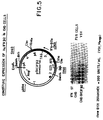
- a 4.8 kb segment of IFA-2 DNA was fused through a synthetic oligonucleotide to pSVE3 DNA (Y. Chernajovsky et al. (1984). supra) so that the ATG codon is 150 bp downstream from the SV40 early early RNA start (pSVIFA2-II, see legend, Figure 5).
- pSVIFA2-II see legend, Figure 5
- RNAs of 1.35 and 2.2 kb were detected in Northern blots by IFN- ⁇ 2 cDNA; these two RNAs would correspond to transcripts ending at the IFN- ⁇ 2 ad SV40 polyadenylation sites respectively ( Figure 5).
- Medium from the Cos7 cells during transient expression of the pSVIFA2-II DNA was assayed for IFN activity by inhibition of the cytopathic effect of VSV on human FS11 and Wish cells as described in D. Novick et al. (1983) J.Cen.Virol. 64: 905-910. Antiviral activity could be clearly detected two days after transfection (Table 1).
- the specific antiviral activity of IFN- ⁇ 2A per unit protein has been estimated to be 30 to 100 times lower than that of IFN- ⁇ 1 and closer to that of IFN- ⁇ 1 (5-10 x 10 6 units/mg).
- the IFN titers observed by transient expression of the IFA-2 gene were as expected, about 3% of those seen with the IFN- ⁇ 1 gene under the same SV40 promoter control (Table 1).
- Production of IFN- ⁇ 2A activity by pSVIFA2-II DNA cells was further demonstrated by induction of (2'-5') oligo A synthetase (M. Revel et al. (1981), supra) in FS11 cells exposed to the medium of the transfected Cos7 cells ( Figure 6). The induction was dose-dependent and corresponded quantitatively to the antiviral activity.
- the IFA-2 gene was also fused to the SV40 early promoter directly at the Xho1 site near S-2 (pSVIFA2-I DNA, legend of Figure 5).
- Hamster CHO-K1 DHFR - cells were cotransformed with pSVIFA2-I and pSVDHFR (Y. Chernajovsky et al. (1984), supra) DNAs and a stably transformed line SI-15 was isolated.
- This cell line produces constitutively 10-50 U/ml of IFN antiviral activity measured on human FS11 and Wish cells, while CHO cells transformed only by pSVDHFR produce no human IFN (Table 1).
- rIFN- ⁇ 2A solutions titrating about 3000 U/ml could regularly be obtained.
- This rIFN- ⁇ 2A has the properties expected for a human IFN and induces the (2'-5') oligo A synthetase in FS11 cells even at low concentrations of 1 U/ml ( Figure 6).
- the rIFN- ⁇ 2A constitutively produced by CHO SI-15 cells demonstrated human-specific induction of the mRNAs for (2'-5') oligo A synthetase, C56 and HLA in the presence of cycloheximide, its antiviral activity was neutralized by anti-IFN- ⁇ 1 (but not anti-IFN- ⁇ or anti-IFN - ⁇ ) polyclonal and monoclonal antibodies and it acted on mouse-human hybrids only if they contain human chromosome 21 which carries the gene for the type 1 IFN receptor.
- IFN- ⁇ 1 and ⁇ 2A Although the sequence homology between IFN- ⁇ 1 and ⁇ 2A is low, the cross-neutralization of the antiviral activities of IFN- ⁇ 1 and IFN- ⁇ 2A by the same antibodies, including a monoclonal anti-IFN- ⁇ 1 (D. Novick et al. (1983), supra), could result from some conserved structure in the active site of IFN- ⁇ . IFN- ⁇ 2A activity is not neutralized by anti-IFN- ⁇ or ⁇ antibodies, justifying its designation as a ⁇ -type IFN.
- the genes encoding IFN- ⁇ 2 are not on chromosome 9 (U. Nir (1984), supra) and differ from the type I IFN genes in the chromosome 9 cluster by the presence of introns.
- the IFA-2 gene was determined to be on chromosome 7 (P-B. Sehgal et al. (1986) Proc.Natl.Acad.Sci. USA , in press). The amino acid sequence homology detected is compatible with the notion that the IFN- ⁇ 2 genes are related to the ancestral gene which gave rise to the type I IFN gene cluster.
- the second genomic DNA clone IFA-11 hybridizing with the IFN- ⁇ 2A cDNA has a restriction map which differs from that of IFA-2 ( Figure 8). Transcript mapping and sequencing showed that the 3' exon of IFA-2 and IFA-11 (Xbal-HindIII segment) are identical (99% sequence homology), while there was no cross-hybridization under stringent conditions between more 5' exons.
- the IFA-11 genomic clone (19 Kb) was transfected into L-TK - cells together with a HSV-TK gene (F. Colbere-Garapin et al. (1981) J.Mol.Biol. 150: 1-14) and stable transformants were isolated.
- Table 1 shows that L cell clone LI-39 containing the human IFA-11 gene, produces human IFN activity when induced by poly (rI)(rC) and cycloheximide, while L-TK + cells produced no such activity.
- a CHO clone 1C40 containing the IFA-11 gene also produced human IFN activity (Table 1). No activity was seen in non-induced LI-39 or 1C40 cells.
- the IFN activity obtained with IFA- 11 transformants after induction was significantly higher than with the IFA-2 gene.
- the rIFN- ⁇ 2B produced by expression of the IFA-11 gene was neutralized with anti-IFN- ⁇ 1 similarly to the IFA-2 gene product.
- IFA-11 specific DNA probes hybridized to RNA from induced human fibroblasts similarly to IFN-2 DNA probes, indicating that both genes are active in human cells.
- IFN- ⁇ 2 genes The function of the IFN- ⁇ 2 genes seems to result from their expression under conditions in which other IFN genes are not expressed.
- TNF Tumor Necrosis Factor
- lymphokine IL-1 fibroblasts exposed to Tumor Necrosis Factor (TNF) or to lymphokine IL-1 produce the IFN- ⁇ 2 protein.
- TNF Tumor Necrosis Factor
- RNA hybridizing to IFN- ⁇ 2 cDNA was recently detected in peripheral blood mononuclear cells induced by mitogens such as PHA along with IFN- ⁇ mRNA. It has also been reported that an IL-1 like lymphokine strongly induces RNA hybridizing to IFN- ⁇ 2 cDNA in diploid fibroblasts and other human cell lines (J. Content et al. (1985) Eur.J.Biochem. 152: 253-257). The promoter region of the IFA-2 genes seems to contain two TATA boxes and two RNA starts ( Figures 1 and 3). This IFN- ⁇ 2 promoter was shown to respond to either poly (rI)(rC) or to cycloheximide (Y.
- IFN- ⁇ 2 gene promoters may be activated by different inducers (ds RNA, protein synthesis inhibitors, IL-1, PHA).
- inducers ds RNA, protein synthesis inhibitors, IL-1, PHA.
- IFN- ⁇ 2 may belong to the same group of minor IFN species produced by cells to auto-regulate their growth, while the classical type I IFNs are probably more specifically involved in theresponse to viral infections.
- IFN- ⁇ 2 The biological significance of IFN- ⁇ 2 lies most probably in the fact that it is induced under conditions where IFN- ⁇ 1 is not induced, as in metabolically stressed cells (A. Zilberstein et al., (1985) in The Interferon System, Serono Symposia Raven Press, pp.73-83). Most important is the observation that TNF induces IFN- ⁇ 2 in fibroblasts and that the proliferation of these cells which is stimulated by TNF is further enhanced if anti-IFN- ⁇ antibodies are added. A number of human cell lines have been shown to produce autocrine IFN- ⁇ species when undergoing differentiation, and these IFNs are responsible for the induction of HLA antigens on these cells (A. Yarden et al. (1984) Embo.J.
- IFN- ⁇ 2 appears to be one of these autocrine autoregulators of cell growth produced in response to growth factors. This would be in line with the low specific activity of IFN- ⁇ 2 (estimated by comparison of immunoassay and antiviral activity to be 50-100 times lower than for IFN- ⁇ 1 ), since only very small antiviral activity is seen in cells producing the autocrine IFN- ⁇ species (M. Revel (1983) in Interferon 5 , Academic Press, pp. 205-239). This could also explain why the hamster cells expressing IFN- ⁇ 2 cDNA produce less IFN activity than similar CHO cells harbouring the human IFN- ⁇ 1 gene (Y. Chernajovsky et al.
- IFN- ⁇ 1 (D) species has also a 100 times lower specific activity on human cells than other IFN- ⁇ species (T. Goren et al. (1983), Virology 130: 273-280), although it represents a large proportion of the total mass of leukocyte IFN (C. Weissmann (1981) in Interferon 3 , Academic Press, N.Y. pp.101-134). It is not excluded that some of the multiple IFN functions will be expressed more efficiently by IFN- ⁇ 2 than the antiviral effect.
- IFN- ⁇ 2 IL-1 and TNF suggests that it may play a role as an autocrine mediator of some effects of these cytokines in inflammation and acute-phase responses, as well as regulating cell proliferation.
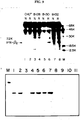
- IFN- ⁇ 2 -specific immunocompetition assay with R-antibodies was used to examine if human fibroblasts FS11 cells indeed secrete the IFN- ⁇ 2 protein in response to these two cytokines ( Figure 9).
- rIL-1 ⁇ and TNF- ⁇ induced the synthesis and secretion of the IFN- ⁇ 2 protein, to levels estimated by the immunoassay to be 10-20 U/ml IFN- ⁇ 2 .
- Optimal IFN- ⁇ 2 induction was seen with concentrations of rIL-1 ⁇ of 4 U/ml (0.13 ng/ml), similar to those required for IL-1 induction of prostaglandin E 2 , collagenase and hyaluronic acid in human fibroblasts (J.H. Korn (1985), Arthritis Rheum. 28: 315-322).
- TNF- ⁇ 2 induction 400 U/ml; 40 ng/ml was higher than that required for the cytolytic effect on sensitive cells (0.1 ng/ml; A.M. Wang et al. (1985) Science 228: 149-154) and even higher than that giving optimal growth stimulation of diploid fibroblasts (2 ng/ml).
- the onset of IFN- ⁇ 2 secretion was somewhat faster with TNF- ⁇ reaching half maximal levels at about 6 hours, versus 8-12 hours with IL-1.
Landscapes
- Health & Medical Sciences (AREA)
- Life Sciences & Earth Sciences (AREA)
- Chemical & Material Sciences (AREA)
- Organic Chemistry (AREA)
- Medicinal Chemistry (AREA)
- Zoology (AREA)
- Gastroenterology & Hepatology (AREA)
- Proteomics, Peptides & Aminoacids (AREA)
- General Health & Medical Sciences (AREA)
- Biochemistry (AREA)
- Genetics & Genomics (AREA)
- Molecular Biology (AREA)
- Biophysics (AREA)
- Toxicology (AREA)
- Epidemiology (AREA)
- Bioinformatics & Cheminformatics (AREA)
- Immunology (AREA)
- Pharmacology & Pharmacy (AREA)
- Engineering & Computer Science (AREA)
- Animal Behavior & Ethology (AREA)
- Public Health (AREA)
- Veterinary Medicine (AREA)
- Preparation Of Compounds By Using Micro-Organisms (AREA)
- Medicines That Contain Protein Lipid Enzymes And Other Medicines (AREA)
- Peptides Or Proteins (AREA)
- Micro-Organisms Or Cultivation Processes Thereof (AREA)
Claims (3)
- Utilisation d'interféron-β2A humain pour préparer un médicament pour le traitement de maladies dans les domaines d'inflammation et/ou de réponse phase aigue.
- Utilisation selon la revendication 1, dans laquelle IFN-β2A inhibe la prolifération des fibroblastes.
- Utilisation selon la revendication 1, dans laquelle IFN-β2A prévient une sclérose après une infection.
Priority Applications (2)
| Application Number | Priority Date | Filing Date | Title |
|---|---|---|---|
| EP97119173A EP0835661B1 (fr) | 1985-10-14 | 1986-10-10 | L'interferon-beta 2A humain,son utilisation comme médicament |
| EP94113232A EP0645452A1 (fr) | 1985-10-14 | 1986-10-10 | Interféron-bêta 2A et interféron-bêta 2B humains, vecteurs contenant leurs gènes, lignées cellulaires les produisant et utilisation des dits interférons comme médicament |
Applications Claiming Priority (5)
| Application Number | Priority Date | Filing Date | Title |
|---|---|---|---|
| IL76714A IL76714A0 (en) | 1985-10-14 | 1985-10-14 | Recombined human interferon beta-2 and a method of producing same |
| IL7671485 | 1985-10-14 | ||
| US86088386A | 1986-05-08 | 1986-05-08 | |
| US860883 | 1986-05-08 | ||
| EP86114049A EP0220574B2 (fr) | 1985-10-14 | 1986-10-10 | Interféron bêta2A humain; vecteurs contenant des gènes codant pour ledit interféron, lignées de cellules le produisant et utilisation dudit interféron à titre de médicament |
Related Parent Applications (2)
| Application Number | Title | Priority Date | Filing Date |
|---|---|---|---|
| EP86114049A Division EP0220574B2 (fr) | 1985-10-14 | 1986-10-10 | Interféron bêta2A humain; vecteurs contenant des gènes codant pour ledit interféron, lignées de cellules le produisant et utilisation dudit interféron à titre de médicament |
| EP86114049.9 Division | 1986-10-10 |
Related Child Applications (3)
| Application Number | Title | Priority Date | Filing Date |
|---|---|---|---|
| EP94113232.6 Division-Into | 1986-10-10 | ||
| EP97119173A Division EP0835661B1 (fr) | 1985-10-14 | 1986-10-10 | L'interferon-beta 2A humain,son utilisation comme médicament |
| EP94113232A Division EP0645452A1 (fr) | 1985-10-14 | 1986-10-10 | Interféron-bêta 2A et interféron-bêta 2B humains, vecteurs contenant leurs gènes, lignées cellulaires les produisant et utilisation des dits interférons comme médicament |
Publications (2)
| Publication Number | Publication Date |
|---|---|
| EP0536520A1 EP0536520A1 (fr) | 1993-04-14 |
| EP0536520B1 true EP0536520B1 (fr) | 1999-03-03 |
Family
ID=26321482
Family Applications (4)
| Application Number | Title | Priority Date | Filing Date |
|---|---|---|---|
| EP86114049A Expired - Lifetime EP0220574B2 (fr) | 1985-10-14 | 1986-10-10 | Interféron bêta2A humain; vecteurs contenant des gènes codant pour ledit interféron, lignées de cellules le produisant et utilisation dudit interféron à titre de médicament |
| EP94113232A Ceased EP0645452A1 (fr) | 1985-10-14 | 1986-10-10 | Interféron-bêta 2A et interféron-bêta 2B humains, vecteurs contenant leurs gènes, lignées cellulaires les produisant et utilisation des dits interférons comme médicament |
| EP97119173A Expired - Lifetime EP0835661B1 (fr) | 1985-10-14 | 1986-10-10 | L'interferon-beta 2A humain,son utilisation comme médicament |
| EP92114478A Expired - Lifetime EP0536520B1 (fr) | 1985-10-14 | 1986-10-10 | Utilisation de l'interféron-Beta 2A humain pour la préparation des medicaments |
Family Applications Before (3)
| Application Number | Title | Priority Date | Filing Date |
|---|---|---|---|
| EP86114049A Expired - Lifetime EP0220574B2 (fr) | 1985-10-14 | 1986-10-10 | Interféron bêta2A humain; vecteurs contenant des gènes codant pour ledit interféron, lignées de cellules le produisant et utilisation dudit interféron à titre de médicament |
| EP94113232A Ceased EP0645452A1 (fr) | 1985-10-14 | 1986-10-10 | Interféron-bêta 2A et interféron-bêta 2B humains, vecteurs contenant leurs gènes, lignées cellulaires les produisant et utilisation des dits interférons comme médicament |
| EP97119173A Expired - Lifetime EP0835661B1 (fr) | 1985-10-14 | 1986-10-10 | L'interferon-beta 2A humain,son utilisation comme médicament |
Country Status (6)
| Country | Link |
|---|---|
| EP (4) | EP0220574B2 (fr) |
| AU (1) | AU602872B2 (fr) |
| CA (1) | CA1341369C (fr) |
| DE (4) | DE220574T1 (fr) |
| ES (2) | ES2131513T3 (fr) |
| GR (2) | GR3030150T3 (fr) |
Families Citing this family (16)
| Publication number | Priority date | Publication date | Assignee | Title |
|---|---|---|---|---|
| IE67035B1 (en) * | 1986-07-08 | 1996-02-21 | Genetics Inst | Production and use of non-glycosylated IL-6 |
| US6284237B1 (en) | 1986-07-08 | 2001-09-04 | Steven C. Clark | Methods of treatment using IL-6 |
| EP0585957A1 (fr) * | 1986-08-06 | 1994-03-09 | Ajinomoto Co., Inc. | Facteur de différentiation des cellules B recombinant |
| US4973478A (en) * | 1987-07-20 | 1990-11-27 | Allelix Biopharmaceuticals, Inc. | Treating inflammation with hepatocyte stimulating factor interferon β2 |
| NZ226799A (en) * | 1987-11-06 | 1991-08-27 | Oncogen | Breast cancer inhibitory factor and method for inhibiting proliferation of neoplastic cells and compositions therefor |
| IL85204A0 (en) * | 1988-01-26 | 1988-07-31 | Yeda Res & Dev | Recombinant human interferon beta2,its preparation and pharmaceutical compositions comprising it |
| JPH0372429A (ja) * | 1988-10-07 | 1991-03-27 | Chugai Pharmaceut Co Ltd | 血小板減少症の治療剤 |
| US5641868A (en) * | 1991-04-18 | 1997-06-24 | Toray Industries, Inc. | Interlekin-6 compositions, and a production process thereof |
| IT1254359B (it) * | 1992-05-11 | 1995-09-14 | Serono Cesare Ist Ricerca | Composizioni farmaceutiche contenenti il-6 |
| US5902576A (en) * | 1992-10-22 | 1999-05-11 | Yeda Research And Development Co. Ltd. At Weizmann Institute Of Science | Antitumor pharmaceutical composition comprising IL-6 transfected cells |
| US5338834A (en) * | 1993-01-26 | 1994-08-16 | Allelix Biopharmaceuticals Inc. | Ultrapure human interleukin-6 |
| IL147414A0 (en) | 2001-12-31 | 2002-08-14 | Yeda Res & Dev | Ifnar2 mutants, their production and use |
| US8071321B2 (en) | 2002-08-29 | 2011-12-06 | Cytocure Llc | Methods for up-regulating antigen expression in tumors |
| WO2004084933A1 (fr) * | 2003-03-28 | 2004-10-07 | Faron Pharmaceuticals Oy | Elevation du niveau d'adenosine par l'expression induite par cytokine de cd73 |
| CN108004270B (zh) * | 2017-11-24 | 2021-06-18 | 上海交通大学 | 利用双荧光素酶报告基因检测鸭IFN-β启动子活性的方法 |
| CN112442504B (zh) * | 2020-12-10 | 2023-01-24 | 电子科技大学 | 一种重组草鱼白介素-12活性蛋白的制备方法 |
Citations (1)
| Publication number | Priority date | Publication date | Assignee | Title |
|---|---|---|---|---|
| WO1988000206A1 (fr) * | 1986-07-08 | 1988-01-14 | Genetics Institute, Inc. | Production et utilisation d'il-6 |
Family Cites Families (4)
| Publication number | Priority date | Publication date | Assignee | Title |
|---|---|---|---|---|
| IL58765A (en) * | 1979-11-21 | 1986-09-30 | Yeda Res & Dev | Process for the production of essentially pure messenger rna of human fibroblast interferon and process for the production of interferon beta |
| JPS60169424A (ja) * | 1984-02-15 | 1985-09-02 | Chuzo Kishimoto | 新規ヒトb細胞分化因子,その製造法およびその使用法 |
| JPS61246197A (ja) * | 1985-04-24 | 1986-11-01 | Ajinomoto Co Inc | Dna |
| EP0585957A1 (fr) * | 1986-08-06 | 1994-03-09 | Ajinomoto Co., Inc. | Facteur de différentiation des cellules B recombinant |
-
1986
- 1986-10-10 EP EP86114049A patent/EP0220574B2/fr not_active Expired - Lifetime
- 1986-10-10 DE DE198686114049T patent/DE220574T1/de active Pending
- 1986-10-10 EP EP94113232A patent/EP0645452A1/fr not_active Ceased
- 1986-10-10 DE DE3688671T patent/DE3688671T3/de not_active Expired - Lifetime
- 1986-10-10 CA CA000520275A patent/CA1341369C/fr not_active Expired - Lifetime
- 1986-10-10 ES ES92114478T patent/ES2131513T3/es not_active Expired - Lifetime
- 1986-10-10 DE DE3650790T patent/DE3650790T2/de not_active Expired - Lifetime
- 1986-10-10 ES ES86114049T patent/ES2058053T5/es not_active Expired - Lifetime
- 1986-10-10 EP EP97119173A patent/EP0835661B1/fr not_active Expired - Lifetime
- 1986-10-10 DE DE3650715T patent/DE3650715T2/de not_active Expired - Lifetime
- 1986-10-10 EP EP92114478A patent/EP0536520B1/fr not_active Expired - Lifetime
- 1986-10-14 AU AU63867/86A patent/AU602872B2/en not_active Expired
-
1999
- 1999-05-06 GR GR990401238T patent/GR3030150T3/el unknown
-
2000
- 2000-06-23 GR GR20000401465T patent/GR3033769T3/el not_active IP Right Cessation
Patent Citations (1)
| Publication number | Priority date | Publication date | Assignee | Title |
|---|---|---|---|---|
| WO1988000206A1 (fr) * | 1986-07-08 | 1988-01-14 | Genetics Institute, Inc. | Production et utilisation d'il-6 |
Also Published As
| Publication number | Publication date |
|---|---|
| DE3650790T2 (de) | 2008-01-24 |
| GR3030150T3 (en) | 1999-08-31 |
| ES2058053T3 (es) | 1994-11-01 |
| EP0536520A1 (fr) | 1993-04-14 |
| DE3650715D1 (de) | 1999-04-08 |
| EP0220574B1 (fr) | 1993-07-07 |
| DE3650790D1 (de) | 2007-10-11 |
| GR3033769T3 (en) | 2000-10-31 |
| EP0220574B2 (fr) | 2000-04-12 |
| AU602872B2 (en) | 1990-11-01 |
| EP0835661A2 (fr) | 1998-04-15 |
| EP0645452A1 (fr) | 1995-03-29 |
| DE3688671D1 (de) | 1993-08-12 |
| CA1341369C (fr) | 2002-06-18 |
| EP0220574A1 (fr) | 1987-05-06 |
| DE3688671T2 (de) | 1993-10-14 |
| AU6386786A (en) | 1987-04-16 |
| EP0835661A3 (fr) | 1998-05-20 |
| DE3650715T2 (de) | 1999-06-24 |
| ES2131513T3 (es) | 1999-08-01 |
| DE3688671T3 (de) | 2001-05-03 |
| DE220574T1 (de) | 1987-11-26 |
| EP0835661B1 (fr) | 2007-08-29 |
| ES2058053T5 (es) | 2000-11-01 |
Similar Documents
| Publication | Publication Date | Title |
|---|---|---|
| US5554513A (en) | Production of recombinant human interferon-beta2 | |
| EP0536520B1 (fr) | Utilisation de l'interféron-Beta 2A humain pour la préparation des medicaments | |
| Zilberstein et al. | Structure and expression of cDNA and genes for human interferon‐beta‐2, a distinct species inducible by growth‐stimulatory cytokines. | |
| Charleston et al. | An interferon-induced Mx protein: cDNA sequence and high-level expression in the endometrium of pregnant sheep | |
| Capon et al. | Two distinct families of human and bovine interferon-α genes are coordinately expressed and encode functional polypeptides | |
| Simon et al. | Interferon-regulated Mx genes are not responsive to interleukin-1, tumor necrosis factor, and other cytokines | |
| KR100223255B1 (ko) | 개량된 알파 인터페론 조성물 및 인간 말초혈 백혈구로 부터의 제조 방법 | |
| US7662927B2 (en) | Antibodies to ZCYTO20 (IL-28A) and ZCYTO22 (IL-28B) | |
| US5004689A (en) | DNA sequences, recombinant DNA molecules and processes for producing human gamma interferon-like polypeptides in high yields | |
| US20020013452A1 (en) | Interferon tau compositions and methods of use | |
| EP0750668A1 (fr) | NOUVELLES MUTEINES D'INTERFERON $g(b) | |
| EP1942187B1 (fr) | Famille de protéine de cytokine | |
| JP2648860B2 (ja) | ヒトインターフエロン−β2A及びヒトインターフエロン−β2B、該インターフエロンをコードする遺伝子を含むベクター、該インターフエロンを産生するセルライン及び該インターフエロンの医薬品としての用途 | |
| US5510472A (en) | Production of recombinant human interferon-beta2 | |
| Revel et al. | Autocrine interferons and interferon-β2 | |
| CA1341252C (fr) | Interferon-.beta.2a humain et interferon-.beta.2b humain; vecteurs contenant des genes correspondant a ces interferons: lignees cellulaires produisant ces interferons, ainsi que l'utilisation de ces interferons comme produits pharmaceutiques | |
| Abramovich et al. | The human interferon α-receptor protein confers differential responses to human interferon-β versus interferon-α subtypes in mouse and hamster cell transfectants | |
| McCULLAGH et al. | Biological properties of human interferon beta 1 synthesized in recombinant bacteria | |
| Pestka et al. | The human interferons: their purification and sequence, cloning and expression in bacteria, and biological properties | |
| US8231866B2 (en) | Cytokine protein family | |
| ES2353150T3 (es) | Familia de proteínas de citoquinas. | |
| Mahmoudi et al. | Induction of interferon messenger RNA in human lymphoblastoid cells (Namalva) | |
| EP1536825A1 (fr) | Hybride d'interferon et de fragment fc d'immunoglobuline |
Legal Events
| Date | Code | Title | Description |
|---|---|---|---|
| PUAI | Public reference made under article 153(3) epc to a published international application that has entered the european phase |
Free format text: ORIGINAL CODE: 0009012 |
|
| 17P | Request for examination filed |
Effective date: 19920825 |
|
| AC | Divisional application: reference to earlier application |
Ref document number: 220574 Country of ref document: EP |
|
| AK | Designated contracting states |
Kind code of ref document: A1 Designated state(s): BE CH DE ES FR GB GR IT LI NL SE |
|
| RIN1 | Information on inventor provided before grant (corrected) |
Inventor name: REVEL, MICHAEL Inventor name: ZILBERSTEIN, ASHER |
|
| 17Q | First examination report despatched |
Effective date: 19970127 |
|
| GRAG | Despatch of communication of intention to grant |
Free format text: ORIGINAL CODE: EPIDOS AGRA |
|
| GRAG | Despatch of communication of intention to grant |
Free format text: ORIGINAL CODE: EPIDOS AGRA |
|
| GRAH | Despatch of communication of intention to grant a patent |
Free format text: ORIGINAL CODE: EPIDOS IGRA |
|
| GRAH | Despatch of communication of intention to grant a patent |
Free format text: ORIGINAL CODE: EPIDOS IGRA |
|
| GRAA | (expected) grant |
Free format text: ORIGINAL CODE: 0009210 |
|
| AC | Divisional application: reference to earlier application |
Ref document number: 220574 Country of ref document: EP |
|
| AK | Designated contracting states |
Kind code of ref document: B1 Designated state(s): BE CH DE ES FR GB GR IT LI NL SE |
|
| XX | Miscellaneous (additional remarks) |
Free format text: TEILANMELDUNG 94113232.6 EINGEREICHT AM 10/10/86. |
|
| REG | Reference to a national code |
Ref country code: CH Ref legal event code: NV Representative=s name: ISLER & PEDRAZZINI AG Ref country code: CH Ref legal event code: EP |
|
| REF | Corresponds to: |
Ref document number: 3650715 Country of ref document: DE Date of ref document: 19990408 |
|
| ITF | It: translation for a ep patent filed | ||
| ET | Fr: translation filed | ||
| REG | Reference to a national code |
Ref country code: ES Ref legal event code: FG2A Ref document number: 2131513 Country of ref document: ES Kind code of ref document: T3 |
|
| PLBE | No opposition filed within time limit |
Free format text: ORIGINAL CODE: 0009261 |
|
| 26N | No opposition filed | ||
| REG | Reference to a national code |
Ref country code: GB Ref legal event code: IF02 |
|
| PGFP | Annual fee paid to national office [announced via postgrant information from national office to epo] |
Ref country code: IT Payment date: 20050728 Year of fee payment: 20 |
|
| PGFP | Annual fee paid to national office [announced via postgrant information from national office to epo] |
Ref country code: GR Payment date: 20050913 Year of fee payment: 20 |
|
| PGFP | Annual fee paid to national office [announced via postgrant information from national office to epo] |
Ref country code: NL Payment date: 20051003 Year of fee payment: 20 |
|
| PGFP | Annual fee paid to national office [announced via postgrant information from national office to epo] |
Ref country code: SE Payment date: 20051005 Year of fee payment: 20 Ref country code: GB Payment date: 20051005 Year of fee payment: 20 |
|
| PGFP | Annual fee paid to national office [announced via postgrant information from national office to epo] |
Ref country code: DE Payment date: 20051006 Year of fee payment: 20 |
|
| PGFP | Annual fee paid to national office [announced via postgrant information from national office to epo] |
Ref country code: FR Payment date: 20051010 Year of fee payment: 20 |
|
| PGFP | Annual fee paid to national office [announced via postgrant information from national office to epo] |
Ref country code: CH Payment date: 20051014 Year of fee payment: 20 |
|
| PGFP | Annual fee paid to national office [announced via postgrant information from national office to epo] |
Ref country code: ES Payment date: 20051129 Year of fee payment: 20 |
|
| PGFP | Annual fee paid to national office [announced via postgrant information from national office to epo] |
Ref country code: BE Payment date: 20051215 Year of fee payment: 20 |
|
| PG25 | Lapsed in a contracting state [announced via postgrant information from national office to epo] |
Ref country code: GB Free format text: LAPSE BECAUSE OF EXPIRATION OF PROTECTION Effective date: 20061009 |
|
| PG25 | Lapsed in a contracting state [announced via postgrant information from national office to epo] |
Ref country code: NL Free format text: LAPSE BECAUSE OF EXPIRATION OF PROTECTION Effective date: 20061010 |
|
| PG25 | Lapsed in a contracting state [announced via postgrant information from national office to epo] |
Ref country code: ES Free format text: LAPSE BECAUSE OF EXPIRATION OF PROTECTION Effective date: 20061011 |
|
| REG | Reference to a national code |
Ref country code: GB Ref legal event code: PE20 |
|
| REG | Reference to a national code |
Ref country code: CH Ref legal event code: PL |
|
| NLV7 | Nl: ceased due to reaching the maximum lifetime of a patent |
Effective date: 20061010 |
|
| EUG | Se: european patent has lapsed | ||
| REG | Reference to a national code |
Ref country code: ES Ref legal event code: FD2A Effective date: 20061011 |
|
| BE20 | Be: patent expired |
Owner name: *YEDA RESEARCH AND DEVELOPMENT CO. LTD Effective date: 20061010 |