EP0540166A2 - Détermination de l'équivalence d'objects en respectant la sécurité - Google Patents
Détermination de l'équivalence d'objects en respectant la sécurité Download PDFInfo
- Publication number
- EP0540166A2 EP0540166A2 EP92308624A EP92308624A EP0540166A2 EP 0540166 A2 EP0540166 A2 EP 0540166A2 EP 92308624 A EP92308624 A EP 92308624A EP 92308624 A EP92308624 A EP 92308624A EP 0540166 A2 EP0540166 A2 EP 0540166A2
- Authority
- EP
- European Patent Office
- Prior art keywords
- server
- client
- objects
- server process
- implemented
- Prior art date
- Legal status (The legal status is an assumption and is not a legal conclusion. Google has not performed a legal analysis and makes no representation as to the accuracy of the status listed.)
- Granted
Links
Images



Classifications
-
- G—PHYSICS
- G06—COMPUTING OR CALCULATING; COUNTING
- G06F—ELECTRIC DIGITAL DATA PROCESSING
- G06F15/00—Digital computers in general; Data processing equipment in general
-
- G—PHYSICS
- G06—COMPUTING OR CALCULATING; COUNTING
- G06F—ELECTRIC DIGITAL DATA PROCESSING
- G06F9/00—Arrangements for program control, e.g. control units
- G06F9/06—Arrangements for program control, e.g. control units using stored programs, i.e. using an internal store of processing equipment to receive or retain programs
- G06F9/46—Multiprogramming arrangements
- G06F9/465—Distributed object oriented systems
-
- G—PHYSICS
- G06—COMPUTING OR CALCULATING; COUNTING
- G06F—ELECTRIC DIGITAL DATA PROCESSING
- G06F8/00—Arrangements for software engineering
-
- Y—GENERAL TAGGING OF NEW TECHNOLOGICAL DEVELOPMENTS; GENERAL TAGGING OF CROSS-SECTIONAL TECHNOLOGIES SPANNING OVER SEVERAL SECTIONS OF THE IPC; TECHNICAL SUBJECTS COVERED BY FORMER USPC CROSS-REFERENCE ART COLLECTIONS [XRACs] AND DIGESTS
- Y10—TECHNICAL SUBJECTS COVERED BY FORMER USPC
- Y10S—TECHNICAL SUBJECTS COVERED BY FORMER USPC CROSS-REFERENCE ART COLLECTIONS [XRACs] AND DIGESTS
- Y10S707/00—Data processing: database and file management or data structures
- Y10S707/99951—File or database maintenance
- Y10S707/99952—Coherency, e.g. same view to multiple users
Definitions
- the present invention relates to the fields of distributed computer systems, client-server computing and object oriented programming.
- the present invention is a method and apparatus for a client process to determine whether two objects are equivalent objects having particular application to implementing object oriented programming on distributed computer systems based on the client-server model.
- an object is a component comprising data and operations which can be invoked to manipulate the data.
- the operations are invoked on the object by sending calls to the object.
- Each object has an object type.
- the object type defines the object operations that can be performed on objects of that particular object type.
- the object operations are implemented independent of the objects themselves. Additionally, one object type may inherit the object operations defined and implemented for other object types.
- client-server computing typically there is a set of computers that can communicate with one another through a network connecting the computers. Some of these computers act as providers of functionality to other computers. The providers of functionality are known as servers, the consumers of functionality are known as clients. However, the client-server model also generalizes to the case where distinct programs are running on the same computer. These distinct programs communicate with one another through a protected mechanism, and act as providers and consumers of functionality.
- client-server computing see J.K. Ousterhout et al. Medusa: An experiment in distributed operating system structure , Communications of the ACM 23(2), 1980; R.M. Needham and A.J. Herbert, The Cambridge Distributed Computing System, (Addison-Wesley, 1982); and J.K. Ousterhout et al, The Sprite distributed operating system, IEEE Computer, 1988.
- an object oriented distributed systems typically there are servers that provide object oriented interfaces to their clients. That is, these servers support objects comprising data and associated operations. Clients may obtain access to these objects and may execute calls on them. These calls are transmitted from the client to the server. At the server, these calls are executed via the operations associated with the objects. The results of these calls are then transmitted back to the client.
- objects oriented distributed systems see E.D. Lazowska et al, The Eden System: A Technical Review , IEEE Transactions on Software Engineering SE-11(1), January 1985; Jul et al, Fine grained mobility in the Emerald System . ACM Transactions on Computer Systems, 6(1), 1988; and B. Liskov, Distributed programming in Argus , Communications of the ACM, 31(3), 1988.
- Client programs are typically given object handles to reference particular objects.
- the object handle provides a way of locating the object and of executing calls upon it.
- the object handles are designed such that a client can only obtain an object handle for a given object from the server or from an existing client.
- the server will only execute calls that are issued on valid object handles and the server may take care to only issue object handles to clients whom it has verified and are indeed permitted to access the underlying object.
- a secure handle then it can pass this handle on to other programs which it trusts. The other clients then share the same access to the underlying object that the first program had.
- A.D. Birrell and R.M. Needham A Universal File Server , IEEE Transactions on Software Engineering, S-6(5), 1980, and S.J. Mullender et al, Amoeba - A Distributed Operating System for the 1990s , IEEE Computer, 23(5), 1990.
- a client In an object oriented distributed systems based on the client-server model and secure handles, if a client is given two handles, it may wish to determine if these handles both reference the same underlying object. For example, it may wish to perform loop detection when it is navigating through a graph of related objects. The simple solution is for the client to compare the two handles. If the handles are identical, then the objects are equivalent. Unfortunately such a simplistic notion of equivalence is not really satisfactory. Typically, it is desirable to be able to use a variety of different handle formats in different situations. It may be that even though the two handles have different values, they do in fact reference the same object. In another situation, the two handles may reference distinct objects of a given server, but the server would prefer the distinct objects be treated as equivalent. In yet another situation, the two handles may reference distinct objects of distinct servers, but the distinct servers are cooperating servers and they would prefer the two objects to be treated as equivalent.
- object equivalence is really a semantic notion whose truth can only be determined by the server(s) that implement the objects. It cannot be definitively answered by the client nor by the object invocation and transport mechanism.
- a server might support several different notions of equivalence, such as "loop detection equivalence”, “exact equivalence”, “locality equivalence”, to be applied in different situations.
- nameservers For example, consider a collection of objects that implement nameservers. These nameservers are collected into a directed graph. Different clients have different access rights to particular nameservers. So different clients are given handles on different objects that encapsulate different access to the same underlying state. Some of the nameservers might exist as replicated services running on a number of different hosts. So different clients might have handles that refer them to different servers of the replica set. But for loop detection purposes, it may be desirable to treat the different replicas or different access rights to a particular nameserver as representing the "same" object.
- the present invention overcomes the disadvantages of the prior art, and provides a method and apparatus for a client process to securely determine whether two objects are equivalent, without compromising the objects and their server(s) security.
- a method and apparatus for a client process to securely determine whether two objects are equivalent objects is disclosed, which has particular application to implementing object oriented programming on distributed computer systems based on the client-server model.
- the method and apparatus allows a client process to securely determine whether a first and a second object implemented by a first and a second server process respectively are equivalent objects, without compromising the first and second objects, and the first and second server processes' security.
- a network of computer systems comprising at least one CPU is provided for executing the client process, the first and second server processes, the first and second server processes having implemented and providing object oriented interfaces for manipulating the first and second objects.
- the client process determines whether the first and second objects are equivalent objects by first requesting the first object to nominate a third object to perform the determination. Upon receipt of the nomination, the client process requests the second object's concurrence to the nomination. If the second object concurs, the client process requests the third object to perform the determination, and returns a determination result indicating whether the two objects are equivalent objects, otherwise, the client process considers the two objects as non-equivalent objects.
- the first server process nominates the third object, in response to the client process' nomination request to the first object.
- the second server process provides the concurrence or nonconcurrence to the nomination of the third object, in response to the client process' concurrence request to the second object.
- the first and second server processes may be the same server process or cooperating server processes.
- the second server process in concert with the first server process checks to confirm that the third object is implemented by the first server process before concurring.
- the first server process in concert with the second server process checks to confirm that the first and second objects are implemented by the first and second server processes respectively before the third object performs the determination, and returns a determination result.
- the first and second server processes communicate with each other in a secured manner.
- the first, second and third objects are referenced by corresponding first, second and third object handles.
- the first server process nominates the third object by returning the third object handle to the client process.
- the client process requests concurrence by forwarding the returned third object handle to the second server process, and requests determination by forwarding the first and second object handles to the third object.
- a procedure is here, and generally, conceived to be a self-consistent sequence of steps leading to a desired result. These steps are those that require physical manipulations of physical quantities. Usually, though not necessarily, these quantities take the form of electrical or magnetic signals capable of being stored, transferred, combined, compared, and otherwise manipulated. It proves convenient at times, principally for reasons of common usage, to refer to these signals as bits, values, elements, symbols, objects, characters, terms, numbers, or the like. It should be borne in mind, however, that all these and similar terms are to be associated with the appropriate physical quantities and are merely convenient labels applied to these quantities.
- the manipulations performed are often referred to in terms, such as adding or comparing, which are commonly associated with mental operations performed by a human operator. No such capability of a human operator is necessary, or desirable in most cases, in any of the operation described herein which form part of the present invention; the operations are machine operations.
- Useful machines for performing the operations of the present invention include general purpose digital computers or other similar devices. In all cases, it should be borne in mind the distinction between the method operations in operating a computer and the method of computation itself.
- the present invention relates to method steps for operating a computer in processing electrical or other physical signals to generate other desired physical signals.
- the present invention also relates to apparatus for performing these operations.
- This apparatus may be specially constructed for the required purposes or it may comprise a general purpose computer as selectively activated or re-configured by a computer program stored in the computer.
- the procedures presented herein are not entirely related to any particular computer or other apparatus.
- various general purpose machines may be used with procedures written in accordance with the teaching herein, or it may prove more convenient to construct more specialized apparatus to perform the required method steps. The required structure for a variety of these machines will appear from the description given below.
- a method and apparatus for a client process to securely determine whether two objects are equivalent objects is disclosed, which has particular application to implementing object oriented programming, on distributed computer systems based on the client-server model.
- specific numbers, materials and configurations are set forth in order to provide a thorough understanding of the present invention.
- the present invention may be practiced without the specific details.
- well known systems are shown in diagrammatical or block diagram form in order not to obscure the present invention unnecessarily.
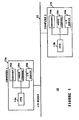
- the network of computer systems 10 comprises at least one computer system 12a or 12b. If more than one computer system 12a and 12b are employed, the computer systems 12a and 12b are coupled to each other through a network 22.
- Each computer system 12a or 12b comprises a central processing unit (CPU) 14a or 14b, a memory unit 16a or 16b, a mass storage unit 18a or 18b and an input/output (I/O) device 20a or 20b.
- CPU central processing unit
- memory unit 16a or 16b a memory unit 16a or 16b
- mass storage unit 18a or 18b an input/output (I/O) device 20a or 20b.
- the characteristics of these hardware elements on each of the computer systems 12a or 12b such as speed, size, may differ from each other.
- These hardware elements are those typically found in most general purpose computer systems and almost all special purpose computer systems.
- the several hardware elements contained within each of the computer system 12a and 12b are intended to be representative of this broad category of data processing systems.
- suitable data processing systems to fill the role of these computer systems 12a and 12b include computer systems manufactured by Sun Microsystems, Inc., Mountain View, California.
- Other computer systems having like capabilities may of course be adapted in a straight forward manner to perform the functions described below.
- the system software 30 comprises an operating system 32, a file system 34, and at least one language compiler 36.
- the applications 38 executing on the computer system utilize the underlying system services offered by system software 32 - 36.
- the system software used on each of the computer system may be different provided they offer equivalent functions and capable of communicating with each other.
- These software elements are those typically found in most general purpose computer systems and almost all special purpose computer systems. In fact, the several software elements contained within each of the computer system are intended to be representative of this broad category of system software.
- UNIXTM is a registered trademark of Unix Laboratory.
- Other system software having like capabilities may of course be adapted in a straight forward manner to perform the functions described below.
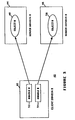
- FIG. 3 a block diagram illustrating a logical view of a client domain on the computer systems illustrated in Figure 1 having to determine whether two objects are equivalent is shown.
- a client domain A 42 having two object handles A and B, 52 and 54.
- Object handles A and B, 52 and 54 refer to objects A and B, 48 and 50, implemented by server domains A and B, 44 and 46, to provide functionality for use by client domain A 42 and other client domains (not shown).
- Client domain A 42, and server domains A and B, 44 and 46 are executing processes, i.e. active instances of computer programs. They are capable of communicating with one another in a secured manner. They are insulated and protected from wanton interference by one another as well as by other domains (not shown). They may reside on one of the computer systems, or they may reside on a number of different computer systems illustrated in Figure 1 . Furthermore, server domains A and B, 44 and 46, may cooperate with each other.
- Objects A and B, 48 and 50 represent one or more applications and/or data manipulated by the applications.
- Objects A and B, 48 and 50 are referenced by object handles A and B,52 and 54 respectively.
- the client domain A 42 accesses the objects A and B, 48 and 50, by providing the object handles A and B, 52 and 54, to server domains A and B, 44 and 46, respectively.
- the client domain A 42 obtains the object handles A and B, 48 and 50, from some privileged source.
- the object handles A and B, 48 and 50 are implemented in a manner such that they cannot be easily forged by the client domain 42, furthermore, their validity might be readily determined by the server domains, 44 and 46.
- objects A and B, 48 and 50 are implemented in a manner such that they can identify server domains A and B, 44 and 46, as their implementing server domains respectively.
- both object handles A and B, 52 and 54 may refer to two different server objects within a single server domain, i.e. server domains A and B, 44 and 46, are the same server domain; or the "same" server object, i.e. objects A and B, 48 and 50, are the same object as well as server domains A and B, 44 and 46, being the same server domain.
- server domains A and B, 44 and 46 are the same server domain, and server domains A/B's objects are equivalent to only other objects implemented by server domain A/B, objects A and B, 48 and 50, may be implemented without the capability of identifying their implementing server domains.
- An example of a server domain might be a fileserver.
- An example of an object implemented by the exemplary fileserver might be a file.
- An example of an object handle referencing the exemplary file might be a secret file identification number that has been chosen from a sufficiently large range, such that its value cannot be easily guessed.
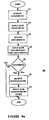
- FIGS. 4a - 4c three flow charts illustrating the method of the present invention for a client domain to determine whether a first and a second object are equivalent are shown.
- the client domain requests the first object to nominate a third object to determine whether the first and second objects are equivalent, block 62.
- a reply with the third object's nomination is provided to the client domain, block 64.
- the first server domain server domain of the first object
- the third object is an object implemented by the first server domain. Additionally, if the first server domain cooperates with another server domain, the third object is also implemented in a manner such that it can identify the first server domain as its implementing server domain.
- the client domain then requests the second object to concur with the third object's nomination, block 66.
- the client domain request the second object's concurrence by providing the second object with the third object's object handle.
- a concurring or non-concurring reply is provided to the client domain's request, block 68.
- the second server domain (server domain of the second object) provides a "TRUE" value for concurring and a "FALSE" value for non-concurring. If the second object non-concurs with the third object's nomination, branch 70b, the client domain considers the two objects as non-equivalent.
- the client domain requests the third object to make the determination, block 72.
- the first object requests the third object to make the determination by forwarding the first and second objects' object handles to the third object.
- the third object Upon making the determination, the third object returns the determination result to the first object, block 74.
- Figure 4b further illustrates the step of providing a concurring or non-concurring reply to the client domain (ref. 68 of Figure 4a ).
- the second server domain checks to determine if the third object is implemented by itself, block 76. If the third object is implemented by the second server domain itself, branch 76a, as described earlier, the second server domain returns a "TRUE" value to the client domain, concurring with the third object's nomination, block 86.
- the second server domain obtains the third object's implementing server domain identity (i.e. the first server domain) from the third object, block 78. If the third object identifies an implementing server domain (i.e. the first server domain) that does not cooperate with the second server domain, branch 80b, as described earlier, the second server domain returns a "FALSE" value to the client domain non-concurring with the third object's nomination, block 88.
- the second server domain requests the implementing server domain (i.e. the first server domain) to confirm that the third object is indeed implemented by the identified server domain (i.e. the first server domain).
- the second server domain Upon confirmation, branch 84a, as described earlier, the second server domain returns a "TRUE" value to the client domain, concurring with the third object's nomination, block 86; otherwise, branch 84b, as described earlier, the second server domain returns a "FALSE" value to the client domain non-concurring with the third object's nomination, block 88.
- Figure 4c further illustrates the step of determining whether two objects are equivalent and providing the determination result to the client domain (ref. 74 of Figure 4a ).
- the first server domain checks to determine if the second object as well as the first object are implemented by itself, block 90. If both objects are implemented by the first server domain itself, branch 90a, as described earlier, the first server domain determines if the first and second objects are equivalent, block 100, and returns the determination result accordingly, block 102 or 104.
- the first server domain obtains the second object's implementing server domain identity (i.e. the second server domain) from the second object, block 92. If the second object identifies an implementing server domain (i.e. the second server domain) that does not cooperate with the first server domain, branch 94b, the second server domain returns a determination result of non-equivalent, block 104.
- the first server domain requests the implementing server domain (i.e. the second server domain) to confirm that the second object is indeed implemented by the identified server domain (i.e. the second server domain) and provides the necessary information to make the equivalency determination.
- branch 98a the first server domain makes the equivalency determination, block 100, and returns the determination result to the client domain accordingly, block 102 or 104; otherwise, branch 98b, the first server domain returns a determination result of non-equivalent, block 104.
Landscapes
- Engineering & Computer Science (AREA)
- Theoretical Computer Science (AREA)
- Software Systems (AREA)
- General Engineering & Computer Science (AREA)
- Physics & Mathematics (AREA)
- General Physics & Mathematics (AREA)
- Computer Hardware Design (AREA)
- Multi Processors (AREA)
- Computer And Data Communications (AREA)
Applications Claiming Priority (2)
| Application Number | Priority Date | Filing Date | Title |
|---|---|---|---|
| US07/787,320 US5301316A (en) | 1991-10-30 | 1991-10-30 | System for determination of the equivalence of two objects without compromising then done by a third object nominated by one and accetped by the other |
| US787320 | 1991-10-30 |
Publications (3)
| Publication Number | Publication Date |
|---|---|
| EP0540166A2 true EP0540166A2 (fr) | 1993-05-05 |
| EP0540166A3 EP0540166A3 (en) | 1993-06-09 |
| EP0540166B1 EP0540166B1 (fr) | 1999-07-14 |
Family
ID=25141111
Family Applications (1)
| Application Number | Title | Priority Date | Filing Date |
|---|---|---|---|
| EP92308624A Expired - Lifetime EP0540166B1 (fr) | 1991-10-30 | 1992-09-22 | Détermination de l'équivalence d'objects en respectant la sécurité |
Country Status (5)
| Country | Link |
|---|---|
| US (1) | US5301316A (fr) |
| EP (1) | EP0540166B1 (fr) |
| JP (1) | JPH05274241A (fr) |
| KR (1) | KR0139409B1 (fr) |
| DE (1) | DE69229588T2 (fr) |
Cited By (2)
| Publication number | Priority date | Publication date | Assignee | Title |
|---|---|---|---|---|
| EP0658848A3 (fr) * | 1993-12-15 | 1996-12-04 | Sun Microsystems Inc | Méthode et dispositif de communication sécurité avec des serveurs non fiables. |
| EP0816968A3 (fr) * | 1996-06-26 | 2003-07-30 | Sun Microsystems, Inc. | Procédé pour la localisation sécurisée d'objets |
Families Citing this family (19)
| Publication number | Priority date | Publication date | Assignee | Title |
|---|---|---|---|---|
| US5951300A (en) * | 1997-03-10 | 1999-09-14 | Health Hero Network | Online system and method for providing composite entertainment and health information |
| FR2714746B1 (fr) * | 1993-12-31 | 1996-02-02 | Bull Sa | Procédé de simulation d'une architecture "serveur" à partir d'une architecture "client". |
| EP0684553B1 (fr) * | 1994-05-26 | 2004-06-16 | Sun Microsystems, Inc. | Méthode et appareil pour genérer et utiliser des codes d'opération courts dans des systèmes orientés objet |
| JP3865775B2 (ja) * | 1995-04-11 | 2007-01-10 | キネテック インコーポレイテッド | データ処理システムにおけるデータの識別 |
| US5878428A (en) * | 1995-11-20 | 1999-03-02 | International Business Machines Corporation | System, method, and article of manufacture for adding transactional recovery to a binary class in an object oriented system |
| US5867708A (en) * | 1995-11-20 | 1999-02-02 | International Business Machines Corporation | System, method, and article of manufacture for adding concurrency to a binary class in an object oriented system |
| US5873092A (en) * | 1995-12-14 | 1999-02-16 | International Business Machines Corporation | Information handling system, method, and article of manufacture including persistent, distributed object name services including shared properties |
| US5765153A (en) * | 1996-01-03 | 1998-06-09 | International Business Machines Corporation | Information handling system, method, and article of manufacture including object system authorization and registration |
| US5720036A (en) * | 1996-01-05 | 1998-02-17 | Network Imaging Corporation | Enterprise multimedia data processing system and method using scalable object-based architecture |
| US5809506A (en) * | 1996-01-22 | 1998-09-15 | International Business Machines Corporation | Method for creating an object base of persisent application objects in an object oriented programming environment and apparatus related thereto |
| US5806074A (en) * | 1996-03-19 | 1998-09-08 | Oracle Corporation | Configurable conflict resolution in a computer implemented distributed database |
| US6281893B1 (en) * | 1996-04-04 | 2001-08-28 | Sun Microsystems, Inc. | Method and apparatus for providing an object oriented approach to a device independent graphics control system |
| JPH11143840A (ja) * | 1997-11-05 | 1999-05-28 | Hitachi Ltd | 分散オブジェクトシステムおよびその方法 |
| US6725373B2 (en) * | 1998-03-25 | 2004-04-20 | Intel Corporation | Method and apparatus for verifying the integrity of digital objects using signed manifests |
| US6163859A (en) * | 1998-12-02 | 2000-12-19 | Support.Com, Inc. | Software vault |
| US20050050482A1 (en) * | 2003-08-25 | 2005-03-03 | Keller S. Brandon | System and method for determining applicable configuration information for use in analysis of a computer aided design |
| JP5407102B2 (ja) * | 2005-10-17 | 2014-02-05 | 荒川化学工業株式会社 | 環状オレフィン系樹脂基材表面保護用の活性エネルギー線硬化性樹脂組成物 |
| US8185576B2 (en) | 2006-03-14 | 2012-05-22 | Altnet, Inc. | Filter for a distributed network |
| EP2701090A1 (fr) * | 2012-08-22 | 2014-02-26 | Aahlstö OÜ | Procédé et système de mise en application des droits restreints 3D dans un environnement de prototypage et de fabrication rapide |
Family Cites Families (5)
| Publication number | Priority date | Publication date | Assignee | Title |
|---|---|---|---|---|
| US5220657A (en) * | 1987-12-02 | 1993-06-15 | Xerox Corporation | Updating local copy of shared data in a collaborative system |
| US5142674A (en) * | 1988-03-08 | 1992-08-25 | International Business Machines Corporation | Interchange object data base index which eliminates the need for private copies of interchange documents files by a plurality of application programs |
| US5138712A (en) * | 1989-10-02 | 1992-08-11 | Sun Microsystems, Inc. | Apparatus and method for licensing software on a network of computers |
| US5202982A (en) * | 1990-03-27 | 1993-04-13 | Sun Microsystems, Inc. | Method and apparatus for the naming of database component files to avoid duplication of files |
| US5204961A (en) * | 1990-06-25 | 1993-04-20 | Digital Equipment Corporation | Computer network operating with multilevel hierarchical security with selectable common trust realms and corresponding security protocols |
-
1991
- 1991-10-30 US US07/787,320 patent/US5301316A/en not_active Expired - Lifetime
-
1992
- 1992-09-22 EP EP92308624A patent/EP0540166B1/fr not_active Expired - Lifetime
- 1992-09-22 DE DE69229588T patent/DE69229588T2/de not_active Expired - Fee Related
- 1992-10-12 KR KR1019920018697A patent/KR0139409B1/ko not_active Expired - Fee Related
- 1992-10-30 JP JP4314218A patent/JPH05274241A/ja active Pending
Non-Patent Citations (2)
| Title |
|---|
| IEEE TRANSACTIONS ON SOFTWARE ENGINEERING vol. SE-11, no. 1, January 1985, pages 43 - 59 G.T. ALMES ET AL 'The Eden System: A Technical Review' * |
| OPERATING SYSTEMS REVIEW (SIGOPS) vol. 25, no. 2, April 1991, NEW YORK US pages 22 - 46 YASUHIKO YOKOTE 'The Muse Object Architecture: A New Operating System Structuring Concept' * |
Cited By (2)
| Publication number | Priority date | Publication date | Assignee | Title |
|---|---|---|---|---|
| EP0658848A3 (fr) * | 1993-12-15 | 1996-12-04 | Sun Microsystems Inc | Méthode et dispositif de communication sécurité avec des serveurs non fiables. |
| EP0816968A3 (fr) * | 1996-06-26 | 2003-07-30 | Sun Microsystems, Inc. | Procédé pour la localisation sécurisée d'objets |
Also Published As
| Publication number | Publication date |
|---|---|
| EP0540166B1 (fr) | 1999-07-14 |
| KR0139409B1 (ko) | 1998-07-01 |
| US5301316A (en) | 1994-04-05 |
| KR930008650A (ko) | 1993-05-21 |
| EP0540166A3 (en) | 1993-06-09 |
| JPH05274241A (ja) | 1993-10-22 |
| DE69229588T2 (de) | 2000-02-03 |
| DE69229588D1 (de) | 1999-08-19 |
Similar Documents
| Publication | Publication Date | Title |
|---|---|---|
| EP0540166B1 (fr) | Détermination de l'équivalence d'objects en respectant la sécurité | |
| Mullender et al. | Amoeba: A distributed operating system for the 1990s | |
| US5640564A (en) | Method and apparatus for generating and using short operation identifiers in object oriented systems | |
| US5793965A (en) | Method and apparatus for determining the type of an object in a distributed object system | |
| EP0886212A2 (fr) | Procédé et système d'appel des objets à distance | |
| US6463446B1 (en) | Method and apparatus for transporting behavior in an event-based distributed system | |
| EP1027795B9 (fr) | Procede et dispositif de mise en oeuvre d'un mecanisme extensible d'authentification dans un serveur d'application du web | |
| US5969967A (en) | Methods and apparatus for conspiracy between objects | |
| US5566302A (en) | Method for executing operation call from client application using shared memory region and establishing shared memory region when the shared memory region does not exist | |
| US6487607B1 (en) | Methods and apparatus for remote method invocation | |
| US6976261B2 (en) | Method and apparatus for fast, local CORBA object references | |
| US7146635B2 (en) | Apparatus and method for using a directory service for authentication and authorization to access resources outside of the directory service | |
| US6282652B1 (en) | System for separately designating security requirements for methods invoked on a computer | |
| US5727145A (en) | Mechanism for locating objects in a secure fashion | |
| US6687831B1 (en) | Method and apparatus for multiple security service enablement in a data processing system | |
| US6226690B1 (en) | Method and apparatus for utilizing proxy objects to communicate with target objects | |
| EP0658848A2 (fr) | Méthode et dispositif de communication sécurité avec des serveurs non fiables | |
| EP0547759A2 (fr) | Etablissement de liens dynamiques entre des espaces d'adresses en mode non-superviseur | |
| US6629154B1 (en) | Method and system for deterministic hashes to identify remote methods | |
| US20040019887A1 (en) | Method, system, and program for loading program components | |
| US5802276A (en) | Information handling system, method, and article of manufacture including a vault object for encapsulation of object security credentials | |
| US6260074B1 (en) | Method and apparatus for passing generic objects in a distributed system | |
| Casanova et al. | A GridRPC Model and API for End-User Applications | |
| Tanenbaum et al. | An Introduction to Amoeba | |
| Janson et al. | CORBA vs. DCOM |
Legal Events
| Date | Code | Title | Description |
|---|---|---|---|
| PUAI | Public reference made under article 153(3) epc to a published international application that has entered the european phase |
Free format text: ORIGINAL CODE: 0009012 |
|
| PUAL | Search report despatched |
Free format text: ORIGINAL CODE: 0009013 |
|
| AK | Designated contracting states |
Kind code of ref document: A2 Designated state(s): DE FR IT NL |
|
| AK | Designated contracting states |
Kind code of ref document: A3 Designated state(s): DE FR IT NL |
|
| 17P | Request for examination filed |
Effective date: 19931201 |
|
| 17Q | First examination report despatched |
Effective date: 19970805 |
|
| GRAG | Despatch of communication of intention to grant |
Free format text: ORIGINAL CODE: EPIDOS AGRA |
|
| GRAG | Despatch of communication of intention to grant |
Free format text: ORIGINAL CODE: EPIDOS AGRA |
|
| GRAH | Despatch of communication of intention to grant a patent |
Free format text: ORIGINAL CODE: EPIDOS IGRA |
|
| GRAH | Despatch of communication of intention to grant a patent |
Free format text: ORIGINAL CODE: EPIDOS IGRA |
|
| GRAA | (expected) grant |
Free format text: ORIGINAL CODE: 0009210 |
|
| AK | Designated contracting states |
Kind code of ref document: B1 Designated state(s): DE FR IT NL |
|
| REF | Corresponds to: |
Ref document number: 69229588 Country of ref document: DE Date of ref document: 19990819 |
|
| ET | Fr: translation filed | ||
| ITF | It: translation for a ep patent filed | ||
| PLBE | No opposition filed within time limit |
Free format text: ORIGINAL CODE: 0009261 |
|
| 26N | No opposition filed | ||
| PGFP | Annual fee paid to national office [announced via postgrant information from national office to epo] |
Ref country code: FR Payment date: 20030925 Year of fee payment: 12 |
|
| PGFP | Annual fee paid to national office [announced via postgrant information from national office to epo] |
Ref country code: NL Payment date: 20030930 Year of fee payment: 12 |
|
| PGFP | Annual fee paid to national office [announced via postgrant information from national office to epo] |
Ref country code: DE Payment date: 20031002 Year of fee payment: 12 |
|
| PG25 | Lapsed in a contracting state [announced via postgrant information from national office to epo] |
Ref country code: NL Free format text: LAPSE BECAUSE OF NON-PAYMENT OF DUE FEES Effective date: 20050401 Ref country code: DE Free format text: LAPSE BECAUSE OF NON-PAYMENT OF DUE FEES Effective date: 20050401 |
|
| PG25 | Lapsed in a contracting state [announced via postgrant information from national office to epo] |
Ref country code: FR Free format text: LAPSE BECAUSE OF NON-PAYMENT OF DUE FEES Effective date: 20050531 |
|
| NLV4 | Nl: lapsed or anulled due to non-payment of the annual fee |
Effective date: 20050401 |
|
| REG | Reference to a national code |
Ref country code: FR Ref legal event code: ST |
|
| PG25 | Lapsed in a contracting state [announced via postgrant information from national office to epo] |
Ref country code: IT Free format text: LAPSE BECAUSE OF NON-PAYMENT OF DUE FEES;WARNING: LAPSES OF ITALIAN PATENTS WITH EFFECTIVE DATE BEFORE 2007 MAY HAVE OCCURRED AT ANY TIME BEFORE 2007. THE CORRECT EFFECTIVE DATE MAY BE DIFFERENT FROM THE ONE RECORDED. Effective date: 20050922 |