EP0542430A2 - Gerät und Verfahren zum Informationszugriff - Google Patents
Gerät und Verfahren zum Informationszugriff Download PDFInfo
- Publication number
- EP0542430A2 EP0542430A2 EP92309447A EP92309447A EP0542430A2 EP 0542430 A2 EP0542430 A2 EP 0542430A2 EP 92309447 A EP92309447 A EP 92309447A EP 92309447 A EP92309447 A EP 92309447A EP 0542430 A2 EP0542430 A2 EP 0542430A2
- Authority
- EP
- European Patent Office
- Prior art keywords
- knowledge base
- entities
- query
- description
- compositional
- Prior art date
- Legal status (The legal status is an assumption and is not a legal conclusion. Google has not performed a legal analysis and makes no representation as to the accuracy of the status listed.)
- Withdrawn
Links
Images



Classifications
-
- G—PHYSICS
- G06—COMPUTING OR CALCULATING; COUNTING
- G06F—ELECTRIC DIGITAL DATA PROCESSING
- G06F16/00—Information retrieval; Database structures therefor; File system structures therefor
- G06F16/20—Information retrieval; Database structures therefor; File system structures therefor of structured data, e.g. relational data
- G06F16/24—Querying
- G06F16/245—Query processing
- G06F16/2455—Query execution
- G06F16/24564—Applying rules; Deductive queries
-
- G—PHYSICS
- G06—COMPUTING OR CALCULATING; COUNTING
- G06F—ELECTRIC DIGITAL DATA PROCESSING
- G06F16/00—Information retrieval; Database structures therefor; File system structures therefor
- G06F16/20—Information retrieval; Database structures therefor; File system structures therefor of structured data, e.g. relational data
- G06F16/28—Databases characterised by their database models, e.g. relational or object models
- G06F16/289—Object oriented databases
-
- Y—GENERAL TAGGING OF NEW TECHNOLOGICAL DEVELOPMENTS; GENERAL TAGGING OF CROSS-SECTIONAL TECHNOLOGIES SPANNING OVER SEVERAL SECTIONS OF THE IPC; TECHNICAL SUBJECTS COVERED BY FORMER USPC CROSS-REFERENCE ART COLLECTIONS [XRACs] AND DIGESTS
- Y10—TECHNICAL SUBJECTS COVERED BY FORMER USPC
- Y10S—TECHNICAL SUBJECTS COVERED BY FORMER USPC CROSS-REFERENCE ART COLLECTIONS [XRACs] AND DIGESTS
- Y10S707/00—Data processing: database and file management or data structures
- Y10S707/99931—Database or file accessing
- Y10S707/99933—Query processing, i.e. searching
- Y10S707/99934—Query formulation, input preparation, or translation
Definitions
- the invention relates to information systems in which data is stored and accessed by means of query language statements.
- information systems include conventional database management systems of various sorts, including relational databases, "object-oriented" databases, computer file systems in which data is stored and retrieved, and artificial intelligence systems with explicitly stored knowledge bases that hold information for use by a human user, expert system, or other artificial intelligence algorithms.
- a typical interaction with information systems has a human user constructing a query in the query language, evaluating it against the information base, and having a table or set of tables returned in textual form on a screen, on a hard copy, or in a computer file.
- the user may look at the tables and then construct a new query that may possibly incorporate parts or all of the prior query (or several prior queries).
- Database management systems have been constructed to optimize certain types of retrievals, and relational databases have generally been designed to respond to queries in a language called "SQL", which has become a de facto standard in the industry. While providing basic query-answering competence, this language has certain important limitations in the way in which it allows the user to conceptualize the information in the database. It forces the user to interact with the data in a very rigid pattern (see below).
- McLeod "Database Description with SDM: A Semantic Database Model", ACM Transactions on Database Systems 6 , No. 3, Sept. 1981) uses a hierarchical "semantic data model" to allow more object-oriented viewing of a relational database. Neither of these systems uses a formal compositional description language, which is central to the success of the present invention, nor do they perform the classification inference that allows the present invention to generate correct queries automatically for composite descriptions. "Natural language access to database” systems attempt to allow the user to express queries in natural languages like English. These systems further do not allow the results of queries to be automatically stored and organized in the knowledge base. The CODE-BASE system, described in Peter G.
- the above object is achieved by apparatus for accessing a data base of entities accessible by a query language.
- the apparatus includes
- the means for translating provides class descriptions which include the entities located in the data base
- the means for making a class description includes means for storing the located entities and means for incorporating the entities into an organization of classes
- the means for making a class description includes means for adding a new class description to the organization of classes.
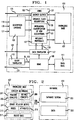
- Figure 1 shows an artificial intelligence system 101, which involves a database of facts and which is implemented using the present invention.
- the major components are the following:
- system 101 The operation of system 101 is as follows: The user presents a query to be answered 119. This query is created by means of description language 101, which specifies the syntactic conventions by which the query should be constructed. The query formulated in DL 101 (121) is passed to query translator 113, which translates it into QL 115, which is accepted by the database management system 109. DBMS 109 processes the query with respect to the data in its stored database 111, and returns the answer in the form of tables 123 to the user.
- the results 126 of the query in the form produced by translator 117 can also be passed directly to the KBMS 105 and stored for future reference (using KBMS integration process 127).
- the user can add a new description 129 expressed in DL 101 directly to the knowledge base 107. Once expressed in DL 101, this new description 129 can be added to the organized descriptions resident in knowledge base 107 by means of incremental description integration process 131. The added effect of this integration is that all individual objects previously introduced into knowledge base 107 are automatically tested to see if they satisfy the new description, and any that succeed are classified as belonging to that new description 129.
- KBMS 105 can accept a user description (131) as a query to be answered directly by the KBMS, based on the information that has been stored in knowledge base 107.
- the answer to such a query 133 thus takes into account any previous descriptions entered into the KB 107 as well as all data entered there from the database 111 via translator 117.
- the initial "raw" data is held in a conventional database (111), managed by a conventional database management system (109).
- a relational database manager which, as exemplified in Figure 2, contains at least a database schema 201 and the data 203 in the form of relational tables.
- Relational DB managers of this sort are widespread and well-known (for an introduction to database technology, see Navathe, supra .
- the tables are simply sets of records or "rows", each row in a given table having the same structure as all other rows in the table (this is specified by the schema for that table).
- Figure 3 for example, we see a sample record from the table "PEOPLE" 303.
- the schema for this table 301 dictates the form of the rows, in particular stating that each row in the PEOPLE table must have a name field, and age, sex, mother, and father fields (the "domains", or set of permissible values, can also be specified in the schema; e.g., age might be restricted to an integer, whereas sex must be a member of the set ⁇ M,F ⁇ ).
- age might be restricted to an integer
- sex must be a member of the set ⁇ M,F ⁇ .
- data 203 in the database 111 is accessed via a query language 115.
- the most common example is SQL, which allows the user to select various columns (technically a projection) from sets of tables, where the selection of rows is constrained by various clauses, including those that "join" together two tables based on the value of an attribute (e.g., joining two tables based on social security number would yield a row with combined information about the same individual).
- the form of SQL queries is relatively simple: select ⁇ field names> from ⁇ table names> where ⁇ constraints that rows must satisfy>.
- Such a select statement can also be followed by a "group by" clause that allows the aggregation of properties by collecting together all rows that have the same field values, as dictated by the group by clause. For example, if a table CHILD_TABLE was capturing the set of relationships between a person and his/her children by having one row per parent/child pair, the number of children for each person could be obtained by this query: select parent,count(*) from CHILD_TABLE group by parent.
- the knowledge base management system 105 is based on a class of formalisms called “description logics” (often referred to as “terminological logics”). These are a well-known class of artificial intelligence representation languages that owe their origin in large part to a well-known system called KL-One (R. J. Brachman & J. G. Schmolze, "An Overview of the KL-One Knowledge Representation System", Cognitive Science, Vol. 9, No. 2, April-June, 1985, pp. 171-216).
- DL 103 The key ingredient of such description logics is a description language (DL 103) that allows the user to express complex descriptions (the rough equivalent of English noun phrases) in a compositional way; that is, the language allows the expression of fully defined concepts that are built in a compositional manner from previously defined concepts.
- a concept like "CAT” would not be fully defined in a DL, since it is virtually impossible to find a full necessary and sufficient specification of the properties of cats. This would make the formal description CAT be what is called a "primitive” description or concept.
- the concept of a "CAT with blue eyes” could be built compositionally from the concept CAT and the attribute EYE-COLOR.
- CAT-WITH-BLUE-EYES the formal description or concept
- DL-based KBMS systems take the user's description of terms like CAT-WITH-BLUE-EYES and "classify” them -- find their relationships to all previously specified terms.
- This classification procedure relies on the ability to find a generalization (or "subsumption") relationship between any pair of terms expressed in the DL.
- the classification process finds all previously-specified descriptions that are more general (i.e., that subsume) the new one, and all previously-specified descriptions that are more specific (i.e., that are subsumed by) the new one. They can find which of the more general ones are most specific, and which of the more specific ones that are most general, and place the new one in between those.
- the DL of choice is the language, CLASSIC (L. A. Resnick, "The CLASSIC User's Manual", AT&T Bell Laboratories Technical Report , 1991; R. J. Brachman, A. Borgida, D. L. McGuinness, P. F. PatelSchneider, and L. A: Resnick, "Living with Classic: How and When to Use a KL-One-like Language", in J. Sowa, ed., Principles of Semantic Networks: Explorations in the Representation of Knowledge , Morgan Kaufmann, 1991, pp. 401-456).
- CLASSIC has a number of description-forming constructs representative of the family of description languages mentioned above.
- a CLASSIC knowledge base 107 has three main parts (see Figure 2): (1) a set of concept definitions 205; these are the named descriptions that are stored and organized by the CLASSIC KBMS. As mentioned above, they can be either primitive (207) or compositional ("defined" -- 209); (2) a set of binary relation definitions 211; in CLASSIC these can be "roles” 213, which can have more than one value (e.g., child), or "attributes” 215, which can have only a single filler (e.g., age, mother); and (3) a set of individual object descriptions 217, which characterize individual objects in the world in terms of the concept definitions 205 and which are related together by means of the role definitions 211.
- the PERSON primitive concept definition 305 says that a person is, among other things (the qualification is the meaning of the "PRIMITIVE" construct), something with at most two parents, exactly 1 gender and exactly 1 age.
- the MOTHER compositional concept definition 307 equates the term MOTHER with the phrase "a person whose gender is exactly 'female' and who has at least one child".
- Algorithms supported by the KBMS 105 include (1) the classification of descriptions 135, as discussed above; this provides the ability to take class or individual descriptions 129 from the user and to add them to the knowledge base 107 in the correct place in the generalization ordering; (2) an algorithm 137 that directly answers users' queries 131 from the knowledge base 107; (3) an incremental classification algorithm for new descriptions 131 that takes a new description 129 and adds them to the generalization ordering as well as classifies all individuals currently in the object base 217 with respect to the new description; this algorithm can be a variant or algorithm 135; (4) a special set of KBMS integrator functions 127 that allow the integration of individuals coming from the database without invoking the classification functions 135.
- a user forms descriptions and/or queries in the description language 103. These are presented to the system and an appropriate place in a generalization ordering of other descriptions is found by algorithm 135.
- the user-generated description may possibly be named and stored permanently in the generalization ordering in knowledge base 107.
- a query in the query language 115 of the database is algorithmically generated by query translator 113 and issued to the database. If the database query processing has been optimized, this query is composed to take advantage of that optimization. In any case, the query is structured so that when a result is returned to the description language system, the basic classification algorithm for individual objects does not have to be run.
- Classification algorithm 135 is normal machinery for DL-based systems like CLASSIC and many others, see William A. Woods and James G. Schmolze, "The KL-ONE Family, " to appear in Computers and Mathematics with Applications, Special Issue on Semantic Networks in Artificial Intelligence , but query translator 113 is not.
- Figure 4 shows more detail on the present invention with respect to the translator.
- the heart of the translator is Algorithm 1, which takes as input a compositional concept description 401 expressed in DL 103, and two sets of view definitions, 403 and 405.
- the view definitions are query language 115 (SQL) expressions for the primitive concepts and roles defined in the knowledge base 107.
- View definitions 403 are for primitive concepts; they are constructed such that when executed by the query language interpreter 109 they return tables with one row each for each object that satisfies the primitive concept description.
- a primitive concept like PERSON can be defined by a view 503 (PERSON_VIEW), which retrieves one row per person in the database; this view derives such a table from the database table PEOPLE.
- the rows returned must also have filled in values from the database for each attribute; in this example, the PERSON view 503 derives the value of the gender attribute from the sex field of the database record, and derives the value of its age attribute from the years field of the database record.
- each row produced must have a key, so that each individual can be given a unique name in the knowledge base based on the key.
- the key is taken from the name field of the PEOPLE table. This is a particularly simple view, since it maps a single database field onto a single knowledge base attribute, but the mappings can be and typically are substantially more complex.
- View definitions 405 are similar. They correspond to roles in the knowledge base 107.
- a role view definition must return a table from the database that has two fields in each row, one for the individual from whom the role will emanate in the knowledge base 107, and one for the value of that role.
- View definition 505 gives an example. It defines the view for determining fillers of the child role from the database. Note that CHILDREN_VIEW will return a table with rows with two fields, the first calculated by fetching either the father or mother field of the PEOPLE relation, the second calculated by fetching the name of the person.
- Views such as 503 and 505 are taken as input by Algorithm 1, and used to translate input concept descriptions 401 to the database query language. For example, if the user inputs the description 501, which means "a person whose children include Chuck", Algorithm 1 will utilize the view definitions 503 for PERSON and 505 for children (which are both used in description 501), and create the SQL query 507.
- Query 507 joins the PERSON_VIEW and children_VIEW tables, asking to return any rows from the PERSON_VIEW table whose name is the same as the "from” field in the children-VIEW table (this is the join; to make sure that both tables are talking about the same individual, the key field generated by view 503 is used here), and where the person in question is in the "from” field of a row in the children_VIEW table where the database name (DBName) of Chuck is in the "to” field of the same row. In the case mentioned above, this will return the rows for Liz and Phil that presumably exist in the PEOPLE table (not shown).
- Algorithm 1 for constructing such queries 407/507 is depicted in Figure 6.
- the preprocessing step 601 transforms the query 401 to a form more convenient for processing. Preprocessing involves at least, for every description in the stored generalization ordering, (1) separation of restrictions involving attributes from those involving roles; (2) separation of restrictions of the form (ALL p (ONE-OF%)) and (ALL p (TEST-H%)) from general ALL restrictions of the form (ALL p C); (3) combination of (AT-MOST n p) restrictions with (AT-LEAST m p) restrictions into single restrictions, (NUM-BDS p m n).
- This phase makes mapping into effective SQL queries easier (e.g., attributes can be gathered with individuals, as illustrated in Figure 5, but roles must be expressed in separate rows in a role-view table).
- GetSQL 603 actually computes the query. It uses subsidiary function Translate 605, which is described in Figure 7. Basically, GetSQL first creates an empty SQL query Q 607. Assuming that the DL description C (401) is the conjunction of a named concept NamedC and set of constructors D1, D2, etc., GetSQL then calls Translate on the D1, and passes it a reference to the key of the view defined for NamedC. Translate 605 returns two sets of clauses, which are then concatenated to the from clause of Q 607 and the where clause of Q 607. This in essence produces the query corresponding to the conjunction of NamedC and D1. The process is repeated for D2, etc., until all constructors are translated. The result is the final query to be passed to the DBMS 109.
- Translate 605 returns two sets of clauses, which are then concatenated to the from clause of Q 607 and the where clause of Q 607. This in essence produces the query corresponding to the conjunction of NamedC and D1. The process is repeated
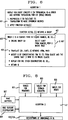
- Figure 8 illustrates Algorithm 2, which is the heart of data translator 117.
- This algorithm takes as input tables resulting from a database query, and translates the rows of the tables into descriptions of individual objects (125/126) in the description language 103. It assumes that one row of a table generated by a concept query (either 801 or 803) will correspond to one individual object to be created; one row of a role table 805 (a table created by a role query 405/505) will result in the assertion of a single relationship between two objects.
- Algorithm 2 also takes as input a set of name mappings 807 and a set of role closure specifications 809.
- mappings 807 allow for the fact that the same individual can be indicated one way in a database and a completely different way in a knowledge base (for example, the DB may use social security numbers to identify individuals, and the knowledge base may use first and last name pairs).
- the closure specifications 809 indicate whether or not the data in the database is considered complete for a given role (see below).
- Figure 9 provides some pseudo-code for Algorithm 2, and an example of its output, generated by a query for PERSONs and their children (this would be issued, for example, when trying to initially populate the knowledge base 107 with complete descriptions of all people described in the database 111).
- An individual object that is indicated by a row of a concept table from the database has three relevant parts: (1) the parent concept in the knowledge base 107 that was used to find the individual; in the example 901, this would be PERSON; (2) values for the attributes in the knowledge base for the object; in the example 901, these would be the values for gender and age; (3) values for any relevant roles in the knowledge base; in the example, the values for children would be computed by the role view definition 505.
- Algorithm 2 In order to convert these rows to descriptions in DL 103, the three simple steps in Algorithm 2 are used. Note that attributes of objects appear in the rows of the tables returned from concept queries (along with the key to the individual object). An individual is created for each row in the concept table; its name is generated from the key specified in that row. That name can be just the key (e.g., Liz), a combination of the concept name and the key (e.g., Person#Liz), or some mapping from the key to an identifier, as specified by the user (e.g., ElizabethJones).
- a combination of the concept name and the key e.g., Person#Liz
- some mapping from the key to an identifier as specified by the user (e.g., ElizabethJones).
- Each value of each attribute is described in DL 103 based on a mapping (807) specified by the user (e.g., the number (65) for the age is just mapped into a number in DL 103; it could just has well have been mapped into a discrete value like "SeniorCitizen”).
- Step 2 of Algorithm 2 the role values (children in the example) are added to the description.
- the user has the option to state whether the role should be "closed” when the data from the database is filled in (in the preferred embodiment, this is done with role closure specifications 809). This would mean that the data in the database is complete, and no further fillers of the role can be claimed.
- the database has complete information about people's children, then we would have Algorithm 2 close the children role. In the event that the database is incomplete, and Liz might have other, unspecified children, we would not close the role.
- the example 901 shows no role closure operations.
- the complete list of parent concepts that describe the individual object can be determined. In the example, Liz would not only be found by the PERSON view definition, but also by one for MOTHER, since she is Female and has at least one child.
- the parent concepts can be consolidated in a list, as in the example 901.
- the final piece of the preferred embodiment is the mechanism for taking the output of the data translator 117 and integrate the descriptions of individuals into the knowledge base 107.
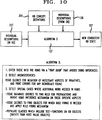
- the integration mechanism 127 is illustrated in Figure 10.
- the first step is to take descriptions 126 issued from the data translator 117 and enter these into the database 107 without invoking the normal individual classification functions 135. These result in direct assertions of concept membership for the individuals, direct assertions of the attributes for the individuals, and direct assertion of role relationships, all without integrity checking, inheritance of properties, or classification. Once the initial assertions are made (which will typically be substantially faster than if the normal classification functions had been used), it is important to check directly for inconsistencies (in case the data in the database does not match the schema requirements of the knowledge base).
- Step 2 of Algorithm 3 which issues queries to the database with the negations of any necessary properties of the relevant primitive concepts in the knowledge base, and with checking of disjoint primitive views for overlaps. For example, if it were required in the knowledge base that every PERSON must also be an EMPLOYEE, this step would issue a query looking for persons who were not employees; if any were found, the user would be warned of such a violation. Under normal use of a KBMS like CLASSIC, these requirements would be checked as soon as an update is made; since integrator 127 does not invoke the normal classification apparatus, it must make these checks for consistency, even if it avoids classification.
- description languages like CLASSIC may have facilities for computing inferences that are not duplicable with SQL queries; these include (1) forward-chaining rules; (2) "test-functions” that invoke user code written using CLASSIC objects and functions, rather than functions over base (or “host”) values; the latter (but not the former) would allow their invocation directly as part of the SQL query execution (e.g., as C programs); and (3) forms of inferential propagation that depend on the state of the knowledge base and not just on the schema for a concept or role.
- these inferences must specifically be invoked after the direct assertions are made to the knowledge base.
- Step 3 of Algorithm 3 indicate what must be done in the case of a CLASSIC knowledge base 107. Inferential propagations that need additional queries are invoked, and the normal KBMS 105 inference mechanisms are invoked when the original SQL is insufficient. Rules indicate further descriptions to be added to individuals when they are found to satisfy certain descriptions; rule invocation must be facilitated by issuing queries that find all objects to which a rule is applicable but for which the consequent of the rule does not hold; these would be found by the means already described, which determines the instances satisfying named descriptions. The normal CLASSIC mechanisms could then be used to apply the rules that need application.
Landscapes
- Engineering & Computer Science (AREA)
- Databases & Information Systems (AREA)
- Theoretical Computer Science (AREA)
- Data Mining & Analysis (AREA)
- Physics & Mathematics (AREA)
- General Engineering & Computer Science (AREA)
- General Physics & Mathematics (AREA)
- Computational Linguistics (AREA)
- Information Retrieval, Db Structures And Fs Structures Therefor (AREA)
Applications Claiming Priority (2)
| Application Number | Priority Date | Filing Date | Title |
|---|---|---|---|
| US07/781,464 US5418943A (en) | 1991-10-23 | 1991-10-23 | Information system with knowledge base and data base |
| US781464 | 2001-02-12 |
Publications (2)
| Publication Number | Publication Date |
|---|---|
| EP0542430A2 true EP0542430A2 (de) | 1993-05-19 |
| EP0542430A3 EP0542430A3 (en) | 1993-08-25 |
Family
ID=25122836
Family Applications (1)
| Application Number | Title | Priority Date | Filing Date |
|---|---|---|---|
| EP19920309447 Withdrawn EP0542430A3 (en) | 1991-10-23 | 1992-10-16 | Information access apparatus and methods |
Country Status (4)
| Country | Link |
|---|---|
| US (1) | US5418943A (de) |
| EP (1) | EP0542430A3 (de) |
| JP (1) | JPH06290102A (de) |
| CA (1) | CA2079285A1 (de) |
Cited By (7)
| Publication number | Priority date | Publication date | Assignee | Title |
|---|---|---|---|---|
| EP0596659A3 (de) * | 1992-11-06 | 1995-05-03 | American Telephone & Telegraph | Apparat und Verfahren zur Analyse von Daten. |
| EP0696366A4 (de) * | 1994-02-28 | 1998-07-15 | Thomas Kirk | Gerät und verfahren zur erfassung und wiedergabe von informationen |
| EP1311970A4 (de) * | 2000-05-24 | 2007-07-25 | Haley Systems Inc | System zur unternehmens-wissensverwaltung und automatisierung |
| US8135576B2 (en) | 2004-11-12 | 2012-03-13 | Oracle International Corporation | System for enterprise knowledge management and automation |
| EP2592572A1 (de) * | 2011-11-02 | 2013-05-15 | Sap Ag | Erleichterung der Extraktion und der Erkennung von Unternehmensdiensten |
| US9177289B2 (en) | 2012-05-03 | 2015-11-03 | Sap Se | Enhancing enterprise service design knowledge using ontology-based clustering |
| US9189566B2 (en) | 2010-12-07 | 2015-11-17 | Sap Se | Facilitating extraction and discovery of enterprise services |
Families Citing this family (95)
| Publication number | Priority date | Publication date | Assignee | Title |
|---|---|---|---|---|
| US6578027B2 (en) * | 1996-08-20 | 2003-06-10 | Business Objects, Sa | Relational database access system using semantically dynamic objects |
| US5615112A (en) * | 1993-01-29 | 1997-03-25 | Arizona Board Of Regents | Synthesized object-oriented entity-relationship (SOOER) model for coupled knowledge-base/database of image retrieval expert system (IRES) |
| EP0667587A3 (de) * | 1994-02-15 | 1996-01-31 | Motorola Inc | Verfahren zum generischen Beschreiben von Messergebnissen. |
| CA2148028A1 (en) * | 1994-05-25 | 1995-11-26 | Deborah L. Mcguinness | Knowledge base management system with dependency information for procedural tests |
| JP3310116B2 (ja) * | 1994-08-31 | 2002-07-29 | 株式会社東芝 | 知識ベースシステム |
| US5764974A (en) * | 1995-08-30 | 1998-06-09 | Unisys Corporation | System with user specified pattern definitions for matching input messages and associated decisions for conditionally responding to the input messages |
| US5809493A (en) * | 1995-12-14 | 1998-09-15 | Lucent Technologies Inc. | Knowledge processing system employing confidence levels |
| US5989835A (en) | 1997-02-27 | 1999-11-23 | Cellomics, Inc. | System for cell-based screening |
| US5715371A (en) * | 1996-05-31 | 1998-02-03 | Lucent Technologies Inc. | Personal computer-based intelligent networks |
| US6272481B1 (en) | 1996-05-31 | 2001-08-07 | Lucent Technologies Inc. | Hospital-based integrated medical computer system for processing medical and patient information using specialized functional modules |
| US5778157A (en) * | 1996-06-17 | 1998-07-07 | Yy Software Corporation | System and method for expert system analysis using quiescent and parallel reasoning and set structured knowledge representation |
| US5745889A (en) * | 1996-08-09 | 1998-04-28 | Digital Equipment Corporation | Method for parsing information of databases records using word-location pairs and metaword-location pairs |
| US5987450A (en) * | 1996-08-22 | 1999-11-16 | At&T | System and method for obtaining complete and correct answers from incomplete and/or incorrect databases |
| US5870739A (en) * | 1996-09-20 | 1999-02-09 | Novell, Inc. | Hybrid query apparatus and method |
| US5873079A (en) * | 1996-09-20 | 1999-02-16 | Novell, Inc. | Filtered index apparatus and method |
| US5884304A (en) * | 1996-09-20 | 1999-03-16 | Novell, Inc. | Alternate key index query apparatus and method |
| US6415319B1 (en) | 1997-02-07 | 2002-07-02 | Sun Microsystems, Inc. | Intelligent network browser using incremental conceptual indexer |
| US6385600B1 (en) | 1997-04-03 | 2002-05-07 | At&T Corp. | System and method for searching on a computer using an evidence set |
| US6425118B1 (en) | 1997-07-18 | 2002-07-23 | Compaq Computer Corporation | System for automatically generating tests to ensure binary compatibility between software components produced by a source-to-source computer language translator |
| US6317871B1 (en) * | 1997-07-18 | 2001-11-13 | Compaq Computer Corporation | System for ensuring the accuracy of file structures in a source-to-source computer program translator |
| US6236994B1 (en) * | 1997-10-21 | 2001-05-22 | Xerox Corporation | Method and apparatus for the integration of information and knowledge |
| US6601058B2 (en) * | 1998-10-05 | 2003-07-29 | Michael Forster | Data exploration system and method |
| US6327587B1 (en) * | 1998-10-05 | 2001-12-04 | Digital Archaeology, Inc. | Caching optimization with disk and/or memory cache management |
| EP1145149B1 (de) * | 1998-11-13 | 2005-04-06 | Cellomics, Inc. | Verfahren und system zum effizienten gewinnen und speichern von experimentellen daten |
| US6411936B1 (en) | 1999-02-05 | 2002-06-25 | Nval Solutions, Inc. | Enterprise value enhancement system and method |
| US6438541B1 (en) * | 1999-02-09 | 2002-08-20 | Oracle Corp. | Method and article for processing queries that define outer joined views |
| US6408302B1 (en) * | 1999-06-28 | 2002-06-18 | Davox Corporation | System and method of mapping database fields to a knowledge base using a graphical user interface |
| US6421658B1 (en) * | 1999-07-30 | 2002-07-16 | International Business Machines Corporation | Efficient implementation of typed view hierarchies for ORDBMS |
| US20070219995A1 (en) * | 1999-10-08 | 2007-09-20 | Knowledge Filter | Knowledge filter |
| US7031952B1 (en) | 1999-10-08 | 2006-04-18 | Knowledge Filter, Inc. | Knowledge filter |
| JP2001216333A (ja) * | 1999-11-29 | 2001-08-10 | Xerox Corp | コンピュータ読取可能な媒体を持つデータ検索システム |
| US7403920B2 (en) * | 2000-01-14 | 2008-07-22 | Fujitsu Limited | Information mediating apparatus and method and storage medium storing information mediating program therein |
| CA2396495A1 (en) | 2000-01-25 | 2001-08-02 | Cellomics, Inc. | Method and system for automated inference creation of physico-chemical interaction knowledge from databases of co-occurrence data |
| US6647382B1 (en) | 2000-01-28 | 2003-11-11 | International Business Machines Corporation | Technique for detecting a subsuming temporal relationship of valid time data in a relational database management system |
| US6691097B1 (en) | 2000-01-28 | 2004-02-10 | International Business Machines Corporation | Technique for detecting a shared temporal relationship of valid time data in a relational database management system |
| AU6053401A (en) * | 2000-06-06 | 2001-12-17 | Nicolaas Deetlef Du Preez | Integrated enterprise and product design and transformation system |
| US7043457B1 (en) | 2000-06-28 | 2006-05-09 | Probuild, Inc. | System and method for managing and evaluating network commodities purchasing |
| US6813615B1 (en) | 2000-09-06 | 2004-11-02 | Cellomics, Inc. | Method and system for interpreting and validating experimental data with automated reasoning |
| US6640231B1 (en) * | 2000-10-06 | 2003-10-28 | Ontology Works, Inc. | Ontology for database design and application development |
| US6473367B2 (en) * | 2000-12-15 | 2002-10-29 | Koung-Chung Peng | Positioning mechanism for a radio clock |
| US7574376B1 (en) | 2001-06-12 | 2009-08-11 | Microstrategy Incorporated | System and method for generating and using a transaction enable report |
| US7415438B1 (en) | 2001-06-12 | 2008-08-19 | Microstrategy, Incorporated | System and method for obtaining feedback from delivery of informational and transactional data |
| US7801967B1 (en) | 2001-06-19 | 2010-09-21 | Microstrategy, Incorporated | Method and system for implementing database connection mapping for reporting systems |
| US7302639B1 (en) | 2001-06-19 | 2007-11-27 | Microstrategy, Inc. | Report system and method using prompt in prompt objects |
| US7356758B1 (en) | 2001-06-19 | 2008-04-08 | Microstrategy Incorporated | System and method for run-time report resolution of reports that include prompt objects |
| US6697808B1 (en) | 2001-06-19 | 2004-02-24 | Microstrategy, Inc. | Method and system for performing advanced object searching of a metadata repository used by a decision support system |
| US8005870B1 (en) | 2001-06-19 | 2011-08-23 | Microstrategy Incorporated | System and method for syntax abstraction in query language generation |
| US7725811B1 (en) | 2001-06-19 | 2010-05-25 | Microstrategy, Inc. | Report system and method using prompt object abstraction |
| US6801910B1 (en) | 2001-06-19 | 2004-10-05 | Microstrategy, Incorporated | Method and system for guiding drilling in a report generated by a reporting system |
| US7861161B1 (en) | 2001-06-19 | 2010-12-28 | Microstrategy, Inc. | Report system and method using prompt objects |
| US7925616B2 (en) | 2001-06-19 | 2011-04-12 | Microstrategy, Incorporated | Report system and method using context-sensitive prompt objects |
| US7430562B1 (en) | 2001-06-19 | 2008-09-30 | Microstrategy, Incorporated | System and method for efficient date retrieval and processing |
| US7356840B1 (en) | 2001-06-19 | 2008-04-08 | Microstrategy Incorporated | Method and system for implementing security filters for reporting systems |
| US7559048B1 (en) | 2001-06-19 | 2009-07-07 | Microstrategy Incorporated | System and method for managing objects between projects |
| US8051168B1 (en) | 2001-06-19 | 2011-11-01 | Microstrategy, Incorporated | Method and system for security and user account integration by reporting systems with remote repositories |
| US6772137B1 (en) | 2001-06-20 | 2004-08-03 | Microstrategy, Inc. | Centralized maintenance and management of objects in a reporting system |
| US7010518B1 (en) | 2001-06-20 | 2006-03-07 | Microstrategy, Inc. | System and method for user defined data object hierarchy |
| US7836178B1 (en) | 2001-06-20 | 2010-11-16 | Microstrategy Incorporated | Technique for limiting access to the resources of a system |
| US7509671B1 (en) | 2001-06-20 | 2009-03-24 | Microstrategy Incorporated | Systems and methods for assigning priority to jobs in a reporting system |
| US7228303B1 (en) | 2001-06-20 | 2007-06-05 | Microstrategy Inc. | System and method for remote manipulation of analytic reports |
| US7003512B1 (en) * | 2001-06-20 | 2006-02-21 | Microstrategy, Inc. | System and method for multiple pass cooperative processing |
| US8522192B1 (en) | 2001-06-20 | 2013-08-27 | Microstrategy Incorporated | Systems and methods for performing operations in a reporting system |
| US8606813B1 (en) | 2001-06-20 | 2013-12-10 | Microstrategy Incorporated | System and method for function selection in analytic processing |
| US6691100B1 (en) | 2001-06-20 | 2004-02-10 | Microstrategy, Incorporated | HTML/DHTML web interface system and method |
| US6859798B1 (en) | 2001-06-20 | 2005-02-22 | Microstrategy, Inc. | Intelligence server system |
| US6820073B1 (en) | 2001-06-20 | 2004-11-16 | Microstrategy Inc. | System and method for multiple pass cooperative processing |
| US6996568B1 (en) | 2001-06-20 | 2006-02-07 | Microstrategy Incorporated | System and method for extension of data schema |
| US6996569B1 (en) | 2001-06-20 | 2006-02-07 | Microstrategy Incorporated | Systems and methods for custom grouping of data |
| US6704723B1 (en) | 2001-06-20 | 2004-03-09 | Microstrategy, Incorporated | Method and system for providing business intelligence information over a computer network via extensible markup language |
| US7113993B1 (en) | 2001-06-20 | 2006-09-26 | Microstrategy, Inc. | Technique for handling server session requests in a system having a plurality of servers |
| US7617201B1 (en) | 2001-06-20 | 2009-11-10 | Microstrategy, Incorporated | System and method for analyzing statistics in a reporting system |
| US9183317B1 (en) | 2001-06-20 | 2015-11-10 | Microstrategy Incorporated | System and method for exporting report results from a reporting system |
| US6658432B1 (en) | 2001-06-20 | 2003-12-02 | Microstrategy, Inc. | Method and system for providing business intelligence web content with reduced client-side processing |
| US20030105673A1 (en) * | 2001-11-30 | 2003-06-05 | Dunbaugh Bradley Jay | Method for materials distribution |
| US7970782B1 (en) | 2002-01-14 | 2011-06-28 | Microstrategy Incorporated | Systems and methods for set filtering of data |
| US7421476B2 (en) * | 2002-10-29 | 2008-09-02 | Weaver Eric R | Method for converting internet messages for publishing |
| US7836031B2 (en) * | 2003-03-28 | 2010-11-16 | Microsoft Corporation | Systems and methods for employing a trigger-based mechanism to detect a database table change and registering to receive notification of the change |
| US20050234738A1 (en) * | 2003-11-26 | 2005-10-20 | Hodes Alan S | Competitive product intelligence system and method, including patent analysis and formulation using one or more ontologies |
| US20050144177A1 (en) * | 2003-11-26 | 2005-06-30 | Hodes Alan S. | Patent analysis and formulation using ontologies |
| US20050262489A1 (en) * | 2004-05-12 | 2005-11-24 | Streeter Gordon S | Knowledge representation language and knowledge processing environment |
| US7861253B1 (en) | 2004-11-12 | 2010-12-28 | Microstrategy, Inc. | Systems and methods for accessing a business intelligence system through a business productivity client |
| US7516181B1 (en) | 2005-02-08 | 2009-04-07 | Microstrategy, Inc. | Technique for project partitioning in a cluster of servers |
| US8761659B1 (en) | 2005-02-11 | 2014-06-24 | Microstrategy, Inc. | Integration of e-learning with business intelligence system |
| US8095386B2 (en) * | 2005-05-03 | 2012-01-10 | Medicity, Inc. | System and method for using and maintaining a master matching index |
| US8645313B1 (en) | 2005-05-27 | 2014-02-04 | Microstrategy, Inc. | Systems and methods for enhanced SQL indices for duplicate row entries |
| US7805456B2 (en) * | 2007-02-05 | 2010-09-28 | Microsoft Corporation | Query pattern to enable type flow of element types |
| US7865533B2 (en) * | 2007-02-05 | 2011-01-04 | Microsoft Corporation | Compositional query comprehensions |
| US7792838B2 (en) * | 2007-03-29 | 2010-09-07 | International Business Machines Corporation | Information-theory based measure of similarity between instances in ontology |
| JP5171962B2 (ja) * | 2007-10-11 | 2013-03-27 | 本田技研工業株式会社 | 異種データセットからの知識移転を伴うテキスト分類 |
| US9298854B2 (en) * | 2010-05-14 | 2016-03-29 | Hitachi, Ltd. | Time-series data management device, system, method, and program |
| US8964549B2 (en) | 2010-06-22 | 2015-02-24 | Sierra Wireless, Inc. | Method and apparatus for managing wireless communication based on network traffic level |
| US9720972B2 (en) | 2013-06-17 | 2017-08-01 | Microsoft Technology Licensing, Llc | Cross-model filtering |
| US9532086B2 (en) * | 2013-11-20 | 2016-12-27 | At&T Intellectual Property I, L.P. | System and method for product placement amplification |
| US10372689B1 (en) * | 2014-08-04 | 2019-08-06 | Intuit, Inc. | Consumer-defined service endpoints |
| US11514070B2 (en) * | 2018-10-06 | 2022-11-29 | Teradata Us, Inc. | Seamless integration between object-based environments and database environments |
Family Cites Families (10)
| Publication number | Priority date | Publication date | Assignee | Title |
|---|---|---|---|---|
| US4841441A (en) * | 1984-08-01 | 1989-06-20 | Adata Software Limited | Method of creating a computer system |
| JPS62251849A (ja) * | 1986-04-25 | 1987-11-02 | Hitachi Ltd | デ−タベ−スのアクセス最適化方式 |
| JP2565310B2 (ja) * | 1986-08-28 | 1996-12-18 | 株式会社日立製作所 | 知識ベースからデータベースへの変換装置 |
| US4884218A (en) * | 1987-10-01 | 1989-11-28 | International Business Machines Corporation | Knowledge system with improved request processing |
| US5282265A (en) * | 1988-10-04 | 1994-01-25 | Canon Kabushiki Kaisha | Knowledge information processing system |
| JPH02109149A (ja) * | 1988-10-19 | 1990-04-20 | Hitachi Ltd | 知識自動抽出型データベース管理システム |
| US5197005A (en) * | 1989-05-01 | 1993-03-23 | Intelligent Business Systems | Database retrieval system having a natural language interface |
| US5159667A (en) * | 1989-05-31 | 1992-10-27 | Borrey Roland G | Document identification by characteristics matching |
| EP0473864A1 (de) * | 1990-09-04 | 1992-03-11 | International Business Machines Corporation | Verfahren und Gerät zum Paraphrasieren von in logischen Formeln enthaltener Information |
| US5278980A (en) * | 1991-08-16 | 1994-01-11 | Xerox Corporation | Iterative technique for phrase query formation and an information retrieval system employing same |
-
1991
- 1991-10-23 US US07/781,464 patent/US5418943A/en not_active Expired - Lifetime
-
1992
- 1992-09-28 CA CA002079285A patent/CA2079285A1/en not_active Abandoned
- 1992-10-16 EP EP19920309447 patent/EP0542430A3/en not_active Withdrawn
- 1992-10-22 JP JP4308072A patent/JPH06290102A/ja active Pending
Non-Patent Citations (7)
| Title |
|---|
| "Bridging the Information Gap", A REVIEW OF PRODUCTS, SERVICES, AND RESEARCH, AAAI-87 |
| L. A. RESNICK: "The CLASSIC User's Manual", AT&T BELL LABORATORIES TECHNICAL REPORT, 1991 |
| M. M. HAMMER; D. J. MCLEOD: "Database Description with SDM: A Semantic Database Model", A CM TRANSACTIONS ON DATABASE SYSTEMS, vol. 6, no. 3, September 1981 (1981-09-01) |
| PETER G. SELFRIDGE: "Knowledge Representation Support for a Software Information System", PROCEEDINGS OF THE SEVENTH IEEE CONFERENCE ON AI APPLICATIONS, February 1991 (1991-02-01), pages 134 - 140 |
| R. J. BRACHMAN ET AL.: "Principles of Semantic Networks: Explorations in the Representation of Knowledge", 1991, MORGAN KAUFMANN, article "Living with Classic: How and When to Use a KL-One-like Language", pages: 401 - 456 |
| R. J. BRACHMAN; J. G. SCHMOLZE: "An Overview of the KL-One Knowledge Representation System", COGNITIVE SCIENCE, vol. 9, no. 2, April 1985 (1985-04-01), pages 171 - 216 |
| RONALD J. BRACHMAN: "The Basics of Knowledge Representation and Reasoning", AT&T TECHNICAL JOURNAL, vol. 67, no. 1, pages 7 - 24 |
Cited By (11)
| Publication number | Priority date | Publication date | Assignee | Title |
|---|---|---|---|---|
| EP0596659A3 (de) * | 1992-11-06 | 1995-05-03 | American Telephone & Telegraph | Apparat und Verfahren zur Analyse von Daten. |
| US5806060A (en) * | 1992-11-06 | 1998-09-08 | Ncr Corporation | Interactive data analysis employing a knowledge base |
| EP0696366A4 (de) * | 1994-02-28 | 1998-07-15 | Thomas Kirk | Gerät und verfahren zur erfassung und wiedergabe von informationen |
| EP1311970A4 (de) * | 2000-05-24 | 2007-07-25 | Haley Systems Inc | System zur unternehmens-wissensverwaltung und automatisierung |
| US7606782B2 (en) | 2000-05-24 | 2009-10-20 | Oracle International Corporation | System for automation of business knowledge in natural language using rete algorithm |
| US8135576B2 (en) | 2004-11-12 | 2012-03-13 | Oracle International Corporation | System for enterprise knowledge management and automation |
| US9189566B2 (en) | 2010-12-07 | 2015-11-17 | Sap Se | Facilitating extraction and discovery of enterprise services |
| EP2592572A1 (de) * | 2011-11-02 | 2013-05-15 | Sap Ag | Erleichterung der Extraktion und der Erkennung von Unternehmensdiensten |
| US9069844B2 (en) | 2011-11-02 | 2015-06-30 | Sap Se | Facilitating extraction and discovery of enterprise services |
| US9740754B2 (en) | 2011-11-02 | 2017-08-22 | Sap Se | Facilitating extraction and discovery of enterprise services |
| US9177289B2 (en) | 2012-05-03 | 2015-11-03 | Sap Se | Enhancing enterprise service design knowledge using ontology-based clustering |
Also Published As
| Publication number | Publication date |
|---|---|
| JPH06290102A (ja) | 1994-10-18 |
| CA2079285A1 (en) | 1993-04-24 |
| EP0542430A3 (en) | 1993-08-25 |
| US5418943A (en) | 1995-05-23 |
Similar Documents
| Publication | Publication Date | Title |
|---|---|---|
| US5418943A (en) | Information system with knowledge base and data base | |
| Borgida et al. | Loading data into description reasoners | |
| Calvanese et al. | Data integration in data warehousing | |
| Johnson | A data management strategy for transportable natural language interfaces | |
| Petry | Fuzzy databases: principles and applications | |
| Yazici et al. | Handling complex and uncertain information in the ExIFO and NF/sup 2/data models | |
| Cheung et al. | The model-assisted global query system for multiple databases in distributed enterprises | |
| Koubarakis et al. | A retrospective on Telos as a metamodeling language for requirements engineering | |
| Albert et al. | Automatic importation of relational schemas in Pegasus | |
| Shepherd et al. | PRISM: A knowledge based system for semantic integrity specification and enforcement in database systems | |
| Chen et al. | Identifying object isomerism in multidatabase systems | |
| Vermeer et al. | Object-Oriented Views of Relational Databases Incorporating Behaviour. | |
| Bergamaschi et al. | Exploiting Schema Knowledge for the Integration of Heterogeneous Sorces. | |
| Chen et al. | Query construction for user-guided knowledge discovery in databases | |
| Sedigh et al. | Semantic query in a relational database using a local ontology construction | |
| Dart et al. | Conceptual schemas applied to deductive databases | |
| Tankoano | Providing in RDBMSs the flexibility to work with various non-relational data models | |
| Bergamaschi et al. | Momis: An intelligent system for the integration of semistructured and structured data | |
| Fonkam et al. | Employing integrity constraints for query modification and intensional answer generation in multi-database systems | |
| Sen et al. | Deductive data modeling: A new trend in database management for decision support systems | |
| Mayadewi et al. | Study relational database transformation to ontology | |
| Bouguettaya | Ontologies and databases | |
| Hubbard | Computer-assisted logical database design | |
| Meng et al. | Transformation of relational schemas to object-oriented schemas | |
| Hirao | Extension of the relational database semantic processing model |
Legal Events
| Date | Code | Title | Description |
|---|---|---|---|
| PUAI | Public reference made under article 153(3) epc to a published international application that has entered the european phase |
Free format text: ORIGINAL CODE: 0009012 |
|
| AK | Designated contracting states |
Kind code of ref document: A2 Designated state(s): DE FR GB IT |
|
| PUAL | Search report despatched |
Free format text: ORIGINAL CODE: 0009013 |
|
| AK | Designated contracting states |
Kind code of ref document: A3 Designated state(s): DE FR GB IT |
|
| 17P | Request for examination filed |
Effective date: 19940210 |
|
| RAP3 | Party data changed (applicant data changed or rights of an application transferred) |
Owner name: AT&T CORP. |
|
| 18W | Application withdrawn |
Withdrawal date: 19970425 |