EP0542484B1 - Composés organosiliciés et compositions à base de ces composés - Google Patents
Composés organosiliciés et compositions à base de ces composés Download PDFInfo
- Publication number
- EP0542484B1 EP0542484B1 EP92310163A EP92310163A EP0542484B1 EP 0542484 B1 EP0542484 B1 EP 0542484B1 EP 92310163 A EP92310163 A EP 92310163A EP 92310163 A EP92310163 A EP 92310163A EP 0542484 B1 EP0542484 B1 EP 0542484B1
- Authority
- EP
- European Patent Office
- Prior art keywords
- group
- carbon atoms
- value
- radiation
- denotes
- Prior art date
- Legal status (The legal status is an assumption and is not a legal conclusion. Google has not performed a legal analysis and makes no representation as to the accuracy of the status listed.)
- Expired - Lifetime
Links
Classifications
-
- C—CHEMISTRY; METALLURGY
- C08—ORGANIC MACROMOLECULAR COMPOUNDS; THEIR PREPARATION OR CHEMICAL WORKING-UP; COMPOSITIONS BASED THEREON
- C08G—MACROMOLECULAR COMPOUNDS OBTAINED OTHERWISE THAN BY REACTIONS ONLY INVOLVING UNSATURATED CARBON-TO-CARBON BONDS
- C08G77/00—Macromolecular compounds obtained by reactions forming a linkage containing silicon with or without sulfur, nitrogen, oxygen or carbon in the main chain of the macromolecule
- C08G77/48—Macromolecular compounds obtained by reactions forming a linkage containing silicon with or without sulfur, nitrogen, oxygen or carbon in the main chain of the macromolecule in which at least two but not all the silicon atoms are connected by linkages other than oxygen atoms
- C08G77/50—Macromolecular compounds obtained by reactions forming a linkage containing silicon with or without sulfur, nitrogen, oxygen or carbon in the main chain of the macromolecule in which at least two but not all the silicon atoms are connected by linkages other than oxygen atoms by carbon linkages
-
- C—CHEMISTRY; METALLURGY
- C08—ORGANIC MACROMOLECULAR COMPOUNDS; THEIR PREPARATION OR CHEMICAL WORKING-UP; COMPOSITIONS BASED THEREON
- C08G—MACROMOLECULAR COMPOUNDS OBTAINED OTHERWISE THAN BY REACTIONS ONLY INVOLVING UNSATURATED CARBON-TO-CARBON BONDS
- C08G77/00—Macromolecular compounds obtained by reactions forming a linkage containing silicon with or without sulfur, nitrogen, oxygen or carbon in the main chain of the macromolecule
- C08G77/04—Polysiloxanes
- C08G77/20—Polysiloxanes containing silicon bound to unsaturated aliphatic groups
-
- C—CHEMISTRY; METALLURGY
- C08—ORGANIC MACROMOLECULAR COMPOUNDS; THEIR PREPARATION OR CHEMICAL WORKING-UP; COMPOSITIONS BASED THEREON
- C08G—MACROMOLECULAR COMPOUNDS OBTAINED OTHERWISE THAN BY REACTIONS ONLY INVOLVING UNSATURATED CARBON-TO-CARBON BONDS
- C08G77/00—Macromolecular compounds obtained by reactions forming a linkage containing silicon with or without sulfur, nitrogen, oxygen or carbon in the main chain of the macromolecule
- C08G77/04—Polysiloxanes
- C08G77/38—Polysiloxanes modified by chemical after-treatment
-
- C—CHEMISTRY; METALLURGY
- C08—ORGANIC MACROMOLECULAR COMPOUNDS; THEIR PREPARATION OR CHEMICAL WORKING-UP; COMPOSITIONS BASED THEREON
- C08K—Use of inorganic or non-macromolecular organic substances as compounding ingredients
- C08K5/00—Use of organic ingredients
- C08K5/0091—Complexes with metal-heteroatom-bonds
Definitions
- the invention is concerned with organosilicon compounds having alkenyl-ether functionality and with a method of making such compounds.
- the invention is also concerned with compositions which contain such organosilicon compounds and their use.
- the process as described in the former of these includes the provision of a compound having both allyl and vinyloxy functionality and the reaction of this compound with a silicon-containing compound containing at least 0.5 weight percent terminal or pendant Si-H groups in the presence of a platinum catalyst.
- compositions which comprise 1 to 60% by weight of the above alkenylether silicates, 30 to 99% of a polymerisable vinylether, epoxyether, epoxyacrylate and/or vinyloxy alkyl urethane and 0.1 to 5% by weight of a photoinitiator.
- the alkenylether silicates are stated to be rapidly curable at ambient temperatures by UV and visible light or other sources of radiation. However, such silicates would cure to a very brittle and unacceptable film which is why the radiation curable compositions mix these silicates with polymerisable organic materials.
- There is a need for a composition which reduces the number of components whilst retaining a useful cured composition after exposure to radiation and a fast curing rate.
- siloxanes are copolymers having units of both formula (ii) and formula (iii). Copolymers also may vary from disiloxanes to polysiloxanes.
- Units of formula (ii) may be present in small or large proportions, ranging from 1 per molecule to 99.9% of all units.
- a particularly preferred copolymer is a substantially linear polymer in which units of formula (ii) are present as end-blocking units.
- c in formula (ii) is only equal to 1 when a+b+c+d is equal to 4.
- Each R in the organosilicon compounds according to the invention may be the same or different from other groups R.
- Each R is a monovalent hydrocarbon or a substituted hydrocarbon e.g. alkyl, aryl, alkylaryl, arylalkyl, alkenyl, halogenated alkyl or halogenated aryl.
- suitable R groups include methyl, ethyl, isopropyl, butyl, phenyl, tolyl, vinyl, allyl, cyclohexenyl, cyclohexyl, trifluoropropyl and chlorophenyl.
- R groups in the organosilicon compound according to the invention are lower alkyl groups having up to 4 carbon atoms or aryl groups, more preferably at least 80%. Most preferably substantially all R groups present in said organosilicon compounds are lower alkyl or aryl groups, especially methyl or phenyl groups.
- R' is a divalent hydrocarbon, for example alkylene or arylene compound, e.g. methylene, ethylene or phenylene or a group of the formula -R°-(OR°) n -, for example -(CH 2 ) 3 [O(CH 2 ) 3 ] 3 -.
- R' is an alkylene group having up to 6 carbon atoms, most preferably 2 to 4 carbon atoms, e.g. ethylene, propylene or isobutylene.
- R" may be a hydrogen atom or an alkyl group having up to 10 carbon atoms. It is preferred that R" is either hydrogen or a lower alkyl group, having up to 4 carbon atoms. Hydrogen or methyl are the most preferred R" groups.
- Groups X may be any hydrocarbonoxy group but preferably are alkoxy or aryloxy groups, more preferably lower alkoxy having up to 6 carbon atoms, most preferably methoxy or ethoxy.
- Siloxane polymers according to the invention are preferably substantially linear compounds, i.e. those in which the value of 4-a-b-c-d in (ii) or 3-b' in Y of (ii) and 4-b in (iii) is 2 for the majority of siloxane units in the polymer.
- Small amounts of trifunctional i.e. the value of 4-a-b-c-d in (ii), 3-b' in Y of (ii) or 4-b in (iii) is 3 or tetrafunctional siloxane units (i.e. the value of 4-b in (iii) is 4 may, however, also be present causing a certain amount of branching in the polymers.
- Organosiloxanes according to the invention may have any number of siloxane units which may all have the formula (ii), or which may be a mixture of units of the formulae (ii) and (iii). These siloxanes may vary from small molecules, e.g. disiloxanes, to high molecular weight materials with a DP (degree of polymerisation) of several thousands. The choice of molecular weight and of mole% units (ii) will depend on the intended use of the polymer. For example if a liquid material is desired, the DP may conveniently be in the range of e.g. from 4 to 400. Where a more viscous material is preferred, the DP could have a value of from 1000 to 4000 or more.
- the number of units of formula (ii) may be as low as 1 or 2 per molecule, in some cases resulting in a molar percentage of from 0.1 to 5% based on the number of siloxane units in the molecule.
- the scale homopolymers consisting only of units of formula (ii) may also be prepared.
- Particularly preferred are polysiloxanes having a degree of polymerisation from 20 to 500, more preferably 40 to 250.
- organosilicon compounds are silanes they should have reactive silicon-bonded groups which are then hydrolysed or cohydrolysed, or otherwise reacted with other silanes or siloxanes according to known methods.
- the organosilicon compound having a silicon-bonded group A is a polysiloxane.
- Suitable polysiloxanes include alkoxy functional siloxanes wherein silicon-bonded alkoxy groups may be at terminal siloxane units or may be pending in the siloxane chain. A combination of pending and terminal silicon-bonded A groups is also suitable.
- R"OH has a lower boiling point than HR'OH at 25°C under atmospheric pressure. If the opposite is true high pressure is required to force the transalkoxylation of this reaction.
- Preferred reagent organosilicon compounds have a siloxane portion and at least one unit of the general formula O 4-a-b-c-d 2 Si(A) a R b Y c X d wherein R, X, Y, a , b , c and d are as defined above and A denotes a group -OR" or a group -N(R")-C(O)-R".
- Silanes wherein the value of a+b+d is 4 are known materials and have been described in a number of publications. Many such silanes are commercially available.
- silanes examples include trimethylsilanol, dimethylvinylsilanol, methyltrimethoxysilane, tetra ethoxysilane and bis(methylacetamido)methylvinylsilane.
- Siloxanes which are suitable as reagent organosilicon compounds are also known in the art and several of them are commercially available. Other suitable materials are easily prepared according to methods which are well known in the art of organosilicon chemistry.
- Suitable siloxanes may be prepared by a number of methods which are known in the art.
- hydrosiloxanes include, for example, the reaction of hydrosiloxanes with silanes having one or more silicon-bonded A groups and an unsaturated hydrocarbon group, able to react with silicon-bonded hydrogen atoms of the hydrosiloxanes in the presence of a noble metal catalyst.
- suitable silanes for this addition reaction include vinyltrimethoxysilane, vinylmethyldimethoxysilane and vinyldimethylmethoxysilane.
- Hydrosiloxanes are known and may be prepared by rearrangement of cyclic siloxanes, e.g. cyclic dimethylsiloxanes and/or cyclic methylhydrogensiloxanes with suitable end-blocking organosilicon compounds, e.g.
- R' may be for example methylene, dimethylene, isobutylene, phenylene or -(CH 2 ) 3 [O(CH 2 ) 3 ] 3 - and R" may be hydrogen, methyl, ethyl, propyl, hexyl or nonyl.
- Catalysts for the preparation of the organosilicon compounds according to the invention are not required where the value of A in the formula (iv) is -N(R")-C(O)-R". Where the value of A is OR" any transesterification or transalkoxylation catalyst may be used. Suitable transesterification catalysts have been described for example in U.S. 3,133,111 and other publications and include alkali metal alkoxides, Sn compounds, Ti compounds, Ba compounds as well as standard strong alkali compounds. Strong acid compounds should be avoided as they tend to polymerise the oxyalkenyl groups. Particularly useful catalysts include alkali metal alkoxides, e.g. Na methoxide and titanium compounds, e.g.
- the alkoxide catalysts and strongly acidic or basic catalysts should preferably be avoided where the organosilicon compound is to be a siloxane as they tend to cause some rearrangement of the siloxane polymers. Where a catalyst is used it is generally employed in sufficient amounts to give from 0.01 to about 5% by weight based on the weight of the organosilicon reagent compound. It is particularly preferred to ensure any titanium catalyst, if used, is kept to a minimum as excess may inhibit the radiation cure of the compositions according to the invention. Most preferably the level is kept below 1000ppm of titanium based on the total weight of the polymer.
- Organosilicon compounds according to the first aspect of the invention are crosslinkable materials which can form an elastomeric or resinous film or composition upon exposure to radiation in the presence of an appropriate catalyst e.g. actinic radiation, electron beam, gamma rays, X-rays or laser emission. They are particularly useful when applied to a substrate as a thin coating and are caused to crosslink by exposing the coated substrate to ultraviolet or electron beam radiation as their cure rate in such systems is very fast. Thus they are particularly useful in compositions for the formation of release coatings on cellulosic or other substrates, e.g.
- composition which will cure upon exposure to radiation, which comprises at least one organosilicon compound according to the first aspect of the invention and an initiator.
- Radiation which may cause the composition to cure varies from very high energy radiation to lower energy radiation but is preferably radiation in the ultraviolet range or the electron beam range. UV radiation is preferred as it provides the best combination of convenience, economy, efficiency and safety for a fast curing composition. In case of the composition being adapted to curing under radiation by ultraviolet light the initiator will be a photoinitiator. While UV radiation in the range of wavelengths of from 190 to 350nm is preferred the use of sensitisers may allow a widening of efficient wavelengths into the visible light. Suitable sensitisers are well known in the art and have been described in great detail in numerous publications. They include as the most well known material benzophenone. Curing rate of the compositions according to the invention when exposed to radiation is fast.
- composition coated as a thin film will cure to an elastomeric or resinous material in less than 30 minutes, more typically, in less than 5 minutes. It may be as quick as 1 to 30 seconds. Upon exposure to radiation, the film will be tackfree in an even shorter time.
- Suitable initiators may be onium salts or certain nitrobenzyl sulfonate esters.
- Onium salts which are useful as initiators in the compositions of the present invention are known and have been described e.g. in the above mentioned patent specification E.P. 105 341.
- Nitrobenzyl sulfonate esters which are useful as initiators in the compositions of the present invention have the general formula wherein A' denotes an alkyl group, an aryl group, an alkylaryl group, a halogen substituted alkyl, aryl or alkylaryl group or a group C 6 H 4 -SO 3 -CHR'C 6 H 4-m Q m (NO 2 ), R' denotes hydrogen or methyl, Q denotes a hydrocarbon group, a group NO 2 or an organosilicon compound, provided Q is not an acidic group, m has a value of 0, 1 or 2.
- a preferred nitrobenzyl derivative has a value for m equal to 1, while Q denotes a NO 2 group in the ortho position in relation to the -CHR'OS(O) 2 A' group and A' denotes a nitrophenyl group, wherein the nitro group is in the para position relative to the sulphonic group.
- Preparation of the preferred nitrobenzyl derivative may be via the reaction of nitrotosylchloride with dinitrobenzylalcohol.
- Initiators may be present in any proportions which will effect curing of the composition. As with any catalytic system it is preferred to restrict the amount of initiator used as much as possible. We have found that efficient amounts of initiator tend to be in the range of from 0.1 to 10% by weight based on the weight of the organosilicon compound, preferably 1 to 5%.
- the initiators may be introduced into the composition by mere mixing of the initiators with the organosilicon compounds. After exposure to radiation the composition will then cure to an elastomeric material.
- compositions according to the invention may also comprise a number of other ingredients.
- Optional additional ingredients include photosensitisers, as mentioned above, fillers, high release additives, e.g. vinylated organosilicon resins, reactive diluents, including silanes according to application WO 91/11467, photochromic materials, dyes, colorants, preservatives, fragrances etc.
- photosensitisers as mentioned above
- fillers e.g. vinylated organosilicon resins
- reactive diluents e.g. vinylated organosilicon resins
- reactive diluents including silanes according
- compositions are most useful as coatings, especially release coatings for backing paper for self-adhesive labels. They may also be self-supporting, e.g. as carriers of pharmaceutical or agrochemical material. This is of particular interest where controlled release of certain materials is envisaged, especially where these materials are unstable, e.g. to heat, but are not affected by radiation.
- Curing itself may be achieved in any of the known ways, including passing a coated substrate under the desired source of radiation, e.g. a UV lamp, at a predetermined rate and exposing a complete coated substrate to radiation by switching on the required energy source for a predetermined time.
- desired source of radiation e.g. a UV lamp
- substrates which have been coated with a release coating resulting from coating the substrate with a composition according to the invention and curing the composition by exposure to radiation.
- a second toluene solution which contained 0.0646 mole of an ⁇ ,w-silanol end-blocked polydimethylsiloxane having on average 8 silicon atoms per molecule was added dropwise to the solution under stirring. After a further hour of stirring, 0.03966 mole of 4-ethenyloxy-1-butanol was added dropwise to the solution. An exothermic reaction was observed.
- Table I Example x y Molecular Weight 7 18 0 2,258 8 17.5 0.5 - 9 17 1 - 10 15.5 2.5 3,163 11 43 0 4,108 12 41.8 1.2 - 13 40.5 2.5 4,983 14 68 0 - 15 66.2 1.8 - 16 64.5 3.5 - 17 98 0 8,178 18 95 3 9,300
- Laminates were prepared from these coatings using an acrylic Tesa® testband tape (A7475) to test the release properties of the coatings.
- a release force A was required as indicated (in g/cm) in Table II below.
- the coated materials were aged for 1 day at 50°C, giving release force values B, 7 days at room temperature, giving release force values C and for 7 days at 50°C, giving release force values D.
- the subsequent adhesive strength is the % adhesive strength of the delaminated material compared with the initial adhesive strength. This was measured on the same samples as above, but delamination rate was at 0.3m/minute.
- Results are given in Table II under E, F, G and H respectively for the samples aged for 1 day at room temperature, 1 day at 50°C, 7 days at room temperature and 7 days at 50°C.
- Example A B C D E F G H 20 38 80 22 106 93 99 91 90 21 32 21 32 66 91 94 87 89 22 28 59 60 101 93 92 88 90 23 17 22 20 27 99 99 81 81 24 19 27 20 28 85 85 90 89 25 18 30 23 30 100 100 98 95 26 12 19 50 24 95 99 92 91 27 17 34 24 24 92 86 89 92
- the higher viscosity materials (those having a degree of polymerisation of 45 or more) perform better than those of lower viscosity.
- Example 18 In 97.5 parts of the product obtained in Example 18 were dissolved 2.5 parts of bis(dodecylphenyl) iodonium hexafluoroantimonate. The mixture was coated at a loading of 5g/m 2 onto a polyolefin film which was subsequently exposed to electron beam radiation (2.5 mRads). The material cured giving a tack free crosslinked film with a non-migratory surface.
- reaction was repeated using as catalyst tetraisopropyl titanate, resulting in similar reaction products.
Landscapes
- Chemical & Material Sciences (AREA)
- Health & Medical Sciences (AREA)
- Chemical Kinetics & Catalysis (AREA)
- Medicinal Chemistry (AREA)
- Polymers & Plastics (AREA)
- Organic Chemistry (AREA)
- General Chemical & Material Sciences (AREA)
- Silicon Polymers (AREA)
- Macromonomer-Based Addition Polymer (AREA)
- Processes Of Treating Macromolecular Substances (AREA)
- Compositions Of Macromolecular Compounds (AREA)
- Polymerisation Methods In General (AREA)
Claims (13)
- Composé organosilicié ayant une partie siloxane et au moins un groupe répondant à la formule générale
-OR'OCH=CHR" (i)
lié à un atome de silicium par l'intermédiaire d'une liaison Si-O-C, où R' est un radical hydrocarboné bivalent ayant jusqu'à 8 atomes de carbone, ou un groupe répondant à la formule -R°-(QR°)n-, où R° signifie un groupe alkylène ayant jusqu'à 6 atomes de carbone, et n a une valeur de 1 à 12, R" signifie un atome d'hydrogène ou un groupe alkyle ayant jusqu'à 10 atomes de carbone. - Composé organosilicié selon la revendication 1, caractérisé, en outre, en ce qu'il contient au moins une unité répondant à la formule générale

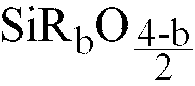


- Composé organosilicié selon la revendication 1 ou 2, caractérisé, en outre, en ce que ledit composé est un copolymère de siloxanes essentiellement linéaire dans lequel la valeur de 4-a-b-c-d en (ii), de 3-b' dans Y de (ii) et de 4-b en (iii) est de 2 pour la majorité des unités siloxanes.
- Composé organosilicié selon l'une quelconque des revendications précédentes, caractérisé, en outre, en ce qu'au moins 80 % des groupes R signifient le groupe méthyle, R' est un groupe alkylène ayant de 2 à 4 atomes de carbone, et R" est l'hydrogène ou un groupe alkyle ayant jusqu'à 4 atomes de carbone.
- Procédé de préparation de composés organosiliciés selon l'une quelconque des revendications 1 à 4, comprenant la mise en réaction d'un composé organosilicié réactif ayant au moins un groupe A lié à un atome de silicium, où A signifie un groupe -OR" ou un groupe -N(R")-C(O)-R", où R" est tel que défini ci-dessus, conjointement avec un composé répondant à la formule générale HOR'OCH=CHR".
- Procédé selon la revendication 5, caractérisé, en outre, en ce que le composé HOR'OCH=CHR" est l'éther d'hydroxybutyle et de vinyle.
- Composition durcissant par exposition à un rayonnement, caractérisée en ce qu'elle comprend au moins un composé organosilicié selon l'une quelconque des revendications 1 à 4 et un initiateur.
- Composition selon la revendication 7, caractérisée en ce que le rayonnement est un rayonnement UV, et l'initiateur est un photo-initiateur.
- Composition selon la revendication 8, caractérisée en ce que le photo-initiateur est un sel du type onium répondant à la formule générale Z2I+MXn -, Z3S+MXn -, Z3Se+MXn -, Z4P+MXn - ou Z4N+MXn -, où chaque Z signifie indépendamment un groupe organique ayant de 1 à 30 atomes de carbone, et MXn - est un anion non basique, non nucléophile, ou en ce que le photo-initiateur est un ester sulfonate de nitrobenzyle répondant à la formule générale

- Composition selon la revendication 9, caractérisée en ce que l'anion non basique, non nucléophile est choisi parmi BF4 -, PF6 -, AsF6 -, SbF6 -, SbCl6 -, HSO4 - et ClO4 -.
- Composition selon l'une quelconque des revendications 7 à 10, caractérisé en ce qu'elle comprend aussi des siloxanes photodurcissables à fonctionnalité époxy.
- Procédé pour traiter un substrat solide avec une composition organosiliciée, comprenant le revêtement dudit substrat avec une composition selon l'une quelconque des revendications 7 à 11 et l'exposition dudit substrat revêtu à un rayonnement.
- Procédé selon la revendication 12, caractérisé en ce que ledit rayonnement est un rayonnement ultraviolet, et dans lequel ledit substrat est un substrat formé de cellulose, de polyester ou de polyéthylène.
Applications Claiming Priority (2)
| Application Number | Priority Date | Filing Date | Title |
|---|---|---|---|
| GB9124247 | 1991-11-14 | ||
| GB919124247A GB9124247D0 (en) | 1991-11-14 | 1991-11-14 | Novel organosilicon compounds and compositions containing them |
Publications (2)
| Publication Number | Publication Date |
|---|---|
| EP0542484A1 EP0542484A1 (fr) | 1993-05-19 |
| EP0542484B1 true EP0542484B1 (fr) | 1997-01-02 |
Family
ID=10704653
Family Applications (1)
| Application Number | Title | Priority Date | Filing Date |
|---|---|---|---|
| EP92310163A Expired - Lifetime EP0542484B1 (fr) | 1991-11-14 | 1992-11-05 | Composés organosiliciés et compositions à base de ces composés |
Country Status (7)
| Country | Link |
|---|---|
| US (1) | US5270423A (fr) |
| EP (1) | EP0542484B1 (fr) |
| JP (1) | JPH05271417A (fr) |
| CA (1) | CA2082835C (fr) |
| DE (1) | DE69216371T2 (fr) |
| FI (1) | FI925174L (fr) |
| GB (1) | GB9124247D0 (fr) |
Cited By (1)
| Publication number | Priority date | Publication date | Assignee | Title |
|---|---|---|---|---|
| US7622159B2 (en) | 1999-01-28 | 2009-11-24 | Loparex, Inc. | Release liners and processes for making the same |
Families Citing this family (25)
| Publication number | Priority date | Publication date | Assignee | Title |
|---|---|---|---|---|
| US4824997A (en) * | 1988-01-25 | 1989-04-25 | Monsanto Company | Method for preparation of alkyl glycolates |
| DE4215030A1 (de) * | 1992-05-07 | 1993-11-11 | Wacker Chemie Gmbh | Vinyloxygruppen aufweisende Siloxancopolymere, deren Herstellung und Verwendung |
| US5866666A (en) * | 1992-05-07 | 1999-02-02 | Wacker-Chemie Gmbh | Siloxane copolymers containing vinyloxy groups, their preparation and their use |
| JP2868672B2 (ja) * | 1992-08-31 | 1999-03-10 | 沖電気工業株式会社 | シリコーン樹脂組成物及びこれを用いたケイ酸ガラス薄膜の製造方法 |
| US5594042A (en) * | 1993-05-18 | 1997-01-14 | Dow Corning Corporation | Radiation curable compositions containing vinyl ether functional polyorganosiloxanes |
| EP0625533A1 (fr) * | 1993-05-18 | 1994-11-23 | Dow Corning Corporation | Compositions de siloxane, durcissable par irradiation, contenant une fonction vinyl-ether et méthodes pour leur préparation |
| US5861467A (en) * | 1993-05-18 | 1999-01-19 | Dow Corning Corporation | Radiation curable siloxane compositions containing vinyl ether functionality and methods for their preparation |
| US5399651A (en) * | 1994-05-10 | 1995-03-21 | Dow Corning Corporation | Adhesion promoting additives and low temperature curing organosiloxane compositions containing same |
| US5625023A (en) | 1994-12-09 | 1997-04-29 | Dow Corning Corporation | Aerosol suppressant compositions for silicone coatings |
| US5824761A (en) * | 1995-05-18 | 1998-10-20 | Dow Corning Corporation | Radiation curable compositions containing vinyl ether functionality and methods for their preparation |
| US5814271A (en) * | 1996-09-03 | 1998-09-29 | Dow Corning Corporation | Process of producing fibers from curable alk-1-enyl ether functional siloxane resins |
| US5994454A (en) * | 1996-10-25 | 1999-11-30 | Dow Corning Corporation | Aerosol suppressant compositions for silicone coatings |
| US6040353A (en) * | 1998-11-25 | 2000-03-21 | Dow Corning Corporation | Radiation curable silicone compositions |
| US6054549A (en) * | 1998-11-25 | 2000-04-25 | Dow Corning Asia, Ltd. | Alkenyl ether functional polyisobutylenes and methods for the preparation thereof |
| US6069185A (en) * | 1998-11-25 | 2000-05-30 | Dow Corning Asia, Ltd. | Radiation curable compositions containing alkenyl ether functional polyisobutylenes |
| US6127502A (en) * | 1998-12-21 | 2000-10-03 | Dow Corning Corporation | Polyorganosiloxanes having at least one organofunctional group with multiple hydrolyzable groups |
| US6299945B1 (en) | 1999-01-28 | 2001-10-09 | Loparex Inc. | Processes for making release liners |
| US6703433B1 (en) | 2000-05-12 | 2004-03-09 | Dow Corning Corporation | Radiation curable compositions containing alkenyl ether functional polyisobutylenes |
| US6242058B1 (en) | 2000-05-12 | 2001-06-05 | Dow Corning Corporation | Method for forming coatings from radiation curable compositions containing alkenyl ether functional polyisobutylenes |
| US20060094322A1 (en) * | 2004-10-29 | 2006-05-04 | Ouderkirk Andrew J | Process for manufacturing a light emitting array |
| US7404756B2 (en) * | 2004-10-29 | 2008-07-29 | 3M Innovative Properties Company | Process for manufacturing optical and semiconductor elements |
| US20060105483A1 (en) * | 2004-11-18 | 2006-05-18 | Leatherdale Catherine A | Encapsulated light emitting diodes and methods of making |
| CN101939360B (zh) * | 2008-02-07 | 2014-06-25 | 新日铁住金化学株式会社 | 有机硅树脂及其制造方法以及含有该有机硅树脂的固化型树脂组合物 |
| CN108368269B (zh) | 2015-11-05 | 2021-03-05 | 巴斯夫欧洲公司 | 制备聚亚烷基醚改性的聚硅氧烷的方法及其用途 |
| EP3371245B1 (fr) | 2015-11-05 | 2019-08-07 | Basf Se | Procédé de préparation de polysiloxanes à modification éther de polyalkylène et leur utilisation |
Family Cites Families (9)
| Publication number | Priority date | Publication date | Assignee | Title |
|---|---|---|---|---|
| DE2918254C2 (de) * | 1979-05-05 | 1984-08-30 | Th. Goldschmidt Ag, 4300 Essen | Verfahren zur Herstellung von vernetzten Organopolysiloxanen und deren Verwendung in abhäsiven Beschichtungsmassen |
| DE3106059A1 (de) * | 1981-02-19 | 1982-09-02 | Herberts Gmbh, 5600 Wuppertal | Durch bestrahlung haertbare polyorganosiloxanmasse und ihre verwendung zur bildung von trennueberzuegen |
| US4617238A (en) * | 1982-04-01 | 1986-10-14 | General Electric Company | Vinyloxy-functional organopolysiloxane compositions |
| DE3533350A1 (de) * | 1985-09-19 | 1987-03-19 | Goldschmidt Ag Th | Organopolysiloxane und diese enthaltende aushaertbare organopolysiloxanzubereitung |
| JPS6363684A (ja) * | 1986-09-04 | 1988-03-22 | Shin Etsu Chem Co Ltd | 有機ケイ素化合物 |
| FR2637606B1 (fr) * | 1988-10-11 | 1990-12-14 | Rhone Poulenc Chimie | Dispersion aqueuse de silicone a base d'alcenyloxysilane reticulant en un elastomere par elimination de l'eau |
| DE3914896A1 (de) * | 1989-05-05 | 1990-11-22 | Wacker Chemie Gmbh | Enoxyfunktionelle organosiliciumverbindungen, deren herstellung und verwendung |
| US5045572A (en) * | 1990-01-26 | 1991-09-03 | Gaf Chemicals Corporation | Radiation curable cross linkable compositions containing an aliphatic polyfunctional alkenyl ether |
| DE4019711A1 (de) * | 1990-06-21 | 1992-01-09 | Goldschmidt Ag Th | Haertbare organopolysiloxane mit ueber sioc-gruppen gebundenen oxyalkylenethergruppen, ihre herstellung und verwendung |
-
1991
- 1991-11-14 GB GB919124247A patent/GB9124247D0/en active Pending
-
1992
- 1992-11-05 DE DE69216371T patent/DE69216371T2/de not_active Expired - Fee Related
- 1992-11-05 EP EP92310163A patent/EP0542484B1/fr not_active Expired - Lifetime
- 1992-11-11 JP JP4300991A patent/JPH05271417A/ja active Pending
- 1992-11-13 FI FI925174A patent/FI925174L/fi unknown
- 1992-11-13 US US07/976,114 patent/US5270423A/en not_active Expired - Fee Related
- 1992-11-13 CA CA002082835A patent/CA2082835C/fr not_active Expired - Fee Related
Cited By (1)
| Publication number | Priority date | Publication date | Assignee | Title |
|---|---|---|---|---|
| US7622159B2 (en) | 1999-01-28 | 2009-11-24 | Loparex, Inc. | Release liners and processes for making the same |
Also Published As
| Publication number | Publication date |
|---|---|
| FI925174A7 (fi) | 1993-05-15 |
| EP0542484A1 (fr) | 1993-05-19 |
| FI925174A0 (fi) | 1992-11-13 |
| DE69216371T2 (de) | 1997-04-24 |
| JPH05271417A (ja) | 1993-10-19 |
| CA2082835C (fr) | 1999-05-04 |
| US5270423A (en) | 1993-12-14 |
| DE69216371D1 (de) | 1997-02-13 |
| FI925174L (fi) | 1993-05-15 |
| GB9124247D0 (en) | 1992-01-08 |
| CA2082835A1 (fr) | 1993-05-15 |
Similar Documents
| Publication | Publication Date | Title |
|---|---|---|
| US5270423A (en) | Organosilicon compounds and compositions containing them | |
| US5331020A (en) | Organosilicon compounds and compositions containing them | |
| EP0146307B1 (fr) | Hydrosilylation activée par irradiation | |
| US5037861A (en) | Novel highly reactive silicon-containing epoxides | |
| JP3499032B2 (ja) | 放射線硬化性組成物、その硬化方法及びパターン形成方法 | |
| US4617238A (en) | Vinyloxy-functional organopolysiloxane compositions | |
| US4600484A (en) | Hydrosilation process using a (η5 -cyclopentadienyl)tri(σ-aliphatic) platinum complex as the catalyst | |
| EP0105341B1 (fr) | Compositions d'organopolysiloxanes a groupe fonctionnel de vinyloxy | |
| US6140444A (en) | Catalyst system, process, and silicone compositions | |
| EP0682068B1 (fr) | Compositions pour promouvoir l'adhésion et compositions de silicone réticulables les contenant | |
| CA1262987A (fr) | Copolymeres de polysilarylene-polysiloxane reticulables | |
| JPH0710953B2 (ja) | 硬化性オルガノポリシロキサン組成物 | |
| KR100344475B1 (ko) | 오가노실록산화합물 | |
| US5449716A (en) | Functional polyorganosiloxane emulsions from dihydrolyzable silanes and photocurable compositions therefrom | |
| JP3022101B2 (ja) | 剥離性オルガノポリシロキサン組成物及び剥離紙 | |
| JPS6359423B2 (fr) | ||
| US5049611A (en) | Silacyclobutane functional polymers and their production | |
| KR20150084940A (ko) | 광-이량체화 작용기-함유 유기폴리실록산, 활성화 에너지 방사선-경화가능한 유기폴리실록산 조성물, 및 그의 경화된 생성물 | |
| JPH04178461A (ja) | 硬化性オルガノポリシロキサン組成物 | |
| EP0336633B1 (fr) | Résines de polysiloxane MTQ, procédé pour leur préparation et composition de revêtement ou d'enrobage | |
| EP0393954B1 (fr) | Organopolysiloxane durcissable par irradiation, procédé de préparation de cet organopolysiloxane et procédé de fabrication d'un film durci | |
| EP0542485B1 (fr) | Compositions durcissables par irradiation | |
| KR900005016B1 (ko) | 방사활성화 하이드로실레이숀 | |
| KR900005415B1 (ko) | 방사활성화 하이드로실레이숀 |
Legal Events
| Date | Code | Title | Description |
|---|---|---|---|
| PUAI | Public reference made under article 153(3) epc to a published international application that has entered the european phase |
Free format text: ORIGINAL CODE: 0009012 |
|
| AK | Designated contracting states |
Kind code of ref document: A1 Designated state(s): BE DE FR GB IT |
|
| 17P | Request for examination filed |
Effective date: 19930820 |
|
| 17Q | First examination report despatched |
Effective date: 19950314 |
|
| GRAG | Despatch of communication of intention to grant |
Free format text: ORIGINAL CODE: EPIDOS AGRA |
|
| GRAH | Despatch of communication of intention to grant a patent |
Free format text: ORIGINAL CODE: EPIDOS IGRA |
|
| GRAH | Despatch of communication of intention to grant a patent |
Free format text: ORIGINAL CODE: EPIDOS IGRA |
|
| GRAA | (expected) grant |
Free format text: ORIGINAL CODE: 0009210 |
|
| AK | Designated contracting states |
Kind code of ref document: B1 Designated state(s): BE DE FR GB IT |
|
| ITF | It: translation for a ep patent filed | ||
| REF | Corresponds to: |
Ref document number: 69216371 Country of ref document: DE Date of ref document: 19970213 |
|
| ET | Fr: translation filed | ||
| PLBE | No opposition filed within time limit |
Free format text: ORIGINAL CODE: 0009261 |
|
| 26N | No opposition filed | ||
| PGFP | Annual fee paid to national office [announced via postgrant information from national office to epo] |
Ref country code: FR Payment date: 19980828 Year of fee payment: 7 |
|
| PGFP | Annual fee paid to national office [announced via postgrant information from national office to epo] |
Ref country code: GB Payment date: 19981112 Year of fee payment: 7 |
|
| PGFP | Annual fee paid to national office [announced via postgrant information from national office to epo] |
Ref country code: BE Payment date: 19981118 Year of fee payment: 7 |
|
| PGFP | Annual fee paid to national office [announced via postgrant information from national office to epo] |
Ref country code: DE Payment date: 19981127 Year of fee payment: 7 |
|
| PG25 | Lapsed in a contracting state [announced via postgrant information from national office to epo] |
Ref country code: GB Free format text: LAPSE BECAUSE OF NON-PAYMENT OF DUE FEES Effective date: 19991105 |
|
| PG25 | Lapsed in a contracting state [announced via postgrant information from national office to epo] |
Ref country code: BE Free format text: LAPSE BECAUSE OF NON-PAYMENT OF DUE FEES Effective date: 19991130 |
|
| BERE | Be: lapsed |
Owner name: DOW CORNING LTD Effective date: 19991130 |
|
| GBPC | Gb: european patent ceased through non-payment of renewal fee |
Effective date: 19991105 |
|
| PG25 | Lapsed in a contracting state [announced via postgrant information from national office to epo] |
Ref country code: FR Free format text: LAPSE BECAUSE OF NON-PAYMENT OF DUE FEES Effective date: 20000731 |
|
| PG25 | Lapsed in a contracting state [announced via postgrant information from national office to epo] |
Ref country code: DE Free format text: LAPSE BECAUSE OF NON-PAYMENT OF DUE FEES Effective date: 20000901 |
|
| REG | Reference to a national code |
Ref country code: FR Ref legal event code: ST |
|
| PG25 | Lapsed in a contracting state [announced via postgrant information from national office to epo] |
Ref country code: IT Free format text: LAPSE BECAUSE OF NON-PAYMENT OF DUE FEES;WARNING: LAPSES OF ITALIAN PATENTS WITH EFFECTIVE DATE BEFORE 2007 MAY HAVE OCCURRED AT ANY TIME BEFORE 2007. THE CORRECT EFFECTIVE DATE MAY BE DIFFERENT FROM THE ONE RECORDED. Effective date: 20051105 |