EP0542897B1 - Herstellung monoklonaler Antikörper gegen menschliches Vbeta T-Zellrezeptorelement unter Verwendung rekombinanter DNA-Vektoren - Google Patents
Herstellung monoklonaler Antikörper gegen menschliches Vbeta T-Zellrezeptorelement unter Verwendung rekombinanter DNA-Vektoren Download PDFInfo
- Publication number
- EP0542897B1 EP0542897B1 EP91915852A EP91915852A EP0542897B1 EP 0542897 B1 EP0542897 B1 EP 0542897B1 EP 91915852 A EP91915852 A EP 91915852A EP 91915852 A EP91915852 A EP 91915852A EP 0542897 B1 EP0542897 B1 EP 0542897B1
- Authority
- EP
- European Patent Office
- Prior art keywords
- cell
- human
- cell receptor
- chimeric
- antibody
- Prior art date
- Legal status (The legal status is an assumption and is not a legal conclusion. Google has not performed a legal analysis and makes no representation as to the accuracy of the status listed.)
- Expired - Lifetime
Links
Images
Classifications
-
- C—CHEMISTRY; METALLURGY
- C12—BIOCHEMISTRY; BEER; SPIRITS; WINE; VINEGAR; MICROBIOLOGY; ENZYMOLOGY; MUTATION OR GENETIC ENGINEERING
- C12P—FERMENTATION OR ENZYME-USING PROCESSES TO SYNTHESISE A DESIRED CHEMICAL COMPOUND OR COMPOSITION OR TO SEPARATE OPTICAL ISOMERS FROM A RACEMIC MIXTURE
- C12P21/00—Preparation of peptides or proteins
-
- C—CHEMISTRY; METALLURGY
- C07—ORGANIC CHEMISTRY
- C07K—PEPTIDES
- C07K14/00—Peptides having more than 20 amino acids; Gastrins; Somatostatins; Melanotropins; Derivatives thereof
- C07K14/435—Peptides having more than 20 amino acids; Gastrins; Somatostatins; Melanotropins; Derivatives thereof from animals; from humans
- C07K14/705—Receptors; Cell surface antigens; Cell surface determinants
- C07K14/70503—Immunoglobulin superfamily
- C07K14/7051—T-cell receptor (TcR)-CD3 complex
-
- C—CHEMISTRY; METALLURGY
- C07—ORGANIC CHEMISTRY
- C07K—PEPTIDES
- C07K14/00—Peptides having more than 20 amino acids; Gastrins; Somatostatins; Melanotropins; Derivatives thereof
- C07K14/435—Peptides having more than 20 amino acids; Gastrins; Somatostatins; Melanotropins; Derivatives thereof from animals; from humans
- C07K14/705—Receptors; Cell surface antigens; Cell surface determinants
- C07K14/72—Receptors; Cell surface antigens; Cell surface determinants for hormones
- C07K14/721—Steroid/thyroid hormone superfamily, e.g. GR, EcR, androgen receptor, oestrogen receptor
-
- C—CHEMISTRY; METALLURGY
- C07—ORGANIC CHEMISTRY
- C07K—PEPTIDES
- C07K16/00—Immunoglobulins [IG], e.g. monoclonal or polyclonal antibodies
- C07K16/18—Immunoglobulins [IG], e.g. monoclonal or polyclonal antibodies against material from animals or humans
- C07K16/28—Immunoglobulins [IG], e.g. monoclonal or polyclonal antibodies against material from animals or humans against receptors, cell surface antigens or cell surface determinants
- C07K16/2803—Immunoglobulins [IG], e.g. monoclonal or polyclonal antibodies against material from animals or humans against receptors, cell surface antigens or cell surface determinants against the immunoglobulin superfamily
- C07K16/2809—Immunoglobulins [IG], e.g. monoclonal or polyclonal antibodies against material from animals or humans against receptors, cell surface antigens or cell surface determinants against the immunoglobulin superfamily against the T-cell receptor (TcR)-CD3 complex
-
- C—CHEMISTRY; METALLURGY
- C07—ORGANIC CHEMISTRY
- C07K—PEPTIDES
- C07K2319/00—Fusion polypeptide
Definitions
- This invention relates to field of immunology. More particularly, it relates to the preparation of chimeric molecules which are useful as cell surface antigens in the generation of antibodies, particularly monoclonal antibodies, to specific components of the repertoire of T cell receptor molecules.
- antibodies are protein molecules which are produced by B cells in response to infection. It is well known that these antibodies act to "disable” or to inactivate infectious agents in the course of combating the infection.
- antigen recognition requires interaction of an "antigen presentation cell”, a “processed antigen”, and a T-cell.
- an antigen presentation cell a “processed antigen”
- a T-cell a T-cell.
- the "processed antigen”, in an infection, is a molecule characteristic of the pathogen which has been treated, i.e., "processed”, by other cells which are a part of the immune system.
- the processed antigen interacts with a receptor on the surface of an antigen presenting cell in a manner not unlike a lock fitting into a key hole or, perhaps more aptly, two pieces of a jigsaw puzzle.
- MHC major histocompatibility complex
- HLA human leukocyte antigen
- MHC-II molecules are involved in most responses to pathogens. In contrast, MHC-I molecules are involved when the pathogen is a virus, or a malignant cell is involved. When MHC-I participation is involved, there is no antibody stimulation; rather, the interaction of MHC-I, processed antigen and T-cell leads to lysis of cells infected with the pathogen.
- TCR T-cell antigen receptor
- the TCR is recognized as a heterodimer, made up of alpha ( ⁇ ) and beta ( ⁇ ) chains.
- Five variable elements, coded for by germline DNA and known as "V ⁇ , J ⁇ , V ⁇ , D ⁇ , and J ⁇ " as well as non-germline encoded amino acids contribute to the TCR. See, in this regard, Marrack et al., Immunol. Today 9 : 308-315 (1988); Toyonaga et al., Ann. Rev. Immunol. 5: 585-620 (1987); Davis, Ann. Rev. Immunol.
- both the alpha and beta subunits are involved in recognition of the ligand formed by processed antigen and MHC/HLA molecule. This is not always the case, however, and it has been found that so-called "superantigens" stimulate T-cells with a particular V ⁇ element, regardless of any other element.
- Kappler et al. Cell 49 : 273-280 (1987); Kappler et al., Cell 49 : 263-271 (1987); MacDonald et al., Nature 332 : 40-45 (1988); Pullen et al., Nature 335 : 795-801 (1988); Kappler et al., Nature 332 : 35-40 (1988); Abe et al., J. Immunol.
- the V ⁇ element may be any of a number of different members of a related family of such elements. Different members of the family have different effects. See, in this regard Choi et al., Proc. Natl. Acad. Sci. USA 86 : 8941-8945 (1989), which showed that T-cells bearing human V ⁇ 13.2 respond to antigen SEC 2, while closely related V ⁇ 13.1 does not induce that type of result.
- V ⁇ 13.1 and V ⁇ 13.2 differ by only a few amino acids, however, making differentiation extremely difficult.
- Antibodies monoclonal antibodies in particular, are known for their ability to bind to specific protein molecules, allowing differentiation between even very closely related proteins. Differentiation of alternate or variant forms of oncogene proteins, glycoprotein hormones, and even V ⁇ elements using monoclonal antibodies is known to the art. In the case of V ⁇ elements, however, very few hybridomas are known which produce the desired mAbs, and those which are known are generally unstable. Since it is known that there are well over 30 different forms of V ⁇ elements already known (see Kappler et al., supra ), and one can expect this number to increase, it is important to have a method available which will generate the desired monoclonal antibodies.
- hybridomas will produce the desired antibody, and it then becomes necessary to screen the hybridomas by assaying them, generally with the antigen in question, to determine their specificity. Since the hybridomas produce only one form of antibody, these are referred to as monoclonal antibodies, the antibodies deriving from a single clone.
- T-cell receptors In the case of T-cell receptors, an additional difficulty exists in that the various members of this family differ to a very small degree, sometimes by less than 20 amino acids. While this degree of difference is key to the mounting of a proper immune response, the small degree of difference may not be sufficient to generate a monoclonal antibody which binds specifically to one member of the family, to the substantial exclusion of others.
- the present invention provides a process for producing a monoclonal antibody which specifically binds to a human V ⁇ T cell receptor (TCR) element, comprising:
- the host in view of the minuscule differences between the immunizing cells and the host cells, as well as the similarity of the two immune systems, the host generates antibodies specific to the human element of the molecule and the antibody-producing B cells can be used to generate monoclonal antibodies against this element.
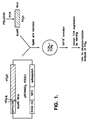
- FIG 1 shows, schematically, the methodology for expression of human V ⁇ elements ("hV ⁇ hereafter) in murine T cell hybridomas.
- the human V ⁇ gene is introduced into a gene which codes for a mouse TCR ⁇ chain.
- the resulting recombinant DNA is introduced into a TCR ⁇ positive, TCR ⁇ negative T cell hybridoma.
- Expression of the DNA and presentation of the resulting chimera is tested by studying the ability of the hybridoma to produce interleukin-2 ("IL-2") when stimulated by toxins presented by MHC-II molecules. This can also be accomplished by observing reaction with specific antibodies, as described infra . If the transfected cell produces the chimera, it is then used in an immunization protocol, following Köhler & Milstein, to result in sero-positive recipient mice. The spleens of these mice are then used, as outlined supra , in the generation of hybridomas and monoclonal antibodies against the human molecule portion of the chimera.
- An expression vector was constructed which carried mouse C ⁇ 2 and D ⁇ J ⁇ elements. This vector is referred to as p BDWMC ⁇ 2DODJ hereafter.
- a human V ⁇ region was prepared via amplification of cDNA prepared from human PBLS stimulated by anti-CD3 antibody, following Choi et al., Proc. Natl. Acad. Sci. 86 : 8941-8945 (1989), the disclosure of which is incorporated by reference herein.
- the amplified region was joined to the aforementioned vector in a proper reading frame alignment, and was transfected into mouse T cell hybridoma DS23-27.4. This cell line is characterized by production of all components of the TCR except the ⁇ chain.
- the transfected cells were selected via G418 resistance, as the expression vector also confers resistance to the antibiotic on the transfectants.
- Production of the chimeric molecule was determined via screening with either of anti-CD3 (145-2C11) or anti- ⁇ TCR (H57-597) antibody, as described by Kubo et al., J. Immunol. 142: 2736-2742 (1989), and Leo et al., Proc. Natl. Acad. Sci. USA 84 : 1374-1378 (1987).
- the hV ⁇ elements used were hV ⁇ 13.1 and hV ⁇ 13.2.
- the cDNA for these elements was prepared following Choi et al., supra .
- Example 1 the transfected T cell hybridomas were tested for their ability to respond to presented antigens, via measurement of IL-2 production.
- the toxins were used in concentrations of 10 ug/ml for SEB, SEC1, SEC2, SEC3, and SEA, and 1 ug/ml for SEA, ExT and TSST-1.
- the results are presented in Table 1, which follows. The # sign indicates less than 10 units of IL-2 per ml were produced, which is the limit of detection for the system.
- TCR receptor density which is a measure of surface expression, is presented as mean fluorescence of T cells stained with biotinylated anti- ⁇ TCR H57-597 plus phycoerythrin-streptavidin. Table 1. Response of Transfected T hybridomas to S. Aureus Toxins. V ⁇ Transfected T cell Hybridoma ⁇ TCR density Units/ml IL-2 Produced in Response to A20-11.1 + S.
- Table 2 presents the data: Table 2. Toxin Presentation is Not MHC Class II Allele Specific Antigen Presenting Cells T cells Units/ml IL-2 Produced in Response to S.
- V ⁇ 13.1 bearing transfectants did not respond very well to toxin antigens, but did respond to immobilized anti-C ⁇ antibody.
- V ⁇ 13.2 transfectant did respond to SEC2, and somewhat less well to SEC3, presenting cell being irrelevant. While not shown, these results were consistent over different concentrations.
- this transfectant showed the same panel reactivity as did VB 13.2. Magnitudes were actually higher, even when using anti-C ⁇ as stimulant. Probably, this is due to higher receptor density on the mosaic V ⁇ transfectant as compared to other cell lines.
- the transfected T cell hybridomas which produce hV ⁇ 13.1, hV ⁇ 13.2 and hV ⁇ 13.1 D2 also serve as immunogens for the development of monoclonal antibodies against the human portion thereof. Specifically, immunization and fusion following Köhler & Milstein was followed, yielding sero positive animals, and then hybridomas which produced monoclonal antibodies which specifically bind to the human portion.
- the disclosure thus teaches a vector useful in producing a chimeric T cell receptor molecule, wherein all but a specific portion thereof, namely V ⁇ is of one type, such as murine, whereas the specific portion is human. These chimeric molecules are shown to function as normal T cell receptors.
- the disclosure teaches the production of Transformed T cell hybridoma cell lines which express the foregoing chimeric T cell receptors on their surface. Such T cell hybridomas can be used, e.g., to assay for specific antigens to which they react by measuring, e.g., generation of IL-2 when the transformed cells are contacted to contain the antigen presented on an MHC II molecule bearing cell.
- the disclosure teaches a method of producing antibodies specific to a human T cell receptor element, namely V ⁇ . by immunizing an animal with the foregoing transformed cell, followed by fusion with an agent such as myeloma to produce hybridomas, after which screening is carried out to identify salient monoclonal antibodies.
Landscapes
- Health & Medical Sciences (AREA)
- Chemical & Material Sciences (AREA)
- Life Sciences & Earth Sciences (AREA)
- Immunology (AREA)
- Organic Chemistry (AREA)
- Biochemistry (AREA)
- Genetics & Genomics (AREA)
- Molecular Biology (AREA)
- General Health & Medical Sciences (AREA)
- Proteomics, Peptides & Aminoacids (AREA)
- Biophysics (AREA)
- Zoology (AREA)
- Medicinal Chemistry (AREA)
- Gastroenterology & Hepatology (AREA)
- Toxicology (AREA)
- Cell Biology (AREA)
- Endocrinology (AREA)
- Engineering & Computer Science (AREA)
- Wood Science & Technology (AREA)
- General Chemical & Material Sciences (AREA)
- Chemical Kinetics & Catalysis (AREA)
- Microbiology (AREA)
- Biotechnology (AREA)
- Bioinformatics & Cheminformatics (AREA)
- General Engineering & Computer Science (AREA)
- Preparation Of Compounds By Using Micro-Organisms (AREA)
- Micro-Organisms Or Cultivation Processes Thereof (AREA)
- Medicines Containing Antibodies Or Antigens For Use As Internal Diagnostic Agents (AREA)
- Peptides Or Proteins (AREA)
Claims (9)
- Verfahren zur Herstellung eines monoklonalen Antikörpers, der sich spezifisch mit einem Human-Vβ-T-Zellrezeptor-Element bindet, welches umfaßt:(i) Transfektion einer Zelle, die alle Komponenten des T-Zellrezeptors eines nicht zur menschlichen Rasse gehörenden tierischen Lebewesens, außer der β-Kette ausprägen kann, mit einem Hybrid-DNA-Molekül, das eine Nukleinsäuresequenz umfaßt, die eine chimäre β-Kette des T-Zellrezeptors codiert, wobei die chimäre β-Kette aus einer β-Kette besteht, die normalerweise von einer T-Zelle eines nicht zur menschlichen Rasse gehörenden tierischen Lebewesens erzeugt wird, abgesehen von einem Element; wobei dieses eine Element das Human-Vβ-T-Zellrezeptor-Element ist;(ii) Immunisieren eines nicht zur menschlichen Rasse gehörenden tierischen Lebewesens der gleichen Spezies wie die Spezies, von der die T-Zelle stammt, mit der transfektierten Zelle, bei Bedingungen, die die Erzeugung von Antikörpern für diese transfektierte Zelle begünstigen;(iii) Isolieren der Antikörper erzeugenden Zellen aus dem Tier;(iv) Vereinigen der Antikörper erzeugenden Zellen mit einem Mittel, wodurch unsterbliche, Antikörper erzeugende Zellen erzeugt werden; und(v) Prüfen der unsterblichen, Antikörper erzeugenden Zellen, wodurch Antikörper abgetrennt werden, die für das Human-Vβ-T-Zellrezeptor-Element spezifisch sind.
- Verfahren nach Anspruch 1, wobei das nicht zur menschlichen Rasse gehörende tierische Lebewesen eine Maus ist.
- Verfahren nach Anspruch 1 oder 2, wobei das Mittel eine Myelomzelle ist.
- Verfahren nach Anspruch 1, 2 oder 3, wobei das Human-Vβ-Element ein Vβ 13.1- oder ein Vβ 13.2-Element ist.
- Rekombinanter DNA-Vektor, der einen chimären T-Zellrezeptor codiert, wobei der chimäre T-Zellrezeptor ein Human-Vβ-T-Zellrezeptor-Element enthält, und die restlichen Teile davon keine Human-T-Zellrezeptor-Elemente sind, die für das einzelne nicht zur menschlichen Rasse gehörende tierische Lebewesen charakteristisch sind.
- Rekombinanter DNA-Vektor nach Anspruch 5, wobei das Vβ-Element ein Vβ 13.1- oder ein Vβ 13.2-Element ist.
- Nicht humane Zellinie, die mit einem DNA-Vektor nach Anspruch 5 oder 6 transfektiert ist, wobei die Zellinie von der gleichen Spezies des nicht zur menschlichen Rasse gehörenden tierischen Lebewesens wie der nichthumane Teil des chimären T-Zellrezeptors stammt.
- Transfektierte Zellinie nach Anspruch 7, wobei das nicht zur menschlichen Rasse gehörende tierische Lebewesen eine Maus ist.
Applications Claiming Priority (3)
| Application Number | Priority Date | Filing Date | Title |
|---|---|---|---|
| US56543990A | 1990-08-09 | 1990-08-09 | |
| US565439 | 1990-08-09 | ||
| PCT/US1991/005653 WO1992002629A1 (en) | 1990-08-09 | 1991-08-08 | Producing monoclonal antibodies against human t-cell receptor elements using recombinant dna vectors |
Publications (3)
| Publication Number | Publication Date |
|---|---|
| EP0542897A1 EP0542897A1 (de) | 1993-05-26 |
| EP0542897A4 EP0542897A4 (en) | 1993-08-18 |
| EP0542897B1 true EP0542897B1 (de) | 1997-01-29 |
Family
ID=24258606
Family Applications (1)
| Application Number | Title | Priority Date | Filing Date |
|---|---|---|---|
| EP91915852A Expired - Lifetime EP0542897B1 (de) | 1990-08-09 | 1991-08-08 | Herstellung monoklonaler Antikörper gegen menschliches Vbeta T-Zellrezeptorelement unter Verwendung rekombinanter DNA-Vektoren |
Country Status (12)
| Country | Link |
|---|---|
| US (1) | US5616472A (de) |
| EP (1) | EP0542897B1 (de) |
| JP (1) | JPH06502529A (de) |
| KR (1) | KR930701620A (de) |
| AT (1) | ATE148499T1 (de) |
| AU (1) | AU652959B2 (de) |
| CA (1) | CA2088905A1 (de) |
| DE (1) | DE69124518T2 (de) |
| DK (1) | DK0542897T3 (de) |
| ES (1) | ES2098368T3 (de) |
| GR (1) | GR3023102T3 (de) |
| WO (1) | WO1992002629A1 (de) |
Families Citing this family (10)
| Publication number | Priority date | Publication date | Assignee | Title |
|---|---|---|---|---|
| US5766947A (en) * | 1988-12-14 | 1998-06-16 | Astra Ab | Monoclonal antibodies reactive with an epitope of a Vβ3.1 variable region of a T cell receptor |
| US5552300A (en) * | 1994-01-13 | 1996-09-03 | T Cell Sciences, Inc. | T cell antigen receptor V region proteins and methods of preparation thereof |
| ATE533784T1 (de) * | 1997-10-02 | 2011-12-15 | Altor Bioscience Corp | Lösliche, einzelkettige proteine des t- zellrezeptors |
| DE69936927T2 (de) * | 1998-10-21 | 2008-05-15 | Altor Bioscience Corp., Miramar | Polyspezifische bindemoleküle und deren verwendung |
| EP1613724A4 (de) * | 2002-11-18 | 2010-09-01 | Us Gov Health & Human Serv | Zellinien und wirtsnukleinsäuresequenzen in verbindung mit infektionskrankheiten |
| US11982673B2 (en) | 2014-03-05 | 2024-05-14 | Autolus Limited | Methods |
| DK3241561T3 (da) * | 2014-03-05 | 2025-06-30 | Autolus Ltd | Konjugeret antistof eller bispecifik t-celle-engager, som selektivt binder enten tcr-beta konstant region 1 (trbc1) eller trbc2 |
| EP3303392B1 (de) | 2015-06-01 | 2020-08-05 | Medigene Immunotherapies GmbH | Verfahren zur erzeugung von antikörpern gegen t-zellrezeptor |
| EA201792660A1 (ru) | 2015-06-01 | 2018-05-31 | Медиджин Иммьюнотерапиз Гмбх | Библиотека т-клеточных рецепторов |
| TWI752930B (zh) | 2015-12-23 | 2022-01-21 | 德商梅迪基因免疫治療公司 | 抗原特異性tcr的新生成 |
Family Cites Families (2)
| Publication number | Priority date | Publication date | Assignee | Title |
|---|---|---|---|---|
| US5189147A (en) * | 1984-06-13 | 1993-02-23 | Massachusetts Institute Of Technology | Meterodimeric T lymphocyte receptor antibody |
| US5223426A (en) * | 1988-12-15 | 1993-06-29 | T Cell Sciences, Inc. | Monoclonal antibodies reactive with defined regions of the t-cell antigen receptor |
-
1991
- 1991-08-08 DE DE69124518T patent/DE69124518T2/de not_active Expired - Fee Related
- 1991-08-08 KR KR1019930700335A patent/KR930701620A/ko not_active Withdrawn
- 1991-08-08 EP EP91915852A patent/EP0542897B1/de not_active Expired - Lifetime
- 1991-08-08 ES ES91915852T patent/ES2098368T3/es not_active Expired - Lifetime
- 1991-08-08 JP JP3514673A patent/JPH06502529A/ja active Pending
- 1991-08-08 CA CA002088905A patent/CA2088905A1/en not_active Abandoned
- 1991-08-08 AT AT91915852T patent/ATE148499T1/de not_active IP Right Cessation
- 1991-08-08 WO PCT/US1991/005653 patent/WO1992002629A1/en not_active Ceased
- 1991-08-08 AU AU85006/91A patent/AU652959B2/en not_active Ceased
- 1991-08-08 DK DK91915852.7T patent/DK0542897T3/da active
-
1994
- 1994-07-21 US US08/278,629 patent/US5616472A/en not_active Expired - Fee Related
-
1997
- 1997-04-10 GR GR970400764T patent/GR3023102T3/el unknown
Also Published As
| Publication number | Publication date |
|---|---|
| DK0542897T3 (da) | 1997-02-17 |
| DE69124518D1 (de) | 1997-03-13 |
| ATE148499T1 (de) | 1997-02-15 |
| AU652959B2 (en) | 1994-09-15 |
| WO1992002629A1 (en) | 1992-02-20 |
| US5616472A (en) | 1997-04-01 |
| DE69124518T2 (de) | 1997-05-15 |
| KR930701620A (ko) | 1993-06-12 |
| JPH06502529A (ja) | 1994-03-24 |
| CA2088905A1 (en) | 1992-02-10 |
| ES2098368T3 (es) | 1997-05-01 |
| EP0542897A4 (en) | 1993-08-18 |
| AU8500691A (en) | 1992-03-02 |
| EP0542897A1 (de) | 1993-05-26 |
| GR3023102T3 (en) | 1997-07-30 |
Similar Documents
| Publication | Publication Date | Title |
|---|---|---|
| Vidović et al. | Qa-1 restricted recognition of foreign antigen by a γδ T-cell hybridoma | |
| Choi et al. | Residues of the variable region of the T-cell-receptor β-chain that interact with S. aureus toxin superantigens | |
| Williams et al. | Structural diversity in domains of the immunoglobulin superfamily | |
| Shiue et al. | A second chain of human CD8 is expressed on peripheral blood lymphocytes. | |
| EP0542897B1 (de) | Herstellung monoklonaler Antikörper gegen menschliches Vbeta T-Zellrezeptorelement unter Verwendung rekombinanter DNA-Vektoren | |
| US4874845A (en) | T lymphocyte receptor subunit | |
| Cron et al. | Peripheral murine CD3+, CD4-, CD8-T lymphocytes express novel T cell receptor gamma delta structures. | |
| JPH1084960A (ja) | γ,δT細胞レセプターおよび検出方法 | |
| Silver et al. | Ly-49P Activates NK-Mediated Lysis by Recognizing H-2Dd 1 | |
| US5723309A (en) | Production of subunits of soluble T cell receptors by co-transfection | |
| CN110776562A (zh) | 一种识别afp抗原的t细胞受体 | |
| CN110577591A (zh) | 一种识别afp抗原短肽的t细胞受体及其编码序列 | |
| Choi et al. | A method for production of antibodies to human T-cell receptor beta-chain variable regions. | |
| Rogers et al. | Identification and characterization of macaque CD89 (immunoglobulin A Fc receptor) | |
| CN113321727B (zh) | 一种识别afp抗原短肽的t细胞受体及其编码序列 | |
| Thirdborough et al. | Vaccination with DNA encoding a single-chain TCR fusion protein induces anticlonotypic immunity and protects against T-cell lymphoma | |
| Bikoff et al. | Presentation of igg2a antigens to class ii‐restricted t cells by stably transfected b lymphoma cells | |
| Devaux et al. | Generation of monoclonal antibodies against soluble human T cell receptor polypeptides | |
| Clayton et al. | Characterization of thymus-derived lymphocytes expressing Ti alpha-beta CD3 gamma delta epsilon zeta-zeta, Ti alpha-beta CD3 gamma delta epsilon eta-eta or Ti alpha-beta CD3 gamma delta epsilon zeta-zeta/zeta-eta antigen receptor isoforms: analysis by gene transfection. | |
| CN113072636B (zh) | 一种识别afp的t细胞受体及其编码序列 | |
| David | Genes for MHC, TCR and MIs determine susceptibility to collagen induced arthritis | |
| Griffith et al. | A single base mutation in an IA alpha-chain gene alters T-cell recognition. | |
| Barclay et al. | CD4 and the immunoglobulin superfamily | |
| CA2131150A1 (en) | Receptor complexes with b29 (ig-beta or ig-gamma) and their uses | |
| Transy et al. | Deletion of the cytoplasmic region of the CD3 epsilon subunit does not prevent assembly of a functional T-cell receptor. |
Legal Events
| Date | Code | Title | Description |
|---|---|---|---|
| PUAI | Public reference made under article 153(3) epc to a published international application that has entered the european phase |
Free format text: ORIGINAL CODE: 0009012 |
|
| 17P | Request for examination filed |
Effective date: 19930121 |
|
| AK | Designated contracting states |
Kind code of ref document: A1 Designated state(s): AT BE CH DE DK ES FR GB GR IT LI LU NL SE |
|
| RHK1 | Main classification (correction) |
Ipc: C12N 15/12 |
|
| RIN1 | Information on inventor provided before grant (corrected) |
Inventor name: MARRACK, PHILITPA Inventor name: KAPPLER, JOHN Inventor name: CHOI, YONGWON ROCKEFELLER UNIVERSITY |
|
| A4 | Supplementary search report drawn up and despatched |
Effective date: 19930630 |
|
| AK | Designated contracting states |
Kind code of ref document: A4 Designated state(s): AT BE CH DE DK ES FR GB GR IT LI LU NL SE |
|
| 17Q | First examination report despatched |
Effective date: 19950426 |
|
| GRAG | Despatch of communication of intention to grant |
Free format text: ORIGINAL CODE: EPIDOS AGRA |
|
| GRAH | Despatch of communication of intention to grant a patent |
Free format text: ORIGINAL CODE: EPIDOS IGRA |
|
| GRAH | Despatch of communication of intention to grant a patent |
Free format text: ORIGINAL CODE: EPIDOS IGRA |
|
| GRAA | (expected) grant |
Free format text: ORIGINAL CODE: 0009210 |
|
| AK | Designated contracting states |
Kind code of ref document: B1 Designated state(s): AT BE CH DE DK ES FR GB GR IT LI LU NL SE |
|
| REF | Corresponds to: |
Ref document number: 148499 Country of ref document: AT Date of ref document: 19970215 Kind code of ref document: T |
|
| REG | Reference to a national code |
Ref country code: CH Ref legal event code: EP Ref country code: CH Ref legal event code: NV Representative=s name: A. KERR AG PATENTANWAELTE |
|
| REG | Reference to a national code |
Ref country code: DK Ref legal event code: T3 |
|
| ET | Fr: translation filed | ||
| REF | Corresponds to: |
Ref document number: 69124518 Country of ref document: DE Date of ref document: 19970313 |
|
| ITF | It: translation for a ep patent filed | ||
| REG | Reference to a national code |
Ref country code: ES Ref legal event code: FG2A Ref document number: 2098368 Country of ref document: ES Kind code of ref document: T3 |
|
| REG | Reference to a national code |
Ref country code: GR Ref legal event code: FG4A Free format text: 3023102 |
|
| PLBE | No opposition filed within time limit |
Free format text: ORIGINAL CODE: 0009261 |
|
| STAA | Information on the status of an ep patent application or granted ep patent |
Free format text: STATUS: NO OPPOSITION FILED WITHIN TIME LIMIT |
|
| 26N | No opposition filed | ||
| PGFP | Annual fee paid to national office [announced via postgrant information from national office to epo] |
Ref country code: GB Payment date: 19980731 Year of fee payment: 8 |
|
| PGFP | Annual fee paid to national office [announced via postgrant information from national office to epo] |
Ref country code: SE Payment date: 19980806 Year of fee payment: 8 |
|
| PGFP | Annual fee paid to national office [announced via postgrant information from national office to epo] |
Ref country code: AT Payment date: 19980813 Year of fee payment: 8 Ref country code: DK Payment date: 19980813 Year of fee payment: 8 |
|
| PGFP | Annual fee paid to national office [announced via postgrant information from national office to epo] |
Ref country code: ES Payment date: 19980814 Year of fee payment: 8 |
|
| PGFP | Annual fee paid to national office [announced via postgrant information from national office to epo] |
Ref country code: DE Payment date: 19980817 Year of fee payment: 8 |
|
| PGFP | Annual fee paid to national office [announced via postgrant information from national office to epo] |
Ref country code: LU Payment date: 19980819 Year of fee payment: 8 |
|
| PGFP | Annual fee paid to national office [announced via postgrant information from national office to epo] |
Ref country code: CH Payment date: 19980824 Year of fee payment: 8 |
|
| PGFP | Annual fee paid to national office [announced via postgrant information from national office to epo] |
Ref country code: NL Payment date: 19980827 Year of fee payment: 8 |
|
| PGFP | Annual fee paid to national office [announced via postgrant information from national office to epo] |
Ref country code: GR Payment date: 19980831 Year of fee payment: 8 |
|
| PGFP | Annual fee paid to national office [announced via postgrant information from national office to epo] |
Ref country code: BE Payment date: 19981016 Year of fee payment: 8 |
|
| PG25 | Lapsed in a contracting state [announced via postgrant information from national office to epo] |
Ref country code: AT Free format text: LAPSE BECAUSE OF NON-PAYMENT OF DUE FEES Effective date: 19990808 Ref country code: DK Free format text: LAPSE BECAUSE OF NON-PAYMENT OF DUE FEES Effective date: 19990808 Ref country code: GB Free format text: LAPSE BECAUSE OF NON-PAYMENT OF DUE FEES Effective date: 19990808 Ref country code: LU Free format text: LAPSE BECAUSE OF NON-PAYMENT OF DUE FEES Effective date: 19990808 |
|
| PG25 | Lapsed in a contracting state [announced via postgrant information from national office to epo] |
Ref country code: ES Free format text: LAPSE BECAUSE OF NON-PAYMENT OF DUE FEES Effective date: 19990809 |
|
| PG25 | Lapsed in a contracting state [announced via postgrant information from national office to epo] |
Ref country code: SE Free format text: THE PATENT HAS BEEN ANNULLED BY A DECISION OF A NATIONAL AUTHORITY Effective date: 19990830 |
|
| PG25 | Lapsed in a contracting state [announced via postgrant information from national office to epo] |
Ref country code: LI Free format text: LAPSE BECAUSE OF NON-PAYMENT OF DUE FEES Effective date: 19990831 Ref country code: CH Free format text: LAPSE BECAUSE OF NON-PAYMENT OF DUE FEES Effective date: 19990831 Ref country code: BE Free format text: LAPSE BECAUSE OF NON-PAYMENT OF DUE FEES Effective date: 19990831 Ref country code: GR Free format text: LAPSE BECAUSE OF NON-PAYMENT OF DUE FEES Effective date: 19990831 |
|
| BERE | Be: lapsed |
Owner name: NATIONAL JEWISH CENTER FOR IMMUNOLOGY AND RESPIRA Effective date: 19990831 |
|
| PG25 | Lapsed in a contracting state [announced via postgrant information from national office to epo] |
Ref country code: NL Free format text: LAPSE BECAUSE OF NON-PAYMENT OF DUE FEES Effective date: 20000301 |
|
| GBPC | Gb: european patent ceased through non-payment of renewal fee |
Effective date: 19990808 |
|
| REG | Reference to a national code |
Ref country code: CH Ref legal event code: PL |
|
| EUG | Se: european patent has lapsed |
Ref document number: 91915852.7 |
|
| NLV4 | Nl: lapsed or anulled due to non-payment of the annual fee |
Effective date: 20000301 |
|
| REG | Reference to a national code |
Ref country code: DK Ref legal event code: EBP |
|
| PG25 | Lapsed in a contracting state [announced via postgrant information from national office to epo] |
Ref country code: DE Free format text: LAPSE BECAUSE OF NON-PAYMENT OF DUE FEES Effective date: 20000601 |
|
| REG | Reference to a national code |
Ref country code: ES Ref legal event code: FD2A Effective date: 20000911 |
|
| PG25 | Lapsed in a contracting state [announced via postgrant information from national office to epo] |
Ref country code: IT Free format text: LAPSE BECAUSE OF NON-PAYMENT OF DUE FEES Effective date: 20050808 |
|
| PGFP | Annual fee paid to national office [announced via postgrant information from national office to epo] |
Ref country code: FR Payment date: 20100806 Year of fee payment: 20 |