EP0549505A2 - Procédé et appareil pour la reconnaissance optique de caractères basée sur des tests d'hypothèses d'attributs géométriques et de couleur - Google Patents
Procédé et appareil pour la reconnaissance optique de caractères basée sur des tests d'hypothèses d'attributs géométriques et de couleur Download PDFInfo
- Publication number
- EP0549505A2 EP0549505A2 EP92480169A EP92480169A EP0549505A2 EP 0549505 A2 EP0549505 A2 EP 0549505A2 EP 92480169 A EP92480169 A EP 92480169A EP 92480169 A EP92480169 A EP 92480169A EP 0549505 A2 EP0549505 A2 EP 0549505A2
- Authority
- EP
- European Patent Office
- Prior art keywords
- hypothesis
- probability
- character recognition
- selecting
- character
- Prior art date
- Legal status (The legal status is an assumption and is not a legal conclusion. Google has not performed a legal analysis and makes no representation as to the accuracy of the status listed.)
- Withdrawn
Links
Images


Classifications
-
- G—PHYSICS
- G06—COMPUTING OR CALCULATING; COUNTING
- G06K—GRAPHICAL DATA READING; PRESENTATION OF DATA; RECORD CARRIERS; HANDLING RECORD CARRIERS
- G06K7/00—Methods or arrangements for sensing record carriers, e.g. for reading patterns
- G06K7/10—Methods or arrangements for sensing record carriers, e.g. for reading patterns by electromagnetic radiation, e.g. optical sensing; by corpuscular radiation
- G06K7/12—Methods or arrangements for sensing record carriers, e.g. for reading patterns by electromagnetic radiation, e.g. optical sensing; by corpuscular radiation using a selected wavelength, e.g. to sense red marks and ignore blue marks
-
- G—PHYSICS
- G06—COMPUTING OR CALCULATING; COUNTING
- G06F—ELECTRIC DIGITAL DATA PROCESSING
- G06F18/00—Pattern recognition
- G06F18/20—Analysing
- G06F18/25—Fusion techniques
- G06F18/254—Fusion techniques of classification results, e.g. of results related to same input data
-
- G—PHYSICS
- G06—COMPUTING OR CALCULATING; COUNTING
- G06V—IMAGE OR VIDEO RECOGNITION OR UNDERSTANDING
- G06V30/00—Character recognition; Recognising digital ink; Document-oriented image-based pattern recognition
- G06V30/10—Character recognition
- G06V30/19—Recognition using electronic means
- G06V30/191—Design or setup of recognition systems or techniques; Extraction of features in feature space; Clustering techniques; Blind source separation
- G06V30/1918—Fusion techniques, i.e. combining data from various sources, e.g. sensor fusion
-
- G—PHYSICS
- G06—COMPUTING OR CALCULATING; COUNTING
- G06V—IMAGE OR VIDEO RECOGNITION OR UNDERSTANDING
- G06V30/00—Character recognition; Recognising digital ink; Document-oriented image-based pattern recognition
- G06V30/10—Character recognition
- G06V30/22—Character recognition characterised by the type of writing
- G06V30/224—Character recognition characterised by the type of writing of printed characters having additional code marks or containing code marks
Definitions
- This invention relates in general to optical character recognition, and in particular to a method of, and apparatus for, optical character recognition of predominate and non-predominate color coded characters based on hypothesis testing utilizing both geometric optical character recognition and color coded optical character recognition techniques.
- OCR optical character recognition
- Geometric OCR attempts to recognize a character based on the character's shape or the geometric representation of a set of pixels or dots.
- a character as used herein is meant to include a printed or written symbol which can be recognized by an OCR device or a human reader. The character can be an alphabetical symbol or an icon.
- the term pixel and dot will be used interchangeably to describe a distinguishable point recognizable by an OCR device.
- color is used only to define the shape of a character. Even if characters are represented by multiple colors, the multiple colors are converted to either black or a gray scale before shape analysis.
- the geometric OCR approach can provide a recognition accuracy as high as 99.5%, character recognition errors still occur due to character shape defects and character shape variations. Such character shape defects may take the form of smudged characters or improperly formed characters. Such character shape variations may take the form of character fonts other than those character fonts for which the OCR device is designed to recognize.
- the second technique of color coded OCR attempts to recognize a character based on the character's color.
- color is used not only to indicate the shape of a character, but also to indicate the identity of the character. For example “a” is printed red “b” is printed blue, and “c” is printed yellow.
- Color coding OCR is not subject to the shape processing errors of geometric OCR as it does not perform shape processing.
- color coded OCR may be subject to color processing errors. Such color processing errors may take the form of ink color shifts, improper color density, improper color intensity, or color scanner misalignment.
- the invention disclosed herein comprises a method of, and apparatus for, utilizing both a shape attribute of a character and a color attribute of the character to recognize the character being examined by an OCR device.
- the present invention provides higher optical character recognition accuracy rates than either conventional geometric OCR or conventional color coded OCR. These higher OCR accuracy rates are achieved by using color coded OCR processing to avoid the shape processing errors,of geometric OCR, and by using geometric OCR to avoid the color processing errors of color coded OCR.
- optical character recognition by using both geometric OCR and color coded OCR to recognize a character is provided.
- Another aspect of the present invention is to provide optical character recognition by a hypothesis testing technique.
- geometric OCR is used to generate a null hypothesis that a target character has been recognized, and an alternative hypothesis that the target character has not been recognized.
- Color coded OCR is used to select either the null hypothesis or the alternative hypothesis.
- the roles of geometric OCR and color coded OCR may be reversed such that color coded OCR is used for hypothesis generation, and geometric OCR is used for hypothesis selection.
- Another aspect of the present invention is to provide optical character recognition by a hypothesis testing technique wherein the hypothesis selection is based on a probability calculated by the OCR technique used for the hypothesis selection.
- Another aspect of the present invention is to provide the hypothesis selection based on a relationship between a threshold and the probability calculated by the OCR technique used for the hypothesis selection.
- the present invention has the advantage of providing higher optical character recognition accuracy rates.
- each character is represented by a predominate color associated with the character and a non-predominate color associated with the character.
- the predominate color is readily distinguishable by humans.
- the non-predominate color is associated, interlaced, intermingled, or embedded with the predominate color.
- the non-predominate color is non-distracting to humans, but distinguishable by a color scanner.
- the bodies of the characters "T” 501, "H” 511, and “E” 521 are all composed of a predominate color black.
- the black predominate color is distinguishable by a human reader, and the characters appear black to a human reader.
- the exploded view 503 of a portion of the body of the character "T” 501 illustrates a non-predominate color 505 which may comprise red associated with the character "T” 501.
- the non-predominate color 505 is non-distracting to humans, but distinguishable by a color scanner.
- the non-predominate color 505 is also associated, interlaced, intermingled, or embedded with the predominate color black.
- the exploded view 513 of a portion of the body of the character “H” 511 illustrates a non-predominate color 515 which may comprise brown associated with the character "H” 511.
- the non-predominate color 515 is non-distracting to humans, but distinguishable by a color scanner.
- the non-predominate color 515 is also associated, interlaced, intermingled, or embedded with the predominate color black.
- the exploded view 523 of a portion of the body of the character "E” 521 illustrates a non-predominate color 525 which may comprise blue associated with the character "E” 521.
- the non-predominate color 525 is non-distracting to humans, but distinguishable by a color scanner.
- the non-predominate color 525 is also associated, interlaced, intermingled, or embedded with the predominate color black.
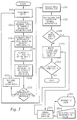
- process block 300 scans, by means of a color scanner, a portion of an image which may or may not contain recognizable characters. Thereafter, process block 305 calculates, based on geometric optical character recognition, the probability of an unrecognized character within the portion of the image being a particular target character.
- process block 305 may calculate that there is a 90% probability that the unrecognized character is an "A.”
- Process block 305 further calculates these probabilities for the other potential target characters. For example, process block 305 may further calculate that there is a 30% probability that the unrecognized character is an "B,” 5% probability that the unrecognized character is a "C", etc.
- process block 310 generates, based on geometric optical character recognition processing, a null hypothesis based on the highest probability calculated by such geometric optical character recognition processing.
- process block 310 generates a null hypothesis that the character "A” is recognized. This is based on "A" having the highest probability of 90 %.
- process block 315 generates an alternative hypothesis.
- process block 315 generates an alternative hypothesis that "A" is not recognized.
- process block 320 calculates, based on color coded optical character recognition, the probability of the alternative hypothesis. For example, process block 305 may calculate that there is a 1% probability that the unrecognized character is not an "A.”
- decision block 325 is used to determine whether or not the probability of the alternative hypothesis is greater than a threshold. Decision block 325 accepts the null hypothesis, unless there is evidence above the threshold in favor of the alternative hypothesis. Such threshold may be set at 90% to indicate that the null hypothesis is accepted, unless there is overwhelming evidence (90% or greater probability) in favor of the alternative hypothesis. If the probability of the alternative hypothesis is not greater than the threshold, then process block 330 selects the null hypothesis. Thereafter, process block 335 sets a Recognized Character Register equal to the target character identified by the null hypothesis. In the example, process block 335 sets the Recognized Character Register equal to "A". Thereafter, decision block 340 determines whether or not a write buffer is full.
- the write buffer is the buffer in which the program writes a sequence of recognized characters. If the write buffer is not full, then process block 345 writes the contents of the Recognized Character Register to the write buffer. Thereafter, decision block 350 determines whether or not a full image scan is complete. If a full image scan is complete, then the program stops.
- process block 355 which is an exception handler routine, processes the exception.
- a default action of process block 355 is to transfer the contents of the write buffer to an output file, and to clear the write buffer.
- Process block 355 may also report an exception to a user through output device 360.
- process block 355 may execute a user specified response to an exception, such as designating the output file, as specified by the user through input device 365. Thereafter, the program returns to process block 345 for writing the recognized character to the write buffer.
- process block 370 selects the alternative hypothesis and discards the null hypothesis. In such case, decision block 325 rejects the null hypothesis as there is evidence above the threshold in favor of the alternative hypothesis. Thereafter, the program continues to process block 310 to generate another null hypothesis based on the highest probability after discarding the prior highest probability. Following the example, after the 90% "A" null hypothesis is discarded, the highest probability is the 30% probability that the unrecognized character is a "B".
- FIG. 3 a flowchart illustrating operations for an alternative embodiment for carrying out the present invention is shown.
- This alternative embodiment uses color coded OCR to generate a null hypothesis; whereas, the preferred embodiment illustrated in Figure 2 uses geometric OCR to generate the null hypothesis. Furthermore, this alternative embodiment uses geometric OCR to calculate a probability of an alternative hypothesis; whereas, the preferred embodiment illustrated in Figure 2 uses color coded OCR to calculate the probability of the alternative hypothesis.
- the sequence of operations for the preferred embodiment illustrated in Figure 2 and the sequence of operations for the alternative embodiment illustrated in Figure 3 are identical, except for process blocks 305, 310, and 320. The purpose of process blocks 305, 310, and 320 is to provide the null hypothesis generation and the alternative hypothesis probability calculation.
- process block 305 calculates, based on color coded optical character recognition, the probability of an unrecognized character within the portion of the image being a particular target character. For example, process block 305 may calculate that there is a 90% probability that the unrecognized character is an "A.” Process block 305 further calculates these probabilities for the other potential target characters. For example, process block 305 may further calculate that there is a 30% probability that the unrecognized character is an "B,” 5% probability that the unrecognized character is a "C”, etc.
- process block 310 generates, based on color coded optical character recognition processing, a null hypothesis based on the highest probability calculated by such color coded optical character recognition processing.
- process block 310 generates a null hypothesis that the character "A” is recognized. This is based on "A" having the highest probability of 90%.
- process block 315 generates an alternative hypothesis.
- process block 315 generates an alternative hypothesis that "A" is not recognized.
- process block 320 calculates, based on geometric optical character recognition, the probability of the alternative hypothesis. For example, process block 305 may calculate that there is a 1% probability that the unrecognized character is not an "A.”
- the data processing system 400 includes a processor 402, which includes a central processing unit (CPU) 404, and a memory 406. Additional memory, in the form of a hard disk file storage 408 and a floppy disk device 410, is connected to the processor 402. Floppy disk device 410 receives a diskette 412 which has computer program code recorded thereon that implements the present invention in the data processing system 400.
- the data processing system 400 includes user interface hardware, including a mouse 414 and a keyboard 416 for allowing user input to the processor 402 and a display 418 for presenting visual data to the user.
- the data processing system also includes a color scanner 420.
Landscapes
- Engineering & Computer Science (AREA)
- Physics & Mathematics (AREA)
- Theoretical Computer Science (AREA)
- Computer Vision & Pattern Recognition (AREA)
- General Physics & Mathematics (AREA)
- Artificial Intelligence (AREA)
- Multimedia (AREA)
- Data Mining & Analysis (AREA)
- Bioinformatics & Computational Biology (AREA)
- Bioinformatics & Cheminformatics (AREA)
- Life Sciences & Earth Sciences (AREA)
- Evolutionary Biology (AREA)
- Evolutionary Computation (AREA)
- General Engineering & Computer Science (AREA)
- Health & Medical Sciences (AREA)
- Electromagnetism (AREA)
- General Health & Medical Sciences (AREA)
- Toxicology (AREA)
- Character Input (AREA)
- Character Discrimination (AREA)
Applications Claiming Priority (2)
| Application Number | Priority Date | Filing Date | Title |
|---|---|---|---|
| US07/812,249 US5875261A (en) | 1991-12-20 | 1991-12-20 | Method of and apparatus for optical character recognition based on geometric and color attribute hypothesis testing |
| US812249 | 1991-12-20 |
Publications (2)
| Publication Number | Publication Date |
|---|---|
| EP0549505A2 true EP0549505A2 (fr) | 1993-06-30 |
| EP0549505A3 EP0549505A3 (en) | 1993-11-24 |
Family
ID=25208997
Family Applications (1)
| Application Number | Title | Priority Date | Filing Date |
|---|---|---|---|
| EP19920480169 Withdrawn EP0549505A3 (en) | 1991-12-20 | 1992-11-19 | Method of and apparatus for optical character recognition based on geometric and color attribute hypothesis testing |
Country Status (3)
| Country | Link |
|---|---|
| US (1) | US5875261A (fr) |
| EP (1) | EP0549505A3 (fr) |
| JP (1) | JP2574974B2 (fr) |
Families Citing this family (22)
| Publication number | Priority date | Publication date | Assignee | Title |
|---|---|---|---|---|
| US6460766B1 (en) | 1996-10-28 | 2002-10-08 | Francis Olschafskie | Graphic symbols and method and system for identification of same |
| GB2330679B (en) * | 1997-10-21 | 2002-04-24 | 911 Emergency Products Inc | Warning signal light |
| US7468677B2 (en) * | 1999-08-04 | 2008-12-23 | 911Ep, Inc. | End cap warning signal assembly |
| US7439847B2 (en) | 2002-08-23 | 2008-10-21 | John C. Pederson | Intelligent observation and identification database system |
| US8188878B2 (en) | 2000-11-15 | 2012-05-29 | Federal Law Enforcement Development Services, Inc. | LED light communication system |
| JP4080843B2 (ja) * | 2002-10-30 | 2008-04-23 | 株式会社東芝 | 不揮発性半導体記憶装置 |
| CN1581131B (zh) * | 2003-10-07 | 2010-05-12 | 赵舜培 | 一种可自动识别内容之读物 |
| US7710598B2 (en) * | 2004-08-23 | 2010-05-04 | Harrison Jr Shelton E | Polychromatic encoding system, method and device |
| IL172678A0 (en) * | 2005-12-19 | 2006-04-10 | Aharon Topper | Method, system and computer program for encoding and decoding a pixelized target graphic symbol |
| US8014591B2 (en) | 2006-09-13 | 2011-09-06 | Aurilab, Llc | Robust pattern recognition system and method using socratic agents |
| US11265082B2 (en) | 2007-05-24 | 2022-03-01 | Federal Law Enforcement Development Services, Inc. | LED light control assembly and system |
| US9294198B2 (en) | 2007-05-24 | 2016-03-22 | Federal Law Enforcement Development Services, Inc. | Pulsed light communication key |
| US9455783B2 (en) | 2013-05-06 | 2016-09-27 | Federal Law Enforcement Development Services, Inc. | Network security and variable pulse wave form with continuous communication |
| WO2008148039A1 (fr) | 2007-05-24 | 2008-12-04 | Federal Law Enforcement Development Services, Inc. | Système de communication à éclairage par del |
| US9414458B2 (en) | 2007-05-24 | 2016-08-09 | Federal Law Enforcement Development Services, Inc. | LED light control assembly and system |
| US9258864B2 (en) | 2007-05-24 | 2016-02-09 | Federal Law Enforcement Development Services, Inc. | LED light control and management system |
| US9100124B2 (en) | 2007-05-24 | 2015-08-04 | Federal Law Enforcement Development Services, Inc. | LED Light Fixture |
| US8890773B1 (en) | 2009-04-01 | 2014-11-18 | Federal Law Enforcement Development Services, Inc. | Visible light transceiver glasses |
| US8543505B2 (en) | 2011-01-14 | 2013-09-24 | Federal Law Enforcement Development Services, Inc. | Method of providing lumens and tracking of lumen consumption |
| US9265112B2 (en) | 2013-03-13 | 2016-02-16 | Federal Law Enforcement Development Services, Inc. | LED light control and management system |
| US20150198941A1 (en) | 2014-01-15 | 2015-07-16 | John C. Pederson | Cyber Life Electronic Networking and Commerce Operating Exchange |
| US20170046950A1 (en) | 2015-08-11 | 2017-02-16 | Federal Law Enforcement Development Services, Inc. | Function disabler device and system |
Family Cites Families (14)
| Publication number | Priority date | Publication date | Assignee | Title |
|---|---|---|---|---|
| US2978675A (en) * | 1959-12-10 | 1961-04-04 | Bell Telephone Labor Inc | Character recognition system |
| US3331948A (en) * | 1963-02-08 | 1967-07-18 | Robert F X Salmon | Oscillating light sensitive device for reading oscillograph traces |
| US3990043A (en) * | 1971-12-30 | 1976-11-02 | Xerox Corporation | Character coding and recognition system |
| US3938088A (en) * | 1971-12-30 | 1976-02-10 | Xerox Corporation | Character coding and recognition system |
| JPS5236377B2 (fr) * | 1972-08-02 | 1977-09-14 | ||
| JPS5111530A (fr) * | 1974-07-19 | 1976-01-29 | Oki Electric Ind Co Ltd | |
| JPS55150460U (fr) * | 1979-04-16 | 1980-10-29 | ||
| JPS5725082A (en) * | 1980-07-23 | 1982-02-09 | Fujitsu Ltd | Pattern recognition processing system |
| US4829568A (en) * | 1983-07-21 | 1989-05-09 | Pitney Bowes | System for the printing and reading of encrypted messages |
| US4876735A (en) * | 1987-12-18 | 1989-10-24 | International Business Machines Corporation | Method and apparatus for character recognition systems |
| US4831657A (en) * | 1988-07-19 | 1989-05-16 | International Business Machines Corporation | Method and apparatus for establishing pixel color probabilities for use in OCR logic |
| JPH0262684A (ja) * | 1988-08-30 | 1990-03-02 | Sony Corp | オンライン手書き文字の認識装置 |
| JPH02151984A (ja) * | 1988-12-02 | 1990-06-11 | Ricoh Co Ltd | 画像認識システム |
| US5257323A (en) * | 1991-05-29 | 1993-10-26 | Canon Kabushiki Kaisha | Selection agent for a symbol determination system with multiple character recognition processors |
-
1991
- 1991-12-20 US US07/812,249 patent/US5875261A/en not_active Expired - Fee Related
-
1992
- 1992-11-19 EP EP19920480169 patent/EP0549505A3/en not_active Withdrawn
- 1992-11-20 JP JP4311538A patent/JP2574974B2/ja not_active Expired - Lifetime
Also Published As
| Publication number | Publication date |
|---|---|
| JP2574974B2 (ja) | 1997-01-22 |
| US5875261A (en) | 1999-02-23 |
| JPH07225811A (ja) | 1995-08-22 |
| EP0549505A3 (en) | 1993-11-24 |
Similar Documents
| Publication | Publication Date | Title |
|---|---|---|
| US5875261A (en) | Method of and apparatus for optical character recognition based on geometric and color attribute hypothesis testing | |
| EP0739521B1 (fr) | Procede permettant de fractionner une entree manuscrite | |
| US6366695B1 (en) | Method and apparatus for producing a hybrid data structure for displaying a raster image | |
| EP0700197B1 (fr) | Procédé et appareil pour la production d'une structure de données hybride pour l'affichage d'une image tramée | |
| US5737443A (en) | Method of joining handwritten input | |
| JP4607633B2 (ja) | 文字方向識別装置、画像形成装置、プログラム、記憶媒体および文字方向識別方法 | |
| EP0063454A2 (fr) | Méthode pour la reconnaissance de caractères codés par machine | |
| US6069978A (en) | Method and apparatus for improving a text image by using character regeneration | |
| US4891750A (en) | Optical character recognition by forming and detecting matrices of geo features | |
| US6282316B1 (en) | Image processing method and apparatus that use handwritten gestures for editing | |
| EP0810542A2 (fr) | Appareil et méthode de comparaison de bitmaps | |
| US5396564A (en) | Method of and apparatus for recognizing predominate and non-predominate color code characters for optical character recognition | |
| US5835625A (en) | Method and apparatus for optical character recognition utilizing proportional nonpredominant color analysis | |
| US6320985B1 (en) | Apparatus and method for augmenting data in handwriting recognition system | |
| JPH0333990A (ja) | マスク処理を用いる光学式文字認識装置及び方法 | |
| US6483943B1 (en) | Feature value extraction methods and apparatus for image recognition and storage medium for storing image analysis program | |
| JP2574993B2 (ja) | 光学的文字認識方法及びその装置 | |
| JP4159948B2 (ja) | 2次元コード読み取り装置、2次元コード読み取り方法及び2次元コード読み取りプログラム、記憶媒体 | |
| JPH08237404A (ja) | 光学文字認識モードの選択方法 | |
| JP2674475B2 (ja) | 文字読取装置 | |
| JPH07334611A (ja) | 非認識文字の表示方法 | |
| JPS63155385A (ja) | 光学文字読取装置 |
Legal Events
| Date | Code | Title | Description |
|---|---|---|---|
| PUAI | Public reference made under article 153(3) epc to a published international application that has entered the european phase |
Free format text: ORIGINAL CODE: 0009012 |
|
| AK | Designated contracting states |
Kind code of ref document: A2 Designated state(s): DE FR GB |
|
| PUAL | Search report despatched |
Free format text: ORIGINAL CODE: 0009013 |
|
| AK | Designated contracting states |
Kind code of ref document: A3 Designated state(s): DE FR GB |
|
| 17P | Request for examination filed |
Effective date: 19931021 |
|
| 18W | Application withdrawn |
Withdrawal date: 19961015 |