EP0554670A2 - Anticorps spécifiques contre les plaquettes activée, leur fabrication et applications diagnostiques et thérapeutiques - Google Patents
Anticorps spécifiques contre les plaquettes activée, leur fabrication et applications diagnostiques et thérapeutiques Download PDFInfo
- Publication number
- EP0554670A2 EP0554670A2 EP93100339A EP93100339A EP0554670A2 EP 0554670 A2 EP0554670 A2 EP 0554670A2 EP 93100339 A EP93100339 A EP 93100339A EP 93100339 A EP93100339 A EP 93100339A EP 0554670 A2 EP0554670 A2 EP 0554670A2
- Authority
- EP
- European Patent Office
- Prior art keywords
- monoclonal antibody
- mak
- recognized
- host cell
- polypeptide
- Prior art date
- Legal status (The legal status is an assumption and is not a legal conclusion. Google has not performed a legal analysis and makes no representation as to the accuracy of the status listed.)
- Granted
Links
- 0 C1C2=C1CC*2 Chemical compound C1C2=C1CC*2 0.000 description 3
Images







Classifications
-
- C—CHEMISTRY; METALLURGY
- C07—ORGANIC CHEMISTRY
- C07K—PEPTIDES
- C07K14/00—Peptides having more than 20 amino acids; Gastrins; Somatostatins; Melanotropins; Derivatives thereof
- C07K14/435—Peptides having more than 20 amino acids; Gastrins; Somatostatins; Melanotropins; Derivatives thereof from animals; from humans
- C07K14/78—Connective tissue peptides, e.g. collagen, elastin, laminin, fibronectin, vitronectin or cold insoluble globulin [CIG]
-
- A—HUMAN NECESSITIES
- A61—MEDICAL OR VETERINARY SCIENCE; HYGIENE
- A61P—SPECIFIC THERAPEUTIC ACTIVITY OF CHEMICAL COMPOUNDS OR MEDICINAL PREPARATIONS
- A61P7/00—Drugs for disorders of the blood or the extracellular fluid
- A61P7/02—Antithrombotic agents; Anticoagulants; Platelet aggregation inhibitors
-
- C—CHEMISTRY; METALLURGY
- C07—ORGANIC CHEMISTRY
- C07K—PEPTIDES
- C07K14/00—Peptides having more than 20 amino acids; Gastrins; Somatostatins; Melanotropins; Derivatives thereof
- C07K14/435—Peptides having more than 20 amino acids; Gastrins; Somatostatins; Melanotropins; Derivatives thereof from animals; from humans
- C07K14/705—Receptors; Cell surface antigens; Cell surface determinants
-
- C—CHEMISTRY; METALLURGY
- C07—ORGANIC CHEMISTRY
- C07K—PEPTIDES
- C07K16/00—Immunoglobulins [IG], e.g. monoclonal or polyclonal antibodies
- C07K16/18—Immunoglobulins [IG], e.g. monoclonal or polyclonal antibodies against material from animals or humans
-
- C—CHEMISTRY; METALLURGY
- C07—ORGANIC CHEMISTRY
- C07K—PEPTIDES
- C07K16/00—Immunoglobulins [IG], e.g. monoclonal or polyclonal antibodies
- C07K16/18—Immunoglobulins [IG], e.g. monoclonal or polyclonal antibodies against material from animals or humans
- C07K16/28—Immunoglobulins [IG], e.g. monoclonal or polyclonal antibodies against material from animals or humans against receptors, cell surface antigens or cell surface determinants
-
- A—HUMAN NECESSITIES
- A61—MEDICAL OR VETERINARY SCIENCE; HYGIENE
- A61K—PREPARATIONS FOR MEDICAL, DENTAL OR TOILETRY PURPOSES
- A61K38/00—Medicinal preparations containing peptides
-
- C—CHEMISTRY; METALLURGY
- C07—ORGANIC CHEMISTRY
- C07K—PEPTIDES
- C07K2317/00—Immunoglobulins specific features
- C07K2317/20—Immunoglobulins specific features characterized by taxonomic origin
- C07K2317/24—Immunoglobulins specific features characterized by taxonomic origin containing regions, domains or residues from different species, e.g. chimeric, humanized or veneered
-
- C—CHEMISTRY; METALLURGY
- C07—ORGANIC CHEMISTRY
- C07K—PEPTIDES
- C07K2319/00—Fusion polypeptide
-
- C—CHEMISTRY; METALLURGY
- C07—ORGANIC CHEMISTRY
- C07K—PEPTIDES
- C07K2319/00—Fusion polypeptide
- C07K2319/33—Fusion polypeptide fusions for targeting to specific cell types, e.g. tissue specific targeting, targeting of a bacterial subspecies
Definitions
- Hybridoma technology makes it possible to produce selective monoclonal antibodies (MAK) against any epitope on defined or undefined antigens.
- MAK monoclonal antibodies
- highly purified, defined antigens or also antigen mixtures, cells or tissues can be used as immunogens, a suitable immunogen also having to be found in order to find highly selective MACs.
- MAK monoclonal antibodies
- the experimental error limits when determining the isoelectric point are approximately ⁇ 10-15%, in particular approximately ⁇ 5-10%.
- a monoclonal antibody characterized in that it is derived from the hybridoma 2128 (DSM ACC2024) (BW 2128).
- Monoclonal antibodies or parts thereof that bind to an epitope recognized by a 2128 hybridoma monoclonal antibody Monoclonal antibodies or parts thereof that bind to an epitope recognized by a 2128 hybridoma monoclonal antibody.
- preferential binding means that there are 3-1000 times and in particular 10-100 times more epitopes that are recognized by the BW 2128 on activated platelets than on non-activated platelets.
- the invention furthermore relates to monoclonal antibodies or parts thereof which are chimeric, humanized, bi- or oligospecific.
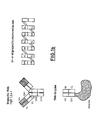
- this includes an mru fragment, a single domain fragment, a single chain fragment, an F (ab) fragment or an F (ab ') 2 fragment with one or more hinge regions, such as in FIGS. 1 and 1 b shown.
- Humanized antibodies are particularly preferred examples thereof.
- a mru minimal recognition unit is a polypeptide derived from a CDR (Complementarity Determining Region), which has the property of targeting the epitope recognized by the specific MAK tie.
- the subject of the invention also includes mimetics which bind to an epitope which is recognized by the monoclonal antibody BW 2128.
- mimetics which bind to an epitope which is recognized by the monoclonal antibody BW 2128.
- Small organic chemical compounds with a high binding potential to the epitope defined by BW 2128 are suitable mimetics.
- the subject of the invention includes polypeptides containing an amino acid sequence according to Tab. La and / or Tab. Ib or any allelic variant or mutant thereof which has the biological property to an epitope which is recognized by the monoclonal antibody BW 2128, to tie.
- the monoclonal antibodies according to the invention or parts thereof or the mimetics according to the invention are used as fusion proteins which contain an immunoglobulin part according to the invention and a part not belonging to the immunoglobulin family.
- the protein not belonging to the immunoglobulin family should be a fibrinolytic protein or parts thereof, for example the fibrinolytic protein streptokinase, urokinase, tPA, tPA mutants or parts thereof.
- This also includes vectors, in particular the expression vectors L1 and L2 and suitable host cells, in particular COS, CHO or BHK cells, preferably BHK cells.
- suitable host cells in particular COS, CHO or BHK cells, preferably BHK cells.
- the invention furthermore relates to polynucleotides which contain one or more nucleic acid sequences which code for a polypeptide which has the biological property to bind to an epitope which is recognized by the monoclonal antibody BW 2128.
- nucleic acids according to Tab. La and Ib are included, their degenerate codons and nucleic acids which hybridize against the nucleic acids according to Tab. La and Ib under generally known hybridization conditions.
- Preferred hybridization conditions are stringent conditions as described in Sambrook, J., Fritsch, EF, Maniatis, T. (1982), Molecular cloning: a laboratory manual, Cold Spring Harbor Laboratory Sambrook, J., Fritsch, EF, Maniatis, T. (1989 ), Second Edition, Molecular cloning: A Laboratory Manual, Cold Spring Harbor Laboratory Press.
- Another object of the invention is a method for producing a polypeptide according to the invention, wherein a prokaryotic or eukaryotic host cell is transformed or transfected with a polynucleotide according to the invention so that the host cell expresses the polypeptide mentioned.
- the polypeptide can then be isolated from the culture by methods known to those skilled in the art.
- the subject of the invention includes an antigen or immunologically reactive parts thereof, which is specifically recognized by one of the antibodies according to the invention, in particular by MAK BW 2128.
- polypeptides according to the invention can also be prepared chemically by methods of peptide synthesis known to the person skilled in the art.
- polypeptide means proteins or amino acid sequences including their spatial configuration and post-translational modifications, such as glycosylation or phosphorylation.
- the invention is particularly suitable in the in vivo presentation or therapy of diseases in which activated platelets are involved, such as e.g. Thromboses, especially during heart attacks or strokes, during thrombolytic therapy, deep-seated venous thrombosis, pulmonary embolism, vascular injuries, atherosclerotic plaques, pyogenic infections and intestinal ischemia.
- diseases in which activated platelets are involved such as e.g. Thromboses, especially during heart attacks or strokes, during thrombolytic therapy, deep-seated venous thrombosis, pulmonary embolism, vascular injuries, atherosclerotic plaques, pyogenic infections and intestinal ischemia.
- the MAK precipitates an antigen which, under reducing conditions, has a molecular weight which is smaller than that of TSP and a relative molecular mass of approximately 150,000 to 170,000, preferably approximately 160,000, but has an isoelectric point, such as TSP, which is indistinguishable from the experimental error limits, preferably in the range of approximately 5.5-6.5 (TSP had a molecular weight of 180 KDa and an isoelectric point of 5.5 to 6 in a comparative experiment , 5).
- TSP had a molecular weight of 180 KDa and an isoelectric point of 5.5 to 6 in a comparative experiment , 5).
- This new antigen is associated with TSP, whereby both physical and chemical binding is possible and is preferentially expressed on activated platelets and is therefore generally referred to as platelet antigen.
- the antigen also preferably shows the tissue distribution shown in Table 11.
- the antigen which can be isolated, for example, by means of immunoaffinity chromatography, preferably with the aid of MAK BW 2128, is particularly well suited for the production or checking of antibodies equivalent to MAK BW 2128 or immunologically reactive parts thereof and for the production of mimetics.
- the antibodies according to the invention can be labeled with radioactive isotopes, especially with Tc-99m (Schwarz, A., Steinstraesser, A. (1987) J. Nucl. Med. 28: 721) if they are of the IgG1 isotype like the MAK BW 2128 Another possibility is the labeling with paramagnetic compounds.
- the antibodies and mimetics according to the invention are therefore particularly well suited for the immunoscintigraphic display of vascular occlusions.
- the hybridoma 2128 was deposited with the DSM, German Collection of Microorganisms and Cell Cultures GmbH (Mascheroder Weg 1 B, 3300 Braunschweig) according to the Budapest contract under the deposit number DSM ACC 2024. Furthermore, the V genes of the heavy and light chains of the MAK BW 2128 were those of Orlandi, R., Güssow, D., Jones, P.T., Winter, G. (1989). Proc. Nat. Acad. Sci. USA 86: 3833-3837 isolated and according to the method described by Sanger, F., Nicklen, S., Coulson, A.R. (1977). Proc. Nat. Acad. Sci. USA 74: 5463-5467 determines the nucleic acid sequence of the essential regions of the V gene exon (Tab. La, b).
- the cloned V genes were expressed as chimeric MAK BW Chi 2128 with human truncated IgG3 Fc part (IgG3 ⁇ ) and human C-kappa in BHK cells (Wirth, M., Bode, J., Zettlmeissl, G., Hauser, H (1988). Gene 73: 419-426) to confirm the identity of the cloned V genes (Examples A-N).
- the pronounced BW Chi 2128 MAK showed the same antigen binding specificity as the mouse MAK. Furthermore, e.g. after polypeptide synthesis of the CDRs or of parts or more defined CDRs, the mrus (minimal recognition units) are determined and used as less immunogenic specific peptides for the in vivo localization of activated platelets. Furthermore, according to the method described by Saragovi, H.U., Fitzpatrick, D., Raktabutr, A., Nakanishi, H., Kahn, M., Greene, M.I. (1991). Science 253: 792-795 described method using organic chemical synthesis a mimetic with high specificity and avidity against the epitope defined by MAK BW 2128 are generated.
- the humanized V region of the MAK BW 2128 can be recombinantly e.g. are linked to nucleotide sequences which code for fibrinolytic proteins such as streptokinase, urokinase, tPA, but above all tPA mutants.
- Preferred tPA mutants can be produced, for example, according to EP-A1-0 387 380.
- German patent application P 41 06 389.9 (Ma 876) using the example of a humanized aCEA MAK and human ⁇ -glucuronidase, these constructs can be linked at the DNA level and expressed as functional fusion proteins.
- the fusion proteins mentioned are efficient and low-side-effect fibrinolytics (Haber, E., Quertermous, Th., Matsueda, GR, Runge, MS, Bode, Ch. (1989. Jap. Circulation J. 54: 345-353).
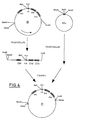
- the plasmid clone 54.1.24 which carries the human IgG 3 C gene (DE 38 25 615 A1, Ma 706, Fig. 2) was cleaved with Pstl. The resulting vector was ligated with the largest of the resulting Pst1 insert fragments and transformed into bacteria.
- the plasmid clone A which carries a human IgG 3 C gene in which the H1, H2 and H3 exons have been deleted, was identified by restriction analysis and nucleic acid sequence determination (FIG. 2).
- the plasmid clone A was cleaved with HindIII and EcoRI, the ends filled in with Klenow polymerase, the IgG 3 insert isolated and ligated into a pUC19 vector cleaved with Sstl and blunt-ended with the aid of T 4 polymerase.
- a plasmid clone B was identified by restriction mapping and nucleic acid sequence analysis, in which the IgG 3 gene is oriented in such a way that the HindIII at the 5 'end and the EcoRI interface of the pUC19 polylinker are at the 3' end (FIG. 3).
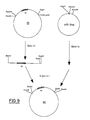
- Plasmid clone B was cleaved with EcoRI and HindIII, the IgG 3 insert isolated and ligated into a KS + phasmid vector (pBluescriptII KS +; Stratagene, La Jolla, CA), which was also cleaved with HindIII and EcoRI.
- the phasmid clone C was isolated, in which the IgG 3 gene is flanked at the 5 'and at the 3' end by a BamHI interface (FIG. 4).
- Phasmid clone C was cleaved with BamHl, the IgG 3 insert isolated and ligated into the expression vector pABStop (Wirth et al. Supra), which was also cleaved with BamHl.
- the expression plasmid D was identified, which contains the IgG 3 C gene in the orientation shown in the formula. In this cloning, the pABStop vector loses the SV40 stop and polyadenylation signal located between the two BamHI interfaces (FIG. 5).
- the expression plasmid D was partially cleaved with BamHl, the ends filled in with Klenow polymerase and religated.
- the expression plasmid E was isolated, in which the BamHI site 3 'is destroyed by the IgG 3 gene (FIG. 6).
- the human C-kappa gene (Hieter, P.A., Mainzel, J.V., Jr., Leder, P. (1982), The Journal of Biological Chemistry, 257: 1516-1522) was cloned as an EcoRI fragment in pBR 322.
- the pBR322 vector was digested with EcoRI, the EcoRI sites filled in, the C-kappa insert isolated and ligated into a pUC19 vector digested with Smal.
- the plasmid clone F was isolated, in which the C-kappa gene is flanked at the 5 'end by a HindIII and a BamHI interface and at the 3' end by an EcoRI interface (FIG. 7).
- the plasmid clone F was cleaved with HindIII and EcoRI, the C-kappa insert isolated and cloned into a HindIII / EcoRI cleaved KS + phasmid.
- the phasmid clone G was isolated, in which the C-kappa insert is flanked at the 5 'and at the 3' end by a BamHI interface (FIG. 8).
- Phasmid clone G was cleaved with BamHI, the C-kappa insert isolated and cloned into a pAB Stop vector cleaved with BamHI. Restriction mapping and nucleic acid sequence analysis identified the clone H in which the C-kappa gene is oriented such that the HindIII site of the pAB stop vector is located at its 5 'end (FIG. 9).
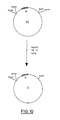
- Clone H was partially cleaved with BamHI, the restriction ends filled in and religated. Restriction mapping was used to identify clone I in which the BamHI site 3 'of the C-kappa gene had been destroyed (FIG. 10).
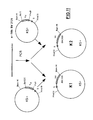
- V H and V K genes of the MAK BW 2128 were developed according to Orlandi et al. (supra) amplified by means of PCR technology and specific oligonucleotides and cloned in KS + vectors (Güssow, D. and Seemann, G. (1992). Methods in Enzymology, Vol. 203, 99-121), which contain irrelevant V H and V K genes with appropriate restriction sites. Clones K1 and K2 were then isolated, in which the irrelevant V H and V L genes were replaced by the V H (K1) and V K (K2) genes of MAK BW 2128 (FIG. 11).
- the nucleic acid sequence of the V H and V K genes of MAK BW 2128 was determined from clones K1 and K2 according to the method of Sanger PNAS, 74, 5463, (1977) (Tab. La, b).
- V H and V K genes of the MAK BW 2128 were cut out from the clones K1 and K2 using the restriction enzymes Hindlll and BamHI, the V-gene inserts were isolated and the expression vectors D (V H ) and I (cut with Hindlll and BamHI were isolated. V K ) cloned.
- Expression vectors L1 (Fig. 12) and L2 (Fig. 13) containing a complete immunoglobulin heavy chain gene (L1) and light chain gene (L2) were isolated.
- the expression vectors L1 and L2 were mediated together with the vector pR11 H140 (Hudziak, RM, Laski, FA, RajBhandary, UL, Sharp, PA, Capecchi, MR (1982), Cell 31: 137-146) of the neomycin resistance (FIG. 14) and the vector psVdhfr (Lee, F., Mulligan, R., Berg, P., Ringold, G. (1981), Nature 294: 228-232), which carries a dihydrofolate reductase gene and mediates resistance to methotrexate (Fig.
- the immunohistochemical specificity analysis of the antibodies according to the invention was carried out using the APAAP technique (Cordell et al., Supra). Table II shows the result of an immunohistochemical specificity analysis of the MAK BW 2128.
- the activation of platelets can be measured by a quantitative determination of the activation marker PF4 using the ELISA described by H. Pelzer and N. Heimburger (supra).
- Table III shows the influence of MAK BW 2128 on platelet activation.
Landscapes
- Health & Medical Sciences (AREA)
- Chemical & Material Sciences (AREA)
- Organic Chemistry (AREA)
- Life Sciences & Earth Sciences (AREA)
- General Health & Medical Sciences (AREA)
- Medicinal Chemistry (AREA)
- Biochemistry (AREA)
- Genetics & Genomics (AREA)
- Biophysics (AREA)
- Molecular Biology (AREA)
- Proteomics, Peptides & Aminoacids (AREA)
- Immunology (AREA)
- Toxicology (AREA)
- Zoology (AREA)
- Gastroenterology & Hepatology (AREA)
- Cell Biology (AREA)
- Engineering & Computer Science (AREA)
- Public Health (AREA)
- Diabetes (AREA)
- Hematology (AREA)
- Chemical Kinetics & Catalysis (AREA)
- General Chemical & Material Sciences (AREA)
- Nuclear Medicine, Radiotherapy & Molecular Imaging (AREA)
- Pharmacology & Pharmacy (AREA)
- Animal Behavior & Ethology (AREA)
- Bioinformatics & Cheminformatics (AREA)
- Veterinary Medicine (AREA)
- Preparation Of Compounds By Using Micro-Organisms (AREA)
- Medicines Containing Antibodies Or Antigens For Use As Internal Diagnostic Agents (AREA)
- Peptides Or Proteins (AREA)
- Micro-Organisms Or Cultivation Processes Thereof (AREA)
- Medicines Containing Material From Animals Or Micro-Organisms (AREA)
- Organic Low-Molecular-Weight Compounds And Preparation Thereof (AREA)
Applications Claiming Priority (2)
| Application Number | Priority Date | Filing Date | Title |
|---|---|---|---|
| DE4203545A DE4203545A1 (de) | 1992-02-07 | 1992-02-07 | Spezifische antikoerper gegen aktivierte plaettchen, ihre herstellung und ihre verwendung in diagnose und therapie |
| DE4203545 | 1992-02-07 |
Publications (3)
| Publication Number | Publication Date |
|---|---|
| EP0554670A2 true EP0554670A2 (fr) | 1993-08-11 |
| EP0554670A3 EP0554670A3 (en) | 1994-07-13 |
| EP0554670B1 EP0554670B1 (fr) | 2001-09-05 |
Family
ID=6451181
Family Applications (1)
| Application Number | Title | Priority Date | Filing Date |
|---|---|---|---|
| EP93100339A Expired - Lifetime EP0554670B1 (fr) | 1992-02-07 | 1993-01-12 | Anticorps spécifiques contre les plaquettes activée, leur fabrication et applications diagnostiques et thérapeutiques |
Country Status (9)
| Country | Link |
|---|---|
| US (1) | US5686583A (fr) |
| EP (1) | EP0554670B1 (fr) |
| JP (1) | JP3821858B2 (fr) |
| AT (1) | ATE205255T1 (fr) |
| AU (1) | AU669870B2 (fr) |
| CA (1) | CA2088889C (fr) |
| DE (2) | DE4203545A1 (fr) |
| ES (1) | ES2161698T3 (fr) |
| NO (1) | NO930406L (fr) |
Families Citing this family (3)
| Publication number | Priority date | Publication date | Assignee | Title |
|---|---|---|---|---|
| US7538195B2 (en) * | 2002-06-14 | 2009-05-26 | Immunogen Inc. | Anti-IGF-I receptor antibody |
| US8034904B2 (en) * | 2002-06-14 | 2011-10-11 | Immunogen Inc. | Anti-IGF-I receptor antibody |
| US7655411B2 (en) * | 2002-08-23 | 2010-02-02 | W2 Holdings, Inc. | Thrombospondin fragments and binding agents in the detection, diagnosis and evaluation of cancer |
Family Cites Families (7)
| Publication number | Priority date | Publication date | Assignee | Title |
|---|---|---|---|---|
| US4610960A (en) * | 1983-12-21 | 1986-09-09 | Wisconsin Alumni Research Foundation | Monoclonal antibody to thrombospondin and method for assaying for and isolating thrombospondin |
| EP0387380A1 (fr) * | 1989-03-17 | 1990-09-19 | BEHRINGWERKE Aktiengesellschaft | Mutants de l'activateur du plasminogène dérivé de l'urine, leur production et leur utilisation |
| WO1991006858A1 (fr) * | 1989-11-03 | 1991-05-16 | The United States Of America, As Represented By The Secretary, U.S. Department Of Commerce | Nouvel anticorps monoclonal contre les plaquettes sanguines humaines |
| US5192744A (en) * | 1990-01-12 | 1993-03-09 | Northwestern University | Method of inhibiting angiogenesis of tumors |
| US5200397A (en) * | 1990-02-22 | 1993-04-06 | W. R. Grace & Co.-Conn. | Use of peptide analogs of thrombospondin for the inhibition of angiogenic activity |
| WO1992017499A1 (fr) * | 1991-04-08 | 1992-10-15 | Cornell Research Foundation, Inc. | Hexapeptide particulier derive de la thrombospondine et utilisation de ce compose |
| CA2063055A1 (fr) * | 1991-05-22 | 1992-11-23 | Jacob Eyal | Peptides presentant une activite pseudo-thrombospondine et leur utilisation therapeutique |
-
1992
- 1992-02-07 DE DE4203545A patent/DE4203545A1/de not_active Withdrawn
-
1993
- 1993-01-12 ES ES93100339T patent/ES2161698T3/es not_active Expired - Lifetime
- 1993-01-12 EP EP93100339A patent/EP0554670B1/fr not_active Expired - Lifetime
- 1993-01-12 AT AT93100339T patent/ATE205255T1/de active
- 1993-01-12 DE DE59310204T patent/DE59310204D1/de not_active Expired - Lifetime
- 1993-02-05 AU AU32836/93A patent/AU669870B2/en not_active Ceased
- 1993-02-05 CA CA002088889A patent/CA2088889C/fr not_active Expired - Fee Related
- 1993-02-05 NO NO93930406A patent/NO930406L/no unknown
- 1993-02-08 JP JP04317293A patent/JP3821858B2/ja not_active Expired - Fee Related
-
1995
- 1995-06-06 US US08/467,393 patent/US5686583A/en not_active Expired - Lifetime
Also Published As
| Publication number | Publication date |
|---|---|
| ES2161698T3 (es) | 2001-12-16 |
| JP3821858B2 (ja) | 2006-09-13 |
| EP0554670A3 (en) | 1994-07-13 |
| JPH06133768A (ja) | 1994-05-17 |
| ATE205255T1 (de) | 2001-09-15 |
| AU669870B2 (en) | 1996-06-27 |
| NO930406D0 (no) | 1993-02-05 |
| EP0554670B1 (fr) | 2001-09-05 |
| CA2088889C (fr) | 2009-08-25 |
| DE59310204D1 (de) | 2001-10-11 |
| NO930406L (no) | 1993-08-09 |
| US5686583A (en) | 1997-11-11 |
| DE4203545A1 (de) | 1993-08-12 |
| CA2088889A1 (fr) | 1993-08-08 |
| AU3283693A (en) | 1993-08-12 |
Similar Documents
| Publication | Publication Date | Title |
|---|---|---|
| DE69531679T2 (de) | Für e-selectin und p-selectin spezifische kreuzreaktive monoklonale antikörper | |
| DE69233153T2 (de) | Humanisierte monoklonale antikörper | |
| DE68929061T2 (de) | Herstellung humanähnlicher Immunoglobuline und entsprechender Polynukleotide | |
| DE69534235T2 (de) | Cytokin lerk-7 | |
| DE69129896T2 (de) | Gegen cd3 gerichtete antikörper | |
| DE69133326T2 (de) | Verbesserte humanähnlich gemachte immunglobuline | |
| DE69735596T3 (de) | Humanisiertes immunglobulin gegen den alpha4beta7-integrin | |
| DE69605181T3 (de) | Antikörper gegen cd30, die proteolytische spaltung und abgabe des membrangebundenen cd30 antigens verhindern | |
| DE69233482T2 (de) | Verfahren zur Verminderung der Immunogenität der variablen Antikörperdomänen | |
| DE68921364T2 (de) | Verfahren zur Herstellung von Proteinen mittels rekombinanter DNA. | |
| DE3587524T2 (de) | Herstellung von chimären antikörpern. | |
| DE69530763T2 (de) | Antikörper gegen e-selektin | |
| DE69525593T2 (de) | Humanisierte und chimäre monoklonale Antikörper die den Rezeptor für epidermalen Wachstumfaktor (EGF-R) erkennen; diagnostische und therapeutische Verwendung | |
| DE69419721T2 (de) | Rekombinante anti-vla4 antikörpermoleküle | |
| DE69535243T2 (de) | Gegen menschliches interleukin-8 gerichteter, rekonstituierter menschlicher antikörper | |
| DE3853636T3 (de) | Antigene epitope, die sich ausschliesslich auf ige-tragenden b-lymphocyten befinden. | |
| DE69535133T2 (de) | Humanisierte antikörper gegen das leukozytenadhäsionsmolekül vla-4 | |
| EP0538754B1 (fr) | Utilisation de préparations contenant des anticorps pour l'immunosuppression | |
| DE4118120A1 (de) | Tetravalente bispezifische rezeptoren, ihre herstellung und verwendung | |
| DE69331175T2 (de) | Interleukin-2 Rezeptor Gamma-Kette | |
| DE69233480T2 (de) | CD4-gamma2- und CD4-IgG2-Chimären | |
| DE3850654T2 (de) | Immunglobulin-e-kompetitor. | |
| DE68929380T2 (de) | Plättchen-spezifisches chimärisches immunglobulin | |
| DE69020112T2 (de) | Spezifische bindende Wirkstoffe. | |
| DE4332256C1 (de) | Monoklonale Antikörper gegen Leukozyten-spezifische G-Protein-gekoppelte Rezeptoren |
Legal Events
| Date | Code | Title | Description |
|---|---|---|---|
| PUAI | Public reference made under article 153(3) epc to a published international application that has entered the european phase |
Free format text: ORIGINAL CODE: 0009012 |
|
| AK | Designated contracting states |
Kind code of ref document: A2 Designated state(s): AT BE CH DE DK ES FR GB GR IE IT LI LU NL PT SE |
|
| PUAL | Search report despatched |
Free format text: ORIGINAL CODE: 0009013 |
|
| AK | Designated contracting states |
Kind code of ref document: A3 Designated state(s): AT BE CH DE DK ES FR GB GR IE IT LI LU NL PT SE |
|
| 17P | Request for examination filed |
Effective date: 19950113 |
|
| 17Q | First examination report despatched |
Effective date: 19970918 |
|
| RAP1 | Party data changed (applicant data changed or rights of an application transferred) |
Owner name: DADE BEHRING MARBURG GMBH |
|
| GRAG | Despatch of communication of intention to grant |
Free format text: ORIGINAL CODE: EPIDOS AGRA |
|
| RIC1 | Information provided on ipc code assigned before grant |
Free format text: 7C 12N 15/13 A, 7C 12N 5/20 B, 7C 12N 15/62 B, 7C 12P 21/08 B, 7A 61K 39/395 B, 7C 07K 16/28 B, 7G 01N 33/577 B |
|
| GRAG | Despatch of communication of intention to grant |
Free format text: ORIGINAL CODE: EPIDOS AGRA |
|
| GRAH | Despatch of communication of intention to grant a patent |
Free format text: ORIGINAL CODE: EPIDOS IGRA |
|
| GRAH | Despatch of communication of intention to grant a patent |
Free format text: ORIGINAL CODE: EPIDOS IGRA |
|
| GRAA | (expected) grant |
Free format text: ORIGINAL CODE: 0009210 |
|
| AK | Designated contracting states |
Kind code of ref document: B1 Designated state(s): AT BE CH DE DK ES FR GB GR IE IT LI LU NL PT SE |
|
| PG25 | Lapsed in a contracting state [announced via postgrant information from national office to epo] |
Ref country code: IE Free format text: LAPSE BECAUSE OF FAILURE TO SUBMIT A TRANSLATION OF THE DESCRIPTION OR TO PAY THE FEE WITHIN THE PRESCRIBED TIME-LIMIT Effective date: 20010905 |
|
| REF | Corresponds to: |
Ref document number: 205255 Country of ref document: AT Date of ref document: 20010915 Kind code of ref document: T |
|
| RIN1 | Information on inventor provided before grant (corrected) |
Inventor name: SEEMANN, GERHARD Inventor name: KEHREL, BEATE Inventor name: BOSSLET, KLAUS |
|
| REG | Reference to a national code |
Ref country code: CH Ref legal event code: EP |
|
| REF | Corresponds to: |
Ref document number: 59310204 Country of ref document: DE Date of ref document: 20011011 |
|
| REG | Reference to a national code |
Ref country code: IE Ref legal event code: FG4D Free format text: GERMAN |
|
| PG25 | Lapsed in a contracting state [announced via postgrant information from national office to epo] |
Ref country code: PT Free format text: LAPSE BECAUSE OF FAILURE TO SUBMIT A TRANSLATION OF THE DESCRIPTION OR TO PAY THE FEE WITHIN THE PRESCRIBED TIME-LIMIT Effective date: 20011205 Ref country code: DK Free format text: LAPSE BECAUSE OF FAILURE TO SUBMIT A TRANSLATION OF THE DESCRIPTION OR TO PAY THE FEE WITHIN THE PRESCRIBED TIME-LIMIT Effective date: 20011205 |
|
| ET | Fr: translation filed | ||
| PG25 | Lapsed in a contracting state [announced via postgrant information from national office to epo] |
Ref country code: GR Free format text: LAPSE BECAUSE OF FAILURE TO SUBMIT A TRANSLATION OF THE DESCRIPTION OR TO PAY THE FEE WITHIN THE PRESCRIBED TIME-LIMIT Effective date: 20011207 |
|
| REG | Reference to a national code |
Ref country code: ES Ref legal event code: FG2A Ref document number: 2161698 Country of ref document: ES Kind code of ref document: T3 |
|
| REG | Reference to a national code |
Ref country code: GB Ref legal event code: IF02 |
|
| GBT | Gb: translation of ep patent filed (gb section 77(6)(a)/1977) |
Effective date: 20011201 |
|
| REG | Reference to a national code |
Ref country code: IE Ref legal event code: FD4D |
|
| PLBE | No opposition filed within time limit |
Free format text: ORIGINAL CODE: 0009261 |
|
| STAA | Information on the status of an ep patent application or granted ep patent |
Free format text: STATUS: NO OPPOSITION FILED WITHIN TIME LIMIT |
|
| 26N | No opposition filed | ||
| REG | Reference to a national code |
Ref country code: CH Ref legal event code: PFA Owner name: SIEMENS HEALTHCARE DIAGNOSTICS PRODUCTS GMBH Free format text: DADE BEHRING MARBURG GMBH#POSTFACH 11 49#35001 MARBURG (DE) -TRANSFER TO- SIEMENS HEALTHCARE DIAGNOSTICS PRODUCTS GMBH#EMIL-VON-BEHRING-STRASSE 76#35041 MARBURG (DE) Ref country code: CH Ref legal event code: NV Representative=s name: SIEMENS SCHWEIZ AG |
|
| NLT1 | Nl: modifications of names registered in virtue of documents presented to the patent office pursuant to art. 16 a, paragraph 1 |
Owner name: SIEMENS HEALTHCARE DIAGNOSTICS PRODUCTS GMBH |
|
| REG | Reference to a national code |
Ref country code: FR Ref legal event code: CD |
|
| PGFP | Annual fee paid to national office [announced via postgrant information from national office to epo] |
Ref country code: ES Payment date: 20100222 Year of fee payment: 18 |
|
| PGFP | Annual fee paid to national office [announced via postgrant information from national office to epo] |
Ref country code: BE Payment date: 20100204 Year of fee payment: 18 |
|
| PGFP | Annual fee paid to national office [announced via postgrant information from national office to epo] |
Ref country code: DE Payment date: 20100325 Year of fee payment: 18 |
|
| PGFP | Annual fee paid to national office [announced via postgrant information from national office to epo] |
Ref country code: CH Payment date: 20100408 Year of fee payment: 18 |
|
| PGFP | Annual fee paid to national office [announced via postgrant information from national office to epo] |
Ref country code: LU Payment date: 20110110 Year of fee payment: 19 |
|
| PGFP | Annual fee paid to national office [announced via postgrant information from national office to epo] |
Ref country code: FR Payment date: 20110120 Year of fee payment: 19 Ref country code: IT Payment date: 20110126 Year of fee payment: 19 Ref country code: NL Payment date: 20110125 Year of fee payment: 19 Ref country code: SE Payment date: 20110107 Year of fee payment: 19 Ref country code: AT Payment date: 20101209 Year of fee payment: 19 |
|
| PGFP | Annual fee paid to national office [announced via postgrant information from national office to epo] |
Ref country code: GB Payment date: 20110110 Year of fee payment: 19 |
|
| BERE | Be: lapsed |
Owner name: *DADE BEHRING MARBURG G.M.B.H. Effective date: 20110131 |
|
| REG | Reference to a national code |
Ref country code: CH Ref legal event code: PL |
|
| PG25 | Lapsed in a contracting state [announced via postgrant information from national office to epo] |
Ref country code: CH Free format text: LAPSE BECAUSE OF NON-PAYMENT OF DUE FEES Effective date: 20110131 Ref country code: LI Free format text: LAPSE BECAUSE OF NON-PAYMENT OF DUE FEES Effective date: 20110131 |
|
| PG25 | Lapsed in a contracting state [announced via postgrant information from national office to epo] |
Ref country code: BE Free format text: LAPSE BECAUSE OF NON-PAYMENT OF DUE FEES Effective date: 20110131 |
|
| REG | Reference to a national code |
Ref country code: DE Ref legal event code: R119 Ref document number: 59310204 Country of ref document: DE Effective date: 20110802 |
|
| REG | Reference to a national code |
Ref country code: ES Ref legal event code: FD2A Effective date: 20120220 |
|
| PG25 | Lapsed in a contracting state [announced via postgrant information from national office to epo] |
Ref country code: ES Free format text: LAPSE BECAUSE OF NON-PAYMENT OF DUE FEES Effective date: 20110113 |
|
| REG | Reference to a national code |
Ref country code: NL Ref legal event code: V1 Effective date: 20120801 |
|
| REG | Reference to a national code |
Ref country code: SE Ref legal event code: EUG |
|
| GBPC | Gb: european patent ceased through non-payment of renewal fee |
Effective date: 20120112 |
|
| REG | Reference to a national code |
Ref country code: FR Ref legal event code: ST Effective date: 20120928 |
|
| PG25 | Lapsed in a contracting state [announced via postgrant information from national office to epo] |
Ref country code: SE Free format text: LAPSE BECAUSE OF NON-PAYMENT OF DUE FEES Effective date: 20120113 Ref country code: GB Free format text: LAPSE BECAUSE OF NON-PAYMENT OF DUE FEES Effective date: 20120112 |
|
| PG25 | Lapsed in a contracting state [announced via postgrant information from national office to epo] |
Ref country code: IT Free format text: LAPSE BECAUSE OF NON-PAYMENT OF DUE FEES Effective date: 20120112 |
|
| REG | Reference to a national code |
Ref country code: AT Ref legal event code: MM01 Ref document number: 205255 Country of ref document: AT Kind code of ref document: T Effective date: 20120112 |
|
| PG25 | Lapsed in a contracting state [announced via postgrant information from national office to epo] |
Ref country code: FR Free format text: LAPSE BECAUSE OF NON-PAYMENT OF DUE FEES Effective date: 20120131 |
|
| PG25 | Lapsed in a contracting state [announced via postgrant information from national office to epo] |
Ref country code: NL Free format text: LAPSE BECAUSE OF NON-PAYMENT OF DUE FEES Effective date: 20120801 Ref country code: AT Free format text: LAPSE BECAUSE OF NON-PAYMENT OF DUE FEES Effective date: 20120112 |
|
| PG25 | Lapsed in a contracting state [announced via postgrant information from national office to epo] |
Ref country code: DE Free format text: LAPSE BECAUSE OF NON-PAYMENT OF DUE FEES Effective date: 20110802 |
|
| PG25 | Lapsed in a contracting state [announced via postgrant information from national office to epo] |
Ref country code: LU Free format text: LAPSE BECAUSE OF NON-PAYMENT OF DUE FEES Effective date: 20120112 |