EP0557841A2 - Reaktivfarbstoffe - Google Patents
Reaktivfarbstoffe Download PDFInfo
- Publication number
- EP0557841A2 EP0557841A2 EP93102319A EP93102319A EP0557841A2 EP 0557841 A2 EP0557841 A2 EP 0557841A2 EP 93102319 A EP93102319 A EP 93102319A EP 93102319 A EP93102319 A EP 93102319A EP 0557841 A2 EP0557841 A2 EP 0557841A2
- Authority
- EP
- European Patent Office
- Prior art keywords
- reactive
- radical
- hydrogen
- formula
- reactive dyes
- Prior art date
- Legal status (The legal status is an assumption and is not a legal conclusion. Google has not performed a legal analysis and makes no representation as to the accuracy of the status listed.)
- Granted
Links
- 239000000985 reactive dye Substances 0.000 title claims abstract description 20
- 238000004043 dyeing Methods 0.000 claims abstract description 6
- 239000000463 material Substances 0.000 claims abstract description 6
- 239000002253 acid Substances 0.000 claims abstract description 5
- 125000003368 amide group Chemical group 0.000 claims abstract description 3
- 125000002887 hydroxy group Chemical group [H]O* 0.000 claims abstract description 3
- 125000001424 substituent group Chemical group 0.000 claims abstract description 3
- -1 OC2H5 Chemical group 0.000 claims description 19
- 229910052739 hydrogen Inorganic materials 0.000 claims description 13
- 239000001257 hydrogen Substances 0.000 claims description 13
- 125000000020 sulfo group Chemical group O=S(=O)([*])O[H] 0.000 claims description 11
- 125000004435 hydrogen atom Chemical group [H]* 0.000 claims description 10
- 125000005842 heteroatom Chemical group 0.000 claims description 8
- 229910006069 SO3H Inorganic materials 0.000 claims description 7
- 238000000034 method Methods 0.000 claims description 7
- 125000000896 monocarboxylic acid group Chemical group 0.000 claims description 7
- 238000002360 preparation method Methods 0.000 claims description 7
- HIVUAOXLSJITPA-UHFFFAOYSA-N 2-amino-5-hydroxynaphthalene-1,7-disulfonic acid Chemical compound OC1=CC(S(O)(=O)=O)=CC2=C(S(O)(=O)=O)C(N)=CC=C21 HIVUAOXLSJITPA-UHFFFAOYSA-N 0.000 claims description 6
- 150000001412 amines Chemical class 0.000 claims description 6
- VMKJWLXVLHBJNK-UHFFFAOYSA-N cyanuric fluoride Chemical compound FC1=NC(F)=NC(F)=N1 VMKJWLXVLHBJNK-UHFFFAOYSA-N 0.000 claims description 6
- 150000008049 diazo compounds Chemical class 0.000 claims description 6
- 125000000956 methoxy group Chemical group [H]C([H])([H])O* 0.000 claims description 6
- 125000004178 (C1-C4) alkyl group Chemical group 0.000 claims description 5
- 150000001875 compounds Chemical class 0.000 claims description 5
- 230000007935 neutral effect Effects 0.000 claims description 5
- JCXJVPUVTGWSNB-UHFFFAOYSA-N Nitrogen dioxide Chemical compound O=[N]=O JCXJVPUVTGWSNB-UHFFFAOYSA-N 0.000 claims description 4
- 125000001931 aliphatic group Chemical group 0.000 claims description 4
- 239000000872 buffer Substances 0.000 claims description 4
- 229910052731 fluorine Inorganic materials 0.000 claims description 4
- 125000002496 methyl group Chemical group [H]C([H])([H])* 0.000 claims description 4
- 229910004727 OSO3H Inorganic materials 0.000 claims description 3
- 125000003277 amino group Chemical group 0.000 claims description 3
- CIUQDSCDWFSTQR-UHFFFAOYSA-N [C]1=CC=CC=C1 Chemical group [C]1=CC=CC=C1 CIUQDSCDWFSTQR-UHFFFAOYSA-N 0.000 claims description 2
- 125000001153 fluoro group Chemical group F* 0.000 claims description 2
- 125000000623 heterocyclic group Chemical group 0.000 claims description 2
- AFOSIXZFDONLBT-UHFFFAOYSA-N divinyl sulfone Chemical compound C=CS(=O)(=O)C=C AFOSIXZFDONLBT-UHFFFAOYSA-N 0.000 claims 1
- 229920002678 cellulose Polymers 0.000 abstract description 3
- 239000001913 cellulose Substances 0.000 abstract description 3
- 239000000975 dye Substances 0.000 description 24
- 229920000742 Cotton Polymers 0.000 description 8
- YNAVUWVOSKDBBP-UHFFFAOYSA-N Morpholine Chemical compound C1COCCN1 YNAVUWVOSKDBBP-UHFFFAOYSA-N 0.000 description 8
- CDBYLPFSWZWCQE-UHFFFAOYSA-L Sodium Carbonate Chemical compound [Na+].[Na+].[O-]C([O-])=O CDBYLPFSWZWCQE-UHFFFAOYSA-L 0.000 description 8
- 150000003254 radicals Chemical class 0.000 description 7
- XLYOFNOQVPJJNP-UHFFFAOYSA-N water Substances O XLYOFNOQVPJJNP-UHFFFAOYSA-N 0.000 description 7
- UIIMBOGNXHQVGW-UHFFFAOYSA-M Sodium bicarbonate Chemical compound [Na+].OC([O-])=O UIIMBOGNXHQVGW-UHFFFAOYSA-M 0.000 description 6
- 0 Cc1ccc(*=C)cc1 Chemical compound Cc1ccc(*=C)cc1 0.000 description 5
- 239000000460 chlorine Substances 0.000 description 5
- 238000009833 condensation Methods 0.000 description 5
- 230000005494 condensation Effects 0.000 description 5
- YOCIQNIEQYCORH-UHFFFAOYSA-M chembl2028361 Chemical compound [Na+].OC1=CC=C2C=C(S([O-])(=O)=O)C=CC2=C1N=NC1=CC=CC=C1 YOCIQNIEQYCORH-UHFFFAOYSA-M 0.000 description 4
- 230000008878 coupling Effects 0.000 description 4
- 238000010168 coupling process Methods 0.000 description 4
- 238000005859 coupling reaction Methods 0.000 description 4
- 238000006193 diazotization reaction Methods 0.000 description 4
- 239000000203 mixture Substances 0.000 description 4
- 239000000843 powder Substances 0.000 description 4
- 229910000029 sodium carbonate Inorganic materials 0.000 description 4
- YAIKCRUPEVOINQ-UHFFFAOYSA-N 2-aminonaphthalene-1,5-disulfonic acid Chemical compound OS(=O)(=O)C1=CC=CC2=C(S(O)(=O)=O)C(N)=CC=C21 YAIKCRUPEVOINQ-UHFFFAOYSA-N 0.000 description 3
- UFHFLCQGNIYNRP-UHFFFAOYSA-N Hydrogen Chemical group [H][H] UFHFLCQGNIYNRP-UHFFFAOYSA-N 0.000 description 3
- AFBPFSWMIHJQDM-UHFFFAOYSA-N N-methylaniline Chemical compound CNC1=CC=CC=C1 AFBPFSWMIHJQDM-UHFFFAOYSA-N 0.000 description 3
- HEMHJVSKTPXQMS-UHFFFAOYSA-M Sodium hydroxide Chemical compound [OH-].[Na+] HEMHJVSKTPXQMS-UHFFFAOYSA-M 0.000 description 3
- 239000007795 chemical reaction product Substances 0.000 description 3
- 229910052801 chlorine Inorganic materials 0.000 description 3
- 229910000030 sodium bicarbonate Inorganic materials 0.000 description 3
- 235000017557 sodium bicarbonate Nutrition 0.000 description 3
- 239000000725 suspension Substances 0.000 description 3
- ZAJAQTYSTDTMCU-UHFFFAOYSA-N 3-aminobenzenesulfonic acid Chemical compound NC1=CC=CC(S(O)(=O)=O)=C1 ZAJAQTYSTDTMCU-UHFFFAOYSA-N 0.000 description 2
- ALYNCZNDIQEVRV-UHFFFAOYSA-N 4-aminobenzoic acid Chemical compound NC1=CC=C(C(O)=O)C=C1 ALYNCZNDIQEVRV-UHFFFAOYSA-N 0.000 description 2
- GOYNRDSJTYLXBU-UHFFFAOYSA-N 5-chloro-2,4,6-trifluoropyrimidine Chemical compound FC1=NC(F)=C(Cl)C(F)=N1 GOYNRDSJTYLXBU-UHFFFAOYSA-N 0.000 description 2
- PAYRUJLWNCNPSJ-UHFFFAOYSA-N Aniline Chemical compound NC1=CC=CC=C1 PAYRUJLWNCNPSJ-UHFFFAOYSA-N 0.000 description 2
- OJGMBLNIHDZDGS-UHFFFAOYSA-N N-Ethylaniline Chemical compound CCNC1=CC=CC=C1 OJGMBLNIHDZDGS-UHFFFAOYSA-N 0.000 description 2
- 230000010933 acylation Effects 0.000 description 2
- 238000005917 acylation reaction Methods 0.000 description 2
- 238000001035 drying Methods 0.000 description 2
- QUPDWYMUPZLYJZ-UHFFFAOYSA-N ethyl Chemical compound C[CH2] QUPDWYMUPZLYJZ-UHFFFAOYSA-N 0.000 description 2
- 150000002431 hydrogen Chemical group 0.000 description 2
- RNVCVTLRINQCPJ-UHFFFAOYSA-N o-toluidine Chemical compound CC1=CC=CC=C1N RNVCVTLRINQCPJ-UHFFFAOYSA-N 0.000 description 2
- 229910052760 oxygen Inorganic materials 0.000 description 2
- RZXMPPFPUUCRFN-UHFFFAOYSA-N p-toluidine Chemical compound CC1=CC=C(N)C=C1 RZXMPPFPUUCRFN-UHFFFAOYSA-N 0.000 description 2
- 239000001488 sodium phosphate Substances 0.000 description 2
- OVKIDXBGVUQFFC-UHFFFAOYSA-N 1,1-dioxothiolan-3-amine Chemical compound NC1CCS(=O)(=O)C1 OVKIDXBGVUQFFC-UHFFFAOYSA-N 0.000 description 1
- RAIPHJJURHTUIC-UHFFFAOYSA-N 1,3-thiazol-2-amine Chemical compound NC1=NC=CS1 RAIPHJJURHTUIC-UHFFFAOYSA-N 0.000 description 1
- AKCRQHGQIJBRMN-UHFFFAOYSA-N 2-chloroaniline Chemical compound NC1=CC=CC=C1Cl AKCRQHGQIJBRMN-UHFFFAOYSA-N 0.000 description 1
- RLCODDFEMWRRJK-UHFFFAOYSA-N 2-ethylsulfonyl-1,3-benzothiazol-6-amine Chemical compound C1=C(N)C=C2SC(S(=O)(=O)CC)=NC2=C1 RLCODDFEMWRRJK-UHFFFAOYSA-N 0.000 description 1
- 125000000954 2-hydroxyethyl group Chemical group [H]C([*])([H])C([H])([H])O[H] 0.000 description 1
- 125000004200 2-methoxyethyl group Chemical group [H]C([H])([H])OC([H])([H])C([H])([H])* 0.000 description 1
- AJHPGXZOIAYYDW-UHFFFAOYSA-N 3-(2-cyanophenyl)-2-[(2-methylpropan-2-yl)oxycarbonylamino]propanoic acid Chemical compound CC(C)(C)OC(=O)NC(C(O)=O)CC1=CC=CC=C1C#N AJHPGXZOIAYYDW-UHFFFAOYSA-N 0.000 description 1
- PNPCRKVUWYDDST-UHFFFAOYSA-N 3-chloroaniline Chemical compound NC1=CC=CC(Cl)=C1 PNPCRKVUWYDDST-UHFFFAOYSA-N 0.000 description 1
- MQGYECBMARZDNO-UHFFFAOYSA-N 3-ethenylsulfonylaniline Chemical compound NC1=CC=CC(S(=O)(=O)C=C)=C1 MQGYECBMARZDNO-UHFFFAOYSA-N 0.000 description 1
- HVBSAKJJOYLTQU-UHFFFAOYSA-N 4-aminobenzenesulfonic acid Chemical compound NC1=CC=C(S(O)(=O)=O)C=C1 HVBSAKJJOYLTQU-UHFFFAOYSA-N 0.000 description 1
- QSNSCYSYFYORTR-UHFFFAOYSA-N 4-chloroaniline Chemical compound NC1=CC=C(Cl)C=C1 QSNSCYSYFYORTR-UHFFFAOYSA-N 0.000 description 1
- MIJGJJKVYCRQNI-UHFFFAOYSA-N 4-ethenylsulfonylaniline Chemical compound NC1=CC=C(S(=O)(=O)C=C)C=C1 MIJGJJKVYCRQNI-UHFFFAOYSA-N 0.000 description 1
- DQNOKARDYNQFLN-UHFFFAOYSA-N 5-chloro-4,6-difluoropyrimidine Chemical compound FC1=NC=NC(F)=C1Cl DQNOKARDYNQFLN-UHFFFAOYSA-N 0.000 description 1
- ORLGPUVJERIKLW-UHFFFAOYSA-N 5-chlorotriazine Chemical group ClC1=CN=NN=C1 ORLGPUVJERIKLW-UHFFFAOYSA-N 0.000 description 1
- XPVPPZLJRZSNTD-UHFFFAOYSA-N 5-fluorotriazine Chemical class FC1=CN=NN=C1 XPVPPZLJRZSNTD-UHFFFAOYSA-N 0.000 description 1
- ZBGXGVYIKJFNAT-UHFFFAOYSA-N 6-aminonaphthalene-1,3,5-trisulfonic acid Chemical compound OS(=O)(=O)C1=CC(S(O)(=O)=O)=CC2=C(S(O)(=O)=O)C(N)=CC=C21 ZBGXGVYIKJFNAT-UHFFFAOYSA-N 0.000 description 1
- ZAMOUSCENKQFHK-UHFFFAOYSA-N Chlorine atom Chemical compound [Cl] ZAMOUSCENKQFHK-UHFFFAOYSA-N 0.000 description 1
- XJKHHGWQULDTQA-UHFFFAOYSA-N ClN1NC(=CC(=N1)Cl)N Chemical compound ClN1NC(=CC(=N1)Cl)N XJKHHGWQULDTQA-UHFFFAOYSA-N 0.000 description 1
- BTJJEDAZZSGYOV-UHFFFAOYSA-N ClN1NC(=CC(=N1)Cl)NC1=C(C=CC=C1)S(=O)(=O)O Chemical compound ClN1NC(=CC(=N1)Cl)NC1=C(C=CC=C1)S(=O)(=O)O BTJJEDAZZSGYOV-UHFFFAOYSA-N 0.000 description 1
- PIICEJLVQHRZGT-UHFFFAOYSA-N Ethylenediamine Chemical compound NCCN PIICEJLVQHRZGT-UHFFFAOYSA-N 0.000 description 1
- KBYCKBXQQSUUPZ-UHFFFAOYSA-N FN1NC(=CC(=N1)F)NC1=C(C=CC(=C1)S(=O)(=O)O)Cl Chemical compound FN1NC(=CC(=N1)F)NC1=C(C=CC(=C1)S(=O)(=O)O)Cl KBYCKBXQQSUUPZ-UHFFFAOYSA-N 0.000 description 1
- CHLKVAJMCOHPLF-UHFFFAOYSA-N FN1NC(=CC(=N1)F)NC1=C(C=CC=C1)S(=O)(=O)O Chemical compound FN1NC(=CC(=N1)F)NC1=C(C=CC=C1)S(=O)(=O)O CHLKVAJMCOHPLF-UHFFFAOYSA-N 0.000 description 1
- DGAQECJNVWCQMB-PUAWFVPOSA-M Ilexoside XXIX Chemical compound C[C@@H]1CC[C@@]2(CC[C@@]3(C(=CC[C@H]4[C@]3(CC[C@@H]5[C@@]4(CC[C@@H](C5(C)C)OS(=O)(=O)[O-])C)C)[C@@H]2[C@]1(C)O)C)C(=O)O[C@H]6[C@@H]([C@H]([C@@H]([C@H](O6)CO)O)O)O.[Na+] DGAQECJNVWCQMB-PUAWFVPOSA-M 0.000 description 1
- 229910019142 PO4 Chemical class 0.000 description 1
- ZLMJMSJWJFRBEC-UHFFFAOYSA-N Potassium Chemical compound [K] ZLMJMSJWJFRBEC-UHFFFAOYSA-N 0.000 description 1
- 150000007513 acids Chemical class 0.000 description 1
- 229910052783 alkali metal Inorganic materials 0.000 description 1
- 150000001447 alkali salts Chemical class 0.000 description 1
- 229960004050 aminobenzoic acid Drugs 0.000 description 1
- 150000004982 aromatic amines Chemical class 0.000 description 1
- 238000000889 atomisation Methods 0.000 description 1
- 229910052794 bromium Inorganic materials 0.000 description 1
- 125000004432 carbon atom Chemical group C* 0.000 description 1
- 238000006243 chemical reaction Methods 0.000 description 1
- 238000004040 coloring Methods 0.000 description 1
- 239000003599 detergent Substances 0.000 description 1
- ZBCBWPMODOFKDW-UHFFFAOYSA-N diethanolamine Chemical compound OCCNCCO ZBCBWPMODOFKDW-UHFFFAOYSA-N 0.000 description 1
- BNIILDVGGAEEIG-UHFFFAOYSA-L disodium hydrogen phosphate Chemical compound [Na+].[Na+].OP([O-])([O-])=O BNIILDVGGAEEIG-UHFFFAOYSA-L 0.000 description 1
- 229910000397 disodium phosphate Inorganic materials 0.000 description 1
- 235000019800 disodium phosphate Nutrition 0.000 description 1
- 238000001914 filtration Methods 0.000 description 1
- 150000002222 fluorine compounds Chemical class 0.000 description 1
- 150000005699 fluoropyrimidines Chemical class 0.000 description 1
- 125000001072 heteroaryl group Chemical group 0.000 description 1
- 230000007062 hydrolysis Effects 0.000 description 1
- 238000006460 hydrolysis reaction Methods 0.000 description 1
- 238000009413 insulation Methods 0.000 description 1
- 238000002955 isolation Methods 0.000 description 1
- 229910003002 lithium salt Inorganic materials 0.000 description 1
- 159000000002 lithium salts Chemical class 0.000 description 1
- JYQQWQJCEUMXQZ-UHFFFAOYSA-N methyl cyanate Chemical compound COC#N JYQQWQJCEUMXQZ-UHFFFAOYSA-N 0.000 description 1
- 229910000403 monosodium phosphate Inorganic materials 0.000 description 1
- 235000019799 monosodium phosphate Nutrition 0.000 description 1
- PSZYNBSKGUBXEH-UHFFFAOYSA-N naphthalene-1-sulfonic acid Chemical class C1=CC=C2C(S(=O)(=O)O)=CC=CC2=C1 PSZYNBSKGUBXEH-UHFFFAOYSA-N 0.000 description 1
- 125000004433 nitrogen atom Chemical group N* 0.000 description 1
- VMPITZXILSNTON-UHFFFAOYSA-N o-anisidine Chemical compound COC1=CC=CC=C1N VMPITZXILSNTON-UHFFFAOYSA-N 0.000 description 1
- 239000001048 orange dye Substances 0.000 description 1
- 239000007800 oxidant agent Substances 0.000 description 1
- BHAAPTBBJKJZER-UHFFFAOYSA-N p-anisidine Chemical compound COC1=CC=C(N)C=C1 BHAAPTBBJKJZER-UHFFFAOYSA-N 0.000 description 1
- 150000002978 peroxides Chemical class 0.000 description 1
- 125000001997 phenyl group Chemical group [H]C1=C([H])C([H])=C(*)C([H])=C1[H] 0.000 description 1
- 235000021317 phosphate Nutrition 0.000 description 1
- 150000003013 phosphoric acid derivatives Chemical class 0.000 description 1
- 229910052700 potassium Inorganic materials 0.000 description 1
- 239000011591 potassium Substances 0.000 description 1
- 239000000047 product Substances 0.000 description 1
- 230000009257 reactivity Effects 0.000 description 1
- 238000007363 ring formation reaction Methods 0.000 description 1
- 238000005185 salting out Methods 0.000 description 1
- 150000003839 salts Chemical class 0.000 description 1
- 229910052708 sodium Inorganic materials 0.000 description 1
- 239000011734 sodium Substances 0.000 description 1
- AJPJDKMHJJGVTQ-UHFFFAOYSA-M sodium dihydrogen phosphate Chemical compound [Na+].OP(O)([O-])=O AJPJDKMHJJGVTQ-UHFFFAOYSA-M 0.000 description 1
- 229910052717 sulfur Inorganic materials 0.000 description 1
- RAHZWNYVWXNFOC-UHFFFAOYSA-N sulfur dioxide Inorganic materials O=S=O RAHZWNYVWXNFOC-UHFFFAOYSA-N 0.000 description 1
Classifications
-
- C—CHEMISTRY; METALLURGY
- C09—DYES; PAINTS; POLISHES; NATURAL RESINS; ADHESIVES; COMPOSITIONS NOT OTHERWISE PROVIDED FOR; APPLICATIONS OF MATERIALS NOT OTHERWISE PROVIDED FOR
- C09B—ORGANIC DYES OR CLOSELY-RELATED COMPOUNDS FOR PRODUCING DYES, e.g. PIGMENTS; MORDANTS; LAKES
- C09B62/00—Reactive dyes, i.e. dyes which form covalent bonds with the substrates or which polymerise with themselves
- C09B62/44—Reactive dyes, i.e. dyes which form covalent bonds with the substrates or which polymerise with themselves with the reactive group not directly attached to a heterocyclic ring
- C09B62/4401—Reactive dyes, i.e. dyes which form covalent bonds with the substrates or which polymerise with themselves with the reactive group not directly attached to a heterocyclic ring with two or more reactive groups at least one of them being directly attached to a heterocyclic system and at least one of them being directly attached to a non-heterocyclic system
- C09B62/4403—Reactive dyes, i.e. dyes which form covalent bonds with the substrates or which polymerise with themselves with the reactive group not directly attached to a heterocyclic ring with two or more reactive groups at least one of them being directly attached to a heterocyclic system and at least one of them being directly attached to a non-heterocyclic system the heterocyclic system being a triazine ring
- C09B62/4411—Azo dyes
- C09B62/4413—Non-metallized monoazo dyes
-
- C—CHEMISTRY; METALLURGY
- C09—DYES; PAINTS; POLISHES; NATURAL RESINS; ADHESIVES; COMPOSITIONS NOT OTHERWISE PROVIDED FOR; APPLICATIONS OF MATERIALS NOT OTHERWISE PROVIDED FOR
- C09B—ORGANIC DYES OR CLOSELY-RELATED COMPOUNDS FOR PRODUCING DYES, e.g. PIGMENTS; MORDANTS; LAKES
- C09B62/00—Reactive dyes, i.e. dyes which form covalent bonds with the substrates or which polymerise with themselves
- C09B62/02—Reactive dyes, i.e. dyes which form covalent bonds with the substrates or which polymerise with themselves with the reactive group directly attached to a heterocyclic ring
- C09B62/04—Reactive dyes, i.e. dyes which form covalent bonds with the substrates or which polymerise with themselves with the reactive group directly attached to a heterocyclic ring to a triazine ring
- C09B62/08—Azo dyes
- C09B62/085—Monoazo dyes
Definitions
- the present invention relates to new reactive dyes, a process for their preparation and their use.
- Reactive dyes which have an azo compound based on naphthalenesulfonic acids as a chromophore are already known from EP 299 315.
- Preferred heteroaryl residues R2 and R1 are 3-aminosulfolane, 2-aminothiazole, 6-amino-2-ethylsulfonylbenzothiazol.
- -NR1R2 represents the residue of an aliphatic amine or a heterocyclic amine, in which R1 and R2 together with the common N atom form a ring.
- the aliphatic radicals with the meaning of R1 and R2 are preferably alkyl radicals, in particular with 1 to 6 carbon atoms, which are optionally interrupted by heteroatoms and which are optionally substituted.
- the cycloaliphatic radicals R 1 are in particular 5- or 6-membered cycloalkyl radicals.
- cycloaliphatic radicals R1 and R2 are:
- Araliphatic radicals R 1 are for example:
- Preferred compounds in the context of formula (1) are those in which R is hydrogen.
- A stands for the remainder of a ring-closed amine, in particular for
- the invention further relates to a process for the preparation of the dyes of the formula (1), which is characterized in that firstly 2-amino-5-hydroxynaphthalene-1,7-disulfonic acid with trifluorotriazine in the pH range from 2 to 6, in particular 3 to 5, and at temperatures from -5 to + 20 °, in particular at 0 ° to 5 °, optionally in the presence of a buffer condensed to a difluorotriazine compound and then another fluorine atom is replaced by an amine radical A and finally the resulting monofluoro compound with the diazo compound of an amine of the formula couples in the neutral area.
- alkali metal salts of fluorides or phosphates are particularly suitable as buffers.
- the reactive dyes of the formula (1) can be isolated and processed into usable, dry dyeing preparations.
- the isolation is preferably carried out at the lowest possible temperatures by salting out and filtering.
- the filtered dyes can optionally be dried by adding a buffer mixture, for example mono- and disodium phosphate; drying is preferably carried out at temperatures which are not too high and under reduced pressure.
- the dry preparations according to the invention can be dried directly by atomization drying of the entire preparation mixture, i.e. without intermediate insulation of the dyes.
- the new dyes are suitable for dyeing and printing materials containing hydroxyl and amide groups, in particular cellulose materials. They are characterized by a high reactivity and a high degree of fixation.
- the dyeings or prints on cellulose materials obtainable with these dyes are also notable for high fiber-dye-binding stability and for excellent stability against oxidizing agents such as detergents containing peroxide or chlorine.
- the washability of the hydrolysis products that arise only to a small extent during dyeing or printing is excellent.
- the dyes have good wet fastness properties.
- the formulas given are those of the free acids.
- the salts are generally obtained in the preparation, in particular the alkali salts, such as sodium, potassium or lithium salts.
- the weights given in the examples refer to the free acid.
- the color indicators given in the examples refer to the Color Index Hue Indication Chart (Indicator Numbers).
- the mixture is stirred for 5 minutes and then 8.7 g of morpholine are added and the pH is kept at 7.5 to 8 with 15% sodium carbonate solution. The reaction is complete after 10 minutes at 10 °.
- This suspension is mixed at 5 to 10 ° with a diazo compound obtained in the usual way by direct diazotization of 30.3 g of 2-amino-naphthalene-1,5-disulfonic acid, the pH at the same time by sprinkling in sodium hydrogen carbonate at pH 7.0 to 7.5 is held.
- the dye becomes the formula salted out, suction filtered, dried and ground.
- the orange-colored dye powder easily dissolves in water and dyes cotton in brilliant orange tones (color code number 5) using one of the methods customary for reactive dyes.
- the resulting solution of the reaction product of the formula is added at 5 to 10 ° with a diazo compound obtained in the usual way by diazotization of 30.3 g of 2-aminonaphthalene-1,5-disulfonic acid, the pH being kept at the same time by sprinkling in sodium hydrogen carbonate at 7.0 to 7.5.
- the dye becomes the formula salted out, suction filtered, dried and ground.
- the orange-colored dye powder easily dissolves in water and dyes cotton in brilliant orange tones (color code number 5) using one of the methods customary for reactive dyes.
- the orange dye powder easily dissolves in water and dyes cotton in brilliant orange tones (color code 5).
- the dye When coupling is complete, the dye becomes the formula which has separated out poorly soluble, suctioned off and mixed again in 1 l of water. 16.9 g of 2,4,6-trifluoro-5-chloropyrimidine are added dropwise at 0 to 5 ° and a pH of 7.5 to 8.0 is maintained with dilute sodium hydroxide solution. The dye goes into solution during the condensation. After the condensation has ended (thin layer chromatogram), the dye is salted out, suction filtered, dried and ground. The orange powder dissolves easily in water and dyes cotton in clear orange tones (color code 5).
Landscapes
- Chemical & Material Sciences (AREA)
- Organic Chemistry (AREA)
- Coloring (AREA)
Abstract
worin die Substituenten die in der Beschreibung angegebene Bedeutung haben, eignen sich zum Färben und Bedrucken von hydroxyl- und amidgruppenhaltigen Materialien, insbesondere Cellulosematerialien.
Description
- Die vorliegende Erfindung betrifft neue Reaktivfarbstoffe, ein Verfahren zu ihrer Herstellung und ihre Verwendung.
- Reaktivfarbstoffe, die als Chromophor eine Azoverbindung auf Basis von Naphthalinsulfonsäuren aufweisen, sind bereits bekannt aus EP 299 315.
- Die vorliegende Erfindung betrifft Reaktivfarbstoffe, die in Form der freien Säure folgender Formel entsprechen

worin - R =
- Wasserstoff oder Sulfo,
- A =
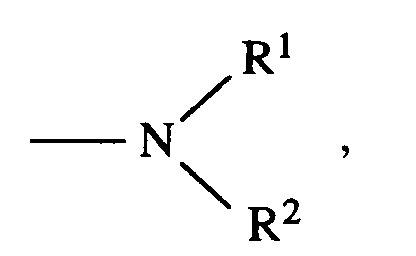
- gegebenenfalls substituierte Aminogruppe, insbesondere eine solche der Formel
- wobei
- R¹
- für Wasserstoff oder einen aliphatischen, cycloaliphatischen oder araliphatischen Rest und
- R²
- für R¹ oder einen Heteroarylrest oder einen aromatischen Rest steht und wobei die Reste R¹ und R² gegebenenfalls unter Einschluß eines Heteroatoms einen Ring bilden können.
- Weitere Heteroatome zur Ringbildung von R² und R¹ sind bevorzugt O, NH, NCH₃, NCOCH₃, N-C₂H₄SO₂CH=CH₂, S, SO, SO₂.
- Bevorzugte Heteroarylreste R² und R¹ sind 3-Aminosulfolan, 2-Aminothiazol, 6-Amino-2-ethylsulfonylbenzothiazol.
- In einer bevorzugten Ausführungsform steht -NR¹R² für den Rest eines aliphatischen Amins oder eines heterocyclischen Amins, bei dem R¹ und R² zusammen mit dem gemeinsamen N-Atom einen Ring bilden.
- Die aliphatischen Reste in der Bedeutung von R¹ und R² sind bevorzugt Alkylreste, insbesondere mit 1 bis 6 C-Atomen, die gegebenenfalls durch Heteroatome unterbrochen und die gegebenenfalls substituiert sind.
- Beispiele für unterbrechende Heteroatome sind:
O, S, SO₂, NR³ (R³ = Wasserstoff, C₁-C₄-Alkyl), NR³CO, NR³SO₂; - Beispiele für Substituenten sind:
OH, Cl, F, COOH, SO₃H, OSO₃H, SO₂CH=CH₂, CN, SO₂CH₂CH₂Cl, SO₂CH₂CH₂OSO₃H, NR³-Z,
wobei Z für eine heterocyclische Reaktivgruppe steht, insbesondere eine solche aus der Monochlor- und der Monofluortriazinreihe oder der Fluorpyrimidinreihe. - Die cycloalipharischen Reste R¹ sind insbesondere 5- oder 6-gliedrige Cycloalkylreste.
- Die araliphatischen Reste R¹ sind insbesondere solche der Formel

wobei n = 1 bis 4 und der Rest A substituiert sein kann, beispielsweise durch Cl, NO₂, COOH, SO₃H, CH₃, OCH₃, SO₂CH₂CH₂OSO₃H, SO₂CH=CH₂, CH₂SO₂CH₂CH₂OSO₃H. - Aromatische Reste R² sind insbesondere Phenyl- oder Naphthylreste, die gegebenenfalls substituiert sind, insbesondere mit OCH₃, OC₂H₅, OCH₂CH₂OH, CH₃, C₂H₅, -CH(CH₃)₂, F, Cl, Br, COOH, SO₃H, NO₂, SO₂CH₂CH₂OSO₃H, SO₂CH=CH₂, CH₂SO₂CH₂CH₂OSO₃H, CH₂SO₂CH=CH₂, NHZ, wobei Z die o.a. Bedeutung hat.
- Im einzelnen sind für R¹ bzw. R² = aliphatischer Rest folgende Beispiele aufgeführt: CH₃, C₂H₅, CH₂CH₂OH, CH₂CH₂OCH₃, CH₂CH₂OC₂H₅, CH₂CH₂OCH₂CH₂OH, CH₂SO₃H, CH₂CH₂SO₃H, CH₂CH₂OSO₃H, CH₂COOH, CH₂CH₂COOH, CH₂CH₂SO₂CH₂CH₂OSO₃H, CH₂CH₂OCH₂CH₂SO₂CH₂CH₂Cl, CH₂CH₂OCH₂CH₂SO₂CH=CH₂, CH₂CH₂NHCOCH₂CH₂COOH, CH₂CH₂CH₂SO₂CH₂CH₂OSO₃H, CH₂CH₂CH₂SO₂CH=CH₂, CH₂CH₂CH₂SO₂CH₂CH₂Cl,


- Beispiele für cycloaliphatische Reste R¹ bzw. R² sind:

- Araliphatische Reste R¹ sind beispielsweise:


- Als Beispiele für aromatische Reste R² seien folgende aufgeführt:


Beispiele für ringgeschlossene Reste
sind:


- Bevorzugte Verbindungen im Rahmen der Formel (1) sind solche, in denen R für Wasserstoff steht.
- Weiterhin bevorzugt sind solche Verbindungen, in denen R¹ und R² unabhängig voneinander Wasserstoff, C₁-C₄-Alkyl, das durch OCH₃, OC₂H₅, COOH, OSO₃H, SO₃H, OCH₂CH₂SO₂CH₂CH₂OSO₃H, OCH₂CH₂SO₂CH=CH₂, OCH₂CH₂SO₂CH₂CH₂Cl, SO₂CH₂CH₂OSO₃H, SO₂CH=CH₂ substituiert sein kann, bedeuten; in einer weiteren bevorzugten Ausführungsform bedeuten R¹ Wasserstoff oder C₁-C₄-Alkyl und R² einen Phenylrest, der durch Cl, OCH₃, CH₃, SO₃H, NO₂, COOH, CN, SO₂CH₂CH₂OSO₃H, SO₂CH=CH₂, CH₂SO₂CH₂CH₂OSO₃H, CH₂SO₂CH=CH₂ substituiert sein kann.
- In einer weiteren bevorzugten Ausführungsform steht A für den Rest eines ringgeschlossenen Amins, insbesondere für

- Gegenstand der Erfindung ist weiterhin ein Verfahren zur Herstellung der Farbstoffe der Formel (1), das dadurch gekennzeichnet ist, daß man zunächst 2-Amino-5-hydroxynaphthalin-1,7-disulfonsäure mit Trifluortriazin im pH Bereich von 2 bis 6, insbesondere 3 bis 5, und bei Temperaturen von -5 bis +20°, insbesondere bei 0° bis 5°, gegebenenfalls in Gegenwart eines Puffers zu einer Difluortriazinverbindung kondensiert und anschließend ein weiteres Fluoratom durch einen Aminrest A austauscht und schließlich die resultierende Monofluorverbindung mit der Diazoverbindung eines Amins der Formel

im neutralen Bereich kuppelt. - Als Puffer kommen insbesondere die Alkalisalze der Fluoride oder Phosphate infrage.
- Die Reaktivfarbstoffe der Formel (1) können isoliert und zu brauchbaren, trockenen Färbepräparaten verarbeitet werden. Die Isolierung erfolgt vorzugsweise bei möglichst niedrigen Temperaturen durch Aussalzen und Filtrieren. Die filtrierten Farbstoffe können gegebenenfalls durch Zugabe eines Puffer-Gemisches, beispielsweise Mono- und Dinatriumphosphat, getrocknet werden; vorzugsweise wird die Trocknung bei nicht zu hohen Temperaturen und unter vermindertem Druck vorgenommen. Durch Zerstäubungstrocknung des ganzen Herstellungsgemisches kann man in gewissen Fällen die erfindungsgemäßen trockenen Präparate direkt, d.h. ohne Zwischenisolierung der Farbstoffe, herstellen.
- Die neuen Farbstoffe eignen sich zum Färben und Bedrucken von hydroxyl- und amidgruppenhaltigen Materialien, insbesondere Cellulosematerialien. Sie zeichnen sich durch eine hohe Reaktivität und einen hohen Fixiergrad aus. Die mit diesen Farbstoffen erhältlichen Färbungen oder Drucke auf Cellulosematerialien zeichnen sich außerdem durch eine hohe Faser-Farbstoff-Bindungsstabilität sowie durch eine hervorragende Stabilität gegenüber Oxidationsmitteln, wie peroxyd- oder chlorhaltige Waschmittel, aus. Die Auswaschbarkeit der beim Färben oder Druck nur in geringem Maße entstehenden Hydrolyseprodukte ist ausgezeichnet. Die Farbstoffe besitzen gute Naßechtheiten.
- Die angegebenen Formeln sind die der freien Säuren. Bei der Herstellung werden im allgemeinen die Salze erhalten, insbesondere die Alkalisalze, wie Natrium-, Kalium-oder Lithiumsalze.
- Die in den Beispielen genannten Gewichte beziehen sich auf die freie Säure. Die in den Beispielen angegebenen Farbkennzahlen beziehen sich auf Colour Index Hue Indication Chart (Indicator Numbers).
- 31,9 g 2-Amino-5-hydroxy-naphthalin-1,7-disulfonsäure werden in 400 ml Wasser neutral gelöst. Man gibt dann 300 g Eis hinzu und läßt 8,8 ml Trifluortriazin einlaufen, wobei man mit 15%iger Sodalösung eine pH von 4,0 bis 4,5 einhält. Man überzeugt sich von der Vollständigkeit der Acylierung durch eine Probe (Probe diazotieren und alkalisch stellen, keine Rotfärbung mehr).
- Man rührt 5 Minuten nach und gibt dann 8,7 g Morpholin hinzu und hält mit 15%iger Sodalösung einen pH von 7,5 bis 8. Nach 10 Minuten bei 10° ist die Reaktion beendet.
- Das Reaktionsprodukt der Formel

ist zum Teil ausgefallen. - Diese Suspension wird bei 5 bis 10° mit einer auf üblichen Weg durch direkte Diazotierung von 30,3 g 2-Amino-naphthalin-1,5-disulfonsäure erhaltenen Diazoverbindung versetzt, wobei gleichzeitig der pH durch Einstreuen von Natriumhydrogencarbonat bei pH 7,0 bis 7,5 gehalten wird.
- Nach beendeter Kupplung wird der Farbstoff der Formel

ausgesalzen, abgesaugt, getrocknet und gemahlen. - Das orangefarbene Farbstoffpulver löst sich leicht in Wasser und färbt Baumwolle nach einem der für Reaktivfarbstoffe üblichen Verfahren in brillanten Orangetönen (Farbkennzahl 5).
- Weitere wertvolle Farbstoffe, die Baumwolle in brillanten Orangetönen färben, erhält man nach den Angaben von Beispiel 1, wenn man anstelle von Morpholin eine äquivalente Menge der nachfolgend aufgeführten Amine verwendet.


- 31,9 g 2-Amino-5-hydroxy-naphthalin-1,7-disulfonsäure werden in 400 ml Wasser neutral gelöst. Man gibt dann 300 g Eis hinzu und läßt 8,8 ml Trifluortriazin einlaufen, wobei man mit 15%iger Sodalösung einen pH von 4,0 bis 4,5 einhält. Man rührt 5 Minuten nach und gibt dann eine neutrale Lösung von 17,3 g m-Sulfanilsäure zu und hält mit 15%iger Sodalösung einen pH von 5,0 bis 5,5. Während der Acylierung läßt man die Temperatur auf 15 bis 20° ansteigen. Die resultierende Lösung des Reaktionsproduktes der Formel

wird bei 5 bis 10° mit einer auf üblichen Weg durch Diazotierung von 30,3 g 2-Aminonaphthalin-1,5-disulfonsäure erhaltenen Diazoverbindung versetzt, wobei gleichzeitig der pH durch Einstreuen von Natriumhydrogencarbonat bei 7,0 bis 7,5 gehalten wird. Nach beendeter Kupplung wird der Farbstoff der Formel
ausgesalzen, abgesaugt, getrocknet und gemahlen. - Das orangefarbene Farbstoffpulver löst sich leicht in Wasser und färbt Baumwolle nach einem der für Reaktivfarbstoffe üblichen Verfahren in brillanten Orangetönen (Farbkennzahl 5).
- Weitere wertvolle Farbstoffe, die Baumwolle in brillanten Orangetönen färben, erhält man nach den Angaben von Beispiel 29, wenn man anstelle von m-Sulfanilsäure eine äquivalente Menge der nachfolgend aufgeführten Amine verwendet.
Beispiel Amin Farbstoff λmax(nm) 30 Anilin 488 31 N-Ethylanilin 486 32 N-Methylanilin 486 33 4-Chloranilin 488 34 3-Chloranilin 488 35 2-Chloranilin 36 o-Toluidin 37 p-Toluidin 38 p-Sulfanilsäure 39 o-Anisidin 40 p-Anisidin 41 4-β-Sulfatoethylsulfonylanilin 42 3-β-Sulfatoethylsulfonylanilin 43 β-Sulfatoethyl-4-aminobenzylsulfon 44 3-Aminobenzoesäure 45 4-Aminobenzoesäure 46 1-Amino-4-methyl-3-β-sulfatoethylsulfonylbenzol 47 1-Amino-4-vinylsulfonyl-benzol 48 1-Amino-3-vinylsulfonyl-benzol 49 2-Amino-6-β-sulfatoethylsulfonylnaphthalin-8-sulfonsäure - 31,9 g 2-Amino-5-hydroxy-naphthalin- 1,7-disulfonsäure werden nach den Angaben von Beispiel 1 mit Trifluortriazin und dann mit Morpholin kondensiert. Die resultierende Suspension der Monofluortriazinylverbindung wird bei 5 bis 10° mit einer auf üblichen Weg durch direkte Diazotierung von 38,3 g 2-Aminonaphthalin- 1,5,7-trisulfonsäure erhaltenen Diazoverbindung versetzt, wobei gleichzeitig der pH durch Einstreuen von Natriumhydrogencarbonat bei 7,0 bis 7,5 gehalten wird. Nach beendeter Kupplung wird der Farbstoff der Formel

ausgesalzen, abgesaugt, getrocknet und gemahlen. - Das orangefarbene Farbstoffpulver löst sich leicht in Wasser und färbt Baumwolle in brillanten Orangetönen (Farbkennzahl 5).
- Verfährt man nach den Angaben dieses Beispiels, verwendet jedoch anstelle von Morpholin eine äquivalente Menge der in Beispiel 2 bis 28 bzw. 29 bis 49 genannten Amine, wobei man für die zuletzt genannten aromatischen Amine bei der Kondensation mit der Difluortriazinverbindung einen pH von 5,0 bis 5,5 einhält, so resultieren gleichfalls Reaktivfarbstoffe, die Baumwolle orange färben (Farbkennzahl 4).
- 31,9 g 2-Amino-5-hydroxy-naphthalin-1,7-disulfonsäure werden nach den Angaben von Beispiel 1 mit Trifluortriazin kondensiert. Die Lösung der resultierenden Difluortriazinverbindung wird bei 0° mit 5,0 g Ethylendiamin versetzt, wobei man einen pH von 5,5 bis 6,5 einhält. Nach 2 bis 3 Stunden ist die Kondensation beendet. Das Reaktionsprodukt der Formel

das weitgehend als Suspension vorliegt, wird mit einer auf üblichen Weg durch Diazotierung von 30,3 g 2-Aminonaphthalin-1,5-disulfonsäure erhaltenen Diazoverbindung versetzt, wobei gleichzeitig der pH durch Einstreuen von Natriumhydrogencarbonat bei 7,0 bis 7,5 gehalten wird. Nach beendeter Kupplung wird der Farbstoff der Formel
der sich schwer löslich abgeschieden hat, abgesaugt und erneut in 1 l Wasser angerührt. Bei 0 bis 5° werden 16,9 g 2,4,6-Trifluor-5-chlor-pyrimidin zugetropft und dabei ein pH von 7,5 bis 8,0 mit verdünnter Natronlauge eingehalten. Der Farbstoff geht während der Kondensation in lösung. Nach beendeter Kondensation (Dünnschichtchromatogramm) wird der Farbstoff ausgesalzen, abgesaugt, getrocknet und gemahlen. Das orangefarbene Pulver löst sich leicht in Wasser und färbt Baumwolle in klaren Orangetönen (Farbkennzahl 5). - Weitere wertvolle Reaktivfarbstoffe, die Baumwolle orange färben, erhält man nach den Angaben dieses Beispiels wenn man anstelle von 2,4,6-Trifluor-5-chlorpyrimidin eine äquivalente Menge des nachfolgend aufgeführten Reaktivkomponenten verwendet und bei der Kondensation im angegebenen Temperaturbereich arbeitet.
Beispiel Reaktivkomponente Temperatur 52 4,6-Difluor-5-chlorpyrimidin 10-15° 53 2,4-Dichlor-6-aminotriazin 25-30° 54 2,4-Dichlor-6-(2'-sulfophenylamino)-triazin 25-30° 55 2,4-Difluor-6-(2'-sulfophenylamino)-triazin 0-5° 56 2,4-Difluor-6-(2'-chlor-5'-sulfophenylamino)-triazin 0-5°

Claims (10)
- Reaktivfarbstoffe, die in Form der freien Säure folgender Formel entsprechen
 R = Wasserstoff oder Sulfo,A = gegebenenfalls substituierte Aminogruppe, insbesondere eine solche der Formel
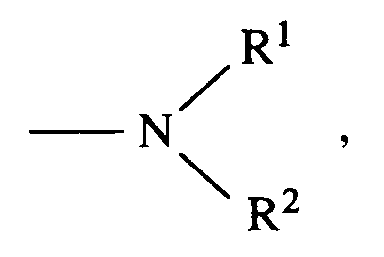 R¹ für Wasserstoff oder einen aliphatischen, cycloaliphatischen oder araliphatischen Rest undR² für R¹ oder einen Heteroarylrest oder einen aromatischen Rest steht und wobei die Reste R¹ und R² gegebenenfalls unter Einschluß eines Heteroatoms einen Ring bilden können.
 - Reaktivfarbstoffe nach Anspruch 1, dadurch gekennzeichnet, daß R für Wasserstoff steht.
- Reaktivfarbstoffe nach wenigstens einem der vorhergehenden Ansprüche, dadurch gekennzeichnet, daß R¹ und R² unabhängig voneinander Wasserstoff, C₁-C₄-Alkyl, das durch OCH₃, OC₂H₅, COOH, OSO₃H, SO₃H, OCH₂CH₂SO₂CH₂CH₂OSO₃H,OCH₂CH₂SO₂CH=CH₂, OCH₂CH₂SO₂CH₂CH₂Cl, SO₂CH₂CH₂OSO₃H, SO₂CH=CH₂ substituiert sein kann, bedeuten.
- Reaktivfarbstoffe nach wenigstens einem der vorhergehenden Ansprüche, dadurch gekennzeichnet, daß R¹ Wasserstoff oder C₁-C₄-Alkyl und R² einen Phenylrest bedeuten, der durch Cl, OCH₃, CH₃, SO₃H, NO₂, COOH, CN, SO₂CH₂CH₂OSO₃H, SO₂CH=CH₂, CH₂SO₂CH₂CH₂OSO₃H, CH₂SO₂CH=CH₂ substituiert sein kann.
- Reaktivfarbstoffe nach wenigstens einem der vorhergehenden Ansprüche, dadurch gekennzeichnet, daß R¹ und R² gegebenenfalls unter Einschluß eines weiteren Heteroatoms einen Ring bilden.
- Reaktivfarbstoffe gemäß wenigstens einem der vorhergehenden Ansprüche, dadurch gekennzeichnet, daß wenigstens einer der Substituenten R¹ und R² einen Vinylsulfonreaktivrest enthält.
- Reaktivfarbstoffe nach wenigstens einem der vorhergehenden Ansprüche, dadurch gekennzeichnet, daß R¹ eine heterocyclische Reaktivgruppe enthält.
- Reaktivfarbstoff gemäß Anspruch 1 der Formel

- Verfahren zur Herstellung von Verbindungen der Formel (1)
 R= Wasserstoff oder Sulfo,A= gegebenenfalls substituierte Aminogruppe,
insbesondere eine solche der Formel R¹ für Wasserstoff oder einen aliphatischen, cycloaliphatischen oder araliphatischen Rest undR² für R¹ oder einen Heteroarylrest oder einen aromatischen Rest steht und wobei die Reste R¹ und R² gegebenenfalls unter Einschluß eines Heteroatoms einen Ring bilden können, dadurch gekennzeichnet, daß man zunächst 2-Amino-5-hydroxynaphthalin-1,7-disulfonsäure mit Trifluortriazin im pH Bereich von 2 bis 6, und bei Temperaturen von -5 bis +20°, gegebenenfalls in Gegenwart eines Puffers, zu einer Difluortriazinverbindung kondensiert und anschließend ein weiteres Fluoratom durch einen Aminrest A austauscht und schließlich die resultierende Monofluorverbindung mit der Diazoverbindung eines Amins der Formel
- Verfahren zum Färben oder Bedrucken von hydroxyl- oder amidgruppenhaltigen Materialien mit einem Reaktivfarbstoff, dadurch gekennzeichnet, daß ein Reaktivfarbstoff gemäß Anspruch 1 verwendet wird.
Applications Claiming Priority (2)
| Application Number | Priority Date | Filing Date | Title |
|---|---|---|---|
| DE4206040 | 1992-02-27 | ||
| DE4206040A DE4206040A1 (de) | 1992-02-27 | 1992-02-27 | Neue reaktivfarbstoffe |
Publications (3)
| Publication Number | Publication Date |
|---|---|
| EP0557841A2 true EP0557841A2 (de) | 1993-09-01 |
| EP0557841A3 EP0557841A3 (de) | 1994-01-26 |
| EP0557841B1 EP0557841B1 (de) | 2000-05-10 |
Family
ID=6452725
Family Applications (1)
| Application Number | Title | Priority Date | Filing Date |
|---|---|---|---|
| EP93102319A Expired - Lifetime EP0557841B1 (de) | 1992-02-27 | 1993-02-15 | Reaktivfarbstoffe |
Country Status (4)
| Country | Link |
|---|---|
| US (1) | US5459245A (de) |
| EP (1) | EP0557841B1 (de) |
| JP (1) | JPH0641453A (de) |
| DE (2) | DE4206040A1 (de) |
Cited By (5)
| Publication number | Priority date | Publication date | Assignee | Title |
|---|---|---|---|---|
| EP0668327A1 (de) * | 1994-02-11 | 1995-08-23 | Hoechst Aktiengesellschaft | Wasserlösliche Azoverbindungen, Verfahren zu deren Herstellung und ihre Verwendung als Farbstoffe |
| EP0950692A1 (de) * | 1998-04-15 | 1999-10-20 | DyStar Textilfarben GmbH & Co. Deutschland KG | Azoverbindungen, Verfahren zu ihrer Herstellung und ihre Verwendung als faserreaktive Farbstoffe |
| EP0957135A1 (de) * | 1998-05-13 | 1999-11-17 | DyStar Textilfarben GmbH & Co. Deutschland KG | Wasserlösliche halogentriazinhaltige Azoverbindung, Verfahren zu deren Herstellung und ihre Verwendung als Farbstoffe |
| EP1066344B1 (de) * | 1998-03-26 | 2002-07-24 | Korea Research Institute Of Chemical Technology | Reaktivrotfarbstoffe enthaltend monochlortriazine sowie acetoxyethylsulphongruppen |
| US9767041B2 (en) | 2015-05-26 | 2017-09-19 | Intel Corporation | Managing sectored cache |
Families Citing this family (2)
| Publication number | Priority date | Publication date | Assignee | Title |
|---|---|---|---|---|
| CN104559320A (zh) * | 2014-04-28 | 2015-04-29 | 无锡润新染料有限公司 | 一种复合活性艳橙染料组合物 |
| CN106009769A (zh) * | 2016-05-17 | 2016-10-12 | 黄山普米特新材料有限公司 | 活性橙及其合成方法 |
Family Cites Families (7)
| Publication number | Priority date | Publication date | Assignee | Title |
|---|---|---|---|---|
| US4206306A (en) * | 1967-04-19 | 1980-06-03 | Bayer Aktiengesellschaft | Reactive phthalocyanine dyestuffs containing a fluorotriazinyl group attached via a nitrogen bridge to the dyestuff molecule |
| US4115378A (en) * | 1967-04-19 | 1978-09-19 | Bayer Aktiengesellschaft | Water soluble reactive axodyestuffs containing a fluorotriazinyl group attached via a nitrogen bridge to the dyestuff molecule |
| CH660016A5 (de) * | 1983-11-09 | 1987-03-13 | Ciba Geigy Ag | Reaktivfarbstoffe und deren herstellung. |
| DE3586409D1 (de) * | 1984-08-21 | 1992-09-03 | Ciba Geigy Ag | Verfahren zur kontinuierlichen umsetzung von cyanurfluorid mit aminonaphtholsulfonsaeuren. |
| DE3545462A1 (de) * | 1985-12-20 | 1987-07-02 | Bayer Ag | Reaktivfarbstoffe |
| DE3610764C2 (de) * | 1986-03-29 | 1995-05-18 | Basf Lacke & Farben | Verfahren zur einschichtigen Beschichtung von Finish-Folien und Endloskanten |
| EP0299315B1 (de) * | 1987-07-16 | 1993-06-16 | Bayer Ag | Reaktivfarbstoffe |
-
1992
- 1992-02-27 DE DE4206040A patent/DE4206040A1/de not_active Withdrawn
-
1993
- 1993-02-15 EP EP93102319A patent/EP0557841B1/de not_active Expired - Lifetime
- 1993-02-15 DE DE59310030T patent/DE59310030D1/de not_active Expired - Fee Related
- 1993-02-22 JP JP5054597A patent/JPH0641453A/ja active Pending
-
1994
- 1994-10-27 US US08/330,230 patent/US5459245A/en not_active Expired - Fee Related
Cited By (6)
| Publication number | Priority date | Publication date | Assignee | Title |
|---|---|---|---|---|
| EP0668327A1 (de) * | 1994-02-11 | 1995-08-23 | Hoechst Aktiengesellschaft | Wasserlösliche Azoverbindungen, Verfahren zu deren Herstellung und ihre Verwendung als Farbstoffe |
| EP1066344B1 (de) * | 1998-03-26 | 2002-07-24 | Korea Research Institute Of Chemical Technology | Reaktivrotfarbstoffe enthaltend monochlortriazine sowie acetoxyethylsulphongruppen |
| EP0950692A1 (de) * | 1998-04-15 | 1999-10-20 | DyStar Textilfarben GmbH & Co. Deutschland KG | Azoverbindungen, Verfahren zu ihrer Herstellung und ihre Verwendung als faserreaktive Farbstoffe |
| US6124441A (en) * | 1998-04-15 | 2000-09-26 | Dystar Textilfarben Gmbh & Co. Deutschland Kg | Monoaso compounds containing a fluoro-triazinyl group linked with a fiber-reactive group of the vinyl sulfone series via an ethyl-n-methyly-amino group, suitable as dyestuffs |
| EP0957135A1 (de) * | 1998-05-13 | 1999-11-17 | DyStar Textilfarben GmbH & Co. Deutschland KG | Wasserlösliche halogentriazinhaltige Azoverbindung, Verfahren zu deren Herstellung und ihre Verwendung als Farbstoffe |
| US9767041B2 (en) | 2015-05-26 | 2017-09-19 | Intel Corporation | Managing sectored cache |
Also Published As
| Publication number | Publication date |
|---|---|
| DE4206040A1 (de) | 1993-09-02 |
| EP0557841B1 (de) | 2000-05-10 |
| EP0557841A3 (de) | 1994-01-26 |
| DE59310030D1 (de) | 2000-06-15 |
| JPH0641453A (ja) | 1994-02-15 |
| US5459245A (en) | 1995-10-17 |
Similar Documents
| Publication | Publication Date | Title |
|---|---|---|
| EP0065732B1 (de) | Wasserlösliche Disazoverbindungen, Verfahren zu deren Herstellung und ihre Verwendung als Farbstoffe | |
| EP0357915B1 (de) | Disazoreaktivfarbstoffe | |
| EP0084314B1 (de) | Disazoreaktivfarbstoffe | |
| EP0292825A2 (de) | Reaktivfarbstoffe | |
| EP0557841B1 (de) | Reaktivfarbstoffe | |
| EP0568874B1 (de) | Reaktivfarbstoffe | |
| EP0962500B1 (de) | Wasserlösliche Monoazoverbindungen, Verfahren zu ihrer Herstellung und ihre Verwendung als Farbstoffe | |
| EP0079563B1 (de) | Wasserlösliche 1:2-Metallkomplex-Azoverbindungen, Verfahren zu ihrer Herstellung und ihre Verwendung als Farbstoffe | |
| EP0168703A2 (de) | Reaktivfarbstoffe | |
| EP0569779B1 (de) | Reaktivfarbstoffe | |
| EP0318785B1 (de) | Reaktivfarbstoffe | |
| EP0316778B1 (de) | 2-Hydroxy-pyridon-Azoverbindungen, Verfahren zu ihrer Herstellung und ihre Verwendung als Farbstoffe | |
| EP0387579B1 (de) | Verdoppelte Reaktivfarbstoffe | |
| EP0094019B1 (de) | Wasserlösliche Disazoverbindungen, Verfahren zu deren Herstellung und ihre Verwendung als Farbstoffe | |
| EP0356681B1 (de) | Disazoreaktivfarbstoffe | |
| EP0387589B1 (de) | Reaktivfarbstoffe, die drei reaktive Gruppen aufweisen | |
| EP0308787B1 (de) | Reaktivfarbstoffe | |
| EP0231836B1 (de) | Wasserlösliche Disazoverbindungen, Verfahren zu ihrer Herstellung und ihre Verwendung als Farbstoffe | |
| EP0144704A2 (de) | Reaktivfarbstoffe | |
| EP0641841B1 (de) | Azo-Reaktivfarbstoffe | |
| EP0554746A1 (de) | Reaktivfarbstoffe, deren Herstellung und Verwendung | |
| EP0761767A1 (de) | Aluminium-Phthalocyanin-Reaktivfarbstoffe | |
| EP0198350B1 (de) | Disazoreaktivfarbstoffe | |
| DE3513261A1 (de) | Disazoreaktivfarbstoffe | |
| EP0431411B1 (de) | Azoreaktivfarbstoffe |
Legal Events
| Date | Code | Title | Description |
|---|---|---|---|
| PUAI | Public reference made under article 153(3) epc to a published international application that has entered the european phase |
Free format text: ORIGINAL CODE: 0009012 |
|
| AK | Designated contracting states |
Kind code of ref document: A2 Designated state(s): CH DE FR GB LI |
|
| PUAL | Search report despatched |
Free format text: ORIGINAL CODE: 0009013 |
|
| AK | Designated contracting states |
Kind code of ref document: A3 Designated state(s): CH DE FR GB LI |
|
| 17P | Request for examination filed |
Effective date: 19940616 |
|
| 17Q | First examination report despatched |
Effective date: 19961030 |
|
| GRAG | Despatch of communication of intention to grant |
Free format text: ORIGINAL CODE: EPIDOS AGRA |
|
| GRAG | Despatch of communication of intention to grant |
Free format text: ORIGINAL CODE: EPIDOS AGRA |
|
| GRAH | Despatch of communication of intention to grant a patent |
Free format text: ORIGINAL CODE: EPIDOS IGRA |
|
| GRAH | Despatch of communication of intention to grant a patent |
Free format text: ORIGINAL CODE: EPIDOS IGRA |
|
| GRAA | (expected) grant |
Free format text: ORIGINAL CODE: 0009210 |
|
| AK | Designated contracting states |
Kind code of ref document: B1 Designated state(s): CH DE FR GB LI |
|
| REG | Reference to a national code |
Ref country code: CH Ref legal event code: NV Representative=s name: E. BLUM & CO. PATENTANWAELTE Ref country code: CH Ref legal event code: EP |
|
| GBT | Gb: translation of ep patent filed (gb section 77(6)(a)/1977) |
Effective date: 20000510 |
|
| REF | Corresponds to: |
Ref document number: 59310030 Country of ref document: DE Date of ref document: 20000615 |
|
| ET | Fr: translation filed | ||
| PLBE | No opposition filed within time limit |
Free format text: ORIGINAL CODE: 0009261 |
|
| STAA | Information on the status of an ep patent application or granted ep patent |
Free format text: STATUS: NO OPPOSITION FILED WITHIN TIME LIMIT |
|
| 26N | No opposition filed | ||
| REG | Reference to a national code |
Ref country code: GB Ref legal event code: IF02 |
|
| PGFP | Annual fee paid to national office [announced via postgrant information from national office to epo] |
Ref country code: FR Payment date: 20040210 Year of fee payment: 12 |
|
| PGFP | Annual fee paid to national office [announced via postgrant information from national office to epo] |
Ref country code: GB Payment date: 20040211 Year of fee payment: 12 |
|
| PG25 | Lapsed in a contracting state [announced via postgrant information from national office to epo] |
Ref country code: GB Free format text: LAPSE BECAUSE OF NON-PAYMENT OF DUE FEES Effective date: 20050215 |
|
| GBPC | Gb: european patent ceased through non-payment of renewal fee |
Effective date: 20050215 |
|
| PG25 | Lapsed in a contracting state [announced via postgrant information from national office to epo] |
Ref country code: FR Free format text: LAPSE BECAUSE OF NON-PAYMENT OF DUE FEES Effective date: 20051031 |
|
| REG | Reference to a national code |
Ref country code: FR Ref legal event code: ST Effective date: 20051031 |
|
| PGFP | Annual fee paid to national office [announced via postgrant information from national office to epo] |
Ref country code: DE Payment date: 20060209 Year of fee payment: 14 |
|
| REG | Reference to a national code |
Ref country code: CH Ref legal event code: PUE Owner name: DYSTAR TEXTILFARBEN GMBH & CO. DEUTSCHLAND KG Free format text: BAYER AG# #51368 LEVERKUSEN (DE) -TRANSFER TO- DYSTAR TEXTILFARBEN GMBH & CO. DEUTSCHLAND KG#INDUSTRIEPARK HOECHST#65926 FRANKFURT AM MAIN (DE) Ref country code: CH Ref legal event code: NV Representative=s name: PATENTANWAELTE SCHAAD, BALASS, MENZL & PARTNER AG |
|
| PG25 | Lapsed in a contracting state [announced via postgrant information from national office to epo] |
Ref country code: DE Free format text: LAPSE BECAUSE OF NON-PAYMENT OF DUE FEES Effective date: 20070901 |
|
| PGFP | Annual fee paid to national office [announced via postgrant information from national office to epo] |
Ref country code: CH Payment date: 20080214 Year of fee payment: 16 |
|
| REG | Reference to a national code |
Ref country code: CH Ref legal event code: PL |
|
| PG25 | Lapsed in a contracting state [announced via postgrant information from national office to epo] |
Ref country code: LI Free format text: LAPSE BECAUSE OF NON-PAYMENT OF DUE FEES Effective date: 20090228 Ref country code: CH Free format text: LAPSE BECAUSE OF NON-PAYMENT OF DUE FEES Effective date: 20090228 |