EP0560885B1 - Cellules recombinees qui expriment nettement des genes heterologues integres dans des chromosomes - Google Patents
Cellules recombinees qui expriment nettement des genes heterologues integres dans des chromosomes Download PDFInfo
- Publication number
- EP0560885B1 EP0560885B1 EP92901454A EP92901454A EP0560885B1 EP 0560885 B1 EP0560885 B1 EP 0560885B1 EP 92901454 A EP92901454 A EP 92901454A EP 92901454 A EP92901454 A EP 92901454A EP 0560885 B1 EP0560885 B1 EP 0560885B1
- Authority
- EP
- European Patent Office
- Prior art keywords
- gene
- process according
- mutation
- ethanol
- host cell
- Prior art date
- Legal status (The legal status is an assumption and is not a legal conclusion. Google has not performed a legal analysis and makes no representation as to the accuracy of the status listed.)
- Revoked
Links
- 108090000623 proteins and genes Proteins 0.000 title claims abstract description 203
- LFQSCWFLJHTTHZ-UHFFFAOYSA-N Ethanol Chemical compound CCO LFQSCWFLJHTTHZ-UHFFFAOYSA-N 0.000 claims abstract description 286
- 210000004027 cell Anatomy 0.000 claims abstract description 155
- 238000004519 manufacturing process Methods 0.000 claims abstract description 100
- 230000035772 mutation Effects 0.000 claims abstract description 87
- 230000014509 gene expression Effects 0.000 claims abstract description 86
- 241000588724 Escherichia coli Species 0.000 claims abstract description 64
- 241000588902 Zymomonas mobilis Species 0.000 claims abstract description 47
- 210000000349 chromosome Anatomy 0.000 claims abstract description 43
- 229920001184 polypeptide Polymers 0.000 claims abstract description 40
- 102000004196 processed proteins & peptides Human genes 0.000 claims abstract description 40
- 108090000765 processed proteins & peptides Proteins 0.000 claims abstract description 40
- 108091033319 polynucleotide Proteins 0.000 claims abstract description 21
- 102000040430 polynucleotide Human genes 0.000 claims abstract description 21
- 239000002157 polynucleotide Substances 0.000 claims abstract description 21
- 230000001580 bacterial effect Effects 0.000 claims abstract description 12
- 230000022532 regulation of transcription, DNA-dependent Effects 0.000 claims abstract description 11
- 230000000717 retained effect Effects 0.000 claims abstract description 11
- 239000013612 plasmid Substances 0.000 claims description 68
- 238000000855 fermentation Methods 0.000 claims description 57
- 230000004151 fermentation Effects 0.000 claims description 56
- 238000000034 method Methods 0.000 claims description 50
- 230000008569 process Effects 0.000 claims description 37
- WQZGKKKJIJFFOK-GASJEMHNSA-N Glucose Natural products OC[C@H]1OC(O)[C@H](O)[C@@H](O)[C@@H]1O WQZGKKKJIJFFOK-GASJEMHNSA-N 0.000 claims description 28
- 239000008103 glucose Substances 0.000 claims description 28
- 102000004169 proteins and genes Human genes 0.000 claims description 28
- 229960005091 chloramphenicol Drugs 0.000 claims description 26
- WIIZWVCIJKGZOK-RKDXNWHRSA-N chloramphenicol Chemical compound ClC(Cl)C(=O)N[C@H](CO)[C@H](O)C1=CC=C([N+]([O-])=O)C=C1 WIIZWVCIJKGZOK-RKDXNWHRSA-N 0.000 claims description 26
- 239000003550 marker Substances 0.000 claims description 25
- SRBFZHDQGSBBOR-IOVATXLUSA-N D-xylopyranose Chemical compound O[C@@H]1COC(O)[C@H](O)[C@H]1O SRBFZHDQGSBBOR-IOVATXLUSA-N 0.000 claims description 24
- 108010021809 Alcohol dehydrogenase Proteins 0.000 claims description 21
- 241000894006 Bacteria Species 0.000 claims description 21
- 108010011939 Pyruvate Decarboxylase Proteins 0.000 claims description 21
- 230000010354 integration Effects 0.000 claims description 21
- 230000003115 biocidal effect Effects 0.000 claims description 16
- 101150079601 recA gene Proteins 0.000 claims description 16
- 102000007698 Alcohol dehydrogenase Human genes 0.000 claims description 14
- PYMYPHUHKUWMLA-UHFFFAOYSA-N arabinose Natural products OCC(O)C(O)C(O)C=O PYMYPHUHKUWMLA-UHFFFAOYSA-N 0.000 claims description 14
- SRBFZHDQGSBBOR-UHFFFAOYSA-N beta-D-Pyranose-Lyxose Natural products OC1COC(O)C(O)C1O SRBFZHDQGSBBOR-UHFFFAOYSA-N 0.000 claims description 14
- 108010008221 formate C-acetyltransferase Proteins 0.000 claims description 14
- 230000000813 microbial effect Effects 0.000 claims description 13
- 238000012216 screening Methods 0.000 claims description 11
- 230000010076 replication Effects 0.000 claims description 10
- 238000002744 homologous recombination Methods 0.000 claims description 8
- 230000006801 homologous recombination Effects 0.000 claims description 8
- KDYFGRWQOYBRFD-UHFFFAOYSA-L succinate(2-) Chemical compound [O-]C(=O)CCC([O-])=O KDYFGRWQOYBRFD-UHFFFAOYSA-L 0.000 claims description 8
- 238000006243 chemical reaction Methods 0.000 claims description 7
- 230000002759 chromosomal effect Effects 0.000 claims description 7
- 102000019259 Succinate Dehydrogenase Human genes 0.000 claims description 6
- 108010012901 Succinate Dehydrogenase Proteins 0.000 claims description 6
- 230000003505 mutagenic effect Effects 0.000 claims description 6
- WQZGKKKJIJFFOK-VFUOTHLCSA-N beta-D-glucose Chemical compound OC[C@H]1O[C@@H](O)[C@H](O)[C@@H](O)[C@@H]1O WQZGKKKJIJFFOK-VFUOTHLCSA-N 0.000 claims description 5
- 230000009466 transformation Effects 0.000 claims description 5
- 239000003471 mutagenic agent Substances 0.000 claims description 4
- 231100000707 mutagenic chemical Toxicity 0.000 claims description 4
- 230000006798 recombination Effects 0.000 claims description 4
- 238000005215 recombination Methods 0.000 claims description 4
- 238000012360 testing method Methods 0.000 claims description 4
- 238000013518 transcription Methods 0.000 claims description 4
- 230000035897 transcription Effects 0.000 claims description 4
- 235000016127 added sugars Nutrition 0.000 claims description 3
- 230000001131 transforming effect Effects 0.000 claims description 3
- 241000322995 Escherichia coli KO11FL Species 0.000 claims description 2
- 102000039446 nucleic acids Human genes 0.000 claims 2
- 108020004707 nucleic acids Proteins 0.000 claims 2
- 150000007523 nucleic acids Chemical class 0.000 claims 2
- 241000588698 Erwinia Species 0.000 claims 1
- 241000588722 Escherichia Species 0.000 claims 1
- 241000588748 Klebsiella Species 0.000 claims 1
- 238000009655 industrial fermentation Methods 0.000 claims 1
- 230000000694 effects Effects 0.000 abstract description 29
- 235000000346 sugar Nutrition 0.000 abstract description 24
- 150000008163 sugars Chemical class 0.000 abstract description 17
- 239000002028 Biomass Substances 0.000 abstract description 14
- 108020004414 DNA Proteins 0.000 description 47
- 239000000047 product Substances 0.000 description 31
- 235000018102 proteins Nutrition 0.000 description 25
- 102000004190 Enzymes Human genes 0.000 description 22
- 108090000790 Enzymes Proteins 0.000 description 22
- 101150066782 adhB gene Proteins 0.000 description 20
- 101150070013 pfl gene Proteins 0.000 description 20
- 239000012634 fragment Substances 0.000 description 15
- 150000001299 aldehydes Chemical class 0.000 description 14
- LCTONWCANYUPML-UHFFFAOYSA-M Pyruvate Chemical compound CC(=O)C([O-])=O LCTONWCANYUPML-UHFFFAOYSA-M 0.000 description 12
- 239000002253 acid Substances 0.000 description 12
- 230000012010 growth Effects 0.000 description 12
- 229940076788 pyruvate Drugs 0.000 description 12
- DGMPVYSXXIOGJY-UHFFFAOYSA-N Fusaric acid Chemical compound CCCCC1=CC=C(C(O)=O)N=C1 DGMPVYSXXIOGJY-UHFFFAOYSA-N 0.000 description 11
- 230000002269 spontaneous effect Effects 0.000 description 11
- 241001522878 Escherichia coli B Species 0.000 description 10
- 230000002068 genetic effect Effects 0.000 description 10
- 230000015572 biosynthetic process Effects 0.000 description 9
- 230000037361 pathway Effects 0.000 description 9
- 244000005700 microbiome Species 0.000 description 8
- 239000013598 vector Substances 0.000 description 8
- 102000004594 DNA Polymerase I Human genes 0.000 description 7
- 108010017826 DNA Polymerase I Proteins 0.000 description 7
- 241000196324 Embryophyta Species 0.000 description 7
- 238000004458 analytical method Methods 0.000 description 7
- 238000013459 approach Methods 0.000 description 7
- 238000010276 construction Methods 0.000 description 7
- 230000004060 metabolic process Effects 0.000 description 7
- 231100000350 mutagenesis Toxicity 0.000 description 7
- QTBSBXVTEAMEQO-UHFFFAOYSA-M Acetate Chemical compound CC([O-])=O QTBSBXVTEAMEQO-UHFFFAOYSA-M 0.000 description 6
- 239000006137 Luria-Bertani broth Substances 0.000 description 6
- LCTONWCANYUPML-UHFFFAOYSA-N Pyruvic acid Chemical compound CC(=O)C(O)=O LCTONWCANYUPML-UHFFFAOYSA-N 0.000 description 6
- ZSLZBFCDCINBPY-ZSJPKINUSA-N acetyl-CoA Chemical compound O[C@@H]1[C@H](OP(O)(O)=O)[C@@H](COP(O)(=O)OP(O)(=O)OCC(C)(C)[C@@H](O)C(=O)NCCC(=O)NCCSC(=O)C)O[C@H]1N1C2=NC=NC(N)=C2N=C1 ZSLZBFCDCINBPY-ZSJPKINUSA-N 0.000 description 6
- 230000037431 insertion Effects 0.000 description 6
- 238000003780 insertion Methods 0.000 description 6
- 238000002955 isolation Methods 0.000 description 6
- 230000014759 maintenance of location Effects 0.000 description 6
- 150000007524 organic acids Chemical class 0.000 description 6
- GUBGYTABKSRVRQ-QKKXKWKRSA-N Lactose Natural products OC[C@H]1O[C@@H](O[C@H]2[C@H](O)[C@@H](O)C(O)O[C@@H]2CO)[C@H](O)[C@@H](O)[C@H]1O GUBGYTABKSRVRQ-QKKXKWKRSA-N 0.000 description 5
- BAWFJGJZGIEFAR-NNYOXOHSSA-O NAD(+) Chemical compound NC(=O)C1=CC=C[N+]([C@H]2[C@@H]([C@H](O)[C@@H](COP(O)(=O)OP(O)(=O)OC[C@@H]3[C@H]([C@@H](O)[C@@H](O3)N3C4=NC=NC(N)=C4N=C3)O)O2)O)=C1 BAWFJGJZGIEFAR-NNYOXOHSSA-O 0.000 description 5
- 240000004808 Saccharomyces cerevisiae Species 0.000 description 5
- 235000014680 Saccharomyces cerevisiae Nutrition 0.000 description 5
- 239000004098 Tetracycline Substances 0.000 description 5
- 150000007513 acids Chemical class 0.000 description 5
- 239000011543 agarose gel Substances 0.000 description 5
- 239000000284 extract Substances 0.000 description 5
- 230000034659 glycolysis Effects 0.000 description 5
- 239000008101 lactose Substances 0.000 description 5
- 239000002609 medium Substances 0.000 description 5
- 239000000203 mixture Substances 0.000 description 5
- 238000002360 preparation method Methods 0.000 description 5
- 229960002180 tetracycline Drugs 0.000 description 5
- 235000019364 tetracycline Nutrition 0.000 description 5
- 229930101283 tetracycline Natural products 0.000 description 5
- 150000003522 tetracyclines Chemical class 0.000 description 5
- IKHGUXGNUITLKF-UHFFFAOYSA-N Acetaldehyde Chemical compound CC=O IKHGUXGNUITLKF-UHFFFAOYSA-N 0.000 description 4
- 229920001817 Agar Polymers 0.000 description 4
- LRHPLDYGYMQRHN-UHFFFAOYSA-N N-Butanol Chemical compound CCCCO LRHPLDYGYMQRHN-UHFFFAOYSA-N 0.000 description 4
- 102000007056 Recombinant Fusion Proteins Human genes 0.000 description 4
- 108010008281 Recombinant Fusion Proteins Proteins 0.000 description 4
- 230000002378 acidificating effect Effects 0.000 description 4
- 239000008272 agar Substances 0.000 description 4
- 239000003242 anti bacterial agent Substances 0.000 description 4
- 238000002474 experimental method Methods 0.000 description 4
- 229930027945 nicotinamide-adenine dinucleotide Natural products 0.000 description 4
- BOPGDPNILDQYTO-NNYOXOHSSA-N nicotinamide-adenine dinucleotide Chemical compound C1=CCC(C(=O)N)=CN1[C@H]1[C@H](O)[C@H](O)[C@@H](COP(O)(=O)OP(O)(=O)OC[C@@H]2[C@H]([C@@H](O)[C@@H](O2)N2C3=NC=NC(N)=C3N=C2)O)O1 BOPGDPNILDQYTO-NNYOXOHSSA-N 0.000 description 4
- 235000015097 nutrients Nutrition 0.000 description 4
- 239000000523 sample Substances 0.000 description 4
- 238000003786 synthesis reaction Methods 0.000 description 4
- 238000004448 titration Methods 0.000 description 4
- CSCPPACGZOOCGX-UHFFFAOYSA-N Acetone Chemical compound CC(C)=O CSCPPACGZOOCGX-UHFFFAOYSA-N 0.000 description 3
- GUBGYTABKSRVRQ-XLOQQCSPSA-N Alpha-Lactose Chemical compound O[C@@H]1[C@@H](O)[C@@H](O)[C@@H](CO)O[C@H]1O[C@@H]1[C@@H](CO)O[C@H](O)[C@H](O)[C@H]1O GUBGYTABKSRVRQ-XLOQQCSPSA-N 0.000 description 3
- 239000004099 Chlortetracycline Substances 0.000 description 3
- 241000588700 Dickeya chrysanthemi Species 0.000 description 3
- 241001625930 Luria Species 0.000 description 3
- OKKJLVBELUTLKV-UHFFFAOYSA-N Methanol Chemical compound OC OKKJLVBELUTLKV-UHFFFAOYSA-N 0.000 description 3
- 240000008042 Zea mays Species 0.000 description 3
- 235000002017 Zea mays subsp mays Nutrition 0.000 description 3
- 101150024743 adhA gene Proteins 0.000 description 3
- 229940088710 antibiotic agent Drugs 0.000 description 3
- 230000008859 change Effects 0.000 description 3
- CYDMQBQPVICBEU-UHFFFAOYSA-N chlorotetracycline Natural products C1=CC(Cl)=C2C(O)(C)C3CC4C(N(C)C)C(O)=C(C(N)=O)C(=O)C4(O)C(O)=C3C(=O)C2=C1O CYDMQBQPVICBEU-UHFFFAOYSA-N 0.000 description 3
- 229960004475 chlortetracycline Drugs 0.000 description 3
- CYDMQBQPVICBEU-XRNKAMNCSA-N chlortetracycline Chemical compound C1=CC(Cl)=C2[C@](O)(C)[C@H]3C[C@H]4[C@H](N(C)C)C(O)=C(C(N)=O)C(=O)[C@@]4(O)C(O)=C3C(=O)C2=C1O CYDMQBQPVICBEU-XRNKAMNCSA-N 0.000 description 3
- 235000019365 chlortetracycline Nutrition 0.000 description 3
- 238000012217 deletion Methods 0.000 description 3
- 230000037430 deletion Effects 0.000 description 3
- 238000001514 detection method Methods 0.000 description 3
- 230000008030 elimination Effects 0.000 description 3
- 238000003379 elimination reaction Methods 0.000 description 3
- 230000002708 enhancing effect Effects 0.000 description 3
- 238000011049 filling Methods 0.000 description 3
- 239000000446 fuel Substances 0.000 description 3
- 230000004545 gene duplication Effects 0.000 description 3
- 230000002779 inactivation Effects 0.000 description 3
- JVTAAEKCZFNVCJ-UHFFFAOYSA-N lactic acid Chemical compound CC(O)C(O)=O JVTAAEKCZFNVCJ-UHFFFAOYSA-N 0.000 description 3
- 235000014655 lactic acid Nutrition 0.000 description 3
- 238000002703 mutagenesis Methods 0.000 description 3
- 230000007935 neutral effect Effects 0.000 description 3
- 235000005985 organic acids Nutrition 0.000 description 3
- 150000002972 pentoses Chemical class 0.000 description 3
- 229920000642 polymer Polymers 0.000 description 3
- 229940107700 pyruvic acid Drugs 0.000 description 3
- 238000013207 serial dilution Methods 0.000 description 3
- 238000002415 sodium dodecyl sulfate polyacrylamide gel electrophoresis Methods 0.000 description 3
- 238000011282 treatment Methods 0.000 description 3
- JIAARYAFYJHUJI-UHFFFAOYSA-L zinc dichloride Chemical compound [Cl-].[Cl-].[Zn+2] JIAARYAFYJHUJI-UHFFFAOYSA-L 0.000 description 3
- 230000002407 ATP formation Effects 0.000 description 2
- 101100162204 Aspergillus parasiticus (strain ATCC 56775 / NRRL 5862 / SRRC 143 / SU-1) aflH gene Proteins 0.000 description 2
- IJGRMHOSHXDMSA-UHFFFAOYSA-N Atomic nitrogen Chemical compound N#N IJGRMHOSHXDMSA-UHFFFAOYSA-N 0.000 description 2
- CURLTUGMZLYLDI-UHFFFAOYSA-N Carbon dioxide Chemical compound O=C=O CURLTUGMZLYLDI-UHFFFAOYSA-N 0.000 description 2
- 102000004163 DNA-directed RNA polymerases Human genes 0.000 description 2
- 108090000626 DNA-directed RNA polymerases Proteins 0.000 description 2
- 108091029865 Exogenous DNA Proteins 0.000 description 2
- BDAGIHXWWSANSR-UHFFFAOYSA-M Formate Chemical compound [O-]C=O BDAGIHXWWSANSR-UHFFFAOYSA-M 0.000 description 2
- 229920002488 Hemicellulose Polymers 0.000 description 2
- 241000238631 Hexapoda Species 0.000 description 2
- 241001465754 Metazoa Species 0.000 description 2
- 108091028043 Nucleic acid sequence Proteins 0.000 description 2
- 101150034686 PDC gene Proteins 0.000 description 2
- 241000588746 Raoultella planticola Species 0.000 description 2
- VMHLLURERBWHNL-UHFFFAOYSA-M Sodium acetate Chemical compound [Na+].CC([O-])=O VMHLLURERBWHNL-UHFFFAOYSA-M 0.000 description 2
- FAPWRFPIFSIZLT-UHFFFAOYSA-M Sodium chloride Chemical compound [Na+].[Cl-] FAPWRFPIFSIZLT-UHFFFAOYSA-M 0.000 description 2
- DBMJMQXJHONAFJ-UHFFFAOYSA-M Sodium laurylsulphate Chemical compound [Na+].CCCCCCCCCCCCOS([O-])(=O)=O DBMJMQXJHONAFJ-UHFFFAOYSA-M 0.000 description 2
- 235000005824 Zea mays ssp. parviglumis Nutrition 0.000 description 2
- 238000009825 accumulation Methods 0.000 description 2
- 235000011054 acetic acid Nutrition 0.000 description 2
- 230000009604 anaerobic growth Effects 0.000 description 2
- PYMYPHUHKUWMLA-WDCZJNDASA-N arabinose Chemical compound OC[C@@H](O)[C@@H](O)[C@H](O)C=O PYMYPHUHKUWMLA-WDCZJNDASA-N 0.000 description 2
- QVGXLLKOCUKJST-UHFFFAOYSA-N atomic oxygen Chemical compound [O] QVGXLLKOCUKJST-UHFFFAOYSA-N 0.000 description 2
- 150000001720 carbohydrates Chemical class 0.000 description 2
- 235000014633 carbohydrates Nutrition 0.000 description 2
- 230000010261 cell growth Effects 0.000 description 2
- 239000006285 cell suspension Substances 0.000 description 2
- 230000001413 cellular effect Effects 0.000 description 2
- 238000005119 centrifugation Methods 0.000 description 2
- 238000012512 characterization method Methods 0.000 description 2
- 238000010367 cloning Methods 0.000 description 2
- 235000005822 corn Nutrition 0.000 description 2
- 238000013461 design Methods 0.000 description 2
- 238000010586 diagram Methods 0.000 description 2
- 230000007613 environmental effect Effects 0.000 description 2
- 230000002255 enzymatic effect Effects 0.000 description 2
- ZMMJGEGLRURXTF-UHFFFAOYSA-N ethidium bromide Chemical compound [Br-].C12=CC(N)=CC=C2C2=CC=C(N)C=C2[N+](CC)=C1C1=CC=CC=C1 ZMMJGEGLRURXTF-UHFFFAOYSA-N 0.000 description 2
- 229960005542 ethidium bromide Drugs 0.000 description 2
- 239000013613 expression plasmid Substances 0.000 description 2
- 239000007789 gas Substances 0.000 description 2
- 238000001030 gas--liquid chromatography Methods 0.000 description 2
- 238000010353 genetic engineering Methods 0.000 description 2
- -1 hexose sugars Chemical class 0.000 description 2
- 150000002402 hexoses Chemical class 0.000 description 2
- 238000011534 incubation Methods 0.000 description 2
- 239000002054 inoculum Substances 0.000 description 2
- NOESYZHRGYRDHS-UHFFFAOYSA-N insulin Chemical compound N1C(=O)C(NC(=O)C(CCC(N)=O)NC(=O)C(CCC(O)=O)NC(=O)C(C(C)C)NC(=O)C(NC(=O)CN)C(C)CC)CSSCC(C(NC(CO)C(=O)NC(CC(C)C)C(=O)NC(CC=2C=CC(O)=CC=2)C(=O)NC(CCC(N)=O)C(=O)NC(CC(C)C)C(=O)NC(CCC(O)=O)C(=O)NC(CC(N)=O)C(=O)NC(CC=2C=CC(O)=CC=2)C(=O)NC(CSSCC(NC(=O)C(C(C)C)NC(=O)C(CC(C)C)NC(=O)C(CC=2C=CC(O)=CC=2)NC(=O)C(CC(C)C)NC(=O)C(C)NC(=O)C(CCC(O)=O)NC(=O)C(C(C)C)NC(=O)C(CC(C)C)NC(=O)C(CC=2NC=NC=2)NC(=O)C(CO)NC(=O)CNC2=O)C(=O)NCC(=O)NC(CCC(O)=O)C(=O)NC(CCCNC(N)=N)C(=O)NCC(=O)NC(CC=3C=CC=CC=3)C(=O)NC(CC=3C=CC=CC=3)C(=O)NC(CC=3C=CC(O)=CC=3)C(=O)NC(C(C)O)C(=O)N3C(CCC3)C(=O)NC(CCCCN)C(=O)NC(C)C(O)=O)C(=O)NC(CC(N)=O)C(O)=O)=O)NC(=O)C(C(C)CC)NC(=O)C(CO)NC(=O)C(C(C)O)NC(=O)C1CSSCC2NC(=O)C(CC(C)C)NC(=O)C(NC(=O)C(CCC(N)=O)NC(=O)C(CC(N)=O)NC(=O)C(NC(=O)C(N)CC=1C=CC=CC=1)C(C)C)CC1=CN=CN1 NOESYZHRGYRDHS-UHFFFAOYSA-N 0.000 description 2
- 238000012423 maintenance Methods 0.000 description 2
- 239000000463 material Substances 0.000 description 2
- 238000005259 measurement Methods 0.000 description 2
- 230000007246 mechanism Effects 0.000 description 2
- 108020004999 messenger RNA Proteins 0.000 description 2
- 231100000219 mutagenic Toxicity 0.000 description 2
- 239000002773 nucleotide Substances 0.000 description 2
- 125000003729 nucleotide group Chemical group 0.000 description 2
- 230000010627 oxidative phosphorylation Effects 0.000 description 2
- 239000001301 oxygen Substances 0.000 description 2
- 229910052760 oxygen Inorganic materials 0.000 description 2
- 238000007747 plating Methods 0.000 description 2
- 238000011084 recovery Methods 0.000 description 2
- 230000009467 reduction Effects 0.000 description 2
- 230000008929 regeneration Effects 0.000 description 2
- 238000011069 regeneration method Methods 0.000 description 2
- 230000035945 sensitivity Effects 0.000 description 2
- 239000001632 sodium acetate Substances 0.000 description 2
- 235000017281 sodium acetate Nutrition 0.000 description 2
- 229910000162 sodium phosphate Inorganic materials 0.000 description 2
- 239000000758 substrate Substances 0.000 description 2
- 238000000844 transformation Methods 0.000 description 2
- 239000002699 waste material Substances 0.000 description 2
- 239000011592 zinc chloride Substances 0.000 description 2
- DGVVWUTYPXICAM-UHFFFAOYSA-N β‐Mercaptoethanol Chemical compound OCCS DGVVWUTYPXICAM-UHFFFAOYSA-N 0.000 description 2
- HRPVXLWXLXDGHG-UHFFFAOYSA-N Acrylamide Chemical compound NC(=O)C=C HRPVXLWXLXDGHG-UHFFFAOYSA-N 0.000 description 1
- 229920000936 Agarose Polymers 0.000 description 1
- 240000004246 Agave americana Species 0.000 description 1
- 101710187539 Alcohol dehydrogenase 4 Proteins 0.000 description 1
- 108010077805 Bacterial Proteins Proteins 0.000 description 1
- FERIUCNNQQJTOY-UHFFFAOYSA-M Butyrate Chemical compound CCCC([O-])=O FERIUCNNQQJTOY-UHFFFAOYSA-M 0.000 description 1
- FERIUCNNQQJTOY-UHFFFAOYSA-N Butyric acid Natural products CCCC(O)=O FERIUCNNQQJTOY-UHFFFAOYSA-N 0.000 description 1
- 108020004638 Circular DNA Proteins 0.000 description 1
- 241000193401 Clostridium acetobutylicum Species 0.000 description 1
- 108020004705 Codon Proteins 0.000 description 1
- 229920002261 Corn starch Polymers 0.000 description 1
- WQZGKKKJIJFFOK-QTVWNMPRSA-N D-mannopyranose Chemical compound OC[C@H]1OC(O)[C@@H](O)[C@@H](O)[C@@H]1O WQZGKKKJIJFFOK-QTVWNMPRSA-N 0.000 description 1
- 108020003215 DNA Probes Proteins 0.000 description 1
- 239000003298 DNA probe Substances 0.000 description 1
- 102000016928 DNA-directed DNA polymerase Human genes 0.000 description 1
- 108010014303 DNA-directed DNA polymerase Proteins 0.000 description 1
- 101710088194 Dehydrogenase Proteins 0.000 description 1
- 108700003861 Dominant Genes Proteins 0.000 description 1
- 241000305071 Enterobacterales Species 0.000 description 1
- 241000283073 Equus caballus Species 0.000 description 1
- PLUBXMRUUVWRLT-UHFFFAOYSA-N Ethyl methanesulfonate Chemical compound CCOS(C)(=O)=O PLUBXMRUUVWRLT-UHFFFAOYSA-N 0.000 description 1
- 229930091371 Fructose Natural products 0.000 description 1
- 239000005715 Fructose Substances 0.000 description 1
- RFSUNEUAIZKAJO-ARQDHWQXSA-N Fructose Chemical compound OC[C@H]1O[C@](O)(CO)[C@@H](O)[C@@H]1O RFSUNEUAIZKAJO-ARQDHWQXSA-N 0.000 description 1
- 241000282414 Homo sapiens Species 0.000 description 1
- 102000004877 Insulin Human genes 0.000 description 1
- 108090001061 Insulin Proteins 0.000 description 1
- 241000588747 Klebsiella pneumoniae Species 0.000 description 1
- XUJNEKJLAYXESH-REOHCLBHSA-N L-Cysteine Chemical compound SC[C@H](N)C(O)=O XUJNEKJLAYXESH-REOHCLBHSA-N 0.000 description 1
- 102000003855 L-lactate dehydrogenase Human genes 0.000 description 1
- 108700023483 L-lactate dehydrogenases Proteins 0.000 description 1
- QIVBCDIJIAJPQS-VIFPVBQESA-N L-tryptophane Chemical compound C1=CC=C2C(C[C@H](N)C(O)=O)=CNC2=C1 QIVBCDIJIAJPQS-VIFPVBQESA-N 0.000 description 1
- JVTAAEKCZFNVCJ-UHFFFAOYSA-M Lactate Chemical compound CC(O)C([O-])=O JVTAAEKCZFNVCJ-UHFFFAOYSA-M 0.000 description 1
- 102000004316 Oxidoreductases Human genes 0.000 description 1
- 108090000854 Oxidoreductases Proteins 0.000 description 1
- 108020004511 Recombinant DNA Proteins 0.000 description 1
- 241000235070 Saccharomyces Species 0.000 description 1
- 229920002472 Starch Polymers 0.000 description 1
- 229930006000 Sucrose Natural products 0.000 description 1
- CZMRCDWAGMRECN-UGDNZRGBSA-N Sucrose Chemical compound O[C@H]1[C@H](O)[C@@H](CO)O[C@@]1(CO)O[C@@H]1[C@H](O)[C@@H](O)[C@H](O)[C@@H](CO)O1 CZMRCDWAGMRECN-UGDNZRGBSA-N 0.000 description 1
- QIVBCDIJIAJPQS-UHFFFAOYSA-N Tryptophan Natural products C1=CC=C2C(CC(N)C(O)=O)=CNC2=C1 QIVBCDIJIAJPQS-UHFFFAOYSA-N 0.000 description 1
- 239000005862 Whey Substances 0.000 description 1
- 102000007544 Whey Proteins Human genes 0.000 description 1
- 108010046377 Whey Proteins Proteins 0.000 description 1
- 235000016383 Zea mays subsp huehuetenangensis Nutrition 0.000 description 1
- HCHKCACWOHOZIP-UHFFFAOYSA-N Zinc Chemical compound [Zn] HCHKCACWOHOZIP-UHFFFAOYSA-N 0.000 description 1
- 239000000370 acceptor Substances 0.000 description 1
- KPKHVFGABLTMTR-UHFFFAOYSA-N acetic acid;butanedioic acid;2-hydroxypropanoic acid Chemical compound CC(O)=O.CC(O)C(O)=O.OC(=O)CCC(O)=O KPKHVFGABLTMTR-UHFFFAOYSA-N 0.000 description 1
- 229940100228 acetyl coenzyme a Drugs 0.000 description 1
- 125000002777 acetyl group Chemical group [H]C([H])([H])C(*)=O 0.000 description 1
- 230000009471 action Effects 0.000 description 1
- 238000005273 aeration Methods 0.000 description 1
- 238000013019 agitation Methods 0.000 description 1
- 235000013334 alcoholic beverage Nutrition 0.000 description 1
- WQZGKKKJIJFFOK-PHYPRBDBSA-N alpha-D-galactose Chemical compound OC[C@H]1O[C@H](O)[C@H](O)[C@@H](O)[C@H]1O WQZGKKKJIJFFOK-PHYPRBDBSA-N 0.000 description 1
- 235000001014 amino acid Nutrition 0.000 description 1
- 150000001413 amino acids Chemical class 0.000 description 1
- 229960000723 ampicillin Drugs 0.000 description 1
- AVKUERGKIZMTKX-NJBDSQKTSA-N ampicillin Chemical compound C1([C@@H](N)C(=O)N[C@H]2[C@H]3SC([C@@H](N3C2=O)C(O)=O)(C)C)=CC=CC=C1 AVKUERGKIZMTKX-NJBDSQKTSA-N 0.000 description 1
- 230000008901 benefit Effects 0.000 description 1
- 235000013361 beverage Nutrition 0.000 description 1
- 239000012152 bradford reagent Substances 0.000 description 1
- 239000000872 buffer Substances 0.000 description 1
- CDQSJQSWAWPGKG-UHFFFAOYSA-N butane-1,1-diol Chemical compound CCCC(O)O CDQSJQSWAWPGKG-UHFFFAOYSA-N 0.000 description 1
- 229940041514 candida albicans extract Drugs 0.000 description 1
- 239000001569 carbon dioxide Substances 0.000 description 1
- 229910002092 carbon dioxide Inorganic materials 0.000 description 1
- 230000015556 catabolic process Effects 0.000 description 1
- 230000001364 causal effect Effects 0.000 description 1
- 239000001913 cellulose Substances 0.000 description 1
- 229920002678 cellulose Polymers 0.000 description 1
- 239000007795 chemical reaction product Substances 0.000 description 1
- 239000003153 chemical reaction reagent Substances 0.000 description 1
- 239000003795 chemical substances by application Substances 0.000 description 1
- 238000003776 cleavage reaction Methods 0.000 description 1
- 239000013599 cloning vector Substances 0.000 description 1
- 230000021615 conjugation Effects 0.000 description 1
- 238000001816 cooling Methods 0.000 description 1
- 239000008120 corn starch Substances 0.000 description 1
- 235000018417 cysteine Nutrition 0.000 description 1
- XUJNEKJLAYXESH-UHFFFAOYSA-N cysteine Natural products SCC(N)C(O)=O XUJNEKJLAYXESH-UHFFFAOYSA-N 0.000 description 1
- 230000009089 cytolysis Effects 0.000 description 1
- 210000000805 cytoplasm Anatomy 0.000 description 1
- 235000013365 dairy product Nutrition 0.000 description 1
- 230000007812 deficiency Effects 0.000 description 1
- 238000006731 degradation reaction Methods 0.000 description 1
- 230000001419 dependent effect Effects 0.000 description 1
- 235000015872 dietary supplement Nutrition 0.000 description 1
- 230000029087 digestion Effects 0.000 description 1
- 238000007865 diluting Methods 0.000 description 1
- 238000010790 dilution Methods 0.000 description 1
- 239000012895 dilution Substances 0.000 description 1
- 238000001962 electrophoresis Methods 0.000 description 1
- 238000010828 elution Methods 0.000 description 1
- 238000001976 enzyme digestion Methods 0.000 description 1
- 235000013305 food Nutrition 0.000 description 1
- 239000012737 fresh medium Substances 0.000 description 1
- 230000002538 fungal effect Effects 0.000 description 1
- 229930182830 galactose Natural products 0.000 description 1
- 239000000499 gel Substances 0.000 description 1
- 238000001502 gel electrophoresis Methods 0.000 description 1
- 238000012252 genetic analysis Methods 0.000 description 1
- 238000010448 genetic screening Methods 0.000 description 1
- 238000012248 genetic selection Methods 0.000 description 1
- 230000006692 glycolytic flux Effects 0.000 description 1
- 239000000122 growth hormone Substances 0.000 description 1
- 239000001963 growth medium Substances 0.000 description 1
- 238000010438 heat treatment Methods 0.000 description 1
- 230000013632 homeostatic process Effects 0.000 description 1
- 235000012907 honey Nutrition 0.000 description 1
- 239000010903 husk Substances 0.000 description 1
- 230000007062 hydrolysis Effects 0.000 description 1
- 238000006460 hydrolysis reaction Methods 0.000 description 1
- 230000006872 improvement Effects 0.000 description 1
- 230000006698 induction Effects 0.000 description 1
- 230000001939 inductive effect Effects 0.000 description 1
- 230000005764 inhibitory process Effects 0.000 description 1
- 238000013101 initial test Methods 0.000 description 1
- 229940125396 insulin Drugs 0.000 description 1
- 239000004310 lactic acid Substances 0.000 description 1
- 150000002632 lipids Chemical class 0.000 description 1
- 235000009973 maize Nutrition 0.000 description 1
- 235000013372 meat Nutrition 0.000 description 1
- 239000012533 medium component Substances 0.000 description 1
- 239000012528 membrane Substances 0.000 description 1
- 230000002503 metabolic effect Effects 0.000 description 1
- 230000037353 metabolic pathway Effects 0.000 description 1
- 150000004702 methyl esters Chemical class 0.000 description 1
- MBABOKRGFJTBAE-UHFFFAOYSA-N methyl methanesulfonate Chemical compound COS(C)(=O)=O MBABOKRGFJTBAE-UHFFFAOYSA-N 0.000 description 1
- 230000001483 mobilizing effect Effects 0.000 description 1
- 230000022628 negative regulation of growth rate Effects 0.000 description 1
- 229910052757 nitrogen Inorganic materials 0.000 description 1
- 231100000252 nontoxic Toxicity 0.000 description 1
- 230000003000 nontoxic effect Effects 0.000 description 1
- 230000002018 overexpression Effects 0.000 description 1
- 230000003647 oxidation Effects 0.000 description 1
- 238000007254 oxidation reaction Methods 0.000 description 1
- 230000001590 oxidative effect Effects 0.000 description 1
- 230000020477 pH reduction Effects 0.000 description 1
- 235000020038 palm wine Nutrition 0.000 description 1
- 239000008188 pellet Substances 0.000 description 1
- 239000008363 phosphate buffer Substances 0.000 description 1
- 238000013492 plasmid preparation Methods 0.000 description 1
- 238000006116 polymerization reaction Methods 0.000 description 1
- 239000002243 precursor Substances 0.000 description 1
- 238000004886 process control Methods 0.000 description 1
- 230000000750 progressive effect Effects 0.000 description 1
- ULWHHBHJGPPBCO-UHFFFAOYSA-N propane-1,1-diol Chemical compound CCC(O)O ULWHHBHJGPPBCO-UHFFFAOYSA-N 0.000 description 1
- 235000019989 pulque Nutrition 0.000 description 1
- 230000003362 replicative effect Effects 0.000 description 1
- 238000011160 research Methods 0.000 description 1
- 230000035806 respiratory chain Effects 0.000 description 1
- 108091008146 restriction endonucleases Proteins 0.000 description 1
- 239000007320 rich medium Substances 0.000 description 1
- 238000005070 sampling Methods 0.000 description 1
- 230000007017 scission Effects 0.000 description 1
- 238000012163 sequencing technique Methods 0.000 description 1
- 235000021309 simple sugar Nutrition 0.000 description 1
- 239000011780 sodium chloride Substances 0.000 description 1
- AJPJDKMHJJGVTQ-UHFFFAOYSA-M sodium dihydrogen phosphate Chemical compound [Na+].OP(O)([O-])=O AJPJDKMHJJGVTQ-UHFFFAOYSA-M 0.000 description 1
- 239000001488 sodium phosphate Substances 0.000 description 1
- 239000012064 sodium phosphate buffer Substances 0.000 description 1
- 235000011008 sodium phosphates Nutrition 0.000 description 1
- 239000007787 solid Substances 0.000 description 1
- 238000010561 standard procedure Methods 0.000 description 1
- 235000019698 starch Nutrition 0.000 description 1
- 230000004152 substrate-level phosphorylation Effects 0.000 description 1
- 235000011044 succinic acid Nutrition 0.000 description 1
- 150000003444 succinic acids Chemical class 0.000 description 1
- 239000005720 sucrose Substances 0.000 description 1
- 239000006228 supernatant Substances 0.000 description 1
- 230000009469 supplementation Effects 0.000 description 1
- 230000002194 synthesizing effect Effects 0.000 description 1
- 239000006188 syrup Substances 0.000 description 1
- 235000020357 syrup Nutrition 0.000 description 1
- 230000009897 systematic effect Effects 0.000 description 1
- 231100000331 toxic Toxicity 0.000 description 1
- 230000002588 toxic effect Effects 0.000 description 1
- 230000002103 transcriptional effect Effects 0.000 description 1
- 230000002463 transducing effect Effects 0.000 description 1
- 238000012546 transfer Methods 0.000 description 1
- 230000014616 translation Effects 0.000 description 1
- RYFMWSXOAZQYPI-UHFFFAOYSA-K trisodium phosphate Chemical compound [Na+].[Na+].[Na+].[O-]P([O-])([O-])=O RYFMWSXOAZQYPI-UHFFFAOYSA-K 0.000 description 1
- 239000012137 tryptone Substances 0.000 description 1
- 238000011144 upstream manufacturing Methods 0.000 description 1
- 230000003612 virological effect Effects 0.000 description 1
- 239000011782 vitamin Substances 0.000 description 1
- 235000013343 vitamin Nutrition 0.000 description 1
- 229940088594 vitamin Drugs 0.000 description 1
- 229930003231 vitamin Natural products 0.000 description 1
- 239000002023 wood Substances 0.000 description 1
- 210000005253 yeast cell Anatomy 0.000 description 1
- 239000012138 yeast extract Substances 0.000 description 1
- 239000011701 zinc Substances 0.000 description 1
- 229910052725 zinc Inorganic materials 0.000 description 1
- 235000005074 zinc chloride Nutrition 0.000 description 1
Images



Classifications
-
- C—CHEMISTRY; METALLURGY
- C12—BIOCHEMISTRY; BEER; SPIRITS; WINE; VINEGAR; MICROBIOLOGY; ENZYMOLOGY; MUTATION OR GENETIC ENGINEERING
- C12N—MICROORGANISMS OR ENZYMES; COMPOSITIONS THEREOF; PROPAGATING, PRESERVING, OR MAINTAINING MICROORGANISMS; MUTATION OR GENETIC ENGINEERING; CULTURE MEDIA
- C12N9/00—Enzymes; Proenzymes; Compositions thereof; Processes for preparing, activating, inhibiting, separating or purifying enzymes
- C12N9/0004—Oxidoreductases (1.)
- C12N9/0006—Oxidoreductases (1.) acting on CH-OH groups as donors (1.1)
-
- C—CHEMISTRY; METALLURGY
- C12—BIOCHEMISTRY; BEER; SPIRITS; WINE; VINEGAR; MICROBIOLOGY; ENZYMOLOGY; MUTATION OR GENETIC ENGINEERING
- C12N—MICROORGANISMS OR ENZYMES; COMPOSITIONS THEREOF; PROPAGATING, PRESERVING, OR MAINTAINING MICROORGANISMS; MUTATION OR GENETIC ENGINEERING; CULTURE MEDIA
- C12N15/00—Mutation or genetic engineering; DNA or RNA concerning genetic engineering, vectors, e.g. plasmids, or their isolation, preparation or purification; Use of hosts therefor
- C12N15/01—Preparation of mutants without inserting foreign genetic material therein; Screening processes therefor
-
- C—CHEMISTRY; METALLURGY
- C12—BIOCHEMISTRY; BEER; SPIRITS; WINE; VINEGAR; MICROBIOLOGY; ENZYMOLOGY; MUTATION OR GENETIC ENGINEERING
- C12N—MICROORGANISMS OR ENZYMES; COMPOSITIONS THEREOF; PROPAGATING, PRESERVING, OR MAINTAINING MICROORGANISMS; MUTATION OR GENETIC ENGINEERING; CULTURE MEDIA
- C12N15/00—Mutation or genetic engineering; DNA or RNA concerning genetic engineering, vectors, e.g. plasmids, or their isolation, preparation or purification; Use of hosts therefor
- C12N15/09—Recombinant DNA-technology
- C12N15/63—Introduction of foreign genetic material using vectors; Vectors; Use of hosts therefor; Regulation of expression
- C12N15/70—Vectors or expression systems specially adapted for E. coli
-
- C—CHEMISTRY; METALLURGY
- C12—BIOCHEMISTRY; BEER; SPIRITS; WINE; VINEGAR; MICROBIOLOGY; ENZYMOLOGY; MUTATION OR GENETIC ENGINEERING
- C12N—MICROORGANISMS OR ENZYMES; COMPOSITIONS THEREOF; PROPAGATING, PRESERVING, OR MAINTAINING MICROORGANISMS; MUTATION OR GENETIC ENGINEERING; CULTURE MEDIA
- C12N15/00—Mutation or genetic engineering; DNA or RNA concerning genetic engineering, vectors, e.g. plasmids, or their isolation, preparation or purification; Use of hosts therefor
- C12N15/09—Recombinant DNA-technology
- C12N15/63—Introduction of foreign genetic material using vectors; Vectors; Use of hosts therefor; Regulation of expression
- C12N15/74—Vectors or expression systems specially adapted for prokaryotic hosts other than E. coli, e.g. Lactobacillus, Micromonospora
-
- C—CHEMISTRY; METALLURGY
- C12—BIOCHEMISTRY; BEER; SPIRITS; WINE; VINEGAR; MICROBIOLOGY; ENZYMOLOGY; MUTATION OR GENETIC ENGINEERING
- C12N—MICROORGANISMS OR ENZYMES; COMPOSITIONS THEREOF; PROPAGATING, PRESERVING, OR MAINTAINING MICROORGANISMS; MUTATION OR GENETIC ENGINEERING; CULTURE MEDIA
- C12N15/00—Mutation or genetic engineering; DNA or RNA concerning genetic engineering, vectors, e.g. plasmids, or their isolation, preparation or purification; Use of hosts therefor
- C12N15/09—Recombinant DNA-technology
- C12N15/87—Introduction of foreign genetic material using processes not otherwise provided for, e.g. co-transformation
- C12N15/90—Stable introduction of foreign DNA into chromosome
- C12N15/902—Stable introduction of foreign DNA into chromosome using homologous recombination
-
- C—CHEMISTRY; METALLURGY
- C12—BIOCHEMISTRY; BEER; SPIRITS; WINE; VINEGAR; MICROBIOLOGY; ENZYMOLOGY; MUTATION OR GENETIC ENGINEERING
- C12N—MICROORGANISMS OR ENZYMES; COMPOSITIONS THEREOF; PROPAGATING, PRESERVING, OR MAINTAINING MICROORGANISMS; MUTATION OR GENETIC ENGINEERING; CULTURE MEDIA
- C12N9/00—Enzymes; Proenzymes; Compositions thereof; Processes for preparing, activating, inhibiting, separating or purifying enzymes
- C12N9/88—Lyases (4.)
-
- C—CHEMISTRY; METALLURGY
- C12—BIOCHEMISTRY; BEER; SPIRITS; WINE; VINEGAR; MICROBIOLOGY; ENZYMOLOGY; MUTATION OR GENETIC ENGINEERING
- C12P—FERMENTATION OR ENZYME-USING PROCESSES TO SYNTHESISE A DESIRED CHEMICAL COMPOUND OR COMPOSITION OR TO SEPARATE OPTICAL ISOMERS FROM A RACEMIC MIXTURE
- C12P7/00—Preparation of oxygen-containing organic compounds
- C12P7/02—Preparation of oxygen-containing organic compounds containing a hydroxy group
- C12P7/04—Preparation of oxygen-containing organic compounds containing a hydroxy group acyclic
- C12P7/06—Ethanol, i.e. non-beverage
- C12P7/065—Ethanol, i.e. non-beverage with microorganisms other than yeasts
-
- Y—GENERAL TAGGING OF NEW TECHNOLOGICAL DEVELOPMENTS; GENERAL TAGGING OF CROSS-SECTIONAL TECHNOLOGIES SPANNING OVER SEVERAL SECTIONS OF THE IPC; TECHNICAL SUBJECTS COVERED BY FORMER USPC CROSS-REFERENCE ART COLLECTIONS [XRACs] AND DIGESTS
- Y02—TECHNOLOGIES OR APPLICATIONS FOR MITIGATION OR ADAPTATION AGAINST CLIMATE CHANGE
- Y02E—REDUCTION OF GREENHOUSE GAS [GHG] EMISSIONS, RELATED TO ENERGY GENERATION, TRANSMISSION OR DISTRIBUTION
- Y02E50/00—Technologies for the production of fuel of non-fossil origin
- Y02E50/10—Biofuels, e.g. bio-diesel
Definitions
- the present invention relates to recombinant host cells that comprise a heterologous, polypeptide-encoding polynucleotide segment which is stably integrated into a chromosome and which is under control of an endogenous promoter.
- the integrated segment comprises, for example, ethanol-production genes from an efficient ethanol producer like Zymomonas mobilis
- recombinant Escherichia coli and other enterobacterial cells within the present invention are capable of converting a wide range of biomass-derived sugars efficiently to ethanol.
- This invention also relates to mutations that enhance production of proteins encoded by chromosomally-integrated, heterologous genes which are expressed under the control of an endogenous promoter, and to methods of identifying such mutations.
- End products of fermentation share several fundamental features. They are relatively nontoxic under the conditions in which they are initially produced but become more toxic upon accumulation. They are more reduced than pyruvate because their immediate precursors have served as terminal electron acceptors during glycolysis. The microbial production of these fermentation products forms the basis for our traditional and most economically successful applications of biotechnology and includes dairy products, meats, beverages, and fuels.
- ethanol is currently produced from hexose sugars in corn starch or cane syrup utilizing either Saccharomyces cerevisiae or zymomonas mobilis (Z. mobilis).
- these are relatively expensive sources of biomass sugars and have competing value as foods.
- much of the hexose is necessarily converted back to biomass, comprising microbial cells, rather than to ethanol.
- this biomass has limited commercial value at best, for instance, as a nutritional supplement, and therefore, represents inefficient utilization of the expensive sugar substrate.
- Starches and hexose sugars represent only a fraction of the total carbohydrates in plants.
- Escherichia coli (E. coli) and related enteric bacteria are the main commercially useful microorganisms that are capable of metabolizing the entire range of biomass-derived sugars by fermentation under anaerobic conditions. However, under anaerobic fermentation conditions, these organisms convert sugars to a mixture of soluble products, including small amounts of ethanol, that cannot be separated economically. See Ingram, L.O., T. Conway, D.P. Clark, G.W. Sewell, and J.F. Preston [1987] Appl. Environ. Microbiol. 53: 2420-2425. Thus, such enteric bacteria efficiently utilize the entire range of biomass-derived sugars but fail to produce a product of sufficient yield and uniformity to be commercially valuable.
- microorganisms which combine the efficient metabolism of the entire range of biomass-derived sugars, which is exhibited by certain enteric bacteria, such as E. coli, with the ability to produce high levels of a single, predominant, soluble fermentation product of commercial value, such as ethanol. Further, there is a continuing need for such organisms that can produce microbial biomass comprising additional products, such as commercially valuable proteins, in sufficient yield and quality for economical recovery.
- coli gene encoding pyruvate formate-lyase has been cloned and sequenced. See Christiansen, L., and S. Pedersen [1981] Mol. Gen. Genet. 181: 548-551; Rodel, W., W. Plaga, R. Frank, and J. Knappe [1988] Eur. J. Biochem. 177: 153-158.
- the pfl gene is preceded by multiple promoters, and it is induced to high levels of expression by anaerobiosis. See Sawers, G., and A. Bock [1988] J. Bacteriol. 170: 5330-5336.
- the DNA used to provide ethanol-production genes for a recombinant host of the subject invention is isolated, for example, from Z. mobilis.
- Z. mobilis This is a microorganism with unusual metabolic characteristics which is commonly found in plant saps and in honey. Wild-type Z. mobilis has long served as a natural inoculum for the fermentation of the Agave sap to produce pulque, a Mexican alcoholic beverage, and as an inoculum for palm wines.
- this organism is also used for fuel ethanol production and has been reported to be capable of ethanol production rates which are substantially higher than those of yeasts.
- Z. mobilis is nutritionally simple and capable of synthesizing amino acids, nucleotides and vitamins
- the range of sugars metabolized by this organism is very limited and normally consists of glucose, fructose and sucrose.
- Substrate level phosphorylation from the fermentation of these sugars is the sole source of energy for biosynthesis and homeostasis.
- Z. mobilis is incapable of growth without a fermentable sugar even in rich medium such as nutrient broth.
- pyruvate decarboxylase PDC
- ADHII alcohol dehydrogenase
- High levels of the individual proteins are found in the cytoplasm of Z. mobilis, ranging from 2% to 5% each of the soluble protein. Such high levels are presumed to be essential for the high rates of NADH oxidation and glycolytic flux required for energy production.
- the cloning and sequencing of Z. mobilis pdc and adhB genes encoding PDC and ADHII has been previously reported. See Conway, T., Y.A. Osman, J.I. Konnan, E.M. Hoffman, and L.O.
- Molecular genetics offers the potential to combine in a single organism the pathway for anaerobic metabolism in pentose-utilizing enteric bacteria, such as E. coli, and the efficient pathway for ethanol production from an ethanol producer such as Z. mobilis.
- expression of the Z. mobilis pdc gene in enteric bacteria such as E. coli, Erwinia chrysanthemi and Klebsiella planticola partially diverts the flow of pyruvate to ethanol as a fermentation product by using low levels of native ADH activity. More efficient ethanol production and higher concentrations of ethanol have been obtained with recombinant E. coli harbouring the Z. mobilis genes encoding PDC and ADHII on a multi-copy plasmid.
- E. coli B (pLOI297) and E. coli ATCC 15224 (pLOI297) strains are superior constructs in terms of ethanol production and environmental hardiness. See Alterthum, F., and L.O. Ingram [1989] Appl. Environ. Microbiol. 55: 1943-1948. These recombinant E. coli efficiently ferment glucose, lactose, and xylose to ethanol.
- the recombinant E. coli described above achieved useful levels of ethanol production using plasmid-borne ethanol-production genes from Z. mobilis. Further, initial testing of ethanol production in prototype strains was facilitated by placing the exogenous genes on a multi-copy plasmid. However, the exogenous genes were not completely stable because of the inherent instability of plasmids in the absence of selective pressure to ensure their retention in the host cell. Due to plasmid incompatibilities, moreover, the use of a typical E. coli expression plasmid for the ethanol-production genes precludes the most convenient means for introduction into a basic commercial ethanol-producer strain of additional exogenous genes for production of other selected products, such as valuable proteins.
- Whitney et al. (Biotechnology & Bioengineering, 33 , 991-998, 1989) describe the integration of an exogenous DNA segment into the E. coli chromosome under the control of an exogenous regulatable promoter.
- Old et al. (in Principles of Gene Manipulation, pages 139-140, Blackwell publications, 1985) describe in the context of plasmids the use of an endogenous promoter in obtaining expression of exogenous DNA.
- Reznikoff et al. (in Maximising Gene Expression, pages 1-33, Butterworth publishers, 1986) analyses promoters which operate in E. coli and describes mutations, but not in the context of producing heterologous proteins.
- the present invention pertains to recombinant host cells that express chromosomally-integrated heterologous genes encoding useful polypeptides at high levels.
- such recombinant cells are obtained by first inserting a heterologous DNA segment encoding the desired polypeptide(s) into a host cell chromosome under the control of an endogenous promoter which is preferably a strong promoter.
- an endogenous promoter which is preferably a strong promoter.
- the transformed cells are then treated with a mutagen.
- transformants are tested for expression of heterologous genes, either by genetic selection or screening, to find those having a mutation that causes increased expression of the inserted DNA segment resulting in an increase in production of each polypeptide encoded by the inserted DNA segment.
- the chromosomally-integrated, heterologous genes and the mutation that effects increased expression are extremely stable even in the absence of conditions that select for retention of increased gene expression. Also, the engineered hosts are environmentally safer than conventional, plasmid-based recombinant production systems because they do not carry mobile genetic elements.
- a recombinant enteric bacterium Escherichia coli
- Escherichia coli that is capable of efficiently converting the entire range of biomass-derived sugars to ethanol using exogenous ethanol-production genes from an efficient ethanol producer, such as Zymomonas mobilis.
- These ethanol genes are stably integrated into the chromosome of the recombinant host under the control of an endogenous promoter for an E. coli pyruvate formate-lyase (pfl) gene.
- the chromosome of this host further comprises a mutation that increases production of the ethanol-production proteins according to this invention.
- These recombinant hosts can accommodate the usual E.
- the residual biomass from high volume fermentation of the bacteria of this invention to produce ethanol may optionally provide one or more additional high-value products in great abundance.
- one aspect of the present invention relates to a recombinant host cell comprising a chromosome comprised of (a) a heterologous DNA segment under transcriptional control of a promoter endogenous to that host cell, where the DNA segment encodes a desired polypeptide; and (b) a mutation that causes increased expression of the heterologous DNA segment resulting in an increased production by the recombinant host cell of the desired polypeptide, compared to production of that polypeptide by the recombinant cell in the absence of the mutation.
- This increased expression of the heterologous DNA segment is retained in the absence of conditions that select for cells having such increased expression.
- the chromosome of the recombinant host cell comprises a heterologous DNA segment that encodes a plurality of genes.
- among the plurality of genes is a selectable marker gene.
- the present invention also relates to a cell strain that is the product of a process comprising the steps of
- the basis of using nonselective conditions and a nonpermissive temperature for plasmid replication to obtain according to this aspect of the invention is that integration of the plasmid replicon into the chromosome provides a slight inhibition of growth rate. Therefore, strains which have excised plasmid grow slightly faster than those retaining integrated plasmid, thus providing the basis for enrichment of clones which have deleted the plasmid replicon and, coincidentally, the selectable marker gene.
- the above-described process is further qualified such that (i) in step (b) the heterologous DNA segment comprises a closed circular DNA lacking an ability to replicate and (ii) in step (f) the process of testing host cells comprises selecting for host cells produced in step (d) or step (e), or progeny thereof, that express the selectable marker gene at a second level that is higher than the first level, and then screening these host cells that express the selectable marker gene at the second level for host cells that produce the desired protein at a level higher than the initial level.
- host cells produced in step (d) or (e) of the above process may express the chloramphenicol resistance gene at a first level that confers resistance to at least about 20 ⁇ g/ml of chloramphenicol.
- the second level of expression may confer resistance to at least about 100 ⁇ g/ml of chloramphenicol.
- selection for mutant cells with a higher level of expression of chloramphenicol resistance may be carried out using about 600 ⁇ g/ml of chloramphenicol.
- a recombinant host cell of this invention can be a microbial cell, such as an enteric bacterium.
- enteric bacteria such as strains of Erwinia chrysanthemi, Escherichia coli and Klebsiella pneumoniae.
- the heterologous DNA segment which is chromosomally integrated into the genome of the recombinant host, in accordance with the present invention is preferably under the control of a strong endogenous promoter, for example, the pyruvate formate-lyase (pfl) promoter.
- a strong endogenous promoter for example, the pyruvate formate-lyase (pfl) promoter.
- the heterologous DNA segment encodes an alcohol dehydrogenase and a pyruvate decarboxylase from an organism that produces high levels of ethanol.
- Such enzymes are exemplified by an alcohol dehydrogenase and a pyruvate decarboxylase encoded by genes from Zymomonas mobilis.
- the recombinant host cell is able to produce ethanol by fermentation, for example, of glucose or xylose, with theoretical yields corresponding to conversion of at least about 90% or 100%, respectively, of added sugar to ethanol. In some cases the observed yields of ethanol appear to exceed those possible based on the amount of added sugar, a result reflecting co-catabolism of complex nutrients to pyruvate and thus to ethanol.
- a recombinant host cell as described above contains a chromosome comprising a further mutation, particularly a mutation in a fumarate reductase (frd) gene, that impairs succinate production, reducing production of acid which can inhibit ethanol production.
- a chromosome comprising a further mutation, particularly a mutation in a fumarate reductase (frd) gene, that impairs succinate production, reducing production of acid which can inhibit ethanol production.
- a recombinant host cell within the present invention optionally may comprise a further mutation that impairs recombination in the cell, to make the cell safer environmentally by reducing its ability to interact with mobile genetic elements.
- the mutation that impairs recombination comprises a mutation in a recA gene.
- a recombinant host cell of this invention can be produced by various processes in addition to those particularly exemplified here. Exemplary of such processes are genetic-engineering methods for insertion of a heterologous DNA segment into a predetermined location on a host cell chromosome, and for generation and identification of mutations which enhance expression. In particular, standard molecular genetic analyses of a recombinant microbial strain of the present invention will enable one to employ other methods to make recombinant host cells which likewise fall within the present invention.
- knowledge of the DNA-sequence changes associated with a particular mutation effected in accordance with the present invention enables the design, synthesis and insertion into a host chromosome of a heterologous DNA segment containing not only genes coding for desired proteins but also a promoter and a mutation effecting high-level expression of the genes.
- a genetic construct comprising a heterologous DNA segment that includes an appropriate mutation and promoter with the desired genes, is therefore another embodiment within the present invention.
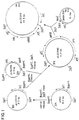
- Figure 1 is a schematic diagram illustrating construction of an integration vector (pLOI543), containing a temperature-conditional replicon (pSC101; Hamilton, C. M., M. Aldea, B. K. Washburn, P. Babitzke, and S. R. Kushner [1989] J. Bacteriol. 171: 4617-22) for the integration of ethanol-production genes ( Z. mobilis pdc and adhB genes) and a chloramphenicol resistance gene into a pfl gene of an E. coli chromosome.
- ethanol-production genes Z. mobilis pdc and adhB genes
- a chloramphenicol resistance gene into a pfl gene of an E. coli chromosome.
- Klenow convert to blunt by filling bases in overhang region using the Klenow fragment of E. coli DNA polymerase I.
- FIG. 2 is a schematic diagram illustrating construction of a plasmid (pLOI510) for the integration of Z. mobilis pdc and adhB genes into a pfl gene of an E. coli chromosome using a vectorless, circularized DNA fragment.
- Klenow convert to blunt by filling bases in the overhang region using the Klenow fragment of DNA polymerase I
- Cir. Frag. circularized Sal I fragment from pLOI510 which has been eluted from an agarose gel and ligated to form closed circles.
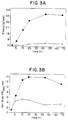
- Figure 3 illustrates ethanol (A, C, E, G) production and growth (B, D, F) during batch fermentation.
- a and B Fermentation of 10% glucose. Symbols: ⁇ , plasmid-based ethanol production strain ATCC11303(pLOI297); O, chromosomally-integrated ethanol production strain lacking an expression enhancing mutation, KO2.
- C. and D Fermentation of 10% glucose. Symbols: O, a chromosomally-integrated strain lacking a spontaneous expression enhancing mutation, KO3; ⁇ , chromosomally-integrated strain containing a spontaneous expression enhancing mutation, KO4; ⁇ , KO4 supplemented with 22 mM sodium acetate. E. and F.
- Fermentation of 8% xylose Symbols: ⁇ , KO4; ⁇ , KO11, a further mutant of K04, lacking fumarate reductase activity (frd); ⁇ , KO12, a further mutant of KO11, carrying a recA mutation.
- Figure 4 illustrates fermentation of 10% glucose by KOll (frd) without pH control.
- the present invention relates to a recombinant host cell comprising a chromosome comprised of (a) a heterologous DNA segment under transcriptional control of a promoter endogenous to that microbial cell, where the DNA segment encodes a desired polypeptide; and (b) a mutation that causes increased expression of the heterologous DNA segment resulting in an increase in production by the host cell of the desired polypeptide compared to production of that polypeptide by the host cell in the absence of this mutation. Enhanced expression of the heterologous DNA segment is retained in the absence of conditions that select for cells having such increased expression.
- heterologous DNA segment means that the DNA segment contains a sequence that is different from the sequence in the corresponding position downstream from the endogenous promoter in the chromosome of the cell into which the heterologous segment has been inserted.
- the heterologous DNA segment of the present invention includes a DNA segment taken from one location in a host chromosome and inserted into another location (under control of an endogenous promoter other than the one naturally associated with that segment), as well as a DNA segment from another organism.
- the nucleotide sequence of the heterologous DNA segment encodes one or more structural genes and is derived from any genetic source, including, for example, eukaryotic or prokaryotic cellular or viral genomes, or from artificial coding sequences created by genetic engineering.
- the heterologous segment is under the transcriptional control of an endogenous promoter by virtue of being integrated into a host cell chromosome on the downstream (5') side of the promoter.
- the endogenous promoter is preferably a "strong" promoter, in the sense that it provides a high level of gene expression in relation to a more typical microbial promoter, such as the lactose operon (lac) promoter of E. coli.
- strong promoters are those that include a single site for promoter activity, i.e., for binding RNA polymerase and directing the enzyme to the correct transcriptional start site, and those that include a plurality of such sites.
- trp tryptophan
- trp pyruvate formate-lyase
- pfl pyruvate formate-lyase
- the pfl promoter in fact includes seven sites for promoter activity, as reflected, for example, in sequence analyses of the pfl mRNA and in "footprinting" data indicating where RNA polymerase is bound, or in "primer extension” analyses indicating the 5' end of a mRNA.
- mutation denotes a relatively permanent change in hereditary material, typically involving a biochemical change in the codons that make up genes but also possibly involving a physical change in chromosome relations.
- a mutation suitably employed according to the present invention causes increased expression of the heterologous DNA segment, resulting in enhanced production by the host cell of each polypeptide encoded by that segment, relative to production of each polypeptide by the host cell in the absence of the mutation. The increased expression thus achieved is retained in the absence of conditions that select for cells having such increased expression.
- Transformed host cells bearing a mutation according to the present invention may be detected conveniently by means of the increased expression of one or more polypeptides encoded by the inserted DNA segment, according to standard genetic methodology.
- Increased expression of a polypeptide may be determined by direct detection of a polypeptide or inferred from an activity attributable to that polypeptide.
- one of the genes encoded by the inserted DNA segment can be a selectable marker gene, for example, a gene which confers antibiotic resistance to the host.
- mutant cells with increased expression of the antibiotic resistance gene may be selected conveniently using antibiotic concentrations above a first level that inhibits host cells lacking a mutation that increases expression of the heterologous DNA segment.
- mutations suitable for use in the present invention can be obtained reliably as spontaneous mutants or by induction via conventional mutagenesis, followed by selection or by screening for cells having the desired phenotype of high-level expression of integrated genes.
- suitable mutations in certain bacteria are found to arise spontaneously at a frequency on the order of 10 -4 to 10 -5 upon selection for cells having increased expression of an integrated chloramphenicol resistance gene, such that cell growth occurs at a concentration of antibiotic 30 times higher than that tolerated in the absence of such a mutation.
- suitable mutations can be obtained at a frequency of about 0.5 - 1 x 10 -4 of the survivors of mutagenesis by screening for cells having expression of ethanol-related enzymes at levels about ten times higher than in the absence of such mutagenic treatments.
- Mutations suitable for use in the present invention actually cause overexpression of inserted genes to the extent that polypeptide production from a single copy of a gene chromosomally inserted, according to this invention, is comparable to production achieved with multiple copies of the same gene carried on a multi-copy plasmid.
- bacterial cells carrying such a suitable mutation can express integrated genes, say, for chloramphenicol resistance and ethanol production, at levels that are functionally equivalent to a cell containing 30 to 300 copies of the same genes on a multi-copy plasmid.
- a molecular basis has not been determined for mutations identified, as described herein, for use according to the present invention. Nevertheless, the magnitude of the increase in gene expression (on the order of about ten fold, for example) that is obtained in a single screening or selection step is substantially greater than that expected for a mutation mechanism involving gene duplication. To achieve a comparable increase in selectable gene expression by means of gene duplication typically requires repeated selection steps with progressively higher levels of selective agent. Moreover, the low (in fact, undetectable) frequency of reversion of the present mutations also militates against gene duplication as a basis for these mutations.
- Selection of mutations that enhance expression of integrated genes using a selectable marker gene may be performed pursuant to the present invention in any type of host cell for which practical genetic methods are known in the art for selecting clones having mutations that are inducible at a frequency on the order of at least about 10 -4 per survivor of mutagenic treatment.
- screening for mutant host cells pursuant to the present invention requires practical methods for preparation of sufficient numbers of clones, each comprising enough cells for detection of high-level expression of a desired integrated gene by a method appropriate to the particular desired gene.
- Such selection or screening for suitable mutations is most easily effected with host cells which are readily culturable in large quantities, as in the case of prokaryotic (bacterial) and yeast cells.
- a host is denoted a "microbial cell,” and the strain it comprised is a “microbial strain.”
- enteric bacteria like Erwinia chrysanthemi, Escherichia coli and Klebsiella planticola are particularly attractive hosts because they are capable of utilizing a wide variety of sugars, including pentoses and lactose.
- microbial cells are preferred hosts
- the present invention also contemplates the use of other types of cellular hosts, including fungal cells and eukaryotic (animal, insect and plant) cells, into which a heterologous DNA segment can be inserted under control of an endogenous promoter.
- the host cell need only be amenable to a selection or screening regimen for cells having increased expression of the integrated heterologous DNA, as described above, thereby to obtain suitable enhanced-expression mutants.
- Embodiment relating to ethanologenic E. coli An illustrative application of the present invention involves the integration of Z. mobilis genes for ethanol production into the pfl region of an E. coli chromosome.
- the pfl gene is central to normal fermentative metabolism, catalyzing the conversion of pyruvate to formate plus acetyl-CoA and providing an essential source of acetyl units for biosynthesis. Insertional inactivation of this gene thus represents inhibition of a competing branch point for the diversion of pyruvate away from production of ethanol by the microorganism. Additional genetic improvements are also described which eliminate succinate production and inactivate the recA gene.
- recombinant bacteria are useful for the manufacture of recombinant polypeptides as co-products during ethanologenic fermentation of biomass sugars.
- the stability of the ethanol production trait is improved significantly compared to comparable plasmid-based systems for the purposes of industrial-scale fermentation to produce ethanol: 100% retention of the ethanol genes after 68 generations compared to only 97% with a comparable plasmid-based construct.
- elimination of the plasmid carrying ethanol-production genes allows insertion of plasmids for producing co-products without interference with the ethanol production ability.
- Biological deposits The following cultures have been deposited with the American Type Culture Collection (ATCC), 12301 Parklawn Drive, Rockville, Maryland, 20852, USA. Table 1 lists the accession numbers assigned to the cultures by the repository. Biological deposits Culture Accession Number E. coli (pLOI510) ATCC 68484 E. coli (pLOI543) ATCC 68485 E. coli KO4 ATCC 55123 E. coli KO11 ATCC 55124 E. coli KO12 ATCC 55125 E. coli KO20 ATCC 55126
- the subject culture deposits will be stored and made available to the public in accord with the provisions of the Budapest Treaty for the Deposit of Microorganisms, i.e., they will be stored with all the care necessary to keep them viable and uncontaminated for a period of at least five years after the most recent request for the furnishing of a sample of the deposit(s), and in any case, for a period of at least 30 (thirty) years after the date of deposit or for the enforceable life of any patent which may issue disclosing the cultures.
- the depositor acknowledges the duty to replace the deposits, should the depository be unable to furnish a sample when requested, due to the condition of the deposit. All restrictions on the availability to the public of the subject culture deposits will be irrevocably removed upon the granting of a patent disclosing them.
- ATCC 11303 was transformed with a temperature-dependent replication plasmid, pLOI543, followed by temperature-based selection and enrichment for two homologous recombination events, 64.5% of the colonies were sensitive to chloramphenicol (Cm), indicating loss of plasmid. Of these Cm-sensitive clones, 5.9% formed pink colonies on aldehyde test plates indicating the presence of Z. mobilis ADHII. Two of these clones having retained integrated ethanol-production genes but having lost the Cm-resistance gene and plasmid were selected for further study and designated KO1 and KO2.
- Cm chloramphenicol
- a Cm-resistant transformant was obtained using the circularized Sal I fragment from plasmid pLOI510 and was designated KO3.
- no replicating plasmid is introduced into the cell; only the ethanol-production genes and associated Cm-resistance gene are integrated into the chromosome.
- the KO3 clone also formed pink colonies identical to KO1 and KO2 on aldehyde indicator plates.
- Control ATCC 11303 formed white colonies (negative), while ATCC 11303 (pLOI297) carrying Z. mobilis ethanol genes on a plasmid formed intensely red colonies indicating a high level of Z. mobilis gene expression.
- FIG. 3 A and B shows a comparison of fermentations by strains KO2 and ATCC 11303 (pLOI297) with 10% glucose. Fermentation by strain KO1 was identical to that by KO2 and is not presented. These new constructs were very inefficient producers of ethanol as indicated by the low volumetric productivity and ethanol yield (Table 2). Growth was limited to less than half that of ATCC 11303 (pLOI297) and only 4 g/liter of ethanol was produced after 72 hours. Although strain KO3 was slightly better than KO1 and KO2, it remained a very poor producer of ethanol (Figure 3 C-D; Table 2). Large volumes of base were consumed for maintenance of pH during fermentations by these three new strains, indicating excessive production of acidic fermentation products.
- Enhancement of expression of integrated pdc and adhB genes by mutations The pink phenotype observed on aldehyde indicator plates appeared to indicate insufficient expression of Z. mobilis genes for ethanol production.
- a mutation that causes increased expression of the integrated genes in KO2 was obtained by screening for dark red phenotype on aldehyde indicator plates after mutagenesis with ethyl methane sulfonate under standard conditions well known in the art. Approximately 200 plates were analyzed with 200 to 400 colonies per plate. Four dark red clones were isolated, the increased color being indicative of increased expression of ADHII. One of these was designated strain KO20.
- strains KO4 and KO5 Two mutants were retained for further study, strains KO4 and KO5. The lack of vector in these strains was again confirmed by the failure of DNA preparations from KO4 and KO5 to transform TC4 during selection for Cm resistance and by the absence of vector DNA in agarose gels stained with ethidium bromide.
- FIG. 3 C and D illustrate the fermentation of 10% glucose by KO4 and KO5, two strains in which spontaneous mutations that enhance expression of integrated ethanol-production genes were co-selected by selection for resistance to high levels of an antibiotic. Both strains were identical and only fermentation by K04 has been plotted. Growth, cell yield, and ethanol yield by these improved constructs were almost equivalent to those of the plasmid-based construct, ATCC 11303 (pLOI297). See Table 2.
- KO4 was equivalent to the plasmid-based strain in ethanol yield, although the rate of ethanol production was slightly slower as evidenced by the ethanol level after 30 hours (Table 2).
- Z. mobilis enzymes in recombinant E. coli The specific activity of Z. mobilis PDC was measured in French press extracts of selected recombinant strains. PDC is a relatively thermostable enzyme and activities were measured in extracts after heat inactivation of native E. coli activities which complicate such measurements. No activity was detected in the control, strain ATCC 11303. Both KO2 and KO3 produced low levels of activity, 0.2 U/mg protein. Tenfold higher activity was present in extracts of KO4 (2.1 U/mg protein), the high Cm-resistant mutant. The level of PDC in KO4 was almost equivalent to the level produced in the plasmid-based construct, ATCC 11303 (pLOI297), and similar to that found in native Z . mobilis (Ingram, L.O., and T. Conway [1988] Appl. Environ. Microbiol. 54: 397-404).
- Protein extracts from these strains were also examined by SDS-PAGE. Numerous changes in proteins were observed between ATCC 11303 and recombinant derivatives in addition those attributable to Z. mobilis genes.
- KO4 and ATCC 11303 contained higher levels of a protein band in the 60,000 MW region corresponding to the size of PDC than were present in K02 and K03. This band was absent in the ATCC 11303 control. Many endogenous proteins were found in the 38,000 MW region where Z. mobilis ADHII would be found, obscuring differences in expression.
- Recombinant Organic Acid Acetic acid Lactic acid Succinic acid ATCC11303 (None) 66 641 58 ATCC11303 (pLOI297) (plasmid-borne) 21 32 49 KO1 (integrated, no mutation) 18 673 62 KO2 (integrated, no mutation) 18 602 57 KO3 (integrated, spontaneous) 69 525 66 KO4 (integrated, spontaneous) 22 29 70 KO10 (KO4, recA) 18 20 73 KO11 (KO4, frd) 14 32 2 KO12 (KO4, recA , frd) 6 40 2 KO20 (integrated, induced) 4 60 2 and KO4 produced lower levels of acetic and lactic acids, succinate production by KO4 remained high.
- a frd mutation was introduced by insertion of a Tn10 vector using standard genetic methods, including selection for a tetracycline resistance marker of Tn10, followed by elimination of Tn10 using fusaric acid selection, resulting in an frd deletion due to imprecise excision of Tn10.
- the resulting strain (KO11) lacked fumarate reductase activity.
- one aspect of the present invention provides an improved organism for the production of ethanol.
- An E. coli cell has been transformed such that Z. mobilis genes coding for adn and pdc have been incorporated into the host chromosome.
- ethanol-production capability has been conferred on E. coli by transformation with a plasmid comprising the two genes needed for ethanol production.
- the success of these previous transformations resulted from the very high levels of the ethanol-producing enzymes which were made from multiple copies of the genes, typically, 30 to 300 copies per cell.
- EXAMPLE 2 Construction of integration plasmids containing E. coli pyruvate formatelyase gene and temperature-sensitive for plasmid replication
- Plasmid pLOI295 was digested with EcoRI and Sal I, and the 3.2-kb Eco RI- Sal I fragment carrying pdc and adhB genes was treated with Klenow fragment of DNA polymerase to produce blunt ends. This blunt-ended fragment was ligated into the Klenow-treated Bam HI site of pLOI513 carrying the incomplete pfl gene in the same orientation with respect to transcription to give pLOI542.
- pLOI542 was then digested with Sal I and the 7.2-kb Sal I fragment was ligated to Sal I site in the polylinker of pMAK705, see Hamilton, C.M., M. Aldea, B.K. Washburn, P. Babitzke, and S. R.
- the recA mutation in E. coli strain JC10240 was transferred to strains KO4 and KO5 by conjugation with selection for resistance to both Cm and tetracycline (nearby Tn10). Co-inheritance of the recA phenotype was confirmed by increased UV sensitivity.
- Sodium dodecyl sulfate polyacrylamide gel electrophoresis (SDS-PAGE): Cells were grown for 24 hours under the conditions of the fermentation experiments, chilled to 0°C, harvested by centrifugation (7,000 x g, 10 minutes), washed twice with 1/3 volume of 5 mM sodium phosphate buffer (pH 6.5) containing 10 mM 2-mercaptoethanol, and stored frozen at -20°C. Cell pellets were resuspended in an equal volume of buffer and broken by two passages through a French pressure cell at 20,000 psi. Membranes were removed by centrifugation for 90 minutes at 100,000 x g.
Landscapes
- Health & Medical Sciences (AREA)
- Genetics & Genomics (AREA)
- Life Sciences & Earth Sciences (AREA)
- Engineering & Computer Science (AREA)
- Chemical & Material Sciences (AREA)
- Organic Chemistry (AREA)
- Wood Science & Technology (AREA)
- Zoology (AREA)
- Bioinformatics & Cheminformatics (AREA)
- Biotechnology (AREA)
- General Engineering & Computer Science (AREA)
- Biomedical Technology (AREA)
- Microbiology (AREA)
- Biochemistry (AREA)
- General Health & Medical Sciences (AREA)
- Molecular Biology (AREA)
- Physics & Mathematics (AREA)
- Biophysics (AREA)
- Plant Pathology (AREA)
- Medicinal Chemistry (AREA)
- Chemical Kinetics & Catalysis (AREA)
- General Chemical & Material Sciences (AREA)
- Mycology (AREA)
- Micro-Organisms Or Cultivation Processes Thereof (AREA)
- Preparation Of Compounds By Using Micro-Organisms (AREA)
- Immobilizing And Processing Of Enzymes And Microorganisms (AREA)
- Medicines That Contain Protein Lipid Enzymes And Other Medicines (AREA)
Claims (41)
- Procédé pour la production d'une cellule hôte recombinante qui produit des taux élevés d'un polypeptide désiré, comprenant les étapes consistant à:(a) transformer une ou plusieurs cellules hôtes avec une molécule d'acide nucléique comprenantpar lequel l'intégration chromosomique dans ledit gène hôte dudit segment polynucléotidique hétérologue a lieu par recombinaison homologue;(i) un segment polynucléotidique hétérologue comprenant une séquence encodant un polypeptide désiré, et(ii) des séquences qui flanquent ledit segment polynucléotidique hétérologue et qui sont homologues à un gène hôte sous le contrôle transcriptionnel d'un promoteur endogène,(b) sélectionner une ou plusieurs cellules hôtes produites à l'étape (a), qui expriment le polypeptide;(c) exposer une ou plusieurs cellules hôtes identifiées à l'étape (b) à un mutagène dans des conditions telles que l'on crée une mutation dans ledit chromosome, qui provoque l'augmentation de l'expression dudit segment polynucléotidique hétérologue; et ensuite(d) soumettre à l'essai des cellules hôtes produites à l'étape (c) pour détecter des cellules hôtes qui produisent ladite protéine désirée à un niveau supérieur audit niveau initial dans le but d'obtenir des cellules hôtes possédant une mutation qui provoque une augmentation de l'expression dudit segment polynucléotidique hétérologue donnant lieu à une augmentation de la production par lesdites cellules hôtes dudit polypeptide désiré par rapport à ladite production dudit polypeptide désiré par lesdites cellules hôtes en l'absence de ladite mutation, dans lequel ladite expression augmentée se maintient en l'absence des conditions permettant de sélectionner des cellules possédant ladite expression augmentée.
- Procédé selon la revendication 1, dans lequel ladite étape de criblage (d) est réalisée en l'absence des conditions permettant de sélectionner des cellules possédant ladite expression augmentée et dans lequel ladite expression augmentée se maintient en l'absence desdites conditions de sélection.
- Procédé selon la revendication 1 ou 2, dans lequel(i) dans l'étape (a), ladite molécule d'acide nucléique est un plasmide comprenant un réplicon qui est sensible à la température pour la réplication en(ii) à l'étape (a), ladite transformation comprend l'introduction dudit plasmide dans lesdites cellules hôtes et a croissance desdites cellules hôtes dans des conditions permettant de sélectionner les cellules qui expriment ledit polypeptide désiré à une température qui ne permet pas la réplication dudit plasmide.
- Procédé selon l'une quelconque des revendications 2 à 3, dans lequel ledit segment polynucléotidique hétérologue comprend plusieurs gènes et/ou encode plusieurs polypeptides.
- Procédé selon l'une quelconque des revendications 1 à 4, dans lequel ledit segment polynucléotidique hétérologue comprend un gène marqueur sélectionnable.
- Procédé selon la revendication 5, dans lequel ladite protéine de marqueur sélectionnable confère à ladite cellule hôte une résistance au chloramphénicol.
- Procédé selon la revendication 6, dans lequel ladite résistance représente au moins 20 µg/ml de chloramphénicol.
- Procédé selon l'une quelconque des revendications 5 à 7, dans lequel ledit gène marqueur sélectionnable est soumis au contrôle transcriptionnel d'un promoteur situé dans ledit segment polynucléotidique hétérologue en aval de ladite séquence encodant ledit polypeptide désiré.
- Procédé selon l'une quelconque des revendications 5 à 8, dans lequel ladite séquence encodant ledit polypeptide désiré est soumise au contrôle transcriptionnel d'un promoteur dudit gène hôte.
- Procédé selon l'une quelconque des revendications 1 à 9, dans lequel ledit segment polynucléotidique hétérologue comprend en outre un terminateur de la transcription, ledit terminateur de la transcription étant situé entre ladite séquence encodant ledit polypeptide désiré et ledit gène marqueur sélectionnable.
- Procédé selon l'une quelconque des revendications 1 à 10, dans lequel ladite cellule hôte est une cellule microbienne.
- Procédé selon la revendication 11, dans lequel ladite cellule microbienne est une cellule bactérienne.
- Procédé selon la revendication 12, dans lequel ladite cellule est une bactérie entérique.
- Procédé selon la revendication 13, dans lequel ladite cellule hôte bactérienne entérique est sélectionnée parmi le groupe constitué par Erwinia, Escherichia et Klebsiella.
- Procédé selon la revendication 14, dans lequel ladite cellule hôte bactérienne entérique est une cellule Escherichia coli.
- Procédé selon l'une quelconque des revendications précédentes, dans lequel ledit segment polynucléotidique hétérologue est soumis au contrôle transcriptionnel d'un promoteur endogène d'un gène dont le niveau d'expression correspond essentiellement à celui du gène de pyruvate formate-lyase (pfl) dans ladite cellule hôte.
- Procédé selon la revendication 16, dans lequel ledit promoteur est un promoteur d'un gène de pyruvate formate-lyase (pfl).
- Procédé selon l'une quelconque des revendications précédentes, dans lequel ledit segment polynucléotidique hétérologue encode une alcool-déshydrogénase et/ou une pyruvate-décarbcxylase.
- Procédé selon la revendication 18, dans lequel ladite alcool-déshydrogénase et ladite pyruvate-décarboxylase sont encodées par des gènes issus de Zymomonas mobilis.
- Procédé selon la revendication 19, dans lequel ladite cellule est une cellule Escherichia coli, ledit promoteur est un promoteur du gène de pyruvate formate-lyase (pfl) et ladite cellule est capable de produire de l'éthanol par fermentation de glucose ou de xylose avec un rendement théorique correspondant à une conversion de sucre ajouté à de l'éthanol à concurrence d'au moins 90% ou de 100%, respectivement.
- Procédé selon la revendication 20, dans lequel ledit rendement théorique correspond à une conversion de xylose ajouté à de l'éthanol à concurrence d'au moins 100%.
- Procédé selon la revendication 20 ou 21, dans lequel ledit chromosome comprend en outre une mutation qui entrave la production de succinate.
- Procédé selon la revendication 22, dans lequel ladite mutation qui entrave la production de succinate comprend une mutation dans un gène de fumarate réductase (frd).
- Procédé selon l'une quelconque des revendications précédentes, dans lequel ledit chromosome comprend en outre une mutation qui entrave la recombination dans ladite cellule hôte.
- Procédé selon la revendication 24, dans lequel ladite mutation qui entrave la recombinaison comprend une mutation dans un gène recA.
- Cellule hôte recombinante que l'on peut obtenir par le procédé selon la revendication 1, comprenant(a) un segment polynucléotidique hétérologue qui est intégré de manière stable dans un gène hôte dans le chromosome qui est soumis au contrôle transcriptionnel d'un promoteur, dans lequel ledit gène hôte et ledit promoteur sont endogènes par rapport à ladite cellule hôte; et(b) une mutation qui provoque l'augmentation de l'expression d'un polypeptide désiré encodé par ledit segment polynucléotidique par rapport à l'expression en l'absence de ladite mutation.
- Cellule hôte recombinante que l'on peut obtenir par le procédé selon la revendication 1, à utiliser dans des fermentations à l'échelle industrielle, comprenant(a) un segment polynucléotidique hétérologue qui est intégré de manière stable dans un gène hôte dans le chromosome qui est soumis au contrôle transcriptionnel d'un promoteur, dans lequel ledit gène hôte et ledit promoteur sont endogènes par rapport à ladite cellule hôte; et(b) une mutation qui provoque l'augmentation de l'expression d'un polypeptide désiré encodé par ledit segment polynucléotidique par rapport à l'expression en l'absence de ladite mutation.
- Cellule hôte recombinante selon la revendication 26 ou 27, dans laquelle ladite expression augmentée dudit polypeptide désiré est conservée en l'absence des conditions qui permettent de sélectionner des cellules possédant ladite expression augmentée.
- Cellule hôte recombinante selon l'une quelconque des revendications 26 à 28, dans laquelle l'expression dudit polypeptide est augmentée d'environ 10 fois.
- Cellule hôte recombinante selon l'une quelconque des revendications 26 à 29, dans laquelle ledit segment polynucléotidique hétérologue comprend plusieurs gènes.
- Cellule hôte recombinante selon l'une quelconque des revendications 26 à 30, dans laquelle ledit segment polynucléotidique hétérologue encode plusieurs polypeptides.
- Cellule hôte recombinante selon l'une quelconque des revendications 26 à 31, dans laquelle ledit segment polynucléotidique hétérologue comprend un gène marqueur sélectionnable.
- Cellule hôte recombinante selon la revendication 32, dans laquelle l'expression dudit gène marqueur sélectionnable confère à ladite cellule une résistance à des antibiotiques.
- Cellule hôte recombinante selon la revendication 33, dans laquelle l'expression dudit gène marqueur confère à ladite cellule une résistance au chloramphénicol.
- Cellule hôte recombinante selon l'une quelconque des revendications 26 à 34, dans laquelle ladite cellule hôte, ledit segment polynucléotidique hétérologue et ledit chromosome sont tels que définis dans l'une quelconque des revendications 11 à 25.
- Escherichia coli (pLO1510) recombinant représenté par une mise en dépôt à la American Type Culture Collection sous le numéro matricule ATCC 68484.
- Escherichia coli (pLO1543) recombinant représenté par une mise en dépôt à la American Type Culture Collection sous le numéro matricule ATCC 68485.
- Escherichia coli KO4 recombinant représenté par une mise en dépôt à la American Type Culture Collection sous le numéro matricule ATCC 55123.
- Escherichia coli KO11 recombinant représenté par une mise en dépôt à la American Type Culture Collection sous le numéro matricule ATCC 55124.
- Escherichia coli KO12 recombinant représenté par une mise en dépôt à la American Type Culture Collection sous le numéro matricule ATCC 55125.
- Escherichia coli KO20 recombinant représenté par une mise en dépôt à la American Type Culture Collection sous le numéro matricule ATCC 55126.
Applications Claiming Priority (3)
| Application Number | Priority Date | Filing Date | Title |
|---|---|---|---|
| US62422790A | 1990-12-07 | 1990-12-07 | |
| US624227 | 1990-12-07 | ||
| PCT/US1991/008835 WO1992010561A1 (fr) | 1990-12-07 | 1991-12-04 | Cellules recombinees qui expriment nettement des genes heterologues integres dans des chromosomes |
Publications (3)
| Publication Number | Publication Date |
|---|---|
| EP0560885A1 EP0560885A1 (fr) | 1993-09-22 |
| EP0560885A4 EP0560885A4 (en) | 1994-06-08 |
| EP0560885B1 true EP0560885B1 (fr) | 1999-03-17 |
Family
ID=24501169
Family Applications (1)
| Application Number | Title | Priority Date | Filing Date |
|---|---|---|---|
| EP92901454A Revoked EP0560885B1 (fr) | 1990-12-07 | 1991-12-04 | Cellules recombinees qui expriment nettement des genes heterologues integres dans des chromosomes |
Country Status (12)
| Country | Link |
|---|---|
| EP (1) | EP0560885B1 (fr) |
| JP (2) | JP3593125B2 (fr) |
| AT (1) | ATE177784T1 (fr) |
| AU (3) | AU668677B2 (fr) |
| BR (1) | BR9107210A (fr) |
| CA (1) | CA2097803C (fr) |
| DE (1) | DE69131015T2 (fr) |
| DK (1) | DK0560885T3 (fr) |
| ES (1) | ES2132116T3 (fr) |
| FI (1) | FI111552B (fr) |
| GR (1) | GR3030570T3 (fr) |
| WO (1) | WO1992010561A1 (fr) |
Families Citing this family (12)
| Publication number | Priority date | Publication date | Assignee | Title |
|---|---|---|---|---|
| US5424202A (en) * | 1988-08-31 | 1995-06-13 | The University Of Florida | Ethanol production by recombinant hosts |
| US5733761A (en) * | 1991-11-05 | 1998-03-31 | Transkaryotic Therapies, Inc. | Protein production and protein delivery |
| US5641670A (en) * | 1991-11-05 | 1997-06-24 | Transkaryotic Therapies, Inc. | Protein production and protein delivery |
| TW402639B (en) * | 1992-12-03 | 2000-08-21 | Transkaryotic Therapies Inc | Protein production and protein delivery |
| JP3654446B2 (ja) | 1993-12-23 | 2005-06-02 | メルク アンド カンパニー, インコーポレイテッド | マウス細胞のための相同的組換え抗体発現系 |
| AU4424597A (en) * | 1996-09-13 | 1998-04-02 | Novo Nordisk Biotech, Inc. | Cells having dna insertion mutations which produce altered amounts of a polypeptide |
| WO2001018222A1 (fr) * | 1999-09-07 | 2001-03-15 | University Of Florida | Procedes et compositions servant a effectuer l'integration chromosomique de sequences heterologues |
| CN1230545C (zh) * | 2000-04-06 | 2005-12-07 | 协和发酵工业株式会社 | 用于大肠杆菌染色体重组的质粒 |
| CN1436239B (zh) | 2000-06-16 | 2010-04-28 | 财团法人地球环境产业技术研究机构 | 用重组棒状杆菌生产乙醇的方法 |
| US6566107B1 (en) * | 2000-11-01 | 2003-05-20 | Midwest Research Institute | Recombinant Zymomonas mobilis with improved xylose utilization |
| MX2009001491A (es) * | 2006-08-09 | 2009-04-15 | Univ Florida | Re-ingenieria de bacterias para la produccio de etanol. |
| JP5634710B2 (ja) * | 2007-03-19 | 2014-12-03 | 国立大学法人 岡山大学 | タンパク質産生用およびウイルス増殖用の培地 |
Family Cites Families (1)
| Publication number | Priority date | Publication date | Assignee | Title |
|---|---|---|---|---|
| US4551433A (en) * | 1981-05-18 | 1985-11-05 | Genentech, Inc. | Microbial hybrid promoters |
-
1991
- 1991-12-04 EP EP92901454A patent/EP0560885B1/fr not_active Revoked
- 1991-12-04 BR BR919107210A patent/BR9107210A/pt not_active IP Right Cessation
- 1991-12-04 CA CA2097803A patent/CA2097803C/fr not_active Expired - Lifetime
- 1991-12-04 AT AT92901454T patent/ATE177784T1/de not_active IP Right Cessation
- 1991-12-04 DK DK92901454T patent/DK0560885T3/da active
- 1991-12-04 JP JP50156592A patent/JP3593125B2/ja not_active Expired - Lifetime
- 1991-12-04 AU AU90988/91A patent/AU668677B2/en not_active Expired
- 1991-12-04 DE DE69131015T patent/DE69131015T2/de not_active Expired - Lifetime
- 1991-12-04 WO PCT/US1991/008835 patent/WO1992010561A1/fr not_active Ceased
- 1991-12-04 ES ES92901454T patent/ES2132116T3/es not_active Expired - Lifetime
-
1993
- 1993-06-04 FI FI932559A patent/FI111552B/fi not_active IP Right Cessation
-
1996
- 1996-08-08 AU AU61946/96A patent/AU694674B2/en not_active Expired
-
1999
- 1999-03-05 AU AU18586/99A patent/AU1858699A/en not_active Abandoned
- 1999-06-17 GR GR990401653T patent/GR3030570T3/el unknown
-
2004
- 2004-05-18 JP JP2004147724A patent/JP2004283176A/ja not_active Withdrawn
Also Published As
| Publication number | Publication date |
|---|---|
| JP3593125B2 (ja) | 2004-11-24 |
| WO1992010561A1 (fr) | 1992-06-25 |
| FI932559L (fi) | 1993-07-27 |
| GR3030570T3 (en) | 1999-10-29 |
| FI111552B (fi) | 2003-08-15 |
| FI932559A0 (fi) | 1993-06-04 |
| DE69131015D1 (de) | 1999-04-22 |
| EP0560885A1 (fr) | 1993-09-22 |
| AU9098891A (en) | 1992-07-08 |
| JPH06504436A (ja) | 1994-05-26 |
| AU668677B2 (en) | 1996-05-16 |
| ATE177784T1 (de) | 1999-04-15 |
| CA2097803C (fr) | 2010-08-03 |
| EP0560885A4 (en) | 1994-06-08 |
| AU1858699A (en) | 1999-09-09 |
| ES2132116T3 (es) | 1999-08-16 |
| AU694674B2 (en) | 1998-07-23 |
| JP2004283176A (ja) | 2004-10-14 |
| BR9107210A (pt) | 1994-02-08 |
| CA2097803A1 (fr) | 1992-06-08 |
| DE69131015T2 (de) | 1999-11-18 |
| DK0560885T3 (da) | 1999-10-11 |
| AU6194696A (en) | 1996-10-31 |
Similar Documents
| Publication | Publication Date | Title |
|---|---|---|
| US5000000A (en) | Ethanol production by Escherichia coli strains co-expressing Zymomonas PDC and ADH genes | |
| US5602030A (en) | Recombinant glucose uptake system | |
| Ohta et al. | Genetic improvement of Escherichia coli for ethanol production: chromosomal integration of Zymomonas mobilis genes encoding pyruvate decarboxylase and alcohol dehydrogenase II | |
| US5821093A (en) | Recombinant cells that highly express chromosomally-integrated heterologous genes | |
| Ohta et al. | Metabolic engineering of Klebsiella oxytoca M5A1 for ethanol production from xylose and glucose | |
| EP0973915B1 (fr) | Micro-organismes de combinaison capables de produire la fermentation de la cellobiose | |
| US5482846A (en) | Ethanol production in Gram-positive microbes | |
| US20070172937A1 (en) | Recombinant cells that highly express chromosomally-integrated heterologous genes | |
| JP2000509988A (ja) | キシロースをエタノールに発酵するための安定な組換え酵母 | |
| JP2013135680A (ja) | エタノール産生 | |
| EP0560885B1 (fr) | Cellules recombinees qui expriment nettement des genes heterologues integres dans des chromosomes | |
| US8097460B2 (en) | Ethanol production in bacillus | |
| Green et al. | Genetic manipulation of acid and solvent formation in Clostridium acetobutylicum ATCC 824 | |
| US20030008363A1 (en) | Ethanol production in gram-positive microbes | |
| US20050158836A1 (en) | Ethanol production in gram-positive microbes | |
| AU3556902A (en) | Recombinant cells that highly express chromosomally- integrated heterologous genes | |
| JP4171265B2 (ja) | 新規なセロビオース資化性微生物 | |
| KR102312845B1 (ko) | 아세트산 생산성 및 세포 생장성이 증대된 형질전환 유박테리움 속 균주 및 이의 제조방법 | |
| JP4528972B2 (ja) | 染色体組み込みマンノース発酵性ザイモモナス属細菌 | |
| Jeffries et al. | Genetic engineering of Pichia stipitis for fermentation of xylose | |
| JP2005013105A (ja) | 酢酸耐性に関与する遺伝子、該遺伝子を用いて育種された酢酸菌、及び該酢酸菌を用いた食酢の製造方法 | |
| JP2005046071A (ja) | 酢酸耐性に関与する遺伝子 |
Legal Events
| Date | Code | Title | Description |
|---|---|---|---|
| PUAI | Public reference made under article 153(3) epc to a published international application that has entered the european phase |
Free format text: ORIGINAL CODE: 0009012 |
|
| 17P | Request for examination filed |
Effective date: 19930706 |
|
| AK | Designated contracting states |
Kind code of ref document: A1 Designated state(s): AT BE CH DE DK ES FR GB GR IT LI LU MC NL |
|
| RBV | Designated contracting states (corrected) |
Designated state(s): AT BE CH DE DK ES FR GB GR IT LI LU MC NL SE |
|
| RHK1 | Main classification (correction) |
Ipc: C12N 15/31 |
|
| A4 | Supplementary search report drawn up and despatched | ||
| AK | Designated contracting states |
Kind code of ref document: A4 Designated state(s): AT BE CH DE DK ES FR GB GR IT LI LU MC NL |
|
| 17Q | First examination report despatched |
Effective date: 19950608 |
|
| GRAG | Despatch of communication of intention to grant |
Free format text: ORIGINAL CODE: EPIDOS AGRA |
|
| GRAG | Despatch of communication of intention to grant |
Free format text: ORIGINAL CODE: EPIDOS AGRA |
|
| GRAG | Despatch of communication of intention to grant |
Free format text: ORIGINAL CODE: EPIDOS AGRA |
|
| GRAH | Despatch of communication of intention to grant a patent |
Free format text: ORIGINAL CODE: EPIDOS IGRA |
|
| GRAH | Despatch of communication of intention to grant a patent |
Free format text: ORIGINAL CODE: EPIDOS IGRA |
|
| GRAA | (expected) grant |
Free format text: ORIGINAL CODE: 0009210 |
|
| AK | Designated contracting states |
Kind code of ref document: B1 Designated state(s): AT BE CH DE DK ES FR GB GR IT LI LU MC NL SE |
|
| REF | Corresponds to: |
Ref document number: 177784 Country of ref document: AT Date of ref document: 19990415 Kind code of ref document: T |
|
| REG | Reference to a national code |
Ref country code: CH Ref legal event code: EP |
|
| REF | Corresponds to: |
Ref document number: 69131015 Country of ref document: DE Date of ref document: 19990422 |
|
| ITF | It: translation for a ep patent filed | ||
| ET | Fr: translation filed | ||
| REG | Reference to a national code |
Ref country code: ES Ref legal event code: FG2A Ref document number: 2132116 Country of ref document: ES Kind code of ref document: T3 |
|
| REG | Reference to a national code |
Ref country code: DK Ref legal event code: T3 |
|
| PG25 | Lapsed in a contracting state [announced via postgrant information from national office to epo] |
Ref country code: LU Free format text: LAPSE BECAUSE OF NON-PAYMENT OF DUE FEES Effective date: 19991204 |
|
| PLBQ | Unpublished change to opponent data |
Free format text: ORIGINAL CODE: EPIDOS OPPO |
|
| PLBI | Opposition filed |
Free format text: ORIGINAL CODE: 0009260 |
|
| PLBQ | Unpublished change to opponent data |
Free format text: ORIGINAL CODE: EPIDOS OPPO |
|
| PLBI | Opposition filed |
Free format text: ORIGINAL CODE: 0009260 |
|
| 26 | Opposition filed |
Opponent name: NOVO INDUSTRI A/S Effective date: 19991217 |
|
| PLBF | Reply of patent proprietor to notice(s) of opposition |
Free format text: ORIGINAL CODE: EPIDOS OBSO |
|
| 26 | Opposition filed |
Opponent name: GENENCOR INTERNATIONAL INC., Effective date: 19991217 Opponent name: DSM N.V. Effective date: 19991216 Opponent name: NOVO INDUSTRI A/S Effective date: 19991217 |
|
| NLR1 | Nl: opposition has been filed with the epo |
Opponent name: NOVO INDUSTRI A/S |
|
| NLR1 | Nl: opposition has been filed with the epo |
Opponent name: GENENCOR INTERNATIONAL INC., Opponent name: DSM N.V. Opponent name: NOVO INDUSTRI A/S |
|
| PLBF | Reply of patent proprietor to notice(s) of opposition |
Free format text: ORIGINAL CODE: EPIDOS OBSO |
|
| PG25 | Lapsed in a contracting state [announced via postgrant information from national office to epo] |
Ref country code: MC Free format text: LAPSE BECAUSE OF NON-PAYMENT OF DUE FEES Effective date: 20000630 |
|
| PLBF | Reply of patent proprietor to notice(s) of opposition |
Free format text: ORIGINAL CODE: EPIDOS OBSO |
|
| PLAB | Opposition data, opponent's data or that of the opponent's representative modified |
Free format text: ORIGINAL CODE: 0009299OPPO |
|
| PLAB | Opposition data, opponent's data or that of the opponent's representative modified |
Free format text: ORIGINAL CODE: 0009299OPPO |
|
| R26 | Opposition filed (corrected) |
Opponent name: NOVO NORDISK A/S * 19991216 DSM N.V. * 19991217 GE Effective date: 19991217 |
|
| R26 | Opposition filed (corrected) |
Opponent name: NOVOZYMES A/S * 19991216 DSM N.V. * 19991217 GENEN Effective date: 19991217 |
|
| NLR1 | Nl: opposition has been filed with the epo |
Opponent name: NOVOZYMES A/S Opponent name: GENENCOR INTERNATIONAL INC., Opponent name: DSM N.V. Opponent name: NOVO NORDISK A/S |
|
| PGFP | Annual fee paid to national office [announced via postgrant information from national office to epo] |
Ref country code: NL Payment date: 20010921 Year of fee payment: 11 |
|
| PGFP | Annual fee paid to national office [announced via postgrant information from national office to epo] |
Ref country code: AT Payment date: 20011105 Year of fee payment: 11 |
|
| REG | Reference to a national code |
Ref country code: GB Ref legal event code: IF02 |
|
| PGFP | Annual fee paid to national office [announced via postgrant information from national office to epo] |
Ref country code: CH Payment date: 20020103 Year of fee payment: 11 |
|
| PGFP | Annual fee paid to national office [announced via postgrant information from national office to epo] |
Ref country code: BE Payment date: 20020117 Year of fee payment: 11 |
|
| PG25 | Lapsed in a contracting state [announced via postgrant information from national office to epo] |
Ref country code: AT Free format text: LAPSE BECAUSE OF NON-PAYMENT OF DUE FEES Effective date: 20021204 |
|
| PG25 | Lapsed in a contracting state [announced via postgrant information from national office to epo] |
Ref country code: LI Free format text: LAPSE BECAUSE OF NON-PAYMENT OF DUE FEES Effective date: 20021231 Ref country code: CH Free format text: LAPSE BECAUSE OF NON-PAYMENT OF DUE FEES Effective date: 20021231 Ref country code: BE Free format text: LAPSE BECAUSE OF NON-PAYMENT OF DUE FEES Effective date: 20021231 |
|
| BERE | Be: lapsed |
Owner name: *UNIVERSITY OF FLORIDA Effective date: 20021231 |
|
| PG25 | Lapsed in a contracting state [announced via postgrant information from national office to epo] |
Ref country code: NL Free format text: LAPSE BECAUSE OF NON-PAYMENT OF DUE FEES Effective date: 20030701 |
|
| REG | Reference to a national code |
Ref country code: CH Ref legal event code: PL |
|
| NLV4 | Nl: lapsed or anulled due to non-payment of the annual fee |
Effective date: 20030701 |
|
| PLAB | Opposition data, opponent's data or that of the opponent's representative modified |
Free format text: ORIGINAL CODE: 0009299OPPO |
|
| R26 | Opposition filed (corrected) |
Opponent name: GENENCOR INTERNATIONAL INC., Effective date: 19991217 Opponent name: KONINKLIJKE DSM N.V. Effective date: 19991216 Opponent name: NOVOZYMES A/S Effective date: 19991217 |
|
| APBP | Date of receipt of notice of appeal recorded |
Free format text: ORIGINAL CODE: EPIDOSNNOA2O |
|
| APAY | Date of receipt of notice of appeal deleted |
Free format text: ORIGINAL CODE: EPIDOSDNOA2O |
|
| APBM | Appeal reference recorded |
Free format text: ORIGINAL CODE: EPIDOSNREFNO |
|
| APBP | Date of receipt of notice of appeal recorded |
Free format text: ORIGINAL CODE: EPIDOSNNOA2O |
|
| APBQ | Date of receipt of statement of grounds of appeal recorded |
Free format text: ORIGINAL CODE: EPIDOSNNOA3O |
|
| APAH | Appeal reference modified |
Free format text: ORIGINAL CODE: EPIDOSCREFNO |
|
| APBU | Appeal procedure closed |
Free format text: ORIGINAL CODE: EPIDOSNNOA9O |
|
| PLAY | Examination report in opposition despatched + time limit |
Free format text: ORIGINAL CODE: EPIDOSNORE2 |
|
| PLBC | Reply to examination report in opposition received |
Free format text: ORIGINAL CODE: EPIDOSNORE3 |
|
| PLAY | Examination report in opposition despatched + time limit |
Free format text: ORIGINAL CODE: EPIDOSNORE2 |
|
| PLBC | Reply to examination report in opposition received |
Free format text: ORIGINAL CODE: EPIDOSNORE3 |
|
| PLAH | Information related to despatch of examination report in opposition + time limit modified |
Free format text: ORIGINAL CODE: EPIDOSCORE2 |
|
| PLAT | Information related to reply to examination report in opposition deleted |
Free format text: ORIGINAL CODE: EPIDOSDORE3 |
|
| PLAH | Information related to despatch of examination report in opposition + time limit modified |
Free format text: ORIGINAL CODE: EPIDOSCORE2 |
|
| PLBC | Reply to examination report in opposition received |
Free format text: ORIGINAL CODE: EPIDOSNORE3 |
|
| PLAB | Opposition data, opponent's data or that of the opponent's representative modified |
Free format text: ORIGINAL CODE: 0009299OPPO |
|
| PGFP | Annual fee paid to national office [announced via postgrant information from national office to epo] |
Ref country code: FR Payment date: 20110107 Year of fee payment: 20 Ref country code: DK Payment date: 20101228 Year of fee payment: 20 |
|
| PGFP | Annual fee paid to national office [announced via postgrant information from national office to epo] |
Ref country code: IT Payment date: 20101227 Year of fee payment: 20 Ref country code: SE Payment date: 20101229 Year of fee payment: 20 Ref country code: GR Payment date: 20101228 Year of fee payment: 20 Ref country code: GB Payment date: 20101229 Year of fee payment: 20 |
|
| PGFP | Annual fee paid to national office [announced via postgrant information from national office to epo] |
Ref country code: DE Payment date: 20101229 Year of fee payment: 20 |
|
| PGFP | Annual fee paid to national office [announced via postgrant information from national office to epo] |
Ref country code: ES Payment date: 20101227 Year of fee payment: 20 |
|
| REG | Reference to a national code |
Ref country code: DE Ref legal event code: R071 Ref document number: 69131015 Country of ref document: DE |
|
| REG | Reference to a national code |
Ref country code: DE Ref legal event code: R071 Ref document number: 69131015 Country of ref document: DE |
|
| REG | Reference to a national code |
Ref country code: DK Ref legal event code: EUP |
|
| REG | Reference to a national code |
Ref country code: GB Ref legal event code: PE20 Expiry date: 20111203 |
|
| REG | Reference to a national code |
Ref country code: SE Ref legal event code: EUG |
|
| PG25 | Lapsed in a contracting state [announced via postgrant information from national office to epo] |
Ref country code: GB Free format text: LAPSE BECAUSE OF EXPIRATION OF PROTECTION Effective date: 20111203 |
|
| REG | Reference to a national code |
Ref country code: GR Ref legal event code: MA Ref document number: 990401653 Country of ref document: GR Effective date: 20111205 |
|
| PG25 | Lapsed in a contracting state [announced via postgrant information from national office to epo] |
Ref country code: DE Free format text: LAPSE BECAUSE OF EXPIRATION OF PROTECTION Effective date: 20111205 |
|
| REG | Reference to a national code |
Ref country code: ES Ref legal event code: FD2A Effective date: 20130801 |
|
| PLAB | Opposition data, opponent's data or that of the opponent's representative modified |
Free format text: ORIGINAL CODE: 0009299OPPO |
|
| R26 | Opposition filed (corrected) |
Opponent name: NOVOZYMES A/S Effective date: 19991217 |
|
| PG25 | Lapsed in a contracting state [announced via postgrant information from national office to epo] |
Ref country code: ES Free format text: LAPSE BECAUSE OF EXPIRATION OF PROTECTION Effective date: 20111205 |
|
| RDAF | Communication despatched that patent is revoked |
Free format text: ORIGINAL CODE: EPIDOSNREV1 |
|
| REG | Reference to a national code |
Ref country code: DE Ref legal event code: R103 Ref document number: 69131015 Country of ref document: DE Ref country code: DE Ref legal event code: R064 Ref document number: 69131015 Country of ref document: DE |
|
| RDAG | Patent revoked |
Free format text: ORIGINAL CODE: 0009271 |
|
| STAA | Information on the status of an ep patent application or granted ep patent |
Free format text: STATUS: PATENT REVOKED |
|
| 27W | Patent revoked |
Effective date: 20150801 |
|
| REG | Reference to a national code |
Ref country code: AT Ref legal event code: MA03 Ref document number: 177784 Country of ref document: AT Kind code of ref document: T Effective date: 20150801 |
|
| REG | Reference to a national code |
Ref country code: SE Ref legal event code: ECNC |