EP0563858B1 - Verfahren zur Bestimmung der Anzahl lebender Mikroorganismen - Google Patents
Verfahren zur Bestimmung der Anzahl lebender Mikroorganismen Download PDFInfo
- Publication number
- EP0563858B1 EP0563858B1 EP93105182A EP93105182A EP0563858B1 EP 0563858 B1 EP0563858 B1 EP 0563858B1 EP 93105182 A EP93105182 A EP 93105182A EP 93105182 A EP93105182 A EP 93105182A EP 0563858 B1 EP0563858 B1 EP 0563858B1
- Authority
- EP
- European Patent Office
- Prior art keywords
- viable count
- membrane
- determining
- luminescence
- count according
- Prior art date
- Legal status (The legal status is an assumption and is not a legal conclusion. Google has not performed a legal analysis and makes no representation as to the accuracy of the status listed.)
- Expired - Lifetime
Links
Images

Classifications
-
- C—CHEMISTRY; METALLURGY
- C12—BIOCHEMISTRY; BEER; SPIRITS; WINE; VINEGAR; MICROBIOLOGY; ENZYMOLOGY; MUTATION OR GENETIC ENGINEERING
- C12Q—MEASURING OR TESTING PROCESSES INVOLVING ENZYMES, NUCLEIC ACIDS OR MICROORGANISMS; COMPOSITIONS OR TEST PAPERS THEREFOR; PROCESSES OF PREPARING SUCH COMPOSITIONS; CONDITION-RESPONSIVE CONTROL IN MICROBIOLOGICAL OR ENZYMOLOGICAL PROCESSES
- C12Q1/00—Measuring or testing processes involving enzymes, nucleic acids or microorganisms; Compositions therefor; Processes of preparing such compositions
- C12Q1/02—Measuring or testing processes involving enzymes, nucleic acids or microorganisms; Compositions therefor; Processes of preparing such compositions involving viable microorganisms
- C12Q1/04—Determining presence or kind of microorganism; Use of selective media for testing antibiotics or bacteriocides; Compositions containing a chemical indicator therefor
- C12Q1/06—Quantitative determination
-
- Y—GENERAL TAGGING OF NEW TECHNOLOGICAL DEVELOPMENTS; GENERAL TAGGING OF CROSS-SECTIONAL TECHNOLOGIES SPANNING OVER SEVERAL SECTIONS OF THE IPC; TECHNICAL SUBJECTS COVERED BY FORMER USPC CROSS-REFERENCE ART COLLECTIONS [XRACs] AND DIGESTS
- Y10—TECHNICAL SUBJECTS COVERED BY FORMER USPC
- Y10S—TECHNICAL SUBJECTS COVERED BY FORMER USPC CROSS-REFERENCE ART COLLECTIONS [XRACs] AND DIGESTS
- Y10S435/00—Chemistry: molecular biology and microbiology
- Y10S435/968—High energy substrates, e.g. fluorescent, chemiluminescent, radioactive
-
- Y—GENERAL TAGGING OF NEW TECHNOLOGICAL DEVELOPMENTS; GENERAL TAGGING OF CROSS-SECTIONAL TECHNOLOGIES SPANNING OVER SEVERAL SECTIONS OF THE IPC; TECHNICAL SUBJECTS COVERED BY FORMER USPC CROSS-REFERENCE ART COLLECTIONS [XRACs] AND DIGESTS
- Y10—TECHNICAL SUBJECTS COVERED BY FORMER USPC
- Y10S—TECHNICAL SUBJECTS COVERED BY FORMER USPC CROSS-REFERENCE ART COLLECTIONS [XRACs] AND DIGESTS
- Y10S436/00—Chemistry: analytical and immunological testing
- Y10S436/805—Optical property
Definitions
- the present invention relates to a method of determining a viable count. More paricularly, the invention relates to a rapid, convenient, and highly sensitive method of determining a viable count by detecting adenosine triphosphate (ATP) contained in microbes, which probably exist in industrial water, raw materials, intermediates, and products used in the industries of foods, pharmacy, cosmetics, electronics, etc.
- ATP adenosine triphosphate
- the measuring vessel must contain viable microbes in a number above the lower limit of detection for the luminometer (for example, ⁇ 1 x 10 3 or 1 x 10 4 cell/ml), thus requiring, particularly for a sample solution having extremely low viable count, a large volume of sample must be filtered.
- the present inventors have once developed a filter comprising a number of small hydrophilic filtration membrane sections substantially completely isolated from each other with hydrophobic partitions, and invented a method comprising adding reagents for extraction and luminescence induction to the microbes collected on said filtration membranes by spraying, and treating the obtained preparation with a high-sensitivity bioluminescent image analysis system, to submit an application (Japanese Patent Application No. 3-40615; and PCT-JP92-00145).
- the present invention provides a method of determining a viable count in a sample characterized in that it comprises:
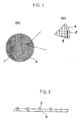
- a filter 1 used in performing the method according to the present invention comprises a number of small hydrophilic filtration membrane sections 2 substantially completely isolated from each other with hydrophobic partitions 3.
- This filter is made from a filter membrane 4 and hydrophobic partitions 3 by printing of a hydrophobic ink pattern on the membrane. The ink may penetrate into the filter element and the partitions may be flush with or higher than the surface of the membrane.
- the ATP extracting reagent suitable for use in the present invention includes alcohols, ethers, esters, and halogenized derivatives of methane, ethane, methylene or ethylene, as well as acetonitrile, triethylamine and others having boiling point below 120° C. Methanol and ethanol are particularly preferred.
- Extracting effect is further enhanced by admixing 0.1 to 5 % by weight of hydrochloric acid, organic acids having b.p. below 120 ° C, or basic compounds such as ammonium hydroxide, organic amines and others having b.p. below 110 ° C with the above alcohols.
- hydrochloric acid and organic acids having a tendency of volatility significantly enhance the extracting effect, they reduce the activity of the luminescence-inducing enzyme, when left in the sample even in a trace amount, thus necessitating more complete evaporation, and sometimes further spray of a neutralizing reagent to offset the acidity.
- Ammonium hydroxide is, therefore, particularly preferable, which has high volatility and does not inhibit the induction of luminescence.
- ATP extracting reagents may be evaporated off at a temperature between ambient temperature and 80° C, preferably between 40° C and 70° C.
- the use of a fine spray of said extracting reagents with an ultrasonic type sprayer (such as manufactured by Matsushita Electric Industries Co., Ltd.) is convenient and effective to add an exact amount required.
- the membrane filter to be used in the method according to the present invention is a film or sheet of a hydrophilic filtration membrane, precisely made of plastic materials, such as hydrophilic polytetrafluoro-ethylene, hydrophilic poly(vinylidene fluoride), hydrophilic polysulfone, hydrophilic polycarbonate, hydrophilic polyamide, hydrophilic polyethylene and hydrophilic polypropylene, and cellulosic material, such as acetylcellulose and nitrocellulose, and having a number of uniform micropores with pore size from 0.1 to 1 ⁇ m.
- plastic materials such as hydrophilic polytetrafluoro-ethylene, hydrophilic poly(vinylidene fluoride), hydrophilic polysulfone, hydrophilic polycarbonate, hydrophilic polyamide, hydrophilic polyethylene and hydrophilic polypropylene, and cellulosic material, such as acetylcellulose and nitrocellulose, and having a number of uniform micropores with pore size from 0.1 to
- a filter cup equipped with a filtration membrane with a pore size from 0.1 to 1 ⁇ m, preferably from 0.2 to 0.45 ⁇ m at the bottom of a cylinder (diameter: 10 - 40 mm ⁇ ) made of plastics, as described in Japanese Patent Application No. 2-253093.
- a sample solution is filtered using a filtration device, which is a cup-shaped vessel to be filled with the solution, equipped with the above membrane filter to entrap viable microbes thereon.
- the membrane filter is then subjected to a fine spray with the aforementioned ATP extracting reagent for the time period from 5 seconds to around 5 minutes, using such a sprayer as of ultrasonic type manufactured by Matsushita Electr. Ind. Co., Ltd. to extract microbial ATP, at a temperature from ambient to 80° C, preferably from 40 ° C to 70 ° C.
- Proper time period for spray may vary depending on the species of microbes to be tested and the sort of extracting reagent to be used.
- Heating may be applied during and/or after spray, but in a preferred manner, the membrane filter is subjected to the fine spray at ambient temperature, and then heated to a temperature from ambient to 80° C, preferably from 40° to 70° C to rapidly evaporate the residual extracting reagent off.
- a luminescence inducing reagent of luciferin/luciferase type is added over the membrane filter.
- the reagent may be added onto the filter cup with a pipette, or with a usual sprayer, to induce luminescence. Otherwise (less than 100 cells/membrane), since a more precise spray in small amounts is required, spraying will be carried out with an ultrasonic type sprayer and the like.
- an increased concentration of the luminescence-inducing reagent of luciferin/luciferase type is used when inducing luminescence by spraying it with a sprayer, or by adding it with a pipette (in the case where such a large count as above 100 cells/membrane is expected).
- the reason is that the increased concentration will cause an increased rate of luminescence reaction, resulting in an increased quantity of luminescence.
- This is a more effective way for samples with particularly low count (i.e., less than 100 cells/ membrane, particularly less than 50 cells/membrane), which should be determined with a bioluminescence image anylysis system.
- the concentration of luminescence inducing reagent to be used is preferably increased to a range from twice to ten times, particularly from three to six times as high as standard concentration.
- the rate of luminescence is accelerated to enhance the level of luminescence of bright spots, at the same time accelerating the speed of detection.
- standard concentration means the concentration as specified for regular use of conventional luminescence-inducing reagents (for example, a luciferin/luciferase type reagent Lucifer LUTM commercially available from Kikkoman Co., Ltd.)
- luminescence inducing reagent as manufactured by Kikkoman Co., Ltd. (Lucifer LUTM ), which is normally used in a diluted form of 70 mg of the dry reagent diluted with 5 ml of water, is used in a concentration from about three to six times higher than said concentration for regular use, as stated above, the time for emission of light after the spray of the reagent can be reduced, and the quantity of luminescence can be increased almost directly in proportion to its concentration.
- the membrane filter thus allowed to emit light can be subjected to counting, using a luminometer, such as Luminescence Reader BLR-201TM (an improved model), Aloka Corporation, or to imaging bright spots appearing on the filter, using any devices for bioluminescence image analysis system, such as ARGUS-50/CLTM (provided with a tapered fiber), Hamamatsu Photonics, Co., Ltd. to determine the viable count.
- a luminometer such as Luminescence Reader BLR-201TM (an improved model), Aloka Corporation
- bioluminescence image analysis system such as ARGUS-50/CLTM (provided with a tapered fiber), Hamamatsu Photonics, Co., Ltd. to determine the viable count.
- ARGUS-50/CLTM provided with a tapered fiber
- Hamamatsu Photonics Co., Ltd.
- the outline of the system is as shown in Fig. 3, in which (A) is an entire outline and (B) is an enlarged partial view.
- This system comprises a preparation holder 9 for supporting the membrane filter (preparation) 5 after treatment with the aforementioned extracting and luminescence-inducing reagents; a total reflection plate 6; a shading housing 8; tapered fibers 7, which are juxtaposed to said membrane fileter as closely as possible to detect luminescence in a two-dimensional extent; an ultrahigh-sensitivity television camera 10 consisting of a photoamplifying component and a camera tube; a camera controller 11; an image processor 12; a data analysis device 13; and a monitor television 14.
- ARGUS-50/CLTM of tapered fiber input type, Hamamatsu Photonics, Co., Ltd., or those having a similar counting performance is particularly preferred.
- a cooled solid-state camera device may be employed, wherein it is cooled to a temperature from about -30° C to -120 ° C to restrain noises from the camera itself so that it can accumulate even very faint light.
- a cooled CCD digital imaging system is available from Hamamatsu Photonics.
- the system may be operated by placing the tapered fibers 7 in the camera tube portion and the ultrahigh-sensitivity television camera underneath the preparation holder and placing the preparation holder containing a preparation on the tapered fibers.
- preparation 5 is placed as closely as possible to tapered fibers 7, thereby to significantly enhance the measurement sensitivity.
- sprayer(s) for extracting and luminescence-inducing reagents, and other associated equipments such as preparation carrier may be set in a combined format.
- viable microbes are entrapped on a membrane filter in an advantageous form as hitherto stated, and sujected to the microbial ATP extraction in situ, using a fine spray of a preferred volatile extracting agent. Subsequently, this solvent is rapidly evaporated off by subjecting the filter to a temperature from ambient to 80 ° C, preferably from 40 ° C to 70 ° C, before a direct spray of luminescence-inducing reagent to induce luminescence, which is subjected to a measurement using a high-sensitivity bioluminescence image analysis system to determine the viable count.
- a membrane filter comprising a number of small hydrophilic sections completely isolated from each other with hydrophobic partitions
- all the viable microbes are well dispersed and entrapped within the small sections.
- the extracting solution solution of ATP extracting reagent
- the solution of luminescence-inducing reagent luciferin/luciferase type
- luciferin/luciferase type both to be sprayed thereon are designed so as to keep remaining within the sections without diffusing outside from each section nor being diluted. This allows the microbial constituent that has become emitting light to be retained closely at the location of the microbe in a relatively high concentration, so that the above mentioned effectiveness are further augmented, enabling an extremely sensitive determination to be attained.
- any noise luminescence originated from other than viable microbes can readily be erased, so that even an extremely low viable count (e.g., several cells/membrane, can be determined automatically, as well as rapidly and conveniently.
- a fine spray of 90% ethanol was then applied to the membrane for 30 seconds, as in Example 1, to extract ATP, and, after evaporating the solvent off at a temperature from 50° C to 60 ° C, a fine spray of a luminescence-inducing reagent (Lucifer-LUTM, Kikkoman Co., Ltd.) was applied thereto for 10 seconds to induce luminescence.
- a luminescence-inducing reagent Lucinescence-inducing reagent
- the preparation was loaded to an image analyzer (ARGUS-50/CLTM, Hamamatsu Photonics Co., Ltd.), and, after accumulating photons for two minutes and processing the image, only bright spots having luminance above the threshold value were imaged to determine the viable count.
- the results obtained are shown in Table 4, along with the results from determining the viable count for the same sample solution by means of standard agar plate method using a potatoe dextrose/agar medium cultured at 30° C for 48 hours, for comparison.
- Table 4 Standard Agar Plate (CFU/1 ml sample soln.) Present Invention (No. of bright spot/membrane) 23 20 26 21 21 20 23 19 20 17
- a sample solution containing about 30 cells/ml of Saccharomyces cerevisiae (IFO 0209) was prepared by culturing and diluting according to Example 4. 1 ml of this solution was filtered through a filtration membrane as used in Example 4, and, after collecting microbes, a fine spray of methanol containing 3% by weight of triethylamine was applied to the membrane for 30 seconds, to extract ATP.
- Example 4 After leaving it at ambient temperature for three minutes, then inducing luminescence by spraying the luminescence-inducing reagent for 10 seconds, and evaporating solvent off at a temperature from 50 ° C to 60 ° C, as in Example 4, the preparation was loaded to an image analyzer to accumulate photons for two minutes, and only bright spots having luminance above the threshold value and originated from viable microbes were imaged to determine the viable count. The results obtained are shown in Table 6. Also, the results obtained from the same sample solution by means of standard agar plate method using a pepton dextrose/agar medium cultured at 30° C for 48 hours are shown in Table 6.
- a sample solution containing about 1 x 10 3 cells/ml of Staphylococcus aureus (IFO 3060) was prepared by culturing and diluting as in Example 5. After filtering 5 ml of this solution and collecting microbes on the membrane as in Example 5, ATP was extracted as in Example 1, using 90% ethanol containing 1% of ammonium hydroxide (aqueous ammonia) instead of 90% ethanol, then luminescence was induced by spraying a luminescence-inducing reagent (Lumit-PMTM, Lumac Co.) for 20 seconds, and the quantity of luminescence was measured.
- a luminescence-inducing reagent Liit-PMTM, Lumac Co.
- a diluted solution of Saccharomyces cerevisiae (IFO 0209) containing about 100 cells/ml was prepared as in Example 1. 0.2 ml of this solution was filtered through a uniquely latticed hydrophilic filtration membrane (47 mm ⁇ , Nippon Millipore Limited) and dried. Extracting reagent was then sprayed for 30 seconds as in Example 1 to extract ATP.
- the present invention is advantageous in that it provides a method of determining a viable count using the techniques of the ATP bioluminescence method, wherein the use of particular volatile extracting reagents and an evaporating process allows ATP to be extracted effieciently from viable microbes entrapped and collected on a membrane filter, and prevents any inhibition of enzyme (i.e., luciferase) activity and adverse effect of ATP degeneration enzymes during subsequent luminescence-inducing process.
- enzyme i.e., luciferase
- the present invention is also advantageous in that, in the present method, the use of a membrane filter comprising small sections isolated from each other with slightly protruded partitions, and a spray process for adding reagents, combined with an improved bioluminescence image analysis system, which makes a highly sensitive and rapid detection of even faint luminescence possible, allows a viable count to be determined in a substantially reduced time, as compared with conventional methods, and further enables to carry out a highly sensitive, rapid, and convenient determination for samples having a relatively small count, determination of which has formerly been difficult.
Landscapes
- Chemical & Material Sciences (AREA)
- Life Sciences & Earth Sciences (AREA)
- Health & Medical Sciences (AREA)
- Organic Chemistry (AREA)
- Engineering & Computer Science (AREA)
- Zoology (AREA)
- Wood Science & Technology (AREA)
- Proteomics, Peptides & Aminoacids (AREA)
- Analytical Chemistry (AREA)
- Toxicology (AREA)
- Immunology (AREA)
- Microbiology (AREA)
- Molecular Biology (AREA)
- Biophysics (AREA)
- Physics & Mathematics (AREA)
- Biotechnology (AREA)
- Biochemistry (AREA)
- Bioinformatics & Cheminformatics (AREA)
- General Engineering & Computer Science (AREA)
- General Health & Medical Sciences (AREA)
- Genetics & Genomics (AREA)
- Investigating Or Analysing Materials By The Use Of Chemical Reactions (AREA)
- Measuring Or Testing Involving Enzymes Or Micro-Organisms (AREA)
Claims (11)
- Verfahren zur Bestimmung der Anzahl lebensfähiger Mikroben in einer Probe, gekennzeichnet durch:Filtrieren einer Lösung der (betreffenden) Probe durch ein hydrophiles Membranfilter zum Einfangen darin enthaltener lebensfähiger Mikroben auf einer Filtrationsmembran dieses Filters;Aufsprühen eines flüchtigen Extraktionsreagenz eines Kp unter 120°C auf die Membran zur Extraktion von mikrobiellem Adenosintriphosphat;Anschließendes oder gleichzeitiges Einwirkenlassen von Umgebungstemperatur oder erhöhter Temperatur auf die Membran zur Verdampfung flüssiger Bestandteile;Aufsprühen einer Lösung eines lumineszenzinduzierenden Reagenz vom Luciferin/Luciferase-Typ auf die Membran zur Induktion von Lumineszenz undBestimmen der Lumineszenzmenge unter Verwendung einer für eine solche Messung geeigneten Vorrichtung.
- Verfahren zur Bestimmung der Anzahl lebenfähiger Mikroben nach Anspruch 1, wobei das hydrophile Membranfilter eine Anzahl kleiner hydrophiler Filtrationsmembranabschnitte, die voneinander durch hydrophobe Trenneinrichtungen praktisch vollständig isoliert sind, aufweist.
- Verfahren zur Bestimmung der Anzahl lebensfähiger Mikroben nach Anspruch 1 oder 2, wobei es sich bei dem hydrophilen Membranfilter um einen am unteren Ende bzw. Boden eines Kunststoffzylinders mit einer hydrophilen Filtrationsmembran ausgestatteten Filterbecher handelt.
- Verfahren zur Bestimmung der Anzahl an lebensfähigen Mikroben nach einem der vorhergehenden Ansprüche, wobei das hydrophile Membranfilter aus einem Werkstoff, ausgewählt aus der Gruppe hydrophiler Formen von Polytetrafluorethylen, Poly(vinylidenfluorid), Polycarbonat, Polyamid, Polysulfon, Polyethylen, Polypropylen und Mischungen und Mischpolymeren hiervon, Acetylcellulose und Nitrocellulose, hergestellt ist.
- Verfahren zur Bestimmung der Anzahl an lebensfähigen Mikroben nach einem der vorhergehenden Ansprüche, wobei das flüchtige Extraktionsreagenz für ATP aus Methanol oder Ethanol besteht.
- Verfahren zur Bestimmung der Anzahl an lebensfähigen Mikroben nach einem der vorhergehenden Ansprüche, wobei das flüchtige Extraktionsreagenz für ATP aus einem Gemisch aus Methanol oder Ethanol mit 0,1 bis 5 Gew.% Ammoniumhydroxid besteht.
- Verfahren zur Bestimmung der Anzahl an lebensfähigen Mikroben nach einem der vorhergehenden Ansprüche, wobei das lumineszenzinduzierende Reagenz in 3- bis 6-mal höherer Konzentration als normalerweise verwendet eingesetzt wird.
- Verfahren zur Bestimmung der Anzahl an lebensfähigen Mikroben nach einem der vorhergehenden Ansprüche, wobei die Membran zur Verdampfung flüssiger Bestandteile einer Temperatur von 40°C bis 70°C ausgesetzt wird.
- Verfahren zur Bestimmung der Anzahl an lebensfähigen Mikroben nach einem der vorhergehenden Ansprüche, wobei es sich bei der geeigneten Vorrichtung um ein Biolumineszenz-Bildanalysesystem handelt.
- Verfahren zur Bestimmung der Anzahl an lebensfähigen Zellen nach Anspruch 9, wobei der Fernsehkamerakopf des Biolumineszenz-Bildanalysesystems entweder sich verjüngende Fasern, eine Photostromverstärkungseinheit und eine Bildröhre oder sich verjüngende Fasern und eine gekühlte CCD-Fernsehkamera umfaßt.
- Verfahren zur Bestimmung der Anzahl an lebensfähigen Mikroben nach Anspruch 9 oder 10, wobei das Biolumineszenz-Bildanalysesystem die Anzahl an lebensfähigen Mikroben nach einer Bildverarbeitung derart bestimmt, daß nicht von lebensfähigen Mikroben herrührende Hintergrundlumineszenz ausgelöscht und intensives Licht oberhalb der Schwellenintensität emittierende helle Flecken angezeigt werden.
Applications Claiming Priority (4)
| Application Number | Priority Date | Filing Date | Title |
|---|---|---|---|
| JP105299/92 | 1992-04-01 | ||
| JP10529992 | 1992-04-01 | ||
| JP23420/93 | 1993-01-20 | ||
| JP02342093A JP3208892B2 (ja) | 1992-04-01 | 1993-01-20 | 生菌数の測定方法 |
Publications (2)
| Publication Number | Publication Date |
|---|---|
| EP0563858A1 EP0563858A1 (de) | 1993-10-06 |
| EP0563858B1 true EP0563858B1 (de) | 1997-07-09 |
Family
ID=26360774
Family Applications (1)
| Application Number | Title | Priority Date | Filing Date |
|---|---|---|---|
| EP93105182A Expired - Lifetime EP0563858B1 (de) | 1992-04-01 | 1993-03-29 | Verfahren zur Bestimmung der Anzahl lebender Mikroorganismen |
Country Status (3)
| Country | Link |
|---|---|
| US (1) | US5366867A (de) |
| EP (1) | EP0563858B1 (de) |
| DE (2) | DE563858T1 (de) |
Families Citing this family (48)
| Publication number | Priority date | Publication date | Assignee | Title |
|---|---|---|---|---|
| EP0529084B1 (de) * | 1991-02-13 | 1997-05-28 | Nihon Millipore Kogyo Kabushiki Kaisha | Verfahren zur bestimmung der zahl lebender mikroorganismen |
| JP3228812B2 (ja) * | 1993-02-10 | 2001-11-12 | 日本マイクロリス株式会社 | 生菌数を測定する方法 |
| GB9323760D0 (en) * | 1993-11-18 | 1994-01-05 | Aquaculture Diagnostics Limite | Antibiotic sensitivity profile |
| GB2288232A (en) * | 1994-04-06 | 1995-10-11 | Brf International | Photosensitive derivatives of ATP as assay control standards |
| US5501954A (en) * | 1994-06-13 | 1996-03-26 | Genzyme Corporation | Method of detecting cellular material |
| GB9420486D0 (en) * | 1994-10-11 | 1994-11-23 | Whitlock Hughes Ltd | Method of and apparatus for measuring contamination |
| US5624810A (en) * | 1995-01-09 | 1997-04-29 | New Horizons Diagnostics Corp. | Method for detection of surfaces contaminants |
| US5736351A (en) * | 1995-01-09 | 1998-04-07 | New Horizons Diagnostics Corporation | Method for detection of contaminants |
| US5783399A (en) * | 1995-11-17 | 1998-07-21 | Universal Healthwatch, Inc. | Chemiluminescent assay methods and devices for detecting target analytes |
| US5833923A (en) * | 1995-12-22 | 1998-11-10 | Universal Healthwatch, Inc. | Sampling-assay interface system |
| US5833924A (en) * | 1995-12-22 | 1998-11-10 | Universal Healthwatch, Inc. | Sampling-assay device and interface system |
| US5980828A (en) * | 1996-05-28 | 1999-11-09 | Universal Healthwatch, Inc. | Combined sampling-assay device and holder |
| GB9626932D0 (en) * | 1996-12-24 | 1997-02-12 | Lumitech Limited | Assay methods and kits therefor |
| US5905029A (en) * | 1997-02-19 | 1999-05-18 | Fritz Berthold | Method for rapid hygiene testing |
| US5916802A (en) * | 1997-02-19 | 1999-06-29 | Fritz Berthold | Device for measuring ATP |
| US6703211B1 (en) | 1998-03-13 | 2004-03-09 | Promega Corporation | Cellular detection by providing high energy phosphate donor other than ADP to produce ATP |
| EP0974827A3 (de) * | 1998-07-09 | 2002-10-02 | Sapporo Breweries Ltd. | Gerät zur Vorbereitung von Proben inklusive Sprühgerät |
| AU4857700A (en) * | 1999-05-25 | 2000-12-12 | Millipore Corporation | Method for rapidly detecting and enumerating microorganisms in mammalian cell preparations using atp bioluminescence |
| US6653147B2 (en) | 2000-03-31 | 2003-11-25 | Neogen Corporation | Apparatus and method for chemiluminescent assays |
| US6927851B2 (en) | 2000-03-31 | 2005-08-09 | Neogen Corporation | Methods and apparatus to improve the sensitivity and reproducibility of bioluminescent analytical methods |
| US7205159B2 (en) * | 2001-08-20 | 2007-04-17 | Proteome Systems Intellectual Property Pty Ltd. | Diagnostic testing process and apparatus |
| DK2184346T3 (en) | 2001-09-06 | 2017-06-26 | Rapid Micro Biosystems Inc | Rapid detection of replicating cells |
| AU2002350271B2 (en) * | 2001-12-12 | 2008-07-31 | Proteome Systems Ltd | Diagnostic testing process |
| DE60219207T2 (de) * | 2001-12-12 | 2008-01-24 | Proteome Systems Intellectual Property Pty. Ltd., North Ryde | Diagnostisches testverfahren |
| US7494781B1 (en) * | 2003-05-12 | 2009-02-24 | Charm Sciences, Inc. | Sensitive method for detecting low levels of ATP |
| US7132249B1 (en) | 2003-05-12 | 2006-11-07 | Charm Sciences, Inc. | Method of determining allergenic food on surfaces |
| KR100573621B1 (ko) * | 2003-07-18 | 2006-04-25 | 주식회사 디지탈바이오테크놀러지 | 세포 개체수 계수용 장치 및 그 제조방법 |
| KR100608498B1 (ko) | 2003-07-19 | 2006-08-08 | 주식회사 디지탈바이오테크놀러지 | 미세입자 계수 장치 |
| US7411680B2 (en) * | 2003-07-19 | 2008-08-12 | Digital Bio Technology | Device for counting micro particles |
| FR2880035A1 (fr) * | 2004-12-23 | 2006-06-30 | Eads Ccr Groupement D Interet | Procede de detection de la biocontamination d'un combustible liquide |
| CN101528912B (zh) | 2005-09-26 | 2014-08-27 | 快速微型生物系统公司 | 包含生长培养基的盒 |
| FR2897941B1 (fr) * | 2006-02-24 | 2009-01-16 | Millipore Corp | Dispositif et procede pour l'analyse microbiologique rapide. |
| FR2897872B1 (fr) * | 2006-02-24 | 2008-08-15 | Millipore Corp | Procede d'analyse microbiologique rapide. |
| FR2897873B1 (fr) * | 2006-02-24 | 2008-05-30 | Millipore Corp | Procede d'analyse microbiologique rapide. |
| US7851177B2 (en) * | 2006-07-31 | 2010-12-14 | Biotechnologias Del Agua Ltda | Method for detecting presence of acidophilic microorganisms in bioleaching solution |
| FR2915487B1 (fr) * | 2007-04-26 | 2009-06-05 | Millipore Corp | Ensemble et procede pour analyse microbiologique |
| FR2926560A1 (fr) * | 2008-01-21 | 2009-07-24 | Millipore Corp | Procede d'extraction et de purification d'acides nucleiques sur membrane |
| CN102224410B (zh) | 2008-09-24 | 2017-02-08 | 施特劳斯控股公司 | 用于测试分析物的成像分析仪 |
| JP5218153B2 (ja) | 2009-02-26 | 2013-06-26 | 株式会社日立プラントテクノロジー | 微生物検出装置、検出方法、及びそれに用いられる試料容器 |
| WO2012092242A2 (en) | 2010-12-29 | 2012-07-05 | 3M Innovative Properties Company | Microbial detection article having a water-absorbent filter assembly |
| HUE049333T2 (hu) | 2011-11-07 | 2020-09-28 | Rapid Micro Biosystems Inc | Kazetta sterilitási vizsgálathoz |
| EP2839021B1 (de) | 2012-04-16 | 2022-02-23 | Rapid Micro Biosystems, Inc. | Zellkultivierungsvorrichtung |
| CA2872149C (en) | 2012-05-02 | 2019-03-19 | Charles River Laboratories, Inc. | Viability staining method |
| CN104755931B (zh) | 2012-05-02 | 2016-08-31 | 查尔斯河实验室公司 | 用于检测细胞样品中的活细胞的方法 |
| CN104685346B (zh) | 2012-05-02 | 2018-05-29 | 查尔斯河实验室公司 | 细胞捕获系统及其使用 |
| JP7347849B2 (ja) | 2018-04-19 | 2023-09-20 | ファースト ライト ダイアグノスティクス, インコーポレイテッド | 標的の検出 |
| JP7659314B2 (ja) | 2018-10-04 | 2025-04-09 | ファースト ライト ダイアグノスティックス, インコーポレイテッド | 分析機器 |
| DE102020112570A1 (de) * | 2020-05-08 | 2021-11-11 | Analytik Jena Gmbh | Vorrichtung zur Chemolumineszenzanalyse |
Family Cites Families (3)
| Publication number | Priority date | Publication date | Assignee | Title |
|---|---|---|---|---|
| JPH0340615A (ja) * | 1989-07-07 | 1991-02-21 | Matsushita Electric Ind Co Ltd | 音声信号伝送装置 |
| SE9002255D0 (sv) * | 1990-06-26 | 1990-06-26 | Eric Westberg | Metod och anordning vid framstaellning av blod |
| EP0529084B1 (de) * | 1991-02-13 | 1997-05-28 | Nihon Millipore Kogyo Kabushiki Kaisha | Verfahren zur bestimmung der zahl lebender mikroorganismen |
-
1993
- 1993-03-29 DE DE93105182T patent/DE563858T1/de active Pending
- 1993-03-29 DE DE69311944T patent/DE69311944T2/de not_active Expired - Lifetime
- 1993-03-29 EP EP93105182A patent/EP0563858B1/de not_active Expired - Lifetime
- 1993-03-30 US US08/040,331 patent/US5366867A/en not_active Expired - Lifetime
Also Published As
| Publication number | Publication date |
|---|---|
| DE563858T1 (de) | 1994-03-03 |
| EP0563858A1 (de) | 1993-10-06 |
| US5366867A (en) | 1994-11-22 |
| DE69311944T2 (de) | 1997-11-20 |
| DE69311944D1 (de) | 1997-08-14 |
Similar Documents
| Publication | Publication Date | Title |
|---|---|---|
| EP0563858B1 (de) | Verfahren zur Bestimmung der Anzahl lebender Mikroorganismen | |
| EP0612850B1 (de) | Verfahren zur Bestimmung der Zahl lebender Mikroorganismen unter Benutzung eines hydrophoben Membranfilters | |
| EP0529084B1 (de) | Verfahren zur bestimmung der zahl lebender mikroorganismen | |
| JPWO1992014838A1 (ja) | 生菌数測定法 | |
| DE2823916C2 (de) | ||
| US5658444A (en) | Electrochemical sensors | |
| US6203900B1 (en) | Pressure sensitive adhesive sheet for detection of microorganism and method for detection of microorganism | |
| US7695900B2 (en) | Method and device for detecting biologically active substances | |
| CA2365232A1 (en) | Device and method for microbial susceptibility testing | |
| DE68926935T2 (de) | Vorrichtung zur Verstärkung von Fluoreszens und Kinetik und Verfahren zur Anwendung | |
| JPH11137293A (ja) | 微生物数の迅速測定法とそれに使用するろ過膜 | |
| JP4590902B2 (ja) | 糸状菌計量方法 | |
| JP6692075B2 (ja) | 微生物検出装置、微生物検出プログラム及び微生物検出方法 | |
| JP3208892B2 (ja) | 生菌数の測定方法 | |
| JP3466735B2 (ja) | 臨床細菌薬剤感受性の迅速選別方法 | |
| JP3453168B2 (ja) | 火落菌の測定方法 | |
| JP3678469B2 (ja) | 微生物数の迅速測定法 | |
| JP3599979B2 (ja) | 微生物の測定法 | |
| JP3529453B2 (ja) | 大腸菌群の選択的検出方法 | |
| JP2000069994A (ja) | 微生物検出方法および微生物検出システム | |
| Takahashi et al. | Rapid Single-Cell Detection of Beer-Contaminating Lactic Acid Bacteria Using Bioluminescence/Rapid Microbe Detection | |
| EP1043582B1 (de) | Diffusionskontrollierende Sensorschicht | |
| DE3940113A1 (de) | Messanordnung zur sofortbestimmung von gasen und/oder fluessigen substanzen, die fuer ihren nachweis luftsauerstoff oder gase benoetigen, mittels biosensoren | |
| JPH0530997A (ja) | 菌数の測定法 | |
| JP2001120300A (ja) | 微生物測定システムの検出感度チェック方法及び感度チェックに使用するチェックシート |
Legal Events
| Date | Code | Title | Description |
|---|---|---|---|
| PUAI | Public reference made under article 153(3) epc to a published international application that has entered the european phase |
Free format text: ORIGINAL CODE: 0009012 |
|
| AK | Designated contracting states |
Kind code of ref document: A1 Designated state(s): DE FR GB |
|
| EL | Fr: translation of claims filed | ||
| DET | De: translation of patent claims | ||
| 17P | Request for examination filed |
Effective date: 19940330 |
|
| GRAG | Despatch of communication of intention to grant |
Free format text: ORIGINAL CODE: EPIDOS AGRA |
|
| 17Q | First examination report despatched |
Effective date: 19960802 |
|
| GRAH | Despatch of communication of intention to grant a patent |
Free format text: ORIGINAL CODE: EPIDOS IGRA |
|
| GRAH | Despatch of communication of intention to grant a patent |
Free format text: ORIGINAL CODE: EPIDOS IGRA |
|
| GRAA | (expected) grant |
Free format text: ORIGINAL CODE: 0009210 |
|
| AK | Designated contracting states |
Kind code of ref document: B1 Designated state(s): DE FR GB |
|
| REF | Corresponds to: |
Ref document number: 69311944 Country of ref document: DE Date of ref document: 19970814 |
|
| ET | Fr: translation filed | ||
| PLBE | No opposition filed within time limit |
Free format text: ORIGINAL CODE: 0009261 |
|
| 26N | No opposition filed | ||
| REG | Reference to a national code |
Ref country code: GB Ref legal event code: IF02 |
|
| REG | Reference to a national code |
Ref country code: FR Ref legal event code: CD Ref country code: FR Ref legal event code: CA |
|
| REG | Reference to a national code |
Ref country code: FR Ref legal event code: TP |
|
| REG | Reference to a national code |
Ref country code: GB Ref legal event code: 732E |
|
| PGFP | Annual fee paid to national office [announced via postgrant information from national office to epo] |
Ref country code: FR Payment date: 20120406 Year of fee payment: 20 |
|
| REG | Reference to a national code |
Ref country code: DE Ref legal event code: R082 Ref document number: 69311944 Country of ref document: DE Representative=s name: HENKEL, BREUER & PARTNER, DE |
|
| PGFP | Annual fee paid to national office [announced via postgrant information from national office to epo] |
Ref country code: GB Payment date: 20120326 Year of fee payment: 20 |
|
| PGFP | Annual fee paid to national office [announced via postgrant information from national office to epo] |
Ref country code: DE Payment date: 20120328 Year of fee payment: 20 |
|
| REG | Reference to a national code |
Ref country code: DE Ref legal event code: R082 Ref document number: 69311944 Country of ref document: DE Representative=s name: PATENTANWAELTE HENKEL, BREUER & PARTNER, DE Effective date: 20120613 Ref country code: DE Ref legal event code: R081 Ref document number: 69311944 Country of ref document: DE Owner name: EMD MILLIPORE CORPORATION, BILLERICA, US Free format text: FORMER OWNER: MILLIPORE CORP., BEDFORD, MASS., US Effective date: 20120613 Ref country code: DE Ref legal event code: R081 Ref document number: 69311944 Country of ref document: DE Owner name: EMD MILLIPORE CORPORATION, US Free format text: FORMER OWNER: MILLIPORE CORP., BEDFORD, US Effective date: 20120613 |
|
| REG | Reference to a national code |
Ref country code: DE Ref legal event code: R071 Ref document number: 69311944 Country of ref document: DE |
|
| REG | Reference to a national code |
Ref country code: DE Ref legal event code: R071 Ref document number: 69311944 Country of ref document: DE |
|
| REG | Reference to a national code |
Ref country code: GB Ref legal event code: PE20 Expiry date: 20130328 |
|
| PG25 | Lapsed in a contracting state [announced via postgrant information from national office to epo] |
Ref country code: GB Free format text: LAPSE BECAUSE OF EXPIRATION OF PROTECTION Effective date: 20130328 |
|
| PG25 | Lapsed in a contracting state [announced via postgrant information from national office to epo] |
Ref country code: DE Free format text: LAPSE BECAUSE OF EXPIRATION OF PROTECTION Effective date: 20130403 |