EP0570123B1 - Méthode de sécurité pour un système informatique avec des structures de données d'autorisation des programmes - Google Patents
Méthode de sécurité pour un système informatique avec des structures de données d'autorisation des programmes Download PDFInfo
- Publication number
- EP0570123B1 EP0570123B1 EP93303223A EP93303223A EP0570123B1 EP 0570123 B1 EP0570123 B1 EP 0570123B1 EP 93303223 A EP93303223 A EP 93303223A EP 93303223 A EP93303223 A EP 93303223A EP 0570123 B1 EP0570123 B1 EP 0570123B1
- Authority
- EP
- European Patent Office
- Prior art keywords
- program
- storing
- user
- computer system
- authority
- Prior art date
- Legal status (The legal status is an assumption and is not a legal conclusion. Google has not performed a legal analysis and makes no representation as to the accuracy of the status listed.)
- Expired - Lifetime
Links
Images






Classifications
-
- G—PHYSICS
- G06—COMPUTING OR CALCULATING; COUNTING
- G06F—ELECTRIC DIGITAL DATA PROCESSING
- G06F21/00—Security arrangements for protecting computers, components thereof, programs or data against unauthorised activity
- G06F21/50—Monitoring users, programs or devices to maintain the integrity of platforms, e.g. of processors, firmware or operating systems
- G06F21/52—Monitoring users, programs or devices to maintain the integrity of platforms, e.g. of processors, firmware or operating systems during program execution, e.g. stack integrity ; Preventing unwanted data erasure; Buffer overflow
- G06F21/54—Monitoring users, programs or devices to maintain the integrity of platforms, e.g. of processors, firmware or operating systems during program execution, e.g. stack integrity ; Preventing unwanted data erasure; Buffer overflow by adding security routines or objects to programs
-
- G—PHYSICS
- G06—COMPUTING OR CALCULATING; COUNTING
- G06F—ELECTRIC DIGITAL DATA PROCESSING
- G06F2211/00—Indexing scheme relating to details of data-processing equipment not covered by groups G06F3/00 - G06F13/00
- G06F2211/007—Encryption, En-/decode, En-/decipher, En-/decypher, Scramble, (De-)compress
-
- G—PHYSICS
- G06—COMPUTING OR CALCULATING; COUNTING
- G06F—ELECTRIC DIGITAL DATA PROCESSING
- G06F2221/00—Indexing scheme relating to security arrangements for protecting computers, components thereof, programs or data against unauthorised activity
- G06F2221/21—Indexing scheme relating to G06F21/00 and subgroups addressing additional information or applications relating to security arrangements for protecting computers, components thereof, programs or data against unauthorised activity
- G06F2221/2141—Access rights, e.g. capability lists, access control lists, access tables, access matrices
-
- G—PHYSICS
- G06—COMPUTING OR CALCULATING; COUNTING
- G06F—ELECTRIC DIGITAL DATA PROCESSING
- G06F2221/00—Indexing scheme relating to security arrangements for protecting computers, components thereof, programs or data against unauthorised activity
- G06F2221/21—Indexing scheme relating to G06F21/00 and subgroups addressing additional information or applications relating to security arrangements for protecting computers, components thereof, programs or data against unauthorised activity
- G06F2221/2145—Inheriting rights or properties, e.g., propagation of permissions or restrictions within a hierarchy
-
- G—PHYSICS
- G06—COMPUTING OR CALCULATING; COUNTING
- G06F—ELECTRIC DIGITAL DATA PROCESSING
- G06F2221/00—Indexing scheme relating to security arrangements for protecting computers, components thereof, programs or data against unauthorised activity
- G06F2221/21—Indexing scheme relating to G06F21/00 and subgroups addressing additional information or applications relating to security arrangements for protecting computers, components thereof, programs or data against unauthorised activity
- G06F2221/2149—Restricted operating environment
Definitions
- the present invention generally relates to a method and apparatus for providing digital information with enhanced security and protection. More particularly, the invention relates to a method and apparatus for providing enhanced computer system security while processing computer programs, particularly those of unknown origin, which are transmitted among users.
- a computer virus may be viewed as a computer program which, when executed, results in the performance of not only operations expected by the user, but also unexpected, often destructive, operations built into the program.
- a computer virus may also be viewed as a program which, when executed, takes a part of its code and places such code in other programs to thereby infect the other programs. The virus may modify other programs within the system, set various traps in the system, alter various control programs, erase or otherwise modify files in the system, etc.
- virus is typically maliciously constructed to have such undesirable side effects which damage, probe or compromise the user's data in unexpected ways.
- Problems with computer viruses are often compounded by the fact that the virus controlling program is typically executed "implicitly" when the user accesses certain necessary data so that the user is not even aware that the destructive program is executing.
- the present invention provides protection from such viruses and also from programs which execute on a system but which are not actual computer virus carriers.
- a program may have an unintended, adverse impact on a computer system and/or associated data.
- an executing program may inadvertently cause certain user data to be sent to a third party.
- Such a program may have been the result of a programming error or may have been intentionally designed to cause a particular problem.
- Prior art operating systems are typically designed to protect data from computer users.
- users are often assigned various authorities and are thereafter able to execute programs based on their associated authority. If a program is executing which exceeds the user's assigned authority, then such a system will halt execution of the program.
- Such prior art systems do not adequately protect computer users from computer viruses or the like.
- EP-A-0 026 590 discloses a system in which capability registers are used to control access rights to certain blocks of memory in a time-shared computer system.
- the document is concerned with the provision of enhanced capability loading arrangements, the general idea of capability registers being well known.
- the document does not disclose a system which is suitable for protecting a user from the possible actions of an unknown incoming program.
- a paper by G S Graham et al, "Protection-Principles and Practice” Proc. Spring Joint Computer Conf., Vol. 40, 1972 ATLANTIC CITY, US; pages 417-429 is directed to a mainframe computer system of the early and mid 1970s, ie a shared access system in which numerous users share combined resources.
- the document is directed to the protection of the shared resources from programs that might include destructive functions.
- the document states specifically that it is not directed to providing 'certified subsystems' but simply protecting shared resources. Further the protection is related to the authority of the user running the program. The system is not appropriate for protecting a user from the possible actions of an unknown incoming program.
- the present invention is directed to providing reliable security, even when operating with complex data structures, eg objects, containing their own program instructions, which are transmitted among users.
- the present invention also provides enhanced security when processing more conventional programs, even those of questionable origin, eg from a computer bulletin board, without exposing system programs or data to the potentially catastrophic consequences of computer viruses or of incompetent programming.
- a computer system having processing means for executing a plurality of incoming programs and a memory means for storing program instructions and data, comprising an apparatus for protecting a computer user from operations typically performable by a computer program executing on behalf of a user, said apparatus comprising:
- a method of operating a computer system including processing means for executing a plurality of incoming programs and memory means for storing at least one program, said computer system having a plurality of computer resources and being capable of performing a wide range of information processing related functions under program control, said method being for protecting a computer user from operations typically performable by a program while it is executing on behalf of a user, and comprising the steps of:
- a third aspect of the present invention there is provided a method for executing programs in a computer system having means for executing a plurality of incoming programs and a memory means coupled to said means for executing, for storing data and program instructions, said computer system being capable of performing a wide range of information processing related operations under program control, for a computer user, said method comprising steps of:
- the present method and apparatus utilizes a unique operating system design that includes a system monitor which limits the ability of a program about to be executed to the use of predefined resources (eg data files, disk writing capabilities etc).
- the system monitor builds a data structure including a set of authorities defining that which a program is permitted to do and/or that which the program is precluded from doing.
- program authorization information (or "PAI").
- PAI program authorization information
- the program authorization information is thereafter associated with each program to be executed to thereby delineate the types of resources and functions that the program is allowed to utilize.
- the PAI associated with a particular program may be assigned by a computer system owner/user or by someone who the computer system owner/user implicitly trusts.
- the PAI defines the range of operations that a program may execute and/or defines those operations that a program cannot perform.
- the program is permitted to access what has been authorized and nothing else. In this fashion, the program may be regarded as being placed in a program capability limiting "safety box".
- This "safety box" is thereafter associated with the program such that whenever the system monitor runs the program, the PAI for that program is likewise loaded and monitored.
- the associated PAI is monitored to confirm that the operation is within the defined program limits. If the program attempts to do anything outside the authorized limits, then the program execution is halted.
- the present invention advantageously protects a user from any program to be executed.
- the present invention is particularly advantageous in light of current data processing practices where programs are obtained from a wide range of diverse, untrustworthy places such as computer bulletin boards or other users of unknown trustworthiness.
- the above-described PAI may be, together with the program itself (or a hash of the program), digitally signed by some entity that the user trusts.
- digital signatures are used to validate the PAI
- the aforementioned PAI monitoring will also involve verifying a digital signature on a PAI to ensure that it belongs to an entity trusted by the user and that it is properly authorized and that it and the associated program have not been tampered with.
- a development of the present invention may comprise the use of the hierarchical trust digital signature certification systems such as that described in the inventor's U.S. Patent Numbers 4,868,877 and 5,005,200.
- a single high level authorizing entity to securely delegate the authority to authorize programs among a number of other entities and to require co-signatures at any level, thereby inhibiting the possibility of error, fraud by the authorizing agents themselves.
- This allows a single software validation group to service a large population, thereby substantially reducing the per capita expense to each user.
- programs may be part of data objects, which are written in a high-level control language and are executed by a standardized interpreter program which executes this high-level language.
- part of the interpreter's task is to verify that the functions encountered in the high level logic are, in fact, permissible. If such tasks are not permissible, the interpreter then suppresses the execution of the program not authorized to perform such tasks.
- the present invention advantageously serves to bind limitations to programs so that it becomes impossible for covert programs or viruses to be introduced into the system. Users are protected through specifying details as to the functions that may be performed to ensure that programs which are intended for one function do not accidentally or intentionally cross-over and affect other unrelated or critical resources (so as to effect the spread of computer viruses). Through the use of the program authorization information in the manner described herein, it is possible for users to protect themselves against the programs they execute.
- Administrative agents can effectively limit the scope of programs without the need to comprehend every aspect of the program's logic. Administrators can authorize and limit programs based on their intended functions and definitions to thereby reduce the dangers of program defects. In this fashion, the dangers of the distraught or mischievous programmer who might try to plant a software "time bomb" or virus can be limited.
- At least some embodiments also permits digital signatures to verify the PAI.
- programs can be freely and safely exchanged within a large population, where all members trust the common high-level signing authority.
- At least some embodiments also allow an unlimited number of different resources and functions to be controlled.
- some useful resources/functions which may be controlled include: the ability to limit a program to certain files or data sets; the ability to transmit data via electronic mail to someone outside the user's domain; the ability of a program to create or solicit digital signatures; the ability to limit access to a program of certain security classes, etc.
- At least some embodiments also provide the ability to limit whether a program can perform digital signature operations and limit how such signatures must be performed.
- a program when a program is involved in soliciting a digital signature from a user, it is up to the program to make the user aware of the data to which the signature is being applied. Such is likely to be the case with electronic data interchange (EDI) transactions.
- EDI electronic data interchange
- the present invention provides a mechanism which protects the user from programs which solicit digital signatures.
- general object oriented data may be transferred from user to user without exposing users to the potential dangers of viruses or mischievous users.
- FIGURE 1 shows in block diagram form an exemplary communications system which may be used in conjunction with the present invention.
- the system includes a communications channel 12 which may, for example, be an unsecured channel over which communications between terminals A, B,... N, may take place.
- Communications channel 12 may, for example, be a telephone line.
- Terminals, A, B, ...N may, by way of example only, be IBM PC's having a processor (with main memory) 2 which is coupled to a conventional keyboard/CRT display 4. Additionally, each processor is preferably coupled to a non-volatile program and program authorization information (PAI) storage 7 which may be a disk memory device.
- PAI program and program authorization information
- Each terminal, A, B...N also includes a conventional IBM communications board (not shown) which when coupled to a conventional modem 6, 8, 10, respectively, permits the terminals to transmit and receive messages.
- Each terminal is capable of generating a message performing whatever digital signature operations may be required and transmitting the message to any of the other terminals connected to communications channel 12 (or a communications network (not shown), which may be connected to communications channel 12).
- the terminals A, B...N are also capable of performing signature verification on each message as required.
- FIG 2 is an illustration of an exemplary program authorization information (PAI) data structure.
- the PAI includes a set of authorizing specification segments 22-38 and a set of authorizing signature segments 40-48 (which may be optional in certain situations).
- a header segment 20 precedes the authorizing specification segments, and defines the length of the program authorization information which follows.
- the field length information permits the programmer to readily determine the extent of the associated authorization information in memory.
- field 20 would serve to identify the point at which program authorization information segment 116 ends to locate program segment 118 shown in Figure 3C.
- Segments 22 and 24 are "hash” related segments.
- a “hash” is a "one-way” function in which it is computationally infeasible to find two data values which hash to the same value.
- the value obtained from applying the hashing function to the original aggregation of data is an unforgeable unique fingerprint of the original data. If the original data is changed in any manner, the hash of such modified data will likewise be different.
- the hashing of related segments insures against the possibility that a properly authorized program in accordance with the present invention will be later tampered with to result in a modified program.
- the hash may be later checked to insure that the associated program has not been modified after it has been authorized.
- an identifier is stored to uniquely identify a particular hashing algorithm.
- the PAI may optionally include a segment 26 which identifies the type of program (or object) to, for example, indicate that the associated program is a machine language program, an executive program of a particular type, etc.
- a segment 26 which identifies the type of program (or object) to, for example, indicate that the associated program is a machine language program, an executive program of a particular type, etc.
- the PAI may also includes fields identifying the name of the program at the time it was signed (segment 28) and the date of authorization (segment 29).
- Section 30 is a segment which defines the size of the following series of authorization related entries. This field allows the remaining entries to be delimited as desired.
- Each authorization entry which follows includes a segment defining the size of the particular entry (32).
- Each entry likewise includes a segment 34 identifying the type of function or resource 34 to which it relates.
- a wide range of functions may be defined such as, for example, whether the program may have the right to authorize other programs to solicit digital signatures.
- Segment 36 specifies a specific function/resource falling within the generic type identified in segment 34. For example, specific user files may be designated in segment 36 to more specifically identify the "files" specified in segment 34. Segments 34 and 36 may, if desired, be combined in a single segment.
- the reference to "wild card" in segment 36 is intended to, for example, indicate that a program may access any file having a predetermined prefix or suffix.
- segment 36 may include an entry *DATA which may signify that the program may access any file ending with "DATA” or may alternatively signify that the program can not access the designated set of files. Such an entry may also indicate that the program can alter any program files. Segment 36 may thus specify not only what the program can do, but also what the program is not authorized to do.
- Segment 38 shown in Figure 2 specifies the level of authority which has been granted.
- segment 38 may specify that the program is granted a level of authority permitting reading from a predetermined set of files, but is denied the authority to alter, or delete any such files.
- the PAI is to be made available to different users (by virtue of the program being transmitted to desired recipients), then it may become desirable for the PAI to be digitally signed. Even within a single organization, it may be desirable to include an optional authorization signature.
- the authorization signature includes a signature segment 40.
- the signature segment 40 may include a reference to the signer's certificate, i.e., an identifier for identifying the signer's certificate.
- a digital certificate is a digital message created by a trusted entity which contains the user's public key and the name of the user (which is accurate to the entity's satisfaction) and possibly a representation of the authority which has been granted to the user by the party who signs the digital message.
- a signer's certificate is preferably created utilizing the teachings of the inventor's U.S. Patent Nos. 4,868,877 and 5,005,200.
- the certificate is constructed by the certifier to include the authority which is being granted and limitations and safeguards which are imposed including information which reflects issues of concern to the certifier, such as, for example, the monetary limit for the certifiee and the level of trust that is granted, to the certifiee.
- the certificate may also specify co-signature and counter signature requirements being imposed upon the certifiee, as specifically taught in the above-identified U.S. patents.
- the signature segment 40 may also include the signing date, and algorithm identifiers for both the hash and public key.
- the segment 40 additionally includes the authority invoked for signing which specifies one or more authorities designated in a certificate to, for example, grant the authority to authorize programs to modify a predetermined file.
- the signature will include a hash of the authorizing specification, e.g., including the entirety of segments 20 through 38 described above.
- segment 42 The result of the signer's private key operation on the items identified in segment 40 is stored in segment 42.
- This may be a standard digital signature such as defined in X.500 or may be in accordance with the enhanced digital signature teachings of the inventor's above-identified U.S. patents. Additional (a possible second to possible Nth) signatures (cosignatures) may be stored as indicated in segments 44, 46.
- the authorization signature may also include the digital certificate for the above signatures in a segment 48. Alternatively, such certificates may be accessible from an identified data base (although it may be preferable to include the digital certificates for associated signatures so that signatures may be verified without the need to access any such data base).
- the segments 40 through 48 constitute the authorization seal which is associated with the authorization specification described above. All further details regarding the digital certification/digital signature techniques referenced herein may be performed with any digital signature technology including standard technology such as X.500 or enhanced technology such as in accordance with the above-identified U.S. patents.
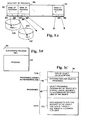
- Figures 3A through 3D depict four exemplary approaches for associating program authorization information with a program.
- Figure 3A this figure exemplifies how program authorization information is stored, under access control, in association with a program.
- Figure 3A shows an exemplary schematic representation of a system's directory of programs. The directory includes data indicative of the name of each of the programs 1, 2,..N (80, 86...92 , respectively).
- each program name identifier Associated with each program name identifier is an indicator 82, 88, 94, respectively, which identifies the location on disk 98 of the associated program, for example, program 1 (104). Additionally, associated with each of the program related identifiers is an indicator 84, 90,... 96, respectively, which identifies the location of its associated program authorization information, e.g., PAI 1. Although the program authorization information, PAI 1, is depicted as being stored in a separate memory device 100, it may, if desired, be stored in the same memory media as its associated program.
- the program authorization information associated with a program may or may not be digitally signed depending upon whether the program authorization information has been generated by the user himself (in which case it may need not be signed) or has been generated by a third party in which case the PAI frequently should be signed.
- Figure 3B shows another approach to associating a PAI with a program.
- the program authorization information 110 is embedded with a program 112.
- the authorizing information may optionally be digitally signed depending upon the source of the PAI.
- Figure 3C shows an important application in which a PAI data structure is associated with a program according to an embodiment of the present invention.
- Figure 3C shows an illustrative data structure for a secure exchangeable "object".
- the data structure may be signed by a trusted authority. The signing of such a data structure allows the object to be securely transmitted from user to user.
- the data structure shown in Figure 3 is set forth in a general format, it may be structured as set forth in the inventor's copending application filed on April 6, 1992 and entitled “Method and Apparatus for Creating, Supporting and Processing a Travelling Program" US Patent No. 5,337,360.
- the data structure includes a header segment 114 which, by way of example only, may define the type of object that follows, e.g., a purchase order related object or any other type of electronic digital object.
- the program authorization information is embedded in a segment 116 which specifies the authorization for the object's program or programs in a manner to be described more fully hereinafter.
- the data structure includes an object program(s) segment 118, which for example, may control the manner in which an associated purchase order is displayed so as to leave blanks for variable fields which are interactively completed by the program user.
- the object program might store such data and send a copy of itself together with accompanying data in a manner which is described in detail in the applicant's above-identified copending application.
- the program may be divided into several logical segments to accommodate different uses of the object. For example, the program may present a different display to the creator of a digital purchase order, than it displays to subsequent recipients.
- the recipient invokes a copy of the transmitted program to, for example, control the display of the purchase order tailored to the needs of the recipient.
- the recipient may verify all received data and add new data and the program may then send itself via the recipient's electronic mail system to, for example, a user who will actually ship the goods purchased.
- the data structure shown in Figure 3C additionally includes data segments 120 associated with the object which include a "variables" segment and data files segment, preferably as described in the above-identified patent application.
- the data segment 120 may be partitioned such that data associated with each version or instance of the object will be separately stored and separately accessible, since different users may have different uses for the data structure shown in Figure 3C. Therefore, the data will vary depending upon how it is collected from each user.
- the program 118 will preferably remain intact for each user.
- the trusted authority will sign the program together with the program authorization information (PAI) since it is the program itself which needs to be authorized rather than the data that is input in response to each execution of the program (since the data may change during each execution path and also since it is the program's responsibility to ensure that accurate digital signatures are properly collected on the input data).
- PAI program authorization information
- Figure 3D exemplifies a situation in which many users access the same program (image) -- each having their own (possibly distinct) Program Authorization Information 129 associated with it and maintained in a specific file belonging to the user.
- Figure 3D shows a system program directory 131, which identifies via an indicator associated with a program name, the location on a disk 132 of a program X.
- program X is invoked by a user, the system checks to determine if the user has private PAI specification(s) (e.g., 133, 135, 137) that can be associated with that program.
- PAI specification(s) e.g., 133, 135, 137
- the present invention allows PAI information to be associated in any appropriate manner, so that in principle a user could define one or more levels of PAI which are then combined together with perhaps a more universal PAI, or with a PAI which was signed and supplied by the or manufacturer of this program.
- the present invention contemplates that the association between a program and its PAI can be constructed very generally so that, if necessary, one program could be associated with multiple PAl's, or conversely, that one PAI could be applied to multiple programs; or some combination of these approaches. It therefore should be understood that, while for purposes of simplicity we generally discuss a single PAI in conjunction with a single program, this should not be considered in any way limiting.
- FIG. 4 is a flowchart which illustrates how a user may benefit from the use of program authorization information, particularly when executing a program of unknown trustworthiness.
- a user may have a desire to execute a program of interest in which the user has no knowledge of the program's creator.
- the program has unknown trustworthiness and may, for example, have been accessed via an electronic bulletin board and may have arrived at the user's terminal via a telecommunications channel or diskette.
- Such a program which might purport to be only a game, carries with it a significant risk that it may be infected by a virus.
- the user may be protected by defining program authorization information which restricts the program to only unimportant or expendable files. If desired, the user may restrict such a program from modifying any files whatsoever. For example, the user may permit the program to only display images on the display screen and to perform game playing related functions. Alternatively, if the program is known to have a single work file, the PAI data may only permit use of such a single file. By limiting access only to a single work file, a program of unknown trustworthiness, cannot inject a virus into other user's programs or otherwise initiate system program malfunctions.
- a user via a systems program, determines how much of the user's system will be put at risk by such a program so as to, for example, completely eliminate the ability of the program to use any privileged functions.
- the user then associates, for example, through an operator prompting, menu-driven system, a PAI with every program to be run on the system (or have such PAI or lack of PAI associated through predetermined default mechanisms).
- a system utility program is preferably employed to create the program authorization information in a manner which will be described in detail below in conjunction with Figures 6-9.
- a program of unknown trust may be injected into the system via communications channel 12 or from a floppy disk loaded into terminal A.
- the program may be initially stored in, for example, the user's program disk memory 7. Thereafter, the user on keyboard 4 will, through interaction with the system's program identified above (with respect to block 122 of Figure 4), associate the program authorization information with a program (in a manner such as shown in Figures 3A through 3D) such that the program may safely run on the user's system or perhaps, a PAI arrives with the program, in which case it is likely to be signed.
- FIG. 5 is an illustration of a program control block (PCB) data structure 140 in accordance with an exemplary embodiment of the present invention.
- the program control block 140 is the data structure utilized by the system monitor to control the execution of an associated program.
- the program control block 140 is loaded with program authorization information such that the PAI can be readily referenced as the associated program is executed so as to insure that the program performs functions and accesses resources in conformance with its assigned authorizations.
- the program control block associated with the program to be executed is located in a storage area which cannot be modified by the program.
- an originating program (whose PCB is identified at 180) calls a program (having a PCB 170) which will, in turn, will call the program 140 is shown in detail in Figure 5.
- Each new PCB will include a field such as 150 that points to the "previous" or calling program control block.
- a field may also be utilized to identify the "next" program control block file.
- the system When a called program finishes executing, the system removes its associated PCB from the top of the executed stack, removes the associated program from storage, removes the associated authorizing information and accesses the program control block immediately below it in the stack.
- the reverse process occurs such that a new PCB is created which is placed on top of the stack, which again points to the previous PCB as indicated in field 150.
- the program control block also includes a field 152 which is a pointer to the location in storage where the associated program is loaded, e.g., as indicated by memory segment 153, shown in Figure 5. Additionally, the size of the program is indicated in field 154 (which thus indicates the amount of storage which will be released when the program finishes execution).
- a field 156 of the program control block identifies the location in storage (157) of one or more PAI's (which are located in an area of storage which cannot be altered by associated programs).
- the PAI's pointed to by field 156 are preferably structured in the manner indicated in Figure 2 described above.
- Field 158 identifies the entry address for the associated program. If the program, during its execution, calls another program, the field 158 is utilized to store the address at which program execution will be resumed, after the called program completes is execution.
- the program control block also includes a set of locations (160) for storing status information such as, for example, program status words (PSW's), stack information, etc.
- the program control block additionally includes a field 162 for storing information relating to an error or termination message if an error occurs during the execution of the program. Such a field may be available to the calling program to identify, for example, why the program terminated unsuccessfully. Field 162 may store an indication that the program successfully terminated.
- the program control block 140 additionally includes various pointers which are maintained so that stray resources can be released when the program ends (164). Such pointers are useful to permit the release of resources which, for example, a programmer neglects to release.
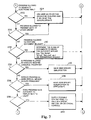
- FIG. 6 through 9 is a flowchart illustrating an exemplary sequence of operations of a utility program for establishing program authorization information.
- a utility program prompts a user, i.e., the end user, the end user's agent, or even the manufacturer, to define a range of authorities which are associated with a program to be executed by the user's system.
- the user is prompted to supply the name of the program for which the PAI is to be established (202). Thereafter, the user is prompted to determine whether the PAI should be signed or not signed.
- the PAI need not necessarily be signed if the PAI is for the user's own use and protection or if this PAI can be stored under satisfactory access control.
- a determination is made (206) as to whether the user wishes to sign or does not wish to sign. If the user wishes to sign, then as indicated in block 208, a user's certificate is retrieved and a flag is set for later testing to indicate that a signature operation is being performed.
- the user's certificate may be a conventional digital certificate or an enhanced digital certificate providing for the delegation of authority in accordance with the inventor's U.S. Patents No. 4,868,877 and 5,005,200.
- a check is made to determine whether file access authority is to be invoked (212).
- a menu may be displayed to the user to provide for a selection of a file access authority (and each of the other authorities hereinafter referenced).
- file access authority may be used to indicate authority with respect to any set of fields or file elements in a file, any set of data or data elements, or any set of files, etc.
- file access authority may be used to indicate authority with respect to any set of fields or file elements in a file, any set of data or data elements, or any set of files, etc.
- the user will be prompted to specify a file name or a file stem or "wild card" file name pattern (214).
- a wild card file name pattern may be selected of the form DATA*, such that the program will be given the authority to access any file name beginning with the prefix "DATA”.
- the user will be prompted to specify the type of file access (216).
- the user may specify that the program's authority shall be limited to one or more of: only reading from files, inserting information into files, updating information in files, deleting information from files, erasing files, transmitting a file, etc. If file access or any other authority identified below in Figures 6-8 is selected, then an indication of this selection is stored and the routine branches to block 274 of Figure 9 which will be described below.
- Another way of qualifying programs eligible to be called by this program would be to specify that the called program must have no greater authority than the calling program.
- the authority and need and on how the system chooses to combine the authority of invoking and invoked programs
- it may even be appropriate to specify the method by which authority is to be combined with the called programs e.g., by using the called program's natural authority, by using the most restrictive authority of the invoked and invoker, etc.).
- any reference to a qualification or restriction, or limitation or permission of a specified authority is intended to include an entire rule specification set based on any collection of appropriate criteria.
- the terms "rule”, “set of”, “qualification”, etc. are used in their most general sense, whereby a specification can be determined by any type of rule, or compound set of rules, which can distinguish elements by any attribute, including, without limitation, for example: by direct specification, by indirect specification, by exclusion, by a list, by a "wild card” rule, or any other way which distinguishes elements by any appropriate attribute, method or criteria. Such distinction is intended to encompass specifications that include only a single element, that exclude all elements, or that include all elements.
- the PAI may, in whole or in part, consist of any number of contiguous or discontiguous segments of data. In an appropriate context, there may be predefined rules which are formulated for that context, which are presumed in the absence of any explicit qualification.
- indicate is generally intended to convey any type of appropriate association, including without limitation for example: direct specification, any type of pointer, reference, association, hash, linking value common identifier, etc.; it may include any level of indirection; it may be explicit, or it may, as appropriate to the context, be implicit in the absence of any explicit association.
- limit is intended to refer to the general notion of a limit -- it frequently is used in the common sense of a “restriction” over normal capability, but it is also intended to reflect situations in which the limit is defined beyond normal capabilities.
- the present invention while it primarily focuses on defining functions which restrict the ability of a program to access resources normally allowed to users, could also, in an appropriate environment, be used to extend the capabilities beyond those normally allowed to a user. Thus, for example, programs whose PAI is signed by an authority recognized by the supervisor, could be allowed to perform extended functions.
- the PAI may not need to be signed at all -- such as when the user defines the PAI himself, or when a trusted administrator stores the PAI in trusted access controlled storage.
- the PAI is signed, there are any number of ways in which signature verification could be accomplished -- e.g., in accordance with the inventor's other patents, U.S. Patent Nos. 4,868,877 and 5,005,200. It is likely that the user will have previously stored information defining the ultimate public key or certificate whose signature the user trusts.
- Another aspect of this qualification may be to specify how the authority of this program is to be combined with the authority of an invoking program -- e.g., whether this program's effective authority is restricted by the caller's. Many other possibilities are also available, perhaps even differing for each type of authority.
- the authority identified in block 222 is not selected, then the user is asked as to whether the program is to be allowed to transmit data to other users (226). If so, the above-identified processing in block 224 is performed to determine any qualifications to this authority.
- any special memory access privileges e.g., access to storage reserved for certain operating system programs (234). If so, then the user will be prompted to specify any qualifications to such access privileges as appropriate.
- certain programs may be intended solely for the purpose of performing certain calculations. Such a program might be designed such that there should not be any user interaction whatsoever. If such a program were to be tampered with, instructions may have been inserted to create an erroneous message to the user which may cause a security breach. For example, a screen may be displayed to the user that there has been a system failure and that it is necessary for the user to enter his secret password to resume operation. Such a program may automatically transmit the password to a party who will then have access to the password and any other information entered on such a screen.
- this authority may be restricted, for example, by only permitting display in a special window, or only on special consoles.
- block 242 a check is made as indicated in the Figure 8, block 242 as to whether the program is to have the authority to solicit input from the user. If so, then this authority may be qualified by specifying possible restrictions, for example, via soliciting from a special window or terminal, (244).
- a mischievous program might trick a user by displaying one set of information, but causing the actual digital signature to be applied to an entirely different set of digital material.
- PAI authorization to solicit and/or perform digital signature operations
- an unauthorized program is prevented from mimicking the external attributes of an authorized program, but internally applying the user's digital signature capability to fraudulent material.
- the program is authorized to solicit digital signatures, limitations may be placed on this authority as indicated in block 248. Thus, the program may be only allowed to effect digital signatures on material with limited scope, value, authority or other characteristics.
- security class 254
- certain resources, files, etc. may be associated with a particular security class, such as secret, sensitive, etc. If such authority is to be associated with the program, then restrictions may likewise be specified, including designations of the particular security level (256).
- the digital signature may be performed in accordance with the teachings in the inventor's U.S. Patent Nos. 4,868,877 and 5,005,200 or by using more conventional digital signature and certification techniques as desired.
- the PAI is stored using, for example, one of the approaches set forth in Figures 3A through 3D so that it is associated with its program 272 and the routine is thereafter exited.
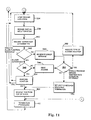
- Figures 10 and 11 illustrate the sequence of operations of a supervisor program for controlling the processing of a program being executed in accordance with its program authorization information.
- the processing of a program "X" and its program authorization information illustrated in Figure 10 is initiated while the computer is executing a supervisor routine.
- a calling program calls program X for execution.
- a program control block is created for program X.
- the program control block created will not be added to the top of the execution stack until it is determined that the program is permitted to be invoked and verification is successful completed. Thus, if the program fails a security check, it will not be placed in the program execution chain.
- the called program will be located through an appropriate program directory during the processing in block 302.
- a well known manufacturer of programs has signed the program with a public key or digital certificate, then, if desired, such a program may be assigned whatever level of authority desired depending upon how much the manufacturer is trusted and the system may permit execution of such program.
- Such a digital signature from the manufacturer can be used to verify that the associated program had not been infected with a virus since it can be determined whether or not the program is exactly the same as it was when it was generated by the manufacturer.
- the manufacturer's "pedigree" will be verified by verifying the digital signature and performing whatever certification and authorization checks are appropriate, given the trust criteria which has previously been established by the user (and signed by a manufacturer in which the user has previously established trust).
- Mechanisms for performing digital signatures which delegate authority are specified in detail in the inventor's U.S. Patent Nos. 4,868,877 and 5,005,200, which patents have been expressly incorporated herein by reference.
- routine branches to block 326 where storage is allocated for the program and the program is loaded in a manner to be described in detail below.
- the system may permit a program to run under a minimum authority default as long as it does not attempt to modify any permanent file. If there is no minimum authority default, then the execution of the program is suppressed (324). In the process of suppressing the execution of the program, an error code or message will be returned to the calling program. For example, a message may be displayed to the calling program that "program X does not have valid, signed authorization.” The routine then branches to block 410 which operate to actually suppress the execution as will be explained further below.
- processing in blocks 322 and 316 reveal that the signatures are valid, then the processing in block 326 is performed. Initially, storage is allocated for the program. The program may or may not be loaded into memory which only the supervisor is allowed to alter depending upon the constraints built into the computer system and the nature of the program. If the program modifies itself, then it cannot be loaded into memory which only the supervisor is allowed to alter.
- program X's program authorizing information is combined, as appropriate, with the PAI associated with the PCB of the calling program, if any.
- This combined PAI which may include multiple PAI's, is then stored in an area of storage which cannot generally be modified by the program and the address of the PAI is stored in the process control block (PCB) as indicated in field 156 of Figure 5.
- PCB process control block
- program X is called by a calling program, it is subject to all its own constraints as well as being combined in some way with the constraints of the calling program, which aggregate constraints are embodied into program X's PAI. In this fashion, a calling program may not be permitted to exceed its assigned bounds by merely calling another program.
- the minimum default authority is used.
- Such minimum default authority is combined as appropriate with the PAI of the calling program, if any, and inserted into the new PCB as explained above in conjunction with block 326.
- the storage for the PAI is allocated from memory that the program generally cannot alter. Thereafter, the storage is allocated for the program as explained above in conjunction with block 326 and the address is saved in the PCB.
- the processing in block 328 using the default authority does not involve computing a hash of the program and the routine branches to block 334 to prepare for program execution.
- the program is prepared for initial execution, after it has been determined that the hashes match or after the processing in block 328.
- the preparation for initial execution includes setting initial status and "resume" information in the program's PCB so that the program will start at the proper entry point. Additionally, the program's PCB will be placed on the top of the execution stack.
- block 336 the execution of the current program either starts or resumes execution upon being placed on top of the execution stack.
- the processing which occurs in blocks 336 through 410 includes operations which are conventionally preformed to execute a program. Processing operations will now be described with emphasis on those operations involving PAI processing.
- the supervisor prepares to continue a program at a saved "resume” point by reloading (or loading) the state of various registers to reflect their state at the point in time when the program was last interrupted (or initialized). Additionally, system status information is restored, e.g., such as stack pointers, etc., depending upon the particular system environment being utilized.
- an examination is made of the PAI information stored in the process control block.
- a check is made in block 342 to determine whether the examined PAI is allowed access to the required resources or allowed to perform the required functions. For example, if an attempt is made to use electronic mail, a check is made of the PAI to determine whether the program is authorized to perform electronic mail functions and if so whether the mailing is limited to a set of mail identifiers.
- a error message is generated in block 344 to indicate that the program is attempting to exceed its limits, access to the resource or function is denied and an appropriate error code or message is generated.
- a check is then made in block 350 to determine whether the program attempting to achieve access should be informed that it has been denied access (350). If the check in block 350 reveals that the program should be so informed, then in block 352, the program is allowed to resume execution with a message indicating the type of access violation that caused the request to fail and be suppressed. The routine then branches back to block 336 for resuming execution of the program.
- the program may be informed, for example, that its PAI is only authorized to read authority for a particular file whereas an attempt was made to write to that file. If the check at block 350 indicates that the calling program should not be informed, then appropriate status and related messages (for the calling program) are generated indicating termination due to an unspecified access violation 356.
- Block 346 applies conventional security techniques to protect the system from a user who is not properly authorized. This check may, for example, be based upon a user identification code initially entered into the system upon sign-on. As indicated at block 348, if the user was not authorized, then access is denied since the program is attempting to violate the user's access capability and appropriate error codes/messages are generated. Thereafter, the processing explained above with respect to block 350 and 352 is initiated.
- the function is performed as indicated in block 354. If the function is a program exit, then the routine exits the program via block 358, where the associated PCB is removed from the top of the execution stack.
Landscapes
- Engineering & Computer Science (AREA)
- Computer Security & Cryptography (AREA)
- Software Systems (AREA)
- Theoretical Computer Science (AREA)
- Computer Hardware Design (AREA)
- Physics & Mathematics (AREA)
- General Engineering & Computer Science (AREA)
- General Physics & Mathematics (AREA)
- Storage Device Security (AREA)
- Stored Programmes (AREA)
Claims (57)
- Système informatique avec des moyens de traitement (2) pour exécuter une pluralité de programmes entrant et des moyens de mémoire (7) pour mémoriser des instructions de programme et des données, comprenant un dispositif pour protéger un utilisateur informatique contre des opérations pouvant être typiquement effectuées par un programme informatique pour le compte d'un utilisateur, ledit dispositif comprenant :des moyens pour générer un hachage d'au moins une instruction desdits programmes entrant ;des moyens pour mémoriser une pluralité d'entrées d'autorisation (32, 34, 36) dans lesdits moyens de mémoire, dans lequel lesdites entrées habilitent des opérations qu'un programme associé est autorisé à effectuer quand il est exécuté par lesdits moyens de traitement ; etdes moyens pour mémoriser dans au moins un segment, des données pour associer lesdites entrées d'autorisation avec au moins un programme (24, 28).
- Système informatique selon la revendication 1, dans lequel ledit au moins un segment inclut des moyens pour mémoriser un hachage dudit programme associé (24).
- Système informatique selon la revendication 1, dans lequel les moyens pour mémoriser une pluralité d'entrées d'autorisation incluent des moyens pour indiquer au moins l'un du type de fonction et de ressource pour chacune desdites entrées (34).
- Système informatique selon la revendication 1, dans lequel les moyens pour mémoriser une pluralité d'entrées d'autorisation incluent des moyens pour mémoriser une habilitation d'autorisation et de capacités qui a été accordée au programme.
- Système informatique selon la revendication 1, incluant en outre des moyens pour mémoriser une signature numérique (40).
- Système informatique selon la revendication 5, incluant en outre des moyens pour indiquer l'autorisation accordée à la partie signataire.
- Système informatique selon la revendication 5, incluant en outre des moyens pour indiquer qu'une pluralité de signatures numériques est nécessaire pour qu'au moins une signature soit considérée comme valable (44).
- Système informatique selon la revendication 1, dans lequel lesdits moyens pour mémoriser une pluralité d'entrées d'autorisation incluent des moyens pour mémoriser une indication de l'ensemble de données auquel ledit programme associé est autorisé à accéder.
- Système informatique selon la revendication 1, dans lequel lesdits moyens pour mémoriser une pluralité d'entrées d'autorisation incluent des moyens pour mémoriser une indication de l'ensemble de champs d'au moins un fichier auquel ledit programme associé est autorisé à accéder (212).
- Système informatique selon la revendication 1, dans lequel lesdits moyens pour mémoriser une pluralité d'entrées d'autorisation incluent des moyens pour mémoriser une indication pour savoir si ledit programme associé est autorisé à appeler des programmes (210).
- Système informatique selon la revendication 1, dans lequel lesdits moyens pour mémoriser une pluralité d'entrées d'autorisation incluent des moyens pour mémoriser une indication pour savoir si ledit programme associé est autorisé à générer du courrier électronique (222).
- Système informatique selon la revendication 1, dans lequel lesdits moyens pour mémoriser une pluralité d'entrées d'autorisation incluent des moyens pour mémoriser une indication pour savoir si ledit programme associé est autorisé à transmettre des données à d'autres utilisateurs (226).
- Système informatique selon la revendication 1, dans lequel lesdits moyens pour mémoriser une pluralité d'entrées d'autorisation incluent des moyens pour mémoriser une indication pour savoir si ledit programme associé est autorisé à effectuer des opérations de distribution de documents (228).
- Système informatique selon la revendication 1, dans lequel lesdits moyens pour mémoriser une pluralité d'entrées d'autorisation incluent des moyens pour mémoriser une indication des privilèges d'accès mémoire autorisés avec ce programme (232).
- Système informatique selon la revendication 1, dans lequel lesdits moyens pour mémoriser une pluralité d'entrées d'autorisation incluent des moyens pour mémoriser une indication d'au moins une habilitation dudit programme associé concernant la capacité d'afficher des informations pour un utilisateur (238).
- Système informatique selon la revendication 1, dans lequel lesdits moyens pour mémoriser une pluralité d'entrées d'autorisation incluent des moyens pour mémoriser une indication d'au moins une habilitation dudit programme associé concernant la capacité de demander une saisie pour le compte d'un utilisateur (247).
- Système informatique selon la revendication 1, dans lequel lesdits moyens pour mémoriser une pluralité d'entrées d'autorisation incluent des moyens pour mémoriser une indication d'au moins une habilitation dudit programme associé concernant la capacité de demander des signatures numériques pour le compte d'un utilisateur (246).
- Système informatique selon la revendication 1, dans lequel lesdits moyens pour mémoriser une pluralité d'entrées d'autorisation incluent des moyens pour mémoriser une indication d'au moins une habilitation dudit programme associé concernant la capacité de commander des périphériques (250).
- Système informatique selon la revendication 1, dans lequel lesdits moyens pour mémoriser une pluralité d'entrées d'autorisation incluent des moyens pour mémoriser une indication que l'accès est limité par une habilitation de sécurité.
- Système informatique selon la revendication 1, dans lequel lesdits moyens de mémorisation incluent des moyens pour mémoriser une indication selon laquelle des opérations de distribution de documents peuvent être effectuées.
- Système informatique selon la revendication 1, dans lequel ladite pluralité d'entrées d'autorisation est incluse comme une partie d'une signature numérique.
- Procédé d'exploitation d'un système informatique incluant des moyens de traitement (2) pour exécuter une pluralité de programmes entrant et des moyens de mémoire pour mémoriser au moins un programme (7), ledit système informatique disposant d'une pluralité de ressources informatiques et étant capable d'effectuer un grand choix de fonctions liées au traitement informatique sous le contrôle d'un programme, ledit procédé étant destiné à protéger un utilisateur informatique contre les opérations pouvant être typiquement effectuées par un programme quand il fonctionne pour le compte d'un utilisateur, et comprenant les étapes consistant à :générer un hachage d'au moins une instruction dudit programme entrant ;établir une structure de données d'informations d'autorisation du programme (figure 2) pour mémoriser une pluralité d'entrées d'autorisation indiquant chacune au moins une des ressources informatiques et des fonctions liées au traitement informatique qui peut être utilisée par un programme associé :mémoriser ladite structure de données d'informations d'autorisation du programme (266) ; etassocier la structure de données d'informations d'autorisation du programme avec au moins un programme à exécuter par ledit système informatique afin de protéger ainsi l'utilisateur informatique contre les opérations qui pourraient être effectuées par ledit au moins un programme, les informations d'autorisation du programme étant ainsi disponibles pour être surveillées quand leur programme associé est exécuté (272).
- Procédé selon la revendication 22, comprenant en outre l'étape consistant à inclure un hachage numérique (24) dudit programme à exécuter comme une partie de la structure de données d'informations d'autorisation du programme.
- Procédé selon la revendication 22, comprenant en outre l'étape consistant à signer de façon numérique au moins une partie de la structure de données d'informations d'autorisation du programme avec une clé privée d'une entité d'autorisation (270).
- Procédé selon la revendication 24, dans lequel l'étape de signature numérique inclut le fait d'indiquer qu'une pluralité de signatures numériques est nécessaire pour qu'une des signatures numériques soit valide (44).
- Procédé selon la revendication 24, dans lequel l'étape de signature numérique inclut l'étape consistant à indiquer au moins une habilitation d'autorisation qui a été accordée au signataire (40).
- Procédé selon la revendication 22, dans lequel la structure de données d'informations d'autorisation du programme est définie par un utilisateur informatique avant qu'un programme associé ne soit exécuté.
- Procédé selon la revendication 27, dans lequel ledit utilisateur informatique n'a pas de privilèges spéciaux et définit lesdites informations d'autorisation du programme pour l'usage propre dudit utilisateur.
- Procédé selon la revendication 22, dans lequel l'étape d'établissement fournit une indication d'au moins une partie d'au moins un fichier de données auquel le programme peut avoir accès (212).
- Procédé selon la revendication 22, dans lequel l'étape d'établissement fournit une indication d'au moins un fichier auquel un programme à exécuter a accès et spécifie la capacité d'écrire des informations dans au moins un fichier (216).
- Procédé selon la revendication 22, dans lequel l'étape d'établissement fournit une indication de l'ensemble de programmes qui est autorisé à être appelé par ledit programme (220).
- Procédé selon la revendication 22, incluant en outre l'étape de limitation, utilisant lesdites informations d'autorisation du programme associées à un programme à exécuter, l'utilisation d'au moins une des ressources et fonctions qui seraient autrement disponibles pour ledit programme.
- Procédé selon la revendication 22, dans lequel l'étape d'établissement indique au moins une règle régissant l'autorisation dudit programme associé de transmettre des informations (226).
- Procédé selon la revendication 33, dans lequel au moins une règle fournit une indication de l'autorisation de transmettre des informations et inclut l'étape consistant à utiliser le courrier électronique (222).
- Procédé selon la revendication 22, dans lequel l'étape d'établissement fournit au moins une règle régissant la capacité du programme d'effectuer des signatures numériques.
- Procédé selon la revendication 22, dans lequel l'étape d'établissement habilite la capacité du programme d'effectuer des opérations de distribution de documents.
- Procédé selon la revendication 22, dans lequel l'étape d'établissement habilite la capacité du programme d'exécuter des instructions en langage machine qui ne sont pas soumises à être entièrement surveillées pour l'autorisation.
- Procédé selon la revendication 22, dans lequel l'étape d'établissement habilite l'ensemble de mémoire auquel ledit programme associé est autorisé à accéder (212, 216).
- Procédé selon la revendication 22, dans lequel l'étape d'établissement indique l'ensemble d'habilitations régissant la capacité du programme d'afficher des informations pour l'utilisateur (238).
- Procédé selon la revendication 22, dans lequel l'étape d'établissement indique l'ensemble d'habilitations régissant la capacité du programme de demander des informations à un utilisateur (242).
- Procédé selon la revendication 22, dans lequel l'étape d'établissement indique l'ensemble d'habilitations régissant la capacité du programme de contrôler des ressources à commande informatique qui sont reliées à l'ordinateur (250).
- Procédé selon la revendication 41, dans lequel l'ensemble d'habilitations régit la capacité du programme de transmettre des informations par l'intermédiaire d'un modem.
- Procédé pour exécuter des programmes sur un système informatique avec des moyens pour exécuter une pluralité de programmes entrant et des moyens de mémoire couplés auxdits moyens d'exécution, pour mémoriser des données et des instructions de programme, ledit système informatique étant capable d'effectuer un grand choix d'opérations liées au traitement informatique sous le contrôle d'un programme pour un utilisateur informatique, ledit procédé comprenant les étapes consistant à :identifier un programme à exécuter (300) ;générer un hachage d'au moins une instruction dudit programme à exécuter ;déterminer si une structure de données d'informations d'autorisation du programme a été associée au programme (304), dans lequel ladite structure de données d'autorisation du programme habilite la capacité du programme d'effectuer des opérations liées au traitement informatique qui sont disponibles pour ledit utilisateur informatique ;examiner ladite structure de données d'informations d'autorisation du programme si une telle structure a été associée audit programme (310, 330) ;déterminer d'après un examen desdites informations d'autorisation du programme si le programme associé est autorisé à effectuer une opération tentée liée au traitement informatique (342) ; etsupprimer l'exécution de ladite opération si ladite structure de données d'informations d'autorisation du programme indique que ledit programme n'est pas autorisé à effectuer une opération tentée (344, 410).
- Procédé selon la revendication 43, incluant en outre l'étape consistant à vérifier lesdites informations d'autorisation avant de permettre audit programme d'utiliser une ressource nécessaire.
- Procédé selon la revendication 43, incluant en outre l'étape consistant à vérifier si ladite structure de données d'informations d'autorisation du programme permet l'exécution d'une opération définie dans ledit programme associé.
- Procédé selon la revendication 43, incluant en outre l'étape de vérification pour déterminer si un utilisateur a reçu l'autorisation d'exécuter des programmes effectuant une opération prédéterminée (346).
- Procédé selon la revendication 43, incluant en outre l'étape consistant à vérifier toute signature numérique associée à ladite structure de données d'informations d'autorisation du programme (316).
- Procédé selon la revendication 47, incluant l'étape consistant à supprimer l'exécution dudit programme si ladite signature numérique n'est pas valable (322, 324).
- Procédé selon la revendication 43, incluant en outre l'étape consistant à combiner les informations d'autorisation dudit programme avec les informations d'autorisation associées à une routine appelant ledit programme.
- Procédé selon la revendication 43, dans lequel ladite structure de données d'informations d'autorisation inclut des moyens pour mémoriser un hachage dudit programme, et incluant en outre l'étape consistant à calculer le hachage dudit programme et à comparer le hachage calculé audit hachage mémorisé.
- Procédé selon la revendication 43, incluant en outre l'étape consistant à vérifier l'autorisation associée au signataire d'une signature numérique (308).
- Procédé selon la revendication 43, incluant en outre l'étape consistant à combiner les informations d'autorisation dudit programme avec les informations d'autorisation associées à une routine appelée par ledit programme.
- Procédé selon la revendication 43, dans lequel lesdites informations d'autorisation incluent une indication de l'ensemble de données auquel ledit programme associé est autorisé à accéder.
- Procédé selon la revendication 43, dans lequel lesdites instructions de programme sont exprimées en code de langage machine, et dans lequel lesdites opérations sont effectuées par des appels à un superviseur commandé qui surveille et applique la structure de données d'autorisation du programme.
- Procédé selon la revendication 43, comprenant en outre l'étape consistant à associer lesdites informations d'autorisation du programme avec un programme mobile qui inclut des instructions pour se transmettre à une autre destination.
- Procédé selon la revendication 55, incluant en outre l'étape consistant à mémoriser des certificats comme des variables à l'intérieur d'un programme mobile de sorte que ledit programme peut agir sur lesdites variables.
- Procédé selon la revendication 43, dans lequel lesdites instructions de programme sont exprimées en "pseudo" code interprétatif qui est traité par un interprétateur qui surveille et applique ladite structure de données d'autorisation du programme.
Applications Claiming Priority (4)
| Application Number | Priority Date | Filing Date | Title |
|---|---|---|---|
| US88386792A | 1992-05-15 | 1992-05-15 | |
| US883868 | 1992-05-15 | ||
| US883867 | 1992-05-15 | ||
| US07/883,868 US5412717A (en) | 1992-05-15 | 1992-05-15 | Computer system security method and apparatus having program authorization information data structures |
Publications (2)
| Publication Number | Publication Date |
|---|---|
| EP0570123A1 EP0570123A1 (fr) | 1993-11-18 |
| EP0570123B1 true EP0570123B1 (fr) | 1999-03-17 |
Family
ID=27128706
Family Applications (1)
| Application Number | Title | Priority Date | Filing Date |
|---|---|---|---|
| EP93303223A Expired - Lifetime EP0570123B1 (fr) | 1992-05-15 | 1993-04-26 | Méthode de sécurité pour un système informatique avec des structures de données d'autorisation des programmes |
Country Status (7)
| Country | Link |
|---|---|
| EP (1) | EP0570123B1 (fr) |
| JP (2) | JP3784423B2 (fr) |
| AT (1) | ATE177857T1 (fr) |
| AU (1) | AU672786B2 (fr) |
| CA (1) | CA2095087C (fr) |
| DE (1) | DE69323926T2 (fr) |
| ES (1) | ES2128393T3 (fr) |
Cited By (17)
| Publication number | Priority date | Publication date | Assignee | Title |
|---|---|---|---|---|
| US6449367B2 (en) | 1996-08-12 | 2002-09-10 | Intertrust Technologies Corp. | Steganographic techniques for securely delivering electronic digital rights management control information over insecure communication channels |
| US6938021B2 (en) | 1997-11-06 | 2005-08-30 | Intertrust Technologies Corporation | Methods for matching, selecting, narrowcasting, and/or classifying based on rights management and/or other information |
| US7062500B1 (en) | 1997-02-25 | 2006-06-13 | Intertrust Technologies Corp. | Techniques for defining, using and manipulating rights management data structures |
| US7069451B1 (en) | 1995-02-13 | 2006-06-27 | Intertrust Technologies Corp. | Systems and methods for secure transaction management and electronic rights protection |
| US7120802B2 (en) | 1996-08-12 | 2006-10-10 | Intertrust Technologies Corp. | Systems and methods for using cryptography to protect secure computing environments |
| US7133845B1 (en) | 1995-02-13 | 2006-11-07 | Intertrust Technologies Corp. | System and methods for secure transaction management and electronic rights protection |
| US7143290B1 (en) | 1995-02-13 | 2006-11-28 | Intertrust Technologies Corporation | Trusted and secure techniques, systems and methods for item delivery and execution |
| US7233948B1 (en) | 1998-03-16 | 2007-06-19 | Intertrust Technologies Corp. | Methods and apparatus for persistent control and protection of content |
| US7243236B1 (en) | 1999-07-29 | 2007-07-10 | Intertrust Technologies Corp. | Systems and methods for using cryptography to protect secure and insecure computing environments |
| US7415617B2 (en) | 1995-02-13 | 2008-08-19 | Intertrust Technologies Corp. | Trusted infrastructure support systems, methods and techniques for secure electronic commerce, electronic transactions, commerce process control and automation, distributed computing, and rights management |
| US7430670B1 (en) | 1999-07-29 | 2008-09-30 | Intertrust Technologies Corp. | Software self-defense systems and methods |
| US7844835B2 (en) | 1995-02-13 | 2010-11-30 | Intertrust Technologies Corporation | Systems and methods for secure transaction management and electronic rights protection |
| US7917749B2 (en) | 1995-02-13 | 2011-03-29 | Intertrust Technologies Corporation | Systems and methods for secure transaction management and electronic rights protection |
| US8185473B2 (en) | 1995-02-13 | 2012-05-22 | Intertrust Technologies Corporation | Trusted infrastructure support systems, methods and techniques for secure electronic commerce, electronic transactions, commerce process control and automation, distributed computing, and rights management |
| US8533851B2 (en) | 1996-08-30 | 2013-09-10 | Intertrust Technologies Corporation | Systems and methods for secure transaction management and electronic rights protection |
| US8751793B2 (en) | 1995-02-13 | 2014-06-10 | Intertrust Technologies Corp. | Trusted infrastructure support systems, methods and techniques for secure electronic commerce transaction and rights management |
| GB2644637A (en) * | 2024-09-20 | 2026-04-29 | Origin Secured Ltd | Permissions |
Families Citing this family (47)
| Publication number | Priority date | Publication date | Assignee | Title |
|---|---|---|---|---|
| PL176458B1 (pl) * | 1994-01-13 | 1999-05-31 | Certc0 Llc | Sposób szyfrowania systemu komunikacyjnego |
| US5553143A (en) * | 1994-02-04 | 1996-09-03 | Novell, Inc. | Method and apparatus for electronic licensing |
| US5553139A (en) * | 1994-04-04 | 1996-09-03 | Novell, Inc. | Method and apparatus for electronic license distribution |
| US5473692A (en) * | 1994-09-07 | 1995-12-05 | Intel Corporation | Roving software license for a hardware agent |
| US5802275A (en) * | 1994-06-22 | 1998-09-01 | Lucent Technologies Inc. | Isolation of non-secure software from secure software to limit virus infection |
| JPH08137686A (ja) * | 1994-09-16 | 1996-05-31 | Toshiba Corp | 著作物データ管理方法及び著作物データ管理装置 |
| US5715403A (en) * | 1994-11-23 | 1998-02-03 | Xerox Corporation | System for controlling the distribution and use of digital works having attached usage rights where the usage rights are defined by a usage rights grammar |
| EP0717337B1 (fr) * | 1994-12-13 | 2001-08-01 | International Business Machines Corporation | Méthode et système de distribution sécurisé de logiciels |
| US7095854B1 (en) | 1995-02-13 | 2006-08-22 | Intertrust Technologies Corp. | Systems and methods for secure transaction management and electronic rights protection |
| US7124302B2 (en) | 1995-02-13 | 2006-10-17 | Intertrust Technologies Corp. | Systems and methods for secure transaction management and electronic rights protection |
| US5905860A (en) * | 1996-03-15 | 1999-05-18 | Novell, Inc. | Fault tolerant electronic licensing system |
| CA2202118A1 (fr) * | 1996-04-29 | 1997-10-29 | Mitel Corporation | Methode de stockage persistant protege pour applications |
| US5825877A (en) * | 1996-06-11 | 1998-10-20 | International Business Machines Corporation | Support for portable trusted software |
| US5987123A (en) * | 1996-07-03 | 1999-11-16 | Sun Microsystems, Incorporated | Secure file system |
| US6148083A (en) * | 1996-08-23 | 2000-11-14 | Hewlett-Packard Company | Application certification for an international cryptography framework |
| US5841870A (en) * | 1996-11-12 | 1998-11-24 | Cheyenne Property Trust | Dynamic classes of service for an international cryptography framework |
| US5920861A (en) * | 1997-02-25 | 1999-07-06 | Intertrust Technologies Corp. | Techniques for defining using and manipulating rights management data structures |
| US6167522A (en) * | 1997-04-01 | 2000-12-26 | Sun Microsystems, Inc. | Method and apparatus for providing security for servers executing application programs received via a network |
| IL128576A (en) * | 1997-06-17 | 2004-03-28 | Purdue Pharma Lp | A self-destructing document and an e-mail system |
| US6000032A (en) * | 1997-07-15 | 1999-12-07 | Symantec Corporation | Secure access to software modules |
| US6188995B1 (en) | 1997-07-28 | 2001-02-13 | Apple Computer, Inc. | Method and apparatus for enforcing software licenses |
| US6985943B2 (en) | 1998-09-11 | 2006-01-10 | Genesys Telecommunications Laboratories, Inc. | Method and apparatus for extended management of state and interaction of a remote knowledge worker from a contact center |
| US6711611B2 (en) | 1998-09-11 | 2004-03-23 | Genesis Telecommunications Laboratories, Inc. | Method and apparatus for data-linking a mobile knowledge worker to home communication-center infrastructure |
| IL123512A0 (en) | 1998-03-02 | 1999-03-12 | Security 7 Software Ltd | Method and agent for the protection against hostile resource use access |
| EP0993631B1 (fr) | 1998-05-06 | 2009-07-22 | Sun Microsystems, Inc. | Appareil et procede de traitement |
| JP2001127747A (ja) * | 1999-10-25 | 2001-05-11 | Toshiba Corp | 情報暗号化復号化装置 |
| US6757824B1 (en) * | 1999-12-10 | 2004-06-29 | Microsoft Corporation | Client-side boot domains and boot rules |
| US6901386B1 (en) * | 2000-03-31 | 2005-05-31 | Intel Corporation | Electronic asset lending library method and apparatus |
| US7263616B1 (en) | 2000-09-22 | 2007-08-28 | Ge Medical Systems Global Technology Company, Llc | Ultrasound imaging system having computer virus protection |
| KR20020034862A (ko) * | 2000-11-02 | 2002-05-09 | 권문상 | 컴퓨터의 응용프로그램의 비밀값 제어방법 |
| US7099663B2 (en) * | 2001-05-31 | 2006-08-29 | Qualcomm Inc. | Safe application distribution and execution in a wireless environment |
| DE10140721A1 (de) * | 2001-08-27 | 2003-03-20 | Bayerische Motoren Werke Ag | Verfahren zur Bereitstellung von Software zur Verwendung durch ein Steuergerät eines Fahrzeugs |
| JP3818504B2 (ja) | 2002-04-15 | 2006-09-06 | ソニー株式会社 | 情報処理装置および方法、並びにプログラム |
| JP4222774B2 (ja) | 2002-05-20 | 2009-02-12 | 株式会社エヌ・ティ・ティ・ドコモ | 携帯端末およびプログラムの起動方法 |
| US7421713B2 (en) | 2002-06-12 | 2008-09-02 | Matsushita Electric Industrial Co., Ltd. | Safe service extension platform |
| EP1554659A4 (fr) * | 2002-10-25 | 2009-07-22 | Bettina Experton | Systeme et procede de lancement et d'acces automatique a des adresses et a des applications reseau |
| RU2234123C1 (ru) * | 2002-11-21 | 2004-08-10 | Щеглов Андрей Юрьевич | Система разграничения прав доступа к файловым объектам |
| KR100493900B1 (ko) * | 2003-08-21 | 2005-06-10 | 삼성전자주식회사 | 사용자간 콘텐츠에 대한 권한정보의 공유방법 |
| US20050091658A1 (en) * | 2003-10-24 | 2005-04-28 | Microsoft Corporation | Operating system resource protection |
| WO2005052769A1 (fr) * | 2003-11-28 | 2005-06-09 | Matsushita Electric Industrial Co.,Ltd. | Dispositif de traitement de donnees |
| US9008075B2 (en) | 2005-12-22 | 2015-04-14 | Genesys Telecommunications Laboratories, Inc. | System and methods for improving interaction routing performance |
| JP4995590B2 (ja) | 2007-02-14 | 2012-08-08 | 株式会社エヌ・ティ・ティ・ドコモ | コンテンツ流通管理装置、通信端末、プログラム及びコンテンツ流通システム |
| US8646050B2 (en) * | 2011-01-18 | 2014-02-04 | Apple Inc. | System and method for supporting JIT in a secure system with randomly allocated memory ranges |
| US9690945B2 (en) | 2012-11-14 | 2017-06-27 | International Business Machines Corporation | Security analysis using relational abstraction of data structures |
| JP6236816B2 (ja) * | 2013-03-15 | 2017-11-29 | 株式会社リコー | 画像処理システム、情報処理装置及びプログラム |
| US10694352B2 (en) | 2015-10-28 | 2020-06-23 | Activision Publishing, Inc. | System and method of using physical objects to control software access |
| CN116522360A (zh) * | 2023-04-27 | 2023-08-01 | 麒麟软件有限公司 | 一种基于Linux的安全套件授权管控方法及系统 |
Family Cites Families (5)
| Publication number | Priority date | Publication date | Assignee | Title |
|---|---|---|---|---|
| GB2059652B (en) | 1979-09-29 | 1983-08-24 | Plessey Co Ltd | Memory protection system using capability registers |
| AU618056B2 (en) * | 1987-11-10 | 1991-12-12 | Acresso Software Inc. | Computer program license management system |
| US5005200A (en) | 1988-02-12 | 1991-04-02 | Fischer Addison M | Public key/signature cryptosystem with enhanced digital signature certification |
| JP3049749B2 (ja) * | 1990-09-14 | 2000-06-05 | 富士通株式会社 | ファイルアクセス制限処理装置 |
| CA2093094C (fr) | 1992-04-06 | 2000-07-11 | Addison M. Fischer | Methode et dispositif d'elaboration, de prise en charge et d'utilisation de programmes d'acheminement |
-
1993
- 1993-04-26 AT AT93303223T patent/ATE177857T1/de active
- 1993-04-26 DE DE69323926T patent/DE69323926T2/de not_active Expired - Lifetime
- 1993-04-26 EP EP93303223A patent/EP0570123B1/fr not_active Expired - Lifetime
- 1993-04-26 ES ES93303223T patent/ES2128393T3/es not_active Expired - Lifetime
- 1993-04-28 CA CA002095087A patent/CA2095087C/fr not_active Expired - Lifetime
- 1993-04-28 AU AU38209/93A patent/AU672786B2/en not_active Expired
- 1993-05-14 JP JP11315793A patent/JP3784423B2/ja not_active Expired - Lifetime
-
2005
- 2005-12-13 JP JP2005358699A patent/JP3880607B2/ja not_active Expired - Lifetime
Cited By (26)
| Publication number | Priority date | Publication date | Assignee | Title |
|---|---|---|---|---|
| US7133845B1 (en) | 1995-02-13 | 2006-11-07 | Intertrust Technologies Corp. | System and methods for secure transaction management and electronic rights protection |
| US7143290B1 (en) | 1995-02-13 | 2006-11-28 | Intertrust Technologies Corporation | Trusted and secure techniques, systems and methods for item delivery and execution |
| US8751793B2 (en) | 1995-02-13 | 2014-06-10 | Intertrust Technologies Corp. | Trusted infrastructure support systems, methods and techniques for secure electronic commerce transaction and rights management |
| US7844835B2 (en) | 1995-02-13 | 2010-11-30 | Intertrust Technologies Corporation | Systems and methods for secure transaction management and electronic rights protection |
| US7069451B1 (en) | 1995-02-13 | 2006-06-27 | Intertrust Technologies Corp. | Systems and methods for secure transaction management and electronic rights protection |
| US8543842B2 (en) | 1995-02-13 | 2013-09-24 | Intertrust Technologies Corporation | System and methods for secure transaction management and electronics rights protection |
| US7415617B2 (en) | 1995-02-13 | 2008-08-19 | Intertrust Technologies Corp. | Trusted infrastructure support systems, methods and techniques for secure electronic commerce, electronic transactions, commerce process control and automation, distributed computing, and rights management |
| US7392395B2 (en) | 1995-02-13 | 2008-06-24 | Intertrust Technologies Corp. | Trusted and secure techniques, systems and methods for item delivery and execution |
| US7281133B2 (en) | 1995-02-13 | 2007-10-09 | Intertrust Technologies Corp. | Trusted and secure techniques, systems and methods for item delivery and execution |
| US7917749B2 (en) | 1995-02-13 | 2011-03-29 | Intertrust Technologies Corporation | Systems and methods for secure transaction management and electronic rights protection |
| US8185473B2 (en) | 1995-02-13 | 2012-05-22 | Intertrust Technologies Corporation | Trusted infrastructure support systems, methods and techniques for secure electronic commerce, electronic transactions, commerce process control and automation, distributed computing, and rights management |
| US8307212B2 (en) | 1996-08-12 | 2012-11-06 | Intertrust Technologies Corp. | Steganographic techniques for securely delivering electronic digital rights management control information over insecure communication channels |
| US6618484B2 (en) | 1996-08-12 | 2003-09-09 | Intertrust Technologies Corporation | Steganographic techniques for securely delivering electronic digital rights management control information over insecure communication channels |
| US7120802B2 (en) | 1996-08-12 | 2006-10-10 | Intertrust Technologies Corp. | Systems and methods for using cryptography to protect secure computing environments |
| US6449367B2 (en) | 1996-08-12 | 2002-09-10 | Intertrust Technologies Corp. | Steganographic techniques for securely delivering electronic digital rights management control information over insecure communication channels |
| US7925898B2 (en) | 1996-08-12 | 2011-04-12 | Intertrust Technologies Corp. | Systems and methods using cryptography to protect secure computing environments |
| US8533851B2 (en) | 1996-08-30 | 2013-09-10 | Intertrust Technologies Corporation | Systems and methods for secure transaction management and electronic rights protection |
| US7062500B1 (en) | 1997-02-25 | 2006-06-13 | Intertrust Technologies Corp. | Techniques for defining, using and manipulating rights management data structures |
| US7110983B2 (en) | 1997-11-06 | 2006-09-19 | Intertrust Technologies Corporation | Methods for matching, selecting, narrowcasting, and/or classifying based on rights management and/or other information |
| US7143066B2 (en) | 1997-11-06 | 2006-11-28 | Intertrust Technologies Corp. | Systems and methods for matching, selecting, narrowcasting, and/or classifying based on rights management and/or other information |
| US7092914B1 (en) | 1997-11-06 | 2006-08-15 | Intertrust Technologies Corporation | Methods for matching, selecting, narrowcasting, and/or classifying based on rights management and/or other information |
| US6938021B2 (en) | 1997-11-06 | 2005-08-30 | Intertrust Technologies Corporation | Methods for matching, selecting, narrowcasting, and/or classifying based on rights management and/or other information |
| US7233948B1 (en) | 1998-03-16 | 2007-06-19 | Intertrust Technologies Corp. | Methods and apparatus for persistent control and protection of content |
| US7430670B1 (en) | 1999-07-29 | 2008-09-30 | Intertrust Technologies Corp. | Software self-defense systems and methods |
| US7243236B1 (en) | 1999-07-29 | 2007-07-10 | Intertrust Technologies Corp. | Systems and methods for using cryptography to protect secure and insecure computing environments |
| GB2644637A (en) * | 2024-09-20 | 2026-04-29 | Origin Secured Ltd | Permissions |
Also Published As
| Publication number | Publication date |
|---|---|
| AU672786B2 (en) | 1996-10-17 |
| JP2006099805A (ja) | 2006-04-13 |
| ATE177857T1 (de) | 1999-04-15 |
| ES2128393T3 (es) | 1999-05-16 |
| JPH06103058A (ja) | 1994-04-15 |
| DE69323926D1 (de) | 1999-04-22 |
| DE69323926T2 (de) | 1999-09-30 |
| AU3820993A (en) | 1993-11-18 |
| CA2095087A1 (fr) | 1993-11-16 |
| CA2095087C (fr) | 1999-06-01 |
| EP0570123A1 (fr) | 1993-11-18 |
| JP3784423B2 (ja) | 2006-06-14 |
| JP3880607B2 (ja) | 2007-02-14 |
Similar Documents
| Publication | Publication Date | Title |
|---|---|---|
| US5412717A (en) | Computer system security method and apparatus having program authorization information data structures | |
| CA2095087C (fr) | Methode et appareil de securite a structures de donnees d'information autorisees pour systeme informatique | |
| JP2739029B2 (ja) | データ・オブジェクトへのアクセスを制御する方法 | |
| US9390262B2 (en) | Method for protecting computer programs and data from hostile code | |
| US8195938B2 (en) | Cloud-based application whitelisting | |
| US5870467A (en) | Method and apparatus for data input/output management suitable for protection of electronic writing data | |
| US5347578A (en) | Computer system security | |
| US6253324B1 (en) | Server verification of requesting clients | |
| EP0843249B1 (fr) | Classes de service dynamiques pour une structure internationale de cryptographie | |
| US20050060561A1 (en) | Protection of data | |
| KR20010040979A (ko) | 스택에 기초한 액세스 제어 | |
| GB2398134A (en) | Applying a data handing policy to predetermined system calls | |
| EP1368718B1 (fr) | Commande d'execution de systeme de communications defini par logiciel | |
| JP2010205270A (ja) | 取り外し可能な媒体に格納された実行可能なコードにタンパーエビデント性を提供する装置 | |
| JPH1027123A (ja) | コンピュータソフトウェアのコピープロテクト方法 | |
| Holford et al. | Using self-defending objects to develop security aware applications in java | |
| Rabin et al. | An integrated toolkit for operating system security | |
| Grimm et al. | Access control in extensible systems | |
| CN120654260A (zh) | Cms系统文件防护方法、装置、系统及存储介质 | |
| Padilla et al. | Secure Communications Processor (SCOMP). STOP Release 2.1 | |
| Bicknell et al. | Final Evaluation Report of Security Microsystems, Inc. Lockit Professional 2.10 | |
| Chang et al. | A Java Security Model Based on Information Flow Control |
Legal Events
| Date | Code | Title | Description |
|---|---|---|---|
| PUAI | Public reference made under article 153(3) epc to a published international application that has entered the european phase |
Free format text: ORIGINAL CODE: 0009012 |
|
| AK | Designated contracting states |
Kind code of ref document: A1 Designated state(s): AT BE CH DE DK ES FR GB GR IE IT LI LU MC NL PT SE |
|
| 17P | Request for examination filed |
Effective date: 19940420 |
|
| 17Q | First examination report despatched |
Effective date: 19970721 |
|
| GRAG | Despatch of communication of intention to grant |
Free format text: ORIGINAL CODE: EPIDOS AGRA |
|
| GRAG | Despatch of communication of intention to grant |
Free format text: ORIGINAL CODE: EPIDOS AGRA |
|
| GRAH | Despatch of communication of intention to grant a patent |
Free format text: ORIGINAL CODE: EPIDOS IGRA |
|
| GRAH | Despatch of communication of intention to grant a patent |
Free format text: ORIGINAL CODE: EPIDOS IGRA |
|
| GRAA | (expected) grant |
Free format text: ORIGINAL CODE: 0009210 |
|
| AK | Designated contracting states |
Kind code of ref document: B1 Designated state(s): AT BE CH DE DK ES FR GB GR IE IT LI LU MC NL PT SE |
|
| PG25 | Lapsed in a contracting state [announced via postgrant information from national office to epo] |
Ref country code: IT Free format text: LAPSE BECAUSE OF FAILURE TO SUBMIT A TRANSLATION OF THE DESCRIPTION OR TO PAY THE FEE WITHIN THE PRESCRIBED TIME-LIMIT;WARNING: LAPSES OF ITALIAN PATENTS WITH EFFECTIVE DATE BEFORE 2007 MAY HAVE OCCURRED AT ANY TIME BEFORE 2007. THE CORRECT EFFECTIVE DATE MAY BE DIFFERENT FROM THE ONE RECORDED. Effective date: 19990317 Ref country code: GR Free format text: LAPSE BECAUSE OF NON-PAYMENT OF DUE FEES Effective date: 19990317 |
|
| REF | Corresponds to: |
Ref document number: 177857 Country of ref document: AT Date of ref document: 19990415 Kind code of ref document: T |
|
| REG | Reference to a national code |
Ref country code: CH Ref legal event code: EP |
|
| REG | Reference to a national code |
Ref country code: IE Ref legal event code: FG4D |
|
| REF | Corresponds to: |
Ref document number: 69323926 Country of ref document: DE Date of ref document: 19990422 |
|
| ET | Fr: translation filed | ||
| PG25 | Lapsed in a contracting state [announced via postgrant information from national office to epo] |
Ref country code: LU Free format text: LAPSE BECAUSE OF NON-PAYMENT OF DUE FEES Effective date: 19990426 |
|
| REG | Reference to a national code |
Ref country code: ES Ref legal event code: FG2A Ref document number: 2128393 Country of ref document: ES Kind code of ref document: T3 |
|
| PG25 | Lapsed in a contracting state [announced via postgrant information from national office to epo] |
Ref country code: PT Free format text: LAPSE BECAUSE OF FAILURE TO SUBMIT A TRANSLATION OF THE DESCRIPTION OR TO PAY THE FEE WITHIN THE PRESCRIBED TIME-LIMIT Effective date: 19990617 Ref country code: DK Free format text: LAPSE BECAUSE OF FAILURE TO SUBMIT A TRANSLATION OF THE DESCRIPTION OR TO PAY THE FEE WITHIN THE PRESCRIBED TIME-LIMIT Effective date: 19990617 |
|
| REG | Reference to a national code |
Ref country code: CH Ref legal event code: NV Representative=s name: E. BLUM & CO. PATENTANWAELTE |
|
| PG25 | Lapsed in a contracting state [announced via postgrant information from national office to epo] |
Ref country code: MC Free format text: LAPSE BECAUSE OF NON-PAYMENT OF DUE FEES Effective date: 19991031 |
|
| PLBE | No opposition filed within time limit |
Free format text: ORIGINAL CODE: 0009261 |
|
| STAA | Information on the status of an ep patent application or granted ep patent |
Free format text: STATUS: NO OPPOSITION FILED WITHIN TIME LIMIT |
|
| 26N | No opposition filed | ||
| REG | Reference to a national code |
Ref country code: GB Ref legal event code: IF02 |
|
| REG | Reference to a national code |
Ref country code: CH Ref legal event code: PFA Owner name: FISCHER, ADDISON M. Free format text: FISCHER, ADDISON M.#60 14TH AVENUE SOUTH#NAPLES FLORIDA 33942 (US) -TRANSFER TO- FISCHER, ADDISON M.#60 14TH AVENUE SOUTH#NAPLES FLORIDA 33942 (US) |
|
| PGFP | Annual fee paid to national office [announced via postgrant information from national office to epo] |
Ref country code: CH Payment date: 20120412 Year of fee payment: 20 Ref country code: IE Payment date: 20120411 Year of fee payment: 20 Ref country code: DE Payment date: 20120502 Year of fee payment: 20 Ref country code: BE Payment date: 20120412 Year of fee payment: 20 Ref country code: NL Payment date: 20120413 Year of fee payment: 20 |
|
| PGFP | Annual fee paid to national office [announced via postgrant information from national office to epo] |
Ref country code: FR Payment date: 20120504 Year of fee payment: 20 Ref country code: GB Payment date: 20120425 Year of fee payment: 20 Ref country code: SE Payment date: 20120411 Year of fee payment: 20 |
|
| PGFP | Annual fee paid to national office [announced via postgrant information from national office to epo] |
Ref country code: ES Payment date: 20120510 Year of fee payment: 20 |
|
| PGFP | Annual fee paid to national office [announced via postgrant information from national office to epo] |
Ref country code: AT Payment date: 20120327 Year of fee payment: 20 |
|
| REG | Reference to a national code |
Ref country code: DE Ref legal event code: R071 Ref document number: 69323926 Country of ref document: DE |
|
| BE20 | Be: patent expired |
Owner name: *FISCHER ADDISON M. Effective date: 20130426 |
|
| REG | Reference to a national code |
Ref country code: CH Ref legal event code: PL |
|
| REG | Reference to a national code |
Ref country code: NL Ref legal event code: V4 Effective date: 20130426 |
|
| REG | Reference to a national code |
Ref country code: GB Ref legal event code: PE20 Expiry date: 20130425 |
|
| REG | Reference to a national code |
Ref country code: AT Ref legal event code: MK07 Ref document number: 177857 Country of ref document: AT Kind code of ref document: T Effective date: 20130426 |
|
| REG | Reference to a national code |
Ref country code: ES Ref legal event code: FD2A Effective date: 20130730 |
|
| PG25 | Lapsed in a contracting state [announced via postgrant information from national office to epo] |
Ref country code: DE Free format text: LAPSE BECAUSE OF EXPIRATION OF PROTECTION Effective date: 20130427 Ref country code: GB Free format text: LAPSE BECAUSE OF EXPIRATION OF PROTECTION Effective date: 20130425 |
|
| PG25 | Lapsed in a contracting state [announced via postgrant information from national office to epo] |
Ref country code: ES Free format text: LAPSE BECAUSE OF EXPIRATION OF PROTECTION Effective date: 20130427 |
|
| PG25 | Lapsed in a contracting state [announced via postgrant information from national office to epo] |
Ref country code: IE Free format text: LAPSE BECAUSE OF EXPIRATION OF PROTECTION Effective date: 20130426 |