EP0571625B1 - Filtre couleur et procede de fabrication dudit filtre - Google Patents
Filtre couleur et procede de fabrication dudit filtre Download PDFInfo
- Publication number
- EP0571625B1 EP0571625B1 EP91911357A EP91911357A EP0571625B1 EP 0571625 B1 EP0571625 B1 EP 0571625B1 EP 91911357 A EP91911357 A EP 91911357A EP 91911357 A EP91911357 A EP 91911357A EP 0571625 B1 EP0571625 B1 EP 0571625B1
- Authority
- EP
- European Patent Office
- Prior art keywords
- protective film
- film
- resin composition
- transparent
- photopolymerizable
- Prior art date
- Legal status (The legal status is an assumption and is not a legal conclusion. Google has not performed a legal analysis and makes no representation as to the accuracy of the status listed.)
- Expired - Lifetime
Links
- 238000004519 manufacturing process Methods 0.000 title description 4
- 230000001681 protective effect Effects 0.000 claims description 106
- 229920005989 resin Polymers 0.000 claims description 80
- 239000011347 resin Substances 0.000 claims description 80
- 239000000758 substrate Substances 0.000 claims description 72
- 239000000049 pigment Substances 0.000 claims description 70
- 239000000463 material Substances 0.000 claims description 57
- 239000011342 resin composition Substances 0.000 claims description 54
- 239000011248 coating agent Substances 0.000 claims description 48
- 238000000576 coating method Methods 0.000 claims description 48
- NIXOWILDQLNWCW-UHFFFAOYSA-M Acrylate Chemical compound [O-]C(=O)C=C NIXOWILDQLNWCW-UHFFFAOYSA-M 0.000 claims description 42
- 230000002093 peripheral effect Effects 0.000 claims description 30
- KCTAWXVAICEBSD-UHFFFAOYSA-N prop-2-enoyloxy prop-2-eneperoxoate Chemical compound C=CC(=O)OOOC(=O)C=C KCTAWXVAICEBSD-UHFFFAOYSA-N 0.000 claims description 30
- 238000000034 method Methods 0.000 claims description 23
- 239000006087 Silane Coupling Agent Substances 0.000 claims description 22
- 239000000243 solution Substances 0.000 claims description 22
- 125000003700 epoxy group Chemical group 0.000 claims description 21
- 239000003822 epoxy resin Substances 0.000 claims description 20
- 229920000647 polyepoxide Polymers 0.000 claims description 20
- 239000000178 monomer Substances 0.000 claims description 14
- 230000008859 change Effects 0.000 claims description 7
- 239000007864 aqueous solution Substances 0.000 claims description 6
- 125000000524 functional group Chemical group 0.000 claims description 3
- 239000002243 precursor Substances 0.000 claims description 3
- 150000008065 acid anhydrides Chemical class 0.000 claims description 2
- 230000001678 irradiating effect Effects 0.000 claims 1
- 239000010408 film Substances 0.000 description 207
- 239000002245 particle Substances 0.000 description 72
- 239000010410 layer Substances 0.000 description 48
- 239000000203 mixture Substances 0.000 description 39
- 239000004973 liquid crystal related substance Substances 0.000 description 24
- 229920003986 novolac Polymers 0.000 description 23
- MPIAGWXWVAHQBB-UHFFFAOYSA-N [3-prop-2-enoyloxy-2-[[3-prop-2-enoyloxy-2,2-bis(prop-2-enoyloxymethyl)propoxy]methyl]-2-(prop-2-enoyloxymethyl)propyl] prop-2-enoate Chemical compound C=CC(=O)OCC(COC(=O)C=C)(COC(=O)C=C)COCC(COC(=O)C=C)(COC(=O)C=C)COC(=O)C=C MPIAGWXWVAHQBB-UHFFFAOYSA-N 0.000 description 20
- QWVGKYWNOKOFNN-UHFFFAOYSA-N o-cresol Chemical compound CC1=CC=CC=C1O QWVGKYWNOKOFNN-UHFFFAOYSA-N 0.000 description 20
- 238000002834 transmittance Methods 0.000 description 20
- 239000011521 glass Substances 0.000 description 18
- -1 for example Substances 0.000 description 17
- 238000009826 distribution Methods 0.000 description 15
- 239000003086 colorant Substances 0.000 description 13
- 230000008569 process Effects 0.000 description 12
- 239000004372 Polyvinyl alcohol Substances 0.000 description 11
- 229920002451 polyvinyl alcohol Polymers 0.000 description 11
- QNODIIQQMGDSEF-UHFFFAOYSA-N (1-hydroxycyclohexyl)-phenylmethanone Chemical compound C=1C=CC=CC=1C(=O)C1(O)CCCCC1 QNODIIQQMGDSEF-UHFFFAOYSA-N 0.000 description 10
- XLYOFNOQVPJJNP-UHFFFAOYSA-N water Substances O XLYOFNOQVPJJNP-UHFFFAOYSA-N 0.000 description 10
- 230000015572 biosynthetic process Effects 0.000 description 9
- QSHDDOUJBYECFT-UHFFFAOYSA-N mercury Chemical compound [Hg] QSHDDOUJBYECFT-UHFFFAOYSA-N 0.000 description 9
- 229910052753 mercury Inorganic materials 0.000 description 9
- QPFMBZIOSGYJDE-UHFFFAOYSA-N 1,1,2,2-tetrachloroethane Chemical compound ClC(Cl)C(Cl)Cl QPFMBZIOSGYJDE-UHFFFAOYSA-N 0.000 description 8
- 238000010438 heat treatment Methods 0.000 description 8
- ISWSIDIOOBJBQZ-UHFFFAOYSA-N phenol group Chemical group C1(=CC=CC=C1)O ISWSIDIOOBJBQZ-UHFFFAOYSA-N 0.000 description 8
- 238000012360 testing method Methods 0.000 description 8
- DAKWPKUUDNSNPN-UHFFFAOYSA-N Trimethylolpropane triacrylate Chemical compound C=CC(=O)OCC(CC)(COC(=O)C=C)COC(=O)C=C DAKWPKUUDNSNPN-UHFFFAOYSA-N 0.000 description 7
- 150000001298 alcohols Chemical class 0.000 description 7
- 239000003999 initiator Substances 0.000 description 7
- 230000003595 spectral effect Effects 0.000 description 7
- KFZMGEQAYNKOFK-UHFFFAOYSA-N Isopropanol Chemical compound CC(C)O KFZMGEQAYNKOFK-UHFFFAOYSA-N 0.000 description 6
- 150000001252 acrylic acid derivatives Chemical class 0.000 description 6
- 238000011161 development Methods 0.000 description 6
- 238000000926 separation method Methods 0.000 description 6
- OWYWGLHRNBIFJP-UHFFFAOYSA-N Ipazine Chemical compound CCN(CC)C1=NC(Cl)=NC(NC(C)C)=N1 OWYWGLHRNBIFJP-UHFFFAOYSA-N 0.000 description 5
- 239000006185 dispersion Substances 0.000 description 5
- 238000001755 magnetron sputter deposition Methods 0.000 description 5
- 239000003960 organic solvent Substances 0.000 description 5
- 230000037303 wrinkles Effects 0.000 description 5
- KWVGIHKZDCUPEU-UHFFFAOYSA-N 2,2-dimethoxy-2-phenylacetophenone Chemical compound C=1C=CC=CC=1C(OC)(OC)C(=O)C1=CC=CC=C1 KWVGIHKZDCUPEU-UHFFFAOYSA-N 0.000 description 4
- SVONRAPFKPVNKG-UHFFFAOYSA-N 2-ethoxyethyl acetate Chemical compound CCOCCOC(C)=O SVONRAPFKPVNKG-UHFFFAOYSA-N 0.000 description 4
- KHLRJDNGHBXOSV-UHFFFAOYSA-N 5-trimethoxysilylpentane-1,3-diamine Chemical compound CO[Si](OC)(OC)CCC(N)CCN KHLRJDNGHBXOSV-UHFFFAOYSA-N 0.000 description 4
- 229920000178 Acrylic resin Polymers 0.000 description 4
- 239000004925 Acrylic resin Substances 0.000 description 4
- 239000004593 Epoxy Substances 0.000 description 4
- 108010010803 Gelatin Proteins 0.000 description 4
- VEXZGXHMUGYJMC-UHFFFAOYSA-N Hydrochloric acid Chemical compound Cl VEXZGXHMUGYJMC-UHFFFAOYSA-N 0.000 description 4
- 239000011230 binding agent Substances 0.000 description 4
- 239000003795 chemical substances by application Substances 0.000 description 4
- 239000011247 coating layer Substances 0.000 description 4
- 239000007822 coupling agent Substances 0.000 description 4
- 238000001035 drying Methods 0.000 description 4
- 229920000159 gelatin Polymers 0.000 description 4
- 239000008273 gelatin Substances 0.000 description 4
- 235000019322 gelatine Nutrition 0.000 description 4
- 235000011852 gelatine desserts Nutrition 0.000 description 4
- 239000011159 matrix material Substances 0.000 description 4
- 229920002635 polyurethane Polymers 0.000 description 4
- 239000004814 polyurethane Substances 0.000 description 4
- QCTJRYGLPAFRMS-UHFFFAOYSA-N prop-2-enoic acid;1,3,5-triazine-2,4,6-triamine Chemical class OC(=O)C=C.NC1=NC(N)=NC(N)=N1 QCTJRYGLPAFRMS-UHFFFAOYSA-N 0.000 description 4
- 238000007789 sealing Methods 0.000 description 4
- 239000000126 substance Substances 0.000 description 4
- 229920001187 thermosetting polymer Polymers 0.000 description 4
- QTWJRLJHJPIABL-UHFFFAOYSA-N 2-methylphenol;3-methylphenol;4-methylphenol Chemical compound CC1=CC=C(O)C=C1.CC1=CC=CC(O)=C1.CC1=CC=CC=C1O QTWJRLJHJPIABL-UHFFFAOYSA-N 0.000 description 3
- 239000002202 Polyethylene glycol Substances 0.000 description 3
- 230000005856 abnormality Effects 0.000 description 3
- 229910052799 carbon Inorganic materials 0.000 description 3
- 239000011651 chromium Substances 0.000 description 3
- 150000001875 compounds Chemical class 0.000 description 3
- 229930003836 cresol Natural products 0.000 description 3
- 239000003431 cross linking reagent Substances 0.000 description 3
- 238000004043 dyeing Methods 0.000 description 3
- 238000005530 etching Methods 0.000 description 3
- 238000011156 evaluation Methods 0.000 description 3
- LNEPOXFFQSENCJ-UHFFFAOYSA-N haloperidol Chemical compound C1CC(O)(C=2C=CC(Cl)=CC=2)CCN1CCCC(=O)C1=CC=C(F)C=C1 LNEPOXFFQSENCJ-UHFFFAOYSA-N 0.000 description 3
- 238000002156 mixing Methods 0.000 description 3
- 238000006303 photolysis reaction Methods 0.000 description 3
- 229920001223 polyethylene glycol Polymers 0.000 description 3
- 239000003505 polymerization initiator Substances 0.000 description 3
- 229920001296 polysiloxane Polymers 0.000 description 3
- 239000011148 porous material Substances 0.000 description 3
- 238000003672 processing method Methods 0.000 description 3
- 239000000523 sample Substances 0.000 description 3
- 239000004576 sand Substances 0.000 description 3
- OZAIFHULBGXAKX-UHFFFAOYSA-N 2-(2-cyanopropan-2-yldiazenyl)-2-methylpropanenitrile Chemical compound N#CC(C)(C)N=NC(C)(C)C#N OZAIFHULBGXAKX-UHFFFAOYSA-N 0.000 description 2
- SMZOUWXMTYCWNB-UHFFFAOYSA-N 2-(2-methoxy-5-methylphenyl)ethanamine Chemical compound COC1=CC=C(C)C=C1CCN SMZOUWXMTYCWNB-UHFFFAOYSA-N 0.000 description 2
- LEJBBGNFPAFPKQ-UHFFFAOYSA-N 2-(2-prop-2-enoyloxyethoxy)ethyl prop-2-enoate Chemical compound C=CC(=O)OCCOCCOC(=O)C=C LEJBBGNFPAFPKQ-UHFFFAOYSA-N 0.000 description 2
- NIXOWILDQLNWCW-UHFFFAOYSA-N 2-Propenoic acid Natural products OC(=O)C=C NIXOWILDQLNWCW-UHFFFAOYSA-N 0.000 description 2
- VVBLNCFGVYUYGU-UHFFFAOYSA-N 4,4'-Bis(dimethylamino)benzophenone Chemical compound C1=CC(N(C)C)=CC=C1C(=O)C1=CC=C(N(C)C)C=C1 VVBLNCFGVYUYGU-UHFFFAOYSA-N 0.000 description 2
- HRPVXLWXLXDGHG-UHFFFAOYSA-N Acrylamide Chemical compound NC(=O)C=C HRPVXLWXLXDGHG-UHFFFAOYSA-N 0.000 description 2
- 229910021578 Iron(III) chloride Inorganic materials 0.000 description 2
- 206010034972 Photosensitivity reaction Diseases 0.000 description 2
- PPBRXRYQALVLMV-UHFFFAOYSA-N Styrene Chemical compound C=CC1=CC=CC=C1 PPBRXRYQALVLMV-UHFFFAOYSA-N 0.000 description 2
- XTXRWKRVRITETP-UHFFFAOYSA-N Vinyl acetate Chemical compound CC(=O)OC=C XTXRWKRVRITETP-UHFFFAOYSA-N 0.000 description 2
- HVVWZTWDBSEWIH-UHFFFAOYSA-N [2-(hydroxymethyl)-3-prop-2-enoyloxy-2-(prop-2-enoyloxymethyl)propyl] prop-2-enoate Chemical compound C=CC(=O)OCC(CO)(COC(=O)C=C)COC(=O)C=C HVVWZTWDBSEWIH-UHFFFAOYSA-N 0.000 description 2
- PYKYMHQGRFAEBM-UHFFFAOYSA-N anthraquinone Natural products CCC(=O)c1c(O)c2C(=O)C3C(C=CC=C3O)C(=O)c2cc1CC(=O)OC PYKYMHQGRFAEBM-UHFFFAOYSA-N 0.000 description 2
- 150000004056 anthraquinones Chemical class 0.000 description 2
- RWCCWEUUXYIKHB-UHFFFAOYSA-N benzophenone Chemical compound C=1C=CC=CC=1C(=O)C1=CC=CC=C1 RWCCWEUUXYIKHB-UHFFFAOYSA-N 0.000 description 2
- 239000012965 benzophenone Substances 0.000 description 2
- 230000005540 biological transmission Effects 0.000 description 2
- 238000009835 boiling Methods 0.000 description 2
- 239000005018 casein Substances 0.000 description 2
- BECPQYXYKAMYBN-UHFFFAOYSA-N casein, tech. Chemical compound NCCCCC(C(O)=O)N=C(O)C(CC(O)=O)N=C(O)C(CCC(O)=N)N=C(O)C(CC(C)C)N=C(O)C(CCC(O)=O)N=C(O)C(CC(O)=O)N=C(O)C(CCC(O)=O)N=C(O)C(C(C)O)N=C(O)C(CCC(O)=N)N=C(O)C(CCC(O)=N)N=C(O)C(CCC(O)=N)N=C(O)C(CCC(O)=O)N=C(O)C(CCC(O)=O)N=C(O)C(COP(O)(O)=O)N=C(O)C(CCC(O)=N)N=C(O)C(N)CC1=CC=CC=C1 BECPQYXYKAMYBN-UHFFFAOYSA-N 0.000 description 2
- 235000021240 caseins Nutrition 0.000 description 2
- ZCDOYSPFYFSLEW-UHFFFAOYSA-N chromate(2-) Chemical compound [O-][Cr]([O-])(=O)=O ZCDOYSPFYFSLEW-UHFFFAOYSA-N 0.000 description 2
- 229910017052 cobalt Inorganic materials 0.000 description 2
- 239000010941 cobalt Substances 0.000 description 2
- GUTLYIVDDKVIGB-UHFFFAOYSA-N cobalt atom Chemical compound [Co] GUTLYIVDDKVIGB-UHFFFAOYSA-N 0.000 description 2
- 239000002131 composite material Substances 0.000 description 2
- 229920001577 copolymer Polymers 0.000 description 2
- 238000004132 cross linking Methods 0.000 description 2
- 150000008049 diazo compounds Chemical class 0.000 description 2
- 230000000694 effects Effects 0.000 description 2
- 239000003292 glue Substances 0.000 description 2
- 239000001056 green pigment Substances 0.000 description 2
- 239000001023 inorganic pigment Substances 0.000 description 2
- 230000005865 ionizing radiation Effects 0.000 description 2
- RBTARNINKXHZNM-UHFFFAOYSA-K iron trichloride Chemical compound Cl[Fe](Cl)Cl RBTARNINKXHZNM-UHFFFAOYSA-K 0.000 description 2
- VRWKTAYJTKRVCU-UHFFFAOYSA-N iron(6+);hexacyanide Chemical compound [Fe+6].N#[C-].N#[C-].N#[C-].N#[C-].N#[C-].N#[C-] VRWKTAYJTKRVCU-UHFFFAOYSA-N 0.000 description 2
- 239000012528 membrane Substances 0.000 description 2
- 229910001507 metal halide Inorganic materials 0.000 description 2
- 150000005309 metal halides Chemical class 0.000 description 2
- 239000012860 organic pigment Substances 0.000 description 2
- 230000036211 photosensitivity Effects 0.000 description 2
- 230000010287 polarization Effects 0.000 description 2
- 229920002401 polyacrylamide Polymers 0.000 description 2
- 229920000728 polyester Polymers 0.000 description 2
- 229920000642 polymer Polymers 0.000 description 2
- 229920000036 polyvinylpyrrolidone Polymers 0.000 description 2
- 239000001267 polyvinylpyrrolidone Substances 0.000 description 2
- 235000013855 polyvinylpyrrolidone Nutrition 0.000 description 2
- 239000011241 protective layer Substances 0.000 description 2
- 239000007787 solid Substances 0.000 description 2
- 239000007921 spray Substances 0.000 description 2
- VZGDMQKNWNREIO-UHFFFAOYSA-N tetrachloromethane Chemical compound ClC(Cl)(Cl)Cl VZGDMQKNWNREIO-UHFFFAOYSA-N 0.000 description 2
- 239000010409 thin film Substances 0.000 description 2
- 229910052724 xenon Inorganic materials 0.000 description 2
- FHNFHKCVQCLJFQ-UHFFFAOYSA-N xenon atom Chemical compound [Xe] FHNFHKCVQCLJFQ-UHFFFAOYSA-N 0.000 description 2
- WYTZZXDRDKSJID-UHFFFAOYSA-N (3-aminopropyl)triethoxysilane Chemical compound CCO[Si](OCC)(OCC)CCCN WYTZZXDRDKSJID-UHFFFAOYSA-N 0.000 description 1
- JHPBZFOKBAGZBL-UHFFFAOYSA-N (3-hydroxy-2,2,4-trimethylpentyl) 2-methylprop-2-enoate Chemical compound CC(C)C(O)C(C)(C)COC(=O)C(C)=C JHPBZFOKBAGZBL-UHFFFAOYSA-N 0.000 description 1
- WBYWAXJHAXSJNI-VOTSOKGWSA-M .beta-Phenylacrylic acid Natural products [O-]C(=O)\C=C\C1=CC=CC=C1 WBYWAXJHAXSJNI-VOTSOKGWSA-M 0.000 description 1
- YVXDRFYHWWPSOA-BQYQJAHWSA-N 1-methyl-4-[(e)-2-phenylethenyl]pyridin-1-ium Chemical compound C1=C[N+](C)=CC=C1\C=C\C1=CC=CC=C1 YVXDRFYHWWPSOA-BQYQJAHWSA-N 0.000 description 1
- SDSMQJYIBMHORW-UHFFFAOYSA-N 2,4,6-tris(trichloromethyl)-1h-triazine Chemical compound ClC(Cl)(Cl)N1NC(C(Cl)(Cl)Cl)=CC(C(Cl)(Cl)Cl)=N1 SDSMQJYIBMHORW-UHFFFAOYSA-N 0.000 description 1
- CCJAYIGMMRQRAO-UHFFFAOYSA-N 2-[4-[(2-hydroxyphenyl)methylideneamino]butyliminomethyl]phenol Chemical compound OC1=CC=CC=C1C=NCCCCN=CC1=CC=CC=C1O CCJAYIGMMRQRAO-UHFFFAOYSA-N 0.000 description 1
- OMIGHNLMNHATMP-UHFFFAOYSA-N 2-hydroxyethyl prop-2-enoate Chemical compound OCCOC(=O)C=C OMIGHNLMNHATMP-UHFFFAOYSA-N 0.000 description 1
- VHSHLMUCYSAUQU-UHFFFAOYSA-N 2-hydroxypropyl methacrylate Chemical compound CC(O)COC(=O)C(C)=C VHSHLMUCYSAUQU-UHFFFAOYSA-N 0.000 description 1
- GWZMWHWAWHPNHN-UHFFFAOYSA-N 2-hydroxypropyl prop-2-enoate Chemical compound CC(O)COC(=O)C=C GWZMWHWAWHPNHN-UHFFFAOYSA-N 0.000 description 1
- LWRBVKNFOYUCNP-UHFFFAOYSA-N 2-methyl-1-(4-methylsulfanylphenyl)-2-morpholin-4-ylpropan-1-one Chemical compound C1=CC(SC)=CC=C1C(=O)C(C)(C)N1CCOCC1 LWRBVKNFOYUCNP-UHFFFAOYSA-N 0.000 description 1
- RBTBFTRPCNLSDE-UHFFFAOYSA-N 3,7-bis(dimethylamino)phenothiazin-5-ium Chemical compound C1=CC(N(C)C)=CC2=[S+]C3=CC(N(C)C)=CC=C3N=C21 RBTBFTRPCNLSDE-UHFFFAOYSA-N 0.000 description 1
- JHWGFJBTMHEZME-UHFFFAOYSA-N 4-prop-2-enoyloxybutyl prop-2-enoate Chemical compound C=CC(=O)OCCCCOC(=O)C=C JHWGFJBTMHEZME-UHFFFAOYSA-N 0.000 description 1
- HUKPVYBUJRAUAG-UHFFFAOYSA-N 7-benzo[a]phenalenone Chemical compound C1=CC(C(=O)C=2C3=CC=CC=2)=C2C3=CC=CC2=C1 HUKPVYBUJRAUAG-UHFFFAOYSA-N 0.000 description 1
- MTRFEWTWIPAXLG-UHFFFAOYSA-N 9-phenylacridine Chemical compound C1=CC=CC=C1C1=C(C=CC=C2)C2=NC2=CC=CC=C12 MTRFEWTWIPAXLG-UHFFFAOYSA-N 0.000 description 1
- NLHHRLWOUZZQLW-UHFFFAOYSA-N Acrylonitrile Chemical compound C=CC#N NLHHRLWOUZZQLW-UHFFFAOYSA-N 0.000 description 1
- 108091005944 Cerulean Proteins 0.000 description 1
- 239000004709 Chlorinated polyethylene Substances 0.000 description 1
- VYZAMTAEIAYCRO-UHFFFAOYSA-N Chromium Chemical compound [Cr] VYZAMTAEIAYCRO-UHFFFAOYSA-N 0.000 description 1
- IMROMDMJAWUWLK-UHFFFAOYSA-N Ethenol Chemical compound OC=C IMROMDMJAWUWLK-UHFFFAOYSA-N 0.000 description 1
- 229920000663 Hydroxyethyl cellulose Polymers 0.000 description 1
- 239000004354 Hydroxyethyl cellulose Substances 0.000 description 1
- 229920002153 Hydroxypropyl cellulose Polymers 0.000 description 1
- CERQOIWHTDAKMF-UHFFFAOYSA-N Methacrylic acid Chemical compound CC(=C)C(O)=O CERQOIWHTDAKMF-UHFFFAOYSA-N 0.000 description 1
- WHNWPMSKXPGLAX-UHFFFAOYSA-N N-Vinyl-2-pyrrolidone Chemical compound C=CN1CCCC1=O WHNWPMSKXPGLAX-UHFFFAOYSA-N 0.000 description 1
- 239000004677 Nylon Substances 0.000 description 1
- 239000004952 Polyamide Substances 0.000 description 1
- 229920002873 Polyethylenimine Polymers 0.000 description 1
- 239000004721 Polyphenylene oxide Substances 0.000 description 1
- 239000004743 Polypropylene Substances 0.000 description 1
- NRCMAYZCPIVABH-UHFFFAOYSA-N Quinacridone Chemical compound N1C2=CC=CC=C2C(=O)C2=C1C=C1C(=O)C3=CC=CC=C3NC1=C2 NRCMAYZCPIVABH-UHFFFAOYSA-N 0.000 description 1
- 229920002125 Sokalan® Polymers 0.000 description 1
- 244000028419 Styrax benzoin Species 0.000 description 1
- 235000000126 Styrax benzoin Nutrition 0.000 description 1
- 235000008411 Sumatra benzointree Nutrition 0.000 description 1
- GSEJCLTVZPLZKY-UHFFFAOYSA-N Triethanolamine Chemical compound OCCN(CCO)CCO GSEJCLTVZPLZKY-UHFFFAOYSA-N 0.000 description 1
- 229920002433 Vinyl chloride-vinyl acetate copolymer Polymers 0.000 description 1
- ZCZFEIZSYJAXKS-UHFFFAOYSA-N [3-hydroxy-2,2-bis(hydroxymethyl)propyl] prop-2-enoate Chemical compound OCC(CO)(CO)COC(=O)C=C ZCZFEIZSYJAXKS-UHFFFAOYSA-N 0.000 description 1
- FLCWLOFMVFESNI-UHFFFAOYSA-N acridine-9(10H)-thione Chemical compound C1=CC=C2C(=S)C3=CC=CC=C3NC2=C1 FLCWLOFMVFESNI-UHFFFAOYSA-N 0.000 description 1
- 230000009471 action Effects 0.000 description 1
- 239000000654 additive Substances 0.000 description 1
- 230000000996 additive effect Effects 0.000 description 1
- 239000012670 alkaline solution Substances 0.000 description 1
- 229920000180 alkyd Polymers 0.000 description 1
- 150000001412 amines Chemical class 0.000 description 1
- 235000021120 animal protein Nutrition 0.000 description 1
- UHHXUPJJDHEMGX-UHFFFAOYSA-K azanium;manganese(3+);phosphonato phosphate Chemical compound [NH4+].[Mn+3].[O-]P([O-])(=O)OP([O-])([O-])=O UHHXUPJJDHEMGX-UHFFFAOYSA-K 0.000 description 1
- IRERQBUNZFJFGC-UHFFFAOYSA-L azure blue Chemical compound [Na+].[Na+].[Na+].[Na+].[Na+].[Na+].[Na+].[Na+].[Al+3].[Al+3].[Al+3].[Al+3].[Al+3].[Al+3].[S-]S[S-].[O-][Si]([O-])([O-])[O-].[O-][Si]([O-])([O-])[O-].[O-][Si]([O-])([O-])[O-].[O-][Si]([O-])([O-])[O-].[O-][Si]([O-])([O-])[O-].[O-][Si]([O-])([O-])[O-] IRERQBUNZFJFGC-UHFFFAOYSA-L 0.000 description 1
- JEHKKBHWRAXMCH-UHFFFAOYSA-M benzenesulfinate Chemical compound [O-]S(=O)C1=CC=CC=C1 JEHKKBHWRAXMCH-UHFFFAOYSA-M 0.000 description 1
- WURBFLDFSFBTLW-UHFFFAOYSA-N benzil Chemical compound C=1C=CC=CC=1C(=O)C(=O)C1=CC=CC=C1 WURBFLDFSFBTLW-UHFFFAOYSA-N 0.000 description 1
- 229960002130 benzoin Drugs 0.000 description 1
- 239000001055 blue pigment Substances 0.000 description 1
- NNBFNNNWANBMTI-UHFFFAOYSA-M brilliant green Chemical compound OS([O-])(=O)=O.C1=CC(N(CC)CC)=CC=C1C(C=1C=CC=CC=1)=C1C=CC(=[N+](CC)CC)C=C1 NNBFNNNWANBMTI-UHFFFAOYSA-M 0.000 description 1
- 125000003178 carboxy group Chemical group [H]OC(*)=O 0.000 description 1
- 229920003090 carboxymethyl hydroxyethyl cellulose Polymers 0.000 description 1
- 239000003054 catalyst Substances 0.000 description 1
- 229920002678 cellulose Polymers 0.000 description 1
- 235000010980 cellulose Nutrition 0.000 description 1
- 238000006243 chemical reaction Methods 0.000 description 1
- 239000007795 chemical reaction product Substances 0.000 description 1
- 229910052804 chromium Inorganic materials 0.000 description 1
- 229930016911 cinnamic acid Natural products 0.000 description 1
- 235000013985 cinnamic acid Nutrition 0.000 description 1
- 229910000152 cobalt phosphate Inorganic materials 0.000 description 1
- 238000004040 coloring Methods 0.000 description 1
- 238000009833 condensation Methods 0.000 description 1
- 230000005494 condensation Effects 0.000 description 1
- 230000007797 corrosion Effects 0.000 description 1
- 238000005260 corrosion Methods 0.000 description 1
- 230000002950 deficient Effects 0.000 description 1
- ISAOCJYIOMOJEB-UHFFFAOYSA-N desyl alcohol Natural products C=1C=CC=CC=1C(O)C(=O)C1=CC=CC=C1 ISAOCJYIOMOJEB-UHFFFAOYSA-N 0.000 description 1
- 125000004386 diacrylate group Chemical group 0.000 description 1
- 239000012954 diazonium Substances 0.000 description 1
- SOCTUWSJJQCPFX-UHFFFAOYSA-N dichromate(2-) Chemical compound [O-][Cr](=O)(=O)O[Cr]([O-])(=O)=O SOCTUWSJJQCPFX-UHFFFAOYSA-N 0.000 description 1
- GYZLOYUZLJXAJU-UHFFFAOYSA-N diglycidyl ether Chemical compound C1OC1COCC1CO1 GYZLOYUZLJXAJU-UHFFFAOYSA-N 0.000 description 1
- QFEOTYVTTQCYAZ-UHFFFAOYSA-N dimanganese decacarbonyl Chemical group [Mn].[Mn].[O+]#[C-].[O+]#[C-].[O+]#[C-].[O+]#[C-].[O+]#[C-].[O+]#[C-].[O+]#[C-].[O+]#[C-].[O+]#[C-].[O+]#[C-] QFEOTYVTTQCYAZ-UHFFFAOYSA-N 0.000 description 1
- 239000000539 dimer Substances 0.000 description 1
- PPSZHCXTGRHULJ-UHFFFAOYSA-N dioxazine Chemical compound O1ON=CC=C1 PPSZHCXTGRHULJ-UHFFFAOYSA-N 0.000 description 1
- 239000002270 dispersing agent Substances 0.000 description 1
- PLYDMIIYRWUYBP-UHFFFAOYSA-N ethyl 4-[[2-chloro-4-[3-chloro-4-[(3-ethoxycarbonyl-5-oxo-1-phenyl-4h-pyrazol-4-yl)diazenyl]phenyl]phenyl]diazenyl]-5-oxo-1-phenyl-4h-pyrazole-3-carboxylate Chemical compound CCOC(=O)C1=NN(C=2C=CC=CC=2)C(=O)C1N=NC(C(=C1)Cl)=CC=C1C(C=C1Cl)=CC=C1N=NC(C(=N1)C(=O)OCC)C(=O)N1C1=CC=CC=C1 PLYDMIIYRWUYBP-UHFFFAOYSA-N 0.000 description 1
- STVZJERGLQHEKB-UHFFFAOYSA-N ethylene glycol dimethacrylate Chemical compound CC(=C)C(=O)OCCOC(=O)C(C)=C STVZJERGLQHEKB-UHFFFAOYSA-N 0.000 description 1
- 235000019382 gum benzoic Nutrition 0.000 description 1
- 229910052739 hydrogen Inorganic materials 0.000 description 1
- 239000001257 hydrogen Substances 0.000 description 1
- 125000004435 hydrogen atom Chemical class [H]* 0.000 description 1
- 230000002209 hydrophobic effect Effects 0.000 description 1
- 235000019447 hydroxyethyl cellulose Nutrition 0.000 description 1
- 239000001863 hydroxypropyl cellulose Substances 0.000 description 1
- 235000010977 hydroxypropyl cellulose Nutrition 0.000 description 1
- 239000001866 hydroxypropyl methyl cellulose Substances 0.000 description 1
- 229920003088 hydroxypropyl methyl cellulose Polymers 0.000 description 1
- 235000010979 hydroxypropyl methyl cellulose Nutrition 0.000 description 1
- 229910003437 indium oxide Inorganic materials 0.000 description 1
- PJXISJQVUVHSOJ-UHFFFAOYSA-N indium(iii) oxide Chemical compound [O-2].[O-2].[O-2].[In+3].[In+3] PJXISJQVUVHSOJ-UHFFFAOYSA-N 0.000 description 1
- 238000007689 inspection Methods 0.000 description 1
- 229910052751 metal Inorganic materials 0.000 description 1
- 239000002184 metal Substances 0.000 description 1
- FQPSGWSUVKBHSU-UHFFFAOYSA-N methacrylamide Chemical compound CC(=C)C(N)=O FQPSGWSUVKBHSU-UHFFFAOYSA-N 0.000 description 1
- YDKNBNOOCSNPNS-UHFFFAOYSA-N methyl 1,3-benzoxazole-2-carboxylate Chemical compound C1=CC=C2OC(C(=O)OC)=NC2=C1 YDKNBNOOCSNPNS-UHFFFAOYSA-N 0.000 description 1
- WBYWAXJHAXSJNI-UHFFFAOYSA-N methyl p-hydroxycinnamate Natural products OC(=O)C=CC1=CC=CC=C1 WBYWAXJHAXSJNI-UHFFFAOYSA-N 0.000 description 1
- 229960000907 methylthioninium chloride Drugs 0.000 description 1
- 238000013508 migration Methods 0.000 description 1
- 230000005012 migration Effects 0.000 description 1
- ZIUHHBKFKCYYJD-UHFFFAOYSA-N n,n'-methylenebisacrylamide Chemical compound C=CC(=O)NCNC(=O)C=C ZIUHHBKFKCYYJD-UHFFFAOYSA-N 0.000 description 1
- OMNKZBIFPJNNIO-UHFFFAOYSA-N n-(2-methyl-4-oxopentan-2-yl)prop-2-enamide Chemical compound CC(=O)CC(C)(C)NC(=O)C=C OMNKZBIFPJNNIO-UHFFFAOYSA-N 0.000 description 1
- 229920001778 nylon Polymers 0.000 description 1
- 230000003287 optical effect Effects 0.000 description 1
- 238000000059 patterning Methods 0.000 description 1
- DGBWPZSGHAXYGK-UHFFFAOYSA-N perinone Chemical compound C12=NC3=CC=CC=C3N2C(=O)C2=CC=C3C4=C2C1=CC=C4C(=O)N1C2=CC=CC=C2N=C13 DGBWPZSGHAXYGK-UHFFFAOYSA-N 0.000 description 1
- 125000002080 perylenyl group Chemical group C1(=CC=C2C=CC=C3C4=CC=CC5=CC=CC(C1=C23)=C45)* 0.000 description 1
- CSHWQDPOILHKBI-UHFFFAOYSA-N peryrene Natural products C1=CC(C2=CC=CC=3C2=C2C=CC=3)=C3C2=CC=CC3=C1 CSHWQDPOILHKBI-UHFFFAOYSA-N 0.000 description 1
- 239000005011 phenolic resin Substances 0.000 description 1
- 238000000206 photolithography Methods 0.000 description 1
- IEQIEDJGQAUEQZ-UHFFFAOYSA-N phthalocyanine Chemical compound N1C(N=C2C3=CC=CC=C3C(N=C3C4=CC=CC=C4C(=N4)N3)=N2)=C(C=CC=C2)C2=C1N=C1C2=CC=CC=C2C4=N1 IEQIEDJGQAUEQZ-UHFFFAOYSA-N 0.000 description 1
- 229920002037 poly(vinyl butyral) polymer Polymers 0.000 description 1
- 229920002432 poly(vinyl methyl ether) polymer Polymers 0.000 description 1
- 239000004584 polyacrylic acid Substances 0.000 description 1
- 229920002647 polyamide Polymers 0.000 description 1
- 229920000570 polyether Polymers 0.000 description 1
- 229920001721 polyimide Polymers 0.000 description 1
- 239000009719 polyimide resin Substances 0.000 description 1
- 238000006116 polymerization reaction Methods 0.000 description 1
- 230000000379 polymerizing effect Effects 0.000 description 1
- 229920005862 polyol Polymers 0.000 description 1
- 229920001155 polypropylene Polymers 0.000 description 1
- 229920005749 polyurethane resin Polymers 0.000 description 1
- 229920002689 polyvinyl acetate Polymers 0.000 description 1
- 239000011118 polyvinyl acetate Substances 0.000 description 1
- 235000019422 polyvinyl alcohol Nutrition 0.000 description 1
- 229920000915 polyvinyl chloride Polymers 0.000 description 1
- 239000004800 polyvinyl chloride Substances 0.000 description 1
- 239000000843 powder Substances 0.000 description 1
- 238000002360 preparation method Methods 0.000 description 1
- 239000000047 product Substances 0.000 description 1
- 229960003351 prussian blue Drugs 0.000 description 1
- 239000013225 prussian blue Substances 0.000 description 1
- 239000001054 red pigment Substances 0.000 description 1
- 239000012783 reinforcing fiber Substances 0.000 description 1
- 230000027756 respiratory electron transport chain Effects 0.000 description 1
- 238000007142 ring opening reaction Methods 0.000 description 1
- 238000007127 saponification reaction Methods 0.000 description 1
- 230000035945 sensitivity Effects 0.000 description 1
- 229920002050 silicone resin Polymers 0.000 description 1
- 239000004094 surface-active agent Substances 0.000 description 1
- 229920003051 synthetic elastomer Polymers 0.000 description 1
- JOUDBUYBGJYFFP-FOCLMDBBSA-N thioindigo Chemical compound S\1C2=CC=CC=C2C(=O)C/1=C1/C(=O)C2=CC=CC=C2S1 JOUDBUYBGJYFFP-FOCLMDBBSA-N 0.000 description 1
- XOLBLPGZBRYERU-UHFFFAOYSA-N tin dioxide Chemical compound O=[Sn]=O XOLBLPGZBRYERU-UHFFFAOYSA-N 0.000 description 1
- 229910001887 tin oxide Inorganic materials 0.000 description 1
- 238000012546 transfer Methods 0.000 description 1
- BPSIOYPQMFLKFR-UHFFFAOYSA-N trimethoxy-[3-(oxiran-2-ylmethoxy)propyl]silane Chemical compound CO[Si](OC)(OC)CCCOCC1CO1 BPSIOYPQMFLKFR-UHFFFAOYSA-N 0.000 description 1
- 235000013799 ultramarine blue Nutrition 0.000 description 1
- 229920002554 vinyl polymer Polymers 0.000 description 1
- 239000002699 waste material Substances 0.000 description 1
Images



Classifications
-
- G—PHYSICS
- G03—PHOTOGRAPHY; CINEMATOGRAPHY; ANALOGOUS TECHNIQUES USING WAVES OTHER THAN OPTICAL WAVES; ELECTROGRAPHY; HOLOGRAPHY
- G03F—PHOTOMECHANICAL PRODUCTION OF TEXTURED OR PATTERNED SURFACES, e.g. FOR PRINTING, FOR PROCESSING OF SEMICONDUCTOR DEVICES; MATERIALS THEREFOR; ORIGINALS THEREFOR; APPARATUS SPECIALLY ADAPTED THEREFOR
- G03F7/00—Photomechanical, e.g. photolithographic, production of textured or patterned surfaces, e.g. printing surfaces; Materials therefor, e.g. comprising photoresists; Apparatus specially adapted therefor
- G03F7/004—Photosensitive materials
- G03F7/027—Non-macromolecular photopolymerisable compounds having carbon-to-carbon double bonds, e.g. ethylenic compounds
-
- G—PHYSICS
- G02—OPTICS
- G02B—OPTICAL ELEMENTS, SYSTEMS OR APPARATUS
- G02B5/00—Optical elements other than lenses
- G02B5/20—Filters
-
- G—PHYSICS
- G02—OPTICS
- G02F—OPTICAL DEVICES OR ARRANGEMENTS FOR THE CONTROL OF LIGHT BY MODIFICATION OF THE OPTICAL PROPERTIES OF THE MEDIA OF THE ELEMENTS INVOLVED THEREIN; NON-LINEAR OPTICS; FREQUENCY-CHANGING OF LIGHT; OPTICAL LOGIC ELEMENTS; OPTICAL ANALOGUE/DIGITAL CONVERTERS
- G02F1/00—Devices or arrangements for the control of the intensity, colour, phase, polarisation or direction of light arriving from an independent light source, e.g. switching, gating or modulating; Non-linear optics
- G02F1/01—Devices or arrangements for the control of the intensity, colour, phase, polarisation or direction of light arriving from an independent light source, e.g. switching, gating or modulating; Non-linear optics for the control of the intensity, phase, polarisation or colour
- G02F1/13—Devices or arrangements for the control of the intensity, colour, phase, polarisation or direction of light arriving from an independent light source, e.g. switching, gating or modulating; Non-linear optics for the control of the intensity, phase, polarisation or colour based on liquid crystals, e.g. single liquid crystal display cells
- G02F1/133—Constructional arrangements; Operation of liquid crystal cells; Circuit arrangements
- G02F1/1333—Constructional arrangements; Manufacturing methods
- G02F1/1335—Structural association of cells with optical devices, e.g. polarisers or reflectors
- G02F1/133509—Filters, e.g. light shielding masks
- G02F1/133514—Colour filters
- G02F1/133516—Methods for their manufacture, e.g. printing, electro-deposition or photolithography
-
- G—PHYSICS
- G03—PHOTOGRAPHY; CINEMATOGRAPHY; ANALOGOUS TECHNIQUES USING WAVES OTHER THAN OPTICAL WAVES; ELECTROGRAPHY; HOLOGRAPHY
- G03F—PHOTOMECHANICAL PRODUCTION OF TEXTURED OR PATTERNED SURFACES, e.g. FOR PRINTING, FOR PROCESSING OF SEMICONDUCTOR DEVICES; MATERIALS THEREFOR; ORIGINALS THEREFOR; APPARATUS SPECIALLY ADAPTED THEREFOR
- G03F7/00—Photomechanical, e.g. photolithographic, production of textured or patterned surfaces, e.g. printing surfaces; Materials therefor, e.g. comprising photoresists; Apparatus specially adapted therefor
- G03F7/0005—Production of optical devices or components in so far as characterised by the lithographic processes or materials used therefor
- G03F7/0007—Filters, e.g. additive colour filters; Components for display devices
-
- G—PHYSICS
- G03—PHOTOGRAPHY; CINEMATOGRAPHY; ANALOGOUS TECHNIQUES USING WAVES OTHER THAN OPTICAL WAVES; ELECTROGRAPHY; HOLOGRAPHY
- G03F—PHOTOMECHANICAL PRODUCTION OF TEXTURED OR PATTERNED SURFACES, e.g. FOR PRINTING, FOR PROCESSING OF SEMICONDUCTOR DEVICES; MATERIALS THEREFOR; ORIGINALS THEREFOR; APPARATUS SPECIALLY ADAPTED THEREFOR
- G03F7/00—Photomechanical, e.g. photolithographic, production of textured or patterned surfaces, e.g. printing surfaces; Materials therefor, e.g. comprising photoresists; Apparatus specially adapted therefor
- G03F7/004—Photosensitive materials
- G03F7/038—Macromolecular compounds which are rendered insoluble or differentially wettable
- G03F7/0388—Macromolecular compounds which are rendered insoluble or differentially wettable with ethylenic or acetylenic bands in the side chains of the photopolymer
-
- G—PHYSICS
- G02—OPTICS
- G02F—OPTICAL DEVICES OR ARRANGEMENTS FOR THE CONTROL OF LIGHT BY MODIFICATION OF THE OPTICAL PROPERTIES OF THE MEDIA OF THE ELEMENTS INVOLVED THEREIN; NON-LINEAR OPTICS; FREQUENCY-CHANGING OF LIGHT; OPTICAL LOGIC ELEMENTS; OPTICAL ANALOGUE/DIGITAL CONVERTERS
- G02F1/00—Devices or arrangements for the control of the intensity, colour, phase, polarisation or direction of light arriving from an independent light source, e.g. switching, gating or modulating; Non-linear optics
- G02F1/01—Devices or arrangements for the control of the intensity, colour, phase, polarisation or direction of light arriving from an independent light source, e.g. switching, gating or modulating; Non-linear optics for the control of the intensity, phase, polarisation or colour
- G02F1/13—Devices or arrangements for the control of the intensity, colour, phase, polarisation or direction of light arriving from an independent light source, e.g. switching, gating or modulating; Non-linear optics for the control of the intensity, phase, polarisation or colour based on liquid crystals, e.g. single liquid crystal display cells
- G02F1/133—Constructional arrangements; Operation of liquid crystal cells; Circuit arrangements
- G02F1/1333—Constructional arrangements; Manufacturing methods
- G02F1/1335—Structural association of cells with optical devices, e.g. polarisers or reflectors
- G02F1/133509—Filters, e.g. light shielding masks
- G02F1/133514—Colour filters
- G02F1/133519—Overcoatings
Definitions
- the present invention relates to a color filter having a colored layer superior in both heat resistance and light resistance and a protective layer that has excellent evenness and high strength. More particularly, the present invention relates to a color filter used in a color liquid crystal display and a method of producing the same.
- a liquid crystal display comprises two transparent substrates, for example, glass substrates, provided with transparent electrodes and disposed with a gap of the order of 1 ⁇ m to 10 ⁇ m provided therebetween, and a liquid crystal material sealed in the gap, wherein the liquid crystal is orientated in a predetermined direction by application of a voltage between the electrodes, thereby forming transparent and opaque portions, and thus displaying an image.
- a color liquid crystal display a color filter for three colors, i.e., red (R), green (G) and blue (B), corresponding to the three primary colors of light are provided over either of the transparent electrode substrates to effect additive color mixture of the three primary colors by the shutter action of the liquid crystal, thereby displaying a desired color.
- Such a color filter for a color liquid crystal display comprises a transparent substrate, a colored layer, a protective film, and a transparent electrically conductive film, which are stacked in the mentioned order.
- the color filter is disposed to face another transparent substrate, which has electrodes or thin-film transistors formed in opposing relation to the colored pixels of the three primary colors, i.e., R, G and B, with a gap of several ⁇ m held therebetween, and a liquid crystal substance is sealed in the gap, thereby forming a liquid crystal display.
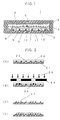
- Fig. 1 is a sectional view of one example of the color liquid crystal display.
- the color liquid crystal display 1 includes a color filter 2 and an opposing substrate 3 formed with thin-film transistors (TFT) or transparent electrodes.
- TFT thin-film transistors
- the color filter 2 and the substrate 3 are disposed to face each other across a predetermined gap and bonded together by using a sealing medium 4 formed by mixing reinforcing fibers with an epoxy resin material or the like.
- a liquid crystal 5 is sealed in the space defined between the color filter 2 and the TFT substrate 3.
- a protectice film 11 is provided over the colored layer to protect it, and a transparent electrode film 12 for driving the liquid crystal is provided over the protective film 11. Further, an orientation layer 13 for orientating the liquid crystal is formed over the transparent electrode film 12.
- colored pixels provided on the color filter are formed as follows.
- a transparent substrate for example, a glass substrate, is coated with a transparent resin material obtained by adding a photosensitive material, e.g., a dichromate, a chromate, or a diazocompound, to a hydrophilic resin material, e.g., polyvinyl alcohol, polyvinyl pyrrolidone, gelatin, casein, or glue, thereby forming a transparent photosensitive resin layer.
- a photomask having an opening pattern with a predetermined configuration is placed over the transparent resin layer, and exposure and development are carried out to form a first resin layer, which is then dyed with a desired dye to form first transparent colored pixels.
- a transparent hydrophobic resin film for preventing dyeing is formed over the first transparent colored pixels in order to prevent migration of the dye.
- second transparent colored pixels are formed in the same way as in the case of the first transparent colored pixels.
- the above-described method requires formation of a transparent resin film for preventing dyeing for each color in order to provide transparent colored pixels of a plurality of colors and hence suffers from the disadvantage that the production process is extremely complicated.
- thermosetting resin material which endures the heat treatment in the manufacturing process
- the protective film is formed over the whole surface of the color filter and it is difficult to limit the area where the protective film is formed to a predetermined region.
- the protective film is formed over the whole surface of the color filter, the color filter and the opposing substrate are bonded by a sealing medium with the protective film interposed therebetween, so that no adequate bond strength can be obtained.
- the color filter is judged to be defective in display quality on inspection after the color filter and the opposing substrate have been bonded together and the sealing medium and the tab are successively separated in order to reuse the color filter, if the colored layer has a protective layer on the outer peripheral portion thereof, the transparent electrode film formed on the color filter is undesirably separated together with the sealing medium or the tab, resulting in a failure to reuse the color filter.
- a photo-setting resin material which enables a region where it is set to be readily limited by using a photomask, in order to limit the area where the protective film is formed to a specific region.
- a photosensitive polyimide resin material which has heretofore been used as a photo-setting resin material is highly hygroscopic, inferior in the resistance to corrosion from an alkaline solution used in the formation of electrodes or other process and costly and hence undesirable for practical use.
- a photosensitive acrylic resin material which has also heretofore been used is inferior in the resistance to heat and also involves the problem that cracks or wrinkles may grow on the color filter when a relatively thick transparent electrically conductive film is formed on the protective film with a view to lowering the electrical resistance.
- the transparent electrode film becomes uneven, so that the gap between the color filter and the opposing substrate varies locally, resulting in differences in the optical rotatory power of the liquid crystal. Thus, unevenness of display results.
- a photo-setting resin material is set by irradiation with light, e.g., ultraviolet light, by using a photomask, it is possible to limit the area where the protective film is formed. In such a case, however, since the protective film is formed in a pattern faithful to the pattern of the photomask, a step corresponding to the thickness of the protective film is produced at the peripheral edge portion of the protective film set. If a transparent electrode film for driving the liquid crystal is formed over such a protective film, it extends as far as the peripheral portion of the substrate beyond the area where the protective film is formed, so that the transparent electrode film is not so thick at the step portion as it is at the even portion. Thus, a problem in terms of strength arises. In particular, when the transparent electrode film is etched in patterns corresponding to a large number of pixels, side etching progresses particularly at the step portion, so that there is a possibility of disconnection of the transparent electrode film.
- light e.g., ultraviolet light
- EP 0326112 discloses an electrode plate for a display device having a protective material of elements constituting the electrode plate which is to be patterned and comprises a novolak type epoxy resin into which a photosensitive group and a group to make the resin alkaline liquid-soluble are introduced; and a method for the preparation of the electrode plate for the display device which comprises the step of patterning the novolak type epoxy resin by photolithography, and then polymerizing the patterned resin in order to form a protective material of elements constituting the electrode plate.
- the photopolymerizable resin composition contains an epoxy resin.
- the photopolymerizable acrylate oligomer comprises an epoxy acrylate in which a part of the acrylate groups are epoxy groups.
- the epoxy groups are obtained by allowing a part of the epoxy groups of a precursor of said epoxy acrylate to remain.
- the photopolymerizable resin composition is coated on a silane coupling agent film, which is coated on said transparent substrate.
- the photopolymerizable resin composition is coated with a silane coupling agent added thereto.
- the coloured pixels are formed from a transparent resin material having a pigment dispersed therein.
- the photopolymerizable resin composition contains an acid anhydride, and the uncured portion is dissolvingly removed with an alkaline aqueous solution, thereby forming a protective film only in a predetermined region of said colour filter.
- the photopolymerizable resin composition is coated on said transparent substrate after a silane coupling agent has been coated thereon.
- the photopolymerizable resin composition is coated with a silane coupling agent added thereto.
- the color filter according to the present invention comprises transparent colored pixels in which the light transmittance in the light absorbing region on the spectral characteristic curve in the visible region is not more than 20%, while the light transmittance in the light transmitting region is not less than 50%, the transparent colored pixels being provided on a substrate in patterns of a plurality of colors by using a transparent resin material having a pigment dispersed therein which has spectral characteristics to transmit light in a specific region in the visible region, the pigment further having such a particle diameter distribution that particles having a particle diameter of 1 ⁇ m or more comprise not more than 10% of all the pigment particles by weight and particles having a particle diameter in the range of from 0.01 ⁇ m to 0.3 ⁇ m comprise not less than 60% of all the pigment particles by weight.
- the pigment dispersed in the transparent resin material preferably has such a particle diameter distribution that particles having a particle diameter of 1 ⁇ m or more comprise not more than 5% of all the pigment particles by weight.
- the protective film formed over the colored layer a photosensitive acrylic resin material is obtained by adding a multifunctional photopolymerizable acrylate monomer having a plurality of functional groups in one molecule to a photopolymerizable acrylate oligomer.
- the photosensitive resin material is obtained by adding a multifunctional photopolymerizable acrylate oligomer to a mixture of a photopolymerizable acrylate oligomer and an epoxy resin.
- the photosensitive resin material is obtained by adding a multifunctional photopolymerizable acrylate oligomer to a photopolymerizable acrylate oligomer comprising an epoxy acrylate in which a part of the acrylate groups are epoxy groups.
- the protective film is formed by exposing the above-described resin composition coated on the colored layer through a photomask in such a manner that the distance between the photomask and the substrate is greater than the distance therebetween that is proper for exposure, thereby reducing the quantity of light at the peripheral portion of the exposed region so that the step of the protective film becomes gentle.
- a silane coupling agent is coated on a transparent substrate before the formation of the protective film, or a silane coupling agent is mixed with the above-described resin composition, thereby increasing the strength of the transparent substrate and the protective film at the peripheral portion of the latter.
- Fig. 1 shows a sectional view of a color liquid crystal display.
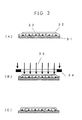
- Fig. 2 shows a process for producing a color filter.
- Fig. 3 shows a process for forming a protective film over a colored layer.
- Fig. 4 is a sectional view showing unevenness of a protective film.
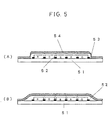
- Fig. 5 is a sectional view showing the change in the thickness of the peripheral edge portion of a protective film.
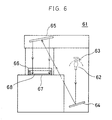
- Fig. 6 schematically shows exposure by a proximity aligner.
- Fig. 7 shows the conditions of exposure in a case where the distance between a photomask and a substrate is greater than the correct one.
- Fig. 8 is a graph showing the relationship between the distance for exposure by a proximity aligner and the magnitude of the angle of inclination of the peripheral edge portion of the resulting protective film.
- the color filter according to the present invention comprises transparent colored pixels in which the light transmittance in the light absorbing region on the spectral characteristic curve in the visible region is not more than 20%, while the light transmittance in the light transmitting region is not less than 50%, the transparent colored pixels being provided on a substrate in patterns of a plurality of colors by using a transparent resin material having a pigment dispersed therein which has spectral characteristics to transmit light in a specific region in the visible region, the pigment further having such a particle diameter distribution that particles having a particle diameter of 1 ⁇ m or more comprise not more than 10% of all the pigment particles by weight and particles having a particle diameter in the range of from 0.01 ⁇ m to 0.3 ⁇ m comprise not less than 60% of all the pigment particles by weight.
- the pigment dispersed in the transparent resin material preferably has such a particle diameter distribution that the particles having a particle diameter of 1 ⁇ m or more comprise not more than 5% of all the pigment particles by weight.
- the protective film formed over the colored layer a photosensitive acrylic resin material is obtained by adding a multifunctional photopolymerizable acrylate monomer having a plurality of functional groups in one molecule to a photopolymerizable acrylate oligomer.
- the photosensitive resin material is obtained by adding a multifunctional photopolymerizable acrylate oligomer to a mixture of a photopolymerizable acrylate oligomer and an epoxy resin.
- the photosensitive resin material is obtained by adding a multifunctional photopolymerizable acrylate oligomer to a photopolymerizable acrylate oligomer comprising an epoxy acrylate in which a part of the acrylate groups are epoxy groups.
- the protective film is formed by exposing the above-described resin composition coated on the colored layer through a photomask in such a manner that the distance between the photomask and the substrate is greater than the distance therebetween that is proper for exposure, thereby reducing the quantity of light at the peripheral portion of the exposed region so that the step of the protective film becomes gentle.
- Pigments which are generally employed for colored pixels have a particle diameter which is considerably larger than that of the pigment employed in the present invention and are therefore unsatisfactory in terms of transparency. For this reason, the conventional pigments are not used for purposes in which transmitted light is utilized. Even if such a conventional pigment is used for a color filter or the like, no product that has an adequate sensitivity can be obtained because of the low transmittance. If such a color filter is used for a color liquid crystal display, the brightness of the image obtained is not satisfactory. In addition, the scattering of light by the pigment particles is large, so that the polarization is disordered. Accordingly, in a liquid crystal display that effects display by utilization of polarization, image display characteristics such as contrast ratio deteriorate.
- the present invention makes use of the characteristics that the lowering of the light transmittance due to the scattering of light is reduced and the transparency of the resulting colored pixels increases to a level adequate for practical use by setting the particle diameter of a pigment dispersed in a transparent resin material so as to be not larger than the wavelength of incident light and also setting the particle diameter distribution of the pigment within a specific range.
- Examples of the above-described transparent resin material usable in the present invention are photosensitive resin materials having a photosensitive group, and transparent resin materials endowed with photosensitivity by a photo-crosslinking agent.
- photosensitive resin materials having a photosensitive group
- transparent resin materials endowed with photosensitivity by a photo-crosslinking agent are preferable.
- water-, oil- or alcohol-soluble photosensitive resin materials are preferable. More specifically, compounds mentioned below are usable.
- Polyvinyl alcohol derivative resins e.g., polyvinyl alcohol resin, and polyvinyl alcohol/stilbazolium resin.
- Photo-crosslinkable photosensitive resins e.g., cinnamic acid compound, photodecomposition crosslinking photosensitive resins, e.g., bisazide compound, photodecomposition polarity change type photosensitive resins, e.g., o-quinonediazide compound, etc.
- Binder resins (1) Binder resins:
- Acrylic acid methacrylic acid, 2-hydroxyethyl acrylate, 2-hydroxypropyl acrylate, 2-hydroxypropyl methacrylate, vinyl acetate, N-vinyl pyrrolidone, acrylamide, methacrylamide, N-hydroxymethyl acrylamide, N-(1,1-dimethyl-3-oxobutyl) acrylamide, polyethylene glycol diacrylate, polyethylene glycol dimethacrylate, methylene bisacrylamide, 1,3,5-triacryloyl-1,3,5-triazocyclohexane, pentaerythritol triacrylate, styrene, vinyl acetate, various kinds of acrylic ester, various kinds of methacrylic ester, acrylonitrile, etc.
- a pigment is dispersed in a transparent resin material such as those described above to obtain a transparent resin composition for forming transparent colored pixels.
- pigment is employed to mean coloring powders which are only slightly soluble in water or an organic solvent, including organic and inorganic pigments. It should be noted that a certain kind of dye is only slightly soluble in water or an organic solvent and this kind of dye may be employed as “pigment” in the present invention.
- organic pigments usable in the present invention include azo-lake pigments, insoluble azo-pigments, condensation azo-pigments, phthalocyanine pigments, quinacridone pigments, dioxazine pigments, isoindolenone pigments, anthraquinone pigments, perinone pigments, thioindigo pigments, perylene pigments, and mixtures of these pigments.
- inorganic pigments usable in the present invention include Milori blue, cobalt violet, manganese violet, ultramarine blue, Prussian blue, cobalt blue, cerulean blue, viridian, emerald green, cobalt green, and mixtures of these pigments.
- the pigment dispersed in the transparent resin material have such a particle diameter distribution that particles having a particle diameter of 1 ⁇ m or more comprise not more than 10%, preferably not more than 5%, more preferably not more than 2% of all the pigment particles by weight. If pigment particles having a particle diameter of 1 ⁇ m or more are dispersed in the photosensitive resin material in excess of 10% of all the pigment particles, the light transmittance lowers undesirably due to the scattering of light and the like. On the other hand, the pigment that is employed in the present invention needs to have such a particle diameter distribution that particles having a particle diameter in the range of from 0.01 ⁇ m to 0.3 ⁇ m comprise not less than 60% of all the pigment particles by weight. By satisfying both the above-described conditions for the particle diameter distribution, it is possible to suppress effectively the lowering in the light transmittance due to the scattering of light and hence possible to obtain excellent spectral characteristics suitable for the color filter.
- a pigment having such a particle diameter distribution and a transparent photosensitive resin material are mixed together in a solid content ratio of 1/10 to 2/1, preferably 1/5 to 1/2, thereby obtaining a photosensitive resin composition for forming transparent colored pixels.
- a proper combination of a pigment and a transparent resin material is selected by taking into consideration the spectral characteristics of the pigment and those of the transparent resin material.
- the pigment that has been considerably finely powdered and a solution of a transparent resin selected from those described above are mixed together, and the resulting mixture is ground in a pigment dispersing mill, e.g., a triple roll mill, a ball mill, or a sand mill.
- a pigment dispersing mill e.g., a triple roll mill, a ball mill, or a sand mill.
- the dispersion is centrifuged or filtered by using a glass filter, a membrane filter or the like to remove relatively large pigment particles having a particle diameter of 1 ⁇ m or more, thereby obtaining a pigment-containing transparent resin composition.
- the pigment is mixed with a solution of a binder resin which is compatible with the transparent resin, and after the pigment has been thoroughly dispersed in the same way as the above, the dispersion is centrifuged or filtered by using a glass filter, a membrane filter or the like to remove relatively large pigment particles having a particle diameter of 1 ⁇ m or more, thereby forming a coloring agent, which is then mixed with the above-described transparent resin, thus forming a pigment-containing transparent resin composition.
- a nonionic surface active agent as a dispersant for improving the dispersibility of the pigment when it is dispersed into the transparent resin. It is also preferable that the viscosity of the transparent resin composition or the coloring agent, in which the pigment is dispersed, should be adjusted to 500 cps (temperature: 25°C) or less when pigment particles having a relatively large particle diameter are removed from the composition or the coloring agent.
- a pigment-containing photosensitive resin composition prepared as described above is coated over the substrate 21 by a coater, e.g., a spin coater, a roll coater, a dip coater, a wheel coater, or a bar coater, so that the thickness of the dry film is on the order of 0.1 ⁇ m to 10 ⁇ m, preferably 0.5 ⁇ m to 3 ⁇ m, thereby forming a resin coating layer 23 for colored pixels.
- a coater e.g., a spin coater, a roll coater, a dip coater, a wheel coater, or a bar coater, so that the thickness of the dry film is on the order of 0.1 ⁇ m to 10 ⁇ m, preferably 0.5 ⁇ m to 3 ⁇ m, thereby forming a resin coating layer 23 for colored pixels.
- the coating layer 23 is irradiated with ionizing radiations 25, e.g., ultraviolet rays, by using a light source, e.g., a xenon lamp, a metal halide lamp, or an extra-high pressure mercury lamp, through a photomask 24 having predetermined opening patterns, thereby effecting pattern exposure, as shown in Fig. 2(B).
- a light source e.g., a xenon lamp, a metal halide lamp, or an extra-high pressure mercury lamp
- a photomask 24 having predetermined opening patterns, thereby effecting pattern exposure, as shown in Fig. 2(B).
- exposed portions 26 corresponding to the patterns are formed on the coating layer 23.
- insolubilized portions are formed, whereas, in the case of a positive photosensitive resin, solubilized portions are formed.
- first colored pixels 27 are formed.
- transparent colored pixels of a plurality of colors can be provided on the substrate without forming a transparent resin film for preventing dyeing, as shown in Fig. 2(D).
- a coating film of a transparent photosensitive resin composition (the light transmittance in the light absorbing region after the formation of the coating film of this photosensitive resin is not more than 20%, and the light transmittance in the light transmitting region is not less than 50%), in which is dispersed a pigment of a first hue selected from among red, green and blue, is formed on a transparent substrate according to the above-described process.
- the coating film of the photosensitive resin composition is exposed through photomask patterns, and the coating film exposed in this way is developed to thereby form first patterned transparent colored pixels on the transparent substrate.
- a second hue and, if necessary, for a third hue a process similar to that for the first patterned transparent colored pixels, described above, is repeated to form second and third patterned transparent colored pixels, thereby obtaining a color filter.
- the light transmittance in the absorbing region is preferably not more than 20%, more preferably not more than 10%, and at the same time, the light transmittance in the transmitting region is preferably not less than 50%, more preferably not less than 60%, although the absorbing and transmitting regions change in accordance with the kind of pigment employed.
- the colored pixels of the color filter can be regarded as "transparent".
- a transparent glass, a transparent resin film, etc. may be employed as a transparent substrate.
- Photopolymerizable acrylate oligomers having a molecular weight of the order of 1,000 to 2,000 are preferably used for the protective film of the color filter according to the present invention.
- examples of such oligomers are polyester acrylates, epoxy acrylates, e.g., phenolic novolak epoxy acrylate, and o-cresol novolak epoxy acrylate, polyurethane acrylates, polyether acrylates, oligomer acrylates, alkyd acrylates, polyol acrylates, melamine acrylates, and oligomers in which a part of the acrylate groups are epoxy groups.
- epoxy resins which can be mixed with a photopolymerizable resin composition are phenol novolak type epoxy resins represented by the structural formula 1 and cresol novolak type epoxy resins represented by the structural formula 2.
- the proportion of epoxy groups in the oligomer is preferably set 10 parts to 40 parts by weight of epoxy groups, to satisfy the conditions where the resin is set on irradiation with ultraviolet rays.
- An epoxy acrylate can be produced by a reaction of a glycidyl ether with acrylic acid in such a manner that the epoxy groups of the precursor are allowed to remain.
- a reaction of a glycidyl ether with acrylic acid in such a manner that the epoxy groups of the precursor are allowed to remain.
- One example of such oligomers is shown below.
- a photopolymerizable acrylate monomer or oligomer is given an alkali-reactive group, e.g., a carboxyl group, it becomes capable of being developed with an alkaline aqueous solution, so that the handling of the developing solution and the disposal of the waste liquor are facilitated in comparison with the development using an organic solvent.
- an alkali-reactive group e.g., a carboxyl group
- the use of such a photopolymerizable acrylate monomer or oligomer is preferable from the viewpoint of economy and safety.
- an initiator e.g., benzophenone, Irgacure 184, Irgacure 907, Irgacure 651 (trade names; manufactured by Ciba-Geigy Ltd.), or Darocure (trade name; manufactured by Merck & Co., Inc.), to the photopolymerizable resin material in a solid content ratio of about 1 to 3%.
- an initiator e.g., benzophenone, Irgacure 184, Irgacure 907, Irgacure 651 (trade names; manufactured by Ciba-Geigy Ltd.), or Darocure (trade name; manufactured by Merck & Co., Inc.
- a photocationic catalyst such as an aryl diazonium salt is added as an epoxy curing agent.
- Epoxy curing agents comprising amines are not preferable because these agents cause the resin to yellow.
- a silane coupling agent is coated on a transparent substrate before the coating of the resin composition or it is added to the resin composition, the bond strength can be increased.
- a large variety of commercially available silane coupling agents can be used, but it is particularly preferable to use ⁇ -(2-aminoethyl)-aminopropyl trimethoxy silane, ⁇ -aminopropyl triethoxy silane, ⁇ -glycidoxypropyltrimethoxy silane, etc.
- composition Example 1 Phenol novolak epoxy acrylate ...60% Trimethylolpropane triacrylate ...17% Dipentaerythritol hexaacrylate ...20% Irgacure 184 ...
- Example 2 o-cresol novolak epoxy acrylate 60% Dipentaerythritol hexaacrylate 38% Irgacure 184 2% Composition Example 3: Polyurethane acrylate 50% Dipentaerythritol hexaacrylate 48% Irgacure 651 2% Composition Example 4: Melamine acrylate 70% Trimethylolpropane triacrylate 27% Irgacure 184 3% Composition
- Example 5 Phenol novolak epoxy acrylate 40% Phenol novolak type epoxy resin 18% Trimethylolpropane triacrylate 17% Dipentaerythritol hexaacrylate 20% Irgacure 184 3% UVE1014 (manufactured by GE) 2% Composition Example 6: o-cresol novolak epoxy acrylate 40% Cresol novolak type epoxy resin 18% Dipentaerythritol hexaacrylate 38% Irgacure
- a photopolymerizable resin composition prepared as described above is first coated by a coater, e.g., a spin coater, a roll coater, a dip coater, a wheel coater, or a bar coater, so that the thickness of the dry film is on the order of 0.1 ⁇ m to 10 ⁇ m, preferably 0.5 ⁇ m to 3 ⁇ m, thereby forming a photopolymerizable resin composition layer 33.
- a coater e.g., a spin coater, a roll coater, a dip coater, a wheel coater, or a bar coater
- the photopolymerizable resin composition layer 33 is irradiated with ionizing radiations 35, e.g., ultraviolet rays, by using a light source, e.g., a xenon lamp, a metal halide lamp, or an extra-high pressure mercury lamp, through a photomask 34 having a predetermined opening pattern, thereby effecting pattern exposure, as shown in Fig. 3(B).
- ionizing radiations 35 e.g., ultraviolet rays
- a light source e.g., a xenon lamp, a metal halide lamp, or an extra-high pressure mercury lamp
- a photomask 34 having a predetermined opening pattern, thereby effecting pattern exposure, as shown in Fig. 3(B).
- irradiated portions are set.
- the non-irradiated portions are selectively removed by spray development or dip development with water or a developing solution comprising, for example, an organic solvent, as shown in Fig. 2(C).
- Fig. 4(A) is a sectional view of a color filter formed with a colored layer for explanation of unevenness of a protective film.
- Colored pixels R, G and B of a colored layer 41 are defined with a black matrix 42.
- the protective film according to the present invention even if there are large irregularities under the protective film, no large irregularities are produced in the surface thereof, so that the protective film is extremely excellent in evenness, as shown in Fig. 4(C). As a result, a transparent electrode film formed over the protective film is also excellent in evenness.
- a protective film only in a predetermined region by exposing a photopolymerizable resin composition coating layer coated over a colored layer through a photomask to thereby set it.
- a step is formed at the peripheral edge portion of a protective film 52 formed over a transparent substrate 51, so that a transparent electrode film 54 formed on the step portion 53 is smaller in thickness than that on the even portion.
- a proximity aligner 61 has a light source 62 that emits ultraviolet light, for example, an extra-high pressure mercury lamp. Light from the light source 62 is formed into parallel rays by a parabolic mirror 63. Thereafter, the light path is changed by mirrors 64 and 65, and the light is applied to a photopolymerizable resin composition coating film formed on a substrate 68 placed on an exposure stage 67 through a photomask 66, thereby exposing the coating film.
- a glass substrate 7059; manufactured by Corning Inc.
- a thickness of 1.1 mm was employed as a substrate after being washed thoroughly, and colored pixels were formed on the substrate.
- the formation of colored pixels was carried out as follows:
- a polyvinyl alcohol derivative in which a repeating unit represented by the following formula was introduced in an amount of 1.2 mol% with respect to the vinyl alcohol constitutional unit and which had an average polymerization degree of 1,700 and a saponification degree of about 88% was prepared:
- the average particle diameter was 0.17 ⁇ m, and particles having a particle diameter of 0.01 ⁇ m to 0.3 ⁇ m comprised 75% of all the particles.
- the red photosensitive resin composition was coated on the transparent glass substrate to a film thickness of 1.2 ⁇ m by using a spin coater and then dried for 30 minutes at 70°C. Thereafter, the coating film was subjected to contact pattern exposure through a mosaic photomask. Then, the pattern-exposed photosensitive resin composition was spray-developed with a developing solution comprising water and isopropyl alcohol in a weight ratio of 10:3, thereby selectively removing the non-exposed portions. Thereafter, heating was carried out for 30 minutes at 150°C to form transparent red pixels.
- the green photosensitive resin composition was spin-coated on the whole surface of the glass substrate provided with the above-described red transparent pixels to a film thickness of 1.2 ⁇ m and then dried for 30 minutes at 70°C. Thereafter, the coating film was subjected to pattern exposure through a mask having a predetermined configuration, thereby selectively removing the non-exposed portions, and then drying was carried out.
- transparent green pixels were formed in such a manner as to be adjacent to the above-described red transparent pixels.
- the average particle diameter was 0.18 ⁇ m, and particles having a particle diameter of 0.01 ⁇ m to 0.3 ⁇ m comprised 75% of all the particles.
- the blue photosensitive resin composition was spin-coated on the transparent glass substrate provided with the above-described red and green transparent pixels to a film thickness of 1.2 ⁇ m and then dried for 30 minutes at 70°C. Thereafter, the coating film was subjected to pattern exposure through a mask having a predetermined configuration, thereby selectively removing the non-exposed portions, and then drying was carried out.
- transparent blue pixels were formed in such a manner as to be adjacent to the green transparent pixels.
- o-cresol novolak epoxy acrylate (molecular weight: 1,500 to 2,000) in which epoxy groups comprised about 30% of the acrylate groups and 50 parts by weight of dipentaerythritol hexaacrylate (DPHA; manufactured by Nippon Kayaku Co., Ltd.) were mixed together as a photopolymerizable acrylate oligomer and a multifunctional polymerizable monomer, and further 2 parts by weight of Irgacure (manufactured by Ciba & Geigy Ltd.) was mixed as a photopolymerization initiator with the resulting mixture to prepare a blend, which was then dissolved in 200 parts by weight of ethyl Cellosolve acetate.
- DPHA dipentaerythritol hexaacrylate
- the protective film thus formed was coated with an ITO film to a thickness of 0.4 ⁇ m by magnetron sputtering.
- the transparent electrode layer had excellent evenness.
- Example 2 Ten parts by weight of the polyvinyl alcohol derivative shown in Example 1 were dissolved in 100 parts by weight of water, and 5 parts by weight of Lyonol Green 2Y-301 (green pigment; manufactured by Toyo Ink Seizo K.K.) were added to and mixed with the resulting solution. The resulting mixture was ground and dispersed in a triple roll mill, and thereafter it was centrifuged at 6,000 rpm and then filtered with a glass filter having a pore diameter of 1 ⁇ m. Next, the green photosensitive resin composition thus obtained was spin-coated over an 1 mm thick of transparent glass substrate to a film thickness of 1.5 ⁇ m and then dried for 30 minutes for 70°C. Thereafter, contact pattern exposure was carried out through a mask.
- Lyonol Green 2Y-301 green pigment; manufactured by Toyo Ink Seizo K.K.
- the pattern-exposed photosensitive resin composition was spray-developed with a developing solution comprising water and isopropyl alcohol in a weight ratio of 10:3, thereby selectively removing the unexposed portions. Thereafter, heating was carried out for 30 minutes at 150°C, thus forming green pixels.
- the transmittance of the green pixels in the region of 600 nm to 700 nm was 1% or less, but the transmittance in the region of 500 nm to 560 nm was 80% or more.
- the photo-sensitivity of the above-described composition was 4 times that of the conventional gelatin/Cr colored pixels.
- the edge configuration was substantially the same as that of the gelatin/Cr colored pixels.
- the particle diameter distribution of the pigment in the green transparent resin composition was analyzed by using a Coulter N4 submicron particle analyzer. As a result, the average particle diameter was 0.08 ⁇ m, and particles having a particle diameter of 0.01 ⁇ m to 0.3 ⁇ m comprised 97% of all the particles.
- Colored pixels were produced in the same way as in Example 1, and four different protective films were formed: a film formed from a resin material having the same composition as that in Example 1 except that o-cresol novolak epoxy acrylate was used as an acrylate oligomer; a film formed from the resin material used in Example 1; a film formed by coating a 0.1% to 0.2% solution of ⁇ -(2-aminoethyl)-aminopropyl trimethoxy silane (SH6020; manufactured by Toray Silicone K.K.), as a silane coupling agent, on a glass substrate, drying the coating film, and then coating the resin material used in Example 1; and a film formed from the resin material used in Example 1 which had a silane coupling agent added thereto.
- ⁇ -(2-aminoethyl)-aminopropyl trimethoxy silane SH6020; manufactured by Toray Silicone K.K.
- the cross-cut adhesion test was carried out for each coating film after the completion of the process in which a film material was coated on a transparent substrate (7059; manufactured by Corning Inc.) to a thickness of 1.0 ⁇ m to 1.5 ⁇ m and dried, and the coating film was exposed for 10 seconds by using an extra-high pressure mercury lamp of 2.0 kW so as to be cured and then dipped in boiling water for 60 minutes together with the substrate.
- the protective film according to the present invention and the protective films treated with a silane coupling agent had excellent characteristics in terms of the bond strength and showed no change in the characteristics in terms of the transparency and the light transmission properties.
- Processing method Evaluation grades Conditions Epoxy acrylate alone 0 not less than 65% separated Epoxy group-containing epoxy acrylate 8 not more than 5% separated Epoxy group-containing epoxy acrylate, and treatment of substrate with coupling agent 10 No separation Epoxy group-containing epoxy acrylate having coupling agent added thereto 10 No separation
- Colored pixels were produced in the same way as in Example 1, and a protective film was formed as follows: 50 parts by weight of o-cresol novolak epoxy acrylate (molecular weight: 1,500 to 2,000), as a photopolymerizable acrylate oligomer, and 50 parts by weight of dipentaerythritol hexaacrylate (DPHA; manufactured by Nippon Kayaku Co., Ltd.), as a multifunctional polymerizable monomer, were mixed together, and 2 parts by weight of Irgacure (manufactured by Ciba & Geigy Ltd.) were mixed with the resulting mixture to form a blend, which was then dissolved in 200 parts by weight of ethyl Cellosolve acetate.
- DPHA dipentaerythritol hexaacrylate
- Irgacure manufactured by Ciba & Geigy Ltd.
- the protective film thus formed was coated with an ITO film to a thickness of 0.4 ⁇ m by magnetron sputtering.
- the protective film according to the present invention and the protective film treated with a silane coupling agent had excellent characteristics in terms of the bond strength and showed no change in the characteristics in terms of the transparency and the light transmission properties.
- the resulting blend was dissolved in 200 parts by weight of ethyl Cellosolve acetate. Then, 10 g of the resulting solution was coated on the above-described colored layer to a thickness of 2.0 ⁇ m by using a spin coater. With a photomask disposed at a distance of 100 ⁇ m from the coating film, ultraviolet rays were applied only to the surface of the colored layer for 10 seconds from an extra-high mercury lamp of 2.0 kW by using a proximity aligner. Subsequently, the coating film was dipped for 1 minute in a developing solution comprising 1,1,2,2-tetrachloroethane at a temperature of 25°C, thereby removing only the uncured portions of the coating film.
- the exposure was effected in such a manner that ultraviolet rays were applied only to the coating film on the colored layer for 10 seconds by using an extra-high pressure mercury lamp of 2.0 kW. Subsequently, the coating film was dipped for 1 minute in a developing solution comprising 1,1,2,2-tetrachloroethane at a temperature of 25°C, thereby removing only the uncured portions of the coating film.
- the section of the peripheral edge portion of the 'resulting protective film had a gentle slope at about 10 degrees to the substrate.
- the protective film thus formed was coated with an ITO film to a thickness of 0.4 ⁇ m by magnetron sputtering.
- a protective film was formed in the same way as in Example 7 except that the distance between the photomask and the coating film was 300 ⁇ m.
- the section of the peripheral edge portion of the resulting protective film had a gentle slope at about 15 degrees to the substrate.
- the protective film thus formed was coated with an ITO film to a thickness of 0.4 ⁇ m by magnetron sputtering.
- the ITO film was etched with an etching solution comprising ferric chloride and hydrochloric acid, thereby obtaining a color filter formed with the ITO patterns having a line width of 100 ⁇ m and a spacing of 20 ⁇ m.
- the transparent electrode layer had a sufficiently high bond strength at the peripheral edge portion, so that no disconnection occurred.
- a protective film was formed in the same way as in Example 1 except that no multifunctional photopolymerizable monomer was added.
- the hardness of the resulting protective film was equivalent to HB to 2H in terms of the pencil hardness.
- the protective film was coated with an ITO film in the same way as in the example. Wrinkles were developed in the ITO film having a thickness of 0.15 ⁇ m. Irregularities were 0.1 ⁇ m to 0.5 ⁇ m, and the heat resistance was 220°C.
- a protective film was formed in the same way as in Example 1 except that a thermosetting acrylate (trade name JSS181, manufactured by Japan Synthetic Rubber Co., Ltd.) was employed as a protective film material and the curing of the protective film was effected by heating for 1 hour at 180°C.
- a thermosetting acrylate trade name JSS181, manufactured by Japan Synthetic Rubber Co., Ltd.
- the hardness of the resulting protective film was equivalent to HB to 4H in terms of the pencil hardness.
- the protective film was coated with an ITO film in the same way as in the example. Wrinkles were developed in the ITO film having a thickness of 0.1 ⁇ m. Irregularities were 0.2 ⁇ m to 0.7 ⁇ m, and the heat resistance was 200°C.
- a protective film was formed in the same way as in the example except that a thermosetting epoxy resin (trade name CZ-003, manufactured by Nissan Chemicals Industries Ltd.) was employed as a protective film material and the curing of the protective film was effected by heating for 1 hour at 180°C.
- a thermosetting epoxy resin trade name CZ-003, manufactured by Nissan Chemicals Industries Ltd.
- the protective film was coated with an ITO film in the same way as in the example. Wrinkles were developed in the ITO film having a thickness of 0.1 ⁇ m. Irregularities were 0.2 ⁇ m to 0.7 ⁇ m, and the heat resistance was not higher than 200°C.
- a protective film was formed in the same way as in the example except that a silicone resin (trade name TDA1H, manufactured by Shokubai Kasei K.K.) was employed as a protective film material and the curing of the protective film was effected by heating for 1 hour at 180°C.
- a silicone resin trade name TDA1H, manufactured by Shokubai Kasei K.K.
- the hardness of the resulting protective film was equivalent to 3H to 9H in terms of the pencil hardness, and the heat resistance was excellent, i.e., not lower than 250°C.
- the protective film was coated with an ITO film in the same way as in the example, there were cracks in the ITO film having a thickness of not less than 0.2 ⁇ m. Irregularities were 0.2 ⁇ m to 0.7 ⁇ m.
- a color filter was produced in the same way as in Example 7 except that the distance between the photomask and the coating film was 100 ⁇ m.
- the section of the peripheral edge portion of the resulting protective film had a slope at about 23 degrees to the substrate.
- an ITO film was formed over the protective film in the same way as in Example 1 and then etched to thereby obtain a color filter formed with the ITO patterns having a line width of 100 ⁇ m and a spacing of 20 ⁇ m.
- the transparent electrode layer had a low bond strength at the peripheral edge portion, so that disconnection occurred.
- a color filter was produced in the same way as in Example 7 except that the distance between the photomask and the coating film was 50 ⁇ m.
- the section of the peripheral edge portion of the resulting protective film had a slope at about 31 degrees to the substrate.
- an ITO film was formed over the protective film in the same way as in Example 1 and then etched to thereby obtain a color filter formed with the ITO patterns having a line width of 100 ⁇ m and a spacing of 20 ⁇ m.
- the transparent electrode layer had a low bond strength at the peripheral edge portion, so that disconnection occurred.
- the inclination angle can be reduced by setting the distance between the photomask and the photopolymerizable resin composition coating film to be greater than the correct distance.
Landscapes
- Physics & Mathematics (AREA)
- General Physics & Mathematics (AREA)
- Spectroscopy & Molecular Physics (AREA)
- Nonlinear Science (AREA)
- Optics & Photonics (AREA)
- Engineering & Computer Science (AREA)
- Manufacturing & Machinery (AREA)
- Mathematical Physics (AREA)
- Chemical & Material Sciences (AREA)
- Crystallography & Structural Chemistry (AREA)
- Optical Filters (AREA)
- Liquid Crystal (AREA)
Claims (11)
- Filtre coloré comprenant un substrat transparent (51), un arrangement de pixels colorés (R,V,B) formé sur ledit substrat et se terminant de manière éloignée d'un bord dudit substrat, et un film protecteur (52) formé par dessus ledit arrangement de pixels, caractérisé en ce que ledit film protecteur comprend une composition de résine photopolymérisable durcie qui contient au moins un oligomère d'acrylate photopolymérisable et un monomère d'acrylate photopolymérisable polyfonctionnel ayant au moins deux groupes fonctionnels dans une molécule, et une portion de bord périphérique (53) dudit film protecteur (52) est située dans une zone entre ledit arrangement de pixels colorés et ledit bord dudit substrat et a une surface dont la pente varie faiblement de sorte que l'angle maximal de l'inclinaison de ladite pente est compris entre 10° et 15°.
- Filtre coloré selon la revendication 1, dans lequel ladite composition de résine photopolymérisable contient une résine époxyde.
- Filtre coloré selon la revendication 1, dans lequel ledit oligomère d'acrylate photopolymérisable comprend un époxyacrylate dans lequel une partie des groupes acrylate sont des groupes époxy.
- Filtre coloré selon la revendication 3, dans lequel lesdits groupes époxy sont obtenus en laissant subsister une partie des groupes époxy d'un précurseur dudit époxyacrylate.
- Filtre coloré selon l'une quelconque des revendications 1 à 4, dans lequel ladite composition de résine photopolymérisable est appliquée sur un film d'agent de couplage silane, qui est appliqué sur ledit substrat transparent.
- Filtre coloré selon l'une quelconque des revendications 1 à 5, dans lequel ladite composition de résine photopolymérisable est appliquée avec un agent de couplage silane ajouté à celle-ci.
- Filtre coloré selon l'une quelconque des revendications 1 à 6, dans lequel lesdits pixels colorés sont formés à partir d'un matériau de résine transparent dans lequel a été dispersé un pigment.
- Procédé de production d'un filtre coloré ayant un film protecteur formé par dessus un arrangement de pixels colorés (R,V,B) formé sur un substrat transparent (71) par durcissement d'une composition de résine photopolymérisable, comportant les étapes de : irradiation avec de la lumière d'une zone prédéterminée uniquement d'un film de revêtement de composition de résine photopolymérisable pour durcir ladite zone ; et élimination par dissolution de la portion non durcie de la composition de résine photopolymérisable en utilisant une solution qui est compatible avec la composition de résine photopolymérisable dans la zone non durcie, formant ainsi un film protecteur uniquement dans une zone prédéterminée, caractérisé en ce que ladite irradiation avec la lumière est effectuée à travers un photomasque (72) qui est placé à une distance qui est supérieure à la distance correcte entre le photomasque et le film de revêtement, ladite distance correcte étant la distance qui serait requise pour produire un bord nettement délimité dans l'image lumineuse tombant sur la résine photopolymérisable, dispersant ainsi de la lumière qui traverse la portion périphérique (73) de l'ouverture dans le photomasque de façon à modifier l'épaisseur de film de la portion de bord périphérique (74) du film protecteur de telle manière que ladite portion de bord périphérique a une surface en pente avec un angle maximal de pente compris entre 10° et 15°.
- Procédé de production d'un filtre coloré selon la revendication 8, dans lequel ladite composition de résine photopolymérisable contient un anhydride d'acide, et la portion non durcie est éliminée par dissolution avec une solution aqueuse alcaline, formant ainsi un film protecteur uniquement dans une zone prédéterminée dudit filtre coloré.
- Procédé de production d'un filtre coloré selon la revendication 8 ou 9 dans lequel on applique ladite composition de résine photopolymérisable sur ledit substrat transparent après avoir appliqué sur celui-ci un agent de couplage silane.
- Procédé de production d'un filtre coloré selon la revendication 8 ou 9 dans lequel ladite composition de résine photopolymérisable est appliquée avec un agent de couplage silane ajouté à celle-ci.
Applications Claiming Priority (13)
| Application Number | Priority Date | Filing Date | Title |
|---|---|---|---|
| JP1615/90 | 1990-06-20 | ||
| JP16159290A JP2933992B2 (ja) | 1990-06-20 | 1990-06-20 | カラーフィルター |
| JP16159390 | 1990-06-20 | ||
| JP16159090A JP2933991B2 (ja) | 1990-06-20 | 1990-06-20 | カラーフィルター |
| JP161592/90 | 1990-06-20 | ||
| JP1615/91 | 1990-06-20 | ||
| JP161591 | 1990-06-20 | ||
| JP161593/90 | 1990-06-20 | ||
| JP16159290 | 1990-06-20 | ||
| JP2161593A JPH0451204A (ja) | 1990-06-20 | 1990-06-20 | カラーフィルターおよびその製造方法 |
| JP161590 | 1990-06-20 | ||
| JP16159190A JP2839936B2 (ja) | 1990-01-12 | 1990-06-20 | カラーフィルター |
| PCT/JP1991/000827 WO1991020006A1 (fr) | 1990-06-20 | 1991-06-20 | Filtre couleur et procede de fabrication dudit filtre |
Publications (3)
| Publication Number | Publication Date |
|---|---|
| EP0571625A1 EP0571625A1 (fr) | 1993-12-01 |
| EP0571625A4 EP0571625A4 (en) | 1995-10-25 |
| EP0571625B1 true EP0571625B1 (fr) | 2001-06-06 |
Family
ID=27473736
Family Applications (1)
| Application Number | Title | Priority Date | Filing Date |
|---|---|---|---|
| EP91911357A Expired - Lifetime EP0571625B1 (fr) | 1990-06-20 | 1991-06-20 | Filtre couleur et procede de fabrication dudit filtre |
Country Status (5)
| Country | Link |
|---|---|
| US (1) | US5278009A (fr) |
| EP (1) | EP0571625B1 (fr) |
| KR (1) | KR100343080B1 (fr) |
| DE (1) | DE69132630T2 (fr) |
| WO (1) | WO1991020006A1 (fr) |
Families Citing this family (72)
| Publication number | Priority date | Publication date | Assignee | Title |
|---|---|---|---|---|
| JP2652072B2 (ja) * | 1990-02-26 | 1997-09-10 | キヤノン株式会社 | 遮光層の形成方法 |
| JP3350991B2 (ja) * | 1992-03-06 | 2002-11-25 | セイコーエプソン株式会社 | 電気光学装置用基板、及び電気光学装置 |
| GB9211283D0 (en) * | 1992-05-28 | 1992-07-15 | Philips Electronics Uk Ltd | Liquid crystal display devices |
| DE69333000T2 (de) * | 1992-06-01 | 2004-02-19 | Lg. Philips Lcd Co., Ltd. | Herstellungverfahren einer Flüssigkristallanzeige |
| KR100294194B1 (ko) * | 1993-02-05 | 2001-09-17 | 김순택 | 액정표시소자 |
| JP3345089B2 (ja) * | 1993-03-26 | 2002-11-18 | 株式会社半導体エネルギー研究所 | カラーフィルタ基板の作製方法 |
| US5650251A (en) * | 1993-07-07 | 1997-07-22 | Canon Kabushiki Kaisha | Process for producing color filter comprising an ultrasonic wave projected perpendicularly to the substrate |
| JP3332515B2 (ja) * | 1993-11-24 | 2002-10-07 | キヤノン株式会社 | カラーフィルタ、その製造方法及び液晶パネル |
| US6686104B1 (en) | 1993-11-24 | 2004-02-03 | Canon Kabushiki Kaisha | Color filter, method for manufacturing it, and liquid crystal panel |
| TW417034B (en) * | 1993-11-24 | 2001-01-01 | Canon Kk | Color filter, method for manufacturing it, and liquid crystal panel |
| JP2952143B2 (ja) * | 1993-12-21 | 1999-09-20 | キヤノン株式会社 | カラーフィルタの製造方法 |
| DE69523351T2 (de) * | 1994-01-28 | 2002-05-02 | Canon K.K., Tokio/Tokyo | Farbfilter, Verfahren zu seiner Herstellung, und Flüssigkristalltafel |
| JP3376169B2 (ja) * | 1994-06-17 | 2003-02-10 | キヤノン株式会社 | カラーフィルタの製造方法及びその方法により製造されたカラーフィルタ |
| JP3014923B2 (ja) * | 1994-06-24 | 2000-02-28 | キヤノン株式会社 | カラーフィルターおよびその製造方法ならびにそのフィルターを用いた液晶表示装置 |
| JPH08146214A (ja) * | 1994-09-19 | 1996-06-07 | Canon Inc | カラーフィルタの製造方法、カラーフィルタ、液晶パネル、および同液晶パネルを備えた情報処理装置 |
| JP3372724B2 (ja) * | 1994-09-21 | 2003-02-04 | キヤノン株式会社 | カラーフィルタおよびその製造方法、液晶パネルならびに情報処理装置 |
| JPH08227011A (ja) * | 1994-09-30 | 1996-09-03 | Canon Inc | カラーフィルタ、その製造方法、液晶パネル、及びこれを備えた情報処理装置 |
| EP0723167A3 (fr) * | 1995-01-17 | 1997-04-02 | Mitsubishi Chem Corp | Composition photopolymérisable pour filtre chromatique |
| US5866481A (en) * | 1996-06-07 | 1999-02-02 | Taiwan Semiconductor Manufacturing Company Ltd. | Selective partial curing of spin-on-glass by ultraviolet radiation to protect integrated circuit dice near the wafer edge |
| US5989451A (en) * | 1997-02-07 | 1999-11-23 | Queen's University At Kingston | Compounds and methods for doping liquid crystal hosts |
| KR100477984B1 (ko) * | 1997-08-30 | 2005-12-30 | 삼성에스디아이 주식회사 | 포토레지스트용 감광성 고분자 및 이의 제조방법 |
| US6603510B1 (en) * | 1997-12-08 | 2003-08-05 | Intel Corporation | Formation of protective coatings for color filters |
| KR100263860B1 (ko) * | 1998-04-14 | 2000-08-16 | 김순택 | 적색 필터막 형성방법 |
| US7157302B2 (en) * | 1998-06-04 | 2007-01-02 | Micron Technology, Inc. | Imaging device and method of manufacture |
| US6057903A (en) * | 1998-08-18 | 2000-05-02 | International Business Machines Corporation | Liquid crystal display device employing a guard plane between a layer for measuring touch position and common electrode layer |
| US6211308B1 (en) | 1998-08-20 | 2001-04-03 | Henkel Corporation | Method for coating a textile |
| US6225389B1 (en) | 1998-08-20 | 2001-05-01 | Henkel Corp. | Screen coating composition and method for applying same |
| US6156816A (en) * | 1998-08-20 | 2000-12-05 | Henkel Corporation | Screen coating composition and method for applying same |
| JP2001181579A (ja) * | 1999-12-27 | 2001-07-03 | Clariant (Japan) Kk | コーティング組成物 |
| TW538271B (en) * | 2001-02-09 | 2003-06-21 | Hannstar Display Corp | Method for preventing ITO opening |
| JP2003288030A (ja) * | 2002-03-27 | 2003-10-10 | Seiko Epson Corp | 電気光学装置とその製造方法及びデバイス並びに電子機器 |
| KR100482953B1 (ko) * | 2003-04-15 | 2005-04-15 | 삼성전자주식회사 | 컬러필터 조성물 및 이를 이용한 컬러필터 제조 방법 및컬러필터 제조 장치 |
| EP1629054A1 (fr) * | 2003-06-03 | 2006-03-01 | Ciba SC Holding AG | Procede de preparation de concentres de pigments pour utilisation dans des revetements durcissables par rayonnement |
| TW200506452A (en) * | 2003-08-11 | 2005-02-16 | Hannstar Display Corp | Liquid crystal display (LCD) having an electro-optical light shutter |
| KR101055187B1 (ko) * | 2003-12-18 | 2011-08-08 | 엘지디스플레이 주식회사 | 컬러필터 어레이 기판의 제조방법 |
| KR100640531B1 (ko) * | 2004-08-20 | 2006-10-30 | 동부일렉트로닉스 주식회사 | 자기 정렬 이미지 센서 제조방법 |
| TWI307784B (en) * | 2004-10-08 | 2009-03-21 | Fujifilm Corp | Color filter, process for manufacturing color filter, and liquid crystal display device |
| KR100595601B1 (ko) * | 2004-12-14 | 2006-07-05 | 동부일렉트로닉스 주식회사 | 씨모스 이미지 센서 제조방법 |
| KR100734080B1 (ko) * | 2004-12-28 | 2007-07-02 | 건설화학공업주식회사 | 디스플레이용 광경화성 수지 조성물 |
| JP5066836B2 (ja) * | 2005-08-11 | 2012-11-07 | セイコーエプソン株式会社 | 電気光学装置及び電子機器 |
| JP2007101908A (ja) * | 2005-10-05 | 2007-04-19 | Fuji Xerox Co Ltd | 光変調素子 |
| JP2007147698A (ja) * | 2005-11-24 | 2007-06-14 | Sumitomo Chemical Co Ltd | 波長選択吸収性光学部材 |
| KR100725023B1 (ko) | 2006-10-16 | 2007-06-07 | 제일모직주식회사 | 카도계 수지를 함유한 수지 조성물 및 그에 의한 패턴의 제조방법, 이를 이용한 컬러필터 |
| KR100881860B1 (ko) * | 2007-01-17 | 2009-02-06 | 제일모직주식회사 | 컬러필터용 감광성 수지 조성물 및 이를 이용한 이미지센서컬러필터 |
| TWI418603B (zh) * | 2007-03-16 | 2013-12-11 | Mitsubishi Gas Chemical Co | 光穿透型電磁波屏蔽積層體及其製造方法、光穿透型電波吸收體,以及接著劑組成物 |
| KR100959187B1 (ko) * | 2007-10-18 | 2010-05-24 | 제일모직주식회사 | 컬러필터용 잉크 조성물, 이를 이용한 컬러필터의 제조방법, 및 이를 이용하여 제조된 컬러필터 |
| KR101023088B1 (ko) * | 2007-11-08 | 2011-03-24 | 제일모직주식회사 | 컬러필터용 잉크 조성물, 이를 이용한 컬러필터의제조방법, 및 이를 이용하여 제조된 컬러필터 |
| US20090155717A1 (en) * | 2007-12-18 | 2009-06-18 | Cheil Industries Inc. | Photosensitive Resin Composition with Good Stripper-Resistance for Color Filter and Color Filter Formed Using the Same |
| JP2010044273A (ja) * | 2008-08-14 | 2010-02-25 | Fujifilm Corp | カラーフィルタ及びその形成方法、並びに固体撮像素子 |
| CN101727003B (zh) * | 2008-10-24 | 2012-07-18 | 第一毛织株式会社 | 用于彩色滤光片的光敏树脂组合物以及使用其制备的彩色滤光片 |
| KR20110077881A (ko) * | 2009-12-30 | 2011-07-07 | 제일모직주식회사 | 투명성 및 난연성이 우수한 인계 아크릴계 공중합체 수지 및 그 조성물 |
| US9575230B2 (en) * | 2010-05-03 | 2017-02-21 | Basf Se | Color filter for low temperature applications |
| KR101293787B1 (ko) | 2010-07-28 | 2013-08-06 | 제일모직주식회사 | 난연성 및 내열성이 우수한 투명 열가소성 수지 조성물 |
| CN102436142B (zh) | 2010-09-29 | 2013-11-06 | 第一毛织株式会社 | 黑色光敏树脂组合物以及使用其的光阻层 |
| KR101367253B1 (ko) | 2010-10-13 | 2014-03-13 | 제일모직 주식회사 | 감광성 수지 조성물 및 이를 이용한 차광층 |
| KR101351614B1 (ko) | 2010-11-05 | 2014-02-17 | 제일모직주식회사 | 난연 내스크래치성 폴리카보네이트 수지 조성물 |
| KR101486560B1 (ko) | 2010-12-10 | 2015-01-27 | 제일모직 주식회사 | 감광성 수지 조성물 및 이를 이용한 차광층 |
| KR101374360B1 (ko) | 2010-12-14 | 2014-03-18 | 제일모직주식회사 | 난연 내스크래치성 폴리카보네이트 수지 조성물 |
| KR101453769B1 (ko) | 2010-12-24 | 2014-10-22 | 제일모직 주식회사 | 감광성 수지 조성물 및 이를 이용한 컬러 필터 |
| JP5816428B2 (ja) * | 2010-12-24 | 2015-11-18 | 富士フイルム株式会社 | 固体撮像素子のカラーフィルタ用感光性透明組成物、並びに、これを用いた固体撮像素子のカラーフィルタの製造方法、固体撮像素子のカラーフィルタ、及び、固体撮像素子 |
| KR20130002789A (ko) | 2011-06-29 | 2013-01-08 | 제일모직주식회사 | 컬러필터용 감광성 수지 조성물 및 이를 이용한 컬러필터 |
| KR101400185B1 (ko) | 2011-11-29 | 2014-06-19 | 제일모직 주식회사 | 컬러 필터용 감광성 수지 조성물 및 이를 이용하여 제조한 컬러 필터 |
| KR101344786B1 (ko) | 2011-12-02 | 2013-12-26 | 제일모직주식회사 | 컬러필터용 감광성 수지 조성물 및 이를 이용한 컬러필터 |
| KR20130072954A (ko) | 2011-12-22 | 2013-07-02 | 제일모직주식회사 | 컬러필터용 감광성 수지 조성물 및 이를 이용한 컬러필터 |
| KR101674990B1 (ko) | 2012-12-07 | 2016-11-10 | 제일모직 주식회사 | 컬러필터용 감광성 수지 조성물 및 이를 이용한 컬러필터 |
| KR20140076320A (ko) | 2012-12-12 | 2014-06-20 | 제일모직주식회사 | 감광성 수지 조성물 및 이를 이용한 블랙 스페이서 |
| KR101664121B1 (ko) | 2012-12-13 | 2016-10-10 | 제일모직 주식회사 | 컬러필터용 감광성 수지 조성물 및 이를 이용한 컬러필터 |
| KR20140083620A (ko) | 2012-12-26 | 2014-07-04 | 제일모직주식회사 | 차광층용 감광성 수지 조성물 및 이를 이용한 차광층 |
| KR101609634B1 (ko) | 2012-12-26 | 2016-04-06 | 제일모직 주식회사 | 감광성 수지 조성물 및 이를 이용한 차광층 |
| KR101656000B1 (ko) | 2014-02-24 | 2016-09-08 | 제일모직 주식회사 | 감광성 수지 조성물, 이를 이용한 차광층 및 컬러필터 |
| KR102154680B1 (ko) | 2018-07-02 | 2020-09-10 | 삼성에스디아이 주식회사 | 양자점 함유 경화성 조성물, 이를 이용한 수지막 및 디스플레이 장치 |
| CN110120470B (zh) * | 2019-05-14 | 2021-04-27 | 京东方科技集团股份有限公司 | 一种平坦膜的制备方法及阵列基板 |
Citations (1)
| Publication number | Priority date | Publication date | Assignee | Title |
|---|---|---|---|---|
| JPS61113611A (ja) * | 1984-11-07 | 1986-05-31 | Matsushita Electric Ind Co Ltd | 樹脂組成物 |
Family Cites Families (13)
| Publication number | Priority date | Publication date | Assignee | Title |
|---|---|---|---|---|
| JPS513621A (en) * | 1974-06-28 | 1976-01-13 | Shigeru Usami | Reriifusakuseihoho |
| JPS5344204A (en) * | 1976-10-04 | 1978-04-20 | Kansai Paint Co Ltd | Method of producing photosensitive resin |
| JPS60129739A (ja) * | 1983-12-16 | 1985-07-11 | Agency Of Ind Science & Technol | 透明着色画像形成用感光性樹脂組成物 |
| JPH0833545B2 (ja) * | 1985-07-16 | 1996-03-29 | 三井東圧化学株式会社 | 液晶封止用セルの製造方法 |
| JPS63289532A (ja) * | 1987-05-22 | 1988-11-28 | Seiko Epson Corp | カラ−フイルタ− |
| JPS642002A (en) * | 1987-06-24 | 1989-01-06 | Fujitsu Ltd | Formation of solid color image pick up element |
| WO1989001650A1 (fr) * | 1987-08-10 | 1989-02-23 | Idemitsu Petrochemical Company Limited | Element durable pour application de motifs |
| JP2587653B2 (ja) * | 1987-09-24 | 1997-03-05 | 富士写真フイルム株式会社 | カラーフィルターの製造方法 |
| EP0326112B1 (fr) * | 1988-01-29 | 1994-09-14 | Toppan Printing Co., Ltd. | Structures d'électrodes pour dispositif d'affichage et son procédé de production |
| JPH0224602A (ja) * | 1988-07-14 | 1990-01-26 | Toyo Ink Mfg Co Ltd | カラーフイルターの製造方法 |
| KR0128354B1 (ko) * | 1989-04-27 | 1998-04-03 | 사까노 쓰네까즈 | 수지 조성물 및 투명 박막 형성법 |
| US5196296A (en) * | 1989-10-06 | 1993-03-23 | Nippon Steel Corporation | Epoxy acrylate resins and photosensitive resin compositions therefrom |
| DE69123327T2 (de) * | 1990-06-06 | 1997-04-10 | Okuno Chem Ind Co | Farbfilterbeschichtungsmaterial für flüssigkristallanzeige, farbfiltermaterial, bildung einer beschichtung und herstellung eines farbfilters |
-
1991
- 1991-06-20 EP EP91911357A patent/EP0571625B1/fr not_active Expired - Lifetime
- 1991-06-20 DE DE69132630T patent/DE69132630T2/de not_active Expired - Fee Related
- 1991-06-20 WO PCT/JP1991/000827 patent/WO1991020006A1/fr not_active Ceased
- 1991-06-20 US US07/834,301 patent/US5278009A/en not_active Expired - Lifetime
- 1991-06-20 KR KR1019920700354A patent/KR100343080B1/ko not_active Expired - Fee Related
Patent Citations (1)
| Publication number | Priority date | Publication date | Assignee | Title |
|---|---|---|---|---|
| JPS61113611A (ja) * | 1984-11-07 | 1986-05-31 | Matsushita Electric Ind Co Ltd | 樹脂組成物 |
Also Published As
| Publication number | Publication date |
|---|---|
| EP0571625A1 (fr) | 1993-12-01 |
| KR920702502A (ko) | 1992-09-04 |
| WO1991020006A1 (fr) | 1991-12-26 |
| DE69132630T2 (de) | 2002-02-07 |
| KR100343080B1 (ko) | 2002-12-28 |
| US5278009A (en) | 1994-01-11 |
| EP0571625A4 (en) | 1995-10-25 |
| DE69132630D1 (de) | 2001-07-12 |
Similar Documents
| Publication | Publication Date | Title |
|---|---|---|
| EP0571625B1 (fr) | Filtre couleur et procede de fabrication dudit filtre | |
| Sabnis | Color filter technology for liquid crystal displays | |
| KR100203791B1 (ko) | 칼러필터용 광중합 조성물 및 그로부터 제조한 칼러필터 | |
| US5251071A (en) | Color filter | |
| EP0531106B1 (fr) | Filtre couleur pour affichage à cristaux liquides en couleur | |
| KR20040030534A (ko) | 감광성 착색 조성물, 이 조성물을 사용한 컬러필터 및 그제조방법 | |
| US5821277A (en) | Thermosetting and procuring compositions for color filters and method for making the same | |
| JPH0667421A (ja) | 黒色光重合性組成物及びその黒色硬化膜及びカラーフィルターの製造方法 | |
| JP4108303B2 (ja) | 硬化性樹脂組成物、カラーフィルタ、カラーフィルタの製造方法、および液晶表示装置 | |
| JPH09133806A (ja) | 感光性黒色樹脂組成物及びカラーフイルター | |
| US7455940B2 (en) | Method for fabricating color filter array substrate | |
| US5837374A (en) | Light-shielding layer, method for producing same, and method for producing substrate | |
| US5782968A (en) | Method for producing black pigment | |
| JP3644201B2 (ja) | カラーフィルター用レジスト組成物及びカラーフィルター | |
| JP3641894B2 (ja) | カラーフィルター用黒色光重合性組成物 | |
| JP2949391B2 (ja) | カラーフィルターの製造法 | |
| JPH10148712A (ja) | カラーフィルタ用着色組成物およびカラーフィルタ | |
| KR20060088836A (ko) | 착색 조성물, 그것을 사용한 컬러필터 및 그 제조방법 | |
| JP3963500B2 (ja) | カラーフィルター用ブラックレジスト組成物 | |
| JPH08295820A (ja) | カラーフィルター用顔料分散液 | |
| JPH1115147A (ja) | 着色画像形成材料、感光性エレメント及びカラ−フイルタの製造法 | |
| JP2005255753A (ja) | 硬化性樹脂組成物、カラーフィルタ、および液晶表示装置 | |
| JP3641897B2 (ja) | カラーフィルター用光重合性組成物及びカラーフィルター | |
| JPH04153657A (ja) | カラーフィルター形成用の光重合性組成物 | |
| JPH11109616A (ja) | 着色樹脂組成物及びカラーフィルター |
Legal Events
| Date | Code | Title | Description |
|---|---|---|---|
| PUAI | Public reference made under article 153(3) epc to a published international application that has entered the european phase |
Free format text: ORIGINAL CODE: 0009012 |
|
| 17P | Request for examination filed |
Effective date: 19920306 |
|
| AK | Designated contracting states |
Kind code of ref document: A1 Designated state(s): DE FR GB NL |
|
| A4 | Supplementary search report drawn up and despatched | ||
| AK | Designated contracting states |
Kind code of ref document: A4 Designated state(s): DE FR GB NL |
|
| 17Q | First examination report despatched |
Effective date: 19961121 |
|
| GRAG | Despatch of communication of intention to grant |
Free format text: ORIGINAL CODE: EPIDOS AGRA |
|
| GRAG | Despatch of communication of intention to grant |
Free format text: ORIGINAL CODE: EPIDOS AGRA |
|
| GRAH | Despatch of communication of intention to grant a patent |
Free format text: ORIGINAL CODE: EPIDOS IGRA |
|
| GRAH | Despatch of communication of intention to grant a patent |
Free format text: ORIGINAL CODE: EPIDOS IGRA |
|
| GRAA | (expected) grant |
Free format text: ORIGINAL CODE: 0009210 |
|
| AK | Designated contracting states |
Kind code of ref document: B1 Designated state(s): DE FR GB NL |
|
| REF | Corresponds to: |
Ref document number: 69132630 Country of ref document: DE Date of ref document: 20010712 |
|
| ET | Fr: translation filed | ||
| REG | Reference to a national code |
Ref country code: GB Ref legal event code: IF02 |
|
| PLBE | No opposition filed within time limit |
Free format text: ORIGINAL CODE: 0009261 |
|
| STAA | Information on the status of an ep patent application or granted ep patent |
Free format text: STATUS: NO OPPOSITION FILED WITHIN TIME LIMIT |
|
| 26N | No opposition filed | ||
| PGFP | Annual fee paid to national office [announced via postgrant information from national office to epo] |
Ref country code: DE Payment date: 20080606 Year of fee payment: 18 Ref country code: NL Payment date: 20080528 Year of fee payment: 18 |
|
| PGFP | Annual fee paid to national office [announced via postgrant information from national office to epo] |
Ref country code: FR Payment date: 20080523 Year of fee payment: 18 |
|
| PGFP | Annual fee paid to national office [announced via postgrant information from national office to epo] |
Ref country code: GB Payment date: 20080527 Year of fee payment: 18 |
|
| GBPC | Gb: european patent ceased through non-payment of renewal fee |
Effective date: 20090620 |
|
| NLV4 | Nl: lapsed or anulled due to non-payment of the annual fee |
Effective date: 20100101 |
|
| REG | Reference to a national code |
Ref country code: FR Ref legal event code: ST Effective date: 20100226 |
|
| PG25 | Lapsed in a contracting state [announced via postgrant information from national office to epo] |
Ref country code: FR Free format text: LAPSE BECAUSE OF NON-PAYMENT OF DUE FEES Effective date: 20090630 |
|
| PG25 | Lapsed in a contracting state [announced via postgrant information from national office to epo] |
Ref country code: GB Free format text: LAPSE BECAUSE OF NON-PAYMENT OF DUE FEES Effective date: 20090620 |
|
| PG25 | Lapsed in a contracting state [announced via postgrant information from national office to epo] |
Ref country code: DE Free format text: LAPSE BECAUSE OF NON-PAYMENT OF DUE FEES Effective date: 20100101 |
|
| PG25 | Lapsed in a contracting state [announced via postgrant information from national office to epo] |
Ref country code: NL Free format text: LAPSE BECAUSE OF NON-PAYMENT OF DUE FEES Effective date: 20100101 |