EP0572845B1 - Verfahren zur immunchemischen Bestimmung eines Analyten - Google Patents
Verfahren zur immunchemischen Bestimmung eines Analyten Download PDFInfo
- Publication number
- EP0572845B1 EP0572845B1 EP93107931A EP93107931A EP0572845B1 EP 0572845 B1 EP0572845 B1 EP 0572845B1 EP 93107931 A EP93107931 A EP 93107931A EP 93107931 A EP93107931 A EP 93107931A EP 0572845 B1 EP0572845 B1 EP 0572845B1
- Authority
- EP
- European Patent Office
- Prior art keywords
- analyte
- binding
- specific
- binding partner
- specific binding
- Prior art date
- Legal status (The legal status is an assumption and is not a legal conclusion. Google has not performed a legal analysis and makes no representation as to the accuracy of the status listed.)
- Expired - Lifetime
Links
Images

Classifications
-
- G—PHYSICS
- G01—MEASURING; TESTING
- G01N—INVESTIGATING OR ANALYSING MATERIALS BY DETERMINING THEIR CHEMICAL OR PHYSICAL PROPERTIES
- G01N33/00—Investigating or analysing materials by specific methods not covered by groups G01N1/00 - G01N31/00
- G01N33/48—Biological material, e.g. blood, urine; Haemocytometers
- G01N33/50—Chemical analysis of biological material, e.g. blood, urine; Testing involving biospecific ligand binding methods; Immunological testing
- G01N33/53—Immunoassay; Biospecific binding assay; Materials therefor
- G01N33/543—Immunoassay; Biospecific binding assay; Materials therefor with an insoluble carrier for immobilising immunochemicals
- G01N33/54393—Improving reaction conditions or stability, e.g. by coating or irradiation of surface, by reduction of non-specific binding, by promotion of specific binding
-
- G—PHYSICS
- G01—MEASURING; TESTING
- G01N—INVESTIGATING OR ANALYSING MATERIALS BY DETERMINING THEIR CHEMICAL OR PHYSICAL PROPERTIES
- G01N33/00—Investigating or analysing materials by specific methods not covered by groups G01N1/00 - G01N31/00
- G01N33/48—Biological material, e.g. blood, urine; Haemocytometers
- G01N33/50—Chemical analysis of biological material, e.g. blood, urine; Testing involving biospecific ligand binding methods; Immunological testing
- G01N33/53—Immunoassay; Biospecific binding assay; Materials therefor
- G01N33/543—Immunoassay; Biospecific binding assay; Materials therefor with an insoluble carrier for immobilising immunochemicals
- G01N33/54306—Solid-phase reaction mechanisms
-
- Y—GENERAL TAGGING OF NEW TECHNOLOGICAL DEVELOPMENTS; GENERAL TAGGING OF CROSS-SECTIONAL TECHNOLOGIES SPANNING OVER SEVERAL SECTIONS OF THE IPC; TECHNICAL SUBJECTS COVERED BY FORMER USPC CROSS-REFERENCE ART COLLECTIONS [XRACs] AND DIGESTS
- Y10—TECHNICAL SUBJECTS COVERED BY FORMER USPC
- Y10S—TECHNICAL SUBJECTS COVERED BY FORMER USPC CROSS-REFERENCE ART COLLECTIONS [XRACs] AND DIGESTS
- Y10S435/00—Chemistry: molecular biology and microbiology
- Y10S435/962—Prevention or removal of interfering materials or reactants or other treatment to enhance results, e.g. determining or preventing nonspecific binding
Definitions
- the invention relates to a method for the immunochemical determination of a Analytes in a sample using a first specific binding partner, where the specific binding partner is immobilized on a support, and the extent the binding of the analyte to the specific binding partner by means of a other specific binding partner, the directly or indirectly a label carries, is determined.
- heterogeneous immunoassays is a z.
- the detection reagent usually carries a label that indicates the amount of bound specific antibody makes measurable.
- radioactive isotopes enzymes, fluorescent, phosphorescent or luminescent substances, substances with stable unpaired electrons, erythrocytes, latex particles, magnetic particles, metal brine.
- EP-A-0 452 503 describes a solid phase sandwich assay for the detection of human Thrombomodulin suggested by using a distinguishes monoclonal and a polyclonal antibody.
- EP-A-0 363 942 discloses solid phase immunoassays in which the one to be detected Analyte is incubated with receptors R1, R2 and R3, with R2 and R3 Contain analyte components, R2 is immobilized and R3 is marked.
- R1 can bind specifically to the analyte and the analyte components of R2 and R3, so that immobilized, labeled immune complexes can arise from R2 + R1 + R3.
- the analyte is detected competitively by the formation of this immobilized, marked immune complex hampers.
- the back reaction rate was due to the addition a binding factor against structural features of the agent to be detected is reduced.
- This binding factor must be more than one capable of binding Site for the agent to be detected and may the immunochemical Do not interfere with detection of the agent.
- the agent to be detected (analyte) in the sense of this invention can be a z. B. antibody induced by a disease trigger as well as an antigen such as e.g. B. the disease trigger itself.
- the invention therefore relates to a method for immunological determination one or more analytes by means of a specific binding partner, wherein the specific binding partner is immobilized on a carrier and the Extent of the binding of the analyte to the specific binding partner by means of another specific binding partner that directly or indirectly a label carries, is determined, in the method additionally a binding factor is used, which has more than one binding body for the documented Agent that has no affinity for the immobilized specific Has binding partner and is not marked.
- Not marked here means that he either has no label or at least not the label with which the extent of the binding of the analyte to the specific binding partner is determined.
- binding factors can be used are in all of them Embodiments known per se to the person skilled in the art. There are one-step and multi-step processes, the latter usually between the individual Steps a washing step is used.
- the method according to the invention is suitable for all immunochemical processes, in which in a first step an immunochemical or comparable binding of an analyte to one preferably immobilized, specific binding partner and in a second, however not necessarily separate step a direct or indirect proof done, can be used.
- the analyte which can be a peptide or a protein, in addition to the binding sites for the specific solid phase and detection binding partner has at least one further epitope.
- binding factors are preferred to those skilled in the art as sandwich ELISA known methods used, preferably as a marking system an enzyme, preferably with a chromogenic or fluorogenic substrate or a chemiluminescent label is used.
- an enzyme preferably with a chromogenic or fluorogenic substrate or a chemiluminescent label is used.
- the detection method primarily influences the possible uses of the Binding factors not.
- the use of the binding factor has a particularly advantageous effect in multi-step processes from, the binding factor preferably after the first Washing step is added.
- the invention also relates to a reagent for use in a The method described above, comprising an immobilized on a carrier first binding partner and a marked second binding partner, where both binding partners are specific for the analyte to be detected and a binding factor specific for the analyte, which has more than one binding site for the analyte has no affinity for the first specific Has binding partner, is not marked with said label and the binding of the first and second binding partner on the analyte does not interfere.
- the subject of the invention is the above-mentioned method in which the binding factor is an antibody conjugate.
- Binding factors in the sense of the invention are specific binding partners that more have as a bioaffine binding site to the agent to be detected. Binding factor or components of this binding factor can conjugate the antibody as well as the antibodies themselves.
- Antibodies for the purposes of this invention are mono- and polyclonal antibodies as well as the known immunoreactive fragments. Lectins or conjugates of several lectins or Conjugates of lectins with agent-specific antibodies or their fragments.
- the binding factor can be added at any time in the respective reaction step the determination, but advantageously, is added after the binding of the analyte to the solid phase.
- Antibodies against the specific ones are particularly preferred as binding factors Immunoglobulin class of the antibody to be detected.
- an antibody is preferably used as the binding factor that does not recognize the same epitope as the solid-phase antibody or the conjugate antibody.
- a method in which at least one washing step is used is preferred.
- the binding factors are preferably not homologous to the anal antibodies. If the analyte antibody is a human antibody, be very special preferably mouse or rabbit antibodies or antibody conjugates or conjugates from antibody fragments.
- Hybrid molecules can also be produced by chemical synthesis, the hybridoma technique or genetic engineering methods.
- Be several relevant Agents e.g. antibodies of immunoglobulin classes G and M
- one or more defined disease triggers e.g. B. against HIV 1 and HIV 2 proven
- the binding factor can, for example, with two or more agents interact bioaffin.
- the reagent according to the invention can be used in a large number of Human and veterinary diagnostic procedures.
- two or multi-stage tests for the detection of antibodies different Immunoglobulin classes against structural features of viruses (e.g. viruses of the Hepatitis A, B, C and various types of HIV), bacterial and parasitic Pathogens and allergic diseases.
- viruses e.g. viruses of the Hepatitis A, B, C and various types of HIV
- bacterial and parasitic Pathogens e.g. viruses of the Hepatitis A, B, C and various types of HIV
- bacterial and parasitic Pathogens e.g. bacterial and parasitic Pathogens and allergic diseases.
- Other examples are the Detection of pathogens such as viruses (e.g. hepatitis B virus), bacteria, Parasites or allergens as well as markers of diseases (e.g. tumor markers) in single and multi-level verification procedures.
Landscapes
- Health & Medical Sciences (AREA)
- Immunology (AREA)
- Life Sciences & Earth Sciences (AREA)
- Engineering & Computer Science (AREA)
- Chemical & Material Sciences (AREA)
- Urology & Nephrology (AREA)
- Hematology (AREA)
- Biomedical Technology (AREA)
- Molecular Biology (AREA)
- Medicinal Chemistry (AREA)
- Analytical Chemistry (AREA)
- Cell Biology (AREA)
- Chemical Kinetics & Catalysis (AREA)
- Food Science & Technology (AREA)
- Biotechnology (AREA)
- Physics & Mathematics (AREA)
- Microbiology (AREA)
- Biochemistry (AREA)
- General Health & Medical Sciences (AREA)
- General Physics & Mathematics (AREA)
- Pathology (AREA)
- Peptides Or Proteins (AREA)
- Measuring Or Testing Involving Enzymes Or Micro-Organisms (AREA)
- Investigating Or Analysing Biological Materials (AREA)
Description
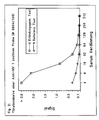
In den Vertiefungen einer mit HIV 1- und HIV 2-Peptiden beschichteten Testplatte (EnzygnostR Anti HIV 1+2, Behringwerke AG, Marburg, FRG) werden 25 ml Probenpuffer (0,3 M Tris/HCl, 1 % Albumin, 2 % Tween 20, pH 7.2) mit 100 ml Human-Serum für 30 min. bei 37°C in-kubiert. Nach 4maligem Waschen mit 50 mmol/l PBS, 0,1 % Tween 20 werden 100 ml des nach Beispiel 1 b) hergestellten HIV 1-Peptid-Peroxidase-Konjugates (1:1000 in 0,1 M Tris/HCl, 1 % Albumin, 2 % Pluronic F 64, pH 8.1) einpipettiert.Mit 4 weiteren Waschschritten wird die 30minütige Inkubation (+37°C) beendet. Die gebundene Peroxidase-Aktivität, die direkt mit der Anzahl an gebundenen HIV 1-spezifischen Antikörpern korreliert, wird durch Zugabe von H2O2/Tetramethylbenzidin (Behringwerke AG, Marburg, FRG) bestimmt.
| Referenzsystem | Erfindungsgemäßes System | |
| Kontrollserum, negativ | 0,019 | 0,018 |
| Kontrollserum, positiv | 0,964 | 1,681 |
| 0,985 | 1,756 | |
| Anti-HIV neg. Seren | 0,015 | 0,019 |
| 0,017 | 0,021 | |
| 0,032 | 0,028 | |
| 0,019 | 0,024 | |
| 0,030 | 0,018 | |
| Anti-HIV neg. Plasmen | 0,014 | 0,016 |
| 0,017 | 0,016 | |
| 0,028 | 0,017 | |
| 0,016 | 0,016 | |
| 0,016 | 0,015 | |
| Anti HIV 1 pos. Plasma | > 2,500 | > 2,500 |
| 1 : 500 | > 2,500 | > 2,500 |
| 1 : 1000 | 1,424 | 2,440 |
| 1 : 2000 | 0,694 | 1,054 |
| 1 : 4000 | 0,317 | 0,478 |
| 1 : 8000 | 0,161 | 0,216 |
| 1 : 16.000 | 0,083 | 0,107 |
| 1 : 32.000 | 0,052 | 0,064 |
| 1 : 64.000 | 0,032 | 0,039 |
| Grenzwert | 0,119 | 0,118 |
Claims (6)
- Verfahren zur immunchemischen Bestimmung eines Analyten in einer Probe mittels eines ersten spezifischen Bindungspartners, wobei dieser Bindungspartner an einem Träger immobilisiert ist und das Ausmaß der Bindung des Analyten an den ersten spezifischen Bindungspartner mittels eines zweiten spezifischen Bindungspartners, der direkt oder indirekt eine Markierung trägt, bestimmt wird, dadurch gekennzeichnet, daß zusätzlich ein Bindefaktor zugegeben wird, der mehr als eine bindungsfähige Stelle für den Analyten besitzt, keine Affinität zu dem ersten spezifischen Bindungspartner aufweist und nicht mit besagter Markierung markiert ist.
- Verfahren nach Anspruch 1, wobei der Bindefaktor bei dem Reaktionsschritt zugegeben wird, bei dem der Analyt an den zweiten spezifischen Bindungspartner bindet.
- Verfahren nach Anspruch 1, wobei der Analyt ein Antigen ist.
- Verfahren nach Anspruch 1, wobei der Analyt ein Antikörper ist.
- Verfahren nach einem der Ansprüche 1-4, dadurch gekennzeichnet, daß der Bindefaktor ein Antikörperkonjugat ist.
- Reagenz zur Verwendung in einem Verfahren gemäß einem der vorhergehenden Ansprüche enthaltend einen an einem Träger immobilisierten ersten Bindungspartner und einen markierten zweiten Bindungspartner, wobei beide Bindungspartner für den nachzuweisenden Analyten spezifisch sind sowie einen für den Analyten spezifischen Bindefaktor, der mehr als eine Bindungsstelle für den Analyten besitzt, keine Affinität zu dem ersten spezifischen Bindungspartner aufweist, nicht mit besagter Markierung markiert ist und die Bindung des ersten und zweiten Bindungspartners an den Analyten nicht stört.
Applications Claiming Priority (2)
| Application Number | Priority Date | Filing Date | Title |
|---|---|---|---|
| DE4218257 | 1992-06-03 | ||
| DE4218257A DE4218257A1 (de) | 1992-06-03 | 1992-06-03 | Verfahren zur immunchemischen Bestimmung eines Analyten |
Publications (2)
| Publication Number | Publication Date |
|---|---|
| EP0572845A1 EP0572845A1 (de) | 1993-12-08 |
| EP0572845B1 true EP0572845B1 (de) | 1998-04-01 |
Family
ID=6460278
Family Applications (1)
| Application Number | Title | Priority Date | Filing Date |
|---|---|---|---|
| EP93107931A Expired - Lifetime EP0572845B1 (de) | 1992-06-03 | 1993-05-14 | Verfahren zur immunchemischen Bestimmung eines Analyten |
Country Status (8)
| Country | Link |
|---|---|
| US (1) | US5914243A (de) |
| EP (1) | EP0572845B1 (de) |
| JP (1) | JP3327488B2 (de) |
| AT (1) | ATE164682T1 (de) |
| AU (1) | AU668937B2 (de) |
| CA (1) | CA2097545C (de) |
| DE (2) | DE4218257A1 (de) |
| ES (1) | ES2117067T3 (de) |
Families Citing this family (11)
| Publication number | Priority date | Publication date | Assignee | Title |
|---|---|---|---|---|
| DE4309393A1 (de) * | 1993-03-23 | 1994-09-29 | Boehringer Mannheim Gmbh | Verringerung des Hook-Effekts in Immuntests mit teilchenförmigem Trägermaterial |
| DE19629444A1 (de) * | 1996-07-22 | 1998-01-29 | Behringwerke Ag | Sensitivitätssteigerung bei der immunchemischen Bestimmung eines Analyten |
| EP0849596B1 (de) * | 1996-12-19 | 2006-02-15 | Dade Behring Marburg GmbH | Immundissoziation zur Verbesserung der immunchemischen Bestimmung eines Analyten |
| EP0957360B1 (de) | 1998-05-06 | 2002-07-31 | Roche Diagnostics GmbH | Entstörung durch Rheumafaktoren |
| GB0027064D0 (en) * | 2000-11-06 | 2000-12-20 | Randox Lab Ltd | Multi-analyte immunoassay |
| US20040049351A1 (en) * | 2002-08-28 | 2004-03-11 | Matson Robert S. | Immunosorbent assay in microarray format |
| DE102004052729A1 (de) * | 2004-10-30 | 2006-05-04 | Roche Diagnostics Gmbh | Immunkomplex-spezifsicher Antikörper zur Reduktion des Nullwerts beim Nachweis von Antigen-spezifisch gebundenen Antikörpern einer bestimmten Immunglobulinklasse in Array-Testformaten |
| US20080138842A1 (en) * | 2006-12-11 | 2008-06-12 | Hans Boehringer | Indirect lateral flow sandwich assay |
| CN102520191B (zh) * | 2011-12-19 | 2014-02-26 | 苏州大学 | 一种运用elisa测定蛋白质浓度的方法 |
| CN106324253A (zh) * | 2016-08-12 | 2017-01-11 | 江苏泽成生物技术有限公司 | 一种梅毒螺旋体抗体测定试剂盒及其检测方法 |
| US20220229062A1 (en) * | 2021-01-21 | 2022-07-21 | Diagnostic Biosystems | Method for rapid immunohistochemical detection of an antigen from a biological sample |
Family Cites Families (8)
| Publication number | Priority date | Publication date | Assignee | Title |
|---|---|---|---|---|
| US4228237A (en) * | 1978-09-21 | 1980-10-14 | Calbiochem-Behring Corp. | Methods for the detection and determination of ligands |
| US4495296A (en) * | 1979-05-21 | 1985-01-22 | New York Blood Center, Inc. | Labeled anti-hapten antibodies and their use as a universal reagent for solid phase radio- and/or enzyme-immunoassays |
| US4376110A (en) * | 1980-08-04 | 1983-03-08 | Hybritech, Incorporated | Immunometric assays using monoclonal antibodies |
| US5011771A (en) * | 1984-04-12 | 1991-04-30 | The General Hospital Corporation | Multiepitopic immunometric assay |
| US4743542A (en) * | 1985-04-11 | 1988-05-10 | Ortho Diagnostic | Method for forestalling the hook effect in a multi-ligand immunoassay system |
| DE3834766A1 (de) * | 1988-10-12 | 1990-04-26 | Boehringer Mannheim Gmbh | Verfahren zur bestimmung einer spezifisch bindefaehigen substanz |
| CA2008100A1 (en) * | 1989-01-20 | 1990-07-20 | Hubert Bayer | Method for the determination of immunologically detectable substance |
| WO1991006857A1 (en) * | 1989-11-02 | 1991-05-16 | Teijin Limited | Immunoassay of human thrombomodulin, and reagent and kit therefor |
-
1992
- 1992-06-03 DE DE4218257A patent/DE4218257A1/de not_active Withdrawn
-
1993
- 1993-05-14 ES ES93107931T patent/ES2117067T3/es not_active Expired - Lifetime
- 1993-05-14 DE DE59308328T patent/DE59308328D1/de not_active Expired - Lifetime
- 1993-05-14 EP EP93107931A patent/EP0572845B1/de not_active Expired - Lifetime
- 1993-05-14 AT AT93107931T patent/ATE164682T1/de not_active IP Right Cessation
- 1993-06-02 JP JP13156793A patent/JP3327488B2/ja not_active Expired - Fee Related
- 1993-06-02 CA CA002097545A patent/CA2097545C/en not_active Expired - Fee Related
- 1993-06-02 AU AU39966/93A patent/AU668937B2/en not_active Ceased
-
1995
- 1995-05-15 US US08/441,175 patent/US5914243A/en not_active Expired - Lifetime
Also Published As
| Publication number | Publication date |
|---|---|
| CA2097545C (en) | 2004-08-17 |
| US5914243A (en) | 1999-06-22 |
| DE4218257A1 (de) | 1993-12-09 |
| DE59308328D1 (de) | 1998-05-07 |
| AU668937B2 (en) | 1996-05-23 |
| ES2117067T3 (es) | 1998-08-01 |
| JPH0658937A (ja) | 1994-03-04 |
| ATE164682T1 (de) | 1998-04-15 |
| AU3996693A (en) | 1993-12-09 |
| CA2097545A1 (en) | 1993-12-04 |
| JP3327488B2 (ja) | 2002-09-24 |
| EP0572845A1 (de) | 1993-12-08 |
Similar Documents
| Publication | Publication Date | Title |
|---|---|---|
| EP0944832B1 (de) | ANTIGENSPEZIFISCHER IgM-NACHWEIS | |
| EP0397113B1 (de) | Verfahren zum Nachweis spezifisch bindefähiger Substanzen in Körperflüssigkeiten | |
| DE68911674T2 (de) | Testverfahren und reagenzsatz dazu. | |
| EP0363942B1 (de) | Verfahren zur Bestimmung einer spezifisch bindefähigen Substanz | |
| EP0023989B1 (de) | Enzym-Immuntest zum Nachweis von Erreger-spezifischen Antikörpern und Testsatz für die Durchführung dieses Tests | |
| EP0944838B1 (de) | ANTIGENSPEZIFISCHER IgG-NACHWEIS | |
| DE68922243T2 (de) | Immuntest für HIV-1-Antigene unter Benutzung von F(AB')2-Fragmenten als Sonde. | |
| EP0849596B1 (de) | Immundissoziation zur Verbesserung der immunchemischen Bestimmung eines Analyten | |
| DE69622696T2 (de) | Zellzählung durch einen immunoassay | |
| EP0825441B1 (de) | Sensitivitätssteigerung bei der immunchemischen Bestimmung eines Analyten | |
| EP0008432A1 (de) | Immunologisches Bestimmungsverfahren | |
| EP0849595B1 (de) | Synthetische Partikel als Agglutinationsreagenzien | |
| DE68919828T2 (de) | Nanoteilchen mit gebundenen enzym und ligand zur verwendung bei analysen. | |
| WO1996014338A1 (de) | RHEUMAFAKTOR-ENTSTÖRUNG MIT ANTI-Fd-ANTIKÖRPERN | |
| EP0572845A1 (de) | Verfahren zur immunchemischen Bestimmung eines Analyten | |
| DE19828466A1 (de) | Entstörung von Immunoassays durch Substanzen, die aus den Framework-Regionen von Antikörpern abgeleitet sind | |
| EP0829723A2 (de) | Homogene Nachweisverfahren zur Bestimmung von Subpopulationen eines Analyten | |
| EP0379216B1 (de) | Verfahren und Reagenz zur Bestimmung von immunologisch nachweisbaren Substanzen | |
| DE3048883A1 (de) | Hydrophile latexpartikel, verfahren zu deren herstellung und deren verwendung | |
| DE69529787T2 (de) | Testsatz und Methode für eine Bestimmung durch kompetitive spezifische Bindung | |
| EP0366092A2 (de) | Verfahren zur Bestimmung von für ein Antigen klassenspezifischen Antikörpern und dazu geeignetes Reagenz | |
| EP0322813A2 (de) | Verfahren zur Bestimmung einer immunologisch aktiven Substanz | |
| DE69632535T2 (de) | Peptide zur detektion von hiv-1 | |
| EP0595211A1 (de) | Verfahren zur simultanen Bestimmung von Antigenen und Antikörpern | |
| EP0444561B1 (de) | Verfahren zur immunologischen Bestimmung von Liganden |
Legal Events
| Date | Code | Title | Description |
|---|---|---|---|
| PUAI | Public reference made under article 153(3) epc to a published international application that has entered the european phase |
Free format text: ORIGINAL CODE: 0009012 |
|
| AK | Designated contracting states |
Kind code of ref document: A1 Designated state(s): AT BE CH DE DK ES FR GB IT LI LU NL PT SE |
|
| 17P | Request for examination filed |
Effective date: 19940511 |
|
| 17Q | First examination report despatched |
Effective date: 19961224 |
|
| GRAG | Despatch of communication of intention to grant |
Free format text: ORIGINAL CODE: EPIDOS AGRA |
|
| GRAG | Despatch of communication of intention to grant |
Free format text: ORIGINAL CODE: EPIDOS AGRA |
|
| GRAH | Despatch of communication of intention to grant a patent |
Free format text: ORIGINAL CODE: EPIDOS IGRA |
|
| RAP1 | Party data changed (applicant data changed or rights of an application transferred) |
Owner name: BEHRING DIAGNOSTICS GMBH |
|
| GRAH | Despatch of communication of intention to grant a patent |
Free format text: ORIGINAL CODE: EPIDOS IGRA |
|
| GRAA | (expected) grant |
Free format text: ORIGINAL CODE: 0009210 |
|
| AK | Designated contracting states |
Kind code of ref document: B1 Designated state(s): AT BE CH DE DK ES FR GB IT LI LU NL PT SE |
|
| REF | Corresponds to: |
Ref document number: 164682 Country of ref document: AT Date of ref document: 19980415 Kind code of ref document: T |
|
| REG | Reference to a national code |
Ref country code: CH Ref legal event code: EP |
|
| PGFP | Annual fee paid to national office [announced via postgrant information from national office to epo] |
Ref country code: DK Payment date: 19980422 Year of fee payment: 6 |
|
| RAP2 | Party data changed (patent owner data changed or rights of a patent transferred) |
Owner name: DADE BEHRING MARBURG GMBH |
|
| ET | Fr: translation filed | ||
| REF | Corresponds to: |
Ref document number: 59308328 Country of ref document: DE Date of ref document: 19980507 |
|
| ITF | It: translation for a ep patent filed | ||
| GBT | Gb: translation of ep patent filed (gb section 77(6)(a)/1977) |
Effective date: 19980603 |
|
| NLT2 | Nl: modifications (of names), taken from the european patent patent bulletin |
Owner name: DADE BEHRING MARBURG GMBH |
|
| PG25 | Lapsed in a contracting state [announced via postgrant information from national office to epo] |
Ref country code: PT Free format text: LAPSE BECAUSE OF FAILURE TO SUBMIT A TRANSLATION OF THE DESCRIPTION OR TO PAY THE FEE WITHIN THE PRESCRIBED TIME-LIMIT Effective date: 19980701 Ref country code: DK Free format text: LAPSE BECAUSE OF FAILURE TO SUBMIT A TRANSLATION OF THE DESCRIPTION OR TO PAY THE FEE WITHIN THE PRESCRIBED TIME-LIMIT Effective date: 19980701 |
|
| REG | Reference to a national code |
Ref country code: ES Ref legal event code: FG2A Ref document number: 2117067 Country of ref document: ES Kind code of ref document: T3 |
|
| NLT1 | Nl: modifications of names registered in virtue of documents presented to the patent office pursuant to art. 16 a, paragraph 1 |
Owner name: DADE BEHRING MARBURG GMBH |
|
| PLBE | No opposition filed within time limit |
Free format text: ORIGINAL CODE: 0009261 |
|
| 26N | No opposition filed | ||
| REG | Reference to a national code |
Ref country code: FR Ref legal event code: CD |
|
| REG | Reference to a national code |
Ref country code: GB Ref legal event code: IF02 |
|
| PGFP | Annual fee paid to national office [announced via postgrant information from national office to epo] |
Ref country code: NL Payment date: 20040416 Year of fee payment: 12 |
|
| PGFP | Annual fee paid to national office [announced via postgrant information from national office to epo] |
Ref country code: AT Payment date: 20040421 Year of fee payment: 12 |
|
| PGFP | Annual fee paid to national office [announced via postgrant information from national office to epo] |
Ref country code: GB Payment date: 20040505 Year of fee payment: 12 |
|
| PGFP | Annual fee paid to national office [announced via postgrant information from national office to epo] |
Ref country code: FR Payment date: 20040519 Year of fee payment: 12 |
|
| PGFP | Annual fee paid to national office [announced via postgrant information from national office to epo] |
Ref country code: SE Payment date: 20040521 Year of fee payment: 12 |
|
| PGFP | Annual fee paid to national office [announced via postgrant information from national office to epo] |
Ref country code: CH Payment date: 20040524 Year of fee payment: 12 |
|
| PGFP | Annual fee paid to national office [announced via postgrant information from national office to epo] |
Ref country code: LU Payment date: 20040528 Year of fee payment: 12 |
|
| PGFP | Annual fee paid to national office [announced via postgrant information from national office to epo] |
Ref country code: ES Payment date: 20040609 Year of fee payment: 12 |
|
| PGFP | Annual fee paid to national office [announced via postgrant information from national office to epo] |
Ref country code: BE Payment date: 20040622 Year of fee payment: 12 |
|
| PG25 | Lapsed in a contracting state [announced via postgrant information from national office to epo] |
Ref country code: LU Free format text: LAPSE BECAUSE OF NON-PAYMENT OF DUE FEES Effective date: 20050514 Ref country code: IT Free format text: LAPSE BECAUSE OF NON-PAYMENT OF DUE FEES;WARNING: LAPSES OF ITALIAN PATENTS WITH EFFECTIVE DATE BEFORE 2007 MAY HAVE OCCURRED AT ANY TIME BEFORE 2007. THE CORRECT EFFECTIVE DATE MAY BE DIFFERENT FROM THE ONE RECORDED. Effective date: 20050514 Ref country code: GB Free format text: LAPSE BECAUSE OF NON-PAYMENT OF DUE FEES Effective date: 20050514 Ref country code: AT Free format text: LAPSE BECAUSE OF NON-PAYMENT OF DUE FEES Effective date: 20050514 |
|
| PG25 | Lapsed in a contracting state [announced via postgrant information from national office to epo] |
Ref country code: SE Free format text: LAPSE BECAUSE OF NON-PAYMENT OF DUE FEES Effective date: 20050515 |
|
| PG25 | Lapsed in a contracting state [announced via postgrant information from national office to epo] |
Ref country code: ES Free format text: LAPSE BECAUSE OF NON-PAYMENT OF DUE FEES Effective date: 20050516 |
|
| PG25 | Lapsed in a contracting state [announced via postgrant information from national office to epo] |
Ref country code: LI Free format text: LAPSE BECAUSE OF NON-PAYMENT OF DUE FEES Effective date: 20050531 Ref country code: CH Free format text: LAPSE BECAUSE OF NON-PAYMENT OF DUE FEES Effective date: 20050531 Ref country code: BE Free format text: LAPSE BECAUSE OF NON-PAYMENT OF DUE FEES Effective date: 20050531 |
|
| BERE | Be: lapsed |
Owner name: *DADE BEHRING MARBURG G.M.B.H. Effective date: 20050531 |
|
| PG25 | Lapsed in a contracting state [announced via postgrant information from national office to epo] |
Ref country code: NL Free format text: LAPSE BECAUSE OF NON-PAYMENT OF DUE FEES Effective date: 20051201 |
|
| REG | Reference to a national code |
Ref country code: CH Ref legal event code: PL |
|
| EUG | Se: european patent has lapsed | ||
| GBPC | Gb: european patent ceased through non-payment of renewal fee |
Effective date: 20050514 |
|
| PG25 | Lapsed in a contracting state [announced via postgrant information from national office to epo] |
Ref country code: FR Free format text: LAPSE BECAUSE OF NON-PAYMENT OF DUE FEES Effective date: 20060131 |
|
| NLV4 | Nl: lapsed or anulled due to non-payment of the annual fee |
Effective date: 20051201 |
|
| REG | Reference to a national code |
Ref country code: FR Ref legal event code: ST Effective date: 20060131 |
|
| REG | Reference to a national code |
Ref country code: ES Ref legal event code: FD2A Effective date: 20050516 |
|
| BERE | Be: lapsed |
Owner name: *DADE BEHRING MARBURG G.M.B.H. Effective date: 20050531 |
|
| PGFP | Annual fee paid to national office [announced via postgrant information from national office to epo] |
Ref country code: DE Payment date: 20110718 Year of fee payment: 19 |
|
| REG | Reference to a national code |
Ref country code: DE Ref legal event code: R119 Ref document number: 59308328 Country of ref document: DE Effective date: 20121201 |
|
| PG25 | Lapsed in a contracting state [announced via postgrant information from national office to epo] |
Ref country code: DE Free format text: LAPSE BECAUSE OF NON-PAYMENT OF DUE FEES Effective date: 20121201 |