EP0575191B1 - Nichtwässerige Elektrolytlösung und Batterie, die dieses Elektrolyt enthält - Google Patents
Nichtwässerige Elektrolytlösung und Batterie, die dieses Elektrolyt enthält Download PDFInfo
- Publication number
- EP0575191B1 EP0575191B1 EP93304763A EP93304763A EP0575191B1 EP 0575191 B1 EP0575191 B1 EP 0575191B1 EP 93304763 A EP93304763 A EP 93304763A EP 93304763 A EP93304763 A EP 93304763A EP 0575191 B1 EP0575191 B1 EP 0575191B1
- Authority
- EP
- European Patent Office
- Prior art keywords
- electrolyte
- solvent
- cell
- aqueous
- carbonate
- Prior art date
- Legal status (The legal status is an assumption and is not a legal conclusion. Google has not performed a legal analysis and makes no representation as to the accuracy of the status listed.)
- Expired - Lifetime
Links
Images
Classifications
-
- H—ELECTRICITY
- H01—ELECTRIC ELEMENTS
- H01M—PROCESSES OR MEANS, e.g. BATTERIES, FOR THE DIRECT CONVERSION OF CHEMICAL ENERGY INTO ELECTRICAL ENERGY
- H01M10/00—Secondary cells; Manufacture thereof
- H01M10/05—Accumulators with non-aqueous electrolyte
- H01M10/056—Accumulators with non-aqueous electrolyte characterised by the materials used as electrolytes, e.g. mixed inorganic/organic electrolytes
- H01M10/0564—Accumulators with non-aqueous electrolyte characterised by the materials used as electrolytes, e.g. mixed inorganic/organic electrolytes the electrolyte being constituted of organic materials only
- H01M10/0566—Liquid materials
- H01M10/0569—Liquid materials characterised by the solvents
-
- Y—GENERAL TAGGING OF NEW TECHNOLOGICAL DEVELOPMENTS; GENERAL TAGGING OF CROSS-SECTIONAL TECHNOLOGIES SPANNING OVER SEVERAL SECTIONS OF THE IPC; TECHNICAL SUBJECTS COVERED BY FORMER USPC CROSS-REFERENCE ART COLLECTIONS [XRACs] AND DIGESTS
- Y02—TECHNOLOGIES OR APPLICATIONS FOR MITIGATION OR ADAPTATION AGAINST CLIMATE CHANGE
- Y02E—REDUCTION OF GREENHOUSE GAS [GHG] EMISSIONS, RELATED TO ENERGY GENERATION, TRANSMISSION OR DISTRIBUTION
- Y02E60/00—Enabling technologies; Technologies with a potential or indirect contribution to GHG emissions mitigation
- Y02E60/10—Energy storage using batteries
Definitions
- the present invention relates to a non-aqueous electrolyte for electric cells and a solvent for the electrolyte and particularly it relates to an electrolyte and a solvent for the electrolyte suitable for batteries, e.g. a secondary cell or rechargeable cell.
- the present invention further relates to a non-aqueous electrolyte battery utilizing lithium, more specifically a non-aqueous electrolyte battery comprising a specific non-aqueous solvent which prevents rapid heat generation and breakdown of the cell which may be caused by overcharge of the cell.
- Electric cells utilizing a non-aqueous electrolyte have been conventionally and widely used as electric sources in various types of consumer electronic equipment because of their high voltage, high energy density and excellent properties relating to reliability of the cells such as storage characteristics and anti-leak property.
- Conventional non-aqueous electrolytes usually comprise propylene carbonate.
- Such electrolytes have been widely used for various primary cells including lithium cells because propylene carbonate is a good solvent for supporting salts, is stable to alkali metals, and can show excellent discharging characteristics.
- batteries While batteries are of course required to have a high energy density, excellent discharge characteristics and low self-discharge rate like primary cells, the batteries, in addition to the properties mentioned above, must satisfy the requirements that they have a high energy efficiency upon charging and discharging (charge/discharge efficiency) and that the reversibilities of the chemical and physical properties of the active materials are maintained upon repetition of the charge/discharge cycles.
- the charge/discharge efficiency and the internal resistance of batteries are greatly influenced by the type of electrolyte. For example, if the electroconductivity of the electrolyte is high, the charge/discharge efficiency is improved and the internal resistance is lowered. Therefore, electrolytes for batteries are required to have, for example, a high electroconductivity, anti-redox properties and high withstand voltages.
- non-aqueous electrolytes generally have an electroconductivity which is tens to hundreds times lower than that of aqueous solution electrolytes.
- non-aqueous electrolytes having a high withstand voltage generally have poor charge/discharge characteristics and insufficient internal resistance.
- the charge/discharge efficiency discharge capacity/charge capacity
- propylene carbonate cannot provide a sufficient electroconductivity because it has a high viscosity and hence a low ion migration rate.
- metallic lithium deposited in lithium cells during the charge/discharge cycles may react with the solvent.
- N-methyl-2-oxazolidinone reacts with metallic lithium and hence is yellowed. Such a reaction may badly affect the charge/discharge efficiency and the lifetime of the cells.
- electric cells are generally manufactured in a sealed structure, but when the internal pressure of the cells is increased for some reason, the cells may be broken and hence dysfunction.
- the electrolyte when non-aqueous electrolyte cells are overcharged by an electric current of a larger amount than expected, the electrolyte, for instance, decomposes and generates gas. The gas may elevate the internal pressure. Further, if such an overcharge state lasts long, abnormal reactions such as rapid decomposition of the electrolyte and the active materials and rapid elevation of the cell temperature may be caused. These may invite breakdown of the cells.
- sealed cells of an explosion proof type have been proposed.
- the cells of this type are provided with a current cut-off device or a pressure release device, which operates in response to an increase of the internal pressure of the cells. For example, if the internal pressure of the cells is elevated as a result of accumulation of gases generated by chemical reactions caused by a long lasting overcharge state inside of the cells, the current cut-off device operates to cut the charging current, or the pressure release device operates to release the internal pressure.
- the abnormal exothermic reactions often proceed even after the current cut-off device or the pressure release device has operated, and thus the cell temperature may elevate from 50 or 60°C to 300 or 400 °C. This rapid temperature elevation may cause rapid elevation of the internal pressure, which may lead to breakdown of the cells, and is considered to be a serious problem.
- the present invention seeks to provide an electrolyte and solvent for the electrolyte which have excellent electroconductivity, no(or less)reactivity with alkali metals and which are able to withstand voltage.
- the present invention also seeks to provide an electrolyte and a solvent for the electrolyte capable of providing batteries with excellent charge/discharge characteristics and stability.
- the present invention seeks to prevent the abnormal exothermic reactions which may be observed even after the current cut-off device or the pressure release device has operated, to prevent the rapid elevation of the cell temperature and the cell internal pressure, and thereby to avoid breakdown of the cells.
- US-A-3,686,038 discloses a battery comprising a solvent consisting essentially of from 100 to 60 % by weight of a carbamate.
- a solvent for cell electrolyte comprising: at least one carbamate of formula [I]: wherein R 1 , R 2 and R 3 are the same or different and each is a linear or branched alkyl group, in an amount of from more than 0.02% to less than 30% by volume based on the total volume of the solvent; and at least one cyclic carbonate of formula (II); wherein R 4 and R 5 are the same or different and each is hydrogen, methyl or ethyl.
- R 1 , R 2 and R 3 are preferably alkyl groups having 1 to 4 carbon atoms.
- a cell electrolyte comprising an electrolyte solvent as defined above.
- the electrolyte may comprise at least one solute electrolyte selected from LiPF 6 , LiBF 4 and LiClO 4 .
- a non-aqueous electrolyte battery comprising a negative electrode capable of being reversibly doped with lithium, a positive electrode and a non-aqueous electrolyte comprising a solute electrolyte in solution in a non-aqueous solvent as defined above or an electrolyte as defined above.
- the carbamate of formula [I] is preferably present in an amount of from 0.05 to 20% by volume of the total volume of the non-aqueous solvent.
- the positive electrode of the cell may comprise Li x MO 2 wherein M is at least one transition metal and 0.05 ⁇ x ⁇ 1.10.
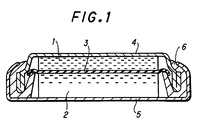
- Fig. 1 shows an embodiment of the present invention, a coin-like shape cell.
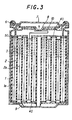
- Fig. 3 is a sectional view of the cells manufactured in Examples 1 to 9 and Comparative Examples 1 to 4.
- the cells comprise a negative electrode 1, negative current collector la, positive electrode 2, positive current collector 2a, separator 3, insulator 4, cell housing can 5, sealing gasket 6, cell lid 7, current cut-off plate 8, negative electrode lead 9 and positive electrode lead 10.
- Examples of the carbamate of formula (I), namely the alkyl N,N-dialkylcarbamate, include methyl N,N-dimethylcarbamate, methyl N,N-diethylcarbamate, ethyl N,N-dimethylcarbamate, ethyl N,N-diethylcarbamate, propyl N,N-dimethylcarbamate, propyl N,N-diethylcarbamate, propyl N,N-dipropylcarbamate, isopropyl N,N-dimethylcarbamate, isopropyl N,N-diethylcarbamate, iosopropyl N,N-diisopropylcarbamate, butyl N,N-dimethylcarbamate, butyl N,N-diethylcarbamate, butyl N,N-dipropylcarbamate and butyl N,N-diisopropylcarbamate.
- carbamates may be used alone or in any combination. Particularly preferred are methyl N,N-dimethylcarbamate, ethyl N,N-dimethylcarbamate, ethyl N,N-diethylcarbamate and propyl N,N-dimethylcarbamate.
- the carbamates of formula [I] have various advantages, for example 1) they are solvents having a low viscosity and high dielectric constant, 2) they exhibit a high withstand voltage, 3) they have relatively high electroconductivity when they dissolve solute electrolytes and 4) they may be used in a wide temperature range.
- Examples of the cyclic carbonate of formula (II) are ethylene carbonate, propylene carbonate, 2,3-butylene carbonate, 1,2-butylene carbonate, 2,3-amylene carbonate and 3,4-hexylene carbonate.
- ethylene carbonate, propylene carbonate and 2,3-butylene carbonate are particularly preferred. These carbonates may be used alone or in any combination by mixing with the carbamate compounds.
- non-aqueous solvents such as lactones and nitriles may also be used in the solvent of the present invention.
- the non-aqueous solvents are not particularly limited. Examples of the non-aqueous solvent which may be used with the carbamates and cyclic carbonates are vinylene carbonate, ⁇ -butyrolactone, sulfolane, 1,2-dimethoxyethane, 1,2-diethoxyethane, 2-methyltetrahydrofuran, 3-methyl-1,3-dioxolan, methyl propionate, methyl butyrate, dimethyl carbonate, diethyl carbonate and dipropyl carbonate.
- the carbamates and cyclic carbonates may be preferably used in combination with other cyclic carbonates such as vinylene carbonate, or linear carbonates such as dimethyl carbonate, diethyl carbonate and dipropyl carbonate.
- the carbamate of formula (I) and the cyclic carbonate of formula (II) are mixed, they are mixed usually in a volume ratio, though it is not particularly limited of from 1:9 to 8:2, preferably of from 2:8 to 6:4.
- the amount of the carbamate in the solvent differs depending upon the type of cell or conditions where the cell is used. It may, for example, be less than 10 % by volume.
- the solvent for cell electrolyte of the present invention may further contain, in addition to the above-described carbamates and cyclic carbonates, any other non-aqueous solvents conventionally used as a solvent for cell electrolyte such as ethers and linear carbonates, so long as the characteristics of the electrolyte are not deteriorated.
- the cell electrolyte of the present invention is formed by dissolving a solute electrolyte in the electrolyte solvent as defined above.
- the solute electrolyte are alkali metal salts including lithium salts such as LiPF 6 , LiBF 4 , LiClO 4 , LiAsF 6 , LiCF 3 SO 3 , LiAlCl 3 , LiSiF 6 and LiN(CF 3 SO 2 ) 2 .
- these solute electrolytes particularly preferred are LiPF 6 , LiBF 4 and LiClO 4 .
- the solute electrolyte is generally dissolved in the solvent in a concentration of from 0.1 to 3.0 mole/liter, preferably of from 0.5 to 2.0 mole/liter.
- the electrolyte solvent and the electrolyte of the present invention may be used for both primary cells and batteries. For example, they may be used for the batteries shown in Figs. 1 and 3.
- the electrolyte solvent and electrolyte of the present invention are particularly suitable for batteries having a negative electrode of carbon or a metal comprising an alkali metal and an active material of a positive electrode capable of reversibly and electrochemically reacting with the alkali metal.
- the electrolyte of the present invention may be used for lithium cells utilizing metallic lithium as the negative electrode and a mixture of a lithium salt and graphite as the positive electrode.
- the carbamates of formula [I] are solvents having a low viscosity and a high dielectric constant and, when they dissolve an electrolyte, they can give a relatively high electroconductivity and a high withstand voltage to the electrolyte. Therefore, batteries having excellent electroconductivity and withstand voltage can be obtained by utilizing the organic solvent of the invention as an organic electrolyte solvent for an electrolyte containing an alkali metal salt dissolved in an organic electrolyte solvent.
- the property of the solvent for dissolving the solute electrolyte is greatly improved, and accordingly a sufficient concentration of the solute electrolyte can be obtained.
- the electroconductivity of the electrolyte and the charge/discharge efficiency of the cell can be improved.
- the non-aqueous electrolyte batteries of the present invention will now be further explained.
- the non-aqueous electrolyte comprises more than 0.02 and less than 30 %, preferably 0.05 to 20 %, by volume of the carbamates based on the total volume of the carbamates and the other non-aqueous solvents.
- the inventors achieved the present invention on the finding that the abnormal exothermic reactions observed in the conventional cells even after the current cut-off device or the pressure release device has operated can be prevented by adding the alkyl N,N-dialkyl carbamates to the non-aqueous electrolyte. In this way the rapid temperature elevation and hence the breakdown of cells can be avoided.
- the alkyl N,N-dialkylcarbamate(s) is added to the electrolyte in an amount of more than 0.02 and less than 30 %, preferably from 0.05 to 20%, by volume of the total volume of the alkyl N,N-dialkylcarbamate and other non-aqueous electrolyte solvents.
- the advantages of adding the carbamate are sufficiently effected and the cell has long cell life time, that is it stands practical application under severe conditions where the cell is continuously charged at a high temperature such as at 60°C. Under such conditions, the speed of increasing the internal pressure of a conventional sealed cell becomes too high and hence the current cut-off device would operate within a short period of time.
- the solute electrolyte to be dissolved in the non-aqueous solvent is not particularly limited.
- a conventional electrolyte may be utilized.
- LiClO 4 , LiAsF 6 , LiPF 6 , LiBF 4 , LiCF 3 SO 3 and LiN(CF 3 SO 2 ) 2 can be mentioned as examples of the solute electrolyte.
- LiPF 6 and LiBF 4 are particularly preferred.
- the positive electrode of the cell is also not particularly limited so long as it is such that the cell can be charged and discharged.
- a positive electrode comprising an active material mainly containing Li x MO 2 , wherein M represents one or more transition metals and 0.05 ⁇ x ⁇ 1.10, may be preferably used.
- M represents one or more transition metals and 0.05 ⁇ x ⁇ 1.10
- a material capable of being reversibly doped with lithium is preferably selected.
- the material for the negative electrode are pyrolyzed carbonaceous substances, cokes such as pitch coke, needle coke and petroleum coke, graphite, glassy carbons, sintered materials formed by sintering polymer compounds such as phenol resins and furan resins at a suitable temperature, carbon fibers, and other carbonaceous materials such as active carbon.
- Other materials usable for the negative electrode are metallic lithium, lithium alloys such as lithium/aluminium alloys and polymers such as polyacetylene and polypyrrole.
- carbonaceous materials capable of being reversibly doped with lithium are particularly preferred because such materials can improve the charge/discharge cycle efficiency of the cell.
- the shape of the cell is also not particularly limited.
- the cell may be formed in various shapes such as a cylindrical shape, square pillar shape, coin-like shape and button-like shape.
- the cell is preferably provided with a current cut-off device or a pressure releasing device which can operate depending on the internal pressure of the cell.
- the current cut-off device and the pressure releasing device may be the same as the devices provided in conventional cells.
- Figure 1 shows a non-aqueous electrolyte cell of a coin-like shape having a diameter of 20mm and a height of 2.5mm.
- the cell has a negative electrode 1 of metallic lithium and a positive electrode formed by pressure-molding a mixture comprising 85 parts by weight of LiCoO 2 , 12 parts by weight of graphite as a conductor and 3 parts by weight of a fluorocarbon resin as a binder.
- the materials of the negative electrode 1 and positive electrode 2 are bonded to the negative electrode can 4 and positive electrode can 5 via a porous separator 3.
- the electrolyte is introduced into the cell from the sealing gasket 6 and the cell is then sealed.
- the abnormal exothermic reaction which is observed in the conventional batteries, even after the current cut-off device or the pressure releasing device has operated, is prevented by the addition of the alkyl N,N-dialkylcarbamate(s) to the non-aqueous electrolyte. Therefore, the rapid elevation of the internal pressure of the cell after the current cut-off device or the pressure releasing device has started to operate is prevented, and hence breakdown of the cell is avoided.
- alkyl N,N-dialkylcarbamate restricts the abnormal exothermic reaction, but the mechanism is presumed to be as follows.
- the abnormal exothermic reaction observed in the conventional cells even after the current cut-off device or the pressure releasing device has started to operate is caused by the overcharge state lasting for a certain period involving the cell active materials.
- the alkyl N,N-dialkylcarbamate(s) is added to the non-aqueous electrolyte, the carbamate is preferentially decomposed electrochemically by the overcharge state. This hastens the start of operation of the current cut-off device or the pressure releasing device to eliminate the overcharge state.
- the abnormal exothermic reaction observed in the conventional cells even after the current cut-off device or the pressure releasing device has started to operate is prevented.
- alkyl N,N-dialkylcarbmates of formula (I) used in the following Examples were synthesized by the reaction of the corresponding N,N-dialkylamines and chlorocarbonate esters and purified by distillation in the presence of calcium hydride.
- the prepared alkyl N,N-dialkylcarbamates and the physicochemical properties thereof are listed in Table 1 below.
- Table 1 The physical properties of the carbamates compound boiling point (°C) relative dielectric constant viscosity (cP,25°C) methyl N,N-dimethyl carbamate 131-133 12.5 0.8 ethyl N,N-diethyl carbamate 145-146 11.0 0.9 methyl N,N-diethyl carbamate 157-158 10.3 1.2
- the carbamates used in the present invention as a solvent for electrolyte have a relatively high boiling point and therefore they can be used in a wide temperature range. Further, because the carbamates have a low viscosity and a high dielectric constant, the electrolyte comprising these carbamates dissolved therein has a high electroconductivity.
- the non-aqueous electrolyte battery of the present invention will be explained more specifically hereinafter.
- Fig. 3 is a sectional view of the cell used in Examples 1 to 9 according to the present invention and Comparative Examples 1 to 4.
- the cell has a negative electrode strip 1 comprising a negative current collector la applied with a negative acting material and a positive electrode strip 2 formed by applying a positive acting material to a positive current collector 2a.
- the negative and positive electrode strips are stacked with a separator 3 interposed between the strips, and the electrode strips and the separator are rolled into a cylindrical shape.
- Insulators 40 are placed on the both ends of the rolled electrodes and the electrodes are accommodated in a cell housing can 50.
- a sealing gasket 6 is placed on the peripheral part of the open end of the cell housing can 5, a cell lid 7 is placed on the rolled electrodes at the opening of the can 50, the can 50 is caulked so that the lid 7 is secured to the can via the gasket and the cell is sealed.
- the negative electrode 1 is connected to the bottom of the cell via a negative electrode lead 9, while the positive electrode 2 is connected to the lid 7 via a positive electrode lead 10 and a current cut-off thin plate 8.
- a current cut-off plate 8 is deformed as indicated by an arrow in Fig. 3 and it's connection to the positive electrode lead 10 is broken to cut off the current.
- the cells of the above-described structure were manufactured as follows.
- the negative electrode was prepared as follows.
- a non-graphitizable carbon which was used as the active material of the negative electrode and has properties close to those of glassy carbon, was prepared by introducing 10 to 20% of functional groups containing oxygen into a starting material, petroleum pitch (oxygen crosslinking), and then sintering the pitch at 1000 °C in an inert gas flow.
- the non-graphitizable carbon had a distance between the (0 0 2) crystal faces of 3.76 ⁇ and a true specific gravity of 1.58 g/cm 3 .
- This non-graphtizable carbon was pulverized to obtain a carbonaceous powder having an average diameter of 10 ⁇ m.
- the powder 90 parts by weight of the powder was mixed with 10 parts by weight of a binder, polyvinylidene fluoride (PVDF), to obtain a negative electrode mixture. Then the mixture was dispersed in N-methyl-2-pyrrolidone to give a slurry. The slurry was uniformly applied to both surfaces of the negative current collector, a copper foil strip having a thickness of 10 ⁇ m, and compression molded after drying to give the negative electrode strip 1.
- PVDF polyvinylidene fluoride
- the positive electrode was prepared as follows.
- LiCoO 2 was prepared by mixing lithium carbonate and cobalt carbonate in a molar ratio of 0.5 1 and sintering the resultant mixture in the ambient atmosphere at 900 °C for 5 hours. 91 parts by weight of the resultant LiCoO 2 , 6 parts by weight of an electroconductive material, graphite, and 3 parts by weight of a binder, polyvinylidene fluoride (PVDF), were mixed to obtain a positive electrode mixture. Then the mixture was dispersed in N-methyl-2-pyrrolidone to give a slurry. The slurry was uniformly applied to both surfaces of the positive current collector, an aluminium foil strip having a thickness of 20 ⁇ m, and compression molded after drying to give the positive electrode strip 2.
- PVDF polyvinylidene fluoride
- the obtained positive electrode 2 and negative electrode 1 were stacked with a separator 3 consisting of a microporous polypropylene film having a thickness of 25 ⁇ m between the electrodes, and the stacked electrodes were wound spirally many times to give a rolled body.
- the insulator plate 40 was placed on the bottom of a steel can plated with nickel as the cell housing can 50. The rolled body was then placed into the can. One end of a nickel negative electrode lead 9 was connected to the negative electrode 1 by contact bonding and the other end was welded to the cell housing can 50 to ensure negative current collecting. Further, one end of an aluminium positive electrode lead 10 was connected to the positive electrode 2 and the other end of the lead was electrically connected to the cell lid 7 through a current cut-off plate 8, which can cut off the current depending on the internal pressure of the cell.
- a non-aqueous electrolyte formed by dissolving LiPF 6 in one of the solvents listed in Table 3 below at a concentration of 1 mole/liter was poured into the cell housing can 50.
- the insulating sealing gasket 6 applied with asphalt and the cell lid 7 were placed at the opening of the can 50 and the can 50 was caulked over the gasket 6 to fix the lid 7.
- cylindrical non-aqueous electrolyte cell had a diameter of 20 mm and a height of 50 mm.
- the cells of Comparative Example 2 where the non-aqueous solvent contained the alkyl N,N-dialkylcarbamate in an amount of more than 20% by volume, showed a rapid increase of the internal pressure of the cells when those cells were subjected to continuous charging at a high temperature of 60 °C. Thus those cells were not preferred for practical applications.
- the solvent contained the alkyl N,N-dialkylcarbamates in an amount of from 0.05 to 20% by volume cell breakdown was completely prevented and excellent results were obtained regardless of the kind of alkyl N,N-dialkylcarbamate used. Table 2 No.
- an organic solvent containing the specific carbamates as an electrolyte solvent for a non-aqueous electrolyte comprising an alkali metal dissolved in an electrolyte solvent according to the present invention, it becomes possible to improve both the electroconductivity and withstand voltage of the electrolyte. Therefore, by utilizing the electrolyte of the present invention in batteries, it is possible to obtain batteries having an excellent withstand voltage and excellent charge/discharge efficiency. Further, because the electrolyte solvents of the present invention have a relatively high boiling point and a low melting point, they may be used in a wide temperature range.
- the electrolyte solvents of the present invention when used in lithium cells, lithium cells which are stable over time, that is lithium cells having excellent cycle characteristics, can be obtained, because the electrolytes are stable to metallic lithium which is possibly deposited during the charge/discharge cycles.
- non-aqueous elecrolyte battery of the present invention an abnormal exothermic reaction caused by overcharging and rapid elevation of the temperature or the inner pressure of the battery are effectively avoided and hence breakdown of the battery is prevented.
Landscapes
- Chemical & Material Sciences (AREA)
- Physics & Mathematics (AREA)
- Condensed Matter Physics & Semiconductors (AREA)
- General Physics & Mathematics (AREA)
- Inorganic Chemistry (AREA)
- Engineering & Computer Science (AREA)
- Manufacturing & Machinery (AREA)
- Chemical Kinetics & Catalysis (AREA)
- Electrochemistry (AREA)
- General Chemical & Material Sciences (AREA)
- Secondary Cells (AREA)
- Primary Cells (AREA)
Claims (13)
- Lösungsmittel für einen Zellen-elektrolyten, umfassend mindestens ein Carbamat der Formel (I):


- Lösungsmittel nach Anspruch 1, wobei R1, R2 und R3 gleich oder verschieden sind und jeweils Alkyl mit 1 bis 4 Kohlenstoffatomen bedeuten.
- Lösungsmittel nach Anspruch 2, umfassend mindestens ein Carbamat der Formel (I), ausgewählt aus Methyl-N,N-dimethylcarbamat, Ethyl-N,N-dimethylcarbamat, Ethyl-N,N-diethylcarbamat und Propyl-N,N-dimethylcarbamat.
- Lösungsmittel nach einem der Ansprüche 1 bis 3, umfassend mindestens ein cyclisches Carbonat der Formel (II), ausgewählt aus Ethylencarbonat, Propylencarbonat und 2,3-Butylencarbonat.
- Lösungsmittel nach einem der Ansprüche 1 bis 4, wobei das Volumenverhältnis des Carbamats der Formel (I) zu dem cyclischen Carbonat der Formel (II) 1:9 bis 8:2 beträgt.
- Lösungsmittel nach einem der Ansprüche 1 bis 5, das nicht wäßrig ist.
- Nicht-wäßriges Lösungsmittel nach Anspruch 6, umfassend die Carbamate in einer Menge von 0,05 bis 20 Vol.-%, bezogen auf das Gesamtvolumen des nicht-wäßrigen Lösungsmittels.
- Zellenelektrolyt, umfassend ein Elektrolytlösungsmittel nach einem der Ansprüche 1 bis 7.
- Zellenelektrolyt nach Anspruch 8, wobei der Elektrolyt mindestens einen gelösten Elektrolyt umfaßt, ausgewählt aus LiPF6, LiBF4 und LiClO4.
- Zellenelektrolyt nach Anspruch 9, wobei die Konzentration des gelösten Elektrolyt 0,1 bis 3 Mol/l beträgt.
- Nicht-wäßrige Elektrolytbatterie, umfassend eine negative Elektrode, die reversibel mit Lithium dotiert werden kann, eine positive Elektrode und einen nicht-wäßrigen Elektrolyt, umfassend einen gelösten Elektrolyt in Lösung in einem nicht-wäßrigen Lösungsmittel nach Anspruch 6 oder 7 oder einen Elektrolyt nach Anspruch 8 oder 9.
- Batterie nach Anspruch 11, wobei das nicht-wäßrige Lösungsmittel mindestens eine Carbonat-Lösungsmittelverbindung umfaßt.
- Batterie nach Anspruch 11 oder 12, wobei die positive Elektrode LixMO2 umfaßt, wobei M mindestens ein Übergangsmetall bedeutet und x der Beziehung

Applications Claiming Priority (4)
| Application Number | Priority Date | Filing Date | Title |
|---|---|---|---|
| JP15833792A JP3217456B2 (ja) | 1992-06-17 | 1992-06-17 | 電池用電解液溶媒及びそれを用いた電池用電解液 |
| JP158337/92 | 1992-06-17 | ||
| JP27944692A JP3216107B2 (ja) | 1992-09-24 | 1992-09-24 | 非水電解液二次電池 |
| JP279446/92 | 1992-09-24 |
Publications (2)
| Publication Number | Publication Date |
|---|---|
| EP0575191A1 EP0575191A1 (de) | 1993-12-22 |
| EP0575191B1 true EP0575191B1 (de) | 1997-08-27 |
Family
ID=26485489
Family Applications (1)
| Application Number | Title | Priority Date | Filing Date |
|---|---|---|---|
| EP93304763A Expired - Lifetime EP0575191B1 (de) | 1992-06-17 | 1993-06-17 | Nichtwässerige Elektrolytlösung und Batterie, die dieses Elektrolyt enthält |
Country Status (4)
| Country | Link |
|---|---|
| US (1) | US5385794A (de) |
| EP (1) | EP0575191B1 (de) |
| CA (1) | CA2098531C (de) |
| DE (1) | DE69313364T2 (de) |
Cited By (1)
| Publication number | Priority date | Publication date | Assignee | Title |
|---|---|---|---|---|
| DE10128581A1 (de) * | 2001-06-13 | 2003-01-09 | Epcos Ag | Elektrolytlösung für elektrochemische Kondensatoren |
Families Citing this family (23)
| Publication number | Priority date | Publication date | Assignee | Title |
|---|---|---|---|---|
| US5601950A (en) * | 1994-06-29 | 1997-02-11 | Sony Corporation | Non-aqueous electrolyte secondary cell |
| US5714281A (en) * | 1994-07-29 | 1998-02-03 | Sony Corporation | Non-aqueous liquid electrolyte secondary cell |
| JP3427570B2 (ja) * | 1994-10-26 | 2003-07-22 | ソニー株式会社 | 非水電解質二次電池 |
| US6017656A (en) * | 1996-11-27 | 2000-01-25 | Medtronic, Inc. | Electrolyte for electrochemical cells having cathodes containing silver vanadium oxide |
| US5766797A (en) * | 1996-11-27 | 1998-06-16 | Medtronic, Inc. | Electrolyte for LI/SVO batteries |
| DE19724709A1 (de) * | 1997-06-13 | 1998-12-17 | Hoechst Ag | Elektrolytsystem für Lithiumbatterien und dessen Verwendung sowie Verfahren zur Erhöhung der Sicherheit von Lithiumbatterien |
| EP0928989B1 (de) | 1998-01-07 | 2005-10-05 | Canon Kabushiki Kaisha | Elektrophotographisches lichtempfindliches Element, Verfahren zu dessen Herstellung, Verfahrenscassette und elektrophotographischer Apparat die dieses Element eingebaut haben |
| US6027827A (en) * | 1998-06-30 | 2000-02-22 | Wilson Greatbatch Ltd. | Organic nitrite additives for nonaqueous electrolyte in alkali metal electrochemical cells |
| KR100371396B1 (ko) * | 1998-10-23 | 2003-03-17 | 주식회사 엘지화학 | 리튬 이차 전지용 전해질 및 이를 이용하여 제조된 리튬 이차전지 |
| FR2787243B1 (fr) * | 1998-12-10 | 2003-10-03 | Cit Alcatel | Generateur electrochimique rechargeable au lithium utilisable a basse temperature |
| DE19858925A1 (de) * | 1998-12-19 | 2000-06-21 | Aventis Res & Tech Gmbh & Co | Elektrolytsystem für Lithiumbatterien und dessen Verwendung sowie Verfahren zur Erhöhung der Sicherheit von Lithiumbatterien |
| JP3959220B2 (ja) * | 2000-02-04 | 2007-08-15 | 株式会社エスアイアイ・マイクロパーツ | 表面実装用非水電解電池および表面実装用電気二重層キャパシタ |
| JP3497448B2 (ja) * | 2000-06-09 | 2004-02-16 | Necトーキン株式会社 | 電気二重層コンデンサおよび電池 |
| US6528207B2 (en) | 2001-01-18 | 2003-03-04 | Wilson Greatbatch Ltd. | Electrochemical cell having an electrode with a nitrite additive in the electrode active mixture |
| US6740453B2 (en) * | 2002-02-27 | 2004-05-25 | Cyprus Amax Minerals Company | Electrochemical cell with carbonaceous material and molybdenum carbide as anode |
| JP5298419B2 (ja) * | 2006-10-16 | 2013-09-25 | ソニー株式会社 | 二次電池 |
| KR100977974B1 (ko) * | 2007-01-16 | 2010-08-24 | 주식회사 엘지화학 | 공융혼합물을 포함하는 전해질 및 이를 이용하는 이차 전지 |
| KR101340027B1 (ko) | 2007-03-26 | 2013-12-10 | 삼성에스디아이 주식회사 | 비수전해액 및 이를 포함하는 리튬이차전지 |
| KR101041722B1 (ko) * | 2009-01-09 | 2011-06-14 | 주식회사 엘지화학 | 공융혼합물과 니트릴 화합물을 포함하는 전해질 및 이를 구비한 전기화학소자 |
| JP5757374B1 (ja) | 2013-12-05 | 2015-07-29 | ダイキン工業株式会社 | 電解液、電気化学デバイス、リチウムイオン二次電池、及び、モジュール |
| CN105794034A (zh) * | 2013-12-05 | 2016-07-20 | 大金工业株式会社 | 电解液、电化学器件、锂离子二次电池和模块 |
| KR20170113333A (ko) * | 2016-03-31 | 2017-10-12 | 주식회사 엘지화학 | 이차전지의 제조방법 |
| KR102270869B1 (ko) * | 2017-07-14 | 2021-07-01 | 주식회사 엘지에너지솔루션 | 비수전해액 첨가제, 이를 포함하는 리튬 이차전지용 비수전해액 및 리튬 이차전지 |
Family Cites Families (7)
| Publication number | Priority date | Publication date | Assignee | Title |
|---|---|---|---|---|
| US3686038A (en) * | 1971-02-03 | 1972-08-22 | Du Pont | High energy density battery with trihydrocarbyl carbamate based electrolyte |
| US3817916A (en) * | 1971-06-15 | 1974-06-18 | Goodyear Tire & Rubber | Oxidation resistant polymeric compositions prepared from 3 - n-(4' - anilinophenyl)amino - 2-hydroxypropyl methacrylate |
| US3871916A (en) * | 1974-04-22 | 1975-03-18 | Union Carbide Corp | Nonaqueous cell utilizing a 3me20x-based electrolyte |
| US4056663A (en) * | 1975-11-03 | 1977-11-01 | P. R. Mallory & Co. Inc. | Performance in an organic electrolyte |
| US4176214A (en) * | 1978-12-26 | 1979-11-27 | Gte Laboratories Incorporated | Lithium-lead sulfate primary electrochemical cell |
| US4439503A (en) * | 1983-06-21 | 1984-03-27 | Honeywell Inc. | Metal-organic liquid depolarizer electrochemical cell |
| US4957833A (en) * | 1988-12-23 | 1990-09-18 | Bridgestone Corporation | Non-aqueous liquid electrolyte cell |
-
1993
- 1993-06-16 CA CA002098531A patent/CA2098531C/en not_active Expired - Lifetime
- 1993-06-17 US US08/077,623 patent/US5385794A/en not_active Expired - Lifetime
- 1993-06-17 EP EP93304763A patent/EP0575191B1/de not_active Expired - Lifetime
- 1993-06-17 DE DE69313364T patent/DE69313364T2/de not_active Expired - Lifetime
Cited By (2)
| Publication number | Priority date | Publication date | Assignee | Title |
|---|---|---|---|---|
| DE10128581A1 (de) * | 2001-06-13 | 2003-01-09 | Epcos Ag | Elektrolytlösung für elektrochemische Kondensatoren |
| DE10128581B4 (de) * | 2001-06-13 | 2005-04-07 | Epcos Ag | Elektrolytlösung für elektrochemische Kondensatoren |
Also Published As
| Publication number | Publication date |
|---|---|
| DE69313364T2 (de) | 1998-01-29 |
| CA2098531C (en) | 1997-12-23 |
| CA2098531A1 (en) | 1993-12-18 |
| DE69313364D1 (de) | 1997-10-02 |
| EP0575191A1 (de) | 1993-12-22 |
| US5385794A (en) | 1995-01-31 |
Similar Documents
| Publication | Publication Date | Title |
|---|---|---|
| EP0575191B1 (de) | Nichtwässerige Elektrolytlösung und Batterie, die dieses Elektrolyt enthält | |
| EP0536425B1 (de) | Sekundärbatterie mit nichtwässrigem elektrolyt | |
| JP5390736B2 (ja) | 電気化学デバイス用非水電解液 | |
| JP3010781B2 (ja) | 非水電解質二次電池 | |
| US6495285B2 (en) | Phosphonate additives for nonaqueous electrolyte in rechargeable electrochemical cells | |
| US6303250B1 (en) | Secondary battery including an electrolytic solution with an organic additive | |
| EP0803924A2 (de) | Organische Carbonate als Zusätze in nichtwässrigen Elektrolyten alkali-metallelektrochemischer Zellen | |
| EP0627780B1 (de) | Sekundärelement mit nichtwässrigem flüssigem Elektrolyten | |
| EP1936731A1 (de) | Wiederaufladbare Lithiumbatterie | |
| EP1109244A2 (de) | Sulfate als Zusatzmittel in aufladbaren Zellen mit nichtwässrigen Elektrolyten | |
| JP2001023687A (ja) | 非水電解質電池 | |
| US20070141471A1 (en) | Lithium ion secondary cell | |
| EP0757399A1 (de) | Nichtwässriger Elektrolyt und Lithiumsekundärbatterie | |
| US6984471B2 (en) | Nonaqueous electrolyte and nonaqueous electrolyte battery | |
| JP2005285491A (ja) | 非水電解液およびそれを用いたリチウム二次電池 | |
| EP0548449B1 (de) | Akkumulatoren mit nichtwässrigem Elektrolyt | |
| US7229719B2 (en) | Non-aqueous electrolyte secondary battery | |
| JPH0536439A (ja) | 非水電解液二次電池 | |
| US20170162909A1 (en) | Nonaqueous electrolytic solution including ester having 3,3,3-trifluoropropionate group and nonaqueous electrolyte battery using same | |
| JP3564756B2 (ja) | 非水電解液二次電池 | |
| JP2005285492A (ja) | 非水電解液およびそれを用いたリチウム二次電池 | |
| JP2001015156A (ja) | 非水電解質電池 | |
| US20040018432A1 (en) | Battery | |
| JP2004172101A (ja) | 非水電解液およびそれを用いた二次電池 | |
| KR100408085B1 (ko) | 비수전해질 이차전지 및 그 제조방법 |
Legal Events
| Date | Code | Title | Description |
|---|---|---|---|
| PUAI | Public reference made under article 153(3) epc to a published international application that has entered the european phase |
Free format text: ORIGINAL CODE: 0009012 |
|
| AK | Designated contracting states |
Kind code of ref document: A1 Designated state(s): DE FR GB IT NL |
|
| 17P | Request for examination filed |
Effective date: 19940603 |
|
| 17Q | First examination report despatched |
Effective date: 19950629 |
|
| GRAG | Despatch of communication of intention to grant |
Free format text: ORIGINAL CODE: EPIDOS AGRA |
|
| GRAH | Despatch of communication of intention to grant a patent |
Free format text: ORIGINAL CODE: EPIDOS IGRA |
|
| GRAH | Despatch of communication of intention to grant a patent |
Free format text: ORIGINAL CODE: EPIDOS IGRA |
|
| GRAA | (expected) grant |
Free format text: ORIGINAL CODE: 0009210 |
|
| AK | Designated contracting states |
Kind code of ref document: B1 Designated state(s): DE FR GB IT NL |
|
| ET | Fr: translation filed | ||
| REF | Corresponds to: |
Ref document number: 69313364 Country of ref document: DE Date of ref document: 19971002 |
|
| ITF | It: translation for a ep patent filed | ||
| PLBE | No opposition filed within time limit |
Free format text: ORIGINAL CODE: 0009261 |
|
| STAA | Information on the status of an ep patent application or granted ep patent |
Free format text: STATUS: NO OPPOSITION FILED WITHIN TIME LIMIT |
|
| RAP2 | Party data changed (patent owner data changed or rights of a patent transferred) |
Owner name: SONY CORPORATION Owner name: MITSUI CHEMICALS, INC. |
|
| 26N | No opposition filed | ||
| NLT2 | Nl: modifications (of names), taken from the european patent patent bulletin |
Owner name: MITSUI CHEMICALS, INC. EN SONY CORPORATION |
|
| NLT1 | Nl: modifications of names registered in virtue of documents presented to the patent office pursuant to art. 16 a, paragraph 1 |
Owner name: MITSUI CHEMICALS, INC.;SONY CORPORATION |
|
| REG | Reference to a national code |
Ref country code: GB Ref legal event code: IF02 |
|
| REG | Reference to a national code |
Ref country code: GB Ref legal event code: 732E |
|
| NLS | Nl: assignments of ep-patents |
Owner name: SONY CORPORATION |
|
| REG | Reference to a national code |
Ref country code: GB Ref legal event code: 746 Effective date: 20091124 |
|
| PGFP | Annual fee paid to national office [announced via postgrant information from national office to epo] |
Ref country code: FR Payment date: 20110621 Year of fee payment: 19 |
|
| PGFP | Annual fee paid to national office [announced via postgrant information from national office to epo] |
Ref country code: NL Payment date: 20110621 Year of fee payment: 19 Ref country code: GB Payment date: 20110620 Year of fee payment: 19 |
|
| PGFP | Annual fee paid to national office [announced via postgrant information from national office to epo] |
Ref country code: DE Payment date: 20110622 Year of fee payment: 19 |
|
| PGFP | Annual fee paid to national office [announced via postgrant information from national office to epo] |
Ref country code: IT Payment date: 20110625 Year of fee payment: 19 |
|
| REG | Reference to a national code |
Ref country code: NL Ref legal event code: V1 Effective date: 20130101 |
|
| GBPC | Gb: european patent ceased through non-payment of renewal fee |
Effective date: 20120617 |
|
| PG25 | Lapsed in a contracting state [announced via postgrant information from national office to epo] |
Ref country code: IT Free format text: LAPSE BECAUSE OF NON-PAYMENT OF DUE FEES Effective date: 20120617 |
|
| REG | Reference to a national code |
Ref country code: FR Ref legal event code: ST Effective date: 20130228 |
|
| REG | Reference to a national code |
Ref country code: DE Ref legal event code: R119 Ref document number: 69313364 Country of ref document: DE Effective date: 20130101 |
|
| PG25 | Lapsed in a contracting state [announced via postgrant information from national office to epo] |
Ref country code: GB Free format text: LAPSE BECAUSE OF NON-PAYMENT OF DUE FEES Effective date: 20120617 Ref country code: FR Free format text: LAPSE BECAUSE OF NON-PAYMENT OF DUE FEES Effective date: 20120702 Ref country code: NL Free format text: LAPSE BECAUSE OF NON-PAYMENT OF DUE FEES Effective date: 20130101 Ref country code: DE Free format text: LAPSE BECAUSE OF NON-PAYMENT OF DUE FEES Effective date: 20130101 |