EP0578962A2 - Rezeptoridentifizierungsverfahren - Google Patents
Rezeptoridentifizierungsverfahren Download PDFInfo
- Publication number
- EP0578962A2 EP0578962A2 EP93108984A EP93108984A EP0578962A2 EP 0578962 A2 EP0578962 A2 EP 0578962A2 EP 93108984 A EP93108984 A EP 93108984A EP 93108984 A EP93108984 A EP 93108984A EP 0578962 A2 EP0578962 A2 EP 0578962A2
- Authority
- EP
- European Patent Office
- Prior art keywords
- receptor
- receptors
- sequence
- nucleic acid
- cells
- Prior art date
- Legal status (The legal status is an assumption and is not a legal conclusion. Google has not performed a legal analysis and makes no representation as to the accuracy of the status listed.)
- Withdrawn
Links
Images




Classifications
-
- C—CHEMISTRY; METALLURGY
- C12—BIOCHEMISTRY; BEER; SPIRITS; WINE; VINEGAR; MICROBIOLOGY; ENZYMOLOGY; MUTATION OR GENETIC ENGINEERING
- C12Q—MEASURING OR TESTING PROCESSES INVOLVING ENZYMES, NUCLEIC ACIDS OR MICROORGANISMS; COMPOSITIONS OR TEST PAPERS THEREFOR; PROCESSES OF PREPARING SUCH COMPOSITIONS; CONDITION-RESPONSIVE CONTROL IN MICROBIOLOGICAL OR ENZYMOLOGICAL PROCESSES
- C12Q1/00—Measuring or testing processes involving enzymes, nucleic acids or microorganisms; Compositions therefor; Processes of preparing such compositions
- C12Q1/68—Measuring or testing processes involving enzymes, nucleic acids or microorganisms; Compositions therefor; Processes of preparing such compositions involving nucleic acids
- C12Q1/6876—Nucleic acid products used in the analysis of nucleic acids, e.g. primers or probes
-
- C—CHEMISTRY; METALLURGY
- C12—BIOCHEMISTRY; BEER; SPIRITS; WINE; VINEGAR; MICROBIOLOGY; ENZYMOLOGY; MUTATION OR GENETIC ENGINEERING
- C12N—MICROORGANISMS OR ENZYMES; COMPOSITIONS THEREOF; PROPAGATING, PRESERVING, OR MAINTAINING MICROORGANISMS; MUTATION OR GENETIC ENGINEERING; CULTURE MEDIA
- C12N15/00—Mutation or genetic engineering; DNA or RNA concerning genetic engineering, vectors, e.g. plasmids, or their isolation, preparation or purification; Use of hosts therefor
- C12N15/09—Recombinant DNA-technology
- C12N15/10—Processes for the isolation, preparation or purification of DNA or RNA
- C12N15/1034—Isolating an individual clone by screening libraries
- C12N15/1051—Gene trapping, e.g. exon-, intron-, IRES-, signal sequence-trap cloning, trap vectors
-
- C—CHEMISTRY; METALLURGY
- C07—ORGANIC CHEMISTRY
- C07K—PEPTIDES
- C07K14/00—Peptides having more than 20 amino acids; Gastrins; Somatostatins; Melanotropins; Derivatives thereof
- C07K14/435—Peptides having more than 20 amino acids; Gastrins; Somatostatins; Melanotropins; Derivatives thereof from animals; from humans
- C07K14/705—Receptors; Cell surface antigens; Cell surface determinants
-
- C—CHEMISTRY; METALLURGY
- C07—ORGANIC CHEMISTRY
- C07K—PEPTIDES
- C07K14/00—Peptides having more than 20 amino acids; Gastrins; Somatostatins; Melanotropins; Derivatives thereof
- C07K14/435—Peptides having more than 20 amino acids; Gastrins; Somatostatins; Melanotropins; Derivatives thereof from animals; from humans
- C07K14/705—Receptors; Cell surface antigens; Cell surface determinants
- C07K14/72—Receptors; Cell surface antigens; Cell surface determinants for hormones
- C07K14/723—G protein coupled receptor, e.g. TSHR-thyrotropin-receptor, LH/hCG receptor, FSH receptor
-
- C—CHEMISTRY; METALLURGY
- C12—BIOCHEMISTRY; BEER; SPIRITS; WINE; VINEGAR; MICROBIOLOGY; ENZYMOLOGY; MUTATION OR GENETIC ENGINEERING
- C12Q—MEASURING OR TESTING PROCESSES INVOLVING ENZYMES, NUCLEIC ACIDS OR MICROORGANISMS; COMPOSITIONS OR TEST PAPERS THEREFOR; PROCESSES OF PREPARING SUCH COMPOSITIONS; CONDITION-RESPONSIVE CONTROL IN MICROBIOLOGICAL OR ENZYMOLOGICAL PROCESSES
- C12Q2600/00—Oligonucleotides characterized by their use
- C12Q2600/158—Expression markers
Definitions
- the superfamily of G protein-linked receptors controls many physiological functions. These receptors mediate transmembrane signaling from external stimuli (vision, taste and smell), endocrine function (pituitary and adrenal), exocrine function (pancreas), heart rate, lipolysis, and carbohydrate metabolism.
- the molecular cloning of only a fraction of the genes for this family has revealed many structural and genetic similarities including seven membrane spanning domains, conserved amino acids critical for function, and sites for glycosylation and phosphorylation. In many cases, the genes for these receptors lack introns, a rarity among eukaryotic genes.
- the G protein-linked receptor superfamily can be subclassified into five distinct groups: (i) amine receptors (serotonin, adrenergic, etc.); (ii) small peptide hormone (somatostatin, TRH, etc.); (iii) large peptide hormone (LH-CG, FSH, etc.); (iv) secretin family; and (v) odorant receptors (2).
- amine receptors small peptide hormone
- somatostatin, TRH, etc. small peptide hormone
- LH-CG, FSH, etc. large peptide hormone
- secretin family secretin family
- odorant receptors (2).
- the isolation of as yet uncloned receptors that are associated with important physiological functions or disease states, or which are critical for enhancement of animal performance e.g., receptors for growth hormone release factor, corticotropin release factor, cholecystokinin, vasoactive intestinal peptide (high affinity subtype)] would be highly beneficial.
- the present invention relates to a method for isolation and identification of novel receptor DNA.
- the method comprises steps of (a) contacting a template nucleic acid, in a polymerase chain reaction, with at least one target receptor-specific oligonucleotide primer, and isolating a nucleic acid fragment resulting from the reaction; (b) providing an antisense oligonucleotide based on a nucleotide sequence from the isolated fragment to a cell capable of expressing a particular receptor, and (c) observing the presence or absence of the particular receptor's expression or function, in that cell.
- the absence of receptor expression indicates that the antisense oligo has blocked that receptor's expression, thereby confirming the identity of the isolated nucleic acid fragment upon which the antisense oligo was based as encoding all or a portion of the receptor whose expression has just been measured.
- the present method is useful for identifying receptors from virtually any class, but is particularly useful in identification and isolation of G protein-linked receptor.
- the invention also provides a series of several novel oligonucleotides useful as primers in the first step polymerase chain reaction.
- the method has also resulted in the identification of a heretofore unknown somatostatin receptor subtype, herein designated as SSTR3; the invention therefore also provides a nucleic acid sequence encoding that receptor, as well as vectors and host cells capable of expressing the sequence.
- the present invention provides significant advantages over known methods of receptor sequence isolation and cloning. It provides an alternative to the process of isolating receptor protein in order to obtain sequence information, a task which is necessarily arduous because of the frequently small amounts of expressed receptor in most cells; the use of PCR in the present method overcomes this problem.
- the ease of identification of the present method also avoids the classic problem of "orphan receptors", i.e., isolated nucleic acid fragments presumed to encode a receptor protein, but the identity of which remains unknown for lack of a reliable assay and/or a complete sequence.
- the claimed method provides a means for immediately identifying the ligand specificity of the isolated fragment by quick assay of its activity in wild-type cells and further avoids the necessity for having a full-length cDNA clone for heterologous expression in a host cell.
- FIG. 1 Procedure Summary.
- Vehicle sense (+; as a negative control
- antisense oligos (-) derived from each clone are tested in a cAMP accumulation assay to determine if one attenuates the response to a ligand known to activate adenylyl cyclase.
- an antisense oligo to orphan #3 represses the response, thereby identifying that sequence as a portion of the gene encoding the assayed receptor.
- Figure 2 Description of oligonucleotides used as PCR primers. Lines with boxes represent genes encoding G protein-linked receptors. Each box indicates a transmembrane domain. Arrows correspond to binding sites for the described oligos. Nucleotide sequences use the IUPAC-IUB nomenclature for incompletely specified bases.
- B Oligonucleotides directed toward the secretin receptor-like subclass.
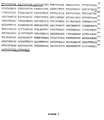
- Figure 3 Nucleotide sequences of orphan receptor DNA fragments. Underlined sequences indicate PCR primers. Both fragments contain oligo #8 at the 5' terminus and oligo #10 at the 3' terminus.
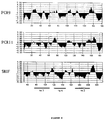
- FIG. 4 Hydropathy plots of peptides encoded by novel PCR fragments.
- the peptide product of each PCR fragment is analyzed by the Kyte-Doolittle hydropathy index. Each sequence begins within the second transmembrane domain and ends in the sixth transmembrane domain. Hydrophobic transmembrane domains 3, 4, and 5 are readily apparent.
- the plot derived from the comparable region of a rat somatostatin (SRIF) receptor is shown for comparison.
- SRIF rat somatostatin
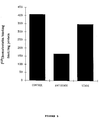
- Antisense oligos block expression of somatostatin receptors in GH4C1 cells: analysis by radioligand binding.
- GH4C1 cells are treated with vehicle (CONTROL), an antisense DNA or the corresponding sense strand for 24 hours as described in the text.
- CONTROL vehicle
- the cells are harvested, crude plasma membranes are prepared and radioligand binding is performed using [125I]somatostatin (50 fmol/tube, 250 pMol final). Non-specific binding is determined in the presence of 1 ⁇ M somatostatin.
- the results displayed are the average of two separate experiments, performed in triplicate.
- FIG. 6 Antisense oligonucleotide inhibition of somatostatin receptor function in AtT20 corticotrophs. AtT20 corcitotrophs are treated with vehicle (control), a sense oligo (5 ⁇ M), or an antisense oligo (5 ⁇ M) directed against the orphan G-protein-linked receptor PCR11 for 24 hours. The cells are harvested and somatostatin-mediated inhibition of cyclic AMP response curve performed three times with equivalent results. The lower panel is the average of three separate experiments.
- FIG. 7 Nucleotide sequence of mouse SSTR3 DNA fragment. Underlined sequences indicate PCR primers. Oligo #8 anchors the 5' terminus and oligo #12 is the 3' terminus.
- FIG. 8 Alignment of somatostatin receptor peptides. Amino acid sequences of SSTR1 and SSTR2 are aligned to SSTR3. Lines above the sequences indicate hydrophobic transmembrane domains. Only sequences from transmembrane region 2 to transmembrane region 7 are shown. Small case letters indicate conservative amino acid substitutions; upper case letters indicate nonconservative changes. To maximize the alignments, three residues near the C-terminus of transmembrane domain 4 of SSTR1 and SSTR2 are deleted. Additionally, SSTR1 has 1 fewer residue in tm6 and 3 fewer in tm7.
- the present method can be employed to isolate and clone nucleotide sequences encoding proteins from any family of proteins for which (1) a consensus sequence or sequences can be identified; (2) a cell line expressing the protein is available; and (3) a functional assay exists.
- the method is particularly useful in isolation of the nucleotide sequences encoding various types of receptors.
- the specific examples provided in this application relate to isolation and identification of a nucleic acid fragment encoding a G protein-linked receptor for a small peptide hormone, those skilled in the art will readily recognize how the techniques described herein can be applied to other receptors as well.
- the first step of the method employs the polymerase chain reaction (hereinafter "PCR") to amplify the amount of receptor nucleic acid available for study.
- the nucleic acid used in the PCR is not restricted to any particular source, but the source cells will preferably be obtained from tissue which is known to express a particular receptor or receptors of interest. Tissue sources for various receptors are well known in the art, as seen, for example in Trends in Pharmacological Sciences, Receptor Supplement, Jan. 1992 (24).
- genomic DNA, cDNA either from a library or synthesized from RNA, or RNA itself is isolated therefrom by standard methods (20), in preparation for use as a template for PCR.
- PCR is useful in amplifying, cloning and/or detecting a target sequence in a sample of DNA.
- the native duplex DNA strand is denatured, so that the individual strands separate.
- the separate strands each constitute a template which is contacted with primers, which are usually oligonucleotides designed to be able to anneal with a portion of the target sequence contained on the template.
- primers which are usually oligonucleotides designed to be able to anneal with a portion of the target sequence contained on the template.
- the primers of each strand are then extended by the use of DNA polymerase, thereby providing two new copies of the target sequence. The entire process is repeated numerous times, thus potentially resulting in millions of copies of the targeted sequence, making detection of a gene expressed at very low levels considerably easier.
- the template nucleic acid is derived from a cell known or expected to carry nucleic acid encoding one or more receptors of interest.
- the nucleic acid is then contacted with primers (oligos) specifically designed to anneal with sequences characteristic of the receptor or receptors of interest.
- primers oligos
- comparison of the known nucleotide sequences see generally 19), particularly of somatostatin (25), substance K (23), substance P (23, 6, 26, 4, 21), neuromedin K (22), thyrotropin (8, 9, 17, 19), LH/hCG (12, 14, 16), and other receptors designated mas (27), mrg and rta indicates from regions exhibiting a significant degree of conservation.
- oligonucleotide primers are designed; with 4- to 64-fold degeneracy plus 5-23% inosines. (See Figure 2A.) These oligos are capable of recognizing virtually any receptor for a peptide ligand in the PCR procedure, and indeed, as shown below, are used to isolate the sequence encoding a novel somatostatin receptor.
- unisolated receptor genes which may be cloned using these oligos include, but are not limited to, the receptors, CRF (corticotropin release factor), GNRH (gonadotropin release hormone), follitropin release hormone, growth hormone releasing hormone, octopamine, galanin, adenosine subtypes, angiotensin (II) subtypes, monocyte chemoattractant protein-1, and vasopressin subtypes.
- CRF corticotropin release factor
- GNRH gonadotropin release hormone
- follitropin release hormone growth hormone releasing hormone
- octopamine octopamine
- galanin galanin
- adenosine subtypes angiotensin (II) subtypes
- monocyte chemoattractant protein-1 monocyte chemoattractant protein-1
- vasopressin subtypes vasopressin subtypes.
- oligos can readily be constructed. For example, to identify genes encoding the secretin type of receptor (which are structurally similar to the peptide hormone receptors, but have quite distinct amino acid sequences), a comparison of the secretin, calcitonin and parathyroid receptor gene sequences provide the information for design of four novel oligos which can be used in recognition of receptors of this subclass (Figure 2B). This group of receptors potentially includes secretin, calcitonin, parathyroid hormone, growth hormone releasing factor (GRF) and glucagon.
- GRF growth hormone releasing factor
- oligos For the identification of amine receptors, a number of oligos have already been described (8). Similarly, appropriate sequences for odorant receptors have also been described (2). In each case, these can be used in the same manner as the oligos described above.
- oligos for use in this method can also be made for other types of receptors, e.g., non G protein-linked peptide hormone receptors and steroid hormone receptors.
- the appropriate oligonucleotides can be designed by comparison of several known related genes of that receptor type to determine regions of homology among them, then creating degenerate oligos based on one or more of these consensus sequences.
- the number of primers used is not critical and, to some extent, will be governed by the number of useful oligos available for this purpose. Generally, optimal primer number is determined empirically, dependent on the results obtained with a first pair of primers used. Typically, a balance is struck between the number of oligo pairs, the number of homologous sequences present in each receptor subclass to which oligos may be directed, and the facilities available to analyze the products.
- PCR reactions are well known in the art.
- the resulting clones are then isolated and the nucleotide sequence determined for all or part of the clone. At this point, the clone still represents an "orphan", the identity of which remains to be determined. However, it can be determined at this time whether the peptide encoded by the clone has the general hallmarks of a receptor molecule, particularly of the receptor type originally selected for. For example, membrane bound receptors are arranged in a pattern of intracellular (IC), external and transmembrane (TM) domains, though the types of these domains are specific to each group of receptors.
- IC intracellular
- TM transmembrane
- the presence of the characteristic domains can be determined from the predicted amino acid sequence by analysis by the Kyte-Doolittle hydropathy index (7; See also Figure 4). Once the protein has been confirmed as likely being a receptor, its subclass identity can be somewhat further refined before proceeding to the next stage of the process.
- this determination is not essential to the success of the method, it will help to screen out clones which are not likely to have been derived from receptor DNA, and to select for those that are likely to be receptor-derived.
- the sequence obtained from selected clones is then used to design antisense oligonucleotides.
- the specific length of the oligo is not critical, but it is preferable to use the largest oligo that can be taken up by cells to provide the greatest sequence specificity.
- oligos comprise 15 to 21 nucleotides.
- at least two complementary oligonucleotides are made, one in the sense orientation and one in the antisense orientation.
- the antisense oligos are designed to correspond to regions of mRNA that display the least amount of predicted secondary structure.
- Each oligo preferably contains 50-70% cytosines plus guanines to maximize hybridization to mRNA.
- the antisense oligo is used to evaluate whether any receptor function can be blocked in a wild-type cell. If the orphan clone from which the antisense sequence is derived does represent all or part of a receptor gene, then the antisense oligo (but not the sense oligo), when provided to a cell normally capable of expressing that same receptor, should block expression of that receptor.
- the type of cell used to evaluate the effect of the antisense oligo will be selected from among cells known to normally express receptors of the type and subclass initially sought.
- Whole cells or cell membranes from the selected cell type are treated with either an antisense oligo, its complementary sense oligo, or vehicle (as a control).
- the treated preparations are then observed to determine the presence or absence of receptor function in the presence of a ligand which normally binds to the receptor.
- a variety of ligands are tested; the ligands selected for testing are those which are known to bind to receptors within the subclass sought.
- the activity of a receptor in the presence of its ligand can be determined in a number of ways.
- the ligand can be detectably labelled, e.g., with a radioisotope, chemiluminescent molecule, or any other detectable label commonly used in the art.
- the labelled ligand is then contacted with the treated cells, or preferably cell membranes from treated cells, and the presence or absence of binding of the ligand to the cell or cell membranes determined.
- the observation of ligand binding in an antisense-treated cell indicates that the antisense oligo had no effect on expression of that ligand's receptor, thereby eliminating that receptor from consideration as being the one encoded by the orphan clone.
- the absence or reduction of bound ligand to cell membranes from antisense treated cells combined with the observation of ligand binding in the sense-treated cell membranes, indicates that the original orphan clone represents all or a portion of the gene encoding the receptor for that particular ligand.
- receptor function can be evaluated by measuring accumulation of the second messenger.
- many peptide hormones mediate their ultimate effects by way of the action of cyclic AMP (cAMP).
- cAMP cyclic AMP
- the binding of a particular ligand to a receptor can be evaluated by measuring the accumulation of cAMP within antisense-treated intact cells. If there is no stimulation or inhibition (depending on the receptor) of cAMP accumulation in an antisense-treated cell in the presence of a particular ligand, then it can be assumed that the receptor for that ligand was not expressed, and that the orphan sequence shares identity with the receptor for that ligand.
- Cyclic cAMP accumulation assays are well known in the art (3, 5). However, the practice of the invention is not limited to identification of receptors for peptide hormones where activity is mediated by cAMP.
- Other second messenger systems are also known, e.g., ion channels are detected by patch clamp, and inositol phosphates and arachidonic acid can be assayed using commercially available kits (New England Nuclear). In the case in which second messenger accumulation is used as the central indication of receptor blockage, labelled ligand binding can be used as a further confirmation of receptor identity.
- the present method is applicable to a wide variety of receptors.
- the receptors of particular interest are the receptors for GRF, VIP, galanin, glucagon, ⁇ -endorphin, CCKB, GHRH, GNRH, follitropin releasing hormone, CRF, octopamine, adenosine subtypes, angiotensin II subtypes, monocyte chemoattractant protein-1, and vasopressin isoforms.
- Rin cells provide a source of expressed glucagon and galanin receptors
- RC-4B cells are a useful cell line for GRF, GHRH, GNRH, and follitropin releasing factor receptors
- NG108 cells are a source of ⁇ -endorphin receptor.
- AtT20 cells can be used in connection with CRF receptor.
- Neuroblastoma cells are a convenient source for CCKB.
- Oligonucleotides are synthesized on an Applied Biosystems Model DNA synthesizer. PCR reactions are done with the Perkin-Elmer Cetus GeneAmp® PCR kit if using DNA as the template or with the same manufacturer's GeneAmp® rTth RNA PCR kit if using RNA as the template. Reactions are performed, but not limited to, the manufacturer's recommendations with a 39 o C annealing temperature for degenerate oligonucleotides or 60 o C for specific primers. Each reaction contains 1 ⁇ g DNA or total cellular RNA plus 1 ⁇ g of each primer (ca. 1 ⁇ M final concentration).
- PCR products are separated in a 1.2% agarose slab gel containing 1 ⁇ g/ml ethidium bromide. DNA fragments of the expected length are cut out and purified with GeneClean® (BIO101). The termini are polished with T4 DNA polymerase in the presence of 0.25 mM dNTPs and ligated into pGEM3Z (Promega Corp.) cleaved with SmaI. Selected clones are sequenced using the Applied Biosystems dye primer DNA sequencing kit and the Applied Biosystems Model 373A automated sequencer. Protocols are as recommended by Applied Biosystems. Nucleotide sequences are analyzed with the MacVector® software package.
- peptide receptors To target peptide receptors, consensus sequences are identified from nine rat genes. These sequences are then utilized to design probes for the isolation of new genes of the peptide receptor class.
- the receptors used are those for somatostatin, substance K, substance P, neuromedin K, thyrotropin, LH/CG and others designated mas, mrg, and rta.
- Four regions of nucleotide sequence are found to exhibit a degree of conservation significant enough to design degenerate oligonucleotide primers for PCR. Five oligos are designed with 4- to 64-fold direct degeneracy plus 5% to 23% inosines (Figure 2A).
- the five oligos described in Figure 2A are designed to anneal sequences in G protein-linked peptide receptor genes. Oligos are synthesized on an Applied Biosystems Model DNA synthesizer. The oligos are used as six different primer pairs for PCR. PCR reactions are conducted as described above. Using rat genomic DNA as the template, all six reactions produce DNA fragments of the expected size (ranging from ca. 420 bp for a tm3 to tm6 fragment to ca. 700 bp for a tm2 to tm7 fragment), DNA fragments are cloned and two samples, designated PCR9 and PCR11, are found to contain sequences characteristic of G protein-linked receptors but no exact matches are found in GenBank (Table 1).
- Nucleotide sequences of these two fragments are shown in Figure 3. Each fragment contains a single open reading frame. The comparison with other receptor sequences shows a considerable similarity between a rat somatostatin receptor and PCR 11, suggesting that PCR11 is a novel somatostatin receptor subtype. Both fragments exhibit not only primary sequence similarity to other receptors but also the hydropathy pattern characteristic of G protein-linked receptors ( Figure 4). Interestingly, the predicted third intracellular loop (IC3) of each new sequence is comparatively short, a hallmark of peptide receptors which have IC3s of 8 to 23 amino acids long (PCR #9 has an IC3 of 13 residues and PCR #11 has one of 23 amino acids).
- b All sequences are from rat. Designations are: srif, somatostatin receptor; neuK, neuromedin K receptor; subK or P, substance K or P receptor; mas, mas oncogene; mrg, mas related gene; thy, thyrotropin receptor; lhcg, luteinizing hormone and chorionic gonadotropin receptor; ⁇ 1b, ⁇ 1b -adrenergic receptor; ⁇ 2, ⁇ 2-adrenergic receptor; d2, D2 dopamine receptor.
- c Numbers represent the percent identical or conserved amino acids over the length of the translated PCR fragment. Any percentage greater than 15 is considered highly significant.
- GH4C1 a pituitary cell line
- GH4C1 cells are grown to 50% confluence in 10% fetal bovine serum, Dulbecco's modified Eagles medium in a humidified chamber (37 o C, 95:5, air CO2).
- the GH4C1 cells are then incubated with vehicle (H2O) (control), with an antisense oligo (18 mer, GGGTCGCCTCCATTTCGG, 5 ⁇ M), or the complementary sense strand (18 mer, GCCAAATGGAGGCGACCC, 5 ⁇ M) for 4 hours at 37 o C (95:5, air CO2) in Dulbecco's modified Eagles medium without serum.
- Radioligand is diluted in binding buffer + PMSF/Baci to the desired cpm per vol. of 10 ⁇ l and then 180 ⁇ l aliquots are added to the table.
- 10 ⁇ l of 20 ⁇ M cold S14 is also added per well of membrane diluted to the desired concentration (10-30 ug membrane protein/well) in binding buffer + PMSF/Baci.
- Binding is stopped by rapid filtration of samples through Whatman GF/C filters presoaked with 0.3% polyethyleneimine. Binding is allowed to proceed at 30 o C for 1-2 hours. Binding is stopped by rapid filtration of samples through Whatman GF/C filters presoaked with 0.3% polyethyleneimine.
- AtT20 cells are grown to 50% confluence in 10% fetal bovine serum, Dulbecco's modified Eagles medium in a humidified chamber (37 o C, 90:10, air:CO2). The AtT20 cells are then incubated with vehicle (control), with an antisense oligo directed against the orphan G protein-linked receptor PCR11 (20 mer, CGAGCGCCTCCGCCTTGAGG, 5 ⁇ M), or the sense strand (20 mer, ACGCAGAACGCCGTCTCCTA, 5 ⁇ M) for 4 hours at 37 o C (90:10, air:CO2) in Dulbecco's modified Eagles medium without serum.
- vehicle control
- an antisense oligo directed against the orphan G protein-linked receptor PCR11 (20 mer, CGAGCGCCTCCGCCTTGAGG, 5 ⁇ M
- the sense strand (20 mer, ACGCAGAACGCCGTCTCCTA, 5 ⁇ M
- the mRNA encoding this orphan receptor is detected in AtT-20 mouse pituitary cells by PCR Northern analysis.
- heat-inactivated fetal bovine serum is added to 10% (final concentration).
- bovine serum is added to 10% (final concentration).
- the cells are harvested and resuspended in Kreb's Ringer phosphate buffer containing 2 mM CaCl2, 100 ⁇ M isobutyl-methylxanthine (to inhibit cyclic AMP-dependent phosphodiesterase activity).
- Somatostatin-mediated inhibition of forskolin-stimulated cyclic AMP accumulation is performed in intact cells. Cyclic AMP is measured using a kit purchased from Amersham.
- KRP Kreb's Ringer Phosphate
- the reaction is terminated by addition of 10 ⁇ l of 0.1 N HCl.
- the samples are boiled for 5 minutes and then neutralized with 0.1 N NaOH containing 100 mM Tris, pH 7.5.
- cyclic AMP is added ( ⁇ 15,000 cpm) and 10 ⁇ l of adrenal binding protein.
- the ED50 response to somatostatin is 9 nM, a 9-fold shift in potency.
- the SSTR3 receptor is 57% identical to SSTR2, and is 74% homologous if conservative amino acid substitutions are considered (Figure 8); SSTR3 is only slightly less homologous to SSTR1: 49% identical and 70% identical or conserved residues.
Landscapes
- Health & Medical Sciences (AREA)
- Life Sciences & Earth Sciences (AREA)
- Chemical & Material Sciences (AREA)
- Organic Chemistry (AREA)
- Genetics & Genomics (AREA)
- Zoology (AREA)
- Engineering & Computer Science (AREA)
- Molecular Biology (AREA)
- Biochemistry (AREA)
- Biophysics (AREA)
- General Health & Medical Sciences (AREA)
- Proteomics, Peptides & Aminoacids (AREA)
- Wood Science & Technology (AREA)
- Biotechnology (AREA)
- Bioinformatics & Cheminformatics (AREA)
- Immunology (AREA)
- General Engineering & Computer Science (AREA)
- Medicinal Chemistry (AREA)
- Gastroenterology & Hepatology (AREA)
- Biomedical Technology (AREA)
- Toxicology (AREA)
- Cell Biology (AREA)
- Microbiology (AREA)
- Physics & Mathematics (AREA)
- Endocrinology (AREA)
- Plant Pathology (AREA)
- Crystallography & Structural Chemistry (AREA)
- Bioinformatics & Computational Biology (AREA)
- Analytical Chemistry (AREA)
- Peptides Or Proteins (AREA)
- Preparation Of Compounds By Using Micro-Organisms (AREA)
- Measuring Or Testing Involving Enzymes Or Micro-Organisms (AREA)
Applications Claiming Priority (2)
| Application Number | Priority Date | Filing Date | Title |
|---|---|---|---|
| US07/915,966 US5668006A (en) | 1992-07-17 | 1992-07-17 | Somatostatin receptors |
| US915966 | 1992-07-17 |
Publications (2)
| Publication Number | Publication Date |
|---|---|
| EP0578962A2 true EP0578962A2 (de) | 1994-01-19 |
| EP0578962A3 EP0578962A3 (de) | 1994-10-26 |
Family
ID=25436488
Family Applications (1)
| Application Number | Title | Priority Date | Filing Date |
|---|---|---|---|
| EP19930108984 Withdrawn EP0578962A3 (de) | 1992-07-17 | 1993-06-04 | Rezeptoridentifizierungsverfahren. |
Country Status (10)
| Country | Link |
|---|---|
| US (3) | US5668006A (de) |
| EP (1) | EP0578962A3 (de) |
| JP (1) | JPH06153954A (de) |
| KR (1) | KR940005797A (de) |
| AU (1) | AU667374B2 (de) |
| CA (1) | CA2100616C (de) |
| IL (2) | IL106357A (de) |
| SG (1) | SG47581A1 (de) |
| TW (1) | TW276271B (de) |
| ZA (1) | ZA935173B (de) |
Cited By (6)
| Publication number | Priority date | Publication date | Assignee | Title |
|---|---|---|---|---|
| WO1996005302A1 (en) * | 1994-08-11 | 1996-02-22 | Takeda Chemical Industries, Ltd. | G protein coupled receptor protein, production, and use thereof |
| FR2738827A1 (fr) * | 1995-09-18 | 1997-03-21 | Bio Merieux | Detection des enterobacteries |
| WO2001077320A3 (en) * | 2000-04-05 | 2002-03-14 | Bayer Ag | Regulation of human hm74-like g protein coupled receptor |
| US6537764B1 (en) * | 1995-01-19 | 2003-03-25 | Children's Medical Center Corporation | Method of identifying inhibitors of C—C chemokine receptor 3 |
| WO2002045503A3 (en) * | 2000-12-06 | 2003-08-28 | Deltagen Inc | Transgenic mice containing targeted gene disruptions |
| US6806061B1 (en) | 1995-01-19 | 2004-10-19 | Children's Medical Center Corporation | G protein-coupled receptor gene and methods of use therefor |
Families Citing this family (10)
| Publication number | Priority date | Publication date | Assignee | Title |
|---|---|---|---|---|
| US6210919B1 (en) | 1995-04-28 | 2001-04-03 | Hsc Research And Development Limited Partnership | Genetic sequences and proteins related to alzheimer's disease |
| US6531586B1 (en) * | 1995-04-28 | 2003-03-11 | The Hospital For Sick Children | Genetic sequences related to Alzheimer's Disease |
| US5986054A (en) * | 1995-04-28 | 1999-11-16 | The Hospital For Sick Children, Hsc Research And Development Limited Partnership | Genetic sequences and proteins related to alzheimer's disease |
| JP2000506375A (ja) * | 1996-01-26 | 2000-05-30 | エイチエスシー リサーチ アンド デベロップメント リミテッド パートナーシップ | アルツハイマー病に関連する核酸およびタンパク質、ならびにその使用 |
| US6420137B1 (en) | 1998-11-25 | 2002-07-16 | American Home Products Corporation | Nucleic acid encoding human neurotensin subtype 2 receptor |
| US20030131364A1 (en) * | 1999-04-27 | 2003-07-10 | Karen Duff | Method for producing transgenic animal models with modulated phenotype and animals produced therefrom |
| WO2004009614A2 (en) * | 2002-07-24 | 2004-01-29 | The Salk Institute For Biological Studies | Receptor (sstr4)- selective somatostatin analogs |
| US20030109673A1 (en) * | 2002-10-04 | 2003-06-12 | Xiao Yonghong | Regulation of human hm74-like g protein coupled receptor |
| US7968080B2 (en) * | 2003-08-20 | 2011-06-28 | The Regents Of The University Of California | Somatostatin analogs with inhibitory activity to growth hormone release |
| US7910484B2 (en) * | 2008-01-11 | 2011-03-22 | International Business Machines Corporation | Method for preventing backside defects in dielectric layers formed on semiconductor substrates |
Family Cites Families (6)
| Publication number | Priority date | Publication date | Assignee | Title |
|---|---|---|---|---|
| WO1990004648A1 (en) * | 1988-10-20 | 1990-05-03 | Alexander Alan Morley | Method for diagnosis of monoclonality in leukaemia and lymphoma |
| US5135917A (en) * | 1990-07-12 | 1992-08-04 | Nova Pharmaceutical Corporation | Interleukin receptor expression inhibiting antisense oligonucleotides |
| WO1992011387A1 (en) * | 1990-12-21 | 1992-07-09 | The University Of Toronto Innovations Foundation | Diagnosis for porcine malignant hyperthermia |
| EP0508221A1 (de) * | 1991-03-28 | 1992-10-14 | American Cyanamid Company | Somatostatinrezeptor |
| DE4114365A1 (de) * | 1991-05-02 | 1992-11-05 | Max Planck Gesellschaft | Verfahren zur diagnose von nicht-insulin-abhaengigem diabetes mellitus |
| US5436155A (en) * | 1991-12-31 | 1995-07-25 | Arch Development Corporation | Isolated DNA encoding a somatostatin receptor |
-
1992
- 1992-07-17 US US07/915,966 patent/US5668006A/en not_active Expired - Lifetime
- 1992-09-29 TW TW081107698A patent/TW276271B/zh active
-
1993
- 1993-06-04 EP EP19930108984 patent/EP0578962A3/de not_active Withdrawn
- 1993-06-04 SG SG1996002939A patent/SG47581A1/en unknown
- 1993-07-13 JP JP5195229A patent/JPH06153954A/ja active Pending
- 1993-07-15 CA CA002100616A patent/CA2100616C/en not_active Expired - Fee Related
- 1993-07-15 IL IL106357A patent/IL106357A/en not_active IP Right Cessation
- 1993-07-16 KR KR1019930013485A patent/KR940005797A/ko not_active Ceased
- 1993-07-16 AU AU42034/93A patent/AU667374B2/en not_active Ceased
- 1993-07-16 ZA ZA935173A patent/ZA935173B/xx unknown
-
1996
- 1996-12-20 US US08/771,182 patent/US5929209A/en not_active Expired - Lifetime
-
1997
- 1997-05-08 US US08/853,194 patent/US6077666A/en not_active Expired - Fee Related
-
2005
- 2005-12-22 IL IL172772A patent/IL172772A0/en unknown
Cited By (12)
| Publication number | Priority date | Publication date | Assignee | Title |
|---|---|---|---|---|
| WO1996005302A1 (en) * | 1994-08-11 | 1996-02-22 | Takeda Chemical Industries, Ltd. | G protein coupled receptor protein, production, and use thereof |
| US6114139A (en) * | 1994-08-11 | 2000-09-05 | Takeda Chemical Industries, Ltd. | G-protein coupled receptor protein and a DNA encoding the receptor |
| CN1101854C (zh) * | 1994-08-11 | 2003-02-19 | 武田药品工业株式会社 | G蛋白偶联受体蛋白质及其产生方法和用途 |
| US6537764B1 (en) * | 1995-01-19 | 2003-03-25 | Children's Medical Center Corporation | Method of identifying inhibitors of C—C chemokine receptor 3 |
| US6806061B1 (en) | 1995-01-19 | 2004-10-19 | Children's Medical Center Corporation | G protein-coupled receptor gene and methods of use therefor |
| US6994977B2 (en) | 1995-01-19 | 2006-02-07 | Children's Medical Center Corporation | Method of identifying inhibitors of C—C chemokine receptor 3 |
| US7012133B1 (en) | 1995-01-19 | 2006-03-14 | Children's Medical Center Corp. | Antibodies to C-C chemokine Receptor 3 Protein |
| US7402657B2 (en) | 1995-01-19 | 2008-07-22 | Millennium Pharmaceuticals, Inc. | C-C chemokine receptor 3 proteins |
| FR2738827A1 (fr) * | 1995-09-18 | 1997-03-21 | Bio Merieux | Detection des enterobacteries |
| US5786147A (en) * | 1995-09-18 | 1998-07-28 | Bio Merieux | Detection of enterobacteria |
| WO2001077320A3 (en) * | 2000-04-05 | 2002-03-14 | Bayer Ag | Regulation of human hm74-like g protein coupled receptor |
| WO2002045503A3 (en) * | 2000-12-06 | 2003-08-28 | Deltagen Inc | Transgenic mice containing targeted gene disruptions |
Also Published As
| Publication number | Publication date |
|---|---|
| AU4203493A (en) | 1994-01-20 |
| SG47581A1 (en) | 1998-04-17 |
| ZA935173B (en) | 1994-03-02 |
| CA2100616A1 (en) | 1994-01-18 |
| IL106357A0 (en) | 1993-11-15 |
| IL106357A (en) | 2006-10-31 |
| US5929209A (en) | 1999-07-27 |
| KR940005797A (ko) | 1994-03-22 |
| CA2100616C (en) | 2007-11-27 |
| EP0578962A3 (de) | 1994-10-26 |
| JPH06153954A (ja) | 1994-06-03 |
| IL172772A0 (en) | 2006-04-10 |
| US6077666A (en) | 2000-06-20 |
| US5668006A (en) | 1997-09-16 |
| AU667374B2 (en) | 1996-03-21 |
| TW276271B (de) | 1996-05-21 |
Similar Documents
| Publication | Publication Date | Title |
|---|---|---|
| US5668006A (en) | Somatostatin receptors | |
| Mountjoy et al. | The cloning of a family of genes that encode the melanocortin receptors | |
| Baud et al. | EMR1, an unusual member in the family of hormone receptors with seven transmembrane segments | |
| Birnbaumer et al. | Molecular cloning of the receptor for human antidiuretic hormone | |
| Deweerth et al. | Molecular cloning, functional expression and chromosomal localization of the human cholecystokinin type A receptor | |
| Atger et al. | Structure of the human luteinizing hormone-choriogonadotropin receptor gene: unusual promoter and 5′ non-coding regions | |
| EP0635054B1 (de) | Säugetier-rezeptoren für das melanocyten-stimulierendes hormon und deren verwendungen | |
| Vollmar et al. | Detection of C-type natriuretic peptide (CNP) transcript in the rat heart and immune organs | |
| AU2010201829B2 (en) | Endogenous and non-endogenous versions of human G protein-coupled receptors | |
| Roglić et al. | cDNA cloning of a novel G protein-coupled receptor with a large extracellular loop structure | |
| EP0804575A1 (de) | G-protein gekoppelte rezeptoren, verfahren zur herstellung und anwendung | |
| Marazziti et al. | Cloning of GPR37, a gene located on chromosome 7 encoding a putative G-protein-coupled peptide receptor, from a human frontal brain EST library | |
| US8076455B2 (en) | Guanosine triphosphate (GTP)-binding protein-coupled receptor protein, BG37 | |
| Ruiz-Opazo et al. | Identification of a novel dual angiotensin II/vasopressin receptor on the basis of molecular recognition theory | |
| US5837521A (en) | Nucleic acids encoding the γ-MSH receptor MC3-R | |
| Sairam et al. | Alternative splicing converts the G‐protein coupled follitropin receptor gene into a growth factor type I receptor: Implications for pleiotropic actions of the hormone | |
| WO1991009121A2 (en) | Polypeptides having thyrotropin-receptor activity, nucleic acid sequences coding for such receptors and polypeptides, and applications of these polypeptides | |
| US5773229A (en) | Mammalian adrenocorticotropic hormone receptors and uses | |
| US20130089867A1 (en) | Isoforms of the human sst5 receptor originated by alternative splicing and oligonucleotide pairs to detect them by pcr | |
| Zhang et al. | The unique exon 10 of the human luteinizing hormone receptor is necessary for expression of the receptor protein at the plasma membrane in the human luteinizing hormone receptor, but deleterious when inserted into the human follicle-stimulating hormone receptor | |
| Pattee et al. | Cloning and characterization of Xen-dorphin prohormone from Xenopus laevis: a new opioid-like prohormone distinct from proenkephalin and prodynorphin | |
| CA2295210A1 (en) | Prolactin secretion modulator | |
| US20030138817A1 (en) | G protein coupled receptor protein, production, and use thereof | |
| Akazome et al. | Characterization of cDNA-encoding N-terminal region of the quail lutropin receptor | |
| EP0950711A2 (de) | Gonadotropin Rezeptoren |
Legal Events
| Date | Code | Title | Description |
|---|---|---|---|
| PUAI | Public reference made under article 153(3) epc to a published international application that has entered the european phase |
Free format text: ORIGINAL CODE: 0009012 |
|
| AK | Designated contracting states |
Kind code of ref document: A2 Designated state(s): AT BE CH DE DK ES FR GB GR IE IT LI LU NL PT SE |
|
| RAP1 | Party data changed (applicant data changed or rights of an application transferred) |
Owner name: AMERICAN CYANAMID COMPANY |
|
| PUAL | Search report despatched |
Free format text: ORIGINAL CODE: 0009013 |
|
| AK | Designated contracting states |
Kind code of ref document: A3 Designated state(s): AT BE CH DE DK ES FR GB GR IE IT LI LU NL PT SE |
|
| 17P | Request for examination filed |
Effective date: 19950315 |
|
| 17Q | First examination report despatched |
Effective date: 19970822 |
|
| STAA | Information on the status of an ep patent application or granted ep patent |
Free format text: STATUS: THE APPLICATION IS DEEMED TO BE WITHDRAWN |
|
| 18D | Application deemed to be withdrawn |
Effective date: 19990421 |