EP0580120B1 - Verwendung eines hydrophoben kationischen Farbstoffs in der Farbschicht eines Farbbandes für den Thermotransferdruck - Google Patents
Verwendung eines hydrophoben kationischen Farbstoffs in der Farbschicht eines Farbbandes für den Thermotransferdruck Download PDFInfo
- Publication number
- EP0580120B1 EP0580120B1 EP19930111590 EP93111590A EP0580120B1 EP 0580120 B1 EP0580120 B1 EP 0580120B1 EP 19930111590 EP19930111590 EP 19930111590 EP 93111590 A EP93111590 A EP 93111590A EP 0580120 B1 EP0580120 B1 EP 0580120B1
- Authority
- EP
- European Patent Office
- Prior art keywords
- group
- cationic dye
- dye
- thermal transfer
- ink ribbon
- Prior art date
- Legal status (The legal status is an assumption and is not a legal conclusion. Google has not performed a legal analysis and makes no representation as to the accuracy of the status listed.)
- Expired - Lifetime
Links
- 0 CC1=*(C)*=*C(*)*1 Chemical compound CC1=*(C)*=*C(*)*1 0.000 description 2
Images





Classifications
-
- B—PERFORMING OPERATIONS; TRANSPORTING
- B41—PRINTING; LINING MACHINES; TYPEWRITERS; STAMPS
- B41M—PRINTING, DUPLICATING, MARKING, OR COPYING PROCESSES; COLOUR PRINTING
- B41M5/00—Duplicating or marking methods; Sheet materials for use therein
- B41M5/26—Thermography ; Marking by high energetic means, e.g. laser otherwise than by burning, and characterised by the material used
- B41M5/382—Contact thermal transfer or sublimation processes
- B41M5/385—Contact thermal transfer or sublimation processes characterised by the transferable dyes or pigments
-
- B—PERFORMING OPERATIONS; TRANSPORTING
- B41—PRINTING; LINING MACHINES; TYPEWRITERS; STAMPS
- B41M—PRINTING, DUPLICATING, MARKING, OR COPYING PROCESSES; COLOUR PRINTING
- B41M5/00—Duplicating or marking methods; Sheet materials for use therein
- B41M5/26—Thermography ; Marking by high energetic means, e.g. laser otherwise than by burning, and characterised by the material used
- B41M5/382—Contact thermal transfer or sublimation processes
- B41M5/385—Contact thermal transfer or sublimation processes characterised by the transferable dyes or pigments
- B41M5/3854—Dyes containing one or more acyclic carbon-to-carbon double bonds, e.g., di- or tri-cyanovinyl, methine
-
- B—PERFORMING OPERATIONS; TRANSPORTING
- B41—PRINTING; LINING MACHINES; TYPEWRITERS; STAMPS
- B41M—PRINTING, DUPLICATING, MARKING, OR COPYING PROCESSES; COLOUR PRINTING
- B41M5/00—Duplicating or marking methods; Sheet materials for use therein
- B41M5/26—Thermography ; Marking by high energetic means, e.g. laser otherwise than by burning, and characterised by the material used
- B41M5/382—Contact thermal transfer or sublimation processes
- B41M5/385—Contact thermal transfer or sublimation processes characterised by the transferable dyes or pigments
- B41M5/39—Dyes containing one or more carbon-to-nitrogen double bonds, e.g. azomethine
Definitions
- an ink ribbon comprised of a polyethylene terephthalate substrate and an ink layer formed by mixing a dye with or dissolving the dye in a hydrophobic polymer is provided.
- the ink layer is superposed in a dye-receiving hydrophobic polymer layer of a transfer material formed on a synthetic paper, under which the ink ribbon is heated according to image signals by means of a thermal head or the like.
- a disperse dye in the ink layer is thermally transferred to the dye-receiving layer to form an image.
- sublimable dyes have been heretofore considered principally favorable from the standpoint of the image formation. According to recent investigative trends wherein types of materials have been taken into account, importance is placed on thermal diffusing properties rather than sublimability. Moreover, there are other important properties or factors of the dyes including miscibility with hydrophobic polymers used in the ink layer of the thermal transfer ink ribbon, dyeability against the dye-receiving layer consisting of hydrophobic polymers of the transfer material, and a degree of achievement of actual sensitivity at the time of the thermal transfer. To this end, disperse dyes have been frequently used as a dye for the thermal transfer ink ribbons.
- cationic dyes which are known for dyeing acrylic fibers as having an inherent brightness, high coloring properties and good light fastness are used for the thermal transfer ribbons.
- the cationic dyes exhibit good light fastness and wet fastness, they are hydrophilic in nature, so that it is difficult to uniformly, stably keep the dye in butyryl resins ordinarily used as the binder of the ink layer of thermal transfer ink ribbons.
- the patent CH-A-374 135 discloses a process for the production of water-insoluble dyes. These dyes are prepared by reacting a water-soluble alkaline dye with a compound that releases an organic or an inorganic anion that is able to form, with the dye cation, a water-insoluble salt. The staining of estron using these dyes is described.
- DE-A-2 362 649 discloses colouring agents which contain alkaline dyes and are obtained by reacting and dispersing a water-soluble dye with an excess of an anionic dispersing agent. The product is a dispersion of water-insoluble dye salts in dispersing agent that can be used to stain textiles.
- An object of this invention is to provide ink layers for thermal transfer ink ribbons which contain a hydrophobic polymer and a dye, wherein, firstly, said dye can be mixed with said hydrophobic polymer satisfactorily and uniformly with good storage stability and, secondly, said dye provides for improved sensitivity at the time of the transfer and for improved color and light fastness of the resultant images.
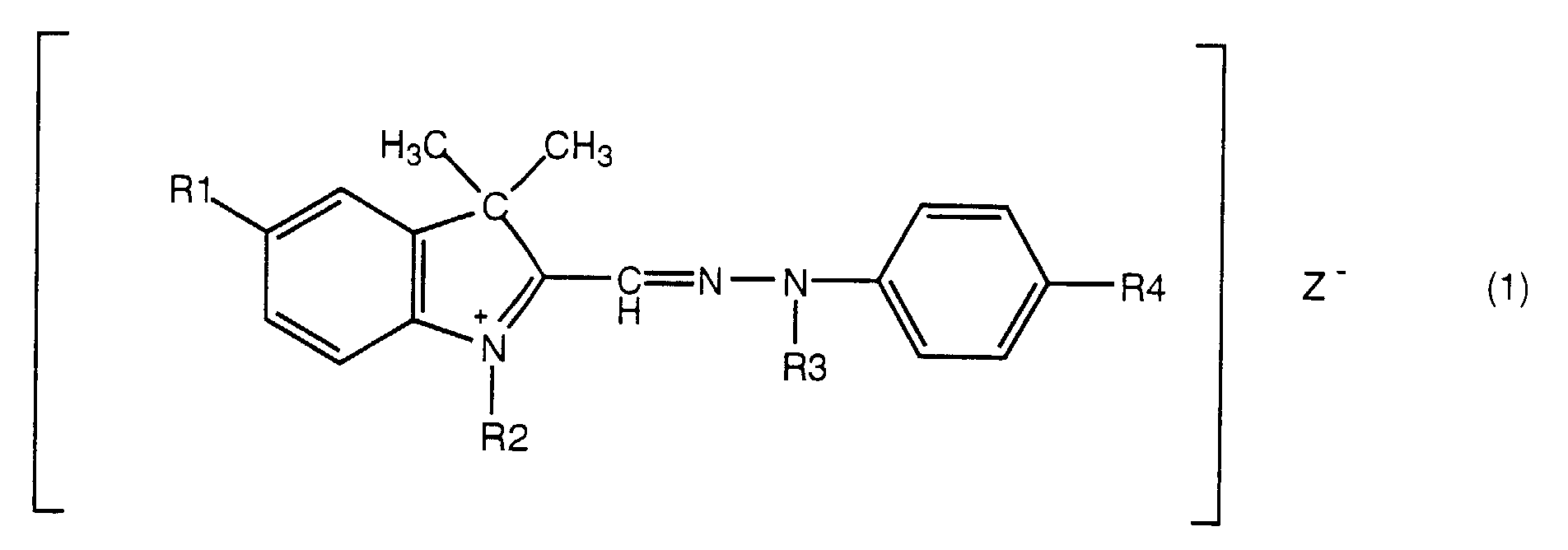
- a hydrophobic cationic dye which is obtained by substituting, with an organic anion, a counter ion of a diazacarbocyanine cationic dye of the formula (1) wherein R1, R2, R3 and R4 independently represent a hydrogen atom, a halogen atom, a cyano group, an alkyl group, a cycloalkyl group, an alkoxy group, an aryl group, an aryloxy group, an aralkyl group, an aralkoxy roup, an alkenyl group, an alkenoxy group, an alkoxycarbonyl group, an acyloxy group, or an acyl group which may be substituted, and Z- represents a counter ion in ink layers of thermal transfer ink ribbons.
- a thermal transfer ink ribbon which comprises a support and an ink layer formed on the support, wherein the ink layer comprises a hydrophobic cationic dye which is obtained by substituting, with an organic anion, a counter ion of a diazacarbocyanine cationic dye of the formula (1) wherein R1, R2, R3 and R4 independently represent a hydrogen atom, a halogen atom, a cyano group, an alkyl group, a cycloalkyl group, an alkoxy group, an aryl group, an aryloxy group, an aralkyl group, an aralkoxy group, an alkenyl group, an alkenoxy group, an alkoxycarbonyl group, an acyloxy group, or an acyl group which may be substituted, and Z- represents a counter ion.
- Figure 1 shows a sectional view of a thermal transfer ink ribbon of the invention.
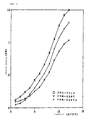
- Figure 2 is a dynamic sensitivity characteristic graph of an ink ribbon of the invention.
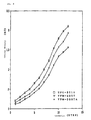
- Figure 3 is a dynamic sensitivity characteristic graph of another ink ribbon of the invention.
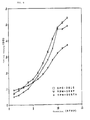
- Figure 4 is a dynamic sensitivity characteristic graph of another ink ribbon of the invention.
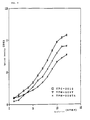
- Figure 5 is a dynamic sensitivity characteristic graph of still another ink ribbon of the invention.
- Figure 6 is a dynamic sensitivity characteristic graph of another ink ribbon of the invention.
- Figure 7 is a dynamic sensitivity characteristic graph of another ink ribbon of the invention.
- Figure 8 is a dynamic sensitivity characteristic graph of yet another ink ribbon of the invention.
- Figure 9 is a dynamic sensitivity characteristic graph of another ink ribbon of the invention.
- Figure 10 is a dynamic sensitivity characteristic graph of another ink ribbon of the invention.
- Figure 11 is a dynamic sensitivity characteristic graph of another ink ribbon of the invention.
- Figure 12 is a dynamic sensitivity characteristic graph of another ink ribbon of the invention.
- the invention makes use of a yellow dye, a hydrophobic cationic dye which is obtained by substituting, with an organic anion, a counter ion of a diazacarbocyanine cationic dye of the formula (1) wherein R1, R2, R3 and R4 independently represent a hydrogen atom, a halogen atom, a cyano group, an alkyl group, a cycloalkyl group, an alkoxy group, an aralkoxy group, an alkenyl group, an alkenoxy group, an alkoxycarbonyl group, an acyloxy group, or an acyl group which may be substituted, and Z- represents a counter ion.
- the cationic dyes not substituted with an organic anion include C.I. Basic Yellow 28 and 51.
- the invention makes use of, as a cyan due, a hydrophobic cationic dye which is obtained by substituting, with an organic anion, a counter ion of an oxazine cationic dye of the formula (3a) or (3b).
- R31, R32, R33, R34, R35, R36, R37, R38, R39, R310, R311 and R312 independently represent a hydrogen atom, a halogen atom, a cyano group, on alkyl group, a cyoloalkyl group, an alkoxy group, an aryl group, an aryloxy group, an aralkyl group, a aralkoxy group, an alkenyl group, an alkenoxy group, an alkoxycarbonyl group, an acyloxy group, or an acyl group which may be substituted, provided that R31 and R32, R33 and R34, R37 and R38, R39 and R310, R310 and R311, and R311 and R312 may, respectively, join together to form a ring, and Z- represents a counter ion.
- the present invention also provides a thermal transfer ink ribbon which comprises a support and an ink layer formed thereon, characterized in that the ink layer comprises any of these hydrophobic cationic dyes.
- organic anions used in the present invention are those which can render the hydrophilic cationic dyes hydrophobic by substituting the counter ion of the cationic dye therewith.
- Such organic anions are those ions of anionic surface active agents indicated below. It will be noted here that these organic anions may be available as salts of alkali metals prior to the substitution with the counter ion of the hydrophilic cationic dyes.
- sulfosuccinate anions of (2d) such as diethylhexylsulfosuccinate anion, alkylbenzenesulfonate anions of (2b) such as dodecybenzenesulfonate anion, alkylsulfate anions of 3b) such as lauryl sulfate anion, and soap anions of (1a).
- the hydrophobic cationic dyes used according to the invention can be obtained by dropping an aqueous solution of salts containing the above-indicated organic anions in an aqueous solution of a hydrophilic cationic dye under agitation, extracting the resulting mixture with an organic solvent such as toluene, and removing the solvent from the organic phase to obtain a hydrophobic dye as a residue insoluble or sparingly soluble in water.
- the hydrophobic cationic dyes used according to the invention are hydrophobic in nature, so that they can be uniformly, stably, mixed with hydrophobic resins which would not be otherwise used along with known hydrophilic cationic dyes.
- the above hydrophobic cationic dyes can be uniformly, stably mixed with hydrophobic polymer binders for use in the ink layer of a thermal transfer ink ribbon and are thus suitable for use as the dye of thermal transfer ink ribbons.
- thermal transfer ink ribbon composed of a support and an ink layer formed thereon wherein the ink layer contains the above hydrophobic cationic dye is within the scope of the invention.
- the ink layer of the thermal transfer ink ribbon of the invention may be constituted of the above hydrophobic cationic dye alone. If necessary, other ingredients such as hydrophobic polymer binders, melting point adjusting agents, plasticizers, solvents, binders, and pigments and dyes other than the hydrophobic cationic dyes used according to the invention can be used.
- the support of the thermal transfer ink ribbon of the invention may be, for example, polyethylene terephthalate films, nylon films, triacetyl cellulose films, moistureproof cellophane sheets, capacitor paper, thin paper, cloth the like.
- the thermal transfer ink ribbon of the invention may be fabricated by a usual manner. For instance, an ink composition comprising the above hydrophobic cationic dye is applied onto a support by use of a wire bar coater to obtain a ribbon.
- the ink layer of the ink ribbon and the dye-receiving layer of the transfer material are placed in face-to-face relation, under which an image-forming portion is heated from the support side of the ink ribbon by means of a thermal head of a laser beam of a printer, thereby causing the dye ingredient in the ink layer to be transferred on the image-receiving layer by sublimation or thermal diffusion.
- hydrophobic cationic dyes used according to the invention are rendered hydrophobic by substitution of the counter ion of the hydrophilic cationic dye with an organic anion, making it possible to enhance miscibility with non-aqueous solvents and hydrophobic polymers.
- the above dyes are usable as a dye for the thermal transfer ink ribbon.
- the invention is more particularly described by way of examples.
- C.I. Basic Yellow 28 (commercial name: Kayacryl Golden Yellow GL available from Nippon Kayaku K.K.) which is a diazacarbocyanine cationic dye for dyeing acrylic fibers from which additives such as sodium sulfate were removed by a Soxhlet apparatus using ethanol was dissolved in 100 ml of water. While agitating the dye solution, 50 g of a 2 wt% sodium diethylhexylsulfosuccinate aqueous solution was dropped in the dye solution to substitute the counter ion with an organic anion (diethylhexylsulfosuccinate anion).
- the hydrophobic cationic dye was placed in a water-toluene phase and shaken, whereupon it was found most of the dye remained in the toluene phase.
- the dye which had not been subjected to the substitution treatment with the organic anion was kept in the aqueous phase when treated in a similar manner as set out above. This reveals that the substitution treatment contributes to drastic improvement of miscibility with organic solvents.
- thermo transfer ink ribbon 10 shown in Fig. 1 was fabricated in the following manner.
- the thermal transfer ink ribbon obtained above was set in a ribbon cassette (not shown).
- a color video printer (commercial name: CVP-G500, made by Sony Co., Ltd.) was used for single color printing on a printing sheet whose image-receiving layer was made of a vinyl chloride-vinyl acetate copolymer resin (commercial name: UPC-3010, made by Sony Co., Ltd.), a printing sheet whose dye-receiving layer was made of a polyester resin (commercial name: VPM-30ST, made by Sony Co., Ltd.), and a printing sheet whose dye-receiving layer was made of a cellulose ester resin (commercial name: VPM-30STA, made by Sony Co., Ltd.)
- VPM-30STA commercial name: VPM-30STA
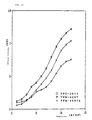
- Fig. 2 shows a so-called dynamic sensitivity (color-development) characteristic of the ink ribbon.
- the abscissa axis indicates a gradation (step) which shows an energy added for image printing in a stepwise manner.
- the ink ribbon fabricated in this example ensures gradation printing by the thermal transfer with respect to all the printing sheets.
- Example 2 In the same manner as in Example 1, 1 g of C.I. Basic Yellow 28 and 1 g of sodium dodecylbenzenesulfonate were reacted to obtain about 1.8 g of crystals of the captioned hydrophobic cationic dye.
- the hydrophobic cationic dye was placed in a water-toluene phase and shaken, whereupon the dye mostly remained in the toluene phase. This reveals that the substitution with the organic anion contributes to drastically improved miscibility with the organic solvent.
- Example 2 In the same manner as in Example 1, the resultant hydrophobic cationic dye was used to make a thermal transfer ink ribbon, followed by a similar printing, test. As a result, there was obtained an image which assumed a good yellow color and good gradation properties.
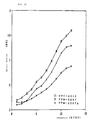
- Fig. 3 shows a so-called dynamic sensitivity (color-development) characteristic of the ink ribbon. As shown in the figure, the ink ribbon obtained in this example ensures gradation printing by the thermal transfer on the printing sheets.
- Example 2 In the same manner as in Example 1, 1 g of C.I. Basic Yellow 28 and 1 g of sodium laurylsulfate were reacted to obtain about 1.5 g of crystals of the captioned hydrophobic cationic dye.
- the hydrophobic cationic dye was placed in a water-toluene phase and shaken, whereupon the dye mostly remained in the toluene phase. This reveals that the substitution with the organic anion contributes to drastically improved miscibility with the organic solvent.
- Example 2 In the same manner as in Example 1, the resultant hydrophobic cationic dye was used to make a thermal transfer ink ribbon, followed by a similar printing test. As a result, there was obtained an image which assumed a good yellow color and good gradation properties.
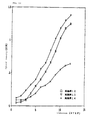
- Fig. 4 shows a so-called dynamic sensitivity (color-development) characteristic of the ink ribbon. As shown in the figure, the ink ribbon obtained in this example ensures gradation printing by the thermal transfer on the printing sheets.
- Example 2 In the same manner as in Example 1, 1 g of C.I. Basic Yellow 51 (commercial name: Diacryl Yellow 3G-N, made by Mitsubishi Chem. Hoechest Co., Ltd.) and 1 g of sodium dodecylbenzenesulfonate were reacted to obtain about 1.5 g of crystals of the captioned hydrophobic cationic dye.
- the hydrophobic cationic dye was placed in a water-toluene phase and shaken, whereupon the dye mostly remained in the toluene phase. This reveals that the substitution with the organic anion contributes to drastically improved miscibility with the organic solvent.
- Example 2 In the same manner as in Example 1, 1 g of C.I. Basic Yellow 21 (commercial name: Aizen Cathilon Yellow 7GLH, made by Hodogaya Chem. Inc. Co., Ltd.) and 1 g of sodium dodecylbenzenesulfonate were reacted to obtain about 1.6 g of crystals of the captioned hydrophobic cationic dye.
- the hydrophobic cationic dye was placed in water-toluene phase and shaken, whereupon the dye mostly remained in the toluene phase. This reveals that the substitution with the organic anion contributes to drastically improved miscibility with the organic solvent.
- Example 2 In the same manner as in Example 1, the resultant hydrophobic cationic dye was used to make a thermal transfer ink ribbon followed by a similar printing test. As a result, there was obtained an image which assumed a good lemon yellow color and good gradation properties.
- Fig. 6 shows a so-called dynamic sensitivity (color-development) characteristic of the ink ribbon. As shown in the figure, the ink ribbon obtained in this example ensures gradation printing by the thermal transfer on the printing sheets.
- Example 2 In the same manner as in Example 1, the resultant hydrophobic cationic dye was used to make a thermal transfer ink ribbon, followed by a similar printing test. As a result, there was obtained an image which assumed a good yellow color and good gradation properties.
- Fig. 8 shows a so-called dynamic sensitivity (color-development) characteristic of the ink ribbons As shown in the figure, the ink ribbon obtained in this example ensures gradation printing by the thermal transfer on the printing sheets.
- Example 9 shows a so-called dynamic sensitivity (color-development) characteristic of the ink ribbon. As shown in the figure, the ink ribbon obtained in this example ensures gradation printing by the thermal transfer on the printing sheets.
- Example 10 shows a so-called dynamic sensitivity (color-development) characteristic of the ink ribbon. As shown in the figure, the ink ribbon obtained in this example ensures gradation printing by the thermal transfer on the printing sheets.
- Example 11 shows a so-called dynamic sensitivity (color-development) characteristic of the ink ribbon.
- the ink ribbon obtained in this example ensures gradation printing by the thermal transfer on the printing sheet.
- Example 2 In the same manner as in Example 1, 1 g of C.I. Basic Violet 7 (commercial name: Aizen Cathilon Red 6BH, made by Hodogaya Chem. Ind. Co., Ltd.) and 1 g of sodium dodecylbenzenesulfonate were reacted to obtain about 1.8 g of the captioned hydrophobic cationic dye.
- the hydrophobic cationic dye was placed in a water-toluene phase and shaken, whereupon the dye mostly remained in the toluene phase. This reveals that the substitution of the counter ion with the organic anion contributes to drastically improved miscibility with the organic solvent.
- Example 12 shows a so-called dynamic sensitivity (color-development) characteristic of the ink ribbon. As shown in the figure, the ink ribbon obtained in this example ensures gradation printing by the thermal transfer on the printing sheets.
- Example 2 In the same manner as in Example 1, 1 g of C.I. Basic Blue 75 (commercial name: Kayacryl Light Blue 4GSL, made by Nippon Kayaku K.K.) and 1 g of sodium diethylhexylsuccinate were reacted to obtain about 1.6 of a dark bluish green, tar-like captioned hydrophobic cationic dye.
- the hydrophobic cationic dye was placed in a water-toluene phase and shaken, whereupon the dye mostly remained in the toluene phase. This reveals that the substitution with the organic anion contributes to drastically improving miscibility with the organic solvent.
- Example 2 In the same manner as in Example 1, the resultant hydrophobic cationic dye was used to make a thermal transfer ink ribbon, followed by a similar printing test using a printing sheet (VMP-30STA) of Sony Co., Ltd. As a result, there was obtained an image which assumed a good cyan color and good gradation properties.
- Fig. 13 shows a so-called dynamic sensitivity (color-development) characteristic of the ink ribbon. As shown in the figure, the ink ribbon obtained in this example ensures gradation printing by the thermal transfer on the printing sheets.
- Example 12 In the same manner as in Example 12, the resultant hydrophobic cationic dye was used to make a thermal transfer ink ribbon, followed by a similar printing test. As a result, there was obtained an image which assumed a good cyan color and good gradation properties.
- Fig. 13 shows a so-called dynamic sensitivity (color-development) characteristic of the ink ribbon. As shown in the figure, the ink ribbon obtained in this example ensures gradation printing by the thermal transfer on the printing sheets.
- Example 2 In the same manner as in Example 1, 1 g of C.I. Basic Blue 3 (commercial name: Aizen Cathilon Pure Blue 5GH, made by Hodogaya Chem. Ind. Co., Ltd.) and 1 g of sodium laurylsulfate were reacted to obtain about 1.8 g of crystals of the captioned hydrophobic cationic dye.
- the hydrophobic cationic dye was placed in a water-toluene phase and shaken, whereupon the dye mostly remained in the toluene phase. This reveals that the substitution of the counter ion contributes to drastically improved miscibility with the organic solvent.
- Example 12 In the same manner as in Example 12, the resultant hydrophobic cationic dye was used to make a thermal transfer ink ribbon, followed by a similar printing test using a printing sheet (UPC-3010) of Sony Co., Ltd. As a result, there was obtained an image which assumed a good cyan color and good gradation properties.
- Fig. 13 shows a so-called dynamic sensitivity (color-development) characteristic of the ink ribbon. As shown in the figure, the ink ribbon obtained in this example ensures gradation printing by the thermal transfer on the printing sheets.
Landscapes
- Physics & Mathematics (AREA)
- Optics & Photonics (AREA)
- Thermal Transfer Or Thermal Recording In General (AREA)
Claims (8)
- Verwendung eines hydrophoben kationischen Farbstoffs in einer Farbschicht eines Thermotransferfarbbands, wobei die Farbschicht ein hydrophobes Polymer enthält und der Farbstoff erhältlich ist indem das Gegenion eines kationischen Diazacarbocyaninfarbstoffs der Formel (1)in der R1, R2, R3 und R4 unabhängig voneinander ein Wasserstoffatom, ein Halogenatom, eine Cyangruppe, eine Alkylgruppe, eine Cycloalkylgruppe, eine Alkoxygruppe, eine Arylgruppe, eine Aryloxygruppe, eine Aralkylgruppe, eine Aralkoxygruppe, eine Alkenylgruppe, eine Alkenoxygruppe, eine Alkoxycarbonylgruppe, eine Acyloxygruppe oder eine Acylgruppe, welche auch substituiert sein können, bedeuten und Z- ein Gegenion bedeutet, durch ein organisches Anion ersetzt wird.
- Thermotransferfarbband, mindestens umfassend einen Träger und eine auf dem Träger ausgebildete Farbschicht, die einen hydrophoben kationischen Farbstoff enthält, der erhältlich ist indem das Gegenion eines kationischen Diazacarbocyaninfarbstoffs der Formel (1)in der R1, R2, R3 und R4 unabhängig voneinander ein Wasserstoffatom, ein Halogenatom, eine Cyangruppe, eine Alkylgruppe, eine Cycloalkylgruppe, eine Alkoxygruppe, eine Arylgruppe, eine Aryloxygruppe, eine Aralkylgruppe, eine Aralkoxygruppe, eine Alkenylgruppe, eine Alkenoxygruppe, eine Alkoxycarbonylgruppe, eine Acyloxygruppe oder eine Acylgruppe, welche auch substituiert sein können, bedeuten und Z- ein Gegenion bedeutet, durch ein organisches Anion ersetzt wird.

- Verwendung eines hydrophoben kationischen Farbstoffs in einer Farbschicht eines Thermotransferfarbbands, wobei die Farbschicht ein hydrophobes Polymer enthält und der Farbstoff erhältlich ist indem das Gegenion des kationischen Farbstoffs C.I. Basic Yellow 21, 36, 67 oder 73 durch ein organisches Anion ersetzt wird.
- Thermotransferfarbband, mindestens umfassend einen Träger und eine auf dem Träger ausgebildete Farbschicht, die einen hydrophoben kationischen Farbstoff enthält, der erhältlich ist indem das Gegenion des kationischen Farbstoffs C.I. Basic Yellow 21, 36, 67 oder 73 durch ein organisches Anion ersetzt wird.
- Verwendung eines hydrophoben kationischen Farbstoffs in einer Farbschicht eines Thermotransferfarbbands, wobei die Farbschicht ein hydrophobes Polymer enthält und der Farbstoff erhältlich ist indem das Gegenion eines kationischen Hemicyaninfarbstoffs der Formel (2)in der R21, R22, R23, R24 und R25 unabhängig voneinander ein Wasserstoffatom, ein Halogenatom, eine Cyangruppe, eine Alkylgruppe, eine Cycloalkylgruppe, eine Alkoxygruppe, eine Arylgruppe, eine Aryloxygruppe, eine Aralkylgruppe, eine Aralkoxygruppe, eine Alkenylgruppe, eine Alkenoxygruppe, eine Alkoxycarbonylgruppe, eine Acyloxygruppe oder eine Acylgruppe, welche auch substituiert sein können, bedeuten, unter der Voraussetzung, daß R24 und R25 zusammen einen Ring bilden können, und in der Z- ein Gegenion bedeutet, durch ein organisches Anion ersetzt wird.
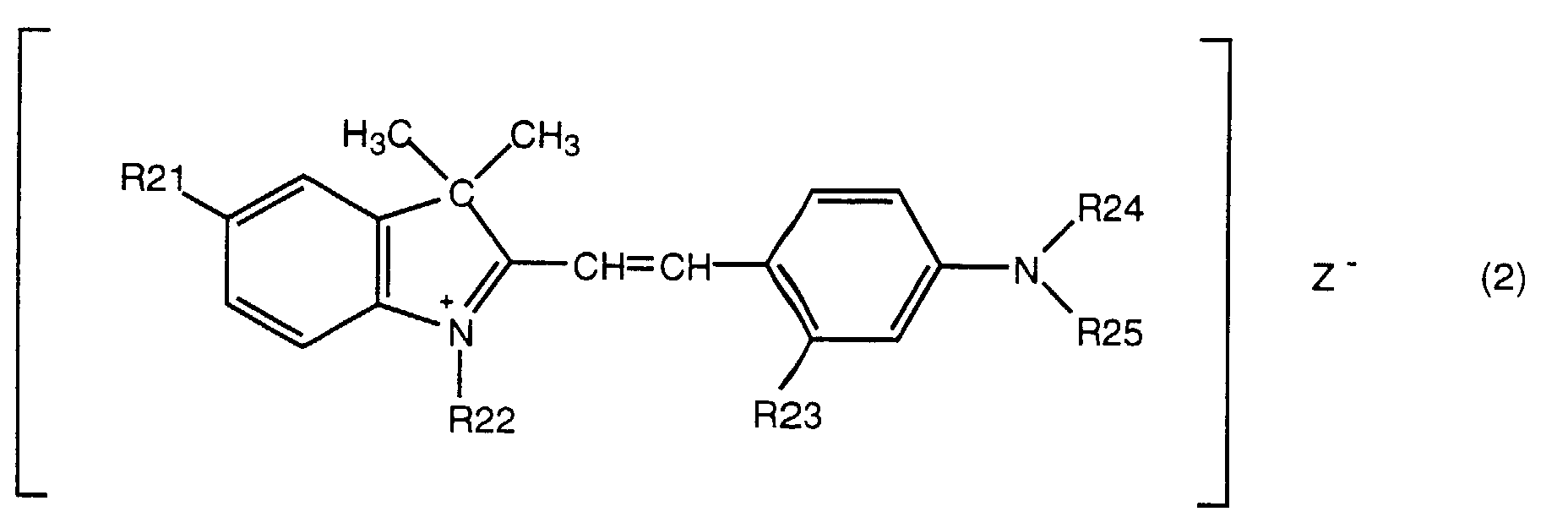
- Thermotransferfarbband, mindestens umfassend einen Träger und eine auf dem Träger ausgebildete Farbschicht, die einen hydrophoben kationischen Farbstoff enthält, der erhältlich ist indem das Gegenion eines kationischen Hemicyaninfarbstoffs der Formel (2)in der R21, R22, R23, R24 und R25 unabhängig voneinander ein Wasserstoffatom, ein Halogenatom, eine Cyangruppe, eine Alkylgruppe, eine Cycloalkylgruppe, eine Alkoxygruppe, eine Arylgruppe, eine Aryloxygruppe, eine Aralkylgruppe, eine Aralkoxygruppe, eine Alkenylgruppe, eine Alkenoxygruppe, eine Alkoxycarbonylgruppe, eine Acyloxygruppe oder eine Acylgruppe, welche auch substituiert sein können, bedeuten, unter der Voraussetzung, daß R24 und R25 zusammen einen Ring bilden können, und in der Z- ein Gegenion bedeutet, durch ein organisches Anion ersetzt wird.

- Verwendung eines hydrophoben kationischen Farbstoffs in einer Farbschicht eines Thermotransferfarbbands, wobei die Farbschicht ein hydrophobes Polymer enthält und der Farbstoff erhältlich ist indem das Gegenion eines kationischen Oxazinfarbstoffs der Formel (3a) oder (3b)
 in der R31, R32, R33, R34, R35, R36, R37, R38, R39, R310, R311 und R312 unabhängig voneinander ein Wasserstoffatom, ein Halogenatom, eine Cyangruppe, eine Alkylgruppe, eine Cycloalkylgruppe, eine Alkoxygruppe, eine Arylgruppe, eine Aryloxygruppe, eine Aralkylgruppe, eine Aralkoxygruppe, eine Alkenylgruppe, eine Alkenoxygruppe, eine Alkoxycarbonylgruppe, eine Acyloxygruppe oder eine Acylgruppe, welche auch substituiert sein können, bedeuten, unter der Voraussetzung, daß R31 und R32, R33 und R34, R37 und R38, R39 und R310, R310 und R311 sowie R311 und R312 jeweils zusammen einen Ring bilden können, und in der Z- ein Gegenion bedeutet, durch ein organisches Anion ersetzt wird.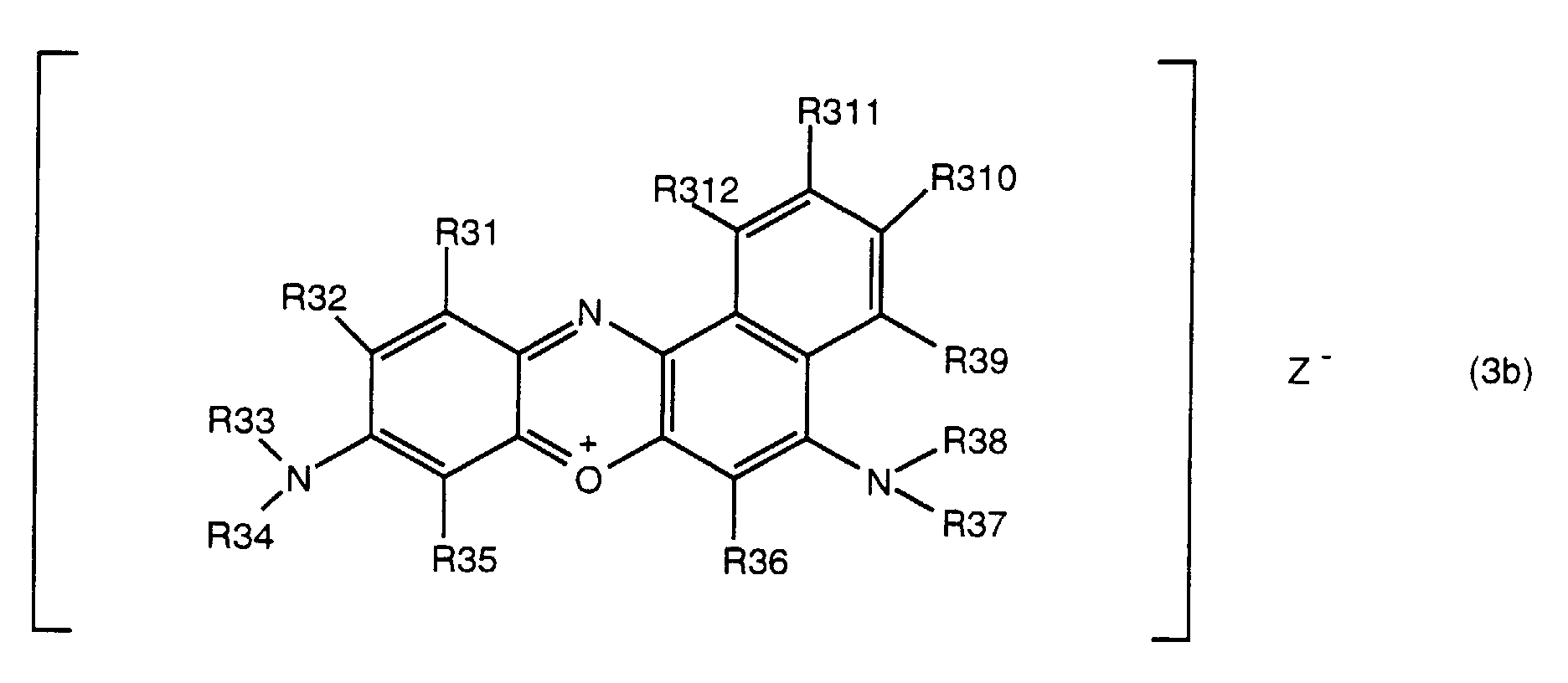
- Thermotransferfarbband, mindestens umfassend einen Träger und eine auf dem Träger ausgebildete Farbschicht, die einen hydrophoben kationischen Farbstoff enthält, der erhältlich ist indem das Gegenion eines kationischen Oxazinfarbstoffs der Formel (3a) oder (3b)
 in der R31, R32, R33, R34, R35, R36, R37, R38, R39, R310, R311 und R312 unabhängig voneinander ein Wasserstoffatom, ein Halogenatom, eine Cyangruppe, eine Alkylgruppe, eine Cycloalkylgruppe, eine Alkoxygruppe, eine Arylgruppe, eine Aryloxygruppe, eine Aralkylgruppe, eine Aralkoxygruppe, eine Alkenylgruppe, eine Alkenoxygruppe, eine Alkoxycarbonylgruppe, eine Acyloxygruppe oder eine Acylgruppe, welche auch substituiert sein können, bedeuten, unter der Voraussetzung, daß R31 und R32, R33 und R34, R37 und R38, R39 und R310, R310 und R311 sowie R311 und R312 jeweils zusammen einen Ring bilden können, und in der Z- ein Gegenion bedeutet, durch ein organisches Anion ersetzt wird.
Applications Claiming Priority (2)
| Application Number | Priority Date | Filing Date | Title |
|---|---|---|---|
| JP4217137A JPH0640172A (ja) | 1992-07-23 | 1992-07-23 | 疎水化カチオン染料及びこれを用いた熱転写インクリボン |
| JP217137/92 | 1992-07-23 |
Publications (2)
| Publication Number | Publication Date |
|---|---|
| EP0580120A1 EP0580120A1 (de) | 1994-01-26 |
| EP0580120B1 true EP0580120B1 (de) | 1999-03-10 |
Family
ID=16699438
Family Applications (1)
| Application Number | Title | Priority Date | Filing Date |
|---|---|---|---|
| EP19930111590 Expired - Lifetime EP0580120B1 (de) | 1992-07-23 | 1993-07-20 | Verwendung eines hydrophoben kationischen Farbstoffs in der Farbschicht eines Farbbandes für den Thermotransferdruck |
Country Status (3)
| Country | Link |
|---|---|
| EP (1) | EP0580120B1 (de) |
| JP (1) | JPH0640172A (de) |
| DE (1) | DE69323805T2 (de) |
Families Citing this family (3)
| Publication number | Priority date | Publication date | Assignee | Title |
|---|---|---|---|---|
| JP3451718B2 (ja) | 1993-07-08 | 2003-09-29 | ソニー株式会社 | 印画紙、その製造のための染料受容層形成用組成物及びそれらを使用する画像形成方法 |
| JPH0912911A (ja) * | 1995-06-30 | 1997-01-14 | Sony Corp | ジアザヘミシアニン系疎水化カチオン染料及びこれを用いた熱転写インクリボン |
| WO2005068566A1 (en) * | 2004-01-20 | 2005-07-28 | Ciba Specialty Chemicals Holding Inc. | Organic solvent-based printing inks |
Family Cites Families (4)
| Publication number | Priority date | Publication date | Assignee | Title |
|---|---|---|---|---|
| CH374135A (de) * | 1958-07-09 | 1963-12-31 | Sandoz Ag | Verfahren zur Herstellung wasserunlöslicher Farbstoffsalze |
| JPS572747B2 (de) * | 1972-12-16 | 1982-01-18 | ||
| US4602263A (en) * | 1984-09-04 | 1986-07-22 | Polaroid Corporation | Thermal imaging method |
| US4748149A (en) * | 1987-02-13 | 1988-05-31 | Eastman Kodak Company | Thermal print element comprising a yellow merocyanine dye stabilized with a cyan indoaniline dye |
-
1992
- 1992-07-23 JP JP4217137A patent/JPH0640172A/ja active Pending
-
1993
- 1993-07-20 DE DE1993623805 patent/DE69323805T2/de not_active Expired - Fee Related
- 1993-07-20 EP EP19930111590 patent/EP0580120B1/de not_active Expired - Lifetime
Also Published As
| Publication number | Publication date |
|---|---|
| DE69323805T2 (de) | 1999-09-23 |
| JPH0640172A (ja) | 1994-02-15 |
| EP0580120A1 (de) | 1994-01-26 |
| DE69323805D1 (de) | 1999-04-15 |
Similar Documents
| Publication | Publication Date | Title |
|---|---|---|
| DE3829918C2 (de) | Wärmeempfindliches Übertragungsmaterial | |
| EP0482595A1 (de) | Infrarot absorbierende Squarliumverbindung enthaltendes Donorelement für die Bildaufzeichnung durch Wärme | |
| US5972838A (en) | Infrared-absorbing cyanine colorants for laser-colorant transfer | |
| EP0271861B1 (de) | Thermische Übertragungsschicht | |
| EP0164074A2 (de) | Wärmeübertragungsmaterial und Verfahren | |
| US5656759A (en) | Hydrophobic cationic dye compounds | |
| JPH07137455A (ja) | 感熱転写による画像形成方法 | |
| EP0580120A1 (de) | Hydrophober kationischer Farbstoff und Farbband für den Thermotransfer mit diesem Farbstoff | |
| JP3207518B2 (ja) | 熱転写シート | |
| US5698490A (en) | Thermal transfer ink ribbons using the same | |
| JPS6049993A (ja) | 感熱転写材 | |
| DE3644928C2 (de) | ||
| DE68911292T2 (de) | Neue Blaugrünfarbstoff zur Verwendung in der thermischen Farbstoffsublimationsübertragung. | |
| JP2964464B2 (ja) | 感熱転写記録材料及び感熱転写記録方法 | |
| EP0257577B1 (de) | N-Alkyl- oder N-Arylaminopyrazolon-merocyanin-Farbstoff-Donor-Element für die thermische Farbstoffübertragung | |
| JPS618386A (ja) | 階調性熱転写記録材 | |
| DE3838933A1 (de) | Waermeempfindliches uebertragungsmaterial | |
| JPH0238470A (ja) | インキ組成物及びその製造方法 | |
| US4987119A (en) | Cyan dyes in dye-donor elements for use in thermal dye transfer methods | |
| EP0394563B1 (de) | Blaugrünfarbstoffe in Farbstoffdonor-elementen für thermische Farbstoffübertragung | |
| JP3293003B2 (ja) | 熱転写画像形成用金属イオン供給化合物を用いた記録材料および画像形成方法 | |
| JP2003113329A (ja) | 疎水化カチオン染料及びこれを用いた熱転写インクリボン | |
| JP2515310B2 (ja) | 熱転写シ−ト | |
| JP3041372B2 (ja) | 感熱転写記録材料および該記録材料を用いた感熱転写記録方法 | |
| JPH0640174A (ja) | 疎水化カチオン染料及びこれを用いた熱転写インクリボン |
Legal Events
| Date | Code | Title | Description |
|---|---|---|---|
| PUAI | Public reference made under article 153(3) epc to a published international application that has entered the european phase |
Free format text: ORIGINAL CODE: 0009012 |
|
| AK | Designated contracting states |
Kind code of ref document: A1 Designated state(s): DE FR GB |
|
| 17P | Request for examination filed |
Effective date: 19940622 |
|
| 17Q | First examination report despatched |
Effective date: 19970114 |
|
| GRAG | Despatch of communication of intention to grant |
Free format text: ORIGINAL CODE: EPIDOS AGRA |
|
| GRAG | Despatch of communication of intention to grant |
Free format text: ORIGINAL CODE: EPIDOS AGRA |
|
| GRAH | Despatch of communication of intention to grant a patent |
Free format text: ORIGINAL CODE: EPIDOS IGRA |
|
| GRAH | Despatch of communication of intention to grant a patent |
Free format text: ORIGINAL CODE: EPIDOS IGRA |
|
| GRAA | (expected) grant |
Free format text: ORIGINAL CODE: 0009210 |
|
| AK | Designated contracting states |
Kind code of ref document: B1 Designated state(s): DE FR GB |
|
| REF | Corresponds to: |
Ref document number: 69323805 Country of ref document: DE Date of ref document: 19990415 |
|
| ET | Fr: translation filed | ||
| PLBE | No opposition filed within time limit |
Free format text: ORIGINAL CODE: 0009261 |
|
| STAA | Information on the status of an ep patent application or granted ep patent |
Free format text: STATUS: NO OPPOSITION FILED WITHIN TIME LIMIT |
|
| 26N | No opposition filed | ||
| PGFP | Annual fee paid to national office [announced via postgrant information from national office to epo] |
Ref country code: FR Payment date: 20010712 Year of fee payment: 9 |
|
| PGFP | Annual fee paid to national office [announced via postgrant information from national office to epo] |
Ref country code: DE Payment date: 20010716 Year of fee payment: 9 |
|
| PGFP | Annual fee paid to national office [announced via postgrant information from national office to epo] |
Ref country code: GB Payment date: 20010718 Year of fee payment: 9 |
|
| REG | Reference to a national code |
Ref country code: GB Ref legal event code: IF02 |
|
| PG25 | Lapsed in a contracting state [announced via postgrant information from national office to epo] |
Ref country code: GB Free format text: LAPSE BECAUSE OF NON-PAYMENT OF DUE FEES Effective date: 20020720 |
|
| PG25 | Lapsed in a contracting state [announced via postgrant information from national office to epo] |
Ref country code: DE Free format text: LAPSE BECAUSE OF NON-PAYMENT OF DUE FEES Effective date: 20030201 |
|
| GBPC | Gb: european patent ceased through non-payment of renewal fee |
Effective date: 20020720 |
|
| PG25 | Lapsed in a contracting state [announced via postgrant information from national office to epo] |
Ref country code: FR Free format text: LAPSE BECAUSE OF NON-PAYMENT OF DUE FEES Effective date: 20030331 |
|
| REG | Reference to a national code |
Ref country code: FR Ref legal event code: ST |