EP0583077B1 - Méthodes et appareil pour reprogrammation - Google Patents
Méthodes et appareil pour reprogrammation Download PDFInfo
- Publication number
- EP0583077B1 EP0583077B1 EP93305535A EP93305535A EP0583077B1 EP 0583077 B1 EP0583077 B1 EP 0583077B1 EP 93305535 A EP93305535 A EP 93305535A EP 93305535 A EP93305535 A EP 93305535A EP 0583077 B1 EP0583077 B1 EP 0583077B1
- Authority
- EP
- European Patent Office
- Prior art keywords
- unit
- software
- memory means
- reprogrammable
- grade
- Prior art date
- Legal status (The legal status is an assumption and is not a legal conclusion. Google has not performed a legal analysis and makes no representation as to the accuracy of the status listed.)
- Expired - Lifetime
Links
Images

Classifications
-
- H—ELECTRICITY
- H04—ELECTRIC COMMUNICATION TECHNIQUE
- H04W—WIRELESS COMMUNICATION NETWORKS
- H04W8/00—Network data management
- H04W8/22—Processing or transfer of terminal data, e.g. status or physical capabilities
- H04W8/24—Transfer of terminal data
-
- G—PHYSICS
- G06—COMPUTING OR CALCULATING; COUNTING
- G06F—ELECTRIC DIGITAL DATA PROCESSING
- G06F8/00—Arrangements for software engineering
- G06F8/60—Software deployment
- G06F8/65—Updates
-
- G—PHYSICS
- G11—INFORMATION STORAGE
- G11C—STATIC STORES
- G11C16/00—Erasable programmable read-only memories
- G11C16/02—Erasable programmable read-only memories electrically programmable
- G11C16/06—Auxiliary circuits, e.g. for writing into memory
- G11C16/30—Power supply circuits
-
- H—ELECTRICITY
- H04—ELECTRIC COMMUNICATION TECHNIQUE
- H04W—WIRELESS COMMUNICATION NETWORKS
- H04W8/00—Network data management
- H04W8/22—Processing or transfer of terminal data, e.g. status or physical capabilities
-
- H—ELECTRICITY
- H04—ELECTRIC COMMUNICATION TECHNIQUE
- H04W—WIRELESS COMMUNICATION NETWORKS
- H04W92/00—Interfaces specially adapted for wireless communication networks
- H04W92/16—Interfaces between hierarchically similar devices
- H04W92/18—Interfaces between hierarchically similar devices between terminal devices
Definitions
- the invention relates to a method of reprogramming either one of at least two computer-controlled units so as to upgrade software stored in reprogrammable memory means in the unit, where the units are normally interconnected in a network for inter-operation thereover, comprising the steps of comparing the grades of the software respectively stored in the memory means of the two units to determine which (if either) of them is storing the software of the higher grade, and using the unit which is storing the software of the higher grade to upgrade the software of the other unit so that it also is of the higher grade.
- the invention also relates to a system, comprising at least two computer-controlled units arranged for normal inter-operation over a network in dependence on software stored in reprogrammable memory means in each of the units, comparing means in each unit operable to compare the grade of software stored in its memory means with the grade of software stored in the memory means of the other unit, and upgrading means in each unit and operative when the comparing means of that unit determines that the grade of software stored in that unit is higher than the grade of software stored in the other unit to upgrade the software stored in the other unit.
- EP-A-0 217 351 Such a method and system are shown in EP-A-0 217 351.
- the units are computers in a data communications network which is used for normal data processing and data transfer operation between the computers.
- the software upgrading process takes place over the data communications network. In certain circumstances, this is not satisfactory because the software upgrading process would unnecessarily occupy the network. Furthermore, the software upgrading process can only take place when the units are interconnected by the network.
- each unit is a telecommunications unit and the network is a telecommunications network permitting telecommunication between the units over the network; in that each reprogrammable memory means is switchable between a normal operating mode in which its software is used for controlling the unit for normal operation over the network and is not reprogrammable and a reprogrammable mode in which its software can be reprogrammed; and in that the comparing step comprises the steps of interconnecting the two units by means of interconnection means which is independent of the telecommunications network and switches each memory means into the reprogrammable mode, each unit when switched into the reprogrammable mode signalling to the other unit the current grade of the software stored in its reprogrammable memory means, and carrying out a comparison in each unit by which the grade of the software in the reprogrammable memory means thereof is compared with the grade of the software in the reprogrammable memory means of the other unit, whereby the unit whose software has the higher grade enters a MA
- the system as first set forth above is characterised in that the units are telecommunications units and the network is a telecommunications network permitting telecommunication between the units over that network; and in that each reprogrammable memory means is switchable between a normal operating mode in which its software is used for controlling the unit for normal operation over the network and is not reprogrammable and a reprogrammable mode in which its software can be reprogrammed; by interconnection means for interconnecting the units independently of their interconnection by the telecommunications network; and in that the interconnection means includes means operative to cause each memory means to be switched into the reprogrammable mode and then to signal to the other unit the current grade of the software stored in its reprogrammable memory means, and means for activating the comparing means in each unit to compare the grade of the software in the reprogrammable memory means of that unit with the grade of the software in the reprogrammable memory means of the other unit, whereby the unit whose software has the higher grade enters a MASTER mode and the unit whose
- the invention is applied to the reprogramming of a mobile telecommunications terminal (e.g. a mobile or portable handset) used in a cellular telephone system (in particular, a digital form of such a system).
- a mobile telecommunications terminal e.g. a mobile or portable handset
- a cellular telephone system enables users of mobile or portable handsets to communicate with each other and with telephone users of a PSTN.
- each handset incorporates microprocessor-based equipment for controlling various operations of the handset within the system.
- the software for controlling the microprocessor is stored within each handset. From time to time, the system provider may update the software (for example, so that it provides additional facilities for subscribers to the system). Such subscribers may therefore wish to update the software within their handsets so as to take advantage of these extra facilities.
- the invention enables such handsets to be reprogrammed simply, quickly and inexpensively. Because the reprogramming process uses interconnection means which is independent of the telecommunications network, the upgrading process does not unnecessarily occupy the telecommunications network and is not limited by the parameters of the telecommunications network.
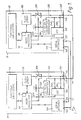
- Shown in Figure 1 are two mobile or portable communications terminals or handsets for use in a cellular telephone system.
- they may be for use in a digital system such as the GSM pan-European cellular system.
- One such handset, A comprises a microprocessor 5A which controls the basic elements of the handset which are indicated diagrammatically at 6A.
- Such basic elements comprise the microphone for receiving the voice input, the audio circuitry for processing the resultant signals produced by the microphone, the transmitting and receiving circuitry, and control circuitry for controlling the operation of the handset both in its receiving and transmitting modes.
- the microprocessor 5A contains a small amount of memory indicated at 8A.
- the main storage for the microprocessor is stored in a reprogrammable memory 10A which stores the software controlling the operation of the microprocessor.
- the reprogrammable memory 10A is in the form of a Flash Eprom.
- the handset has a serial interface shown at 12A with input and output terminals 13A and 14A.
- the normal use of this interface is for testing purposes and for connection to an external power source (e.g. in a vehicle), or to a PC.
- the handset also has an analogue to digital converter 15A by means of which analogue input signals can be fed to the microprocessor 5A such as for the purpose of power management.
- the handset includes a power supply (not shown) which provides the necessary power supplies for operating the various components of the handset.
- This power supply produces a 5 volt supply on a line 16A.
- the handset also incorporates a voltage converter 18A which receives the 5 volt supply from the line 16A and converts it into a 12 volt output on line 20A.
- This 12 volt supply is fed to an output terminal 22A and also to an input of the analogue to digital converter 15A on a line 24A.
- the FLASH Eprom 10A is operable in a normal mode and a reprogramming mode. In its normal mode, it is powered by the 5 volt supply. In its reprogramming mode, however, the FLASH Eprom is supplied with the 12 volt power supply. The reprogramming process will be described in more detail below.
- the handset is provided with an input terminal 26A which is connected to another input of the analogue to digital converter via a line 28A and also, via a switch 30A, to the FLASH Eprom.
- the operation of switch 30A is controlled by the microprocessor by means of signals on a line 32A.
- the second handset, B is identical with handset A. Corresponding items are therefore similarly referenced, but with the suffix "B" instead of "A”.
- the two handsets A and B can be interconnected so that the one of them whose FLASH Eprom contains the newest issue of software reprograms the other handset so as to update the software stored in its FLASH Eprom to the same issue number.
- the cable loom comprises duplex links 40 and 42 which interconnect the input and output terminals 13A,13B,14A and 14B of the serial interfaces 12A and 12B of the respective handsets.
- the cable loom includes a link 44 which connects the 12 volt output terminal 22A of handset A with terminal 26B of handset B.
- the cable loom incorporates a link 46 which connects terminals 22A and 26A of handset A.
- handsets A and B are handsets operating in a cellular telephone system and that there has been an update of the handset-controlling software. It is also assumed that the software in one of the handsets has been updated while the software in the other handset is of the previous or an earlier version (or lower issue number).
- the updated software may have been placed into the first-mentioned handset by means of special programming equipment - or (using a third, re-programmed, handset) by means of the method now to be described. Irrespective of the manner in which it has been re-programmed, however, it is caused to re-program the second handset by connecting the two handsets by means of the cable loom C. In a manner now to be described, this automatically causes the re-programming process to start.
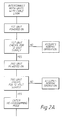
- handset A is powered ON.
- This powering-ON process causes the microprocessor 5A (in response to its operating program stored in memory 8A) to check for the presence of a 12 volt supply at terminal 26A.
- This checking process is carried out via the analogue to digital converter 15A.
- the cable loom C will provide a link (link 46) between terminals 22A and 26A and will thus provide a 12 volt supply on line 28A.
- the microprocessor 5A reacts to this by closing switch 30A to enter the reprogramming mode.
- the second handset B is now powered ON. In response to this powering-ON, this handset likewise checks for the presence of a 12 volt supply on terminal 26B. Such a 12 volt supply will be present, because of link 44 in cable loom C. Handset B therefore likewise enters the reprogramming mode, upon closure of switch 30B.
- each handset now in the reprogramming mode, transmits the issue number of its software from the output terminal of its interface 12A, 12B to the input terminal of the interface of the other handset, and each handset checks the software issue number received.
- Handset A compares its own software issue number with the software issue number received from handset B. If the latter issue number is lower than its own issue number, handset A enters the MASTER mode. If, on the other hand, the issue number received is greater than its own issue number, it enters the SLAVE mode. In either case, it re-issues its own issue number to handset B. Handset B carries out a similar process and therefore either enters the MASTER or SLAVE mode.
- both handsets receive equal issue numbers, they return to normal operation. Likewise, each returns to normal operation if it does not receive an issue number from the other handset within a predetermined time.
- both handsets are either in normal operation or one is in MASTER mode and the other is in SLAVE mode. Assuming that the latter is the case, the handset in MASTER mode takes control of all future interaction between the two units.
- the handset in MASTER mode commands the other handset (in SLAVE mode) to erase all the software from its FLASH Eprom. Such erasing can take place because the FLASH Eprom is powered by the 12 volt supply.
- the handset in MASTER mode then downloads into the FLASH Eprom of the other handset the new issue of software, this downloading process taking place in blocks until the FLASH Eprom of the handset in SLAVE mode has been completely re-programmed with the higher issue software.
- the handset in SLAVE mode returns a checksum to the other handset to confirm completion of the operation.
- the software for controlling this reprogramming process is held in memory 8A,8B of each microprocessor 5A,5B.
- the controlling software in the memory 8A, 8B of the handset operating in the SLAVE mode causes that handset to assume a special software issue number; this issue number is the lowest possible and represents the presence of invalid or corrupted software - that is, to reflect the fact that the re-programming process has been interrupted so that the FLASH Eprom contains invalid software.
- this special issue number will cause the unit automatically to enter the SLAVE mode.
- a simple cable loom enables one handset to re-program another one with the latest issue software.
- a user owning a number of different handsets merely has to have one of them re-programmed by the service provider and he can then use that re-programmed hand set to re-program all his other handsets.
- each handset re-programmed in the manner described could then itself be used to re-program another handset.
- a handset operating in the MASTER mode it is also possible for a handset operating in the MASTER mode to be connected not merely to one but several other handsets - by a modified form of the cable loom C - so as to re-program them all.
- a group of handsets When a group of handsets is interconnected in this way, one of the handsets would issue a broadcast command to all the others.
- Each of the other handsets would then respond by signalling the controlling handset with an identifying signal, such as corresponding to its serial number.
- an identifying signal such as corresponding to its serial number.
- the controlling handset would thus receive the serial numbers of all the other handsets and could then address each of them in turn, asking them to send their respective software issue numbers. Those with lower issue numbers would thus enter the SLAVE mode and the re-programming process described above would then take place.
- the interface 12 could be a parallel interface instead of a serial interface.
Landscapes
- Engineering & Computer Science (AREA)
- Theoretical Computer Science (AREA)
- Software Systems (AREA)
- General Engineering & Computer Science (AREA)
- Physics & Mathematics (AREA)
- General Physics & Mathematics (AREA)
- Computer Security & Cryptography (AREA)
- Databases & Information Systems (AREA)
- Computer Networks & Wireless Communication (AREA)
- Signal Processing (AREA)
- Mobile Radio Communication Systems (AREA)
- Telephonic Communication Services (AREA)
- Circuit For Audible Band Transducer (AREA)
Claims (14)
- Méthode de reprogrammation de l'une ou l'autre d'au moins deux unités commandées par ordinateur (A, B) de manière à mettre à niveau le logiciel mémorisé dans un moyen de mémoire reprogrammable (10A, 10B) dans l'unité, où les unités sont normalement interconnectées en un réseau pour interfonctionner sur celui-ci, comprenant les étapes de comparaison des niveaux des logiciels mémorisés respectivement dans les moyens de mémoire (10A, 10B) des deux unités (A, B) en vue de déterminer celle (s'il y en a une) des deux qui mémorise le logiciel de niveau supérieur, et d'utilisation de l'unité (A ou B) qui mémorise le logiciel de niveau supérieur en vue de mettre à niveau le logiciel de l'autre unité (A ou B) de telle sorte qu'il soit aussi du niveau supérieur, caractérisée en ce que chaque unité est une unité de télécommunications et le réseau est un réseau de télécommunications permettant les télécommunications entre les unités sur le réseau; en ce que chaque moyen de mémoire reprogrammable (10A, 10B) est commutable entre un mode de fonctionnement normal dans lequel son logiciel est utilisé pour commander l'unité (A, B) en vue d'un fonctionnement normal sur le réseau et n'est pas reprogrammable et un mode reprogrammable dans lequel son logiciel peut être reprogrammé; et en ce que l'étape de comparaison comprend les étapes d'interconnexion des deux unités (A, B) au moyen d'un moyen d'interconnexion (C) qui est indépendant du réseau de télécommunications et commute chaque moyen de mémoire (10A, 10B) sur le mode reprogrammable, chaque unité (A, B) quand elle est commutée sur le mode reprogrammable signalant à l'autre unité (A, B) le niveau en cours du logiciel mémorisé dans son moyen de mémoire reprogrammable (10A, 10B), et effectuant une comparaison dans chaque unité (A, B) par laquelle le niveau du logiciel dans le moyen de mémoire reprogrammable (10A, 10B) de celle-ci est comparé au niveau du logiciel dans le moyen de mémoire reprogrammable (10A, 10B) de l'autre unité (A, B), par laquelle l'unité (A, B) dont le logiciel a le niveau supérieur entre en un mode MAITRE et l'unité (A,B) dont le logiciel a le niveau inférieur entre en un mode ASSERVI; et en ce que l'étape de mise à niveau comprend l'étape d'utilisation de l'unité (A, B) en mode MAITRE en vue de mettre à niveau le logiciel mémorisé dans le moyen de mémoire reprogrammable (10A, 10B) de l'unité (A, B) en mode ASSERVI au niveau supérieur.
- Méthode selon la revendication 1, caractérisée en ce que l'étape de mise à niveau comprend les étapes d'effacement du logiciel de niveau inférieur dans le moyen de mémoire reprogrammable (10A, 10B) de l'unité (A, B) en mode ASSERVI et de chargement dans ce moyen de mémoire (10A, 10B) du logiciel de niveau supérieur provenant du moyen de mémoire (10A, 10B) de l'unité (A, B) en mode MAITRE.
- Méthode selon la revendication 1 ou 2, caractérisée en ce que chaque moyen de mémoire reprogrammable (10A, 10B) est commuté sur le mode reprogrammable en appliquant un signal électrique prédéterminé à chaque unité (A, B) au moyen du moyen d'interconnexion (C).
- Méthode selon l'une quelconque des revendications précédentes, caractérisée en ce que chaque unité (A, B) est un terminal de télécommunications mobile.
- Méthode selon l'une quelconque des revendications précédentes, caractérisée en ce que chaque moyen de mémoire reprogrammable comprend une mémoire Eprom FLASH.
- Méthode selon l'une quelconque des revendications précédentes, caractérisée en ce que chaque unité (A, B) en mode ASSERVI répond à une interruption de l'étape de mise à niveau avant qu'elle ne soit achevée en mémorisant, dans son moyen de mémoire (10A, 10B) des données signifiant la mémorisation d'un logiciel corrompu.
- Système, comprenant au moins deux unités commandées par ordinateur (A, B) disposées pour un interfonctionnement normal sur un réseau dépendant de logiciels mémorisés dans des moyens de mémoire reprogrammables (10A, 10B) dans chacune des unités (A, B), un moyen de comparaison (8A, 8B) dans chaque unité (A, B) pouvant fonctionner pour comparer le niveau du logiciel mémorisé dans son moyen de mémoire (10A, 10B) au niveau du logiciel mémorisé dans le moyen de mémoire (10A, 10B) de l'autre unité (A, B), et un moyen de mise à niveau (8A, 8B) dans chaque unité (A, B) et fonctionnant quand le moyen de comparaison (8A, 8B) de cette unité (A, B) détermine que le niveau de logiciel mémorisé dans cette unité (A, B) est supérieur au niveau de logiciel mémorisé dans l'autre unité (A, B) en vue de mettre à niveau le logiciel mémorisé dans l'autre unité (A, B), caractérisé en ce que les unités (A, B) sont des unités de télécommunications et le réseau est un réseau de télécommunications permettant les télécommunications entre les unités (A, B) sur ce réseau; et en ce que chaque moyen de mémoire reprogrammable (10A, 10B) est commutable entre un mode de fonctionnement normal dans lequel son logiciel est utilisé pour commander l'unité (A, B) en vue d'un fonctionnement normal sur le réseau et n'est pas reprogrammable et un mode reprogrammable dans lequel son logiciel peut être reprogrammé ; par un moyen d'interconnexion (C) pour interconnecter les unités (A, B) indépendamment de leur interconnexion par le réseau de télécommunications; et en ce que le moyen d'interconnexion (C) comporte des moyens (15A, 15B, 26A, 26B, 30A, 30B) fonctionnant pour forcer la commutation de chaque moyen de mémoire (10A, 10B) sur le mode reprogrammable puis pour signaler à l'autre unité (A, B) le niveau en cours du logiciel mémorisé dans son moyen de mémoire reprogrammable (10A, 10B), et des moyens pour actionner le moyen de comparaison (8A, 8B) dans chaque unité (A, B) en vue de comparer le niveau du logiciel dans le moyen de mémoire reprogrammable (10A, 10B) de cette unité (A, B) au niveau du logiciel dans le moyen de mémoire reprogrammable (10A, 10B) de l'autre unité (A, B), par lequel l'unité (A, B) dont le logiciel a le niveau supérieur entre en un mode MAITRE, et l'unité (A, B) dont le logiciel a le niveau inférieur passe en un mode ASSERVI; et en ce que le moyen de mise à niveau (8A, 8B) comprend un moyen pour utiliser l'unité (A, B) en mode MAITRE en vue de mettre à niveau le logiciel mémorisé dans le moyen de mémoire reprogrammable (10A, 10B) de l'unité (A, B) en mode ASSERVI au niveau supérieur.
- Système selon la revendication 7, caractérisé en ce que chaque moyen de mémoire reprogrammable (10A, 10B) est commuté sur le mode reprogrammable en appliquant une tension prédéterminée à celui-ci, et en ce que le moyen d'interconnexion (C) comprend un moyen pour appliquer cette tension prédéterminée au moyen de mémoire (10A, 10B).
- Système selon la revendication 8, caractérisé en ce que chaque unité (A, B) comporte une source de la tension prédéterminée (18A, 18B) et le moyen d'interconnexion (C) comprend un moyen (46) pour appliquer cette tension telle que produite par l'une des unités (A) au moyen de mémoire reprogrammable (10A) de cette unité (1) et un moyen (44) pour appliquer la tension prédéterminée de cette unité (A) au moyen de mémoire (10B) de l'autre unité (B).
- Système selon l'une quelconque des revendications 7 à 9, caractérisé en ce que chaque moyen de mémoire reprogrammable est une mémoire Eprom FLASH (10A, 10B).
- Système selon l'une quelconque des revendications 7 à 9, caractérisé par des moyens (8A, 8B) fonctionnant en réponse à une interruption du moyen de mise à niveau pour entrer des données dans l'unité (A, B) dont le logiciel est en train d'être mis à niveau en vue d'indiquer une corruption du logiciel dans celle-ci et de bloquer le fonctionnement du moyen de mise à niveau de cette unité (A, B).
- Système selon la revendication 11, caractérisé en ce que lesdites données représentent le plus bas niveau de logiciel.
- Système selon l'une quelconque des revendications 7 à 12, caractérisé en ce que chaque unité (A, B) est une unité de télécommunications mobile.
- Système selon la revendication 13, caractérisé en ce que chaque unité (A, B) est un poste téléphonique cellulaire.
Applications Claiming Priority (2)
| Application Number | Priority Date | Filing Date | Title |
|---|---|---|---|
| GB9215475A GB2269032B (en) | 1992-07-21 | 1992-07-21 | Reprogramming methods and apparatus |
| GB9215475 | 1992-07-21 |
Publications (2)
| Publication Number | Publication Date |
|---|---|
| EP0583077A1 EP0583077A1 (fr) | 1994-02-16 |
| EP0583077B1 true EP0583077B1 (fr) | 1999-01-13 |
Family
ID=10719047
Family Applications (1)
| Application Number | Title | Priority Date | Filing Date |
|---|---|---|---|
| EP93305535A Expired - Lifetime EP0583077B1 (fr) | 1992-07-21 | 1993-07-14 | Méthodes et appareil pour reprogrammation |
Country Status (6)
| Country | Link |
|---|---|
| US (1) | US5430877A (fr) |
| EP (1) | EP0583077B1 (fr) |
| AU (1) | AU667552B2 (fr) |
| DE (1) | DE69323015T2 (fr) |
| ES (1) | ES2130226T3 (fr) |
| GB (1) | GB2269032B (fr) |
Families Citing this family (72)
| Publication number | Priority date | Publication date | Assignee | Title |
|---|---|---|---|---|
| JP3187624B2 (ja) * | 1993-11-19 | 2001-07-11 | 京セラミタ株式会社 | 通信機能を備えた機器の内蔵プログラム更新方法 |
| US5844796A (en) * | 1994-07-19 | 1998-12-01 | Minolta Co., Ltd. | Machine control device |
| US6262719B1 (en) | 1994-09-02 | 2001-07-17 | Packard Bell Nec, Inc. | Mouse emulation with a passive pen |
| US6292181B1 (en) | 1994-09-02 | 2001-09-18 | Nec Corporation | Structure and method for controlling a host computer using a remote hand-held interface device |
| US6137473A (en) * | 1994-09-02 | 2000-10-24 | Nec Corporation | System and method for switching control between a host computer and a remote interface device |
| US5974558A (en) * | 1994-09-02 | 1999-10-26 | Packard Bell Nec | Resume on pen contact |
| US6209034B1 (en) | 1994-09-02 | 2001-03-27 | Nec Corporation | Remote keyboard macros activated by hot icons |
| US5867106A (en) * | 1994-09-02 | 1999-02-02 | Packard Bell Nec | Password switch to override remote control |
| US6092117A (en) * | 1994-09-02 | 2000-07-18 | Packard Bell Nec | System and method for automatically reconnecting a wireless interface device to a host computer |
| CA2157623C (fr) * | 1994-09-20 | 1999-12-21 | Lars Stig Sorensen | Methode et appareil de creation dynamique de menus pour les radiocommunications |
| US5633484A (en) * | 1994-12-26 | 1997-05-27 | Motorola, Inc. | Method and apparatus for personal attribute selection and management using a preference memory |
| US5630159A (en) * | 1994-12-29 | 1997-05-13 | Motorola, Inc. | Method and apparatus for personal attribute selection having delay management method and apparatus for preference establishment when preferences in a donor device are unavailable |
| CA2165277C (fr) * | 1994-12-29 | 1999-09-21 | William Frank Zancho | Methode et dispositif de selection et de gestion fondes sur des procedes predictifs |
| US5654901A (en) * | 1995-01-30 | 1997-08-05 | Telefonaktiebolaget Lm Ericsson | Loading software into field test equipment |
| FI99071C (fi) | 1995-02-15 | 1997-09-25 | Nokia Mobile Phones Ltd | Menetelmä sovellusten käyttämiseksi matkaviestimessä ja matkaviestin |
| US5699275A (en) | 1995-04-12 | 1997-12-16 | Highwaymaster Communications, Inc. | System and method for remote patching of operating code located in a mobile unit |
| US5729683A (en) * | 1995-05-18 | 1998-03-17 | Compaq Computer Corporation | Programming memory devices through the parallel port of a computer system |
| IT1277394B1 (it) * | 1995-07-28 | 1997-11-10 | Origini Di Barbaglia Dr Giorgi | Apparecchiatura per la trasmissione e la ricezione dati tramite la rete telefonica pubblica |
| US6664982B1 (en) | 1995-10-16 | 2003-12-16 | Nec Corporation | Multi-user on-screen keyboard |
| US6108727A (en) * | 1995-10-16 | 2000-08-22 | Packard Bell Nec | System having wireless interface device for storing compressed predetermined program files received from a remote host and communicating with the remote host via wireless link |
| US6279153B1 (en) | 1995-10-16 | 2001-08-21 | Nec Corporation | Multi-user flash ROM update |
| US6018806A (en) * | 1995-10-16 | 2000-01-25 | Packard Bell Nec | Method and system for rebooting a computer having corrupted memory using an external jumper |
| US6126327A (en) * | 1995-10-16 | 2000-10-03 | Packard Bell Nec | Radio flash update |
| US5990875A (en) * | 1995-10-16 | 1999-11-23 | Packard Bell Nec | Double pen up event |
| US6005533A (en) * | 1995-10-16 | 1999-12-21 | Packard Bell Nec | Remote occlusion region |
| US6924790B1 (en) | 1995-10-16 | 2005-08-02 | Nec Corporation | Mode switching for pen-based computer systems |
| US5996082A (en) * | 1995-10-16 | 1999-11-30 | Packard Bell Nec | System and method for delaying a wake-up signal |
| US7512671B1 (en) * | 1995-10-16 | 2009-03-31 | Nec Corporation | Computer system for enabling a wireless interface device to selectively establish a communication link with a user selectable remote computer |
| US6148344A (en) * | 1995-10-16 | 2000-11-14 | Nec Corporation | System and method for enabling an IPX driver to accommodate multiple LAN adapters |
| US5974311A (en) * | 1995-10-30 | 1999-10-26 | At&T Wireless Services Inc. | Method and apparatus for storing activation data in a cellular telephone |
| US5727215A (en) * | 1995-11-30 | 1998-03-10 | Otis Elevator Company | Method for replacing software modules utilizing a replacement address table |
| US5918039A (en) * | 1995-12-29 | 1999-06-29 | Wyse Technology, Inc. | Method and apparatus for display of windowing application programs on a terminal |
| AU766791B2 (en) * | 1995-12-29 | 2003-10-23 | Wyse Technology L.L.C. | A method for updating operating characteristics of a terminal |
| GB2352374B (en) * | 1995-12-29 | 2001-02-28 | Wyse Technology Inc | Method and apparatus for display of windowing application programs on a terminal |
| US7720672B1 (en) | 1995-12-29 | 2010-05-18 | Wyse Technology Inc. | Method and apparatus for display of windowing application programs on a terminal |
| FR2743971B1 (fr) * | 1996-01-23 | 1998-02-06 | Alcatel Mobile Comm France | Procede de mise a jour de donnees entre cartes utilisateur dans un systeme de radiocommunication cellulaire, et terminaux correspondants |
| US5887254A (en) * | 1996-04-26 | 1999-03-23 | Nokia Mobile Phones Limited | Methods and apparatus for updating the software of a mobile terminal using the air interface |
| US6643506B1 (en) * | 1996-08-07 | 2003-11-04 | Telxon Corporation | Wireless software upgrades with version control |
| US6169789B1 (en) * | 1996-12-16 | 2001-01-02 | Sanjay K. Rao | Intelligent keyboard system |
| DE19652628A1 (de) * | 1996-12-18 | 1998-06-25 | Philips Patentverwaltung | Kommunikationssystem |
| KR100253276B1 (ko) * | 1997-02-18 | 2000-05-01 | 김영환 | 메모리 소자의 셀 리프레쉬 회로 |
| JPH10289108A (ja) * | 1997-04-17 | 1998-10-27 | Matsushita Electric Ind Co Ltd | リモートプログラムダウンロード装置 |
| SE512110C2 (sv) * | 1997-06-17 | 2000-01-24 | Ericsson Telefon Ab L M | System och förfarande för att kundanpassa trådlösa kommunikationsenheter |
| US5940623A (en) * | 1997-08-01 | 1999-08-17 | Cummins-Allison Corp. | Software loading system for a coin wrapper |
| AUPO856797A0 (en) | 1997-08-15 | 1997-09-04 | AAV Australia Pty. Limited | Computer system having fixed computers and mobile computers |
| US5930515A (en) * | 1997-09-30 | 1999-07-27 | Scientific-Atlanta, Inc. | Apparatus and method for upgrading a computer system operating system |
| US6449075B1 (en) * | 1998-08-10 | 2002-09-10 | Zilog, Inc. | Method and system for enabling wireless data communications with electronic devices having disparate operating systems |
| GB9819354D0 (en) | 1998-09-04 | 1998-10-28 | Seiko Epson Corp | Pos terminal,method of controlling the pos terminal,pos system using the pos terminal and information storage medium |
| WO2000017749A1 (fr) * | 1998-09-24 | 2000-03-30 | Ericsson Inc. | Telechargement des nouvelles versions de micrologiciels |
| FI982194A7 (fi) | 1998-10-09 | 2000-04-10 | Nokia Corp | Menetelmä kahden tai useamman käyttöjärjestelmän/käyttöliittymän asentamiseksi elektroniikkalaitteeseen sekä elektroniikkalaite |
| US6301709B1 (en) * | 1998-11-30 | 2001-10-09 | Lucent Technologies, Inc. | Circuit pack system with semi-or fully-automatic upgrade capability |
| US6678741B1 (en) * | 1999-04-09 | 2004-01-13 | Sun Microsystems, Inc. | Method and apparatus for synchronizing firmware |
| US6941270B1 (en) * | 1999-06-21 | 2005-09-06 | Nokia Corporation | Apparatus, and associated method, for loading a mobile terminal with an application program installed at a peer device |
| GB2371724B (en) * | 1999-08-11 | 2003-02-19 | Nec Corp | Mobile communication system for updating a program stored in a mobile terminal |
| JP3669619B2 (ja) * | 1999-09-06 | 2005-07-13 | 富士通株式会社 | 無線端末装置のソフトウェア更新方法及びその装置 |
| US6742023B1 (en) * | 2000-04-28 | 2004-05-25 | Roxio, Inc. | Use-sensitive distribution of data files between users |
| DE10039420C2 (de) * | 2000-07-19 | 2003-10-02 | Siemens Ag | Verfahren zur Bereitstellung von Software in funkbasierten zellulären Kommunikationsnetzen sowie Kommunikationsnetz zur Durchführung des Verfahrens |
| AU2001281714A1 (en) | 2000-07-19 | 2002-01-30 | Siemens Aktiengesellschaft | Method for providing software in radio-based cellular communications networks, and a communications network for implementing said method |
| JP3851071B2 (ja) * | 2000-09-27 | 2006-11-29 | 富士通株式会社 | 携帯端末遠隔制御方法 |
| KR100414373B1 (ko) * | 2000-12-27 | 2004-01-07 | 엘지전자 주식회사 | 무선단말기의 소프트웨어 복제 방법 |
| US6918040B2 (en) | 2000-12-28 | 2005-07-12 | Storage Technology Corporation | Method and system for providing field scalability across a storage product family |
| US8458689B2 (en) * | 2001-03-30 | 2013-06-04 | Roderick A. Barman | Method and apparatus for reprogramming engine controllers |
| US7734285B2 (en) * | 2001-04-03 | 2010-06-08 | Qualcomm Incorporated | Method and apparatus for network initiated uninstallation of application program over wireless network |
| EP1288840A1 (fr) * | 2001-09-04 | 2003-03-05 | Axisoft Technologies, Inc. | Système de sauvegarde de cartes SIM |
| KR100422902B1 (ko) * | 2001-12-14 | 2004-03-12 | 에스케이텔레텍주식회사 | 이동통신 단말기의 이어폰잭 단자를 이용한 데이터송수신방법 및 그를 이용한 이동통신 단말기 |
| KR100442945B1 (ko) * | 2001-12-17 | 2004-08-04 | 엘지전자 주식회사 | 이동통신 단말기의 직렬 데이터 송수신 장치 및 방법 |
| FI114602B (fi) * | 2002-06-18 | 2004-11-15 | Nokia Corp | Menetelmä ja laitteisto verkon yksiköllä olevien päivitystietojen ohjelmoimiseksi matkaviestimeen |
| EP1439721A1 (fr) * | 2003-01-08 | 2004-07-21 | Samsung Electronics Co., Ltd. | Téléchargement de logiciel d'iota via un dispositif auxiliaire |
| JP2005103789A (ja) * | 2003-09-29 | 2005-04-21 | Brother Ind Ltd | 電子機器 |
| US7587289B1 (en) * | 2007-02-13 | 2009-09-08 | American Megatrends, Inc. | Data cable powered sensor fixture |
| US8024723B2 (en) * | 2007-05-18 | 2011-09-20 | Samsung Electronics Co., Ltd. | System and method for peer-to-peer datacasting in a broadcasting network |
| US20100112968A1 (en) * | 2008-10-30 | 2010-05-06 | Motorola, Inc. | Method and apparatus for cloning contents of a source radio into a target radio |
Family Cites Families (8)
| Publication number | Priority date | Publication date | Assignee | Title |
|---|---|---|---|---|
| US4525865A (en) * | 1983-10-03 | 1985-06-25 | General Electric Company | Programmable radio |
| JPS6276954A (ja) * | 1985-09-30 | 1987-04-09 | Toshiba Corp | 通信制御装置 |
| GB2203573A (en) * | 1987-04-02 | 1988-10-19 | Ibm | Data processing network with upgrading of files |
| US5155847A (en) * | 1988-08-03 | 1992-10-13 | Minicom Data Corporation | Method and apparatus for updating software at remote locations |
| JPH02174448A (ja) * | 1988-12-27 | 1990-07-05 | Sony Corp | 電話機 |
| EP0396834B1 (fr) * | 1989-05-12 | 1995-08-30 | International Business Machines Corporation | Contrôle de versions dans un système de traitement de données |
| JPH03504175A (ja) * | 1989-08-03 | 1991-09-12 | インターナシヨナル・ビジネス・マシーンズ・コーポレーシヨン | データ処理ネツトワーク |
| FI912875L (fi) * | 1991-06-14 | 1992-12-15 | Nokia Mobile Phones Ltd | Inskrivning av program i en radiotelefon |
-
1992
- 1992-07-21 GB GB9215475A patent/GB2269032B/en not_active Expired - Fee Related
-
1993
- 1993-07-14 ES ES93305535T patent/ES2130226T3/es not_active Expired - Lifetime
- 1993-07-14 EP EP93305535A patent/EP0583077B1/fr not_active Expired - Lifetime
- 1993-07-14 DE DE69323015T patent/DE69323015T2/de not_active Expired - Fee Related
- 1993-07-20 US US08/094,460 patent/US5430877A/en not_active Expired - Fee Related
- 1993-07-20 AU AU42061/93A patent/AU667552B2/en not_active Ceased
Also Published As
| Publication number | Publication date |
|---|---|
| DE69323015D1 (de) | 1999-02-25 |
| US5430877A (en) | 1995-07-04 |
| ES2130226T3 (es) | 1999-07-01 |
| EP0583077A1 (fr) | 1994-02-16 |
| GB9215475D0 (en) | 1992-09-02 |
| DE69323015T2 (de) | 1999-06-10 |
| AU4206193A (en) | 1994-01-27 |
| GB2269032B (en) | 1996-03-20 |
| AU667552B2 (en) | 1996-03-28 |
| GB2269032A (en) | 1994-01-26 |
Similar Documents
| Publication | Publication Date | Title |
|---|---|---|
| US5430877A (en) | Reprogramming methods and apparatus | |
| CN1108718C (zh) | 远程升级蜂窝电话控制软件的方法和装置 | |
| US8245220B2 (en) | Method and apparatus for updating software in radio terminal device | |
| US5504801A (en) | User-controlled electronic modification of operating system firmware resident in remote measurement unit for testing and conditioning of subscriber line circuits | |
| US5535436A (en) | Portable transceiver and ESN transfer system therefor | |
| US5452339A (en) | Local/remote modification of electronically alterable operating system firmware resident in redundant flash memory of remote unit for testing/conditioning subscriber line circuits | |
| CA2149959A1 (fr) | Dispositif pour telephone mobile | |
| WO1989003624A1 (fr) | Systeme de communication par radio ayant un circuit se partageant deux radios | |
| JPH09288573A (ja) | 車載制御装置 | |
| US6539220B1 (en) | Radio base station program update method and apparatus not requiring update host computer | |
| US5867781A (en) | Mobile radiotelephone system and broadcast station | |
| EP0861009B1 (fr) | Procédé d'établissement des paramètres audio dans un processeur de signaux numériques et un dispositif électronique | |
| JPH07271692A (ja) | 携帯用データ通信端末装置の制御ソフトウェアの自動ダウンロード装置 | |
| KR100242432B1 (ko) | 휴대용 무선 단말기 소프트웨어 업그레이드 시스템 및 방법 | |
| JPH1063498A (ja) | 無線基地局の運用プログラム変更方法 | |
| KR20010074936A (ko) | 프로그램가능 핸즈프리 전화시스템 | |
| CN217113267U (zh) | 远程升级fpga芯片的电路及车载设备 | |
| JP3152144B2 (ja) | ダウンロード方法 | |
| JP2723696B2 (ja) | 携帯無線機とそのesn転送システム | |
| KR20000046559A (ko) | 프로그램 또는 데이타 원격가변장치 | |
| JPH11341550A (ja) | データ転送装置およびデータ転送方法 | |
| AU734670B2 (en) | Method and apparatus for remotely upgrading control software in a cellular telephone | |
| US6934371B2 (en) | Power control apparatus of public telecommunication terminal | |
| GB2363946A (en) | Remote updating of a program in a mobile communication unit | |
| US6298402B1 (en) | Method for rewriting data including program in an information processing apparatus and an information processing apparatus capable of rewriting data including program |
Legal Events
| Date | Code | Title | Description |
|---|---|---|---|
| PUAI | Public reference made under article 153(3) epc to a published international application that has entered the european phase |
Free format text: ORIGINAL CODE: 0009012 |
|
| AK | Designated contracting states |
Kind code of ref document: A1 Designated state(s): DE ES FR IT NL SE |
|
| 17P | Request for examination filed |
Effective date: 19940629 |
|
| RAP1 | Party data changed (applicant data changed or rights of an application transferred) |
Owner name: ORBITEL MOBILE COMMUNICATIONS LIMITED (REG. NO. 25 |
|
| 17Q | First examination report despatched |
Effective date: 19970912 |
|
| GRAG | Despatch of communication of intention to grant |
Free format text: ORIGINAL CODE: EPIDOS AGRA |
|
| GRAG | Despatch of communication of intention to grant |
Free format text: ORIGINAL CODE: EPIDOS AGRA |
|
| GRAH | Despatch of communication of intention to grant a patent |
Free format text: ORIGINAL CODE: EPIDOS IGRA |
|
| RAP1 | Party data changed (applicant data changed or rights of an application transferred) |
Owner name: ERICSSON OMC LIMITED |
|
| GRAH | Despatch of communication of intention to grant a patent |
Free format text: ORIGINAL CODE: EPIDOS IGRA |
|
| GRAA | (expected) grant |
Free format text: ORIGINAL CODE: 0009210 |
|
| AK | Designated contracting states |
Kind code of ref document: B1 Designated state(s): DE ES FR IT NL SE |
|
| REF | Corresponds to: |
Ref document number: 69323015 Country of ref document: DE Date of ref document: 19990225 |
|
| ITF | It: translation for a ep patent filed | ||
| ET | Fr: translation filed | ||
| RAP2 | Party data changed (patent owner data changed or rights of a patent transferred) |
Owner name: ERICSSON MOBILE COMMUNICATIONS (UK) LIMITED |
|
| NLT2 | Nl: modifications (of names), taken from the european patent patent bulletin |
Owner name: ERICSSON MOBILE COMMUNICATIONS (UK) LIMITED |
|
| REG | Reference to a national code |
Ref country code: ES Ref legal event code: FG2A Ref document number: 2130226 Country of ref document: ES Kind code of ref document: T3 |
|
| NLT1 | Nl: modifications of names registered in virtue of documents presented to the patent office pursuant to art. 16 a, paragraph 1 |
Owner name: ERICSSON MOBILE COMMUNICATIONS (UK) LIMITED |
|
| PLBE | No opposition filed within time limit |
Free format text: ORIGINAL CODE: 0009261 |
|
| STAA | Information on the status of an ep patent application or granted ep patent |
Free format text: STATUS: NO OPPOSITION FILED WITHIN TIME LIMIT |
|
| 26N | No opposition filed | ||
| PGFP | Annual fee paid to national office [announced via postgrant information from national office to epo] |
Ref country code: SE Payment date: 20010704 Year of fee payment: 9 |
|
| PGFP | Annual fee paid to national office [announced via postgrant information from national office to epo] |
Ref country code: FR Payment date: 20010712 Year of fee payment: 9 |
|
| PGFP | Annual fee paid to national office [announced via postgrant information from national office to epo] |
Ref country code: ES Payment date: 20010719 Year of fee payment: 9 |
|
| PGFP | Annual fee paid to national office [announced via postgrant information from national office to epo] |
Ref country code: NL Payment date: 20010730 Year of fee payment: 9 |
|
| PG25 | Lapsed in a contracting state [announced via postgrant information from national office to epo] |
Ref country code: SE Free format text: LAPSE BECAUSE OF NON-PAYMENT OF DUE FEES Effective date: 20020715 Ref country code: ES Free format text: LAPSE BECAUSE OF NON-PAYMENT OF DUE FEES Effective date: 20020715 |
|
| PGFP | Annual fee paid to national office [announced via postgrant information from national office to epo] |
Ref country code: DE Payment date: 20020717 Year of fee payment: 10 |
|
| PG25 | Lapsed in a contracting state [announced via postgrant information from national office to epo] |
Ref country code: NL Free format text: LAPSE BECAUSE OF NON-PAYMENT OF DUE FEES Effective date: 20030201 |
|
| EUG | Se: european patent has lapsed | ||
| PG25 | Lapsed in a contracting state [announced via postgrant information from national office to epo] |
Ref country code: FR Free format text: LAPSE BECAUSE OF NON-PAYMENT OF DUE FEES Effective date: 20030331 |
|
| NLV4 | Nl: lapsed or anulled due to non-payment of the annual fee |
Effective date: 20030201 |
|
| REG | Reference to a national code |
Ref country code: FR Ref legal event code: ST |
|
| PG25 | Lapsed in a contracting state [announced via postgrant information from national office to epo] |
Ref country code: DE Free format text: LAPSE BECAUSE OF NON-PAYMENT OF DUE FEES Effective date: 20040203 |
|
| REG | Reference to a national code |
Ref country code: ES Ref legal event code: FD2A Effective date: 20030811 |
|
| PG25 | Lapsed in a contracting state [announced via postgrant information from national office to epo] |
Ref country code: IT Free format text: LAPSE BECAUSE OF NON-PAYMENT OF DUE FEES;WARNING: LAPSES OF ITALIAN PATENTS WITH EFFECTIVE DATE BEFORE 2007 MAY HAVE OCCURRED AT ANY TIME BEFORE 2007. THE CORRECT EFFECTIVE DATE MAY BE DIFFERENT FROM THE ONE RECORDED. Effective date: 20050714 |