EP0583190B1 - Réseau de télécommunication réalisant séparément un traitement d'appel et un traitement de connexion - Google Patents
Réseau de télécommunication réalisant séparément un traitement d'appel et un traitement de connexion Download PDFInfo
- Publication number
- EP0583190B1 EP0583190B1 EP93401950A EP93401950A EP0583190B1 EP 0583190 B1 EP0583190 B1 EP 0583190B1 EP 93401950 A EP93401950 A EP 93401950A EP 93401950 A EP93401950 A EP 93401950A EP 0583190 B1 EP0583190 B1 EP 0583190B1
- Authority
- EP
- European Patent Office
- Prior art keywords
- call
- service
- network
- functions
- control point
- Prior art date
- Legal status (The legal status is an assumption and is not a legal conclusion. Google has not performed a legal analysis and makes no representation as to the accuracy of the status listed.)
- Expired - Lifetime
Links
- 238000012545 processing Methods 0.000 title abstract description 66
- 230000006870 function Effects 0.000 claims abstract description 69
- 230000011664 signaling Effects 0.000 claims abstract description 25
- 238000012423 maintenance Methods 0.000 claims description 5
- 238000000034 method Methods 0.000 abstract description 5
- 230000008569 process Effects 0.000 abstract description 4
- 238000006677 Appel reaction Methods 0.000 description 21
- 230000009131 signaling function Effects 0.000 description 4
- 238000012986 modification Methods 0.000 description 3
- 230000004048 modification Effects 0.000 description 3
- 230000008859 change Effects 0.000 description 2
- 238000010586 diagram Methods 0.000 description 2
- 108010078406 mouse brain-derived carcinostatic factor Proteins 0.000 description 2
- 238000000926 separation method Methods 0.000 description 2
- 238000012546 transfer Methods 0.000 description 2
- 238000013519 translation Methods 0.000 description 2
- 101000597193 Homo sapiens Telethonin Proteins 0.000 description 1
- 102100035155 Telethonin Human genes 0.000 description 1
- 238000013459 approach Methods 0.000 description 1
- 238000013475 authorization Methods 0.000 description 1
- 230000002457 bidirectional effect Effects 0.000 description 1
- 238000005516 engineering process Methods 0.000 description 1
- 230000010354 integration Effects 0.000 description 1
- 230000003993 interaction Effects 0.000 description 1
- 230000007246 mechanism Effects 0.000 description 1
- 230000000750 progressive effect Effects 0.000 description 1
- 230000003319 supportive effect Effects 0.000 description 1
- 238000012360 testing method Methods 0.000 description 1
Images


Classifications
-
- H—ELECTRICITY
- H04—ELECTRIC COMMUNICATION TECHNIQUE
- H04Q—SELECTING
- H04Q3/00—Selecting arrangements
- H04Q3/0016—Arrangements providing connection between exchanges
- H04Q3/0029—Provisions for intelligent networking
-
- H—ELECTRICITY
- H04—ELECTRIC COMMUNICATION TECHNIQUE
- H04Q—SELECTING
- H04Q2213/00—Indexing scheme relating to selecting arrangements in general and for multiplex systems
- H04Q2213/13532—Indexing scheme relating to selecting arrangements in general and for multiplex systems mobile networks
Definitions
- the invention relates to a telecommunications network which separately performs a call processing and connection processing.
- call processing all the functions of the network that will process service requests from a subscriber.
- a treatment therefore has an overview of the resources of a switching node, that will be required to establish a call.
- connection all the functions necessary for implementing the connections: establishing, supervising, and loosening the connections constituting the support of a call.
- Connection processing therefore includes switching functions proper and routing functions.
- a functional model for the integrated services digital network (ISDN) narrowband is known. According to this model, call processing and Connection processing is not separated: the establishment of a call involves the command of the necessary connections, at the same time as command of the call.
- a functional model was developed for a first set of smart grid services. This model does not call into question the functional model of narrowband ISDN, but grafts a service control model onto it allowing to control the narrow band ISDN model, during certain phases details of a call.
- a functional model grafted onto the functional model of narrowband ISDN is implemented by example in the radiotelephony network which is described in French patent application No. 2,638,307.
- a switching includes a service access switch providing only switching functions relating to speech and data; and has a dot mobile radio control providing only signaling functions concerning the mobility of mobile radio subscribers. Call processing for mobile radio subscribers is therefore produced in the switch, the latter being a conventional switch which is also partially used to attach fixed subscriber terminals.
- a functional model for simple broadband services has been developed. This model is based on the principle of separation of appeal processing and connection processing. Because of this, it differs fundamentally from the model of the intelligent network grafted onto the functional model of the ISDN band narrow.
- the notion of multimedia call obliges, in fact, to distinguish call processing and connection processing because the establishment of a call can be followed by the establishment of several connections which may vary during the same call.
- a broadband call may support a connection unidirectional, then a bidirectional connection, or else can change the band busy according to the services requested during the same call.
- the functional model of the broadband network for simple services remains insufficient for multiparty calls or to describe service processing advanced such as multimedia services.
- the object of the invention is to propose a telecommunications network to support advanced services, including advanced services at large bandaged.
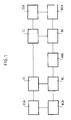
- connection processing layer fills the functions: establishing virtual channels or paths connection; connection resource management; of connection routing control (virtual channels, or connection paths); usage supervision and congestion of connections; and transfer the signaling from the processing layer call.
- the call processing layer provides processing overall call, including: setting up and release of a call; additional services; and routing a call.
- control virtual channels including: authorization given to the connection processing layer for the establishment and release of virtual channels; the correlation between a call and one or more channels virtual; management of call states associated with calls; signaling transfer, especially for additional services; and user signaling at user.
- Figure 2 shows the known functional model for an intelligent network grafted on a network to integration of services, narrowband.
- This model has a lower layer whose functions are those of conventional call processing of an ISDN band narrow; and an upper layer which allows to order implementing services, and managing those services.
- the top layer has functional blocks common for the whole network and ensuring its management: an SMF block, service management functions; a block SMAF, service management access functions; and one SCEF block, environment functions for creating service; an SCF block, service processing functions, which is enriched by an SRF block, resource functions and an SDF block, data functions of service.
- the SSF block is managed and updated by the SMF block.
- the SCEF functional block environment functions of service creation, allows to define, develop, test, and enter the SMF block, new services.
- the SMAF block functions for accessing the management of service, provides an interface between managers of the service and the SMF block, service management functions.
- the SMF functional block allows the deployment and provision of smart grid services. For a given service, it allows to coordinate different instances SCF and SDF functional blocks.
- the first models a vertical relationship between SSF and SCF layers, which led to specification of a smart grid interface between these two layers.
- the second on the contrary, favored relations between homologous entities in the traditional sense of protocols: this is a horizontal relationship between the blocks CCA and CC of the call processing layer on the one hand, and a horizontal relationship between the blocks BCA, BC, NBC, of the connection processing layer, on the other hand.
- FIG. 3 shows the functional model of the network telecommunications according to the invention.
- each device user has a CCAF block, access functions to call processing; and each node has an SCF block, service processing functions.
- each user equipment includes a BCAF block, agent functions support control; and each attachment node of subscribers includes a BCF block, control functions for support, on which a server SSF block is grafted switching functions.
- Intermediate nodes include, an NBCF function block, control functions network support, to ensure transit.
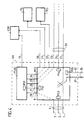
- Figure 4 shows the block diagram of a example of embodiment of a switching node SN of the telecommunications network according to the invention, constituting a home office or a transit center. It has a call and service control point, PCAS, and a switch called bearer control point, PCS. These two functional entities can be located physically in the same place or in two separate places.
- the support control point, PCS performs the functions of the BC functional block described previously with reference to figure 1. It provides a set of physical means or logic corresponding to levels 1 to 3 of the model ISO functional. It can provide any type of support, including working virtual circuits depending on the asynchronous operating mode.
- the call and service control point, PCAS fulfills the functions of the SCF function block described previously with reference to FIG. 2 and those of the block CC functional with reference to Figure 1. It provides only the signaling relating to call processing and service, in particular: establishment, supervision, then release of a call, and of a service or services used during this call.
- Establishing a call consists of: an analysis information contained in a service request issued by an applicant, in the form of numbers or characters alphanumeric, or as simple information designating a category of subscribers, for example line without numbering; a possible translation into another number, for the service called freephone, for example; a determination of a routing number defining a geographic direction; and a determination of data from taxation.
- Supervising a call consists of detecting events from the requester or the requested party, or from the state network technique, and which can lead to a change logical status of the call, for example a request for additional service or a request for termination of service, or the failure of a multiplex support the call.
- the support control point, PCS provides functions of the SSF and BCF blocks described above in reference to Figure 3, i.e. only switching and signaling functions relating to the support order, in particular: establishment, supervision, and release of the support, depending on the information provided by the call and service control point, PCAS; or provided by support control points counterparts.
- Connections 1 and 25 are connected by a connection temporary established by the PCS support control point.
- Connections 2 and 24 lead to points of PS3 and PS4 signaling from the PCS control point.
- PS1 and PS2 signaling points use the standardized intelligent network interface, enriched by parameters relating to the connections requested by the PCAS: one-way, two-way connection, symmetrical, asymmetrical, point-to-point scattering, band busy, or any lawful combination of the above characteristics.
- the PCS support control point then has of an integrated digital network interface service, allowing him to access conventional services an intelligent network or a mobile radio network, such than those described in the French patent application n ° 2 638 307.
- This interface allows you to create a network mixed ISDN / network with separate call processing and supportive treatment, allowing a progressive evolution networks already installed.
- the PCS support control point is used to access services that can be processed: either at the level local / regional by the call control point and PCAS service; either nationally by processing external service, TES.
- These services use data which are stored in files which are: either local / regional, and internal to the call control point and PCAS service; either national, in files external FE.
- these files can be: either permanent; either temporary.
- a number translation service (15, 17, 18 in France) is dealt with locally or regional, by PCAS, and it uses local files located in PCAS.
- a radiotelephony service is processed at local / regional level by PCAS, but in using permanent data and data temporary, concerning subscribers, centralized at the level national in external FE files.
- the interface between PCAS and external FE files is type IN or MAP, i.e. includes a set of operations built on top of transactional protocols such as the TCAP protocol standardized by the CCITT.
- a point of call and service control can be coupled to multiple support control points, PCS.
Landscapes
- Engineering & Computer Science (AREA)
- Computer Networks & Wireless Communication (AREA)
- Telephonic Communication Services (AREA)
- Mobile Radio Communication Systems (AREA)
- Exchange Systems With Centralized Control (AREA)
- Financial Or Insurance-Related Operations Such As Payment And Settlement (AREA)
- Control Of Eletrric Generators (AREA)
- Thermistors And Varistors (AREA)
- Input Circuits Of Receivers And Coupling Of Receivers And Audio Equipment (AREA)
- Use Of Switch Circuits For Exchanges And Methods Of Control Of Multiplex Exchanges (AREA)
Description
- un point de commande d'appel et de service assurant toutes les fonctions de la signalisation relative au traitement d'appel et au traitement de service notamment : établissement, supervision, libération d'un appel et d'au moins un service demandé au cours de cet appel ;
- au moins un point de commande de support couplé au point de commande d'appel et de service, et assurant uniquement des fonctions de commutation et des fonctions de signalisation relatives au traitement de connexion notamment: établissement, supervision, puis libération d'un support.
- la figure 1 représente le modèle fonctionnel connu pour un réseau à large bande pour des services simples ;
- la figure 2 représente le modèle fonctionnel connu pour un réseau intelligent greffé sur un RNIS à bande étroite ;
- la figure 3 représente le modèle fonctionnel d'un réseau selon l'invention ;
- la figure 4 représente le schéma synoptique d'un exemple de réalisation d'un noeud de commutation du réseau selon l'invention.
- dans l'équipement d'abonné, un bloc fonctionnel BCA, agent de commande de support ;
- dans chaque noeud de rattachement d'abonné, un bloc fonctionnel BC, commande de support ;
- dans des noeuds intermédiaires du réseau, des blocs fonctionnels NBC, commandes de support réseau, assurant la fonction de transit.
- Dans l'équipement d'abonné, un bloc fonctionnel CCA agent de commande d'appel ;
- dans chaque noeud de rattachement d'abonné, ou intermédiaire, un bloc fonctionnel CC de commande d'appel.
- il fournit à l'abonné : un accès, un maintien, une modification, et un relâchement pour un appel ou une instance de service ;
- il accède aux capacités de service de la fonction de traitement d'appel, CCF d'un noeud, en utilisant des demandes de service, pour : l'établissement, la manipulation, et le relâchement d'un appel ou d'une instance de service ;
- il reçoit des indications relatives à un appel ou à un service en provenance d'un bloc fonctionnel CCF d'un noeud, et les ré-émet vers l'abonné ;
- il met à jour des informations d'état d'une demande de service.
- il établit, manipule et relâche les instances d'appel ou de connexion, à la demande du bloc fonctionnel CCAF ;
- il permet d'associer et de relier des entités fonctionnelles du bloc CCAF qui sont impliquées dans un appel particulier ou une instance de connexion ;
- il gère les relations entre des entités fonctionnelles du bloc CCAF impliquées dans un appel ;
- il fournit des mécanismes de déclenchement pour accéder aux fonctions du réseau intelligent, par exemple transmet des évènements à un bloc SSF, serveur de fonctions de commutation d'un noeud ;
- il est géré, et mis à jour en ce qui concerne ses fonctions en relation avec le réseau intelligent, par le bloc fonctionnel SMF, fonctions de gestion de service.
- reconnaissance d'évènements déclenchant la commande de service, pour interagir avec le bloc fonctions de traitement de service, SCF ;
- gestion de la signalisation entre le bloc CCF et le bloc SCF;
- modification des fonctions de traitement de connexion, dans le bloc CCF, de la manière requise pour traiter les demandes de service sous le contrôle du bloc SCF.
- il interagit avec les blocs SSF, SRF, et SDF ;
- il contient la logique et les capacités de traitement nécessaires pour les services rendus par le réseau intelligent ;
- il interagit avec d'autres blocs SCF si nécessaire ;
- il est géré et mis à jour par le bloc SMF, fonctions de gestion de service.
- il interagit avec le bloc SCF ;
- il est géré et mis à jour par le bloc SMF, fonctions de gestion de service.
- il interagit avec les blocs SCF, et CCF ;
- il est géré et mis à jour par le bloc SMF, fonctions de gestion de service ;
- il peut contenir une logique et une capacité de traitement pour recevoir et émettre des informations en provenance des abonnés ;
- il peut assurer une fonction similaire à celle du bloc CCF, fonctions de traitement d'appel, pour gérer des connexions supports pour des ressources spécialisées.
- il gère des ressources pour les éléments de connexion support, du côté accès des abonnés au réseau, en coopération avec les blocs fonctionnels BCF adjacents, à la demande des blocs fonctionnels CCAF ;
- il connecte et déconnecte les ressources de support, du côté accès ;
- il gère la configuration des ressources, du côté accès.
- il gère des ressources de support, du côté réseau, en coopération avec les blocs fonctionnels BCF, fonctions de commande de support ;
- il relaie des connexions de support de réseau, en coopération avec les blocs adjacents BCF ;
- il gère la configuration des ressources, du côté réseau.
- une liaison 1 de parole ou de données;
- une liaison 2 de signalisation de traitement de support et une liaison 3 de signalisation de traitement d'appel du type signalisation d'abonné ou du type signalisation CCITT n° 7, selon le cas.
- une liaison 25 de parole et de données;
- une liaison 24 de signalisation de traitement de support, et une liaison 23 de signalisation de traitement d'appel, ces deux signalisations étant du type CCITT n° 7.
- une liaison 10 de signalisation de traitement d'appel, reliée à la liaison 3 par une connexion semi-permanente établie par le point de commande de support, PCS;
- une liaison 11 de signalisation de télécommande de support, reliant des points de signalisation PS1 ET PS2 situés respectivement dans le point de commande d'appel et de service PCAS, et dans le point de commande de support PCS;
- une liaison 12 de signalisation de traitement d'appel, reliée à la liaison 23 par une connexion semi-permanente établie par le point de commande de support PCS ;
- une liaison 13 de signalisation de traitement externe de service, reliée à la liaison 22 par une connexion semi-permanente établie par le point de commande de support PCS ;
- une liaison 14 de signalisation de fichier externe, reliée à la liaison 21 par une connexion semi-permanente établie par le point de commande de support PCS.
- une liaison 22 à un traitement externe de service, TES, externe au noeud SN;
- une liaison 21 à des fichiers FE externes au noeud SN.
- une liaison 31 de parole et de données, qui peut être connectée temporairement aux liaisons 1, 25 ;
- et une liaison 32 de signalisation de traitement d'appel et de support, de type SSUR CCITT n°7, aboutissant à un point de signalisation PS5 du point de commande de support PCS.
Claims (5)
- Réseau de télécommunication réalisant séparément un traitement d'appel et un traitement de connexion, caractérisé en ce qu'il comporte des noeuds de commutation comportant chacun :un point de commande d'appel et de service (PCAS) assurant toutes les fonctions de la signalisation relative au traitement d'appel et au traitement de service notamment : établissement, supervision, libération d'un appel et d'au moins un service demandé au cours de cet appel ;au moins un point de commande de support (PCS) couplé au point de commande d'appel et de service (PCAS), et assurant uniquement des fonctions de commutation et des fonctions de signalisation relatives au traitement de connexion notamment : établissement, supervision, puis libération d'un support.
- Réseau selon la revendication 1, caractérisé en ce que le point de commande de support (PCS) est couplé au point de commande d'appel et de service (PCAS), par une liaison utilisant l'interface normalisée de réseau intelligent, enrichie par des paramètres relatifs aux connexions demandées par le point de commande d'appel et de service (PCAS).
- Réseau selon la revendication 1, caractérisé en ce qu'un point de commande d'appel et de service (PCAS) est couplé à plusieurs points de commande de support (PCS).
- Réseau selon la revendication 1, caractérisé en ce que le point de commande d'appel et de service (PCAS), respectivement le point de commande de support (PCS), est relié à un centre d'exploitation et de maintenance (CEM) relatif aux fonctions d'exploitation et de maintenance concernant les appels et les services, notamment la taxation, respectivement les ressources mises en jeu pour des supports.
- Réseau selon la revendication 1, caractérisé en ce qu'un noeud de commutation (SN) comporte une interface (PS5) vers un réseau numérique à intégration de services pour réaliser un réseau mixte : réseau numérique à intégration de services/réseau réalisant séparément un traitement d'appel et un traitement de connexion.
Applications Claiming Priority (2)
| Application Number | Priority Date | Filing Date | Title |
|---|---|---|---|
| FR929209393A FR2694466B1 (fr) | 1992-07-29 | 1992-07-29 | Réseau de télécommunication réalisant séparément un traitement d'appel et un traitement de connexion. |
| FR9209393 | 1992-07-29 |
Publications (2)
| Publication Number | Publication Date |
|---|---|
| EP0583190A1 EP0583190A1 (fr) | 1994-02-16 |
| EP0583190B1 true EP0583190B1 (fr) | 1998-11-04 |
Family
ID=9432413
Family Applications (1)
| Application Number | Title | Priority Date | Filing Date |
|---|---|---|---|
| EP93401950A Expired - Lifetime EP0583190B1 (fr) | 1992-07-29 | 1993-07-27 | Réseau de télécommunication réalisant séparément un traitement d'appel et un traitement de connexion |
Country Status (9)
| Country | Link |
|---|---|
| US (1) | US5461669A (fr) |
| EP (1) | EP0583190B1 (fr) |
| JP (1) | JPH06169479A (fr) |
| AT (1) | ATE173124T1 (fr) |
| AU (1) | AU665099B2 (fr) |
| CA (1) | CA2101459A1 (fr) |
| DE (1) | DE69321898T2 (fr) |
| ES (1) | ES2125965T3 (fr) |
| FR (1) | FR2694466B1 (fr) |
Families Citing this family (59)
| Publication number | Priority date | Publication date | Assignee | Title |
|---|---|---|---|---|
| US5701412A (en) * | 1993-12-17 | 1997-12-23 | Hitachi, Ltd. | Telecommunications service control method in intelligent network |
| US5657451A (en) * | 1994-01-24 | 1997-08-12 | Telefonaktiebolaget Lm Ericsson | System for determining whether to accept new supplementary services based upon identified types of supplementary service interactions and identified supplementary service interaction criteria |
| US5926482A (en) | 1994-05-05 | 1999-07-20 | Sprint Communications Co. L.P. | Telecommunications apparatus, system, and method with an enhanced signal transfer point |
| BR9507610A (pt) | 1994-05-05 | 1997-08-19 | Sprint Communications Co | Método sistema e aparelho para o controle das telecomunicações |
| US5920562A (en) | 1996-11-22 | 1999-07-06 | Sprint Communications Co. L.P. | Systems and methods for providing enhanced services for telecommunication call |
| US6181703B1 (en) | 1995-09-08 | 2001-01-30 | Sprint Communications Company L. P. | System for managing telecommunications |
| US6430195B1 (en) | 1994-05-05 | 2002-08-06 | Sprint Communications Company L.P. | Broadband telecommunications system interface |
| US6031840A (en) | 1995-12-07 | 2000-02-29 | Sprint Communications Co. L.P. | Telecommunications system |
| US5991301A (en) | 1994-05-05 | 1999-11-23 | Sprint Communications Co. L.P. | Broadband telecommunications system |
| US6023474A (en) | 1996-11-22 | 2000-02-08 | Sprint Communications C.O.L.P. | Broadband telecommunications system interface |
| US6631133B1 (en) | 1994-05-05 | 2003-10-07 | Sprint Communications Company L.P. | Broadband telecommunications system |
| SE504050C2 (sv) * | 1995-02-28 | 1996-10-28 | Ericsson Telefon Ab L M | Nätanordning och förfarande för att i ett kommunikationssystem koppla upp en förbindelse mellan två punkter genom utnyttjande av ett antal förbindelseobjekt |
| JPH10506254A (ja) * | 1995-03-06 | 1998-06-16 | ベル コミュニケーションズ リサーチ,インコーポレイテッド | サービス管理操作およびサポート・システムとその方法 |
| US5623488A (en) * | 1995-06-29 | 1997-04-22 | Telefonaktiebolaget Lm Ericsson | Call set-up server |
| AU2257097A (en) * | 1996-02-02 | 1997-08-22 | Sprint Communications Company, L.P. | Atm gateway system |
| FR2745140B1 (fr) * | 1996-02-15 | 1998-04-24 | Matra Communication | Procede de gestion de signalisation dans un systeme d'autocommutation equipe de bornes radio |
| JPH11507199A (ja) * | 1996-04-04 | 1999-06-22 | フィリップス エレクトロニクス ネムローゼ フェンノートシャップ | 遠隔通信システム及びコードレスアクセスサブシステム |
| GB9607921D0 (en) * | 1996-04-17 | 1996-06-19 | British Telecomm | A telecommunication network and method of controlling switching in a telecommunication network |
| DE19619800C2 (de) * | 1996-05-15 | 1998-05-20 | Siemens Ag | Vermittlungssystem mit Anwahl von breitbandigen Diensten über Intelligente Netze |
| US5940393A (en) * | 1996-05-28 | 1999-08-17 | Sprint Communications Co. L.P. | Telecommunications system with a connection processing system |
| FI103844B (fi) * | 1996-11-14 | 1999-09-30 | Nokia Telecommunications Oy | Puheluiden yhdistäminen |
| US6002689A (en) | 1996-11-22 | 1999-12-14 | Sprint Communications Co. L.P. | System and method for interfacing a local communication device |
| US6014378A (en) * | 1996-11-22 | 2000-01-11 | Sprint Communications Company, L.P. | Telecommunications tandem system for circuit-based traffic |
| US6667982B2 (en) * | 1996-11-22 | 2003-12-23 | Sprint Communications Company, L.P. | Broadband telecommunications system interface |
| SE511772C2 (sv) * | 1997-03-27 | 1999-11-22 | Telia Ab | Telekommunikationsnät innefattande en IN-plattform och en abonnentutrustning som medger tillgång till nättillhandahållna tjänster |
| US6137800A (en) | 1997-05-09 | 2000-10-24 | Sprint Communications Company, L. P. | System and method for connecting a call |
| US6704327B1 (en) | 1997-05-09 | 2004-03-09 | Sprint Communications Company, L.P. | System and method for connecting a call |
| US5937048A (en) * | 1997-06-05 | 1999-08-10 | Bell Atlantic Network Services, Inc. | Program controlled switch provisioning |
| US6226373B1 (en) | 1997-07-03 | 2001-05-01 | Alcatel Usa Sourcing, L.P. | Intelligent service peripheral/intelligent peripheral |
| US6418461B1 (en) * | 1997-10-06 | 2002-07-09 | Mci Communications Corporation | Intelligent call switching node in an intelligent distributed network architecture |
| GB2330271A (en) * | 1997-10-08 | 1999-04-14 | Ericsson Telefon Ab L M | Handling telephone calls |
| US6470019B1 (en) | 1998-02-20 | 2002-10-22 | Sprint Communications Company L.P. | System and method for treating a call for call processing |
| US6563918B1 (en) | 1998-02-20 | 2003-05-13 | Sprint Communications Company, LP | Telecommunications system architecture for connecting a call |
| CA2280104C (fr) * | 1998-08-14 | 2006-03-28 | Kabushiki Kaisha Toshiba | Systeme pour central telephonique et echange |
| US6982950B1 (en) | 1998-12-22 | 2006-01-03 | Sprint Communications Company L.P. | System and method for connecting a call in a tandem architecture |
| US6597701B1 (en) | 1998-12-22 | 2003-07-22 | Sprint Communications Company L.P. | System and method for configuring a local service control point with a call processor in an architecture |
| US6496512B1 (en) * | 1998-12-22 | 2002-12-17 | Sprint Communications Company L.P. | System and method for connecting calls with a time division multiplex matrix |
| US6724765B1 (en) | 1998-12-22 | 2004-04-20 | Sprint Communications Company, L.P. | Telecommunication call processing and connection system architecture |
| US6785282B1 (en) | 1998-12-22 | 2004-08-31 | Sprint Communications Company L.P. | System and method for connecting a call with a gateway system |
| US6888833B1 (en) | 1998-12-22 | 2005-05-03 | Sprint Communications Company L.P. | System and method for processing call signaling |
| US7079530B1 (en) | 1999-02-25 | 2006-07-18 | Sprint Communications Company L.P. | System and method for caching toll free number information |
| US6560226B1 (en) | 1999-02-25 | 2003-05-06 | Sprint Communications Company, L.P. | System and method for caching ported number information |
| US6895088B1 (en) | 1999-05-21 | 2005-05-17 | Sprint Communications Company L.P. | System and method for controlling a call processing system |
| DE69910628T2 (de) * | 1999-06-30 | 2004-06-17 | Nokia Corp. | Telekommunikationsnetz und leitweglenkungsverfahren |
| DK2028867T3 (da) * | 1999-07-05 | 2013-06-24 | Ericsson Telefon Ab L M | Fremgangsmåde til øgning af fleksibiliteten af et kommunikationsnetværk med adskilt opkaldsstyring og bærerstyring |
| US7457280B2 (en) * | 1999-07-14 | 2008-11-25 | Telefonaktiebolaget L M Ericsson (Publ) | Combining narrowband applications with broadband transport |
| US6947747B1 (en) * | 1999-08-16 | 2005-09-20 | Telefonaktiebolaget Lm Ericsson (Publ) | Implementation of basic call setup transporting layer address and logical point in forward direction in cellular networks with separation of call control and bearer control |
| DE50009299D1 (de) * | 1999-08-30 | 2005-02-24 | Siemens Ag | Verfahren und vorrichtung zum verarbeiten von signalisierungsinformationen in einem telekommunikationsnetz |
| DE19944736A1 (de) * | 1999-09-17 | 2001-03-29 | Siemens Ag | Verfahren und Anordnung für einen Rundsendedienst |
| US6816497B1 (en) | 1999-11-05 | 2004-11-09 | Sprint Communications Company, L.P. | System and method for processing a call |
| JP3522619B2 (ja) * | 2000-01-05 | 2004-04-26 | 株式会社エヌ・ティ・ティ・ドコモ | マルチキャリアcdma伝送システムにおける送信機 |
| US6785377B1 (en) | 2000-01-19 | 2004-08-31 | Sprint Communications Company L.P. | Data calls using both constant bit rate and variable bit rate connections |
| US20020068545A1 (en) * | 2000-11-06 | 2002-06-06 | Johnson Oyama | Method and apparatus for coordinating charging for services provided in a multimedia session |
| EP1206111A1 (fr) * | 2000-11-13 | 2002-05-15 | Alcatel | Dispositif de taxation pour système de communication multimédia |
| DE10131533C2 (de) * | 2001-06-29 | 2003-07-10 | Siemens Ag | Fehlertoleranter Verbindungstest |
| PT1444854E (pt) * | 2001-11-12 | 2011-06-29 | Ericsson Telefon Ab L M | Sistema e método de comunicação de uma indicação de prioridade num sistema de telecomunicações de controlo de chamada/controlo de suporte |
| US7848507B2 (en) * | 2005-07-25 | 2010-12-07 | At&T Intellectual Property Ii, L.P. | Method and apparatus for compositional control of end-to-end media in IP networks |
| US7984130B2 (en) * | 2006-07-14 | 2011-07-19 | Cellco Partnership | Multimedia next generation network architecture for IP services delivery based on network and user policy |
| EP2107741A1 (fr) | 2008-03-31 | 2009-10-07 | Nokia Siemens Networks Oy | Interfonctionnement entre des services de messagerie |
Family Cites Families (2)
| Publication number | Priority date | Publication date | Assignee | Title |
|---|---|---|---|---|
| US5195086A (en) * | 1990-04-12 | 1993-03-16 | At&T Bell Laboratories | Multiple call control method in a multimedia conferencing system |
| US5251255A (en) * | 1991-04-17 | 1993-10-05 | At&T Bell Laboratories | Processing interactions among telecommunications call features |
-
1992
- 1992-07-29 FR FR929209393A patent/FR2694466B1/fr not_active Expired - Fee Related
-
1993
- 1993-07-20 AU AU42044/93A patent/AU665099B2/en not_active Ceased
- 1993-07-27 ES ES93401950T patent/ES2125965T3/es not_active Expired - Lifetime
- 1993-07-27 DE DE69321898T patent/DE69321898T2/de not_active Expired - Lifetime
- 1993-07-27 AT AT93401950T patent/ATE173124T1/de active
- 1993-07-27 EP EP93401950A patent/EP0583190B1/fr not_active Expired - Lifetime
- 1993-07-28 CA CA002101459A patent/CA2101459A1/fr not_active Abandoned
- 1993-07-28 US US08/102,993 patent/US5461669A/en not_active Expired - Lifetime
- 1993-07-29 JP JP5188255A patent/JPH06169479A/ja active Pending
Also Published As
| Publication number | Publication date |
|---|---|
| FR2694466A1 (fr) | 1994-02-04 |
| AU665099B2 (en) | 1995-12-14 |
| CA2101459A1 (fr) | 1994-01-30 |
| DE69321898D1 (de) | 1998-12-10 |
| DE69321898T2 (de) | 1999-05-12 |
| AU4204493A (en) | 1994-02-03 |
| EP0583190A1 (fr) | 1994-02-16 |
| ATE173124T1 (de) | 1998-11-15 |
| ES2125965T3 (es) | 1999-03-16 |
| FR2694466B1 (fr) | 1994-09-02 |
| US5461669A (en) | 1995-10-24 |
| JPH06169479A (ja) | 1994-06-14 |
Similar Documents
| Publication | Publication Date | Title |
|---|---|---|
| EP0583190A1 (fr) | Réseau de télécommunication réalisant séparement un traitement d'appel et un traitement de connexion | |
| EP0460486B1 (fr) | Procédé de maintenance centralisée, pour un réseau de téléphonie sans fil | |
| JP3369263B2 (ja) | 電話通信方法および電話通信システム | |
| EP0276754B1 (fr) | Procédé de routage des communications pour réseau d'autocommutateurs temporels numériques | |
| CA2324615A1 (fr) | Gestion de largeur de bande sur demande pour messagerie ip avec possibilite de transformation d'appels telephoniques d'un type de media a un autre | |
| EP0618746A1 (fr) | Station d'un réseau de radiocommunication numérique à moyens d'échange de signaux de parole et moyens d'échange de signaux de données | |
| EP1014744A2 (fr) | Architecture de système de communication, dispositif et procédé de gestion et de signalisation pour cette architecture | |
| EP0367007B1 (fr) | Centre de commutation pour application radiomobile | |
| US6721322B1 (en) | System and method for establishing dynamic high usage trunk groups | |
| EP1538852A1 (fr) | Procédé de préemption de ressources d'un réseau de communications mobiles, en vue de l'établissement d'un service en fonction d'un débit maximum de préemption associé | |
| Orozco-Barbosa et al. | Design and performance evaluation of intelligent multimedia services | |
| Jukan et al. | Quality-of-service routing in optical networks | |
| FR2746992A1 (fr) | Reseau local d'acces a des mobiles | |
| FR2699358A1 (fr) | Procédé de traitement de signalisation d'appel de service de réseau intelligent dans un système de communication électronique pour service Interurbain/Tandem. | |
| CN1316788C (zh) | 异构7号信令网络之间的互通设备及其方法 | |
| US6219338B1 (en) | Method of establishing a connection, as well as exchange, service computer and communications network | |
| EP0889670B1 (fr) | Procédé de communication entre installations téléphoniques privées réliées à un réseau numérique à intégration de services. | |
| EP0790748B1 (fr) | Procédé de gestion de signalisation dans un système d'autocommutation équipé de bornes radio | |
| DE60127559T2 (de) | Atm-gestütztes verteiltes netzwerkvermittlungssystem | |
| US7123708B1 (en) | Neutral tandem telecommunications network providing transiting, terminating, and advanced traffic routing services to public and private carrier networks | |
| EP1519554A1 (fr) | Procédé d'accès automatique à une conférence téléphonique et système pour sa mise en oeuvre | |
| CA2284392A1 (fr) | Passerelle permettant le developpement de nouveaux services de facon independante du reseau sous-jacent | |
| WO2000074337A2 (fr) | Systeme, procede et article manufacture destines a un serveur de base de donnees de regles dans une architecture de systeme de communication hybride | |
| JPH11504186A (ja) | ダイナミック・インフラストラクチュア | |
| Kashper | Introduction of flexible routing for international networks |
Legal Events
| Date | Code | Title | Description |
|---|---|---|---|
| PUAI | Public reference made under article 153(3) epc to a published international application that has entered the european phase |
Free format text: ORIGINAL CODE: 0009012 |
|
| AK | Designated contracting states |
Kind code of ref document: A1 Designated state(s): AT BE CH DE ES FR GB IT LI NL SE |
|
| 17P | Request for examination filed |
Effective date: 19940621 |
|
| 17Q | First examination report despatched |
Effective date: 19970313 |
|
| GRAG | Despatch of communication of intention to grant |
Free format text: ORIGINAL CODE: EPIDOS AGRA |
|
| GRAG | Despatch of communication of intention to grant |
Free format text: ORIGINAL CODE: EPIDOS AGRA |
|
| GRAH | Despatch of communication of intention to grant a patent |
Free format text: ORIGINAL CODE: EPIDOS IGRA |
|
| GRAH | Despatch of communication of intention to grant a patent |
Free format text: ORIGINAL CODE: EPIDOS IGRA |
|
| GRAA | (expected) grant |
Free format text: ORIGINAL CODE: 0009210 |
|
| RAP1 | Party data changed (applicant data changed or rights of an application transferred) |
Owner name: ALCATEL ALSTHOM COMPAGNIE GENERALE D'ELECTRICITE |
|
| AK | Designated contracting states |
Kind code of ref document: B1 Designated state(s): AT BE CH DE ES FR GB IT LI NL SE |
|
| REF | Corresponds to: |
Ref document number: 173124 Country of ref document: AT Date of ref document: 19981115 Kind code of ref document: T |
|
| REG | Reference to a national code |
Ref country code: CH Ref legal event code: EP |
|
| REF | Corresponds to: |
Ref document number: 69321898 Country of ref document: DE Date of ref document: 19981210 |
|
| REG | Reference to a national code |
Ref country code: CH Ref legal event code: PFA Free format text: ALCATEL ALSTHOM COMPAGNIE GENERALE D'ELECTRICITE TRANSFER- ALCATEL Ref country code: CH Ref legal event code: NV Representative=s name: CABINET ROLAND NITHARDT CONSEILS EN PROPRIETE INDU |
|
| GBT | Gb: translation of ep patent filed (gb section 77(6)(a)/1977) |
Effective date: 19981231 |
|
| RAP4 | Party data changed (patent owner data changed or rights of a patent transferred) |
Owner name: ALCATEL |
|
| REG | Reference to a national code |
Ref country code: ES Ref legal event code: FG2A Ref document number: 2125965 Country of ref document: ES Kind code of ref document: T3 |
|
| RAP4 | Party data changed (patent owner data changed or rights of a patent transferred) |
Owner name: ALCATEL |
|
| PLBE | No opposition filed within time limit |
Free format text: ORIGINAL CODE: 0009261 |
|
| STAA | Information on the status of an ep patent application or granted ep patent |
Free format text: STATUS: NO OPPOSITION FILED WITHIN TIME LIMIT |
|
| 26N | No opposition filed | ||
| REG | Reference to a national code |
Ref country code: FR Ref legal event code: CD |
|
| REG | Reference to a national code |
Ref country code: GB Ref legal event code: IF02 |
|
| REG | Reference to a national code |
Ref country code: FR Ref legal event code: CD |
|
| REG | Reference to a national code |
Ref country code: CH Ref legal event code: PCAR Free format text: CABINET ROLAND NITHARDT CONSEILS EN PROPRIETE INDUSTRIELLE S.A.;Y-PARC RUE GALILEE;1400 YVERDON-LES-BAINS (CH) |
|
| PGFP | Annual fee paid to national office [announced via postgrant information from national office to epo] |
Ref country code: CH Payment date: 20110725 Year of fee payment: 19 |
|
| PGFP | Annual fee paid to national office [announced via postgrant information from national office to epo] |
Ref country code: SE Payment date: 20120725 Year of fee payment: 20 Ref country code: GB Payment date: 20120719 Year of fee payment: 20 |
|
| PGFP | Annual fee paid to national office [announced via postgrant information from national office to epo] |
Ref country code: IT Payment date: 20120731 Year of fee payment: 20 Ref country code: BE Payment date: 20120720 Year of fee payment: 20 Ref country code: ES Payment date: 20120726 Year of fee payment: 20 Ref country code: FR Payment date: 20120806 Year of fee payment: 20 Ref country code: DE Payment date: 20120720 Year of fee payment: 20 |
|
| PGFP | Annual fee paid to national office [announced via postgrant information from national office to epo] |
Ref country code: NL Payment date: 20120719 Year of fee payment: 20 |
|
| PGFP | Annual fee paid to national office [announced via postgrant information from national office to epo] |
Ref country code: AT Payment date: 20120711 Year of fee payment: 20 |
|
| REG | Reference to a national code |
Ref country code: DE Ref legal event code: R071 Ref document number: 69321898 Country of ref document: DE |
|
| REG | Reference to a national code |
Ref country code: DE Ref legal event code: R071 Ref document number: 69321898 Country of ref document: DE |
|
| BE20 | Be: patent expired |
Owner name: *ALCATEL ALSTHOM CIE GENERALE D'ELECTRICITE Effective date: 20130727 |
|
| REG | Reference to a national code |
Ref country code: CH Ref legal event code: PL |
|
| REG | Reference to a national code |
Ref country code: NL Ref legal event code: V4 Effective date: 20130727 |
|
| REG | Reference to a national code |
Ref country code: FR Ref legal event code: GC Effective date: 20130704 |
|
| REG | Reference to a national code |
Ref country code: GB Ref legal event code: PE20 Expiry date: 20130726 |
|
| REG | Reference to a national code |
Ref country code: SE Ref legal event code: EUG |
|
| REG | Reference to a national code |
Ref country code: AT Ref legal event code: MK07 Ref document number: 173124 Country of ref document: AT Kind code of ref document: T Effective date: 20130727 |
|
| PG25 | Lapsed in a contracting state [announced via postgrant information from national office to epo] |
Ref country code: DE Free format text: LAPSE BECAUSE OF EXPIRATION OF PROTECTION Effective date: 20130730 |
|
| PG25 | Lapsed in a contracting state [announced via postgrant information from national office to epo] |
Ref country code: GB Free format text: LAPSE BECAUSE OF EXPIRATION OF PROTECTION Effective date: 20130726 |
|
| REG | Reference to a national code |
Ref country code: GB Ref legal event code: 732E Free format text: REGISTERED BETWEEN 20131114 AND 20131120 |
|
| REG | Reference to a national code |
Ref country code: ES Ref legal event code: FD2A Effective date: 20140925 |
|
| PG25 | Lapsed in a contracting state [announced via postgrant information from national office to epo] |
Ref country code: ES Free format text: LAPSE BECAUSE OF EXPIRATION OF PROTECTION Effective date: 20130728 |
|
| REG | Reference to a national code |
Ref country code: FR Ref legal event code: RG Effective date: 20141016 |