EP0584653B1 - Schabenbekämpfungsverfahren und Mittel zur Bekämpfung von Schaben - Google Patents
Schabenbekämpfungsverfahren und Mittel zur Bekämpfung von Schaben Download PDFInfo
- Publication number
- EP0584653B1 EP0584653B1 EP93112874A EP93112874A EP0584653B1 EP 0584653 B1 EP0584653 B1 EP 0584653B1 EP 93112874 A EP93112874 A EP 93112874A EP 93112874 A EP93112874 A EP 93112874A EP 0584653 B1 EP0584653 B1 EP 0584653B1
- Authority
- EP
- European Patent Office
- Prior art keywords
- alkyl
- für
- oder
- methyl
- general formula
- Prior art date
- Legal status (The legal status is an assumption and is not a legal conclusion. Google has not performed a legal analysis and makes no representation as to the accuracy of the status listed.)
- Expired - Lifetime
Links
Classifications
-
- A—HUMAN NECESSITIES
- A01—AGRICULTURE; FORESTRY; ANIMAL HUSBANDRY; HUNTING; TRAPPING; FISHING
- A01N—PRESERVATION OF BODIES OF HUMANS OR ANIMALS OR PLANTS OR PARTS THEREOF; BIOCIDES, e.g. AS DISINFECTANTS, AS PESTICIDES OR AS HERBICIDES; PEST REPELLANTS OR ATTRACTANTS; PLANT GROWTH REGULATORS
- A01N31/00—Biocides, pest repellants or attractants, or plant growth regulators containing organic oxygen or sulfur compounds
- A01N31/02—Acyclic compounds
-
- A—HUMAN NECESSITIES
- A01—AGRICULTURE; FORESTRY; ANIMAL HUSBANDRY; HUNTING; TRAPPING; FISHING
- A01N—PRESERVATION OF BODIES OF HUMANS OR ANIMALS OR PLANTS OR PARTS THEREOF; BIOCIDES, e.g. AS DISINFECTANTS, AS PESTICIDES OR AS HERBICIDES; PEST REPELLANTS OR ATTRACTANTS; PLANT GROWTH REGULATORS
- A01N27/00—Biocides, pest repellants or attractants, or plant growth regulators containing hydrocarbons
-
- C—CHEMISTRY; METALLURGY
- C07—ORGANIC CHEMISTRY
- C07C—ACYCLIC OR CARBOCYCLIC COMPOUNDS
- C07C31/00—Saturated compounds having hydroxy or O-metal groups bound to acyclic carbon atoms
- C07C31/02—Monohydroxylic acyclic alcohols
- C07C31/125—Monohydroxylic acyclic alcohols containing five to twenty-two carbon atoms
Definitions
- the present invention relates to the new use of certain chemical compounds as attractants in the control of cockroaches, cockroach control agents which contain these compounds and new attractants and a process for their preparation.
- Cockroach infestation is a considerable hygienic problem in the home and business, which makes it necessary to control the cockroaches. Due to their way of life, cockroaches are difficult to control. A particular problem lies in concentrating the cockroaches on mechanical control devices (traps) or insecticidal agents.
- the sex pheromones of the American cockroach (Periplaneta americana) have already been used for this purpose (see Bell 1986, Pesticide Control N. 12), although their specificity and effectiveness did not always lead to satisfactory results.
- the compounds of the general formula I have cockroach attracting effects and are suitable for concentrating the cockroaches in certain places where they can be controlled by mechanical and / or chemical means.
- the compounds of formula I are highly effective, stable and easily accessible by synthesis.
- the compounds of general formula I can be used as individual compounds or in mixtures with one another.
- the new compounds of general formula I can be prepared by the following process, which is also part of the present invention. You get the new connections by
- ketones of the general formula II to be used as starting materials in the process according to the invention are known or can be prepared by known processes and methods (cf. Agr. Biol. Chem. 40 , 391 (1976); J. Org. Chem. 40 , 3456 ( 1975); J. Org. Chem. 40 , 2410 (1975)).
- the process according to the invention is preferably carried out in the presence of a diluent.
- a diluent such as polar solvents such as ethanol, propanol, dioxane, dimethyl sulfoxide and dimethylformamide and their mixtures are preferably used.
- Lower alkyl alcohols such as ethanol and propanol are particularly preferred.
- Reducing agents are used in the process according to the invention.
- these are lithium borohydride, sodium borohydride and lithium alanate and hydrogen in the presence of customary hydrogenation catalysts, such as PtO 2 or Raney nickel.
- Sodium borohydride is particularly preferred.
- reaction temperatures can be varied within a wide range in the process according to the invention. Preferably one works at temperatures between -20 ° C and + 80 ° C, particularly preferably at temperatures between 0 ° C and 40 ° C.
- reaction components are preferably combined at about 0 ° C. and stirred at a slightly elevated temperature until the end of the reaction.
- Working up can be carried out according to customary methods; for example by concentrating the reaction mixture, taking up the residue in water and cyclohexane, extracting with cyclohexane, concentrating again and purifying the crude product by column chromatography.
- the compounds of the general formula I can be used to control cockroaches, ie insects of the Blattodea order, in particular the Blattellidae family, preferably the Blattella germanica species or the Blattidae family, preferably the Blatta orientalis and Periplaneta species americana, but also against other cockroaches, but very particularly preferably against Blattella germanica.
- the compounds of the general formula I influence the behavior of the cockroaches in such a way that the cockroaches spend more time in such places or visit places which have been treated with compounds of the general formula I or contain such compounds.
- the compounds of general formula I thus have strong attracting effects.
- the connections of the Formula I can thus be used very generally in cockroach control, regardless of the type of control method used. They can be used in mechanical control methods, for example and preferably in cockroach traps or adhesive devices or in biological or chemical control methods or in a combination of such control methods.
- the compounds of the formula I can be applied over their entire surface or over a wide area or at suitable discrete locations, for example by brushing, spraying, impregnating, printing, optionally together with other active agents, such as attracting paints, bait materials or other attractants, insecticides, etc.
- the compounds of the formula I can be mixed with the organisms having an insect-pathogenic effect (for example viruses or microorganisms) or the natural or synthetic insecticides or be present in sufficient proximity to these organisms or substances. The same applies to a combination of several control methods.
- the compounds of general formula I can be used as individual compounds or as a mixture with one another.
- the compounds of general formula I are incorporated into a bait containing insecticides or in adhesive traps, or placed near (e.g. above) the bait material.
- the compounds of the general formula I can also be in a form in which they are released over a relatively long period of time (slow-release formulations). For this you can e.g. be incorporated into polymer material, paraffins, waxes etc. or are microencapsulated.
- the usual devices can serve as traps and the usual feed attractive agents can serve as bait materials.
- the compounds of general formula I are preferably used in amounts of 0.0001 to 20 mg (very particularly preferably 0.01 to 0.1 mg) per bait or trap, e.g. Glue trap used.
- the compounds can also be applied in the form of the customary spray compositions, if appropriate as a mixture with suitable insecticides.
- the usual formulations eg also microencapsulation
- the application rates of compounds of the general formula I are preferably 1 to 500 mg per m 2 and particularly preferably 2 to 200 mg per m 2 .
- Mechanical cockroach control devices and means which contain at least one compound of the general formula I are therefore also part of the present invention.
- Preferred mechanical devices and means are the usual cockroach traps, which may contain bait, other attractants or feedstocks and / or insecticidal substances, and means and traps with a sticky surface to which the cockroaches adhere, which, in addition to the usual carriers and auxiliaries, may eat. and attractants and / or insecticidal substances have at least one compound of the general formula I.
- the compounds of the general formula I can be present in the sticky surface or can be present in the immediate vicinity thereof. Combinations of traps and agents with a sticky surface can also be used in the mechanical devices.
- cockroach control agents which optionally contain at least one compound of the general formula I and at least one insecticidally active substance, in addition to conventional carriers and auxiliaries and / or other additives (such as bait agents, attractants), the compounds of the formula I with the other constituents can be mixed or can be in a separate arrangement.
- these agents can also contain entomopathogenic viruses or microorganisms which are active against cockroaches.
- Insecticidal substances can, for example, belong to the insecticidal phosphoric acid esters, carbamates, natural and synthetic pyrethroids, nitroimino, nitromethylene, cyanoimino or cyanomethylene compounds, pyrrolidine-2,4-dione derivatives and / or pyrazoline derivatives.
- carbamic acid esters of the formula III are the following N-methylcarbamic acid esters: 2-methylphenyl, 2-ethylphenyl, 2-iso-propylphenyl, 2-sec.-butylphenyl, 2 -Methoxy-phenyl-, 2-ethoxy-phenyl, 2-iso-propoxy-phenyl-, 4-methyl-phenyl-, 4-ethyl-phenyl-, 4-n-propyl-phenyl-, 4-methoxy-phenyl- , 4-ethoxy-phenyl-, 4-n-propoxy-phenyl-, 3,4,5-trimethyl-phenyl-, 3,5-dimethyl-4-methylthio-phenyl-, 3-methyl-4-dimethylamino-phenyl -, 2-Ethylthiomethyl-phenyl-, 1-naphthyl-, 2,3-dihdyro-2,2-dimethyl-7-benzofuranyl-, 2,3-
- pyrethroids such as pyrethrum
- carboxylic acid esters of the formula IV are particularly preferred as carboxylic acid esters of the formula IV.
- carboxylic acid esters of the formula IV particularly preferred according to the invention 2,2-Dimethyl-3- (2-methyl-propen-1-yl) -cyclopropane-carboxylic acid- (3,4,5,6-tetrahydro-phthalimido-methyl) ester, 2,2-dimethyl-3- (2,2-dichlorovinyl) -cyclopropane-carboxylic acid- (3-phenoxy-benzyl) ester, 2,2-dimethyl-3- (2,2-dichlorovinyl) -cyclopropanecarboxylic acid- ( ⁇ -cyano-3-phenoxy-benzyl ) ester, 2,2-dimethyl-3- (2,2-dichlorovinyl) -cyclopropane-carboxylic acid- ( ⁇ -cyano-4-fluoro-3-phenoxy-benzyl) ester, 2,2-dimethyl-3- (2,2-dichlorovinyl) -cyclopropanecarboxylic acid- (2,3,5,
- the compounds of the formula I and / or the insecticidal substances and the mixtures of the compounds of the formula I with the insecticidal substances can be converted into customary formulations, such as solutions, emulsions, suspensions, powders, Foams, pastes, granules, aerosols, active ingredient-impregnated natural and synthetic substances as well as very fine encapsulation in polymeric substances.
- formulations are prepared in a known manner, for example by mixing the active ingredients with auxiliaries and / or extenders, that is to say liquid solvents and / or solid carriers, if appropriate using surface-active agents, ie emulsifiers and / or dispersants and / or foam-forming agents. If water is used as an extender, organic solvents can, for example, also be used as auxiliary solvents.
- liquid solvents aromatics, such as xylene, toluene, or alkylnaphthalenes, chlorinated aromatics or chlorinated aliphatic hydrocarbons, such as chlorobenzenes, chlorethylenes or methylene chloride, aliphatic hydrocarbons, such as cyclohexane or paraffins, for example petroleum fractions, alcohols, such as butanol or glycol as well as their ethers and esters, ketones such as acetone, methyl ethyl ketone, methyl isobutyl ketone or cyclohexanone, strongly polar solvents such as dimethylformamide and dimethyl sulfoxide, and water;
- Solid carrier materials are suitable: for example natural rock flours, such as kaolins, clays, talc, Chalk, quartz, attapulgite, montmorillonite or diatomaceous earth and synthetic rock meals, such as highly disperse silica, aluminum oxide and silicate
- Adhesives such as carboxymethyl cellulose, natural and synthetic powdery, granular or latex-shaped polymers, such as gum arabic, polyvinyl alcohol, polyvinyl acetate, and also natural phospholipids, such as cephalins and lecithins, and synthetic phospholipids can be used in the formulations.
- Other additives can be mineral and vegetable oils.
- Dyes such as inorganic pigments, for example iron oxide, titanium oxide, ferrocyan blue and organic dyes such as alizarin, azo and metal phthalocyanine dyes and trace nutrients such as salts of iron, manganese, boron, copper, cobalt, molybdenum and zinc can be used.
- the formulations can additionally contain further additives which attract the cockroaches and / or cause the insecticidal substances to be absorbed.
- All commonly used preparations can be used as attractants and bulking agents, such as natural or synthetic odorants, dyes and / or substances which cockroaches like to absorb, such as starchy and / or sugar-based products based on cereals.
- the formulations preferably contain 0.001 to 95, in particular 0.01 to 70, percentages by weight of compounds of the formula I.
- the formulations of the insecticidal substances preferably contain, in addition to the compounds of the formula I, between 0.1 and 95, in particular 0.5 and 90, percent by weight of insecticidal substances.
- the cockroach control agents are used in a customary manner adapted to the form of use.
- Table 2 used connection of table 1 Mortality in% after 1 day (average of 3 attempts) male cockroaches female cockroaches 1 control 47 48 42 37 2 control 38 28 27 25th 3 control 78 62 25th 33 4 control 53 54 33 29
- Ceramic tiles are sprayed with an aqueous spray mixture which contains (a) a 50 g / liter cyfluthrin formulation and (b) this formulation and additionally the compound 3 from Table 1.
- the application rate of cyfluthrin is 20 mg of active ingredient per m 2 of tile.
- the application rate of compound no. 3 is 4 mg of active ingredient per m 2 of tile.
- One of these tiles is placed in the corner of a container (49 x 59 cm, height 29.5 cm), in which there is a potions, food, a hiding place and the male and female from Blattella used 2 hours earlier germanica (5 pieces each). Each attempt consists of 3 repetitions. After 1, 2 and 3 days, the mortality is determined and the mean of the 3 experiments is formed.
- the synthesis of the starting compounds can be carried out according to known production processes (cf. Agr. Biol. Chem. 40 , 391 (1976); J. Org. Chem. 42 , 566 (1977).
Landscapes
- Life Sciences & Earth Sciences (AREA)
- Agronomy & Crop Science (AREA)
- Pest Control & Pesticides (AREA)
- Plant Pathology (AREA)
- Health & Medical Sciences (AREA)
- Engineering & Computer Science (AREA)
- Dentistry (AREA)
- General Health & Medical Sciences (AREA)
- Wood Science & Technology (AREA)
- Zoology (AREA)
- Environmental Sciences (AREA)
- Chemical & Material Sciences (AREA)
- Organic Chemistry (AREA)
- Agricultural Chemicals And Associated Chemicals (AREA)
- Catching Or Destruction (AREA)
- Organic Low-Molecular-Weight Compounds And Preparation Thereof (AREA)
- Pharmaceuticals Containing Other Organic And Inorganic Compounds (AREA)
Description
- Die vorliegende Erfindung betrifft die neue Verwendung von bestimmten chemischen Verbindungen als Lockstoffe bei der Bekämpfung von Schaben, Schabenbekämpfungsmittel, die diese Verbindungen enthalten sowie neue Lockstoffe und ein Verfahren zu deren Herstellung.
- Schabenbefall stellt in Haushalt und Gewerbe ein erhebliches hygienisches Problem dar, das die Bekämpfung der Schaben erforderlich macht. Aufgrund ihrer Lebensweise sind Schaben jedoch schwer bekämpfbar. Ein besonderes Problem liegt dabei darin, die Schaben an mechanischen Bekämpfungsvorrichtungen (Fallen) oder insektizid wirksamen Mitteln zu konzentrieren. Zu diesem Zwecke wurden bereits die Sexualpheromone der amerikanischen Schabe (Periplaneta americana) eingesetzt (vgl. Bell 1986, Pesticide Control N. 12), wobei deren Spezifität und Wirksamkeit nicht immer zu befriedigenden Ergebnissen führte.
-

in welcher - R1
- für C1-C5-Alkyl oder Hydroxy-C1-C5-alkyl steht;
- R2
- für C1-C5-Alkyl steht; und
- m
- für eine ganze Zahl von 10 bis 20 steht,
- Die Verbindungen der allgemeinen Formel I weisen gegenüber Schaben anlockende Wirkungen auf und sind dazu geeignet, die Schaben an bestimmten Orten zu konzentrieren, wo sie mit mechanischen und/oder chemischen Mitteln bekämpft werden können. Die Verbindungen der Formel I sind hoch wirksam, stabil und durch Synthese leicht zugänglich. Die Verbindungen der allgemeinen Formel I können als Einzelverbindungen oder in Mischungen untereinander eingesetzt werden.
- In der obigen allgemeinen Formel sowie in den unten aufgeführten allgemeinen Formeln und Restedefinitionen bedeuten:
- Alkyl als solches oder als Bestandteil eines anderen Restes geradkettiges oder verzweigtes (vorzugsweise geradkettiges) Alkyl mit 1 bis 5, vorzugsweise 1 bis 4 und besonders bevorzugt 1 bis 3 Kohlenstoffatomen, wobei Methyl, Ethyl, n- und i-Propyl, n-, i-, s- und t-Butyl speziell genannt seien.
- R1
- steht vorzugsweise für C1-C4-Alkyl oder HydroxyC1-C4-alkyl.
- R2
- steht vorzugsweise für C1-C3-Alkyl.
- m
- steht vorzugsweise für eine ganze Zahl von 11 bis 19.
- Erfindungsgemäß bevorzugt werden die Verbindungen der allgemeinen Formel I verwendet, in welchen eine Kombination dieser vorstehend als vorzugsweise aufgeführten Bedeutungen vorliegt.
- R1
- steht besonders bevorzugt für C1-C3-Alkyl oder Hydroxy-C1-C3-alkyl (vorzugsweise 1-Hydroxy-C1-C3-alkyl),
- R2
- steht besonders bevorzugt für Methyl oder Ethyl.
- m
- steht besonders bevorzugt für eine ganze Zahl von 12 bis 18.
- Erfindungsgemäß besonders bevorzugt werden die Verbindungen der allgemeinen Formel I verwendet, in welchen eine Kombination dieser vorstehend als besonders bevorzugt aufgeführten Bedeutungen vorliegt.
- R1
- steht ganz besonders bevorzugt für Methyl, Ethyl (vorzugsweise Ethyl) oder Hydroxyethyl (vorzugsweise 1-Hydroxyethyl).
- R2
- steht ganz besonders bevorzugt für Methyl.
- m
- steht ganz besonders bevorzugt für eine ganze Zahl von 13 bis 17.
- Erfindungsgemäß ganz besonders bevorzugt werden die Verbindungen der allgemeinen Formel I verwendet, in welchen eine Kombination dieser vorstehend als ganz besonders bevorzugt aufgeführten Bedeutungen vorliegt.
- Beispiele für Verbindungen der Formel I, welche besonders vorteilhaft erfindungsgemäß verwendet werden können, sind aus der folgenden Tabelle 1 ersichtlich:


- Die Verbindungen der allgemeinen Formel I sind teilweise bekannt (vgl. z.B. An. Bromatol. 30, 267 (1979); insect Biochem. 13, 381 (1983); J. Chem. Ecol. 6, 309 (1980); An. Bromatol. 31, 137 (1979); Biochem. Syst. Ecol. 16, 647 (1988); Riv. ital. Sostanze Grasse 63, 213 (1986); J. Chem. Ecol. 15, 939 (1989)) und können nach bekannten Verfahren und Methoden erhalten werden (vgl. z.B. Org. Reactions 4, 378 (1948); Chem. Rev. 65, 63 (1965). Viele der Verbindungen der allgemeinen Formel I können auch nach dem unten beschriebenen Verfahren hergestellt werden.
- Die Verbindungen der allgemeinen Formel I, in welcher
- R1
- für Hydroxy-C1-C5-alkyl (vorzugsweise α-Hydroxy-C1-C5-alkyl) steht;
- R2
- für C1-C5-Alkyl steht; und
- m
- für eine ganze Zahl von 10 bis 20 steht,
- In den ganz besonders bevorzugten neuen Verbindungen stehen
- R1
- für -CHOH-CH3;
- R2
- für Methyl und
- m
- für eine ganze Zahl von 13 bis 17.
- Die Herstellung der neuen Verbindungen der allgemeinen Formel I kann nach dem folgenden Verfahren erfolgen, das ebenfalls Teil der vorliegenden Erfindung ist. Man erhält die neuen Verbindungen, indem man
-

in welcher - R2 und m
- die oben angegebene Bedeutung haben und
- W
- für C1-C4-Alkyl steht,
- Verwendet man als Ausgangsstoff bei dem erfindungsgemäßen Verfahren beispielsweise 3-Methyl-heptadecan-2-on, so kann der Reaktionsverlauf durch folgendes Formelschema erläutert werden:

- Die beim erfindungsgemäßen Verfahren als Ausgangsstoffe zu verwendenden Ketone der allgemeinen Formel II sind bekannt oder können nach bekannten Verfahren und Methoden hergestellt werden (vgl. Agr. Biol. Chem. 40, 391 (1976); J. Org. Chem. 40, 3456 (1975); J. Org. Chem. 40, 2410 (1975)).
- Die oben aufgeführten allgemeinen oder in Vorzugsbereichen aufgeführten Restedefinitionen bzw. Erläuterungen können untereinander, also auch zwischen den jeweiligen Vorzugsbereichen beliebig kombiniert werden. Sie gelten für die Endprodukte sowie für die Vor- und Zwischenprodukte entsprechend.
- Das erfindungsgemäße Verfahren wird vorzugsweise in Gegenwart eines Verdünnungsmittels durchgeführt. Als solche werden vorzugsweise polare Lösungsmittel wie Ethanol, Propanol, Dioxan, Dimethylsulfoxid und Dimethylformamid und ihre Mischungen verwendet. Niedere Alkylalkohole wie Ethanol und Propanol werden besonders bevorzugt.
- Bei dem erfindungsgemäßen Verfahren werden Reduktionsmittel eingesetzt. Beispiele hierfür sind Lithiumborhydrid, Natriumborhydrid und Lithiumalanat sowie Wasserstoff in Gegenwart übliche Hydrierungskatalysatoren, wie PtO2 oder Raney-Nickel. Besonders bevorzugt ist Natriumborhydrid.
- Die Reaktionstemperaturen können bei dem erfindungsgemäßen Verfahren in einem größeren Bereich variiert werden. Vorzugsweise arbeitet man bei Temperaturen zwischen -20°C und +80°C, besonders bevorzugt bei Temperaturen zwischen 0°C und 40°C.
- Zur Durchführung des erfindungsgemäßen Verfahrens setzt man je Mol Ausgangsverbindung der Formel II vorzugsweise zwischen 1 und 3 Mol, besonders bevorzugt 1 Mol Reduktionsmittel ein. Die Reaktionskomponenten werden vorzugsweise bei etwa 0°C zusammengegeben und bei etwas erhöhter Temperatur bis zum Ende der Umsetzung gerührt.
- Die Aufarbeitung kann nach üblichen Methoden durchgeführt werden; beispielsweise indem man das Reaktionsgemisch einengt, den Rückstand in Wasser und Cyclohexan aufnimmt, mit Cyclohexan extrahiert, wiederum einengt und das Rohprodukt säulenchromatographisch reinigt.
- Die Verbindungen der allgemeinen Formel I (im besonderen Maße die neuen Verbindungen) können erfindungsgemäß bei der Bekämpfung von Schaben, also Insekten der Ordnung Blattodea, insbesondere der Familie Blattellidae, vorzugsweise der Art Blattella germanica oder der Familie Blattidae, vorzugsweise der Arten Blatta orientalis und Periplaneta americana, aber auch gegen andere Schabenarten, ganz besonders bevorzugt jedoch gegen Blattella germanica, eingesetzt werden.
- Die Verbindungen der allgemeinen Formel I beeinflussen dabei das Verhalten der Schaben derart, daß diese sich verstärkt an solchen Orten aufhalten oder solche Orte aufsuchen, die mit Verbindungen der allgemeinen Formel I behandelt wurden bzw. solche Verbindungen enthalten. Die Verbindungen der allgemeinen Formel I weisen somit starke anlockende Wirkungen auf. Die Verbindungen der Formel I können somit ganz allgemein bei der Schabenbekämpfung, unabhängig von der Art der angewendeten Bekämpfungsmethode eingesetzt werden. Sie können bei mechanischen Bekämpfungsverfahren beispielsweise und vorzugsweise in Schabenfallen oder Klebevorrichtungen oder bei biologischen oder chemischen Bekämpfungsverfahren oder bei einer Kombination solcher Bekämpfungsverfahren eingesetzt werden. Bei mechanischen Vorrichtungen können die Verbindungen der Formel I ganz oder weitflächig oder an geeigneten diskreten Stellen, z.B. durch Bestreichen, Aufsprühen, Imprägnieren, Aufdrucken, gegebenenfalls zusammen mit weiteren wirksamen Mitteln, wie anlockenden Farben, Ködermaterialien oder anderen Lockmitteln, Insektiziden usw. angebracht werden. Bei biologischen oder chemischen Bekämpfungsverfahren können die Verbindungen der Formel I mit den insektenpathogen wirkenden Organismen (z.B. Viren oder Mikroorganismen) oder den natürlichen oder synthetischen Insektiziden vermischt oder in ausreichender Nähe zu diesen Organismen oder Stoffen vorliegen. Bei einer Kombination mehrerer Bekämpfungsmethoden gilt entsprechendes.
- Die Verbindungen der allgemeinen Formel I können als Einzelverbindungen oder in Mischung untereinander verwendet werden.
- Dem Fachmann ist es anhand einfacher Überlegungen oder einfacher Untersuchungen leicht möglich, die für die jeweiligen Verwendungszwecke günstigen Verbindungen, Anwendungsarten und Mengen zu ermitteln.
- Vorzugsweise werden die Verbindungen der allgemeinen Formel I in einen Insektizide enthaltenden Köder oder in Klebefallen eingearbeitet oder in der Nähe des Ködermaterials (z.B. darüber) angebracht. Die Verbindungen der allgemeinen Formel I können auch in einer Form vorliegen, in der sie über einen längeren Zeitraum freigegeben werden (Slow-release-Formulierungen). Hierzu können sie z.B. in Polymermaterial, Paraffinen, Wachsen usw. eingearbeitet werden oder mikroverkapselt vorliegen. Als Fallen können die üblichen Vorrichtungen dienen und als Ködermaterialien können übliche fraßattraktive Mittel dienen. Vorzugsweise werden die Verbindungen der allgemeinen Formel I in Mengen von 0,0001 bis 20 mg (ganz besonders bevorzugt 0,01 bis 0,1 mg) je Köder oder Falle, z.B. Klebefalle eingesetzt.
- Die Verbindungen können auch in Form der üblichen Spritzmittel gegebenenfalls in Mischung mit geeigneten Insektiziden ausgebracht werden. Hierbei können die üblichen Formulierungen (z.B. auch Mikroverkapselung) verwendet werden, die mit den üblicherweise gebräuchlichen Applikationsgeräten ausgebracht werden können. Ebenso ist es möglich, die Verbindungen der allgemeinen Formel I, gegebenenfalls in Mischung mit geeigneten Insektiziden, zu streufähigen Stäuben oder Granulaten zu formulieren. Die Aufwandmengen an Verbindungen der allgemeinen Formel I liegen vorzugsweise bei 1 bis 500 mg je m2 und besonders bevorzugt bei 2 bis 200 mg je m2. Durch die Anwendung der Verbindungen der allgemeinen Formel I kann die Wirksamkeit von mechanischen Vorrichtungen (wie Fallen, Klebebänder) sowie insbesondere auch von insektiziden Mitteln erheblich verbessert werden. Teil der vorliegenden Erfindung sind somit auch mechanische Schabenbekämpfungsvorrichtungen und Mittel, die wenigstens eine Verbindung der allgemeinen Formel I enthalten. Bevorzugte mechanische Vorrichtungen und Mittel sind die üblichen Schabenfallen, die gegebenenfalls Köder, weitere Lock-oder Fraßstoffe und/oder insektizide Stoffe enthalten sowie Mittel und Fallen mit einer klebrigen Oberfläche an denen die Schaben haften bleiben, die gegebenenfalls neben üblichen Träger- und Hilfsstoffen Fraß- und Lockstoffe und/oder insektizid wirksame Stoffe wenigstens einer Verbindung der allgemeinen Formel I aufweisen. Hierbei können die Verbindungen der allgemeinen Formel I in der klebrigen Oberfläche enthalten sein oder in deren unmittelbaren Nähe angebracht vorliegen. In den mechanischen Vorrichtungen können auch Kombinationen von Fallen und Mitteln mit klebriger Oberfläche eingesetzt werden.
- Ebenfalls Teil der vorliegenden Erfindung sind Schabenbekämpfungsmittel, welche gegebenenfalls neben üblichen Träger- und Hilfsstoffen und/oder sonstigen Zusatzstoffen (wie Ködermittel, Lockstoffe) wenigstens eine Verbindung der allgemeinen Formel I und wenigstens einen insektizid wirksamen Stoff enthalten, wobei die Verbindungen der Formel I mit den übrigen Bestandteilen vermischt sein können oder in einer separaten Anordnung vorliegen können. Diese Mittel können zusätzlich oder statt der insektizid wirksamen Stoffe auch entomopathogene Viren oder Mikroorganismen, die gegen Schaben wirksam sind, enthalten.
- Als insektizide Stoffe können alle Stoffe verwendet werden, welche gegen Schaben wirksam sind, da es zu keiner unerwünschten Wechselwirkung zwischen den insektizid wirkenden Stoffen und den Verbindungen der allgemeinen Formel I kommt.
- Insektizid wirkende Stoffe können beispielsweise den insektizid wirkenden Phosphorsäureestern, Carbamaten, natürlichen und synthetischen Pyrethroiden, Nitroimino-, Nitromethylen-, Cyanoimino- oder Cyanomethylen-Verbindungen, Pyrrolidin-2,4-dion-Derivaten und/oder Pyrazolin-Derivaten angehören.
- Als erfindungsgemäß besonders bevorzugte insektizide Stoffe seien aufgeführt:
-

in welcher - R3
- für einen gegebenenfalls substituierten carbocyclischen oder heterocyclischen aromatischen Rest oder für einen gegebenenfalls substituierten Oximrest steht (wobei die weiter unten erläuterten Reste R3 bevorzugt werden),
- R4
- für C1-C4-Alkyl steht und
- R5
- für Wasserstoff, C1-C4-Alkyl oder für einen Rest u steht, wobei
- u
- für den Rest -CO-R6 steht, worin
- R6
- für Halogen, C1-C4-Alkyl, C1-C4-Alkoxy, C3-C5-Alkenoxy, C3-C5-Alkinoxy, C1-C4-Alkylthio, C1-C4-Alkyl-amino, Di-C1-C4-Alkylamino, C1-C4-Alkyl-hydroxylamino,
für gegebenenfalls durch Halogen, Nitro, Cyano, Trifluormethyl, C1-C4-Alkyl, C1-C4-Alkoxy, C1-C4-Alkylendioxy, C1-C4-Alkylthio, C1-C4-Alkoxy-carbonyl substituiertes Phenoxy, Phenylthio oder Phenylamino, für 2,3-Dihydro-2,2-dimethyl-7-benzofuranyl oder für den Rest
- R7
- für Wasserstoff, C1-C4-Alkyl oder Di-C1-C4-alkyl-amino-carbonyl steht und
- R8
- für C1-C4-Alkyl, C1-C4-Alkylthio, Cyano-C1-C4-alkylthio, C1-C4-Alkylthio-C1-C4-alkyl steht,
- u
- für den Rest -Sq(O)r-R9 steht, worin
- q
- für 1 oder 2 und
- r
- für 0, 1 oder 2 stehen, wobei im Falle daß q für 2 steht, r 0 bedeutet und
- R9
- für gegebenenfalls durch Halogen substituiertes C1-C4-Alkyl, C3-C5-Alkenyl, C3-C5-Alkinyl oder C3-C6-Cycloalkyl, für gegebenenfalls durch Halogen, Cyano, Nitro, Trifluormethyl, Trifluormethoxy, Trifluormethylthio, C1-C4-Alkyl oder C1-C4-Alkoxy substituiertes Phenyl, Benzyl oder Phenylethyl oder für den Rest

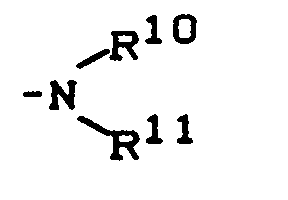
- R10
- für C1-C4-Alkyl, C3-C5-Alkenyl, C3-C5-Alkinyl, C3-C6-Cycloalkyl oder Benzyl steht und
- R11
- für C1-C4-Alkyl, C3-C5-Alkenyl, C3-C5-Alkinyl, C3-C6-Cycloalkyl, Benzyl, Phenylethyl, Halogencarbonyl, Formyl, C1-C4-Alkyl-carbonyl, C1-C4-Alkoxy-carbonyl, C1-C4-Alkoxyphenoxy-carbonyl, C3-C5-Alkinoxy-carbonyl, C3-C5-Alkenoxycarbonyl, C1-C4-Alkylthiocarbonyl, C1-C4-Alkyl-amino-carbonyl, C1-C4-Alkyl-hyroxylamino-carbonyl, C1-C10-Alkyl-phenoxycarbonyl, Di-C1-C4-alkyl-aminocarbonyl, Phenylthiocarbonyl, Phenoxycarbonyl, 2,3-Dihydro-2,2-dimethyl-7-benzofuranyloxycarbonyl, für gegebenenfalls durch Halogen, Cyano, Nitro, Trifluormethyl, C1-C10-Alkyl oder C1-C4-Alkoxy substituietes Phenylsulfenyl, Phenylsulfinyl, Phenylsulfonyl oder Phenyl steht, oder für den Rest

- R12
- die oben für R7 angegebene Bedeutung und
- R13
- die oben für R8 angegebene Bedeutung hat,
- Als Wirkstoffkomponenten ganz besonders bevorzugt sind Carbamidsäureester der Formel III, in welcher
- R3
- für gegebenenfalls durch C1-C4-Alkyl, C2-C4-Alkenyl, C1-C4-Alkoxy, C1-C4-Alkoxy-methyl, C1-C4-Alkylthio, C1-C4-Alkylthio-methyl, C1-C4-Alkylamino, Di-(C1-C4-alkyl)-amino, Di-(C3-C4-alkenyl)-amino, Halogen, Dioxolanyl, Methylendioxy und/oder durch den Rest -N=CH-N(CH3)2 substituierte Reste aus der Reihe Phenyl, Naphthyl, 2,3-Dihydro-7-benzofuranyl, Pyrazolyl oder Pyrimidinyl steht, oder in welcher
- R3
- für einen Alkylidenaminorest der Formel

- R14 und R15
- die oben für R7 bzw. R8 angegebene Bedeutung haben,
- R4
- für C1-C4-Alkyl steht und
- R5
- für Wasserstoff oder C1-C4-Alkyl (vorzugsweise für Wasserstoff) steht.
- Als Beispiele für die Carbamidsäureester der Formel III seien die folgenden N-Methylcarbamidsäureester genannt: 2-Methyl-phenyl-, 2-Ethyl-phenyl-, 2-iso-Propyl-phenyl-, 2-sec.-Butyl-phenyl-, 2-Methoxy-phenyl-, 2-Ethoxy-phenyl, 2-iso-Propoxy-phenyl-, 4-Methyl-phenyl-, 4-Ethyl-phenyl-, 4-n-Propyl-phenyl-, 4-Methoxy-phenyl-, 4-Ethoxy-phenyl-, 4-n-Propoxy-phenyl-, 3,4,5-Trimethyl-phenyl-, 3,5-Dimethyl-4-methylthio-phenyl-, 3-Methyl-4-dimethylamino-phenyl-, 2-Ethylthiomethyl-phenyl-, 1-Naphthyl-, 2,3-Dihdyro-2,2-dimethyl-7-benzofuranyl-, 2,3-(Dimethylmethylendioxy)-phenyl-, 2-(4,5-Dimethyl-1,3-dioxolan-1-yl)-phenyl-, 1-Methylthio-ethyliden-amino-, 2-Methylthio-2-methylpropylidenamino-, 1-(2-Cyano-ethylthio)-ethylidenamino- und 1-Methylthiomethyl-2,2-dimethylpropylidenamino-N-methyl-carbamidsäureester, wobei das 2-iso-Propoxy-phenyl-N-methylcarbamat bevorzugt wird.
-
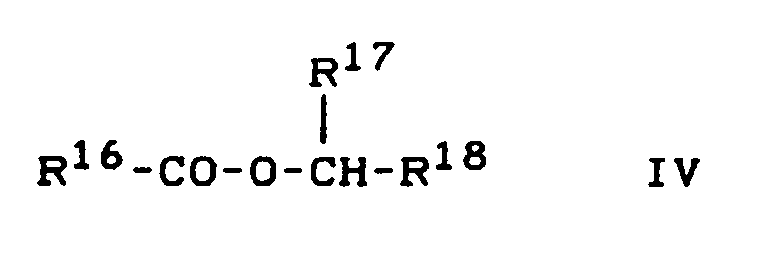
in welcher - R16
- für einen offenkettigen oder cyclischen Alkylrest steht, der gegebenenfalls substituiert ist durch Halogen, Alkyl, Cycloalkyl, durch gegebenenfalls durch Halogen, Alkyl und/oder Alkoxy substituiertes Alkenyl, durch Phenyl oder Styryl, welche gegebenenfalls durch Halogen, gegebenenfalls Halogensubstituierte Reste aus der Reihe Alkyl, Alkoxy, Alkylendioxy und/oder Alkylthio substituiert sind, durch spirocyclisch verknüpftes, gegebenenfalls Halogen-substituiertes Cycloalk(en)yl, welches gegebenenfalls benzannelliert ist, in welcher weiter
- R17
- für Wasserstoff, Alkyl, Halogenalkyl, Alkenyl, Alkinyl oder Cyano steht, und
- R18
- für einen gegebenenfalls substituierten Alkyl- oder Arylrest oder für einen Heterocyclus steht, oder zusammen mit R17 und dem Kohlenstoffatom, an das beide Reste gebunden sind, einen Cyclopentenonring bildet.
- Ganz besonders als Wirkstoffkomponenten bevorzugt sind Carbonsäureester der Formel IV, in welcher
- R16
- (a) für den Rest

- R19
- für Wasserstoff, Methyl, Fluor, Chlor oder Brom und
- R20
- für Methyl, Fluor, Chlor, Brom, C1-C2-Fluoralkyl oder C1-C2-Chlorfluoralkyl oder für gegebenenfalls durch Halogen und/oder gegebenenfalls Halogen-substituierte Reste der Reihe C1-C4-Alkyl, C1-C4-Alkoxy, C1-C4-Alkylthio und/oder C1-C2-Alkylendioxy substituiertes Phenyl steht, oder worin beide Reste R25 und R26 für C2-C5-Alkandiyl (Alkylen) stehen;
- R16
- (b) für den Rest

- R21
- für gegebenenfalls durch Halogen und/oder durch gegebenenfalls Halogen-substituierte Reste der Reihe C1-C4-Alkyl, C1-C4-Alkoxy, C1-C4-Alkylthio oder C1-C2-Alkylendioxy substituiertes Phenyl steht und
- R22
- für Isopropyl oder Cyclopropyl steht;
- R16
- (c) für Methyl oder einen der Reste

- R16
- für Wasserstoff, C1-C4-Alkyl, C1-C4-Halogenalkyl, Cyano oder Ethinyl steht und
- R18
- für die Reste der Reihe Phenyl, Furyl oder Tetrahydrophthalimido steht, wobei diese Reste substituiert sein können durch Halogen und/oder Reste der Reihe C1-C4-Alkyl, C2-C4-Alkenyl, C1-C4-Alkoxy, C2-C4-Alkenoxy, C1-C4-Alkylthio, C1-C2-Alkylendioxy, Phenoxy und/oder Benzyl, welche ihrerseits durch Halogen substituiert sein können und wobei R18 vorzugsweise für Tetrafluorphenyl, 3,4-Dichlorphenyl, Tetrahydrophthalimido oder für Phenoxyphenyl, steht, welches in einem oder beiden Phenylringen durch Halogen (vorzugsweise Fluor) substituiert sein kann.
- Weiter sind die natürlich vorkommenden Pyrethroide (wie Pyrethrum) als Carbonsäureester der Formel IV besonders bevorzugt.
- Als Beispiele für erfindungsgemäß besonders bevorzugte Carbonsäureester der Formel IV seinen genannt
2,2-Dimethyl-3-(2-methyl-propen-1-yl)-cyclopropan-carbonsäure-(3,4,5,6-tetrahydro-phthalimido-methyl)-ester, 2,2-Dimethyl-3-(2,2-dichlorvinyl)-cyclopropan-carbonsäure-(3-phenoxy-benzyl)-ester, 2,2-Dimethyl-3-(2,2-dichlorvinyl)-cyclopropancarbonsäure-(α-cyano-3-phenoxy-benzyl)-ester, 2,2-Dimethyl-3-(2,2-dichlorvinyl)-cyclopropan-carbonsäure-(α-cyano-4-fluor-3-phenoxy-benzyl)-ester, 2,2-Dimethyl-3-(2,2-dichlorvinyl)-cyclopropancarbonsäure-(2,3,5,6-tetrafluor-benzyl)-ester, 2,2-Dimethyl-3-(2,2-dibromvinyl)-cyclopropancarbonsäure-(α-cyano-3-phenoxy-benzyl)-ester und 3-Methyl-2-(4-chlor-phenyl)-butansäure-(α-cyano-3-phenoxy-benzyl)-ester. -

in welcher - A
- gleich oder verschieden ist und für O oder S steht und
- B
- für O, S, -NH- oder für eine direkte Bindung zwischen dem zentralen P-Atom und R25 steht und
- R23 und R24
- gleich oder verschieden sind und für gegebenenfalls substituiertes Alkyl oder Aryl stehen,
- R25
- für Wasserstoff, gegebenenfalls substituiertes Alkyl, Aryl, Heteroaryl, Aralkyl, Alkenyl, Dioxanyl oder einen Oximrest oder für den gleichen Rest steht, an den es gebunden ist.
- Besonders bevorzugt sind Phosphorsäure- und Phosphonsäureester der Formel V, in welcher
- R23 und R24
- gleich oder verschieden sind und für C1-C4-Alkyl oder Phenyl stehen,
- R25
- für Wasserstoff, Alkyl mit 1 bis 4 Kohlenstoffatomen steht, das gegebenenfalls durch Halogen, Hydroxyl, Cyano, gegebenenfalls Halogen-substituiertes Phenyl, Carbamoyl, Alkylsulfonyl, Alkylsulfinyl, Alkylcarbonyl, Alkoxy, Alkylthio, Alkoxycarbonyl, Alkylaminocarbonyl, letztere mit jeweils bis zu 6 Kohlenstoffatomen, substituiert ist, für Alkenyl mit bis zu 4 Kohlenstoffatomen, das gegebenenfalls durch Halogen-substituiertes Phenyl oder C1-C4-Alkoxycarbonyl substituiert ist, oder für den Rest der allgemeinen Formel

- R25
- ferner für Dioxanyl, das durch denselben Rest substituiert ist, an den R24 gebunden ist, oder R25 für den gleichen Rest an den es gebunden ist steht, oder R25 für Phenyl, das gegebenenfalls durch Methyl, Nitro, Cyano, Halogen und/oder Methylthio substituiert ist steht, wobei
- R25
- außerdem besonders bevorzugt für gegebenenfalls durch C1-C4-Alkoxy, C1-C4-Alkylthiomethyl, C1-C4-Alkyl und/oder durch Halogen substituierte heteroaromatische Reste, wie Pyridinyl, Chinolinyl, Chinoxalinyl, Pyrimidinyl oder Benzo-1,2,4-triazinyl steht.
- Im einzelnen seien genannt:
- O,O-Dimethyl- bzw. O,O-Diethyl-O-(2,2-dichlor- bzw. 2,2-dibromvinyl)-phosphorsäureester,
- O,O-Diethyl-O-(4-nitro-phenyl)-thionophosphorsäureester,
- O,O-Dimethyl-O-(3-methyl-4-methylthio-phenyl)-thionophosphorsäureester,
- O,O-Dimethyl-O-(3-methyl-4-nitro-phenyl)-thionophosphorsäureester,
- O-Ethyl-S-n-propyl-O-(2,4-dichlorphenyl)-thionophosphorsäureester,
- O-Ethyl-S-n-propyl-O-(4-methylthio-phenyl)-thionophosphorsäureester,
- O,O-Dimethyl-S-(4-oxo-1,2,3-benzotriazin(3)yl-methyl)-thionothiolphosphorsäureester,
- O-methyl-O-(2-iso-propyl-6-methoxy-pyrimidin(4)yl)-thionomethanphosphonsäureester,
- O,O-Diethyl-O-(2-iso-propyl-6-methyl-pyrimidin(4)yl)-thionophosphorsäureester,
- O,O-Diethyl-O-(3-chlor-4-methyl-cumarin(7)yl)-thionophosphorsäureester,
- O,O-Dimethyl-2,2,2-trichlor-1-hydroxy-ethan-phosphonsäureester,
- O,O-Dimethyl-S-(methylaminocarbonyl-methyl)-thionophosphonsäureester,
- O-Methyl-O-(6-methoxy-2-tert.-butyl-pyrimidin-4-yl)-thionoethan-phosphonsäure-diester.
-

in welcher - R28
- für C1-C4-Alkyl (vorzugsweise für Methyl oder Ethyl) oder für die Gruppe

- R32
- C1-C4-Alkyl (vorzugsweise Methyl oder Ethyl) bedeutet oder
- R32
- gemeinsam mit R29 eine gegebenenfalls verzweigte C2-C5-Alkandiyl-Kette (vorzugsweise -(CH2)2- oder -(CH2)3-) darstellt,
- R33
- Wasserstoff oder C1-C4-Alkyl (vorzugsweise Wasserstoff) bedeutet;
- R29
- für C1-C4-Alkyl (vorzugsweise Methyl oder Ethyl) steht oder gemeinsam mit R32 eine gegebenenfalls verzweigte C2-C5-Alkandiyl-Kette (vorzugsweise -(CH2)2- oder -(CH2)3-) darstellt,
- R30
- für NO2 oder CN steht;
- R31
- für einen gegebenenfalls substituierten (vorzugsweise durch Halogen und/oder C1-C4-Alkyl substituierten) heteroaromatischen Rest (vorzugsweise den Pyridylrest) steht (wobei R31 besonders bevorzugt für die 2-Chlorpyridyl-5-Gruppe steht);
- Q
- für =C- oder =N- steht; und
- V
- für eine direkte Bindung oder für einen C1-C3-Alkandiyl-Rest (vorzugsweise für -CH2-) steht.
- Im folgenden werden beispielhaft einige besonders bevorzugte Verbindungen der Formel VI speziell aufgeführt:


- Die Verbindungen der Formel I und/oder die insektiziden Stoffe sowie die Mischungen der Verbindungen der Formel I mit den insektiziden Stoffen können in Abhängigkeit von ihren jeweiligen physikalischen und/oder chemischen Eigenschaften in übliche Formulierungen übergeführt werden, wie Lösungen, Emulsionen, Suspensionen, Pulver, Schäume, Pasten, Granulate, Aerosole, Wirkstoff-imprägnierte Natur- und synthetische Stoffe sowie Feinstverkapselungen in polymeren Stoffen.
- Diese Formulierungen werden in bekannter Weise hergestellt, z.B. durch Vermischen der Wirkstoffe mit Hilfs- und/oder Streckmitteln, also flüssigen Lösungsmitteln und/oder festen Trägerstoffen, gegebenenfalls unter Verwendung von oberflächenaktiven Mitteln, also Emulgiermitteln und/oder Dispergiermitteln und/oder schaumerzeugenden Mitteln. Im Falle der Benutzung von Wasser als Streckmittel können z.B. auch organische Lösungsmittel als Hilfslösungsmittel verwendet werden. Als flüssige Lösungsmittel kommen im wesentlichen in Frage: Aromaten, wie Xylol, Toluol, oder Alkylnaphthaline, chlorierte Aromaten oder chlorierte aliphatische Kohlenwasserstoffe, wie Chlorbenzole, Chlorethylene oder Methylenchlorid, aliphatische Kohlenwasserstoffe, wie Cyclohexan oder Paraffine, z.B. Erdölfraktionen, Alkohole, wie Butanol oder Glycol sowie deren Ether und Ester, Ketone, wie Aceton, Methylethylketon, Methylisobutylketon oder Cyclohexanon, stark polare Lösungsmittel, wie Dimethylformamid und Dimethylsulfoxid, sowie Wasser; als feste Trägerstoffe kommen in Frage: z.B. natürliche Gesteinsmehle, wie Kaoline, Tonerden, Talkum, Kreide, Quarz, Attapulgit, Montmorillonit oder Diatomeenerde und synthetische Gesteinsmehle, wie hochdisperse Kieselsäure, Aluminiumoxid und Silikate; als feste Trägerstoffe für Granulate kommen in Frage: z.B. gebrochene und fraktionierte natürliche Gesteine wie Calcit, Marmor, Bims, Sepiolith, Dolomit sowie synthetische Granulate aus anorganischen und organischen Mehlen sowie Granulate aus organischem Material wie Sägemehl, Kokosnußschalen, Maiskolben und Tabakstengel; als Emulgier und/oder schaumerzeugende Mittel kommen in Frage: z.B. nichtionogene und anionische Emulgatoren, wie Polyoxyethylen-Fettsäure-Ester, PolyoxyethylenFettalkohol-Ether, z.B. Alkylarylpolyglykol-Ether, Alkylsulfonate, Alkylsulfate, Arylsulfonate sowie Eiweißhydrolysate; als Dispergiermittel kommen in Frage: z.B. Lignin-Sulfitablaugen und Methylcellulose.
- Es können in den Formulierungen Haftmittel wie Carboxymethylcellulose, natürliche und synthetische pulverige, körnige oder latexförmige Polymere verwendet werden, wie Gummiarabicum, Polyvinylalkohol, Polyvinylacetat, sowie natürliche Phospholipide, wie Kephaline und Lecithine, und synthetische Phospholipide. Weitere Additive können mineralische und vegetabile Öle sein.
- Es können Farbstoffe wie anorganische Pigmente, z.B. Eisenoxid, Titanoxid, Ferrocyanblau und organische Farbstoffe, wie Alizarin-, Azo- und Metallphthalocyaninfarbstoffe und Spurennährstoffe wie Salze von Eisen, Mangan, Bor, Kupfer, Kobalt, Molybdän und Zink verwendet werden.
- Die Formulierungen können im Falle von Köderformulierungen (vorzugsweise Streuköderformulierungen oder Festköderformulierungen) zusätzlich weitere Zusatzstoffe enthalten, die die Schaben anlocken und/oder zur Aufnahme der insektiziden Stoffe veranlassen. Als Lockstoffe und Fraßstoffe können alle üblicherweise verwendeten Präparate verwendet werden, wie natürliche oder synthetische Geruchsstoffe, Farbstoffe und/oder Stoffe, die von Schaben gerne aufgenommen werden, wie stärkehaltige und/oder zuckerhaltige Produkte auf Getreidebasis.
- Die Formulierungen enthalten vorzugsweise 0,001 bis 95, insbesondere 0,01 bis 70, Gewichtsprozente an Verbindungen der Formel I.
- Die Formulierungen der insektiziden Stoffe enthalten (gegebenenfalls neben den Verbindungen der Formel I) vorzugsweise zwischen 0,1 und 95, insbesondere 0,5 und 90 Gewichtsprozente insektizide Stoffe.
- Die Anwendung der Schabenbekämpfungsmittel erfolgt in einer an die Anwendungsform angepaßten üblichen Weise.
- Die biologische Wirksamkeit der Verbindungen der Formel I soll anhand der folgenden Beispiele erläutert werden.
- In einem Raum (2,25 x 4,70 m) befinden sich in zwei gegenüberliegenden Ecken je ein Versteck sowie je eine Tränke, in den anderen zwei Ecken je ein Stück Zwieback. Einen Tag nach Freilassen von 20 männlichen und 20 weiblichen Schaben (Blattella germancia) wird in 40 cm Wandabstand zum Zwieback je eine Köderdose mit einer insektizidhaltigen Fraßtablette (im vorliegenden Fall 0,5 % Ethylchlorpyrifos) aufgestellt.
- Auf der Innenseite des Köderdosendeckels befindet sich ein Plättchen, das 1 Stunde zuvor mit einer Verbindung der Formel I (gelöst in n-Hexan) oder nur mit n-Hexan behandelt worden war (unbehandelter Köder = Kontrolle)
3 Räume wurden jeweils mit behandelten Köderdosen und 3 mit unbehandelten Köderdosen besetzt. - Am folgenden Tag wurde die Mortalität der männlichen und weiblichen Tiere bestimmt.
- Die Versuchsergebnisse sind aus der folgenden Tabelle 2 ersichtlich:
Tabelle 2 eingesetzte Verbindung der Tabelle 1 Mortalität in % nach 1 Tag (Mittel aus 3 Versuchen) männliche Schaben weibliche Schaben 1 Kontrolle 47 48 42 37 2 Kontrolle 38 28 27 25 3 Kontrolle 78 62 25 33 4 Kontrolle 53 54 33 29 - Keramische Kacheln werden mit einer wäßrigen Spritzbrühe besprüht, die (a) eine 50 g/Liter enthaltende Cyfluthrin-Formulierung und (b) diese Formulierung und zusätzlich die Verbindung 3 aus Tabelle 1 enthält. Die Aufwandmenge an Cyfluthrin beträgt jeweils 20 mg Wirkstoff je m2 Kachel. Die Aufwandmenge Verbindung Nr. 3 beträgt 4 mg Wirkstoff je m2 Kachel.
- Je eine dieser Kacheln wird in die Ecke eines Behälters (49 x 59 cm, Höhe 29,5 cm) gelegt, in dem sich eine Tränke, Futter, ein Versteck sowie 2 Stunden zuvor eingesetzte Männchen und Weibchen von Blattella germanica (je 5 Stück) befinden. Jeder Versuch besteht aus 3 Wiederholungen. Nach 1, 2 und 3 Tagen wird die Mortalität bestimmt und der Mittelwert aus den 3 Versuchen gebildet.
- Der Versuch ergab folgende Ergebnisse:
Kacheln behandelt mit (Wirkstoff/m2) Mortalität in % nach 1 Tag 2 Tagen 3 Tagen 20 mg Cyfluthrin + 4 mg Verbindung Nr. 3 aus Tabelle 1 70 90 93 20 mg Cyfluthrin (Kontrolle) 43 70 70 - Die Herstellung der Verbindungen der allgemeinen Formel I soll anhand der folgenden Beispiele erläutert werden:
-

(Verbindung 2 aus Tabelle 1)
2 g (7,46 mmol) 3-Methyl-heptadecan-2-on werden in 20 ml Ethanol gelöst und bei 0°C mit 0,28 g (7,46 mmol) Natriumborhydrid versetzt. Zwei Stunden wird bei 0°C und zwei Stunden bei Raumtemperatur nachgerührt. Anschließend wird unter vermindertem Druck eingeengt, in Cyclohexan-Wasser aufgenommen und die wäßrige Phase dreimal mit Cyclohexan extrahiert. Nach Trocknen und Einengen fallen 2 g (99 % der Theorie) 3-Methyl-heptadecan-2-ol als reine Substanz an. - 1H-NMR (200 MHz, CDCl3): δ = 0,9 (2d, 6H), 1,18 (t, 3H), 1,2-1,6 (m, 27H), 3,65 (m, 1H)
Analog wird die Verbindung Nr. 1 der Tabelle 1 synthetisiert:
- 1H-NMR (200 MHz, CDCl3): δ = 0,88 (d + t, 6H), 1,15 (t, 3H), 1,20-1,40 (m, 35 H), 3,60-3,75 (m, 1H).
-
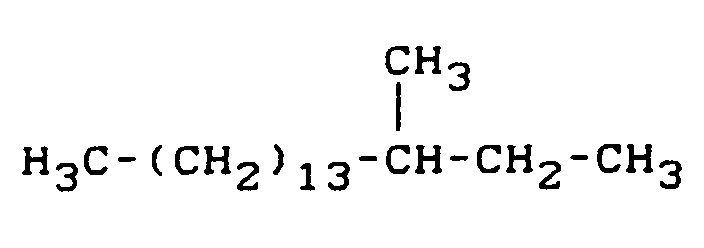
(Verbindung Nr. 3 aus Tabelle 1)
2 g (7,46 mmol) 3-Methyl-heptadecan-2-on (Verbindung Nr. 3 der Tabelle 1) werden in 10 ml Diethylenglykol vorgelegt, mit 1,11 g (22,4 mmol) Hydrazinhydrat und 1,2 g (29,85 mmol) Natriumhydroxid versetzt. Zwanzig Stunden wird bei 200°C gerührt. Nach Abkühlen auf Raumtemperatur wird mit 100 ml Wasser versetzt, unter Kühlung mit Salzsäure angesäuert und dreimal mit Cyclohexan extrahiert. Die vereinigten organischen Extrakte werden zweimal mit wenig Wasser gewaschen, über Natriumsulfat getrocknet und eingeengt. Die säulenchromatographische Trennung mit dem Laufmittel Cyclohexan liefert 1,0 g (53 % der Theorie) 3-Methylheptadecan. - MS m/z (%):
- 254 (23, M+), 225 (46), 196 (18), 155 (17), 113 (22), 99 (28), 85 (67), 71 (83), 57 (100).
- Entsprechend dieser Vorschrift wird auch die Verbindung Nr. 4 der Tabelle 1 synthetisiert

- 1H-NMR (200 MHz, CCl3): δ = 0,85 (t, 9H), 1,1-1,4 (m, 37H).
- Die Synthese der Ausgangsverbindungen kann nach bekannten Herstellungsverfahren (vgl. Agr. Biol. Chem. 40, 391 (1976); J. Org. Chem. 42, 566 (1977) erfolgen.
in welcher
Claims (10)
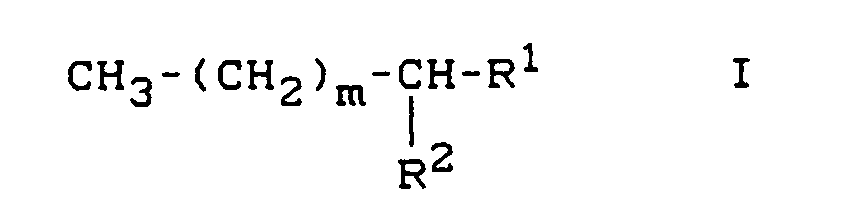
- Verwendung von Verbindungen der allgemeinen Formel I
 R1 für C1-C5-Alkyl oder Hydroxy-C1-C5-alkyl, steht;R2 für C1-C5-Alkyl steht undm für eine ganze Zahl von 10 bis 20 steht,bei der Bekämpfung von Schaben.
 - Verwendung gemäß Anspruch 1, wobei in der allgemeinen Formel IR1 für C1-C4-Alkyl oder Hydroxy-C1-C4-alkyl, steht,R2 für C1-C3-Alkyl steht; undm für eine ganze Zahl von 11 bis 19 steht.
- Verwendung gemäß Anspruch 1, wobei in der allgemeinen Formel IR1 für C1-C3-Alkyl oder Hydroxy-C1-C3-alkyl, steht;R2 für Methyl oder Ethyl steht; undm für eine ganze Zahl von 12 bis 18 steht.
- Verwendung gemäß Anspruch 1 bei der Schabenbekämpfung mit mechanischen Schabenbekämpfungsvorrichtungen und Mitteln, mit biologischen oder chemischen Mitteln und mit Kombinationen solcher Vorrichtungen und Mittel.
- Mechanische Schabenbekämpfungsvorrichtungen und Mittel, welche wenigstens eine Verbindung der allgemeinen Formel I gemäß Anspruch 1 enthalten.
- Schabenbekämpfungsmittel, welche(a) wenigstens eine Verbindung der allgemeinen Formel I gemäß Anspruch 1 und(b) wenigstens einen entomopathogenen Virus oder Mikroorganismus und/oder wenigstens einen insektizid wirkenden Stoff und gegebenenfalls(c) ein oder mehrere Hilfs- und/oder Streckmittel und/oder sonstige Zusatzstoffe enthalten,
wobei die obigen Bestandteile in einer Mischung oder in einer separaten Anordnung vorliegen können. - Mechanische Schabenbekämpfungsvorrichtungen und Mittel nach Anspruch 5, welche ein Schabenbekämpfungsmittel gemäß Anspruch 6 enthalten.
- Schabenbekämpfungsmittel, welche eine klebrige Oberfläche aufweisen, an denen die Schaben haften bleiben und welche wenigstens eine Verbindung der allgemeinen Formel I gemäß Anspruch 1 in der klebrigen Oberflächenschicht oder in unmittelbarer Nähe der klebrigen Oberfläche enthalten.
- Verbindungen der allgemeinen Formel I
 R1 für Hydroxy-C1-C5-alkyl steht;R2 für C1-C5-Alkyl steht; undm für eine ganze Zahl von 10 bis 20 steht, ausgenommen 3-Methyl-2-pentadecanol 2-methyl-1-pentadecanol und 3-methyl-1-pentadecanol.
 - Verfahren zur Herstellung von Verbindungen der allgemeinen Formel I
 R1 für Hydroxy-C1-C5-Alkyl steht,R2 für C1-C5-Alkyl steht; undm für eine ganze Zahl von 0 bis 15 steht,dadurch gekennzeichnet, daß man
Ketone der allgemeinen Formel II R2 und m die oben angegebene Bedeutung haben undW für C1-C4-Alkyl steht,mit einem Reduktionsmittel in Gegenwart eines Verdünnungsmittels umsetzt.
Applications Claiming Priority (2)
| Application Number | Priority Date | Filing Date | Title |
|---|---|---|---|
| DE4228002 | 1992-08-24 | ||
| DE4228002A DE4228002A1 (de) | 1992-08-24 | 1992-08-24 | Schabenbekämpfungsverfahren und Mittel zur Bekämpfung von Schaben |
Publications (2)
| Publication Number | Publication Date |
|---|---|
| EP0584653A1 EP0584653A1 (de) | 1994-03-02 |
| EP0584653B1 true EP0584653B1 (de) | 1996-09-18 |
Family
ID=6466246
Family Applications (1)
| Application Number | Title | Priority Date | Filing Date |
|---|---|---|---|
| EP93112874A Expired - Lifetime EP0584653B1 (de) | 1992-08-24 | 1993-08-11 | Schabenbekämpfungsverfahren und Mittel zur Bekämpfung von Schaben |
Country Status (13)
| Country | Link |
|---|---|
| US (1) | US5365691A (de) |
| EP (1) | EP0584653B1 (de) |
| JP (1) | JP3452071B2 (de) |
| KR (1) | KR100300524B1 (de) |
| CN (1) | CN1083469A (de) |
| AT (1) | ATE142998T1 (de) |
| AU (1) | AU664636B2 (de) |
| BR (1) | BR9303455A (de) |
| DE (2) | DE4228002A1 (de) |
| DK (1) | DK0584653T3 (de) |
| ES (1) | ES2091528T3 (de) |
| GR (1) | GR3021502T3 (de) |
| ZA (1) | ZA936155B (de) |
Families Citing this family (4)
| Publication number | Priority date | Publication date | Assignee | Title |
|---|---|---|---|---|
| US20060021275A1 (en) * | 1999-05-21 | 2006-02-02 | Howse Philip E | Pest control method and apparatus therefor |
| JP2001288009A (ja) * | 2000-04-06 | 2001-10-16 | Fumakilla Ltd | ゴキブリ用喫食誘起性誘引剤の使用方法 |
| WO2005046743A1 (en) | 2003-11-05 | 2005-05-26 | The Regents Of The University Of California | Disinfestation and disinfection of food, perishables and other commodities |
| JP5337988B2 (ja) * | 2009-02-03 | 2013-11-06 | アース製薬株式会社 | アリの防除方法及びアリ防除剤 |
Family Cites Families (17)
| Publication number | Priority date | Publication date | Assignee | Title |
|---|---|---|---|---|
| US3072526A (en) * | 1959-02-16 | 1963-01-08 | Hoffmann La Roche | Insect lures |
| NL260111A (de) * | 1960-01-16 | 1900-01-01 | ||
| US3239566A (en) * | 1960-07-22 | 1966-03-08 | Shell Oil Co | Hydroformylation of olefins |
| US3241908A (en) * | 1962-03-05 | 1966-03-22 | Paul A Mazur | Monomolecular film formers for water surfaces |
| US3127439A (en) * | 1962-04-27 | 1964-03-31 | Ethyl Corp | Half alkyl-half amides of maleic acid |
| US3127440A (en) * | 1962-05-08 | 1964-03-31 | Ethyl Corp | Mixtures of esters of unsubstituted unsaturated 1, 4 dicarboxylic acids having 4 carbons and c-c saturated alcohols |
| US3513084A (en) * | 1968-06-28 | 1970-05-19 | Du Pont | Lubricant producing system |
| US4044495A (en) * | 1972-05-26 | 1977-08-30 | Earth Chemical Company, Limited | Device for capturing cockroaches |
| JPS5231416B2 (de) * | 1974-03-26 | 1977-08-15 | ||
| JPS5420868A (en) * | 1977-07-08 | 1979-02-16 | Earth Chemical Co | Capturing instrument for inducing cockroaches |
| US4851218A (en) * | 1985-05-01 | 1989-07-25 | S. C. Johnson & Son, Inc. | Method for controlling insects of the family vespidae utilizing interspecific insecticidal bait |
| DE3615854A1 (de) * | 1986-05-10 | 1987-11-12 | Basf Ag | Verfahren und mittel zur bekaempfung der fleckenminiermotte leucoptera scitella |
| JPS6354333A (ja) * | 1986-08-22 | 1988-03-08 | Adeka Argus Chem Co Ltd | 光学活性アルコ−ル化合物 |
| US5072057A (en) * | 1986-10-03 | 1991-12-10 | Exxon Research & Engineering Co. | Process for the hydroformylation of sulfur-containing thermally cracked petroleum residue and novel products thereof |
| DE3709922A1 (de) * | 1987-03-26 | 1988-10-06 | Basf Ag | Verfahren und mittel zur bekaempfung der kaffeeminiermotte, insbesondere der art perileucoptera coffeella |
| JP2851120B2 (ja) * | 1989-04-25 | 1999-01-27 | 日本たばこ産業株式会社 | ヒラタコクヌストモドキのための誘引剤 |
| JPH03130291A (ja) * | 1989-10-16 | 1991-06-04 | Japan Tobacco Inc | ペリプラノン―b類縁体、その製造法、およびその中間体、ならびにゴキブリ類の誘引剤 |
-
1992
- 1992-08-24 DE DE4228002A patent/DE4228002A1/de not_active Withdrawn
-
1993
- 1993-07-30 AU AU44350/93A patent/AU664636B2/en not_active Ceased
- 1993-08-11 DK DK93112874.8T patent/DK0584653T3/da active
- 1993-08-11 EP EP93112874A patent/EP0584653B1/de not_active Expired - Lifetime
- 1993-08-11 ES ES93112874T patent/ES2091528T3/es not_active Expired - Lifetime
- 1993-08-11 DE DE59303840T patent/DE59303840D1/de not_active Expired - Fee Related
- 1993-08-11 AT AT93112874T patent/ATE142998T1/de not_active IP Right Cessation
- 1993-08-19 JP JP22637993A patent/JP3452071B2/ja not_active Expired - Fee Related
- 1993-08-20 KR KR1019930016239A patent/KR100300524B1/ko not_active Expired - Fee Related
- 1993-08-23 ZA ZA936155A patent/ZA936155B/xx unknown
- 1993-08-23 BR BR9303455A patent/BR9303455A/pt not_active IP Right Cessation
- 1993-08-24 CN CN93109749A patent/CN1083469A/zh active Pending
-
1994
- 1994-03-07 US US08/207,906 patent/US5365691A/en not_active Expired - Lifetime
-
1996
- 1996-10-30 GR GR960402871T patent/GR3021502T3/el unknown
Also Published As
| Publication number | Publication date |
|---|---|
| US5365691A (en) | 1994-11-22 |
| GR3021502T3 (en) | 1997-01-31 |
| KR940003459A (ko) | 1994-03-12 |
| CN1083469A (zh) | 1994-03-09 |
| ZA936155B (en) | 1994-03-17 |
| JP3452071B2 (ja) | 2003-09-29 |
| ES2091528T3 (es) | 1996-11-01 |
| AU664636B2 (en) | 1995-11-23 |
| BR9303455A (pt) | 1994-03-22 |
| AU4435093A (en) | 1994-03-03 |
| ATE142998T1 (de) | 1996-10-15 |
| KR100300524B1 (ko) | 2001-11-30 |
| DE59303840D1 (de) | 1996-10-24 |
| JPH06172104A (ja) | 1994-06-21 |
| EP0584653A1 (de) | 1994-03-02 |
| DK0584653T3 (de) | 1997-02-24 |
| DE4228002A1 (de) | 1994-03-03 |
Similar Documents
| Publication | Publication Date | Title |
|---|---|---|
| DE2653189C2 (de) | Cyclopropanverbindungen, Verfahren zu ihrer Herstellung und diese Verbindungen enthaltende Insektizide | |
| DE2810881A1 (de) | Substituierte pyridylmethylester von cyclopropancarbonsaeuren und ihre verwendung als insektizide | |
| JPS6078971A (ja) | ニトロメチレン−テトラヒドロピリミジン誘導体,その製法及び殺虫,殺ダニ,殺センチユウ剤 | |
| DE2843760A1 (de) | Benzylpyrrolylmethylcarbonsaeureester und verfahren zu ihrer herstellung | |
| EP0438690B1 (de) | Substituierte Pyrazolinderivate | |
| JPS62149606A (ja) | 節足動物殺滅剤組成物 | |
| DE2014879A1 (de) | Neue Diphenylmethanderivate, Verfahren zu ihrer Herstellung und ihre Verwendung in insekticiden Mitteln | |
| DD219103A5 (de) | Gegen milben, weisse fliege und thrips wirksame zusammensetzung | |
| DE2706184A1 (de) | Cyclopropancarbonsaeureester, verfahren zu ihrer herstellung und ihre verwendung | |
| DE4228002A1 (de) | Schabenbekämpfungsverfahren und Mittel zur Bekämpfung von Schaben | |
| DD219102A5 (de) | Zusammensetzung mit insektizider und akarizider wirksamkeit | |
| EP0183217A1 (de) | Mikrobizide Mittel | |
| EP0756821B1 (de) | Para-Hydroxyphenylessigsäure zur Reduktion der Repellenz von Insektiziden | |
| DE2547146A1 (de) | 4-substituierte diphenylaether-derivate, verfahren zu ihrer herstellung und schaedlingsbekaempfungsmittel | |
| EP0582915B1 (de) | Insektenbekämpfungsverfahren und Insektenbekämpfungsmittel | |
| DE1542661A1 (de) | Neue heterocyclische Carbaminsaeureester | |
| DE4231281A1 (de) | Schabenbekämpfungsverfahren und Mittel zur Bekämpfung von Schaben | |
| DE1542798C3 (de) | Pyrazolderivate und deren Verwendung | |
| DE2548450A1 (de) | Schaedlingsbekaempfungsmittel | |
| EP0299313A1 (de) | Schädlingsbekämpfungsmittel auf Basis von Derivaten des 2,3-Diaminomaleinsäurenitrils | |
| CH604522A5 (en) | (4,5)-Benzospiro-(2,4)-heptane-(1)-carboxylate esters | |
| DE3504412A1 (de) | Neue phenylpropargylaminderivate | |
| DE1542662C (de) | Eckige Klammer auf 2-Methyl-chinolyl-(8) eckige Klammer zu -N-methylcarbaminsäureester, seine Salze und seine Verwendung | |
| DE68910401T2 (de) | 2,2-Dimethylcyclopropancarbonsäureester. | |
| DE2642861A1 (de) | 2,2-dimethyl-4,5-benzospiro(2,4)heptan- und -hepta-4,6-dien-1-carbonsaeureester, verfahren zu ihrer herstellung und schaedlingsbekaempfungsmittel |
Legal Events
| Date | Code | Title | Description |
|---|---|---|---|
| PUAI | Public reference made under article 153(3) epc to a published international application that has entered the european phase |
Free format text: ORIGINAL CODE: 0009012 |
|
| AK | Designated contracting states |
Kind code of ref document: A1 Designated state(s): AT BE CH DE DK ES FR GB GR IT LI NL PT SE |
|
| 17P | Request for examination filed |
Effective date: 19940311 |
|
| 17Q | First examination report despatched |
Effective date: 19950427 |
|
| GRAH | Despatch of communication of intention to grant a patent |
Free format text: ORIGINAL CODE: EPIDOS IGRA |
|
| GRAH | Despatch of communication of intention to grant a patent |
Free format text: ORIGINAL CODE: EPIDOS IGRA |
|
| GRAA | (expected) grant |
Free format text: ORIGINAL CODE: 0009210 |
|
| AK | Designated contracting states |
Kind code of ref document: B1 Designated state(s): AT BE CH DE DK ES FR GB GR IT LI NL PT SE |
|
| REF | Corresponds to: |
Ref document number: 142998 Country of ref document: AT Date of ref document: 19961015 Kind code of ref document: T |
|
| REG | Reference to a national code |
Ref country code: CH Ref legal event code: NV Representative=s name: E. BLUM & CO. PATENTANWAELTE |
|
| GBT | Gb: translation of ep patent filed (gb section 77(6)(a)/1977) |
Effective date: 19960924 |
|
| REF | Corresponds to: |
Ref document number: 59303840 Country of ref document: DE Date of ref document: 19961024 |
|
| ET | Fr: translation filed | ||
| REG | Reference to a national code |
Ref country code: ES Ref legal event code: FG2A Ref document number: 2091528 Country of ref document: ES Kind code of ref document: T3 |
|
| ITF | It: translation for a ep patent filed | ||
| REG | Reference to a national code |
Ref country code: GR Ref legal event code: FG4A Free format text: 3021502 |
|
| REG | Reference to a national code |
Ref country code: DK Ref legal event code: T3 |
|
| REG | Reference to a national code |
Ref country code: PT Ref legal event code: SC4A Free format text: AVAILABILITY OF NATIONAL TRANSLATION Effective date: 19961217 |
|
| PGFP | Annual fee paid to national office [announced via postgrant information from national office to epo] |
Ref country code: SE Payment date: 19970715 Year of fee payment: 5 |
|
| PLBE | No opposition filed within time limit |
Free format text: ORIGINAL CODE: 0009261 |
|
| PGFP | Annual fee paid to national office [announced via postgrant information from national office to epo] |
Ref country code: GB Payment date: 19970804 Year of fee payment: 5 |
|
| PGFP | Annual fee paid to national office [announced via postgrant information from national office to epo] |
Ref country code: DK Payment date: 19970819 Year of fee payment: 5 |
|
| PGFP | Annual fee paid to national office [announced via postgrant information from national office to epo] |
Ref country code: AT Payment date: 19970820 Year of fee payment: 5 |
|
| 26N | No opposition filed | ||
| PG25 | Lapsed in a contracting state [announced via postgrant information from national office to epo] |
Ref country code: GB Free format text: LAPSE BECAUSE OF NON-PAYMENT OF DUE FEES Effective date: 19980811 Ref country code: AT Free format text: LAPSE BECAUSE OF NON-PAYMENT OF DUE FEES Effective date: 19980811 |
|
| PG25 | Lapsed in a contracting state [announced via postgrant information from national office to epo] |
Ref country code: SE Free format text: LAPSE BECAUSE OF NON-PAYMENT OF DUE FEES Effective date: 19980812 |
|
| PG25 | Lapsed in a contracting state [announced via postgrant information from national office to epo] |
Ref country code: DK Free format text: LAPSE BECAUSE OF NON-PAYMENT OF DUE FEES Effective date: 19980831 |
|
| GBPC | Gb: european patent ceased through non-payment of renewal fee |
Effective date: 19980811 |
|
| EUG | Se: european patent has lapsed |
Ref document number: 93112874.8 |
|
| REG | Reference to a national code |
Ref country code: DK Ref legal event code: EBP |
|
| PGFP | Annual fee paid to national office [announced via postgrant information from national office to epo] |
Ref country code: GR Payment date: 20030723 Year of fee payment: 11 |
|
| PGFP | Annual fee paid to national office [announced via postgrant information from national office to epo] |
Ref country code: PT Payment date: 20030724 Year of fee payment: 11 |
|
| PGFP | Annual fee paid to national office [announced via postgrant information from national office to epo] |
Ref country code: NL Payment date: 20030731 Year of fee payment: 11 |
|
| PGFP | Annual fee paid to national office [announced via postgrant information from national office to epo] |
Ref country code: BE Payment date: 20030828 Year of fee payment: 11 |
|
| PG25 | Lapsed in a contracting state [announced via postgrant information from national office to epo] |
Ref country code: BE Free format text: LAPSE BECAUSE OF NON-PAYMENT OF DUE FEES Effective date: 20040831 |
|
| PG25 | Lapsed in a contracting state [announced via postgrant information from national office to epo] |
Ref country code: PT Free format text: LAPSE BECAUSE OF NON-PAYMENT OF DUE FEES Effective date: 20050211 |
|
| BERE | Be: lapsed |
Owner name: *BAYER A.G. Effective date: 20040831 |
|
| PG25 | Lapsed in a contracting state [announced via postgrant information from national office to epo] |
Ref country code: NL Free format text: LAPSE BECAUSE OF NON-PAYMENT OF DUE FEES Effective date: 20050301 |
|
| PG25 | Lapsed in a contracting state [announced via postgrant information from national office to epo] |
Ref country code: GR Free format text: LAPSE BECAUSE OF NON-PAYMENT OF DUE FEES Effective date: 20050303 |
|
| REG | Reference to a national code |
Ref country code: PT Ref legal event code: MM4A Free format text: LAPSE DUE TO NON-PAYMENT OF FEES Effective date: 20050211 |
|
| NLV4 | Nl: lapsed or anulled due to non-payment of the annual fee |
Effective date: 20050301 |
|
| PGFP | Annual fee paid to national office [announced via postgrant information from national office to epo] |
Ref country code: DE Payment date: 20050716 Year of fee payment: 13 |
|
| PGFP | Annual fee paid to national office [announced via postgrant information from national office to epo] |
Ref country code: FR Payment date: 20050722 Year of fee payment: 13 |
|
| PGFP | Annual fee paid to national office [announced via postgrant information from national office to epo] |
Ref country code: ES Payment date: 20050803 Year of fee payment: 13 |
|
| PGFP | Annual fee paid to national office [announced via postgrant information from national office to epo] |
Ref country code: CH Payment date: 20050818 Year of fee payment: 13 |
|
| PG25 | Lapsed in a contracting state [announced via postgrant information from national office to epo] |
Ref country code: LI Free format text: LAPSE BECAUSE OF NON-PAYMENT OF DUE FEES Effective date: 20060831 Ref country code: CH Free format text: LAPSE BECAUSE OF NON-PAYMENT OF DUE FEES Effective date: 20060831 |
|
| PGFP | Annual fee paid to national office [announced via postgrant information from national office to epo] |
Ref country code: IT Payment date: 20060831 Year of fee payment: 14 |
|
| PG25 | Lapsed in a contracting state [announced via postgrant information from national office to epo] |
Ref country code: DE Free format text: LAPSE BECAUSE OF NON-PAYMENT OF DUE FEES Effective date: 20070301 |
|
| REG | Reference to a national code |
Ref country code: CH Ref legal event code: PL |
|
| REG | Reference to a national code |
Ref country code: FR Ref legal event code: ST Effective date: 20070430 |
|
| REG | Reference to a national code |
Ref country code: ES Ref legal event code: FD2A Effective date: 20060812 |
|
| BERE | Be: lapsed |
Owner name: *BAYER A.G. Effective date: 20040831 |
|
| PG25 | Lapsed in a contracting state [announced via postgrant information from national office to epo] |
Ref country code: ES Free format text: LAPSE BECAUSE OF NON-PAYMENT OF DUE FEES Effective date: 20060812 |
|
| PG25 | Lapsed in a contracting state [announced via postgrant information from national office to epo] |
Ref country code: FR Free format text: LAPSE BECAUSE OF NON-PAYMENT OF DUE FEES Effective date: 20060831 |
|
| PG25 | Lapsed in a contracting state [announced via postgrant information from national office to epo] |
Ref country code: IT Free format text: LAPSE BECAUSE OF NON-PAYMENT OF DUE FEES Effective date: 20070811 |