EP0588657A1 - Superalliage à faible dilatation thermique - Google Patents
Superalliage à faible dilatation thermique Download PDFInfo
- Publication number
- EP0588657A1 EP0588657A1 EP93307356A EP93307356A EP0588657A1 EP 0588657 A1 EP0588657 A1 EP 0588657A1 EP 93307356 A EP93307356 A EP 93307356A EP 93307356 A EP93307356 A EP 93307356A EP 0588657 A1 EP0588657 A1 EP 0588657A1
- Authority
- EP
- European Patent Office
- Prior art keywords
- temperature
- alloy
- aging
- thermal expansion
- beta
- Prior art date
- Legal status (The legal status is an assumption and is not a legal conclusion. Google has not performed a legal analysis and makes no representation as to the accuracy of the status listed.)
- Granted
Links
- 229910000601 superalloy Inorganic materials 0.000 title description 8
- 239000000956 alloy Substances 0.000 claims abstract description 157
- 229910045601 alloy Inorganic materials 0.000 claims abstract description 155
- PXHVJJICTQNCMI-UHFFFAOYSA-N Nickel Chemical compound [Ni] PXHVJJICTQNCMI-UHFFFAOYSA-N 0.000 claims abstract description 79
- 230000032683 aging Effects 0.000 claims abstract description 65
- 239000011651 chromium Substances 0.000 claims abstract description 59
- 229910052804 chromium Inorganic materials 0.000 claims abstract description 54
- VYZAMTAEIAYCRO-UHFFFAOYSA-N Chromium Chemical compound [Cr] VYZAMTAEIAYCRO-UHFFFAOYSA-N 0.000 claims abstract description 49
- 229910052759 nickel Inorganic materials 0.000 claims abstract description 38
- 238000001556 precipitation Methods 0.000 claims abstract description 38
- 238000000137 annealing Methods 0.000 claims abstract description 36
- XEEYBQQBJWHFJM-UHFFFAOYSA-N Iron Chemical compound [Fe] XEEYBQQBJWHFJM-UHFFFAOYSA-N 0.000 claims abstract description 26
- 229910017052 cobalt Inorganic materials 0.000 claims abstract description 22
- 239000010941 cobalt Substances 0.000 claims abstract description 22
- GUTLYIVDDKVIGB-UHFFFAOYSA-N cobalt atom Chemical compound [Co] GUTLYIVDDKVIGB-UHFFFAOYSA-N 0.000 claims abstract description 22
- 239000010955 niobium Substances 0.000 claims abstract description 22
- 229910052758 niobium Inorganic materials 0.000 claims abstract description 20
- GUCVJGMIXFAOAE-UHFFFAOYSA-N niobium atom Chemical compound [Nb] GUCVJGMIXFAOAE-UHFFFAOYSA-N 0.000 claims abstract description 19
- 229910052742 iron Inorganic materials 0.000 claims abstract description 13
- 229910052746 lanthanum Inorganic materials 0.000 claims abstract description 12
- FZLIPJUXYLNCLC-UHFFFAOYSA-N lanthanum atom Chemical compound [La] FZLIPJUXYLNCLC-UHFFFAOYSA-N 0.000 claims abstract description 12
- 239000010936 titanium Substances 0.000 claims abstract description 12
- 229910052799 carbon Inorganic materials 0.000 claims abstract description 11
- 229910052719 titanium Inorganic materials 0.000 claims abstract description 11
- IJGRMHOSHXDMSA-UHFFFAOYSA-N Atomic nitrogen Chemical compound N#N IJGRMHOSHXDMSA-UHFFFAOYSA-N 0.000 claims abstract description 10
- ZOKXTWBITQBERF-UHFFFAOYSA-N Molybdenum Chemical compound [Mo] ZOKXTWBITQBERF-UHFFFAOYSA-N 0.000 claims abstract description 10
- RTAQQCXQSZGOHL-UHFFFAOYSA-N Titanium Chemical compound [Ti] RTAQQCXQSZGOHL-UHFFFAOYSA-N 0.000 claims abstract description 10
- 229910052782 aluminium Inorganic materials 0.000 claims abstract description 10
- 229910052750 molybdenum Inorganic materials 0.000 claims abstract description 10
- 239000011733 molybdenum Substances 0.000 claims abstract description 10
- XAGFODPZIPBFFR-UHFFFAOYSA-N aluminium Chemical compound [Al] XAGFODPZIPBFFR-UHFFFAOYSA-N 0.000 claims abstract description 9
- 239000010949 copper Substances 0.000 claims abstract description 9
- 229910052710 silicon Inorganic materials 0.000 claims abstract description 9
- 239000010703 silicon Substances 0.000 claims abstract description 9
- OKTJSMMVPCPJKN-UHFFFAOYSA-N Carbon Chemical compound [C] OKTJSMMVPCPJKN-UHFFFAOYSA-N 0.000 claims abstract description 8
- RYGMFSIKBFXOCR-UHFFFAOYSA-N Copper Chemical compound [Cu] RYGMFSIKBFXOCR-UHFFFAOYSA-N 0.000 claims abstract description 8
- 229910052802 copper Inorganic materials 0.000 claims abstract description 8
- WFKWXMTUELFFGS-UHFFFAOYSA-N tungsten Chemical compound [W] WFKWXMTUELFFGS-UHFFFAOYSA-N 0.000 claims abstract description 8
- 229910052721 tungsten Inorganic materials 0.000 claims abstract description 8
- 239000010937 tungsten Substances 0.000 claims abstract description 8
- ZOXJGFHDIHLPTG-UHFFFAOYSA-N Boron Chemical compound [B] ZOXJGFHDIHLPTG-UHFFFAOYSA-N 0.000 claims abstract description 7
- 229910052684 Cerium Inorganic materials 0.000 claims abstract description 7
- QCWXUUIWCKQGHC-UHFFFAOYSA-N Zirconium Chemical compound [Zr] QCWXUUIWCKQGHC-UHFFFAOYSA-N 0.000 claims abstract description 7
- 229910052796 boron Inorganic materials 0.000 claims abstract description 7
- 239000011575 calcium Substances 0.000 claims abstract description 7
- GWXLDORMOJMVQZ-UHFFFAOYSA-N cerium Chemical compound [Ce] GWXLDORMOJMVQZ-UHFFFAOYSA-N 0.000 claims abstract description 7
- 239000011777 magnesium Substances 0.000 claims abstract description 7
- 238000002844 melting Methods 0.000 claims abstract description 7
- 230000008018 melting Effects 0.000 claims abstract description 7
- 229910052727 yttrium Inorganic materials 0.000 claims abstract description 7
- VWQVUPCCIRVNHF-UHFFFAOYSA-N yttrium atom Chemical compound [Y] VWQVUPCCIRVNHF-UHFFFAOYSA-N 0.000 claims abstract description 7
- 229910052726 zirconium Inorganic materials 0.000 claims abstract description 7
- OYPRJOBELJOOCE-UHFFFAOYSA-N Calcium Chemical compound [Ca] OYPRJOBELJOOCE-UHFFFAOYSA-N 0.000 claims abstract description 6
- FYYHWMGAXLPEAU-UHFFFAOYSA-N Magnesium Chemical compound [Mg] FYYHWMGAXLPEAU-UHFFFAOYSA-N 0.000 claims abstract description 6
- 229910052791 calcium Inorganic materials 0.000 claims abstract description 6
- 229910052735 hafnium Inorganic materials 0.000 claims abstract description 6
- VBJZVLUMGGDVMO-UHFFFAOYSA-N hafnium atom Chemical compound [Hf] VBJZVLUMGGDVMO-UHFFFAOYSA-N 0.000 claims abstract description 6
- 229910052749 magnesium Inorganic materials 0.000 claims abstract description 6
- 229910052702 rhenium Inorganic materials 0.000 claims abstract description 6
- WUAPFZMCVAUBPE-UHFFFAOYSA-N rhenium atom Chemical compound [Re] WUAPFZMCVAUBPE-UHFFFAOYSA-N 0.000 claims abstract description 6
- 239000012535 impurity Substances 0.000 claims abstract description 5
- WPBNNNQJVZRUHP-UHFFFAOYSA-L manganese(2+);methyl n-[[2-(methoxycarbonylcarbamothioylamino)phenyl]carbamothioyl]carbamate;n-[2-(sulfidocarbothioylamino)ethyl]carbamodithioate Chemical compound [Mn+2].[S-]C(=S)NCCNC([S-])=S.COC(=O)NC(=S)NC1=CC=CC=C1NC(=S)NC(=O)OC WPBNNNQJVZRUHP-UHFFFAOYSA-L 0.000 claims abstract description 5
- 229910052757 nitrogen Inorganic materials 0.000 claims abstract description 5
- 229910052715 tantalum Inorganic materials 0.000 claims abstract description 5
- GUVRBAGPIYLISA-UHFFFAOYSA-N tantalum atom Chemical compound [Ta] GUVRBAGPIYLISA-UHFFFAOYSA-N 0.000 claims abstract description 5
- 238000010438 heat treatment Methods 0.000 claims description 53
- 230000035882 stress Effects 0.000 claims description 45
- 238000011282 treatment Methods 0.000 claims description 16
- 239000000203 mixture Substances 0.000 claims description 11
- 230000003068 static effect Effects 0.000 claims description 11
- 238000001816 cooling Methods 0.000 claims description 9
- 238000000034 method Methods 0.000 claims description 8
- 239000011572 manganese Substances 0.000 claims description 4
- PWHULOQIROXLJO-UHFFFAOYSA-N Manganese Chemical compound [Mn] PWHULOQIROXLJO-UHFFFAOYSA-N 0.000 claims description 3
- 229910052748 manganese Inorganic materials 0.000 claims description 3
- 239000004411 aluminium Substances 0.000 claims 3
- 230000000694 effects Effects 0.000 description 26
- 239000000463 material Substances 0.000 description 21
- 230000001976 improved effect Effects 0.000 description 17
- 230000003247 decreasing effect Effects 0.000 description 12
- 230000002829 reductive effect Effects 0.000 description 10
- 230000008901 benefit Effects 0.000 description 9
- 239000002245 particle Substances 0.000 description 9
- QVGXLLKOCUKJST-UHFFFAOYSA-N atomic oxygen Chemical compound [O] QVGXLLKOCUKJST-UHFFFAOYSA-N 0.000 description 8
- 230000007423 decrease Effects 0.000 description 8
- 239000001301 oxygen Substances 0.000 description 8
- 229910052760 oxygen Inorganic materials 0.000 description 8
- 238000012360 testing method Methods 0.000 description 8
- 229910001293 incoloy Inorganic materials 0.000 description 7
- 238000012545 processing Methods 0.000 description 7
- 229910001026 inconel Inorganic materials 0.000 description 6
- 230000007797 corrosion Effects 0.000 description 5
- 238000005260 corrosion Methods 0.000 description 5
- 239000007789 gas Substances 0.000 description 5
- 239000011159 matrix material Substances 0.000 description 5
- 230000003647 oxidation Effects 0.000 description 5
- 238000007254 oxidation reaction Methods 0.000 description 5
- 239000002244 precipitate Substances 0.000 description 5
- 230000009467 reduction Effects 0.000 description 5
- 238000005336 cracking Methods 0.000 description 4
- 238000001226 reprecipitation Methods 0.000 description 4
- 238000005728 strengthening Methods 0.000 description 4
- 230000009466 transformation Effects 0.000 description 4
- 230000009286 beneficial effect Effects 0.000 description 3
- 230000015572 biosynthetic process Effects 0.000 description 3
- 238000009792 diffusion process Methods 0.000 description 3
- 238000009826 distribution Methods 0.000 description 3
- 238000000844 transformation Methods 0.000 description 3
- 229910017372 Fe3Al Inorganic materials 0.000 description 2
- MCMNRKCIXSYSNV-UHFFFAOYSA-N Zirconium dioxide Chemical compound O=[Zr]=O MCMNRKCIXSYSNV-UHFFFAOYSA-N 0.000 description 2
- 230000002411 adverse Effects 0.000 description 2
- 230000002902 bimodal effect Effects 0.000 description 2
- 238000005219 brazing Methods 0.000 description 2
- 238000000354 decomposition reaction Methods 0.000 description 2
- 230000007547 defect Effects 0.000 description 2
- 230000000977 initiatory effect Effects 0.000 description 2
- 238000012423 maintenance Methods 0.000 description 2
- 229910000734 martensite Inorganic materials 0.000 description 2
- 238000005551 mechanical alloying Methods 0.000 description 2
- 238000010791 quenching Methods 0.000 description 2
- 150000003839 salts Chemical class 0.000 description 2
- 239000000243 solution Substances 0.000 description 2
- 239000007921 spray Substances 0.000 description 2
- 230000000930 thermomechanical effect Effects 0.000 description 2
- XLYOFNOQVPJJNP-UHFFFAOYSA-N water Substances O XLYOFNOQVPJJNP-UHFFFAOYSA-N 0.000 description 2
- RUDFQVOCFDJEEF-UHFFFAOYSA-N yttrium(III) oxide Inorganic materials [O-2].[O-2].[O-2].[Y+3].[Y+3] RUDFQVOCFDJEEF-UHFFFAOYSA-N 0.000 description 2
- 229910000967 As alloy Inorganic materials 0.000 description 1
- 229910002515 CoAl Inorganic materials 0.000 description 1
- 229910000599 Cr alloy Inorganic materials 0.000 description 1
- 229910015372 FeAl Inorganic materials 0.000 description 1
- 229910000990 Ni alloy Inorganic materials 0.000 description 1
- 229910000943 NiAl Inorganic materials 0.000 description 1
- NPXOKRUENSOPAO-UHFFFAOYSA-N Raney nickel Chemical compound [Al].[Ni] NPXOKRUENSOPAO-UHFFFAOYSA-N 0.000 description 1
- 229910052581 Si3N4 Inorganic materials 0.000 description 1
- 238000003483 aging Methods 0.000 description 1
- PNEYBMLMFCGWSK-UHFFFAOYSA-N aluminium oxide Inorganic materials [O-2].[O-2].[O-2].[Al+3].[Al+3] PNEYBMLMFCGWSK-UHFFFAOYSA-N 0.000 description 1
- 238000005266 casting Methods 0.000 description 1
- 239000000919 ceramic Substances 0.000 description 1
- 239000000788 chromium alloy Substances 0.000 description 1
- QVZNQFNKKMMPFH-UHFFFAOYSA-N chromium niobium Chemical compound [Cr].[Nb] QVZNQFNKKMMPFH-UHFFFAOYSA-N 0.000 description 1
- 239000003245 coal Substances 0.000 description 1
- 230000001419 dependent effect Effects 0.000 description 1
- 238000010586 diagram Methods 0.000 description 1
- 230000007613 environmental effect Effects 0.000 description 1
- 230000002349 favourable effect Effects 0.000 description 1
- 230000005294 ferromagnetic effect Effects 0.000 description 1
- 230000002431 foraging effect Effects 0.000 description 1
- 238000000227 grinding Methods 0.000 description 1
- 230000001771 impaired effect Effects 0.000 description 1
- 230000006872 improvement Effects 0.000 description 1
- 230000006698 induction Effects 0.000 description 1
- 230000002401 inhibitory effect Effects 0.000 description 1
- 238000007689 inspection Methods 0.000 description 1
- 238000005304 joining Methods 0.000 description 1
- 230000000670 limiting effect Effects 0.000 description 1
- 238000012417 linear regression Methods 0.000 description 1
- 230000007774 longterm Effects 0.000 description 1
- 230000007246 mechanism Effects 0.000 description 1
- 230000005298 paramagnetic effect Effects 0.000 description 1
- 230000008092 positive effect Effects 0.000 description 1
- 238000004663 powder metallurgy Methods 0.000 description 1
- 230000008569 process Effects 0.000 description 1
- 230000000171 quenching effect Effects 0.000 description 1
- 238000009877 rendering Methods 0.000 description 1
- 230000031070 response to heat Effects 0.000 description 1
- 230000035945 sensitivity Effects 0.000 description 1
- HQVNEWCFYHHQES-UHFFFAOYSA-N silicon nitride Chemical compound N12[Si]34N5[Si]62N3[Si]51N64 HQVNEWCFYHHQES-UHFFFAOYSA-N 0.000 description 1
- 239000007779 soft material Substances 0.000 description 1
- 239000006104 solid solution Substances 0.000 description 1
- 238000009718 spray deposition Methods 0.000 description 1
- 238000010301 surface-oxidation reaction Methods 0.000 description 1
- 230000002459 sustained effect Effects 0.000 description 1
- 230000002195 synergetic effect Effects 0.000 description 1
- 238000009864 tensile test Methods 0.000 description 1
- 230000001131 transforming effect Effects 0.000 description 1
Images





Classifications
-
- C—CHEMISTRY; METALLURGY
- C22—METALLURGY; FERROUS OR NON-FERROUS ALLOYS; TREATMENT OF ALLOYS OR NON-FERROUS METALS
- C22C—ALLOYS
- C22C30/00—Alloys containing less than 50% by weight of each constituent
-
- C—CHEMISTRY; METALLURGY
- C22—METALLURGY; FERROUS OR NON-FERROUS ALLOYS; TREATMENT OF ALLOYS OR NON-FERROUS METALS
- C22C—ALLOYS
- C22C38/00—Ferrous alloys, e.g. steel alloys
- C22C38/10—Ferrous alloys, e.g. steel alloys containing cobalt
Definitions
- This invention is related to the field of controlled thermal expansion alloys.
- this invention is related to the field of three-phase gamma, gamma prime, beta superalloys having relatively low coefficients of thermal expansion.
- a novel three-phase low coefficient of thermal expansion alloy is described in EPO Patent Publication No. 433,072 ('072) published June 19, 1991.
- the disclosure of the '072 publication provided improved resistance to stress accelerated grain boundary oxygen embrittlement (SAGBO) in combination with a controlled relatively low coefficient of thermal expansion.
- SAGBO stress accelerated grain boundary oxygen embrittlement
- the alloy of the '072 patent publication also provided excellent notch rupture strength, relatively low density and acceptable impact strength.
- Specific applications of the '072 alloy include critical structural turbine engine components such as seals, rings, discs, compressor blades and casings.
- Low coefficient of thermal expansion alloys are often designated for applications that include structural components having close tolerances that must not catastrophically fail.
- INCOLOY® alloy 909 (Registered trademark of alloy produced by Inco Alloys International, Inc.) is being used in structural applications requiring a relatively low coefficient of thermal expansion.
- a relatively low coefficient of thermal expansion (CTE) is defined for purposes of this specification as being an alloy providing at least a 10% lower CTE than alloy 718.
- alloy 909 provides a relatively low coefficient of thermal expansion
- alloy 909 does not offer the crack growth resistance of alloy 718.
- alloy 909 suffers from extensive oxidation problems at elevated temperatures. Turbine engine components fabricated of alloy 909 and other 900 series alloys must be periodically replaced during scheduled engine maintenance. The replacement of components fabricated out of alloy 909 contributes significantly to the overall cost of maintaining turbine engines.
- An alloy having relatively low thermal expansion properties in combination with oxidation resistance would facilitate reduction of engine maintenance costs.
- the invention provides a controlled coefficient of thermal expansion alloy having in weight percent about 26-50% cobalt, about 2040% nickel, about 20-35% iron, about 4-10% aluminum, about 0.5-5% niobium plus 1/2 of tantalum weight percent and about 1.5-10% chromium.
- the alloy may contain about 0-1% titanium, about 0-0.2% carbon, about 0-1% copper, about 0-2% manganese, about 0-2% silicon, about 0-8% molybdenum, about 0-8% tungsten, about 0-0.3% boron, about 0-2% hafnium, about 0-2% rhenium, about 0-0.3% zirconium, about 0-0.5% nitrogen, about 0-1% yttrium, about 0-1% lanthanum, about 0-1% total rare earths other than lanthanum, about 0-1% cerium, about 0-1% magnesium, about 0-1% calcium, about 04% oxidic dispersoid and incidental impurities.
- the alloy may be further optimized with respect to crack growth resistance by annealing at temperatures below about 1010°C or temperatures between 1066°C or 1110°C and the melting temperature and by aging at a beta precipitation temperature greater than about 788°C.
- Figure 1 is a plot of static crack growth at 538°C as measured in a transverse-longitudinal direction comparing various compositions.
- Figure 2 is a plot of static crack growth at 538°C as measured in a transverse-longitudinal direction illustrating the effect of Ni on crack growth rate. Heats 6, 12 and 16 were annealed at 1010°C for 1 hour, air cooled, aged at 788°C for 16 hours, furnace cooled to 621°C, aged at 621°C for 8 hours and air cooled.
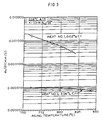
- Figure 3 is a plot of static crack growth at 538°C for alloys annealed at 982°C having different amounts of chromium in a transverse-longitudinal direction at a stress intensity of 33 MPa ⁇ m. The alloys were given a 1 hour anneal at 982°C, air cooled to 621°C, held 8 hours at 621°C and air cooled.
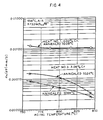
- Figure 4 is a plot of static crack growth at 538°C for alloys annealed and aged at different temperatures in a transverse-longitudinal direction at a stress intensity of 33 MPa ⁇ m.
- the alloys were annealed 1 hour, air cooled.
- Aging treatment consisted of the temperature indicated on the Figure for 16 hours, furnace cooling and 621°C for 8 hours followed by air cooling.
- Figure 5 is a plot demonstrating the effect of chromium and cobalt contents on the static crack growth rate of samples at 538°C tested at a stress intensity of 33 MPa ⁇ m tested in a transverse-longitudinal direction.
- Figure 6 is a plot showing the effect of annealing temperature on da/dt as a function of Ni content for material receiving aging treatments of less than 1450°F (788°C).
- Figure 7 is a plot illustrating relationship between da/dt rates, crack plane orientation, secondary creep rate, annealing temperature and morphology.
- Figure 9 is a Time-Temperature-Transformation diagram for Heat 30 (Table 3) after solution treatment of 2100°F (1149°C) for one hour followed by a water quench.
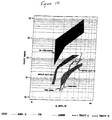
- Figure 10 is a complete da/dt crack growth curve at 538°C for Heat 30 (Table 3) tested in the short and long transverse orientations in comparison to alloys 718, 909 and similar alloys without chromium.
- chromium in combination with increased cobalt concentration provides an unexpected decrease in crack propagation rate.
- a four step heat treatment comprising of an anneal, a beta age and two gamma prime aging steps may be used when chromium is present to optimize crack growth and yield strength.
- the alloy provides at least a 10% decrease in CTE over its useful operating temperature range in comparison to Alloy 718.
- Cobalt in an amount of 26%-50% has been found to increase crack growth resistance at temperatures of about 538°C (All compositions expressed in this application are provided in weight percent, unless specifically stated otherwise). Cobalt in excess of 50% is believed to lower rupture strength. Nickel in an amount of 20-40% stabilizes the austenitic phase. Furthermore, nickel promotes room temperature ductility of the alloy. Iron in an amount of 20-35% provides a lower coefficient of thermal expansion and lowers the inflection temperature when substituted for cobalt or nickel. Excess iron causes instability of the alloy.
- beta phase includes an Al-rich phase capable of ordering and transforming into intermetallic structures based upon Al-lean FeAl, CoAl and NiAl.
- the beta phase may be disordered at room or high temperature. Order of beta phase cooled to room temperature may differ from beta ordering that occurs during high temperature service.
- the beta phase contributes to providing stress accelerated grain boundary oxidation (SAGBO) resistance.
- SAGBO stress accelerated grain boundary oxidation
- beta phase has been found to contribute to hot workability of the alloy.
- aluminum promotes formation of gamma prime phase which increases strength. Morphologies of the beta and gamma prime phases are believed to partially control crack growth rates at 538°C.
- aluminum decreases density of the alloy and dramatically improves general surface oxidation resistance.
- Chromium in a relatively small amount of 1.5 to 10% increases crack growth resistance in combination with high cobalt at high temperature. Chromium has also been found to improve response to heat treatment and increase stress rupture strength.
- 1.5-5% chromium is used to provide only a slight increase in CTE above the inflection temperature and to only slightly lower the inflection temperature. Furthermore, chromium improves creep resistance of the alloy.
- Niobium in an amount of 0.5-5% has been found to increase high temperature stress rupture and tensile strength at high temperature.
- niobium stabilizes the morphology of the alloy and may strengthen the beta phase.
- titanium promotes strength of the alloy. However, excess titanium promotes phase instability. Carbon may be added in an amount up to 0.2%. Increased carbon slightly reduces stress rupture strength.
- Copper may be present in an amount up to 1% and manganese may be present in an amount up to 2%. Silicon is advantageously maintained below 2%. Silicon has been found to decrease stress rupture strength when present in an amount greater than 0.25%. Molybdenum, in an amount up to 8%, benefits strength and increases corrosion resistance. However, molybdenum adversely increases density and coefficient of thermal expansion. Tungsten in an amount up to 8% has been found to benefit stress rupture strength at the expense of density and coefficient of thermal expansion.
- Boron may be present in an amount up to 0.3%. Excess boron causes hot malleability and weldability problems. Hafnium and rhenium each may be present in an amount up to 2%. Zirconium may be present in an amount up to 0.3%. Zirconium can adversely affect hot malleability. Yttrium, lanthanum and cerium may each be present in an amount up to 1%. Similarly other rare earths may be present in amounts up to 1%. Yttrium, lanthanum, cerium and rare earths would be predicted to increase oxidation resistance. Magnesium, calcium and other deoxidizers and malleablizers may be used in amounts up to 1%. Alternatively, oxidic dispersoids such as yttria, alumina and zirconia in amounts up to 4% may be used. Advantageously, oxidic dispersoids are added by mechanical alloying.
- Table 1 below discloses contemplated compositions of the present invention. Table 1 is intended to disclose all ranges between any two of the specified values.
- an alloy may contain about 2840% Co, 25-30% Ni, 4.5-6% Al, 0.75-3.5% Nb and 1.5-5% Cr.
- Table 2 below discloses the advantageous ranges of the invention believed to provide excellent crack growth resistance at 538°C.
- Table 3 attached contains a listing of compositions tested for alloys of the invention.
- Table 4 below contains a key of heat numbers indexed to the compositions of Table 3. All compositions contained in this specification are expressed in weight percent, unless specifically indicated. Table 4 illustrates heats having varied amounts of nickel, cobalt, chromium and niobium with iron maintained at 27.5% and aluminum maintained at 5.4%.
- Table 5 below provides room temperature mechanical properties of several alloys contained in Table 4.
- Table 5 illustrates that adequate strength and ductilities of all materials containing 3% niobium were satisfactory for gas turbine engine usage.
- Typical minimum requirements for room temperature strength are 690 MPa (100 ksi) 0.2% yield strength and minimum requirements for room temperature ductility are 10% elongation. Most advantageously, 0.2% yield strength at room temperature is at least about 825 MPa (120 ksi).
- Strength of the alloys increases with 4% niobium at the expense of ductility. Chromium provided an insignificant effect on strength and greater than 3.5% chromium reduced ductility.
- Table 6 below provides mechanical properties of alloys of Table 4 provided at 704°C.
- Table 7 below provides effect of Cr-Nb-Ni on creep (ASTM E-139) at elevated temperature.
- Table 8 contains the effect of chromium-niobium and nickel upon Charpy V-notch impact energy.
- the room temperature impact energies provided above are low, but acceptable for structural turbine applications.
- the impact energies above are about equivalent to INCOLOY® alloy 909.
- INCOLOY alloy 909 is successfully being used in structural turbine applications.
- Increasing nickel was found to increase impact energy.
- the effect of chromium was insignificant and 4% niobium was found to significantly lower impact energy.
- the alloy has a room temperature CVN impact energy of at least 5 N ⁇ m. Most advantageously room temperature CVN impact energy is at least 10 N ⁇ m.
- Table 9 provides the effect of chromium, nickel and niobium upon coefficient of thermal expansion (CTE) at various temperatures.
- the CTE below the inflection temperature was reduced by 0.9 ⁇ m/m/°C with an addition of 0 to 2% chromium.
- alloys At temperatures above the inflection temperature, alloys have an increased CTE consistent with paramagnetic behavior.
- Chromium at 2 to 4% provided little effect upon coefficient of thermal expansion in the ferromagnetic range below the inflection temperature.
- chromium significantly increased the CTE at temperatures above the inflection temperature.
- cobalt tends to increase inflection temperature.
- CTE of the alloy is at least 10% lower than alloy 718 or less than 13.6 ⁇ m/m/°C at 649°C. Most advantageously, CTE of the alloy is at least 15% lower than alloy 718 or less than 12.85 ⁇ m/m/°C at 649°C.
- CTE in addition to a 10% reduction in CTE, it is advantageous in many gas turbine designs to match the slope and inflection temperature of INCONEL alloy 718.
- CTE was 26% lower at 316°C, 21% lower at 427°C and 13% lower at 649°C.
- CTE was 26% lower at 316°C, 23% lower at 427°C and 16% lower at 649°C.
- the slope does not exactly match the slope of INCONEL alloy 718, the slopes are consistent enough to provide engineering advantages when using the alloy of the invention in combination with Alloy 718.
- alloys may contain up to 37% cobalt and up to 10% chromium and maintain a CTE 10% below that of alloy 718.
- the model for 649°C restricts maximum chromium content for most advantageous operation at elevated temperature from up to about 5, 5.5 and 6% chromium depending upon cobalt concentration. For applications in which the inflection temperature is not exceeded, increased amounts of chromium will provide desired CTE rates.
- Table 10 illustrates the effect of small amounts of chromium upon corrosion resistance.
- Material containing 3% chromium was unexpectedly found to eliminate corrosion arising from a salt spray test in accordance with ASTM B117-85. However, the addition of only 1% chromium was found to accelerate pitting type corrosion. Corrosion rates for material containing 3% chromium were excellent in comparison to alloys containing 1% chromium and much improved over INCOLOY alloy 909. It is believed that molybdenum may be substituted wholly or in part for chromium for salt spray resistance.
- Table 11 contains the effect of chromium, niobium and nickel upon static crack life at 538°C.
- the alloy of the invention has a crack life of 10 hours at an initial stress intensity of 27 MPa ⁇ m and a temperature of 538°C. Most advantageously, the alloy of the invention has a crack life of 20 hours at an initial stress intensity of 27 MPa ⁇ m and a temperature of 538°C.
- Table 12 contains the effect of chromium, niobium and nickel on static growth rate at 538°C.
- Table 12 illustrates that static crack growth rates of alloys containing at least 2% chromium provided a one or two order of magnitude decrease in crack growth rate. Alloys containing 30% or less nickel were particularly crack growth resistant. The crack growth rates of alloys containing 27% nickel were essentially equivalent to crack growth rates of conventionally heat treated alloy 718. Referring to Figure 1, crack growth resistance of alloys are improved by one or two orders of magnitude by including at least 2% chromium. The alloy of the '072 publication has been found to be less defect or damage tolerant than desired for certain structural applications. Alloys of the invention containing at least 2% chromium are within an order of a magnitude of alloy 718. In fact, some alloys at stress intensities up to about 50 MPa ⁇ m have greater crack growth resistance than alloy 718.
- Figure 2 illustrates the advantage of decreasing nickel concentrations and increasing cobalt concentrations upon crack growth resistance. Decreasing nickel from 33% to 27% with increasing cobalt from 28% to 34% provided for improved crack growth resistance properties. Specifically, heat number 16 containing 2.9% Cr with 27% Ni, 34% Co and 28% Fe provided an advantageous combination of crack growth resistance properties.
- Table 13 contains a representative chromium-free alloy of the '072 publication for comparison.
- composition of Table 13 nominally contained, by weight percent, 33Ni-31Co-27Fe-5.3Al-3.0Nb with only 0.02 chromium. Crack growth rates for the alloy of Table 11 were much greater than alloy 718. In addition, heat treatment only slightly affected crack growth rates.
- Table 14 provides the effect of various heat treatments on static crack growth rate at 538°C.
- the composition of Table 14 nominally contained, by weight percent, 34Ni-30Co-24Fe-5.4Al-3.1Cr-3.0Nb.
- the 3% chromium alloy was positively affected by heat treatment.
- crack growth rates of the invention upon annealing and aging treatments improved to a rate approaching the crack growth rates of alloy 718.
- Crack growth rates of the alloy of the '072 invention were unacceptably high and not improved sufficiently by heat treatment.
- Alloys of the present invention consist essentially of a three phase structure.
- the primary matrix is an austenitic face centered cubic or gamma phase.
- the gamma phase is strengthened by precipitation of gamma prime phase.
- Beta phase or phases provide SAGBO resistance.
- crack growth resistance was improved by increasing aging temperature and by a ⁇ phase precipitation heat treatment.
- the beta phase forms at annealing temperatures below about 1090°C (2000°F).
- Beta phase forms most profusely at about 750-1000°C (1382-1832°F).
- the higher temperature aging treatments may be particularly useful after high temperature brazing.
- the beta phase precipitation heat treatment is believed to contribute to reduction of crack growth rates.
- the aging temperatures in combination with cooling paths, such as cooling between furnace heat treatments at different temperatures primarily control the morphology, of the gamma prime strengthening phase.
- Table 15 provides the effect of Cr, Ni, anneal and age upon crack growth rate.
- the alloy of the invention has a crack growth rate of less than 1 x 10 ⁇ 4 mm/s at a stress intensity of 33 MPa ⁇ m and a temperature of 538°C. Most advantageously, the crack growth rate is less than 5 x 10 ⁇ 5 mm/s at a stress intensity of 33 MPa ⁇ m and a temperature of 538°C.
- Ni is highly significant, but especially so when material is annealed between 1900° and 2000°F (1038 and 1093°C). Ni contents less than 27% provide excellent da/dt resistance and crack initiation resistance. Heats containing 24% showed significant crack arrest, which impaired ability to measure crack growth rate. (The plot of Figure 6 is actually a maximum possible crack growth that does not account for the blunting of cracks that actually stopped crack growth during testing.) However, alloys with only 24% Ni have reduced stability, RTT strength and ductility, and lowered stress rupture life with high ductility. However, this reduction in mechanical properties, for alloys having 24% Ni, is not to a level unacceptable for several commercial applications. Furthermore, for an optimum combination of properties for some applications, it is recommended that above 24% nickel be present in the alloy.
- the da/dt correlations with annealing temperature and Ni content are for aging heat treatments which do not contribute to da/dt resistance.
- the plot indicates that optimum Ni contents are between about 26% and 29% if 1900°F anneals are to be considered, or up to about 34% Ni with 1800°F (982°C) or 2050°F (1121°C) anneals, followed by lower temperature aging treatments.
- Heat number 30 was obtained from an approximately 4,000 Kg vacuum induction melted and vacuum arc remelted ingot. Referring to Figure 7, an engine ring 2'' (5.08cm) thick x 4'' (10.16cm) high x 28'' (71.12 cm) OD of Heat 30 was tested, annealed as shown and aged at 1400°F (760°C) for 12h, furnace cooled to 1150°F (621°C) for 8h and air cooled.
- the secondary creep rate decreased with increased annealing temperature, as usual with creep resistant superalloys, up to 1950°F (1066°C). Co-incident with the decreasing creep rates is an accelerating da/dt rate in the long transverse plane, again as expected. However, da/dt in the short transverse plane did not vary until the annealing temperature exceeded 1950°F(1066°C), when it significantly increased and became equivalent to the da/dt of the long transverse plane.
- the creep rate increased with 2000°F (1093°C) and 2050°F (1139°C) anneals.
- the long transverse da/dt correspondingly decreased with the same anneals.
- the short transverse da/dt also decreased with the 2050° (1139°C) anneal.
- the microstructure After a low temperature anneal of about 1850°F (1010°C) or lower (class I), the microstructure contains fine grain, very abundant fine and coarse beta phase particles, in a duplex, "aggregate" structure with grain boundary precipitates. Much of the coarse beta has been precipitated during prior processing. Since beta is softer than the matrix at hot working temperatures, beta formed before and during processing becomes anisotropic. With the fine grain and abundant beta, creep resistance is lower and creep rates are higher.
- Class III occurs with an annealing temperature of at least about 1950°F (1066°C). The abundance of beta is significantly reduced and the remaining beta particles are now isotropic. There is sparse intergranular precipitate. Grain size is slightly coarsened over that of 1950°F annealed material and is isotropic.
- the short transverse crack growth rate is now higher and equivalent to the long transverse crack growth rate, most likely since there is now no elongated beta to help slow crack growth along this orientation.
- beta re-precipitation has begun in both the grain interior and particularly within the grain boundaries. This precipitation has apparently occurred during the 1400°F (760°C) aging heat treatment cycle, upon cooling from the 2050°F (1121°C) anneal, or both. Compared to the beta precipitated during thermomechanical processing, this beta tends toward very fine discrete particulates in the grain boundaries, and may even have a fine lath appearance in the grain interiors. With the re-appearance of the beta, the creep rate increases slightly and both the long and short transverse crack growth rates decrease.
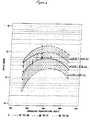
- Figures 8 and 8A illustrate the overall effects of annealing and aging temperatures on 538°C da/dt.
- a mean da/dt at K 33MPa ⁇ m for heats with Ni contents ranging from 27% to 32% was used to develop the contours of Figures 8 and 8A.
- This is the approximate da/dt of INCOLOY alloy 909 in the fine grain condition (eg., 1800°F or 982°C anneal).
- da/dt would be 5x10 ⁇ 5 mm/s or less under these conditions, the approximate da/dt of INCONEL alloy 718 following a fine grain, delta-precipitating anneal (eg., 1750°F - 1800°F, 954°C - 982°C).
- Heat 30 was press-forged and machine lathe-turned to 8'' (20 cm) diameter, subsequently hot upset and hot ring-rolled into a gas turbine engine ring measuring 711 mm OD by 610 mm ID by 102 mm high.
- Specimens for tensile and stress rupture testing were cut from the long transverse (axial) orientation.
- Smooth gage bar tensile testing was conducted in accordance with ASTM E8 at approximately 24°C.
- Stress rupture testing was conducted in air under moderate to high humidity (30% to 60% relative humidity) at 649°C under a nominal net section stress of 586 MPa using a combination smooth-notch (Kt 3.7) bar shaped using a standard low-stress grinding technique. Stress rupture testing and specimens conformed to ASTM E292.
- Annealing at 1038°C and 1121°C produced material in a relatively soft condition with poor stress rupture life. Water quenching after the anneal resulted in very soft material, and showed that the material age hardens significantly during the slower air cooling. This age hardening was the result of beta and gamma-prime phase precipitation. However, this hardening did not give sufficient tensile or stress rupture strength, although slow furnace cools through the precipitation temperature ranges may produce sufficient strengthening.
- isothermal aging of 1 to 30 hours follows annealing of 0.5 to 10 hours at temperatures between about 1010°C and the melting temperature of the alloy.
- isothermal anneals are between about 1350°F and 1500°F (732°C and 815°C). These isothermal ages provide good stress rupture strength and life with some loss in ductility.
- the microstructure of this material had relatively coarse gamma grains (ranging from ASTM #5 to #1) containing cuboidal gamma-prime of bimodally distributed sizes. Within grain interiors both beta globules formed during prior processing and newly precipitated beta particles (which may appear acicular) were found. The coarser beta globules and particles showed an ordered or partially ordered DO3 phase similar to that of Fe3Al and platelet phases within the beta globules at beta-matrix interfaces and at beta-beta grain boundaries (coarse prior-precipitated beta globules were often found interconnected by grain boundaries).
- the three-step heat treatment utilizing the short time, higher temperature beta precipitation heat treatment allowed the reduction of the total aging heat treatment time from about 27 hours for the 788°C/16 FC 55°C/h to 621°C/8h AC heat treatment to about 20 hours or even less.
- the short time beta precipitation heat treatment permits flexibility with the gamma-prime aging heat treatments so that the alloy can be conveniently heat treated when joined to dissimilar superalloys such as INCONEL alloy 706 or 718.
- this alloy may be chromized or joined to ceramics such as silicon nitride. Table 16 below summarizes mechanical testing data from the above heat treatments.
- compositions of Table 17 were tested for the effects of long term exposure to stability with respect to varied titanium contents.
- da/dt of Heat 30 in this heat treated condition is an order of magnitude improved over 909, two orders or more over similar alloys without chromium, and at stress intensities less than about 45 ksi ⁇ in (49.5 MPa ⁇ m) is equivalent to that of 718.
- the alloy of Figure 10 was given a 1 hour anneal at 1121°C, air cooled, a beta precipitation age at 843°C for 1 hour, air cooled, aged with a two step gamma prime aging treatment of 732°C for 1 hour, furnace cooled to 641°C held, for 1 hour and air cooled. There may be some orientation effect on da/dt, but the two curves are within da/dt testing precision and are not significantly different.
- Alloys of the invention are expected to be suitable for most casting applications. Similar alloys have demonstrated some acceptable castability properties. Also, beta phase formation appears to provide good weldability for a high Al-containing alloy. (Typical high Al superalloys are difficult to weld.) Alloys of the invention may also be formed by powder metallurgy, mechanical alloying with oxide dispersoids such as yttria or by thermal spray deposition.
Landscapes
- Chemical & Material Sciences (AREA)
- Engineering & Computer Science (AREA)
- Materials Engineering (AREA)
- Mechanical Engineering (AREA)
- Metallurgy (AREA)
- Organic Chemistry (AREA)
- Turbine Rotor Nozzle Sealing (AREA)
- Laminated Bodies (AREA)
- Superconductors And Manufacturing Methods Therefor (AREA)
- Heat Treatment Of Articles (AREA)
- Continuous Casting (AREA)
- Control Of Heat Treatment Processes (AREA)
- Materials For Medical Uses (AREA)
- Sampling And Sample Adjustment (AREA)
Applications Claiming Priority (4)
| Application Number | Priority Date | Filing Date | Title |
|---|---|---|---|
| US94726292A | 1992-09-18 | 1992-09-18 | |
| US947262 | 1992-09-18 | ||
| US116651 | 1993-09-03 | ||
| US08/116,651 US5439640A (en) | 1993-09-03 | 1993-09-03 | Controlled thermal expansion superalloy |
Publications (2)
| Publication Number | Publication Date |
|---|---|
| EP0588657A1 true EP0588657A1 (fr) | 1994-03-23 |
| EP0588657B1 EP0588657B1 (fr) | 1998-04-15 |
Family
ID=26814463
Family Applications (1)
| Application Number | Title | Priority Date | Filing Date |
|---|---|---|---|
| EP93307356A Expired - Lifetime EP0588657B1 (fr) | 1992-09-18 | 1993-09-17 | Superalliage à faible dilatation thermique |
Country Status (7)
| Country | Link |
|---|---|
| US (1) | US5478417A (fr) |
| EP (1) | EP0588657B1 (fr) |
| JP (1) | JP2898182B2 (fr) |
| AT (1) | ATE165120T1 (fr) |
| AU (1) | AU667124B2 (fr) |
| BR (1) | BR9303835A (fr) |
| DE (1) | DE69317971T2 (fr) |
Cited By (9)
| Publication number | Priority date | Publication date | Assignee | Title |
|---|---|---|---|---|
| EP0856589A1 (fr) * | 1997-01-29 | 1998-08-05 | Inco Alloys International, Inc. | Alliage à dialatation thermique regulée et durcissable par vieillissement |
| EP1983194A1 (fr) * | 2007-04-17 | 2008-10-22 | Scroll Technologies | Compresseur à spirales en fonte d'acier ductile |
| CN106636848A (zh) * | 2017-01-18 | 2017-05-10 | 东南大学 | 一种耐磨抗蚀镍基合金丝材的制备方法 |
| CN106756257A (zh) * | 2017-01-18 | 2017-05-31 | 东南大学 | 一种抗高温氧化耐磨钴基合金丝材及其制备方法 |
| CN107034408A (zh) * | 2017-05-02 | 2017-08-11 | 北京理工大学 | 一种高强韧性匹配的晶粒尺寸双峰分布的高熵合金及其制备方法 |
| CN107955921A (zh) * | 2016-10-17 | 2018-04-24 | 丹阳市丹力展览用品有限公司 | 一种高强度金属螺丝 |
| CN107955920A (zh) * | 2016-10-17 | 2018-04-24 | 丹阳市丹力展览用品有限公司 | 一种超韧金属螺丝 |
| EP3775304A4 (fr) * | 2018-04-04 | 2022-01-05 | The Regents of The University of California | Alliage gamma/gamma prime à base de co résistant à l'oxydation à haute température dmref - co |
| FR3160340A1 (fr) * | 2024-03-25 | 2025-09-26 | Safran Aircraft Engines | Poudre pour fabrication d’une pièce par fusion sélective par laser |
Families Citing this family (20)
| Publication number | Priority date | Publication date | Assignee | Title |
|---|---|---|---|---|
| US6245289B1 (en) | 1996-04-24 | 2001-06-12 | J & L Fiber Services, Inc. | Stainless steel alloy for pulp refiner plate |
| US20060219329A1 (en) * | 2005-03-29 | 2006-10-05 | Honeywell International, Inc. | Repair nickel-based superalloy and methods for refurbishment of gas turbine components |
| US20060219330A1 (en) * | 2005-03-29 | 2006-10-05 | Honeywell International, Inc. | Nickel-based superalloy and methods for repairing gas turbine components |
| US7431576B2 (en) * | 2005-11-30 | 2008-10-07 | Scroll Technologies | Ductile cast iron scroll compressor |
| US7800021B2 (en) * | 2007-06-30 | 2010-09-21 | Husky Injection Molding Systems Ltd. | Spray deposited heater element |
| US20100061875A1 (en) * | 2008-09-08 | 2010-03-11 | Siemens Power Generation, Inc. | Combustion Turbine Component Having Rare-Earth Elements and Associated Methods |
| US8893381B2 (en) * | 2011-08-17 | 2014-11-25 | General Electric Company | Rotor seal wire groove repair |
| US10487377B2 (en) * | 2015-12-18 | 2019-11-26 | Heraeus Deutschland GmbH & Co. KG | Cr, Ni, Mo and Co alloy for use in medical devices |
| US20180029241A1 (en) * | 2016-07-29 | 2018-02-01 | Liquidmetal Coatings, Llc | Method of forming cutting tools with amorphous alloys on an edge thereof |
| JP6746457B2 (ja) * | 2016-10-07 | 2020-08-26 | 三菱日立パワーシステムズ株式会社 | タービン翼の製造方法 |
| JP6937491B2 (ja) * | 2017-03-02 | 2021-09-22 | 株式会社日立製作所 | 合金部材、該合金部材の製造方法、および該合金部材を用いた製造物 |
| CN108546866B (zh) * | 2018-04-04 | 2020-03-27 | 首钢集团有限公司 | 一种690MPa级高韧性结构钢的生产方法 |
| US11155904B2 (en) * | 2019-07-11 | 2021-10-26 | L.E. Jones Company | Cobalt-rich wear resistant alloy and method of making and use thereof |
| US11697869B2 (en) | 2020-01-22 | 2023-07-11 | Heraeus Deutschland GmbH & Co. KG | Method for manufacturing a biocompatible wire |
| RU2751391C1 (ru) * | 2020-12-02 | 2021-07-13 | Общество с ограниченной ответственностью Научно-производственный центр «ЛИНВАР» | Литейный инварный сплав на основе железа |
| CN115058626B (zh) * | 2021-03-08 | 2023-08-25 | 南京理工大学 | 一种适用于增材制造的钴基高温合金 |
| CN113088783B (zh) * | 2021-03-15 | 2022-03-22 | 南昌大学 | 一种应用于含氧高温氯腐蚀环境的AlFeNiMoNb改性904L合金的制备方法 |
| CN113621891B (zh) * | 2021-07-19 | 2022-06-17 | 哈尔滨工程大学 | 一种多晶FeNiCoAlNbV超弹性合金及其制备方法 |
| CN114540693B (zh) * | 2022-01-07 | 2022-11-11 | 中南大学 | 一种高强韧耐蚀的富Fe含Si多组分合金及其制备方法和应用 |
| CN117126996B (zh) * | 2023-10-26 | 2024-01-02 | 东方蓝天钛金科技有限公司 | 一种gh2132合金抽芯铆钉钉套的热处理方法 |
Citations (6)
| Publication number | Priority date | Publication date | Assignee | Title |
|---|---|---|---|---|
| FR2078602A5 (en) * | 1970-02-16 | 1971-11-05 | Latrobe Steel Co | Nickel chrome steel superalloys |
| FR2139424A5 (fr) * | 1971-05-12 | 1973-01-05 | Carpenter Technology Corp | |
| FR2357652A1 (fr) * | 1976-07-08 | 1978-02-03 | Wiggin & Co Ltd Henry | Nouveaux alliages de nickel-fer-chrome |
| GB2010329A (en) * | 1977-12-14 | 1979-06-27 | Wiggin & Co Ltd Henry | Heat resistant low expansion alloy |
| EP0147616A1 (fr) * | 1983-11-17 | 1985-07-10 | Inco Alloys International, Inc. | Traitement thermique des alliages nickel-fer et nickel-cobalt-fer |
| EP0433072A1 (fr) * | 1989-12-15 | 1991-06-19 | Inco Alloys International, Inc. | Alliages à faible dilatation résistant à l'oxydation |
Family Cites Families (5)
| Publication number | Priority date | Publication date | Assignee | Title |
|---|---|---|---|---|
| GB1344917A (en) * | 1970-02-16 | 1974-01-23 | Latrobe Steel Co | Production of superalloys |
| US4487743A (en) * | 1982-08-20 | 1984-12-11 | Huntington Alloys, Inc. | Controlled expansion alloy |
| US4908069A (en) * | 1987-10-19 | 1990-03-13 | Sps Technologies, Inc. | Alloys containing gamma prime phase and process for forming same |
| US5169463A (en) * | 1987-10-19 | 1992-12-08 | Sps Technologies, Inc. | Alloys containing gamma prime phase and particles and process for forming same |
| DE69106372T2 (de) * | 1990-08-21 | 1995-07-13 | Crs Holdings, Inc., Wilmington, Del. | Legierung mit niedrigem wärmeausdehnungskoeffizient und daraus hergestellter gegenstand. |
-
1993
- 1993-09-17 EP EP93307356A patent/EP0588657B1/fr not_active Expired - Lifetime
- 1993-09-17 DE DE69317971T patent/DE69317971T2/de not_active Expired - Fee Related
- 1993-09-17 AT AT93307356T patent/ATE165120T1/de not_active IP Right Cessation
- 1993-09-17 AU AU47432/93A patent/AU667124B2/en not_active Ceased
- 1993-09-20 JP JP5256426A patent/JP2898182B2/ja not_active Expired - Fee Related
- 1993-09-20 BR BR9303835A patent/BR9303835A/pt not_active Application Discontinuation
-
1994
- 1994-11-22 US US08/344,349 patent/US5478417A/en not_active Expired - Fee Related
Patent Citations (6)
| Publication number | Priority date | Publication date | Assignee | Title |
|---|---|---|---|---|
| FR2078602A5 (en) * | 1970-02-16 | 1971-11-05 | Latrobe Steel Co | Nickel chrome steel superalloys |
| FR2139424A5 (fr) * | 1971-05-12 | 1973-01-05 | Carpenter Technology Corp | |
| FR2357652A1 (fr) * | 1976-07-08 | 1978-02-03 | Wiggin & Co Ltd Henry | Nouveaux alliages de nickel-fer-chrome |
| GB2010329A (en) * | 1977-12-14 | 1979-06-27 | Wiggin & Co Ltd Henry | Heat resistant low expansion alloy |
| EP0147616A1 (fr) * | 1983-11-17 | 1985-07-10 | Inco Alloys International, Inc. | Traitement thermique des alliages nickel-fer et nickel-cobalt-fer |
| EP0433072A1 (fr) * | 1989-12-15 | 1991-06-19 | Inco Alloys International, Inc. | Alliages à faible dilatation résistant à l'oxydation |
Cited By (13)
| Publication number | Priority date | Publication date | Assignee | Title |
|---|---|---|---|---|
| EP0856589A1 (fr) * | 1997-01-29 | 1998-08-05 | Inco Alloys International, Inc. | Alliage à dialatation thermique regulée et durcissable par vieillissement |
| EP1983194A1 (fr) * | 2007-04-17 | 2008-10-22 | Scroll Technologies | Compresseur à spirales en fonte d'acier ductile |
| CN107955921A (zh) * | 2016-10-17 | 2018-04-24 | 丹阳市丹力展览用品有限公司 | 一种高强度金属螺丝 |
| CN107955920A (zh) * | 2016-10-17 | 2018-04-24 | 丹阳市丹力展览用品有限公司 | 一种超韧金属螺丝 |
| CN106756257A (zh) * | 2017-01-18 | 2017-05-31 | 东南大学 | 一种抗高温氧化耐磨钴基合金丝材及其制备方法 |
| CN106636848A (zh) * | 2017-01-18 | 2017-05-10 | 东南大学 | 一种耐磨抗蚀镍基合金丝材的制备方法 |
| CN106756257B (zh) * | 2017-01-18 | 2018-06-15 | 东南大学 | 一种抗高温氧化耐磨钴基合金丝材及其制备方法 |
| CN107034408A (zh) * | 2017-05-02 | 2017-08-11 | 北京理工大学 | 一种高强韧性匹配的晶粒尺寸双峰分布的高熵合金及其制备方法 |
| CN107034408B (zh) * | 2017-05-02 | 2018-06-19 | 北京理工大学 | 一种高强韧性匹配的晶粒尺寸双峰分布的高熵合金及其制备方法 |
| EP3775304A4 (fr) * | 2018-04-04 | 2022-01-05 | The Regents of The University of California | Alliage gamma/gamma prime à base de co résistant à l'oxydation à haute température dmref - co |
| US11725263B2 (en) | 2018-04-04 | 2023-08-15 | The Regents Of The University Of California | High temperature oxidation resistant co-based gamma/gamma prime alloys DMREF-Co |
| FR3160340A1 (fr) * | 2024-03-25 | 2025-09-26 | Safran Aircraft Engines | Poudre pour fabrication d’une pièce par fusion sélective par laser |
| WO2025202573A1 (fr) * | 2024-03-25 | 2025-10-02 | Safran Aircraft Engines | Poudre pour fabrication d'une pièce par fusion sélective par laser |
Also Published As
| Publication number | Publication date |
|---|---|
| AU667124B2 (en) | 1996-03-07 |
| JP2898182B2 (ja) | 1999-05-31 |
| JPH06264168A (ja) | 1994-09-20 |
| US5478417A (en) | 1995-12-26 |
| DE69317971D1 (de) | 1998-05-20 |
| BR9303835A (pt) | 1994-04-19 |
| DE69317971T2 (de) | 1998-11-26 |
| EP0588657B1 (fr) | 1998-04-15 |
| AU4743293A (en) | 1994-03-24 |
| ATE165120T1 (de) | 1998-05-15 |
Similar Documents
| Publication | Publication Date | Title |
|---|---|---|
| EP0588657B1 (fr) | Superalliage à faible dilatation thermique | |
| KR101232533B1 (ko) | 질화물 강화에 유용한 코발트-크롬-철-니켈 합금 | |
| CN102586652B (zh) | 用于先进燃气涡轮发动机的Ni-Cr-Co合金 | |
| JP3027200B2 (ja) | 耐酸化性低膨張合金 | |
| EP2770081B1 (fr) | Alliages à base de nickel et procédés de traitement thermique de tels alliages | |
| KR100862346B1 (ko) | 니켈계 초합금 및 그로부터 제조된 터빈 구성요소 | |
| US4066447A (en) | Low expansion superalloy | |
| EP3208354B1 (fr) | Superalliage à base de ni pour forgeage à chaud | |
| EP3208355B1 (fr) | Superalliage à base de ni pour forgeage à chaud | |
| US5439640A (en) | Controlled thermal expansion superalloy | |
| US5283032A (en) | Controlled thermal expansion alloy and article made therefrom | |
| JP2000256770A (ja) | 低熱膨張Ni基超合金 | |
| CN117363955B (zh) | 一种多类型析出相协同强化耐热合金及其制备方法 | |
| EP0524287B1 (fr) | Alliages de fonderie a base de nickel | |
| US7306682B2 (en) | Single-crystal Ni-based superalloy with high temperature strength, oxidation resistance and hot corrosion resistance | |
| JPH04218642A (ja) | 低熱膨張超耐熱合金 | |
| EP1149181B1 (fr) | Alliages pour applications hautes temperatures dans des environnements agressifs | |
| JP2001234292A (ja) | 高温強度に優れた低熱膨張Fe基耐熱合金 | |
| CA2010147A1 (fr) | Superalliages renfermant du tantale | |
| KR100264089B1 (ko) | 제어된 열팽창 초합금 | |
| CN120648941B (zh) | 可焊可铸高比强Ni3Al基合金及其制备方法和合金部件 | |
| JPH06228714A (ja) | 耐酸化性に優れた低熱膨張超耐熱合金 | |
| JPH04198444A (ja) | 耐応力腐食割れ性に優れたNi基合金 | |
| JPS6353234A (ja) | 耐熱・高強度構造部材 | |
| JPH06172901A (ja) | 耐応力腐食割れ性に優れたNi基合金 |
Legal Events
| Date | Code | Title | Description |
|---|---|---|---|
| PUAI | Public reference made under article 153(3) epc to a published international application that has entered the european phase |
Free format text: ORIGINAL CODE: 0009012 |
|
| AK | Designated contracting states |
Kind code of ref document: A1 Designated state(s): AT DE FR GB IT |
|
| 17P | Request for examination filed |
Effective date: 19940324 |
|
| 17Q | First examination report despatched |
Effective date: 19960930 |
|
| GRAG | Despatch of communication of intention to grant |
Free format text: ORIGINAL CODE: EPIDOS AGRA |
|
| GRAG | Despatch of communication of intention to grant |
Free format text: ORIGINAL CODE: EPIDOS AGRA |
|
| GRAH | Despatch of communication of intention to grant a patent |
Free format text: ORIGINAL CODE: EPIDOS IGRA |
|
| GRAH | Despatch of communication of intention to grant a patent |
Free format text: ORIGINAL CODE: EPIDOS IGRA |
|
| GRAA | (expected) grant |
Free format text: ORIGINAL CODE: 0009210 |
|
| ITF | It: translation for a ep patent filed | ||
| AK | Designated contracting states |
Kind code of ref document: B1 Designated state(s): AT DE FR GB IT |
|
| PG25 | Lapsed in a contracting state [announced via postgrant information from national office to epo] |
Ref country code: AT Free format text: LAPSE BECAUSE OF FAILURE TO SUBMIT A TRANSLATION OF THE DESCRIPTION OR TO PAY THE FEE WITHIN THE PRESCRIBED TIME-LIMIT Effective date: 19980415 |
|
| REF | Corresponds to: |
Ref document number: 165120 Country of ref document: AT Date of ref document: 19980515 Kind code of ref document: T |
|
| REF | Corresponds to: |
Ref document number: 69317971 Country of ref document: DE Date of ref document: 19980520 |
|
| ET | Fr: translation filed | ||
| PLBE | No opposition filed within time limit |
Free format text: ORIGINAL CODE: 0009261 |
|
| STAA | Information on the status of an ep patent application or granted ep patent |
Free format text: STATUS: NO OPPOSITION FILED WITHIN TIME LIMIT |
|
| 26N | No opposition filed | ||
| REG | Reference to a national code |
Ref country code: GB Ref legal event code: IF02 |
|
| PGFP | Annual fee paid to national office [announced via postgrant information from national office to epo] |
Ref country code: FR Payment date: 20050815 Year of fee payment: 13 |
|
| PGFP | Annual fee paid to national office [announced via postgrant information from national office to epo] |
Ref country code: GB Payment date: 20050817 Year of fee payment: 13 |
|
| PGFP | Annual fee paid to national office [announced via postgrant information from national office to epo] |
Ref country code: DE Payment date: 20050818 Year of fee payment: 13 |
|
| PGFP | Annual fee paid to national office [announced via postgrant information from national office to epo] |
Ref country code: IT Payment date: 20060930 Year of fee payment: 14 |
|
| PG25 | Lapsed in a contracting state [announced via postgrant information from national office to epo] |
Ref country code: DE Free format text: LAPSE BECAUSE OF NON-PAYMENT OF DUE FEES Effective date: 20070403 |
|
| GBPC | Gb: european patent ceased through non-payment of renewal fee |
Effective date: 20060917 |
|
| REG | Reference to a national code |
Ref country code: FR Ref legal event code: ST Effective date: 20070531 |
|
| PG25 | Lapsed in a contracting state [announced via postgrant information from national office to epo] |
Ref country code: GB Free format text: LAPSE BECAUSE OF NON-PAYMENT OF DUE FEES Effective date: 20060917 |
|
| PG25 | Lapsed in a contracting state [announced via postgrant information from national office to epo] |
Ref country code: FR Free format text: LAPSE BECAUSE OF NON-PAYMENT OF DUE FEES Effective date: 20061002 |
|
| PG25 | Lapsed in a contracting state [announced via postgrant information from national office to epo] |
Ref country code: IT Free format text: LAPSE BECAUSE OF NON-PAYMENT OF DUE FEES Effective date: 20070917 |