EP0590626A1 - Procédé de traitement de vieux papiers imprimés - Google Patents
Procédé de traitement de vieux papiers imprimés Download PDFInfo
- Publication number
- EP0590626A1 EP0590626A1 EP19930115692 EP93115692A EP0590626A1 EP 0590626 A1 EP0590626 A1 EP 0590626A1 EP 19930115692 EP19930115692 EP 19930115692 EP 93115692 A EP93115692 A EP 93115692A EP 0590626 A1 EP0590626 A1 EP 0590626A1
- Authority
- EP
- European Patent Office
- Prior art keywords
- stage
- defibration
- dispersion
- waste paper
- flotation
- Prior art date
- Legal status (The legal status is an assumption and is not a legal conclusion. Google has not performed a legal analysis and makes no representation as to the accuracy of the status listed.)
- Granted
Links
- 239000010893 paper waste Substances 0.000 title claims abstract description 18
- 238000000034 method Methods 0.000 title claims abstract description 16
- 238000005188 flotation Methods 0.000 claims abstract description 14
- 238000004061 bleaching Methods 0.000 claims abstract description 13
- 238000004898 kneading Methods 0.000 claims abstract description 13
- 239000006185 dispersion Substances 0.000 claims description 20
- 238000000227 grinding Methods 0.000 claims description 12
- 238000004140 cleaning Methods 0.000 claims description 8
- 238000012545 processing Methods 0.000 claims description 4
- 238000004090 dissolution Methods 0.000 claims description 2
- 239000002699 waste material Substances 0.000 claims 1
- 238000005406 washing Methods 0.000 abstract description 2
- 238000005265 energy consumption Methods 0.000 abstract 1
- 238000000746 purification Methods 0.000 abstract 1
- 238000011144 upstream manufacturing Methods 0.000 abstract 1
- 239000000123 paper Substances 0.000 description 16
- 239000000463 material Substances 0.000 description 10
- 239000000835 fiber Substances 0.000 description 9
- 238000004519 manufacturing process Methods 0.000 description 6
- 229920001131 Pulp (paper) Polymers 0.000 description 5
- 230000003749 cleanliness Effects 0.000 description 5
- 239000002245 particle Substances 0.000 description 5
- 238000007639 printing Methods 0.000 description 5
- 239000000126 substance Substances 0.000 description 5
- 238000010586 diagram Methods 0.000 description 4
- 238000004537 pulping Methods 0.000 description 4
- HEMHJVSKTPXQMS-UHFFFAOYSA-M Sodium hydroxide Chemical compound [OH-].[Na+] HEMHJVSKTPXQMS-UHFFFAOYSA-M 0.000 description 3
- 239000002761 deinking Substances 0.000 description 3
- 238000007646 gravure printing Methods 0.000 description 3
- 239000000203 mixture Substances 0.000 description 3
- 238000007645 offset printing Methods 0.000 description 3
- IJGRMHOSHXDMSA-UHFFFAOYSA-N Atomic nitrogen Chemical compound N#N IJGRMHOSHXDMSA-UHFFFAOYSA-N 0.000 description 2
- 239000011111 cardboard Substances 0.000 description 2
- 239000011248 coating agent Substances 0.000 description 2
- 238000000576 coating method Methods 0.000 description 2
- 239000004744 fabric Substances 0.000 description 2
- 230000002349 favourable effect Effects 0.000 description 2
- 238000009472 formulation Methods 0.000 description 2
- 238000002156 mixing Methods 0.000 description 2
- 230000008719 thickening Effects 0.000 description 2
- QPCDCPDFJACHGM-UHFFFAOYSA-N N,N-bis{2-[bis(carboxymethyl)amino]ethyl}glycine Chemical group OC(=O)CN(CC(O)=O)CCN(CC(=O)O)CCN(CC(O)=O)CC(O)=O QPCDCPDFJACHGM-UHFFFAOYSA-N 0.000 description 1
- 239000004115 Sodium Silicate Substances 0.000 description 1
- 239000000654 additive Substances 0.000 description 1
- 230000000996 additive effect Effects 0.000 description 1
- 239000000853 adhesive Substances 0.000 description 1
- 230000001070 adhesive effect Effects 0.000 description 1
- 239000007844 bleaching agent Substances 0.000 description 1
- 230000001419 dependent effect Effects 0.000 description 1
- 238000011161 development Methods 0.000 description 1
- GRWZHXKQBITJKP-UHFFFAOYSA-L dithionite(2-) Chemical compound [O-]S(=O)S([O-])=O GRWZHXKQBITJKP-UHFFFAOYSA-L 0.000 description 1
- 239000007789 gas Substances 0.000 description 1
- 230000005484 gravity Effects 0.000 description 1
- 238000000265 homogenisation Methods 0.000 description 1
- 238000010191 image analysis Methods 0.000 description 1
- 238000005259 measurement Methods 0.000 description 1
- 229910052757 nitrogen Inorganic materials 0.000 description 1
- 239000011087 paperboard Substances 0.000 description 1
- 150000002978 peroxides Chemical class 0.000 description 1
- 238000003672 processing method Methods 0.000 description 1
- 239000002994 raw material Substances 0.000 description 1
- 238000004904 shortening Methods 0.000 description 1
- JVBXVOWTABLYPX-UHFFFAOYSA-L sodium dithionite Chemical compound [Na+].[Na+].[O-]S(=O)S([O-])=O JVBXVOWTABLYPX-UHFFFAOYSA-L 0.000 description 1
- NTHWMYGWWRZVTN-UHFFFAOYSA-N sodium silicate Chemical compound [Na+].[Na+].[O-][Si]([O-])=O NTHWMYGWWRZVTN-UHFFFAOYSA-N 0.000 description 1
- 229910052911 sodium silicate Inorganic materials 0.000 description 1
- 239000000725 suspension Substances 0.000 description 1
- 230000008961 swelling Effects 0.000 description 1
- 238000012360 testing method Methods 0.000 description 1
- 230000000007 visual effect Effects 0.000 description 1
Images
Classifications
-
- D—TEXTILES; PAPER
- D21—PAPER-MAKING; PRODUCTION OF CELLULOSE
- D21B—FIBROUS RAW MATERIALS OR THEIR MECHANICAL TREATMENT
- D21B1/00—Fibrous raw materials or their mechanical treatment
- D21B1/04—Fibrous raw materials or their mechanical treatment by dividing raw materials into small particles, e.g. fibres
- D21B1/12—Fibrous raw materials or their mechanical treatment by dividing raw materials into small particles, e.g. fibres by wet methods, by the use of steam
- D21B1/30—Defibrating by other means
- D21B1/32—Defibrating by other means of waste paper
-
- Y—GENERAL TAGGING OF NEW TECHNOLOGICAL DEVELOPMENTS; GENERAL TAGGING OF CROSS-SECTIONAL TECHNOLOGIES SPANNING OVER SEVERAL SECTIONS OF THE IPC; TECHNICAL SUBJECTS COVERED BY FORMER USPC CROSS-REFERENCE ART COLLECTIONS [XRACs] AND DIGESTS
- Y02—TECHNOLOGIES OR APPLICATIONS FOR MITIGATION OR ADAPTATION AGAINST CLIMATE CHANGE
- Y02W—CLIMATE CHANGE MITIGATION TECHNOLOGIES RELATED TO WASTEWATER TREATMENT OR WASTE MANAGEMENT
- Y02W30/00—Technologies for solid waste management
- Y02W30/50—Reuse, recycling or recovery technologies
- Y02W30/64—Paper recycling
Definitions
- deinked waste paper as a fibrous component is state of the art in the production of newsprint, copy paper, hygienic paper and cardboard.
- deinking materials for high-quality printing papers, e.g. Coating base papers, LWC and SC papers (gravure and offset printing). Both a high level of cleanliness and a high degree of whiteness are required for these applications. If it is possible to manufacture deinked fabrics in the required quality, the demand will be correspondingly high, i.e. that then selected, clean waste paper types will not be available to a sufficient extent. It is then necessary to switch to so-called "household collectibles", consisting of approx. 40 to 60% of daily newspapers read and 60 to 40% of illustrated magazines. The deinking process must therefore be designed for this waste paper.
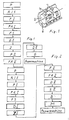
- the method preferred today for newspaper printing deinking material uses flotation in addition to various hydrocyclones and screen sorters used in the cleaning stages, as the first stages of FIG. 1 show. This is based on a process proposal for so-called SC papers, as has already been discussed. It was also reported on in the trade press. This process can be used to produce deinked fabrics with a high degree of whiteness and good cleanliness. Depending on the waste paper registered, it will happen, however, that the cleanliness for these high-quality printing papers is not sufficient, ie that the deinked waste paper material can contain, for example, more dirt spots than, for example, the wood pulp used at the same time as a fibrous component.
- Disk shredding machines are usually used as the dispersing machine, in particular in order to crush disruptive, adhesive substances and to distribute them below the visibility limit so that they no longer interfere with the paper production process.
- the task is to provide a waste paper material made from deinked waste paper that has an appropriate degree of whiteness in order to be used in high-quality printing papers.
- the color / dirt particles are dispersed and homogenized in such a way that the waste paper treated in this way meets the high cleanliness requirements of supercalendered paper types for rotary, offset or gravure printing.
- It can be used as a second fiberizing machine, optionally provided after the second thickening / dewatering stage, as in the first dispersion stage of the pulping fiber.
- the so-called single-shaft fiberizer can also be used cheaply.
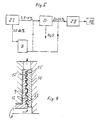
- This has singular, rod or block-shaped kneading elements both on the rotor and on the stator, which are arranged in a kneading space delimited by two concentric cylindrical surfaces.
- a paper raw material is obtained which has the required cleanliness values for coating base papers of the quality LWC and SC papers (e.g. for gravure or offset printing).
- the whiteness and brightness also meet the existing requirements.
- a multi-stage refiner known from EP 0 122 868-A1 only serves the purpose of improving the material parameters, such as drainability and strength, of wood pulp with a low consistency.
- the following table shows the measured values, in particular the number of dirt points, according to the different process stages and for wood pulp, each with a specific work requirement of 75 kWh / totro.
- a double flotation namely FI and FII
- a double dispersion ZI and ZII
- the fine cleaning generally takes place in hydrocyclones, which are often referred to as cleaners.
- sieve sorters with sieve baskets are used, which either have a perforated sieve or a perforated slit.
- the corresponding dimensions of the perforations are generally known in the art.
- the chemical formulations for flotation, bleaching and dispersion are also known.
- a so-called dispersion bleaching is carried out in the first defibration stage ZI, the following formulation being appropriate, in each case in percent, based on waste paper: H2O2 (100%) 0.5-1.5, sodium silicate (37 Bé) 1.1, NaOH (100%) 0.3.
- the consistency is preferably between 24 and 30%.
- the bleaching time is about 3 minutes, and the processing temperature in this apparatus is preferably between 75 and 95 ° C.
- DTPA 50% solution
- flotation aid 0.5 The latter chemical can also be entered behind the fiberizer in a mixing chest or the mixing container of the flotation system.
- the specific work required in the second defibration stage is between 30 and 80 kWh / totro.
- pressurized gas air or nitrogen e.g.
- you can also apply pressurized gas at e.g. around 1.4 bar, i.e. without correspondingly high-tension steam - at temperatures above 100 ° C - in the dispersing machines, especially in the single-shaft fiberizer.
- a final bleaching step can be a hydrosulfite bleach, for example with sodium dithionite, or a peroxide bleaching can also take place in both bleaching steps. The opposite can also be done in the case of different bleaching chemicals.
- the second flotation level FII can also be omitted if the quality of the waste paper allows it. One would then have two fiberization or. Dispersion stages ZI and ZII.
- different cleaning stages can also be combined or used in series between the two fiberizing machines, e.g. a cleaner and / or laundry in order to remove the corresponding proportion of the dirt particles related to the cleaning system here, in accordance with the composition of the detached dirt particles and their size and weight.
- the width of the kneading space 6 is preferably at least 30 mm and can be up to 80 mm and more, while the length of the kneading space (length of the generatrix of the cylinder surfaces) is generally at least 60 cm.
- the width of the kneading chamber can vary depending on the throughput.
- the rod-shaped kneading elements (short cylindrical pieces) of the rotor 2 with 8 and the counter-elements of approximately the same shape of the stator 4 are designated 7.
- the elements of the rotor in particular can also be approximately cuboid or pyramid-shaped, as indicated by 8 'in the upper part of the figure.
- Bleach B in the tower has the advantage that swelling of the paper fibers is advantageous for the subsequent dispersing device.
- the bleaching time is between 20 and 120 minutes.
- the disks of the disk shredder can preferably have tooth-like, block-like or hump-like defibrating elements.
- the gap widths are in the usual range and are between 0.5 and 12 mm, which is strongly dependent on the specific work consumption; Another influence is based on the nature of the material (such as degree of grinding) and the addition of chemicals.
- the specific work consumption is also preferably 60 to 80 KWh / totro.
- the blocks (teeth) of the rotor disk 9 and the stator disk 10, which interact in the manner shown in Fig. 5, have e.g. a height between 8 and 12 mm and a width and thickness between 8 and 15 mm.
- the radially inner teeth 12, 13 are stronger than the outer teeth 12 ', 13'.
- Post-grinding (marked with "M” in the diagram) is recommended - e.g. using a so-called refiner - to improve the material parameters such as degree of grinding, strength and drainage capacity.
- This regrinding can take place either in the high density range of approx. 30% or in the medium density range of approx. 5%.
- the single-disk refiner with removal of the suspension under the action of gravity and in the second case the double-disk refiner (in the so-called pump-through mode) can be preferred.
- a particularly favorable procedure results for the production of SC paper if the disc pulping fiber is used as the first dispersion stage, the single-shaft pulping fiber as the second dispersion stage and the double-disc pulping fiber as post-grinding device with a relatively low consistency of about 5%.
- the dispersion generally takes place in the high consistency range of at least 20%.
- fiber friction provides a favorable rubbing of remaining dirt spots.
- the final grinding produces the material properties for the required quality, especially of the SC paper. It is the case that when using the single-pulp fiberizer as a post-grinding stage, special fiber protection occurs because they are shortened little with this machine. If you use the two-pulp fiberizer as a post-grinding stage, the fiber shortening is somewhat stronger. In this case, the medium density range is also around 5%. But you can also use this application very well.
Landscapes
- Engineering & Computer Science (AREA)
- Life Sciences & Earth Sciences (AREA)
- Wood Science & Technology (AREA)
- Mechanical Engineering (AREA)
- Paper (AREA)
- Time Recorders, Dirve Recorders, Access Control (AREA)
- Ultra Sonic Daignosis Equipment (AREA)
- Measurement And Recording Of Electrical Phenomena And Electrical Characteristics Of The Living Body (AREA)
- Spectrometry And Color Measurement (AREA)
Applications Claiming Priority (2)
| Application Number | Priority Date | Filing Date | Title |
|---|---|---|---|
| DE19924233286 DE4233286A1 (de) | 1992-10-02 | 1992-10-02 | Verfahren zur Aufbereitung von bedrucktem Altpapier |
| DE4233286 | 1992-10-02 |
Publications (2)
| Publication Number | Publication Date |
|---|---|
| EP0590626A1 true EP0590626A1 (fr) | 1994-04-06 |
| EP0590626B1 EP0590626B1 (fr) | 1996-02-21 |
Family
ID=6469555
Family Applications (1)
| Application Number | Title | Priority Date | Filing Date |
|---|---|---|---|
| EP19930115692 Expired - Lifetime EP0590626B1 (fr) | 1992-10-02 | 1993-09-29 | Procédé de traitement de vieux papiers imprimés |
Country Status (6)
| Country | Link |
|---|---|
| EP (1) | EP0590626B1 (fr) |
| JP (1) | JPH06192983A (fr) |
| AT (1) | ATE134398T1 (fr) |
| DE (2) | DE4233286A1 (fr) |
| FI (1) | FI934283A7 (fr) |
| NO (1) | NO301780B1 (fr) |
Cited By (1)
| Publication number | Priority date | Publication date | Assignee | Title |
|---|---|---|---|---|
| EP0802275A1 (fr) * | 1996-04-16 | 1997-10-22 | Voith Sulzer Stoffaufbereitung GmbH | Procédé pour l'amélioration du dégré de blancheur de pâte à papier |
Families Citing this family (2)
| Publication number | Priority date | Publication date | Assignee | Title |
|---|---|---|---|---|
| DE19806732A1 (de) * | 1998-01-23 | 1999-07-29 | Voith Sulzer Papiertech Patent | Verfahren zur Entfernung von feinen Verunreinigungen aus einer Faserstoffsuspension |
| DE10018262A1 (de) * | 2000-04-13 | 2001-10-18 | Voith Paper Patent Gmbh | Verfahren zur Dispergierung eines Papierfaserstoffes sowie Anlage zur Durchführung des Verfahrens |
Citations (7)
| Publication number | Priority date | Publication date | Assignee | Title |
|---|---|---|---|---|
| FR1477336A (fr) * | 1965-04-27 | 1967-04-14 | Chemische Ind Uithoorn N V | Procédé de fabrication de papier à partir de déchets de papier |
| DE2413278A1 (de) * | 1974-02-26 | 1975-09-11 | Escher Wyss Gmbh | Verfahren zur ausscheidung von teilchen mit abweichender dichte und grosser spezifischer oberflaeche aus durch aufloesen von altpapier gewonnenem faserstoff |
| GB1429626A (en) * | 1972-03-25 | 1976-03-24 | Watford Eng Ltd | Bulk material processing apparatus |
| EP0092124A1 (fr) * | 1982-04-19 | 1983-10-26 | Jean Marie Clement | Procédé de production de pâtes à papier partant d'un mélange de vieux papiers imprimés non sélectionnés |
| EP0354307A1 (fr) * | 1988-08-12 | 1990-02-14 | Sulzer-Escher Wyss Gmbh | Procédé pour le traitement de la fraction des fibres courtes, après séparation de la fraction des fibres longues, dans un mélange de fibres secondaires, en particulier pour la fabrication du carton pour boîtes pliantes |
| EP0398846A2 (fr) * | 1989-01-27 | 1990-11-22 | COMER S.p.A. | Appareil de désencrage dans la section à densité constante d'une installation pour la fabrication du papier |
| WO1993006295A1 (fr) * | 1991-09-20 | 1993-04-01 | J.M. Voith Gmbh | Procede de traitement de vieux papiers imprimes |
-
1992
- 1992-10-02 DE DE19924233286 patent/DE4233286A1/de not_active Withdrawn
-
1993
- 1993-09-29 EP EP19930115692 patent/EP0590626B1/fr not_active Expired - Lifetime
- 1993-09-29 FI FI934283A patent/FI934283A7/fi unknown
- 1993-09-29 DE DE59301675T patent/DE59301675D1/de not_active Expired - Fee Related
- 1993-09-29 AT AT93115692T patent/ATE134398T1/de not_active IP Right Cessation
- 1993-10-01 NO NO933518A patent/NO301780B1/no not_active IP Right Cessation
- 1993-10-01 JP JP24723993A patent/JPH06192983A/ja active Pending
Patent Citations (7)
| Publication number | Priority date | Publication date | Assignee | Title |
|---|---|---|---|---|
| FR1477336A (fr) * | 1965-04-27 | 1967-04-14 | Chemische Ind Uithoorn N V | Procédé de fabrication de papier à partir de déchets de papier |
| GB1429626A (en) * | 1972-03-25 | 1976-03-24 | Watford Eng Ltd | Bulk material processing apparatus |
| DE2413278A1 (de) * | 1974-02-26 | 1975-09-11 | Escher Wyss Gmbh | Verfahren zur ausscheidung von teilchen mit abweichender dichte und grosser spezifischer oberflaeche aus durch aufloesen von altpapier gewonnenem faserstoff |
| EP0092124A1 (fr) * | 1982-04-19 | 1983-10-26 | Jean Marie Clement | Procédé de production de pâtes à papier partant d'un mélange de vieux papiers imprimés non sélectionnés |
| EP0354307A1 (fr) * | 1988-08-12 | 1990-02-14 | Sulzer-Escher Wyss Gmbh | Procédé pour le traitement de la fraction des fibres courtes, après séparation de la fraction des fibres longues, dans un mélange de fibres secondaires, en particulier pour la fabrication du carton pour boîtes pliantes |
| EP0398846A2 (fr) * | 1989-01-27 | 1990-11-22 | COMER S.p.A. | Appareil de désencrage dans la section à densité constante d'une installation pour la fabrication du papier |
| WO1993006295A1 (fr) * | 1991-09-20 | 1993-04-01 | J.M. Voith Gmbh | Procede de traitement de vieux papiers imprimes |
Cited By (2)
| Publication number | Priority date | Publication date | Assignee | Title |
|---|---|---|---|---|
| EP0802275A1 (fr) * | 1996-04-16 | 1997-10-22 | Voith Sulzer Stoffaufbereitung GmbH | Procédé pour l'amélioration du dégré de blancheur de pâte à papier |
| US5958179A (en) * | 1996-04-16 | 1999-09-28 | Voith Sulzer Stoffaubereitung Gmbh | Process for increasing pulp whiteness by bleaching printed wastepaper under intense dispersing mechanical treatment |
Also Published As
| Publication number | Publication date |
|---|---|
| EP0590626B1 (fr) | 1996-02-21 |
| FI934283A0 (fi) | 1993-09-29 |
| ATE134398T1 (de) | 1996-03-15 |
| NO301780B1 (no) | 1997-12-08 |
| NO933518D0 (no) | 1993-10-01 |
| NO933518L (no) | 1994-04-05 |
| JPH06192983A (ja) | 1994-07-12 |
| DE59301675D1 (de) | 1996-03-28 |
| DE4233286A1 (de) | 1994-04-07 |
| FI934283A7 (fi) | 1994-04-03 |
Similar Documents
| Publication | Publication Date | Title |
|---|---|---|
| DE69412028T2 (de) | Verfahren und Vorrichtung zur Reinigung von Altpapierfaserbrei | |
| DE2845025C2 (fr) | ||
| DE60027765T2 (de) | Verfahren zur herstellung von mechanischer pulpe | |
| DE69109696T2 (de) | Herstellungsverfahren für chemiemechanische pulpe. | |
| EP0538603B1 (fr) | Procédé pour l'élimination d'impuretés fines de la pâte de vieux papiers | |
| US5518580A (en) | Method of processing printed waste matter | |
| EP1889971A1 (fr) | Procédé destiné au traitement d'un mélange de fibres de papier | |
| EP0657578B1 (fr) | Procédé de traitement de vieux papiers pour fabriquer du papier | |
| DE10256519B4 (de) | Verfahren zur Dispergierung eines aus bedrucktem Papier gewonnenen Papierfaserstoffes | |
| EP0590626B1 (fr) | Procédé de traitement de vieux papiers imprimés | |
| DE2818660C2 (fr) | ||
| EP0558729B1 (fr) | Procede de traitement de vieux papiers imprimes | |
| EP0670926B1 (fr) | Procede de fabrication du papier | |
| EP1798329B1 (fr) | Procédé pour enlever des contaminants d'une suspension aqueuse de fibres | |
| EP1798331B1 (fr) | Procédé pour disperser une pulpe de fibres de papier | |
| DE3510214A1 (de) | Verfahren zur aufbereitung von altpapier | |
| EP1077281B1 (fr) | Procédé pour le traitement des pâtes de bois | |
| EP0453728B1 (fr) | Procédé de recyclage de fibres cellulosiques et des articles médicaux ou hygiéniques absorbants | |
| DE3148749C2 (de) | Papiere, vorzugsweise für den Bogendruck, hergestellt aus aufbereitetem Altpapier, und Verfahren zu deren Herstellung | |
| DE3409121A1 (de) | Verfahren zur herstellung verbesserten holzschliffs | |
| EP1847645A2 (fr) | Procédé de dispersion de fibres de papier | |
| EP1798330A1 (fr) | Procédé pour disperser une pulpe de fibres de papier | |
| DE835255C (de) | Verfahren zur Herstellung von Faserstoffganzzeug bestimmter initialer Nassfestigkeit aus Faserstoffmischungen | |
| EP0379858A2 (fr) | Procédé de blanchiment de matière fibreuse pour la fabrication de papier | |
| DE102006020629A1 (de) | Verfahren zur Dispergierung von Papierfaserstoffen |
Legal Events
| Date | Code | Title | Description |
|---|---|---|---|
| PUAI | Public reference made under article 153(3) epc to a published international application that has entered the european phase |
Free format text: ORIGINAL CODE: 0009012 |
|
| 17P | Request for examination filed |
Effective date: 19930929 |
|
| AK | Designated contracting states |
Kind code of ref document: A1 Designated state(s): AT BE DE FR GB IT NL SE |
|
| 17Q | First examination report despatched |
Effective date: 19941215 |
|
| GRAH | Despatch of communication of intention to grant a patent |
Free format text: ORIGINAL CODE: EPIDOS IGRA |
|
| GRAA | (expected) grant |
Free format text: ORIGINAL CODE: 0009210 |
|
| AK | Designated contracting states |
Kind code of ref document: B1 Designated state(s): AT BE DE FR GB IT NL SE |
|
| PG25 | Lapsed in a contracting state [announced via postgrant information from national office to epo] |
Ref country code: IT Free format text: LAPSE BECAUSE OF FAILURE TO SUBMIT A TRANSLATION OF THE DESCRIPTION OR TO PAY THE FEE WITHIN THE PRE;WARNING: LAPSES OF ITALIAN PATENTS WITH EFFECTIVE DATE BEFORE 2007 MAY HAVE OCCURRED AT ANY TIME BEFORE 2007. THE CORRECT EFFECTIVE DATE MAY BE DIFFERENT FROM THE ONE RECORDED.SCRIBED TIME-LIMIT Effective date: 19960221 Ref country code: BE Effective date: 19960221 |
|
| REF | Corresponds to: |
Ref document number: 134398 Country of ref document: AT Date of ref document: 19960315 Kind code of ref document: T |
|
| GBT | Gb: translation of ep patent filed (gb section 77(6)(a)/1977) |
Effective date: 19960221 |
|
| REF | Corresponds to: |
Ref document number: 59301675 Country of ref document: DE Date of ref document: 19960328 |
|
| ET | Fr: translation filed | ||
| PLBE | No opposition filed within time limit |
Free format text: ORIGINAL CODE: 0009261 |
|
| STAA | Information on the status of an ep patent application or granted ep patent |
Free format text: STATUS: NO OPPOSITION FILED WITHIN TIME LIMIT |
|
| 26N | No opposition filed | ||
| PGFP | Annual fee paid to national office [announced via postgrant information from national office to epo] |
Ref country code: NL Payment date: 19990921 Year of fee payment: 7 |
|
| PGFP | Annual fee paid to national office [announced via postgrant information from national office to epo] |
Ref country code: SE Payment date: 19990923 Year of fee payment: 7 |
|
| PG25 | Lapsed in a contracting state [announced via postgrant information from national office to epo] |
Ref country code: SE Free format text: THE PATENT HAS BEEN ANNULLED BY A DECISION OF A NATIONAL AUTHORITY Effective date: 20000929 |
|
| PG25 | Lapsed in a contracting state [announced via postgrant information from national office to epo] |
Ref country code: NL Free format text: LAPSE BECAUSE OF NON-PAYMENT OF DUE FEES Effective date: 20010401 |
|
| EUG | Se: european patent has lapsed |
Ref document number: 93115692.1 |
|
| NLV4 | Nl: lapsed or anulled due to non-payment of the annual fee |
Effective date: 20010401 |
|
| REG | Reference to a national code |
Ref country code: GB Ref legal event code: IF02 |
|
| PGFP | Annual fee paid to national office [announced via postgrant information from national office to epo] |
Ref country code: GB Payment date: 20030818 Year of fee payment: 11 |
|
| PGFP | Annual fee paid to national office [announced via postgrant information from national office to epo] |
Ref country code: FR Payment date: 20030917 Year of fee payment: 11 |
|
| PGFP | Annual fee paid to national office [announced via postgrant information from national office to epo] |
Ref country code: AT Payment date: 20030919 Year of fee payment: 11 |
|
| PGFP | Annual fee paid to national office [announced via postgrant information from national office to epo] |
Ref country code: DE Payment date: 20031002 Year of fee payment: 11 |
|
| PG25 | Lapsed in a contracting state [announced via postgrant information from national office to epo] |
Ref country code: GB Free format text: LAPSE BECAUSE OF NON-PAYMENT OF DUE FEES Effective date: 20040929 Ref country code: AT Free format text: LAPSE BECAUSE OF NON-PAYMENT OF DUE FEES Effective date: 20040929 |
|
| PG25 | Lapsed in a contracting state [announced via postgrant information from national office to epo] |
Ref country code: DE Free format text: LAPSE BECAUSE OF NON-PAYMENT OF DUE FEES Effective date: 20050401 |
|
| GBPC | Gb: european patent ceased through non-payment of renewal fee |
Effective date: 20040929 |
|
| PG25 | Lapsed in a contracting state [announced via postgrant information from national office to epo] |
Ref country code: FR Free format text: LAPSE BECAUSE OF NON-PAYMENT OF DUE FEES Effective date: 20050531 |
|
| REG | Reference to a national code |
Ref country code: FR Ref legal event code: ST |