EP0592230A1 - Menschlicher anti-Peptid monoklonaler Antikörper und dessen kodierende DNS-Sequenz - Google Patents
Menschlicher anti-Peptid monoklonaler Antikörper und dessen kodierende DNS-Sequenz Download PDFInfo
- Publication number
- EP0592230A1 EP0592230A1 EP93308006A EP93308006A EP0592230A1 EP 0592230 A1 EP0592230 A1 EP 0592230A1 EP 93308006 A EP93308006 A EP 93308006A EP 93308006 A EP93308006 A EP 93308006A EP 0592230 A1 EP0592230 A1 EP 0592230A1
- Authority
- EP
- European Patent Office
- Prior art keywords
- antibody
- peptide
- amino acid
- acid sequence
- human
- Prior art date
- Legal status (The legal status is an assumption and is not a legal conclusion. Google has not performed a legal analysis and makes no representation as to the accuracy of the status listed.)
- Withdrawn
Links
Images




Classifications
-
- C—CHEMISTRY; METALLURGY
- C07—ORGANIC CHEMISTRY
- C07K—PEPTIDES
- C07K16/00—Immunoglobulins [IG], e.g. monoclonal or polyclonal antibodies
- C07K16/42—Immunoglobulins [IG], e.g. monoclonal or polyclonal antibodies against immunoglobulins
- C07K16/4283—Immunoglobulins [IG], e.g. monoclonal or polyclonal antibodies against immunoglobulins against an allotypic or isotypic determinant on Ig
- C07K16/4291—Immunoglobulins [IG], e.g. monoclonal or polyclonal antibodies against immunoglobulins against an allotypic or isotypic determinant on Ig against IgE
-
- A—HUMAN NECESSITIES
- A61—MEDICAL OR VETERINARY SCIENCE; HYGIENE
- A61P—SPECIFIC THERAPEUTIC ACTIVITY OF CHEMICAL COMPOUNDS OR MEDICINAL PREPARATIONS
- A61P43/00—Drugs for specific purposes, not provided for in groups A61P1/00-A61P41/00
-
- A—HUMAN NECESSITIES
- A61—MEDICAL OR VETERINARY SCIENCE; HYGIENE
- A61K—PREPARATIONS FOR MEDICAL, DENTAL OR TOILETRY PURPOSES
- A61K38/00—Medicinal preparations containing peptides
Definitions
- This invention relates to a novel human type monoclonal antibody directed against a peptide having specific amino acid sequence which immunoglobulin E and is related to allergic reaction. This invention further relates to a DNA encoding the amino acid sequence of the antibody.
- Immunological reaction is a mechanism which defend the invasion of exogenous foreign materials such as infection. This reaction, however, may be sometimes harmful to the living body and is generally called allergy.
- the allergy is classified into Types I to IV on allergy mechanism.
- the Type I exhibits a typical allergic reaction as an immediate type hypersensitivity and allergy has become synonymous with Type I hypersensitivity.
- the occurrence of Type I allergy is mediated by immunoglobulin E (IgE).
- IgE immunoglobulin E
- the onset mechanism includes the binding of IgE to Fc ⁇ receptor on the surfaces of mast cells in the tissues and basophils in the blood, followed by binding of allergen to IgE antibody to form cross linked structure between IgE antibodies.
- the cross-linking induces mast cells and basophils to release various chemical mediators, thus triggers a variety of allergic reactions such as asthma and edema.
- Human monoclonal antibody is most preferable in the application of antibody to the peptide for the treatment of allergic diseases.
- establishment of hybridoma cells producing human antibody was technically difficult and was not as popular as those of mice, and only few reported the success.
- establishment of human hybridoma was first reported successively in 1980 by two groups of investigators (Olsson, L. and Kaplan, H.S., Proc. Natl. Acad. Sci., USA, 77 , 5429 (1980) and Croce, C.M. et al ., Nature, 288 , 488 (1980)).
- the yield of hybridomas which produce the aimed specific antibody was low and no technique had been developed in vitro production of the aimed antibody. Therefore many problems remained being unsolved in comparison to those of mice.
- Human lymphocytes can be easily obtained from peripheral blood as lymphocyte sources and also from spleen, tonsils and lymph nodes during operation.
- the antipeptide antibody of human origin is considered optimal mentioned above for the treatment of human allergic diseases, however, no such antibody has been found in literatures.
- one object of the present invention is to provide a novel human monoclonal antibody recognizing the peptide found by Stanworth et al . which exists in human IgE and participates in the trigger anaphylactic mediator release.
- Another object of the present invention is to provide a DNA encoding the amino acid sequence of the antibody.
- the antibody of the present invention can be obtained by cell fusion of human lymphocytes in vitro sensitized by the peptide mentioned above with human myeloma cell lines to give hybridoma cells, followed by screening the specific hybridoma cells producing the aimed antibody.
- the resultant antibody producing hybridoma cells are used to obtain cDNA encoding the amino acid sequence of the antibody.
- the cDNA and the N-terminal amino acid sequence of the antibody are analyzed to determine the total amino acid sequence of human antibody.
- the antibody to the peptide has a specific amino acid sequence in the variable region and can be clearly distinguished from the other antibodies.
- Fig. 1 illustrates the HPLC pattern of synthetic peptide used as an antigen in the present invention.
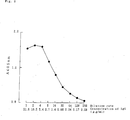
- Fig. 2 illustrates the binding of the antibody in culture supernatant of hybridoma and the peptide of the present invention.
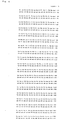
- Fig. 3 illustrates the base sequence of cDNA encoding the amino acid sequence of L-chain of the antibody and the amino acid sequence of the present invention.
- Fig. 4 illustrates the base sequence of cDNA encoding the amino acid sequence of H-chain of the antibody and amino acid sequence of the present invention. (continue to Fig. 5)
- Fig. 5 continues from Fig. 4 and illustrates the base sequence of cDNA encoding the amino acid sequence of H-chain of the antibody and amino acid sequence of the present invention.
- Fig. 6 illustrates the results of the inhibition test by the anti-peptide antibody of histamine release from rat mast cells stimulated with the peptide.
- the antibody of the present invention can be prepared by the following steps.
- the recombinant antibody can be produced using DNA isolated from the antibody producing hybridoma of the present invention encoding the antibody by conventional methods.
- the present invention also provides single chain antibody and DNA which encode single chain antibodies.
- the antibody of the present invention is of human origin, thus can be safely and repeatedly administered to patients with allergic diseases.
- the antibody can be used for the treatment of diseases caused by allergic reaction to IgE such as hay fever, asthma, and so forth.
- the human type antibody allows intravenous administration and early treatment to immediate allergic reactions.
- the hybridoma cells which produce antibodies specifically react with the peptide were distributed into a 96 well plate at a rate of one cell/well were cloned three times by limiting dilution method.
- the characteristic features of antibody produced hybridomas were analyzed according to the following examples and the antibody was named 13-8G.
- the hybridoma was deposited to National Institute of Bioscience and Human-Technology; Agency of Industrial Science and Technology as FERM BP-4414.
- Hybridoma cells were cultured in RPMI-1640 medium containing 10% FCS under 5% CO2 atmosphere at 37°C in an incubator. The culture supernatants were harvested and grown cells were washed three times with PBS solution. The cells were suspended in serum-free RPMI-1640 medium at a rate of 1 x 10⁶ cells/ml and cultured at 37°C for three days in the CO2 incubator. The serum-free culture supernatants were obtained by centrifugation.
- Antibodies were purified from the culture supernatants containing FCS with ammonium sulfate fractionation and anti-human IgG antibody immobilized Sepharose (Cappel Co., Ltd.). Antibodies were purified specifically from the culture supernatants containing no FCS with protein G immobilized Sepharose (Zymed Co., Ltd.).
- the antibody produced by hybridoma-clone obtained by the Example 1 was analyzed.
- the antibody produced by hybridoma clone obtained by the Example 1 was analyzed.
- the binding of monoclonal antibody to the peptide was determined using ELISA method used in Example 1-(6).
- Concentration of human IgG in the culture supernatant was determined using EIA human IgG kit (MBL Co., Ltd.).
- EIA human IgG kit MBL Co., Ltd.
- absorbances were determined by a similar method, shown in Fig. 2.
- the decrease of absorbance in proportion to the dilution of added hybridoma culture supernatant was observed confirming the dose dependent binding of the antibody with the peptide.
- the specific binding was found because of the use of 2% BSA for the dilution of culture supernatant.
- Probes for screening were synthesized by PCR .
- a pair of PCR primers were synthesized according to the known base sequences of H- and L-chains of human IgG antibody and PCR amplification was carried out using the cDNA library as a template.
- the amplified DNA was purified using agarose electrophoresis, labeled with 32P and used as a probe.
- the probes of H- and L-chains were used for the screening of cDNA library and pure positive clones of K11 and H71 were selected. These clones were cut with restriction enzyme as EcoRI and BamHI to give fragments of 1.4-2.0 kb, the fragments were inserted into a plasmid vector, pBLUESCRIPT SK+, and subjected to subcloning. Colonies of Escherichia coli containing the antibody gene were screened by PCR to purify plasmid DNA. The plasmid was sequenced using DyeDeoxyTM Terminator Cycle Sequencing Kit (ABI). The DNA sequences are shown in Fig. 3, 4 and 5. Fig. 3 shows cDNA sequence of the L-chain and Figs.
- Figs. 4 and 5 show a serial cDNA sequence
- the symbol N represents unidentified three bases in non-coding region in the L-chain.
- the presumed amino acid sequence of H- and L-chains of the antibody are shown above the base sequences.
- the variable region in the H- and L-chains of the antibody were determined.
- the present invention provides a human type monoclonal antibody and the DNA encoding the antibody which inhibits the signal transmission for the release of chemical mediator from mast cells and basophils stimulated with allergen.
- the antibody is a human type antibody with a definite antigen specificity. Its base sequence in the variable region, which express the antigen binding site is specified and this antibody can be used as medicines and reagents.
Landscapes
- Health & Medical Sciences (AREA)
- Chemical & Material Sciences (AREA)
- Immunology (AREA)
- Organic Chemistry (AREA)
- Life Sciences & Earth Sciences (AREA)
- General Health & Medical Sciences (AREA)
- Medicinal Chemistry (AREA)
- Proteomics, Peptides & Aminoacids (AREA)
- Biochemistry (AREA)
- Biophysics (AREA)
- Molecular Biology (AREA)
- Animal Behavior & Ethology (AREA)
- Engineering & Computer Science (AREA)
- Public Health (AREA)
- Veterinary Medicine (AREA)
- Bioinformatics & Cheminformatics (AREA)
- Genetics & Genomics (AREA)
- Pharmacology & Pharmacy (AREA)
- General Chemical & Material Sciences (AREA)
- Chemical Kinetics & Catalysis (AREA)
- Nuclear Medicine, Radiotherapy & Molecular Imaging (AREA)
- Epidemiology (AREA)
- Preparation Of Compounds By Using Micro-Organisms (AREA)
- Peptides Or Proteins (AREA)
- Micro-Organisms Or Cultivation Processes Thereof (AREA)
- Medicines Containing Antibodies Or Antigens For Use As Internal Diagnostic Agents (AREA)
Applications Claiming Priority (2)
| Application Number | Priority Date | Filing Date | Title |
|---|---|---|---|
| JP293800/92 | 1992-10-07 | ||
| JP4293800A JPH06113881A (ja) | 1992-10-07 | 1992-10-07 | ヒト型モノクローナル抗ペプチド抗体及びこれをコードするdna |
Publications (1)
| Publication Number | Publication Date |
|---|---|
| EP0592230A1 true EP0592230A1 (de) | 1994-04-13 |
Family
ID=17799320
Family Applications (1)
| Application Number | Title | Priority Date | Filing Date |
|---|---|---|---|
| EP93308006A Withdrawn EP0592230A1 (de) | 1992-10-07 | 1993-10-07 | Menschlicher anti-Peptid monoklonaler Antikörper und dessen kodierende DNS-Sequenz |
Country Status (6)
| Country | Link |
|---|---|
| EP (1) | EP0592230A1 (de) |
| JP (1) | JPH06113881A (de) |
| KR (1) | KR940008700A (de) |
| AU (1) | AU4889393A (de) |
| CA (1) | CA2107761A1 (de) |
| ZA (1) | ZA937451B (de) |
Cited By (5)
| Publication number | Priority date | Publication date | Assignee | Title |
|---|---|---|---|---|
| WO1996006357A1 (en) * | 1994-08-24 | 1996-02-29 | Peptide Therapeutics Limited | Screen for potential therapeutic compounds |
| US5945104A (en) * | 1994-11-04 | 1999-08-31 | Peptide Therapeutics Limited | Peptides for anti-allergy treatment |
| WO2000020588A3 (en) * | 1998-10-02 | 2000-07-06 | Incyte Pharma Inc | Bone marrow-derived serum proteins |
| WO2001051507A1 (fr) * | 2000-01-14 | 2001-07-19 | Daiichi Pharmaceutical Co., Ltd. | Nouveau peptide et procede de criblage utilisant ledit peptide |
| US6610297B1 (en) | 1996-03-01 | 2003-08-26 | Novartis Ag | Peptide immunogens for vaccination against and treatment of allergy |
Families Citing this family (1)
| Publication number | Priority date | Publication date | Assignee | Title |
|---|---|---|---|---|
| KR102335671B1 (ko) * | 2021-06-08 | 2021-12-07 | (주)아이지에스 | 반도체 배관용 커팅장치 |
Citations (1)
| Publication number | Priority date | Publication date | Assignee | Title |
|---|---|---|---|---|
| WO1990015878A1 (en) * | 1989-06-15 | 1990-12-27 | National Research Development Corporation | Immunoactive peptides and antibodies and their use in anti-allergy treatment |
-
1992
- 1992-10-07 JP JP4293800A patent/JPH06113881A/ja active Pending
-
1993
- 1993-10-05 CA CA002107761A patent/CA2107761A1/en not_active Abandoned
- 1993-10-06 KR KR1019930020590A patent/KR940008700A/ko not_active Withdrawn
- 1993-10-07 EP EP93308006A patent/EP0592230A1/de not_active Withdrawn
- 1993-10-07 AU AU48893/93A patent/AU4889393A/en not_active Abandoned
- 1993-10-07 ZA ZA937451A patent/ZA937451B/xx unknown
Patent Citations (1)
| Publication number | Priority date | Publication date | Assignee | Title |
|---|---|---|---|---|
| WO1990015878A1 (en) * | 1989-06-15 | 1990-12-27 | National Research Development Corporation | Immunoactive peptides and antibodies and their use in anti-allergy treatment |
Non-Patent Citations (3)
| Title |
|---|
| JOURNAL IMMUNOLOGICAL METHODS vol. 100, 1978, AMSTERDAM pages 5 - 40 KEITH J. ET AL. 'Human Monoclonal Antibody production - Current status and future prospects' * |
| MOLECULAR IMMUNOLOGY vol. 24, no. 4, 1987, UK pages 379 - 389 STANWORTH D.R. ET AL. 'Analysis of the interaction between rat immunoglobulin E and rat mast cells using anti-peptide antibodies' * |
| THE LANCET vol. 336, 24 November 1990, pages 1279 - 1279 STANWORTH D.R. ET AL. 'Allergy Treatment with a Peptide Vaccine' * |
Cited By (5)
| Publication number | Priority date | Publication date | Assignee | Title |
|---|---|---|---|---|
| WO1996006357A1 (en) * | 1994-08-24 | 1996-02-29 | Peptide Therapeutics Limited | Screen for potential therapeutic compounds |
| US5945104A (en) * | 1994-11-04 | 1999-08-31 | Peptide Therapeutics Limited | Peptides for anti-allergy treatment |
| US6610297B1 (en) | 1996-03-01 | 2003-08-26 | Novartis Ag | Peptide immunogens for vaccination against and treatment of allergy |
| WO2000020588A3 (en) * | 1998-10-02 | 2000-07-06 | Incyte Pharma Inc | Bone marrow-derived serum proteins |
| WO2001051507A1 (fr) * | 2000-01-14 | 2001-07-19 | Daiichi Pharmaceutical Co., Ltd. | Nouveau peptide et procede de criblage utilisant ledit peptide |
Also Published As
| Publication number | Publication date |
|---|---|
| CA2107761A1 (en) | 1994-04-08 |
| KR940008700A (ko) | 1994-05-16 |
| AU4889393A (en) | 1994-04-21 |
| JPH06113881A (ja) | 1994-04-26 |
| ZA937451B (en) | 1995-04-07 |
Similar Documents
| Publication | Publication Date | Title |
|---|---|---|
| KR100337069B1 (ko) | 항-hiv모노클로날항체 | |
| EP0722463B1 (de) | Verfahren und zusammensetzung für die modulation der wirtsimmunantwort auf allergene | |
| US5041381A (en) | Monoclonal antibodies against human interleukin-4 and hybridomas producing the same | |
| JPH0730116B2 (ja) | ヒトインターロイキン―4の抗体アンタゴニスト | |
| US5817308A (en) | Tolerogenic fusion proteins of immunoglobulins and methods for inducing and maintaining tolerance | |
| EP0833929B1 (de) | Chimäre antikörper zur abgabe von antigenen an selektierte zellen des immunsystems | |
| NO179615B (no) | Monoklonale antistoffer eller fragmenter derav som reagerer med kakektin, cellelinjer som produserer dem, prövesett som omfatter dem, samt anvendelse derav in vitro | |
| HU216310B (hu) | Eljárás citokinszintézis inhibitorfaktor (CSIF), CSIF-aktivitású polipeptidek és CSIF-antagonisták, valamint ezeket tartalmazó gyógyszerkészítmények előállítására | |
| JP3156237B2 (ja) | 抗ヒトIgE モノクローナル抗体 | |
| JPH09510095A (ja) | ヒトインターロイキン−4に対するヒト化モノクローナル抗体 | |
| EP0592230A1 (de) | Menschlicher anti-Peptid monoklonaler Antikörper und dessen kodierende DNS-Sequenz | |
| US6573372B2 (en) | Feline immunoglobulin E molecules and compositions there of | |
| EP0369413B1 (de) | Interferon-gamma bindende Proteine | |
| JPH022352A (ja) | 抗hiv抗体可変領域をコードする遺伝子断片およびこれらを用いて発現された抗hivキメラ抗体ならびにその製法 | |
| CA2090486A1 (en) | Human zona pellucida protein zp3 | |
| US6291208B1 (en) | Chimeric antibodies for delivery of antigens to selected cells of the immune system | |
| JP3578787B2 (ja) | 生物学的に活性なポリペプチドの組換え製造方法 | |
| US6518045B1 (en) | Feline cytokine protein | |
| US20020025315A1 (en) | Chimeric antibodies for delivery of antigens to selected cells of the immune system | |
| US5912136A (en) | Monoclonal antibodies against human interleukin-4 and hybridomas producing the same | |
| AU753753B2 (en) | Contraceptive antibody vaccines | |
| JPH06125783A (ja) | 組換え抗hiv抗体およびその調製方法 | |
| EP1249456A1 (de) | Neuartige peptide und sie verwendende screeningverfahren | |
| HUT67010A (en) | Supressor t-cell hybridoma | |
| US20040115764A1 (en) | Desoxyribonucleic acids coding for the equine ige-allotype heavy chain constant region, the recombinant immunoglobulin obtained therewith and corresponding isotype-specific monoclonal antibodies and the utilization thereof |
Legal Events
| Date | Code | Title | Description |
|---|---|---|---|
| PUAI | Public reference made under article 153(3) epc to a published international application that has entered the european phase |
Free format text: ORIGINAL CODE: 0009012 |
|
| AK | Designated contracting states |
Kind code of ref document: A1 Designated state(s): AT BE CH DE DK ES FR GB IT LI NL SE |
|
| 17P | Request for examination filed |
Effective date: 19940623 |
|
| 17Q | First examination report despatched |
Effective date: 19941230 |
|
| 18W | Application withdrawn |
Withdrawal date: 19950714 |
|
| R18W | Application withdrawn (corrected) |
Effective date: 19950714 |