EP0592868A1 - Chinoloncarbonsäuren - Google Patents
Chinoloncarbonsäuren Download PDFInfo
- Publication number
- EP0592868A1 EP0592868A1 EP93115705A EP93115705A EP0592868A1 EP 0592868 A1 EP0592868 A1 EP 0592868A1 EP 93115705 A EP93115705 A EP 93115705A EP 93115705 A EP93115705 A EP 93115705A EP 0592868 A1 EP0592868 A1 EP 0592868A1
- Authority
- EP
- European Patent Office
- Prior art keywords
- diazabicyclo
- methyl
- oxo
- nonane
- cyclopropyl
- Prior art date
- Legal status (The legal status is an assumption and is not a legal conclusion. Google has not performed a legal analysis and makes no representation as to the accuracy of the status listed.)
- Withdrawn
Links
- 239000002253 acid Substances 0.000 title claims abstract description 18
- 150000007513 acids Chemical class 0.000 title description 3
- 238000000034 method Methods 0.000 claims abstract description 33
- 150000003839 salts Chemical class 0.000 claims abstract description 24
- 238000002360 preparation method Methods 0.000 claims abstract description 4
- -1 bicyclo [1.1.1] pent-1-yl Chemical group 0.000 claims description 100
- 150000001875 compounds Chemical class 0.000 claims description 51
- 125000002496 methyl group Chemical group [H]C([H])([H])* 0.000 claims description 45
- 125000004432 carbon atom Chemical group C* 0.000 claims description 24
- 229910052739 hydrogen Inorganic materials 0.000 claims description 20
- 239000001257 hydrogen Substances 0.000 claims description 20
- PXGOKWXKJXAPGV-UHFFFAOYSA-N Fluorine Chemical compound FF PXGOKWXKJXAPGV-UHFFFAOYSA-N 0.000 claims description 17
- 229910052717 sulfur Inorganic materials 0.000 claims description 15
- 229910052736 halogen Inorganic materials 0.000 claims description 14
- 150000002367 halogens Chemical class 0.000 claims description 14
- 125000000956 methoxy group Chemical group [H]C([H])([H])O* 0.000 claims description 12
- ZAMOUSCENKQFHK-UHFFFAOYSA-N Chlorine atom Chemical compound [Cl] ZAMOUSCENKQFHK-UHFFFAOYSA-N 0.000 claims description 11
- 125000000217 alkyl group Chemical group 0.000 claims description 11
- 239000000460 chlorine Substances 0.000 claims description 11
- 239000011737 fluorine Substances 0.000 claims description 11
- 229910052731 fluorine Inorganic materials 0.000 claims description 11
- ZZVUWRFHKOJYTH-UHFFFAOYSA-N diphenhydramine Chemical group C=1C=CC=CC=1C(OCCN(C)C)C1=CC=CC=C1 ZZVUWRFHKOJYTH-UHFFFAOYSA-N 0.000 claims description 10
- 125000006239 protecting group Chemical group 0.000 claims description 10
- 125000003903 2-propenyl group Chemical group [H]C([*])([H])C([H])=C([H])[H] 0.000 claims description 9
- 239000003513 alkali Substances 0.000 claims description 9
- 229910052801 chlorine Inorganic materials 0.000 claims description 9
- 229910052757 nitrogen Inorganic materials 0.000 claims description 9
- 125000005931 tert-butyloxycarbonyl group Chemical group [H]C([H])([H])C(OC(*)=O)(C([H])([H])[H])C([H])([H])[H] 0.000 claims description 9
- 150000001735 carboxylic acids Chemical class 0.000 claims description 8
- 229910052784 alkaline earth metal Inorganic materials 0.000 claims description 7
- QUPDWYMUPZLYJZ-UHFFFAOYSA-N ethyl Chemical compound C[CH2] QUPDWYMUPZLYJZ-UHFFFAOYSA-N 0.000 claims description 7
- 125000002887 hydroxy group Chemical group [H]O* 0.000 claims description 7
- 125000001997 phenyl group Chemical group [H]C1=C([H])C([H])=C(*)C([H])=C1[H] 0.000 claims description 7
- 125000000026 trimethylsilyl group Chemical group [H]C([H])([H])[Si]([*])(C([H])([H])[H])C([H])([H])[H] 0.000 claims description 7
- ZRALSGWEFCBTJO-UHFFFAOYSA-N Guanidine Chemical class NC(N)=N ZRALSGWEFCBTJO-UHFFFAOYSA-N 0.000 claims description 6
- 125000003342 alkenyl group Chemical group 0.000 claims description 6
- 125000001584 benzyloxycarbonyl group Chemical group C(=O)(OCC1=CC=CC=C1)* 0.000 claims description 6
- 125000000753 cycloalkyl group Chemical group 0.000 claims description 6
- 125000001495 ethyl group Chemical group [H]C([H])([H])C([H])([H])* 0.000 claims description 6
- 125000001153 fluoro group Chemical group F* 0.000 claims description 6
- 150000004677 hydrates Chemical class 0.000 claims description 6
- UYWQUFXKFGHYNT-UHFFFAOYSA-N phenylmethyl ester of formic acid Natural products O=COCC1=CC=CC=C1 UYWQUFXKFGHYNT-UHFFFAOYSA-N 0.000 claims description 6
- 125000002924 primary amino group Chemical group [H]N([H])* 0.000 claims description 6
- 229910052709 silver Inorganic materials 0.000 claims description 6
- 239000004332 silver Substances 0.000 claims description 6
- 125000000391 vinyl group Chemical group [H]C([*])=C([H])[H] 0.000 claims description 6
- 229920002554 vinyl polymer Polymers 0.000 claims description 6
- 125000004217 4-methoxybenzyl group Chemical group [H]C1=C([H])C(=C([H])C([H])=C1OC([H])([H])[H])C([H])([H])* 0.000 claims description 5
- 229910052760 oxygen Inorganic materials 0.000 claims description 5
- 125000000999 tert-butyl group Chemical group [H]C([H])([H])C(*)(C([H])([H])[H])C([H])([H])[H] 0.000 claims description 5
- WKBOTKDWSSQWDR-UHFFFAOYSA-N Bromine atom Chemical compound [Br] WKBOTKDWSSQWDR-UHFFFAOYSA-N 0.000 claims description 4
- 125000002252 acyl group Chemical group 0.000 claims description 4
- 125000004453 alkoxycarbonyl group Chemical group 0.000 claims description 4
- GDTBXPJZTBHREO-UHFFFAOYSA-N bromine Substances BrBr GDTBXPJZTBHREO-UHFFFAOYSA-N 0.000 claims description 4
- 229910052794 bromium Inorganic materials 0.000 claims description 4
- 150000003254 radicals Chemical class 0.000 claims description 4
- 125000000954 2-hydroxyethyl group Chemical group [H]C([*])([H])C([H])([H])O[H] 0.000 claims description 3
- 125000003668 acetyloxy group Chemical group [H]C([H])([H])C(=O)O[*] 0.000 claims description 3
- 125000003545 alkoxy group Chemical group 0.000 claims description 3
- 125000003282 alkyl amino group Chemical group 0.000 claims description 3
- 125000004414 alkyl thio group Chemical group 0.000 claims description 3
- 239000003242 anti bacterial agent Substances 0.000 claims description 3
- 125000005110 aryl thio group Chemical group 0.000 claims description 3
- 125000001797 benzyl group Chemical group [H]C1=C([H])C([H])=C(C([H])=C1[H])C([H])([H])* 0.000 claims description 3
- 125000001559 cyclopropyl group Chemical group [H]C1([H])C([H])([H])C1([H])* 0.000 claims description 3
- 125000004663 dialkyl amino group Chemical group 0.000 claims description 3
- 239000003814 drug Substances 0.000 claims description 3
- 125000001301 ethoxy group Chemical group [H]C([H])([H])C([H])([H])O* 0.000 claims description 3
- 125000002534 ethynyl group Chemical group [H]C#C* 0.000 claims description 3
- 125000002485 formyl group Chemical group [H]C(*)=O 0.000 claims description 3
- PNDPGZBMCMUPRI-UHFFFAOYSA-N iodine Chemical compound II PNDPGZBMCMUPRI-UHFFFAOYSA-N 0.000 claims description 3
- DZLFLBLQUQXARW-UHFFFAOYSA-N tetrabutylammonium Chemical compound CCCC[N+](CCCC)(CCCC)CCCC DZLFLBLQUQXARW-UHFFFAOYSA-N 0.000 claims description 3
- QEMXHQIAXOOASZ-UHFFFAOYSA-N tetramethylammonium Chemical compound C[N+](C)(C)C QEMXHQIAXOOASZ-UHFFFAOYSA-N 0.000 claims description 3
- 125000004178 (C1-C4) alkyl group Chemical group 0.000 claims description 2
- 125000004777 2-fluoroethyl group Chemical group [H]C([H])(F)C([H])([H])* 0.000 claims description 2
- LEAGPFAEMIHISL-UHFFFAOYSA-N [amino-hydroxy-(methylamino)methyl] hypofluorite Chemical compound CNC(N)(O)OF LEAGPFAEMIHISL-UHFFFAOYSA-N 0.000 claims description 2
- 229910001413 alkali metal ion Inorganic materials 0.000 claims description 2
- 229910001420 alkaline earth metal ion Inorganic materials 0.000 claims description 2
- 150000001342 alkaline earth metals Chemical class 0.000 claims description 2
- 125000000304 alkynyl group Chemical group 0.000 claims description 2
- HSFWRNGVRCDJHI-UHFFFAOYSA-N alpha-acetylene Chemical group C#C HSFWRNGVRCDJHI-UHFFFAOYSA-N 0.000 claims description 2
- 201000010099 disease Diseases 0.000 claims description 2
- 208000037265 diseases, disorders, signs and symptoms Diseases 0.000 claims description 2
- 229910021645 metal ion Inorganic materials 0.000 claims description 2
- 125000004435 hydrogen atom Chemical class [H]* 0.000 claims 10
- BQCADISMDOOEFD-UHFFFAOYSA-N Silver Chemical compound [Ag] BQCADISMDOOEFD-UHFFFAOYSA-N 0.000 claims 3
- 208000035143 Bacterial infection Diseases 0.000 claims 1
- 229910052783 alkali metal Inorganic materials 0.000 claims 1
- 150000001340 alkali metals Chemical class 0.000 claims 1
- 125000005194 alkoxycarbonyloxy group Chemical group 0.000 claims 1
- 208000022362 bacterial infectious disease Diseases 0.000 claims 1
- PXQLVRUNWNTZOS-UHFFFAOYSA-N sulfanyl Chemical class [SH] PXQLVRUNWNTZOS-UHFFFAOYSA-N 0.000 claims 1
- 239000000203 mixture Substances 0.000 abstract description 53
- 230000000844 anti-bacterial effect Effects 0.000 abstract description 3
- 239000003782 beta lactam antibiotic agent Substances 0.000 abstract description 2
- 239000002132 β-lactam antibiotic Substances 0.000 abstract description 2
- 229940124586 β-lactam antibiotics Drugs 0.000 abstract description 2
- LFQSCWFLJHTTHZ-UHFFFAOYSA-N Ethanol Chemical compound CCO LFQSCWFLJHTTHZ-UHFFFAOYSA-N 0.000 description 104
- ZMXDDKWLCZADIW-UHFFFAOYSA-N N,N-Dimethylformamide Chemical compound CN(C)C=O ZMXDDKWLCZADIW-UHFFFAOYSA-N 0.000 description 96
- OKKJLVBELUTLKV-UHFFFAOYSA-N Methanol Chemical compound OC OKKJLVBELUTLKV-UHFFFAOYSA-N 0.000 description 87
- XLYOFNOQVPJJNP-UHFFFAOYSA-N water Substances O XLYOFNOQVPJJNP-UHFFFAOYSA-N 0.000 description 79
- YMWUJEATGCHHMB-UHFFFAOYSA-N Dichloromethane Chemical compound ClCCl YMWUJEATGCHHMB-UHFFFAOYSA-N 0.000 description 71
- 238000002844 melting Methods 0.000 description 68
- 230000008018 melting Effects 0.000 description 68
- WEVYAHXRMPXWCK-UHFFFAOYSA-N Acetonitrile Chemical compound CC#N WEVYAHXRMPXWCK-UHFFFAOYSA-N 0.000 description 63
- 238000000354 decomposition reaction Methods 0.000 description 51
- 239000000243 solution Substances 0.000 description 50
- VEXZGXHMUGYJMC-UHFFFAOYSA-N Hydrochloric acid Chemical compound Cl VEXZGXHMUGYJMC-UHFFFAOYSA-N 0.000 description 46
- YXFVVABEGXRONW-UHFFFAOYSA-N Toluene Chemical compound CC1=CC=CC=C1 YXFVVABEGXRONW-UHFFFAOYSA-N 0.000 description 45
- XEKOWRVHYACXOJ-UHFFFAOYSA-N Ethyl acetate Chemical compound CCOC(C)=O XEKOWRVHYACXOJ-UHFFFAOYSA-N 0.000 description 39
- HEMHJVSKTPXQMS-UHFFFAOYSA-M Sodium hydroxide Chemical compound [OH-].[Na+] HEMHJVSKTPXQMS-UHFFFAOYSA-M 0.000 description 33
- 239000000047 product Substances 0.000 description 30
- 238000006243 chemical reaction Methods 0.000 description 23
- 239000013078 crystal Substances 0.000 description 21
- HEDRZPFGACZZDS-UHFFFAOYSA-N Chloroform Chemical compound ClC(Cl)Cl HEDRZPFGACZZDS-UHFFFAOYSA-N 0.000 description 20
- CSNNHWWHGAXBCP-UHFFFAOYSA-L Magnesium sulfate Chemical compound [Mg+2].[O-][S+2]([O-])([O-])[O-] CSNNHWWHGAXBCP-UHFFFAOYSA-L 0.000 description 20
- 150000001412 amines Chemical class 0.000 description 20
- 239000002244 precipitate Substances 0.000 description 20
- RTZKZFJDLAIYFH-UHFFFAOYSA-N Diethyl ether Chemical compound CCOCC RTZKZFJDLAIYFH-UHFFFAOYSA-N 0.000 description 19
- KDLHZDBZIXYQEI-UHFFFAOYSA-N Palladium Chemical compound [Pd] KDLHZDBZIXYQEI-UHFFFAOYSA-N 0.000 description 16
- KSCPLKVBWDOSAI-NKWVEPMBSA-N (4as,7as)-2,3,4,4a,5,6,7,7a-octahydro-1h-pyrrolo[3,4-b]pyridine Chemical compound N1CCC[C@H]2CNC[C@H]21 KSCPLKVBWDOSAI-NKWVEPMBSA-N 0.000 description 15
- XNWFRZJHXBZDAG-UHFFFAOYSA-N 2-METHOXYETHANOL Chemical compound COCCO XNWFRZJHXBZDAG-UHFFFAOYSA-N 0.000 description 15
- CSCPPACGZOOCGX-UHFFFAOYSA-N Acetone Chemical compound CC(C)=O CSCPPACGZOOCGX-UHFFFAOYSA-N 0.000 description 15
- 238000009835 boiling Methods 0.000 description 15
- 239000000706 filtrate Substances 0.000 description 15
- FEWJPZIEWOKRBE-JCYAYHJZSA-N Dextrotartaric acid Chemical compound OC(=O)[C@H](O)[C@@H](O)C(O)=O FEWJPZIEWOKRBE-JCYAYHJZSA-N 0.000 description 14
- VYPSYNLAJGMNEJ-UHFFFAOYSA-N Silicium dioxide Chemical compound O=[Si]=O VYPSYNLAJGMNEJ-UHFFFAOYSA-N 0.000 description 14
- FEWJPZIEWOKRBE-UHFFFAOYSA-N Tartaric acid Natural products [H+].[H+].[O-]C(=O)C(O)C(O)C([O-])=O FEWJPZIEWOKRBE-UHFFFAOYSA-N 0.000 description 14
- 238000010992 reflux Methods 0.000 description 14
- 239000000741 silica gel Substances 0.000 description 14
- 229910002027 silica gel Inorganic materials 0.000 description 14
- 238000001212 derivatisation Methods 0.000 description 13
- 238000004817 gas chromatography Methods 0.000 description 12
- BWHMMNNQKKPAPP-UHFFFAOYSA-L potassium carbonate Chemical compound [K+].[K+].[O-]C([O-])=O BWHMMNNQKKPAPP-UHFFFAOYSA-L 0.000 description 12
- AFYZAHZKOFBVLE-UONOGXRCSA-N (4as,7as)-6-benzyl-1,2,3,4,4a,5,7,7a-octahydropyrrolo[3,4-b]pyridine Chemical compound C([C@H]1NCCC[C@H]1C1)N1CC1=CC=CC=C1 AFYZAHZKOFBVLE-UONOGXRCSA-N 0.000 description 11
- QTBSBXVTEAMEQO-UHFFFAOYSA-N Acetic acid Chemical class CC(O)=O QTBSBXVTEAMEQO-UHFFFAOYSA-N 0.000 description 11
- OKTJSMMVPCPJKN-UHFFFAOYSA-N Carbon Chemical compound [C] OKTJSMMVPCPJKN-UHFFFAOYSA-N 0.000 description 11
- UFHFLCQGNIYNRP-UHFFFAOYSA-N Hydrogen Chemical compound [H][H] UFHFLCQGNIYNRP-UHFFFAOYSA-N 0.000 description 11
- QGZKDVFQNNGYKY-UHFFFAOYSA-N ammonia Natural products N QGZKDVFQNNGYKY-UHFFFAOYSA-N 0.000 description 11
- WYURNTSHIVDZCO-UHFFFAOYSA-N Tetrahydrofuran Chemical compound C1CCOC1 WYURNTSHIVDZCO-UHFFFAOYSA-N 0.000 description 10
- 150000002148 esters Chemical class 0.000 description 10
- 229910052943 magnesium sulfate Inorganic materials 0.000 description 10
- 235000019341 magnesium sulphate Nutrition 0.000 description 10
- 229910052763 palladium Inorganic materials 0.000 description 10
- 239000000725 suspension Substances 0.000 description 10
- IMNIMPAHZVJRPE-UHFFFAOYSA-N triethylenediamine Chemical compound C1CN2CCN1CC2 IMNIMPAHZVJRPE-UHFFFAOYSA-N 0.000 description 10
- IAZDPXIOMUYVGZ-UHFFFAOYSA-N Dimethylsulphoxide Chemical compound CS(C)=O IAZDPXIOMUYVGZ-UHFFFAOYSA-N 0.000 description 9
- 150000002431 hydrogen Chemical class 0.000 description 9
- BKIMMITUMNQMOS-UHFFFAOYSA-N nonane Chemical compound CCCCCCCCC BKIMMITUMNQMOS-UHFFFAOYSA-N 0.000 description 9
- WGQKYBSKWIADBV-UHFFFAOYSA-N benzylamine Chemical compound NCC1=CC=CC=C1 WGQKYBSKWIADBV-UHFFFAOYSA-N 0.000 description 8
- 238000004128 high performance liquid chromatography Methods 0.000 description 8
- RRBLNPCNHNHAFW-NEPJUHHUSA-N (4ar,7as)-6-benzyl-1,2,3,4,4a,7a-hexahydropyrrolo[3,4-b]pyridine-5,7-dione Chemical compound O=C([C@H]1NCCC[C@H]1C1=O)N1CC1=CC=CC=C1 RRBLNPCNHNHAFW-NEPJUHHUSA-N 0.000 description 7
- KWIUHFFTVRNATP-UHFFFAOYSA-N Betaine Natural products C[N+](C)(C)CC([O-])=O KWIUHFFTVRNATP-UHFFFAOYSA-N 0.000 description 7
- KWIUHFFTVRNATP-UHFFFAOYSA-O N,N,N-trimethylglycinium Chemical compound C[N+](C)(C)CC(O)=O KWIUHFFTVRNATP-UHFFFAOYSA-O 0.000 description 7
- 239000008346 aqueous phase Substances 0.000 description 7
- 229960003237 betaine Drugs 0.000 description 7
- 238000001816 cooling Methods 0.000 description 7
- 239000012071 phase Substances 0.000 description 7
- 239000007858 starting material Substances 0.000 description 7
- 229940095064 tartrate Drugs 0.000 description 7
- KSCPLKVBWDOSAI-RQJHMYQMSA-N (4ar,7ar)-2,3,4,4a,5,6,7,7a-octahydro-1h-pyrrolo[3,4-b]pyridine Chemical compound N1CCC[C@@H]2CNC[C@@H]21 KSCPLKVBWDOSAI-RQJHMYQMSA-N 0.000 description 6
- GXVSLYAKJGKRCK-QWHCGFSZSA-N (4as,7ar)-4-benzyl-3,4a,5,6,7,7a-hexahydro-2h-pyrrolo[3,4-b][1,4]oxazine Chemical compound N1([C@H]2CNC[C@H]2OCC1)CC1=CC=CC=C1 GXVSLYAKJGKRCK-QWHCGFSZSA-N 0.000 description 6
- IJGRMHOSHXDMSA-UHFFFAOYSA-N Atomic nitrogen Chemical compound N#N IJGRMHOSHXDMSA-UHFFFAOYSA-N 0.000 description 6
- IAZDPXIOMUYVGZ-WFGJKAKNSA-N Dimethyl sulfoxide Chemical compound [2H]C([2H])([2H])S(=O)C([2H])([2H])[2H] IAZDPXIOMUYVGZ-WFGJKAKNSA-N 0.000 description 6
- 239000001358 L(+)-tartaric acid Substances 0.000 description 6
- 235000011002 L(+)-tartaric acid Nutrition 0.000 description 6
- FEWJPZIEWOKRBE-LWMBPPNESA-N L-(+)-Tartaric acid Natural products OC(=O)[C@@H](O)[C@H](O)C(O)=O FEWJPZIEWOKRBE-LWMBPPNESA-N 0.000 description 6
- OFBQJSOFQDEBGM-UHFFFAOYSA-N Pentane Chemical compound CCCCC OFBQJSOFQDEBGM-UHFFFAOYSA-N 0.000 description 6
- JUJWROOIHBZHMG-UHFFFAOYSA-N Pyridine Chemical compound C1=CC=NC=C1 JUJWROOIHBZHMG-UHFFFAOYSA-N 0.000 description 6
- UIIMBOGNXHQVGW-UHFFFAOYSA-M Sodium bicarbonate Chemical class [Na+].OC([O-])=O UIIMBOGNXHQVGW-UHFFFAOYSA-M 0.000 description 6
- ZMANZCXQSJIPKH-UHFFFAOYSA-N Triethylamine Chemical compound CCN(CC)CC ZMANZCXQSJIPKH-UHFFFAOYSA-N 0.000 description 6
- DTQVDTLACAAQTR-UHFFFAOYSA-N Trifluoroacetic acid Chemical compound OC(=O)C(F)(F)F DTQVDTLACAAQTR-UHFFFAOYSA-N 0.000 description 6
- TVFDJXOCXUVLDH-UHFFFAOYSA-N caesium atom Chemical class [Cs] TVFDJXOCXUVLDH-UHFFFAOYSA-N 0.000 description 6
- 238000004587 chromatography analysis Methods 0.000 description 6
- AUONNNVJUCSETH-UHFFFAOYSA-N icosanoyl icosanoate Chemical compound CCCCCCCCCCCCCCCCCCCC(=O)OC(=O)CCCCCCCCCCCCCCCCCCC AUONNNVJUCSETH-UHFFFAOYSA-N 0.000 description 6
- 239000000543 intermediate Substances 0.000 description 6
- 239000012074 organic phase Substances 0.000 description 6
- 229910000027 potassium carbonate Inorganic materials 0.000 description 6
- 238000000926 separation method Methods 0.000 description 6
- 238000003786 synthesis reaction Methods 0.000 description 6
- VKWKEIDIHPMQQK-SCLBCKFNSA-N 7-[(4as,7as)-1-[(2-methylpropan-2-yl)oxycarbonyl]-3,4,4a,5,7,7a-hexahydro-2h-pyrrolo[3,4-b]pyridin-6-yl]-8-chloro-1-cyclopropyl-6-fluoro-4-oxoquinoline-3-carboxylic acid Chemical compound C([C@@H]1CCCN([C@@H]1C1)C(=O)OC(C)(C)C)N1C(C=1Cl)=C(F)C=C(C(C(C(O)=O)=C2)=O)C=1N2C1CC1 VKWKEIDIHPMQQK-SCLBCKFNSA-N 0.000 description 5
- 241000894006 Bacteria Species 0.000 description 5
- 239000002585 base Substances 0.000 description 5
- 239000003054 catalyst Substances 0.000 description 5
- 239000003153 chemical reaction reagent Substances 0.000 description 5
- 238000002425 crystallisation Methods 0.000 description 5
- 230000008025 crystallization Effects 0.000 description 5
- 238000001953 recrystallisation Methods 0.000 description 5
- YLQBMQCUIZJEEH-UHFFFAOYSA-N tetrahydrofuran Natural products C=1C=COC=1 YLQBMQCUIZJEEH-UHFFFAOYSA-N 0.000 description 5
- 150000003952 β-lactams Chemical class 0.000 description 5
- QAPHOFIEVHTDAB-FDHYPBRKSA-N (4ar,7ar)-6-benzyl-1,2,3,4,4a,5,7,7a-octahydropyrrolo[3,4-b]pyridine;(2r,3r)-2,3-dihydroxybutanedioic acid Chemical compound OC(=O)[C@H](O)[C@@H](O)C(O)=O.C([C@@H]1NCCC[C@@H]1C1)N1CC1=CC=CC=C1 QAPHOFIEVHTDAB-FDHYPBRKSA-N 0.000 description 4
- RRBLNPCNHNHAFW-NWDGAFQWSA-N (4as,7ar)-6-benzyl-1,2,3,4,4a,7a-hexahydropyrrolo[3,4-b]pyridine-5,7-dione Chemical compound O=C([C@@H]1NCCC[C@@H]1C1=O)N1CC1=CC=CC=C1 RRBLNPCNHNHAFW-NWDGAFQWSA-N 0.000 description 4
- QVLUVOZDWSAEIP-JGVFFNPUSA-N (4as,7as)-1-methyl-2,3,4,4a,5,6,7,7a-octahydropyrrolo[3,4-b]pyridine Chemical compound CN1CCC[C@H]2CNC[C@@H]12 QVLUVOZDWSAEIP-JGVFFNPUSA-N 0.000 description 4
- QAPHOFIEVHTDAB-QYDSKQJFSA-N (4as,7as)-6-benzyl-1,2,3,4,4a,5,7,7a-octahydropyrrolo[3,4-b]pyridine;(2r,3r)-2,3-dihydroxybutanedioic acid Chemical compound OC(=O)[C@H](O)[C@@H](O)C(O)=O.C([C@H]1NCCC[C@H]1C1)N1CC1=CC=CC=C1 QAPHOFIEVHTDAB-QYDSKQJFSA-N 0.000 description 4
- KIUPCUCGVCGPPA-UHFFFAOYSA-N (5-methyl-2-propan-2-ylcyclohexyl) carbonochloridate Chemical compound CC(C)C1CCC(C)CC1OC(Cl)=O KIUPCUCGVCGPPA-UHFFFAOYSA-N 0.000 description 4
- 238000005160 1H NMR spectroscopy Methods 0.000 description 4
- GQHTUMJGOHRCHB-UHFFFAOYSA-N 2,3,4,6,7,8,9,10-octahydropyrimido[1,2-a]azepine Chemical compound C1CCCCN2CCCN=C21 GQHTUMJGOHRCHB-UHFFFAOYSA-N 0.000 description 4
- VHYFNPMBLIVWCW-UHFFFAOYSA-N 4-Dimethylaminopyridine Chemical compound CN(C)C1=CC=NC=C1 VHYFNPMBLIVWCW-UHFFFAOYSA-N 0.000 description 4
- YYROPELSRYBVMQ-UHFFFAOYSA-N 4-toluenesulfonyl chloride Chemical compound CC1=CC=C(S(Cl)(=O)=O)C=C1 YYROPELSRYBVMQ-UHFFFAOYSA-N 0.000 description 4
- KFZMGEQAYNKOFK-UHFFFAOYSA-N Isopropanol Chemical compound CC(C)O KFZMGEQAYNKOFK-UHFFFAOYSA-N 0.000 description 4
- BZLVMXJERCGZMT-UHFFFAOYSA-N Methyl tert-butyl ether Chemical compound COC(C)(C)C BZLVMXJERCGZMT-UHFFFAOYSA-N 0.000 description 4
- CDBYLPFSWZWCQE-UHFFFAOYSA-L Sodium Carbonate Chemical compound [Na+].[Na+].[O-]C([O-])=O CDBYLPFSWZWCQE-UHFFFAOYSA-L 0.000 description 4
- 229960000583 acetic acid Drugs 0.000 description 4
- RDOXTESZEPMUJZ-UHFFFAOYSA-N anisole Chemical compound COC1=CC=CC=C1 RDOXTESZEPMUJZ-UHFFFAOYSA-N 0.000 description 4
- 125000006297 carbonyl amino group Chemical group [H]N([*:2])C([*:1])=O 0.000 description 4
- 239000003085 diluting agent Substances 0.000 description 4
- RIFGWPKJUGCATF-UHFFFAOYSA-N ethyl chloroformate Chemical compound CCOC(Cl)=O RIFGWPKJUGCATF-UHFFFAOYSA-N 0.000 description 4
- 238000004992 fast atom bombardment mass spectroscopy Methods 0.000 description 4
- 239000012452 mother liquor Substances 0.000 description 4
- 239000000843 powder Substances 0.000 description 4
- 238000000746 purification Methods 0.000 description 4
- 239000007787 solid Substances 0.000 description 4
- 238000003756 stirring Methods 0.000 description 4
- 239000000126 substance Substances 0.000 description 4
- ZBCMUHWEHQJMNT-UHFFFAOYSA-N tert-butyl 2-methylnonanoate Chemical compound CCCCCCCC(C)C(=O)OC(C)(C)C ZBCMUHWEHQJMNT-UHFFFAOYSA-N 0.000 description 4
- QAPHOFIEVHTDAB-DXLMOZQFSA-N (4as,7as)-6-benzyl-1,2,3,4,4a,5,7,7a-octahydropyrrolo[3,4-b]pyridine;(2s,3s)-2,3-dihydroxybutanedioic acid Chemical compound OC(=O)[C@@H](O)[C@H](O)C(O)=O.C([C@H]1NCCC[C@H]1C1)N1CC1=CC=CC=C1 QAPHOFIEVHTDAB-DXLMOZQFSA-N 0.000 description 3
- RYHBNJHYFVUHQT-UHFFFAOYSA-N 1,4-Dioxane Chemical compound C1COCCO1 RYHBNJHYFVUHQT-UHFFFAOYSA-N 0.000 description 3
- KNEXGVPHPGXAGF-UHFFFAOYSA-N 1-cyclopropyl-6,7-difluoro-4-oxoquinoline-3-carboxylic acid Chemical compound C12=CC(F)=C(F)C=C2C(=O)C(C(=O)O)=CN1C1CC1 KNEXGVPHPGXAGF-UHFFFAOYSA-N 0.000 description 3
- ATVJXMYDOSMEPO-UHFFFAOYSA-N 3-prop-2-enoxyprop-1-ene Chemical compound C=CCOCC=C ATVJXMYDOSMEPO-UHFFFAOYSA-N 0.000 description 3
- WEXQOLCYKFJAJZ-ZUZCIYMTSA-N 7-[(4as,7as)-1,2,3,4,4a,5,7,7a-octahydropyrrolo[3,4-b]pyridin-6-yl]-1-cyclopropyl-6,8-difluoro-4-oxoquinoline-3-carboxylic acid Chemical compound C12=C(F)C(N3C[C@H]4NCCC[C@H]4C3)=C(F)C=C2C(=O)C(C(=O)O)=CN1C1CC1 WEXQOLCYKFJAJZ-ZUZCIYMTSA-N 0.000 description 3
- ZHFGWIOLVRSZNQ-UHFFFAOYSA-N 8-chloro-1-cyclopropyl-6,7-difluoro-4-oxoquinoline-3-carboxylic acid Chemical compound C12=C(Cl)C(F)=C(F)C=C2C(=O)C(C(=O)O)=CN1C1CC1 ZHFGWIOLVRSZNQ-UHFFFAOYSA-N 0.000 description 3
- VHUUQVKOLVNVRT-UHFFFAOYSA-N Ammonium hydroxide Chemical compound [NH4+].[OH-] VHUUQVKOLVNVRT-UHFFFAOYSA-N 0.000 description 3
- 0 C*CC1=CCC=CC1 Chemical compound C*CC1=CCC=CC1 0.000 description 3
- CURLTUGMZLYLDI-UHFFFAOYSA-N Carbon dioxide Chemical compound O=C=O CURLTUGMZLYLDI-UHFFFAOYSA-N 0.000 description 3
- LYCAIKOWRPUZTN-UHFFFAOYSA-N Ethylene glycol Chemical compound OCCO LYCAIKOWRPUZTN-UHFFFAOYSA-N 0.000 description 3
- 241000192125 Firmicutes Species 0.000 description 3
- SECXISVLQFMRJM-UHFFFAOYSA-N N-Methylpyrrolidone Chemical compound CN1CCCC1=O SECXISVLQFMRJM-UHFFFAOYSA-N 0.000 description 3
- CTQNGGLPUBDAKN-UHFFFAOYSA-N O-Xylene Chemical compound CC1=CC=CC=C1C CTQNGGLPUBDAKN-UHFFFAOYSA-N 0.000 description 3
- CBENFWSGALASAD-UHFFFAOYSA-N Ozone Chemical compound [O-][O+]=O CBENFWSGALASAD-UHFFFAOYSA-N 0.000 description 3
- 101100073357 Streptomyces halstedii sch2 gene Proteins 0.000 description 3
- BUKJBGNGPQXFTH-UHFFFAOYSA-N benzhydryl 2-methyloct-2-enoate Chemical compound C=1C=CC=CC=1C(OC(=O)C(C)=CCCCCC)C1=CC=CC=C1 BUKJBGNGPQXFTH-UHFFFAOYSA-N 0.000 description 3
- 230000015572 biosynthetic process Effects 0.000 description 3
- 150000001732 carboxylic acid derivatives Chemical class 0.000 description 3
- KRKNYBCHXYNGOX-UHFFFAOYSA-N citric acid Chemical compound OC(=O)CC(O)(C(O)=O)CC(O)=O KRKNYBCHXYNGOX-UHFFFAOYSA-N 0.000 description 3
- 239000012043 crude product Substances 0.000 description 3
- 238000001914 filtration Methods 0.000 description 3
- 238000004519 manufacturing process Methods 0.000 description 3
- 244000005700 microbiome Species 0.000 description 3
- NLKNQRATVPKPDG-UHFFFAOYSA-M potassium iodide Chemical compound [K+].[I-] NLKNQRATVPKPDG-UHFFFAOYSA-M 0.000 description 3
- UMJSCPRVCHMLSP-UHFFFAOYSA-N pyridine Natural products COC1=CC=CN=C1 UMJSCPRVCHMLSP-UHFFFAOYSA-N 0.000 description 3
- 239000011347 resin Substances 0.000 description 3
- 229920005989 resin Polymers 0.000 description 3
- 239000008096 xylene Substances 0.000 description 3
- INTCGJHAECYOBW-APWZRJJASA-N (2s,3r)-4-(dimethylamino)-3-methyl-1,2-diphenylbutan-2-ol Chemical compound C([C@](O)([C@@H](CN(C)C)C)C=1C=CC=CC=1)C1=CC=CC=C1 INTCGJHAECYOBW-APWZRJJASA-N 0.000 description 2
- JCZPOYAMKJFOLA-IMJSIDKUSA-N (3s,4s)-pyrrolidine-3,4-diol Chemical compound O[C@H]1CNC[C@@H]1O JCZPOYAMKJFOLA-IMJSIDKUSA-N 0.000 description 2
- OUPOBONEBFRSPF-LSDHHAIUSA-N (4as,7as)-6-benzyl-1-methyl-3,4,4a,5,7,7a-hexahydro-2h-pyrrolo[3,4-b]pyridine Chemical compound C([C@@H]1CCCN([C@@H]1C1)C)N1CC1=CC=CC=C1 OUPOBONEBFRSPF-LSDHHAIUSA-N 0.000 description 2
- 125000006273 (C1-C3) alkyl group Chemical group 0.000 description 2
- RFZHFIFSQNIHAI-UHFFFAOYSA-N 1-cyclopropyl-5,6,7,8-tetrafluoro-4-oxoquinoline-3-carboxylic acid Chemical compound C12=C(F)C(F)=C(F)C(F)=C2C(=O)C(C(=O)O)=CN1C1CC1 RFZHFIFSQNIHAI-UHFFFAOYSA-N 0.000 description 2
- NMASXYCNDJMMFR-UHFFFAOYSA-N 1-cyclopropyl-6,7,8-trifluoro-4-oxoquinoline-3-carboxylic acid Chemical compound C12=C(F)C(F)=C(F)C=C2C(=O)C(C(=O)O)=CN1C1CC1 NMASXYCNDJMMFR-UHFFFAOYSA-N 0.000 description 2
- MXSIBAIBBZICDJ-UHFFFAOYSA-N 1-cyclopropyl-6,7-difluoro-5-methyl-4-oxoquinoline-3-carboxylic acid Chemical compound C1=C(C(O)=O)C(=O)C=2C(C)=C(F)C(F)=CC=2N1C1CC1 MXSIBAIBBZICDJ-UHFFFAOYSA-N 0.000 description 2
- JJSCUXAFAJEQGB-UHFFFAOYSA-N 1-isocyanatoethylbenzene Chemical compound O=C=NC(C)C1=CC=CC=C1 JJSCUXAFAJEQGB-UHFFFAOYSA-N 0.000 description 2
- COFMBBYARPOGBA-UHFFFAOYSA-N 1-phenylethanesulfonic acid Chemical compound OS(=O)(=O)C(C)C1=CC=CC=C1 COFMBBYARPOGBA-UHFFFAOYSA-N 0.000 description 2
- YYCZAVASRDQKKC-RTBURBONSA-N 2-[(3r,4r)-1-benzoyl-4-bromopyrrolidin-3-yl]oxyethyl 4-methylbenzenesulfonate Chemical compound C1=CC(C)=CC=C1S(=O)(=O)OCCO[C@H]1[C@H](Br)CN(C(=O)C=2C=CC=CC=2)C1 YYCZAVASRDQKKC-RTBURBONSA-N 0.000 description 2
- LVFFZQQWIZURIO-UHFFFAOYSA-N 2-phenylbutanedioic acid Chemical compound OC(=O)CC(C(O)=O)C1=CC=CC=C1 LVFFZQQWIZURIO-UHFFFAOYSA-N 0.000 description 2
- PAORVUMOXXAMPL-UHFFFAOYSA-N 3,3,3-trifluoro-2-methoxy-2-phenylpropanoyl chloride Chemical compound COC(C(Cl)=O)(C(F)(F)F)C1=CC=CC=C1 PAORVUMOXXAMPL-UHFFFAOYSA-N 0.000 description 2
- WLIYUISORGCVCB-BZNIZROVSA-N 7-[(4ar,7ar)-1,2,3,4,4a,5,7,7a-octahydropyrrolo[3,4-b]pyridin-6-yl]-1-cyclopropyl-6-fluoro-4-oxoquinoline-3-carboxylic acid Chemical compound C12=CC(N3C[C@@H]4NCCC[C@@H]4C3)=C(F)C=C2C(=O)C(C(=O)O)=CN1C1CC1 WLIYUISORGCVCB-BZNIZROVSA-N 0.000 description 2
- KJMDWKUAJVIUFV-UONOGXRCSA-N 7-[(4as,7ar)-3,4,4a,5,7,7a-hexahydro-2h-pyrrolo[3,4-b][1,4]oxazin-6-yl]-1-cyclopropyl-6,8-difluoro-4-oxoquinoline-3-carboxylic acid Chemical compound C12=C(F)C(N3C[C@H]4OCCN[C@H]4C3)=C(F)C=C2C(=O)C(C(=O)O)=CN1C1CC1 KJMDWKUAJVIUFV-UONOGXRCSA-N 0.000 description 2
- VRXORHRXNRJZCQ-ZUZCIYMTSA-N 7-[(4as,7as)-1,2,3,4,4a,5,7,7a-octahydropyrrolo[3,4-b]pyridin-6-yl]-8-chloro-1-cyclopropyl-6-fluoro-4-oxoquinoline-3-carboxylic acid Chemical compound C12=C(Cl)C(N3C[C@H]4NCCC[C@H]4C3)=C(F)C=C2C(=O)C(C(=O)O)=CN1C1CC1 VRXORHRXNRJZCQ-ZUZCIYMTSA-N 0.000 description 2
- XFQWOGROZHUDOU-SCLBCKFNSA-N 7-[(4as,7as)-1-[(2-methylpropan-2-yl)oxycarbonyl]-3,4,4a,5,7,7a-hexahydro-2h-pyrrolo[3,4-b]pyridin-6-yl]-1-cyclopropyl-6,8-difluoro-4-oxoquinoline-3-carboxylic acid Chemical compound C([C@@H]1CCCN([C@@H]1C1)C(=O)OC(C)(C)C)N1C(C=1F)=C(F)C=C(C(C(C(O)=O)=C2)=O)C=1N2C1CC1 XFQWOGROZHUDOU-SCLBCKFNSA-N 0.000 description 2
- 229930186147 Cephalosporin Natural products 0.000 description 2
- RGHNJXZEOKUKBD-SQOUGZDYSA-N D-gluconic acid Chemical compound OC[C@@H](O)[C@@H](O)[C@H](O)[C@@H](O)C(O)=O RGHNJXZEOKUKBD-SQOUGZDYSA-N 0.000 description 2
- DIWVBIXQCNRCFE-UHFFFAOYSA-N DL-alpha-Methoxyphenylacetic acid Chemical compound COC(C(O)=O)C1=CC=CC=C1 DIWVBIXQCNRCFE-UHFFFAOYSA-N 0.000 description 2
- 241000194032 Enterococcus faecalis Species 0.000 description 2
- 241000588724 Escherichia coli Species 0.000 description 2
- AEMRFAOFKBGASW-UHFFFAOYSA-N Glycolic acid Chemical class OCC(O)=O AEMRFAOFKBGASW-UHFFFAOYSA-N 0.000 description 2
- CPELXLSAUQHCOX-UHFFFAOYSA-N Hydrogen bromide Chemical compound Br CPELXLSAUQHCOX-UHFFFAOYSA-N 0.000 description 2
- AFVFQIVMOAPDHO-UHFFFAOYSA-N Methanesulfonic acid Chemical compound CS(O)(=O)=O AFVFQIVMOAPDHO-UHFFFAOYSA-N 0.000 description 2
- LRHPLDYGYMQRHN-UHFFFAOYSA-N N-Butanol Chemical compound CCCCO LRHPLDYGYMQRHN-UHFFFAOYSA-N 0.000 description 2
- RFMMMVDNIPUKGG-YFKPBYRVSA-N N-acetyl-L-glutamic acid Chemical compound CC(=O)N[C@H](C(O)=O)CCC(O)=O RFMMMVDNIPUKGG-YFKPBYRVSA-N 0.000 description 2
- PCLIMKBDDGJMGD-UHFFFAOYSA-N N-bromosuccinimide Chemical compound BrN1C(=O)CCC1=O PCLIMKBDDGJMGD-UHFFFAOYSA-N 0.000 description 2
- ISWSIDIOOBJBQZ-UHFFFAOYSA-N Phenol Chemical compound OC1=CC=CC=C1 ISWSIDIOOBJBQZ-UHFFFAOYSA-N 0.000 description 2
- 241000589517 Pseudomonas aeruginosa Species 0.000 description 2
- PMZURENOXWZQFD-UHFFFAOYSA-L Sodium Sulfate Chemical compound [Na+].[Na+].[O-]S([O-])(=O)=O PMZURENOXWZQFD-UHFFFAOYSA-L 0.000 description 2
- 241000191967 Staphylococcus aureus Species 0.000 description 2
- QAOWNCQODCNURD-UHFFFAOYSA-N Sulfuric acid Chemical class OS(O)(=O)=O QAOWNCQODCNURD-UHFFFAOYSA-N 0.000 description 2
- HEDRZPFGACZZDS-MICDWDOJSA-N Trichloro(2H)methane Chemical compound [2H]C(Cl)(Cl)Cl HEDRZPFGACZZDS-MICDWDOJSA-N 0.000 description 2
- IDXGOPMOYMFNRN-VXGBXAGGSA-N [(3r,4r)-3-bromo-4-(2-hydroxyethoxy)pyrrolidin-1-yl]-phenylmethanone Chemical compound C1[C@@H](Br)[C@H](OCCO)CN1C(=O)C1=CC=CC=C1 IDXGOPMOYMFNRN-VXGBXAGGSA-N 0.000 description 2
- 125000002777 acetyl group Chemical group [H]C([H])([H])C(*)=O 0.000 description 2
- 230000010933 acylation Effects 0.000 description 2
- 238000005917 acylation reaction Methods 0.000 description 2
- 239000007864 aqueous solution Substances 0.000 description 2
- 244000052616 bacterial pathogen Species 0.000 description 2
- WPYMKLBDIGXBTP-UHFFFAOYSA-N benzoic acid Chemical compound OC(=O)C1=CC=CC=C1 WPYMKLBDIGXBTP-UHFFFAOYSA-N 0.000 description 2
- HTZCNXWZYVXIMZ-UHFFFAOYSA-M benzyl(triethyl)azanium;chloride Chemical compound [Cl-].CC[N+](CC)(CC)CC1=CC=CC=C1 HTZCNXWZYVXIMZ-UHFFFAOYSA-M 0.000 description 2
- 239000011230 binding agent Substances 0.000 description 2
- 125000003178 carboxy group Chemical group [H]OC(*)=O 0.000 description 2
- 229940124587 cephalosporin Drugs 0.000 description 2
- 150000001780 cephalosporins Chemical class 0.000 description 2
- 238000004821 distillation Methods 0.000 description 2
- 238000001035 drying Methods 0.000 description 2
- 229940032049 enterococcus faecalis Drugs 0.000 description 2
- 125000004185 ester group Chemical group 0.000 description 2
- 238000011156 evaluation Methods 0.000 description 2
- 125000004005 formimidoyl group Chemical group [H]\N=C(/[H])* 0.000 description 2
- 239000007789 gas Substances 0.000 description 2
- 239000011521 glass Substances 0.000 description 2
- 238000010438 heat treatment Methods 0.000 description 2
- JVTAAEKCZFNVCJ-UHFFFAOYSA-N lactic acid Chemical class CC(O)C(O)=O JVTAAEKCZFNVCJ-UHFFFAOYSA-N 0.000 description 2
- 239000000463 material Substances 0.000 description 2
- 239000000155 melt Substances 0.000 description 2
- UZKWTJUDCOPSNM-UHFFFAOYSA-N methoxybenzene Substances CCCCOC=C UZKWTJUDCOPSNM-UHFFFAOYSA-N 0.000 description 2
- 229910000069 nitrogen hydride Inorganic materials 0.000 description 2
- 230000003287 optical effect Effects 0.000 description 2
- 239000011368 organic material Substances 0.000 description 2
- 125000006503 p-nitrobenzyl group Chemical group [H]C1=C([H])C(=C([H])C([H])=C1[N+]([O-])=O)C([H])([H])* 0.000 description 2
- 244000052769 pathogen Species 0.000 description 2
- 239000000825 pharmaceutical preparation Substances 0.000 description 2
- BDERNNFJNOPAEC-UHFFFAOYSA-N propan-1-ol Chemical compound CCCO BDERNNFJNOPAEC-UHFFFAOYSA-N 0.000 description 2
- LISFMEBWQUVKPJ-UHFFFAOYSA-N quinolin-2-ol Chemical compound C1=CC=C2NC(=O)C=CC2=C1 LISFMEBWQUVKPJ-UHFFFAOYSA-N 0.000 description 2
- 230000006340 racemization Effects 0.000 description 2
- 239000011541 reaction mixture Substances 0.000 description 2
- SQGYOTSLMSWVJD-UHFFFAOYSA-N silver(1+) nitrate Chemical compound [Ag+].[O-]N(=O)=O SQGYOTSLMSWVJD-UHFFFAOYSA-N 0.000 description 2
- 239000011734 sodium Substances 0.000 description 2
- 229910000030 sodium bicarbonate Inorganic materials 0.000 description 2
- 235000017557 sodium bicarbonate Nutrition 0.000 description 2
- 229910000029 sodium carbonate Inorganic materials 0.000 description 2
- 229910052938 sodium sulfate Inorganic materials 0.000 description 2
- 235000011152 sodium sulphate Nutrition 0.000 description 2
- 239000002904 solvent Substances 0.000 description 2
- HXJUTPCZVOIRIF-UHFFFAOYSA-N sulfolane Chemical compound O=S1(=O)CCCC1 HXJUTPCZVOIRIF-UHFFFAOYSA-N 0.000 description 2
- 239000011975 tartaric acid Substances 0.000 description 2
- 235000002906 tartaric acid Nutrition 0.000 description 2
- 125000001412 tetrahydropyranyl group Chemical group 0.000 description 2
- 238000004809 thin layer chromatography Methods 0.000 description 2
- 125000003396 thiol group Chemical class [H]S* 0.000 description 2
- 125000002221 trityl group Chemical group [H]C1=C([H])C([H])=C([H])C([H])=C1C([*])(C1=C(C(=C(C(=C1[H])[H])[H])[H])[H])C1=C([H])C([H])=C([H])C([H])=C1[H] 0.000 description 2
- RQEUFEKYXDPUSK-SSDOTTSWSA-N (1R)-1-phenylethanamine Chemical compound C[C@@H](N)C1=CC=CC=C1 RQEUFEKYXDPUSK-SSDOTTSWSA-N 0.000 description 1
- QBYIENPQHBMVBV-HFEGYEGKSA-N (2R)-2-hydroxy-2-phenylacetic acid Chemical compound O[C@@H](C(O)=O)c1ccccc1.O[C@@H](C(O)=O)c1ccccc1 QBYIENPQHBMVBV-HFEGYEGKSA-N 0.000 description 1
- UMIZTIYZNFUATK-PHDIDXHHSA-N (4ar,7ar)-2,3,4,4a,5,6,7,7a-octahydropyrrolo[3,4-b][1,4]oxazine Chemical compound O1CCN[C@@H]2CNC[C@H]21 UMIZTIYZNFUATK-PHDIDXHHSA-N 0.000 description 1
- GXVSLYAKJGKRCK-CHWSQXEVSA-N (4ar,7ar)-4-benzyl-3,4a,5,6,7,7a-hexahydro-2h-pyrrolo[3,4-b][1,4]oxazine Chemical compound N1([C@@H]2CNC[C@H]2OCC1)CC1=CC=CC=C1 GXVSLYAKJGKRCK-CHWSQXEVSA-N 0.000 description 1
- XXZBYFNVWRHBFG-IGGGWSNUSA-N (4ar,7as)-6-benzyl-1,2,3,4,4a,7a-hexahydropyrrolo[3,4-b]pyridine-5,7-dione;(2s,3s)-2,3-dihydroxybutanedioic acid Chemical compound OC(=O)[C@@H](O)[C@H](O)C(O)=O.O=C([C@H]1NCCC[C@H]1C1=O)N1CC1=CC=CC=C1 XXZBYFNVWRHBFG-IGGGWSNUSA-N 0.000 description 1
- KXFOELXPYXZMLA-KXSOTYCDSA-N (4as,7ar)-2,3,4,4a,5,6,7,7a-octahydropyrrolo[3,4-b][1,4]oxazine;dihydrochloride Chemical compound Cl.Cl.O1CCN[C@H]2CNC[C@H]21 KXFOELXPYXZMLA-KXSOTYCDSA-N 0.000 description 1
- WHERMLSFDXCIQO-IUODEOHRSA-N (6r,7r)-3-(chloromethyl)-8-oxo-7-[(2-phenylacetyl)amino]-5-thia-1-azabicyclo[4.2.0]oct-2-ene-2-carboxylic acid Chemical compound N([C@H]1[C@H]2SCC(CCl)=C(N2C1=O)C(=O)O)C(=O)CC1=CC=CC=C1 WHERMLSFDXCIQO-IUODEOHRSA-N 0.000 description 1
- BGABKEVTHIJBIW-UHFFFAOYSA-N (7,7-dimethyl-3-oxo-4-bicyclo[2.2.1]heptanyl)methanesulfonyl chloride Chemical compound C1CC2(CS(Cl)(=O)=O)C(=O)CC1C2(C)C BGABKEVTHIJBIW-UHFFFAOYSA-N 0.000 description 1
- MIOPJNTWMNEORI-GMSGAONNSA-N (S)-camphorsulfonic acid Chemical compound C1C[C@@]2(CS(O)(=O)=O)C(=O)C[C@@H]1C2(C)C MIOPJNTWMNEORI-GMSGAONNSA-N 0.000 description 1
- QJRIUWQPJVPYSO-UHFFFAOYSA-N 1-benzylpyrrolidine-3,4-diol Chemical compound C1C(O)C(O)CN1CC1=CC=CC=C1 QJRIUWQPJVPYSO-UHFFFAOYSA-N 0.000 description 1
- WQJZXSSAMGZVTM-UHFFFAOYSA-N 1-cyclopropyl-6,7-difluoro-8-methoxy-4-oxoquinoline-3-carboxylic acid Chemical compound COC1=C(F)C(F)=CC(C(C(C(O)=O)=C2)=O)=C1N2C1CC1 WQJZXSSAMGZVTM-UHFFFAOYSA-N 0.000 description 1
- XFQWOGROZHUDOU-UHFFFAOYSA-N 1-cyclopropyl-6,8-difluoro-7-[1-[(2-methylpropan-2-yl)oxycarbonyl]-3,4,4a,5,7,7a-hexahydro-2h-pyrrolo[3,4-b]pyridin-6-yl]-4-oxoquinoline-3-carboxylic acid Chemical compound C1C2N(C(=O)OC(C)(C)C)CCCC2CN1C(C=1F)=C(F)C=C(C(C(C(O)=O)=C2)=O)C=1N2C1CC1 XFQWOGROZHUDOU-UHFFFAOYSA-N 0.000 description 1
- FKKUVCHFRDLBHN-UHFFFAOYSA-N 1-ethyl-6,7,8-trifluoro-4-oxoquinoline-3-carboxylic acid Chemical compound FC1=C(F)C(F)=C2N(CC)C=C(C(O)=O)C(=O)C2=C1 FKKUVCHFRDLBHN-UHFFFAOYSA-N 0.000 description 1
- UTQNKKSJPHTPBS-UHFFFAOYSA-N 2,2,2-trichloroethanone Chemical group ClC(Cl)(Cl)[C]=O UTQNKKSJPHTPBS-UHFFFAOYSA-N 0.000 description 1
- 125000004215 2,4-difluorophenyl group Chemical group [H]C1=C([H])C(*)=C(F)C([H])=C1F 0.000 description 1
- KUGDOHYKOXCGOR-UHFFFAOYSA-N 2,5-dihydropyrrol-1-yl(phenyl)methanone Chemical compound C=1C=CC=CC=1C(=O)N1CC=CC1 KUGDOHYKOXCGOR-UHFFFAOYSA-N 0.000 description 1
- MIOVSOCHTORAIK-WOJBJXKFSA-N 2-[(3r,4r)-4-bromo-1-(4-methylphenyl)sulfonylpyrrolidin-3-yl]oxyethyl 4-methylbenzenesulfonate Chemical compound C1=CC(C)=CC=C1S(=O)(=O)OCCO[C@H]1[C@H](Br)CN(S(=O)(=O)C=2C=CC(C)=CC=2)C1 MIOVSOCHTORAIK-WOJBJXKFSA-N 0.000 description 1
- DALTWRUIQGCZGM-UHFFFAOYSA-N 2-isocyanato-4-methyl-1-propan-2-ylcyclohexane Chemical compound CC(C)C1CCC(C)CC1N=C=O DALTWRUIQGCZGM-UHFFFAOYSA-N 0.000 description 1
- SLRMQYXOBQWXCR-UHFFFAOYSA-N 2154-56-5 Chemical compound [CH2]C1=CC=CC=C1 SLRMQYXOBQWXCR-UHFFFAOYSA-N 0.000 description 1
- OCKGFTQIICXDQW-ZEQRLZLVSA-N 5-[(1r)-1-hydroxy-2-[4-[(2r)-2-hydroxy-2-(4-methyl-1-oxo-3h-2-benzofuran-5-yl)ethyl]piperazin-1-yl]ethyl]-4-methyl-3h-2-benzofuran-1-one Chemical compound C1=C2C(=O)OCC2=C(C)C([C@@H](O)CN2CCN(CC2)C[C@H](O)C2=CC=C3C(=O)OCC3=C2C)=C1 OCKGFTQIICXDQW-ZEQRLZLVSA-N 0.000 description 1
- SQSRQTPCRMVTJJ-UHFFFAOYSA-N 5-bromo-1-cyclopropyl-6,7,8-trifluoro-4-oxoquinoline-3-carboxylic acid Chemical compound C12=C(F)C(F)=C(F)C(Br)=C2C(=O)C(C(=O)O)=CN1C1CC1 SQSRQTPCRMVTJJ-UHFFFAOYSA-N 0.000 description 1
- XVMSFILGAMDHEY-UHFFFAOYSA-N 6-(4-aminophenyl)sulfonylpyridin-3-amine Chemical compound C1=CC(N)=CC=C1S(=O)(=O)C1=CC=C(N)C=N1 XVMSFILGAMDHEY-UHFFFAOYSA-N 0.000 description 1
- WEXQOLCYKFJAJZ-UHFFFAOYSA-N 7-(1,2,3,4,4a,5,7,7a-octahydropyrrolo[3,4-b]pyridin-6-yl)-1-cyclopropyl-6,8-difluoro-4-oxoquinoline-3-carboxylic acid Chemical compound C12=C(F)C(N3CC4NCCCC4C3)=C(F)C=C2C(=O)C(C(=O)O)=CN1C1CC1 WEXQOLCYKFJAJZ-UHFFFAOYSA-N 0.000 description 1
- AQBYUYQTELCQDY-LOSLGVLSSA-N 7-[(4aR,7aR)-1,2,3,4,4a,5,7,7a-octahydropyrrolo[3,4-b]pyridin-6-yl]-1-cyclopropyl-6,8-difluoro-4-oxoquinoline-2-carboxylic acid hydrochloride Chemical compound Cl.C1(CC1)N1C(=CC(C2=CC(=C(C(=C12)F)N1C[C@H]2CCCN[C@H]2C1)F)=O)C(=O)O AQBYUYQTELCQDY-LOSLGVLSSA-N 0.000 description 1
- WEXQOLCYKFJAJZ-BMIGLBTASA-N 7-[(4ar,7ar)-1,2,3,4,4a,5,7,7a-octahydropyrrolo[3,4-b]pyridin-6-yl]-1-cyclopropyl-6,8-difluoro-4-oxoquinoline-3-carboxylic acid Chemical compound C12=C(F)C(N3C[C@@H]4NCCC[C@@H]4C3)=C(F)C=C2C(=O)C(C(=O)O)=CN1C1CC1 WEXQOLCYKFJAJZ-BMIGLBTASA-N 0.000 description 1
- VHQJEOSECHLDDS-WDEREUQCSA-N 7-[(4as,7ar)-3,4,4a,5,7,7a-hexahydro-2h-pyrrolo[3,4-b][1,4]oxazin-6-yl]-1-cyclopropyl-5,6,8-trifluoro-4-oxoquinoline-3-carboxylic acid Chemical compound C12=C(F)C(N3C[C@H]4OCCN[C@H]4C3)=C(F)C(F)=C2C(=O)C(C(=O)O)=CN1C1CC1 VHQJEOSECHLDDS-WDEREUQCSA-N 0.000 description 1
- ZVKBXWNYVPAKFM-LMRHVHIWSA-N 7-[(4as,7ar)-3,4,4a,5,7,7a-hexahydro-2h-pyrrolo[3,4-b][1,4]oxazin-6-yl]-1-cyclopropyl-6,8-difluoro-4-oxoquinoline-3-carboxylic acid;hydrochloride Chemical compound Cl.C12=C(F)C(N3C[C@H]4OCCN[C@H]4C3)=C(F)C=C2C(=O)C(C(=O)O)=CN1C1CC1 ZVKBXWNYVPAKFM-LMRHVHIWSA-N 0.000 description 1
- GVTGCNMIJGKIAY-WMLDXEAASA-N 7-[(4as,7ar)-3,4,4a,5,7,7a-hexahydro-2h-pyrrolo[3,4-b][1,4]oxazin-6-yl]-1-cyclopropyl-6-fluoro-4-oxoquinoline-3-carboxylic acid Chemical compound C12=CC(N3C[C@H]4OCCN[C@H]4C3)=C(F)C=C2C(=O)C(C(=O)O)=CN1C1CC1 GVTGCNMIJGKIAY-WMLDXEAASA-N 0.000 description 1
- SGUNKOGGYPHMML-WDEREUQCSA-N 7-[(4as,7ar)-3,4,4a,5,7,7a-hexahydro-2h-pyrrolo[3,4-b][1,4]oxazin-6-yl]-5-amino-1-cyclopropyl-6,8-difluoro-4-oxoquinoline-3-carboxylic acid Chemical compound C1=C(C(O)=O)C(=O)C=2C(N)=C(F)C(N3C[C@H]4OCCN[C@H]4C3)=C(F)C=2N1C1CC1 SGUNKOGGYPHMML-WDEREUQCSA-N 0.000 description 1
- GYTRGKYBBBFASY-UONOGXRCSA-N 7-[(4as,7ar)-3,4,4a,5,7,7a-hexahydro-2h-pyrrolo[3,4-b][1,4]oxazin-6-yl]-8-chloro-1-cyclopropyl-6-fluoro-4-oxoquinoline-3-carboxylic acid Chemical compound C12=C(Cl)C(N3C[C@H]4OCCN[C@H]4C3)=C(F)C=C2C(=O)C(C(=O)O)=CN1C1CC1 GYTRGKYBBBFASY-UONOGXRCSA-N 0.000 description 1
- TWRPXWWZXGUORX-LMRHVHIWSA-N 7-[(4as,7ar)-3,4,4a,5,7,7a-hexahydro-2h-pyrrolo[3,4-b][1,4]oxazin-6-yl]-8-chloro-1-cyclopropyl-6-fluoro-4-oxoquinoline-3-carboxylic acid;hydrochloride Chemical compound Cl.C12=C(Cl)C(N3C[C@H]4OCCN[C@H]4C3)=C(F)C=C2C(=O)C(C(=O)O)=CN1C1CC1 TWRPXWWZXGUORX-LMRHVHIWSA-N 0.000 description 1
- YRCKPNSUTKHPCA-VFZPIINCSA-N 7-[(4as,7as)-1,2,3,4,4a,5,7,7a-octahydropyrrolo[3,4-b]pyridin-6-yl]-1-(2,4-difluorophenyl)-6-fluoro-4-oxo-1,8-naphthyridine-3-carboxylic acid;hydrochloride Chemical compound Cl.C12=NC(N3C[C@H]4NCCC[C@H]4C3)=C(F)C=C2C(=O)C(C(=O)O)=CN1C1=CC=C(F)C=C1F YRCKPNSUTKHPCA-VFZPIINCSA-N 0.000 description 1
- BEOAQNGVMXFVRN-JOYOIKCWSA-N 7-[(4as,7as)-1,2,3,4,4a,5,7,7a-octahydropyrrolo[3,4-b]pyridin-6-yl]-1-cyclopropyl-5,6,8-trifluoro-4-oxoquinoline-3-carboxylic acid Chemical compound C12=C(F)C(N3C[C@H]4NCCC[C@H]4C3)=C(F)C(F)=C2C(=O)C(C(=O)O)=CN1C1CC1 BEOAQNGVMXFVRN-JOYOIKCWSA-N 0.000 description 1
- XIVWDJAYBINROU-PKKHVXKMSA-N 7-[(4as,7as)-1,2,3,4,4a,5,7,7a-octahydropyrrolo[3,4-b]pyridin-6-yl]-1-cyclopropyl-5,6,8-trifluoro-4-oxoquinoline-3-carboxylic acid;hydrochloride Chemical compound Cl.C12=C(F)C(N3C[C@H]4NCCC[C@H]4C3)=C(F)C(F)=C2C(=O)C(C(=O)O)=CN1C1CC1 XIVWDJAYBINROU-PKKHVXKMSA-N 0.000 description 1
- SMYPVKHVMMUVNK-OEQYQXMYSA-N 7-[(4as,7as)-1,2,3,4,4a,5,7,7a-octahydropyrrolo[3,4-b]pyridin-6-yl]-1-cyclopropyl-6,8-difluoro-4-oxoquinoline-3-carboxylic acid;hydrochloride Chemical compound Cl.C12=C(F)C(N3C[C@H]4NCCC[C@H]4C3)=C(F)C=C2C(=O)C(C(=O)O)=CN1C1CC1 SMYPVKHVMMUVNK-OEQYQXMYSA-N 0.000 description 1
- KTPOCKDOBCKBOO-OEQYQXMYSA-N 7-[(4as,7as)-1,2,3,4,4a,5,7,7a-octahydropyrrolo[3,4-b]pyridin-6-yl]-1-cyclopropyl-6-fluoro-4-oxo-1,8-naphthyridine-3-carboxylic acid;hydrochloride Chemical compound Cl.C12=NC(N3C[C@H]4NCCC[C@H]4C3)=C(F)C=C2C(=O)C(C(=O)O)=CN1C1CC1 KTPOCKDOBCKBOO-OEQYQXMYSA-N 0.000 description 1
- WLIYUISORGCVCB-MEDUHNTESA-N 7-[(4as,7as)-1,2,3,4,4a,5,7,7a-octahydropyrrolo[3,4-b]pyridin-6-yl]-1-cyclopropyl-6-fluoro-4-oxoquinoline-3-carboxylic acid Chemical compound C12=CC(N3C[C@H]4NCCC[C@H]4C3)=C(F)C=C2C(=O)C(C(=O)O)=CN1C1CC1 WLIYUISORGCVCB-MEDUHNTESA-N 0.000 description 1
- HELMGRKSWGQSPG-DFIJPDEKSA-N 7-[(4as,7as)-1,2,3,4,4a,5,7,7a-octahydropyrrolo[3,4-b]pyridin-6-yl]-1-cyclopropyl-6-fluoro-4-oxoquinoline-3-carboxylic acid;hydrochloride Chemical compound Cl.C12=CC(N3C[C@H]4NCCC[C@H]4C3)=C(F)C=C2C(=O)C(C(=O)O)=CN1C1CC1 HELMGRKSWGQSPG-DFIJPDEKSA-N 0.000 description 1
- NXYHAKICNOZSLH-SWLSCSKDSA-N 7-[(4as,7as)-1,2,3,4,4a,5,7,7a-octahydropyrrolo[3,4-b]pyridin-6-yl]-1-cyclopropyl-6-fluoro-5-methyl-4-oxoquinoline-3-carboxylic acid Chemical compound C1=C(C(O)=O)C(=O)C=2C(C)=C(F)C(N3C[C@H]4NCCC[C@H]4C3)=CC=2N1C1CC1 NXYHAKICNOZSLH-SWLSCSKDSA-N 0.000 description 1
- VRVNVZDRMUJTGT-IINYFYTJSA-N 7-[(4as,7as)-1,2,3,4,4a,5,7,7a-octahydropyrrolo[3,4-b]pyridin-6-yl]-1-ethyl-6,8-difluoro-4-oxoquinoline-3-carboxylic acid Chemical compound C([C@H]1C2)CCN[C@@H]1CN2C1=C(F)C=C2C(=O)C(C(O)=O)=CN(CC)C2=C1F VRVNVZDRMUJTGT-IINYFYTJSA-N 0.000 description 1
- IQZPDDYRGMBPDI-PKKHVXKMSA-N 7-[(4as,7as)-1,2,3,4,4a,5,7,7a-octahydropyrrolo[3,4-b]pyridin-6-yl]-5-amino-1-cyclopropyl-6,8-difluoro-4-oxoquinoline-3-carboxylic acid;hydrochloride Chemical compound Cl.C1=C(C(O)=O)C(=O)C=2C(N)=C(F)C(N3C[C@H]4NCCC[C@H]4C3)=C(F)C=2N1C1CC1 IQZPDDYRGMBPDI-PKKHVXKMSA-N 0.000 description 1
- IDCUHOXUSMHTOK-OEQYQXMYSA-N 7-[(4as,7as)-1,2,3,4,4a,5,7,7a-octahydropyrrolo[3,4-b]pyridin-6-yl]-8-chloro-1-cyclopropyl-6-fluoro-4-oxoquinoline-3-carboxylic acid;hydrochloride Chemical compound Cl.C12=C(Cl)C(N3C[C@H]4NCCC[C@H]4C3)=C(F)C=C2C(=O)C(C(=O)O)=CN1C1CC1 IDCUHOXUSMHTOK-OEQYQXMYSA-N 0.000 description 1
- ZYFQZJPFWHFSPY-MEDUHNTESA-N 7-[(4as,7as)-1-methyl-3,4,4a,5,7,7a-hexahydro-2h-pyrrolo[3,4-b]pyridin-6-yl]-1-cyclopropyl-6,8-difluoro-4-oxoquinoline-3-carboxylic acid Chemical compound C([C@@H]1CCCN([C@@H]1C1)C)N1C(C=1F)=C(F)C=C(C(C(C(O)=O)=C2)=O)C=1N2C1CC1 ZYFQZJPFWHFSPY-MEDUHNTESA-N 0.000 description 1
- JUWSKONLFYOQEE-DFIJPDEKSA-N 7-[(4as,7as)-1-methyl-3,4,4a,5,7,7a-hexahydro-2h-pyrrolo[3,4-b]pyridin-6-yl]-1-cyclopropyl-6,8-difluoro-4-oxoquinoline-3-carboxylic acid;hydrochloride Chemical compound Cl.C([C@@H]1CCCN([C@@H]1C1)C)N1C(C=1F)=C(F)C=C(C(C(C(O)=O)=C2)=O)C=1N2C1CC1 JUWSKONLFYOQEE-DFIJPDEKSA-N 0.000 description 1
- OXNZWNNMJBOZQO-UHFFFAOYSA-N 7-chloro-1-cyclopropyl-6-fluoro-4-oxo-1,8-naphthyridine-3-carboxylic acid Chemical compound C12=NC(Cl)=C(F)C=C2C(=O)C(C(=O)O)=CN1C1CC1 OXNZWNNMJBOZQO-UHFFFAOYSA-N 0.000 description 1
- HBAQYPYDRFILMT-UHFFFAOYSA-N 8-[3-(1-cyclopropylpyrazol-4-yl)-1H-pyrazolo[4,3-d]pyrimidin-5-yl]-3-methyl-3,8-diazabicyclo[3.2.1]octan-2-one Chemical class C1(CC1)N1N=CC(=C1)C1=NNC2=C1N=C(N=C2)N1C2C(N(CC1CC2)C)=O HBAQYPYDRFILMT-UHFFFAOYSA-N 0.000 description 1
- 101100313763 Arabidopsis thaliana TIM22-2 gene Proteins 0.000 description 1
- 239000005711 Benzoic acid Substances 0.000 description 1
- RGHNJXZEOKUKBD-UHFFFAOYSA-N D-gluconic acid Natural products OCC(O)C(O)C(O)C(O)C(O)=O RGHNJXZEOKUKBD-UHFFFAOYSA-N 0.000 description 1
- ZAFNJMIOTHYJRJ-UHFFFAOYSA-N Diisopropyl ether Chemical compound CC(C)OC(C)C ZAFNJMIOTHYJRJ-UHFFFAOYSA-N 0.000 description 1
- 241000305071 Enterobacterales Species 0.000 description 1
- WSFSSNUMVMOOMR-UHFFFAOYSA-N Formaldehyde Chemical compound O=C WSFSSNUMVMOOMR-UHFFFAOYSA-N 0.000 description 1
- IAJILQKETJEXLJ-UHFFFAOYSA-N Galacturonsaeure Natural products O=CC(O)C(O)C(O)C(O)C(O)=O IAJILQKETJEXLJ-UHFFFAOYSA-N 0.000 description 1
- WHUUTDBJXJRKMK-UHFFFAOYSA-N Glutamic acid Natural products OC(=O)C(N)CCC(O)=O WHUUTDBJXJRKMK-UHFFFAOYSA-N 0.000 description 1
- DGAQECJNVWCQMB-PUAWFVPOSA-M Ilexoside XXIX Chemical compound C[C@@H]1CC[C@@]2(CC[C@@]3(C(=CC[C@H]4[C@]3(CC[C@@H]5[C@@]4(CC[C@@H](C5(C)C)OS(=O)(=O)[O-])C)C)[C@@H]2[C@]1(C)O)C)C(=O)O[C@H]6[C@@H]([C@H]([C@@H]([C@H](O6)CO)O)O)O.[Na+] DGAQECJNVWCQMB-PUAWFVPOSA-M 0.000 description 1
- CKLJMWTZIZZHCS-REOHCLBHSA-N L-aspartic acid Chemical compound OC(=O)[C@@H](N)CC(O)=O CKLJMWTZIZZHCS-REOHCLBHSA-N 0.000 description 1
- WHUUTDBJXJRKMK-VKHMYHEASA-N L-glutamic acid Chemical compound OC(=O)[C@@H](N)CCC(O)=O WHUUTDBJXJRKMK-VKHMYHEASA-N 0.000 description 1
- DBTDEFJAFBUGPP-UHFFFAOYSA-N Methanethial Chemical compound S=C DBTDEFJAFBUGPP-UHFFFAOYSA-N 0.000 description 1
- NEAPKZHDYMQZCB-UHFFFAOYSA-N N-[2-[4-[2-(2,3-dihydro-1H-inden-2-ylamino)pyrimidin-5-yl]piperazin-1-yl]ethyl]-2-oxo-3H-1,3-benzoxazole-6-carboxamide Chemical compound C1CN(CCN1CCNC(=O)C2=CC3=C(C=C2)NC(=O)O3)C4=CN=C(N=C4)NC5CC6=CC=CC=C6C5 NEAPKZHDYMQZCB-UHFFFAOYSA-N 0.000 description 1
- UAQVHNZEONHPQG-ZETCQYMHSA-N N-benzoyl-L-alanine Chemical compound OC(=O)[C@H](C)NC(=O)C1=CC=CC=C1 UAQVHNZEONHPQG-ZETCQYMHSA-N 0.000 description 1
- AVBTXHYZNNLJQM-XHDPSFHLSA-N N1C=C(C(O)=O)C(=O)C=2C1=C(Cl)C(N1C[C@@H]3CCCN([C@@H]3C1)C(=O)OC(C)(C)C)=C(F)C=2 Chemical compound N1C=C(C(O)=O)C(=O)C=2C1=C(Cl)C(N1C[C@@H]3CCCN([C@@H]3C1)C(=O)OC(C)(C)C)=C(F)C=2 AVBTXHYZNNLJQM-XHDPSFHLSA-N 0.000 description 1
- 238000005481 NMR spectroscopy Methods 0.000 description 1
- 102100035591 POU domain, class 2, transcription factor 2 Human genes 0.000 description 1
- 101710084411 POU domain, class 2, transcription factor 2 Proteins 0.000 description 1
- 229930182555 Penicillin Natural products 0.000 description 1
- 108010073038 Penicillin Amidase Proteins 0.000 description 1
- ZLMJMSJWJFRBEC-UHFFFAOYSA-N Potassium Chemical compound [K] ZLMJMSJWJFRBEC-UHFFFAOYSA-N 0.000 description 1
- IWYDHOAUDWTVEP-UHFFFAOYSA-N R-2-phenyl-2-hydroxyacetic acid Natural products OC(=O)C(O)C1=CC=CC=C1 IWYDHOAUDWTVEP-UHFFFAOYSA-N 0.000 description 1
- KDYFGRWQOYBRFD-UHFFFAOYSA-N Succinic acid Chemical class OC(=O)CCC(O)=O KDYFGRWQOYBRFD-UHFFFAOYSA-N 0.000 description 1
- 239000004098 Tetracycline Substances 0.000 description 1
- BAAUWBOINVPPEN-UHFFFAOYSA-M [Cs+].C(C)(C)(C)OC(=O)N1C2CN(CC2CCC1)C1=C(C=C2C(C(=CN(C2=C1F)C1CC1)C(=O)[O-])=O)F Chemical compound [Cs+].C(C)(C)(C)OC(=O)N1C2CN(CC2CCC1)C1=C(C=C2C(C(=CN(C2=C1F)C1CC1)C(=O)[O-])=O)F BAAUWBOINVPPEN-UHFFFAOYSA-M 0.000 description 1
- PBCJIPOGFJYBJE-UHFFFAOYSA-N acetonitrile;hydrate Chemical compound O.CC#N PBCJIPOGFJYBJE-UHFFFAOYSA-N 0.000 description 1
- 239000004480 active ingredient Substances 0.000 description 1
- 238000007605 air drying Methods 0.000 description 1
- IAJILQKETJEXLJ-RSJOWCBRSA-N aldehydo-D-galacturonic acid Chemical compound O=C[C@H](O)[C@@H](O)[C@@H](O)[C@H](O)C(O)=O IAJILQKETJEXLJ-RSJOWCBRSA-N 0.000 description 1
- 229910001854 alkali hydroxide Inorganic materials 0.000 description 1
- 229910000288 alkali metal carbonate Inorganic materials 0.000 description 1
- 150000008041 alkali metal carbonates Chemical class 0.000 description 1
- 150000008044 alkali metal hydroxides Chemical class 0.000 description 1
- 229910001860 alkaline earth metal hydroxide Inorganic materials 0.000 description 1
- 125000006193 alkinyl group Chemical group 0.000 description 1
- BHELZAPQIKSEDF-UHFFFAOYSA-N allyl bromide Chemical compound BrCC=C BHELZAPQIKSEDF-UHFFFAOYSA-N 0.000 description 1
- 150000001409 amidines Chemical class 0.000 description 1
- 125000003277 amino group Chemical group 0.000 description 1
- 229940126575 aminoglycoside Drugs 0.000 description 1
- 229910021529 ammonia Inorganic materials 0.000 description 1
- 150000003863 ammonium salts Chemical class 0.000 description 1
- SMWDFEZZVXVKRB-UHFFFAOYSA-N anhydrous quinoline Natural products N1=CC=CC2=CC=CC=C21 SMWDFEZZVXVKRB-UHFFFAOYSA-N 0.000 description 1
- 229940088710 antibiotic agent Drugs 0.000 description 1
- 239000002246 antineoplastic agent Substances 0.000 description 1
- 239000011260 aqueous acid Substances 0.000 description 1
- 235000003704 aspartic acid Nutrition 0.000 description 1
- PBPKDMBQLUWMIO-UHFFFAOYSA-N benzhydryl 7-amino-3-(chloromethyl)-8-oxo-5-thia-1-azabicyclo[4.2.0]oct-2-ene-2-carboxylate Chemical compound N12C(=O)C(N)C2SCC(CCl)=C1C(=O)OC(C=1C=CC=CC=1)C1=CC=CC=C1 PBPKDMBQLUWMIO-UHFFFAOYSA-N 0.000 description 1
- 235000010233 benzoic acid Nutrition 0.000 description 1
- PBOPMLGBVQBSTN-UHFFFAOYSA-N benzyl 2-methyloct-2-enoate Chemical compound CCCCCC=C(C)C(=O)OCC1=CC=CC=C1 PBOPMLGBVQBSTN-UHFFFAOYSA-N 0.000 description 1
- OQFSQFPPLPISGP-UHFFFAOYSA-N beta-carboxyaspartic acid Natural products OC(=O)C(N)C(C(O)=O)C(O)=O OQFSQFPPLPISGP-UHFFFAOYSA-N 0.000 description 1
- 230000003115 biocidal effect Effects 0.000 description 1
- 238000005282 brightening Methods 0.000 description 1
- CODNYICXDISAEA-UHFFFAOYSA-N bromine monochloride Chemical compound BrCl CODNYICXDISAEA-UHFFFAOYSA-N 0.000 description 1
- KDYFGRWQOYBRFD-NUQCWPJISA-N butanedioic acid Chemical class O[14C](=O)CC[14C](O)=O KDYFGRWQOYBRFD-NUQCWPJISA-N 0.000 description 1
- FJDQFPXHSGXQBY-UHFFFAOYSA-L caesium carbonate Chemical compound [Cs+].[Cs+].[O-]C([O-])=O FJDQFPXHSGXQBY-UHFFFAOYSA-L 0.000 description 1
- 229910000024 caesium carbonate Inorganic materials 0.000 description 1
- 159000000007 calcium salts Chemical class 0.000 description 1
- 239000002775 capsule Substances 0.000 description 1
- 239000001569 carbon dioxide Substances 0.000 description 1
- 229910002092 carbon dioxide Inorganic materials 0.000 description 1
- 239000007795 chemical reaction product Substances 0.000 description 1
- 238000002512 chemotherapy Methods 0.000 description 1
- 238000011097 chromatography purification Methods 0.000 description 1
- 235000015165 citric acid Nutrition 0.000 description 1
- 238000004140 cleaning Methods 0.000 description 1
- 239000003245 coal Substances 0.000 description 1
- 239000006071 cream Substances 0.000 description 1
- 229940127089 cytotoxic agent Drugs 0.000 description 1
- 230000002950 deficient Effects 0.000 description 1
- 239000002274 desiccant Substances 0.000 description 1
- 238000001514 detection method Methods 0.000 description 1
- YWEUIGNSBFLMFL-UHFFFAOYSA-N diphosphonate Chemical compound O=P(=O)OP(=O)=O YWEUIGNSBFLMFL-UHFFFAOYSA-N 0.000 description 1
- 239000008298 dragée Substances 0.000 description 1
- 230000000694 effects Effects 0.000 description 1
- 239000000839 emulsion Substances 0.000 description 1
- MTVGQJJFXUXOAF-ORAYPTAESA-N ethyl 7-[(4as,7as)-1,2,3,4,4a,5,7,7a-octahydropyrrolo[3,4-b]pyridin-6-yl]-1-(2,4-difluorophenyl)-6-fluoro-4-oxo-1,8-naphthyridine-3-carboxylate Chemical compound C12=NC(N3C[C@H]4NCCC[C@H]4C3)=C(F)C=C2C(=O)C(C(=O)OCC)=CN1C1=CC=C(F)C=C1F MTVGQJJFXUXOAF-ORAYPTAESA-N 0.000 description 1
- 238000001704 evaporation Methods 0.000 description 1
- 230000007717 exclusion Effects 0.000 description 1
- 238000002474 experimental method Methods 0.000 description 1
- 238000000605 extraction Methods 0.000 description 1
- 239000000835 fiber Substances 0.000 description 1
- 238000005187 foaming Methods 0.000 description 1
- 235000013305 food Nutrition 0.000 description 1
- 239000008098 formaldehyde solution Substances 0.000 description 1
- 238000001640 fractional crystallisation Methods 0.000 description 1
- 238000005194 fractionation Methods 0.000 description 1
- 239000012458 free base Substances 0.000 description 1
- 239000000499 gel Substances 0.000 description 1
- 239000012362 glacial acetic acid Substances 0.000 description 1
- 239000000174 gluconic acid Substances 0.000 description 1
- 235000012208 gluconic acid Nutrition 0.000 description 1
- 229960002989 glutamic acid Drugs 0.000 description 1
- 235000013922 glutamic acid Nutrition 0.000 description 1
- 239000004220 glutamic acid Substances 0.000 description 1
- 239000008187 granular material Substances 0.000 description 1
- 150000004820 halides Chemical class 0.000 description 1
- 229910000042 hydrogen bromide Inorganic materials 0.000 description 1
- 125000000471 iminomethylidene group Chemical group [H]N=C=* 0.000 description 1
- 208000015181 infectious disease Diseases 0.000 description 1
- 238000011081 inoculation Methods 0.000 description 1
- 239000011147 inorganic material Substances 0.000 description 1
- 229910052500 inorganic mineral Inorganic materials 0.000 description 1
- 239000013067 intermediate product Substances 0.000 description 1
- 229910052740 iodine Inorganic materials 0.000 description 1
- 239000012948 isocyanate Substances 0.000 description 1
- 150000002513 isocyanates Chemical class 0.000 description 1
- 239000004310 lactic acid Chemical class 0.000 description 1
- 235000014655 lactic acid Nutrition 0.000 description 1
- 239000010985 leather Substances 0.000 description 1
- 239000012280 lithium aluminium hydride Substances 0.000 description 1
- 239000006210 lotion Substances 0.000 description 1
- 231100000053 low toxicity Toxicity 0.000 description 1
- 239000000314 lubricant Substances 0.000 description 1
- 229960002510 mandelic acid Drugs 0.000 description 1
- 238000001819 mass spectrum Methods 0.000 description 1
- 229910052751 metal Inorganic materials 0.000 description 1
- 239000002184 metal Substances 0.000 description 1
- 229940098779 methanesulfonic acid Drugs 0.000 description 1
- 235000010755 mineral Nutrition 0.000 description 1
- 239000011707 mineral Substances 0.000 description 1
- 150000007522 mineralic acids Chemical class 0.000 description 1
- FABPRXSRWADJSP-MEDUHNTESA-N moxifloxacin Chemical compound COC1=C(N2C[C@H]3NCCC[C@H]3C2)C(F)=CC(C(C(C(O)=O)=C2)=O)=C1N2C1CC1 FABPRXSRWADJSP-MEDUHNTESA-N 0.000 description 1
- 239000012299 nitrogen atmosphere Substances 0.000 description 1
- 238000010899 nucleation Methods 0.000 description 1
- 230000006911 nucleation Effects 0.000 description 1
- 239000002674 ointment Substances 0.000 description 1
- 150000007524 organic acids Chemical class 0.000 description 1
- 239000003960 organic solvent Substances 0.000 description 1
- WURFKUQACINBSI-UHFFFAOYSA-M ozonide Chemical compound [O]O[O-] WURFKUQACINBSI-UHFFFAOYSA-M 0.000 description 1
- 239000003973 paint Substances 0.000 description 1
- WLJNZVDCPSBLRP-UHFFFAOYSA-N pamoic acid Chemical compound C1=CC=C2C(CC=3C4=CC=CC=C4C=C(C=3O)C(=O)O)=C(O)C(C(O)=O)=CC2=C1 WLJNZVDCPSBLRP-UHFFFAOYSA-N 0.000 description 1
- 239000000123 paper Substances 0.000 description 1
- 239000006072 paste Substances 0.000 description 1
- 150000002960 penicillins Chemical class 0.000 description 1
- 239000003208 petroleum Substances 0.000 description 1
- DLYUQMMRRRQYAE-UHFFFAOYSA-N phosphorus pentoxide Inorganic materials O1P(O2)(=O)OP3(=O)OP1(=O)OP2(=O)O3 DLYUQMMRRRQYAE-UHFFFAOYSA-N 0.000 description 1
- 239000006187 pill Substances 0.000 description 1
- 229920000642 polymer Polymers 0.000 description 1
- 229910052700 potassium Inorganic materials 0.000 description 1
- 239000011591 potassium Substances 0.000 description 1
- 230000001376 precipitating effect Effects 0.000 description 1
- 239000002243 precursor Substances 0.000 description 1
- 238000004321 preservation Methods 0.000 description 1
- 238000011321 prophylaxis Methods 0.000 description 1
- CJIVCSBYIRBJSG-UHFFFAOYSA-N pyrrolidine-3,3-diol Chemical compound OC1(O)CCNC1 CJIVCSBYIRBJSG-UHFFFAOYSA-N 0.000 description 1
- LOAUVZALPPNFOQ-UHFFFAOYSA-N quinaldic acid Chemical compound C1=CC=CC2=NC(C(=O)O)=CC=C21 LOAUVZALPPNFOQ-UHFFFAOYSA-N 0.000 description 1
- 150000007660 quinolones Chemical class 0.000 description 1
- 238000007127 saponification reaction Methods 0.000 description 1
- 229910001961 silver nitrate Inorganic materials 0.000 description 1
- 239000002002 slurry Substances 0.000 description 1
- 229910052708 sodium Inorganic materials 0.000 description 1
- 239000012279 sodium borohydride Substances 0.000 description 1
- 229910000033 sodium borohydride Inorganic materials 0.000 description 1
- GGCZERPQGJTIQP-UHFFFAOYSA-N sodium;9,10-dioxoanthracene-2-sulfonic acid Chemical compound [Na+].C1=CC=C2C(=O)C3=CC(S(=O)(=O)O)=CC=C3C(=O)C2=C1 GGCZERPQGJTIQP-UHFFFAOYSA-N 0.000 description 1
- 238000001228 spectrum Methods 0.000 description 1
- 235000015096 spirit Nutrition 0.000 description 1
- 239000007921 spray Substances 0.000 description 1
- 229940124530 sulfonamide Drugs 0.000 description 1
- 150000003456 sulfonamides Chemical class 0.000 description 1
- 150000003460 sulfonic acids Chemical class 0.000 description 1
- 239000000829 suppository Substances 0.000 description 1
- 230000009885 systemic effect Effects 0.000 description 1
- 239000003826 tablet Substances 0.000 description 1
- 150000003892 tartrate salts Chemical class 0.000 description 1
- DYHSDKLCOJIUFX-UHFFFAOYSA-N tert-butoxycarbonyl anhydride Chemical compound CC(C)(C)OC(=O)OC(=O)OC(C)(C)C DYHSDKLCOJIUFX-UHFFFAOYSA-N 0.000 description 1
- MAXQBMZDVBHSLW-ULUSZKPHSA-N tert-butyl (3R)-3,4-dihydroxypyrrolidine-1-carboxylate Chemical compound CC(C)(C)OC(=O)N1CC(O)[C@H](O)C1 MAXQBMZDVBHSLW-ULUSZKPHSA-N 0.000 description 1
- BQEOJWGKFVMDOV-UHFFFAOYSA-N tert-butyl 2-methyloct-2-enoate Chemical compound CCCCCC=C(C)C(=O)OC(C)(C)C BQEOJWGKFVMDOV-UHFFFAOYSA-N 0.000 description 1
- UOUFRTFWWBCVPV-UHFFFAOYSA-N tert-butyl 4-(2,4-dioxo-1H-thieno[3,2-d]pyrimidin-3-yl)piperidine-1-carboxylate Chemical compound CC(C)(C)OC(=O)N1CCC(CC1)n1c(=O)[nH]c2ccsc2c1=O UOUFRTFWWBCVPV-UHFFFAOYSA-N 0.000 description 1
- 235000019364 tetracycline Nutrition 0.000 description 1
- 150000003522 tetracyclines Chemical class 0.000 description 1
- 229940040944 tetracyclines Drugs 0.000 description 1
- 150000003573 thiols Chemical group 0.000 description 1
- JOXIMZWYDAKGHI-UHFFFAOYSA-N toluene-4-sulfonic acid Chemical compound CC1=CC=C(S(O)(=O)=O)C=C1 JOXIMZWYDAKGHI-UHFFFAOYSA-N 0.000 description 1
- 125000004044 trifluoroacetyl group Chemical group FC(C(=O)*)(F)F 0.000 description 1
- 238000002604 ultrasonography Methods 0.000 description 1
- 239000002023 wood Substances 0.000 description 1
- 238000012982 x-ray structure analysis Methods 0.000 description 1
Classifications
-
- C—CHEMISTRY; METALLURGY
- C07—ORGANIC CHEMISTRY
- C07D—HETEROCYCLIC COMPOUNDS
- C07D501/00—Heterocyclic compounds containing 5-thia-1-azabicyclo [4.2.0] octane ring systems, i.e. compounds containing a ring system of the formula:, e.g. cephalosporins; Such ring systems being further condensed, e.g. 2,3-condensed with an oxygen-, nitrogen- or sulfur-containing hetero ring
Definitions
- the invention relates to new quinolone and naphthyridonecarboxylic acid derivatives which are linked to a ⁇ -lactam antibiotic, their salts, processes for their preparation and antibacterial agents containing them.
- the reaction of (IV) with (V), in which the compounds (V) also in the form of their salts, e.g. the hydrochloride can be used, is preferably in a diluent such as dimethyl sulfoxide, N, N-dimethylformamide, N-methylpyrrolidone, hexamethyl-phosphoric acid trisamide, sulfolane, acetonitrile, water, an alcohol such as methanol, ethanol, n-propanol, isopropanol, glycol monomethyl ether or pyridine performed. Mixtures of these diluents can also be used.
- a diluent such as dimethyl sulfoxide, N, N-dimethylformamide, N-methylpyrrolidone, hexamethyl-phosphoric acid trisamide, sulfolane, acetonitrile, water, an alcohol such as methanol, ethanol, n-propanol, isopropanol
- All customary inorganic and organic acid binders can be used as acid binders. These preferably include the alkali metal hydroxides, alkali metal carbonates, organic amines and amidines. The following may be mentioned as particularly suitable: triethylamine, 1,4-diazabicyclo [2.2.2] octane (DABCO), 1,8-diazabicyclo [5.4.0] undec-7-ene (DBU) or excess amine (V).
- DABCO 1,4-diazabicyclo [2.2.2] octane
- DBU 1,8-diazabicyclo [5.4.0] undec-7-ene
- V excess amine
- reaction temperatures can be varied over a wide range. Generally one works between about 20 and 200 ° C, preferably between 80 and 180 ° C.
- the reaction can be carried out at normal pressure, but also at elevated pressure. Generally one works at pressures between about 1 and 100 bar, preferably between 1 and 10 bar.
- the starting compounds of structures (III) are known or can be prepared by known methods.
- An example is: 6R, 7R-3-chloromethyl-8-oxo-7-phenylacetylamino-5-thia-1-aza-bicyclo [4.3.0] oct-2-ene-2-carboxylic acid benzhydryl ester.
- the reaction of (II) with (III) is preferably carried out in a diluent such as dimethyl sulfoxide, N, N-dimethylformamide, N-methylpyrrolidone, hexamethylphosphoric trisamide, sulfolane, acetonitrile or pyridine. Mixtures of these diluents can also be used. 4-Dimethylaminopyridine can be added to accelerate the reaction.
- a diluent such as dimethyl sulfoxide, N, N-dimethylformamide, N-methylpyrrolidone, hexamethylphosphoric trisamide, sulfolane, acetonitrile or pyridine.
- a diluent such as dimethyl sulfoxide, N, N-dimethylformamide, N-methylpyrrolidone, hexamethylphosphoric trisamide, sulfolane, acetonitrile or pyridine.
- reaction temperatures can be varied over a wide range. Generally one works between about -20 ° and 100 ° C, preferably between 0 ° and 50 ° C.
- the reaction can be carried out at normal pressure, but also at elevated pressure. Generally one works at pressures between about 1 and 100 bar, preferably between 1 and 10 bar.
- reaction temperatures can be varied over a wide range. Generally one works between about 0 ° and 80 ° C, preferably between 20 ° and 50 ° C.
- the reaction can be carried out at normal pressure, but also at elevated pressure. Generally one works at pressures between about 1 and 100 bar, preferably between 1 and 10 bar.
- the acid addition salts of the compounds according to the invention are prepared in a customary manner, for example by dissolving the betaine in aqueous acid and precipitating the salt with a water-miscible organic solvent such as methanol, ethanol, acetone, acetonitrile. You can also heat equivalent amounts of betaine and acid in water or an alcohol such as glycol monomethyl ether and then evaporate to dryness or vacuum the precipitated salt.
- a water-miscible organic solvent such as methanol, ethanol, acetone, acetonitrile.
- Examples of pharmaceutically usable salts are the salts of hydrochloric acid, sulfuric acid, acetic acid, glycolic acid, lactic acid, succinic acid, citric acid, tartaric acid, methanesulfonic acid, 4-toluenesulfonic acid, galacturonic acid, gluconic acid, embonic acid, glutamic acid or aspartic acid.
- the alkali or alkaline earth metal salts of the carboxylic acids according to the invention are, for example, by dissolving the betaine in a deficient alkali or alkaline earth metal solution, filtering undissolved betaine and evaporating the filtrate to dryness receive.
- Sodium, potassium or calcium salts are pharmaceutically suitable.
- the corresponding silver salts are obtained by reacting an alkali or alkaline earth metal salt with a suitable silver salt such as silver nitrate.
- the compounds according to the invention have a strong antibiotic effect and, with low toxicity, show a broad antibacterial spectrum against gram-positive and gram-negative germs, in particular against enterobacteria; especially against those that are resistant to various antibiotics, such as Penicillins, cephalosporins, aminoglycosides, sulfonamides, tetracyclines and quinolones.
- the compounds according to the invention are active against a very broad spectrum of microorganisms. With their help, gram-negative and gram-positive bacteria and bacterial-like microorganisms can be combated and the diseases caused by these pathogens can be prevented, improved and / or cured.
- the compounds according to the invention are distinguished by an increased action on dormant and resistant germs.
- dormant bacteria i.e. bacteria that show no detectable growth
- the compounds act far below concentrations of previously known substances. This relates not only to the amount to be used, but also to the speed of the kill.
- Such results have been observed in gram-positive and negative bacteria, particularly Staphylococcus aureus, Pseudomonas aeruginosa, Enterococcus faecalis and Escherichia coli.
- the compounds according to the invention show surprising increases in activity.
- the compounds according to the invention are particularly effective against bacteria and bacteria-like microorganisms. They are therefore particularly well suited for the prophylaxis and chemotherapy of local and systemic infections in human and veterinary medicine, which are caused by these pathogens.
- the compounds according to the invention can be used in various pharmaceutical preparations. Tablets, dragees, capsules, pills, granules, suppositories, solutions, suspensions and emulsions, pastes, ointments, gels, creams, lotions, powders and sprays may be mentioned as preferred pharmaceutical preparations.
- the compound can be reacted with D (-) - tartaric acid to give diastereomerically pure [S, S] -8-benzyl-2,8-diazabicyclo [4.3.0] nonane-D-tartrate. Recrystallization is not necessary.
- the crystals are filtered off with suction, the filtrate is inoculated with [S, S] -8-benzyl-2,8-diazabicyclo [4.3.0] nonane-L-tartrate and stirred until crystallization is complete.
- the mother liquor can be purified as described in Method I by purification with D (-) - tartaric acid [S, S] -8-benzyl-2,8-diazabicyclo [4.3.0] nonane-D-tartrate are then suction filtered, washed with dimethylformamide and isopropanol and air-dried.
- the crystals are recrystallized from 88% ethanol.
- the salt can be processed to enantiomerically pure [S, S] -8-benzyl-2,8-diazabicyclo [4.3.0] nonane as described under Method I (release of the base).
- the United Filtrates are heated to 80 ° C. and a further 3.75 g (25 mmol) L (+) - tartaric acid are added.
- the mixture is heated up to 119 ° C. until a clear solution is obtained and slowly brought back to room temperature with inoculation with [S, S] -8-benzyl-2,8-diazabicyclo [4.3.0] nonane-L-tartrate cooled down.
- the crystals are suctioned off, washed successively with dimethylformamide, 2-methoxyethanol and ethanol and dried in air. Yield: 9.59 g Melting point: 188 to 192 ° C.
- the crystals are recrystallized from 95 ml of 80% ethanol.
- the thin layer chromatogram shows a uniform connection.
- the separated oil is taken up in 500 ml of toluene, the organic phase is separated off and the aqueous phase is extracted 3 times with 250 ml of toluene.
- the combined organic phases are dried over sodium carbonate, filtered and concentrated on a rotary evaporator. The residue is distilled in a high vacuum over a 20 cm Vigreux column.
- the distillate contains 5% of the educt and 4% of the diallyl ether.
- the derivatization with Mosher reagent and gas chromatographic analysis shows only one detectable enantiomer (ee ⁇ 99.5%).
- the product obtained is suspended in 100 ml of glycol monomethyl ether at 110-115 ° C. and dissolved by adding 38 ml of semi-concentrated hydrochloric acid. The solution is filtered hot over a glass frit, cooled and the precipitated yellow crystals are suction filtered, washed with ethanol and dried at 120 ° C./12 mbar.
- the precipitate was then thoroughly stirred in a mixture of 20 ml of ether and 20 ml of dichloromethane, separated, washed with 10 ml of ether and briefly dried in a high vacuum and suspended in a mixture of 2.8 ml of acetone and 0.8 ml of water.
- the suspension was cooled to 0 ° C., 1.95 ml of 1N HCl was carefully added and the mixture was stirred well at 0 ° C. for 30 min. 15 ml of acetone were then added, the precipitate was separated off by filtration, washed with 5 ml of acetone and dried under high vacuum. 810 mg (28%) of the title compound were obtained as a pale solid.
- Example 6 The product from Example 6 (0.06 mmol, 72 mg) was stirred in 1 ml of methylene chloride at 5 ° with 60 ⁇ l of anisole and 1 ml of trifluoroacetic acid for 4 hours and then evaporated in vacuo. 1 ml of methylene chloride was added and the mixture was evaporated to dryness again. It was suspended in water, adjusted to pH 7.5 with 1N NaOH and the solution was lyophilized. The lyophilisate was stirred with 0.15 ml of ethyl acetate and 1 ml of ether. The solid was filtered off with suction and chromatographed on silica gel with water-acetonitrile (gradient). 14.5 mg (30%) of the product were obtained as a yellow powder.
Landscapes
- Chemical & Material Sciences (AREA)
- Organic Chemistry (AREA)
- Pharmaceuticals Containing Other Organic And Inorganic Compounds (AREA)
- Nitrogen And Oxygen Or Sulfur-Condensed Heterocyclic Ring Systems (AREA)
- Nitrogen Condensed Heterocyclic Rings (AREA)
Abstract
Die Erfindung betrifft neue Chinolon- und Naphthyridoncarbonsäure-Derivate, die mit einem β-Lactamantibiotikum verknüpft sind, ihre Salze, Verfahren zu ihrer Herstellung sowie diese enthaltende antibakterielle Mittel.
Description
- Die Erfindung betrifft neue Chinolon- und Naphthyridoncarbonsäure-Derivate, die mit einem β-Lactamantibiotikum verknüpft sind, ihre Salze, Verfahren zu ihrer Herstellung sowie diese enthaltende antibakterielle Mittel.
- Aus den europäischen Patentanmeldungen 251 330, 322 810, 366 193, 366 640, 366 641 und 453 952 sind bereits Verbindungen bekanntgeworden, in welchen ein Chinolon mit einem Cephalosporin über eine Esterbindung verknüpft ist. Die Verbindungen zeigen jedoch gegenüber grampositiven Bakterien eine zu geringe Wirksamkeit.
- Es wurden Verbindungen der Formel (I) gefunden
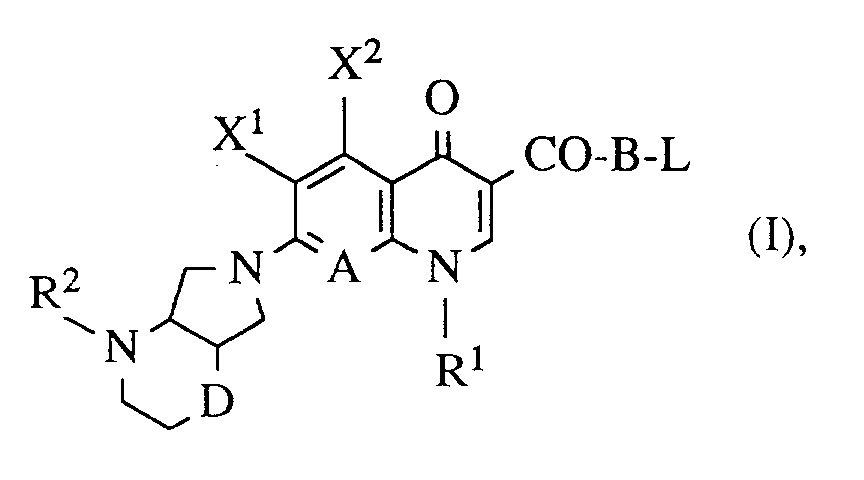
in welcher - X¹
- für Halogen,
- X²
- für Wasserstoff, Amino, Alkylamino mit 1 bis 4 Kohlenstoffatomen, Dialkylamino mit 1 bis 3 Kohlenstoffatomen je Alkylgruppe, Hydroxy, Alkoxy mit 1 bis 4 Kohlenstoffatomen, Mercapto, Alkylthio mit 1 bis 4 Kohlenstoffatomen, Arylthio, Halogen oder Methyl,
- R¹
- für Alkyl mit 1 bis 4 Kohlenstoffatomen, Alkenyl mit 2 bis 4 Kohlenstoffatomen, Cycloalkyl mit 3 bis 6 Kohlenstoffatomen, Bicyclo[1.1.1]pent-1-yl, 1,1-Dimethylpropargyl, 3-Oxetanyl, 2-Hydroxyethyl, 2-Fluorethyl, Methoxy, Amino, Methylamino, Ethylamino, Dimethylamino, gegebenenfalls durch 1 oder 2 Fluoratome substituiertes Phenyl,
- R²
- für Wasserstoff, Methyl, Ethyl, (5-Methyl-2-oxo-1,3-dioxol-4-yl)-methyl oder C₁-C₄-Alkoxycarbonyl,
- A
- für N oder C-R³ steht, worin
- R³
- für Wasserstoff; Halogen, Methyl, Alkenyl mit 2 bis 3 Kohlenstoffatomen, Alkinyl mit 2 bis 3 Kohlenstoffatomen, Hydroxy oder Methoxy steht oder auch gemeinsam mit R¹ eine Brücke der Struktur

bilden kann, und - B
- für O oder S,
- D
- für CH₂ oder O,
- L
- für einen Rest der Struktur

- Y
- für CH₂, CH-CH₃ oder S,
- R⁵
- für H, Benzyl, 4-Methoxybenzyl, Benzhydryl, Allyl, (5-Methyl-2-oxo-1,3-dioxol-4-yl)-methyl oder einen Rest
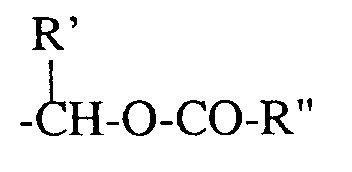
in welchem - R'
- H oder Methyl und
- R''
- Ethoxy oder tert.-Butyl bedeutet,
- R⁶
- für H oder Methoxy und
- R⁷
- für H, Tri-(C₁-C₄-alkyl)-silyl, Acyl, C₁-C₄-Alkoxycarbonyl, Benzyloxycarbonyl, Allyloxycarbonyl, Isopropenyloxycarbonyl,
- Bevorzugt sind die Verbindungen der Formel (I),
in welcher - X¹
- für Fluor,
- X²
- für Wasserstoff, Amino, Methylamino, Hydroxy, Methoxy, Fluor, Chlor, Brom oder Methyl,
- R¹
- für Alkyl mit 1 bis 3 Kohlenstoffatomen, Vinyl, Cycloalkyl mit 3 bis 4 Kohlenstoffatomen, gegebenenfalls durch 1 oder 2 Fluoratome substituiertes Phenyl,
- R²
- für Wasserstoff, Methyl, Ethyl, (5-Methyl-2-oxo-1,3-dioxol-4-yl)-methyl, tert.-Butoxycarbonyl,
- A
- für N oder C-R³ steht, worin
- R³
- für Wasserstoff, Fluor, Chlor, Methyl, Vinyl, Ethinyl oder Methoxy steht oder auch gemeinsam mit R¹ eine Brücke der Struktur

- B
- für O,
- D
- für CH₂ oder O,
- L
- für einen Rest der Struktur

- Y
- für CH₂ oder S,
- R⁵
- für H, Benzhydryl, Allyl, oder einen Rest

in welchem - R'
- H oder Methyl und
- R''
- tert.-Butyl bedeutet,
- R⁶
- für H und
- R⁷
- für H, (CH₃)₃Si-,


- Besonders bevorzugt sind die Verbindungen der Formel (I),
in welcher - X¹
- für Fluor,
- X²
- für Wasserstoff, Amino oder Fluor,
- R¹
- für Alkyl mit 1 bis 2 Kohlenstoffatomen, Cyclopropyl, gegebenenfalls durch 1 oder 2 Fluoratome substituiertes Phenyl,
- R²
- für Wasserstoff, Methyl oder tert.-Butoxycarbonyl,
- A
- für N oder C-R³ steht,
worin - R³
- für Wasserstoff, Fluor, Chlor oder Methoxy steht oder auch gemeinsam mit R¹ eine Brücke der Struktur

- B
- für O
- D
- für CH₂ oder O,
- L
- für einen Rest der Struktur

- R⁵
- für H, Benzhydryl, Allyl,
- R⁷
- für H, (CH₃)₃Si-,
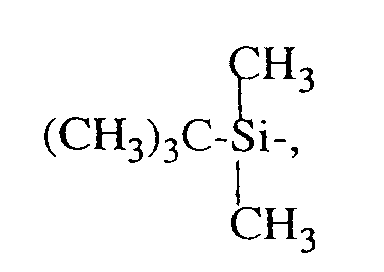

- Weiterhin wurde gefunden, daß man die Verbindungen der Formel (I) erhält, wenn man eine Verbindung der Formel (II)

in welcher - A, B, R¹, X¹, X² und D
- die oben angegebene Bedeutung haben, und
- R²
- für CH₃, C₂H₅, Trimethylsilyl, (5-Methyl-2-oxo-1,3-dioxol-4-yl)-methyl oder C₁-C₄-Alkoxycarbonyl und
- M⊕
- für ein Metallionenäquivalent, wie ein Alkalimetallion oder 1/2 Erdalkalimetallion, Tetramethylammonium oder Tetrabutylammonium steht,
- L
- die oben angegebene Bedeutung hat und
- X³
- für Halogen, insbesondere Chlor, Brom oder Jod, C₁-C₄-Alkoxycarbonyloxy oder Acetoxy steht,
- Verwendet man beispielsweise 1-Cyclopropyl-7-([S,S]-2-tert.-butoxycarbonyl-2,8-diazabicyclo[4.3.0]non-8-yl)-6,8-difluor-1,4-dihydro-4-oxo-chinolincarbonsäure (2) als Cäsiumsalz und (6R, 7R)-3-Chlormethyl-8-oxo-7-phenylacetylamino-5-thia-1-azabicyclo[4.2.0]oct-2-en-2-carbonsäurebenzhydrylester (1) als Ausgangsstoffe, so kann der Reaktionsverlauf durch folgendes Formelschema wiedergegeben werden:


In einer Verbindung von Typ (3) kann der Esterrest in Gegenwart der Boc-Schutzgruppe auch selektiv abgespalten werden und die entstehende Carbonsäure mit Hilfe von Acylaseharz deacyliert werden. Die anschließende Reacylierung mit geeigneten Säurehalogeniden und Abspaltung der Boc-Schutzgruppe führt zu den erfindungsgemäßen Verbindungen der Struktur (5) mit anderen Acylresten:
Verwendet man beispielsweise 3-Acetoxymethyl-7-[2-(2-tritylamino-thiazol-4yl)-2-methoxyimino-acetylamino]-8-oxo-5-thia-1-aza-bicyclo[4.2.0]oct-2-en-2-carbonsäure-tert.-butylester (6) und das Caesiumsalz von 7-([S,S]-2-tert.-Butoxycarbonyl-2,8-diazabicyclo[4.3.0]non-8-yl)-8-chlor-1-cyclopropyl-6-fluor-1,4-dihydro-4-oxo-3-chinolin-carbonsäure (7) als Ausgangsstoffe so kann der Reaktionsverlauf durch folgendes Formelschema wiedergegeben werden:

Verwendet man beispielsweise 6-(1-tert.Butyl-dimethylsilyloxy-ethyl)-3-hydroxymethyl-7-oxo-4-thia-1-aza-bicyclo[3.2.0]hept-2-en-2-carbonsäureallylester (10) und 7-([S,S]-2-Allyloxycarbonyl-2,8-diazabicyclo[4.3.0]non-8-yl)-8-chlor-6-fluor-1,4-dihydro-4-oxo-3-chinolincarbonsäure (11) als Ausgangsverbindungen, so kann der Reaktionsverlauf durch folgendes Formelschema wiedergegeben werden:

Man kann beispielsweise auch von 7-Amino-3-chlormethyl-8-oxo-5-thia-1-azabicyclo[4.2.0]oct-2-en-2-carbonsäurebenzhydrylester (13) ausgehen, der nach Acylierung mit einem aktivierten Carbonsäurederivat zu (14) beispielsweise mit dem Caesiumsalz der Chinolincarbonsäure (2) zu (15) umgesetzt werden kann. Nach Abspaltung der Schutzgruppen wird (16) erhalten: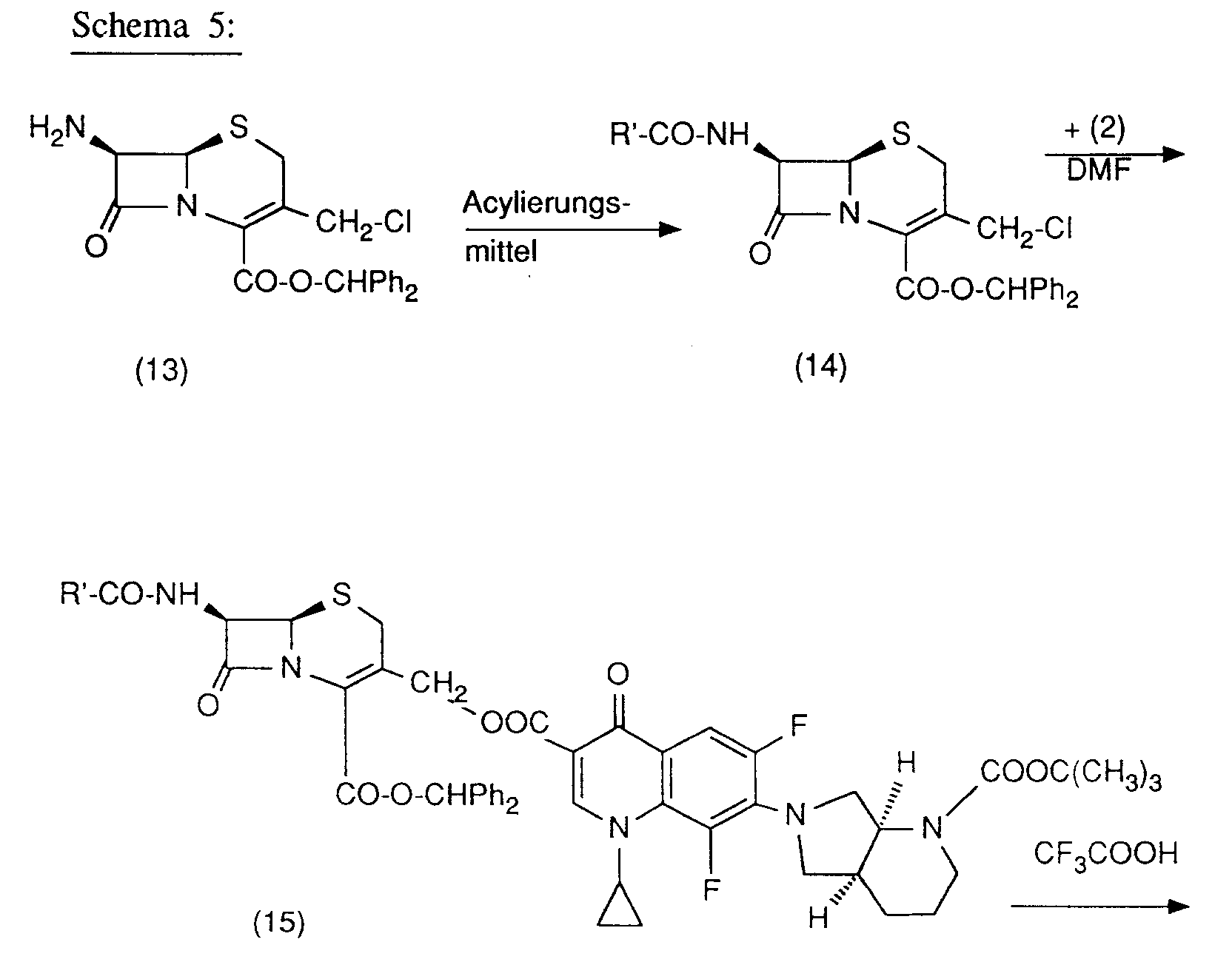

Zur Herstellung von enantiomerenreinen Zwischenverbindungen der Formel (II) setzt man eine Verbindung der Formel (IV)
in welcher - A, R¹, X¹ und X²
- die oben angegebene Bedeutung haben,
- R⁸
- für H, CH₃ oder C₂H₅ und
- X³
- für Halogen, insbesondere Fluor oder Chlor steht,
- D
- für O oder CH₂ und
- R⁹
- für H, CH₃ oder C₂H₅ steht,
- Verwendet man beispielsweise 8-Chlor-1-cyclopropyl-6,7-difluor-1,4-dihydro-4-oxo-3-chinolincarbonsäure und [S,S]-2,8-Diazabicyclo[4.3.0]nonan als Ausgangsverbindungen, so kann der Reaktionsverlauf durch folgendes Formelschema wiedergegeben werden:

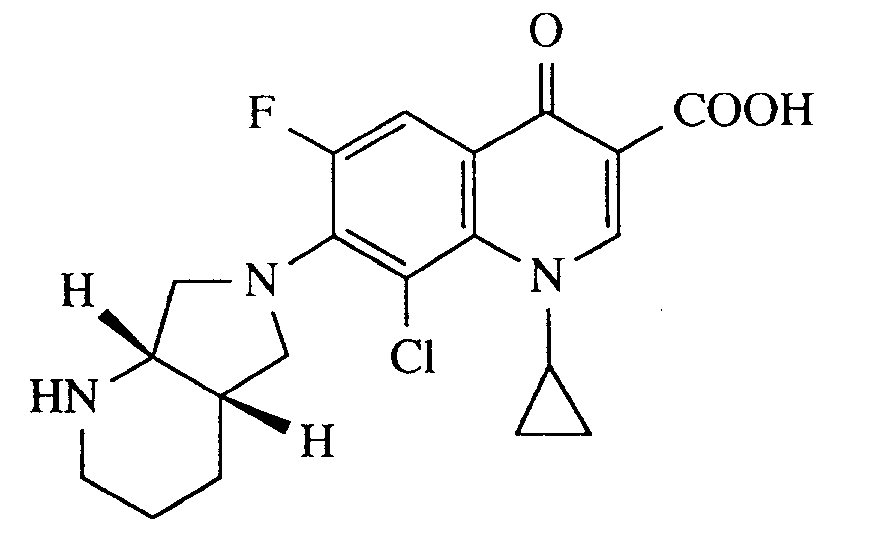
Die bicyclischen Amine (V) sind als enantiomerenreine Verbindungen neu. Sie können nach folgenden Verfahren hergestellt werden: - 1. Die racemischen bicyclischen Amine (a)

- D
- für O oder CH₂ und
- R⁹
- für H oder C₁-C₃-Alkyl steht,
- 2. In ähnlicher Weise, wie unter 1. beschrieben, läßt sich eine Racematspaltung der basischen Zwischenstufen, die bei der Herstellung der racemischen bicyclischen Amine auftreten, mit den oben aufgeführten enantiomerenreinen Säuren durchführen. Beispiele für derartige basische Zwischenstufen sind:


- 3. Sowohl die racemischen Amine (a) als auch die basischen Zwischenstufen (b) - (e) können, gegebenenfalls nach Acylierung, über chirale Trägermaterialien chromatographisch getrennt werden (siehe z.B. G. Blaschke, Angew. Chem. 92,14 [1980]).
- 4. Sowohl die racemischen Amine (a) als auch die basischen Zwischenstufen (b), (c), (e) können durch chemische Verknüpfung mit chiralen Acylresten in Diastereomerengemische überführt werden, die sich durch Destillation, Kristallisation oder Chromatographie in die diastereomerenreinen Acylderivate trennen lassen, aus denen sich durch Verseifung die enantiomerenreinen Amine isolieren lassen. Beispiele für Reagentien zur Verknüpfung mit chiralen Acylresten sind: α-Methoxy-α-trifluormethyl-phenylacetylchlorid, Menthylisocyanat, D- oder L-α-Phenyl-ethyl-isocyanat, Chlorameisensäure-menthylester, Campher-10-sulfonsäurechlorid.
- 5. Im Verlauf der Synthese der bicyclischen Amine (a) können statt achiraler auch chirale Schutzgruppen eingeführt werden. Man gelangt auf diese Weise zu Diastereomeren, die sich trennen lassen. Zum Beispiel kann bei der Synthese von cis-2,8-Diazabicyclo[4.3.0]nonan der Benzylrest durch den R- oder S-konfigurierten α-Phenylethylrest ersetzt werden:

- 6. Die enantiomerenreinen Amine (VI) können auch aus enantiomerenreinen Vorstufen, wie z.B. [R,R]- oder [S,S]-3,4-Dihydroxypyrrolidin, das am Stickstoff durch eine Schutzgruppe geschützt sein sollte, aufgebaut werden.
- Als Beispiel für die Synthese eines enantiomerenreinen Amins, ausgehend von enantiomerenreinem 1-Benzyl-3,4-dihydroxy-pyrrolidin, sei folgendes Formelschema angegeben:

Als Beispiele für Verbindungen der Formel (V) seien genannt: cis-2,8-Diazabicyclo[4.3.0]nonan,
cis-2-Oxa-5,8-diazabicyclo[4.3.0]nonan,
trans-2-Oxa-5,8-diazabicyclo[4.3.0]nonan,
S,S-2,8-Diazabicyclo[4.3.0]nonan,
1R,6S-2-Oxa-5,8-diazabicyclo[4.3.0]nonan,
1S,6R-2-Oxa-5,8-diazabicyclo[4.3.0]nonan,
1R,6R-2-Oxa-5,8-diazabicyclo[4.3.0]nonan,
1S,6S-2-Oxa-5,8-diazabicyclo[4.3.0]nonan. - Die Umsetzung von (IV) mit (V), bei der die Verbindungen (V) auch in Form ihrer Salze, wie z.B. der Hydrochloride eingesetzt werden können, wird vorzugsweise in einem Verdünnungsmittel wie Dimethylsulfoxid, N,N-Dimethylformamid, N-Methylpyrrolidon, Hexamethyl-phosphorsäuretrisamid, Sulfolan, Acetonitril, Wasser, einem Alkohol wie Methanol, Ethanol, n-Propanol, Isopropanol, Glykolmonomethylether oder Pyridin vorgenommen. Ebenso können Gemische dieser Verdünnungsmittel verwendet werden.
- Als Säurebinder können alle üblichen anorganischen und organischen Säurebindungsmittel verwendet werden. Hierzu gehören vorzugsweise die Alkalihydroxide, Alkalicarbonate, organische Amine und Amidine. Als besonders geeignet seien im einzelnen genannt: Triethylamin, 1,4-Diazabicyclo[2.2.2]octan (DABCO), 1,8-Diazabicyclo[5.4.0]undec-7-en (DBU) oder überschüssiges Amin (V).
- Die Reaktionstemperaturen können in einem größeren Bereich variiert werden. Im allgemeinen arbeitet man zwischen etwa 20 und 200°C, vorzugsweise zwischen 80 und 180°C.
- Die Umsetzung kann bei Normaldruck, aber auch bei erhöhtem Druck durchgeführt werden. Im allgemeinen arbeitet man bei Drucken zwischen etwa 1 und 100 bar, vorzugsweise zwischen 1 und 10 bar.
- Bei der Durchführung dieses Verfahrens setzt man auf 1 Mol der Verbindung (IV) 1 bis 15 Mol, vorzugsweise 1 bis 6 Mol der Verbindung (V) ein.
- Die Ausgangsverbindungen der Strukturen (III) sind bekannt oder können nach bekannten Methoden hergestellt werden. Als Beispiel sei genannt:
6R,7R-3-Chlormethyl-8-oxo-7-phenylacetylamino-5-thia-1-aza-bicyclo[4.3.0]oct-2-en-2-carbonsäure-benzhydrylester. - Die Umsetzung von (II) mit (III) wird vorzugsweise in einem Verdünnungsmittel wie Dimethylsulfoxid, N,N-Dimethylformamid, N-Methylpyrrolidon, Hexamethylphosphorsäuretrisamid, Sulfolan, Acetonitril oder Pyridin vorgenommen. Ebenso können Gemische dieser Verdünnungsmittel verwendet werden. Zur Beschleunigung der Reaktion kann 4-Dimethylaminopyridin zugesetzt werden.
- Die Reaktionstemperaturen können in einem größeren Bereich variiert werden. Im allgemeinen arbeitet man zwischen etwa -20° und 100°C, vorzugsweise zwischen 0° und 50°C.
- Die Umsetzung kann bei Normaldruck, aber auch bei erhöhtem Druck durchgeführt werden. Im allgemeinen arbeitet man bei Drucken zwischen etwa 1 und 100 bar, vorzugsweise zwischen 1 und 10 bar.
- Bei der Durchführung des erfindungsgemäßen Verfahrens setzt man auf 1 Mol der Verbindung (II) 1 bis 1,5 Mol, vorzugsweise 1 bis 1,1 Mol, der Verbindung (III) ein.
- Als Schutzgruppen zur Blockierung reaktiver Gruppen, wie zum Beispiel Amino-, Hydroxy-, Thiol- oder Carboxygruppen, werden die in der β-Lactamchemie üblichen Reste verwendet. Beispielhaft seien genannt (Einzelheiten siehe in J.W.F. McOmie, Protective Groups in Organic Chemistry (1973), T.W. Greene, Protective Groups in Organic Synthesis (1981):
- a) für den Schutz von Aminogruppen: tert.-Butoxycarbonyl, Allyloxycarbonyl, Isopropenyloxycarbonyl, Trichlorethoxycarbonyl, 4-Nitrobenzyloxycarbonyl, Trichloracetyl, Trifluoracetyl, Trityl, Trimethylsilyl
- b) für den Schutz von Hydroxygruppen: Acetyl, Trimethylsilyl, Tetrahydropyranyl
- c) für den Schutz von Carboxylgruppen: Estergruppen wie Benzhydryl-, 4-Methoxybenzyl, 4-Nitrobenzyl, Acetoxymethyl, tert.-Butylester.
- Die Reaktionstemperaturen können in einem größeren Bereich variiert werden. Im allgemeinen arbeitet man zwischen etwa 0° und 80°C, vorzugsweise zwischen 20° und 50°C.
- Die Umsetzung kann bei Normaldruck, aber auch bei erhöhtem Druck durchgeführt werden. Im allgemeinen arbeitet man bei Drucken zwischen etwa 1 und 100 bar, vorzugsweise zwischen 1 und 10 bar.
- Bei der Durchführung dieses Verfahrens setzt man auf 1 Mol der Verbindung (II) 1 bis 5 Mol, vorzugsweise 1 bis 2 Mol der Verbindung (III) ein.
- Die Herstellung der Säureadditionssalze der erfindungsgemäßen Verbindungen erfolgt in üblicher Weise zum Beispiel durch Lösen des Betains in wäßriger Säure und Ausfällen des Salzes mit einem mit Wasser mischbaren organischen Lösungsmittel wie Methanol, Ethanol, Aceton, Acetonitril. Man kann auch äquivalente Mengen Betain und Säure in Wasser oder einem Alkohol wie Glykolmonomethylether erhitzen und anschließend bis zur Trockne eindampfen oder das ausgefallene Salz absaugen. Als pharmazeutisch verwendbare Salze sind beispielsweise die Salze der Salzsäure, Schwefelsäure, Essigsäure, Glykolsäure, Milchsäure, Bemsteinsäure, Zitronensäure, Weinsäure, Methansulfonsäure, 4-Toluolsulfonsäure, Galacturonsäure, Gluconsäure, Embonsäure, Glutaminsäure oder Asparaginsäure zu verstehen.
- Die Alkali- oder Erdalkalisalze der erfindungsgemäßen Carbonsäuren werden beispielsweise durch Lösen des Betains in unterschüssiger Alkali- oder Erdalkalilauge, Filtration von ungelöstem Betain und Eindampfen des Filtrats bis zur Trockne erhalten. Pharmazeutisch geeignet sind Natrium-, Kalium- oder Calciumsalze. Durch Umsetzung eines Alkali- oder Erdalkalisalzes mit einem geeigneten Silbersalz wie Silbernitrat werden die entsprechenden Silbersalze erhalten.
- Die erfindungsgemäßen Verbindungen wirken stark antibiotisch und zeigen bei geringer Toxizität ein breites antibakterielles Spektrum gegen grampositive und gramnegative Keime, insbesondere gegen Enterobakterien; vor allem auch gegen solche, die resistent sind gegen verschiedene Antibiotika, wie z.B. Penicilline, Cephalosporine, Aminoglykoside, Sulfonamide, Tetracycline und Chinolone.
- Diese wertvollen Eigenschaften ermöglichen ihre Verwendung als chemotherapeutische Wirkstoffe in der Medizin sowie als Stoffe zur Konservierung von anorganischen und organischen Materialien, insbesondere von organischen Materialien aller Art, z.B. Polymeren, Schmiermitteln, Farben, Fasern, Leder, Papier und Holz, von Lebensmitteln und von Wasser.
- Die erfindungsgemäßen Verbindungen sind gegen ein sehr breites Spektrum von Mikroorganismen wirksam. Mit ihrer Hilfe können gramnegative und grampositive Bakterien und bakterienähnliche Mikroorganismen bekämpft sowie die durch diese Erreger hervorgerufenen Erkrankungen verhindert, gebessert und/oder geheilt werden.
- Die erfindungsgemäßen Verbindungen zeichnen sich durch verstärkte Wirkung auf ruhende und resistente Keime aus. Bei ruhenden Bakterien, also Bakterien, die kein nachweisbares Wachstum zeigen, wirken die Verbindungen weit unterhalb von Konzentrationen bisher bekannter Substanzen. Dies bezieht sich nicht nur auf die einzusetzende Menge, sondern auch auf die Geschwindigkeit der Abtötung. Solche Ergebnisse konnten bei grampositiven und -negativen Bakterien, insbesondere bei Staphylococcus aureus, Pseudomonas aeruginosa, Enterococcus faecalis und Escherichia coli beobachtet werden.
- Auch gegenüber Bakterien, die gegenüber vergleichbaren Substanzen als weniger empfindlich eingestuft werden, insbesondere resistenten Staphylococcus aureus, Escherichia coli, Pseudomonas aeruginosa und Enterococcus faecalis zeigen die erfindungsgemäßen Verbindungen überraschende Wirkungssteigerungen.
- Besonders wirksam sind die erfindungsgemäßen Verbindungen gegen Bakterien und bakterienähnliche Mikroorganismen. Sie sind daher besonders gut zur Prophylaxe und Chemotherapie von lokalen und systemischen Infektionen in der Human- und Tiermedizin geeignet, die durch diese Erreger hervorgerufen werden.
- Die erfindungsgemäßen Verbindungen können in verschiedenen pharmazeutischen Zubereitungen angewendet werden. Als bevorzugte pharmazeutische Zubereitungen seien Tabletten, Dragees, Kapseln, Pillen, Granulate, Suppositorien, Lösungen, Suspensionen und Emulsionen, Pasten, Salben, Gele, Cremes, Lotions, Puder und Sprays genannt.
-

-
- a) Trennung der diastereomeren Salze:
3,0 g (20 mmol) D(-)-Weinsäure werden in 10 ml Dimethylformamid durch Erwärmen auf 80°C gelöst und mit einer Lösung von 2,16 g (10 mmol) cis-8-Benzyl-2,8-diazabicyclo[4.3.0]nonan in 3 ml Dimethylformamid versetzt. Es wird 1 Stunde bei 0°C nachgerührt, dann wird abgesaugt und mit Dimethylformamid und Methoxyethanol gewaschen.
Ausbeute: 1,93 g,
Schmelzpunkt: 146-151°C,
[α]D²³= -19,3° (c = 1, H₂O).
Durch einmaliges Umkristallisieren aus Methoxyethanol wird diastereomerenreines [S,S]-8-Benzyl-2,8-diazabicyclo[4.3.0]nonan-D-tartrat erhalten.
[α]D²³= -22,7° (c = 1, H₂O),
Schmelzpunkt: 148-154°C. - b) Freisetzung der Base:
40 g [S,S]-8-Benzyl-2,8-diazabicyclo[4.3.0]nonan-D-tartrat werden in 250 ml Wasser gelöst und mit 32 g 45 %iger Natronlauge versetzt. Das ausfallende Öl wird in 150 ml tert.-Butyl-methylether aufgenommen, die wäßrige Phase nochmals mit 150 ml tert.-Butyl-methylether extrahiert und die vereinigten organischen Phasen nach dem Trocknen über Natriumsulfat eingeengt. Dann wird im Vakuum destilliert
Ausbeute: 18,5 g [S,S]-8-Benzyl-2,8-diazabicyclo[4.3.0]nonan,
Siedepunkt: 107-109°C/0,1 mbar,
[α]D²⁴= 17,3° (unverdünnt). - 75,0 g (0,5 mol) L(+)-Weinsäure werden bei 80°C in 250 ml Dimethylformamid gelöst und 54,1 g (0,25 mol) cis-8-Benzyl-2,8-diazabicyclo[4.3.0]nonan als Lösung in 75 ml Dimethylformamid zugetropft Es wird langsam auf 20°C abgekühlt und die Kristallsuspension 1 Stunde nachgerührt. Die Kristalle ([R,R]-8-Benzyl-2,8-diazabicyclo[4.3.0]nonan-L-tartrat) werden abgesaugt und das Filtrat am Rotationsverdampfer eingeengt. Der Rückstand wird in 500 ml Wasser gelöst und mit 63 g 45 %iger Natronlauge wie unter Methode 1 beschrieben aufgearbeitet
Ausbeute: 25,2 g [S,S]-8-Benzyl-2,8-diazabicyclo[4.3.0]nonan;
das Produkt enthält 3,6 % des R,R-Enantiomeren (nach Derivatisierung mit Chlorameisensäure-menthylester gaschromatographisch bestimmt). - Die Verbindung kann nach Methode I mit D(-)-Weinsäure zu diastereomerenreinem [S,S]-8-Benzyl-2,8-diazabicyclo[4.3.0]nonan-D-tartrat umgesetzt werden. Ein Umkristallisieren ist dabei nicht erforderlich.
- Zu einer Lösung von 102,9 g (0,685 mol) L(+)-Weinsäure in 343 ml Dimethylformamid werden bei 80 bis 90°C 73,6 g (0,34 mol) cis-8-Benzyl-2,8-diazabicyclo[4.3.0]nonan als Lösung in 111 ml Dimethylformamid getropft. Man impft mit [R,R]-8-Benzyl-2,8-diazabicyclo[4.3.0]nonan-L-tartrat an und kühlt langsam bis auf 18°C Innentemperatur ab. Die Kristalle werden abgesaugt, das Filtrat mit [S,S]-8-Benzyl-2,8-diazabicyclo[4.3.0]nonan-L-tartrat angeimpft und bis zur vollständigen Kristallisation gerührt. (Aus der Mutterlauge kann nach Einengen und Freisetzung der Base wie unter Methode I beschrieben durch Aufreinigung mit D(-)-Weinsäure [S,S]-8-Benzyl-2,8-diazabicyclo[4.3.0]nonan-D-tartrat erhalten werden.) Dann wird abgesaugt, mit Dimethylformamid und Isopropanol gewaschen und an der Luft getrocknet. Die Kristalle werden aus 88 %igem Ethanol umkristallisiert Es werden 52 g [S,S]-8-Benzyl-2,8-diazabicyclo[4.3.0]nonan-L-tartrat-trihydrat erhalten.
Schmelzpunkt: 201-204°C,
[α]D²³= +5,2° (c = 1, H₂O). - Das Salz kann wie unter Methode I(Freisetzung der Base) beschrieben zu enantiomerenreinem [S,S]-8-Benzyl-2,8-diazabicyclo[4.3.0]nonan verarbeitet werden.
-
- a) Enantiomerentrennung von cis-8-Benzyl-7,9-dioxo-2,8-diazabicyclo[4.3.0]nonan zu [1S,6R]-8-Benzyl-7,9-dioxo-2,8-diazabicyclo[4.3.0]nonan
Man verfährt analog Beispiel B (Methode II/a), wobei als chirales Hilfsreagens D(-)-Weinsäure verwendet wird, oder man verfährt wie folgt:
Mutterlauge und Waschlauge von [1R,6S]-8-Benzyl-7,9-dioxo-2,8-diazabicyclo[4.3.0]nonan-L-tartrat (aus Beispiel B, Methode II/a) werden zusammen eingeengt, in Wasser aufgenommen und dreimal mit Toluol extrahiert. Die Toluolphasen werden verworfen. Die wäßrige Phase wird mit gesättigter Natriumhydrogencarbonatlösung versetzt, bis ein pH-Wert von 7 bis 8 erreicht ist, anschließend viermal mit Methylenchlorid extrahiert. Die vereinigten Methylenchloridphasen werden über Magnesiumsulfat getrocknet und eingeengt.
Ausbeute: 14,4 g (60 % der Theorie des ursprünglich eingesetzten racemischen cis-8-Benzyl-7,9-dioxo-2,8-diazabicyclo[4.3.0]nonans).
[α]D²³: -4,5° (c = 5, Ethanol).
Diese 14,4 g (59 mmol) werden mit 8,6 g (57 mmol) D(-)-Weinsäure aus 120 ml Ethanol analog Beispiel B (Methode II/a) kristallisiert.
Ausbeute: 8,9 g (77 % der Theorie) [1S,6R]-8-Benzyl-7,9-dioxo-2,8-diazabicyclo[4.3.0]nonan-D-tartrat.
[α]D²³: -46,2° (c = 0,5, 1n HCl);
nach Umkristallisation aus einer Mischung Ethanol/Glykolmonomethylether erfolgt eine weitere Reinigung:
[α]D²³: -59,3° (c = 0,5, 1n HCl).
5,0 g (12,7 mmol) des auf diese Weise erhaltenen diastereomerenreinen Tartrats wurden, wie unter Beispiel B, Methode II/a beschrieben, in das freie Amin überführt:
Ausbeute: 3,0 g (96 % der Theorie) [1S,6R]-8-Benzyl-7,9-dioxo-2,8-diazabicyclo[4.3.0]nonan, Schmelzpunkt: 60-61°C,
[α]D²³: -22,2° (c = 5, Ethanol).
Gaschromatographisch wurde nach Derivatisierung mit Chlorameisensäurementhylester ein Enantiomerenüberschuß von 96,6 % ee ermittelt. - b) Reduktion von [1S,6R]-8-Benzyl-7,9-dioxo-2,8-diazabicyclo[4.3.0]nonan zu [S,S]-8-Benzyl-2,8-diazabicyclo[4.3.0]nonan
Man verfährt analog Beispiel B (Methode II, b), wobei als Edukt jedoch [1S,6R]-8-Benzyl-7,9-dioxo-2,8-diazabicyclo[4.3.0]nonan eingesetzt wird.
Das nach der Aufarbeitung erhaltene Rohprodukt erwies sich bei der Derivatisierung mit Chlorameisensäurementhylester als [S,S]-8-Benzyl-2,8-diazabicyclo[4.3.0]nonan. Eine Racemisierung wurde bei der Reduktion nicht beobachtet. - 28,4 g (0,131 mol) [S,S]-8-Benzyl-2,8-diazabicyclo[4.3.0]nonan werden in 190 ml Methanol über 5,8 g Palladium auf Aktivkohle (5 %) bei 90°C und 90 bar innerhalb von 5 Stunden hydriert. Dann wird der Katalysator abgesaugt, mit Methanol gewaschen und das Filtrat am Rotationsverdampfer eingeengt. Der Rückstand wird ohne zu fraktionieren destilliert.
Ausbeute: 15,0 g (90,5 % der Theorie) [S,S]-2,8-Diazabicyclo[4.3.0]nonan,
Siedepunkt: 44-59°C/0,18 mbar,
[α]D²² = -2,29° (unverdünnt),
ee >99 % (gaschromatographisch nach Derivatisierung mit Mosher's Reagenz bestimmt). - 3,75 g (25 mmol) L(+)-Weinsäure werden in 50 ml Dimethylformamid bei 80°C gelöst vorgelegt und 10,82 g (50 mmol) cis-8-Benzyl-2,8-diazabicyclo[4.3.0]nonan als Lösung in 15 ml Dimethylformamid zugetropft. Man impft mit [R,R]-8-Benzyl-2,8-diazabicyclo[4.3.0]-nonan-L-tartrat an und rührt eine Stunde bei circa 72°C, um die Kristallkeim-Bildung zu vervollständigen. Dann wird langsam auf 15°C abgekühlt, abgesaugt und zweimal mit jeweils 13 ml Dimethylformamid gewaschen. Die vereinigten Filtrate werden auf 80°C erhitzt und mit weiteren 3,75 g (25 mmol) L(+)-Weinsäure versetzt. Es wird noch bis auf 119°C erhitzt, bis eine klare Lösung entstanden ist, und wieder langsam auf Raumtemperatur unter Animpfen mit [S,S]-8-Benzyl-2,8-diazabicyclo[4.3.0]nonan-L-tartrat abgekühlt. Die Kristalle werden abgesaugt, nacheinander mit Dimethylformamid, 2-Methoxy-ethanol und Ethanol gewaschen und an der Luft getrocknet.
Ausbeute: 9,59 g
Schmelzpunkt: 188 bis 192°C.
Die Kristalle werden aus 95 ml 80 %igem Ethanol umkristallisiert. Es werden 8,00 g [S,S]-8-Benzyl-2,8-diazabicyclo[4.3.0]nonan-L-tartrat-trihydrat (76 % der Theorie) erhalten, das bei 112 bis 118°C unter Aufschäumen schmilzt, dann wieder erstarrt und bei 199 bis 201°C erneut schmilzt.
[α]
ee: 98,0 % (gaschromatographisch nach Derivatisierung mit Chlorameisensäure-menthylester bestimmt). -

- Die nach Beispiel A, Methode II erhaltenen Kristalle von [R,R]-8-Benzyl-2,8-diazabicyclo[4.3.0]nonan werden mit Dimethylformamid und Methoxyethanol gewaschen (49,2 g) und aus 300 ml Methoxyethanol umkristallisiert. Es werden 45,6 g enantiomerenreines [R,R]-8-Benzyl-2,8-diazabicyclo[4.3.0]nonan-L-tartrat erhalten (Enantiomerenreinheit gaschromatographisch nach Derivatisierung mit Chlorameisensäure-menthylester bestimmt).
Schmelzpunkt: 121-124°C,
[α]D²³= +22,3° (c = 1, H₂O). - Das Salz (44,5 g) wird wie in Beispiel A, Methode Ib beschrieben, in die freie Base überführt. Es werden 20,2 g [R,R]-8-Benzyl-2,8-diazabicyclo[4.3.0]nonan erhalten.
Siedepunkt: 107-111°C/0,04 mbar,
[α]D²⁴= -17,5° (unverdünnt). -
a) Enantiomerentrennung von cis-8-Benzyl-7,9-dioxo-2,8-diazabicyclo[4.3.0]nonan zu [1R,6S]-8-Benzyl-7,9-dioxo-2,8-diazabicyclo[4.3.0]nonan
24,1 g (98,8 mmol) cis-8-Benzyl-7,9-dioxo-2,8-diazabicyclo[4.3.0]nonan werden in einer Mischung aus 410 ml Ethanol und 25 ml Acetonitril in einem Dreihalskolben unter Rühren zum Rückfluß erhitzt. Anschließend gibt man 14,8 g (98,8 mmol) L(+)-Weinsäure auf einmal zu. Nachdem sich die gesamte Menge Weinsäure vollständig gelöst hat, wird zunächst die Heizung abgestellt, der Kolben aber im Ölbad gelassen. Wenn das System sich soweit abgekühlt hat, daß die Lösung nicht mehr siedet, wird der Rührer abgestellt. Bei einer Temperatur von 50°C erfolgt Kristallisation auf Zugabe von Impfkristallen. Nach Stehen über Nacht und Abkühlung auf Raumtemperatur werden die ausgefallenen Kristalle abgesaugt und mit wenig Ethanol/Petrolether (1:1) gewaschen und 2 Stunden bei 80°C getrocknet.
Ausbeute: 9,8 g (50 % der Theorie) [1R,6S]-8-Benzyl-7,9-dioxo-2,8-diazabicyclo[4.3.0]nonan-L-tartrat,
[α]D²³= +47,7° (c = 0,5, 1n HCl).
Durch zweimaliges Umkristallisieren aus einer Mischung von Ethanol und Glykolmonomethylether läßt sich die Verbindung noch weiter reinigen:
[α]D²³ = +58,6° (c = 0,5, 1n HCl).
¹H-NMR (DMSO): 7,22-7,35 (2m, 2H, Aryl-H); 4,55 (s, 2H, Benzyl-CH₂); 4,28 (s, 2H, Weinsäure-CH); 3,91 (d, 1H, 1-CH) 2,97 (dd, 1H, 6-CH); 2,53-2,66 (m, 2H, 3-CH₂); 1,78 und 1,68 (2m, 2H, 5-CH₂); 1,42 und 1,28 ppm (2m, 2H, 4-CH₂).C₁₈H₂₂N₂O₈ (394) Berechnet: C 54,4 H 5,6 N 7,1 O 32,5 Gefunden: C 54,7 H 5,8 N 7,1 O 32,4
Die Bestimmung der Absolutkonfiguration erfolgte über eine Röntgenstrukturanalyse:
Ausbeute: 2,2 g (99 % der Theorie) [1R,6S]-8-Benzyl-7,9-dioxo-2,8-diazabicyclo[4.3.0]nonan,
Schmelzpunkt: 60-61°C
[α]D²³: +21,8° (c = 5, Ethanol).
Gaschromatographisch wurde nach Derivatisierung mit Chlorameisensäurementhylester ein Enantiomerenüberschuß von 93,8 % ee ermittelt.
b) Reduktion von [1R,6S]-8-Benzyl-7,9-dioxo-2,8-diazabicyclo[4.3.0]nonan zu [R,R]-8-Benzyl-2,8-diazabicyclo[4.3.0]nonan
In einem ausgeheizten Kolben werden unter N₂ 0,34 g (9 mmol) Lithiumaluminiumhydrid in 18 ml wasserfreiem Tetrahydrofuran vorgelegt und 0,73 g (3 mmol) [1R,6S]-8-Benzyl-7,9-dioxo-2,8-diazabicyclo[4.3.0]nonan als Lösung in 3 ml wasserfreiem Tetrahydrofuran zugetropft. Dann wird 16 Stunden unter Rückflußkühlung gekocht. Die Aufarbeitung erfolgt durch Zutropfen von 0,34 ml Wasser in 10 ml Tetrahydrofuran, 0,34 ml 10 %ige Natronlauge sowie 1,02 ml Wasser. Der Niederschlag wird abgesaugt, mit Tetrahydrofuran gewaschen und das Filtrat eingeengt. Es bleiben 0,7 g rohes [R,R]-8-Benzyl-2,8-diazabicyclo[4.3.0]nonan zurück (GC-Gehalt: 99 %).
Bei der gaschromatographischen Bestimmung der Enantiomerenreinheit mit Chlorameisensäurementhylester konnte keine Racemisierung festgestellt werden. - Nach der Vorschrift von Beispiel A, 2 werden 19,4 g (0,09 mol) [R,R]-8-Benzyl-2,8-diazabicyclo[4.3.0]nonan hydriert.
Ausbeute: 9,61 g (85 %) [R,R]-2,8-Diazabicyclo[4.3.0]nonan,
Siedepunkt: 45-58°C/0,08 mbar,
[α]D²³ = +2,30° (unverdünnt). -

- 43,2 g (0,2 mmol) [S,S]-8-Benzyl-2,8-diazabicyclo[4.3.0]nonan werden mit 20 ml 37 % Formaldehyd-Lösung, 40 ml Wasser und 24 g Essigsäure versetzt und 10 Stunden bei 20°C und 20 bar über 2 g Palladium auf Aktivkohle (5 %) hydriert. Dann wird abgesaugt, das Filtrat mit Kaliumcarbonat alkalisch gestellt und das Produkt mit tert.-Butylmethylether extrahiert. Nach dem Trocknen über Natriumsulfat wird eingeengt und der Rückstand im Vakuum destilliert.
Ausbeute: 14,8 g,
Siedepunkt: 114-124°C/0,14 mbar. - 12,9 g (56 mmol) [S,S]-8-Benzyl-2-methyl-2,8-diazabicyclo[4.3.0]nonan werden in 90 ml Methanol bei 90°C und 90 bar über 1,1 g Palladium auf Aktivkohle (5 %) hydriert. Dann wird filtriert, das Filtrat am Rotationsverdampfer eingeengt und der Rückstand im Vakuum destilliert.
Ausbeute: 5,5 g enantiomerenreines [S,S]-2-Methyl-2,8-diazabicyclo[4.3.0]nonan (Nachweis durch Derivatisierung mit Mosher's Reagenz),
Siedepunkt: 78-81°C/14 mbar. -

- Man löst 95 g (0,55 mol) 1-Benzoyl-3-pyrrolin in 380 g Ethylenglykol und setzt bei Raumtemperatur 101 g (0,57 mol) N-Bromsuccinimid in 5 g-Portionen innerhalb von 2 Stunden hinzu. Man rührt anschließend über Nacht bei Raumtemperatur, gießt auf Wasser, extrahiert mit Methylenchlorid, trocknet über Magnesiumsulfat und engt die Lösung ein. Der Rückstand (188 g) wurde mit Essigsäureethylester an Kieselgel chromatographiert.
Ausbeute: 136,5 g (78 % der Theorie),
Gehalt nach GC: 99 %. - Man löst 92 g (0,239 mol) trans-1-Benzoyl-3-brom-4-(2-hydroxyethoxy)-pyrrolidin, 32 g (0,316 mol) Triethylamin und 1 g 4-Dimethylaminopyridin in 750 ml Toluol und tropft 60 g (0,31 mol) Tosylchlorid in 450 ml Toluol hinzu. Man rührt zwei Tage bei Raumtemperatur, setzt Wasser zu, trennt die wäßrige Phase ab und extrahiert sie mit Toluol. Die Toluollösungen werden mit 10 %iger Salzsäure gewaschen, über Magnesiumsulfat getrocknet, eingeengt, in Essigsäureethylester gelöst und über Kieselgel filtriert. Das Filtrat wird eingeengt.
Ausbeute: 125 g (91 % der Theorie). - Das Dünnschichtchromatogramm zeigt eine einheitliche Verbindung.
- Man erhitzt 124 g (0,265 mol) trans-1-Benzoyl-3-brom-4-(2-tosyloxyethoxy)-pyrrolidin mit 86 g (0,8 mol) Benzylamin in 1,5 l Xylol über Nacht unter Rückfluß. Man saugt die Salze des Benzylamins ab und engt das Filtrat ein.
Rohausbeute: 91,2g. - Man erhitzt 91 g (0,265 mol) cis-8-Benzoyl-5-benzyl-2-oxa-5,8-diazabcyclo[4.3.0]nonan mit 200 ml konzentrierter Salzsäure und 140 ml Wasser über Nacht unter Rückfluß. Nach dem Abkühlen saugt man die Benzoesäure ab, engt auf das halbe Volumen ein, stellt die Lösung mit Kaliumcarbonat alkalisch, extrahiert mit Chloroform, trocknet über Kaliumcarbonat, engt ein und destilliert.
Ausbeute: 30,7 g (48,8 % der Theorie),
Siedepunkt: 134-142°C/0,6 mbar,
Gehalt nach GC: 92 %. - Man hydriert 26 g (0,11 mol, 92 %ig) cis-5-Benzyl-2-oxa-5,8-diazabicyclo[4.3.0]nonan in 180 ml Ethanol und 19 ml konzentrierter Salzsäure an 3 g Palladium/Aktivkohle (10 % Pd) bei 100°C und 100 bar H₂. Man saugt den Katalysator ab, engt das Filtrat ein und trocknet die ausgeschiedenen Kristalle im Exsikkator über Phosphorpentoxid.
Ausbeute: 17,1 g (77 % der Theorie),
Schmelzpunkt: 244-250°C. - 150,1 g (1 mol) D(-)-Weinsäure werden bei 60 bis 65°C in 700 ml Methanol vorgelegt und 218,3 g (1 mol) cis-5-Benzyl-2-oxa-5,8-diazabicyclo[4.3.0]nonan als Lösung in 300 ml Methanol zugetropft. Dann läßt man langsam auf etwa 49°C erkalten bis die Lösung trübe wird, impft mit in einem Vorversuch erhaltenen Kristallen von 1R,6S-5-Benzyl-2-oxa-5,8-diazabicyclo[4.3.0]nonan-D-tartrat an, rührt 30 Minuten bei dieser Temperatur zur Kristallkeim-Bildung nach und kühlt dann langsam bis auf 0 bis 3°C ab. Nach dem Absaugen wird mit einer auf 0°C gekütuten Mischung aus 200 ml Ethanol und 100 ml Methanol und dann 3 mal mit jeweils 300 ml Ethanol gewaschen und anschließend das Produkt an der Luft getrocknet.
Ausbeute: 160,3 g 1R,6S-5-Benzyl-2-oxa-5,8-diazabicyclo[4.3.0]nonan-tartrat (87 % der Theorie)
Schmelzpunkt: 174,5 bis 176,5°C
ee > 97 % (nach Derivatisierung mit 1-Phenyl-ethylisocyanat und HPLC-Auswertung)
[α]
156,9 g des 1. Kristallisats werden aus 1 500 ml Methanol umkristallisiert. Ausbeute: 140,0g (89 % wiedergewonnen)
Schmelzpunkt: 176 bis 177°C
[α]
Die methanolische Mutterlauge der 1. Kristallisation wird am Rotationsverdampfer eingeengt. Der sirupöse Rückstand (236 g) wird in 500 ml Wasser gelöst, mit 250 ml 6 n Natronlauge auf pH 12 bis 13 gestellt, 3 mal mit je 350 ml Toluol extrahiert, der Extrakt über Natriumcarbonat getrocknet und im Vakuum eingeengt. Der Rück stand, 113,1 g eines braunen Öls, das nach gaschromatographischer Untersuchung 97 % cis-5-Benzyl-2-oxa-5,8-diazabicyclo[4.3.0]nonan enthält, wird ohne Aufreinigung zur Herstellung des 1S,6R-Enantiomeren eingesetzt. - 113,1 g (0,518 mol) rohes angereichertes 1S,6R-5-Benzyl-2-oxa-5,8-diazabicyclo[4.3.0]nonan werden in 155 ml Methanol gelöst und zu einer siedenden Lösung von 77,8 g (0,518 mol) L(+)-Weinsäure in 363 ml Methanol getropft. Schon während des Zutropfens bildet sich allmählich ein Kristallbrei. Es wird 1 Stunde bei 60°C nachgerührt und dann langsam innerhalb von 2 Stunden auf 0°C abgekühlt. Die Kristalle werden abgesaugt und mit einer auf 0°C gekühlten 2:1-Mischung aus Ethanol und Methanol und anschließend 3 mal mit Ethanol gewaschen. Dann wird an der Luft getrocknet.
Ausbeute: 145,5 g 1S,6R-5-Benzyl-2-oxa-5,8-diazabicyclo[4.3.0]nonan-L-tartrat (79 % der Theorie)
Schmelzpunkt: 174,5 bis 176,5°C
ee > 97 % (nach Derivatisierung mit 1-Phenyl-ethylisocyanat und HPLC-Auswertung)
[α]
Freisetzung der enantiomerenreinen Basen:
144 g (0,39 mol) 1S,6R-5-Benzyl-2-oxa-5,8-diazabicyclo[4.3.0]nonan-tarat werden in 250 ml Wasser gelöst und 175 ml (1,05 mol) 6 n Natronlauge zugesetzt. Das abgeschiedene Öl wird in 500 ml Toluol aufgenommen, die organische Phase abgetrennt und die wäßrige noch 3 mal mit jeweils 250 ml Toluol extrahiert. Die vereinigten organischen Phasen werden über Natriumcarbonat getrocknet, filtriert und am Rotationsverdampfer eingeengt. Der Rückstand wird über eine 20 cm Vigreuxkolonne im Hochvakuum destilliert.
Ausbeute: 81,6 g (96 % der Theorie) 1S,6R-5-Benzyl-2-oxa-5,8-diazabicyclo[4.3.0]nonan
Siedepunkt: 120 bis 139°C/0,04 bis 0,07 mbar
Gehalt: 100 % gaschromatographisch bestimmt
Dichte: δ = 1,113 g/ml
[α]
Destillationsrückstand: 0,12 g
In gleicher Weise werden aus 139,2 g (0,376 mol) 1R,6S-5-Benzyl-2-oxa-5,8-diazabicyclo[4.3.0]nonan-tartrat 76,0 g (93 % der Theorie) 1R,6S-5-Benzyl-2-oxa-5,8-diazabicyclo[4.3.0]nonan erhalten.
[α]
- Die für das cis-5-Benzyl-2-oxa-5,8-diazabicyclo[4.3.0]nonan beschriebene Enantiomerentrennung kann analog auch mit trans-5-Benzyl-2-oxa-5,8-diazabicyclo[4.3.0]nonan zu R,R- und S,S-5-Benzyl-2-oxa-5,8-diazabicyclo[4.3.0]nonan durchgeführt werden.
- Man legt 16,5 g (0,55 mol) 80 %iges NaH in 500 ml absolutem Dioxan vor und tropft bei 60°C eine Lösung von 107,5 g (0,53 mol) S,S-3,4-Dihydroxypyrrolidin-1 carbonsäure-tert.-butylester (DE-A-3 403 194) in absolutem Dioxan heiß gelöst hinzu. Man rührt eine Stunde bei 60°C und tropft dann 64 g (0,53 mol) Allylbromid hinzu. Anschließend rührt man drei Stunden bei 60°C. Man engt ein und löst den Rückstand in 200 ml Wasser und 600 ml Methanol. Man extrahiert dreimal mit je 200 ml Pentan, zieht das Methanol am Rotationsverdampfer ab, verdünnt mit 200 ml Wasser und extrahiert mit Methylenchlorid. Die Methylenchloridlösung wird über MgSO₄ getrocknet, eingeengt und in tert.-Butylmethylether (200 ml) gelöst. Über Nacht kristallisierten hieraus 9 g Edukt (44 mmol). Die Etherlösung wird eingeengt und destilliert.
Ausbeute: 83 g (80 % der Theorie bezogen auf wiedergewonnenes Edukt und Diallylether)
Siedepunkt: 149°C/0,7 mbar bis 159°C/0,9 mbar. - Das Destillat enthält 5 % des Eduktes und 4 % des Diallylethers.
Der Pentanextrakt lieferte 17 g eines Gemisches aus 15 % gewünschtem
Produkt und 84 % des Diallylethers.
[α]
- Man löst 64 g (0,24 mol, 91 %ig) 3S,4S-4-Allyloxy-3-hydroxypyrrolidin-1-carbonsäure-tert.-butylester in 250 ml Methanol, kühlt auf 0°C und leitet Ozon durch die Lösung, bis eine nachgeschaltete Waschflasche mit Kaliumiodidlösung das Auftreten von Ozon und damit vollständige Umsetzung anzeigt. Ozonreste werden durch einen Stickstoffstrom ausgetragen, dann wird bei 0°C das entstandene Ozonid mit 18 g Natriumborhydrid reduziert, welches in 1 g-Portionen zugesetzt wird. Anschließend rührt man über Nacht bei Raumtemperatur, engt den Ansatz ein verdünnt mit Wasser, versetzt mit 20 g Kaliumcarbonat und extrahiert fünfmal mit je 100 ml Methylenchlorid. Man trocknet die organischen Lösungen über Magnesiumsulfat und engt ein. Ausbeute: 65,8 g (100 % der Theorie).
Das Produkt ist gaschromatografisch 91 %ig.
[α]
- Man legt 2,7 g (10 mmol, 91 %ig) 3S,4S-3-Hydroxy-4-(2-hydroxyethoxy)-pyrrolidin-1-carbonsäure-tert.-butylester in 30 ml Methylenchlorid vor, setzt 6 ml 45 %ige Natronlauge und 0,1 g Benzyltriethylammoniumchlorid hinzu und tropft dann unter Kühlung eine Lösung von 2,86 g (20 mmol) Tosylchlorid in 10 ml Methylenchlorid hinzu. Man rührt anschließend noch eine Stunde bei Raumtemperatur, gießt auf 20 ml Wasser, trennt die organische Phase ab und extrahiert die wäßrige Phase mit Methylenchlorid. Die organischen Phasen werden über Magnesiumsulfat getrocknet und eingeengt. Ausbeute: 5 g (90 % der Theorie).
Das Produkt ist dünnschichtchromatografisch einheitlich. - Man erhitzt 87 g (156 mmol) 3S,4S-1-tert.-Butoxycarbonyl-3-tosyloxy-4-(2-tosyloxyethoxy)-pyrrolidin mit 58 g (0,54 mol) Benzylamin in 1l Xylol über Nacht unter Rückfluß. Man kühlt ab, saugt ausgefallene Salze des Benzylamins ab und engt den Rückstand ein.
Ausbeute: 43 g (58 % der Theorie).
Das Produkt ist gaschromatografisch 67 %ig. - Man erhitzt 43 g (90 mmol) 1S,6R-5-Benzyl-2-oxa-5,8-diazabicyclo[4.3.0]nonan-8-carbonsäure-tert.-butylester in 35 ml konzentrierter Salzsäure und 35 ml Wasser bis zum Ende der Kohlendioxidentwicklung unter Rückfluß. Man stellt mit Kaliumcarbonat alkalisch, extrahiert mit Chloroform, trocknet die organischen Lösungen über MgSO₄, engt ein und destilliert zweimal über eine 20 cm-Vigreux-Kolonne.
Ausbeute: 11,1 g(55 % der Theorie)
Siedepunkt: 108 - 115°C/0,07 mbar
[α]
- Die Umsetzung erfolgt analog Beispiel F1) mit R,R-3,4-Dihydroxypyrrolidin-1-carbonsäure-tert.-butylester:
Siedepunkt: 145°C/0,1 mbar
[α]
Das Produkt ist gaschromatografisch 95 %ig. - Die Umsetzung erfolgt analog Beispiel F2) mit 3R,4R-4-Allyloxy-3-hydroxypyrrolidin-1-carbonsäure-tert-butylester:
Ausbeute: 99 % der Theorie (0,175 molarer Ansatz)
[α]
- Die Umsetzung erfolgt analog Beispiel F3) mit 3R,4R-3-Hydroxy-4-(2-hydroxyethoxy)-pyrrolidin-1-carbonsäure-tert-butylester: Ausbeute: quantitativ (0,11 molarer Ansatz).
- Die Umsetzung erfolgt analog Beispiel F4) mit 3R,4R-1-tert.-butoxycarbonyl-3-tosyloxy-4-(2-tosyloxyethoxy)-pyrrolidin:
Ausbeute: 40 % der Theorie (0,1 molarer Ansatz). - Die Umsetzung erfolgt analog Beispiel F5) mit 1R,6S-5-Benzyl-2-oxa-5,8-diazabicyclo[4.3.0]nonan-8-carbonsäure-tert.-butylester:
Ausbeute: 63 % der Theorie (40 mmolarer Ansatz)
Siedepunkt: 120°C/0,06 mbar
Das Produkt ist gaschromatografisch 95 %ig
[α]
- Man hydriert 7,5 g (34,4 mmol) 1S,6R-5-Benzyl-2-oxa-5,8-diazabicyclo[4.3.0]nonan in 200 ml Ethanol unter Zusatz von 7 ml konzentrierter Salzsäure an 1 g Palladium-Aktivkohle (10 % Pd) bei 100°C und 100 bar. Man saugt den Katalysator ab und wäscht ihn mehrfach mit Wasser. Das wäßrige Filtrat wird eingeengt, worauf der Rückstand kristallisiert. Die Kristalle werden gründlich mit Ethanol verrieben, abgesaugt und an der Luft getrocknet.
Ausbeute: 4,6 g (66,5 % der Theorie)
Schmelzpunkt: 233 - 235°C. - Man hydriert 59 g (0,27 mol) 1S,6R-5-Benzyl-2-oxa-5,8-diazabicyclo[4.3.0]nonan in 500 ml Ethanol an 5 g Palladium-Aktivkohle (10 % Pd) bei 120°C und 120 bar. Der Katalysator wird abgesaugt, das Filtrat eingeengt und der Rückstand destilliert.
Ausbeute: 32,9 g (95 % der Theorie)
Siedepunkt: 65°C/0,03 mbar
Drehwert: [α]
ee-Wert: ≧99,5 % (durch Derivatisierung mit Mosher-Reagenz). - Die Umsetzung erfolgt analog Beispiel H1) mit 1R,6S-5-Benzyl-2-oxa-5,8-diazabicyclo[4.3.0]nonan:
Ausbeute: 77 % der Theorie (23,8 mmolarer Ansatz)
Schmelzpunkt: 230 - 232°C. - Die Umsetzung erfolgt analog Beispiel H2) mit 1R,6S-5-Benzyl-2-oxa-5,8-diazabicyclo[4.3.0]nonan:
Ausbeute: 93,3 % der Theorie (1,58 molarer Ansatz)
Siedepunkt: 63 - 65°C/0,03 mbar
Drehwert: [α]
ee-Wert: ≧99,5 % (durch Derivatisierung mit Mosher-Reagenz). - 1R,6R- bzw. 1S,6S-2-Oxa-5,8-diazabicyclo[4.3.0]-nonan können analog erhalten werden.
- Man erhitzt 101,8 g (0,196 mol) trans-3-Brom-1-tosyl-4-(2-tosyloxyethoxy)-pyrrolidin und 72 g (0,584 mol) R-(+)-1-Phenylethylamin in 900 ml Xylol über Nacht unter Rückfluß. Man wäscht die abgekühlte Lösung mit 2 n-Natronlauge, trocknet über Kaliumcarbonat, entfernt das Trockenmittel und engt die Lösung ein. Beim Abkühlen scheiden sich aus dem Rückstand Kristalle ab, die abgesaugt und aus einem Gemisch aus 750 ml Waschbenzin und 200 ml n-Butanol umkristallisiert wurden.
Ausbeute: 15 g (39,6 % der Theorie an optisch reinem Material)
Schmelzpunkt: 188°C,
Drehwert: [α]
- Man hydriert 13 g (33,6 mmol) 1R,6S-5-(1R-Phenylethyl)-8-tosyl-2-oxa-5,8-diazabicyclo[4.3.0]nonan in 200 ml Ethanol an 2,5 g Palladium-A-Kohle (10 % Pd) bei 100°C und 100 bar. Man saugt den Katalysator ab, engt das Filtrat ein und kristallisiert aus 30 ml Toluol um.
Ausbeute: 7,5 g (79 % der Theorie),
Schmelzpunkt: 160 - 161°C,
Drehwert: [α]
- Man löst 7 g (24,8 mmol) 1R,6S-8-Tosyl-2-oxa-5,8-diazabicyclo[4.3.0]nonan in 25 ml 33 %iger Bromwasserstofflösung in Eisessig, setzt 5 g Phenol hinzu und rührt über Nacht bei Raumtemperatur. Man verdünnt mit Diisopropylether, saugt das auskristallisierte Salz ab und trocknet es an der Luft.
Ausbeute: 5,5 g. - Die Derivatisierung mit Mosher-Reagenz und gaschromatografische Analyse zeigt nur ein detektierbares Enantiomeres (ee ≧99,5%).
-

- 141,5 g (0,5 mol) 1-Cyclopropyl-6,7,8-trifluor-1,4-dihydro-4-oxo-3-chinolincarbonsäure werden in einer Mischung aus 1500 ml Acetonitril und 750 ml Dimethylformamid in Gegenwart von 55 g (0,5 mol) 1,4-Diazabicyclo[2.2.2]octan mit 69,25 g (0,55 mol) (+)-[S,S]-2,8-Diazabicyclo[4.3.0]nonan (ee 99,5 %, GC 99,8 %ig) 1 Stunde unter Rückfluß erhitzt. Die Suspension wird abgekühlt, der Niederschlag abgesaugt, mit Wasser gewaschen und anschließend noch mit 1 l Wasser verrührt (pH 7). Man saugt ab und trocknet bei 60°C im Umluftschrank.
Ausbeute: 163,4 g (84 % der Theorie),
Schmelzpunkt: 249-251°C (unter Zersetzung). - 6,0 g (15,4 mmol) 1-Cyclopropyl-7-([S,S]-2,8-diazabicyclo[4.3.0]non-8-yl)-6,8-difluor-1,4-dihydro-4-oxo-3-chinolincarbonsäure werden in 40 ml halbkonzentrierter Salzsäure bei 60°C gelöst und die Lösung des Hydrochlorids filtriert. Das Filtrat wird bis auf die Hälfte eingeengt, in Eis gekühlt und mit 40 ml Ethanol versetzt. Das gelbe Kristallisat wird abgesaugt, mit Ethanol gewaschen und bei 60°C im Hochvakuum getrocknet, wobei sich die Farbe aufhellt. Man erhält 5,51 g (84 % der Theorie) des Hydrochlorids, das bereits sehr rein ist.
- Zur weiteren Reinigung löst man es in 50 ml Wasser in der Hitze. Die gelbe Lösung wird mit 5 ml halbkonzentrierter Salzsäure versetzt, in Eis gekühlt, das ausgefallene Kristallisat abgesaugt, gut mit Ethanol gewaschen und zunächst bei Raumtemperatur und danach im Hochvakuum bei 100°C getrocknet.
Ausbeute: 4,64 g (70,8 % der Theorie),
Schmelzpunkt: 324-325°C (unter Zersetzung),
DC (Kieselgel, Dichlormethan/Methanol/17 %iges wäßriges Ammoniak = 30:8:1): einheitlich, Rf-Wert: 0,3,
[α]D²⁵: -256° (c = 0,5, H₂O),
Gehalt (HPLC): 99,4 %ig, -

- 15 g (50 mmol) 8-Chlor-1-cyclopropyl-6,7-difluor-1,4-dihydro-4-oxo-3-chinolincarbonsäure werden in einer Mischung aus 150 ml Acetonitril/75 ml Dimethylformamid in Gegenwart von 8,25 g (75 mmol) 1,4-Diazabicyclo[2.2.2]octan (DABCO) mit 7,0 g (55 mmol) (+)-[S,S]-2,8-Diazabicyclo[4.3.0]nonan 1 Stunde unter Rückfluß erhitzt. Die Lösung wird gekühlt, zur Kristallisation angekratzt und der ausgefallene Niederschlag nach Stehen über Nacht abgesaugt, mit Acetonitril gewaschen und bei 100°C im Umluft-Trockenschrank getrocknet.
Ausbeute: 13,5 g (66,6 % der Theorie),
Schmelzpunkt: 193-196°C (unter Zersetzung),
Rf-Wert (Kieselgel; Methylenchlorid/Methanol/17 %iges wäßriges NH₃ = 30:8:1): 0,4. - 13,1 g (32 mmol) 8-Chlor-1-cyclopropyl-7-([S,S]-2,8-diazabicyclo[4.3.0]non-8-yl)-6-fluor-1,4-dihydro-4-oxo-3-chinolincarborsäure werden in 50 ml Wasser suspendiert und durch Zugabe von 50 ml halbkonzentrierter Salzsäure in Lösung gebracht. Man filtriert über eine Glasfritte, engt im Vakuum ein und verrührt den Rückstand mit ca. 300 ml absol. Ethanol. Die Suspension wird in Eis gekühlt, der Niederschlag abgesaugt, mit Ethanol gewaschen und zunächst bei Raumtemperatur und danach bei 100°C im Vakuum getrocknet.
Ausbeute: 13,4 g (93,8 % der Theorie);
Schmelzpunkt: 328-330°C (unter Zersetzung);
Rf-Wert (Kieselgel; Methylenchlorid/Methanol/17 %iges wäßriges NH₃ = 30:8:1): 0,4;
Gehalt (HPLC): 99,9 %ig,
[α]D²⁴: -164,4° (c = 0,45, H₂O). -

Analog Beispiel Z1 erhält man mit 1-Cyclopropyl-6,7-difluor-1,4-dihydro-4-oxo-3-chinolincarbonsäure: - A. 1-Cyclopropyl-7-([S,S]-2,8-diazabicyclo[4.3.0]non-8-yl)-6-fluor-1,4-dihydro-4-oxo-3-chinolincarbonsäure,
Schmelzpunkt: 256-258°C (unter Zersetzung). - B. 1-Cyclopropyl-7-([S,S]-2,8-diazabicyclo[4.3.0]non-8-yl)-6-fluor-1,4-dihydro-4-oxo-3-chinolincarbonsäure-Hydrochlorid,
Schmelzpunkt: >320°C (unter Zersetzung),
[α]D²⁶: -90,6° (c = 0,48, H₂O). -
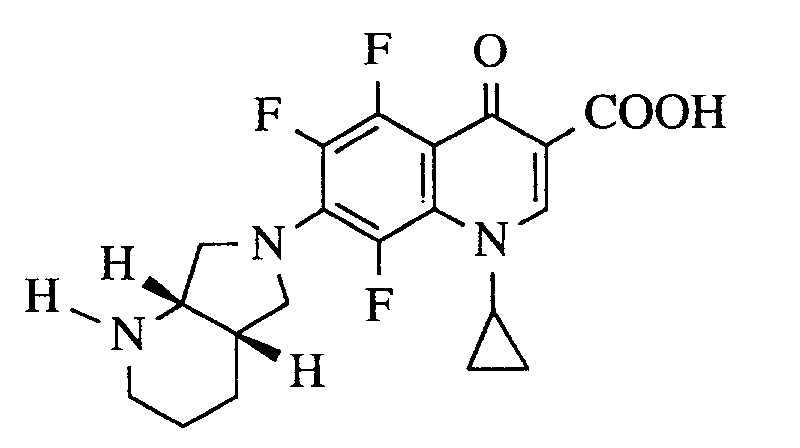
- A. 6 g (20 mmol) 1-Cyclopropyl-5,6,7,8-tetrafluor-1,4-dihydro-4-oxo-3-chinolincarbonsäure werden in 40 ml Acetonitril/20 ml N-Methylpyrrolidon in Gegenwart von 2,2 g (20 mmol) 1,4-Diazabicyclo[2.2.2]octan mit 2,7 g (21,4 mmol) (+)-[S,S]-2,8-Diazabicyclo[4.3.0]nonan 1 Stunde unter Rückfluß erhitzt. Die erhaltene Suspension wird abgekühlt, der Niederschlag abgesaugt, mit Acetonitril gewaschen und bei 100°C/12 mbar getrocknet.
Ausbeute: 6,7 g (82,3 % der Theorie) 1-Cyclopropyl-7-([S,S]-2,8-diazabicyclo[4.3.0]non-8-yl)-5,6,8-trifluor-1,4-dihydro-4-oxo-3-chinolincarbonsäure,
Schmelzpunkt: 257-259°C (unter Zersetzung); nach Umkristallisation aus Glykolmonomethylether: Schmelzpunkt: 260-265°C (unter Zersetzung). - B. 1,5 g (3,7 mmol) des Produkts aus Stufe A werden in 6 ml 1n-Salzsäure eingetragen. Nach kurzer Zeit fällt das Hydrochlorid aus, das abgesaugt, zweimal mit je 5 ml Ethanol gewaschen und bei 100°C/12 mbar getrocknet wird.
Ausbeute: 1,4 g (85,7 % der Theorie) 1-Cyclopropyl-7-([S,S]-2,8-diazabicyclo[4.3.0]non-8-yl)-5,6,8-trifluor-1,4-dihydro-4-oxo-3-chinolincarbonsäure-Hydrochlorid,
Schmelzpunkt: >310°C (unter Zersetzung),
[α]D²⁶: -272° (c = 0,5, H₂O). -

5,2 g (13 mmol) des Produkts aus Beispiel Z4A werden in 80 ml Pyridin im Autoklaven mit 15 ml flüssigem Ammoniak versetzt und 12 Stunden auf 130°C erhitzt. Anschließend wird abgekühlt, der Autoklav entspannt, die Mischung eingeengt, der Rückstand mit Acetonitril im Ultraschallbad behandelt. Der ungelöste Niederschlag wird abgesaugt, der Rückstand in etwa 150 ml Wasser in der Hitze gelöst, die Lösung filtriert und das Hydrochlorid mit 10 ml halbkonzentrierter Salzsäure ausgefällt, abgesaugt und bei 100°C im Umluft-Trockenschrank getrocknet. Das erhaltene Produkt wird in 100 ml Glykolmonomethylether bei 110-115°C suspendiert und durch Zugabe von 38 ml halbkorzentrierter Salzsäure in Lösung gebracht. Die Lösung wird heiß über eine Glasfritte filtriert, abgekühlt und das ausgefallene gelbe Kristallisat abgesaugt, mit Ethanol gewaschen und bei 120°C/12 mbar getrocknet.
Ausbeute: 2,5 g (44 % der Theorie) 5-Amino-1-cyclopropyl-7-([S,S]-2,8-diazabicyclo[4.3.0]non-8-yl)-6,8-difluor-1,4-dihydro-4-oxo-3-chinolincarbonsäure-Hydrochlorid,
Schmelzpunkt: >335°C (unter Zersetzung; bereits unterhalb 335°C Dunkelfärbung),
[α]D²⁸: -280,8° (c = 0,53, H₂O). -

1,4 g (5 mmol) 7-Chlor-1-cyclopropyl-6-fluor-1,4-dihydro-4-oxo-1,8-naphthyridin-3-carbonsäure werden in 15 ml Acetonitril mit 1,3 g (10,3 mmol) (+)-[S,S]-2,8-Diazabicyclo[4.3.0]nonan unter Wasserausschluß 1 Stunde bei Raumtemperatur gerührt. Nach Stehen über Nacht wird abgesaugt, mit Acetonitril gewaschen und zur Reinigung an Kieselgel chromatographiert (Laufmittel: Methylenchlorid/Methanol/17 %iges wäßriges Ammoniak 30:8:1; Rf-Wert: 0,4). Die erhaltene 1-Cyclopropyl-7-([S,S]-diazabicyclo[4.3.0]non-8-yl)-6-fluor-1,4-dihydro-4-oxo-1,8-naphthyridin-3-carbonsäure wird in 15 ml halbkonzentrierter Salzsäure gelöst, die Lösung eingedampft und der Rückstand mit Ethanol verrührt. Der Niederschlag wird abgesaugt, mit Ethanol gewaschen und bei 120°C/12 mbar getrocknet.
Ausbeute: 960 mg (47 % der Theorie) 1-Cyclopropyl-7-([S,S]-2,8-diazabicyclo[4.3.0]non-8-yl)-6-fluor-1,4-dihydro-4-oxo-1,8-naphthyridin-3-carbonsäure-Hydrochlorid,
Schmelzpunkt: 345-346°C (unter Zersetzung),
[α]D³⁰: +5,4° (c = 0,5, H₂O). -

Analog Beispiel Z1 erhält man mit (-)-[R,R]-2,8-Diazabicyclo[4.3.0]nonan: - A. 1-Cyclopropyl-7-([R,R]-2,8-diazabicyclo[4.3.0]non-8-yl)-6,8-difluor-1,4-dihydro-4-oxo-3-chinolincarbonsäure,
Schmelzpunkt: 247-249°C (unter Zersetzung). - B. 1-Cyclopropyl-7-([R,R]-2,8-diazabicyclo[4.3.0]non-8-yl)-6,8-difluor-1,4-dihydro-4-oxo-chinolincarbonsäure-Hydrochlorid,
Schmelzpunkt: 322-326°C (unter Zersetzung),
Gehalt (HPLC): 99,4 %ig, ee: 98,6 %,
[α]D²⁴: +250° (c = 0,5, H₂O). -

Analog Beispiel Z2 erhält man mit (-)-[R,R]-2,8-Diazabicyclo[4.3.0]nonan:
A. 8-Chlor-1-cyclopropyl-7-[R,R]-2,8-diazabicyclo[4.3.0]non-8-yl)-6-fluor-1,4-dihydro-4-oxo-chinolincarbonsäure,
Schmelzpunkt: 192-195°C (unter Zersetzung).
B. 8-Chlor-1-cyclopropyl-7-[R,R]-2,8-diazabicyclo[4.3.0]non-8-yl)-6-fluor-1,4-dihydro-4-oxo-3-chinolincarbonsäure-Hydrochlorid,
Schmelzpunkt: 323-324°C (unter Zersetzung),
Gehalt (HPLC): 99,9 %ig,
[α]D²⁴: +164,5° (c = 0,53, H₂O),C₂₀H₂₁ClFN₃O₃.HCl (442,3) Berechnet: C 54,3 H 5,0 N 9,5 Cl 16,0 Gefunden: C 54,2 H 5,0 N 9,5 Cl 16,1 -
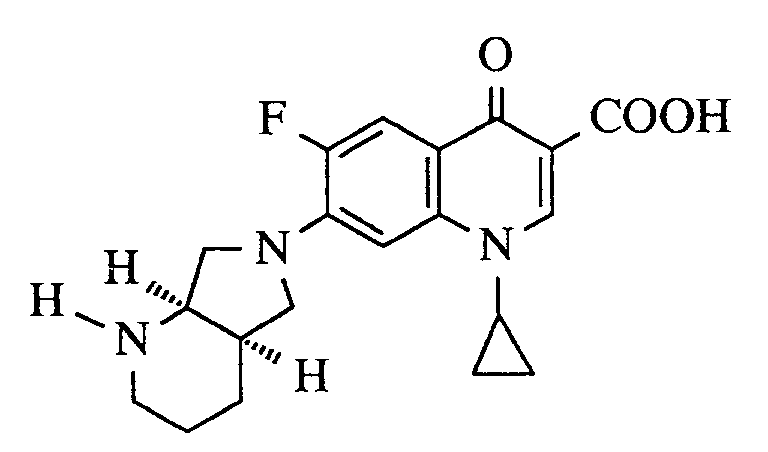
Analog Beispiel Z1 erhält man aus 1-Cyclopropyl-6,7-difluor-1,4-dihydro-4-oxo-3-chinolincarbonsäure und (-)-[R,R]-2,8-Diazabicyclo[4.3.0]nonan: - A. 1-Cyclopropyl-7-([R,R]-2,8-diazabicyclo[4.3.0]non-8-yl)-6-fluor-1,4-dihydro-4-oxo-3-chinolincarbonsäure,
Schmelzpunkt: 254-258°C (unter Zersetzung). - B. 1-Cyclopropyl-7-([R,R]-2,8-diazabicyclo[4.3.0]non-8-yl)-6-fluor-1,4-dihydro-4-oxo-3-chinolincarbonsäure,
Schmelzpunkt: oberhalb 320°C Zersetzung,
[α]D²⁴: +92,5° (c =0,53, H₂O). -

- A. 1-Cyclopropyl-6,8-difluor-1,4-dihydro-7-(cis-2-oxa-5,8-diazabicyclo[4.3.0]non-8-yl)-4-oxo-3-chinolincarbonsäure:
1,43 g (5 mmol) 1-Cyclopropyl-6,7,8-trifluor-1,4-dihydro-4-oxo-3-chinolincarbonsäure werden in einer Mischung aus 15 ml Acetonitril/75 ml Dimethylformamid in Gegenwart von 0,67 g (6 mmol) 1,4-Diazabicyclo[2.2.2]octan mit 0,74 g (5,4 mmol) 93 %igem cis-2-Oxa-5,8-diazabicyclo[4.3.0]nonan 1 Stunde unter Rückfluß erhitzt. Die Suspension wird eingeengt, der Rückstand mit Wasser verrührt, der Niederschlag abgesaugt und bei 80°C im Vakuum getrocknet.
Ausbeute: 1,67 g (85,4 % der Theorie),
Schmelzpunkt: 210-212°C (unter Zersetzung). - B. 1-Cyclopropyl-6,8-difluor-1,4-dihydro-7-(cis-2-oxa-5,8-diazabicyclo[4.3.0]non-8-yl)-4-oxo-3-chinolincarbonsäure-Hydrochlorid:
1,6 g (4 mmol) des Produkts aus Stufe A werden in 120 ml halbkonzentrierter Salzsäure bei 60°C gelöst, die Lösung eingeengt, der Rückstand mit Ethanol und der Niederschlag abgesaugt und bei 90°C im Vakuum getrocknet.
Ausbeute: 1,57g,
Schmelzpunkt: 300-303°C (unter Zersetzung),
Gehalt (HPLC): 97 %ig. - C. Analog Beispiel Z10A erhält man mit 1R,6S-2-Oxa-5,8-diazabicyclo[4.3.0]nonan 1-Cyclopropyl-6,8-difluor-1,4-dihydro-7-(1R,6S-2-oxa-5,8-diazabicyclo[4.3.0]non-8-yl)-4-oxo-3-chinolincarbonsäure vom Schmelzpunkt 204 - 206°C (unter Zersetzung).
- D. Analog Beispiel Z10B erhält man mit dem Betain aus Beispiel Z10C 1-Cyclopropyl-6,8-difluor-1,4-dihydro-7-(1R,6S-2-oxa-5,8-diazabicyclo[4.3.0]non-8-yl)-4-oxo-3-chinolincarbonsäure-Hydrochlorid vom Schmelzpunkt 324-325°C (unter Zersetzung).
[α]D²⁴: -241° (c=0,59, H₂O). - E. Analog Beispiel Z10A erhält man mit 1S,6R-2-Oxa-5,8-diazabicyclo[4.3.0]nonan 1-Cyclopropyl-6,8-difluor-1,4-dihydro-7-(1S,6R-2-oxa-5,8-diazabicyclo[4.3.0]non-8-yl)-4-oxo-3-chinolincarbonsäure vom Schmelzpunkt 204 - 206°C (unter Zersetzung).
[α]D²⁵: +248° (c=0,57, DMF). - F. Analog Beispiel Z10B erhält man mit dem Betain aus Beispiel Z10E 1-Cyclopropyl-6,8-difluor-1,4-dihydro-7-(1S,6R-2-oxa-5,8-diazabicyclo[4.3.0]non-8-yl)-4-oxo-3-chinolincarbonsäure-Hydrochlorid vom Schmelzpunkt 323°C (unter Zersetzung).
[α]D²⁶: +238° (c =0,5, H₂O). -
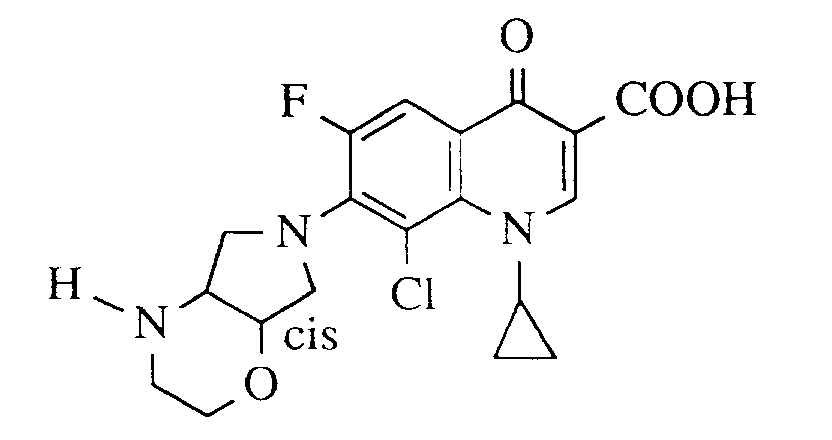
Analog Beispiel Z10 erhält man mit 8-Chlor-1-cyclopropyl-6,7-difluor-1,4-dihydro-4-oxo-3-chinolincarbonsäure: - A. 8-Chlor-1-cyclopropyl-6-fluor-1,4-dihydro-7-(cis-2-oxa-5,8-diazabicyclo[4.3.0]non-8-yl)-4-oxo-3-chinolincarbonsäure,
Schmelzpunkt: 180-185°C (unter Zersetzung). - B. 8-Chlor-1-cyclopropyl-6-fluor-1,4-dihydro-7-(cis-2-oxa-5,8-diazabicyclo[4.3.0]non-8-yl)-4-oxo-3-chinolincarbonsäure-Hydrochlorid,
Schmelzpunkt: 227-232°C (unter Zersetzung). - C. 8-Chlor-1-cyclopropyl-6-fluor-1,4-dihydro-7-(1R,6S-2-oxa-5,8-diazabicyclo[4.3.0]non-8-yl)-4-oxo-3-chinolincarbonsäure,
Schmelzpunkt: 186-188°C (unter Zersetzung).
[α]D²⁶: -269° (c =0,5, DMF). - D. 8-Chlor-1-cyclopropyl-6-fluor-1,4-dihydro-7-(1R,6S-2-oxa-5,8-diazabicyclo[4.3.0]non-8-yl)-4-oxo-3-chinolincarbonsäure-Hydrochlorid,
Schmelzpunkt: 278-280°C (unter Zersetzung).
[α]D²⁴: -208° (c =0,5, H₂O). - E. 8-Chlor-1-cyclopropyl-6-fluor-1,4-dihydro-7-(1S,6R-2-oxa-5,8-diazabicyclo[4.3.0]non-8-yl)-4-oxo-3-chinolincarbonsäure,
Schmelzpunkt: 188-190°C (unter Zersetzung).
[α]D²⁵: +270° (c=0,5, DMF). - F. 8-Chlor-1-cyclopropyl-6-fluor-1,4-dihydro-7-(1S,6R-2-oxa-5,8-diazabicyclo[4.3.0]non-8-yl)-4-oxo-3-chinolincarbonsäure-Hydrochlorid,
Schmelzpunkt: 292-294°C (unter Zersetzung).
[α]D²⁷: +193° (c =0,5, H₂O). -

Analog Beispiel Z10A erhält man mit 1-Cyclopropyl-6,7-difluor-1,4-dihydro-4-oxo-3-chinolincarbonsäure: - A. 1-Cyclopropyl-6-fluor-1,4-dihydro-7-(cis-2-oxa-5,8-diazabicyclo[4.3.0]non-8-yl)-4-oxo-3-chinolincarbonsäure,
Schmelzpunkt: 246-249°C (unter Zersetzung) (aus Glykolmonomethylether). - B. 1-Cyclopropyl-6-fluor-1,4-dihydro-7-(1R,6S-2-oxa-5,8-diazabicyclo[4.3.0]non-8-yl)-4-oxo-3-chinolincarbonsäure,
Schmelzpunkt: 243-245°C (unter Zersetzung). - C. 1-Cyclopropyl-6-fluor-1,4-dihydro-7-(1R,6S-2-oxa-5,8-diazabicyclo[4.3.0]non-8-yl)-4-oxo-3-chinolincarbonsäure-Hydrochlorid,
Schmelzpunkt: 300°C (Zersetzung)
[α]D²³: -99° (c = 0,5, H₂O). -

Analog Beispiel Z10A erhält man mit 1-Cyclopropyl-5,6,7,8-tetrafluor-1,4-dihydro-4-oxo-3-chinolincarbonsäure: - A. 1-Cyclopropyl-5,6,8-trifluor-1,4-dihydro-7-(cis-2-oxa-5,8-diazabicyclo[4.3.0]non-8-yl)-4-oxo-3-chinolincarbonsäure,
Schmelzpunkt: 210-216°C (unter Zersetzung). - B. 1-Cyclopropyl-5,6,8-trifluor-1,4-dihydro-7-(1R,6S-2-oxa-5,8-diazabicyclo[4.3.0]non-8-yl)-4-oxo-3-chinolincarbonsäure,
Schmelzpunkt: 234-237°C (unter Zersetzung).
[α]D²⁴: -287° (c = 0,5, DMF). - C. 1-Cyclopropyl-5,6,8-trifluor-1,4-dihydro-7-(1S,6R-2-oxa-5,8-diazabicyclo[4.3.0]non-8-yl)-4-oxo-3-chinolincarbonsäure,
Schmelzpunkt: 236-237°C (unter Zersetzung).
[α]D²⁴: +282° (c = 0,5, DMF). -

- A. 4,1 g (10 mmol) des Produkts aus Beispiel Z13A werden in 40 ml Pyridin mit 5 ml flüssigem Ammoniak versetzt und im Autoklaven 10 Stunden auf 130°C erhitzt. Nach dem Abkühlen wird der Niederschlag abgesaugt, mit Wasser gewaschen und bei 100°C im Umluft-Trockenschrank getrocknet. Das Rohprodukt (2 g) wird durch Umkristallisation aus Glykolmonomethylether gereinigt: gelbes Kristallisat.
Ausbeute: 1,3 g (31 % der Theorie) 5-Amino-1-cyclopropyl-6,8-difluor-1,4-dihydro-7-(cis-2-oxa-5,8-diazabicyclo[4.3.0]non-8-yl)4-oxo-3-chinolin carbonsäure,
Schmelzpunkt: 233-240°C (unter Zersetzung). - B. Analog erhält man mit dem Produkt aus Beispiel Z13C 5-Amino-1-cyclopropyl-6,8-difluor-1,4-dihydro-7-(1R,6S-2-oxa-5,8-diazabicyclo[4.3.0]non-8-yl)-4-oxo-3-chinolincarbonsäure,
Schmelzpunkt: 212-214°C (unter Zersetzung),
[α]D²⁵: -260° (c=0,5, DMF). - C. Analog erhält man mit dem Produkt aus Beispiel Z13C 5-Amino-1-cyclopropyl-6,8-difluor-1,4-dihydro-7-(1S,6R-2-oxa-5,8-diazabicyclo[4.3.0]non-8-yl)-4-oxo-3-chinolincarbonsäure,
Schmelzpunkt: 213-215°C (unter Zersetzung),
[α]D²⁶: +261° (c = 0,5, DMF),
Massenspektrum: m/e 406 (M⁺,95 %), 346, 249, 98, 41, 28 (100 %). -

- A. 7-(2-tert.-Butoxycarbonyl-2,8-diazabicyclo[4.3.0]non-8-yl)-1-cyclopropyl6,8-difluor-1,4-dihydro-4-oxo-3-chinolincarbonsäure
7,8 g (20 mmol) 1-Cyclopropyl-7-(2,8-diazabicyclo[4.3.0]non-8-yl)-6,8-difluor-1,4-dihydro-4-oxo-3-chinolincarbonsäure werden in einer Mischung aus 60 ml Dioxan/Wasser (2:1) und 20 ml 1n-Natronlauge gelöst und unter Eiskühlung und Rühren mit 5,24 g (24 mmol) Pyrokohlensäure-di-tert.-butylester versetzt. Man rührt 1 Stunde bei Raumtemperatur nach und läßt über Nacht stehen. Der ausgefallene Niederschlag wird abgesaugt, mit 250 ml Wasser gewaschen und über Nacht bei 50°C im Umluft-Trockenschrank getrocknet.
Ausbeute: 9,34 g (95,5 % der Theorie),
Schmelzpunkt: 216-219°C (unter Zersetzung). - B. 7-(2-tert.-Butoxycarbonyl-2,8-diazabicyclo[4.3.0]non-8-yl)-1-cyclopropyl-6,8-difluor-1,4-dihydro-4-oxo-3-chinolincarbonsäure-Cäsiumsalz
2,15 g (4,4 mmol) des Produktes aus Stufe A werden in 60 ml Tetrahydrofuran/Wasser (1:1) bei Raumtemperatur suspendiert und 1,65 g (5 mmol) Cäsiumcarbonat zugegeben. Man läßt 20 Minuten im Ultraschallbad bei etwa 40°C reagieren, destilliert etwa 40 ml des Lösungsmittels bei 40°C/12 mbar ab und lyophilisiert die zurückbleibende Lösung, wobei das leichtlösliche rohe Cäsiumsalz erhalten wird. -

Analog Beispiel Z1 erhält man mit [S,S]-2-Methyl-2,8-diazabicyclo[4.3.0]nonan: - A. 1-Cyclopropyl-6,8-difluor-1,4-dihydro-7-([S,S]-2-methyl-2,8-diazabicyclo[4.3.0]non-8-yl)-4-oxo-3-chinolincarbonsäure,
Schmelzpunkt: 230-233°C (unter Zersetzung) (umkristallisiert aus Glykolmonomethylether); - B. 1-Cyclopropyl-6,8-difluor-1,4-dihydro-7-([S,S]-2-methyl-2,8-diazabicyclo[4.3.0]non-8-yl)-4-oxo-3-chinolincarbonsäure-Hydrochlorid,
Schmelzpunkt: 258-260°C (unter Zersetzung), [α]
-

- A. Analog Beispiel Z15A wird mit der Verbindung aus Beispiel 2A zu 7-(2-tert.-Butoxycarbonyl-2,8-diazabicyclo[4.3.0]non-8-yl)-8-chlor-1-cyclopropyl-6-fluor-1,4-dihydro-4-oxo-3-chinolincarbonsäure vom Schmelzpunkt 185-189°C (unter Zersetzung) umgesetzt.
- B. Die Herstellung des Cäsiumsalzes erfolgt wie in Beispiel Z15B beschrieben.
-

1,4 g (5 mmol) 9,10-Difluor-2,3-dihydro-3-methyl-7-oxo-7H-pyrido[1,2,3de][1,4]-benzoxacin-6-carbonsäure werden in 15 ml Acetonitril/7,5 ml Dimethylformamid mit 0,85 g (7,7 mmol) 1,4-Diazabicyclo[2.2.2]octan und 0,7 g (5,6 mmol) (+)-[S,S]-2,8-Diazabicyclo[4.3.0]nonan analog Beispiel Z1A umgesetzt.
Ausbeute: 1,24 g (64 % der Theorie) 10-([S,S]-2,8-Diazabicyclo[4.3.0]non-8-yl)-9 fluor-2.3-dihydro-3-methyl-7-oxo-7H-pyrido[1,2,3-de][1,4]benzoxacin-6-carbonsäure,
Schmelzpunkt: 265-268°C (unter Zersetzung),
[α]D: -232,2° (c = 0,58, CHCl₃). - Analog erhält man auch 3S-10-([S,S]-2,8-Diazabicyclo[4.3.0]non-8-yl)-9-fluor-2,3-dihydro-3-methyl-7-oxo-7H-pyrido[1,2,3-de][1,4]benzoxacin-6-carbonsäure.
-
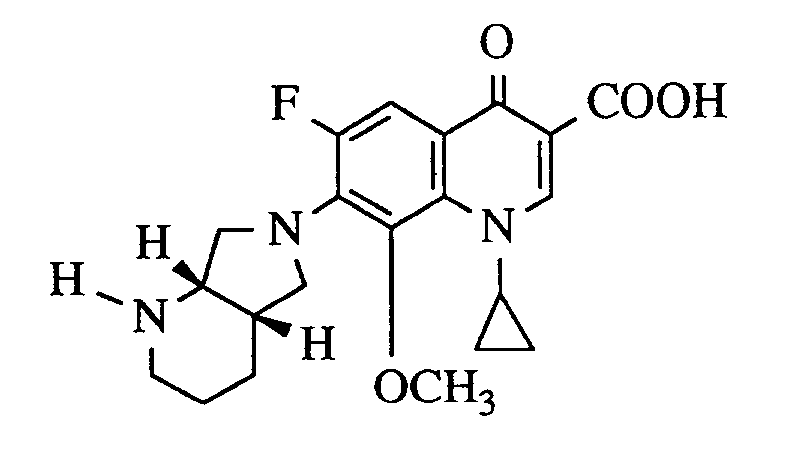
1-Cyclopropyl-6,7-difluor-1,4-dihydro-8-methoxy-4-oxo-3-chinolincarbonsäure wird analog Beispiel Z1A umgesetzt und das Umsetzungsprodukt chromatographisch gereinigt (Kieselgel, Laufmittel: Methylenchlorid/Methanol/17 %iges wäßriges Ammoniak = 30:8:1). - Man erhält 1-Cyclopropyl-7-([S,S]-2,8-diazabicyclo[4.3.0]non-8-yl)-6-fluor-1,4-dihydro-8-methoxy-4-oxo-3-chinolincarbonsäure vom Schmelzpunkt 203-208°C (unter Zersetzung).
[α]D²³: -193° (c = 0,4, CHCl₃) -

Man setzt analog Beispiel Z1A mit 1-Ethyl-6,7,8-trifluor-1,4-dihydro-4-oxo-3-chinolincarbonsäure um und erhält 1-Ethyl-7-([S,S]-2,8-diazabicyclo[4.3.0]-non-8-yl)-6,8-difluor-1,4-dihydro-4-oxo-3-chinolincarbonsäure vom Schmelzpunkt 236-239°C (unter Zersetzung) (umkristallisiert aus Glykolmonomethylether);
[α]D²³: -186,3° (c = 0,3, CHCl₃). -

- A. 7-([S,S]-2,8-Diazabicyclo[4.3.0]non-8-yl)-1-(2,4-difluorphenyl)-6-fluor-1,4-dihydro-4-oxo-1,8-naphthyridin-3-carbonsäureethylester
1,9 g (5 mmol) 7-Chlor-1-(2,4-difluorphenyl)-6-fluor-1,4-dihydo-4-oxo-1,8-naphthyridin-3-carbonsäureethylester werden in 20 ml Acetonitril in Gegenwart von 560 mg (5 mmol) 1,4-Diazabicyclo[2.2.2]octan mit 680 mg (5,4 mmol) [S,S]-2,8-Diazabicyclo[4.3.0]nonan 3 Stunden bei 10°C verrührt. Die Suspension wird abgesaugt, mit Wasser gewaschen und getrocknet. Man erhält 0,35 g Produkt. Durch Einengen der Mutterlaugen, Verrühren des Rückstandes mit Wasser, Isolierung des ungelösten Produktes und chromatographische Reinigung (Kieselgel, Laufmittel: Dichlormethan/Methanol/17 %iges wäßriges Ammoniak) werden weitere 0,7 g Produkt isoliert. Gesamtausbeute: 1,05 g (44 % der Theorie),
Schmelzpunkt: 184-185°C (unter Zersetzung),
[α]D²³: +6,8° (c = 0,46, CHCl₃). - B. 7-([S,S]-2,8-Diazabicyclo[4.3.0]non-8-yl)-1-(2,4-difluorphenyl)-6-fluor-1,4-dihydro-4-oxo-1,8-naphthyridin-3-carbonsäure-Hydrochlorid
0,8 g (1,7 mmol) des Produkts aus Stufe A werden in einer Mischung aus 10 ml Essigsäure und 8 ml halbverdünnter Salzsäure 4 Stunden unter Rückfluß erhitzt. Die Mischung wird eingeengt, der Rückstand mit wenig Wasser verrührt, der Niederschlag abgesaugt, mit eiskaltem Ethanol gewaschen und getrocknet.
Ausbeute: 0,67 g (83 % der Theorie),
Schmelzpunkt: 324-326°C (unter Zersetzung),
[α]D²⁵: +10,8° (c = 0,37, DMF). -

0,56 g (2 mmol) 1-Cyclopropyl-6,7-difluor-1,4-dihydro-5-methyl-4-oxo-3-chinolincarbonsäure werden mit 0,38 g (3 mmol) [S,S]-2,8-Diazabicyclo[4.3.0]nonan und 0,45 g (4 mmol) 1,4-Diazabicyclo[2.2.2]octan in 3,5 ml Dimethylsulfoxid 2 Stunden auf 120°C erhitzt. Nach Abkühlen wird das Lösungsmittel im Hochvakuum entfernt. Der Rückstand wird mit Acetonitril aufgenommen. Man trennt den Feststoff ab, wäscht ihn mit Acetonitril und trocknet bei 60 bis 80°C.
Ausbeute: 0,5 g (65 % der Theorie) 1-Cyclopropyl-7-([S,S]-2,8-diazabicyclo[4.3.0]non-8-yl)-6-fluor-1,4-dihydro-5-methyl-4-oxo-3-chinolincarbonsäure,
Schmelzpunkt: 217-219°C (unter Zersetzung),
[α]D: -119° (c=0,5, DMF). -

- A. 837 mg (3 mmol) 1-Cyclopropyl-6,7-difluor-1,4-dihydro-5-methyl-4-oxo-3-chinolincarbonsäure werden in einer Mischung aus 10 ml Acetonitril und 5 ml Dimethylformamid mit 1,1 g (10 mmol) 1,4-Diazabicyclo[2.2.2]octan und 665 mg (3,3 mmol) 1R,6S-2-Oxa-5,8-diazabicyclo[4.3.0]nonan-Dihydrochlorid 2 Stunden unter Rückfluß erhitzt. Die Mischung wird eingedampft, der Rückstand mit 30 ml Wasser verrührt, der Niederschlag abgesaugt und bei 80°C im Vakuum getrocknet.
Ausbeute: 400 mg (34 % der Theorie) 1-Cyclopropyl-6-fluor-1,4-dihydro-5-methyl-7-(1R,6S-2-oxa-5,8-diazabicyclo[4.3.0]non-8-yl)-4-oxo-3-chinolincarbonsäure,
Schmelzpunkt: 213-214°C (unter Zersetzung). - B. 0,4 g des Betains aus Stufe A werden in 5 ml halbkonzentrierter Salzsäure bei Raumtemperatur gelöst, die Lösung wird eingeengt und der Rückstand mit etwa 3 ml Ethanol verrührt. Der Niederschlag wird abgesaugt und bei 80°C/12 mbar getrocknet.
Ausbeute: 290 mg (66 % der Theorie) 1-Cyclopropyl-6-fluor-1,4-dihydro-5-methyl-7-(1R,6S-2-oxa-5,8-diazabicyclo[4.3.0]non-8-yl)-4-oxo-3-chinolincarbonsäure-Hydrochlorid,
Schmelzpunkt: 305-308°C (unter Zersetzung),
[α]D²³: -79° (c = 0,52, H₂O). -

362 mg (1 mmol) 5-Brom-1-cyclopropyl-6,7,8-trifluor-1,4-dihydro-4-oxo-3-chinolincarbonsäure werden in einer Mischung aus 3 ml Acetonitril und 1,5 ml Dimethylformamid mit 220 mg (2 mmol) 1,4-Diazabicyclo[2.2.2]octan und 220 mg (1,1 mmol) 1S,6R-2-Oxa-5,8-diazabicyclo[4.3.0]nonan-Dihydrochlorid 1,5 Stunden unter Rückfluß erhitzt. Die Suspension wird abgekühlt, der Niederschlag abgesaugt, mit 30 ml Wasser verrührt und bei 90°C im Hochvakuum getrocknet.
Ausbeute: 320 mg (68 % der Theorie) 5-Brom-1-cyclopropyl-6,8-difluor-1,4-dihydro-7-(1S,6R-2-oxa-5,8-diazabicyclo[4.3.0]non-8-yl)-4-oxo-3-chinolincarbonsäure,
Schmelzpunkt: 263-264°C (unter Zersetzung),
[α]D³⁰: +251° (c=0,3, CH₂Cl₂). -

Unter Stickstoffatmosphäre werden 186 mg (0,3 mmol) des Cäsiumsalzes der 1-Cyclopropyl-7-([1S,6S]-2-t-butoxycarbonyl-2,8-diazabicyclo[4.3.0]non-8-yl)-6,8-difluor-1,4-dihydro-4-oxo-3-chinolincarbonsäure mit 160 mg (0,3 mmol) (6R,7R)-7-Phenyl-acetylamino-3-chlormethyl-8-oxo-5-thia-1-aza-bicyclo[4.2.0.]oct-2-en-2-carbonsäure-benzhydrylester in 3 ml wasserfreiem Dimethylformamid drei Stunden bei Raumtemperatur verrührt. Man gießt auf Wasser, extrahiert mehrfach mit Ether, der mit Wasser erneut gewaschen wird. Die vereinigten wäßrigen Phasen werden noch 2 x mit Essigester extrahiert. Ether und Essigesterphase werden getrennt über MgSO₄ getrocknet an Kieselgel mit Toluol/Essigester Gemisch (3:1 → 1:3) chromatographiert. Die nach Dünnschiehtchromatogramm identischen Fraktionen des Produktes werden vereinigt. Ausbeute 35 mg (12 %). -

33 mg (O,033 mmol) des Produktes von Beispiel 1 werden in 0,3 ml Dichlormethan gelöst, mit 0,3 ml Trifluoressigsäure und 3 µl Anisol versetzt und eine Stunde bei Raumtemperatur gerührt. Man dampft im Vakuum zur Trockne ein, verrührt den Rückstand in ca. 0,5 ml Essigester/Wasser 1:1, stellt pH = 4, saugt ab und trocknet im Exsiccator. Man erhält so 8 mg (30 %) des Titelproduktes. Aus der Mutterlauge lassen sich weitere 5 mg (18 %) des Produktes durch Chromatographie an Kieselgel gewinnen. -

10 mg (0,012 mmol) des Produktes von Beispiel 2 werden in 1 ml Wasser mit 25 mg Penicillinacylaseharz bei pH = 8,0 (Autotitrator, NaOH) 4 Stunden bei Raumtemperatur gerührt. Man filtriert, stellt mit 1n HCl auf pH = 3, extrahiert mit Essigester, stellt die wäßrige Phase mit 1 n NaOH wieder auf pH = 7 und lyophilisiert. Nun wird an HP20-Harz mit Wasser und Wasser/Aceton 4 : 1 chromatographiert. Ausbeute: 6 mg (68 %). -

Wie für Beispiel 1 beschrieben erhielt man durch Reaktion von 8,24 g (15,45 mmol) (6R,7R)-3-Chlormethyl-8-oxo-7-phenylacetylamino-5-thia-1-aza-bicyclo[4.2.0]oct-2-en-2-carbonsäurenbenzhydrylester und 6,57 g (10,30 mmol) 7-(2-tert.-Butoxycarbonyl-2,8-diazabicyclo[4.3.0]non-8-yl)8-chlor-1-cyclopropyl-6-fluor-1,4-dihydro-4-oxo-3-chinolincarbonsäure-Cäsiumsalz nach Chromatographie des rohen Reaklionsgemisches an 250 g Kieselgel (Toluol:Ethylacetat 1:1) 4,80 g (47 %) der Titelverbindung als helles Pulver, Schmp.: ab 121°C (Zers.)
Rf= 0,46 (Toluol: Ethylacetat 1:1)
MS(FAB) m/z = 1002 (M+H)⁺
IR(KBr) γ = 3411, 2934, 1787 (CO β-Lactam), 1720, 1691, 1610, 1449, 1366, 1310, 1232, 1159, 1030, 801, 744, 699 cm⁻¹
¹H-NMR (250 MHz, DMSO-d₆)
δ = 0,8-1,2 (m, 4H, Cyclopropyl-H), 1,42 (s, 9H, BOC), 1,73 (m, 2H, CH₂), 2,23 (m, 1H, CH₂) 2,82 (m, 1H, CH₂), 3,1-4,0 (m, CH₂N, CH₂S, CHN), 4,21 (m, 1H, CHN), 4,71 (m, 1H, Cyclopropyl-H), 4,93, 5,10 (AB, J = 13 Hz, 2H, PhCH₂CO), 5,19 (d, J = 5 Hz, H-6'), 5,80 (dd, J = 8,6 Hz, 1H, H-7'), 6,95 (s, 1H, CHPh₂), 7,2-7,5 (m, 15H, Ph), 7,77 (d, j = 14 Hz, 1H, CH=CF), 8,52 (s, 1H, NCH=C), 9,18 (d, J = 8 Hz, 1H, CONH). -

Zu einer gerührten, auf -15°C gekühlten Lösung von 7,2 ml Trifluoressigsäure in 30 ml Dichlormethan wurde langsam eine Lösung von 3,60 g (3,59 mmol) der Verbindung aus Beispiel 4 in 4,2 ml Dichlormethan getropft. Nach 15 min wurde das Reaktionsgemisch vorsichtig mit 30 ml Diethylether und 15 ml n-Pentan überschichtet und dann heftig durchgerührt. Der Niederschlag wurde durch Filtration abgetrennt, mit 50 ml Ether gewaschen und kurz am Hochvakuum getrocknet. Danach wurde der Niederschlag in einem Gemisch aus 20 ml Ether und 20 ml Dichlormethan gut durchgerührt, abgetrennt, mit 10 ml Ether gewaschen und im Hochvakuum kurz getrocknet und in einem Gemisch aus 2,8 ml Aceton und 0,8 ml Wasser suspendiert. Die Suspension wurde auf 0°C gekühlt, vorsichtig mit 1,95 ml 1N HCl versetzt und 30 min bei 0°C gut durchgerührt. Danach wurden 15 ml Aceton zugegeben, der Niederschlag wurde durch Filtration abgetrennt, mit 5 ml Aceton gewaschen und im Hochvakuum getrocknet. Man erhielt 810 mg (28 %) der Titelverbindung als hellen Feststoff.
Schmelzpunkt: ab 159°C (Zers.)
Rf=0,18 (Acetonitril : Wasser 4:1)
MS(FAB) m/z = 736 (M+H)⁺
IR(KBr) γ = 3423, 1782 (CO β-Lactam), 1610, 1449, 1312, 1233 cm⁻¹
¹H-NMR (250 MHz, DMSO-d₆)
δ = 0,8-1,2 (m, 4H, Cyclopropyl-1H), 1,75 (m, 4H, CH₂), 2,64 (m, 1H, CH) 2,97 (m, 1H) 3,1-3,8 (m, 8H, SCH₂, CH₂0, CH₂N), 3,90 (m, 1H, CHN), 4,10 (m, 1H, CHN) 4,25 (m, 1H, Cyclopropyl-H), 4,92,5,21 (AB, J = 14 Hz, 2H, PhCH₂CO), 5,11 (d, J = 5 Hz, 1H, H-6'), 5,70 (dd, J = 15,5 Hz, 1H, H-7'), 7,30 (m, 5H, Ph), 7,77 (d, j = 15 Hz, CH=CF), 8,10 (s, 1H, NCH=C), 9,1 (d, J = 7,5 Hz, 1H, CONH). -
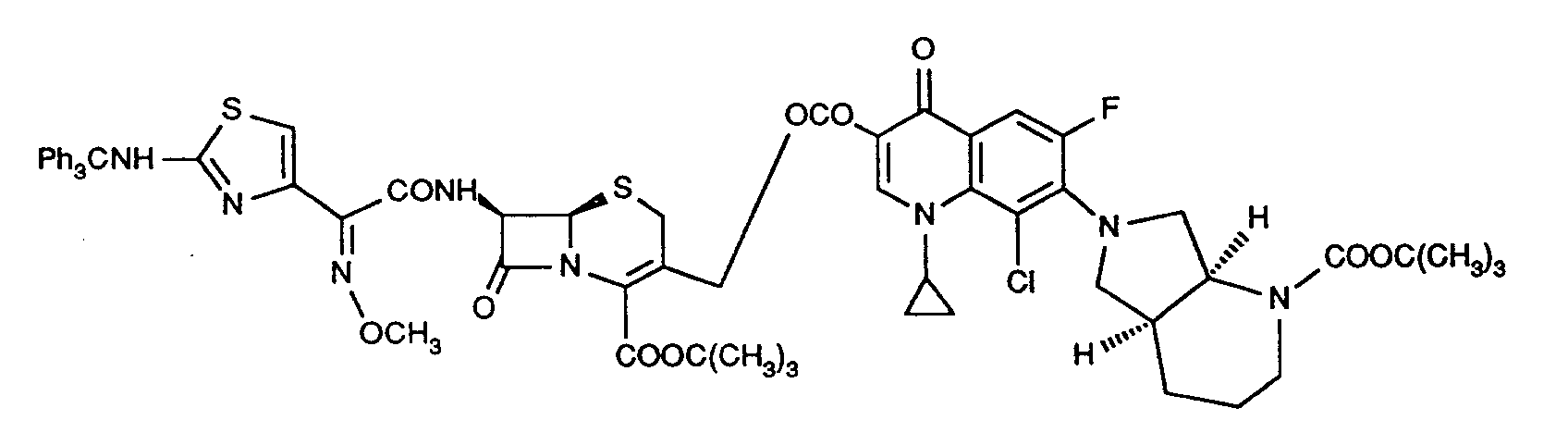
Eine Lösung von 200 mg (0,246 mmol) (6R, 7R)-3-Iodmethyl-7-(Z)-methoxyimino-2-(triphenylmethyl)amino-4-thiazolyl)-acetylamino-8-oxo-5-thia-1-azabicyclo-[4.2.0]oct-2-en-2-carbonsäure-1,1-dimethylethylester in 1 ml DMF wurden zu einer Suspension von 100 mg (0,157 mmol)des Cäsiumsalzes von 8-Chlor-7-[(1S,6S)-2-t-butoxy-carbonyl-2,8-diazabicyclo[4.3.0]non-8-yl]-1,4-dihydro-6-fluor-4-oxo-3-chinolincarbonsäure in 1 ml DMF gegeben. Man rührte 2 Stunden und engte unter Vakuum ein. Der Rückstand wurde zwischen Essigester und wäßrigem NaHCO₃ verteilt. Die organische Phase wurde mit wäßrigem NaHCO₃ gewaschen, über MgSO₄ getrocknet und eingedampft. Man erhielt 310 mg Rückstand, der an Kieselgel mit Chloroform und Chloroform/Methanol 10:1 chromatographiert wurde.
Ausbeute: 87 mg (46 %). -
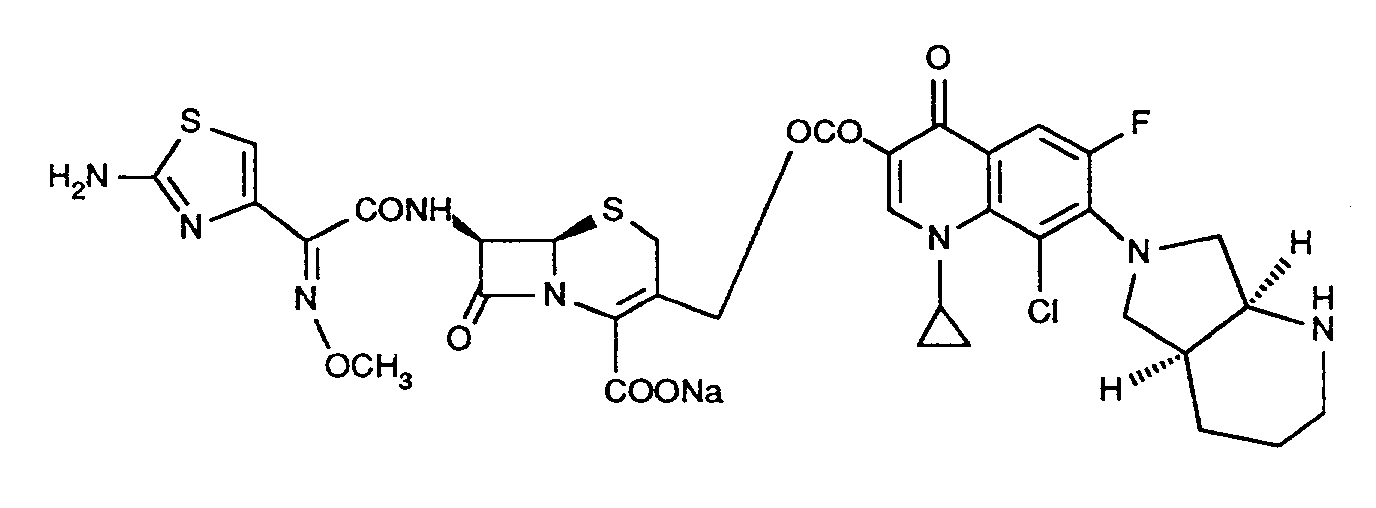
Das Produkt von Beispiel 6 (0,06 mmol, 72 mg) wurde in 1 ml Methylenchlorid bei 5° mit 60 µl Anisol und 1 ml Trifluoressigsäure 4 Stunden verrührt und dann im Vakuum eingedampft. Man fügte 1 ml Methylenchlorid zu und dampfte erneut zur Trockne ein. Man suspendiert in Wasser, stellte mit 1n NaOH pH = 7,5 ein und lyophilisierte die Lösung. Das Lyophilisat wurde mit 0,15 ml Essigester und 1 ml Ether verrührt. Der Feststoff wurde abgesaugt und an Kieselgel mit Wasser-Acetonitril (Gradient) chromatographiert. Man erhielt 14,5 mg (30 %) des Produktes als gelbes Pulver. -

Wie für Beispiel 1 beschrieben erhielt man aus 1,55 g (2,91 mmol) (6R,7R)-3-Chlormethyl-8-oxo-7-phenylacetylamino-5-thia-1-aza-bicyclo[4.2.0]oct-2-en-2-carbonsäurebenzhydrylester und 1,21 g (1,95 mmol) 7-([1R,6S]-5-tert.-Butoxycarbonyl-5,8-diaza-2-oxa-bicyclo[4.3.0]non-8-yl)-1-cyclopropyl-6,8-difluor-1,4-dihydro-4-oxo-3-chinolincarbonsäure-Cäsiumsalz nach Chromatographie des Rohproduktes an 285 g Kieselgel (Toluol:Ethylacetat 2:3) 4,29 mg (23 %) der Titelverbindung als hellen Feststoff, Schmp.: ab 142°C (Zers.)
Rf = 0,44 (Toluol: Ethylacetat 3:7)
MS(FAB) m/z = 988 (M+H)⁺
IR(KBr) γ = 3422, 2973, 1787 (CO β-Lactam), 1720, 1693, 1618, 1508, 1470, 1366, 1322, 1235, 1172, 1092, 1033, 801, 699 cm⁻¹
¹H-NMR (250 MHz, CDCl₃)
δ = 1,0-1,3 (m, 4H, Cyclopropyl-H), 1,49 (s, 9H, BOC), 3,1-4,1 (m, SCH₂, NCH₂, NCH, OCH) 4,20 (m, 1H, Cyclopropyl-H) 4,96 (d, J = 5 Hz, 1H, H-6'), 5,08, 5,35 (AB, J = 14 Hz, 2H, PhCH₂CO), 5,88 (dd, J = 8,5 Hz, 1H, H-7'), 6,15 (d, J = 8 Hz, 1H, CONH), 6,91 (s, 1H, CHPh₂), 7,2-7,5 (m, 15H, Ph), 7,82 (d, j = 15 Hz, 1H, CH=CF), 8,43 (s, 1H, NCH=C). -
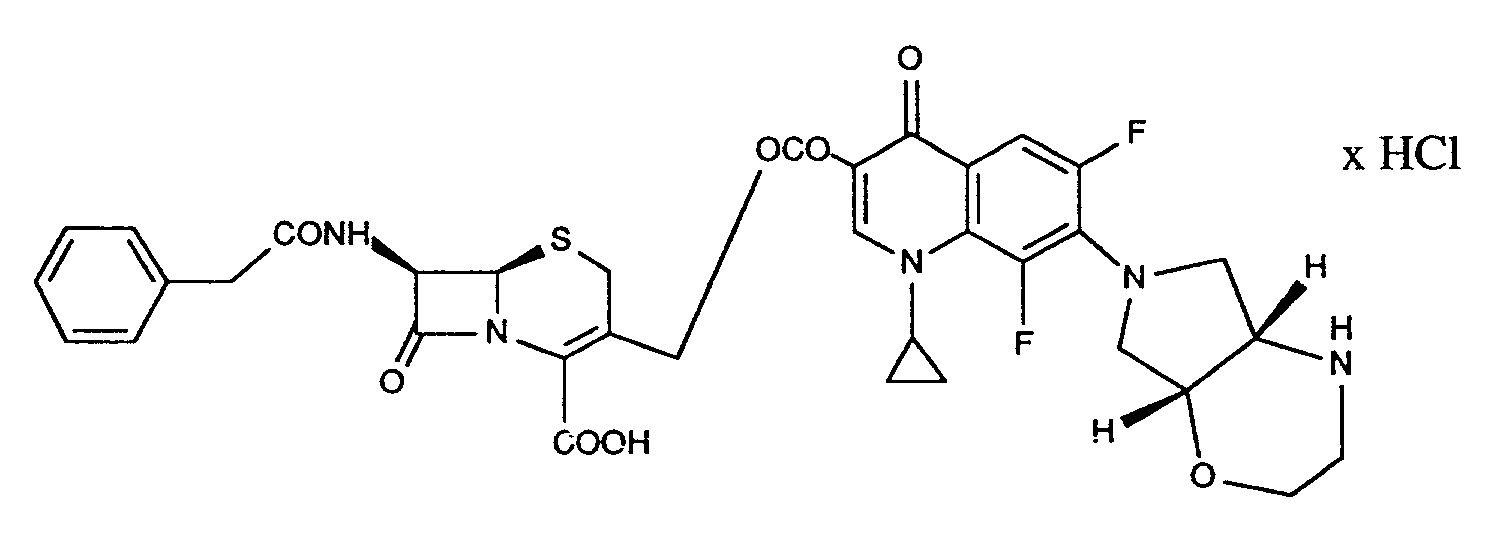
Wie für Beispiel 5 beschrieben, erhielt man aus 95 mg (0,1 mmol) der Verbindung aus Beispiel 8 34 mg (34 %) der Titelverbindung als amorphes Pulver, Schm.: ab 136°C (Zers.)
Rf = 0,44 (Acetonitril: Wasser 4:1)
MS(FAB) m/z = 722 (M+H)⁺, 744 (M+Na)⁺
IR(KBr) γ = 3423, 1782 (CO β-Lactam), 1676, 1618, 1473, 1324, 1180 722 cm⁻¹
¹H-NMR (250 MHz, DMSO-d₆)
δ = 1,12 (m, 4H, Cyclopropyl-H), 3,1-4,2 (m, 14H, SCH₂,OCH₂, NCH₂, CH), 4,35 (m, 1H, Cyclopropyl-H), 4,90, 5,20 (AB, J = 15 Hz, 2H, PhCH₂CO), 5,12 (d, J = 5 Hz, 1H, H-6') 5,70 (dd, J = 15 Hz, CH=CF), 8,43 (s, 1H, NCH=C), 9,12 (d, J = 8 Hz, 1H, CONH).
und deren pharmazeutisch verwendbaren Hydrate und Säureadditionssalze sowie die Alkali-, Erdalkali-, Silber- und Guanidiniumsalze der zugrundeliegenden Carbonsäuren. Sie weisen eine hohe antibakterielle Wirkung insbesondere gegenüber grampositiven Bakterien auf.


steht,
und deren pharmazeutisch verwendbaren Hydrate und Säureadditionssalze sowie die Alkali-, Erdalkali-, Silber- und Guanidiniumsalze der zugrundeliegenden Carbonsäuren.
L-X³ (III),
in welcher

in welcher
Claims (8)
- Verbindungen der allgemeinen Formel (I)
 X¹ für Hälogen,X² für Wasserstoff, Amino, Alkylamino mit 1 bis 4 Kohlenstoffatomen, Dialkylamino mit 1 bis 3 Kohlenstoffatomen je Alkylgruppe, Hydroxy, Alkoxy mit 1 bis 4 Kohlenstoffatomen, Mercapto, Alkylthio mit 1 bis 4 Kohlenstoffatomen, Arylthio, Halogen oder Methyl,R¹ für Alkyl mit 1 bis 4 Kohlenstoffatomen, Alkenyl mit 2 bis 4 Kohlenstoffatomen, Cycloalkyl mit 3 bis 6 Kohlenstoffatomen, Bicyclo[1.1.1]pent-1-yl, 1,1-Dimethylpropargyl, 3-Oxetanyl, 2-Hydroxyethyl, 2-Fluorethyl, Methoxy, Amino, Methylamino, Ethylamino, Dimethylamino, gegebenenfalls durch 1 oder 2 Fluoratome substituiertes Phenyl,R² für Wasserstoff, Methyl, Ethyl, (5-Methyl-2-oxo-1,3-dioxol-4-yl)-methyl oder C₁-C₄-Alkoxycarbonyl,A für N oder C-R³ steht, worinR³ für Wasserstoff, Halogen, Methyl, Alkenyl mit 2 bis 3 Kohlenstoffatomen, Alkinyl mit 2 bis 3 Kohlenstoffatomen, Hydroxy oder Methoxy steht oder auch gemeinsam mit R¹ eine Brücke der Struktur
bilden kann, undB für O oder S,D für CH₂ oder O,L für einen Rest der Struktur Y für CH₂, CH-CH₃ oder S,R⁵ für H, Benzyl, 4-Methoxybenzyl, Benzhydryl, Allyl, (5-Methyl-2-oxo-1,3-dioxol-4-yl)-methyl oder einen Rest
in welchemR' H oder Methyl undR'' Ethoxy oder tert.-Butyl bedeutet,R⁶ für H oder Methoxy undR⁷ für H, Tri-(C₁-C₄-alkyl)-silyl, Acyl, C₁-C₄-Alkoxycarbonyl, Benzyloxycarbonyl, Allyloxycarbonyl, Isopropenyloxycarbonyl,steht,
und deren pharmazeutisch verwendbaren Hydrate und Säureadditionssalze sowie die Alkali-, Erdalkali-, Silber- und Guanidiniumsalze der zugrundeliegenden Carbonsäuren. - Verbindungen gemäß Anspruch 1 Formel (I)
in welcherX¹ für Fluor,X² für Wasserstoff, Amino, Methylamino, Hydroxy, Methoxy, Fluor, Chlor, Brom oder Methyl,R¹ für Alkyl mit 1 bis 3 Kohlenstoffatomen, Vinyl, Cycloalkyl mit 3 bis 4 Kohlenstoffatomen, gegebenenfalls durch 1 oder 2 Fluoratome substituiertes Phenyl,R² für Wasserstoff, Methyl, Ethyl, (5-Methyl-2-oxo-1,3-dioxol-4-yl)-methyl, tert.-Butoxycarbonyl,A für N oder C-R³ steht, worinR³ für Wasserstoff, Fluor, Chlor, Methyl, Vinyl, Ethinyl oder Methoxy steht oder auch gemeinsam mit R¹ eine Brücke der Struktur B für O,D für CH₂ oder O,L für einen Rest der Struktur
 Y für CH₂ oder S,R⁵ für H, Benzhydryl, Allyl, oder einen Rest
in welchemR' H oder Methyl undR'' tert.-Butyl bedeutet,R⁶ für H undR⁷ für H, (CH₃)₃Si-,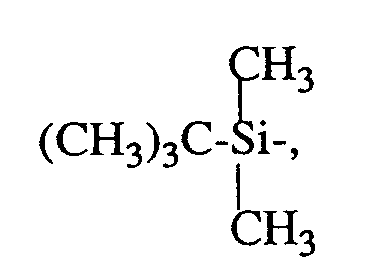


- Verbindungen gemäß Anspruch 1 Formel (I)
in welcherX¹ für Fluor,X² für Wasserstoff, Amino oder Fluor,R¹ für Alkyl mit 1 bis 2 Kohlenstoffatomen, Cyclopropyl, gegebenenfalls durch 1 oder 2 Fluoratome substituiertes Phenyl,R² für Wasserstoff, Methyl oder tert.-Butoxycarbonyl,A für N oder C-R³ steht,worinR³ für Wasserstoff, Fluor, Chlor oder Methoxy steht oder auch gemeinsam mit R¹ eine Brücke der Struktur B für OD für CH₂ oder O,L für einen Rest der Struktur
 R⁵ für H, Benzhydryl, Allyl,R⁷ für H, (CH₃)₃Si-,und deren pharmazeutisch verwendbaren Hydrate und Säureadditionssalze sowie die Alkali-, Erdalkali-, Silber- und Guanidiniumsalze der zugrundeliegenden Carbonsäuren.

- Verbindungen gemäß Ansprüchen 1 bis 3 zur Behandlung von Krankheiten.
- Verbindungen gemäß Ansprüchen 1 bis 3 zur Behandlung von bakteriellen Infektionen.
- Arzneimittel enthaltend Verbindungen gemäß Ansprüchen 1 bis 3.
- Antibakterielle Mittel enthaltend Verbindungen gemäß Ansprüchen 1 bis 3.
- Verfahren zur Herstellung von Verbindungen gemäß Anspruch 1, dadurch gekennzeichnet, daß man eine Verbindung der Formel (II)
 A, B, R¹, X¹, X² und D die Bedeutung gemäß Anspruch 1 haben, undR² für CH₃, C₂H₅, Trimethylsilyl, (5-Methyl-2-oxo-1,3-dioxol-4-yl)-methyl oder C₁-C₄-Alkoxycarbonyl undM⊕ für ein Metallionenäquivalent, wie ein Alkalimetallion oder 1/2 Erdalkalimetallion, Tetramethylammonium oder Tetrabutylammonium steht,mit Verbindungen der Formel (III)
L-X³ (III),
in welcherL die Bedeutung gemäß Anspruch 1 hat undX³ für Halogen, insbesondere Chlor, Brom oder Jod, C₁-C₄-Alkoxycarbonyloxy oder Acetoxy steht,umsetzt und gegebenenfalls vorhandene Schutzgruppen abspaltet.
Applications Claiming Priority (2)
| Application Number | Priority Date | Filing Date | Title |
|---|---|---|---|
| DE19924234330 DE4234330A1 (de) | 1992-10-12 | 1992-10-12 | Chinoloncarbonsäuren |
| DE4234330 | 1992-10-12 |
Publications (1)
| Publication Number | Publication Date |
|---|---|
| EP0592868A1 true EP0592868A1 (de) | 1994-04-20 |
Family
ID=6470252
Family Applications (1)
| Application Number | Title | Priority Date | Filing Date |
|---|---|---|---|
| EP93115705A Withdrawn EP0592868A1 (de) | 1992-10-12 | 1993-09-29 | Chinoloncarbonsäuren |
Country Status (4)
| Country | Link |
|---|---|
| EP (1) | EP0592868A1 (de) |
| JP (1) | JPH06228154A (de) |
| CA (1) | CA2108060A1 (de) |
| DE (1) | DE4234330A1 (de) |
Cited By (7)
| Publication number | Priority date | Publication date | Assignee | Title |
|---|---|---|---|---|
| WO1997020849A1 (en) * | 1995-12-07 | 1997-06-12 | Laboratorios Aranda, S.A. De C.V. | Cephalosporin fluoroquinolonate derivatives and pharmaceutical compositions containing them |
| EP1067129A1 (de) * | 1999-07-06 | 2001-01-10 | Bayer Ag | Racemisierung von R,S-Dioxo-benzylpyrrolopiperidin |
| RU2219175C2 (ru) * | 1997-11-24 | 2003-12-20 | Байер Акциенгезелльшафт | Способ получения 8-метокси-хинолонкарбоновых кислот |
| EP2154137A1 (de) | 2008-08-04 | 2010-02-17 | Chemo Ibérica, S.A. | Kristalline Form einer Moxifloxacin-Base |
| EP2121680A4 (de) * | 2007-01-05 | 2011-03-09 | Zheqing Wang | Neues und ökonomisches verfahren zur herstellung von (s,s)-2, 8-diazabicyclo-[4.3.0]-nonan und dessen enantiomer |
| CN108623583A (zh) * | 2018-05-04 | 2018-10-09 | 新乡学院 | 一种铱催化的莫西沙星侧链中间体的制备方法 |
| CN114907347A (zh) * | 2022-07-12 | 2022-08-16 | 山东国邦药业有限公司 | 一种(4aS,7aS)-6-苄基八氢-1H-吡咯并[3,4-b]吡啶的制备方法 |
Families Citing this family (6)
| Publication number | Priority date | Publication date | Assignee | Title |
|---|---|---|---|---|
| JPH03256645A (ja) * | 1990-03-08 | 1991-11-15 | Fanuc Ltd | 穴加工条件設定方法 |
| DE19821039A1 (de) * | 1998-05-11 | 1999-11-18 | Bayer Ag | Verfahren zur Herstellung von (S,S)-Benzyl-2,8-diazabicyclo[4.3.0]nonan |
| DE19927412A1 (de) * | 1999-06-16 | 2000-12-21 | Bayer Ag | Verfahren zur Enantiomerenanreicherung von cis-8-Benzyl-7,9-dioxo-2,8-diazabicyclo [4.3.0]nonan |
| CN108690017B (zh) * | 2018-05-04 | 2021-06-18 | 新乡学院 | 一种铑催化的莫西沙星侧链中间体的制备方法 |
| CN110183445B (zh) * | 2019-06-28 | 2021-08-24 | 昆明学院 | 莫西沙星及其衍生物的合成方法 |
| CN112574197B (zh) * | 2020-12-07 | 2021-12-31 | 泰安汉威集团有限公司 | 一种化合物c的手性纯化方法 |
Citations (10)
| Publication number | Priority date | Publication date | Assignee | Title |
|---|---|---|---|---|
| EP0251330A2 (de) * | 1986-07-03 | 1988-01-07 | F. Hoffmann-La Roche Ag | Cephalosporinderivate, Verfahren zu ihrer Herstellung sowie entsprechende pharmazeutische Präparate |
| EP0322810A2 (de) * | 1987-12-28 | 1989-07-05 | F. Hoffmann-La Roche Ag | Cephalosporinderivate |
| EP0350733A2 (de) * | 1988-07-15 | 1990-01-17 | Bayer Ag | 7-(1-Pyrrolidinyl)-3-chinolon- und -naphthyridoncarbon-säure-Derivate, Verfahren zu ihrer Herstellung sowie substituierte mono-und bicyclische Pyrrolidinderivate als Zwischenprodukte zu ihrer Herstellung, und sie enthaltende antibakterielle Mittel und Futterzusatzstoffe |
| EP0366641A2 (de) * | 1988-10-24 | 1990-05-02 | Norwich Eaton Pharmaceuticals, Inc. | Antimikrobielle Quinolonyllactamester |
| EP0366193A2 (de) * | 1988-10-24 | 1990-05-02 | Norwich Eaton Pharmaceuticals, Inc. | Antimikrobielle Quinolonyllactame |
| EP0366640A2 (de) * | 1988-10-24 | 1990-05-02 | Norwich-Eaton Pharmaceuticals, Inc. | Antimikrobielle Fluorochinolonylcephemderivate |
| EP0391132A1 (de) * | 1989-04-03 | 1990-10-10 | Bayer Ag | 5-Alkylchinoloncarbonsäuren |
| JPH03188080A (ja) * | 1989-12-15 | 1991-08-16 | Banyu Pharmaceut Co Ltd | ピリドンカルボン酸誘導体 |
| EP0451764A1 (de) * | 1990-04-09 | 1991-10-16 | F. Hoffmann-La Roche Ag | Carbapenem-Verbindungen |
| EP0453952A2 (de) * | 1990-04-27 | 1991-10-30 | F. Hoffmann-La Roche Ag | Verfahren zur Herstellung von Cephalosporinverbindungen |
-
1992
- 1992-10-12 DE DE19924234330 patent/DE4234330A1/de not_active Withdrawn
-
1993
- 1993-09-29 EP EP93115705A patent/EP0592868A1/de not_active Withdrawn
- 1993-10-08 CA CA 2108060 patent/CA2108060A1/en not_active Abandoned
- 1993-10-12 JP JP5277331A patent/JPH06228154A/ja active Pending
Patent Citations (10)
| Publication number | Priority date | Publication date | Assignee | Title |
|---|---|---|---|---|
| EP0251330A2 (de) * | 1986-07-03 | 1988-01-07 | F. Hoffmann-La Roche Ag | Cephalosporinderivate, Verfahren zu ihrer Herstellung sowie entsprechende pharmazeutische Präparate |
| EP0322810A2 (de) * | 1987-12-28 | 1989-07-05 | F. Hoffmann-La Roche Ag | Cephalosporinderivate |
| EP0350733A2 (de) * | 1988-07-15 | 1990-01-17 | Bayer Ag | 7-(1-Pyrrolidinyl)-3-chinolon- und -naphthyridoncarbon-säure-Derivate, Verfahren zu ihrer Herstellung sowie substituierte mono-und bicyclische Pyrrolidinderivate als Zwischenprodukte zu ihrer Herstellung, und sie enthaltende antibakterielle Mittel und Futterzusatzstoffe |
| EP0366641A2 (de) * | 1988-10-24 | 1990-05-02 | Norwich Eaton Pharmaceuticals, Inc. | Antimikrobielle Quinolonyllactamester |
| EP0366193A2 (de) * | 1988-10-24 | 1990-05-02 | Norwich Eaton Pharmaceuticals, Inc. | Antimikrobielle Quinolonyllactame |
| EP0366640A2 (de) * | 1988-10-24 | 1990-05-02 | Norwich-Eaton Pharmaceuticals, Inc. | Antimikrobielle Fluorochinolonylcephemderivate |
| EP0391132A1 (de) * | 1989-04-03 | 1990-10-10 | Bayer Ag | 5-Alkylchinoloncarbonsäuren |
| JPH03188080A (ja) * | 1989-12-15 | 1991-08-16 | Banyu Pharmaceut Co Ltd | ピリドンカルボン酸誘導体 |
| EP0451764A1 (de) * | 1990-04-09 | 1991-10-16 | F. Hoffmann-La Roche Ag | Carbapenem-Verbindungen |
| EP0453952A2 (de) * | 1990-04-27 | 1991-10-30 | F. Hoffmann-La Roche Ag | Verfahren zur Herstellung von Cephalosporinverbindungen |
Non-Patent Citations (1)
| Title |
|---|
| CHEMICAL ABSTRACTS, vol. 116, no. 3, 20 January 1992, Columbus, Ohio, US; abstract no. 21064c, page 581; * |
Cited By (8)
| Publication number | Priority date | Publication date | Assignee | Title |
|---|---|---|---|---|
| WO1997020849A1 (en) * | 1995-12-07 | 1997-06-12 | Laboratorios Aranda, S.A. De C.V. | Cephalosporin fluoroquinolonate derivatives and pharmaceutical compositions containing them |
| RU2219175C2 (ru) * | 1997-11-24 | 2003-12-20 | Байер Акциенгезелльшафт | Способ получения 8-метокси-хинолонкарбоновых кислот |
| EP1067129A1 (de) * | 1999-07-06 | 2001-01-10 | Bayer Ag | Racemisierung von R,S-Dioxo-benzylpyrrolopiperidin |
| EP2121680A4 (de) * | 2007-01-05 | 2011-03-09 | Zheqing Wang | Neues und ökonomisches verfahren zur herstellung von (s,s)-2, 8-diazabicyclo-[4.3.0]-nonan und dessen enantiomer |
| EP2154137A1 (de) | 2008-08-04 | 2010-02-17 | Chemo Ibérica, S.A. | Kristalline Form einer Moxifloxacin-Base |
| CN108623583A (zh) * | 2018-05-04 | 2018-10-09 | 新乡学院 | 一种铱催化的莫西沙星侧链中间体的制备方法 |
| CN108623583B (zh) * | 2018-05-04 | 2021-01-15 | 新乡学院 | 一种铱催化的莫西沙星侧链中间体的制备方法 |
| CN114907347A (zh) * | 2022-07-12 | 2022-08-16 | 山东国邦药业有限公司 | 一种(4aS,7aS)-6-苄基八氢-1H-吡咯并[3,4-b]吡啶的制备方法 |
Also Published As
| Publication number | Publication date |
|---|---|
| CA2108060A1 (en) | 1994-04-13 |
| DE4234330A1 (de) | 1994-04-14 |
| JPH06228154A (ja) | 1994-08-16 |
Similar Documents
| Publication | Publication Date | Title |
|---|---|---|
| EP0550903A1 (de) | Chinolon- und Naphthyridon-Carbonsäurederivate als antibakterielles Mittel | |
| EP0591808A1 (de) | Chinoloncarbonsäuren | |
| EP0350733B1 (de) | 7-(1-Pyrrolidinyl)-3-chinolon- und -naphthyridoncarbon-säure-Derivate, Verfahren zu ihrer Herstellung sowie substituierte mono-und bicyclische Pyrrolidinderivate als Zwischenprodukte zu ihrer Herstellung, und sie enthaltende antibakterielle Mittel und Futterzusatzstoffe | |
| EP0588166B1 (de) | Antibakterielle 7-Isoindolinyl-chinolon- und naphthyridon-Derivate | |
| DE4121214A1 (de) | 7-azaisoindolinyl-chinolon- und -naphthyridoncarbonsaeure-derivate | |
| EP0523512B1 (de) | 8-Vinyl- und 8-Ethinyl-chinoloncarbonsäuren | |
| DE4234330A1 (de) | Chinoloncarbonsäuren | |
| EP0516861A1 (de) | Pyridoncarbonsäurederivat | |
| EP0481274B1 (de) | 7-(2,7-Diazabicyclo[3,3.0]octyl)-3-chinolon- und -naphthyridoncarbonsäure-Derivate | |
| EP0705828B1 (de) | Chinolon- und Naphthyridoncarbonsäure-Derivate als antibakterielle Mittel | |
| EP0647644B1 (de) | Aktibakteriell wirksame Pyrido 1,2,3-d,e 1,3,4 Benzoxadiazinderivate | |
| EP0589318B1 (de) | Antibakterielle 7-(Aminomethyl-oxa-7-aza-bicyclo 3.3.0 oct-7-yl)chinolon- und -naphthyridoncarbonsäure-Derivate | |
| DE4200414A1 (de) | Chinolon- und naphthyridon-carbonsaeure-derivate | |
| EP0653425A1 (de) | 1-(2-Fluorcyclopropyl)-chinolon- und naphthyridoncarbonsäure-Derivate, deren Herstellung und deren Verwendung in antibakteriellen Mitteln | |
| US4172895A (en) | 6-(1'-Hydroxyethyl)-2-aminoethylthio-oxapen-2-em-3-carboxylic acid | |
| EP0726270B1 (de) | 1,6-Naphthyridoncarbonsäurederivate | |
| KR100270898B1 (ko) | 퀴놀론- 및 나프티리돈-카르복실산 유도체 | |
| EP0721948B1 (de) | Chinolon- und Naphthyridoncarbonsäure-Derivate als antibakterielle Mittel | |
| CA2443307C (en) | Quinolone- and naphthyridone-carboxylic acid derivatives | |
| EP0704443A2 (de) | Chinolon- und Naphthyrdioncarbonsäure-Derivate | |
| DD285601A5 (de) | Verfahren zur herstellung von 7-(1-pyrrolidinyl)-3-chinolon- und naphthyridoncarbonsaeure-derivaten |
Legal Events
| Date | Code | Title | Description |
|---|---|---|---|
| PUAI | Public reference made under article 153(3) epc to a published international application that has entered the european phase |
Free format text: ORIGINAL CODE: 0009012 |
|
| AK | Designated contracting states |
Kind code of ref document: A1 Designated state(s): AT BE CH DE DK ES FR GB GR IE IT LI LU MC NL PT SE |
|
| 17P | Request for examination filed |
Effective date: 19940927 |
|
| STAA | Information on the status of an ep patent application or granted ep patent |
Free format text: STATUS: THE APPLICATION HAS BEEN WITHDRAWN |
|
| 18W | Application withdrawn |
Withdrawal date: 19950616 |