EP0322810A2 - Cephalosporinderivate - Google Patents
Cephalosporinderivate Download PDFInfo
- Publication number
- EP0322810A2 EP0322810A2 EP88121622A EP88121622A EP0322810A2 EP 0322810 A2 EP0322810 A2 EP 0322810A2 EP 88121622 A EP88121622 A EP 88121622A EP 88121622 A EP88121622 A EP 88121622A EP 0322810 A2 EP0322810 A2 EP 0322810A2
- Authority
- EP
- European Patent Office
- Prior art keywords
- hydrogen
- lower alkyl
- group
- preparation
- amino
- Prior art date
- Legal status (The legal status is an assumption and is not a legal conclusion. Google has not performed a legal analysis and makes no representation as to the accuracy of the status listed.)
- Withdrawn
Links
- 0 C1C2C1C*C2 Chemical compound C1C2C1C*C2 0.000 description 8
- IOIIRFRKFWXJFQ-UHFFFAOYSA-N CCN(C=C(C)C(c1c2)=O)c1cc(N(CC1)CCN1C(C(C=C)=O)=O)c2F Chemical compound CCN(C=C(C)C(c1c2)=O)c1cc(N(CC1)CCN1C(C(C=C)=O)=O)c2F IOIIRFRKFWXJFQ-UHFFFAOYSA-N 0.000 description 1
Classifications
-
- C—CHEMISTRY; METALLURGY
- C07—ORGANIC CHEMISTRY
- C07D—HETEROCYCLIC COMPOUNDS
- C07D501/00—Heterocyclic compounds containing 5-thia-1-azabicyclo [4.2.0] octane ring systems, i.e. compounds containing a ring system of the formula:, e.g. cephalosporins; Such ring systems being further condensed, e.g. 2,3-condensed with an oxygen-, nitrogen- or sulfur-containing hetero ring
- C07D501/14—Compounds having a nitrogen atom directly attached in position 7
- C07D501/16—Compounds having a nitrogen atom directly attached in position 7 with a double bond between positions 2 and 3
- C07D501/20—7-Acylaminocephalosporanic or substituted 7-acylaminocephalosporanic acids in which the acyl radicals are derived from carboxylic acids
- C07D501/24—7-Acylaminocephalosporanic or substituted 7-acylaminocephalosporanic acids in which the acyl radicals are derived from carboxylic acids with hydrocarbon radicals, substituted by hetero atoms or hetero rings, attached in position 3
- C07D501/36—Methylene radicals, substituted by sulfur atoms
-
- A—HUMAN NECESSITIES
- A61—MEDICAL OR VETERINARY SCIENCE; HYGIENE
- A61P—SPECIFIC THERAPEUTIC ACTIVITY OF CHEMICAL COMPOUNDS OR MEDICINAL PREPARATIONS
- A61P31/00—Antiinfectives, i.e. antibiotics, antiseptics, chemotherapeutics
- A61P31/04—Antibacterial agents
-
- C—CHEMISTRY; METALLURGY
- C07—ORGANIC CHEMISTRY
- C07D—HETEROCYCLIC COMPOUNDS
- C07D519/00—Heterocyclic compounds containing more than one system of two or more relevant hetero rings condensed among themselves or condensed with a common carbocyclic ring system not provided for in groups C07D453/00 or C07D455/00
Definitions
- the present invention relates to cephalosporin derivatives of the general formula in which m is 0, 1 or 2, R1 is hydrogen or an acyl group, R2 is hydrogen, lower alkoxy, lower alkylthio or lower alkanoylamino, R31 is hydrogen, lower alkyl, lower alkenyl, C3-C7-cycloalkyl, halogeno-lower alkyl or mono-, Di- or tri-halophenyl; Z R30 -C or nitrogen, R30 hydrogen or halogen, or R30 and R31 together form a C3-C5 alkylene group, a C2-C4 alkylene monooxy group or a C1-C2 alkylenedioxy group, R32 Hydrogen, halogen, lower alkyl or an optionally substituted 5- or 6-membered heterocyclic ring with one, two or three oxygen, nitrogen and / or sulfur atoms and R33 hydrogen or halogen or R32 and R33 together represent a C1-C4-alky
- m is preferably 0.
- lower alkyl refers to straight and branched chain hydrocarbon groups having 1-8, preferably 1-4 carbon atoms, e.g. Methyl, ethyl, n-propyl, isopropyl, t-butyl or the like.
- lower alkoxy refers to straight or branched chain hydrocarbonoxy groups, in which the alkyl radical has the meaning given above. Examples are methoxy, ethoxy, n-propoxy and the like.
- halogen refers to chlorine, bromine, iodine or fluorine, unless otherwise defined.
- aryl means an optionally substituted aromatic radical, e.g. Phenyl, tolyl, xylyl, mesityl, cumyl (isopropylphenyl), naphthyl and the like, the aryl group e.g. 1-3 may carry suitable substituents such as halogen (e.g. fluorine, chlorine, bromine), hydroxy or the like.
- halogen e.g. fluorine, chlorine, bromine
- lower alkanoyl or “alkanoyl” denotes a radical of the general formula R25-CO- in which R25 represents hydrogen or C1-C6 alkyl. Examples of these groups are acetyl, formyl, propionyl, n-butyryl and the like.
- substituted phenyl means a mono- or disubstituted phenyl group, the substituents being halogen (e.g. chlorine, bromine, fluorine), lower alkyl, amino, nitro or trifluoromethyl.
- halogen e.g. chlorine, bromine, fluorine
- substituted alkyl means a lower alkyl group, e.g. can be substituted by halogen (e.g. chlorine, fluorine, bromine), trifluoromethyl, amino, cyan etc.
- halogen e.g. chlorine, fluorine, bromine
- trifluoromethyl amino, cyan etc.
- lower alkenyl or “alkenyl” means straight or branched chain hydrocarbon groups with an olefinic double bond and 2-6 carbon atoms, ie the rest of compounds of the formula C n H 2n , where n is 2-6, for example allyl, vinyl, etc .
- aralkyl means a hydrocarbon group with an aromatic and aliphatic structure, i.e. a hydrocarbon group in which a hydrogen atom of the lower alkyl group is substituted by a monocyclic aryl group, e.g. through phenyl, tolyl etc.
- 5-membered, 6 or 7-membered heterocyclic ring with 1-4 oxygen, nitrogen and / or sulfur atoms means, for example, the following groups: 6-membered, nitrogen-containing heterocyclic rings, such as pyridyl, piperidyl, piperidino, N-oxidopyridyl, pyrimidyl, piperazinyl, pyridazinyl, N-oxidopyridazinyl, etc .; 5-membered nitrogen-containing heterocyclic rings, for example pyrrolidinyl, pyrazolyl, imidazolyl, thiazolyl, 1,2,3-thiadiazolyl, 1,2,4-thiadiazolyl, 1,3,4-thiadiazolyl, 1,2,3-oxadiazolyl, 1,2,4-oxadiazolyl, 1,3,4-oxadiazolyl, 1,2,5-oxadiazolyl, 1,2,3-triazolyl, 1,2,4-triazolyl, 1
- heterocyclic rings can be further substituted, the following substituents being suitable, for example: lower alkyl such as methyl, ethyl, n-propyl, etc., lower alkoxy, eg methoxy, ethoxy, etc., halogen such as chlorine, bromine, etc., halogen-lower alkyl such as trifluoromethyl, trichloroethyl, etc., amino, mercapto, hydroxy, carbamoyl or carboxy, etc.
- substituents being suitable, for example: lower alkyl such as methyl, ethyl, n-propyl, etc., lower alkoxy, eg methoxy, ethoxy, etc., halogen such as chlorine, bromine, etc., halogen-lower alkyl such as trifluoromethyl, trichloroethyl, etc., amino, mercapto, hydroxy, carbamoyl or carboxy, etc.
- cyclo-lower alkyl or "cycloalkyl” means a 3-7 membered saturated carbocyclic radical, e.g. Cyclopropyl, cyclobutyl, cyclohexyl, etc.
- R30 and R31 together can be C3-C5 alkylene, e.g. - (CH2) 3-, - (CH2) 4-, - (CH2) 5- or -CH (CH3) - (CH2) 2-, or also C2-C4-alkylene monooxy, e.g. - (CH2) 2-O-, - (CH2) 3-O-, - (CH2) 4-O- or -CH (CH3) -CH2-O-; or also C1-C2 alkylenedioxy, e.g. -O-CH2-O-, -O- (CH2) 2-O- or -O-CH (CH3) -O-.
- a 5- or 6-membered condensed ring is preferably formed.
- R32 and R33 together can mean C1-C4 alkylenedioxy, e.g. -O-CH2-O-, -O- (CH2) 2-O-, -O- (CH2) 3-O-, -O- (CH2) 4-O-, -O-CH (CH3) -O -, -O-CH (CH3) -CH (CH3) -O- or the like.
- a 5- or 6-membered condensed ring is preferably formed.
- acyl (substituent R 1) stands for all organic radicals which are formed by removing the hydroxyl group from a carboxylic acid. Certain acyl residues are preferred: Examples of such preferred acyl groups are those which have hitherto been used for the acylation of ⁇ -lactam antibiotics, including 6-aminopenicillanic acid and its derivatives, and 7-aminocephalosporanic acid and its derivatives; see, for example, Cephalosporins and Penicillins , Flynn Verlag, Academic Press (1972), Belgian Patent 866,038, published October 17, 1978, Belgian Patent 867,994 light on December 11, 1978, U.S.
- n 0, 1, 2 or 3;
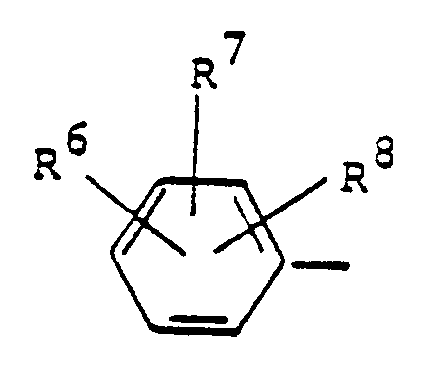
- R6, R7 and R8 are each hydrogen, halogen, hydroxy, nitro, amino, cyano, trifluoromethyl, C1-C4-alkyl, C1-C4-alkoxy or aminomethyl, R90 amino, acylamino, hydroxy, a carboxy salt, protected carboxy, such as benzyloxycarbonyl , Formyloxy or azido and M represent a cation.
- Preferred carboxyclic aromatic acyl groups are those of the formulas R90 is preferably an amino group, a hydroxy group or a carboxy or sulfo salt.
- acyl groups which can be used according to the invention are: Sulfophenylacetyl, Hydroxysulfonyloxyphenylacetyl, Sulfamoylphenylacetyl, (Phenoxycarbonyl) phenylacetyl, (p-tolyloxycarbonyl) phenylacetyl, Formyloxyphenylacetyl, Carboxyphenylacetyl, Formylaminophenylacetyl, Benzyloxycarbonylphenylacetyl, 2- (N, N-dimethylsulfamoyl) -2-phenylacetyl, 2-bromo-2-thienylacetyl, etc.
- heterocyclic rings are thienyl, furyl, pyrrolyl, pyridinyl, pyrazinyl, thiazolyl, pyrimidinyl and tetrazolyl.
- substituents on the heterocyclic ring are halogen, hydroxy, nitro, amino, cyano, trifluoromethyl, C1-C4-alkyl and C1-C4-alkoxy.
- Preferred heteroaromatic acyl groups are those in which R101 is 2-amino-4-thiazolyl, 2-amino-5-halogeno-4-thiazolyl, 4-aminopyridin-2-yl, 2-amino-1,3,4-thiadiazol-5- yl, 2-thienyl, 2-furanyl, 4-pyridinyl or 2,6-dichloro-4-pyridinyl means.
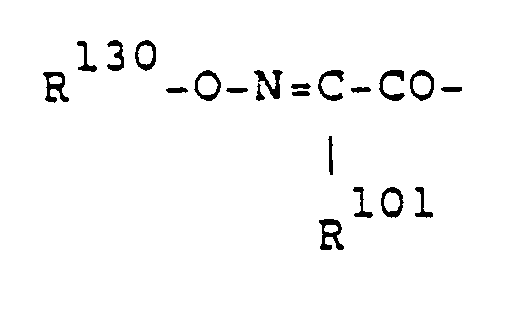
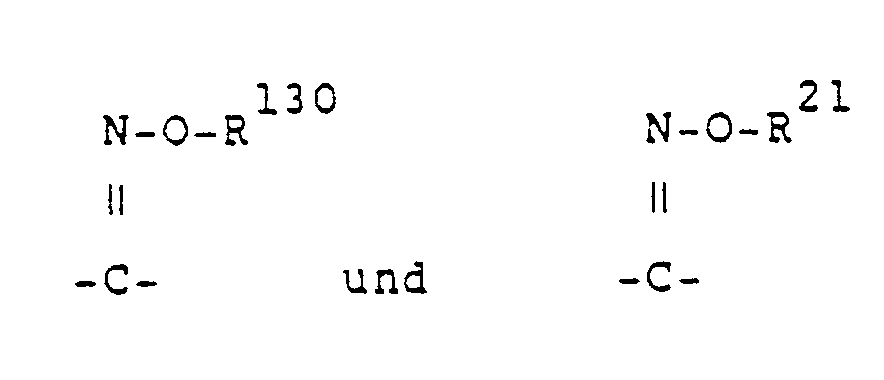
- R101 has the above meaning and R130 represents hydrogen, lower alkyl, C3-C7-cycloalkyl, carboxy-C3-C7-cycloalkyl or substituted lower alkyl, the lower alkyl group being substituted by one or more of the radicals halogen, cyano, nitro , Amino, mercapto, lower alkylthio, an aromatic group defined by R111 above, carboxy (including its salts), lower alkanoylamino, lower alkoxycarbonyl, phenylmethoxycarbonyl, diphenylmethoxycarbonyl, hydroxy (lower alkoxy) phosphinyl, dihydroxyphosphinyl, hydroxy (phenylmethoxy) phosphinyl or lower alkoxy) phosphinyl.
- Preferred (acylamino) arylacetyl groups of the above formula are those in which R140 represents amino or acylamino. Also preferred are those groups wherein R111 is phenyl or 2-thienyl.
- Preferred [[[3-substituted-2-oxo-1-imidazolidinyl] carbonyl] amino] arylacetyl groups of the above formula are those wherein R111 is phenyl or 2-thienyl. Also preferred are those groups in which R15 is hydrogen, methylsulfonyl, phenylmethylamino or 2-furylmethyleneamino.
- Z is R30-C, where R30 represents hydrogen, chlorine or fluorine, preferably hydrogen or fluorine; R31 is preferably lower alkyl, preferably ethyl, or halogen-lower alkyl, especially fluoroethyl, or C3-C7-cycloalkyl, preferably cyclopropyl; R32 is preferably lower alkyl, especially methyl, or piperazinyl, which is at the nitrogen atom in the 4-position by lower alkyl, preferably by methyl can be substituted; R33 is preferably hydrogen, chlorine or fluorine, especially hydrogen or fluorine, very particularly fluorine.
- the 3-position quinolonyl or azaquinolonyl substituent includes residues of the following formulas:
- a preferred class of the compounds according to the invention is that of the general formula in which R1 has the meaning given above, R20 is an amino protecting group, for example trityl or chloroacetyl, or, preferably, hydrogen and R21 is hydrogen, lower alkyl or a group of the general formula wherein R22 and R23 are hydrogen or lower alkyl or R22 and R23 together with the carbon atom to which they are attached represent a 3-7-membered carbocyclic ring, for example cyclopropyl, cyclobutyl or cyclopentyl.
- Compounds of the formula Ib, in which R20 is hydrogen and R21 is methyl or a group of the formula and R22 and R23 represent hydrogen or methyl.
- the groups are preferably located in the syn form, ie in the Z form, or as mixtures in which the syn form predominates.
- esters of the compounds of the formula I are to be understood as meaning compounds of the formula I whose carboxy group or carboxy groups is / are present in the form of an easily hydrolyzable ester group.
- esters which can be conventional, are the lower alkanoyloxyalkyl esters, e.g. the acetoxymethyl, pivaloyloxymethyl, 1-acetoxyethyl and 1-pivaloyloxyethyl esters; the lower alkoxycarbonyloxyalkyl esters, e.g.
- Other esters, e.g. the benzyl and cyanomethyl esters may be useful.
- salts of the compounds of the formula I are alkali metal salts, such as the sodium and the potassium salt, Ammonium salts; Alkaline earth metal salts such as the calcium salt; Salts with organic bases, such as the salts with amines, for example salts with N-ethylpiperidine, procaine, dibenzylamine, N, N'-dibenzylethylenediamine, alkylamines or dialkylamines, and salts with amino acids, such as salts with arginine or lysine.
- alkali metal salts such as the sodium and the potassium salt, Ammonium salts
- Alkaline earth metal salts such as the calcium salt
- Salts with organic bases such as the salts with amines, for example salts with N-ethylpiperidine, procaine, dibenzylamine, N, N'-dibenzylethylenediamine, alkylamines or dialkylamines, and salts with amino acids, such as salts with arg
- the compounds of formula I have a basic functional group, e.g. have an amino group, also form addition salts with organic or inorganic acids.
- such salts are hydrohalides, for example hydrochlorides, hydrobromides, hydroiodides, and also other mineral acid salts, such as sulfates, nitrates, phosphates and the like, alkyl and monoarylsulfonates, such as ethanesulfonates, toluenesulfonates, benzenesulfonates and the like, and also other organic acid salts, such as acetates, tartrates Maleates, citrates, benzoates, salicylates, ascorbates and the like.
- the compounds of formula I including their salts and easily hydrolyzable esters can be hydrated.
- the hydration can take place in the course of the manufacturing process or can gradually occur as a result of hygroscopic properties of an initially anhydrous product.
- the inventive reaction of the halide of formula II with a salt of the carboxylic acid of formula III according to variant a) of the inventive method is preferably carried out in a non-hydroxylated solvent, such as e.g. in dimethylformamide, methylene chloride or N, N'-dimethylacetamide.
- Suitable salts of the carboxylic acid of formula III are e.g. the sodium, potassium, cesium, t-butylammonium or tetramethylammonium salts.
- Hal in formula II means halogen, especially bromine or iodine. This reaction is preferably carried out at about 0-80 ° C, especially at room temperature.
- Ester protecting groups R of the esters of formula IV used in variant b) of the process according to the invention are preferably those which can be converted into the free carboxy group under mild conditions, for example t-butyl, p-nitrobenzyl, benzhydryl, allyl, etc. Also those explained above Residues of an easily hydrolyzable ester can be used.
- the ester protecting groups are split off, for example, as follows: p-nitrobenzyl by hydrolysis in the presence of sodium sulfide at (or below) 0 ° C.
- a solvent such as dimethylformamide (preferably aqueous); t-Butyl by reaction with trifluoroacetic acid in the presence of anisole at about 0 ° C to Room temperature, with or without additional solvent, such as methylene chloride; Allyl by palladium (O) -catalyzed transallylation in the presence of a sodium or potassium salt of 2-ethylcaproic acid, see, for example, J. Org. Chem. 1982 , 47 , 587.
- the reduction of the sulfoxides of the general formula V according to variant c) of the process according to the invention can take place after a large number of reactions, e.g. by treatment with phosphorus trichloride in dimethylformamide or with trifluoroacetic anhydride in the presence of sodium iodide in acetone / methylene chloride.
- the temperature of these reactions is preferably about 0 to -20 ° C., in particular 0 ° C.
- any ⁇ 2 isomer of formula VI is converted into the corresponding ⁇ 3 isomer of formula I, in which m represents 1 or 2.
- This oxidation is carried out by treating with an organic or inorganic oxidizing agent.
- oxidizing compounds such as organic peroxides, for example monosubstituted organic peroxides such as C1-C4-alkyl or alkanoyl hydroperoxides, such as t-butyl hydroperoxide, performic acid or peracetic acid, serve as oxidizing agents.
- phenyl-substituted derivatives of these hydroperoxides such as cumene hydroperoxide or perbenzoic acid.
- the phenyl substituent can optionally carry a further lower group, for example C1-C4-alkyl or C1-C4-alkoxy or halogen or a carboxy group, for example 4-methylperbenzoic acid, 4-methoxyperbenzoic acid, 3-chloroperbenzoic acid or monoperphthalic acid.
- oxidizing agents for example hydrogen peroxide; Oxon; Permanganates such as potassium or sodium permanganate; Hypochlorites such as sodium, potassium or ammonium hypochlorite; Peroxymono- and peroxydisulfuric acid.
- hydrogen peroxide oxygen
- Oxon oxygen
- Permanganates such as potassium or sodium permanganate
- Hypochlorites such as sodium, potassium or ammonium hypochlorite
- Peroxymono- and peroxydisulfuric acid for example hydrogen peroxide; Oxon; Permanganates such as potassium or sodium permanganate; Hypochlorites such as sodium, potassium or ammonium hypochlorite; Peroxymono- and peroxydisulfuric acid.
- Hypochlorites such as sodium, potassium or ammonium hypochlorite
- Peroxymono- and peroxydisulfuric acid Peroxymono- and peroxydisulfuric acid.
- 3-chloroperbenzoic acid is preferred.
- the Oxidation is advantageously carried out in an inert solvent, for example in an aprotic, inert solvent such as tetrahydrofuran, dioxane, methylene chloride, chloroform, ethyl acetate or acetone; or in a protic solvent, such as water, a lower alkanol, for example methanol or ethanol, or a lower, optionally halogenated alkane carboxylic acid, for example formic acid, acetic acid or trifluoroacetic acid.
- the reaction temperature is mainly in the range from -20 ° C to + 50C.
- the corresponding sulfoxide is obtained primarily, i.e. a compound of formula I, wherein m represents the number 1. If the amount of the oxidizing agent is increased to twice the stoichiometric ratio or more, the corresponding sulfone is formed, i.e. a compound of formula I, wherein m represents the number 2. It is also possible to obtain the sulfone of the formula I from the corresponding sulfoxide by treatment with the oxidizing agent in an equimolar or larger amount. The process conditions are essentially the same as for the preparation of the sulfoxide.
- Possible amino protecting groups are those which are used in peptide chemistry, for example alkoxycarbonyl groups, for example t-butoxycarbonyl etc., substituted alkoxycarbonyl groups, for example trichloroethoxycarbonyl etc., substituted aralkoxycarbonyl groups, for example p-nitrobenzyloxycarbonyl, aralkyl groups, for example trityl or benzhydryl, or halogenoalkanoyl groups, such as Chloroacetyl, bromoacetyl, iodoacetyl or trifluoroacetyl.
- Preferred amino protecting groups are t-butoxycarbonyl (t-BOC) and trityl.
- the amino protecting groups can be split off, for example, by acid hydrolysis (e.g. t-butoxycarbonyl or trityl) or else by basic hydrolysis (e.g. trifluoroacetyl).
- acid hydrolysis e.g. t-butoxycarbonyl or trityl
- basic hydrolysis e.g. trifluoroacetyl
- the chlorine, bromine and iodoacetyl groups can be split off by treatment with thiourea.
- Protective groups which can be split off by acid hydrolysis are preferably removed with the aid of a lower alkane carboxylic acid, which can optionally be halogenated.
- a lower alkane carboxylic acid which can optionally be halogenated.
- formic acid or trifluoroacetic acid is used.
- the temperature is usually room temperature, although slightly elevated or slightly reduced temperatures can also be used, e.g. in the range from about 0 ° C to + 40 ° C.
- Protective groups which can be removed under alkaline conditions are generally hydrolyzed with dilute aqueous alkali at 0 ° C. to + 30 ° C.
- the chlorine, bromine and iodoacetyl protective groups can be split off using thiourea in an acidic, neutral or alkaline medium at about 0 ° C. to + 30 ° C.
- the carboxylic acid is preferably reacted with the corresponding halide containing the ester group, preferably with the iodide.
- the reaction can be accelerated with the aid of a base, for example an alkali metal hydroxide or carbonate or an organic amine, such as triethylamine.
- the esterification reaction is preferably carried out in an inert organic solvent, such as dimethylacetamide, hexamethylphosphoric triamide, dimethyl sulfoxide or, preferably, dimethylformamide.
- the temperature is preferably in the range of about 0-40 ° C.
- the salts and hydrates of the compounds of the formula I or the hydrates of these salts according to variant g) of the process according to the invention can be prepared in a manner known per se, e.g. by reacting the carboxylic acid of formula I with an equimolar amount of the desired base, suitably in a solvent such as water or in an organic solvent such as ethanol, methanol, acetone and the like.
- a solvent such as water or in an organic solvent such as ethanol, methanol, acetone and the like.
- the temperature of the salt formation is not critical, but it is generally at room temperature but can also be slightly above or below, for example in the range from 0 ° C. to + 50 ° C.
- the hydrates are usually produced automatically in the course of the manufacturing process or as a result of hygroscopic properties of an initially anhydrous product.
- a completely or partially anhydrous product (carboxylic acid of formula I or one of its salts) can be used in a moist atmosphere, e.g. at about + 10 ° C to + 40 ° C.
- reaction scheme I illustrates the process for the preparation of the products according to the invention: R1, R2, R31, R32, R33, R, Z and the dashed bonds all have the meaning given above, and X represents a cation.
- the carboxylic acid form of the corresponding quinolone is activated by treatment with a 2-fluoro-1-methylpyridinium salt. Treating this activated acid with triphenylmethyl mercaptan and 4-dimethylaminopyridine gives a thioester of the formula in which R31, R32, R33 and Z have the above meaning and Ph is phenyl.
- the compound of formula IX is treated with an aqueous acid, preferably aqueous hydrochloric acid, and then neutralized with a base, in particular potassium hydroxide; a thiocarboxylic acid salt of the formula is obtained in which R31, R32, R33 and Z have the meaning given above and X+ represents a cation.
- a thiocarboxylic acid salt of the formula is obtained in which R31, R32, R33 and Z have the meaning given above and X+ represents a cation.
- the compound of formula IIa is a known compound or is available in an analogous manner (see e.g. U.S. Patent Nos. 4,406,899 and 4,266,049). It is reacted with a salt of the selected quinolone of the formula III. The implementation takes place as described above for the alternative method a). Depending on the choice of the ester protecting group R and the halogen Hal, a ⁇ 3 or ⁇ 2 isomer of the formula VIII is obtained in relation to the double bond in the cephem ring.
- ester protecting group R of the compound of formula VIII is then split off as described above for process alternative b), a carboxylic acid of the formula Ia or a mixture thereof having the ⁇ 3 isomer of the formula VIa being obtained.
- the compound of the formula VIa thus obtained is oxidized, as described above for process alternative d), for example with a peracid, such as 3-chloroperbenzoic acid, in a solvent, such as methylene chloride, at a reaction temperature of about -20 ° C to 40 ° C, preferably at about 0 ° C.
- a peracid such as 3-chloroperbenzoic acid
- a solvent such as methylene chloride
- the compound of formula V thus obtained is itself a final product falling under formula I. However, it can be reduced to the end product Ia, as described above for process variant c).
- Compounds of formula I with the groups are preferably in the form of syn.
- Such syn forms can be obtained by using starting materials in which this syn form already exists.
- a syn / anti mixture of a compound of the formula I obtained can be separated into the corresponding syn and anti forms in a customary manner, for example by recrystallization or by chromatographic methods using a suitable solvent or solvent mixture.
- the compounds of the formula I and the corresponding salts or the hydrates of these products and esters have antibiotic, in particular bactericidal activity. They can be used as agents to control bacterial infections (including urinary and respiratory infections) in mammals, e.g. Dogs, cats, horses etc., as well as used in humans. These cephalosporins are effective against a wide range of both gram-negative and gram-positive bacteria.
- a compound according to the invention can be treated with a daily dose of about 5 to about 500 mg / kg, preferably about 10-100 mg / kg, in particular about 10-55 mg / kg.
- the products according to the invention can be used as medicinal products, for example in the form of pharmaceutical preparations, which they or their salts are mixed with a pharmaceutical, organic or inorganic inert carrier material suitable for enteral or parenteral administration, such as water, gelatin, gum arabic, milk sugar, starch , Magnesium stearate, talc, vegetable oils, polyalkylene glycols, petroleum jelly etc. included.
- a pharmaceutical, organic or inorganic inert carrier material suitable for enteral or parenteral administration such as water, gelatin, gum arabic, milk sugar, starch , Magnesium stearate, talc, vegetable oils, polyalkylene glycols, petroleum jelly etc. included.
- the pharmaceutical preparations can be in solid form, for example as tablets, dragées, suppositories, capsules or in liquid form, for example as solutions, suspensions or emulsions.
- carboxylic acids of the formula I and their salts or hydrates are preferably suitable for parenteral administration and are preferably used for this purpose as lyophilisates or dry powder for dilution with conventional agents such as water and isotonic saline.
- Solvent promoters, such as propylene glycol, are prepared.
- the readily hydrolyzable esters of the formula I are also suitable for enteral administration.
- the yellow reaction mixture obtained was stirred at -10 ° C. for 30 minutes, and 16.6 g (0.06 mol) of triphenylmethyl mercaptan and 7.32 g (0.06 mol) of 4-dimethylaminopyridine were then added; the mixture was slowly brought to 23 ° C. and then stirred for 16 hours. The mixture was then diluted with about 1 liter of methylene chloride and evaporated under reduced pressure. 25 g of a yellow oil were obtained, which was chromatographed twice on 100 g of silica gel and eluted with 20% acetone in methylene chloride. The fractions containing the desired product were combined and evaporated under reduced pressure.
- the aqueous solution was lyophilized using 6,8-difluoro-1- (2-fluoroethyl) -1,4-dihydro-7- (4-methyl-1-piperazinyl) -4-oxo-3-quinolinethiocarboxylic acid potassium salt hydrate as a yellow solid was obtained.
- the reaction mixture was taken up in 100 ml of ethyl acetate, washed with 100 ml of water and then twice with 100 ml of aqueous sodium chloride solution. The aqueous washing liquids were back extracted twice with 100 ml of ethyl acetate each time. The organic extracts were combined, dried over magnesium sulfate and filtered. The solvent was evaporated under reduced pressure to give 4.1 g of a crude product which was 125 g Silica gel was chromatographed. Elution with 2% to 4% methanol in chloroform gave fractions 6-13 with the desired product.
- aqueous solution was then eluted on a reverse phase chromatography column (C18) and with 5% to 60% acetonitrile water. Fractions 11-16 were eluted with 20% to 25% acetonitrile in water, combined, evaporated under reduced pressure and then lyophilized.
- the sterile water ampoule contains 10% propylene glycol. Before the administration, 2.5 ml of a 2% aqueous lidocaine hydrochloride solution were added to the lyophilisate.
Landscapes
- Chemical & Material Sciences (AREA)
- Organic Chemistry (AREA)
- Health & Medical Sciences (AREA)
- Chemical Kinetics & Catalysis (AREA)
- Life Sciences & Earth Sciences (AREA)
- General Chemical & Material Sciences (AREA)
- Medicinal Chemistry (AREA)
- Nuclear Medicine, Radiotherapy & Molecular Imaging (AREA)
- Communicable Diseases (AREA)
- Pharmacology & Pharmacy (AREA)
- Oncology (AREA)
- Animal Behavior & Ethology (AREA)
- General Health & Medical Sciences (AREA)
- Public Health (AREA)
- Veterinary Medicine (AREA)
- Pharmaceuticals Containing Other Organic And Inorganic Compounds (AREA)
- Cephalosporin Compounds (AREA)
Abstract
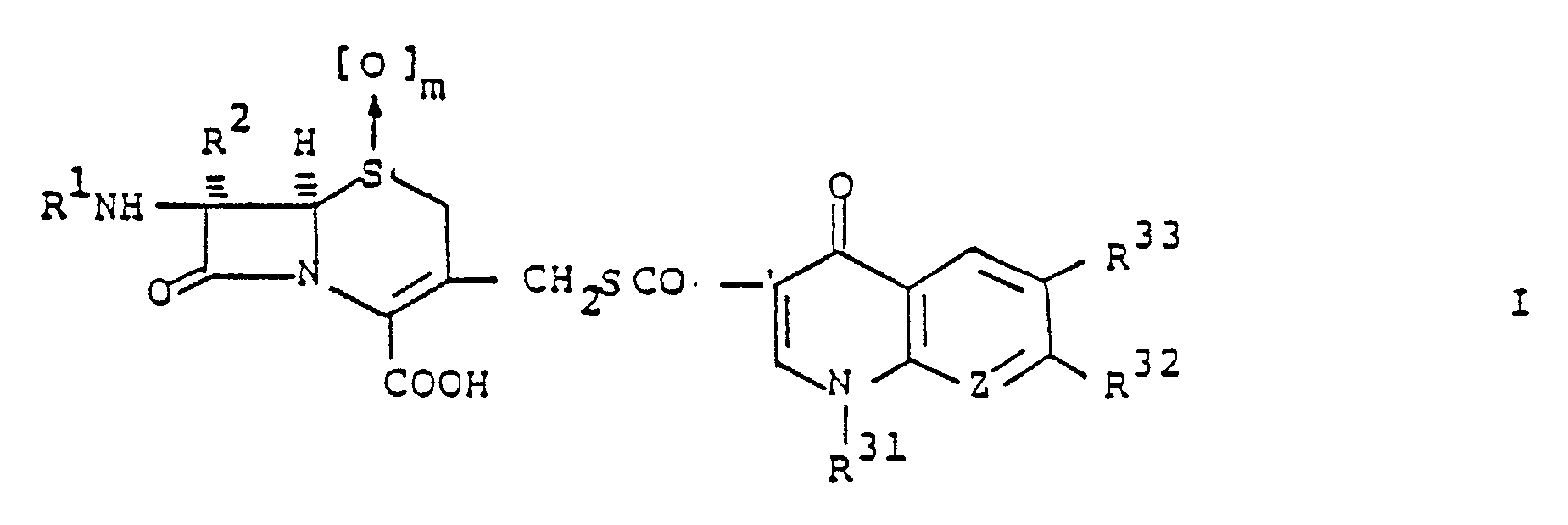
sowie leicht hydrolysierbare Ester und Salze dieser Verbindungen und Hydrate der Verbindungen der Formel I bzw. von deren Estern und Salzen.
Description
- Die vorliegende Erfindung betrifft Cephalosporinderivate der allgemeinen Formel

sowie leicht hydrolysierbare Ester und Salze dieser Verbindungen und Hydrate der Verbindungen der Formel I bzw. von deren Estern und Salzen. - In der obigen Formel I ist m vorzugsweise 0.
- Der Ausdruck "niederes Alkyl" oder "Alkyl" bezieht sich auf gerad- und verzweigtkettige Kohlenwasserstoffgruppen mit 1-8, bevorzugt 1-4 Kohlenstoffatomen, z.B. Methyl, Aethyl, n-Propyl, Isopropyl, t-Butyl oder dergleichen.
- Der Ausdruck "niederes Alkoxy" oder "Alkoxy" bezieht sich auf gerad- oder verzweigtkettige Kohlenwasserstoffoxygruppen, worin der Alkylrest die oben gegebene Bedeutung hat. Beispiele sind Methoxy, Aethoxy, n-Propoxy und dergleichen.
- Der Ausdruck "Halogen" bezieht sich auf Chlor, Brom, Jod oder Fluor, sofern nicht anderweitig definiert.
- Der Ausdruck "Aryl" bedeutet einen gegebenenfalls substituierten aromatischen Rest, wie z.B. Phenyl, Tolyl, Xylyl, Mesityl, Cumyl (Isopropylphenyl), Naphthyl und dergleichen, wobei die Arylgruppe z.B. 1-3 geeignete Substituenten tragen kann, wie Halogen (z.B. Fluor, Chlor, Brom), Hydroxy oder dergleichen.
- Der Ausdruck "niederes Alkanoyl" oder "Alkanoyl" bezeichnet einen Rest der allgemeinen Formel
R²⁵-CO-
in der R²⁵ Wasserstoff oder C₁-C₆ Alkyl darstellt. Beispiele dieser Gruppen sind Acetyl, Formyl, Propionyl, n-Butyryl und dergleichen. - Der Ausdruck "substituiertes Phenyl" bedeutet eine mono- oder disubstituierte Phenylgruppe, wobei als Substituenten Halogen (z.B. Chlor, Brom, Fluor), niederes Alkyl, Amino, Nitro oder Trifluormethyl in Frage kommen.
- Der Ausdruck "substituiertes Alkyl" bedeutet eine niedere Alkylgruppe, die z.B. durch Halogen (z.B. Chlor, Fluor, Brom), Trifluormethyl, Amino, Cyan etc. substituiert sein kann.
- Der Ausdruck "niederes Alkenyl" oder "Alkenyl" bedeutet gerad- oder verzweigtkettige Kohlenwasserstoffgruppen mit einer olefinischen Doppelbindung und 2-6 Kohlenstoffatomen, d.h. den Rest von Verbindungen der Formel CnH2n, worin n 2-6 ist, z.B. Allyl, Vinyl etc.
- Der Ausdruck "Aralkyl" bedeutet eine Kohlenwasserstoffgruppe mit aromatischer und aliphatischer Struktur, d.h. eine Kohlenwasserstoffgruppe, worin ein Wasserstoffatom der niederen Alkylgruppe durch eine monocyclische Arylgruppe substituiert ist, z.B. durch Phenyl, Tolyl etc.
- Der Ausdruck "5-, 6 oder 7-gliedriger heterocyclischer Ring mit 1-4 Sauerstoff-, Stickstoff- und/oder Schwefelatomen" bedeutet z.B. die folgenden Gruppen: 6-gliedrige, Stickstoff-enthaltende heterocyclische Ringe, wie Pyridyl, Piperidyl, Piperidino, N-oxido-pyridyl, Pyrimidyl, Piperazinyl, Pyridazinyl, N-oxido-pyridazinyl, etc.; 5-gliedrige Stickstoff-enthaltende heterocyclische Ringe, z.B. Pyrrolidinyl, Pyrazolyl, Imidazolyl, Thiazolyl, 1,2,3-Thiadiazolyl, 1,2,4-Thiadiazolyl, 1,3,4-Thiadiazolyl, 1,2,3-Oxadiazolyl, 1,2,4-Oxadiazolyl, 1,3,4-Oxadiazolyl, 1,2,5-Oxadiazolyl, 1,2,3-Triazolyl, 1,2,4-Triazolyl, 1H-Tetrazolyl, 2H-Tetra zolyl etc. Diese heterocyclischen Ringe können weiter substituiert sein, wobei z.B. folgende Substituenten in Frage kommen: niederes Alkyl wie Methyl, Aethyl, n-Propyl, etc., niederes Alkoxy, z.B. Methoxy, Aethoxy, etc., Halogen wie Chlor, Brom, etc., Halogen-niederes Alkyl wie Trifluormethyl, Trichloräthyl, etc., Amino, Mercapto, Hydroxy, Carbamoyl oder Carboxy, etc..
- Der Ausdruck "Cyclo-niederes Alkyl" oder "Cycloalkyl" bedeutet einen 3-7-gliedrigen gesättigten carbocyclischen Rest, z.B. Cyclopropyl, Cyclobutyl, Cyclohexyl, etc..
- R³⁰ und R³¹ können zusammen C₃-C₅-Alkylen bedeuten, z.B. -(CH₂)₃-, -(CH₂)₄-, -(CH₂)₅- oder -CH(CH₃)-(CH₂)₂-, ode auch C₂-C₄-Alkylenmonooxy, z.B. -(CH₂)₂-O-, -(CH₂)₃-O-, -(CH₂)₄-O- oder -CH(CH₃)-CH₂-O-; oder auch C₁-C₂-Alkylendioxy, z.B. -O-CH₂-O-, -O-(CH₂)₂-O- oder -O-CH(CH₃)-O-. Vorzugsweise wird ein 5- oder 6-gliedriger kondensierter Ring gebildet. R³² und R³³ können zusammen C₁-C₄-Alkylendioxy bedeuten, z.B. -O-CH₂-O-, -O-(CH₂)₂-O-, -O-(CH₂)₃-O-, -O-(CH₂)₄-O-, -O-CH(CH₃)-O-, -O-CH(CH₃)-CH(CH₃)-O- oder dergleichen. In diesem Falle wird vorzugsweise ein 5- oder 6-gliedriger kondensierter Ring gebildet.
- Der Ausdruck "Acyl" (Substituent R¹) steht für alle organischen Reste, welche durch Entfernung der Hydroxygruppe aus einer Carbonsäure gebildet werden. Gewisse Acylreste sind bevorzugt: Beispiele solcher bevorzugten Acylgruppen sind diejenigen, welche bisher zur Acylierung von β-Lactamantibiotika, einschliesslich der 6-Aminopenicillansäure und deren Derivaten, sowie der 7-Aminocephalosporansäure und deren Derivaten, verwendet worden sind; siehe z.B. Cephalosporins and Penicillins, Verlag Flynn, Academic Press (1972), Belgische Patentschrift 866,038, veröffentlicht am 17, Oktober 1978, Belgische Patentschrift 867,994, veröffent licht am 11. Dezember 1978, U.S. Patentschrift 4,152,432, veröffentlicht am 1. Mai 1979, U.S. Patentschrift 3,971,778, veröffentlicht am 27. Juli 1976 und U.S. Patentschrift 4,173,199, veröffentlicht am 23. Oktober 1979. In diesen Publikationen werden verschiedene Acylreste, die im vorliegenden Falle Verwendung finden, erwähnt. Die nachfolgend aufgeführten Acylreste veranschaulichen weiter den Begriff Acyl, beschränkt ihn jedoch in keiner Weise. Beispiele für Acylreste sind:
- a) aliphatische Gruppen der Formel
R⁵-CO-
in der R⁵ niederes Alkyl, C₃-C₇-Cycloalkyl, niederes Alkoxy, niederes Alkenyl, C₃-C₇-Cycloalkenyl oder Cyclohexadienyl; oder durch einen oder mehrere der Reste Halogen, Cyano, Nitro, Amino, Mercapto, niederes Alkylthio oder Cyanmethylthio substituiertes niederes Alkyl oder niederes Alkenyl darstellt; - (b) eine carbocyclische aromatische Gruppe der allgemeinen Formeln
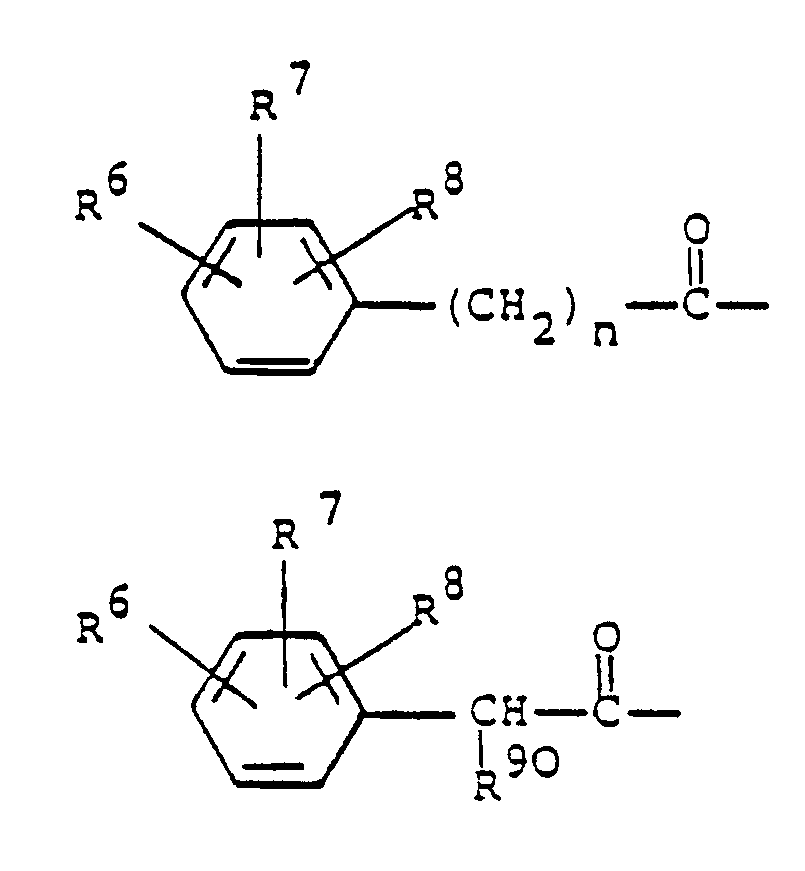

- Bevorzugte carboxyclische aromatische Acylgruppen sind diejenigen der Formeln
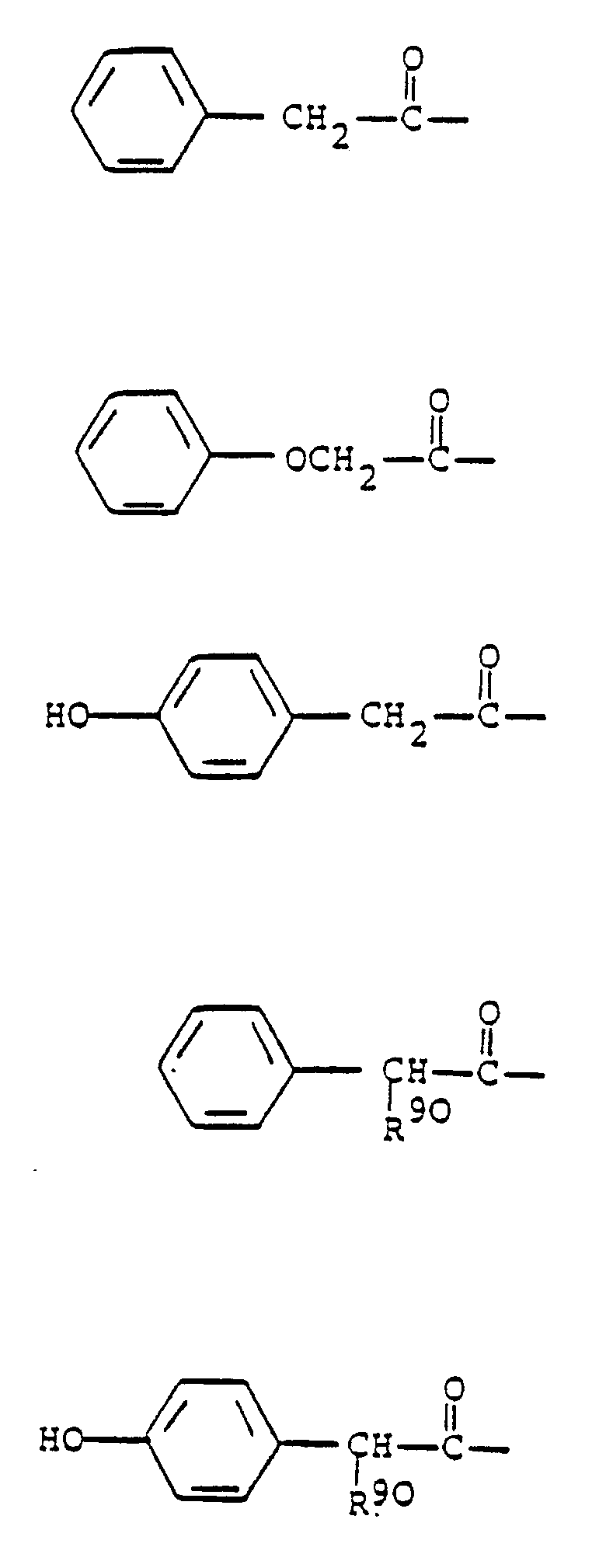
- Beispiele anderer erfindungsgemäss einsetzbarer Acylgruppen sind:
Sulfophenylacetyl,
Hydroxysulfonyloxyphenylacetyl,
Sulfamoylphenylacetyl,
(Phenoxycarbonyl)phenylacetyl,
(p-Tolyloxycarbonyl)phenylacetyl,
Formyloxyphenylacetyl,
Carboxyphenylacetyl,
Formylaminophenylacetyl,
Benzyloxycarbonylphenylacetyl,
2-(N,N-Dimethylsulfamoyl)-2-phenylacetyl,
2-Brom-2-thienylacetyl, etc. - c) Heteroaromatische Gruppen der allgemeinen Formeln

- Beispiele heterocyclische Ringe sind Thienyl, Furyl, Pyrrolyl, Pyridinyl, Pyrazinyl, Thiazolyl, Pyrimidinyl und Tetrazolyl. Beispiele für Substituenten am heterocyclischen Ring sind Halogen, Hydroxy, Nitro, Amino, Cyano, Trifluormethyl, C₁-C₄-Alkyl sowie C₁-C₄-Alkoxy.
- Bevorzugte heteroaromatische Acylgruppen sind diejenigen, worin R¹⁰¹ 2-Amino-4-thiazolyl, 2-Amino-5-halogen-4-thiazolyl, 4-Aminopyridin-2-yl, 2-Amino-1,3,4-thiadiazol-5-yl, 2-Thienyl, 2-Furanyl, 4-Pyridinyl oder 2,6-Dichlor-4-pyridinyl bedeutet.
- d) [[4-Substituierte-2,3-dioxo -1-piperazinyl)carbonyl]amino]arylacetylgruppen der Formel


- e) (Substituierte Oxyimino)arylacetylgruppen der allgemeinen Formel

- Beispiele für Reste

- f) (Acylamino)arylacetylgruppen der allgemeinen Formel
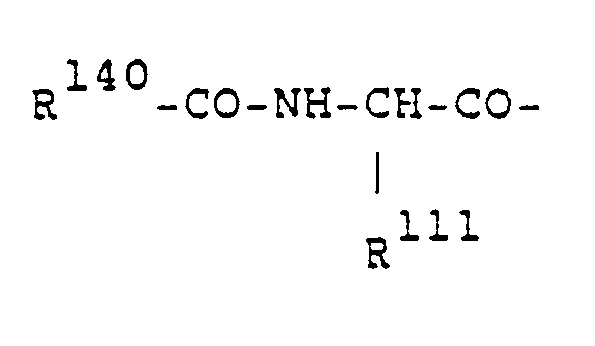

- Bevorzugte (Acylamino)arylacetylgruppen der obigen Formel sind diejenigen, worin R¹⁴⁰ Amino oder Acylamino darstellt. Ebenfalls bevorzugt sind diejenigen Gruppen, worin R¹¹¹ Phenyl oder 2-Thienyl darstellt.
- g) [[[3-Substituierte-2-oxo -1-imidazolidinyl]carbonyl]amino]arylacetylgruppen der allgemeinen Formel

- Bevorzugte [[[3-substituierte-2-oxo -1-imidazolidinyl]carbonyl]amino]arylacetylgruppen der obigen Formel sind diejenigen, worin R¹¹¹ Phenyl oder 2-Thienyl darstellt. Ebenfalls bevorzugt sind diejenigen Gruppen, worin R¹⁵ Wasserstoff, Methylsulfonyl, Phenylmethylamino oder 2-Furylmethylenamino darstellt.
- In einer bevorzugten Ausführungsform des Chinolonyl- bzw. Azachinolonylsubstituenten in der 3-Stellung ist Z R³⁰-C, worin R³⁰ Wasserstoff, Chlor oder Fluor, vorzugsweise Wasserstoff oder Fluor, darstellt;
R³¹ ist vorzugsweise niederes Alkyl, bevorzugt Aethyl, oder Halogen-niederes Alkyl, insbesondere Fluoräthyl, oder C₃-C₇-Cycloalkyl, vorzugsweise Cyclopropyl;
R³² ist vorzugsweise niederes Alkyl, insbesondere Methyl, oder Piperazinyl, welches am Stickstoffatom in 4-Stellung durch niederes Alkyl, vorzugsweise durch Methyl substituiert sein kann;
R³³ ist vorzugsweise Wasserstoff, Chlor oder Fluor, insbesondere Wasserstoff oder Fluor, ganz besonders Fluor. - Der Chinolonyl- bzw. Azachinolonylsubstituent in 3-Stellung schliesst unter anderem Reste der folgenden Formeln ein:


- Eine bevorzugte Klasse der erfindungsgemässen Verbindungen ist diejenige der allgemeinen Formel


Besonders bevorzugt sind Verbindungen der Formel Ib, worin R²⁰ Wasserstoff und R²¹ Methyl oder eine Gruppe der Formel
- Bevorzugt liegen die Gruppen

- Als leicht hydrolysierbare Ester der Verbindungen der Formel I sind Verbindungen der Formel I zu verstehen, deren Carboxygruppe bzw. Carboxygruppen in Form einer leicht hydrolysierbaren Estergruppe vorliegt/vorliegen. Beispiele solcher Ester, die herkömmlicher Art sein können, sind die niederen Alkanoyloxyalkylester, z.B. der Acetoxymethyl-, Pivaloyloxymethyl-, 1-Acetoxyäthyl- und der 1-Pivaloyloxyäthylester; die niederen Alkoxycarbonyloxyalkylester, z.B. der Methoxycarbonyloxymethyl-, 1-Aethoxycarbonyloxyäthyl- und der 1-Isopropoxycarbonyloxyäthylester; die Lactonylester, z.B. der Phthylidyl und der Thiophthalidylester; die niederen Alkoxymethylester, z.B. der Methoxymethylester und die niederen Alkanoylaminomethylester, z.B. der Acetamidomethylester. Auch andere Ester, z.B. die Benzyl- und Cyanmethylester können brauchbar sein.
- Beispiele von Salzen der Verbindungen der Formel I sind Alkalimetallsalze, wie das Natrium- und das Kaliumsalz, Ammoniumsalze; Erdalkalimetallsalze, wie das Calciumsalz; Salze mit organischen Basen, wie die Salze mit Aminen, z.B. Salze mit N-Aethylpiperidin, Procain, Dibenzylamin, N,N′-Dibenzyläthylendiamin, Alkylaminen oder Dialkylaminen, sowie Salze mit Aminosäuren, wie z.B. Salze mit Arginin oder Lysin.
- Die Verbindungen der Formel I, sofern sie eine basische funktionelle Gruppe, wie z.B. eine Aminogruppe besitzen, bilden ebenfalls Additionssalze mit organischen oder anorganischen Säuren. Beispiele für solche Salze sind Hydrohalogenide, beispielsweise Hydrochloride, Hydrobromide, Hydrojodide, sowie andere Mineralsäuresalze, wie Sulfate, Nitrate, Phosphate und dergleichen, Alkyl- und Monoarylsulfonate, wie Aethansulfonate, Toluolsulfonate, Benzolsulfonate und dergleichen und auch andere organische Säuresalze wie Acetate, Tartrate, Maleate, Citrate, Benzoate, Salicylate, Ascorbate und dergleichen.
- Die Verbindungen der Formel I einschliesslich deren Salze und leicht hydrolysierbare Ester können hydratisiert sein. Die Hydratisierung kann im Zuge des Herstellungsverfahrens erfolgen oder allmählich als Folge hygroskopischer Eigenschaften eines zunächst wasserfreien Produktes auftreten.
- Die obigen Acylderivate werden erfindungsgemäss dadurch hergestellt, dass man
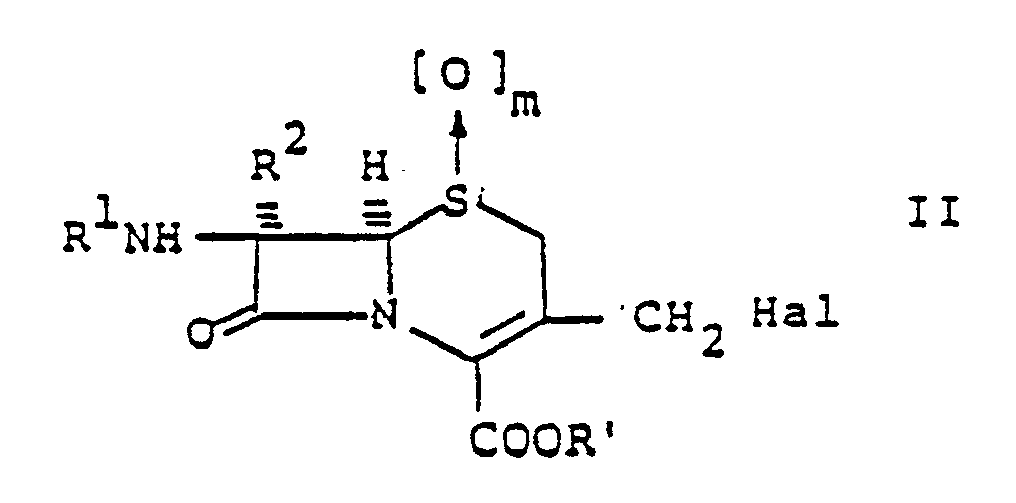
- (a) zur Herstellung eines leicht hydrolysierbaren Esters einer Carbonsäure der Formel I, eine Verbindung der allgemeinen Formel
mit einem Salz einer Thiocarbonsäure der allgemeinen Formel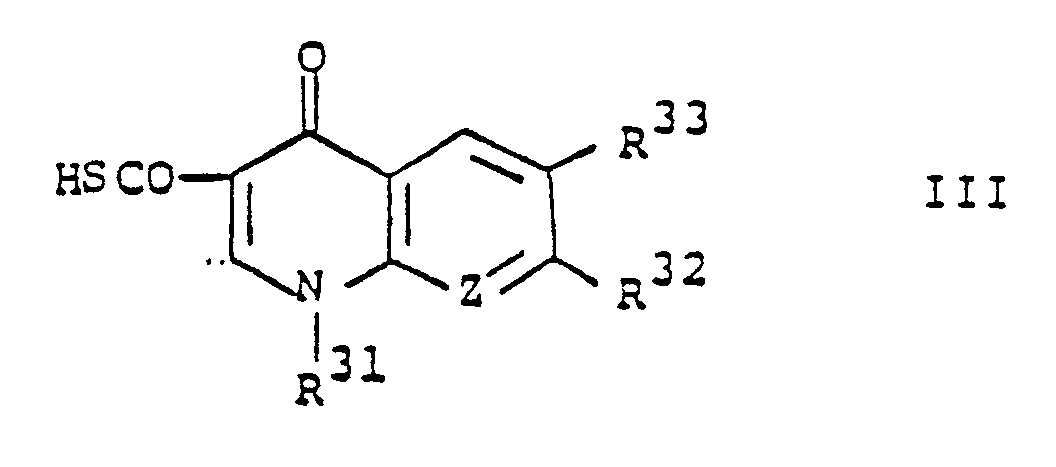
umsetzt, oder dass man - (b) zur Herstellung einer Carbonsäure der Formel I, einen Ester der allgemeinen Formel

in die Carbonsäure der Formel I umwandelt, oder dass man - (c) zur Herstellung einer Verbindung der Formel I, worin m 0 darstellt, eine Verbindung der allgemeinen Formel

reduziert, oder dass man - (d) zur Herstellung einer Verbindung der Formel I, worin m 1 oder 2 darstellt, oder eines ihrer Ester oder Salze, eine Verbindung der allgemeinen Formel

oder eines ihrer Ester oder Salze oxidiert, oder dass man - (e) zur Herstellung einer Verbindung der Formel I, worin R¹ einen Aminosubstituenten enthält, oder eines ihrer Ester oder Salze, die Aminoschutzgruppe im Substituenten R¹⁰ einer Verbindung der allgemeinen Formel

oder eines ihrer Ester oder Salze abspaltet, oder dass man - (f) zur Herstellung eines leicht hydrolysierbaren Esters einer Verbindung der Formel I, eine Carbonsäure der Formel I einer entsprechenden Veresterung unterwirft, oder dass man
- (g) zur Herstellung von Salzen oder Hydraten einer Verbindung der Formel I bzw. von Hydraten besagter Salze, einer Verbindung der Formel I in ein Salz oder Hydrat bzw. in ein Hydrat des besagten Salzes überführt.
- Die erfindungsgemässe Umsetzung des Halogenids der Formel II mit einem Salz der Carbonsäure der Formel III gemäss Variante a) des erfindungsgemässen Verfahrens wird vorzugsweise in einem nicht-hydroxylierten Lösungsmittel durchgeführt, wie z.B. in Dimethylformamid, Methylenchlorid oder N,N′-Dimethylacetamid. Geeignete Salze der Carbonsäure der Formel III sind z.B. die Natrium-, Kalium-, Cäsium-, t-Butylammonium- oder Tetramethylammoniumsalze. Hal in Formel II bedeutet Halogen, insbesondere Brom oder Jod. Diese Umsetzung wird bevorzugt bei etwa 0-80°C, insbesondere bei Zimmertemperatur, durchgeführt.
- Esterschutzgruppen R der in Variante b) des erfindungsgemässen Verfahrens verwendeten Ester der Formel IV sind vorzugsweise solche, welche unter milden Bedingungen in die freie Carboxygruppe umgewandelt werden können, z.B. t-Butyl, p-Nitrobenzyl, Benzhydryl, Allyl, etc. Auch die oben erläuterten Reste eines leicht hydrolysierbaren Esters können verwendet werden. Die Esterschutzgruppen werden z.B. wie folgt abgespalten: p-Nitrobenzyl durch Hydrolyse in Gegenwart von Natriumsulfid bei (oder unterhalb) 0°C bis Zimmertemperatur in einem Lösungsmittel, wie z.B. Dimethylformamid (vorzugsweise wässrig); t-Butyl durch Umsetzung mit Trifluoressigsäure in Gegenwart von Anisol bei etwa 0°C bis Zimmertemperatur, mit oder ohne zusätzliches Lösungsmittel, wie z.B. Methylenchlorid; Allyl durch Palladium-(O)-katalysierte Transallylierung in Gegenwart eines Natrium- oder Kaliumsalzes der 2-Aethylcapronsäure, siehe z.B. J. Org. Chem. 1982, 47, 587.
- Die Reduktion der Sulfoxide der allgemeinen Formel V nach Variante c) des erfindungsgemässen Verfahrens kann nach einer Vielzahl von Reaktionen erfolgen, z.B. durch Behandlung mit Phosphortrichlorid in Dimethylformamid oder mit Trifluoressigsäureanhydrid in Gegenwart von Natriumjodid in Aceton/Methylenchlorid. Die Temperatur dieser Reaktionen liegt bevorzugt ei etwa 0 bis -20°C, insbesondere bei 0°C.
- Durch die Oxidation der Verbindungen der Formel VI gemäss Variante d) des erfindungsgemässen Verfahrens wird ein allfälliges Δ2-Isomere der Formel VI in das entsprechende Δ3 Isomere der Formel I, worin m 1 oder 2 darstellt, übergeführt. Diese Oxidation wird durch Behandeln mit einem organischen oder anorganischen Oxidationsmittel durchgeführt. Als Oxidationsmittel dienen verschiedene, Sauerstoff leicht abgebende Verbindungen, wie z.B. organische Peroxide, z.B. monosubstituierte organische Peroxide wie C₁-C₄-Alkyl- oder Alkanoylhydroperoxide, wie t-Butylhydroperoxid, Perameisensäure oder Peressigsäure; sowie phenylsubstituierte Derivate dieser Hydroperoxide, wie Cumolhydroperoxid oder Perbenzoesäure. Der Phenylsubstituent kann gegebenenfalls eine weitere niedere Gruppe, z.B. C₁-C₄-Alkyl oder C₁-C₄-Alkoxy oder auch Halogen oder eine Carboxygruppe tragen, z.B. 4-Methylperbenzoesäure, 4-Methoxyperbenzoesäure, 3-Chlorperbenzoesäure oder Monoperphthalsäure. Als Oxidationsmittel können auch verschiedene anorganische Oxidationsmittel verwendet werden, z.B. Wasserstoffperoxid; Oxon; Permanganate, wie Kalium- oder Natriumpermanganat; Hypochlorite, wie Natrium-, Kalium- oder Ammoniumhypochlorit; Peroxymono- und Peroxydischwefelsäure. Bevorzugt ist die Verwendung von 3-Chlorperbenzoesäure. Die Oxidation erfolgt mit Vorteil in einem inerten Lösungsmittel, z.B. in einem aprotischen, inerten Lösungsmittel, wie Tetrahydrofuran, Dioxan, Methylenchlorid, Chloroform, Aethylacetat oder Aceton; oder in einem protischen Lösungsmittel, wie Wasser, einem niederen Alkanol, z.B. Methanol oder Aethanol, oder einer niederen, gegebenenfalls halogenierten Alkancarbonsäure, z.B. Ameisensäure, Essigsäure oder Trifluoressigsäure. Die Reaktionstemperatur bewegt sich vornehmlich im Bereiche von -20°C bis +50C.
- Bei Verwendung von äquimolaren Mengen Oxidationsmittel bzw. leichtem Ueberschuss im Verhältnis zum Ausgangsmaterial erhält man vornehmlich das entsprechende Sulfoxid, d.h. eine Verbindung der Formel I, worin m die Zahl 1 darstellt. Erhöht man die Menge des Oxidationsmittels auf das Doppelte des stöchiometrischen Verhältnisses oder mehr, bildet sich das entsprechende Sulfon, d.h. eine Verbindung der Formel I, worin m die Zahl 2 darstellt. Es ist ebenfalls möglich, das Sulfon der Formel I aus dem entsprechenden Sulfoxid durch Behandlung mit dem Oxidationsmittel in äquimolarer oder grösserer Menge zu erhalten. Die Verfahrensbedingungen sind im wesentlichen die gleichen wie bie der Herstellung des Sulfoxids.
- Durch Abspaltung der Aminoschutzgruppe im Substituenten R¹⁰ einer Verbindung der Formel VII gemäss Variante e) des erfindungsgemässen Verfahrens erhält man entsprechende Verbindungen der Formel I mit einer freien Aminogruppe. Mögliche Aminoschutzgruppen sind diejenigen, welche in der Peptidchemie verwendet werden, z.B. Alkoxycarbonylgruppen, z.B. t-Butoxycarbonyl etc., substituierte Alkoxycarbonylgruppen, z.B. Trichloräthoxycarbonyl etc., substituierte Aralkoxycarbonylgruppen, z.B. p-Nitrobenzyloxycarbonyl, Aralkylgruppen, z.B. Trityl oder Benzhydryl, oder Halogenalkanoylgruppen, wie z.B. Chloracetyl, Bromacetyl, Jodacetyl oder Trifluoracetyl.
- Bevorzugte Aminoschutzgruppen sind t-Butoxycarbonyl (t-BOC) und Trityl.
- Die Aminoschutzgruppen sind beispielsweise durch saure Hydrolyse abspaltbar (z.B. t-Butoxycarbonyl oder Trityl) oder auch durch basische Hydrolyse abspaltbar (z.B. Trifluoracetyl). Die Chlor, Brom- und Jodacetylgruppen können durch Behandeln mit Thioharnstoff abgespalten werden.
- Durch saure Hydrolyse abspaltbare Schutzgruppen werden vorzugsweise mit Hilfe einer niederen Alkancarbonsäure, die gegebenenfalls halogeniert sein kann, entfernt. Insbesondere verwendet man Ameisensäure oder Trifluoressigsäure. Die Temperatur ist in der Regel Raumtemperatur, obwohl auch leicht erhöhte bzw. leicht erniedrigte Temperaturen angewendet werden können, z.B. im Bereiche von etwa 0°C bis +40°C. Alkalisch abspaltbare Schutzgruppen werden im allgemeinen mit verdünnter wässriger Lauge bei 0°C bis +30°C hydrolysiert. Die Chlor-, Brom- und Jodacetylschutzgruppen können mittels Thioharnstoff in saurem, neutralem oder alkalischem Milieu bei etwa 0°C bis +30°C abgespalten werden.
- Zur Herstellung der leicht hydrolysierbaren Ester der Carbonsäuren der Formel I gemäss Variante f) des erfindungsgemässen Verfahrens wird die Carbonsäure vorzugsweise mit dem entsprechenden, die Estergruppe enthaltenden Halogenid, bevorzugt mit dem Jodid, umgesetzt. Die Reaktion kann mit Hilfe einer Base, z.B. einem Alkalimetallhydroxid oder -carbonat oder einem organischen Amin, wie Triäthylamin, beschleunigt werden. Die Veresterungsreaktion wird vorzugsweise in einem inerten organischen Lösungsmittel, wie Dimethylacetamid, Hexamethylphosphorsäuretriamid, Dimethylsulfoxid oder, vorzugsweise, Dimethylformamid durchgeführt. Die Temperatur liegt vorzugsweise im Bereiche von etwa 0-40°C.
- Die Herstellung der Salze und Hydrate der Verbindungen der Formel I bzw. der Hydrate dieser Salze gemäss Variante g) des erfindungsgemässen Verfahrens kann in an sich bekannter Weise erfolgen, z.B. durch Umsetzen der Carbonsäure der Formel I mit einer äquimolaren menge der gewünschten Base, zweckmässig in einem Lösungsmittel, wie Wasser, oder in einem organischen Lösungsmittel, wie Aethanol, Methanol, Aceton und dergleichen. Die Temperatur der Salzbildung ist nicht kritisch, sie liegt im allgemeinen bei Raumtemperatur kann aber auch leicht darüber oder darunter, etwa im Bereiche von 0°C bis +50°C, liegen.
- Die Herstellung der Hydrate erfolgt zumeist automatisch im Zuge des Herstellungsverfahrens oder als Folge hygroskopischer Eigenschaften eines zunächst wasserfreien Produktes. Zur gezielten Herstellung eines Hydrats kann ein ganz oder teilweise wasserfreies Produkt (Carbonsäure der Formel I oder eines ihrer Salze) einer feuchten Atmosphäre, z.B. bei etwa +10°C bis +40°C, ausgesetzt werden.
- Das folgende Reaktionsschema I veranschaulicht das Verfahren zur Herstellung der erfindungsgemässen Produkte:

- Die Carbonsäureform des entsprechenden Chinolons wird durch Behandeln mit einem 2-Fluor-1-methylpyridiniumsalz aktiviert. Durch Behandeln dieser aktivierten Säure mit Triphenylmethylmercaptan und 4-Dimethylaminopyridin erhält man einen Thioester der Formel

- Die Verbindung der Formel IX wird mit einer wässrigen Säure, vorzugsweise wässriger Salzsäure, behandelt und anschliessend mit einer Base, insbesondere Kaliumhydroxid, neutralisiert; man erhält ein Thiocarbonsäuresalz der Formel

- Die Verbindung der Formel IIa ist eine bekannte Verbindung oder ist in analoger Weise erhältlich (siehe z.B. die U.S. Patentschriften Nr. 4,406,899 und 4,266,049). Sie wird mit einem Salz des gewählten Chinolons der Formel III umgesetzt. Die Umsetzung erfolgt wie oben für die Verfahrens alternative a) beschrieben. Je nach Wahl der Esterschutzgruppe R und des Halogens Hal erhält man in Bezug auf die Doppelbindung im Cephemring ein Δ3- oder Δ2-Isomeres der Formel VIII.
- Die Esterschutzgruppe R der Verbindung der Formel VIII wird anschliessend abgespalten wie oben für die Verfahrensalternative b) beschrieben, wobei eine Carbonsäure der Formel Ia oder ein Gemisch davon mit dem Δ3-Isomer der Formel VIa erhalten wird.
- Falls die Doppelbindung unter Bildung des Δ3-Isomeren isomerisiert wird, wird die so erhaltene Verbindung der Formel VIa, wie oben für Verfahrensalternative d) beschrieben, oxidiert, z.B. mit einer Persäure, wie z.B. 3-Chlorperbenzoesäure, in einem Lösungsmittel, wie z.B. Methylenchlorid, bei einer Reaktionstemperatur von etwa -20°C bis 40°C, vorzugsweise bei etwa 0°C.
- Die so erhaltene Verbindung der Formel V ist selbst ein unter Formel I fallendes Endprodukt. Sie kann jedoch zum Endprodukt Ia reduziert werden, wie oben für Verfahrensvariante c) beschrieben.
- Verbindungen der Formel I mit den Gruppen

- Die Verbindungen der Formel I sowie die entsprechenden Salze bzw. die Hydrate dieser Produkte und Ester sind antibiotisch, insbesondere bakterizid wirksam. Sie können als Agenzien zur Bekämpfung von bakteriellen Infektionen (einschliesslich Harn- und Atemweginfektionen) bei Säugern, z.B. Hunden, Katzen, Pferden usw., sowie beim Menschen verwendet werden. Diese Cephalosporine sind wirksam gegen einen breiten Bereich sowohl gram-negativer als auch gram-positiver Bakterien.
- Die in vitro Wirksamkeit der erfindungsgemässen Verbindung gegen eine Vielzahl gram-positiver und gram-negativer Mikroorganismen, ausgedrückt als Mindesthemmkonzentration in Mikrogramm/ml und ermittelt unter Verwen dung der Reihenverdünnungsmethode (in Flüssigmedium) ist wie folgt:
- Die in vitro Wirksamkeit von [6R-[6α,7β(Z)]]-7-[[(2-Amino-4-thiazolyl)(methoxyimino)acetyl]amino]-3-[[[[6,8-difluor-1-(2-fluoräthyl)-1,4-dihydro-7-(4-methyl-1-piperazinyl)-4-oxo-3-chinolinyl]carbonyl]thio]methyl]-8-oxo-5-thia-1-azabicyclo[4.2.0]oct-2-en-2-carbonsäure-Mononatriumsalz-Trihydrat ist wie folgt:
MICa ED₅₀ b Escherichia coli 257 0.0625 <2 DCO 0.125 DC₂ ≦0.0157 Pseudomonas aeruginosa 56 64 Staphylococcus aureus Smith 2 43 Streptococcus pneumoniae 6301 ≦0.0157 a) MIC in µg.ml b) ED₅₀ in mg.kg - Zur Bekämpfung einer bakteriellen Infektion in einem Säuger kann eine erfindungsgemässe Verbindung mit einer Tagesdosis von etwa 5 bis etwa 500 mg/kg, vorzugsweise etwa 10-100 mg/kg, insbesondere etwa 10-55 mg/kg, behandelt werden.
- Sämtliche Verabreichungsarten, welche bisher für die Penicillin- und Cephalosporintherapie in Frage kommen, sind ebenfalls für die erfindungsgemässen neuen Cephalosporine verwendbar. Verabreichungsarten sind demnach z.B. intravenöse, intramuskuläre und enterale Administrierungen.
- Die erfindungsgemässen Produkte können als Heilmittel, z.B. in Form pharmazeutischer Präparate Verwendung finden, welche sie oder ihre Salze in Mischung mit einem für die enterale oder parenterale Applikation geeigneten pharmazeutischen, organischen oder anorganischen inerten Trägermaterial wie z.B. Wasser, Gelatine, Gummi arabicum, Milchzucker, Stärke, Magnesiumstearat, Talk, pflanzliche Oele, Polyalkylenglykole, Vaseline usw. enthalten. Die pharmazeutischen Präparate können in fester Form, z.B. als Tabletten, Dragées, Suppositorien, Kapseln oder in flüssiger Form, z.B. als Lösungen, Suspensionen oder Emulsionen vorliegen. Gegebenenfalls sind sie sterilisiert und bzw. oder enthalten Hilfsstoffe wie Konservierungs-, Stabilisierungs-, Netz- oder Emulgiermittel, Salze zur Veränderung des osmotischen Druckes, Anaesthetika oder Puffer. Sie können auch noch andere therapeutisch wertvolle Stoffe enthalten. Die Carbonsäuren der Formel I und ihre Salze bzw. Hydrate kommen vorzugsweise für die parenterale Applikation in Betracht und werden zu diesem Zweck bevorzugt als Lyophilisate oder Trockenpulver zur Verdünnung mit üblichen Agenzien wie Wasser und isotonischer Kochsalzlösung. Lösungsmittelvermittler, wie Propylenglykol, zubereitet. Die leicht hydrolysierbaren Ester der Formel I kommen auch für die enterale Verabreichung in Betracht.
- Eine Lösung von 2-Fluor-1-methylpyridinium-p-toluolsulfonat (21,25 g, 0,075 Mol) in trockenem Methylenchlorid (300 ml) wurde in einer Argonatmosphäre und in einem Eis-Salzbad auf -15 bis -10°C gekühlt. Dieses Gemisch wurde mit 22,16 g (0,06 Mol) 6,8-Difluor-1-(2-fluoräthyl)-1,4-dihydro-7-(4-methyl -1-piperazinyl)-4-oxo-3-chinolincarbonsäure und 7,32 g (0,06 Mol) 4-Dimethylaminopyridin langsam bei -10°C versetzt. Das erhaltene gelbe Reaktionsgemisch wurde 30 Minuten bei -10°C gerührt und anschliessend mit 16,6 g (0,06 Mol) Triphenylmethylmercaptan und 7,32 g (0,06 Mol) 4-Dimethylaminopyridin versetzt; das Gemisch wurde langsam auf 23°C gebracht und anschliessend 16 Stunden gerührt. Das Gemisch wurde anschliessend mit etwa 1 l Methylenchlorid verdünnt und unter verminderem Druck eingedampft. Es wurde 25 g eines gelben Oels erhalten, das zweimal an 100 g Kieselgel chromatographiert und mit 20% Aceton in Methylenchlorid eluiert wurde. Die das gewünschte Produkt enthaltenden Fraktionen wurden vereinigt und unter vermindertem Druck eingedampft. Es wurde so 6,8-Difluor1-(2-fluoräthyl)-1,4-dihydro-7-(4-methyl -1-piperazinyl)-4-oxo-3-chinolinthiocarbonsäure -S-triphenylmethylestersemihydrat erhalten.
- Ein Gemisch von 6,1 g (9,6 mMol) 6,8-Difluor-1-(2-fluoräthyl)-1,4-dihydro-7-(4-methyl -1-piperazinyl)-4-oxo-3-chinolinthiocarbonsäure -S-triphenylmethylestersemihydrat und 8 ml wässriger 6N Salzsäure in 30 ml Tetrahydrofuran wurde in einer Argonatmosphäre 16 Stunden bei 23°C gerührt. Das Gemisch wurde bei 30°C eingedampft und anschliessend in 50 ml Wasser und 50 ml Chloroform aufgenommen. Dieses Gemisch wurde mit etwa 55 ml 1N wässriger Kaliumhydroxidlösung bis auf einen pH-Wert von etwa 11 behandelt. Nach zweimaliger Extraktion mit je 50 ml Chloroform und Extraktion der vereinigten Chloroformlösungen mit zweimal 50 ml Wasser wurde die organische Lösung über Magnesiumsulfat getrocknet und eingedampft. Es wurde 2,57 g eines Schaums erhalten, das gemäss Dünnschichtchromatogramm zur Hauptsache aus dem Ausgangsmaterial (Thioester) bestand. Die vereinigten wässrigen Phasen wurden durch 100 g einer C₁₈ Reverse Phase Chromatographie-Kolonne gegeben und mit einem Gradienten von 3% bis 20% Acetonitril-Wasser eluiert. Die das gewünschte Produkt enthaltenden Fraktionen wurden vereinigt und zur Entfernung des Acetonitrils unter vermindertem Druck eingedampft. Die wässrige Lösung wurde lyophilisiert, wobei 6,8-Difluor-1-(2-fluoräthyl)-1,4-dihydro-7-(4-methyl -1-piperazinyl)-4-oxo-3-chinolinthiocarbonsäure-kaliumsalz-hydrat als ein gelber Feststoff erhalten wurde.
- Ein Gemisch von 1,8 g (4,07 mMol) 6,8-Difluor-1-(2-fluoräthyl)-1,4-dihydro-7-(4-methyl -1-piperazinyl)-4-oxo-3-chinolinthiocarbonsäure-kaliumsalz-hydrat und 2,0 g Propylenoxid in 20 ml trockenem Dimethylformamid wurde in einer Argonatmosphäre bei 23°C gerührt. Dieses Gemisch wurde mit einer Lösung von 3,69 g (4,5 mMol) [6R-[6α,7β(Z)]]-7-[[[[(Methoxyimino) -2-(triphenylmethyl)amino]-4-thiazolyl]acetyl]amino] -3-(jodmethyl)-8-oxo-5-thia-1-azabicyclo[4.2.0]oct-2-en -2-carbonsäure-t-butylester in 25 ml trockenem Methylenchlorid versetzt und das Ganze anschliessend 36 Minuten in einer Argonatmosphäre gerührt. Das Reaktionsgemisch wurde in 100 ml Aethylacetat aufgenommen, mit 100 ml Wasser und anschliessend zweimal mit je 100 ml wässriger Kochsalzlösung gewaschen. Die wässrigen Waschflüssigkeiten wurden zweimal mit je 100 ml Aethylacetat rückextrahiert. Die organischen Extrakte wurden vereinigt, über Magnesiumsulfat getrocknet und filtriert. Das Lösungsmittel wurde unter vermindertem Druck abgedampft, wonach 4,1 g eines Rohprodukts erhalten wurde, das an 125 g Kieselgel chromatographiert wurde. Eluieren mit 2% bis 4% Methanol in Chloroform lieferte Fraktionen 6-13 mit dem gewünschten Produkt. Nach Eindampfen zur Trockene unter vermindertem Druck erhielt man einen bräunlichen Feststoff: [6R-[6α,7β(Z)]]-3-[[[[6,8-Difluor-1-(2-fluoräthyl)-1,4-dihydro-7-(4-methyl-1-piperazinyl)-4-oxo-3-chinolinyl]carbonyl]thio]methyl]-7-[[[[(methoxyimino)-2-(triphenylmethyl)amino]-4-thiazolyl]acetyl]amino]-8-oxo-5-thia-1-azabicyclo[4.2.0]oct-2-en-2-carbonsäure-1,1-dimethyläthylester.
- Eine Lösung von 1,9 g (2.2 mMol) [6R-[6α,7β(Z)]]-3-[[[[6,8-Difluor-1-(2-fluoräthyl)-1,4-dihydro-7-(4-methyl-1-piperazinyl)-4-oxo-3-chinolinyl]carbonyl]thio]methyl]-7-[[[[(methoxyimino)-2-(triphenylmethyl)amino]-4-thiazolyl]acetyl]amino]-8-oxo-5-thia-1-azabicyclo[4.2.0]oct-2-en-2-carbonsäure-1,1-dimethyläthylester, 2 ml Anisol und 0,1 ml 1,2-Aethandithiol in 20 ml Methylenchlorid wurde auf 0°C abgekühlt und mit 20 ml kalter Trifluoressigsäure behandelt. Das Reaktionsgemisch wurde 17 Stunde bei -20°C stehen gelassen und anschliessend bei etwa 4°C und unter vermindertem Druck eingedampft. Der Rückstand wurde in 10 ml Methylenchlorid aufgenommen, anschliessend wurden 100 ml Aether schnell hinzugefügt. Der entstandene Niederschlag wurde abfiltriert und mit Aether gewaschen, wobei 2,03 g eines Feststoffes erhalten wurde. Dieses Material wurde in 20 ml Acetonitril-Wasser (1:1) gelöst und mit 5% wässriger Natriumbicarbonatlösung behandelt. Es wurde dabei 5 ml Dimethylformamid hinzugefügt, um entstandenes, gummiartiges Produkt zu lösen. Nun wurde 5%ige wässrige Natriumbicarbonatlösung bis zu pH 9,0 zugesetzt. Die wässrige Lösung wurde anschliessend an einer Reverse Phase Chromatographie-Kolonne (C₁₈) und mit 5% bis 60% Acetonitril-Wasser eluiert. Fraktionen 11-16 wurden mit 20% bis 25% Acetonitril in Wasser eluiert, vereinigt, unter vermindertem Druck eingedampft und anschliessend lyophilisiert. Man erhielt so das gewünschte Produkt als ein weisses Pulver: [6R-[6α,7β(Z)]]-7-[[2-Amino-4-thiazolyl)(methoxyimino)acetyl]amino]-3-[[[[6,8-difluor-1-(2-fluoräthyl)-1,4-dihydro-7-(4-methyl-1-piperazinyl)-4-oxo-3-chinolinyl]carbonyl]thio]methyl]-8-oxo-5-thia-1-azabicyclo[4.2.0]oct-2-en-2-carbonsäure-mononatriumsalz-trihydrat.
- Die folgenden Verbindungen können durch die in den Beispielen veranschaulichten Methoden hergestellt werden:
[6R-[6α,7β]-3-[[[[6,8-Difluor-1-(2-fluoräthyl)-1,4-dihydro-7-(4-methyl-1-piperazinyl)-4-oxo-3-chinolinyl]carbonyl]thio]methyl]-8-oxo-7-[(phenoxyacetyl)amino]-5-thia-1-azabicyclo[4.2.0]oct-2-en-2-carbonsäure,
[6R-[6α,7β(Z)]]-7-[[2-Amino-4-thiazolyl)methoxyimino]acetyl]amino]-3-[[[[1-cyclopropyl-6-fluor-1,4-dihydro-4-oxo-7-(1-piperazinyl)-3-chinolinyl]carbonyl]thio]methyl]-8-oxo-5-thia-1-azabicyclo[4.2.0]oct-2-en-2-carbonsäure,
[6R-[6α,7β]-7-[(Cyanacetyl)amino]-3-[[[[6,8-difluor-1-(2-fluoräthyl)-1,4-dihydro-7-(4-methyl-1-piperazinyl)-4-oxo-3-chinolinyl]carbonyl]thio]methyl]-8-oxo-5-thia-1-azabicyclo[4.2.0]oct-2-en-2-carbonsäure,
[6R-[6α,7β]-7-[[[[(4-Aethyl-2,3-dioxo-1-piperazinyl)carbonyl]amino]phenylacetyl]amino]-3-[[[[6,8-difluor-1-(2-fluoräthyl)-1,4-dihydro-7-(4-methyl-1-piperazinyl)-4-oxo-3-chinolinyl]carbonyl]thio]methyl]-8-oxo-5-thia-1-azabicyclo[4.2.0]-oct-2-en-2-carbonsäure,
[6R-[6α,7β(Z)]]-8-[[(2-Amino-4-thiazolyl)-[[(1-carboxy-1-methyl)äthoxy]imino]acetyl]amino]-3-[[[[6,8-difluor-1-(2-fluoräthyl)-1,4-dihydro-7-(4-methyl-1-piperazinyl)-4-oxo-3-chinolinyl]carbonyl]thio]methyl]-8-oxo-5-thia-1-azabicyclo[4.2.0]oct-2-en-2-carbonsäure,
[6R-[6α,7β(Z)]]-7-[[[(2-Amino-4-thiazolyl)(carboxymethoxy)imino]acetyl]amino]-3-[[[[6,8-difluor-1-(2-fluoräthyl)-1,4-dihydro-7-(4-methyl-1-piperazinyl)-4-oxo-3-chinolinyl]carbonyl]thio]methyl]-8-oxo-5-thia-1-azabicyclo[4.2.0]oct-2-en-2-carbonsäure,
[6R-[6α,7β(Z)]]-7-[[[(2-Amino-4-thiazolyl)methoxyimino]acetyl]amino]-3-[[[[9-fluor-3,7-dihydro-3-methyl-10-(4-methyl-1-piperazinyl)-7-oxo-2H-pyrido[1,2,3-de]-1,4-benzoxazin-6-yl]carbonyl]thio]methyl]-8-oxo-5-thia-1-azabicyclo[4.2.0]oct-2-en-2-carbonsäure,
[6R-[6α,7β)]-α-[[[2-Carboxy-3-[[[[6,8-difluor-1-(2-fluoräthyl)-1,4-dihydro-7-(4-methyl-1-piperazinyl)-4-oxo-3-chinolinyl]carbonyl]thio]methyl]-8-oxo-5-thia-1-azabicyclo[4.2.0]oct-2-en-7-yl]amino]carbonyl]benzolessigsäure,
[6R-[6α,7β)]]-7-[[(2-Amino-4-thiazolyl)(methoxyimino)acetyl]amino]-3-[[[[6-fluor-1-(4-fluorphenyl)-1,4-dihydro-7-(4-methyl-1-piperazinyl)-4-oxo-3-chinolinyl]carbonyl]thio]methyl]-8-oxo-5-thia-1-azabicyclo[4.2.0]oct-2-en-2-carbonsäure. - Es wird in üblicher Weise ein Lyophilisat von 1 g des [6R-[6α,7β(Z)]]-7-[[2-Amino-4-thiazolyl)(methoxyimino)acetyl]amino]-3-[[[[6,8-difluor-1-(2-fluoräthyl)-1,4-dihydro-7-(4-methyl-1-piperazinyl)-4-oxo-3-chinolinyl]carbonyl]thio]methyl]-8-oxo-5-thia-1-azabicyclo[4.2.0]oct-2-en-2-carbonsäure-mononatriumsalz-trihydrats hergestellt und in eine Ampulle abgefüllt. Die sterile Wasserampulle enthält 10% Propylenglykol. Vor der Verabreichung wid das Lyophilisat mit 2,5 ml einer 2%-igen wässrigen Lidocain-hydrochloridlösung versetzt.
Claims (31)

sowie von leicht hydrolysierbaren Estern und Salzen dieser Verbindungen und Hydraten der Verbindungen der Formel I bzw. von deren Estern und Salzen, dadurch gekennzeichnet, dass man

mit einem Salz einer Thiocarbonsäure der allgemeinen Formel

umsetzt, oder dass man

in die Carbonsäure der Formel I umwandelt, oder dass man

reduziert, oder dass man

oder eines ihrer Ester oder Salze oxidiert, oder dass man

oder eines ihrer Ester oder Salze abspaltet, oder dass man
(a) eine aliphatische Gruppe der Formel
R⁵-CO-
in der R⁵ niederes Alkyl, C₃-C₇-Cycloalkyl, niederes Alkoxy, niederes Alkenyl, C₃-C₇-Cycloalkenyl oder Cyclohexadienyl oder durch einen oder mehrere der Reste Halogen, Cyan, Nitro, Amino, Mercapto, niederes Alkylthio oder Cyanmethylthio substituiertes niederes Alkyl oder niederes Alkenyl darstellt;
(b) eine carbocyclische aromatische Gruppe der allgemeinen Formel


(c) eine heteroaromatische Gruppe der allgemeinen Formeln


(e) eine (substituierte Oxiimino)arylacetylgruppe der allgemeinen Formel
(f) eine (Acylamino)arylacetylgruppe der allgemeinen Formel


(g) eine [[[3-Substituierte-2-oxo -1-imidazolidinyl]carbonyl]amino]arylacetylgruppe der allgemeinen Formel
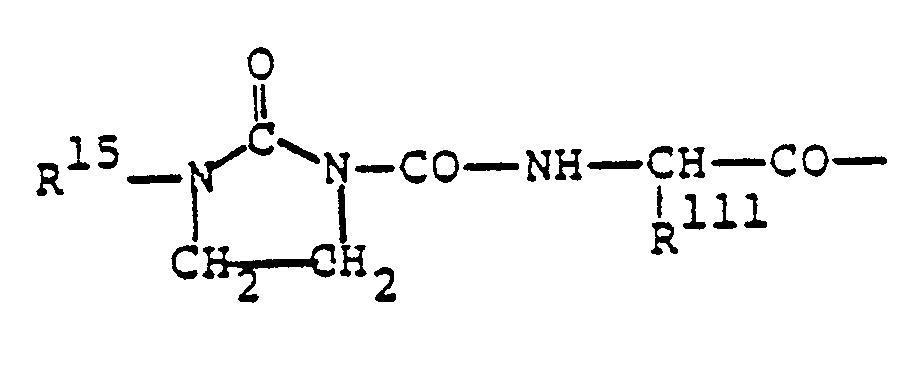
dadurch gekennzeichnet, dass man entsprechend substituierte Ausgangsverbindungen einsetzt.
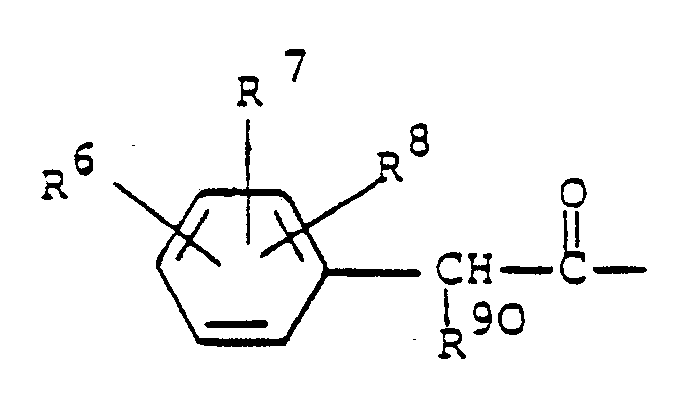
dadurch gekennzeichnet, dass man entsprechend substituierte Ausgangsverbindungen einsetzt.

dadurch gekennzeichnet, dass man entsprechend substituierte Ausgangsverbindungen einsetzt.


dadurch gekennzeichnet, dass man entsprechend substituierte Ausgangsverbindungen einsetzt.

dadurch gekennzeichnet, das man entsprechend substituierte Ausgangsverbindungen einsetzt.

dadurch gekennzeichnet, dass man entsprechend substituierte Ausgangsverbindungen einsetzt.

dadurch gekennzeichnet, dass man entsprechend substituierte Ausgangsverbindungen einsetzt.

Applications Claiming Priority (4)
| Application Number | Priority Date | Filing Date | Title |
|---|---|---|---|
| US13841087A | 1987-12-28 | 1987-12-28 | |
| US138410 | 1987-12-28 | ||
| US25500488A | 1988-10-07 | 1988-10-07 | |
| US255004 | 1988-10-07 |
Publications (2)
| Publication Number | Publication Date |
|---|---|
| EP0322810A2 true EP0322810A2 (de) | 1989-07-05 |
| EP0322810A3 EP0322810A3 (de) | 1989-12-13 |
Family
ID=26836174
Family Applications (1)
| Application Number | Title | Priority Date | Filing Date |
|---|---|---|---|
| EP88121622A Withdrawn EP0322810A3 (de) | 1987-12-28 | 1988-12-23 | Cephalosporinderivate |
Country Status (13)
| Country | Link |
|---|---|
| EP (1) | EP0322810A3 (de) |
| JP (1) | JPH01203395A (de) |
| KR (1) | KR890009942A (de) |
| AU (1) | AU621328B2 (de) |
| DK (1) | DK722988A (de) |
| FI (1) | FI885988A7 (de) |
| HU (1) | HU205361B (de) |
| IL (1) | IL88775A0 (de) |
| MC (1) | MC2000A1 (de) |
| NO (1) | NO885780L (de) |
| NZ (1) | NZ227470A (de) |
| PT (1) | PT89353A (de) |
| YU (2) | YU234688A (de) |
Cited By (5)
| Publication number | Priority date | Publication date | Assignee | Title |
|---|---|---|---|---|
| WO1991016327A1 (en) | 1990-04-18 | 1991-10-31 | Norwich Eaton Pharmaceuticals, Inc. | Antimicrobial quinolonyl lactams |
| EP0366193A3 (de) * | 1988-10-24 | 1992-01-08 | Norwich Eaton Pharmaceuticals, Inc. | Antimikrobielle Quinolonyllactame |
| EP0453952A3 (en) * | 1990-04-27 | 1992-07-01 | F. Hoffmann-La Roche Ag | A process for synthesizing cephalosporin compounds |
| EP0592868A1 (de) * | 1992-10-12 | 1994-04-20 | Bayer Ag | Chinoloncarbonsäuren |
| EP0366640B1 (de) * | 1988-10-24 | 1999-02-03 | Procter & Gamble Pharmaceuticals, Inc. | Antimikrobielle Fluorochinolonylcephemderivate |
Families Citing this family (4)
| Publication number | Priority date | Publication date | Assignee | Title |
|---|---|---|---|---|
| ZA874696B (en) * | 1986-07-03 | 1988-01-04 | F. Hoffmann-La Roche & Co. Aktiengesellschaft | Acyl derivatives |
| EP0366189A3 (de) * | 1988-10-24 | 1992-01-02 | Norwich Eaton Pharmaceuticals, Inc. | Antimikrobielle Lactam-Quinolone |
| US5328908A (en) * | 1988-10-24 | 1994-07-12 | Procter & Gamble Pharmaceuticals, Inc. | Antimicrobial quinolone thioureas |
| CA2001203C (en) * | 1988-10-24 | 2001-02-13 | Thomas P. Demuth, Jr. | Novel antimicrobial dithiocarbamoyl quinolones |
Family Cites Families (6)
| Publication number | Priority date | Publication date | Assignee | Title |
|---|---|---|---|---|
| FR2479229B1 (fr) * | 1980-03-26 | 1986-01-17 | Clin Midy | Nouveaux derives des cephalosporines, leur procede de preparation et les medicaments utilisables comme antibiotiques qui contiennent lesdits derives |
| US4396620A (en) * | 1981-09-08 | 1983-08-02 | Eli Lilly And Company | Cephalosporin quinolinium betaines |
| KR920004820B1 (ko) * | 1984-02-23 | 1992-06-18 | 메이지제과 주식회사 | 새로운 세팔로스포린 유도체의 제조방법 |
| FR2570702B1 (fr) * | 1984-09-27 | 1987-01-09 | Sanofi Sa | Derives des cephalosporines, procedes d'obtention et leur application a titre d'antibiotiques |
| ZA874696B (en) * | 1986-07-03 | 1988-01-04 | F. Hoffmann-La Roche & Co. Aktiengesellschaft | Acyl derivatives |
| CA2005787A1 (en) * | 1988-12-29 | 1990-06-29 | Masao Wada | Cephalosporin compounds |
-
1988
- 1988-12-22 NZ NZ227470A patent/NZ227470A/en unknown
- 1988-12-23 DK DK722988A patent/DK722988A/da not_active Application Discontinuation
- 1988-12-23 EP EP88121622A patent/EP0322810A3/de not_active Withdrawn
- 1988-12-23 AU AU27554/88A patent/AU621328B2/en not_active Expired - Fee Related
- 1988-12-23 IL IL88775A patent/IL88775A0/xx unknown
- 1988-12-26 YU YU02346/88A patent/YU234688A/xx unknown
- 1988-12-26 JP JP63326393A patent/JPH01203395A/ja active Pending
- 1988-12-27 KR KR1019880017543A patent/KR890009942A/ko not_active Withdrawn
- 1988-12-27 FI FI885988A patent/FI885988A7/fi not_active Application Discontinuation
- 1988-12-27 NO NO88885780A patent/NO885780L/no unknown
- 1988-12-27 MC MC882022A patent/MC2000A1/fr unknown
- 1988-12-28 HU HU886626A patent/HU205361B/hu unknown
- 1988-12-28 PT PT89353A patent/PT89353A/pt not_active Application Discontinuation
-
1989
- 1989-11-20 YU YU02197/89A patent/YU219789A/xx unknown
Cited By (6)
| Publication number | Priority date | Publication date | Assignee | Title |
|---|---|---|---|---|
| EP0366193A3 (de) * | 1988-10-24 | 1992-01-08 | Norwich Eaton Pharmaceuticals, Inc. | Antimikrobielle Quinolonyllactame |
| EP0366640B1 (de) * | 1988-10-24 | 1999-02-03 | Procter & Gamble Pharmaceuticals, Inc. | Antimikrobielle Fluorochinolonylcephemderivate |
| WO1991016327A1 (en) | 1990-04-18 | 1991-10-31 | Norwich Eaton Pharmaceuticals, Inc. | Antimicrobial quinolonyl lactams |
| EP0525057B1 (de) * | 1990-04-18 | 2000-06-14 | Procter & Gamble Pharmaceuticals, Inc. | Antimikrobielle chinolonyl-lactame |
| EP0453952A3 (en) * | 1990-04-27 | 1992-07-01 | F. Hoffmann-La Roche Ag | A process for synthesizing cephalosporin compounds |
| EP0592868A1 (de) * | 1992-10-12 | 1994-04-20 | Bayer Ag | Chinoloncarbonsäuren |
Also Published As
| Publication number | Publication date |
|---|---|
| DK722988A (da) | 1989-06-29 |
| PT89353A (pt) | 1989-12-29 |
| FI885988A7 (fi) | 1989-06-29 |
| NO885780D0 (no) | 1988-12-27 |
| NO885780L (no) | 1989-06-29 |
| NZ227470A (en) | 1991-06-25 |
| AU2755488A (en) | 1989-06-29 |
| YU234688A (en) | 1990-04-30 |
| HU205361B (en) | 1992-04-28 |
| DK722988D0 (da) | 1988-12-23 |
| KR890009942A (ko) | 1989-08-05 |
| IL88775A0 (en) | 1989-07-31 |
| YU219789A (en) | 1991-06-30 |
| EP0322810A3 (de) | 1989-12-13 |
| HUT48896A (en) | 1989-07-28 |
| AU621328B2 (en) | 1992-03-12 |
| JPH01203395A (ja) | 1989-08-16 |
| MC2000A1 (fr) | 1990-01-26 |
Similar Documents
| Publication | Publication Date | Title |
|---|---|---|
| EP0251330B1 (de) | Cephalosporinderivate, Verfahren zu ihrer Herstellung sowie entsprechende pharmazeutische Präparate | |
| EP0335297B1 (de) | Cephalosporinderivate | |
| CH615190A5 (de) | ||
| SK126696A3 (en) | Cephalosporin antibiotics and antibacterial agents containing them | |
| DE69618015T2 (de) | Cephalosporinantibiotika | |
| CH637396A5 (de) | Thiadiazolyl-cephalosporin-analoge. | |
| DE2439880A1 (de) | Antibiotika und verfahren zu ihrer herstellung | |
| DE69132256T2 (de) | Antimikrobielle chinolonyl-lactame | |
| US5329002A (en) | Antibacterial cephalosporin compounds | |
| AU621328B2 (en) | 3(heterocyclyc carbonyl thio methyl)cephalosporin derivatives | |
| EP0295630A2 (de) | Cephalosporinderivate | |
| DE3686749T2 (de) | Cephalosporinverbindungen und sie enthaltende bakterizide. | |
| CH625245A5 (de) | ||
| AT395590B (de) | 2-methoxymethylpenemverbindungen, verfahren zu deren herstellung und sie enthaltende pharmazeutische zusammensetzungen | |
| US5066800A (en) | Qunoline intermediates useful therein for synthesizing antibacterial compounds | |
| EP0049855A2 (de) | Neue Cephalosporinderivate, Verfahren zu ihrer Herstellung und Zwischenprodukte dafür sowie entsprechende pharmazeutische Präparate | |
| DE2539411A1 (de) | Cephamycine, ihre salze, verfahren zu ihrer herstellung und arzneipraeparate | |
| US4113940A (en) | 7-amino 2-lower alkyl-2 or 3-cephem-4-carboxylic acid derivatives and processes for preparation thereof | |
| DE3833693A1 (de) | Stabile oxapenem-3-carbonsaeuren und ihre verwendung als ss-lactamasehemmer | |
| DD204257A5 (de) | Verfahren zur herstellung von cephalosporinen, die in position 3 substituiert sind | |
| DE3880861T2 (de) | 1-Dethia-2-thia-cephalosporansäurederivate, Verfahren zur Herstellung, ihre Verwendung als Arzneimittel und sie enthaltende pharmazeutische Zusammensetzungen. | |
| US5147871A (en) | Anti-bacterial cephalosporin compounds | |
| DE2846713A1 (de) | Cephalosporine, ihre herstellung und sie enthaltende arzneimittel | |
| CH629211A5 (en) | Process for the preparation of the syn isomer or a mixture of syn isomer and anti isomer of 7beta-acylamido-ceph-3-em-4-carboxylic acids with antibiotic activity | |
| EP0553792A2 (de) | Verfahren zur Herstellung von Ceftriaxon-dinatriumsalzhemiheptahydrat |
Legal Events
| Date | Code | Title | Description |
|---|---|---|---|
| PUAI | Public reference made under article 153(3) epc to a published international application that has entered the european phase |
Free format text: ORIGINAL CODE: 0009012 |
|
| 17P | Request for examination filed |
Effective date: 19881223 |
|
| AK | Designated contracting states |
Kind code of ref document: A2 Designated state(s): AT BE CH DE ES FR GB GR IT LI LU NL SE |
|
| RAP1 | Party data changed (applicant data changed or rights of an application transferred) |
Owner name: F. HOFFMANN-LA ROCHE AG |
|
| PUAL | Search report despatched |
Free format text: ORIGINAL CODE: 0009013 |
|
| AK | Designated contracting states |
Kind code of ref document: A3 Designated state(s): AT BE CH DE ES FR GB GR IT LI LU NL SE |
|
| 17Q | First examination report despatched |
Effective date: 19911204 |
|
| STAA | Information on the status of an ep patent application or granted ep patent |
Free format text: STATUS: THE APPLICATION IS DEEMED TO BE WITHDRAWN |
|
| 18D | Application deemed to be withdrawn |
Effective date: 19920616 |