EP0593901B1 - Analogues des oligoribonucleotide et ribozymer avec 3'-3'-et 5'-5' liasons terminaler - Google Patents
Analogues des oligoribonucleotide et ribozymer avec 3'-3'-et 5'-5' liasons terminaler Download PDFInfo
- Publication number
- EP0593901B1 EP0593901B1 EP93114773A EP93114773A EP0593901B1 EP 0593901 B1 EP0593901 B1 EP 0593901B1 EP 93114773 A EP93114773 A EP 93114773A EP 93114773 A EP93114773 A EP 93114773A EP 0593901 B1 EP0593901 B1 EP 0593901B1
- Authority
- EP
- European Patent Office
- Prior art keywords
- formula
- alkyl
- oligoribonucleotide
- radical
- groups
- Prior art date
- Legal status (The legal status is an assumption and is not a legal conclusion. Google has not performed a legal analysis and makes no representation as to the accuracy of the status listed.)
- Expired - Lifetime
Links
Images


Classifications
-
- C—CHEMISTRY; METALLURGY
- C07—ORGANIC CHEMISTRY
- C07H—SUGARS; DERIVATIVES THEREOF; NUCLEOSIDES; NUCLEOTIDES; NUCLEIC ACIDS
- C07H21/00—Compounds containing two or more mononucleotide units having separate phosphate or polyphosphate groups linked by saccharide radicals of nucleoside groups, e.g. nucleic acids
-
- A—HUMAN NECESSITIES
- A61—MEDICAL OR VETERINARY SCIENCE; HYGIENE
- A61P—SPECIFIC THERAPEUTIC ACTIVITY OF CHEMICAL COMPOUNDS OR MEDICINAL PREPARATIONS
- A61P31/00—Antiinfectives, i.e. antibiotics, antiseptics, chemotherapeutics
- A61P31/12—Antivirals
-
- A—HUMAN NECESSITIES
- A61—MEDICAL OR VETERINARY SCIENCE; HYGIENE
- A61P—SPECIFIC THERAPEUTIC ACTIVITY OF CHEMICAL COMPOUNDS OR MEDICINAL PREPARATIONS
- A61P35/00—Antineoplastic agents
Definitions
- the invention relates to oligoribonucleotide analogs with terminal 3'-3 'or 5'5' internucleotide linkages. This modification stabilizes the modified molecules, including ribozymes, without adversely changing their properties, including catalytic activities.
- Antisense oligonucleotides are nucleic acid fragments whose sequence is complementary to the coding or "sense" sequence of a messenger RNA or to the codogenic strand of the DNA. Such oligonucleotides are increasingly being used to inhibit gene expression, mostly from a medical therapeutic point of view, in vitro, in cell culture systems and in vivo (1. E. Uhlmann, A. Peyman, Chem. Rev. 90 (1990) 543-584; 2. J. Goodchild, Bioconjugate Chem. 1 (1990) 165-187; 3. L. Whitesell, A. Rosolen, L. Neckers, Antisense Research and Development 1 (1991) 343).
- Unmodified oligonucleotides, and especially unmodified oligoribonucleotides, are highly subject to nucleolytic degradation. Investigations were therefore carried out early on to structurally modify oligonucleotides in such a way that they better meet the abovementioned requirements, in particular are better protected against nuclease degradation. For this purpose, a large number of oligonucleotide analogs were produced, sometimes with enormous synthetic effort (1. E. Uhlmann, A. Peyman, Chem. Rev. 90 (1990) 543-584; 2. J. Goodchild, Bioconjugate Chem 1 (1990) 165-187).
- European patent application EP 0 552 767 A2 discloses 3'-derivatized oligonucleotide analogs with non-nucleotide groups, their preparation and use.
- a modified phosphoramidite method for the synthesis of nucleotide sequences is known from European patent application EP 0 399 330 A1.
- EP 0 399 330 A1 European patent application EP 0 399 330 A1.
- By using a modified nucleoside phosphoramidite it is accordingly possible to produce nucleotide sequences which have a modified phosphate residue.
- B for a base such as natural bases such as adenine, thymine, cytosine, guanine or unnatural bases such as, for example, purine, 2,6-diaminopurine, 7-deazaadenine, 7-deazaguanine, N 4 , N 4 -ethanocytosine or their prodrug forms stands;
- aryl should be understood to mean, for example, phenyl, phenyl substituted (1-3 times) with C 1 -C 6 -alkyl, C 1 -C 6 -alkoxy and / or halogen.
- oligoribonucleotides of the formula I are preferred. Also preferred are oligoribonucleotides of the formula I in which R 2 is a radical of the formula III and R 1 is hydrogen; R 1 or R 2 represents a radical of the formulas II or III; where either W or Z does not mean oxygen in the latter case.
- Oligoribonucleotides of the formula I in which W is oxygen or Z and W are both oxygen may also be mentioned in particular.
- oligoribonucleotides are also of formula I mentioned, the base sequence of B 1, B 2 ?? B n the sequence requirements for ribozyme corresponds.
- hammerhead ribozymes eg Uhlenbeck, Nature 328 (1987) 596; Haseloff, Gerlach, Nature 334 (1988) 585
- the "hairpin ribozymes” eg Hampel et al., Nucl. Acids. Res. 18 (1990) 299
- the "human hepatitis ⁇ -virus ribozyme” e.g. Branch, Robertson, Proc. Natl.Acad.Sci. USA 88 (1991) 10163
- the "external guide sequence for RNase P” e.g. Forster , Altman, Science 249 (1990) 783
- Oligoribonucleotides of the formula I in which R 2 is a radical of the formula III and R 1 is hydrogen are very particularly preferred. Oligoribonucleotides of the formula I may also be mentioned, which are additionally substituted by groups which promote intracellular uptake, which serve as reporter groups in vitro or in vivo, and / or groups which, when the oligoribonucleotide hybridizes to biological DNA or RNA, or attack RNA molecules with binding or cleavage.
- Examples of groups that promote intracellular uptake are lipophilic residues such as alkyl residues, for example with up to 18 carbon atoms or cholesteryl, or thiocholesteryl (E. Uhlmann, A. Peyman, Chem. Rev. 90 (1990) 543-584; J Goodchild, Bioconjugate Chem. 1 (1990) 165-187; B. Oberhauser, E. Wagner, Nucl.Acids Res. 20 (1992) 533; C. MacKellar et al. Nucl.Acids Res. 20 (1992) 3411) or conjugates that use natural carrier systems, such as bile acid or peptides for the corresponding receptor (eg receptor-mediated endocytosis).
- reporter groups are fluorescent groups (eg acridinyl, dansyl, fluoresceinyl) or chemiluminescent groups such as acridinium ester groups.
- oligonucleotide conjugates that bind and / or cleave to nucleic acids can be found in the citations below. (E. Uhlmann, A. Peyman, Chem. Rev. 90 (1990) 543-584; J. Goodchild, Bioconjugate Chem. 1 (1990) 165-187; Helene, Toulme, Biochim. Biophys, Acta 1049 (1990) 99 ).
- Conjugate partners include acridine, psoralen, chloroethylaminoaryl, phenanthridine, Azidophenazyl, azidoproflavin, phenazine, phenanthroline / Cu, porphyrin / Fe, benzo [e] pyridoindole, EDTA / Fe (Mergny et al, Science 256 (1992) 1681).
- the characteristic structural modification of the oligoribonucleotides according to the invention is that the internucleotide linkages at the two chain ends are changed, i.e. instead of biological 3'-5 'linkages 3'-3'- or. 5'-5 'links are. Surprisingly, it has been found that this minimal structural modification is sufficient to stabilize such compounds against nuclease degradation without other properties, e.g. adversely change enzymatic activities.
- a carrier resin is used as the starting component for the production of oligoribonucleotides with a terminally inverted 3'3 'bond for the solid phase synthesis. to which the first nucleoside monomer is attached via the 5'-OH group.
- a carrier resin preferably silica gel or "controlled pore glass", which is functionalized with amino groups, is used according to methods known from the literature (T. Atkinson, M Smith in Oligonucleotide Synthesis, MJ Gait (ed), 35-49 (1984)) is. It is reacted with a nucleoside derivative protected on the nucleobase and on the 3'-OH group, which had previously been converted into 5'-p-nitro-phenylsuccinate.
- Acyl groups for example benzoyl, isobutyryl or phenoxyacetyl, are preferably used as base protecting groups.
- the 3'-position is preferably protected by the dimethoxytrityl protecting group, which can be introduced according to MDMatteucci, MHCaruthers, Tetrahedron Letters 21 (1980) S.3243-3246.
- oligoribonucleotide chain up to the penultimate chain link takes place according to methods known from the literature (Beaucage, Iyer, Tetrahedron 48 (1992) 2223), preferably using nucleoside-3'-phosphorous acid ester amides or nucleoside-3 protected on the 5'-OH group by dimethoxytrityl groups '-H-phosphonates.
- the 2'-hydroxy group is preferably protected by the tert-butyldimethylsilyl group.
- the last chain link used is again a nucleoside-5'-phosphorous acid ester amide or nucleoside H-phosphonate protected on the 3'-OH group, preferably with dimethoxytrityl.
- the representation of such an oligoribonucleotide chain with terminally twisted internucleotide bonds is shown schematically below. (Phosphoramidite cycle for the preparation of oligonucleotides with 3'-3 'and 5'-5' linkages at the ends). The representation of oligoribonucleotides with 3'-3 'or 5'-5' linkages is carried out accordingly.
- 2'-modified ribonucleotide units such as e.g. 2'-O-alkyl 2'-deoxyribonucleotides (Iribarren et al., Proc. Natl. Acad. Sci. USA 87 (1990) 7747; Sproat, Lamond in Oligonucleotides and Analogues: F.
- the oligoribonucleotides are labeled as described in Example 4 below. This is done by radioactive labeling, preferably with the help of 5'- ⁇ 32 P-ATP / polynucleotide kinase. This radioactive labeling takes place on the free 5'-OH group, ie opposite an oligonucleotide with only biological 3'-5 'linkages at the opposite end of the nucleotide chain.
- sequences with a 3'-3 'inversion have a 5'-OH group on both sides and are therefore partially phosphorylated on both sides.
- the oligonucleotides of the formula I are used for hybridization-chemical methods of regulating or suppressing the biological function of nucleic acids based on the addition to double- or single-stranded nucleic acids or their cleavage, and for selectively suppressing the expression of viral genome functions and for the prophylaxis and therapy of virus functions, to suppress oncogene function and to treat cancer.
- oligoribonucleotide of the formula I constructed according to the invention and dissolved in blood serum can be regarded as a measure of the stability in vivo.
- the general test is described in Example 4. In contrast to the 3'-5'-oligoribonucleotides, the oligoribonucleotides according to the invention are degraded much more slowly.
- Example 5 demonstrates that the oligoribonucleotides according to the invention which meet the sequence requirements for hammerhead ribozymes do not differ in their enzymatic activity from the unmodified ribozymes.
- the crude product is washed with 50 ml of dieethyl ether and then dried.
- the purification was carried out by column chromatography (silica gel 60H, column 4 ⁇ 10 cm, eluent methylene chloride with 0.1% pyridine, gradient methanol); the product is eluted at 8% methanol. When the solvent is stripped off, 0.83 g (71% of the theoretical yield) of product remains.
- the protected succinylated deoxytribonucleoside was added to a solution of p-nitrophenol in 5 ml of absolute dioxane and 0.2 ml of pyridine and then DCCI was added as a condensing agent. The reaction was complete after 3 hours.
- the precipitated dicyclohexylurea was under argon suction filtered and the filtrate added directly to a suspension of the functionalized carrier material in 15 ml of absolute DMF. 0.8 ml of triethylamine was added and the mixture was shaken overnight. The loaded carrier was then suctioned off, washed with methanol and ether and dried in a desiccator.
- the loaded support was shaken for 1 hour at room temperature with a solution of 1 ml of acetic anhydride and 50 mg of dimethylaminopyridine in 15 ml of absolute pyridine, then suction filtered, washed with methanol and ether and dried.
- the synthesis of the modified "hammerhead" ribozyme was carried out on a 0.2 ⁇ mol scale using the DNA synthesizer Gene Assember Puls from Pharmacia.
- the carrier material for the synthesis was functionalized with the deoxyadenosine component suspended via the 5'-hydroxyl group; In synthesis, this results in an inverted structure at the 3'-terminus of the oligonucleotide.
- the presentation was carried out according to the standard protocol for oligoribonucleotide synthesis in the phosphorous acid ester amide method.
- the phosphorous ester amides of the 2'-fluoro-2'-deoxynucleosides were used 0.12 M in acetonitrile.
- 0.1 ml of the amidophosphite is reacted with 0.37 ml of the tetrazole solution (0.5 M) with the carrier-bound 5'-hydroxyl groups of the oligonucleotide.
- capping is carried out as standard, oxidized and detritylated in preparation for the next coupling step. The coupling yields averaged 99%.
- the support is transferred to a screwable Eppendorf reaction vessel to split off the base-labile protective groups and to split the suspension.
- the mixture was incubated for 12 hours with 2 ml of a 3: 1 mixture of 32% ammonia and ethanol.
- the supernatant solution was removed, cooled to -20 ° C and carefully lyophilized.
- the dry residue was suspended in 0.4 ml of a 1.1 M TBAF solution in THF and incubated for a further 16 hours at room temperature.
- the reaction was stopped by adding the same volume of a triethylammonium acetate buffer (TEAA buffer). The solution was cooled to -70 ° C and carefully concentrated to 0.4 ml.
- TEAA buffer triethylammonium acetate buffer
- the product was precipitated overnight at -20 ° C.
- the sample was centrifuged and the supernatant discarded.
- the dry oligonucleotide was taken out with a 1: 1 mixture of formamide blue marker and water to apply it to an acrylamide gel (20%, 7M urea). In order to identify and cut out the product band, the gel was covered with cellophane films. Elution was carried out at 40 ° C. with ammonium acetate solution. After 5 hours the solution was precipitated as described above.
- the oligonucleotide was washed with 70% ethanol, resuspended in 70% ethanol and stored at -70 ° C.
- the ribozyme p53 and the modified oligoribonucleotides p53-INV and Fp53-INV were radiolabeled enzymatically by T4 polynucleotide kinase in the presence of (- 32 P) -dATP (specific activity: 4500 Ci (mmol).
- the sequences with a 3'-3 '-Inversion have a 5'-hydroxy group on both sides and are therefore partially phosphorylated at both ends.
- the phenolized samples were lyophilized, taken up in 95% formamide loading buffer and electrophoresed on a 20% polyacrylamide gel with 8 M urea at 55 ° C.
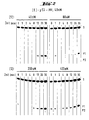
- the intensity of the bands on the X-ray film was determined using a laser densitometer (see Fig. 1).
- a 20-mer substrate oligoribonucleotide, SB-1 5'-r (GC CCC UGU CAU CUU UUG UCC) -3 ' was enzymatically treated with T4 polynucleotide kinase in the presence of 32 P-ATP (specific activity: 4500 Ci / mmol am 5'- end radioactively marked.
- the cleavage reaction of SB-1 by various ribozymes was carried out as follows: The reaction conditions were 50mM Tris HCl, pH 7.5, 20mM MgCl 2 at 50 ° C.
- the substrate concentration SB-1 was 0.025 ⁇ M (Varies to 0.05, 0.1 and 0.25 ⁇ M), the ribozyme concentration was 0.02 ⁇ M.
- the preliminary initial rates of the reaction were measured with 40 nM substrate and 4 nM enzyme in 50 nM Tris-Cl (pH 7.5).
- the reaction was started by adding 10 nM MgCl 2 .
- the amount of the cleavage product at 55 ° C was measured after 1, 2, 5, 10 and 15 minutes.
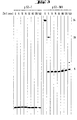
- the initial reaction rate was determined at 5 different substrate concentrations for the early phase of the progression curve at the time when the product formation rate was linear (after 4 minutes). Typical results from these kinetic measurements are shown in FIG. 2. Since in our experiments the reactions were started by adding divalent cations to the reaction mixture and the formation of the enzyme conformation was therefore not permitted, a lag phase was usually observed 5 to 10 minutes after the start of the reaction . The following enzymatic parameters were determined from an Eadie-Hofstee order.
- Substrate and enzymes were labeled ratio-actively with [ ⁇ - 32 P] ATP and polynucleotide kinase. Unincorporated nucleotides were removed by phenol extraction followed by ethanol precipitation.
- the kinetics of degradation with modified ribozymes were determined by dissolving the radioactively labeled oligoribonucleotides in combined, fresh and undiluted human serum with a final concentration of 20,000 cpm / ⁇ l. After an initial sample was taken, the reaction mixture was incubated at 37 ° C. After certain periods of time, 1 ⁇ l aliquots were removed and the reaction with phenol was stopped. After phenol extraction and ethanol precipitation, the samples were suspended in 80% formamide containing 20 nM EDTA, 0.01% bromophenol blue and 0.01% ethylene cyanot. The cleavage products were separated on a 20% polyacrylamide gel (PAGE) with 7 M urea.
- PAGE polyacrylamide gel
Landscapes
- Chemical & Material Sciences (AREA)
- Health & Medical Sciences (AREA)
- Life Sciences & Earth Sciences (AREA)
- Organic Chemistry (AREA)
- Molecular Biology (AREA)
- Biochemistry (AREA)
- General Health & Medical Sciences (AREA)
- Public Health (AREA)
- Engineering & Computer Science (AREA)
- Nuclear Medicine, Radiotherapy & Molecular Imaging (AREA)
- General Chemical & Material Sciences (AREA)
- Pharmacology & Pharmacy (AREA)
- Animal Behavior & Ethology (AREA)
- Chemical Kinetics & Catalysis (AREA)
- Genetics & Genomics (AREA)
- Veterinary Medicine (AREA)
- Biotechnology (AREA)
- Medicinal Chemistry (AREA)
- Virology (AREA)
- Communicable Diseases (AREA)
- Oncology (AREA)
- Saccharide Compounds (AREA)
- Pharmaceuticals Containing Other Organic And Inorganic Compounds (AREA)
- Enzymes And Modification Thereof (AREA)
- Medicines That Contain Protein Lipid Enzymes And Other Medicines (AREA)
- Measuring Or Testing Involving Enzymes Or Micro-Organisms (AREA)
- Preparation Of Compounds By Using Micro-Organisms (AREA)
- Macromolecular Compounds Obtained By Forming Nitrogen-Containing Linkages In General (AREA)
- Polyesters Or Polycarbonates (AREA)
- Shaping Of Tube Ends By Bending Or Straightening (AREA)
Claims (9)
- Oligoribonucléotides de formule I
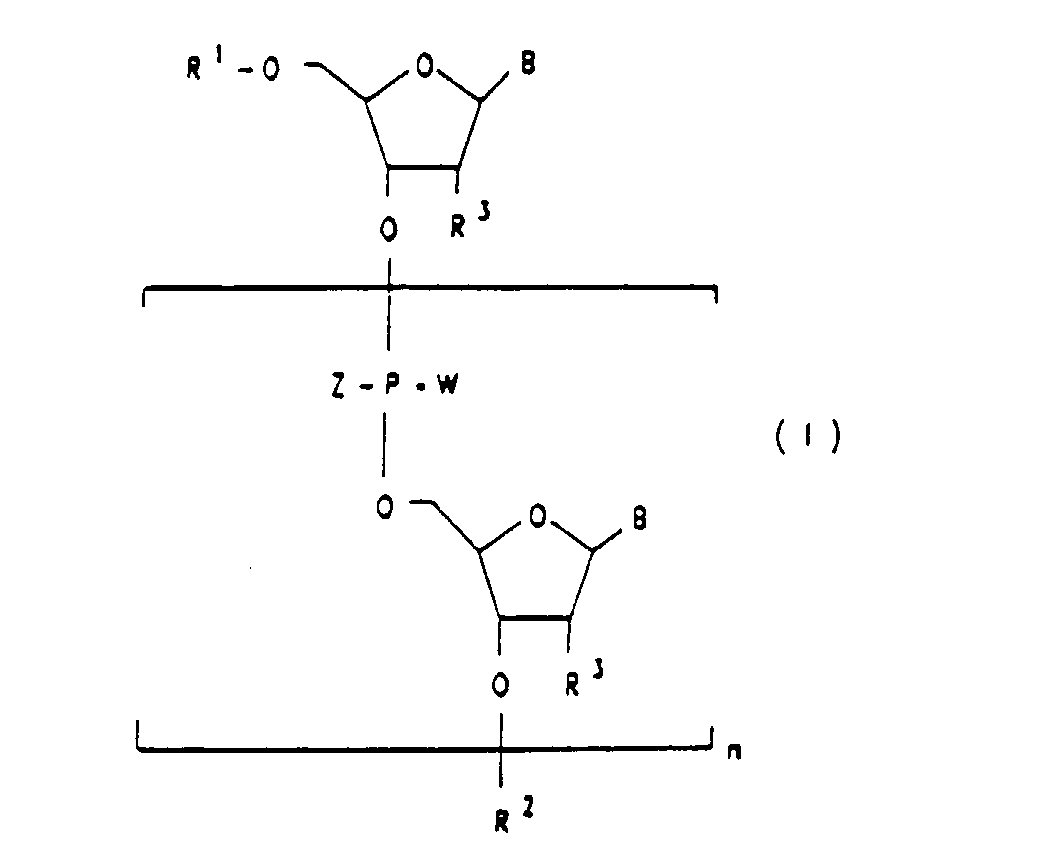 R1 représente un atome d'hydrogène ou un radical de formule II
 R2 représente un atome d'hydrogène ou un radical de formule III
 B représente une base, comme par exemple des bases naturelles telles que l'adénine, la thymine, la cytosine, la guanine, ou des bases non naturelles, comme par exemple la purine, la 2,6-diaminopurine, la 7-déazaadénine, la 7-déazaguanine, la N4,N4-éthanocytosine ou leurs précurseurs;les radicaux R3 représentent, indépendamment les uns des autres, OH, un atome d'hydrogène ou F, et au maximum un radical R3 est égal à H;W et W' représentent, indépendamment l'un de l'autre, un atome d'oxygène ou de soufre;Z et Z' représentent, indépendamment l'un de l'autre, O-, S-, un groupe alcoxy en C1-C18, de préférence un groupe alcoxy en C1-C8, un groupe alkyle en C1-C18, de préférence un groupe alkyle en C1-C8, NHR4, R4 représentant un groupe alkyle en C1-C18 ou un groupe alcoxy(C1-C4)-alkyle-(C1-C6), de préférence le groupe méthoxyéthyle; NR4R5, R4 étant tel que défini ci-dessus et R5 représentant un groupe alkyle en C1-C18, de préférence un groupe alkyle en C1-C8, ou R4 et R5 formant ensemble, avec l'atome d'azote qui les porte, un cycle hétérocyclique à 5-6 chaînons, qui peut en outre comporter un autre hétéroatome appartenant à la série O, S, N, comme par exemple le cycle morpholine;X représente OH, H, F, CI, Br, NH2, N3, un groupe O-C(O)-alkyle (C1-C18), O-C(O)-alcényle(C2-C18), O-C(O)-alcynyle-(C2-C18), O-C(O)-aryle(C6-C18), O-alkyle (C1-C18), O-alcényle(C2-C18), O-alcynyle(C2-C18), O-aryle(C6-C18), P(O)YY', Y et Y' étant définis comme Z et Z';dans la formule II, R3 et X peuvent former ensemble un diester d'acide phosphorique cyclique;
de préférence, X représente OH, H, F;n représente un nombre entier allant de 5 à 60, de préférence de 15 à 25,ainsi que leurs sels physiologiquement acceptables. - Oligoribonucléotides de formule I selon la revendication 1, caractérisés en ce que R2 représente un radical de formule III et R1 représente un atome d'hydrogène; R1 et R2 représentent un radical de formule II ou III, respectivement, dans ce dernier cas soit W, soit Z ne représentant pas un atome d'oxygène et X représente OH ou H.
- Oligoribonucléotides de formule I selon la revendication 1 ou 2, caractérisés en ce que W représente un atome d'oxygène ou Z et W représentent l'un et l'autre un atome d'oxygène.
- Oligoribonucléotides de formule I selon les revendications 1 à 4, caractérisés en ce que R2 représente un radical de formule III et R1 représente un atome d'hydrogène.
- Oligoribonucléotides de formule I selon les revendications 1 à 4, caractérisés en ce qu'ils sont en outre substitués par des groupes qui favorisent le transport intracellulaire, qui servent de groupes "rapporteurs" in vitro ou in vivo et/ou par des groupes qui, lors de l'hybridation de l'oligoribonucléotide avec de l'ADN ou de l'ARN biologique, attaquent par liaison ou coupure ces molécules d'ADN ou d'ARN.
- Oligoribonucléotides selon la revendication 1, caractérisés en ce qu'il en résulte une ribozyme à extrémité(s) 5' et/ou 3' synthétique(s).
- Procédé pour la préparation des oligoribonucléotides de formule I, selon les revendications 1 à 5,
caractérisé en ce quea) on fait réagir une entité nucléotidique à groupements 3'- ou 5'-terminaux, contenant du phosphore-(III) ou du phosphore-(V), ou un dérivé activé de celle-ci, avec une autre entité nucléotidique à groupe hydroxy 3'- ou 5'-terminal libre, oub) on fait la synthèse de la même façon de l'oligonucléotide, au moyen de fragments, on élimine éventuellement, dans les oligonucléotides obtenus selon (a) ou (b), un ou plusieurs groupes protecteurs introduits temporairement pour la protection d'autres fonctions, et les oligonucléotides de formule I ainsi obtenus sont éventuellement convertis en un de leurs sels physiologiquement acceptables. - Oligoribonucléotides de formule I, selon les revendications 1 à 5, utiles pour des procédés chimiques d'hybridation, destinés à la régulation ou à la répression de la fonction biologique d'acides nucléiques, reposant sur l'appariement à des acides nucléiques mono- ou bicaténaires, ainsi que pour la répression sélective de l'expression de fonctions génomiques virales et pour la prophylaxie et la thérapie de fonctions virales, pour la répression de la fonction oncogène et pour le traitement de maladies cancéreuses.
- Médicament contenant un ou plusieurs des composés selon les revendications 1 à 6, éventuellement conjointement avec des adjuvants et/ou véhicules physiologiquement acceptables, de préférence pour l'administration intraveineuse ou tropique.
Applications Claiming Priority (2)
| Application Number | Priority Date | Filing Date | Title |
|---|---|---|---|
| DE4231949 | 1992-09-24 | ||
| DE4231949 | 1992-09-24 |
Publications (4)
| Publication Number | Publication Date |
|---|---|
| EP0593901A2 EP0593901A2 (fr) | 1994-04-27 |
| EP0593901A3 EP0593901A3 (en) | 1994-09-28 |
| EP0593901B1 true EP0593901B1 (fr) | 1997-04-16 |
| EP0593901B2 EP0593901B2 (fr) | 2008-04-09 |
Family
ID=6468696
Family Applications (1)
| Application Number | Title | Priority Date | Filing Date |
|---|---|---|---|
| EP93114773A Expired - Lifetime EP0593901B2 (fr) | 1992-09-24 | 1993-09-14 | Analogues des oligoribonucleotide et ribozymer avec 3'-3'-et 5'-5' liasons terminaler |
Country Status (14)
| Country | Link |
|---|---|
| US (1) | US6420546B1 (fr) |
| EP (1) | EP0593901B2 (fr) |
| JP (1) | JP3653102B2 (fr) |
| AT (1) | ATE151773T1 (fr) |
| AU (1) | AU665113B2 (fr) |
| CA (1) | CA2106819C (fr) |
| DE (1) | DE59306170D1 (fr) |
| DK (1) | DK0593901T3 (fr) |
| ES (1) | ES2103408T3 (fr) |
| FI (1) | FI115400B (fr) |
| GR (1) | GR3023858T3 (fr) |
| HU (1) | HU219638B (fr) |
| NO (1) | NO307656B1 (fr) |
| NZ (1) | NZ248739A (fr) |
Cited By (2)
| Publication number | Priority date | Publication date | Assignee | Title |
|---|---|---|---|---|
| EP2070939A1 (fr) | 2001-05-25 | 2009-06-17 | Duke University | Modulateurs d'agents pharmacologiques |
| EP2460811A1 (fr) | 2004-04-22 | 2012-06-06 | Regado Biosciences, Inc. | Modulateurs améliorés de facteurs de coagulation |
Families Citing this family (20)
| Publication number | Priority date | Publication date | Assignee | Title |
|---|---|---|---|---|
| US5646042A (en) * | 1992-08-26 | 1997-07-08 | Ribozyme Pharmaceuticals, Inc. | C-myb targeted ribozymes |
| US5998203A (en) * | 1996-04-16 | 1999-12-07 | Ribozyme Pharmaceuticals, Inc. | Enzymatic nucleic acids containing 5'-and/or 3'-cap structures |
| ES2221942T3 (es) * | 1996-05-24 | 2005-01-16 | Aventis Pharma Deutschland Gmbh | Reactivo y metodo para inhibir la expresion de n-ras. |
| US7572582B2 (en) | 1997-09-12 | 2009-08-11 | Exiqon A/S | Oligonucleotide analogues |
| EP1071753A2 (fr) * | 1998-04-20 | 2001-01-31 | Ribozyme Pharmaceuticals, Inc. | Molecules d'acides nucleiques presentant de nouvelles compositions chimiques capables de moduler l'expression genique |
| DE19935303A1 (de) | 1999-07-28 | 2001-02-08 | Aventis Pharma Gmbh | Oligonukleotide zur Inhibierung der Expression von humanem eg5 |
| US7312325B2 (en) | 2000-09-26 | 2007-12-25 | Duke University | RNA aptamers and methods for identifying the same |
| KR101147147B1 (ko) | 2004-04-01 | 2012-05-25 | 머크 샤프 앤드 돔 코포레이션 | Rna 간섭의 오프 타겟 효과 감소를 위한 변형된폴리뉴클레오타이드 |
| US7923207B2 (en) | 2004-11-22 | 2011-04-12 | Dharmacon, Inc. | Apparatus and system having dry gene silencing pools |
| US7935811B2 (en) | 2004-11-22 | 2011-05-03 | Dharmacon, Inc. | Apparatus and system having dry gene silencing compositions |
| US20060166234A1 (en) | 2004-11-22 | 2006-07-27 | Barbara Robertson | Apparatus and system having dry control gene silencing compositions |
| EP1820804A1 (fr) * | 2006-02-20 | 2007-08-22 | Humboldt-Universität zu Berlin | Oligonucléotides liphophiles |
| AU2007299705B2 (en) | 2006-09-22 | 2012-09-06 | Dharmacon, Inc. | Duplex oligonucleotide complexes and methods for gene silencing by RNA interference |
| US7845686B2 (en) * | 2007-12-17 | 2010-12-07 | S & B Technical Products, Inc. | Restrained pipe joining system for plastic pipe |
| US8188060B2 (en) | 2008-02-11 | 2012-05-29 | Dharmacon, Inc. | Duplex oligonucleotides with enhanced functionality in gene regulation |
| EP2781523A1 (fr) | 2013-03-18 | 2014-09-24 | Miltenyi Biotec GmbH | Analogues oligonucléotides lipophiles |
| CA3033867A1 (fr) | 2016-08-17 | 2018-02-22 | Solstice Biologics, Ltd. | Constructions polynucleotidiques |
| US11597744B2 (en) | 2017-06-30 | 2023-03-07 | Sirius Therapeutics, Inc. | Chiral phosphoramidite auxiliaries and methods of their use |
| US11104941B2 (en) * | 2018-09-28 | 2021-08-31 | Bioo Scientific Corporation | 5′ adapter comprising an internal 5′-5′ linkage |
| CN118373865B (zh) * | 2024-06-25 | 2024-11-08 | 苏州诺维康生物科技有限公司 | 一种4-乙酰氨基-1-(2-脱氧-2-氟-beta-D-阿拉伯呋喃基)-2(1H)-嘧啶酮的新合成方法 |
Family Cites Families (6)
| Publication number | Priority date | Publication date | Assignee | Title |
|---|---|---|---|---|
| DE3916871A1 (de) | 1989-05-24 | 1990-11-29 | Boehringer Mannheim Gmbh | Modifiziertes phosphoramidit-verfahren zur herstellung von modifizierten nukleinsaeuren |
| US5399676A (en) * | 1989-10-23 | 1995-03-21 | Gilead Sciences | Oligonucleotides with inverted polarity |
| DE59108644D1 (de) * | 1990-07-02 | 1997-05-07 | Hoechst Ag | Oligonucleotid-analoge mit terminalen 3'-3'-bzw. 5'-5'-Internucleotidverknüpfungen |
| US5672697A (en) * | 1991-02-08 | 1997-09-30 | Gilead Sciences, Inc. | Nucleoside 5'-methylene phosphonates |
| US5646261A (en) * | 1992-01-22 | 1997-07-08 | Hoechst Aktiengesellschaft | 3'-derivatized oligonucleotide analogs with non-nucleotidic groupings, their preparation and use |
| KR930016437A (ko) * | 1992-01-22 | 1993-08-26 | 귀틀라인, 슈미트 | 올리고뉴클레오티드 유사체, 이의 제조방법 및 용도 |
-
1993
- 1993-09-14 EP EP93114773A patent/EP0593901B2/fr not_active Expired - Lifetime
- 1993-09-14 DK DK93114773.0T patent/DK0593901T3/da active
- 1993-09-14 DE DE59306170T patent/DE59306170D1/de not_active Expired - Lifetime
- 1993-09-14 ES ES93114773T patent/ES2103408T3/es not_active Expired - Lifetime
- 1993-09-14 AT AT93114773T patent/ATE151773T1/de not_active IP Right Cessation
- 1993-09-22 NZ NZ248739A patent/NZ248739A/xx not_active IP Right Cessation
- 1993-09-22 FI FI934154A patent/FI115400B/fi active IP Right Grant
- 1993-09-23 NO NO933397A patent/NO307656B1/no unknown
- 1993-09-23 AU AU47551/93A patent/AU665113B2/en not_active Ceased
- 1993-09-23 CA CA002106819A patent/CA2106819C/fr not_active Expired - Fee Related
- 1993-09-24 JP JP23801093A patent/JP3653102B2/ja not_active Expired - Lifetime
- 1993-09-24 HU HU9302697A patent/HU219638B/hu not_active IP Right Cessation
-
1997
- 1997-06-20 GR GR970401499T patent/GR3023858T3/el unknown
-
1998
- 1998-04-14 US US09/059,331 patent/US6420546B1/en not_active Expired - Fee Related
Cited By (3)
| Publication number | Priority date | Publication date | Assignee | Title |
|---|---|---|---|---|
| EP2070939A1 (fr) | 2001-05-25 | 2009-06-17 | Duke University | Modulateurs d'agents pharmacologiques |
| EP2364990A1 (fr) | 2001-05-25 | 2011-09-14 | Duke University | Modulateurs d'agents pharmacologiques |
| EP2460811A1 (fr) | 2004-04-22 | 2012-06-06 | Regado Biosciences, Inc. | Modulateurs améliorés de facteurs de coagulation |
Also Published As
| Publication number | Publication date |
|---|---|
| NZ248739A (en) | 1995-08-28 |
| DE59306170D1 (de) | 1997-05-22 |
| NO307656B1 (no) | 2000-05-08 |
| NO933397D0 (no) | 1993-09-23 |
| ES2103408T3 (es) | 1997-09-16 |
| GR3023858T3 (en) | 1997-09-30 |
| EP0593901A2 (fr) | 1994-04-27 |
| DK0593901T3 (da) | 1997-10-27 |
| FI934154A7 (fi) | 1994-03-25 |
| EP0593901A3 (en) | 1994-09-28 |
| CA2106819A1 (fr) | 1994-03-25 |
| JP3653102B2 (ja) | 2005-05-25 |
| JPH06189753A (ja) | 1994-07-12 |
| NO933397L (no) | 1994-03-25 |
| US6420546B1 (en) | 2002-07-16 |
| HU219638B (hu) | 2001-06-28 |
| ATE151773T1 (de) | 1997-05-15 |
| FI115400B (fi) | 2005-04-29 |
| EP0593901B2 (fr) | 2008-04-09 |
| HUT66458A (en) | 1994-11-28 |
| AU4755193A (en) | 1994-03-31 |
| HU9302697D0 (en) | 1993-12-28 |
| CA2106819C (fr) | 2007-04-17 |
| FI934154A0 (fi) | 1993-09-22 |
| AU665113B2 (en) | 1995-12-14 |
Similar Documents
| Publication | Publication Date | Title |
|---|---|---|
| EP0593901B1 (fr) | Analogues des oligoribonucleotide et ribozymer avec 3'-3'-et 5'-5' liasons terminaler | |
| DE69127903T2 (de) | Neue mit polyamin konjugierte oligonukleotide | |
| EP0464638B1 (fr) | Analogues d'oligonucléotides avec liaisons terminals 3'-3'-resp. 5'-5'-internucléotidiques | |
| DE69027443T2 (de) | Oligonukleotidanaloga mit neuartigen bindungen | |
| EP0845476B1 (fr) | Oligonucléotides synthétiques catalytiques | |
| EP0552766B1 (fr) | Analogues oligonucléotidiques, leur préparation et leur utilisation | |
| EP0626387B1 (fr) | Nucléosides et oligonucléotides contenant des groupes d'éther sur les positions 2' | |
| EP0653439B1 (fr) | Oligonucléotides stabilisés et leur utilisation | |
| DE69126530T2 (de) | Nuklease resistente, pyrimidin modifizierte oligonukleotide, die die gen-expression detektieren und modulieren | |
| DE69331524T2 (de) | Verfahren zum spezifischen schneiden von rna-strängen | |
| DE69403642T2 (de) | 7-deazapurin modifizierte oligonukleotide | |
| DE69331946T2 (de) | Nukleozyme | |
| DE69033495T2 (de) | 2'-modifizierte nukleotide | |
| DE69307495T2 (de) | Oligothionukleotide | |
| DE3855275T4 (de) | Nichtnukleotides Bindungsreagenz für nukleotide Proben | |
| EP0679657B1 (fr) | Nucléosides et oligonucléotides contenant des groupes 2'-éther | |
| DE69433626T2 (de) | N-2 substituierte purine | |
| DE69637256T2 (de) | Synthese von Methoxynukleoside und enzymatische Nukleisäure Moleküle | |
| DE69432315T2 (de) | ANTISENSE NUKLEINSÄUREN ZUR VORBEUGUNG UND BEHANDLUNG VON BESCHWERDEN IN WELCHEN DIE EXPRIMIERUNG VON C-erbB-2 EINE ROLLE SPIELT | |
| DE4110085A1 (de) | 2'-o-alkyl-oligoribonukleotide, verfahren zu deren herstellung und deren verwendung als antisense-oligonukleotide | |
| DE69724218T2 (de) | Universale feste träger und verfahren zu ihrer verwendung | |
| EP0688784B1 (fr) | Dérivés d'oligonucléotides modifiés en position 3' | |
| EP0552767B1 (fr) | Analogues des oligonucléotides dérivées en position 3', avec des groupes non-nucléotidics, leur préparation et leur utilisation | |
| EP0749436A1 (fr) | Compositions et procedes s'utilisant dans la synthese d'oligonucleotides | |
| DE69733150T2 (de) | Verfahren zur herstellung von nukleotiden oder oligonukleotiden phosphoramitiden |
Legal Events
| Date | Code | Title | Description |
|---|---|---|---|
| PUAI | Public reference made under article 153(3) epc to a published international application that has entered the european phase |
Free format text: ORIGINAL CODE: 0009012 |
|
| AK | Designated contracting states |
Kind code of ref document: A2 Designated state(s): AT BE CH DE DK ES FR GB GR IE IT LI LU MC NL PT SE |
|
| PUAL | Search report despatched |
Free format text: ORIGINAL CODE: 0009013 |
|
| AK | Designated contracting states |
Kind code of ref document: A3 Designated state(s): AT BE CH DE DK ES FR GB GR IE IT LI LU MC NL PT SE |
|
| 17P | Request for examination filed |
Effective date: 19950328 |
|
| 17Q | First examination report despatched |
Effective date: 19950504 |
|
| GRAG | Despatch of communication of intention to grant |
Free format text: ORIGINAL CODE: EPIDOS AGRA |
|
| GRAH | Despatch of communication of intention to grant a patent |
Free format text: ORIGINAL CODE: EPIDOS IGRA |
|
| GRAH | Despatch of communication of intention to grant a patent |
Free format text: ORIGINAL CODE: EPIDOS IGRA |
|
| GRAA | (expected) grant |
Free format text: ORIGINAL CODE: 0009210 |
|
| AK | Designated contracting states |
Kind code of ref document: B1 Designated state(s): AT BE CH DE DK ES FR GB GR IE IT LI LU MC NL PT SE |
|
| REF | Corresponds to: |
Ref document number: 151773 Country of ref document: AT Date of ref document: 19970515 Kind code of ref document: T |
|
| REG | Reference to a national code |
Ref country code: CH Ref legal event code: EP |
|
| REF | Corresponds to: |
Ref document number: 59306170 Country of ref document: DE Date of ref document: 19970522 |
|
| ET | Fr: translation filed | ||
| GBT | Gb: translation of ep patent filed (gb section 77(6)(a)/1977) |
Effective date: 19970619 |
|
| REG | Reference to a national code |
Ref country code: IE Ref legal event code: FG4D Free format text: 73323 |
|
| REG | Reference to a national code |
Ref country code: GR Ref legal event code: FG4A Free format text: 3023858 |
|
| REG | Reference to a national code |
Ref country code: ES Ref legal event code: FG2A Ref document number: 2103408 Country of ref document: ES Kind code of ref document: T3 |
|
| REG | Reference to a national code |
Ref country code: DK Ref legal event code: T3 |
|
| PLBQ | Unpublished change to opponent data |
Free format text: ORIGINAL CODE: EPIDOS OPPO |
|
| PLBI | Opposition filed |
Free format text: ORIGINAL CODE: 0009260 |
|
| PLBF | Reply of patent proprietor to notice(s) of opposition |
Free format text: ORIGINAL CODE: EPIDOS OBSO |
|
| 26 | Opposition filed |
Opponent name: NEXSTAR PHARMACEUTICALS INC. Effective date: 19980113 |
|
| NLR1 | Nl: opposition has been filed with the epo |
Opponent name: NEXSTAR PHARMACEUTICALS INC. |
|
| PLBF | Reply of patent proprietor to notice(s) of opposition |
Free format text: ORIGINAL CODE: EPIDOS OBSO |
|
| RAP2 | Party data changed (patent owner data changed or rights of a patent transferred) |
Owner name: AVENTIS PHARMA DEUTSCHLAND GMBH |
|
| NLT2 | Nl: modifications (of names), taken from the european patent patent bulletin |
Owner name: AVENTIS PHARMA DEUTSCHLAND GMBH |
|
| REG | Reference to a national code |
Ref country code: PT Ref legal event code: PC4A Free format text: AVENTIS PHARMA DEUTSCHLAND GMBH DE Effective date: 20010322 |
|
| REG | Reference to a national code |
Ref country code: GB Ref legal event code: IF02 |
|
| NLS | Nl: assignments of ep-patents |
Owner name: AVENTIS PHARMA DEUTSCHLAND GMBH |
|
| REG | Reference to a national code |
Ref country code: FR Ref legal event code: TP |
|
| REG | Reference to a national code |
Ref country code: GB Ref legal event code: 732E |
|
| PLAW | Interlocutory decision in opposition |
Free format text: ORIGINAL CODE: EPIDOS IDOP |
|
| RAP2 | Party data changed (patent owner data changed or rights of a patent transferred) |
Owner name: SANOFI-AVENTIS DEUTSCHLAND GMBH |
|
| NLT1 | Nl: modifications of names registered in virtue of documents presented to the patent office pursuant to art. 16 a, paragraph 1 |
Owner name: SANOFI-AVENTIS DEUTSCHLAND GMBH |
|
| NLT2 | Nl: modifications (of names), taken from the european patent patent bulletin |
Owner name: SANOFI-AVENTIS DEUTSCHLAND GMBH Effective date: 20051221 |
|
| PGFP | Annual fee paid to national office [announced via postgrant information from national office to epo] |
Ref country code: PT Payment date: 20060717 Year of fee payment: 14 |
|
| PGFP | Annual fee paid to national office [announced via postgrant information from national office to epo] |
Ref country code: NL Payment date: 20060721 Year of fee payment: 14 Ref country code: AT Payment date: 20060721 Year of fee payment: 14 |
|
| PGFP | Annual fee paid to national office [announced via postgrant information from national office to epo] |
Ref country code: IE Payment date: 20060726 Year of fee payment: 14 Ref country code: CH Payment date: 20060726 Year of fee payment: 14 |
|
| PGFP | Annual fee paid to national office [announced via postgrant information from national office to epo] |
Ref country code: BE Payment date: 20060807 Year of fee payment: 14 |
|
| PGFP | Annual fee paid to national office [announced via postgrant information from national office to epo] |
Ref country code: MC Payment date: 20060817 Year of fee payment: 14 |
|
| PGFP | Annual fee paid to national office [announced via postgrant information from national office to epo] |
Ref country code: GR Payment date: 20060914 Year of fee payment: 14 |
|
| PGFP | Annual fee paid to national office [announced via postgrant information from national office to epo] |
Ref country code: ES Payment date: 20060920 Year of fee payment: 14 |
|
| PGFP | Annual fee paid to national office [announced via postgrant information from national office to epo] |
Ref country code: LU Payment date: 20060921 Year of fee payment: 14 |
|
| PGFP | Annual fee paid to national office [announced via postgrant information from national office to epo] |
Ref country code: IT Payment date: 20060930 Year of fee payment: 14 |
|
| PUAH | Patent maintained in amended form |
Free format text: ORIGINAL CODE: 0009272 |
|
| REG | Reference to a national code |
Ref country code: FR Ref legal event code: CD Ref country code: FR Ref legal event code: CA |
|
| REG | Reference to a national code |
Ref country code: PT Ref legal event code: MM4A Free format text: LAPSE DUE TO NON-PAYMENT OF FEES Effective date: 20080314 |
|
| BERE | Be: lapsed |
Owner name: *SANOFI-AVENTIS DEUTSCHLAND G.M.B.H. Effective date: 20070930 |
|
| 27A | Patent maintained in amended form |
Effective date: 20080409 |
|
| AK | Designated contracting states |
Kind code of ref document: B2 Designated state(s): AT BE CH DE DK ES FR GB GR IE IT LI LU MC NL PT SE |
|
| PG25 | Lapsed in a contracting state [announced via postgrant information from national office to epo] |
Ref country code: SE Free format text: LAPSE BECAUSE OF NON-PAYMENT OF DUE FEES Effective date: 20070915 Ref country code: MC Free format text: LAPSE BECAUSE OF NON-PAYMENT OF DUE FEES Effective date: 20070930 |
|
| PGFP | Annual fee paid to national office [announced via postgrant information from national office to epo] |
Ref country code: DK Payment date: 20060727 Year of fee payment: 14 |
|
| REG | Reference to a national code |
Ref country code: CH Ref legal event code: AEN Free format text: AUFRECHTERHALTUNG DES PATENTES IN GEAENDERTER FORM |
|
| REG | Reference to a national code |
Ref country code: CH Ref legal event code: PL |
|
| EUG | Se: european patent has lapsed | ||
| PG25 | Lapsed in a contracting state [announced via postgrant information from national office to epo] |
Ref country code: PT Free format text: LAPSE BECAUSE OF NON-PAYMENT OF DUE FEES Effective date: 20080314 Ref country code: NL Free format text: LAPSE BECAUSE OF NON-PAYMENT OF DUE FEES Effective date: 20080401 |
|
| NLV4 | Nl: lapsed or anulled due to non-payment of the annual fee |
Effective date: 20080401 |
|
| REG | Reference to a national code |
Ref country code: IE Ref legal event code: MM4A |
|
| PG25 | Lapsed in a contracting state [announced via postgrant information from national office to epo] |
Ref country code: AT Free format text: LAPSE BECAUSE OF NON-PAYMENT OF DUE FEES Effective date: 20070914 |
|
| PGFP | Annual fee paid to national office [announced via postgrant information from national office to epo] |
Ref country code: SE Payment date: 20060726 Year of fee payment: 14 |
|
| PG25 | Lapsed in a contracting state [announced via postgrant information from national office to epo] |
Ref country code: LI Free format text: LAPSE BECAUSE OF NON-PAYMENT OF DUE FEES Effective date: 20070930 Ref country code: CH Free format text: LAPSE BECAUSE OF NON-PAYMENT OF DUE FEES Effective date: 20070930 |
|
| PG25 | Lapsed in a contracting state [announced via postgrant information from national office to epo] |
Ref country code: BE Free format text: LAPSE BECAUSE OF NON-PAYMENT OF DUE FEES Effective date: 20070930 |
|
| PG25 | Lapsed in a contracting state [announced via postgrant information from national office to epo] |
Ref country code: IE Free format text: LAPSE BECAUSE OF NON-PAYMENT OF DUE FEES Effective date: 20070914 Ref country code: ES Free format text: LAPSE BECAUSE OF FAILURE TO SUBMIT A TRANSLATION OF THE DESCRIPTION OR TO PAY THE FEE WITHIN THE PRESCRIBED TIME-LIMIT Effective date: 20080720 |
|
| ET3 | Fr: translation filed ** decision concerning opposition | ||
| PG25 | Lapsed in a contracting state [announced via postgrant information from national office to epo] |
Ref country code: DK Free format text: LAPSE BECAUSE OF FAILURE TO SUBMIT A TRANSLATION OF THE DESCRIPTION OR TO PAY THE FEE WITHIN THE PRESCRIBED TIME-LIMIT Effective date: 20080709 |
|
| PG25 | Lapsed in a contracting state [announced via postgrant information from national office to epo] |
Ref country code: GR Free format text: LAPSE BECAUSE OF NON-PAYMENT OF DUE FEES Effective date: 20080402 |
|
| PG25 | Lapsed in a contracting state [announced via postgrant information from national office to epo] |
Ref country code: LU Free format text: LAPSE BECAUSE OF NON-PAYMENT OF DUE FEES Effective date: 20070914 Ref country code: IT Free format text: LAPSE BECAUSE OF NON-PAYMENT OF DUE FEES Effective date: 20070914 |
|
| REG | Reference to a national code |
Ref country code: DK Ref legal event code: EBP |
|
| PG25 | Lapsed in a contracting state [announced via postgrant information from national office to epo] |
Ref country code: DK Free format text: LAPSE BECAUSE OF FAILURE TO SUBMIT A TRANSLATION OF THE DESCRIPTION OR TO PAY THE FEE WITHIN THE PRESCRIBED TIME-LIMIT Effective date: 20070930 |
|
| PGFP | Annual fee paid to national office [announced via postgrant information from national office to epo] |
Ref country code: GB Payment date: 20120912 Year of fee payment: 20 |
|
| PGFP | Annual fee paid to national office [announced via postgrant information from national office to epo] |
Ref country code: FR Payment date: 20120926 Year of fee payment: 20 Ref country code: DE Payment date: 20120912 Year of fee payment: 20 |
|
| REG | Reference to a national code |
Ref country code: DE Ref legal event code: R071 Ref document number: 59306170 Country of ref document: DE |
|
| REG | Reference to a national code |
Ref country code: GB Ref legal event code: PE20 Expiry date: 20130913 |
|
| PG25 | Lapsed in a contracting state [announced via postgrant information from national office to epo] |
Ref country code: DE Free format text: LAPSE BECAUSE OF EXPIRATION OF PROTECTION Effective date: 20130917 |
|
| PG25 | Lapsed in a contracting state [announced via postgrant information from national office to epo] |
Ref country code: GB Free format text: LAPSE BECAUSE OF EXPIRATION OF PROTECTION Effective date: 20130913 |