EP0594492A2 - Wachstumsinhibierender Faktor - Google Patents
Wachstumsinhibierender Faktor Download PDFInfo
- Publication number
- EP0594492A2 EP0594492A2 EP93402558A EP93402558A EP0594492A2 EP 0594492 A2 EP0594492 A2 EP 0594492A2 EP 93402558 A EP93402558 A EP 93402558A EP 93402558 A EP93402558 A EP 93402558A EP 0594492 A2 EP0594492 A2 EP 0594492A2
- Authority
- EP
- European Patent Office
- Prior art keywords
- polypeptide
- growth inhibitory
- amino acid
- gif
- inhibitory action
- Prior art date
- Legal status (The legal status is an assumption and is not a legal conclusion. Google has not performed a legal analysis and makes no representation as to the accuracy of the status listed.)
- Withdrawn
Links
Images




Classifications
-
- C—CHEMISTRY; METALLURGY
- C07—ORGANIC CHEMISTRY
- C07K—PEPTIDES
- C07K14/00—Peptides having more than 20 amino acids; Gastrins; Somatostatins; Melanotropins; Derivatives thereof
- C07K14/435—Peptides having more than 20 amino acids; Gastrins; Somatostatins; Melanotropins; Derivatives thereof from animals; from humans
- C07K14/475—Growth factors; Growth regulators
-
- A—HUMAN NECESSITIES
- A61—MEDICAL OR VETERINARY SCIENCE; HYGIENE
- A61K—PREPARATIONS FOR MEDICAL, DENTAL OR TOILETRY PURPOSES
- A61K38/00—Medicinal preparations containing peptides
Definitions
- the present invention relates to a polypeptide having neural growth inhibitory action.
- senile dementia Amidst the growing number of elderly people in our society, the issue of senile dementia is attracting considerable concern, and numerous efforts have been made for its prevention and treatment. In particular, since a senile dementia known as Alzheimer's disease frequently occurs in presenium (age 50-60), elucidation of its cause and establishment of a method of treatment are hyrriedly desired.
- Alzheimer's disease is considered to be an organic disease having both pathological characteristics such as senile plaques and neurofibrillary degeneration, as well as clinical characteristics such as progressive dementia.
- pathological characteristics such as senile plaques and neurofibrillary degeneration, as well as clinical characteristics such as progressive dementia.
- acceleration metabolism and abnormal regeneration of neuron are involved in this disease.
- GIF neural growth inhibitory factor
- An object of the present invention is to provide a non-naturally-occurring polypeptide having neural growth inhibitory action that contains the amino acid sequence represented by the following amino acid sequence (I) :
- polypeptide of the present invention is a non-naturally-occurring peptide containing the amino acid sequence represented by SEQ ID No. 1.
- SEQ ID No. 1 the amino acid sequence represented by SEQ ID No. 1.
- polypeptide of the present invention examples include the polypeptide having the amino acid sequence represented by SEQ ID No. 1, as well as a polypeptide which may contain the amino acid sequence and in which amino acid(s) are linked to its N terminal and/or C terminal as long as neural growth inhibitory action is exhibited. Further, the polypeptide of the present invention may have at least one disulfide linkage.
- the number of amino acids which are linked is, for example, 1-10, preferably 1-5, and more preferably 1-3.
- Specific examples of said linked amino acids include one or more of methionine, tyrosine, serine and threonine as an example or examples of amino acids linked to the N terminal, and one or more of tyrosine, serine and threonine as examples of amino acids linked to the C terminal.
- the polypeptide of the present invention can be produced by performing a peptide chain cleaving reaction on the GIF prepared by the process described in, for example, Japanese Provisional Unexamined Patent Application (KOKAI) No. 18100/1992, European Unexamined Patent Application No. 458,673 or PCT Patent Publication W092/10568.
- protease which may be either an exopeptidase or endopeptidase.
- proteases examples include serine proteases (e.g. trypsin, chymotrypsin, thrombin, plasmin, elastase and V8), thiol proteases (e.g. cysteine protease, papain, ficin, bromelain and cathepsin B), acidic proteases (e.g. aspartate protease, pepsin, cathepsin D, renin and chymosin), and metal proteases (e.g. carbox- yprotease, collagenase and thermolysin).
- serine proteases e.g. trypsin, chymotrypsin, thrombin, plasmin, elastase and V8
- thiol proteases e.g. cysteine protease, papain, ficin, bromelain and cathepsin B
- acidic proteases e.g. aspartate protea
- endopeptidases e.g. trypsin, V8 and metal proteases
- trypsin, V8 and metal proteases are used preferably.
- Said enzyme reaction is carried out by reacting a purified or partially purified product of GIF with an enzyme as mentioned above.
- Said reaction is preferably carried out using a buffer solution.
- buffer solution include those composed of salts of an inorganic acid (such as phosphoric acid) or organic acid (such as acetic acid) and an inorganic base (such as sodium hydroxide, potassium hydroxide or ammonia). Any of said buffer solutions may be used as long as it does not inhibit said enzyme reaction.
- the pH of said enzyme reaction is in the range of approximately 2-10, preferably approximately 6-9 in terms of stability of the enzyme and polypeptide.
- the reaction time may preferably be in the range of approximately 1-100 hours, and most preferably of approximately 18-24 hours.
- the reaction temperature is approximately 4-70°C, while that of between approximately 20-37°C is particularly preferable.
- the amount of a peptidase used in the reaction should be approximately 1/1000-1 (mole ratio) with respect to the amount of a substrate, namely GIF, and an amount of approximately 1/300-1/20 (mole ratio) is preferable in terms of yield, reaction time and economic feasibility.
- an aminopeptidase can be used in the reaction after fixing on agarose, dextran, cellulose, polyacrylamide, their derivatives or their copolymers.
- methionine in the sequence consisting of Met-Asp-Pro may be cleaved specifically with the action of an aminopeptidase. Said process is performed according to the process described in European Unexamined Patent Application No. 204,527.
- polypeptide of the present invention can also be produced using a synthesis process.
- Chemical synthesis of the polypeptide of the present invention can be performed using an automated peptide synthesizer.
- the basic synthesis process and so forth can be performed following the method of R.B. Merrifield [Advances in Enzymology, 32, 221-296 (1969)].
- the principle of this method involves covalently bonding the amino acid of the carboxyl terminal to a resin support, removing the protecting group of the a-amino group, sequentially repeating condensation of protected amino acids and extending the peptide chain towards the amino terminal to obtain a protected peptide resin having the target amino acid sequence.
- condensation of each amino acid and removal of the protecting group of the a-amino acid group are performed under nearly identical conditions and purification of intermediates is not carried out, this synthesis does not generally require advanced skills. Moreover, this method can be performed quickly and is extremely useful for synthesizing various peptides.
- anhydrous hydrogen fluoride, trifluoromethanesulfonic acid or trifluoroacetic acid and various additives dissociation of the peptide from the resin and removal of all protecting groups can be performed in a single step.
- Isolation and purification of the target peptide should be performed according to routine known methods for peptide purification. This can be performed by suitably combining such purification methods as gel filtration, ion exchange chromatography, high-performance liquid chromatography, affinity chromatography, hydrophobic chromatography, thin layer chromatography and electrophoresis.
- polypeptide of the present invention obtained in this manner having neural growth inhibitory action is useful as a pharmaceutical drug for treatment of Alzheimer's disease.
- said polypeptide has lower toxicity.
- the polypeptide of the present invention having neural growth inhibitory action can be administered safely to warm-blooded animals (including humans, mice, rats, hamsters, rabbits, dogs and cats), either parenterally or orally, in its original form as a powder or as a pharmaceutical composition (e.g. injection preparation, tablets, capsules, liquid or ointment) together with other pharmacologically acceptable carriers, vehicles and diluents.
- warm-blooded animals including humans, mice, rats, hamsters, rabbits, dogs and cats
- a pharmaceutical composition e.g. injection preparation, tablets, capsules, liquid or ointment
- an injection preparation is performed according to conventional methods using an aqueous solution containing, for example, physiological saline or glucose and other adjuvants.
- Pharmaceutical compositions such as tablets and capsules can also be prepared according to conventional methods.
- the polypeptide of the present invention having neural growth inhibitory action is administered, for example, to the warm-blooded animals listed above by selecting a suitable dose from approximately 1 ng/kg per day to 1 mg/kg per day in consideration of administration route, symptoms and so forth.
- GIF was produced using the method described in Japanese Provisional Unexamined Patent Application No. 18100/1992 and its corresponding EP Application No. 458,673. Namely, 60 ml of water were added to 20 g of normal human cerebral cortex protein followed by homogenizing and centrifuging for 1 hour at 20,000 g to obtain 55 ml of supernatant.
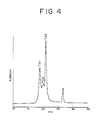
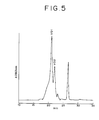
- VG1 and VG2 two peaks (VG1 and VG2) were obtained (Fig. 5).
- 400 ⁇ g of GIF obtained in Reference Example 1 were dissolved into 100 ⁇ l of a phosphaste buffer saline solution of Dulbecco and 0.5 mg of trypsin (Sigma) were added thereto.
- the obtained mixture was subjected to the same treatment as in the above to obtain the same digested product as in the above.
- Each of five digestion products obtained in Example 1 was fractionated and applied to a gas phase protein sequencer (Model 477A; Applied Biosystems) to determine the amino acid sequences of each peptide. As a result, each peptide was determined to have the amino acid sequences shown below.
- Example 2 Each of five digestion products obtained in Example 1 (TG1, TG2, TG3, VG1 and VG2) was digested with cyanogen bromide and oxidized with performic acid according to conventional methods. N-terminal sequence analyses were carried out on a PSQ-1 Protein Sequencer (Shimazu). Amino acid compositions were analyzed by JLC-300 Amino Acid Analyzer (JEOL) after hydrolysis with 6 NHCI. As a result, each peptide was determined to have the amino acid sequences shown below.
- 1.7 x 10 4 cells prepared from cerebral cortices of neonatal rats were seeded in a 6 mm microplate coated with gelatin-polyornithine.
- Each of the peptides obtained in Example 1 was added to serum-free medium MEMN2 (prepared by adding insulin, transferrin, putrescine, progesterone and sodium selenite to Eagle's medium) containing 100 ⁇ l of an aqueous solution of 125 ⁇ g/ml of Alzheimer's disease brain extract and fed for 5 days at 37°C in a 5% carbon dioxide gas incubator.
- MEMN2 prepared by adding insulin, transferrin, putrescine, progesterone and sodium selenite to Eagle's medium
- MAP2 microtubule-bound protein 2
- Fig. 6 The relationship between the amount of peptide TG3 and VG2 and the percent inhibition of neural growth activity was determined using the method described above. Those results are shown in Fig. 6.
- the closed circle represents the results for GIF
- the closed rhombus represents the results for TG3
- the x s represent the results for VG2.
- both TG3 and VG2 clearly demonstrated neural growth inhibitory activity.
- TG3 and ApoTG3+ME have growth inhibitory activities although all 3 fragments have the same amino acid sequences.
- ApoTG3+ME is treated with mercaptoethanol and their S-S bonds are cut once and re-bound by auto-oxidation.
- Mercaptoethanol treatment changes the protein folding pattern of ApoTG3+ME to different pattern with TG3.
- S-S bonds in ApoTG3 does not cut and the protein folding pattern of this peptide may not change with the protein folding pattern of TG3, in which S-metal bonds assign to.
- the polypeptide of the present invention can be used for the treatment of Alzheimer's disease as a growth inhibitory factor. These growth inhibitory factors can be produced more easily than naturally-occurring polypeptide by genetic recombination technology or chemical synthesis.
- the factor of the present invention can also be administered more easily. Namely, as the polypeptide of the present invention is soluble in water, it can be easily made into a pharmaceutical preparation and is easily absorbed in the body. Since it is considered that the present peptide more easily pass through the brain barrier in view of its molecural size, as compared with a naturally-occuring GIF.
- it can also be used as a starting material for synthesizing compounds having similar action.
Landscapes
- Chemical & Material Sciences (AREA)
- Health & Medical Sciences (AREA)
- Life Sciences & Earth Sciences (AREA)
- Organic Chemistry (AREA)
- General Health & Medical Sciences (AREA)
- Gastroenterology & Hepatology (AREA)
- Biochemistry (AREA)
- Biophysics (AREA)
- Zoology (AREA)
- Genetics & Genomics (AREA)
- Medicinal Chemistry (AREA)
- Molecular Biology (AREA)
- Proteomics, Peptides & Aminoacids (AREA)
- Toxicology (AREA)
- Peptides Or Proteins (AREA)
- Medicines That Contain Protein Lipid Enzymes And Other Medicines (AREA)
Applications Claiming Priority (4)
| Application Number | Priority Date | Filing Date | Title |
|---|---|---|---|
| JP28020192 | 1992-10-19 | ||
| JP280201/92 | 1992-10-19 | ||
| JP346853/92 | 1992-12-25 | ||
| JP34685392 | 1992-12-25 |
Publications (2)
| Publication Number | Publication Date |
|---|---|
| EP0594492A2 true EP0594492A2 (de) | 1994-04-27 |
| EP0594492A3 EP0594492A3 (de) | 1995-05-10 |
Family
ID=26553678
Family Applications (1)
| Application Number | Title | Priority Date | Filing Date |
|---|---|---|---|
| EP93402558A Withdrawn EP0594492A3 (de) | 1992-10-19 | 1993-10-18 | Wachstumsinhibierender Faktor. |
Country Status (3)
| Country | Link |
|---|---|
| US (1) | US5538947A (de) |
| EP (1) | EP0594492A3 (de) |
| CA (1) | CA2108622A1 (de) |
Cited By (1)
| Publication number | Priority date | Publication date | Assignee | Title |
|---|---|---|---|---|
| WO2003035033A1 (en) * | 2001-10-26 | 2003-05-01 | Universitat Autonoma De Barcelona | Metallothioneine-containing liposomes |
Family Cites Families (3)
| Publication number | Priority date | Publication date | Assignee | Title |
|---|---|---|---|---|
| ATE81779T1 (de) * | 1985-08-22 | 1992-11-15 | Gropep Pty Ltd | Peptidanalogedes insulinaehnlichen wachstumsfaktors-1 bei saeugetieren. |
| US5214031A (en) * | 1990-05-09 | 1993-05-25 | Yoko Uchida | Growth-inhibitory factor obtained from human brain |
| EP0567645B1 (de) * | 1990-12-13 | 1999-04-14 | Takeda Chemical Industries, Ltd. | DNA welche für einen Inhibitor der neutropen Aktivität kodiert und seine Verwendung |
-
1993
- 1993-10-18 CA CA002108622A patent/CA2108622A1/en not_active Abandoned
- 1993-10-18 EP EP93402558A patent/EP0594492A3/de not_active Withdrawn
- 1993-10-18 US US08/138,340 patent/US5538947A/en not_active Expired - Fee Related
Cited By (1)
| Publication number | Priority date | Publication date | Assignee | Title |
|---|---|---|---|---|
| WO2003035033A1 (en) * | 2001-10-26 | 2003-05-01 | Universitat Autonoma De Barcelona | Metallothioneine-containing liposomes |
Also Published As
| Publication number | Publication date |
|---|---|
| EP0594492A3 (de) | 1995-05-10 |
| CA2108622A1 (en) | 1994-04-20 |
| US5538947A (en) | 1996-07-23 |
Similar Documents
| Publication | Publication Date | Title |
|---|---|---|
| KR890004784B1 (ko) | 아프로티닌 동족체의 제조방법 | |
| EP0561412B1 (de) | Derivate des Parathormons | |
| EP0477885B1 (de) | Parathyroidhormon-Derivate | |
| AU744824B2 (en) | Improved process for obtaining insulin precursors having correctly bonded cystine bridges | |
| Hunt et al. | Abnormal human haemoglobins VI. The chemical difference between haemoglobins A and E | |
| Langley et al. | Amino acid sequence of beta-galactosidase. IV. Sequence of an alpha-complementing cyanogen bromide peptide, residues 3 to 92. | |
| SCHLESINGER et al. | Complete primary structure of statherin, a potent inhibitor of calcium phosphate precipitation, from the saliva of the monkey, Macaca arctoides | |
| Adamson et al. | Characterization of multiply phosphorylated peptides selectively precipitated from a pancreatic casein digest | |
| EP0205555A4 (de) | Serinproteaseinhibitoren und isolierungsverfahren dazu. | |
| JPWO1998029446A1 (ja) | サソリ由来神経ペプチド | |
| US6337385B1 (en) | Staphylococcus peptides for bacterial interference | |
| Chung et al. | Amino acid sequence studies of human C4b-binding protein: N-terminal sequence analysis and alignment of the fragments produced by limited proteolysis with chymotrypsin and the peptides produced by cyanogen bromide treatment | |
| Schuppan et al. | Sequence comparison of pepsin-resistant segments of basement-membrane collagen α 1 (IV) chains from bovine lens capsule and mouse tumour | |
| US5538947A (en) | Growth inhibitory factor | |
| Križaj et al. | The complete primary structure of bovine stefin B | |
| JPH06239889A (ja) | 神経栄養活性抑制物質 | |
| URATA et al. | Novel separation and amino acid sequences of α and β subunits of pig heart pyruvate dehydrogenase | |
| Büllesbach et al. | The chemical synthesis of rat relaxin and the unexpectedly high potency of the synthetic hormone in the mouse | |
| JP3776968B2 (ja) | ペプチド性サソリ毒素 | |
| LEE et al. | Serratia protease. Amino acid sequences of both termini, the 53 residues in the middle region containing the sole methionine residue, and a probable zinc-binding region | |
| JPH1080281A (ja) | 新規蛋白質及びその製造方法 | |
| JP2714430B2 (ja) | Na,K―ATPase阻害作用を有する新規ペプタイド | |
| US20020119917A1 (en) | Anti-inflammatory peptides derived from c-reactive protein | |
| JPH051098A (ja) | 新規ペプチド | |
| JPH09278797A (ja) | サソリ毒素関連ペプチド |
Legal Events
| Date | Code | Title | Description |
|---|---|---|---|
| PUAI | Public reference made under article 153(3) epc to a published international application that has entered the european phase |
Free format text: ORIGINAL CODE: 0009012 |
|
| AK | Designated contracting states |
Kind code of ref document: A2 Designated state(s): AT BE CH DE DK ES FR GB GR IE IT LI LU NL PT SE |
|
| PUAL | Search report despatched |
Free format text: ORIGINAL CODE: 0009013 |
|
| AK | Designated contracting states |
Kind code of ref document: A3 Designated state(s): AT BE CH DE DK ES FR GB GR IE IT LI LU NL PT SE |
|
| 17P | Request for examination filed |
Effective date: 19951205 |
|
| 17Q | First examination report despatched |
Effective date: 19980310 |
|
| STAA | Information on the status of an ep patent application or granted ep patent |
Free format text: STATUS: THE APPLICATION IS DEEMED TO BE WITHDRAWN |
|
| 18D | Application deemed to be withdrawn |
Effective date: 19990922 |