EP0596416A1 - Optimisation automatique des paramètres d'exposition photographique dans des appareils à longueur focale fixe pour la production d'images de dimensions hors norme et/ou pour la photographie utilisant des modes avec différentes pseudo-longueurs focales - Google Patents
Optimisation automatique des paramètres d'exposition photographique dans des appareils à longueur focale fixe pour la production d'images de dimensions hors norme et/ou pour la photographie utilisant des modes avec différentes pseudo-longueurs focales Download PDFInfo
- Publication number
- EP0596416A1 EP0596416A1 EP19930117522 EP93117522A EP0596416A1 EP 0596416 A1 EP0596416 A1 EP 0596416A1 EP 19930117522 EP19930117522 EP 19930117522 EP 93117522 A EP93117522 A EP 93117522A EP 0596416 A1 EP0596416 A1 EP 0596416A1
- Authority
- EP
- European Patent Office
- Prior art keywords
- flash
- exposure
- image
- value
- scene
- Prior art date
- Legal status (The legal status is an assumption and is not a legal conclusion. Google has not performed a legal analysis and makes no representation as to the accuracy of the status listed.)
- Granted
Links
- 238000004519 manufacturing process Methods 0.000 title description 15
- 238000000034 method Methods 0.000 claims abstract description 265
- 238000005286 illumination Methods 0.000 claims description 120
- 230000008859 change Effects 0.000 claims description 27
- 230000004044 response Effects 0.000 claims description 23
- 238000007639 printing Methods 0.000 claims description 16
- 238000003384 imaging method Methods 0.000 claims description 6
- 230000000153 supplemental effect Effects 0.000 claims description 5
- 230000006872 improvement Effects 0.000 abstract description 46
- 238000005457 optimization Methods 0.000 abstract description 12
- 239000010408 film Substances 0.000 description 235
- 230000008569 process Effects 0.000 description 230
- 238000010586 diagram Methods 0.000 description 32
- 238000005259 measurement Methods 0.000 description 27
- 230000007423 decrease Effects 0.000 description 21
- 230000006870 function Effects 0.000 description 20
- 230000003247 decreasing effect Effects 0.000 description 18
- 238000013461 design Methods 0.000 description 15
- 238000004364 calculation method Methods 0.000 description 14
- 230000003287 optical effect Effects 0.000 description 13
- 238000012545 processing Methods 0.000 description 12
- 230000002829 reductive effect Effects 0.000 description 12
- 239000000872 buffer Substances 0.000 description 11
- 230000000694 effects Effects 0.000 description 11
- 239000010410 layer Substances 0.000 description 10
- 230000002411 adverse Effects 0.000 description 9
- 230000007246 mechanism Effects 0.000 description 7
- 238000012986 modification Methods 0.000 description 6
- 230000004048 modification Effects 0.000 description 6
- 238000004891 communication Methods 0.000 description 5
- 235000019557 luminance Nutrition 0.000 description 5
- 230000009467 reduction Effects 0.000 description 5
- 238000003860 storage Methods 0.000 description 5
- 238000004458 analytical method Methods 0.000 description 4
- 239000003990 capacitor Substances 0.000 description 4
- 230000000670 limiting effect Effects 0.000 description 4
- 238000012360 testing method Methods 0.000 description 4
- 238000012546 transfer Methods 0.000 description 4
- 230000008901 benefit Effects 0.000 description 3
- 230000015556 catabolic process Effects 0.000 description 3
- 238000012937 correction Methods 0.000 description 3
- 238000006731 degradation reaction Methods 0.000 description 3
- 230000001419 dependent effect Effects 0.000 description 3
- 239000002699 waste material Substances 0.000 description 3
- 241000593989 Scardinius erythrophthalmus Species 0.000 description 2
- 230000002349 favourable effect Effects 0.000 description 2
- 238000012886 linear function Methods 0.000 description 2
- 239000000463 material Substances 0.000 description 2
- 230000015654 memory Effects 0.000 description 2
- 201000005111 ocular hyperemia Diseases 0.000 description 2
- 238000002360 preparation method Methods 0.000 description 2
- 230000002035 prolonged effect Effects 0.000 description 2
- 230000002441 reversible effect Effects 0.000 description 2
- 238000000926 separation method Methods 0.000 description 2
- 239000002356 single layer Substances 0.000 description 2
- 230000007480 spreading Effects 0.000 description 2
- 238000003892 spreading Methods 0.000 description 2
- 238000007619 statistical method Methods 0.000 description 2
- 230000001360 synchronised effect Effects 0.000 description 2
- 230000003213 activating effect Effects 0.000 description 1
- 230000003044 adaptive effect Effects 0.000 description 1
- 238000013459 approach Methods 0.000 description 1
- 230000009286 beneficial effect Effects 0.000 description 1
- 230000003139 buffering effect Effects 0.000 description 1
- 238000004422 calculation algorithm Methods 0.000 description 1
- 238000012512 characterization method Methods 0.000 description 1
- 239000003153 chemical reaction reagent Substances 0.000 description 1
- 239000011362 coarse particle Substances 0.000 description 1
- 238000004590 computer program Methods 0.000 description 1
- 230000003750 conditioning effect Effects 0.000 description 1
- 230000001186 cumulative effect Effects 0.000 description 1
- 230000007812 deficiency Effects 0.000 description 1
- 238000001514 detection method Methods 0.000 description 1
- 238000005516 engineering process Methods 0.000 description 1
- 238000002474 experimental method Methods 0.000 description 1
- 238000001914 filtration Methods 0.000 description 1
- 238000010304 firing Methods 0.000 description 1
- 230000008570 general process Effects 0.000 description 1
- 230000003116 impacting effect Effects 0.000 description 1
- 238000010348 incorporation Methods 0.000 description 1
- 230000010354 integration Effects 0.000 description 1
- 230000003278 mimic effect Effects 0.000 description 1
- 239000000203 mixture Substances 0.000 description 1
- SNICXCGAKADSCV-UHFFFAOYSA-N nicotine Chemical compound CN1CCCC1C1=CC=CN=C1 SNICXCGAKADSCV-UHFFFAOYSA-N 0.000 description 1
- 239000012788 optical film Substances 0.000 description 1
- 238000005192 partition Methods 0.000 description 1
- 230000002093 peripheral effect Effects 0.000 description 1
- 238000010791 quenching Methods 0.000 description 1
- 230000035945 sensitivity Effects 0.000 description 1
- 229910052709 silver Inorganic materials 0.000 description 1
- 239000004332 silver Substances 0.000 description 1
- -1 silver halide Chemical class 0.000 description 1
- 239000007787 solid Substances 0.000 description 1
- 238000006467 substitution reaction Methods 0.000 description 1
- 230000001629 suppression Effects 0.000 description 1
- 238000002834 transmittance Methods 0.000 description 1
- 238000001429 visible spectrum Methods 0.000 description 1
- 238000004804 winding Methods 0.000 description 1
Images






Classifications
-
- G—PHYSICS
- G03—PHOTOGRAPHY; CINEMATOGRAPHY; ANALOGOUS TECHNIQUES USING WAVES OTHER THAN OPTICAL WAVES; ELECTROGRAPHY; HOLOGRAPHY
- G03B—APPARATUS OR ARRANGEMENTS FOR TAKING PHOTOGRAPHS OR FOR PROJECTING OR VIEWING THEM; APPARATUS OR ARRANGEMENTS EMPLOYING ANALOGOUS TECHNIQUES USING WAVES OTHER THAN OPTICAL WAVES; ACCESSORIES THEREFOR
- G03B17/00—Details of cameras or camera bodies; Accessories therefor
- G03B17/18—Signals indicating condition of a camera member or suitability of light
-
- G—PHYSICS
- G03—PHOTOGRAPHY; CINEMATOGRAPHY; ANALOGOUS TECHNIQUES USING WAVES OTHER THAN OPTICAL WAVES; ELECTROGRAPHY; HOLOGRAPHY
- G03B—APPARATUS OR ARRANGEMENTS FOR TAKING PHOTOGRAPHS OR FOR PROJECTING OR VIEWING THEM; APPARATUS OR ARRANGEMENTS EMPLOYING ANALOGOUS TECHNIQUES USING WAVES OTHER THAN OPTICAL WAVES; ACCESSORIES THEREFOR
- G03B17/00—Details of cameras or camera bodies; Accessories therefor
- G03B17/24—Details of cameras or camera bodies; Accessories therefor with means for separately producing marks on the film, e.g. title, time of exposure
-
- G—PHYSICS
- G03—PHOTOGRAPHY; CINEMATOGRAPHY; ANALOGOUS TECHNIQUES USING WAVES OTHER THAN OPTICAL WAVES; ELECTROGRAPHY; HOLOGRAPHY
- G03B—APPARATUS OR ARRANGEMENTS FOR TAKING PHOTOGRAPHS OR FOR PROJECTING OR VIEWING THEM; APPARATUS OR ARRANGEMENTS EMPLOYING ANALOGOUS TECHNIQUES USING WAVES OTHER THAN OPTICAL WAVES; ACCESSORIES THEREFOR
- G03B7/00—Control of exposure by setting shutters, diaphragms or filters, separately or conjointly
- G03B7/08—Control effected solely on the basis of the response, to the intensity of the light received by the camera, of a built-in light-sensitive device
- G03B7/091—Digital circuits
- G03B7/097—Digital circuits for control of both exposure time and aperture
-
- G—PHYSICS
- G03—PHOTOGRAPHY; CINEMATOGRAPHY; ANALOGOUS TECHNIQUES USING WAVES OTHER THAN OPTICAL WAVES; ELECTROGRAPHY; HOLOGRAPHY
- G03B—APPARATUS OR ARRANGEMENTS FOR TAKING PHOTOGRAPHS OR FOR PROJECTING OR VIEWING THEM; APPARATUS OR ARRANGEMENTS EMPLOYING ANALOGOUS TECHNIQUES USING WAVES OTHER THAN OPTICAL WAVES; ACCESSORIES THEREFOR
- G03B2206/00—Systems for exchange of information between different pieces of apparatus, e.g. for exchanging trimming information, for photo finishing
- G03B2206/004—Systems for exchange of information between different pieces of apparatus, e.g. for exchanging trimming information, for photo finishing using markings on the photographic material, e.g. to indicate pseudo-panoramic exposure
-
- G—PHYSICS
- G03—PHOTOGRAPHY; CINEMATOGRAPHY; ANALOGOUS TECHNIQUES USING WAVES OTHER THAN OPTICAL WAVES; ELECTROGRAPHY; HOLOGRAPHY
- G03B—APPARATUS OR ARRANGEMENTS FOR TAKING PHOTOGRAPHS OR FOR PROJECTING OR VIEWING THEM; APPARATUS OR ARRANGEMENTS EMPLOYING ANALOGOUS TECHNIQUES USING WAVES OTHER THAN OPTICAL WAVES; ACCESSORIES THEREFOR
- G03B2207/00—Control of exposure by setting shutters, diaphragms, or filters separately or conjointly
- G03B2207/005—Control of exposure by setting shutters, diaphragms, or filters separately or conjointly involving control of motion blur
Definitions
- the display size and mode data is also used within the exposure control process performed by the camera, in conjunction with scene based measurements and stored data regarding film quality, to properly select optimum exposure (and, where suitable, flash) parameter settings that fully account for a change in the display size from a standard size to the desired size as well as a change in the effective focal length associated with the displayed image.
- the ISO (ASA) 400 speed film exhibits a noticeable quality improvement with over-exposure, e.g. decreasing graininess with increased sharpness and color rendition
- the 1/100th second shutter speed and the f/8 aperture settings could be used to retain the required depth-of-field but the film would be intentionally over-exposed by two stops to improve image quality over that which would result from an ISO normal exposure.
- the two stops of extra system speed could be used, as described below, in a different manner to improve image quality, such as by illustratively using a faster shutter time in order to further reduce image blur attributable to camera shake.
- An f/4 lens aperture will simply not provide sufficient depth-of-field to cover the entire scene.
- the proper depth-of-field may only be satisfied through use of an f/22 or smaller lens aperture - which would necessitate use of a very long shutter time.
- ISO (ASA) 25 speed film use of a wide lens aperture on a lens with a relatively large focal length runs the very serious risk of causing camera shake induced image blur which, in turn, would ruin the entire image.
- the blur circle criteria effectively defines a range of near to far subject distances, i.e. a permissible subject thickness and the location thereof from the lens, for which a photographed image of that subject, when held at a standard viewing distance, will appear sharp to a human observer.
- a lens aperture setting can be determined that will capture an image of the scene with tolerable amounts of blur over the entire subject, thereby producing an image that will appear, at a standard viewing distance, to be clear and sharply focused.
- image blur is not only a function of the reproduction magnification ratio but is also a function of the perceived sharpness of the image on that print, the latter being governed by the distance through which a print is viewed (i.e. the "viewing distance").
- viewing distance the distance through which a print is viewed.
- a slow opening shutter For a slow opening shutter, different apertures for flash and ambient portions of a single exposure are obtained by delaying a flash triggering signal until a specified shutter opening diameter has been reached, so as to provide a flash aperture, with the shutter continuing to open until a desired ambient aperture is obtained.
- the time during which the shutter remains open can vary, but only one aperture size is available during a single exposure.
- This category merely consists of one parameter that specifies whether the flash unit has the ability to fire its flash tube with only a portion of total energy that can be stored in a storage capacitor located within the unit.
- the value of the BOUNCE AMOUNT parameter defines the amount of extra system speed that can be utilized for bounce flash illumination in photographing a current scene.
- fill flash condition "YES” as represented by lines 422
- the values of the fill flash parameters are applied, as represented by line 424, as input to process 430.
- This process determines the baseline (initial) values of the exposure settings using the camera specifications, flash specifications -- specifically energy_saving_flash and FILL_FLASH_COMPENSATION_FACTOR; lens specifications; subject light levels and FILM SPEED as represented by lines 304, 318, 314, 316 and 310.
- Step 520 determines whether a sufficient improvement in image quality will result if fill flash is used.
- This step bases its determination using the following parameters as input: subject light levels as represented by line 316; flash specifications --specifically FILL_FLASH_COMPENSATION_FACTOR, energy saving flash, GUIDE_NUMBER, and MINIMUM_FLASH_SYNC_SPEED, as collectively represented by lines 318; subject distance information, lens specifications; camera specifications; ADJUSTED_FOCAL_LENGTH_FACTOR and FILM SPEED as respectively represented by lines 308, 314, 304, 334 and 310.
- step 610 utilizes the following categories of input parameters: ADJUSTED_FOCAL_LENGTH_FACTOR, subject light levels --particularly the BACKGROUND_LIGHT_LEVEL parameter, FILM_SPEED, flash specifications -- specifically the MINIMUM_FLASH_SYNC_SPEED parameter, as represented by corresponding lines 334, 316, 310 and 318; camera specifications -- specifically the K FACTOR and shutter speed limits, and the lens specifications --specifically the aperture limits and the FOCAL LENGTH, as represented by respective lines 304 and 314.
- the output parameters produced by step 610, as represented by lines 424, are the FILL_FLASH_MAXIMUM_APERTURE and the FILL_FLASH_MINIMUM_APERTURE.
- Step 610 is formed of the following routine expressed in high level functional programming terms:
- Step 620 is formed of the following routine expressed in high level functional programming terms:
- step 830 utilizes, as represented by lines 824, 828, 318, 308, 332, 310, 316, 314, and 304, the following inputs: FLASH_F_NUMBER; AMBIENT_APERTURE; flash specifications -- specifically FLASH_SHUTTER_SPEED, FLASH_FALL_OFF_LIMIT and GUIDE_NUMBER; subject distance information; ADJUSTED_BLUR_CIRCLE_CRITERIA; FILM SPEED; subject light levels; lens specifications --specifically aperture limits and FOCAL_LENGTH; and camera specifications - specifically K_FACTOR.
- the output produced by step 830 is the FLASH_F_NUMBER parameter.
- step 1030 utilizes the following as input: flash specifications -FLASH FALL OFF LIMIT and GUIDE_NUMBER; OVERALL_LOG_E_DIFFERENCE; DEPTH OF FIELD APERTURE; subject distance information; and lens specifications -- specifically aperture limits.
- the output from step 1030 is the latest value of the FLASH_F_NUMBER, as represented by line 468.
- Step 1030 is formed of the following routine expressed in high level functional programming terms:
- this step updates the flash condition, as represented by line 356, as "YES", determines whether extra system speed exists in a full flash lighting situation and appropriately varies the exposure settings, as represented by line 352 and specifically FLASH_F_NUMBER and F_NUMBER, and flash parameters, as represented by lines 354 and 358 and specifically POWER CONDITION and spread_bounce_condition, to consume as much of that extra system speed as possible in an effort to improve resulting image quality. If extra system speed still remains, it is then consumed, after accounting for that which was implicitly consumed in intentional over-exposure of the film, by reducing the lens aperture (here FLASH_F_NUMBER) setting to impart additional depth-of-field to the resulting image.
- the lens aperture here FLASH_F_NUMBER
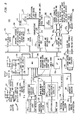
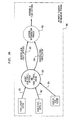
- FIG. 12 An operational diagram of extra speed ambient determination and usage step 1110 is shown in FIG. 12. As shown, this step consists of seven primitive steps, all of which are performed to determine whether extra system speed exists in an ambient lighting situation and how that extra system speed, to the extent any exists, can best be used to vary the exposure settings and improve image quality. These seven steps include: determining if maximum depth-of-field should be used step 1210, calculating new f-number for ambient lighting step 1220, limiting the new ambient f-number step 1230, determining the amount of extra speed in ambient lighting step 1240, compensating for shake information step 1250, using the extra speed for film exposure step 1260, and altering the shutter speed and f-number for use in ambient lighting step 1270.
- step 1210 merely terminates through the first IF statement without, for example, having set the lens aperture to its baseline value that provides maximal depth-of-field.
- step 1210 utilizes, as represented by lines 434, 308, 422 and 412, the following as input: exposure settings -- specifically SHUTTER_SPEED and F_NUMBER, subject distance information; fill_flash_condition; and full_flash_condition.
- step 1210 updates and provides the latest values for the exposure settings as output parameters along with the flash condition and extra speed condition; this last category being defined as follows:
- the available amount of extra system speed is then appropriately reduced by the amount of extra system speed that is needed for utilizing a faster shutter speed.
- the new shutter speed is set to whatever shutter speed reduces the available extra system speed to zero.
- the baseline shutter speed is faster than the new shutter speed -- such as would result if the camera happened to be mounted on a tripod and essentially no camera shake was actually measured, then the shutter speed remains at the baseline value, and the amount of available extra system speed is not reduced.
- the resulting shutter speed is then compared against a physical limit value, i.e.
- step 1260 shown in FIG. 12, is formed of the following routine expressed in high level functional programming terms, with the following film quality vs. exposure table being merely illustrative:
- step 1260 If the extra system speed that exists immediately prior to performing step 1260 lies within a range of + stops to -.5 stop, then this extra system speed has already been incorporated into the lens aperture and shutter speed settings and will manifest itself through a pre-defined amount of intentional over-exposure that will be inherently produced by these settings. Thus, no extra system speed remains.
- the available extra system speed is greater than, for example, +2 stops (or expressed in logarithmic exposure terms as .6), then the remaining extra system speed which exceeds the extra system speed that has already been effectively incorporated into the lens aperture and shutter speed settings which meets the scene requirements (e.g.
- the flash unit could contain a single flash tube and a mirrored beam splitter (e.g. a partially silvered mirror) which, for a bounce flash, is selectively inserted in front of the tube to direct a portion of its optical output upward from the top of flash unit and the remainder outward from the front of the flash unit.
- a mirrored beam splitter e.g. a partially silvered mirror
- step 1450 has suitably adjusted the lens aperture to utilize all the remaining extra system speed, up to the physical limits of the lens aperture, in a full flash lighting situation.
- the resulting exposure settings, specifically F_NUMBER and FLASH_F_NUMBER, produced by step 1450, along with the shutter speed value determined through step 820 (discussed above in conjunction with FIG. 8) that meets the scene requirements, are applied by the camera microcomputer system, through its output circuitry, to appropriately drive the shutter and lens aperture mechanisms of the camera and photograph the current scene using fill flash. This concludes execution of the inventive process for use with full flash lighting.
- the values of these parameters can alternatively be obtained through table look-up operations into stored statistical data.
- a short fixed focal length lens such as a 35 mm lens focused at, e.g., its hyperfocal distance
- the background could be safely assumed to exist at 40 feet for all images.
- the farthest useful switch point is 20 feet (approximately 6.1 m); hence, the farthest focus point is 40 feet.
- the standard focal length factor is set to 1.0.
Landscapes
- Physics & Mathematics (AREA)
- General Physics & Mathematics (AREA)
- Exposure Control For Cameras (AREA)
- Indication In Cameras, And Counting Of Exposures (AREA)
Applications Claiming Priority (2)
| Application Number | Priority Date | Filing Date | Title |
|---|---|---|---|
| US971143 | 1992-11-03 | ||
| US07/971,143 US5250979A (en) | 1992-11-03 | 1992-11-03 | Technique suited for use in fixed focus cameras for improving image quality for non-standard display sizes and/or different focal length photographing modes |
Publications (2)
| Publication Number | Publication Date |
|---|---|
| EP0596416A1 true EP0596416A1 (fr) | 1994-05-11 |
| EP0596416B1 EP0596416B1 (fr) | 1999-02-10 |
Family
ID=25517983
Family Applications (1)
| Application Number | Title | Priority Date | Filing Date |
|---|---|---|---|
| EP19930117522 Expired - Lifetime EP0596416B1 (fr) | 1992-11-03 | 1993-10-28 | Optimisation automatique des paramètres d'exposition photographique dans des appareils à longueur focale fixe pour la production d'images de dimensions hors norme et/ou pour la photographie utilisant des modes avec différentes pseudo-longueurs focales |
Country Status (4)
| Country | Link |
|---|---|
| US (1) | US5250979A (fr) |
| EP (1) | EP0596416B1 (fr) |
| JP (1) | JPH06202189A (fr) |
| DE (1) | DE69323470T2 (fr) |
Cited By (1)
| Publication number | Priority date | Publication date | Assignee | Title |
|---|---|---|---|---|
| US10230900B2 (en) | 2016-10-20 | 2019-03-12 | Hyundai Motor Company | Apparatus for controlling exposure of multi-view camera, system including the same, and method for controlling exposure of multi-view camera |
Families Citing this family (5)
| Publication number | Priority date | Publication date | Assignee | Title |
|---|---|---|---|---|
| US5995761A (en) * | 1994-04-08 | 1999-11-30 | Nikon Corporation | Camera having vibration correcting device |
| JP2899113B2 (ja) * | 1994-10-25 | 1999-06-02 | ユナイテッド パーセル サービス オブ アメリカ,インコーポレイテッド | 携帯式非接触ラベルイメージャのための方法と装置 |
| US6438323B1 (en) | 2000-06-15 | 2002-08-20 | Eastman Kodak Company | Camera film loading with delayed culling of defective cameras |
| CN102879977B (zh) * | 2012-10-29 | 2015-03-04 | 青岛海信移动通信技术股份有限公司 | 相机闪光控制方法、控制装置及移动终端 |
| KR102671556B1 (ko) | 2018-10-15 | 2024-06-07 | 현대자동차주식회사 | 차량 및 그 제어방법 |
Citations (3)
| Publication number | Priority date | Publication date | Assignee | Title |
|---|---|---|---|---|
| US5003340A (en) * | 1990-02-28 | 1991-03-26 | Eastman Kodak Company | Exposure control with reduced shutter speed for tele/pan camera |
| US5025275A (en) * | 1985-08-29 | 1991-06-18 | Minolta Camera Kabushiki Kaisha | Photographic camera |
| US5049916A (en) * | 1990-08-23 | 1991-09-17 | Eastman Kodak Company | Automatic optimization of photographic exposure parameters through determination and utilization of extra system speed |
Family Cites Families (20)
| Publication number | Priority date | Publication date | Assignee | Title |
|---|---|---|---|---|
| US4309089A (en) * | 1977-12-20 | 1982-01-05 | Eastman Kodak Company | Exposure indicating apparatus responsive to film exposure latitude |
| JPS5639525A (en) * | 1979-09-10 | 1981-04-15 | Canon Inc | Exposure control circuit of camera |
| US4345825A (en) * | 1979-12-13 | 1982-08-24 | Eastman Kodak Company | Apparatus for automatic control of a photographic camera |
| US4583831A (en) * | 1985-03-28 | 1986-04-22 | Eastman Kodak Company | Pseudo telephoto--pseudo panoramic camera |
| US4639111A (en) * | 1985-06-21 | 1987-01-27 | Eastman Kodak Company | Pseudo format camera with exposure control |
| US4860039A (en) * | 1985-10-31 | 1989-08-22 | Minolta Camera Kabushiki Kaisha | Photographic camera system and using thereof |
| US4733263A (en) * | 1985-11-20 | 1988-03-22 | Minolta Camera Kabushiki Kaisha | Photographic camera |
| JPH0785154B2 (ja) * | 1986-03-14 | 1995-09-13 | オリンパス光学工業株式会社 | カメラのプログラム露出特性の設定方法および設定装置 |
| US4785323A (en) * | 1987-12-28 | 1988-11-15 | Eastman Kodak Company | Exposure control |
| US4978981A (en) * | 1988-04-25 | 1990-12-18 | Asahi Kogaku Kogyo Kabushiki Kaisha | Exposure control device |
| DE68928226T2 (de) * | 1988-05-16 | 1998-01-15 | Minolta Camera Kk | Kamerasystem |
| JP2720474B2 (ja) * | 1988-09-29 | 1998-03-04 | 株式会社ニコン | トリミング情報設定可能なカメラ及びプリント装置 |
| JPH02188730A (ja) * | 1989-01-18 | 1990-07-24 | Fuji Photo Film Co Ltd | カメラの制御装置 |
| JPH0723780Y2 (ja) * | 1989-02-16 | 1995-05-31 | 旭光学工業株式会社 | カメラのデータ写し込み装置 |
| JPH032738A (ja) * | 1989-05-30 | 1991-01-09 | Minolta Camera Co Ltd | オートトリミングカメラ |
| US5124741A (en) * | 1990-08-23 | 1992-06-23 | Eastman Kodak Company | Technique for prioritized selection of shelter speed and lens aperture settings |
| US5124740A (en) * | 1990-08-23 | 1992-06-23 | Eastman Kodak Company | Depth number based technique for selecting lens aperture size and flash parameters for a full flash exposure |
| US5130739A (en) * | 1990-08-23 | 1992-07-14 | Eastman Kodak Company | Automatic optimization of photographic exposure parameters through determination and utilization of extra system speed |
| US5121155A (en) * | 1990-08-23 | 1992-06-09 | Eastman Kodak Company | Technique for determining whether to use fill flash illumination to capture an image of a current scene |
| US5099268A (en) * | 1990-08-23 | 1992-03-24 | Eastman Kodak Company | Technique for selecting lens aperture size for a fill flash exposure |
-
1992
- 1992-11-03 US US07/971,143 patent/US5250979A/en not_active Expired - Fee Related
-
1993
- 1993-10-28 DE DE69323470T patent/DE69323470T2/de not_active Expired - Fee Related
- 1993-10-28 EP EP19930117522 patent/EP0596416B1/fr not_active Expired - Lifetime
- 1993-11-04 JP JP27556093A patent/JPH06202189A/ja active Pending
Patent Citations (3)
| Publication number | Priority date | Publication date | Assignee | Title |
|---|---|---|---|---|
| US5025275A (en) * | 1985-08-29 | 1991-06-18 | Minolta Camera Kabushiki Kaisha | Photographic camera |
| US5003340A (en) * | 1990-02-28 | 1991-03-26 | Eastman Kodak Company | Exposure control with reduced shutter speed for tele/pan camera |
| US5049916A (en) * | 1990-08-23 | 1991-09-17 | Eastman Kodak Company | Automatic optimization of photographic exposure parameters through determination and utilization of extra system speed |
Cited By (1)
| Publication number | Priority date | Publication date | Assignee | Title |
|---|---|---|---|---|
| US10230900B2 (en) | 2016-10-20 | 2019-03-12 | Hyundai Motor Company | Apparatus for controlling exposure of multi-view camera, system including the same, and method for controlling exposure of multi-view camera |
Also Published As
| Publication number | Publication date |
|---|---|
| US5250979A (en) | 1993-10-05 |
| JPH06202189A (ja) | 1994-07-22 |
| DE69323470D1 (de) | 1999-03-25 |
| DE69323470T2 (de) | 1999-09-16 |
| EP0596416B1 (fr) | 1999-02-10 |
Similar Documents
| Publication | Publication Date | Title |
|---|---|---|
| EP0596327B1 (fr) | Optimisation automatique des paramètres d'exposition photographique dans des appareils à focalisation automatique pour la production d'images de dimensions hors norme et/ou pour la photographie utilisant des modes avec différentes longueurs focales | |
| EP0596347B1 (fr) | Optimisation automatique des paramètres d'exposition photographique pour la production d'images de dimensions hors norme et/ou pour la photographie utilisant des modes avec différentes longueurs focales grâce à la détermination et à l'utilisation d'une vitesse de système supplémentaire | |
| US5049916A (en) | Automatic optimization of photographic exposure parameters through determination and utilization of extra system speed | |
| US5130739A (en) | Automatic optimization of photographic exposure parameters through determination and utilization of extra system speed | |
| US5557358A (en) | Camera having an electronic viewfinder for displaying an object image under different photographic conditions | |
| US5121155A (en) | Technique for determining whether to use fill flash illumination to capture an image of a current scene | |
| US5099268A (en) | Technique for selecting lens aperture size for a fill flash exposure | |
| US5124741A (en) | Technique for prioritized selection of shelter speed and lens aperture settings | |
| US5124740A (en) | Depth number based technique for selecting lens aperture size and flash parameters for a full flash exposure | |
| US6868231B2 (en) | Imaging using silver halide films with micro-lens capture and optical reconstruction | |
| EP0596416B1 (fr) | Optimisation automatique des paramètres d'exposition photographique dans des appareils à longueur focale fixe pour la production d'images de dimensions hors norme et/ou pour la photographie utilisant des modes avec différentes pseudo-longueurs focales | |
| US5406348A (en) | Camera control/autofocusing system | |
| US5293208A (en) | Camera and printing apparatus which can be used for trimming shots | |
| US6295419B1 (en) | Photo printing system and camera for the same | |
| US6314243B1 (en) | Electronic flash light-emission controlling method and apparatus and camera | |
| US5255048A (en) | Camera with exposure-controlled pseudo-telephoto mode and method of operation | |
| US6356714B1 (en) | Electronic flash light-emission controlling method and apparatus and camera | |
| Wikipedians | FPC terminology | |
| JPH11242274A (ja) | カメラおよび写真プリントシステム | |
| JP2000010178A (ja) | カメラおよび写真プリントシステム | |
| JP2001318441A (ja) | カメラ及び写真プリント装置 | |
| JP2002023249A (ja) | カメラ |
Legal Events
| Date | Code | Title | Description |
|---|---|---|---|
| PUAI | Public reference made under article 153(3) epc to a published international application that has entered the european phase |
Free format text: ORIGINAL CODE: 0009012 |
|
| AK | Designated contracting states |
Kind code of ref document: A1 Designated state(s): DE FR GB |
|
| 17P | Request for examination filed |
Effective date: 19941110 |
|
| 17Q | First examination report despatched |
Effective date: 19960913 |
|
| GRAG | Despatch of communication of intention to grant |
Free format text: ORIGINAL CODE: EPIDOS AGRA |
|
| GRAG | Despatch of communication of intention to grant |
Free format text: ORIGINAL CODE: EPIDOS AGRA |
|
| GRAH | Despatch of communication of intention to grant a patent |
Free format text: ORIGINAL CODE: EPIDOS IGRA |
|
| GRAH | Despatch of communication of intention to grant a patent |
Free format text: ORIGINAL CODE: EPIDOS IGRA |
|
| GRAA | (expected) grant |
Free format text: ORIGINAL CODE: 0009210 |
|
| AK | Designated contracting states |
Kind code of ref document: B1 Designated state(s): DE FR GB |
|
| REF | Corresponds to: |
Ref document number: 69323470 Country of ref document: DE Date of ref document: 19990325 |
|
| ET | Fr: translation filed | ||
| PLBE | No opposition filed within time limit |
Free format text: ORIGINAL CODE: 0009261 |
|
| STAA | Information on the status of an ep patent application or granted ep patent |
Free format text: STATUS: NO OPPOSITION FILED WITHIN TIME LIMIT |
|
| 26N | No opposition filed | ||
| REG | Reference to a national code |
Ref country code: GB Ref legal event code: IF02 |
|
| PGFP | Annual fee paid to national office [announced via postgrant information from national office to epo] |
Ref country code: GB Payment date: 20030915 Year of fee payment: 11 |
|
| PGFP | Annual fee paid to national office [announced via postgrant information from national office to epo] |
Ref country code: FR Payment date: 20031003 Year of fee payment: 11 |
|
| PGFP | Annual fee paid to national office [announced via postgrant information from national office to epo] |
Ref country code: DE Payment date: 20031031 Year of fee payment: 11 |
|
| PG25 | Lapsed in a contracting state [announced via postgrant information from national office to epo] |
Ref country code: GB Free format text: LAPSE BECAUSE OF NON-PAYMENT OF DUE FEES Effective date: 20041028 |
|
| PG25 | Lapsed in a contracting state [announced via postgrant information from national office to epo] |
Ref country code: DE Free format text: LAPSE BECAUSE OF NON-PAYMENT OF DUE FEES Effective date: 20050503 |
|
| GBPC | Gb: european patent ceased through non-payment of renewal fee |
Effective date: 20041028 |
|
| PG25 | Lapsed in a contracting state [announced via postgrant information from national office to epo] |
Ref country code: FR Free format text: LAPSE BECAUSE OF NON-PAYMENT OF DUE FEES Effective date: 20050630 |
|
| REG | Reference to a national code |
Ref country code: FR Ref legal event code: ST |