EP0597283A2 - Verfahren zum biologischen Abbau einer verunreinigenden Substanz - Google Patents
Verfahren zum biologischen Abbau einer verunreinigenden Substanz Download PDFInfo
- Publication number
- EP0597283A2 EP0597283A2 EP93116877A EP93116877A EP0597283A2 EP 0597283 A2 EP0597283 A2 EP 0597283A2 EP 93116877 A EP93116877 A EP 93116877A EP 93116877 A EP93116877 A EP 93116877A EP 0597283 A2 EP0597283 A2 EP 0597283A2
- Authority
- EP
- European Patent Office
- Prior art keywords
- microorganism
- carrier
- soil
- culture
- leucine
- Prior art date
- Legal status (The legal status is an assumption and is not a legal conclusion. Google has not performed a legal analysis and makes no representation as to the accuracy of the status listed.)
- Granted
Links
- 239000000126 substance Substances 0.000 title claims abstract description 31
- 238000000034 method Methods 0.000 title claims abstract description 26
- 238000006065 biodegradation reaction Methods 0.000 title claims abstract description 20
- 244000005700 microbiome Species 0.000 claims abstract description 125
- 235000015097 nutrients Nutrition 0.000 claims abstract description 47
- 230000009471 action Effects 0.000 claims abstract description 5
- 239000002689 soil Substances 0.000 claims description 54
- 239000007788 liquid Substances 0.000 claims description 10
- ISWSIDIOOBJBQZ-UHFFFAOYSA-N Phenol Chemical compound OC1=CC=CC=C1 ISWSIDIOOBJBQZ-UHFFFAOYSA-N 0.000 description 28
- ROHFNLRQFUQHCH-YFKPBYRVSA-N L-leucine Chemical compound CC(C)C[C@H](N)C(O)=O ROHFNLRQFUQHCH-YFKPBYRVSA-N 0.000 description 25
- ROHFNLRQFUQHCH-UHFFFAOYSA-N Leucine Natural products CC(C)CC(N)C(O)=O ROHFNLRQFUQHCH-UHFFFAOYSA-N 0.000 description 25
- 239000001963 growth medium Substances 0.000 description 24
- 238000009630 liquid culture Methods 0.000 description 20
- 241000894006 Bacteria Species 0.000 description 15
- 230000008859 change Effects 0.000 description 15
- 230000001580 bacterial effect Effects 0.000 description 13
- 238000000354 decomposition reaction Methods 0.000 description 13
- 238000012360 testing method Methods 0.000 description 13
- 230000000052 comparative effect Effects 0.000 description 12
- 229940041514 candida albicans extract Drugs 0.000 description 11
- 239000012138 yeast extract Substances 0.000 description 11
- 239000000203 mixture Substances 0.000 description 10
- 239000011148 porous material Substances 0.000 description 10
- 239000000243 solution Substances 0.000 description 10
- 238000005067 remediation Methods 0.000 description 9
- 238000006731 degradation reaction Methods 0.000 description 7
- 230000000694 effects Effects 0.000 description 7
- 239000000463 material Substances 0.000 description 7
- 238000004128 high performance liquid chromatography Methods 0.000 description 6
- 239000007864 aqueous solution Substances 0.000 description 5
- 230000015572 biosynthetic process Effects 0.000 description 5
- 230000015556 catabolic process Effects 0.000 description 5
- 238000011534 incubation Methods 0.000 description 5
- XLYOFNOQVPJJNP-UHFFFAOYSA-N water Substances O XLYOFNOQVPJJNP-UHFFFAOYSA-N 0.000 description 5
- 238000009792 diffusion process Methods 0.000 description 4
- 241000589774 Pseudomonas sp. Species 0.000 description 3
- 230000002411 adverse Effects 0.000 description 3
- 239000006185 dispersion Substances 0.000 description 3
- 238000002474 experimental method Methods 0.000 description 3
- HRPVXLWXLXDGHG-UHFFFAOYSA-N Acrylamide Chemical group NC(=O)C=C HRPVXLWXLXDGHG-UHFFFAOYSA-N 0.000 description 2
- VYPSYNLAJGMNEJ-UHFFFAOYSA-N Silicium dioxide Chemical compound O=[Si]=O VYPSYNLAJGMNEJ-UHFFFAOYSA-N 0.000 description 2
- 238000002835 absorbance Methods 0.000 description 2
- 150000001413 amino acids Chemical class 0.000 description 2
- 239000001913 cellulose Substances 0.000 description 2
- 229920002678 cellulose Polymers 0.000 description 2
- 239000000919 ceramic Substances 0.000 description 2
- 239000000470 constituent Substances 0.000 description 2
- 239000003431 cross linking reagent Substances 0.000 description 2
- 230000007613 environmental effect Effects 0.000 description 2
- 230000009545 invasion Effects 0.000 description 2
- 239000006194 liquid suspension Substances 0.000 description 2
- RLSSMJSEOOYNOY-UHFFFAOYSA-N m-cresol Chemical compound CC1=CC=CC(O)=C1 RLSSMJSEOOYNOY-UHFFFAOYSA-N 0.000 description 2
- 239000002609 medium Substances 0.000 description 2
- ZIUHHBKFKCYYJD-UHFFFAOYSA-N n,n'-methylenebisacrylamide Chemical compound C=CC(=O)NCNC(=O)C=C ZIUHHBKFKCYYJD-UHFFFAOYSA-N 0.000 description 2
- 150000007523 nucleic acids Chemical class 0.000 description 2
- 102000039446 nucleic acids Human genes 0.000 description 2
- 108020004707 nucleic acids Proteins 0.000 description 2
- QWVGKYWNOKOFNN-UHFFFAOYSA-N o-cresol Chemical compound CC1=CC=CC=C1O QWVGKYWNOKOFNN-UHFFFAOYSA-N 0.000 description 2
- 150000007524 organic acids Chemical class 0.000 description 2
- IWDCLRJOBJJRNH-UHFFFAOYSA-N p-cresol Chemical compound CC1=CC=C(O)C=C1 IWDCLRJOBJJRNH-UHFFFAOYSA-N 0.000 description 2
- 239000003208 petroleum Substances 0.000 description 2
- 239000003505 polymerization initiator Substances 0.000 description 2
- 238000006116 polymerization reaction Methods 0.000 description 2
- 229920002635 polyurethane Polymers 0.000 description 2
- 239000004814 polyurethane Substances 0.000 description 2
- 230000000717 retained effect Effects 0.000 description 2
- 239000007787 solid Substances 0.000 description 2
- 238000001179 sorption measurement Methods 0.000 description 2
- 238000012546 transfer Methods 0.000 description 2
- 229940088594 vitamin Drugs 0.000 description 2
- 235000013343 vitamin Nutrition 0.000 description 2
- 239000011782 vitamin Substances 0.000 description 2
- 229930003231 vitamin Natural products 0.000 description 2
- WTLKTXIHIHFSGU-UHFFFAOYSA-N 2-nitrosoguanidine Chemical compound NC(N)=NN=O WTLKTXIHIHFSGU-UHFFFAOYSA-N 0.000 description 1
- MTPJEFOSTIKRSS-UHFFFAOYSA-N 3-(dimethylamino)propanenitrile Chemical compound CN(C)CCC#N MTPJEFOSTIKRSS-UHFFFAOYSA-N 0.000 description 1
- 241000588625 Acinetobacter sp. Species 0.000 description 1
- 229920000936 Agarose Polymers 0.000 description 1
- 102000009027 Albumins Human genes 0.000 description 1
- 108010088751 Albumins Proteins 0.000 description 1
- 239000004475 Arginine Substances 0.000 description 1
- 241000589513 Burkholderia cepacia Species 0.000 description 1
- OKTJSMMVPCPJKN-UHFFFAOYSA-N Carbon Chemical compound [C] OKTJSMMVPCPJKN-UHFFFAOYSA-N 0.000 description 1
- 229920002101 Chitin Polymers 0.000 description 1
- 229920001661 Chitosan Polymers 0.000 description 1
- 229920002307 Dextran Polymers 0.000 description 1
- 108090000790 Enzymes Proteins 0.000 description 1
- 102000004190 Enzymes Human genes 0.000 description 1
- JOYRKODLDBILNP-UHFFFAOYSA-N Ethyl urethane Chemical compound CCOC(N)=O JOYRKODLDBILNP-UHFFFAOYSA-N 0.000 description 1
- YLQBMQCUIZJEEH-UHFFFAOYSA-N Furan Chemical group C=1C=COC=1 YLQBMQCUIZJEEH-UHFFFAOYSA-N 0.000 description 1
- SXRSQZLOMIGNAQ-UHFFFAOYSA-N Glutaraldehyde Chemical group O=CCCCC=O SXRSQZLOMIGNAQ-UHFFFAOYSA-N 0.000 description 1
- 229910002567 K2S2O8 Inorganic materials 0.000 description 1
- ODKSFYDXXFIFQN-BYPYZUCNSA-P L-argininium(2+) Chemical compound NC(=[NH2+])NCCC[C@H]([NH3+])C(O)=O ODKSFYDXXFIFQN-BYPYZUCNSA-P 0.000 description 1
- HNDVDQJCIGZPNO-YFKPBYRVSA-N L-histidine Chemical compound OC(=O)[C@@H](N)CC1=CN=CN1 HNDVDQJCIGZPNO-YFKPBYRVSA-N 0.000 description 1
- QIVBCDIJIAJPQS-VIFPVBQESA-N L-tryptophane Chemical compound C1=CC=C2C(C[C@H](N)C(O)=O)=CNC2=C1 QIVBCDIJIAJPQS-VIFPVBQESA-N 0.000 description 1
- 239000004677 Nylon Substances 0.000 description 1
- 108010082455 Sebelipase alfa Proteins 0.000 description 1
- 229920002472 Starch Polymers 0.000 description 1
- QIVBCDIJIAJPQS-UHFFFAOYSA-N Tryptophan Natural products C1=CC=C2C(CC(N)C(O)=O)=CNC2=C1 QIVBCDIJIAJPQS-UHFFFAOYSA-N 0.000 description 1
- 239000006035 Tryptophane Substances 0.000 description 1
- 239000000853 adhesive Substances 0.000 description 1
- 230000001070 adhesive effect Effects 0.000 description 1
- 239000003957 anion exchange resin Substances 0.000 description 1
- ODKSFYDXXFIFQN-UHFFFAOYSA-N arginine Natural products OC(=O)C(N)CCCNC(N)=N ODKSFYDXXFIFQN-UHFFFAOYSA-N 0.000 description 1
- 125000003118 aryl group Chemical group 0.000 description 1
- 239000011942 biocatalyst Substances 0.000 description 1
- 230000008033 biological extinction Effects 0.000 description 1
- 230000003139 buffering effect Effects 0.000 description 1
- 239000000648 calcium alginate Substances 0.000 description 1
- 235000010410 calcium alginate Nutrition 0.000 description 1
- 229960002681 calcium alginate Drugs 0.000 description 1
- 239000000378 calcium silicate Substances 0.000 description 1
- 229910052918 calcium silicate Inorganic materials 0.000 description 1
- OKHHGHGGPDJQHR-YMOPUZKJSA-L calcium;(2s,3s,4s,5s,6r)-6-[(2r,3s,4r,5s,6r)-2-carboxy-6-[(2r,3s,4r,5s,6r)-2-carboxylato-4,5,6-trihydroxyoxan-3-yl]oxy-4,5-dihydroxyoxan-3-yl]oxy-3,4,5-trihydroxyoxane-2-carboxylate Chemical compound [Ca+2].O[C@@H]1[C@H](O)[C@H](O)O[C@@H](C([O-])=O)[C@H]1O[C@H]1[C@@H](O)[C@@H](O)[C@H](O[C@H]2[C@H]([C@@H](O)[C@H](O)[C@H](O2)C([O-])=O)O)[C@H](C(O)=O)O1 OKHHGHGGPDJQHR-YMOPUZKJSA-L 0.000 description 1
- OYACROKNLOSFPA-UHFFFAOYSA-N calcium;dioxido(oxo)silane Chemical compound [Ca+2].[O-][Si]([O-])=O OYACROKNLOSFPA-UHFFFAOYSA-N 0.000 description 1
- 229910052799 carbon Inorganic materials 0.000 description 1
- 239000000679 carrageenan Substances 0.000 description 1
- 235000010418 carrageenan Nutrition 0.000 description 1
- 229920001525 carrageenan Polymers 0.000 description 1
- 229940113118 carrageenan Drugs 0.000 description 1
- 239000000969 carrier Substances 0.000 description 1
- 239000003610 charcoal Substances 0.000 description 1
- 238000004140 cleaning Methods 0.000 description 1
- 239000011248 coating agent Substances 0.000 description 1
- 150000001875 compounds Chemical class 0.000 description 1
- 238000012790 confirmation Methods 0.000 description 1
- 230000007423 decrease Effects 0.000 description 1
- 230000008021 deposition Effects 0.000 description 1
- GUJOJGAPFQRJSV-UHFFFAOYSA-N dialuminum;dioxosilane;oxygen(2-);hydrate Chemical compound O.[O-2].[O-2].[O-2].[Al+3].[Al+3].O=[Si]=O.O=[Si]=O.O=[Si]=O.O=[Si]=O GUJOJGAPFQRJSV-UHFFFAOYSA-N 0.000 description 1
- 238000010790 dilution Methods 0.000 description 1
- 239000012895 dilution Substances 0.000 description 1
- 230000008034 disappearance Effects 0.000 description 1
- 239000003651 drinking water Substances 0.000 description 1
- 235000020188 drinking water Nutrition 0.000 description 1
- 239000000975 dye Substances 0.000 description 1
- 230000008030 elimination Effects 0.000 description 1
- 238000003379 elimination reaction Methods 0.000 description 1
- 239000003344 environmental pollutant Substances 0.000 description 1
- 238000003912 environmental pollution Methods 0.000 description 1
- 238000000605 extraction Methods 0.000 description 1
- 230000002349 favourable effect Effects 0.000 description 1
- 238000000855 fermentation Methods 0.000 description 1
- 230000004151 fermentation Effects 0.000 description 1
- JEIPFZHSYJVQDO-UHFFFAOYSA-N ferric oxide Chemical compound O=[Fe]O[Fe]=O JEIPFZHSYJVQDO-UHFFFAOYSA-N 0.000 description 1
- 239000012530 fluid Substances 0.000 description 1
- 239000006260 foam Substances 0.000 description 1
- 239000000446 fuel Substances 0.000 description 1
- 125000000524 functional group Chemical group 0.000 description 1
- 239000003102 growth factor Substances 0.000 description 1
- HNDVDQJCIGZPNO-UHFFFAOYSA-N histidine Natural products OC(=O)C(N)CC1=CN=CN1 HNDVDQJCIGZPNO-UHFFFAOYSA-N 0.000 description 1
- 239000010842 industrial wastewater Substances 0.000 description 1
- 239000008235 industrial water Substances 0.000 description 1
- 229910010272 inorganic material Inorganic materials 0.000 description 1
- 239000011147 inorganic material Substances 0.000 description 1
- 229940041615 kanuma Drugs 0.000 description 1
- NLYAJNPCOHFWQQ-UHFFFAOYSA-N kaolin Chemical compound O.O.O=[Al]O[Si](=O)O[Si](=O)O[Al]=O NLYAJNPCOHFWQQ-UHFFFAOYSA-N 0.000 description 1
- 229910052622 kaolinite Inorganic materials 0.000 description 1
- 229920005610 lignin Polymers 0.000 description 1
- 238000004519 manufacturing process Methods 0.000 description 1
- 230000004060 metabolic process Effects 0.000 description 1
- 238000013508 migration Methods 0.000 description 1
- 230000005012 migration Effects 0.000 description 1
- 229910052901 montmorillonite Inorganic materials 0.000 description 1
- 229920001778 nylon Polymers 0.000 description 1
- 235000005985 organic acids Nutrition 0.000 description 1
- 239000011368 organic material Substances 0.000 description 1
- 239000003960 organic solvent Substances 0.000 description 1
- 230000002093 peripheral effect Effects 0.000 description 1
- 150000002989 phenols Chemical class 0.000 description 1
- 239000000049 pigment Substances 0.000 description 1
- 231100000719 pollutant Toxicity 0.000 description 1
- 229920000642 polymer Polymers 0.000 description 1
- 239000005373 porous glass Substances 0.000 description 1
- 230000002265 prevention Effects 0.000 description 1
- 230000001737 promoting effect Effects 0.000 description 1
- 238000011160 research Methods 0.000 description 1
- 239000011347 resin Substances 0.000 description 1
- 229920005989 resin Polymers 0.000 description 1
- 150000003839 salts Chemical class 0.000 description 1
- 239000013535 sea water Substances 0.000 description 1
- 239000000377 silicon dioxide Substances 0.000 description 1
- 239000008107 starch Substances 0.000 description 1
- 235000019698 starch Nutrition 0.000 description 1
- 238000005728 strengthening Methods 0.000 description 1
- 239000004094 surface-active agent Substances 0.000 description 1
- DVKJHBMWWAPEIU-UHFFFAOYSA-N toluene 2,4-diisocyanate Chemical group CC1=CC=C(N=C=O)C=C1N=C=O DVKJHBMWWAPEIU-UHFFFAOYSA-N 0.000 description 1
- 229960004799 tryptophan Drugs 0.000 description 1
- 150000003722 vitamin derivatives Chemical class 0.000 description 1
- 239000002351 wastewater Substances 0.000 description 1
- 239000002023 wood Substances 0.000 description 1
- UHVMMEOXYDMDKI-JKYCWFKZSA-L zinc;1-(5-cyanopyridin-2-yl)-3-[(1s,2s)-2-(6-fluoro-2-hydroxy-3-propanoylphenyl)cyclopropyl]urea;diacetate Chemical compound [Zn+2].CC([O-])=O.CC([O-])=O.CCC(=O)C1=CC=C(F)C([C@H]2[C@H](C2)NC(=O)NC=2N=CC(=CC=2)C#N)=C1O UHVMMEOXYDMDKI-JKYCWFKZSA-L 0.000 description 1
Images






Classifications
-
- C—CHEMISTRY; METALLURGY
- C02—TREATMENT OF WATER, WASTE WATER, SEWAGE, OR SLUDGE
- C02F—TREATMENT OF WATER, WASTE WATER, SEWAGE, OR SLUDGE
- C02F3/00—Biological treatment of water, waste water, or sewage
- C02F3/34—Biological treatment of water, waste water, or sewage characterised by the microorganisms used
-
- B—PERFORMING OPERATIONS; TRANSPORTING
- B09—DISPOSAL OF SOLID WASTE; RECLAMATION OF CONTAMINATED SOIL
- B09C—RECLAMATION OF CONTAMINATED SOIL
- B09C1/00—Reclamation of contaminated soil
- B09C1/10—Reclamation of contaminated soil microbiologically, biologically or by using enzymes
-
- C—CHEMISTRY; METALLURGY
- C02—TREATMENT OF WATER, WASTE WATER, SEWAGE, OR SLUDGE
- C02F—TREATMENT OF WATER, WASTE WATER, SEWAGE, OR SLUDGE
- C02F3/00—Biological treatment of water, waste water, or sewage
- C02F3/02—Aerobic processes
- C02F3/10—Packings; Fillings; Grids
- C02F3/105—Characterized by the chemical composition
- C02F3/108—Immobilising gels, polymers or the like
-
- Y—GENERAL TAGGING OF NEW TECHNOLOGICAL DEVELOPMENTS; GENERAL TAGGING OF CROSS-SECTIONAL TECHNOLOGIES SPANNING OVER SEVERAL SECTIONS OF THE IPC; TECHNICAL SUBJECTS COVERED BY FORMER USPC CROSS-REFERENCE ART COLLECTIONS [XRACs] AND DIGESTS
- Y02—TECHNOLOGIES OR APPLICATIONS FOR MITIGATION OR ADAPTATION AGAINST CLIMATE CHANGE
- Y02W—CLIMATE CHANGE MITIGATION TECHNOLOGIES RELATED TO WASTEWATER TREATMENT OR WASTE MANAGEMENT
- Y02W10/00—Technologies for wastewater treatment
- Y02W10/10—Biological treatment of water, waste water, or sewage
Definitions
- the present invention relates to a method of biodegradation of a polluting substance, which method employs an auxotrophic microorganism and is useful for environment protection.
- An example of environment remediation technique is a strengthening of functions of microorganisms in the ecosystem to decompose the polluting substances into non-polluting substances. This technique intends to stimulate the natural degradation processes, to promote the decomposition of the polluting substance. This technique is further advanced to introduce intentionally from outside a microorganism having ability of decomposing a polluting substance to promote remediation of a polluted area to a non-polluted state.
- Biodegradative cleanup technology is demanded in various fields such as treatment of polluted soil in gas production plant sites, oil refinery plant sites, sites of a demolished petroleum refinery, sites of a demolished fuel stockyard, sites of a demolished pulp plant; cleaning of lakes and marshes, rivers, sea water, underground water, and the like; treatment of drinking water and industrial water; treatment of industrial waste water and living waste water; and so forth.
- Pollution of soil may cause spread of the polluted area by diffusion of the polluting substance with underground water, and pollution of river or the like may cause spread of the polluting substance with flow of water over the basin or the shore. Therefore, an effective method for removal of polluting substance from soil and water is strongly demanded.
- the ecosystem in the applied area will be changed. Such change of ecosystem is not favorable for environmental protection.
- the ecosystem in the treated area should desirably be restored to the original state when the polluting substance has been removed or decomposed.
- the microorganism diffuses out unnecessarily from the polluted area during the biodegradation, the diffused microorganism itself may possibly cause secondary pollution or other hazard.
- the microorganism introduced from the outside should work only in the polluted area, and becomes extinct spontaneously after the environment is remediated. In particular, in use of a microorganism in open systems such as soil, lake, marsh, river and sea, the fate of the microorganism is of a great problem.
- the present invention intends to provide a method of biodegradation of a polluting substance, where an applied microorganism works only in a polluted area and becomes extinct spontaneously after the remediation of the pollution so as to avert the effect of the remaining of the microorganism on the ecosystem.
- the present invention provides a method of biodegradation of a polluting substance by a microorganism, the microorganism being an auxotrophic microorganism and the action of the auxotrophic microorganism being controlled by the amount of a required nutrient for the auxotrophic microorganism.
- the present invention also provides a carrier for supporting an auxotrophic microorganism for use for biodegradation, the carrier containing a required nutrient for the auxotrophic microorganism.
- the inventors of the present invention noticed the application of an auxotrophic microorganism to remediation of an ecosystem from the above viewpoint, and found that the applied auxotrophic microorganism is allowed to work only in the polluted area or the area where the microoraganism is made work and becomes extinct spontaneously after the remediation of the pollution if the action of the auxotrophic microorganism is controlled by adjusting an amount of the substance required by the auxotrophic microorganism (hereinafter referred to as a "required nutrient").
- a "required nutrient" an amount of the substance required by the auxotrophic microorganism
- a microorganism which has lost a metabolism system or biosynthesis system of a certain nutrient, is incapable of producing the nutrient in the cell of the microorganism, and requires the supply of the nutrient necessary to living and multiplication from the outside.
- required nutrients include amino acids, nucleic acid bases, vitamins, organic acids, and other growth factors. Without the supply of the required nutrient, the microorganism will become extinct.
- the microorganism will survive in the area or during the time where the activity of the microorganism is needed so far as the required nutrient coexists, and the diffusion or growth of the microorganism will be stopped by stopping the supply of the required nutrient in the area or the time they are not necessary.
- the method of the present invention is applicable generally to any kind of microorganism.
- the kind of the microorganism to be employed may be suitably selected in accordance with the properties of the chemical substance to be decomposed and removed.
- Pseudomonas sp., Acinetobacter sp., Metviosinus sp., and the like which exhibit activities of pollutant-decomposition are suitable for removal of dyes having an aromatic ring or furan structure, pigments, surfactants, surface-coating agents, adhesives, organic solvents, petroleum type pollutants, etc.
- the kind of the auxotrophic microorganism is not particularly limited, and those which require a nutrient such as an amino acid (e.g., leucine, tryptophane, histidine, arginine, etc.), a nucleic acid base(e.g. thynine), a vitamin, an organic acid, or the like are useful. It is desirable that the kind of the auxotrophic microorganism is selected so as to meet suitably the conditions of the environment.
- Such an auxotrophic microorganism can be derived by subjecting a microorganism to ultraviolet light irradiation, chemical treatment with nitrosoguanidine, or the like treatment in a conventional manner.
- the nutrient may be in any state of a liquid, a solid, a fluid, or the like provided that it is readily usable to the auxotrophic microorganism.
- the auxotrophic microorganism is usually applied to polluted environment in a form of a bacterial mass in a conventional manner.
- the treatment with the applied microorganism may be conducted in the co-existence of a carrier for the microorganism.
- the co-existence includes the cases: (a) the carrier is supplied to the polluted environment separately before or after the application of the microorganism, and (b) the microorganism to be applied is preliminarily fixed on the carrier.
- the microorganism may be fixed by a conventional immobilization method: including solid bonding (physical adsorption, ionic adsorption, covalent bonding, etc.) in which the microorganism is directly or indirectly bonded to the surface of an organic or inorganic water-insoluble carrier such as cellulose, nylon, and ceramic; bridging by a compound having two or more functional groups such as glutaraldehyde, and toluene diisocyanate; embedding in which the microorganism is embedded in a polymer such as calcium alginate, carrageenan, and photo-setting resins; and the like methods (see “Koteika Seitai Shokubai (Immobilized Biocatalyst) pp. 67-81 (Kodansha Scientific K.K.).
- a fixing method is suitably selected which bonds the microorganism strongly to the carrier. In this case, strong fixation will not cause a problem, since mass transfer in liquid medium usually proceeds relatively readily.
- the carrier and fixation state of the microorganism are selected so as to obtain relatively loose fixation state.
- the applied microorganism In the treatment of a polluted area of natural environment, frequently the applied microorganism cannot function effectively owing to competition with other microorganisms living already in the natural ecosystem or predation of the applied microorganism by protists or the like. Otherwise the applied microorganism cannot frequently be predominant because of the oligotrophic conditions of the environment to be treated.
- the microorganism may be protected by using a carrier having pores of several /1.m diameter and suitable depth and forming microhabitat of the microorganism in the pore.
- a carrier having pores of several /1.m diameter and suitable depth and forming microhabitat of the microorganism in the pore.
- invasion and extermination of the applied microorganism by a native microorganism can be prevented by formation of a predominating region of the applied microorganism in the microhabitat. If the inside diameter of the pore of the microhabitat is formed to have a diameter of less than about 10 /1.m, the invasion and predation by protists can be prevented.
- the microorganism in the pore can survive or grow under the protection against other native microorganism in the soil or the soil environment, thereby the microorganism being maintained for a longer period than the microorganism directly applied to the soil.
- the microorganism is released from the pore into the soil and it decomposes the polluting substance in the soil.
- the carrier may be in any shape provided that it has pores for formation of microhabitat for the microorganism to be applied.
- the diameter of the carrier is preferably in the range of from several hundred /1.m to several mm to facilitate the migration or dispersion of the carrier in the soil.
- the material for constructing the carrier includes inorganic materials such as charcoal, porous ceramics, porous glass, calcium silicate, silica, kaolinite, and montmorillonite; soil materials having aggregate structure such as Kanuma soil; active carbon; and organic materials such as urethane foams and anion-exchange resins.
- inorganic materials such as charcoal, porous ceramics, porous glass, calcium silicate, silica, kaolinite, and montmorillonite
- soil materials having aggregate structure such as Kanuma soil
- active carbon active carbon
- organic materials such as urethane foams and anion-exchange resins.
- a biodegradable carrier is preferred which is degraded gradually to lose the site of the microhabitat after the remediation treatment by the applied microorganism.
- the applied microorganism is thrown out to the soil as the result of disappearance of the microhabitat, and decreases in number and finally becomes extinct owing to competition with native microorganisms, predation by protist, and severe conditions for growth, thereby the ecosystem in the soil being restored to the original state.
- Such effects may be expected also in liquid treatment.
- the material for such biodegradable carriers includes cellulose, lignin, starch, agarose, dextran, albumin, chitin, chitosan, filter paper, wood pieces, and so forth.
- the carrier made of such a material is preferred since it fixes the microorganism relatively loosely, releases the grown microorganism relatively readily, is inexpensive, and in some cases, becomes a nutrient for the applied microorganism itself.
- the rate of degradation of the biodegradable carrier itself may be controlled by selecting the kind and properties of the constituting material. For example, the diameter and shape of the pores, the size and shape of the carrier, and so forth are suitably selected in consideration of the material. In selecting the above requirements, the factors to be considered in connection with the degradation rate include the kind, the amount and carrier-degradation activity of the microorganism, and the volume of the treated soil.
- the carrier is preferably designed after confirmation of the period for the decomposition of the polluting substance, and the period for degradation of the carrier by field experiments.
- the carrier contains preferably the required nutrient because the contact of the applied microorganism with the required nutrient is facilitated thereby and the control of the applied microorganism is also readily conducted by control of the required nutrient. Further, the working period of the applied microorganism and the remaining period of the carrier can be controlled by employing at least one required nutrient as the constituent of the carrier in a controlled amount to cause degradation of the carrier by consumption of the required nutrient by the applied microorganism. In this case also, it is more desirable to make the entire carrier biodegradable from the standpoint of environmental protection.
- a preferred type of carrier For treatment of a liquid, one example of a preferred type of carrier has a required nutrient fixed thereon and has an applied microorganism fixed such that the microorganism is not excessively readily released into the liquid.
- This type of carrier which contains the required nutrient facilitates the contact of the microorganism with the nutrient and makes the supply of the nutrient efficient. Furthermore, the microorganism does not diffuse into the environment since both the required nutrient and the applied microorganism are fixed on the carrier.
- the auxotrophic microorganism dies from the lack of the required nutrient, which is suitable for the case where diffusion of the applied microorganism causes a problem, and the release of the required nutrient to the environment is also suppressed.
- the carrier for forming a microhabitat contains at least one required nutrient as a constituent, and the carrier is gradually collapses as the nutrient is consumed by the applied microorganism, resulting finally in collapse of the microhabitat as the result of degradation of the carrier and leading to extinction of the applied microorganism. This is suitable in the case where the remaining applied microorganism in the soil causes a problem.
- M9 culture medium employed in the following examples has the composition below.
- the change of the number of bacteria was estimated from the change of the light absorbance (O. D.)
- a leucine-requiring mutant was obtained by ultraviolet light irradiation from Pseudomonas cepacia KK01 strain which is a novel bacteria strain having an ability of decomposing a phenolic compound such as phenol, o-cresol, m-cresol, and p-cresol, and was deposited in Fermentation Research Institute of Agency of Industrial Science and Technology of MITI of Japan on March 11, 1992 and converted to international deposition on March 9, 1993 under Budapest Agreement (Deposit No.: FERM BP-4235).
- This mutant was inoculated on 5 ml of a culture medium (M9 culture medium, additionally containing 0.05% of yeast extract, 20 /1.g/ml of leucine, and 500 ppm of phenol), and incubated at 30 ° C.
- M9 culture medium additionally containing 0.05% of yeast extract, 20 /1.g/ml of leucine, and 500 ppm of phenol
- the incubated culture was transferred to 500 ml of another culture medium (M9 culture medium containing 0.05% of yeast extract and 500 ppm of phenol), and incubation was continued.
- the required nutrient, leucine was supplied by 10 ml (20 /1.g/ml) to the culture at an interval of 24 hours as shown in Fig.
- the leucine-requiring mutant obtained from KK01 in Example 1 and having phenol-decomposition ability was inoculated on 5 ml of a culture medium (M9 culture medium, additionally containing 0.05% of yeast extract, 20 ⁇ g/ml of leucine, and 500 ppm of phenol), and the culture was incubated at 30 °C.
- M9 culture medium additionally containing 0.05% of yeast extract, 20 ⁇ g/ml of leucine, and 500 ppm of phenol
- the culture was incubated at 30 °C.
- the liquid culture was further incubated in a 500 ml scale until the O.D. value exceeded 0.7.
- the liquid culture was centrifuged lightly, and the accumulated bacterial mass was suspended in 20 ml of a culture medium (M9 additionally containing 20 ⁇ g/ml of leucine).
- the obtained mutant-fixed carrier was crushed and dispersed in 500 ml of an aqueous 250-ppm phenol solution, and the dispersion was incubated by standing at 25 °C.
- the change of the remaining ratio of the phenol in the aqueous solution was determined by HPLC.
- Fig. 2 shows the results.
- the leucine-requiring mutant obtained from KK01 in Example 1 and having phenol-decomposition ability was inoculated on 5 ml of a culture medium (M9 culture medium, additionally containing 0.05% of yeast extract, 20 ⁇ g/ml of leucine, and 500 ppm of phenol), and the culture was incubated at 30 °C.
- M9 culture medium additionally containing 0.05% of yeast extract, 20 ⁇ g/ml of leucine, and 500 ppm of phenol
- the obtained mutant-fixed carrier was pulverized and dispersed in 500 ml of an aqueous 250-ppm phenol solution, and the dispersion was incubated by standing at 25 °C.
- the change of the remaining ratio of the phenol in the aqueous solution with lapse of days was determined by HPLC.
- Fig. 2 shows the results.
- the leucine-requiring mutant obtained from KK01 in Example 1 and having phenol-decomposition ability was inoculated on 5 ml of a culture medium (M9 culture medium, additionally containing 0.05% of yeast extract, 20 ⁇ g/ml of leucine, and 500 ppm of phenol), and the culture was incubated at 30 °C.
- M9 culture medium additionally containing 0.05% of yeast extract, 20 ⁇ g/ml of leucine, and 500 ppm of phenol
- the liquid culture was added to 500 ml of a culture medium (M9 culture medium, additionally containing 0.05% of yeast extract, and 500 ppm of phenol) and was further incubated until the O.D. value exceeded 0.7.
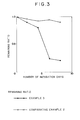
- the mutant was incubated in the same manner as in Example 3 except that leucine was not supplied during the incubation in 500 ml culture medium.
- the daily change of the phenol-remaining ratio was measured. The results are shown in Fig. 3.
- Leucine-requiring Pseudomonas sp. was inoculated on 5 ml of a liquid culture (M9 culture medium, additionally containing 0.05% yeast extract and 20 ⁇ g/ml of leucine), and the culture was incubated at 30 ° C until the O.D. of the culture exceeded 0.7. Then the liquid culture was increased up to 500 ml, and the culture was further incubated until the O.D. exceeded 0.7. The liquid culture was centrifuged lightly, and the accumulated bacterial mass was dispersed in 500 g of sterilized test soil. This test soil was incubated by standing at 25 ° C. The required leucine was supplied by 50 ml (20 ug/ml) every 24 hours.
- M9 culture medium additionally containing 0.05% yeast extract and 20 ⁇ g/ml of leucine
- Leucine-requiring Pseudomonas sp. was inoculated on 5 ml of a liquid culture (M9 culture medium, additionally containing 0.05% yeast extract and 20 ⁇ g/ml of leucine), and the culture was incubated at 30 ° C until the O.D. of the culture exceeded 0.7. Then the liquid culture was increased up to 500 ml, and the culture was further incubated until the O.D. exceeded 0.7. The liquid culture was centrifuged lightly, and the accumulated bacterial mass was dispersed in 500 g of sterilized test soil.
- M9 culture medium additionally containing 0.05% yeast extract and 20 ⁇ g/ml of leucine
- filter paper which had been impregnated with an aqueous leucine solution (80 ⁇ g/ml) and crushed into pieces of 3 mm or smaller was added in a total weight of about 50 g, and the mixture was blended and incubated by standing at 25 ° C.
- the leucine-requiring mutant obtained in Example 1 was inoculated on 5 ml of a culture medium (M9 culture medium, additionally containing 0.05% of yeast extract, 20 ⁇ g/ml of leucine, and 500 ppm of phenol), and the culture was incubated at 30 °C. When the culture came to exhibit the value of O.D. of 0.7, the liquid culture was further incubated in a 500 ml scale until the O.D. value exceeded 0.7. The liquid culture was centrifuged lightly, and the accumulated bacterial mass was dispersed in 500 g of sterilized test soil in which 80 ml of an aqueous 250 ppm phenol solution had been diffused.
- M9 culture medium additionally containing 0.05% of yeast extract, 20 ⁇ g/ml of leucine, and 500 ppm of phenol
- filter paper which had been impregnated with an aqueous leucine solution (80 ⁇ g/ml) and crushed into pieces of 3 mm or smaller was added in a total weight of about 50 g, and the mixture was blended and incubated by standing at 25 ° C.
- the leucine-requiring mutant obtained in Example 1 was inoculated on 5 ml of a culture medium (M9 culture medium, additionally containing 0.05% of yeast extract, 20 ⁇ g/ml of leucine, and 500 ppm of phenol), and the culture was incubated at 30 °C. When the culture came to exhibit the value of O.D. of 0.7, the liquid culture was further incubated in a 500 ml scale until the O.D. value exceeded 0.7. The liquid culture was centrifuged lightly, and the accumulated bacterial mass was dispersed in 500 g of sterilized test soil in which 80 ml of an aqueous 250-ppm phenol solution had been diffused.
- M9 culture medium additionally containing 0.05% of yeast extract, 20 ⁇ g/ml of leucine, and 500 ppm of phenol
- filter paper which had been impregnated with an aqueous leucine solution (80 ug/ml) and crushed into pieces of 3 mm or smaller was added in a total amount of about 50 g, and the mixture was blended and incubated by standing at 25 ° C for one day.
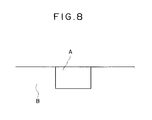
- the incubated soil having the microhabitat therein was placed in non-microhabitat-containing sterilized test soil (containing phenol in an amount of 0.5 ppm/g) as shown in Fig. 8, and the entire sol was incubated by standing at 25 °C.
- A is a sterilized test soil polluted and containing microhabitat
- B is a sterilized test soil polluted and not containig microhabitat.
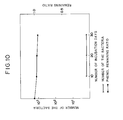
- the change of the number of the bacteria with lapse of time was estimated for both of the microhabitat-containing region and the non-microhabitat-containing region respectively.
- the phenol in the soil regions was determined by HPLC to estimate the phenol remaining ratio.
- the results for the microhabitat-containing soil are shown in Fig. 9, and the results for the non-microhabitat-containing soil are shown in Fig. 10.
- the leucine-requiring mutant obtained in Example 1 was inoculated on 5 ml of a culture medium (M9 culture medium, additionally containing 0.05% of yeast extract, 20 ⁇ g/ml of leucine, and 500 ppm of phenol), and the culture was incubated at 30 °C. When the culture came to exhibit the value of O.D. of 0.7, the liquid culture was further incubated in a 500 ml scale until the O.D. value exceeded 0.7. The liquid culture was centrifuged lightly, and the accumulated bacterial mass was dispersed in 500 g of sterilized test soil in which 80 ml of an aqueous 250 ppm phenol solution had been diffused.
- M9 culture medium additionally containing 0.05% of yeast extract, 20 ⁇ g/ml of leucine, and 500 ppm of phenol
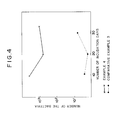
- test soil was brown forest soil having been picked at forest in Morinosato, Atsugi-Shi, Kanagawa-Ken, Japan. Thereto 3-mm cubic polyurethane pieces were added in a total weight of 50 g, and the mixture was blended and incubated by standing at 25 ° C. The required leucine was supplied by 50 ml (20 ug/ml) every 24 hours.
- Fig. 11 shows the results.
- microorganism works only in a polluted area and the microorganism dies spontaneously after remediation of pollution. Therefore, even when a microorganism is used in an open system, for example in treatment of spillage oil by microorganism on the sea, the present invention enables environment protection without adverse effect caused by the remaining microorganism after the treatment since the employed microorganism dies surely.
- a method of biodegradation of a polluting substance by a microorganism is disclosed, wherein the microorganism is an auxotrophic microorganism and the action of the auxotrophic microorganism is controlled by the amount of a required nutrient for the auxotrophic microorganism.
- a carrier for supporting an auxotrophic microorganism for use for biodegradation contains a required nutrient for the auxotrophic microorganism.
Landscapes
- Life Sciences & Earth Sciences (AREA)
- Microbiology (AREA)
- Engineering & Computer Science (AREA)
- Environmental & Geological Engineering (AREA)
- Chemical & Material Sciences (AREA)
- Biodiversity & Conservation Biology (AREA)
- Hydrology & Water Resources (AREA)
- Water Supply & Treatment (AREA)
- Organic Chemistry (AREA)
- Biomedical Technology (AREA)
- Chemical Kinetics & Catalysis (AREA)
- Biotechnology (AREA)
- General Health & Medical Sciences (AREA)
- Molecular Biology (AREA)
- Mycology (AREA)
- Soil Sciences (AREA)
- Health & Medical Sciences (AREA)
- General Chemical & Material Sciences (AREA)
- Micro-Organisms Or Cultivation Processes Thereof (AREA)
- Processing Of Solid Wastes (AREA)
- Physical Or Chemical Processes And Apparatus (AREA)
- Purification Treatments By Anaerobic Or Anaerobic And Aerobic Bacteria Or Animals (AREA)
- Preparation Of Compounds By Using Micro-Organisms (AREA)
Applications Claiming Priority (2)
| Application Number | Priority Date | Filing Date | Title |
|---|---|---|---|
| JP281987/92 | 1992-10-20 | ||
| JP28198792A JP3201661B2 (ja) | 1992-10-20 | 1992-10-20 | 汚染物質の生分解方法および汚染環境の修復方法 |
Publications (3)
| Publication Number | Publication Date |
|---|---|
| EP0597283A2 true EP0597283A2 (de) | 1994-05-18 |
| EP0597283A3 EP0597283A3 (en) | 1994-09-14 |
| EP0597283B1 EP0597283B1 (de) | 1998-01-21 |
Family
ID=17646662
Family Applications (1)
| Application Number | Title | Priority Date | Filing Date |
|---|---|---|---|
| EP19930116877 Expired - Lifetime EP0597283B1 (de) | 1992-10-20 | 1993-10-19 | Verfahren zum biologischen Abbau einer verunreinigenden Substanz |
Country Status (5)
| Country | Link |
|---|---|
| US (1) | US5658795A (de) |
| EP (1) | EP0597283B1 (de) |
| JP (1) | JP3201661B2 (de) |
| AT (1) | ATE162502T1 (de) |
| DE (1) | DE69316539T2 (de) |
Cited By (5)
| Publication number | Priority date | Publication date | Assignee | Title |
|---|---|---|---|---|
| FR2770227A1 (fr) * | 1997-10-29 | 1999-04-30 | Ortec Environnement | Composition biologique pour epurer des effluents aqueux et des boues et son procede de mise en oeuvre et d'ensemencement |
| FR2780721A1 (fr) * | 1998-07-03 | 2000-01-07 | Jean Louis Romero | Moyen biologique d'assainissement d'effluents pollues et/ou d'entretien des canalisations d'evacuation desdits effluents |
| EP0999274A3 (de) * | 1998-10-30 | 2003-01-08 | Canon Kabushiki Kaisha | DNS-Fragment das ein Toluenmonooxygenasegen enthält, ein rekombinantes Plasmid, transformierter Mikroorganismus, Verfahren zum Abbau von chlorierten aliphatischen Kohlenwasserstoffe und aromatischen Verbindungen, und Verfahren zur Engiftung der Umwelt |
| EP1077608B2 (de) † | 1998-05-13 | 2012-03-28 | Nutribiotech, LLC | Verfahren zur kontrolle der fermentierung eines nahrungsmittelprodukts oder eines getränks |
| WO2013149662A1 (en) * | 2012-04-04 | 2013-10-10 | Hera S.P.A. | Inoculated bioplastic-based moving bed biofilm carriers |
Families Citing this family (20)
| Publication number | Priority date | Publication date | Assignee | Title |
|---|---|---|---|---|
| JP3347596B2 (ja) * | 1996-08-01 | 2002-11-20 | キヤノン株式会社 | 新規微生物、芳香族化合物及び/或いは有機塩素化合物の生分解方法、及び媒体の浄化方法 |
| JP3323746B2 (ja) * | 1996-08-01 | 2002-09-09 | キヤノン株式会社 | 新規微生物、有機化合物の生分解方法及び環境修復方法 |
| US5877113A (en) * | 1997-12-12 | 1999-03-02 | Organica, Inc. | Solid form compositions for treating natural bodies of water |
| JP2000262274A (ja) * | 1999-03-17 | 2000-09-26 | Sanyo Electric Co Ltd | 細菌抽出用担体、微生物抽出方法および微生物群測定方法 |
| EP1106682A4 (de) * | 1999-06-22 | 2005-02-02 | Nat Inst Agro Environmental Science | Verfahren zur akkumulation von abbauenden bakterien, träger, welcher durch dieses erhaltene abbauende bakterien trägt und verfahren zur wiederherstellung von kontaminiertem bodenmaterial oder zur prävention von verschmutzung des grundwassers durch anwendung des trägers |
| US6783678B2 (en) * | 2000-06-29 | 2004-08-31 | Bechtel Bwxt Idaho, Llc | Halogenated solvent remediation |
| US7449114B2 (en) * | 2000-06-29 | 2008-11-11 | Srp Technologies, Inc. | Halogenated solvent remediation |
| US20070190591A1 (en) * | 2001-05-02 | 2007-08-16 | Grech Nigel M | Microbial compositions and methods of use in water |
| US6632363B1 (en) * | 2001-05-02 | 2003-10-14 | Grotek, Inc. | Hydrophobic compositions and methods of use in water applications |
| JP2003154352A (ja) * | 2001-09-10 | 2003-05-27 | Fuji Photo Film Co Ltd | 微生物による汚染土壌修復方法 |
| US7259881B2 (en) * | 2001-10-03 | 2007-08-21 | Kabushiki Kaisha Toshiba | Method of monitoring multiple controller families |
| JP4515162B2 (ja) * | 2004-06-15 | 2010-07-28 | キヤノン株式会社 | Dnaインターカレート物質類の吸着用構造物 |
| JP2006204258A (ja) * | 2005-01-31 | 2006-08-10 | Canon Inc | 新規ポリヒドロキシアルカノエート合成微生物及びそれを用いたポリヒドロキシアルカノエートの製造方法 |
| US20080138663A1 (en) * | 2006-12-12 | 2008-06-12 | Canon Kabushiki Kaisha | Microbial electrode and fuel cell and sensor using the same |
| US9643223B2 (en) * | 2007-03-16 | 2017-05-09 | Jrw Bioremediation, Llc | Bioremediation enhancing agents and methods of use |
| US7959806B2 (en) * | 2007-04-27 | 2011-06-14 | Jrw Bioremediation, Llc | Mine influenced water remediation using bioremediation substrate |
| JP2012523855A (ja) | 2009-03-25 | 2012-10-11 | ザ クリーブランド クリニック ファウンデーション | 医用器具シース |
| US9522830B2 (en) | 2012-10-10 | 2016-12-20 | Jrw Bioremediation Llc | Composition and method for remediation of contaminated water |
| KR101869734B1 (ko) * | 2017-02-07 | 2018-06-21 | 이상섭 | 오염 퇴적토의 처리 방법 및 이를 이용한 재활용 매립토 |
| JP2024046729A (ja) * | 2022-09-23 | 2024-04-04 | エンレテック テクノロジーズ ピーティーワイ リミテッド | 方法 |
Family Cites Families (5)
| Publication number | Priority date | Publication date | Assignee | Title |
|---|---|---|---|---|
| US4508824A (en) * | 1980-05-08 | 1985-04-02 | Microlife Technics, Inc. | Pseudomonas degradation of hydrocarbons |
| US4530763A (en) * | 1983-07-11 | 1985-07-23 | Clyde Robert A | Method for treating waste fluid with bacteria |
| DE3545325A1 (de) * | 1985-12-20 | 1987-06-25 | Dechema | Verfahren zur bodendekontaminierung mittels mikroorganismen |
| US5242825A (en) * | 1989-06-21 | 1993-09-07 | United States Of America Environmental Protection Agency | Biological remediation of creosote- and similarly-contaminated sites using Pseudomonas paucimobilis |
| ATE134140T1 (de) * | 1990-06-08 | 1996-02-15 | Grace Sierra Horticultural Pro | Kontrollierte abgabe von nährmittel für bakterien und verfahren einer biologischen behandlung |
-
1992
- 1992-10-20 JP JP28198792A patent/JP3201661B2/ja not_active Expired - Fee Related
-
1993
- 1993-10-19 AT AT93116877T patent/ATE162502T1/de not_active IP Right Cessation
- 1993-10-19 DE DE69316539T patent/DE69316539T2/de not_active Expired - Lifetime
- 1993-10-19 EP EP19930116877 patent/EP0597283B1/de not_active Expired - Lifetime
-
1995
- 1995-12-13 US US08/571,739 patent/US5658795A/en not_active Expired - Lifetime
Cited By (7)
| Publication number | Priority date | Publication date | Assignee | Title |
|---|---|---|---|---|
| FR2770227A1 (fr) * | 1997-10-29 | 1999-04-30 | Ortec Environnement | Composition biologique pour epurer des effluents aqueux et des boues et son procede de mise en oeuvre et d'ensemencement |
| EP1077608B2 (de) † | 1998-05-13 | 2012-03-28 | Nutribiotech, LLC | Verfahren zur kontrolle der fermentierung eines nahrungsmittelprodukts oder eines getränks |
| FR2780721A1 (fr) * | 1998-07-03 | 2000-01-07 | Jean Louis Romero | Moyen biologique d'assainissement d'effluents pollues et/ou d'entretien des canalisations d'evacuation desdits effluents |
| WO2000001621A1 (fr) * | 1998-07-03 | 2000-01-13 | Romero Jean Louis | Moyen biologique d'assainissement d'effluents pollues et/ou d'entretien des canalisations d'evacuation desdits effluents |
| EP0999274A3 (de) * | 1998-10-30 | 2003-01-08 | Canon Kabushiki Kaisha | DNS-Fragment das ein Toluenmonooxygenasegen enthält, ein rekombinantes Plasmid, transformierter Mikroorganismus, Verfahren zum Abbau von chlorierten aliphatischen Kohlenwasserstoffe und aromatischen Verbindungen, und Verfahren zur Engiftung der Umwelt |
| US6864074B2 (en) | 1998-10-30 | 2005-03-08 | Canon Kabushiki Kaisha | Dna fragment carrying toluene monooxygenase gene, recombinant plasmid, transformed microorganism, method for degrading chlorinated aliphatic hydrocarbon compounds and aromatic compounds, and method for environmental remediation |
| WO2013149662A1 (en) * | 2012-04-04 | 2013-10-10 | Hera S.P.A. | Inoculated bioplastic-based moving bed biofilm carriers |
Also Published As
| Publication number | Publication date |
|---|---|
| ATE162502T1 (de) | 1998-02-15 |
| DE69316539T2 (de) | 1998-06-04 |
| JPH06134433A (ja) | 1994-05-17 |
| EP0597283A3 (en) | 1994-09-14 |
| EP0597283B1 (de) | 1998-01-21 |
| US5658795A (en) | 1997-08-19 |
| DE69316539D1 (de) | 1998-02-26 |
| JP3201661B2 (ja) | 2001-08-27 |
Similar Documents
| Publication | Publication Date | Title |
|---|---|---|
| EP0597283B1 (de) | Verfahren zum biologischen Abbau einer verunreinigenden Substanz | |
| Girijan et al. | Immobilized biomass systems: an approach for trace organics removal from wastewater and environmental remediation | |
| Nannipieri et al. | Use of enzymes to detoxify pesticide‐contaminated soils and waters | |
| Cohen | Biofiltration–the treatment of fluids by microorganisms immobilized into the filter bedding material: a review | |
| US6905288B2 (en) | Method of remedying contaminated soil by microorganism | |
| US5807736A (en) | Method for biodegradation of aromatic and chlorinated compounds using microorganism strain FERM BP-5102 | |
| EP0822252B1 (de) | Mikrobielle Stamme, Verfahren zum Abbau von organischen Verbindungen und Verfahren zur Entgiftung der Umwelt | |
| EP0594125B1 (de) | Träger für Mikroorganismen, Bodenentgiftungsmittel die diesen Träger verwenden, und Methoden zur Entgiftung de Bodens | |
| EP0396648B1 (de) | Verfahren zur mikrobiologischen reinigung von wasser | |
| Wyss et al. | Micro-encapsulated organic phase for enhanced bioremediation of hydrophobic organic pollutants | |
| RU2093478C1 (ru) | Способ очистки воды и почвы от нефти, нефтепродуктов и полимерных добавок в буровой раствор | |
| Yang et al. | Packed entrapped mixed microbial cell process for removal of phenol and its compounds | |
| AU679226B2 (en) | Microbial degradation of chemical pollutants | |
| JPH06134432A (ja) | 土壌修復法 | |
| CN111924984A (zh) | 一种治理开放性水域沉积污染物的复合菌剂及其制备方法 | |
| JP2003311258A (ja) | 微生物による汚染土壌のオンサイト修復方法及び装置 | |
| JP3566408B2 (ja) | 環境中に放出された汚染物質の生物分解浄化方法 | |
| JP3420307B2 (ja) | 微生物保持用担体及び該担体を用いた土壌修復方法 | |
| RU2195435C2 (ru) | Способ очистки почвы и воды от загрязнений нефтепродуктами | |
| JPH10296220A (ja) | 微生物による分解方法および環境修復方法 | |
| JP4112082B2 (ja) | Burkholderia cepacia 1Aの生育促進法および該微生物を用いたバイオリアクター | |
| Hao et al. | Biological fixed-film systems | |
| JPH07136674A (ja) | 微生物担持担体の集合体およびそれを用いた環境修復方法 | |
| JP3604713B2 (ja) | 微生物による環境修復方法及び該方法に用いる微生物の製造方法 | |
| Korzhenevich et al. | Microbial degradation of nitrosubstituted phenols in wastes |
Legal Events
| Date | Code | Title | Description |
|---|---|---|---|
| PUAI | Public reference made under article 153(3) epc to a published international application that has entered the european phase |
Free format text: ORIGINAL CODE: 0009012 |
|
| AK | Designated contracting states |
Kind code of ref document: A2 Designated state(s): AT BE CH DE DK ES FR GB GR IT LI LU NL PT SE |
|
| PUAL | Search report despatched |
Free format text: ORIGINAL CODE: 0009013 |
|
| AK | Designated contracting states |
Kind code of ref document: A3 Designated state(s): AT BE CH DE DK ES FR GB GR IT LI LU NL PT SE |
|
| 17P | Request for examination filed |
Effective date: 19950131 |
|
| 17Q | First examination report despatched |
Effective date: 19960702 |
|
| GRAG | Despatch of communication of intention to grant |
Free format text: ORIGINAL CODE: EPIDOS AGRA |
|
| GRAG | Despatch of communication of intention to grant |
Free format text: ORIGINAL CODE: EPIDOS AGRA |
|
| GRAH | Despatch of communication of intention to grant a patent |
Free format text: ORIGINAL CODE: EPIDOS IGRA |
|
| GRAH | Despatch of communication of intention to grant a patent |
Free format text: ORIGINAL CODE: EPIDOS IGRA |
|
| GRAA | (expected) grant |
Free format text: ORIGINAL CODE: 0009210 |
|
| RAP1 | Party data changed (applicant data changed or rights of an application transferred) |
Owner name: CANON KABUSHIKI KAISHA |
|
| AK | Designated contracting states |
Kind code of ref document: B1 Designated state(s): AT BE CH DE DK ES FR GB GR IT LI LU NL PT SE |
|
| PG25 | Lapsed in a contracting state [announced via postgrant information from national office to epo] |
Ref country code: NL Free format text: LAPSE BECAUSE OF FAILURE TO SUBMIT A TRANSLATION OF THE DESCRIPTION OR TO PAY THE FEE WITHIN THE PRESCRIBED TIME-LIMIT Effective date: 19980121 Ref country code: LI Free format text: LAPSE BECAUSE OF FAILURE TO SUBMIT A TRANSLATION OF THE DESCRIPTION OR TO PAY THE FEE WITHIN THE PRESCRIBED TIME-LIMIT Effective date: 19980121 Ref country code: IT Free format text: LAPSE BECAUSE OF FAILURE TO SUBMIT A TRANSLATION OF THE DESCRIPTION OR TO PAY THE FEE WITHIN THE PRESCRIBED TIME-LIMIT;WARNING: LAPSES OF ITALIAN PATENTS WITH EFFECTIVE DATE BEFORE 2007 MAY HAVE OCCURRED AT ANY TIME BEFORE 2007. THE CORRECT EFFECTIVE DATE MAY BE DIFFERENT FROM THE ONE RECORDED. Effective date: 19980121 Ref country code: GR Free format text: LAPSE BECAUSE OF FAILURE TO SUBMIT A TRANSLATION OF THE DESCRIPTION OR TO PAY THE FEE WITHIN THE PRESCRIBED TIME-LIMIT Effective date: 19980121 Ref country code: FR Free format text: LAPSE BECAUSE OF FAILURE TO SUBMIT A TRANSLATION OF THE DESCRIPTION OR TO PAY THE FEE WITHIN THE PRESCRIBED TIME-LIMIT Effective date: 19980121 Ref country code: ES Free format text: THE PATENT HAS BEEN ANNULLED BY A DECISION OF A NATIONAL AUTHORITY Effective date: 19980121 Ref country code: CH Free format text: LAPSE BECAUSE OF FAILURE TO SUBMIT A TRANSLATION OF THE DESCRIPTION OR TO PAY THE FEE WITHIN THE PRESCRIBED TIME-LIMIT Effective date: 19980121 Ref country code: BE Free format text: LAPSE BECAUSE OF FAILURE TO SUBMIT A TRANSLATION OF THE DESCRIPTION OR TO PAY THE FEE WITHIN THE PRESCRIBED TIME-LIMIT Effective date: 19980121 Ref country code: AT Free format text: LAPSE BECAUSE OF FAILURE TO SUBMIT A TRANSLATION OF THE DESCRIPTION OR TO PAY THE FEE WITHIN THE PRESCRIBED TIME-LIMIT Effective date: 19980121 |
|
| REF | Corresponds to: |
Ref document number: 162502 Country of ref document: AT Date of ref document: 19980215 Kind code of ref document: T |
|
| REG | Reference to a national code |
Ref country code: CH Ref legal event code: EP |
|
| REF | Corresponds to: |
Ref document number: 69316539 Country of ref document: DE Date of ref document: 19980226 |
|
| PG25 | Lapsed in a contracting state [announced via postgrant information from national office to epo] |
Ref country code: SE Free format text: LAPSE BECAUSE OF FAILURE TO SUBMIT A TRANSLATION OF THE DESCRIPTION OR TO PAY THE FEE WITHIN THE PRESCRIBED TIME-LIMIT Effective date: 19980421 Ref country code: PT Free format text: LAPSE BECAUSE OF FAILURE TO SUBMIT A TRANSLATION OF THE DESCRIPTION OR TO PAY THE FEE WITHIN THE PRESCRIBED TIME-LIMIT Effective date: 19980421 Ref country code: DK Free format text: LAPSE BECAUSE OF FAILURE TO SUBMIT A TRANSLATION OF THE DESCRIPTION OR TO PAY THE FEE WITHIN THE PRESCRIBED TIME-LIMIT Effective date: 19980421 |
|
| EN | Fr: translation not filed | ||
| NLV1 | Nl: lapsed or annulled due to failure to fulfill the requirements of art. 29p and 29m of the patents act | ||
| REG | Reference to a national code |
Ref country code: CH Ref legal event code: PL |
|
| PG25 | Lapsed in a contracting state [announced via postgrant information from national office to epo] |
Ref country code: LU Free format text: LAPSE BECAUSE OF NON-PAYMENT OF DUE FEES Effective date: 19981019 Ref country code: GB Free format text: LAPSE BECAUSE OF NON-PAYMENT OF DUE FEES Effective date: 19981019 |
|
| PLBE | No opposition filed within time limit |
Free format text: ORIGINAL CODE: 0009261 |
|
| STAA | Information on the status of an ep patent application or granted ep patent |
Free format text: STATUS: NO OPPOSITION FILED WITHIN TIME LIMIT |
|
| 26N | No opposition filed | ||
| GBPC | Gb: european patent ceased through non-payment of renewal fee |
Effective date: 19981019 |
|
| PGFP | Annual fee paid to national office [announced via postgrant information from national office to epo] |
Ref country code: DE Payment date: 20101031 Year of fee payment: 18 |
|
| PG25 | Lapsed in a contracting state [announced via postgrant information from national office to epo] |
Ref country code: DE Free format text: LAPSE BECAUSE OF NON-PAYMENT OF DUE FEES Effective date: 20130501 |
|
| REG | Reference to a national code |
Ref country code: DE Ref legal event code: R119 Ref document number: 69316539 Country of ref document: DE Effective date: 20130501 |